Movie Blogger Answers Movie Related Reddit Questions

When I published my review of To Catch a Spy back in June, it became my 250th movie review! I also published my 550th post in July, with that month’s Word on the Street article helping me reach that number. With these two milestones, I knew I was due to write something special! Sometimes, I listen to Youtube videos where a chosen question from Reddit is answered by various people. Since I’m a movie blogger, I find Reddit’s movie related questions to be interesting. This served as the inspiration for this list post, where I’ve chosen ten questions and will provide my answers to them. If you’re interested in seeing other answers to these questions, you can type these questions into Youtube’s searchbar and find the videos that way. Now, let’s read what I, as a movie blogger, have to say about some of Reddit’s movie related questions!

Movie time image created by Freepik at freepik.com. <a href=”https://www.freepik.com/free-photos-vectors/food”>Food photo created by freepik – http://www.freepik.com</a>. Image found at freepik.com.
  1. What Movie Was Basically Just an Ad?

As soon as I read this question, I immediately thought of When Calls the Heart: The Greatest Christmas Blessing. Even though the movie is objectively good, it is basically a two-hour commercial for When Hope Calls. For those who are not aware, When Hope Calls is the spin-off series of When Calls the Heart. The film’s main plot serves as the premise for When Hope Calls, giving that show’s protagonists more attention than When Calls the Heart’s series regulars. When I reviewed When Calls the Heart: The Greatest Christmas Blessing three years ago, I said this part of the story should have been a subplot, as it contained little connection to When Calls the Heart’s stories. While one of the spin-off’s protagonists did appear in two of When Calls the Heart’s sixth season episodes, When Hope Calls survived for only one season.

2. What Movie Franchise Should’ve Stopped at 2?

For this question, I’ll say the All of My Heart series and the Christmas at Graceland series. With the All of My Heart series, the third movie should have been the sequel, as the second movie is just that forgettable. If you’ve never seen the All of My Heart movies, skip the second one altogether. Meanwhile, the Christmas at Graceland series should have never received a third film. The third installment, Christmas at Graceland: Home for the Holidays had nothing to do with the previous two stories. While I have never reviewed any of the All of My Heart movies on my blog, I have shared why I don’t like the third Christmas at Graceland movie. You can read my thoughts in my list of the worst movies of 2019.

The Top 10 Worst Movies I saw in 2019

3. What Fact From a Movie Will Change The Way You Look at it?

On several occasions, I’ve talked about the “studio intervention” that affected the production of The Crow: City of Angels. Had I not known that vital piece of information prior to watching the movie, my opinion on the project would have been very different. I also would have never cared whether or not the film’s Tim Pope cut ever got released. But I’m thankful I learned about the “studio intervention” before I saw The Crow: City of Angels, as it gave me an idea of why certain creative decisions were made. If you’d like to learn more about this “studio invention” I’m referring to, you can read my editorial on why the Tim Pope of The Crow: City of Angels should be released.

Why Now is the Perfect Time to Release the Tim Pope Cut of ‘The Crow: City of Angels’

4. What Movies Would Be Great From Another Perspective?

I actually have three answers for this question! From what I remember, Chel was very secretive about her past in The Road to El Dorado. If the movie had been from her perspective, we’d get to learn more about Chel’s backstory as well as the culture within El Dorado. While I love Atlantis: The Lost Empire, I think it would be interesting if it had been from Kida’s perspective. Parts of the story that take place in Atlantis, such as when Kida single-handedly creates Atlantis’ shield barrier, would have had a greater impact. In my review of The Crow, I talked about how the story was presented as a mystery. This made me think about how Vladimir and Dimitri are trying to solve a mystery throughout 1997’s Anastasia. If this movie had been a mystery where the audience has to discover Anya’s true identity alongside Vladimir and Dimitri, that would have been such an interesting and engaging experience!

5. What’s a Sign That a Movie is Going to be Bad?

I’ve heard that if a movie has red font in their title, then the movie is destined to fail. However, I’m not sure how accurate this information is.
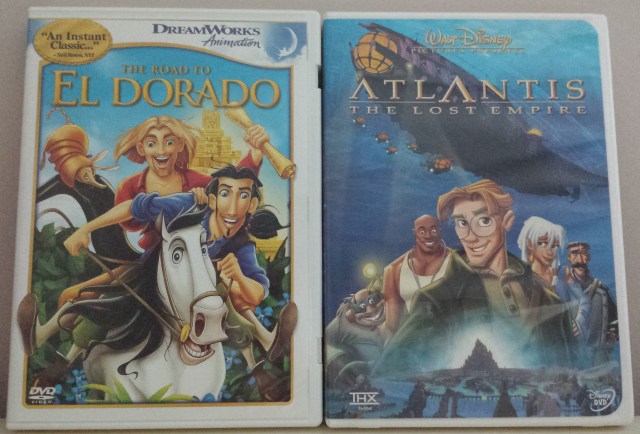
Since I mentioned The Road to El Dorado and Atlantis: The Lost Empire in this list, I thought including this picture would be appropriate. Screenshot taken by me, Sally Silverscreen.

6. What Movies Released Together are Basically the Same?

I said in my review of 1931’s Dracula that if you’ve seen Nosferatu, you’ve already seen Dracula. Therefore, these are the films I’m choosing for this question. If you’d like to hear my thoughts on both films, I’ll provide the links to them in this list.

Take 3: Nosferatu Review (A Month Without the Code — #1)

Take 3: Dracula (1931) Review + 180 Follower Thank You

7. What Franchise Was Milked/Is Being Milked Too Much?

I have three answers for this question. They are the following:

From 2008 to 2019, the Marvel Cinematic Universe has, for the most part, been a well-executed concept. Each character, story, and film was delivered at a specific time for a specific reason. After the release of Avengers: Endgame, it seems like Disney and Marvel are just desperate to keep their ship afloat. Instead of relying on a pre-created game plan, it feels like they are throwing anything and everything at a wall, in an attempt to find something that sticks. I haven’t seen any of Marvel’s projects post Avengers: Endgame. But based on what I’ve heard, the overall quality is much lower than the studio’s earlier entries.

If you’ve been following my blog, you would know that I stopped watching Hallmark’s Good Witch series after the premiere of Good Witch: Spellbound. Based on what I’ve heard from people who continued to watch the show until its end, the franchise was milked for so long and for so many times, that it strayed far away from its roots. In the first Good Witch movie, Jake’s children, Brandon and Lori, believed Cassie was a witch because strange things happened whenever she was near. But the possibility of Cassie actually being a witch was never alluded to, as the magic in the series had been figurative/intuitive. In the show’s last season, Cassie and her relatives admit they are witches and practice actual magic. What happened to the Good Witch series presents one of the dangers of keeping a particular story around longer than it was welcome.

Hallmark’s Christmas line-ups are the textbook definition of being “too much of a good thing”. While this is a collection of movies, not a franchise, the line-ups have become bigger than they should be. In the early years of ‘Countdown to Christmas’ and ‘Miracles of Christmas’, both of Hallmark’s networks released a limited number of movies. Because there were fewer offerings, it gave the movies an opportunity to possibly become classics. When an actor or actress was announced to star in a Christmas movie from Hallmark, it felt like they were joining an exclusive club. With Hallmark creating so many Christmas movies and showing them year-round, their event is now bloated. I, honestly, have my doubts that Hallmark can continue making these line-ups as highly anticipated as they once were.

8. What Movie are You Surprised That Hasn’t Had a Sequel Yet?

I’m actually surprised 1989’s Steel Magnolias has never received a sequel. It is one of those stories where if you were to revisit these characters and their world now, it would probably work. So much has changed since the theatrical release of Steel Magnolias, so I’d be interested in seeing how the characters live their lives in the 21st century. The sequel could also serve as a reunion with the return of the original movie’s cast.

9. What Plot Twist Made You Shout ‘Bullcrap’?

When I reviewed Yes, I Do three years ago, I said that Charlotte’s chocolate allergy was poorly written to the point of appearing very unrealistic. However, I never got into the specifics of how poorly written this part of the story was. Throughout the movie, Charlotte said she was allergic to chocolate, despite working in a chocolate factory. She claims that when she smells chocolate, she knows whether or not it will taste good. Toward the end of the movie, Charlotte eats a piece of chocolate, discovering her allergy has magically disappeared. Meanwhile, Nicole (Jessica Lowndes’ character), has a strawberry allergy that is written more realistically. She even has a serious reaction after she accidently eats a strawberry flavored piece of chocolate.

10. What Plot Twist Would You Add To a Movie to Mess with the Audience?

It took me a while to figure out what my answer would be for this question. But I’ve chosen Signed, Sealed, Delivered: To the Altar. Toward the end of that movie, Oliver proposes to Shane at Norman and Rita’s wedding reception. What would have made the fans of the series upset is if Oliver had thought about proposing to Shane at the reception, but then changed his mind at the last second, deciding to propose on another date instead. Since it’s been three years since Signed, Sealed, Delivered: To the Altar premiered, fans would have had to wait for any developments in Oliver and Shane’s relationship.
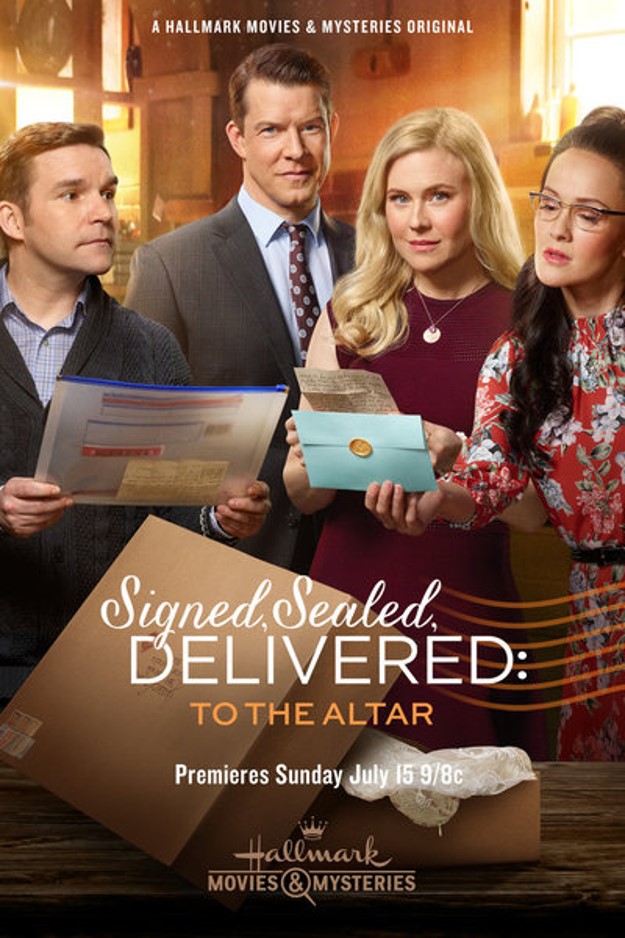
Signed, Sealed, Delivered: To the Altar poster created by Crown Media Family Networks and Hallmark Movies & Mysteries. Image found at https://www.crownmediapress.com/Shows/PRShowDetail?SiteID=143&FeedBoxID=845&NodeID=302&ShowType=series&ShowTitle=Signed%2c+Sealed%2c+Delivered+To+the+Altar

What are your thoughts on my list? How would you answer these questions? Tell me in the comment section!

Have fun at the movies!

Sally Silverscreen
Take 3: Bathing Beauty Review

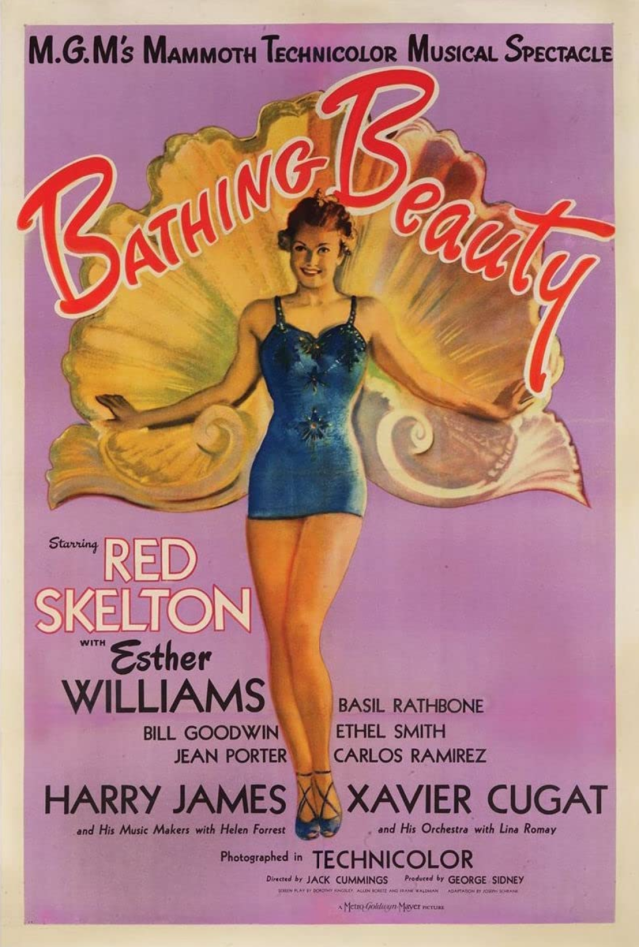
Since I participated in last year’s Esther Williams Blogathon, it made sense for me to join the 100 Years of Esther Williams Blogathon. Hosted again by Michaela from Love Letters to Old Hollywood, I wanted to review one of Esther’s films this time. I try to watch and write about as many movie recommendations as I can. Because Rebecca from Taking Up Room suggested I check out Bathing Beauty, that’s the film I chose to review! In 2020, for a different blogathon, I saw my first film of Esther’s; 1949’s Take Me Out to the Ball Game. That film gave Esther only one swimming scene, with the majority of her scenes taking place on land. With a movie titled Bathing Beauty, I was excited to see more of Esther’s swimming routines! Also, in 2020, I saw my first movie of Red Skelton’s; 1953’s The Clown. So, I was looking forward to talking about one of his earlier films! Now, let’s dive into this review of Bathing Beauty!

Bathing Beauty poster created by Metro-Goldwyn-Mayer

Things I liked about the film:

The costume designs: One thing I noticed while watching Bathing Beauty was the use of vibrant colors. This can definitely be seen within the film’s costume designs! At the very beginning of the film, Esther wore a hot pink swimsuit with a matching bow. The show-stopping piece, however, was her over-the-shoulder cape! This cream-colored piece was adorned in colorful flower appliques, adding touches of bright green, yellow, and pink. Besides pink, red was a common color found among the costumes. The students at Victoria College wore a uniform that consisted of a khaki dress. Red berets and neck ties provided a pop of color, not only pairing nicely with the khaki material, but also complimenting light and dark hair colors. During the performance of “I Cried for You”, Helen Forrest wore a rusty red colored dress. While the shape and style of the dress itself was simple, there was a sparkly belt and neckline. This small detail helped Helen’s dress appear elegant and appealing to the eye.

Red Skelton’s comedy: As I mentioned in my review of The Clown, I am familiar with Red Skelton as an entertainer. This knowledge caused me to be disappointed by the limited use of comedy in that film. Because Bathing Beauty is a romantic comedy, the material gave Red Skelton more opportunities to showcase his comedic talents. The ballet lesson from The Clown also appeared in Bathing Beauty. This time, Red’s character, Steve, took the lesson because it was a part of the college curriculum. Even after a year of first seeing it, this scene is still hilarious! The slapstick nature of Red’s comedy and the graceful reputation of ballet creates a funny oxymoron. Sometimes, Red’s comedy could be heard within the script. While at a local bar, Steve and a fellow patron explain their problems using nearby fruit. When Steve chooses to represent himself through a pineapple, he makes a comment about how he needs a haircut. Little comments like that one help include comedy into conversations among the characters!

The cinematography: An element within Bathing Beauty that stood out was the cinematography! It surprised me how good it was, especially for a film released in 1944! Anytime Esther swam underwater, those scenes were captured very well, presenting a clear view of what was happening under the surface. This added to the appeal of the swimming/water related scenes within the movie. In one scene, Esther’s character, Caroline, kisses Steve by the poolside. As she slowly dips under the water, Steve’s face follows her, with a close-up shot of his face shown under the water as well. Keeping in mind the limited technology of the ‘40s, these scenes were, to an extent, ahead of their time. A few scenes featured Harry James and His Music Makers. During these scenes, Harry was captured in close-up and medium shots. The camera also moved with him, presenting the illusion that Harry was floating among the orchestra. Because he was the star of those performances, this was a interesting way of highlighting Harry’s importance in those scenes!

100 Years of Esther Williams blogathon banner created by Michaela from Love Letters to Old Hollywood.

What I didn’t like about the film:

A somewhat misleading title: This movie is not only called Bathing Beauty, but it also stars Esther Williams. Therefore, certain expectations are placed on the film for those reasons. While we do see Esther in the pool, this was shown for two scenes: toward the beginning and end of the movie. The rest of the film shows Esther spending more time on land. Even when Basil Rathbone’s character, George, mentions a water pageant on several occasions, this was not the main focus of the overall story. After having Take Me Out to the Ball Game as my introduction to Esther’s filmography, I was left a little disappointed.

Red and Esther’s on-screen chemistry: While I have seen at least one film of Esther’s and Red’s, this was my first time seeing a movie starring both of them. Throughout the movie, they had nice on-chemistry. However, I thought Red had stronger on-screen chemistry with Jean Porter. Portraying one of the students at Victoria College, Jean displayed an on-screen personality that was similar to Red’s, coming across as easy-going and spunky. During the musical number, “I’ll Take the High Note”, Red and Jean performed so well together. I wanted Steve and Caroline to work out their relationship issues. But because of “I’ll Take the High Note”, I wish Jean and Red had led a film together.

A weak connection between the story and musical numbers: Musicals can be an enjoyable experience. Songs and instrumentals can progress a story forward, as well as help the audience get to know the story’s characters. With Bathing Beauty, there were several musical numbers sprinkled throughout the film. But anytime a musical number took place, it caused the story to pause. Even though these musical numbers were entertaining, the only one that directly connected to the film’s narrative was “I’ll Take the High Note”. This is because the number was a part of an assignment Steve had to complete in order to pass his music class. As I mentioned earlier, a water pageant is brought up on multiple occasions. However, this was the only water related spectacle in the movie. Because Esther was one of the stars of the film and because the story takes place in two states surrounding water (California and New Jersey), this feels, to an extent, like a missed opportunity for more water related numbers.

String of musical notes image created by Freepik at freepik.com. <a href=’https://www.freepik.com/free-vector/pentagram-vector_710290.htm’>Designed by Freepik</a> <a href=”https://www.freepik.com/free-photos-vectors/background”>Backgroundvector created by Freepik</a>. Image found at freepik.com.

My overall impression:

The end of any Olympics is an exciting time. A closing ceremony filled with spectacle and awe give athletes, fans, and people from that host country something to look forward to. As this year’s Tokyo Olympics come to a close, I can’t help but think of blogathons being similar to the Olympics. Think of it like this: the athletes that represent a particular country share one common goal. That goal is to bring home as many medals as realistically possible. The Olympics themselves have a start and end date, taking place in a different location. While there are typically no prizes involved in blogathons, participants share a common goal: talk about and celebrate the chosen subject. In this case, that subject is Esther Williams. Like the Olympics, Michaela’s event is an annual one that has a clear start and end date. Yes, it is known that Esther never went to the Olympics as planned. But I’d like to think she became a champion in her own right. An Olympic podium turned into an aqua-musical stage. Gold medals became a thirty-three project filmography. Instead of hearing the National Anthem after an Olympic win, show tunes are the chosen sound within Esther’s performances. I’d also like to think Esther paved the way for swimmers that came after her. Maybe aquamusicals haven’t made a comeback, but swimmers have been able to find own their success, almost like Esther did.

Overall score: 7.6 out of 10

Have you seen any of Esther Williams’ films? If so, which one would you want me to review next? Tell me in the comment section below!

Have fun at the movies!

Sally Silverscreen

Word on the Street: Made-for-TV Film Projects, including a Hallmark series, in the Works

On July 24th, Google Trends Now reported a Christmas movie is about to begin filming in late August. So far, this film is titled ‘The Seek for Christmas’. But “that may most likely change earlier than it airs”, says Evergreen Movie Productions’ Daniel Lewis. Erin Cahill, an actress who has starred in five Hallmark films, will be the lead actress and a producer on the project, according to the article. Maclain Nelson has also been announced as the movie’s director. The production is being filmed in Natchez, Mississippi, which is located near the Louisiana border. Daniel said ‘The Seek for Christmas’ “is about three sisters who grew aside and their journey of discovering their manner again to one another over the Christmas vacation”. Daniel also said “that filmmakers did their analysis to make the film as authentically Natchez as attainable and have written Natchez Christmas traditions such because the annual Christmas parade into the script”. Even though Hallmark Channel is mentioned in the article and its title, the network has not confirmed their association to this movie, as of late July to early August 2021.

In Kemptville, Ontario, Canada, a Christmas movie has been in production since July 19th. Ashley Kulp, from Inside Ottawa Valley, writes that this movie is, so far, titled “The Christmas Campaign”. Filming locations in Kemptville have included “the former North Grenville District High School on Prescott Street” and downtown Kemptville. Almonte, Carp, and Ottawa have also been announced as filming locations. No story-related details or casting decisions have been made known at this time. Also, it is unknown where this movie will premiere.

The link to the articles I referenced in this post:

https://trends.blogdady.com/hallmark-channel-christmas-film-filming-in-natchez-in-august-mississippis-greatest-group-newspaper/

https://www.insideottawavalley.com/news-story/10442638-what-s-going-on-here-christmas-in-july-holiday-movie-being-filmed-in-kemptville/

Christmas themed movie tickets created Kraphix at freepik.com. <a href=’https://www.freepik.com/free-vector/movie-tickets-christmas_971544.htm’>Designed by Kraphix</a>. <a href=”https://www.freepik.com/free-photos-vectors/christmas”>Christmas vector created by Kraphix – Freepik.com</a>. Image found at freepik.com.

Angelique Jackson, from Variety, reported on July 28th about Hallmark’s plans to create television films based on the company’s Mahogany card line. The article states how these efforts will consist of “a quarterly slate of original movies coming to Hallmark Movies & Mysteries in early 2022”. The pre-production phase of the project started “in early 2021”, with Wonya Lucas, Crown Media Family Networks’ president and CEO, and Toni Judkins, Crown Media Family Network’s current programming and development senior VP, working to get the project off the ground. “Mahogany is a 34-year-old brand that has been an important part of the portfolio since its existence. So for us, it’s not an initiative; it’s bringing something to life through storytelling”, said Wonya. Toni responded to Variety by saying “It was a brand that I love and have known for decades. It just seemed like the most natural, authentic thing to do, to translate and take the inspiration behind the Mahogany card brand and bring it to air”.

This article from Variety mentions how Hallmark has big plans for their Mahogany series. Angelique writes how the network wants “to further expand the franchise to include podcasts and scripted series in the coming years”. According to the article, the Mahogany series is a stepping stone toward programming based on Hallmark’s other card lines, including Eight Bamboo, which highlights “Chinese values and customs”. But in order to make these big plans a reality, Hallmark needs big money to make them happen. In my last Word on the Street story, I speculated how Hallmark might not be as financially strong as in years past. This speculation is based on things happening with the company that I’ve seen and heard as a consumer of some of the network’s programming. To add to this, it should be noted that Hallmark Movies & Mysteries, the network that will host the Mahogany films, doesn’t have the strongest numbers in viewership. As of late July to early August 2021, the movie from Hallmark’s second network with the highest number in viewership was Aurora Teagarden Mysteries: Til Death Do Us Part, which garnered 1.6 million viewers. This number is lower than those from Hallmark Movies & Mysteries’ past films, with 2017’s Rocky Mountain Christmas receiving a record-breaking 2.18 million viewers. One of the reasons for these low numbers is how Hallmark Movies & Mysteries is a smaller network compared to the main Hallmark Channel. This means that the second network doesn’t have the same amount of sponsorship opportunities as the first network does. Because of Hallmark Movies & Mysteries’ smaller size and lower viewership, maybe Hallmark has been cancelling programs like Home & Family in order to put those finances and resources toward the Mahogany series? Like any film project in pre-production, we’ll just have to wait and see how this series will be carried through.

Links to the references I included in this post:

https://variety.com/2021/tv/news/hallmark-mahogany-card-line-tv-movies-2022-1235028599/

http://www.ratingsryan.com/2021/06/cable-tv-ratings-week-ending-june-13.html

https://web.archive.org/web/20171227121829/http://www.showbuzzdaily.com/articles/showbuzzdailys-top-150-friday-cable-originals-network-finals-12-22-2017.html

Christmas card image created by Freepik at freepik.com. <a href=’https://www.freepik.com/free-vector/christmas-card-with-watercolor-mistletoe-decoration_965555.htm’>Designed by Freepik</a>. <a href=”https://www.freepik.com/free-photos-vectors/watercolor”>Watercolor vector created by Freepik</a>. Image found at freepik.com. 

Andrea Brooks, who stars on When Calls the Heart as Faith, will be co-leading two upcoming movies. In an article from Heavy, these movies are, right now, titled ‘Sit, Stay, Love’ and ‘Fishing for Love’. With ‘Sit, Stay, Love’, Andrea will star alongside Hallmark alumni, Marcus Rosner. The film will be directed by Heather Hawthorn Doyle. According to the article, this movie is about the following:

“A woman’s tightly controlled life starts to loosen up when she adopts a dog and falls in love with him and the owner of the animal shelter she adopted him from”

For ‘Fishing for Love’, Andrea will star with Spencer Lord. The article from Heavy states “the movie was filmed in Brentwood Bay, British Columbia, Canada” and is about the following:

“When Kendall, a successful restaurant designer comes home to Mystic Bay for the annual Big Catch Festival, she finds herself in uncharted waters with town newcomer Zack. Is Kendall baited for trouble in her home town or will she catch true love?”

As of late July to early August 2021, “It’s not clear if either of her [Andrea’s] two new movies will be airing on The Hallmark Channel or somewhere else”, as stated in the article.

The link to the Heavy article I referenced:

Group of puppies image created by Rawpixel.com at freepik.com. <a href=”https://www.freepik.com/free-photos-vectors/background”>Background photo created by rawpixel.com – http://www.freepik.com</a>. Image found at freepik.com.

What are your thoughts on these pieces of movie news? Which project sounds the most interesting to you? Please let me know in the comment section!

Have fun at the movies!

Sally Silverscreen

Coming close to the end of the Gold Sally Awards with the Best Supporting Actress and Best Ensemble Polls

We are now toward the end of the Gold Sally Awards! Before I reveal this year’s winners, there are three polls left and the nomination of Sally’s Star of the Year. I’m going to try something different for these next two polls. The Best Supporting Actress Poll and the Best Ensemble Poll will be combined into one voting post. But the voting rules will still be the same as in previous polls. Even though you can vote for more than one nominee, you can only vote once per person. This set of polls will start today, July 30th and end on August 6th. The link to the polls are at the bottom of each individual poll. Just click on the word, “PollMaker”.

Who was the Best Supporting Actress of 2020?
Pamela Britton — Anchors Aweigh
Hayden Panettiere — If You Believe
Bonnie Bedelia — The Boy Who Could Fly
Lisa Jakub — Matinee
Diane Lane — Grace & Glorie
Cyd Charisse — The Unfinished Dance
Romola Garai — Nicholas Nickleby (2002)
Collin Wilcox Paxton — To Kill a Mockingbird
Anna Kendrick — Up in the Air
Madison Lawlor — Follow Your Heart


Created with PollMaker
Which Movie has the Best Ensemble of 2020?
Anchors Aweigh
The Boy Who Could Fly
Matinee
Grace & Glorie
Sweet Nothing in My Ear
If You Believe
The Unfinished Dance
Nicholas Nickleby (2002)
The Crow
The Wife of Monte Cristo


Created with PollMaker

Have fun voting!

Sally Silverscreen

Thank You for Another Great Blogathon!

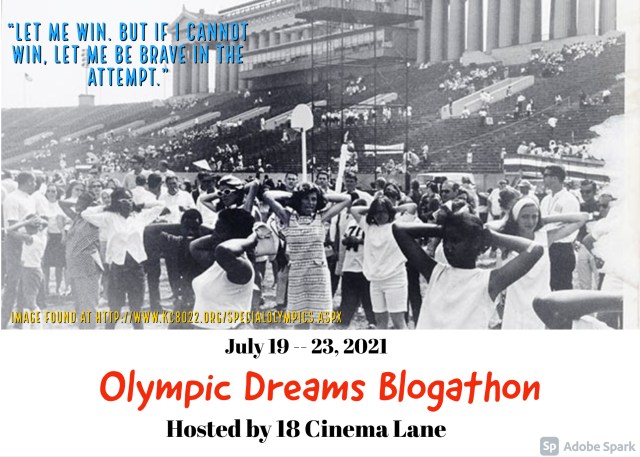
As the Tokyo Olympic Games are under way, I’d like to thank everyone who participated in my ‘Olympic Dreams Blogathon’! Once again, my annual blogathon was a success, with a variety of content shared during the event! I really enjoyed reading each article, as a multitude of Olympic-related subjects were covered. I am going to host my yearly blogathon in 2022! However, I haven’t chosen a theme yet. Stay tuned!

Created by me, Sally Silverscreen, on Adobe Spark.

Having fun during the Olympics!

Sally Silverscreen

Take 3: The Lion Review

I haven’t participated in MovieRob’s Genre Grandeur since April, when I reviewed the 1966 movie, Born Free. To make up for some of that lost time, I decided to review a film for July’s event. This month, the theme isMovies of the Outdoors”. That means the majority of the film has to take place outdoors or the movie has to significantly feature nature within the story. In a search for ideas, I turned to a book that I’ve had in my possession since last year: Leonard Maltin’s TV Movies & Video Guide 1989 Edition. The pages of this text revealed a title I had never even heard of before. In 1962, 20th Century Fox released a live-action production titled The Lion. Leonard gave this project two out of four stars, saying “Beautiful scenery of Kenya is far better than melodrama about young girl attached to pet lion, with family concerned it is turning her into a savage”. With curiosity getting the better of me, I chose to seek this movie out as my contribution for July’s Genre Grandeur! But will I end up agreeing or disagreeing with Leonard? Keep reading in order to find out!

The Lion poster created by 20th Century Fox.

Things I liked about the film:

William Holden and Capucine’s banter: While The Lion is the fourth film of William Holden’s I have seen, it is also the first film of Capucine’s I have seen. Despite this, I really liked hearing the banter between their characters, Robert and Christine! After Robert arrives at the game reserve’s guest house, Christine reminds him how he is now on a game reserve. In a nonchalant manner, Robert tells her that he won’t bite the animals. In this film, there was a hint of a laid-back persona with William Holden’s character. Even though this was not Robert’s strongest character trait, William pulled it off flawlessly, making his line sound like a piece of natural conversation. Another collection of banter between these characters carried a more serious tone later in the film. When Christine questions Robert’s reason for coming to Africa, he says “I’m here, aren’t I”? In my review of The World of Suzie Wong, I said that William Holden’s performance in that movie was consistent. His and Capucine’s performance in The Lion was consistent as well, each actor delivering their lines with effective execution!

The scenery: The natural landscape of Africa is one of the reasons why I chose to watch this film. Similar to the 1966 movie, Born Free, the African fields served as the principal scenery for The Lion, almost like the landscape itself served as a character in its own right. When Robert’s plane first flies to the game reserve, an establishing shot of a massive mountain is predominantly featured in the background. It was such a beautiful piece of earth, with its white and light blue hues glistening on screen. Like Born Free, the African plains are given multiple opportunities to be featured. But in The Lion, there were other locales that were shown. When Tina, Robert and Christine’s daughter, is on her way to introduce Robert to her pet lion, King, she walks along a winding path. One part of this scene shows Tina and Robert walking past a huge waterfall. While I wish this waterfall had been shown for a longer period of time,  it highlights how there are various types of landscapes within Africa.

Pamela Franklin’s performance: I am not familiar with Pamela Franklin’s filmography. However, she gave a solid performance in The Lion! While watching her portrayal of Tina, I couldn’t help being reminded of Hayley Mills in films such as The Parent Trap. This is because, like Hayley, Pamela carried herself with confidence and a strong sense of self, especially for a young person. These qualities in character paired nicely with Tina’s headstrong personality. Pamela also brought enough emotionality to make her role sympathetic. Whenever she is instructing her per lion, King, on what she wants him to do, you can tell Tina truly cares about him. In one scene, King is leaving with a mate. As Tina is begging him to stay, desperation could be seen and heard in her eyes and voice. Everything I’ve been saying allowed Pamela to still the show!

Image of male lion created by Wirestock at freepik.com. Animals photo created by wirestock – www.freepik.com

What I didn’t like about the film:

Use of the words “wild” and “savage”: In The Lion, there are a few moments where Robert and Christine use the words “wild” or “savage” when referring to Tina’s interest in the local wildlife and African tribe. At one point, Christine fears her daughter will grow up to be “wild”. I know the ‘60s were a different time compared to the 2020s. But that is not the reason why I didn’t like the characters’ use of the words “wild” and “savage”. By them choosing those words to refer to Tina’s interests, they fail to understand the importance of these subjects. Throughout the movie, Christine, Robert, and even John worry about who Tina will grow up to be in the future. Instead, they should have taken the time to get to know her in the present. Since Tina’s passion for wildlife and her appreciation for the local African tribe is common knowledge to everyone in her life, her parents could have chosen to homeschool their daughter. Those aforementioned interests could have served as the basis for various academic subjects, with Tina’s parents guiding and protecting her along the way. Tina’s upbringing in Africa and a strong educational foundation might afford her a good chance to be accepted into a reputable university. If her parents took the initiative to nurture their daughter’s love for animals, maybe she would have become a veterinarian or operate her own wildlife sanctuary. Some people say “sticks and stones may break my bones, but words will never hurt me”. However, Christine and Robert’s words fail to recognize a middle ground where all parties are satisfied.

Poor special effects: As I just said in my previous point, the ‘60s were a different time compared to the 2020s. One way this is made apparent is the quality of the technology used in cinema. Sometimes, actors will be placed in front of a green screen, in an attempt to present the illusion that the actors are in a particular location. A few scenes in The Lion showed some of the characters driving through the fields of Africa, with pre-filmed shots of this landscape shown in the background. But during these on-screen trips, a faint but visible blue glow could be seen outlining the characters. This technological error prevented me from getting fully immersed in these scenes. Toward the end of the movie, rain was shown falling in one scene. But the special effect used looked like small images of raindrops lay on top of the scene’s picture instead like looking like the raindrops were falling in that world. That also ruined the illusion of being in the movie’s space.

A drawn-out conflict: Like I already mentioned before, Tina’s parents worry about her future. The way they talk about this conflict sounded like a dire situation. But throughout the film, there was no sense of urgency to find a resolution. Instead, several scenes focus on a safari trip John leads. While I enjoyed seeing Africa’s scenery, these scenes felt like padding to make up for the main conflict being drawn-out. Another part of the story that received more attention than the main conflict was the customs and politics of the local African tribe. I will admit that this part of the script was interesting. However, it took time away from the main conflict, causing its final outcome to be stalled. Even though Tina’s parents solve their problem, the answer doesn’t feel satisfying because of how long the problem was drawn out.

Illustrated African landscape image created by Macrovector at freepik.com. Background vector created by macrovector – www.freepik.com

My overall impression:

Because this month’s Genre Grandeur theme is Movies of the Outdoors”, I knew The Lion would be the perfect choice for this event. As expected, the scenery in the film presented a pleasant picture to look at. But like I quoted in my review of To Catch a Spy, “The scenery can’t save you”. That is certainly the case for the 1962 movie. The pieces of a good project were there; from the strong acting performances to interesting conflicts. But the overall direction wasn’t focused. Instead of working to find a resolution to the film’s main conflict, the story traveled down side paths. This placed more emphasis on other parts of the plot and caused the overarching narrative to be drawn-out. I was also frustrated by the lack of initiative from Tina’s parents to help their daughter reach her full potential with the resources they already had. While I understand they wanted the best for her, they never took the time to ask Tina what she wished for. Honestly, I’d recommend Born Free over The Lion. The story of the 1966 picture is not only straight forward, but its script is also stronger.

Overall score: 6.2 out of 10

Have you seen The Lion? Which “outdoor movie” would you prefer? Tell me in the comment section below!

Have fun outside!

Sally Silverscreen

Take 3: The Karate Kid Part II Review (Olympic Dreams Double Feature Part 2)

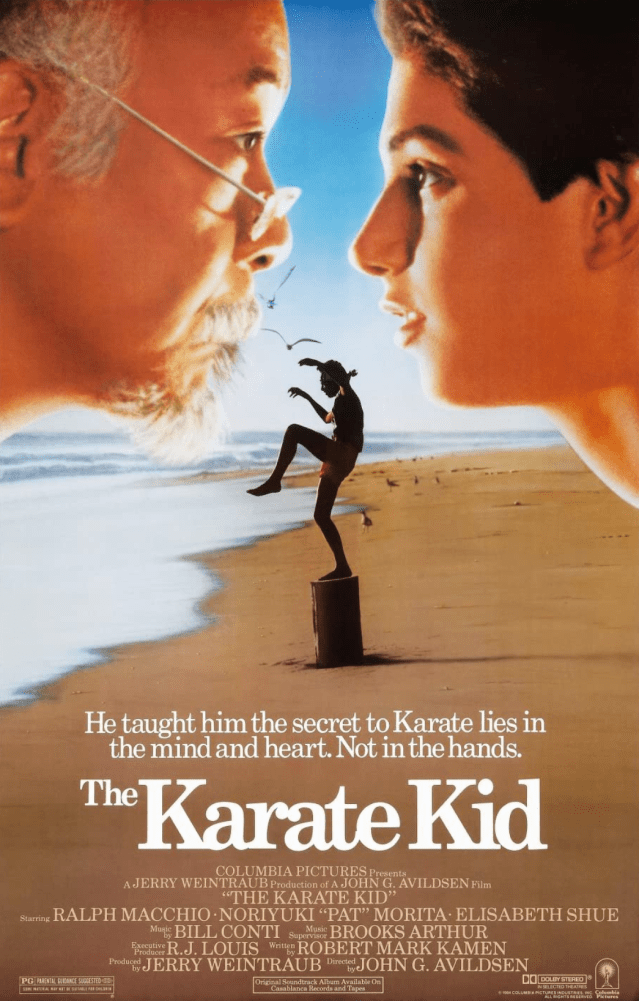
Now that I’ve seen 1984’s The Karate Kid, it’s time for me to review its respective sequel; The Karate Kid Part II! Long before I even thought about starting a movie blog, I had only seen a snippet of this film. Like I said before, I am willing to give a chance to movies I haven’t watched in their entirety. Because of that and because the majority of The Karate Kid Part II takes place in Japan, which has hosted the Olympics four times, my blogathon became a good excuse for checking this sequel out! Sequels, like any type of film, can be hit or miss. There are times when the next chapter can allow the overall story to “go the distance”; expanding the narrative and bringing something new to the table. Meanwhile, there are sequels that waste their potential by trying to recapture the magic of the previous installment. At the end of the day, it all comes down to the creative team and their intention for creating another film. If you want to know what type of sequel The Karate Kid Part II is, you’ll just have to keep reading this review!

Because I had The Karate Kid Part II on my DVR since last year, I decided to use a screenshot of the movie’s poster from my television. Screenshot taken by me, Sally Silverscreen.

Things I liked about the film:

More focus on Mr. Miyagi: The first film was about Daniel’s personal journey; hence the film being titled The Karate Kid. While the majority of the movie revolved around the protagonist, we get to learn about Mr. Miyagi through his interactions with Daniel. But only parts of Mr. Miyagi’s backstory are revealed in these interactions. The Karate Kid Part II places more emphasis on Mr. Miyagi’s story. As I mentioned in the introduction, the sequel takes place in Japan, where Mr. Miyagi is originally from. However, the audience also witnesses people from Mr. Miyagi’s past interacting with him. The reason for the sequel primarily taking place in Japan is because Mr. Miyagi receives a letter from his former love interest, Yukie, about his father’s ill-health. By crossing paths with Yukie again, Mr. Miyagi is given the opportunity to reflect on past life choices. He also has to deal with the ramifications those choices had created. This new direction in the overall story shows that even though Mr. Miyagi is a good teacher with plenty of wisdom to share, he is still a human who, like Daniel, is constantly learning.

Interactions among the characters:  In my review for The Karate Kid, I talked about how the interactions among the characters were one of the strongest parts of that film. The sequel has the same strength as its predecessor, which provides consistency to the overall story! Having Ralph Macchio and Noriyuki “Pat” Morita reprise their roles helps maintain this consistency, as both actors are now familiar with each other’s talents. One of the strongest scenes in the movie is when Daniel and Mr. Miyagi are watching the sunset on the beach. In this moment, we not only learn more about Daniel, but we get to see him support his mentor and friend. The Karate Kid Part II shows Daniel having grown up since the events of the first film. Even though Daniel is still a teenager with a teenage perspective, he is more willing to put others before himself, as well as open his mind to new opportunities and experiences. Right as Mr. Miyagi boards his plane, Daniel joins him in the plane terminal. The reason why he wants to join Mr. Miyagi on this trip is because he wants to be there for his friend and mentor, especially since that friend and mentor has been there for Daniel. Not only does Daniel purchase a book about the specific place in Japan where Mr. Miyagi is from, but Daniel also uses some of the money from his savings account to pay for his ticket. Like I said in my review for the first movie, interactions like Mr. Miyagi and Daniel’s were made possible by the quality of the acting performances and the screenwriting!

The scenery: Although most of The Karate Kid Part II takes place in Japan, the movie was actually filmed in Oahu, Hawaii. Despite this change in location, the scenery was simply beautiful! Because Okinawa is presented in the film as a seaside town, there are several shots of the water that are featured. As I previously mentioned, Mr. Miyagi and Daniel are watching the sunset on the beach. Parts of this scene are shown through long shots, capturing the sun’s soft orange glow against the gray of the sky and water. In my review of the first installment, I talked about how one scene transitioned from a medium to a long shot, in an effort to showcase a part of the Grand Canyon. A scene where Daniel is practicing a breathing technique on a dock uses a similar transition. However, instead of starting with a medium shot, it begins with a close-up of Daniel. It then evolves into a long shot of the ocean, with clear blue water surrounding the dock and green palm trees found in the background.

Created by me, Sally Silverscreen, on Adobe Spark.

What I didn’t like about the film:

A limited presence of Kumiko and Daniel’s relationship: Before watching The Karate Kid Part II, I was interested in seeing how Kumiko and Daniel’s relationship differed from his relationship with Ali. Even though I liked seeing Ali and Daniel together, I can see why their relationship didn’t survive past the first film. Daniel and Kumiko were a nice couple. It also helps that Ralph and Tamlyn Tomita had really good on-screen chemistry. But Daniel and Kumiko’s relationship was shown less than Ali and Daniel’s relationship. Because of this, it caused their relationship to feel rushed. In one scene, when Daniel is getting into Kumiko’s car, Peter Cetera’s “Glory of Love” is playing on the radio. This is not only the film’s official song, but the song’s official music video heavily emphasizes Kumiko and Daniel’s relationship. Anyone who has heard “Glory of Love” would agree that it is better suited as a “wedding song”. Having this piece of music surround a teenage couple that has known each other for about less than three months feels a bit misleading. Also, The Karate Kid is a trilogy, followed by the television show, Cobra Kai. If the third movie and/or TV show is anything like the beginning of the second film, “this could all end in tears” (Bartok’s (from 1997’s Anastasia) words, not mine).

Karate fight sequences being used sparingly: One of the flaws of the first movie was how the karate fight sequences had a limited presence in the overall story. In The Karate Kid Part II, there are even less karate fight sequences. With a movie called The Karate Kid, you expect a certain amount of karate to be featured in the film. While both movies are not action oriented, fight sequences can add excitement to the overall story. Fighting was primarily avoided in The Karate Kid Part II, as both Mr. Miyagi and Daniel try to find other ways to resolve their issues. This was one of the central themes of the narrative: exploring other problem-solving avenues before using fighting as a last resort. However, karate is the heart of this series. When you choose to show only a handful of fight sequences, you have little exciting material to work with.

No satisfying resolutions for parts of the story: In The Karate Kid Part II, there were a few parts of the story that were not consistently told within the overall film. Because of this, I feel their resolutions were not satisfying. While taking a trip through town, Kumiko reveals to Daniel that she dreams of becoming a dancer. However, the type of dancing she’s interested in is not taught in Okinawa. Toward the end of the film, Kumiko tells Daniel that she plans on going to the United States in order to pursue her dream. But this resolution feels kind of random. There is no lead up to the resolution itself. Daniel also doesn’t provide any advice to Kumiko in regards to her personal dilemma. For this part of the story, the journey from Point A to Point B was missing.

Okinawa, Japan image created by Charlie Balch at freeimages.com. “FreeImages.com/Charlie Balch.”

My overall impression:

 The Karate Kid Part II is a fine film. But I don’t think the script was as tight as it was the first time around. I like how the story focused on Mr. Miyagi, as it offered new story-telling opportunities. But, to a degree, it came at the expense of Kumiko and Daniel’s relationship, as it was shown for a limited amount of time. If Peter Cetera’s “Glory of Love” had revolved around Mr. Miyagi and Yukie’s relationship, it would have made more sense. Not only is The Karate Kid Part II primarily Mr. Miyagi’s story, but he and Yukie have history together. While the theme of using fighting as a last resort is important, it prevented the movie from featuring more karate fight sequences than the previous film. As I’ve stated before on my blog, a movie’s title partially serves as a promise to the audience. With The Karate Kid Part II, I can’t say this promise was completely broken. This is because, according to Mr. Miyagi, karate should be used in self-defense only, emphasizing how karate consists of more than just fight sequences. But when a movie features any form of marital art, people, more often than not, come for the cool-looking and exciting fight sequences. I appreciate how this film wasn’t just a carbon copy of its predecessor. It shows the creative team put legitimate thought and care into their project. If you enjoyed the first film, I’d say give its second chapter a chance. Even though there are stronger sequels out there, The Karate Kid Part II is certainly not one of the worst.

Overall score: 7.3 out of 10

Have you seen The Karate Kid Part II? Are there any sequels you are a fan of? Please tell me in the comment section!

Have fun at the movies!

Sally Silverscreen

Take 3: The Karate Kid (1984) Review (Olympic Dreams Double Feature Part 1)

For my first two blogathons, I wrote editorials as my contribution for the event. These articles were ‘Phantom of the Megaplex’ at 20: A Reflection on the Movie-Going Experience and Roger Ebert’s Movie Yearbooks: How Relevant are They Anyway? This time around, I wanted to do something different. Therefore, I chose to write a double feature review! Because this year’s blogathon is Olympic themed, I selected The Karate Kid and The Karate Kid Part II. In 1984, the Summer Olympics were held in Los Angeles. The Karate Kid not only takes place in California, but it was also released in 1984. Years ago, I had seen about half of this movie. As I said in my review for It’s a Mad, Mad, Mad, Mad, World, I am willing to give films a second chance if I haven’t finished them or haven’t watched them in several years. It’s been a long while since I have seen The Karate Kid, so I thought my blogathon would provide a good excuse to revisit it.

The Karate Kid (1984) poster created by Delphi II Productions, Jerry Weintraub Productions, and Columbia Pictures

Things I liked about the film:

The interactions among the characters: In stories that heavily rely on the relationships between various characters, how well-acted those characters are and the quality of their interactions will make or break that story. With The Karate Kid, these interactions served as one of the strongest parts of the film! That is because all of them felt natural and believable. When Daniel and Ali go to Golf N’ Stuff for the first time, you can see these characters are genuinely having a good time. They acted the way you’d expect a typical teenager would; smiling while racing each other at the go-kart track, laughing as their bumper boat crashed into another boat, and critiquing their pictures from the photobooth. Because of Ralph Macchio and Elisabeth Shue’s performance, as well as the script, their relationship came across as realistic. When it comes to Daniel’s relationship with Mr. Miyagi, we are given the opportunity to witness healthy mentor/student interactions. If one were given instructions, but not the reason behind those instructions, it can be easy to get frustrated. This happens after Daniel receives a series of instructions from Mr. Miyagi. But when Daniel discovers the reason why he has been following these instructions, you start to see him gain an understanding and appreciation for what Mr. Miyagi has taught him. Similar to what I said before about Daniel and Ali’s relationship, this period of learning and discovery contains a lot of realism. It shows that, with the right support and guidance, we can learn things such as how to think for ourselves.

The cinematography: The Karate Kid is a movie that has better cinematography than most of the film fan community gives it credit for. To prove my point, I will bring up one of the film’s earliest scenes as an example. At the beginning of the movie, Daniel and his mom are driving through Arizona. This particular scene starts with a medium shot, placing primary emphasis on Daniel’s mom’s car. As their journey down this road plays out, the camera pulls away from the car and delivers a long shot of a section of the Grand Canyon. Characters’ interactions are also captured well on film! At a Halloween party, Daniel is dressed up as a shower. When Ali wants to talk to Daniel, she goes behind the costume’s curtain. Their conversation is shown in a close-up shot, which allows the audience to feel like they are that small space with Ali and Daniel. I really liked how the karate tournament was filmed! It involved a combination of medium and close-up shots, allowing the audience to witness the action. The camera was also steady, which made the scenes appear clear.

The music: Music is an important component of any movie. A song or instrumental piece can elevate the mood within a scene or highlight a scene’s intended point. The scene where Daniel attends his first day of school serves as a great example. In the background, “Cruel Summer” by Bananarama can be heard. Having this song play during this scene makes sense for several reasons. Daniel’s story starts in September, which is technically summer until September 21st or as late as September 24th. Daniel is also having a difficult time adjusting to his new home, believing the move to be a “cruel” gesture on his mother’s part. The music itself is light with a higher tempo, as the sunny California environment pairs nicely with the tune. The struggles Daniel is experiencing are heavily emphasized, with the help of Bananarama’s “Cruel Summer”.

Created by me, Sally Silverscreen, on Adobe Spark.

What I didn’t like about the film:

The on again/off again nature of Daniel and Ali’s relationship: I liked seeing Daniel and Ali together and I thought Ralph and Elisabeth had good on-screen chemistry. However, I didn’t like the on again/off again nature of their relationship. I know that every relationship, whether platonic or romantic, has their issues to deal with. I also understand that a relationship where both parties are younger are going to handle those issues differently than a relationship where both parties are older. With Ali and Daniel, they became frustrated over their issues too easily. This causes them to enter and exit their relationship too quickly. While I was glad to see Daniel and Ali work things out, I wish they were less hasty about their relationship by talking things through.

A limited presence of karate fight sequences: The Karate Kid is not an action movie, but a coming-of-age story where one develops a better understanding of karate. Even though I knew that before watching this film, I feel the presence of karate fight sequences was limited. We see about three fight sequences toward the beginning of the film, with the majority of them taking place during the tournament. The rest of the story focuses on Mr. Miyagi teaching Daniel the foundations of karate. In the middle of the movie, I think there should have been one or two fight sequences. For example, instead of simply showing Mr. Miyagi breaking the loiters’ glass bottles at the beach, a karate fight sequence had taken place. That way, the excitement that comes from these sequences would be consistent throughout the movie.

Small details that don’t make sense: While watching The Karate Kid, I noticed some small details that, to me, didn’t make sense. In one scene, Mr. Miyagi tells Daniel that karate is about what is in your mind and heart, not about what belt you have. If that is the case, why do belt ranks exist in the first place? Why work toward earning another belt when what’s in your mind and heart are more important? At the tournament, the people running the event acted like they weren’t familiar with Mr. Miyagi’s “dojo”. Yet, on the scoreboard, there is a pre-made logo next to Daniel’s name. How was this logo able to be made if no one organizing the tournament had heard of Mr. Miyagi’s “dojo”?

Martial arts image created by Freepik at freepik.com. <a href=”https://www.freepik.com/free-photos-vectors/red”>Red vector created by freepik – http://www.freepik.com</a>. Image found at freepik.com. 

My overall impression:

The Karate Kid is a film that is considered a “classic” for good reason. It not only features exciting karate fight sequences, but it also uses one-liners well and has a strong script. But, in my opinion, the reason why the 1984 picture has earned this title is because it’s the type of movie that sticks with you. “Wax on, Wax off” is one of the most quotable lines in film history. Whenever I hear that line, I think about how there’s a reason for everything. I also remember how Daniel had to learn the meaning of “Wax on, Wax off” for himself instead of Mr. Miyagi telling him what it means. The Karate Kid is also a movie that has the ability to make you think. Whether or not this was intentional, you can’t help but reflect on the things that Mr. Miyagi says. You also can’t help but think about how those things can apply to real life. It’s been amazing exploring the world of ‘80s cinema. I’ve found some hidden gems, revisited some classics, and stumbled upon some stinkers. With The Karate Kid, I’d say it is definitely a keeper! I hope you stick around, because I’ll be reviewing this story’s second chapter!

Overall score: 8.2 out of 10

Have you seen The Karate Kid? Are you looking forward to my review of The Karate Kid Part II? Let me know in the comment section!

Have fun at the movies!

Sally Silverscreen

I Call Upon the Bloggers of the World for the Olympic Dreams Blogathon!

The Summer Olympics is just around the corner! Because of this, I decided to choose an Olympic theme for my annual blogathon! In this post, every participant and their article will be featured in a collective list. This set up is similar to my previous blogathons. What is different this year is how there are no separate categories. Each entry represents a different aspect of the Olympics; from the location of a past or present Games to the sport featured in a chosen program.

Created by me, Sally Silverscreen, on Adobe Spark.

Olypmpic Dreams Roster

Realweegiemidget Reviews — TV… Those Glory, Glory Days (1983)

Critica Retro — Retro cartoon: Laff-A-Lympics

18 Cinema Lane — The Karate Kid (1984), The Karate Kid Part II (1986)

MovieRob — Olympic Dreams Blogathon – 16 Days of Glory (1986), Olympic Dreams Blogathon – Blades of Glory (2007), Olympic Dreams Blogathon – Eddie the Eagle (2016), Olympic Dreams Blogathon – Prefontaine (1997), Olympic Dreams Blogathon – Visions of Eight (1973)

Silver Screenings — When You’re Too Talented For Your Own Good

Dubsism — Sports Analogies Hidden In Classic Movies – Volume 113: “Personal Best”

Take 3: Hallmark Hall of Fame’s Durango Review

Last year was the first time I participated in Legends of Western Cinema Week! For that event, I reviewed some episodes of Walker, Texas Ranger and the movie, Forsaken. This year, I decided to review the 1999 Hallmark Hall of Fame film, Durango! One day, Hallmark Drama was airing several older titles from the Hallmark Hall of Fame collection, with Durango being one of them. Since I try to watch as many Hallmark Hall of Fame movies as realistically possible, I made sure to record this film on my DVR. This is not only my first time watching it, but this particular title was only sold on VHS. Hallmark has a history of selling some of their Hallmark Hall of Fame films for home entertainment. As I said in my review of the 1987 movie, Foxfire, some of them have been sold on DVD for $20 apiece. But there were some titles that were only given a VHS release. I don’t know what the original price of these VHS tapes were. But if the DVDs were $20, it makes me assume the VHS tapes might have been sold for a similar price. Would Durango be worth the price if it was re-sold on DVD? Keep reading my review if you want to find that answer out!

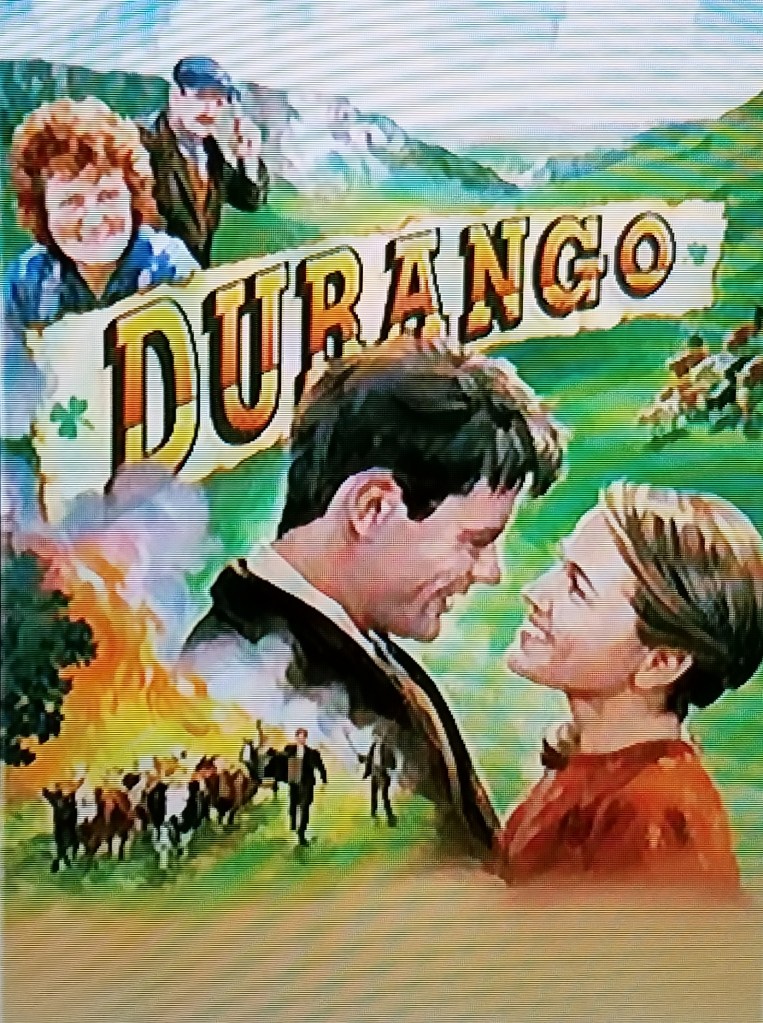
I really like the poster design for Durango, as it is reminiscent of posters from older western films. Screenshot taken by me, Sally Silverscreen.

Things I liked about the film:

Patrick Bergin’s performance: In Durango, Patrick Bergin portrayed Fergus Mullaney, the father of the protagonist’s girlfriend, Annie. Out of the whole cast, Patrick is the one that, for me, stole the show! Whenever his character came on screen, he delivered his performance with a strong sense of emotion. Toward the beginning of the movie, Fergus is giving a threat to the movie’s protagonist. During this scene, he truly came across as intimidating. The look in Fergus’ eyes was fiery, revealing the anger within him. His tone of voice was loud and stern, indicating he is not someone to be messed with. I wish Patrick had more appearances in this movie, so he could have had more opportunities to show off his acting talents!

The scenery: Within my review of Chasing Leprechauns, I discussed how the film looked drab. This was because that film’s creative team didn’t take advantage of Ireland’s natural landscape. That was not the case for Durango, as the majority of the movie took place outdoors and there was a lot of greenery to be found! When the Mullaney family was taking a ride through the countryside, the rolling hills of Ireland were showcased in front of a clear blue sky. On the path, a small stone bridge was seen over a river. This river was surrounded by grassy, green fields. That type of landscape was consistently shown throughout the movie. However, it featured Ireland’s natural beauty, which could encourage someone to visit the country!

The music: In films like those from Hallmark Hall of Fame, orchestral tunes are commonly heard in the background. While that is the case for Durango, the music worked with what was happening on screen. During the protagonist’s journey, grand, sweeping orchestral music could be heard as cattle were traveling through the vast fields of Ireland. Because the scenery is so captivating, having this type of music playing makes sense, as the music represents the viewers’ awe for such a beautiful place. When Annie’s brothers were fighting in public, Mark, the film’s protagonist, tells Fergus what is going on. Even though orchestral music can still be heard, the music is reflective of one’s fear when facing an intimidating man like Fergus. Just like any component of a film, music can make or break a production. The music in Durango definitely worked!

Legends of Western Cinema Week banner created by Heidi from Along the Brandywine and Hamlette from Hamlette’s Soliloquy.

What I didn’t like the film:

Low stakes: A common staple in the western genre is including high stakes in the story. In the movie I reviewed last year, Forsaken, the future of the town was at stake. The fear of the unknown could be felt among the characters, with their dialogue and interactions elaborating this point. The major conflict in Durango was the transportation of cattle from one town to another in an effort to receive a fair price for them. But the stakes associated with this conflict were low, causing me not to feel like any of the characters or their cattle were in danger. This is because, nine times of ten, the characters’ plans work out perfectly. Come to think of it, these plans worked out too perfectly by the standards of the western genre. When a higher stake is introduced in the story, it doesn’t appear until the film’s last nineteen minutes. This stake feels like it was included simply for the script to shoehorn a subtle David and Goliath reference. What is frustrating about that creative decision is the movie’s creative team had the entire project to give us the aforementioned reference. Heck, Durango itself should have been a David and Goliath story.

Fergus Mullaney’s desire to protect his daughter: In a story where a young woman falls in love, it’s common for her father to be concerned for her well-being. This is no different for Durango, as Fergus Mullaney only wants to protect his youngest daughter, Annie. The way he went about protecting her is the issue, as it came across as possessive and bit over the top. Whenever Annie’s boyfriend, Mark, is expressing his love for her or seen interacting with her, Fergus becomes angry. It gets to the point where he threatens to physically harm Mark. If Durango were a comedy and Annie were a teenage girl going on her first date, maybe Fergus’ behavior would be justifiable. But because both Annie and Mark are adults and because this movie is more dramatic in tone, Fergus’ behavior felt out of place.

Matt Keeslar’s performance: I’m not really familiar with Matt Keeslar’s filmography. However, I wasn’t impressed with his portrayal of the protagonist, Mark Doran. He wasn’t as strong of a performer as other actors from Hallmark Hall of Fame productions. For most of the movie, Matt carried a “resting face”, making his face appear static. I could tell he was trying with the material he was given, as there were times where he expressed genuine emotion. But these emotions were, in my opinion, not delivered consistently. With everything I just said and the fact that Matt and Nancy St. Alban, the actress who portrayed Annie, didn’t have strong on-screen chemistry, I was not invested in Matt’s performance.

Irish heart image created by Freepik at freepik.com. <a href=”https://www.freepik.com/free-photos-vectors/label”>Label vector created by freepik – http://www.freepik.com</a>. Image found at freepik.com.

My overall impression:

In my introduction, I mentioned how Durango was only sold on VHS. After watching the film, I now have an understanding of why this could be the case. Durango is one of the few Hallmark Hall of Fame movies I would consider a dud. With a weak lead performance and many low stakes, I found it difficult to stay invested in the characters and overall story. I also think the way Fergus tried to protect his daughter, Annie, felt out of place in this particular film. According to IMDB, Durango is “the first western set in Ireland”, so the fact this movie was not good is disappointing. On paper, an Irish western is an interesting idea that could have worked with a strong creative team. Unfortunately, Durango had a weak execution. I’m glad Hallmark Drama chose to air this movie, as I can honestly say it is not worth purchasing a copy. Personally, I think Irish cinema, the western genre, and Hallmark Hall of Fame deserve better.

Overall score: 4.7 out of 10

Have you seen Durango? Are there any Hallmark Hall of Fame movies you’d like to see re-released on DVD? Please let me know in the comment section!

Have fun at the movies!

Sally Silverscreen