I have been participating in the Legends of Western Cinema Week Blogathon since 2020. Because films from the western genre aren’t covered on 18 Cinema Lane often, this blogathon has given me a reason to seek out titles from the western genre to review. But when the Legends of Western Cinema Week ends, another blogathon begins; the Hit The Road Blogathon. Since I wanted to participate in both events, I decided to review one film for both blogathons. That film is 1949’s She Wore a Yellow Ribbon! The movie perfectly fits the themes of both events, as it is not only considered a “classical western” (according to IMDB), multiple characters travel by horse throughout the story. She Wore a Yellow Ribbon was also recommended to me by Eric Binford from Diary of a Movie Maniac. While this is the fourth movie of John Wayne’s I’ve seen, this is only the third one I’ve reviewed. The other two titles, El Dorado and Allegheny Uprising, were, in my opinion, just ok. How does She Wore a Yellow Ribbon compare to these other films? Keep reading my review to find out!
The acting: Whenever I discuss the acting in a given movie, I will usually talk about a scene that showcases the strength of the acting performances. My favorite example from She Wore a Yellow Ribbon takes place toward the beginning of the film. John Wayne portrays Captain Nathan Brittles, a man who goes on one last mission before he retires. During an evening visit to the local cemetery, Nathan talks to the graves of his wife, Mary, and his daughters, Elizabeth and Jane. While he talks to his deceased family, he consistently has a sad look in his eyes. Yet, the inflection of his voice changes depending on the type of news he has to share. Joanne Dru’s character, Olivia Dandridge, also visits the cemetery to give Nathan some potted flowers. Olivia’s persona is kind and gentle throughout this scene. Her conversation with Nathan perfectly displays the on-screen camaraderie between Joanne Dru and John Wayne. Because of this on-screen camaraderie and how strong John’s and Joanne’s acting performance was, I wish they shared more screen time.
The scenery: Most of She Wore a Yellow Ribbon takes place outdoors, with the movie being filmed in Utah and Arizona (according to IMDB). Looking back on the 1949 picture, I can definitely see why the film’s creative team would want to take advantage of the story’s natural landscape. Large, rustic red rocks impressively stood against a blue sky filled with white clouds. There were greens spots where foliage popped within the rocky terrain. The most memorable presentation of the scenery was during a storm. The bright, blue lighting blinked against the two-toned gray sky and the sand-colored ground provided a bright hue to the space. She Wore a Yellow Ribbon was a pretty looking film because of its scenery!
The dialogue: In She Wore a Yellow Ribbon, Corporal Quayne’s life is spared after being rescued from an attack. Olivia shares with Lieutenant Flint Cohill how happy she is Corporal Quayne survived. Lieutenant Cohill asks her why she cares about Corporal Quayne, especially since she doesn’t know him or is aware if he frequents the Lieutenant’s Bar. Olivia responds to this question by saying just because a man frequents the Lieutenant’s Bar doesn’t automatically make him a gentleman. Lieutenant Cohill then accuses Olivia of caring about Corporal Quayne’s well-being because his survival fits the happy ending she can write home about. This conversation between Olivia and Lieutenant Cohill was thought-provoking, as it addresses motivations for caring about others, as well as how someone’s personal situation can fuel another person’s narrative. That is just one example of the well-written nature of the dialogue!
Limited amount of action: A movie from the western genre, especially one starring John Wayne, carries a set of expectations. One of those expectations is the amount of action within the story. Scenes of battles, duels, and even bar fights will typically be sprinkled through a western genre story to maintain the suspense and intrigue of what’s happening on screen. But in She Wore a Yellow Ribbon, the action was far and few between. The majority of the story consisted of characters either having conversations with one another or riding from place to place. When an action scene does happen, it lasts for a very short period of time. These creative decisions caused She Wore a Yellow Ribbon to lack intrigue and suspense.
Not truly getting to know the characters: So much of She Wore a Yellow Ribbon’s story focuses on Captain Nathan Brittles and his impending retirement. While the audience receives the opportunity to learn more about Captain Brittles and understand his motivations, it comes at the expense of getting to truly know the other characters. One character I felt was overlooked was Top Sergeant Quincannon. He was retiring around the same time as Captain Brittles. But the script never addresses how the story’s patrol mission impacted Top Sergeant Quincannon and his career. Instead, the film prioritizes his enjoyment of drinking alcohol. Because of this emphasis, I only became familiar with Top Sergeant Quincannon instead of truly getting to know him.
The run-time: She Wore a Yellow Ribbon has a run-time of an hour and forty-four minutes. As I watched the movie, however, it felt longer than this stated run-time. Part of this flaw stems from the insertion of scenes just for the sake of satisfying the film’s length. Toward the end of the movie, there is a bar fight involving Top Sergeant Quincannon. This scene lasts about five minutes and, in my opinion, feels out of place. That’s because the scene is intended to be comedic, even though She Wore a Yellow Ribbon is not a comedy or a light-hearted story. The movie’s run-time could have been shorter had the bar fight scene either been omitted or trimmed down.
She Wore a Yellow Ribbon is the third film I’ve reviewed this month where the scenery was a stand-out strength. In the case of the 1949 picture, the natural landscape of Utah and Arizona was presented through long and medium shots, capturing the grand scale of the desert’s rock formations and large expanse of rustic red and sand-colored land. But as I’ve said in past reviews, “the scenery can’t save you”. If a movie contains a weak script, there’s only so much the pretty landscape can do to salvage that script. In my opinion, She Wore a Yellow Ribbon is an underwhelming picture. What I expected to be an action-packed, suspenseful, and even intriguing story turned out to be a drawn-out tale that felt longer than necessary. It also doesn’t help how I wasn’t able to truly get to know the characters, but only become familiar with them. Even though the 1949 film does feature strengths, like the acting and the dialogue, there were times while watching the movie where I almost fell asleep. With a filmography of over one hundred projects, I’ll, hopefully, find a title of John Wayne’s I actually like.
Overall score: 5.2 out of 10
Have you seen She Wore a Yellow Ribbon? What film from John Wayne’s filmography do you like watching? Please tell me in the comment section!
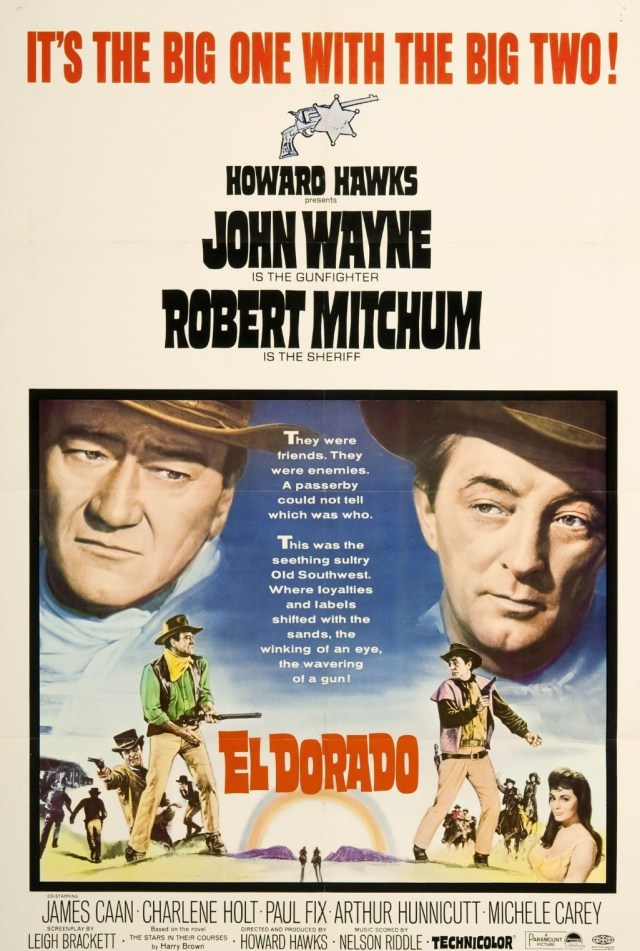
Whenever I’ve participated in the Legends of Western Cinema Week Blogathon, I, more often than not, review a movie from the Western genre. Since I review Western genre films so infrequently, this blogathon serves as a good opportunity to expand my cinematic horizons. For the 2024 edition, I decided to select a title that has been recommended to me. Suggested by J-Dub from Dubsism, I am reviewing the 1966 film, El Dorado! Years ago, I saw pieces of this movie. At the time, I thought it was boring. But I was willing to give El Dorado a second chance, wondering if my perspective had changed. I also have seen very few films from John Wayne’s filmography. So, reviewing this film gave me a chance to check out more of his movies!
El Dorado(1966) poster created by Paramount Pictures, Laurel Productions, and Polyphony Digital
Things I liked about the film:
The on-screen chemistry: Relationships in movies, whether romantic or platonic, can come across believably on screen if there is a strong sense of chemistry between the actors. This is what happened in El Dorado! Toward the beginning of the movie, J.P., portrayed by Robert Mitchum, meets up with Cole, portrayed by John Wayne, to talk about a potential job opportunity. Cole and J.P. carry no-nonsense demeanors, but their cordialness to each other shows the respect between them. The scene’s mood becomes lighter when Maudie, portrayed by Charlene Holt, shows up. Her friendly, playfulness emphasizes the friendship these characters share. When Maudie talks about her late husband and Cole with J.P., the empathetic reflection indicates how much she cares about both Cole and J.P.. Not only was there strong on-screen chemistry among the actors, this strong on-screen chemistry was consistent throughout the film. The on-screen relationships were interesting to watch because of these factors!
The dialogue: One of the most important components of a movie’s script is the dialogue. Through dialogue, characters can memorably stand-out, important information can be shared, and characters’ problems can be solved. The quality of a script’s dialogue depends on how well written it is. While watching El Dorado, I took note of the cleverness of the dialogue. After a son from the MacDonald family dies, Cole visits the family to share the sad news. The patriarch of the family, Kevin, asks what happened, with Cole telling him how he got “a boy to do a man’s work”. Later, when Cole returns to El Dorado, he reconnects with J.P.. When J.P. asks Cole what he’s doing back in El Dorado, Cole tells his friend, “I’m lookin’ at a tin star with a…drunk pinned on it”. Dialogue like the two examples I provided show how cleverly words were used as well as the eloquent ways intended points were phrased.
Breen Code Era moments: As I’ve explained before on 18 Cinema Lane, the Breen Code was a series of guidelines studios had to follow between 1934 and 1954. El Dorado was released in 1966, a decade after the Breen Code Era ended. However, there were moments sprinkled throughout the movie that felt reminiscent of the Breen Code Era. Before Cole leaves El Dorado, he kisses Maudie. The kiss itself isn’t shown on-screen because Cole’s hat is blocking their faces. When Mississippi, portrayed by James Caan, is first introduced to the audience, he uses a knife in self-defense against a man he claims killed his friend. As Mississippi retrieves his knife, the aforementioned man is hidden behind a table to prevent some of the violence from being shown on screen. The way these moments were written and presented were thoughtful presentations of an era gone by.
Legends of Western Cinema Week Blogathon banner created by Hamlette from Hamlette’s Soliloquy, Heidi from Along the Brandywine, and Olivia from Meanwhile, in Rivendell
What I didn’t like about the film:
A prolonged conflict: Before watching El Dorado, I had seen two of John Wayne’s films: Stagecoach and Allegheny Uprising. In those movies, the story revolves around an overarching conflict some of the characters are consistently trying to resolve. While there was an overarching conflict in El Dorado, it primarily resided in the film’s second half. The first half of the movie consisted of a series of loosely connected vignettes. These vignettes, more often than not, contained low stakes. El Dorado’s first and second halves felt like they belonged in their own separate movies.
Inconsistent sense of urgency: Like I just said when talking about El Dorado’s prolonged conflict, the first half of the movie was a series of loosely connected vignettes, while the film’s overarching conflict resided in the story’s second half. Within the second half of the movie, scenes containing low stakes were woven into the production. One example is Cole addressing a back injury he received earlier in the story. El Dorado’s two halves and the low stakes scenes from the film’s second half are two reasons why this movie’s sense of urgency was inconsistent.
Enabling the Sheriff: J.P., the Sheriff of El Dorado, develops an alcohol addiction due to a romantic relationship gone wrong. When Cole and Mississippi go to El Dorado, they, as well as Bull, try to help J.P. overcome his addiction. Mississippi even creates a liquid concoction to sober J.P. up. But hours after receiving Mississippi’s concoction, J.P. is looking for alcohol. Bull tells J.P. exactly where a bottle of alcohol is located, in the upper left-hand drawer of his desk. Later that evening, Cole allows J.P. to go to the local saloon by himself, where he not only purchases a whole bottle of alcohol, he’s also laughed at by the film’s antagonists. J.P. does eventually become sober in order to help his friends. But toward the end of the movie, J.P. shares a shot of alcohol with Bull. If a screenwriter is going to incorporate a serious topic like addiction into their script, they need to be mindful about how that topic is included in the film. In my opinion, the way addiction was addressed in El Dorado could have been more thoughtful.
El Dorado is not only the third film of John Wayne’s I’ve seen, it’s the second film of John’s I’ve reviewed. Out of these three films, Stagecoach, Allegheny Uprising, and El Dorado, I haven’t found a title that’s left a strong impression on me. Looking back on Stagecoach, I think the movie is just fine. Allegheny Uprising was ok. Now that I’ve seen El Dorado in its entirety, I feel the 1966 project is also ok. The two halves of this movie and the low stakes scenes woven into the movie’s second half are likely the reason for El Dorado’s inconsistent sense of urgency. The topic of addiction could have been handled in a more thoughtful way. However, the movie does have its strengths. Some of these strengths are the on-screen chemistry among the cast and how well the dialogue was written. Personally, I found El Dorado to be a mixed bag. Hopefully, the next film of John’s I watch and review will be stronger than this one.
Overall score: 6 out of 10
Have you seen El Dorado? Which film from John Wayne’s filmography would you like me to review? Let me know in the comment section!
I’m going to be honest with my readers; in 2023, I saw more movies I disliked than liked. Luckily, I saw enough films to create a top ten best movies of the year list! When it comes to the movies I disliked, the majority of these titles were disappointing or average. This is different to my list of the worst movies of 2022. What’s also different about this year’s list is how my top three worst films are not all Hallmark projects. Like I have said in past lists, my top ten worst movies I saw in 2023 list is not intended to be mean-spirited, negative, or disrespectful. It’s just a list of my own, honest opinion. Since I reviewed some of the movies on my list, I will provide the links to those reviews in this article.
Dishonorable Mentions
Family History Mysteries: Buried Past, Sea Change, Murder 101: College Can Be Murder, Murder 101: The Locked Room Mystery, She Inherited Danger, My Diary of Lies, Double Nickels, A Zest for Death: A Hannah Swensen Mystery, Blackbeard, the Pirate, Christmas at Castle Hart, Shadow Island Mysteries: Wedding for One, and A Hidden Life (I turned this movie off after 42 minutes)
After I watched and reviewed Frankenweenie, I was hoping the creative team of The Curse of Frankenstein would follow Mary Shelley’s source material closer than the Disney animated film did. Instead of doing that, they relied more on creative liberties. As I said in my review of The Curse of Frankenstein, I found this distracting, especially since I read the book prior to watching the film. Some of these creative liberties were adopted just for the sake of it. One of them was presenting Victor Frankenstein’s creature as a bumbling, destructive machine. This creative decision was a disservice not only to Mary Shelley’s work, but also to Christopher Lee, the actor who portrayed Frankenstein’s creature.
I selected The Last Child for the Futurethon blogathon because of the film’s creative presentation; a futuristic story surrounded in a “contemporary” aesthetic. Unfortunately, the creativity of the 1971 made-for-TV movie didn’t reach beyond the surface. Despite the concern of population control within the story, there was little sense of urgency. That caused the movie to have too many low-stakes. It also didn’t help how the future in The Last Child wasn’t explained. This is another television film from the ‘70s that failed to impress.
Out of all the movies I saw and reviewed this year, A Walk in the Spring Rain is the most flavorless film. Even though this is a movie where the audience waits for the inevitable to happen, the meandering nature of the script forces viewers to focus on drawn-out subplots, such as the protagonists’ daughter, Ellen, thinking about law school. What adds to the film’s meandering nature are stretched out scenes, making A Walk in the Spring Rain feel longer than necessary. Like I said in my review of the 1970 production, every beloved film star has at least one project on their IMDB filmography that is lesser known. For Ingrid Bergman, A Walk in the Spring Rain is one of her more forgettable films.
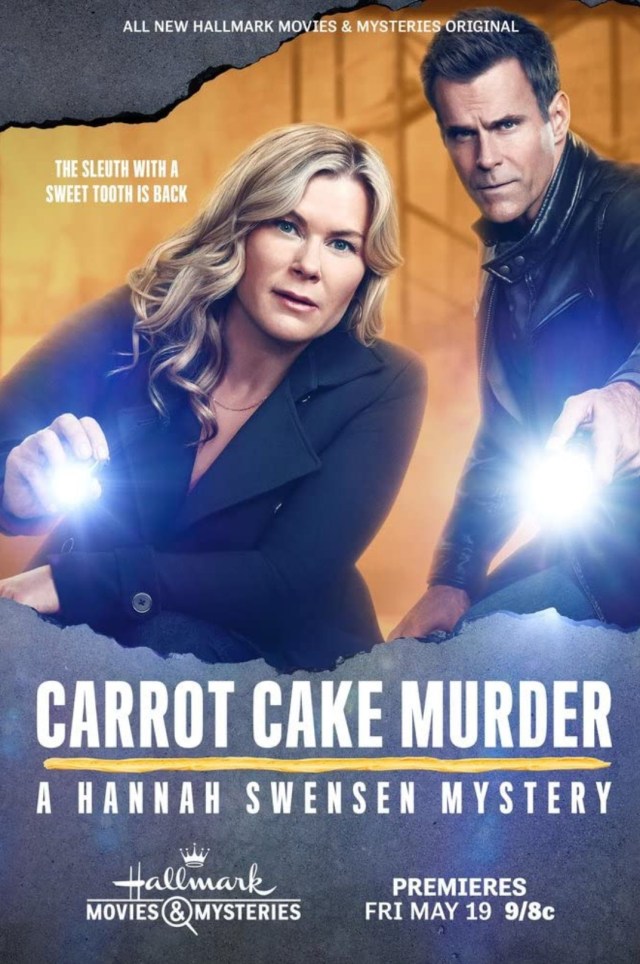
In 2023, Hallmark Movies & Mysteries released two new chapters in the Murder She Baked/Hannah Swensen series: Carrot Cake Murder: A Hannah Swensen Mystery and A Zest for Death: A Hannah Swensen Mystery. While I found both entries disappointing, Carrot Cake Murder: A Hannah Swensen Mystery was the most disappointing movie out of the two. Other than solving a mystery, this story didn’t progress the series forward. Something happens in Mike and Hannah’s relationship that is resolved in A Zest for Death: A Hannah Swensen Mystery. This made Carrot Cake Murder: A Hannah Swensen Mystery an even more pointless chapter in the series. If you’ve never watched the Murder She Baked/Hannah Swensen series, skip this film, as you wouldn’t be missing much.
Silent Night, Fatal Night is a Lifetime movie that is basically a gender-swapped, Christmas version of Misery, with a bit of a twist. Unlike the 1990 film, almost every character in Silent Night, Fatal Night makes one dumb decision after another. While the antagonist in the Lifetime film was unsettling, he was more annoying. Plus, I found it difficult to believe the protagonist, a mystery author, wouldn’t have more intuition to save herself. This isn’t the first time Lifetime has told a story similar to Misery. However, I wish the network would create stories that are less reminiscent of other, better movies from the 1990s.
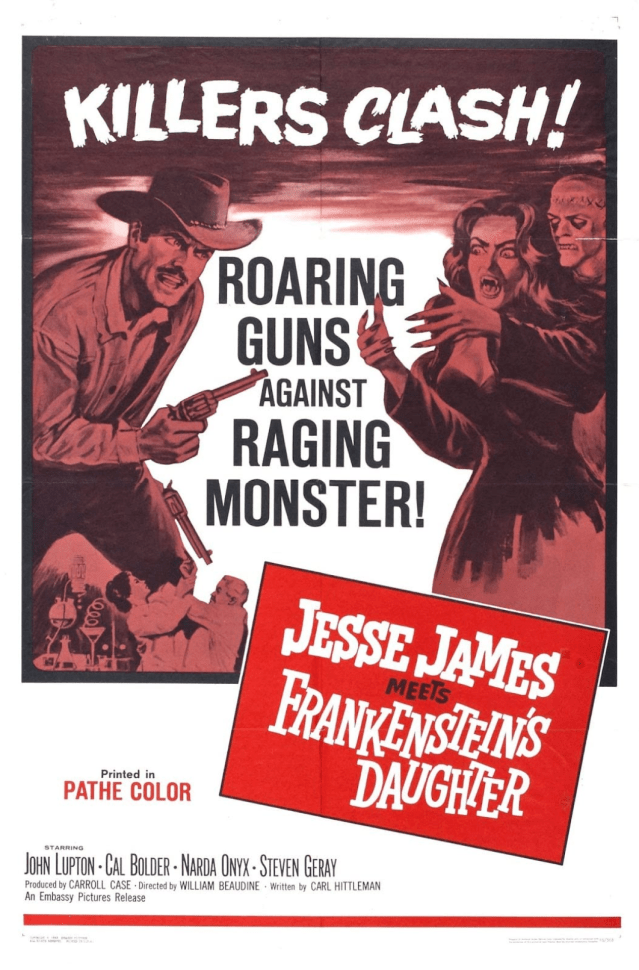
Chosen for the Fifth So Bad It’s Good Blogathon, Jesse James Meets Frankenstein’s Daughter was built on a gimmick. Instead of embracing the silliness of that gimmick, the movie’s creative team took their project a little too seriously. Their project was misleading as well, no friendship or romance forming between Jesse and Frankenstein’s granddaughter. Though Jesse James Meets Frankenstein’s Daughter is classified under the western and horror genre, the western genre is emphasized more, preventing a balance between the two genres. The 1966 film is not my “so bad it’s good” movie. Since I did giggle a few times while watching it, I took a step in the right direction to find my “so bad it’s good” film!
For me, 2023 was not the year for mysteries, as the top four worst movies on my list are mystery films. The main issue with Jesse Stone: Night Passage is how none of the detectives do any detective work. What they do instead is pull assumptions out of their pockets, with those assumptions being conveniently correct. Subplots were prioritized over the mystery itself. This creative decision caused the story to lack any sense of urgency. It was nice to see familiar faces like Saul Rubinek (who portrayed Artie on Warehouse 13) and Liisa Repo-Martell (who portrayed Maida Flynn on Emily of New Moon). Sadly, there wasn’t much the cast could do to save Jesse Stone: Night Passage.
3. Mount Hideaway Mysteries: Heartache and Homecoming
This movie is so bad, it was, at times, unintentionally funny. Parts of the script reminded me of The Cookie Mobster, with the screenwriters not displaying an understanding for how some things worked. One such example is how Game Boy Color video game consoles were incorporated into the story. The film was riddled with other flaws, such as the color of a character’s earrings changing from scene to scene. Another, more consistent, flaw was telling instead of showing, like other characters mentioning how good looking the male protagonist is every time he appears in a scene. Also, just because the protagonist is a veterinarian does not mean she has to hold an animal every time a scene takes place at the veterinary clinic.
2. The Abigail Mysteries
I have never reviewed or talked about a movie from Great American Family on 18 Cinema Lane. So, it’s a shame that when I do talk about one of their movies, it’s because the project is bad. It is possible to create a good mystery story with elements of faith. But because The Abigail Mysteries heavily prioritized the elements of faith, the mystery was overshadowed, causing the overall story to lack a sense of urgency. From no on-screen chemistry to inconsistent audio quality, The Abigail Mysteries was filled with flaws. There were even times when actors would deliver their lines too quickly, making it difficult to understand what they were saying. I know this is the network’s first attempt at making a mystery movie. But if Great American Family is serious about creating more mystery projects, their efforts need to be better than The Abigail Mysteries.
1. Mystery Island
This is the second year in a row where a newly released Hallmark Movies & Mysteries movie is the worst film I saw. With Hallmark no longer prioritizing the mystery genre, I can’t say I’m that surprised. The poor writing is the biggest problem of Mystery Island. The mystery’s reveal is so ridiculously written, it makes the entire story feel pointless. Emilia Priestly, the film’s protagonist, has a legitimate reason to get involved in the movie’s mystery, as she is a psychiatrist for Scotland Yard. Instead of using her skills to solve the case, Emilia a) flips through books, b) eavesdrops on other characters’ conversations, and c) follows people into the jungle and runs out of that same jungle in wedge sandals. I’d like to think Hallmark will find the motivation to create better mystery productions. But as of late 2023/early 2024, I’m not getting my hopes up.
Three years ago, I created a tier rank list of every Hallmark Hall of Fame movie I’d seen. These films were categorized by my overall impression of each presentation. In honor of 18 Cinema Lane turning five, I promised my readers I would revisit one of my past articles. I’ve seen more Hallmark Hall of Fame movies since I published my original tier rank list, so that’s the article I’ve selected! Along with adding more Hallmark Hall of Fame productions, I changed the names of each tier category. This decision was made to better reflect whether a film is worth its retail price of twenty dollars a DVD compared to its quality. The new tier category names are the following:
Bottom of the Barrel – Not Even Worth a Dime
Ok – Catch it on TV/Youtube
Decent/Fine – Bought It at a Garage Sale for a Dollar
Good – Get It On Sale for Half Off
Great – Where Do I Pay Full Price?
For each movie I added or moved to a different tier, I will share my thoughts on them. If I wrote about a movie on my blog, I will add the link to this article.
Screenshot taken by me, Sally Silverscreen
Bottom of the Barrel – Not Even Worth a Dime
Durango
Reviewed for the Legends of Western Cinema Week Blogathon, I stated Durango should have been a David and Goliath story. That’s because a David and Goliath reference was placed within the last nineteen minutes of the movie, the creative team’s attempt to include a higher stake into the story. But this attempt didn’t work because the majority of the film had lower stakes. The protagonist and his plan to transport cattle worked out perfectly, too perfectly for the standards of the western genre. This takes away any room for concern the audience could have for the characters and their well-being.
As I explained in my list of the top ten worst movies I saw in 2022, the audience was not given a reason to care about the characters and their story in Journey. This flaw was achieved because the film’s creative team didn’t provide explanations for the characters’ choices. It also did not help how annoying Grandpa Marcus was, his photography hobby becoming an obsession. A major theme of Journey is memories being irreplaceable. That theme was poorly delivered in Journey, as Marcus’ hobby creates a plot hole within the story. Also, I’ve seen Hallmark Hall of Fame movies express this theme better, such as The Lost Valentine.
A Place for Annie
When it comes to movies that are products of their time, they can fit into one of two categories: movies that serve as visual time capsules and those that are dated on arrival. A Place for Annie, sadly, falls into the latter category. The majority of the story focuses on the medical information of HIV/AIDS that was known during the late ‘80s to mid ‘90s. That focus causes the film to show its age more obviously. The way foster care/adoption is discussed in this story is so oversimplified, I couldn’t take that part of the movie seriously. Similar to what I said about Journey, the theme of adoption is expressed better in other Hallmark Hall of Fame stories, like Redwood Curtain.
The Corsican Brothers
Alexandre Dumas’ stories are, more often than not, filled with adventure, intrigue, and suspense. But in the case of The Corsican Brothers, these elements were lacking. Granted, I still haven’t read the book this movie is based on. Though I do wonder how similar the 1985 adaptation is to the source material? If the original story primarily revolves around Louis attending fancy events in Paris, that would explain why the adaptation is so underwhelming. However, the original story could explain some of the confusing parts of the movie, such as the woman giving some of the characters fates.
The 1996 movie, The Summer of Ben Tyler, feels like Hallmark Hall of Fame wanted to create their own version of To Kill a Mockingbird. Upon reflection of this film, it doesn’t seem like the creative team displayed a strong understanding for what made Harper Lee’s story work. If anything, it feels like ideas are copied from Harper’s novel and pasted into the Hallmark Hall of Fame presentation, making The Summer of Ben Tyler a little too similar to To Kill a Mockingbird. This is a case of if you’ve seen one movie, you’ve basically seen the other. So, if you’ve seen the adaptation of To Kill a Mockingbird, you’ve already seen The Summer of Ben Tyler.
Decoration Day
The way I feel about Decoration Day is similar to Promise; the majority of the story is very “slice-of-life”. To me, this makes both films less memorable than other Hallmark Hall of Fame titles. However, I did find Gee Pennywell’s dilemma over receiving the Congressional Medal of Honor the most interesting part of the movie. In fact, I wish Decoration Day had solely revolved around that dilemma.
Foxfire
Hallmark Hall of Fame has a history of adapting plays into films. Sometimes, a movie’s creative team will take advantage of the expansive nature of cinema, allowing the story to move beyond the boundaries of the stage. For Foxfire, though, the story was confined to the four walls of Annie’s house. A smaller cast and a condensed story also caused the 1987 Hallmark Hall of Fame project will feel more like a televised play. If I choose to watch Hallmark Hall of Fame film, I expect to watch a film. Foxfire subverted my expectations, but in a disappointing way.
Calm at Sunset is one of those movies where better, more interesting ideas were woven into the fabric of this story. One example is when the protagonist spots a cruise ship and imagines the types of people aboard that ship. Honestly, I wish Calm at Sunset was about that cruise ship instead. Similar to what I said about The Corsican Brothers, I haven’t read the book this movie is based on, so I don’t know which parts of the production came straight from the source material. If the book is pretty close to the film, it would explain why the adaptation was lackluster.
Witness for the Prosecution
Based on the adaptations of Agatha Christie’s books I’ve seen, the protagonist will play an active role in solving the mystery. Witness for the Prosecution is the exception to this statement, as Wilfred focuses more on the legal case he’s working to resolve. In a story where the protagonist doesn’t actively solve the story’s mystery, it can be difficult to get the audience invested in the story itself. Because Wilfred’s case is the primary focus of the story, the film is more dialogue heavy, putting emphasis on telling instead of showing. Hallmark Hall of Fame’s Witness for the Prosecution is a mystery that is light on the mystery.
In my editorial about the adaptation of The Flamingo Rising, I explained how the story should have been adapted into a television show or a multi-part mini-series. This is because the story itself is drawn out over the course of the protagonist’s life. Reflecting on the adaption, it felt like Hallmark Hall of Fame tried to fit The Flamingo Rising into their brand of storytelling. In this attempt, several parts of the source material were omitted or changed due to them not being “Hallmark appropriate”. As I did in the aforementioned editorial, I questioned why Hallmark Hall of Fame would choose to adapt Larry Baker’s story over a story that was more “Hallmark appropriate”?
Having read the source material and seen the adaptation of O Pioneers!, I can say the movie is respectful toward the book. With that said, if you’ve seen the film, you’ve already read the novel. Speaking of the adaptation, I said in my review how the story should have been adapted into a mini-series or a television show. With so many characters and so many parts of the story, maybe O Pioneers! would have benefitted from receiving more time. The 1992 Hallmark Hall of Fame presentation is a western that didn’t leave a memorable impression on me.
I’ve stated before on 18 Cinema Lane how the 1972 adaptation of Harvey is better than the original from 1950. While this statement is still true, the 1972 and 1950 versions of this story felt like a copy of one another. It makes me wonder why Hallmark Hall of Fame would choose to adapt Harvey if they knew they were going to make a lot of the same creative decisions as the original film? Despite the similarities, I did like the changes in the 1972 adaptation. One example is how the made-for-tv movie chose a dramatic tone for their version of the story instead of being both a drama and comedy.
Decent/Fine – Bought It at a Garage Sale for a Dollar
The Locket
For a movie titled The Locket, the locket itself is treated as an afterthought. What the story focuses on instead is the protagonist and his hardships. But from what I remember, the 2002 project addressed the importance of elder care. Since that topic is rarely brought up in Hallmark’s programming, I appreciate that creative decision. Marguerite Moreau is one of the reasons why I chose to watch The Locket. Her performance was so good, she ended up outshining the other actors in the movie! Unfortunately, Marguerite was kind of under-utilized in this film, as her on-screen appearances were not as consistent as I expected.
I said in my review of Saint Maybe how the adaptation is faithful to the source material. However, there are changes the film made from the book. One notable example is how religion/faith is downplayed in the Hallmark Hall of Fame presentation. Meanwhile, religion/faith played a significant role in the novel. For years, Saint Maybe was included in Hallmark Movies & Mysteries’ ‘Miracles of Christmas’ marathon. Now that I have seen the adaptation, I understand why the network would make this decision. Personally, I wouldn’t call Saint Maybe a Christmas story/movie, as the story itself takes place over several years.
The Lost Child serves as a good introduction to Native American culture, specifically the Navajo culture. Through dialogue and character interactions, the audience receives a glimpse into life on a Navajo reservation. For the story itself, The Lost Child didn’t leave a strong impression on me. The most interesting part of the film, Rebecca’s search of her family, wasn’t emphasized as much as her adjustment to reservation life. Also, Rebecca’s search for her twin brother was abandoned after she meets her biological family.
I’ve finally seen Loving Leah in its entirety! The way I feel about the 2009 movie is similar to The Lost Child; it’s a good introduction to Jewish religion and culture. Throughout the story, the audience receives a glimpse into the many aspects of Jewish life. Like The Lost Child, Loving Leah didn’t leave as strong of an impression as other Hallmark Hall of Fame titles. From what I remember, the story was a little too drawn out. But from what I also remember, it was nice to see the protagonists’ relationship unfold. With all that said, the movie was pleasant!
Good – Get It On Sale for Half Off
An American Story/After the Glory
Since publishing my review of An American Story/After the Glory, it has become one of my most popular reviews, garnering 1,838 views and counting! The innovative and compelling nature of the project is likely the reason why this particular title is so well-received on 18 Cinema Lane! Like I said in my review, An American Story/After the Glory felt kind of ahead of its time. This feeling is achieved by incorporating the discussion of veterans’ mental health into the script. The way veteran related topics are included in the story is reverent and respectful. An American Story/After the Glory is definitely one of Hallmark’s better military themed productions!
The Love Letter is one of Hallmark Hall of Fame’s more unique titles, as fantastical elements are rarely found in this collection of films. Yet this part of the story worked in the 1998 movie, helping to create a love story that was simple yet intriguing! The characters were not only well written, but also well-acted! Since the protagonists were multi-dimensional, their connection throughout the film was interesting to watch. I also liked the historical accuracy in The Love Letter, as the attention to detail was handled with care!
In my five years of movie blogging, I have discovered very few films that were better than their respective source material. Hallmark Hall of Fame’s Redwood Curtain is one of those films, as I found myself liking it over the play! The movie’s creative team took advantage of the expansive nature of cinema, broadening the horizons in Geri’s life. More characters were added to the story, giving them characterization that the play didn’t provide. Geri’s personality was more likable in the movie, which made me like her as a character. Redwood Curtain is a Hallmark Hall of Fame presentation I wish was re-released on DVD.
As of the publication of this list, Caroline? is, so far, the best movie I’ve all year! That’s because the 1990 production is a close to perfect example of what a Hallmark Hall of Fame presentation can and should be. From the younger actors’ performances to the differentiation of time, I could tell there was a lot of effort and care put into this project! Even though the story of a long-lost family member’s return is nothing new, the way Caroline? was written was creative, allowing this story to have its own identity. This movie is one I wish more Hallmark fans acknowledged!
During my blogging years, I have seen Charles Dickens adaptations I have liked. The 1980 version of A Tale of Two Cities is definitely one of those films! Despite the movie being two hours and thirty-six minutes, the story never felt too long. The immersive nature of the story helped the pacing, as I was invested in what was happening on screen. This Hallmark Hall of Fame production was so good, it makes me want to read the source material! It’s also another film from this collection that deserves more recognition!
Recently, I wrote about a movie that was recommended by one of my readers. That film was the 1998 romantic comedy, You’ve Got Mail, a title I chose to review for a recent blogathon! But that’s not the only film recommendation I’m talking about for a blogging event this month. Because September’s Genre Grandeur theme is ‘Movies That Take Place in Mexico’, I had to research titles that would be eligible for the event. When I discovered one of these movies was No Country for Old Men, I remembered how Annlyel, from Annlyel Online, had once recommended the film to me. Finding another good opportunity to review a recommended title, I selected the 2007 film for this edition of Genre Grandeur! No Country for Old Men is a movie I had heard of, as it was nominated for several awards during “awards season”. But since I hadn’t seen the film until this blogathon, I couldn’t form an opinion on it. Now that I have checked out No Country for Old Men, I can finally share my thoughts on the 2007 picture!
No Country for Old Men poster created by Paramount Vantage, Miramax, Scott Rudin Productions, and Mike Zoss Productions
Things I liked about the film:
The scenery: In some scenes, the story takes place in a desert. Through screen-writing and cinematography, the desert looked photogenic on film! One of my favorite shots is when Llewelyn is returning to his truck. While he does this, a huge gray storm-cloud is slowly overtaking the sand-colored desert in the background. Thunder can also be heard. This shot looked striking on screen, as well as serving a visual representation of what was to come in the story.
Showing instead of telling: The script of No Country for Old Men doesn’t rely on dialogue. This is to emphasize the visual presentation of the story. Choosing to show instead of tell also allows the audience to figure things out for themselves. Throughout the story, Llewelyn is being chased by Anton. During this chase, it is unknown how Anton knows where Llewelyn is. Until Llewelyn makes a discovery that explains Anton’s knowledge of his whereabouts. This discovery and its connection to Anton are visually presented, with no dialogue included. The audience is given the opportunity to piece the story together because of this creative decision.
Hiding causes of suspense: As I already explained, No Country for Old Men emphasizes showing instead of telling. Another way this is accomplished is by hiding characters that cause suspense. When Llewelyn discovers a crime scene, he sees another truck is parked next to his truck, with characters entering and exiting their vehicle. Because this takes place at dawn, only the silhouette of the characters and their truck is shown. Later in the movie, Llewelyn is being chased through a small town. During the chase, the film’s antagonist can be seen in the reflection of a nearby store window. But only their silhouette is shown in this window, causing suspense to take place in the story. Both suspense and intrigue were incorporated into the film because of the use of showing instead of telling!
The run-time: No Country for Old Men is a movie that boasts a run-time of a little over two hours. While a competently written, directed, and acted story can be captured in a two-hour time-frame, I don’t think it was necessary for the 2007 film to be this long. Scenes were either drawn-out or added for the sake of satisfying this run-time. This creative decision caused the story to take longer to get to its intended point. In my opinion, No Country for Old Men could have benefitted from having a shorter run-time, say an hour and twenty or thirty minutes. The story would have reached its point sooner and the script would have been a bit tighter.
Almost no sense of urgency: Like I just mentioned in this review, No Country for Old Men has a run-time that, in my opinion, is longer than necessary. The film’s run-time caused the story to contain almost no sense of urgency, making suspense and intrigue far and few between. No Country for Old Men has a “cat and mouse” type narrative, with the protagonist constantly trying to get away from the antagonist. The chase between these characters felt like it was taking place in slow motion because of the drawn-out story. This resulted in the picture, sometimes, feeling boring.
Some things left unexplained: While I appreciate the script respecting the audience’s intelligence by allowing them to figure things out for themselves, there are some parts of the story I wish had been explained. One example is when Anton stops at a gas station. He explains to the gas station’s owner how he has a special coin that he’s carried for 22 years, stressing how his coin was meant to be at that specific place in time. Throughout the movie, however, there are no explanations provided for the coin’s significance. In fact, Anton never brings up that coin again after his stop at the gas station.
Throughout cinema, there have been movies that have received an abundance of praise. Some of these films have left me confused, questioning why it has achieved its positive recognition. For me, No Country for Old Men is one of these movies. While it’s not a bad title, it does leave me wondering why it won Best Picture, let alone get nominated at all? The film has a run-time of a little over two hours. Instead of benefitting the story, the run-time caused the movie to feel too drawn-out and, sometimes, boring. There are strengths within No Country for Old Men, such as utilizing the storytelling technique of showing instead of telling. However, these strengths do not outweigh the flaws. Looking back on the movies from the western genre I’ve reviewed, I haven’t found a film from this genre I actually liked. Similar to made-for-tv movies from the 1970s and my choice for a “so bad it’s good” title, I guess it’s time to go back to square one and continue the quest.
Overall score: 6 out of 10
Have you seen No Country for Old Men? Are there any movies from the western genre you’d like to see me review? Please tell me in the comment below!
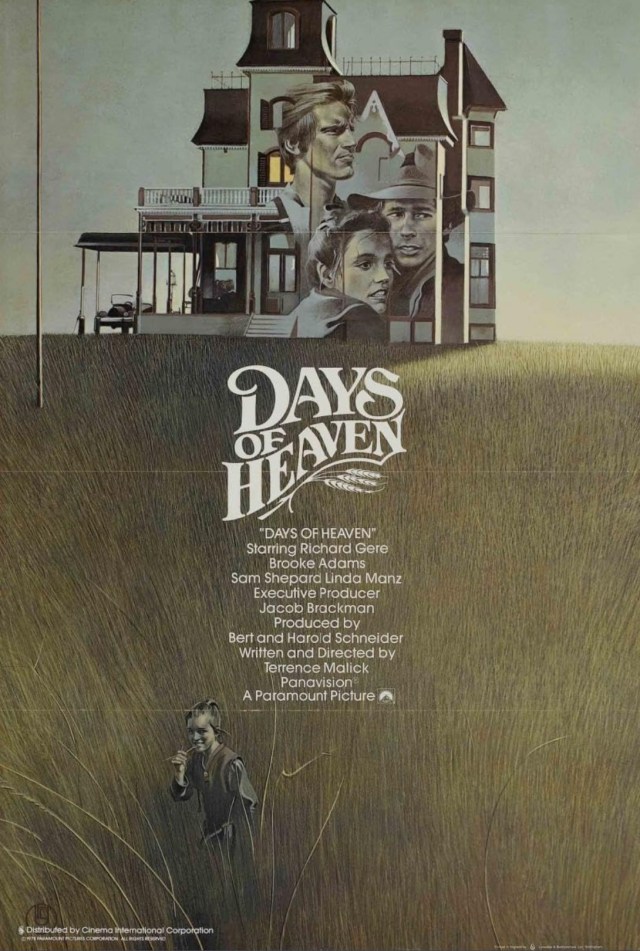
Have you ever stumbled upon a film that was “new to you” and think, “I’ve never even heard of this”? That was my experience discovering the 1978 movie, Days of Heaven. Prior to the Legends of Western Cinema Week Blogathon, I had never heard anyone talk about the aforementioned Western. With the blogathon fast approaching, Days of Heaven crossed my path at the right time! This is my fourth year participating in the Legends of Western Cinema Week. Looking back on the programs I reviewed for the event, I realized the stories fell into one of two categories: cowboys seeking justice or some aspect of farming. While Days of Heaven belongs in the latter category, the primary perspective focuses on the actual farming. This is different from a movie like O Pioneers!, where the story’s priority was the relationships between the characters. How does Days of Heaven rank among the films I reviewed for the Legends of Western Cinema Week? Before traveling on those “happy trails”, let’s read my review!
The scenery: The majority of Days of Heaven takes place in the wheat fields of Texas. Despite how monotonous that type of location may sound, the wheat fields offered up many glimpses of natural beauty! My favorite shot in the movie was when a storm cloud approached the story’s wheat fields. Large, gray clouds dominated the sky, appearing larger than life on screen. The presence of these clouds provided a small window into the blue sky above the fields. The golden yellow of the wheat was a pop of bright hue against the sky’s blue and gray palette. This shot was so beautifully captured, it, honestly, looked like a painting!
The historical accuracy: Days of Heaven is set in the 1910s. Like any historical period film, it’s important for the story to feel immersive due to its historical accuracy. Based on what the movie presented, the creative team behind Days of Heavenpaid attention to how historically accurate their project looked! The finer details visually prove that point! In a scene where the story’s protagonists, Bill, Abby, and Linda, go swimming, their swimsuits are reflective of the clothing styles of the early 1900s. While Bill wore what would be described as a short-sleeved unitard, Linda and Abby wore swimming dresses, complete with stockings. When it came to transportation, the trains and tractors appeared to be coal powered. Even their exterior designs looked industrial, considered antique be the standards of today. The historical accuracy paired with the aforementioned scenery made Days of Heaven an appealing film to look at!
Richard Gere and Brooke Adams’ on-screen chemistry: As I mentioned in my previous point about the movie’s historical accuracy, Bill and Abby are two of the protagonists in Days of Heaven. Portrayed by Richard Gere and Brooke Adams, these characters are in a romantic relationship. When Abby and Bill are together in a romantic context, the on-screen chemistry between Brooke and Richard was sweet. It felt like the on-screen couple truly got along with one another. During their interactions, there was a gentleness shared and understood between them. Whether walking in the water or cuddling on top of a train, Abby and Bill’s relationship was pleasant to watch because of Brooke and Richard’s acting abilities. Without spoiling Days of Heaven, I will say Bill and Abby’s relationship was not consistent throughout the story. This is a shame, as I liked seeing these characters together.
Legends of Western Cinema Week 2023 banner created by Olivia from Meanwhile, in Rivendell, Heidi from Along the Brandywine, and Hamlette from Hamlette’s Soliloquy
What I didn’t like about the film:
An unclear motive: According to the film’s synopsis, Bill, his younger sister, Linda, and his girlfriend, Abby, plan to con a farmer out of his money and wheat fields. Throughout the movie, however, their motive for conning The Farmer (what Sam Shepard’s character is referred to) is not made clear. I understand Bill, Abby, and Linda don’t like working under someone’s thumb. But the man who they try to con doesn’t seem to deserve a comeuppance. In fact, The Farmer, more often than not, is respectful toward Abby, even going so far as to allow Bill and Linda to live in his house, in order to keep Abby’s “family” together. In a series of voice-overs, Linda claims The Farmer is dying of an unnamed illness. Later in the film, though, she states how The Farmer’s health is staying the same, neither improving or regressing. Yet again, it is never made clear if The Farmer’s health issues are the reason for the con. I wonder why I was supposed to care about Bill, Linda, and Abby’s conning scheme when I don’t even know why The Farmer was being conned in the first place?
A drawn-out story: Days of Heaven has a run-time of about an hour and thirty minutes. Yet the story itself was drawn-out longer than necessary. This issue was caused by establishing shots littered throughout the movie, which served as the production’s padding. I know establishing shots are meant to set up a given scene. But if the creative team of Days of Heaven had cut some of the film’s establishing shots, the run-time would have been trimmed down to about an hour and ten to twenty minutes.
Distance from characters: Through a combination of acting talent, screenwriting, and direction, a movie’s audience can not only be introduced to a character, they can also get to know that character as the story progresses. In Days of Heaven, however, it feels like the characters are kept at a distance from the audience. Sure, the characters share pieces of information about themselves. But this information only allows the audience to become familiar with them. Because of the aforementioned distance, the audience is prevented from connecting with the characters. That disconnection also prevents emotional investment in the story.
The first movie I reviewed for a blogathon this year was Black Narcissus. In my review of the 1947 movie, I said that while Black Narcissus was a competently made film, it was one of the most confusing movies I’d ever seen, due to the story providing little to no explanations. I feel similarly about Days of Heaven. The film itself is very photogenic, from the scenery to the presentation of the story’s historical accuracy. But the story was confusing. No motive for why Bill, Abby, and Linda are conning The Farmer is made clear in the script. Emphasis on style over substance affected any connection the audience could have had with the characters. Throughout the movie, several questions arose that weren’t really answered, such as how The Farmer knew a group of circus performers who came to visit his home. This added to the story’s confusion. As a film, I thought it was just ok. But as a Western, it provides a perspective that is different from the typical cowboy or cattle farmer.
Overall score: 6 out of 10
Have you seen Days of Heaven? Which Westerns would you like to see me review? Tell me in the comment section!
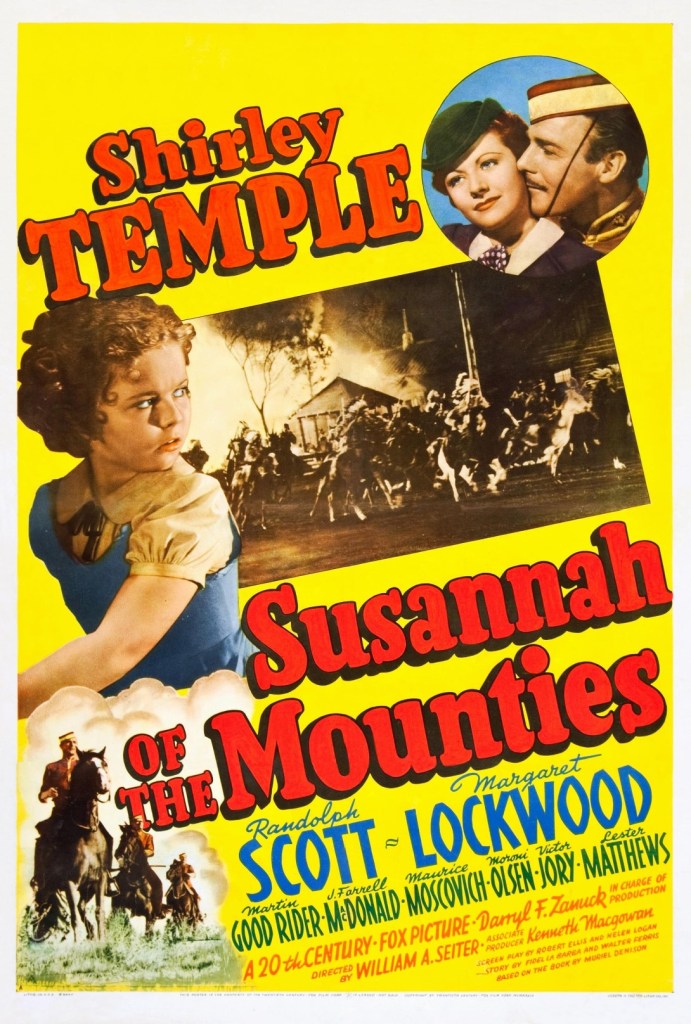
When it comes time for movie reviews, I try to select titles that will either encourage my readers to check them out for the first time or give my readers a reason to re-visit them. I also select titles in the hopes they are good films. While looking for a movie for this Blog Follower Dedication Review, I realized I hadn’t written about a Shirley Temple film since 2019. Because of that and with When Calls the Heart’s tenth season on the horizon, I felt Susannah of the Mounties was a suitable choice for this review! Anytime I think of Shirley’s movies, her musicals typically come to mind. Susannah of the Mounties is a different production from her filmography, as the 1939 film is a western. On 18 Cinema Lane, the western genre is underappreciated. Though I do try to review a western movie every now and then, I haven’t written about a western film since February, when I reviewed The White Buffalo. As I write this Blog Follower Dedication Review, I want to thank every follower of 18 Cinema Lane! Your enthusiasm for these movie reviews is always appreciated!
The acting: Out of Shirley’s movies I’ve seen, including Susannah of the Mounties, I recall her performances containing a certain amount of genuine sincerity. This aspect makes Shirley’s characters worthy of support from the audience. At the beginning of the movie, the Mounties discover Susannah is the only survivor of an attack on a wagon camp. She is understandably terrified, shrinking away from the Mounties in order to get away from them. Susannah is tearfully telling the Mounties to leave her alone, as her grandfather died during the attack. Through this portrayal, the heartbreak and fear Susannah experiences can be seen and heard. Her reaction to the Mounties’ encounter visually represents how a child might respond to a traumatic situation. With everything said, the audience is given a reason to feel sympathetic toward the film’s protagonist.
Randolph Scott portrays Inspector Angus “Monty” Montague, one of the Mounties who rescues Susannah. Throughout the story, he serves as Susannah’s father figure, teaching her good values and trying to protect her from danger. In one of the film’s funniest scenes, Monty and Susannah are eating breakfast. During breakfast, Susannah doesn’t hesitate to ask if he’ll marry Vicky, a woman who is temporarily staying at Monty’s Mountie camp. Snapping to attention, Monty gives Susannah a startled expression, his reaction to Susannah’s question on point for the situation. This scene serves as a good example of how Randolph’s performance never missed a beat!
Another performance that didn’t miss a beat was Martin Good Rider’s! Portraying Little Chief, son of Chief Big Eagle, Martin’s performance was consistent throughout the movie. During his time in the Mountie camp, Little Chief carries himself with a serious demeanor. Any time he explained an aspect of his culture to Susannah, his tone of voice and facial expression are stern. However, Little Chief does express happiness from time to time. When he is calling Susannah a baby in his language, he is smiling and even giggling at Susannah’s frustrations over not knowing how to ride a pony. One of the reasons why I liked seeing Little Chief and Susannah’s friendship progress in this story is because of Martin’s and Shirley’s performance!
The cinematography: In Susannah of the Mounties, there were three shots I thought were captured very well through a cinematic lens. One morning, as the British flag is raised over the Mountie camp, a Mountie is shown, through a medium shot, standing on the balcony of a nearby log cabin. As the flag rises in the air, its shadow is reflected off the cabin and even the Mountie himself. Another scene shows Susannah smoking a pipe for the first time. When she is looking out on the Mountie camp, the shot of the camp is captured through a fuzzy, uneven lens. This creative decision was made to show this location from Susannah’s perspective, as she is light-headed after smoking the pipe. Later in the movie, some members of the Blackfoot tribe are horseback riding near a body of water. While riding during dusk, a blue-purple sky and a large, white-gray mountain are in the scene’s background. In a sweeping long shot, the riders are reflected against the mirror stillness of the water. These details allowed this scene to be the most beautiful one in the movie!
Messages of fairness and learning from one another: After meeting Little Chief for the first time, Susannah becomes frustrated by the way he treats her. She doesn’t think she and Little Chief could be friends. But during a heart-to-heart conversation, Monty explains to Susannah how the Mounties try to learn from Little Chief’s Blackfoot tribe in order to work with them. Before Little Chief stays at the Mountie camp, the Mounties and his Blackfoot tribe attempt to find a solution to the film’s overarching conflict. During this meeting, the Mountie’s Superintendent, Andrew Standing, makes it clear that the Mounties are not blaming Chief Big Eagle’s tribe for the crimes committed near the Mountie camp. Andrew explains how the Mounties are turning to Chief Big Eagle’s tribe for help catching the perpetrator. Susannah of the Mounties was released in the late 1930’s, with a story taking place in the 1880s. Therefore, I was not expecting the inclusion of timeless messages such as fairness and learning from one another.
Susannah’s dislike for Vicky: Vicky Standing is a woman who visits her father at his Mountie camp. Portrayed by Margaret Lockwood, she ends up capturing Monty’s heart. Susannah does not like the idea of Monty and Vicky falling in love. In fact, Susannah dislikes Vicky so much, she wants Vicky to go back home to Toronto. Susannah’s negativity toward Vicky felt out of character for a Shirley Temple film. When a male and female parental figure are romantically interested in each other, Shirley’s character will typically find a way for those characters to fall in love. Her character does this in an attempt to gain a family for her to belong to. Because Susannah is an orphan, it would have made more sense for her to want Monty and Vicky to become a couple, in the hopes they will get married and adopt Susannah.
A disjointed story: An overarching story in Susannah of the Mounties is the Mounties figuring out who is murdering and looting near their camp. They work with a local Blackfoot tribe in their efforts to catch the perpetrator. This part of the story is serious, complicated, and even violent. With Susannah being one of the few children in the story, the film’s protagonist isn’t able to provide much assistance to the Mounties. Instead, Susannah spends her time befriending Little Chief, Chief Big Eagle’s son. Susannah’s story and the Mountie’s story felt like two separate stories that belonged in their own movies. The contrasting tones of these stories kind of made the film feel tonally inconsistent.
A misleading title: As I just mentioned in this review, Susannah isn’t able to provide much assistance to the Mounties as they attempt to stop crime. This is because a) Susannah is a child and b) the Mountie’s story is serious and even violent at times. Yet this movie is titled Susannah of the Mounties, implying the protagonist and the Mounties would work together to save the day. I know the film is based on a novel of the same name by Muriel Denison. However, I still feel the title is misleading.
In the western genre, a component that is typically present is higher stakes. This is when a conflict is large enough in scope to affect the well-being of the characters. Susannah of the Mounties is a story with higher stakes, as the lives and careers of the characters are in danger. Because of this, it doesn’t give the movie’s protagonist, Susannah, much to do. In fact, Susannah’s story and the Mountie’s story feel like separate tales from their own films. When I look back on Shirley’s movies I liked, such as Rebecca of Sunnybrook Farm and Heidi, I think about what made those titles work. Then I remember how those stories had lower stakes, which allowed Shirley’s character to play a larger role in the story. I also reflect on other aspects of Susannah of the Mounties I didn’t like, such as the misleading title and Susannah’s dislike for Vicky. With everything I said in this review, I think this is one of Shirley’s weakest movies I’ve seen.
Overall score: 6.6 out of 10
Have you seen Susannah of the Mounties? Are there any western films you’d like to see me review? Let me know in the comment section!
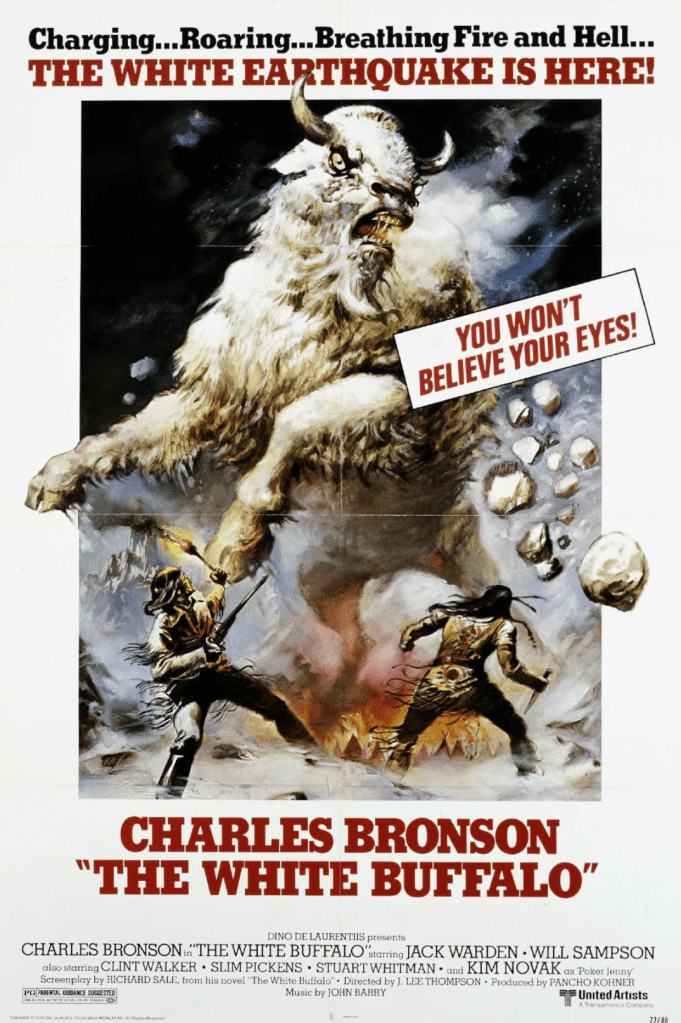
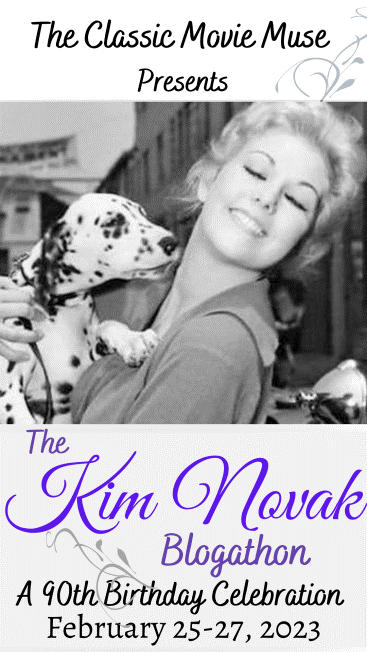
Though it’s only February, it seems like 2023 has become the year where movies that sound “bonkers” end up getting reviewed on 18 Cinema Lane. First, it was the Lifetime movie, Sea Change. Most recently, it was Jesse James Meets Frankenstein’s Daughter. Now, for Classic Movie Muse’s Kim Novak Blogathon, it’s The White Buffalo. If it wasn’t for this event, I would have never heard of this film, as I happened to stumble upon it on Kim’s IMDB filmography. Based on the title, synopsis, and poster, The White Buffalo seemed like it would be “bonkers”. But as Sea Change and Jesse James Meets Frankenstein’s Daughter have taught me, just because a movie sounds “bonkers”, doesn’t mean it will be “bonkers”. So, I was curious to see if The White Buffalo met my expectations. I’ve also mentioned in the past how westerns aren’t often reviewed on 18 Cinema Lane. So writing about The White Buffalo for the Kim Novak Blogathon has given me an excuse to check out more western films!
The White Buffalo poster created by Dino De Laurentiis Company and United Artists
Things I liked about the film:
Kim Novak and Charles Bronson’s on-screen chemistry: In The White Buffalo, Kim portrays Poker Jenny, a widow from the town of Cheyenne. When Bill, portrayed by Charles Bronson, arrives in town, he pays Jenny a visit. Though these characters spent only a brief period of time together, I felt Kim and Charles had strong on-screen chemistry! There was camaraderie between Jenny and Bill, a shared history only they knew. Confident personalities complimented one another, highlighting how well they get along. Because of their strong acting performances, both Kim and Charles successfully sold this relationship! I wish their characters shared more screen time together.
Using the buffalo sparingly: The White Buffalo has gained legend status in the world within this movie. This is because of the terror it inflicts on people who have crossed its path. The buffalo itself is only shown in a handful of scenes, while the majority of the film shows the characters either talking about the buffalo or searching for its existence. That creative decision was a good way of building tension and suspense for the audience. Limited presentation of the buffalo highlights how this creature is a threat who can show up unexpectedly. It is also a film-making technique from the horror genre, where the unseen can be scarier than what is seen. This reminds me of films such as Jaws.
Building atmosphere: In any film, the atmosphere can compliment the world the characters and story exist in. It can also elevate the movie’s intended tone. In the opening scene of The White Buffalo, a snowy landscape is presented at night-time. Slow camera movements travel over the landscape, building up to the audience’s first look of the White Buffalo. Suspenseful music is heard on top of the footage, providing a reason for the viewer to be scared of the titular creature. When the buffalo finally appears on screen, it’s an explosive moment where adrenaline and terror collide. The opening scene of this movie lays down the foundation for what this story is about!
Limited sense of urgency: Throughout the film, Bill and Crazy Horse, portrayed by Will Sampson, are seeking the White Buffalo in order to destroy it. This quest serves as the main conflict in The White Buffalo. While there was a sense of urgency in the story, it wasn’t consistently featured in the movie. Along with the film’s main conflict, sub-conflicts share the run-time, such as Bill’s encounter with a criminal from his past. Because of this creative decision, those sub-conflicts took away from the urgency toward finding the White Buffalo.
The under-utilization of Kim Novak: In past blogathons, I have reviewed a movie because of a certain actor’s involvement, only to see that actor’s talents under-utilized. This was the case when watching The White Buffalo, as Kim Novak is one of the reasons why I sought out this film. As I mentioned earlier in this review, Jenny and Bill spent only a brief period of time together. During this hour and thirty seven minute movie, Kim appeared in about three to four scenes. She did a good job with the acting material she was given. However, I was disappointed by her limited on-screen appearances.
The run-time: When talking about Kim’s few appearances in The White Buffalo, I said the movie was an hour and thirty seven minutes. With the story itself being straight-forward, the run-time doesn’t need to be very long. This could have been achieved had the sub-conflicts been eliminated from the script. The run-time could have also been shortened if some scenes were cut down. One example is when Bill meets Charlie for the first time, a scene that lasts about fifteen minutes.
In the introduction of this review, I said just because a movie sounds “bonkers”, doesn’t mean it will be “bonkers”. That is what happened when I saw The White Buffalo. At best, the movie is ok. The atmosphere was well-built and the acting was strong. The film even does a better job at combining the western and horror genres than Jesse James Meets Frankenstein’s Daughter! But the film isn’t without its flaws. The story contains a limited sense of urgency and the movie is a bit drawn out. I was also disappointed by the under-utilization of Kim’s talents. However, watching The White Buffalo did give me an opportunity to seek out more projects from Will Sampson’s filmography, as I am familiar with his performance in One Flew Over the Cuckoo’s Nest. Like I said in this review’s introduction, I was also given an excuse to watch more western movies. Therefore, I’m grateful I was able to expand my cinematic horizons!
Overall score: 6-6.1 out of 10
Have you seen The White Buffalo? Are there any westerns you’ve checked out that also feature the horror genre? Please tell me in the comment section!
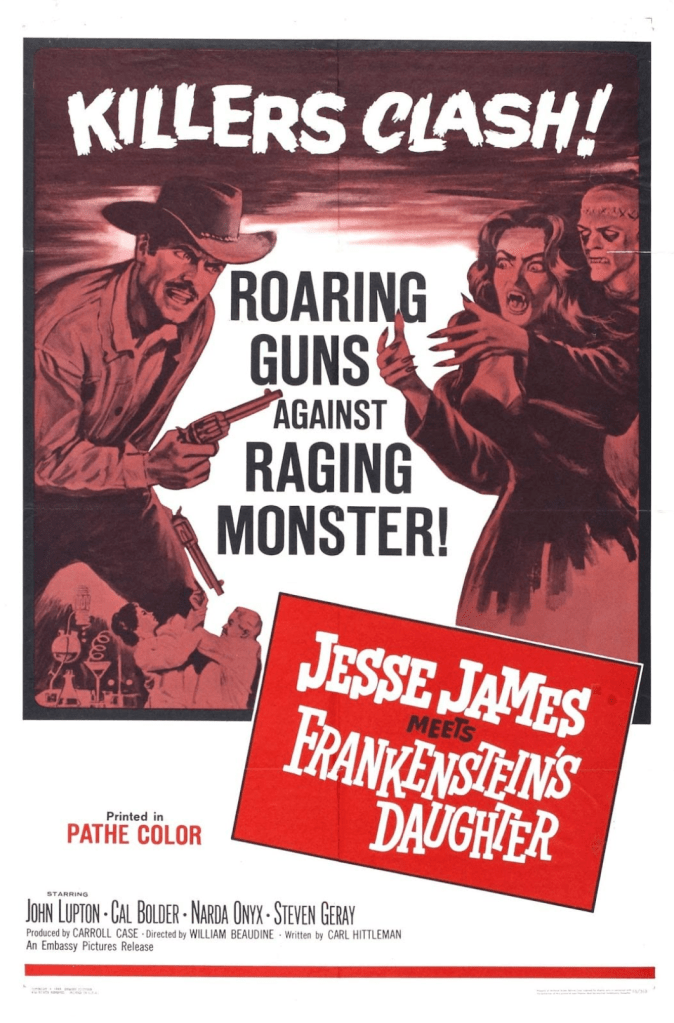
My quest to find my “so bad it’s good” movie has, at this point, turned into a saga. During my time participating in the So Bad It’s Good Blogathon from Taking Up Room, I have selected a film I thought would earn the coveted title, only to have that film fall short of my expectations. But I haven’t given up, as I still believe my “so bad it’s good” film is out there somewhere. When I reviewed Sea Change, I said the movie sounded so “bonkers”, I had to check it out for myself. I had a similar experience when I discovered the 1966 film, Jesse James Meets Frankenstein’s Daughter. Based on that title alone, the movie sounded “bonkers”, a well-known criminal from the “wild, wild west” crossing paths with someone from the story of Frankenstein. I hadn’t seen a film where the western and horror genres combined, so I was curious to see how this story would turn out. I was also curious to see if Jesse James Meets Frankenstein’s Daughter would finally be my “so bad it’s good” movie.
Maria’s house: Within this movie’s dialogue, Maria explains how her house formerly belonged to a missionary. Though the space is more reflective of Maria’s taste in design, I was impressed with the set! Despite only three rooms being shown on screen, my favorite room was the sitting room! The walls and massive fireplace were covered in a light-colored sandstone. A large medallion with carved images sits over the fireplace, boasting a darker metal hue. Red armchairs and curtains nicely complimented the sandstone. These details added elements of elegance and European flair to the desert!
The inclusion of science: In stories from the western genre, science isn’t often found in the script. In fact, the only times I’ve seen science included in western stories are during school lessons or whenever a medical situation takes place. Maria is a scientist from Austria, who just so happens to be related to the same Frankenstein from Mary Shelley’s novel. She is driven to make her experiment work, using an artificial brain that was passed down through her family. Despite the film’s science being poorly written, I appreciate this story adopting a more unique identity. I also appreciate the creativity this movie’s creative team attempted.
Poorly written science: As I previously stated in this review, the science in Jesse James Meets Frankenstein’s Daughter is poorly written. It honestly made the characters sound like they didn’t know what they were talking about. While performing one of her experiments, Maria explains to her brother why they moved to the United States. She says there are more “electrical storms” in the United States than there are in Austria. What Maria failed to remember is how thunderstorms can take place anywhere, as clouds can congregate to create the effects of a typical storm, such as lightening. This made Maria’s trip seem kind of pointless.
A misleading title: I mentioned in this review’s introduction how the title of Jesse James Meets Frankenstein’s Daughter sparked my curiosity, as it made the movie sound “bonkers”. Personally, I thought the film would feature Jesse James in his younger years interacting with the daughter of Frankenstein’s monster. However, the title turned out to be a lie. Maria is Victor Frankenstein’s granddaughter. When Jesse meets Maria, forty minutes into the movie, nothing happens after their initial meeting. They don’t fall in love or form some sort of alliance. If given an honest title, this film would be called “Jesse James Meets Juanita”.
Delayed reactions: Though not a common flaw, there were a few times where actors presented delayed reactions. When Juanita’s family first meets Jesse and his friend, Hank, both men are running from the law. Hank has a very noticeable injury, which is getting worse by the minute. But it takes Juanita about five to ten seconds to acknowledge Hank’s injury. I’m not faulting the actors, as they tried their best with the material given. I will fault the screenwriting, as there could have been a stronger sense of urgency written into the script.
Lack of horror: In this review’s introduction, I said I was curious to see a movie combine the western and horror genres. But when I watched the film, the western genre was emphasized. To me, it felt like the movie’s creative team wanted to take their western story seriously, instead of finding a balance between the horror and western genres. When the horror elements were utilized, it seemed like they were used to tell a rehashed version of Mary Shelley’s story. Even though I appreciate the creativity attempted, I wish the delivery was stronger.
For five years, I have been searching for my “so bad it’s good” movie. Throughout this search, I have found films that were either ok or disappointing. With Jesse James Meets Frankenstein’s Daughter, there were a few times I found myself giggling. But I wouldn’t say this movie is “so bad it’s good”. To be honest, this film was built on a gimmick. Though that could work with the right creative talent, Jesse James Meets Frankenstein’s Daughter didn’t have a strong delivery. It felt like the movie’s creative team wanted to take their project seriously. This made the film feel more like a generic western. The inclusion of the horror genre added some creativity to the movie. Unfortunately, the horror elements were not utilized well. With this review for the So Bad It’s Good Blogathon, it feels like I took a step in the right direction! Hopefully, those steps will lead me to my “so bad it’s good” movie!
Overall score: 4.9-5 out of 10
Have you seen or heard of Jesse James Meets Frankenstein’s Daughter? Would you like to see more westerns combine other genres? Please let me know in the comment section!
When I participated in the Legends of Western Cinema Week last year, I reviewed the Hallmark Hall of Fame film, Durango. Unfortunately, the movie was weaker than I hoped. While thinking about what to write about for 2022’s event, I remembered how I had never seen O Pioneers! Therefore, I thought the Legends of Western Cinema Week was the perfect time to finally see the film! In the 1990s, Hallmark Hall of Fame had a history of adapting stories from the western genre. After the premiere of Sarah, Plain and Tall, the story’s sequels were released; Skylark in 1993 and Sarah, Plain and Tall: Winter’s End in 1999. Outside of this trilogy, Hallmark Hall of Fame created O Pioneers! (in 1992), Rose Hill (in 1997), and Durango (in 1999). While looking back on this history, one has to wonder if this was done in an effort to capitalize on Sarah, Plain and Tall’s success? Whatever the reason, these films provide more than one perspective of westerns. Now, with that introduction out of the way, let’s review O Pioneers!
O Pioneers! poster created by Craig Anderson Productions, Hallmark Hall of Fame Productions, Lorimar Television, and Prairie Films
Things I liked about the film:
The acting: I’ve seen a small handful of Heather Graham’s projects from her filmography. Based on what I’ve seen, she seems to receive one of two types of roles: a “damsel in distress” or the “ditzy” girl next door. But in O Pioneers!, Heather’s role was different. Portraying Alexandra Bergson in her younger years, she not only displayed a motherly persona, she also showcased a quieter strength. After trying to find more fertile farm land, Alexandra comes up with a plan to purchase the surrounding farm land near her family’s home. When she discusses this plan with her brothers, Alexandra explains it in a sure, yet calm way. Even when her brothers doubted her enthusiasm, she consistently maintained her composure, never letting uncertainty get in her way. Through her performance, Heather does a good job at foreshadowing who her character would become!
The majority of O Pioneers! revolves around Alexandra after her family’s farm is established and successful. Because this part of the story takes place fifteen years later, Alexandra is portrayed by Jessica Lange. Throughout the film, Alexandra experiences a variety of situations. This allowed Jessica to utilize different facial expressions, body languages, and emotions. As she reads a letter from her brother, Emil, a warm smile lights up Alexandra’s face. She appears to be sitting in a comfortable position, a friendly demeanor plain to see. Two scenes later, as Alexandra is sharing bad news with Emil, a sullen look is seen on her face. Her tone of voice is serious, as she’s trying to break this news as honestly, but gently as possible. The strength of Jessica’s acting abilities helped her performance appear believable!
One of the most important people in Alexandra’s life is Emil. Portrayed by Reed Diamond, Emil had a personality that was pleasant. Reed adapts to each situation in Emil’s life as well, similar to Jessica’s performance. In the aforementioned scene where Emil receives bad news, a concerned look is shown on his face. He also listens intently to what Alexandra had to say. Emil’s bottom lip quivers, as shock quickly morphs into sadness. The scene ends with Alexandra consoling her brother as he crumbles into tears.
Historical accuracy: O Pioneers! takes place between the late 1880s and early 1900s. Keeping this in mind, it’s important to note how the production looked and felt like the viewer was transported back to that time! In one scene, a man named Frank is walking around the interior of his house. On the wall in the kitchen, a telephone can be seen. The style of this phone is similar to those featured in programs like When Calls the Heart. Another timely piece of technology was the kerosene lamp hanging from the ceiling. This lamp was found in the dining room of Alexandra’s house. Three more kerosene lamps are located in Alexandra’s posh sitting room. Even though these props are smaller components of the movie, it shows how detail oriented this film’s creative team was!
Reed Diamond and Anne Heche’s on-screen chemistry: Anne Heche portrays Marie, a friend of Emil’s since childhood. Most of Emil and Marie’s interactions take place after they grew up, when they are able to live their own lives. During these encounters, I found their on-screen chemistry very sweet! Marie carried herself with a sense of whimsy, almost like she’s a “child at heart”. Meanwhile, Emil is more headstrong, choosing to ground himself in reality. Instead of clashing, these differences worked in Anne and Reed’s favor. The opposites attracting created a balance between their characters. During Marie and Emil’s interactions, they seemed to share an understanding with each other. Their shared history provided that layer of understanding, as well as Anne’s and Reed’s performance.
Legends of Western Cinema Week banner created by Heidi from Along the Brandywine, Olivia from Meanwhile, in Rivendell, and Hamlette from Hamlette’s Soliloquy.
What I didn’t like about the film:
An episodic story: The story of O Pioneers! revolves around Alexandra’s attempts at creating a successful farm with the land she inherited. But instead of those attempts providing an overarching conflict, the movie is filled with smaller conflicts that are resolved in a shorter amount of time. Ivar is a man Alexandra and her family have known for many years. He claims to have powers from God, which causes him to receive some negative attention. At one point, Ivar is threatened of being sent to an asylum. But in the very next scene, Alexandra simply talks to her brothers about what she’ll do if something happens. After that, the issue is unceremoniously resolved.
Too many characters: O Pioneers! is based on a book I haven’t read yet. Despite this, I could clearly see how large of a cast this production contained. Stories with a larger number of characters can be hit or miss. In the case of O Pioneers!, it didn’t work. Because of how many characters were in this story, some of them didn’t receive the amount of attention I feel they deserved. One of these characters was Amedee, a friend of Emil. A European baseball player, Amedee was such a charismatic character I wanted to learn more about. But with all the other characters trying to compete for attention, he only appeared in two scenes.
Some loose ends: Despite the movie having an hour and thirty-seven-minute run-time, there didn’t seem to be enough time to tie up some loose ends in the story. A good example is when one of the characters gets in trouble with the law. Alexandra visits this character in jail and claims she will help them. However, this issue is never resolved. That’s because this conflict takes place within the last eighteen minutes of the movie. It made me wonder why the creative team would include this part of the script when there was no intention to find a resolution to that conflict?
I know this is a screenshot of Wilma’s house from the Walker, Texas Ranger episode ‘The Lynching’. But Alexandra’s house in O Pioneers! reminded me of Wilma’s house, especially that wrap-around porch! Screenshot taken by me, Sally Silverscreen.
My overall impression:
There are some movies where the style is executed better than its substance. O Pioneers! is one of those films. As I said in my review, the project looked and felt like the story’s respective time period. The acting as a whole was good as well. But when it comes to the script, it could have been stronger. A major flaw is the movie’s run-time, which was an hour and thirty-seven minutes. This was not enough time to address the story points and characters within the narrative. Personally, I think O Pioneers! should have been adapted into a multi-part mini-series or a television show. With more time, the creative team would have been able to explore more stories and give some underrated characters more attention. Having an episodic narrative for a mini-series or television show would also make sense, as each story would be more condensed than a film’s plot. Like I mentioned in my review, I haven’t read this movie’s source material. Therefore, I don’t know if it’s better or worse than the 1992 Hallmark Hall of Fame production.
Overall score: 6 out of 10
Have you seen or read O Pioneers!? Is there a book-to-film adaptation you like? Please tell me in the comment section!