Take 3: The National Tree (2009) Review + 475 and 480 Follower Thank You

Back in August, I published an editorial about why Evan Williams and George Blagden should go to Eurovision 2024. While doing research for that editorial, I discovered Evan had starred in a Hallmark Christmas movie! Since that film, 2009’s The National Tree, is one I haven’t seen before, I decided to choose it for my next Blog Follower Dedication Review! Reflecting on Hallmark’s Christmas line-ups over the past few years, it seems like the network isn’t making a strong effort to include older Christmas movies in their programming. This, in my opinion, is a shame because some of those older films are more creative than most of the newer Hallmark projects. The National Tree is a part of this conversation, as the film was not only released fourteen years ago, it also doesn’t include a lot of tropes and cliches found in Hallmark’s Christmas pictures. Before we take a trip through this review, I want to thank all the followers of 18 Cinema Lane!
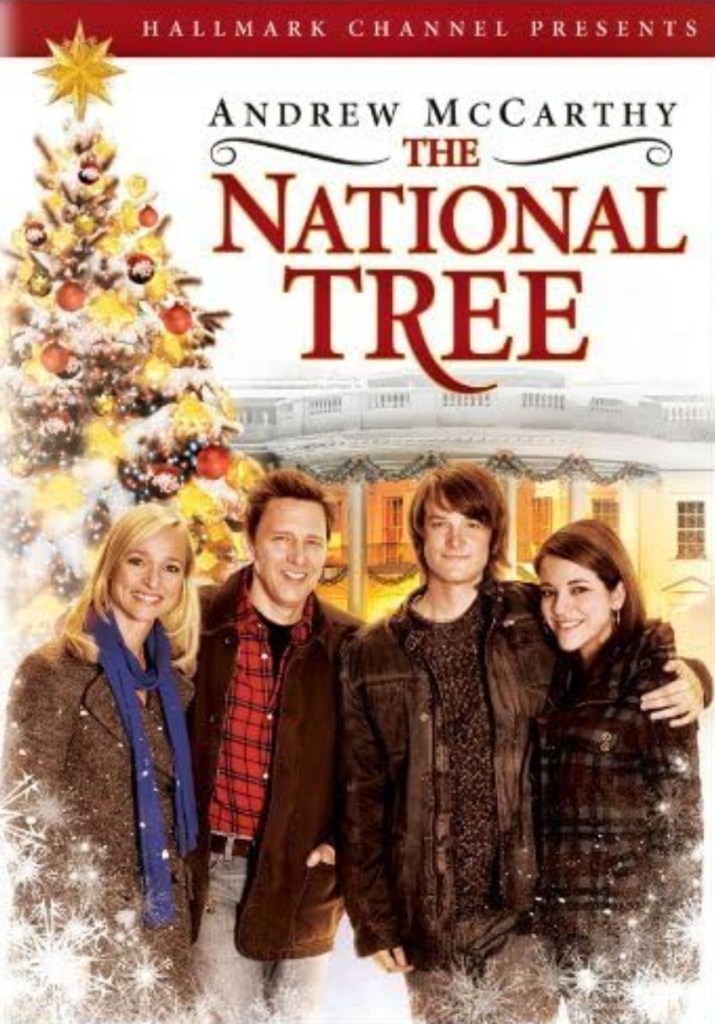
The National Tree (2009) poster created by Hallmark Channel, QVF, and Cypress Point Productions

Things I liked about the film:

Evan Williams’ performance: There are times when an actor or actress gives such a strong performance, they practically carry the movie they’re starring in. This was the case for Evan’s portrayal of Rock in The National Tree! In my opinion, Evan shined the brightest in this film! Rock’s charismatic personality made him a memorable character. Along with that, Evan gave a versatile performance that showcased a variety of expressions and emotions. From being terrified of driving a semi-truck during a forest fire to expressing gratitude over people’s interest in the soon-to-be National Tree, these moments felt realistic, which allowed me to stay engaged in Rock’s story. Because The National Tree premiered over ten years ago, I’d be interested in seeing Evan star in a Christmas movie in the near future!

Creative storytelling: In most of Hallmark’s Christmas movies from the past five, maybe ten, years, the same tropes and cliches have been incorporated into the script. Whether it’s the inclusion of the “woman from the city going back to her small hometown” cliché, showcasing a bundle of Christmas activities, or focusing on planning a party, those elements cause little creativity among these stories. With The National Tree, however, the story revolves around Rock and his father delivering their tree from Oregon to Washington D.C. in order for their tree to become the National Tree. A lot of cliches and tropes that typically find a place in Hallmark’s Christmas programming were avoided because of this story’s more creative approach. Even though there is a romance in The National Tree, it isn’t a primary focus like in other Hallmark projects. The movie provides a different perspective of how people can spend their time during the Christmas season, which creates variety among Christmas projects!

Rock’s interest in filmmaking: During their trip from Oregon to Washington D.C., Rock claims to his father how film is his life. There are several examples and references throughout The National Tree that prove Rock’s point. At the beginning of the movie, the audience witnesses Rock’s award-winning video, the same video that got his tree selected as the National Tree. Segments of the video are filmed in black-and-white imagery, appearing as scenes from a western film. Rock even dresses the part, wearing attire from what looks like the 19th or early 20th century. Before and during his trip, Rock creates videos chronicling the journey. In one video, he uses postcards to show the viewer where he and his father will go. These postcards serve as animation in between scenes, giving visual representations of each state along the trip. Rock’s interest in filmmaking not only makes him an interesting character, it gives the movie a unique identity!

Blue sparkly Christmas tree image created by Macrovector at freepik.com. <a href=”https://www.freepik.com/free-photos-vectors/frame”>Frame vector created by Macrovector – Freepik.com</a>. <a href=’https://www.freepik.com/free-vector/merry-christmas-card_2875396.htm’>Designed by Macrovector</a>. Image found at freepik.com.

What I didn’t like about the film:

Things that don’t make sense: There were some parts of The National Tree that, to me, didn’t make sense. One example was the claims made by Rock’s father, Corey. During the trip, Corey believes people coming to see the tree are ripping off its branches. But throughout the movie, the tree is wrapped tightly in a big canvas sheet and bound to the truck in what appears to be heavy duty rope, bungee cord, and straps. Even Rock records a video of the tree being placed on the truck, providing proof that the tree was secure. There are no scenes in the movie showing anyone vandalizing the tree. With all that said, Corey’s claims seem confusing.

Lack of on-screen chemistry: In The National Tree, Corey works alongside Faith to transport the tree across multiple states. Since Faith’s company is sponsoring the contest that selected the titular tree, she volunteers to supervise the tree’s journey. As I watched this movie, I didn’t sense on-screen chemistry between Andrew McCarthy and Kari Matchett. This had to do with The National Tree adopting the same flaw as Christmas at Castle Hart: showing the characters spending more time in a professional context. Faith and Corey are, more often than not, professional acquaintances. While they do spend personal time together, these moments are far and few between. The lack of romantic connection between Corey and Faith prevented Kari and Andrew from sharing on-screen chemistry.

Relying more on a premise than a plot: Looking back on movies I’ve seen and even reviewed, I realize how I don’t gravitate toward road-trip films. My reason is the story focuses so much on the trip itself, there is little to no room for a conflict or a plot. The National Tree would be considered a road-trip film, as the story revolves around Rock and Corey’s trip to Washington D.C. While I appreciate how this story is more creative than others from Hallmark Christmas movies, The National Tree relied on a premise more than a plot. A premise is what entices a viewer to watch a film, which in this case is Rock and Corey traveling across the United States to transport a tree. But a story’s plot allows the audience to ask “and then what happened”. Like other road-trip movies, The National Tree focuses on the trip itself. The straight-forward nature of the story didn’t leave room for the audience to ask questions.

Children holding American flags during a sunset image created by rawpixel.com at freepik.com. <a href=”https://www.freepik.com/free-photos-vectors/people”>People photo created by rawpixel.com – http://www.freepik.com</a>. Image found at freepik.com.

My overall impression:

In recent years, older Christmas movies have made fewer appearances during Hallmark’s Christmas line-ups. The National Tree is one of these films, as it was created during a time when the network didn’t release forty movies in one season. This has allowed the 2009 project to display a more creative story, not relying on the usual tropes and cliches from Hallmark’s Christmas programming. However, the story doesn’t leave much room for a plot or conflict, as the script focuses on the road-trip. There are even parts of the story that don’t make sense and lack of on-screen chemistry. But there are good things about The National Tree. One of them was Evan Williams’ performance, as he carried the film from start to finish! If you are interested in watching this movie, I’d recommend viewing it as a Thanksgiving film, as the story takes place around Thanksgiving. There is even a scene where some of the characters share Thanksgiving dinner. I’d also recommend watching this movie for Evan’s performance, which was the brightest star of this production!

Overall score: 6 out of 10

Have you seen The National Tree? Would you like to see Evan Williams star in another Christmas movie? Tell me in the comment section!

Have fun at the movies!

Sally Silverscreen
Sally Watches…Homicide: Life on the Street

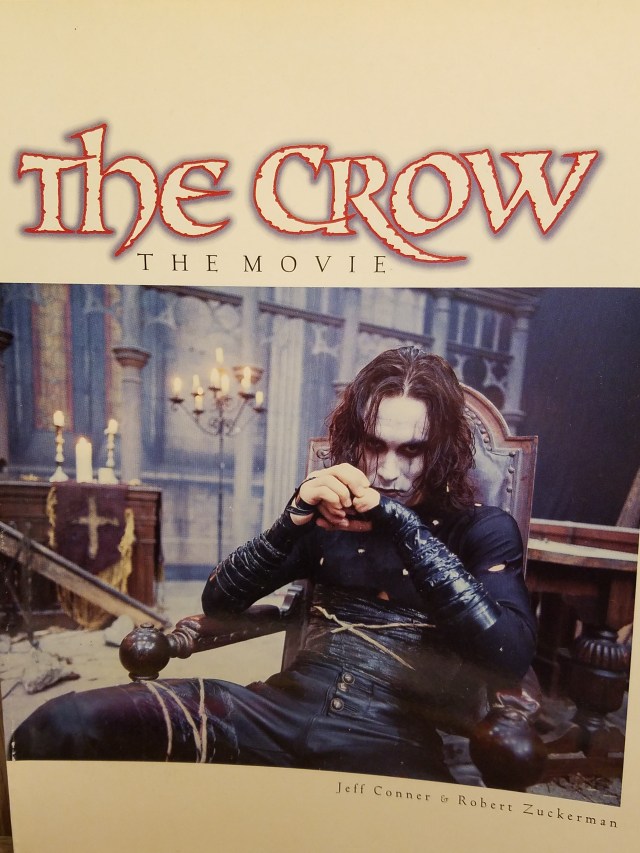
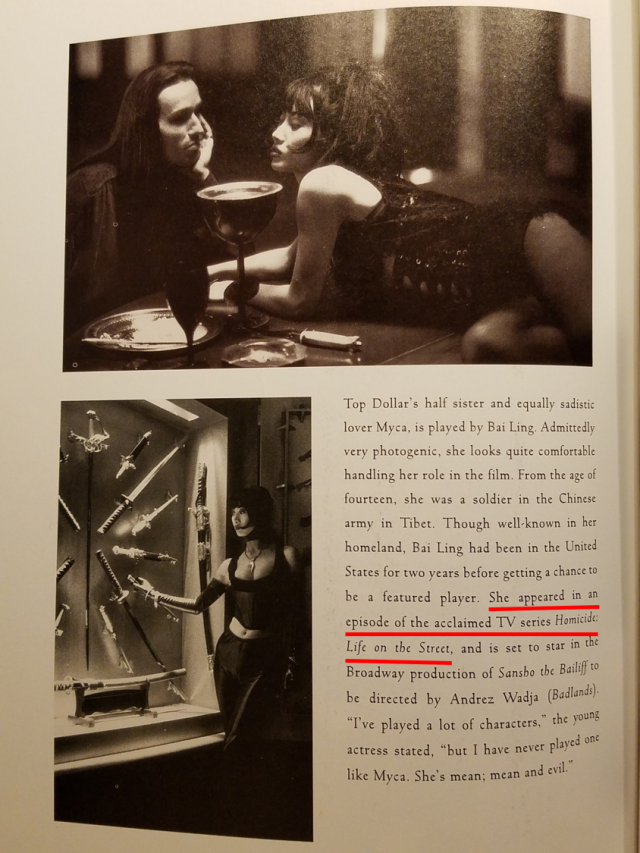
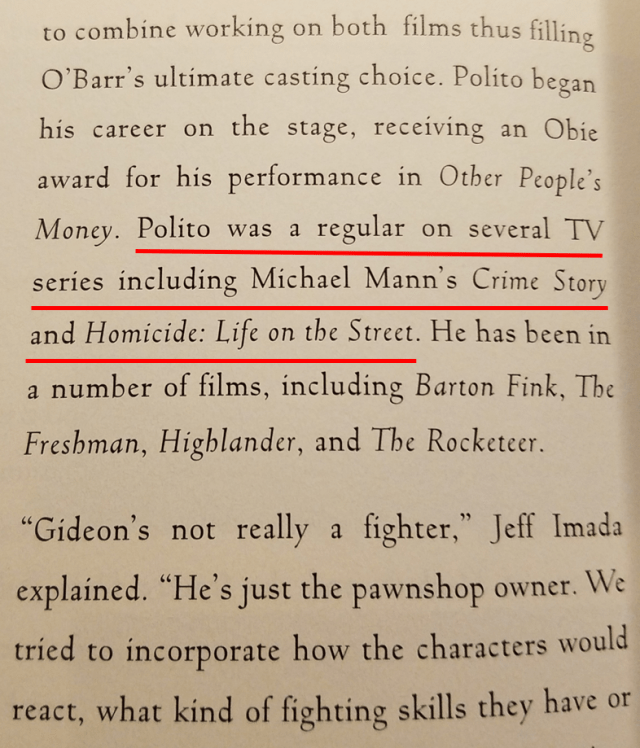
Recently, I purchased The Crow: The Movie, a book that explores the production of the 1994 film. While reading that book, I learned that Bai Ling, who portrayed Myca in the movie, guest-starred on an episode of Homicide: Life on the Street. The Crow: The Movie also revealed that Jon Polito, who portrayed Gideon, was a regular on the aforementioned television show. As of November 2020, I haven’t seen much from either actor’s filmography. Until a few days ago, I didn’t even know this show existed. Fortunately, I was able to find Bai and Jon’s episode online, which is one of the reasons why I’m reviewing it. Like my other television episode reviews, I will write about what I liked about the episode, what I didn’t like about the episode, the story itself, the other factors from the episode, and my overall thoughts. But similar to my episode review of Touched by an Angel, I won’t be sharing my thoughts on Homicide: Life on the Street as a series, as I’m only focusing on one episode.

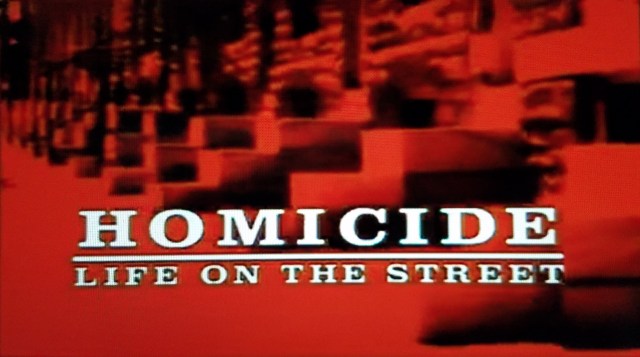
Screenshot of Homicide: Life on the Street‘s title card taken by me, Sally Silverscreen.

Episode Name: And The Rockets Dead Glare

Season 1, Episode 7

Premiere Date: March 17th, 1993

What I liked about this episode:

As I mentioned in the introduction, I have not seen much from Bai’s or Jon’s filmography. In fact, the only projects of Bai’s I’ve seen is The Crow and the Lost episode, “Stranger in a Strange Land”. Her roles on those programs, Myca and Achara, are presented as mysterious individuals who convey a sense of mysticism. This is portrayed through the characters’ actions and choices. Because Bai’s character on Homicide: Life on the Street, Teri Chow, is not mysterious in the same way as Myca or Achara, this forces her to rely on emotion instead of actions. “And The Rockets Dead Glare” shows Bai effectively using emotion when interacting with Jon Polito’s character, Steve Crosetti, and Meldrick Lewis, Steve’s detective partner. In the beginning of the episode, Teri tearfully reveals the identity of the murder victim and the likely cause of his death. Bai’s performance not only shows how murder can affect those surrounding the victim, but the battles some people may face as well. I also found her to be the stand-out actor in this episode!

What I didn’t like about this episode:

Just like The Crow, Jon and Bai share only one scene on their episode of Homicide: Life on the Street. However, a major difference is the aforementioned scene was Bai’s only scene in the entire fifty-four-minute episode. Teri is referenced by Steve and Meldrick long after her initial introduction. But aside from that first scene, she doesn’t make any further appearances. While Bai receives more lines in “And The Rockets Dead Glare” than she did in her and Jon’s scene from The Crow, her character is not as significant in the overall story as I hoped and expected. It also doesn’t help that the mystery in this specific storyline is overshadowed by Steve and Meldrick’s sightseeing adventure in Washington D.C. Because of this, the mystery remained unsolved. For almost an hour, a guilty party was not revealed, no clues were found, and there were no suspects being questioned.

The story itself:

When I first read the synopsis for “And The Rockets Dead Glare”, I felt there was too much going on in the episode’s overall story. After watching the episode, I still stand by that belief. “And The Rockets Dead Glare” features four storylines; Steve and Meldrick’s murder mystery/Washington D.C. trip, another murder mystery involving drugs, a court case featuring two of the series regulars (Beau Felton and Kay Howard), and a member of Baltimore’s police unit, Frank Pembleton, receiving a promotion. With four plots competing for screen-time, all of them ended up underwhelming. Even the one story I was the most invested in, Steve and Meldrick’s murder mystery, was not fully engaging because of the story’s misfocus. The plot that received the most attention, Beau and Kay’s court case, revolved around events from the show’s previous episode. Because of this and because “And The Rockets Dead Glare” is the only episode of Homicide: Life on the Street I’ve seen, I found the story to be uninteresting. Had this storyline been the main focus of a two-part episode, it might have worked better from a story-telling perspective. Every plot in “And The Rockets Dead Glare” lacked a sense of urgency. It seemed like the characters spent more time having casual conversations with one another than actually doing their jobs. This screenwriting decision takes away the suspense and intrigue that is usually found on mystery/crime shows.

The other factors from this episode:

  • Pieces of media from the past can be viewed one of two ways: as products of their time or standing the test of time. Parts of “And The Rockets Dead Glare” were reflections of the ‘90s that felt exclusive to that time period, with no room to expand beyond the decade. While waiting in the hallway at the court house, Beau asks Kay if she’d like to watch Oprah, referring to Oprah’s day-time talk show. Because that show has been off the air for almost a decade, as of November 2020, it doesn’t hold the same amount of relevance it did when “And The Rockets Dead Glare” first premiered. Another example is a conversation Steve has with a government official that has aged poorly, where Steve compliments the official for his use of English.
  • I really liked Homicide: Life on the Street’s introduction! All of the shots were filmed in black-and-white, with hints of red appearing on the screen. This reminded me of The Crow, where the film’s color palette shared similar hues throughout the story. In the introduction, mysterious music could be heard in the background. This sets a tone that indicates a suspenseful outcome of what will unfold.
  • As I said in the introduction, I had never heard of Homicide: Life on the Street before reading The Crow: The Movie. Therefore, I did not see “And The Rockets Dead Glare” when it originally aired. When I watched this episode for this review, I noticed how all of the on-screen text was backwards. I doubt this happened in March of 1993 when the episode first premiered on television. However, I’m wondering if the person who uploaded this episode online made this decision for copyright related reasons?

My overall thoughts:

Now that I have seen Homicide: Life on the Street, I understand why it isn’t well remembered. The episode I watched, “And The Rockets Dead Glare”, was one of the most mundane programs I’ve ever seen. While it had a strong start and promising potential, the stories themselves were not as interesting as they could have been. Despite having seen only one episode of this show, it felt like Homicide: Life on the Street was desperately trying to ride the coat-tails of a show like Law and Order without fully grasping what made a program like that work. Going against Homicide: Life on the Street’s favor is featuring four main storylines in the overall episode instead of one mystery case. The focus on characters having casual-style conversations with each other negatively impacted key areas of these plots. As stated in this review is how Steve and Meldrick’s trip to Washington D.C. overshadowed the murder mystery they were required to solve. If you are a fan of The Crow and are interested in seeing “And The Rockets Dead Glare”, I’d recommend watching the scenes involving Steve and Meldrick’s murder mystery for Bai’s and Jon’s performance alone. Everything else can be skipped, as it’ll just lead you to disappointment.

Rating: A very low 3 out of 5

This is a screenshot I took of my copy of The Crow: The Movie. Screenshot taken by me, Sally Silverscreen.
This is a screenshot I took from The Crow: The Movie‘s page about Bai Ling. Screenshot taken by me, Sally Silverscreen.
This is a screenshot I took from The Crow: The Movie‘s page about Jon Polito. Screenshot taken by me, Sally Silverscreen.

Have you watched The Crow? If so, what TV show episode featuring a star of this movie would you like to see me review? Please let me know in the comment section!

Have fun on television!

Sally Silverscreen