Back in May, my post called “A Bucky Fan’s Response to one of Looper’s Avengers: Endgame related videos” became my 200th published post! Whenever I publish a hundred posts, I coordinate a double feature where I try to answer a thought-provoking question through the viewing of two similar films. But, around the time when I published my aforementioned post, I discovered that I would soon reach the milestone of 100 published reviews. So, I postponed my Double Feature until that milestone was reached. It was achieved in July when I published my review of Christmas Camp! However, that post was published just before I embarked on an out-of-town trip. So, I postponed my Double Feature until after the trip. But August became my busiest month, as I participated in four blogathons. Because of that, the Double Feature had to be pushed back again. Now that I have set aside some time to coordinate my Double Feature, I can finally announce that it will be published this week! Since I’m celebrating two milestones, I will be writing about three films.
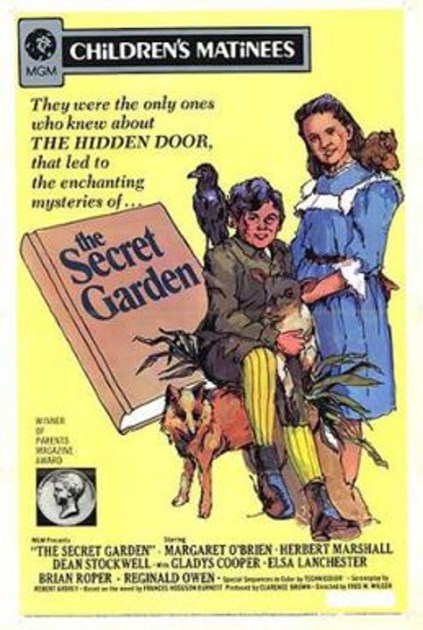
I am fully aware of the irony that comes with reading The Secret Garden from the Hallmark Gift Books collection before watching the Hallmark Hall of Fame adaptation. Screenshot taken by me, Sally Silverscreen.If you ask anyone what the best adaptation of The Secret Garden is, most of them will tell you that it’s the Hallmark Hall of Fame version from 1987. For years, I have heard this statement from many people on the internet. In fact, when I asked a search engine which adaptation of The Secret Garden was the best one, the Hallmark Hall of Fame version was the film that came up as the answer. But is this movie really the best adaptation? That’s what I wanted to find out for myself! The most well-known versions of The Secret Garden that I will be watching are the 1949 release, the Hallmark Hall of Fame presentation, and the 1993 project. I read The Secret Garden prior to watching these films, so I could gain a better understanding of how similar or different each adaptation is from the source material. Because I’m going to talk about three versions of the same story, I will ask myself fewer questions than I did for my Halloween Double Feature. I will also not be giving these films any score ratings because I’m judging them as adaptations. There will be no pre-movie thoughts, questions, or predictions this time because I know what the movies are about before I’ve seen them.
My blog received 130 followers last week! To all of my followers, thank you for helping 18 Cinema Lane become this successful! This review would not be possible without you! For this blog follower dedication review, I have chosen a movie that was released in August of 1946. By looking at the title, you would know that the film I selected is The Big Sleep! I’m going to be honest; I don’t watch films from the film-noir genre often. It’s just not a genre that I purposefully go out of my way to watch. However, because I, as a movie blogger, try to go out of my cinematic comfort zone, I still chose to watch The Big Sleep. I also discovered that this movie is labeled as a mystery. Since I review mystery films from time to time, I figured this would be something that I might enjoy. Choosing this particular movie for this review makes sense, especially since the last time I reviewed a mystery film for a blog follower dedication review was when I wrote about The Moon-Spinners back in January.
The acting: What helped bring this story to life was the acting performances! I’ve seen Humphrey Bogart in Casablanca, so I was familiar with his acting style. His performance in The Big Sleep embodied the tone and attitude of the film. Humphrey’s character, Philip, could either be mysterious and serious or charming and suave. That’s because he was able to effectively portray those emotions and personas when he needed to. Before watching The Big Sleep, I was more familiar with Lauren Bacall’s voice-acting work than her on-screen performances. However, I was very impressed by her portrayal of Vivian Rutledge! Her acting style is similar to Humphrey’s, in that her performance is more subtle in presentation. Her on-screen personality ranged from serious and head-strong to flirty and charismatic. With each scene and scenario, Lauren brought believability to her role.
The mystery: If you’ve ever visited my blog, you’d know that I watch and review a lot of the programming on Hallmark Movies & Mysteries. What makes The Big Sleep different from those movies is how the mystery is written. As the mystery plays out on screen, the audience gets to experience the events alongside the characters. This allows the surprises and twists to catch viewers off-guard. The way this mystery is written also gives the audience the feeling that they are sharing moments with the characters. It helps them connect with the protagonist and the people around him.
The tone: Because The Big Sleep is a part of the film-noir genre, the tone is darker and more serious. A strength this movie has is how consistent it was. Throughout the film, the subjects and ideas that were expressed belonged to the real world. This kept the story grounded and the characters realistic. Since there were stakes in The Big Sleep, everything was handled with seriousness and reverence. These things made the story mature without becoming too dark or unpleasant. All of the aforementioned components helped maintain this tone’s consistency.
Vintage detective desk photo created by Olivier Bourgeois at freeimages.com. Photo by <a href=”/photographer/ornicar69-54520″>Olivier Bourgeois</a> from <a href=”https://freeimages.com/”>FreeImages</a> Image found at freeimages.com.
What I didn’t like about the film:
A limited amount of suspense: In some mystery stories, the suspense is consistent throughout the film. Unfortunately, The Big Sleep was not one of those films. The suspense in this movie was very limited. It almost seemed like it was utilized for the sake of plot convenience. This made some parts of the movie more interesting than others.
So many characters: Mystery movies usually have a larger cast of characters. Some of them serve as suspects for the mystery. In The Big Sleep, I felt like there were too many characters. Sometimes, it was difficult to remember who was who and their connection to the mystery. What didn’t help was having some characters appear on screen for a short amount of time. Not every character was introduced toward the beginning of the film, like most of the films on Hallmark Movie & Mysteries. This felt like the characters could come and go whenever they pleased.
Lack of lighting: There were some scenes in The Big Sleep that featured very little lighting. Because of this, I had a difficult time trying to see what was happening on screen. One example is the scene where the person who shot Arthur Gwynne Geiger was being arrested. I understand that this movie is classified as film-noir. But just because a film’s tone is dark, that doesn’t mean the scenes have to be dark in presentation.
As I said in my introduction, film-noir is a genre that I don’t watch often. But, because this review is meant to thank my followers, I was willing to go out of my cinematic comfort zone and share my thoughts on films that I think are worth my followers’ time. The Big Sleep is a movie that I ended up liking. The mystery was interesting and I enjoyed seeing the acting performances. However, this film does have its flaws, such as having too many characters and lack of lighting. For someone, like me, who doesn’t watch a lot of movies from the film-noir genre, I’m glad I gave this film a chance! Something that I mentioned in my review was how I watch a lot of content from Hallmark Movies & Mysteries. When I talk about films like The Big Sleep, it helps me expand my cinematic horizons when it comes to mystery films. For my blog follower dedication reviews, I will continue to share films that are different from the last.
Overall score: 7.5 out of 10
Do you watch films from the film-noir genre? If so, which one is your favorite? Let me know in the comment section!
When I was choosing films to review for the A Month Without the Code blogathon, one of the movies that I wanted to see was The Nun’s Story. This is a film that I had never heard of until I read Debbie’s (from the blog, Moon in Gemini) review. After reading that article, I found the story of The Nun’s Story to be fascinating. I was especially curious to see how the concept of someone joining a Religious Order would be included. In movies that feature characters who are members of a Religious Order, the process of becoming a member is not often shown. Since The Nun’s Story was going to air on Audrey Hepburn’s day during the Summer Under the Stars marathon on Turner Classic Movies (TCM), this inspired me to make the decision to talk about Non-Code films for both the A Month Without the Code and Summer Under the Stars blogathon! Before watching The Nun’s Story, I saw Breakfast at Tiffany’s, which was the only film of Audrey’s that I had seen. Choosing this film for these blogathons has given me the opportunity to watch more of Audrey’s movies!
The acting: As I said in the introduction, the only other film of Audrey’s that I’ve seen is Breakfast at Tiffany’s. Her role in The Nun’s Story is very different from her aforementioned film. For one thing, there were times when her character, Gaby, was supposed to be silent due to the rules of the congregation. Audrey used this part of the script to her advantage by relying on her facial expressions as much as possible. An example of this is when Gaby is told that she will have to purposefully fail her exam in order for another Sister to pass. Audrey’s reaction allowed her character to say so much while using so few words. While watching this film, there was one performance that I felt needed to be addressed. During the story, Gaby is assigned to work in a psychiatric hospital, where she encounters a patient known as “Archangel Gabriel”. This character was portrayed by Colleen Dewhurst. Despite the fact that her screen-time was limited and that she was given very few lines, Colleen relied on facial expressions and emotions to bring her character to life. A perfect example is the scene where “Archangel Gabriel” asks Gaby for a glass of water.
The process of becoming a Nun: When it comes to movies featuring members of the Religious Order, the process of becoming a member is rarely featured. In The Nun’s Story, this process is thoroughly explored, allowing for this part of the story to be interesting and informative. It wasn’t just limited to a certain section of the film. The process is even observed after Gaby becomes a Nun. When she finally gets to do service work in the Congo, she still finds herself facing challenges and obstacles. This shows that being human is an on-going process, complete with personal growth and reflection. It also makes the character of Gaby relatable.
The messages and themes: Throughout this film, there were lots of messages and themes that I found relatable, even if Gaby’s specific experience isn’t relatable. An overarching example is the twists and turns that happen in Gaby’s life before her dream of volunteering in the Congo is realized. Life is unpredictable, with a limited amount of aspects being in our control. In The Nun’s Story, Gaby faces several situations that prevent her from achieving her dream. However, she never gave up and continued to work very hard toward her goals. Other messages and themes that are found in this movie were personal responsibility, honesty, and taking time to care for one’s self.
A limited amount of character development: Even though The Nun’s Story had a large cast, the film’s character development was very limited. For the character of Gaby, there is some character development to be found. However, because the story focuses more on Gaby’s journey of becoming a Nun, her character development seemed to sit on the side-lines. For the rest of the characters, their character development was either at a minimum or nonexistent. While the audience gets to become familiar with the characters, they never really get to know them.
Some segments being shorter than others: Because the narrative of The Nun’s Story focused on Gaby’s journey of becoming a Nun and her volunteer work in the Congo, other aspects of the story were shown in shorter segments. The beginning of World War II is a good example of this. Even though enough was shown to give audiences the intended point, it wasn’t explored as much as other parts of the film. If anything, it just felt like another stepping stone in Gaby’s journey.
Before and after Turner Classic Movie’s (TCM’s) presentation of The Nun’s Story, Ben Mankiewicz shared that Audrey’s favorite role in her career was her role in The Nun’s Story. After watching the movie, I can kind of understand why she would be so fond of this role. It’s very different from her other roles and the story itself is much more serious than some of her other films. Because of this, it allowed Audrey to become an even more well-rounded actress by exploring various acting methods. The Nun’s Story features a narrative that is rarely seen in films of its kind: the process of becoming a member of the Religious Order. Since this story filled a void that no one else had, it helped the movie bring a sense of uniqueness to cinema. Out of all the films I’ve seen for “A Month Without the Code”, I’d say that The Nun’s Story is one of the “cleaner” ones! It was even given a Production Code Administration seal of approval, the same one that was seen in the opening credits of many Breen Code films! There are only two things that I found that would have to be changed or eliminated if this film were released during the Breen Code era. The first is the underlying racism that can be found when Gaby goes to the Congo. Because this story takes place in the 1930s, I’m guessing that the inclusion of this topic was meant to provide commentary about the views of that time-period. The second is naked babies being shown on-screen. Since this happened in only one scene, these babies were not featured for very long.
Overall score: 7.8 out of 10
Have you seen The Nun’s Story? Which movie of Audrey’s would you like to see me review? Please share your thoughts in the comment section!
Have fun at the movies!
Sally Silverscreen
If you want to read Debbie’s article about The Nun’s Story, visit this link:
Before I begin this review, I would like to thank all 115 of my followers! I achieved this accomplishment two weeks ago! However, I wasn’t able to publish this post as early as I had wanted to. That’s because I started my Clean Movie Month reviews and was participating in a few blogathons. But I fortunately found the time to share this blog follower dedication review with the people who have helped my blog grow and thrive! For this post, I have chosen a movie that was released in June of 2014. Even though I talked about a musical in my previous blog follower dedication review, I chose the film, Jersey Boys, for this particular post. I was familiar with the music of Frankie Valli and The Four Seasons, so I could appreciate the songs that appear in this film. When it comes to the band itself, I didn’t know much information about them. This movie was, to a certain extent, educational. That’s because this film explores the history of The Four Seasons. It also talked about how some of the songs were created, as well as who the members of the band were. So, let’s learn more about Jersey Boys through this review!
The acting: One of the strongest components of this film is the acting performances! From what I’ve heard, the cast consisted of actors and actresses who also starred in the Jersey Boys stage play. I feel that this was a good decision because this means that before film production began, they already knew their characters. This shows in all of the acting performances, as the actors and actresses appeared to be comfortable in their roles. Something I noticed while watching this film was the accents. As I’ve said before, accents in movies can be hit or miss. In Jersey Boys, however, the accents sounded authentic enough to be satisfying. This goes back to the fact that the cast is from the original stage play, as they had plenty of time to perfect that part of the performance!
The aesthetic: I really liked the world that was created in this film! Everything looked and felt like the time period in which this story took place in. Even the cinematography correlated with the previously mentioned time period. This showed how much the creative team behind this movie cared about the details that went into their project. It also made the movie feel immersive, like the audience themselves are visiting that world. The locations and settings of Jersey Boys were visually appealing!
The music: Because this movie is about Frankie Valli and The Four Seasons, the majority of their music is featured throughout the story. Since I like their music, I found these parts of the film to be enjoyable. Jersey Boys was a stage play before becoming a movie, as I’ve said before. This aspect worked in the performers’ favor because they were familiar with the music prior to the film’s production. All of the actors in the band sounded close enough to the original group to keep me, as an audience member, satisfied. It added to the authenticity of their collective performance!
Breaking the “fourth wall”: At certain points in the movie, some members of The Four Seasons told their story directly to the audience. While this was an interesting idea, it didn’t work as well as it could have. This is because the “fourth wall” was broken so infrequently, it ended up feeling out of place. Only three members of the group get to break the “fourth wall”. The only time Frankie Valli gets this kind of moment was toward the end of the movie. The fact that more than one person was trying to tell the story made it difficult to decipher who the key narrator was supposed to be.
Scenes that don’t mesh together: When it comes to movie musicals, the segments of story and music are supposed to work together to create a cohesive narrative and propel the story forward. One example is when Mother Abbess sings “Climb Ev’ry Mountain” in The Sound of Music. But I never felt that the story segments and musical segments meshed together in Jersey Boys. Anytime a musical segment appeared in the film, it felt like the story segments were paused for the sake of presenting the musical segments. This disrupted the flow of the narrative.
The run-time: Jersey Boys is a two hour and fourteen-minute film. Because of this run-time, the movie felt longer than it was intended and some scenes were too drawn-out. Having the film set at one hour and thirty or forty minutes would have worked better for the overall production. Drawn-out scenes could be shortened to a length of time where that part of the story could get straight to the point. If the “fourth wall” moments that I mentioned earlier were reserved for the end of the movie, this would shorten the run-time as well.
At best, Jersey Boys is an ok film. I can definitely see how this project could work as a Broadway stage show. However, this particular story would have worked better as either a documentary or as a mini-series. There was so much interesting content to this narrative, that I actually learned more about Frankie Valli and The Four Seasons than I had expected. But, because of the set run-time, there was only so much material that was discussed. Even though I learned a lot about this particular musical group, I feel like I could have discovered this same information on the internet. When it comes to movie musicals, Jersey Boys is not the worst of them. But there are movies within this genre that are better than this one.
Overall score: 6 out of 10
Do you like that music of Frankie Valli and The Four Seasons? Which movie musical do you like? Please tell me in the comment section!
Now that Halloween is over and the Christmas decorations are starting to get set up, it’s time for me to look back on this double feature to see what I’ve learned and whether my goal was accomplished. If you remember from my double feature’s introduction, my goal was to answer the following question:
When one watches a film purely as a film, not as an adaptation, can that film contain its own merit and entertainment value?
As I reflect on The Case of the Whitechapel Vampire and Queen of the Damned, I can honestly say that I did get my question answered. Even though I have never read any of the source material associated with these films, I ended up liking both movies. What I noticed is these films received a score in the 7 out of 10 range: The Case of the Whitechapel Vampire got a 7.6 and Queen of the Damned got a 7. This is really interesting because I hadn’t expected to score these films within the same range. While both films did have their flaws, they did have a good amount of merit while also being entertaining. I was really impressed by the creativity I saw in both films. It was so memorable that it stayed in my memory long after I saw these movies. Now that the mystery behind this question is solved (see what I did there? I think Sherlock Holmes would be proud), I’ll wrap up this post with one final thought and a lesson learned from each film.
The Case of the Whitechapel Vampire
Lesson learned: What I can take away from this film is the many different elements that can be featured in a Christmas movie. I know this double feature is Halloween themed, but The Case of the Whitechapel Vampire, surprisingly, took place during Christmas-time. I learned that Christmas, especially when depicted in a Hallmark movie, can look and feel different to the voice of that particular story.
One final thought: As glad as I am that Hallmark puts a good amount of emphasis on their Christmas movies, I would really like to see both networks make more creatively interesting choices and think outside-the-box more when it comes to their movies. When I heard the synopsis for Hallmark’s 2018 Christmas movies, most of them sounded the same to me. There were very few movies within this year’s line-up that seemed creative or unique from the others.
Queen of the Damned
Lesson learned: What’s so great about the movie blogging community is being given the opportunity to help people find movies that may bring them joy or movies that they may want to avoid. However, when I watched Queen of the Damned, I realized that it’s important to give yourself a chance to form your own opinions when it comes to movies. If it hadn’t have been for the positive responses I heard about this film, I probably wouldn’t have seen this movie. But I’m glad I did because now I can have an honest opinion about it.
One final thought: In my review for Queen of the Damned, I mentioned that I thought the acting was really good. This is especially the case for Stuart Townsend’s and Marguerite Moreau’s performances. Because of this movie, I would like to see Stuart and Marguerite star in a Hallmark Hall of Fame (HHoF) movie together. I don’t know if there’s anything preventing them from working on a Hallmark project or if they’ve gotten along well enough where they would want to work together again, but I would be interested in seeing if they have what it takes, talent-wise, to help carry a project like a HHoF movie. Since the Hallmark Hall of Fame branch moved to the Hallmark Channel in 2014, the network has made a conscious effort to try to cast at least one actor who’s a HHoF alumni and one actor who’s never appeared in a HHoF movie into their films (a good example of this is The Beach House). Since Marguerite starred in The Locket, a Hallmark Hall of Fame movie from 2002, and since Stuart, as far as I know, has never appeared in a Hallmark affiliated project, this would be a good balance for Hallmark; of recruiting new talent and welcoming back familiar faces.
Queen of the Damned poster created by Warner Bros. Pictures. Image found at https://www.warnerbros.com/queen-damned
In your introduction for this double feature, you mentioned that both Queen of the Damned and The Case of the Whitechapel Vampire were released in 2002. Can you think of anything from around that time period that could have influenced the creation of this film?
I think there are three things that influenced the creation of Queen of the Damned. The first is the character of Malcolm from Jurassic Park. As I mentioned in my Jurassic Park review, Malcolm is a rock-star-esque mathematician. However, Malcolm appeared to be a likable character. In Queen of the Damned, Lestat was a rock-star-esque vampire. Despite these characteristics, Lestat, for the most part, comes across as a likable character. The second thing is the 1998 film, Blade. I’ve never seen this movie, but I know that it’s a darker and more violent comic book film that, to a certain extent, discusses the subject of vampires. Because this film was successful enough to receive a sequel (that was, ironically, released exactly a month after Queen of the Damned), I’m speculating that Blade inspired the creative team behind Queen of the Damned to make their movie darker and more violent than their predecessor, Interview with the Vampire. The third and final thing is, interestingly, Interview with the Vampire. I’ve never seen this film either, but based on this film’s trailer, it appears to be a gothic film in the old-school sense. Queen of the Damned focuses on the new-school/modern gothic style, which is very different from the first film. Most movie series try to do something different with each new film, so I think this film’s approach was rather creative.
2. Were you able to follow along with the story and understand what was going on in the film despite not having read the source material?
For the most part, yes. I did some research about this film before I saw it, so I was aware of certain aspects of the film that some casual movie-viewers might not understand. For instance, in the film’s climax, there are various characters that are introduced. One of these characters is Pandora. If I didn’t know that she is a character from a spin-off book series that Anne Rice wrote, I would have no idea who Pandora was in this film.
3. Were your pre-movie questions answered?
Well, two out of my three pre-movie questions were answered. The only question that wasn’t answered was how Lestat survived being burned in the previous film. Honestly, I wasn’t as bothered by this as I thought I would be. Because this movie focused more on Lestat’s present and origin story, re-capping the first film would have felt like Queen of the Damned had too much content.
As for the two questions that did get answered, the reason why Lestat appeared like he was trying to pursue a romantic relationship with Akasha is because, in the movie, Akasha kidnapped Lestat and forced him to in be in relationship with her. Speaking of Akasha, she did reveal that the reason why she loved Lestat was because he reminded her of her deceased husband. As for Jesse, it appeared, in the movie, like she truly loved Lestat. Because she’s a vampire scholar, Jesse wasn’t as fazed by the vampire aspects of Lestat’s world. Also, because her aunt is a vampire, it seemed like Jesse truly appreciated the subject of vampires and the world surrounding them.
4. Were you right or wrong in your pre-movie prediction?
I guess I was kind of right in my pre-movie prediction {shrugs with a confused look on my face}. While Lestat was forced into a relationship with Akasha and Jesse wasn’t aware of this until the climax of the film, there is a moment during the film’s climax where Lestat pretends to drink more of Akasha’s blood then he should have. This allowed the other vampires present in that scene to defeat Akasha.
5. In this double feature’s introduction, when you talked about your reason for choosing to review Queen of the Damned, you said that the movie clips featured in the MsMojo video, ‘Top 10 Movies Based on Books That Need a Do-Over’, appeared bonkers to you. Was this movie bonkers or do you think these movie clips were taken out of context?
I definitely think these movie clips were taken out of context. To me, Queen of the Damned was not as bonkers as the clips within this video made it seem. The only thing I found bonkers in this movie was Lestat and Akasha’s “relationship” because of how problematic it was.
6. In a post from The Blog Complainer titled “How To Make A Good Movie Sequel”, there were several steps listed as if the article were a how-to for making sequels that are good. When a sequel successfully followed these steps, it means they passed the “Good Movie Sequel School for Dummies”. Because Queen of the Damned is a sequel, do you think it passed this school?
Well, yes and no. On the one hand, Queen of the Damned is based on two books from The Vampire Chronicles series. On the other hand, some stories were explored more than others because of this choice. Also, there were no references to Interview with the Vampire besides Lestat being a protagonist in the sequel. Lestat also had different characteristics than he did in the first movie, such as being less self-centered. However, the creative team behind this movie tried to do something different from the first movie. Lestat’s backstory was further explored and there were new characters that were introduced. If Queen of the Damned were enrolled in the “Good Movie Sequel School for Dummies”, it would probably receive a grade of somewhere between a B to C+.
7. Did you acquire any new thoughts and/or questions while watching this film?
Yes, lots! Because this post is already long, I will only list a few of these questions and thoughts.
What is Lestat’s net worth?
Why is there a small amount of security at Lestat’s concert? Since his band was aware of Lestat encouraging other vampires to show up at his concert to try and hurt him, wouldn’t they want to have more security at the concert?
Why would Jesse and Lestat return Lestat’s journal to David? It’s Lestat’s journal, so why wouldn’t he want to keep it?
How did Akasha know about Marius and Lestat’s conversation about Lestat needing a companion? Shortly after she kidnaps Lestat, Akasha tells him that she wants to grant his wish of a companion. However, Akasha was not a part of that conversation nor did anyone tell her about that conversation.
As I’ve already mentioned, I think that Lestat and Akasha’s “relationship” was problematic. The reason why I put the word relationship in quotations is because Lestat and Akasha were not together for a long period of time and their relationship didn’t develop over a significant amount of time. The way I would describe this “relationship” is with an analogy: the “relationship” is a car and Akasha is driving it. All Lestat is able to do sit in the passenger seat and take orders from Akasha. Honestly, I think this “relationship” is one of the most problematic relationships I’ve ever seen in a movie.
I really liked the sets and scenery in this film! For the most part, it made the environments in the movie feel inviting and appealing. I also thought the acting was really good! Everyone portrayed their characters so well and all of the performances were memorable. Something that I didn’t like in this film was most of the music. While I liked the violin music and the music that played during Akasha’s demise, I was not a fan of the goth rock music. When Lestat sang at his concert, he sounded unnecessarily angry. I would rather hear him play the violin than sing.
8. In Queen of the Damned, did anything stand out to you, whether for better or worse?
I liked the techniques in story-telling that were used in Queen of the Damned. There were several times when voice-overs from Jesse and Lestat were included to show the film’s story from their specific point-of-view. I think these voice-overs added depth to the story that we wouldn’t have gotten if they weren’t there. Most movies have one main plot and a few subplots. Queen of the Damned was told through several subplots that were all connected to Lestat in some way. I thought this was a very interesting approach to cinematic storytelling that I haven’t really seen before.
To me, the biggest flaw of Queen of the Damned is the run-time. This movie combines elements from two novels into one movie. However, the movie itself is one hour and forty-one minutes. Since the creative team knew they were going to incorporate so many story elements into their film, I think this movie either should have been a two-part over-arcing story (like Harry Potter and the Deathly Hallows) or the run-time should have been longer. Because of this, some plots were explored more than others. For example, Lestat’s relationship with Akasha and Jesse seemed to move at a very quick pace, not giving these relationships enough time to develop and grow. I believe that any of my aforementioned solutions could have solved this issue.
9. According to the BMeTric charts in the Queen of the Damned Preview from Bad Movie Twins, it appears that interest in this film is rising. Why do you think that is?
Well, I think there’s two reasons for that. The first is negative reviews that the film has received. After hearing these reviews and seeing the 17% it has on Rotten Tomatoes, some people might choose to watch this movie out of curiosity, like I did. The second reason is Aaliyah’s involvement in the film. Some people might choose to watch this film as a way to respect her memory. Others may choose to watch this film because they want to learn more about who she was as a person and entertainer.
10. After watching Queen of the Damned, what is the one thing you can take away from this movie viewing experience?
While I think Queen of the Damned could have been a stronger film, I don’t think it’s as bad as some people have made it out to be. To me, this film is decent and I do think it has its merits. After watching this film, I started to notice a very sad pattern. I’ve only seen six vampire movies in my life, including Queen of the Damned. Out of those six, most of them feature at least one problematic relationship that is meant to be romantic. I can’t say if this is a norm in vampires movies or if this is just a pattern in the vampire movies I’ve seen. However, I was happy to see Lestat and Jesse pursue a romantic relationship with each other because, to me, they seemed like they truly loved and cared about each other. Their relationship also appeared to be a healthy one, where Lestat and Jesse loved one another for who they were and appreciated each other’s worlds.