Take 3: Play Misty for Me Review

August’s theme for Genre Grandeur is “Eastwood connected Movies (Clint or his progeny in any capacity)”. As soon I discovered this month’s selected theme, I immediately knew which movie I would choose! For years, I wanted to check out the 1971 film, Play Misty for Me. This is because I had heard Play Misty for Me is the precursor to Fatal Attraction. Since I have seen the 1987 movie, I was curious to see how many similarities or differences Play Misty for Me and Fatal Attraction shared. With this month’s Genre Grandeur theme, I am finally getting that chance! By writing about Play Misty for Me, this is the first time I’m reviewing any of Clint Eastwood’s movies on 18 Cinema Lane. I am familiar with Clint as an actor, so I knew the types of roles he’s typically known for. Therefore, choosing to review Play Misty for Me as the first film of Clint’s covered on my blog is interesting, as it’s quite different from the westerns and action pictures he has usually starred in.
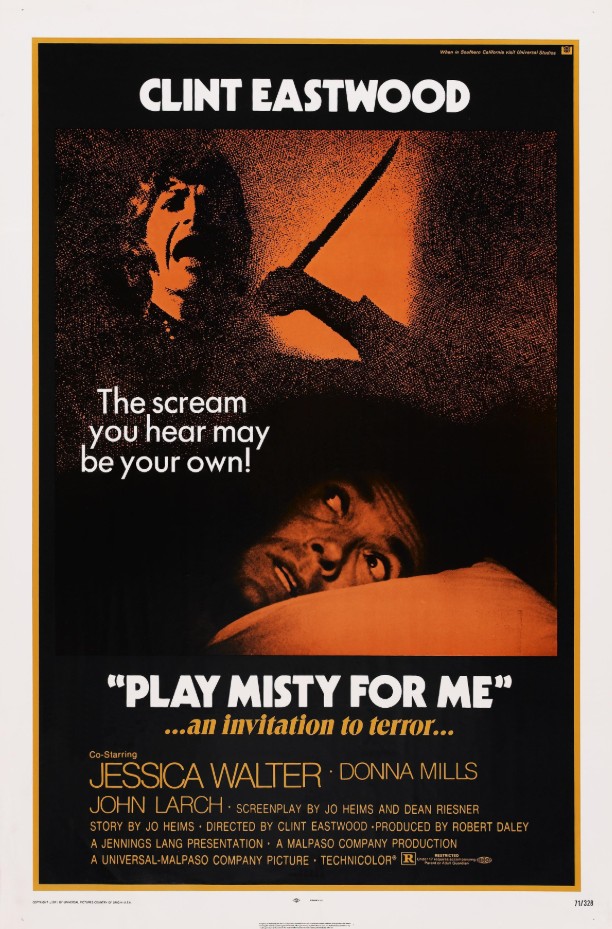
Play Misty for Me poster created by Universal Pictures, Jennings Lang, and The Malpaso Company

Things I liked about the film:

The acting: While I liked the acting as a whole in Play Misty for Me, I have to highlight Clint Eastwood’s and Jessica Walter’s performance. This is because their characters were given the most screen time. Throughout his film career, Clint has gained a reputation for portraying tough, unbreakable heroes. That reputation has been a result of starring in films from the western genre and in titles like Sudden Impact. But in Play Misty for Me, Clint’s character, Dave, adopted a very different persona. The radio disc jockey carries a suave personality with a hint of gentleness. In a great example when Jessica’s character, Evelyn, is restocking Dave’s refrigerator in preparation for dinner, Dave explains to Evelyn how he already has dinner plans. His explanation, however, is calm, which puts Evelyn at ease. Dave’s kind tone of voice, the understanding look in his eyes, and even the relaxed look on his face shows how he isn’t mad at Evelyn. Clint’s versatile acting abilities effectively portray how easy it is to fall in love with Dave!

As I just mentioned in this review, Jessica Walter portrays Evelyn. What I liked about her performance was her ability to seamlessly adopt different emotions. One perfect example is when Evelyn and Dave are having a conversation outside. Before Evelyn leaves Dave’s house, her attitude is friendly. A smile is painted on her face and her personality seems bubbly. But when a neighbor comes outside to complain about the noise, Evelyn immediately becomes very angry. She yells at the neighbor and her entire demeanor is tense. As soon as the neighbor leaves, Evelyn goes back to being friendly like nothing unusual had taken place. Jessica’s ability to seamlessly adopt different emotions was consistent throughout Play Misty for Me. This acting strength made Evelyn an unpredictable character.

The scenery: The biggest pleasant surprise in Play Misty for Me was the scenery! Filmed in Monterey and Carmel, California, the 1971 film features a lot of scenes showcasing the ocean and its surrounding landscape. A perfect example of how photogenic the scenery is can be seen when Dave and Tobie are on a date. One shot proudly displays the ocean at sunset. An orange and yellow sky is met with calm waters shimmering in blue, periwinkle, and lavender. In the foreground, a nearby tree, the edge of a cliff, and the characters’ silhouettes are shadowed, which are contrasted against the lighter colors of the sea. To me, this was one of the most beautiful shots in Play Misty for Me!

The incorporation of jazz music: In movies classified as “psychological thrillers”, the soundtrack primarily consists of suspenseful orchestral music to increase the suspense within that story. The creative team behind Play Misty for Me decided to take a different approach. Jazz tunes provide the main musical sound in the 1971 movie. This is not only because Dave works at a jazz radio station, he also attends a jazz concert. The sounds of this particular music genre invoke a sense of maturity and sophistication. That sophistication and maturity were woven into Play Misty for Me, which allowed the story to be taken seriously. Jazz music also pairs nicely with the oceanic scenery I talked about earlier in this review. The rhythmic movements of the waves and the steady notes of the music create a visual and auditory paradise!

String of musical notes image created by Freepik at freepik.com. <a href=’https://www.freepik.com/free-vector/pentagram-vector_710290.htm’>Designed by Freepik</a> <a href=”https://www.freepik.com/free-photos-vectors/background”>Background vector created by Freepik</a>. Image found at freepik.com. 

What I didn’t like about the film:

A more annoying antagonist: Alex, from Fatal Attraction, is one of the scariest antagonistic characters in film history. While she is emotionally unstable, her attempts to infiltrate Dan’s life are calculated and intentional. A classic example is when Dan discovers the fate of his daughter’s pet rabbit. When I watched Play Misty for Me, Evelyn came across as more annoying than scary. That’s because her efforts to infiltrate Dave’s life are sporadic, whiny, and desperate. These factors caused me to not take Evelyn as seriously as Alex when it comes to being an antagonist.

Inconsistent suspense: Like I said in this review’s introduction, I have heard Play Misty for Me is the precursor to Fatal Attraction. Though it’s been years since I’ve seen the 1987 movie, I remember the story’s suspense being consistent. With all that said, I believed the suspense in Play Misty for Me would be consistent as well. Unfortunately, I was proven wrong. The suspense of Play Misty for Me was sparingly incorporated, only appearing in certain moments of the story. Most of the film features mundane moments with low energy, such as Tobie and Dave’s date, which lasts for about five minutes. That creative decision caused Play Misty for Me to lack a strong amount of adrenaline and intrigue.

A drawn-out film: According to IMDB, Play Misty for Me has a run-time of an hour and forty-two minutes. To me, though, the film felt longer than its run-time. This feeling was the result of some scenes being drawn out longer than necessary. Earlier in this review, I mentioned Dave attending a jazz concert. The scene featuring the concert lasted approximately five minutes. I mentioned Tobie and Dave’s date lasting about five minutes as well. Had these scenes been trimmed down to maybe three minutes or less, more time could have been spent providing Play Misty for Me with more suspenseful moments.

Recording studio image created by Senivpetro at freepik.com. Music photo created by senivpetro – www.freepik.com

My overall impression:

In my review’s introduction, I said I heard Play Misty for Me is the precursor to Fatal Attraction. Now that I’ve seen both movies, I can honestly say I’d prefer Fatal Attraction over Play Misty for Me. From what I remember of the 1987 film, the story’s suspense is consistent. Plus, Alex is a much scarier antagonist than Evelyn. Play Misty for Me contains flaws like inconsistent suspense and the film itself being drawn out. However, the 1971 movie does have its merits. I liked the acting performances, especially those from Clint Eastwood and Jessica Walter. The scenery was the biggest pleasant surprise of the film. Incorporating jazz music was an interesting approach to the psychological thriller genre, giving the story a sense of maturity and sophistication. With everything I’ve been saying, Play Misty for Me is, in my opinion, just ok.

Overall score: 6 out of 10

Have you seen Play Misty for Me? Are there any projects from Clint Eastwood’s or Jessica Walter’s IMDB filmography you’d like to see me cover on 18 Cinema Lane? Let me know in the comment section!

Have fun at the movies!

Sally Silverscreen
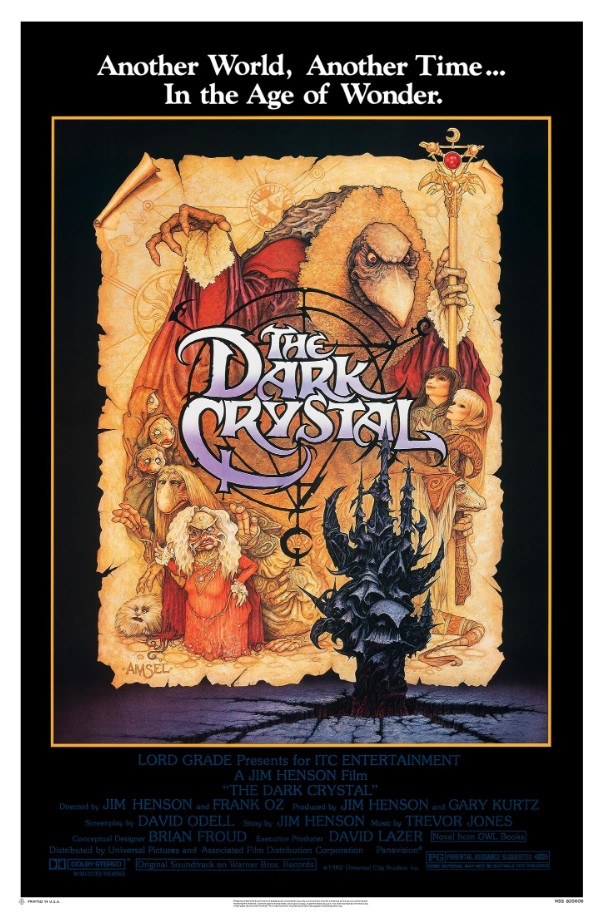
Take 3: The Dark Crystal Review + 510 Follower Thank You

For this Blog Follower Dedication Review, I wanted to write about an animated film. That’s because the last animated movie I reviewed was hoops&yoyo’s Haunted Halloween last October. As I was looking for the right title to choose, I realized I don’t often talk about animated films involving puppetry. Therefore, my Blog Follower Dedication Review will highlight 1982’s The Dark Crystal! On 18 Cinema Lane, the only projects of Jim Henson’s I’ve reviewed were 1981’s The Great Muppet Caper and 1985’s Follow That Bird. Choosing to write about The Dark Crystal has now become ironic, as all three of these movies were released in the 1980s. While I thought Follow That Bird was Sesame Street’s fine first attempt at making a movie, The Great Muppet Caper was a fun, joyful experience. Where will The Dark Crystal rank among these two pictures? Journey through this review to find out!

The Dark Crystal poster created by Incorporated Television Company (ITC), Henson Associates (HA), Henson Organisation, The Jim Henson Company, Associated Film Distribution (AFD), and Universal Pictures

Things I liked about the film:

The puppetry: Jim Henson has set the bar high when it comes to the art of puppetry! Through his work with The Muppets and on Sesame Street, Jim created characters that were fascinating to watch and were adoringly memorable. In The Dark Crystal, his craftmanship, direction, and artistic vision contribute to the quality his style of puppetry is known for. The way characters move provide just one example. Jen, the movie’s protagonist, goes on a quest to fulfill a prophecy by finding a crystal shard. This quest shows Jen walking, climbing, riding, and even jumping. The execution of these movements were so well-done, there were times I forgot I was watching a puppet. How Jen was able to blink and move his head was also impressive!

The scenery/set design: Films in the fantasy genre, like The Dark Crystal, have a reputation for presenting imaginative, fantastical worlds. Good movies in this particular genre will make these respective worlds immersive through an emphasis on attention to detail. I can honestly say the creative team behind The Dark Crystal truly cared about how the world surrounding the characters was showcased. An excellent example is when Kira and Jen meet for the first time. The location itself is a tropical oasis; complete with green plants, soft earth on the ground, and even a small body of water.  It feels like an actual jungle because of the realistic appearance of the materials. More often than not, the tropical space is peaceful, which gives the audience a break from the tension of the film’s conflict. The tonal and visual pairing of the jungle helps the audience stay invested in the story.

Use of practical effects: In the 21st century, CGI (computer generated imagery) has become the go-to tool of film-making. The popularity and accessibility of CGI has caused a debate over whether this film-making tool is over-used. So, watching a film like The Dark Crystal in 2025 is refreshing, as the 1982 production utilizes practical effects. In one scene, the Skeksis Emperor dies. Instead of the Skeksis Emperor simply laying unconscious, the body literally crumbles like rocks being broken down. Another scene shows Jen and Kira rowing on a lake. The foliage surrounding the lake appeared life-like, as did the body of water itself. This is because the film’s creative team incorporated actual water and other related props to make the scene feel as realistic as possible.

Colorful galaxy image created by Freepik at freepik.com. <a href=’https://www.freepik.com/free-vector/lovely-hand-drawn-galaxy-background_2943080.htm’>Designed by Freepik</a>. <a href=”https://www.freepik.com/free-photos-vectors/background”>Background vector created by Freepik</a>. Image found at freepik.com.

What I didn’t like about the film:

An underutilized character: When the Skeksis General becomes the next Emperor, he shuns the Chamberlain from the Skeksis kingdom. The Chamberlain then tries to find ways to get back into the Emperor’s good graces. Despite these attempts, the Chamberlain was underutilized in The Dark Crystal. He appeared in only a handful of scenes and his role in the film’s plot was minimal as well. I was hoping the Chamberlain’s rejection would express the ideas of standing against group mentality and changing a person’s way of thinking. Sadly, these ideas were not incorporated into the Chamberlain’s story.

Scenes that became padding: The run-time of The Dark Crystal is an hour and thirty-three minutes. However, the movie’s run-time seemed longer because some scenes became padding. One example shows a group of Skeksis eating dinner. This scene features a medium shot of each dinner guest eating their meal, making the scene feel drawn out. If The Dark Crystal’s run-time had been less than an hour and thirty-three minutes, scenes like the Skeksis’ dinner would be trimmed.

A confusing resolution: For this part of my review, I will spoil The Dark Crystal. If you haven’t seen this movie and are planning on watching it, skip to the part of my review titled ‘My overall impression’.

A voice-over at the beginning of The Dark Crystal explains how the Skeksis and Mystics were at odds with each other after the titular crystal broke. The upcoming Great Conjunction will determine who will rule the land, with Jen’s quest to find a crystal shard playing a role in this decision. The way this conflict was explained made me believe the overall story was a battle of good versus evil. But when Jen reunites the crystal shard with the titular crystal, the resolution became confusing. As the Skeksis kingdom falls apart and the Skeksis themselves are running around in fear, the Mystics arrive and surround the titular crystal. The Mystics and Skeksis then merge to become one ghost-like being. The reunion between these groups was never explained throughout the movie. Maybe a scene explaining why this particular resolution was reached was left on the cutting-room floor?

Image by Freepik

My overall impression:

When it comes to quality, the art of puppetry is a spectrum. On the higher end of this spectrum has always been the work of Jim Henson. The Dark Crystal provides a strong example for why that statement is true. The puppets’ artistry and execution were truly impressive, with their movements making me sometimes forget I was even watching puppets at all. Set design and scenery from the 1982 production looked like the film’s creative team truly cared about how the story’s world was presented. I also liked how practical effects were used, which brought a sense of realism to certain moments! Even though The Dark Crystal had its strengths, it had its flaws too. From a confusing resolution to an underutilized character, the film wasn’t perfect. But it was a fine, interesting presentation, definitely one of Jim Henson’s more ambitious projects. Before I conclude this review, I’d like to thank my blog’s followers for their support of 18 Cinema Lane! These articles always encourage me to expand my cinematic horizons!

Overall score: 7 out of 10

Have you seen The Dark Crystal? Which Jim Henson presentation would you like to see in a future Blog Follower Dedication Review? Please tell me in the comment section!

Have fun at the movies!

Sally Silverscreen

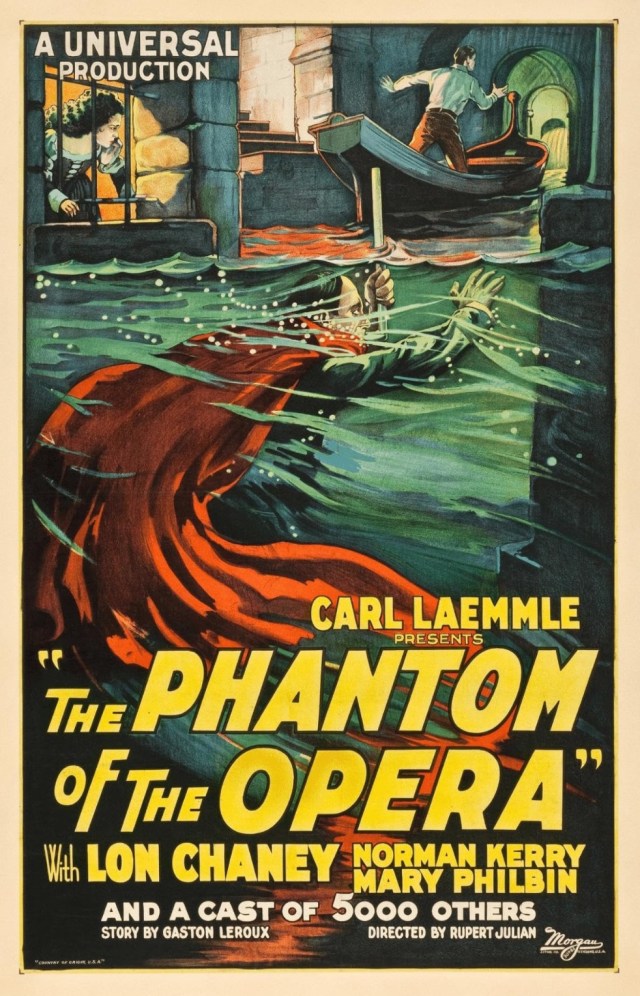
Take 3: The Phantom of the Opera (1925) Review (Silent Pioneers Double Feature Part 2)

In my review of 1920’s The Garage, I admitted silent films are rarely covered on 18 Cinema Lane. Acknowledging the one hundredth anniversary of a movie is even rarer. This is a reason why I selected 1925’s The Phantom of the Opera for the Silent Pioneers Blogathon! But reviewing this film also presents a full circle moment for me. Before 2025, I had seen pieces of The Phantom of the Opera from 1925. That’s because those pieces are featured at the beginning of Phantom of the Megaplex (which happens to be celebrating its 25th anniversary this year). As a fan of that movie, I felt I owed it to myself to finally check out the film that paved the way for countless cinematic projects. Though this is my first time seeing 1925’s The Phantom of the Opera in its entirety, I am familiar with its story. This is due to seeing parts of 2004’s adaptation of The Phantom of the Opera. So, without further delay, let’s start this review!

The Phantom of the Opera (1925) poster created by Universal Pictures

Things I liked about the film:

Color coded film: Silent films have a reputation for appearing in black and white. But in The Phantom of the Opera, only the Phantom’s lair is presented in this hue. This is because the Paris Opera House is color coded based on where a scene takes place. Outdoor scenes appear in blue. Scenes taking place backstage, and even a ballet performance, are presented in pink. The only scenes fully in color are those during the Bal Masque de l’Opera. Color coding the movie’s scenery gives each part of the story its own distinct significance. It definitely gives The Phantom of the Opera a unique identity!

The acting: When you think of 1925’s The Phantom of the Opera, you think of Lon Chaney. Though he spent the movie with his face covered by make-up or a mask, Lon utilized the use of his eyes and body language to give the Phantom emotion. During the Bal Masque de l’Opera, the Phantom discovers someone betrayed his trust. His eyes not only appear very wide, they even look pained. The Phantom falls back in his seat, emphasizing how shocked he is by the betrayal. Even though Lon stole the show, there are other performances I liked in The Phantom of the Opera! Mary Philbin portrays Christine Daae. Through a variety of acting techniques, Mary shows the audience what her character is thinking and feeling. A perfect example is when Christine meets the Phantom for the first time. Shocked by his appearance, she leans back against the wall, trying to move as far from him as possible. Christine’s eyes are wide and her jaw drops in horror, illustrating how unsettled she is by the Phantom.

The on-screen chemistry: As I just said in this review, Mary Philbin portrays Christine Daae. Throughout The Phantom of the Opera, Christine shares romantic feelings with Raoul, portrayed by Norman Kerry. When these characters shared moments together, their interactions were romantically tender. The love between Christine and Raoul feels like it radiates off the screen. Mary and Norman’s on-screen chemistry was very sweet, making their characters’ scenes together feel genuine. Their performances, as well as the screenwriting, made Raoul and Christine’s relationship one of the best parts of The Phantom of the Opera! I wish Mary and Norman shared more scenes together.

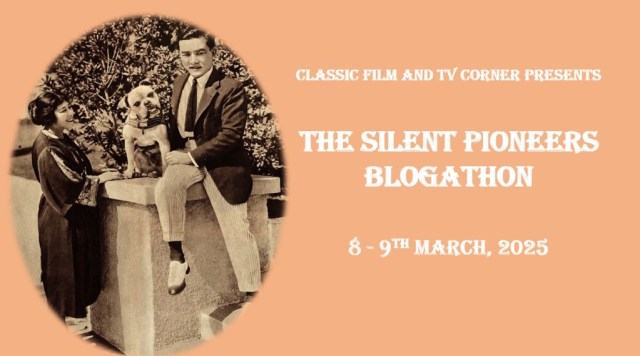
The Silent Pioneers Blogathon banner created by Maddy from Classic Film And TV Corner

What I didn’t like about the film:

Underutilized characters: There were a few underutilized characters in The Phantom of the Opera. Two of them are the new owners of the Opera House. At the beginning of the movie, the ownership of the Opera House changed hands. Not only are the new owners informed of the Phantom’s existence, they are presented with evidence he actually exists. Yet, these owners don’t do anything to remove the Phantom from the Opera House or protect their business from the Phantom. A major reason for this is how the characters were underutilized, making limited appearances throughout the story.

Little sense of urgency: Like I said in my review, the new owners of the Opera House don’t do anything to remove the Phantom from the Opera House or protect their business from the Phantom. Any time the Phantom makes threats to ruin the show or even when Christine disappeared, there was little sense of urgency to prevent the Phantom’s chaotic plans. The day after Christine went missing, there was a newspaper article written about her disappearance. But no search party was organized to look for her. Even Raoul’s suspicions don’t appear raised when he receives a mysterious note from Christine. When Christine returns at the Bal Masque de l’Opera, no one notices except for Raoul. With all this said, the Phantom doesn’t seem as big of a concern to the Opera House’s community as he should be.

Unanswered questions: For this part of my review, I will spoil The Phantom of the Opera. If you haven’t seen this film and are planning on watching it, skip ahead to the part of my review titled ‘My overall impression’.

The 1925 version of The Phantom of the Opera attempts to give the Phantom a backstory. But this attempt leaves the audience with more questions than answers. On a notecard addressing the Phantom’s history, it states he is a “master of Black Art”. This statement is never given an explanation, especially since the Phantom isn’t shown adopting magic or supernatural powers. The notecard also states the Phantom was “exiled to Devil’s Island for criminal insane” and that he “escaped”. No explanation is provided why he was taken to the island in the first place. Did the Phantom actually commit a crime or was he falsely accused, with taking over the Opera House and causing chaos his form of revenge? These are two examples of unanswered questions in The Phantom of the Opera.

String of musical notes image created by Freepik at freepik.com. <a href=’https://www.freepik.com/free-vector/pentagram-vector_710290.htm’>Designed by Freepik</a> <a href=”https://www.freepik.com/free-photos-vectors/background”>Background vector created by Freepik</a>. Image found at freepik.com. 

My overall impression:

1925’s The Phantom of the Opera is considered a classic, not just from the Silent Film Era, but within film history. So, imagine my shock when I discovered the movie was never included on any of American Film Institute’s 100 movies lists. When this film was first released, it brought something new to cinema’s table. The Phantom of the Opera paved the way when it came to the power of make-up. The 1925 picture also showed the world the expansive nature of storytelling through a cinematic lens. This is why, in my opinion, the story of the Phantom and his opera house is better suited for film than the stage. Lon Chaney is one of the most celebrated actors of all time. His role as the titular character proves why that statement holds true. Lon’s ability to transform into the Phantom makes his performance captivating. Beyond the make-up, he effectively uses his eyes and body language to bring emotion to his character. Though the film has its flaws, The Phantom of the Opera still holds up, even a hundred years later. Color coding for each area of the Opera House gave the production a unique identity, as well as distinct significance to these spaces. In a world where silent films are not as common as they once were, I’m thankful for the restoration efforts made for The Phantom of the Opera.

Overall score: 7.5-7.6 out of 10

Have you seen 1925’s The Phantom of the Opera? Which story do you wish had been adapted into a silent film? Let me know in the comment section below!

Have fun at the opera!

Sally Silverscreen

Comparing with the Critics – Worst of 1976 – Gable and Lombard

This review is from my series, Comparing with the Critics. If you’d like to learn more about the series, click on the link below.

Introducing my new series, Comparing with the Critics!

In the ‘Best Films of 1976’ episode of Opening Soon…at a Theater Near You, Gene Siskel stated “1976 was a pretty lousy year for movies”. He emphasized that statement by saying “the year was littered with dogs”. Since I haven’t seen a lot of movies from 1976, I can’t agree or disagree with Siskel’s claim. But what I can do is talk about one of Siskel’s choices for worst movies of 1976. As I said in my 1976 introduction of Comparing with the Critics, one episode was primarily focused on discussing the best movies from a given year. This left Siskel and Ebert with only a few minutes to talk about some of the year’s worst films. Despite the 1976 episode’s limited selection of “bad” movies, I chose Gable and Lombard for this edition of Comparing with the Critics Worst of review. What made Gable and Lombard the most interesting title from the episode’s collection of “bad” movies was the story’s emphasis on Clark Gable and Carole Lombard’s relationship. I am somewhat familiar with Clark and Carole, as I have reviewed at least one of their movies on 18 Cinema Lane. Because I hadn’t heard of Gable and Lombard until I saw the ‘Best Films of 1976’ episode of Opening Soon…at a Theater Near You, I viewed the film as a way to expand my cinematic horizons and learn more about Carole and Clark. Now that I have seen the movie for myself, I believe Siskel’s, and even Roger Ebert’s, thoughts on the film were a tad harsh.

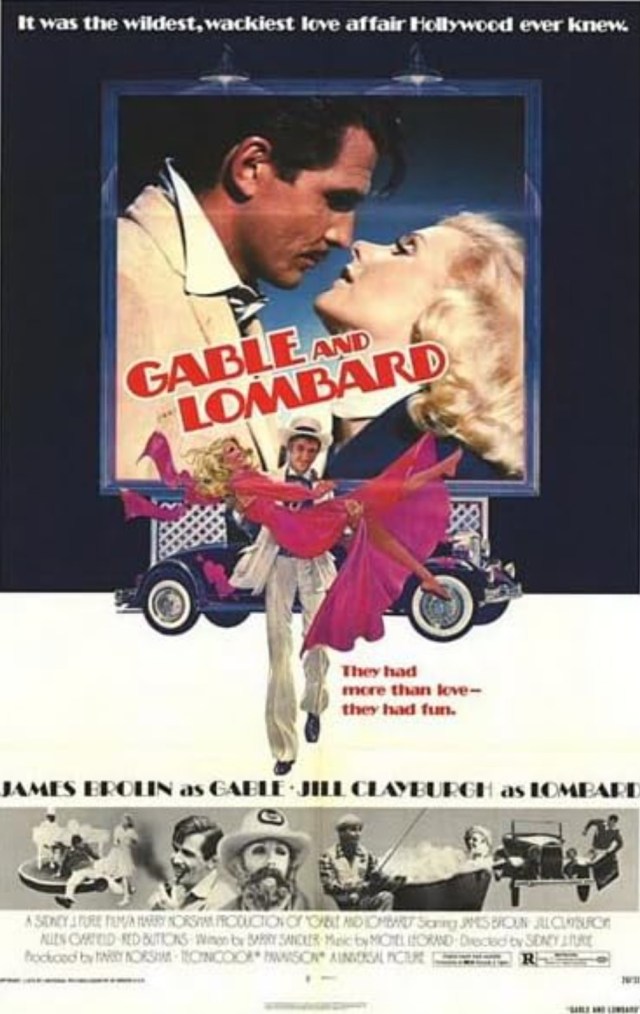
Gable and Lombard poster created by Universal Pictures

Before revealing his choices for the worst movies of 1976, Siskel says the year featured “two kinds of cinematic canines: cheap, lousy pictures and expensive, lousy pictures”. Based on what films he chose, Gable and Lombard was placed in the latter category. According to Wikipedia, the film’s budget was $4.5 million. It appears most of the budget was spent on Gable and Lombard’s set design. One scene took place outside, with the guests at a ball wearing white. Small candles surrounded the pool’s perimeter. In the pool were small islands of white flowers and candles, along with swans peacefully gliding through the water. Overall, this part of the set was absolutely gorgeous! Throughout Gable and Lombard, some scenes took place in Clark or Carole’s dressing room. These dressing rooms looked more like condominiums; distinct spaces that appear livable. Carole’s dressing room boasted a color combination of yellow and white. Featuring design choices like a white dining room set gave the dressing room a feminine style. Meanwhile, dark wood surrounded the fireplace in Clark’s dressing room. There was even a pool table located near the fireplace. These design choices created a more masculine space. Carole and Clark’s dressing rooms provided a good visual representation of how different they were despite having a similar career path.

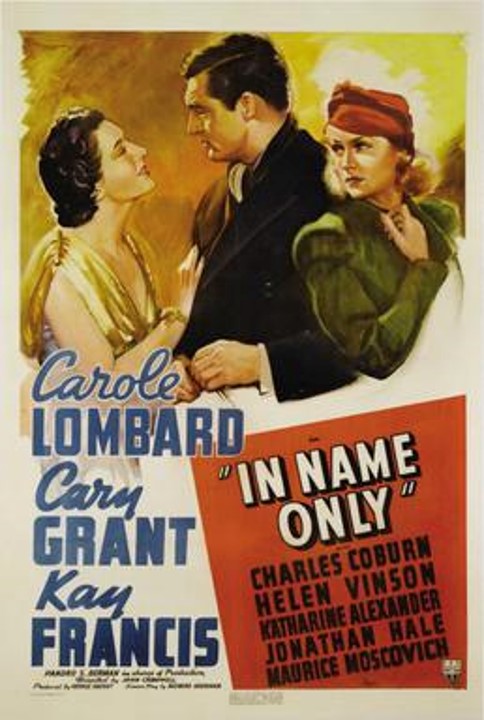
In Name Only poster created by RKO Radio Pictures. Image found at en.wikipedia.org/wiki/File:In_Name_Only.jpg

While Roger Ebert never shared his thoughts on Gable and Lombard in the ‘Best Films of 1976’ episode, he did write a review for the movie, which can be found on rogerebert.com. In his review, Ebert states “Brolin does, indeed, look a lot like Gable – but imitation here has nothing to do with flattery”. While I agree with Ebert’s opinion on James Brolin’s appearance in the movie, I disagree with the rest of Ebert’s statement. Not only did James look like Clark, he even sounded like him too! It almost felt like James transformed into another person. During Gable and Lombard, James consistently carried an easy-going attitude. This choice in acting and directing showcased Clark’s down-to-earth personality. Meanwhile, Carole was a comedic, life of the party. Portrayed by Jill Clayburgh, Carole’s up-beat personality made her one of the most popular actresses of her time. But behind closed doors, Carole had her doubts and insecurities. In one scene, Carole is sharing with Clark how she feels undeserving of a recent achievement. Her eyes reveal a sense of worry. Concern, even sadness, can be heard in her voice. During her conversation with Clark, Carole looks and sounds truly discouraged. Clark, with a warm smile and calming tone of voice, reassures Carole what’s most important is surrounding herself with people who support her. Jill’s and James’ performance is one of the reasons why this scene is one of my favorites in Gable and Lombard!

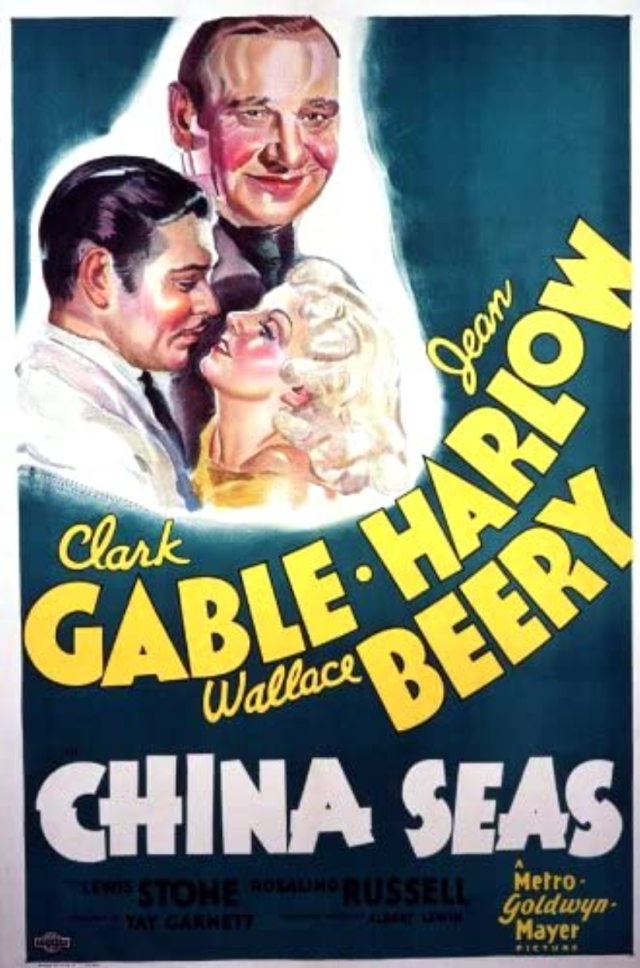
China Seas poster created by Metro-Goldwyn-Mayer.

Sidney J. Furie, the director of Gable and Lombard, chose to make “a movie about just folks”, primarily focusing on the personal lives of Clark Gable and Carole Lombard. While Ebert says this decision gave “the movie a certain originality”, he also criticizes Sidney’s choice, claiming that “by limiting itself to this aspect of their lives the movie never deals with the reasons we find them interesting in the first place”. As I said in this review’s introduction, I am somewhat familiar with Clark and Carole. Because I don’t know which parts of Gable and Lombard are factual or creative liberty, I took the story of Carole and Clark’s relationship with a grain of salt. From the way Louis B. Mayer (portrayed by Allen Garfield) talked to Clark about groups of people demanding certain elements of films be changed due to “indecency”, I knew he was talking about the Breen Code, a series of morality related guidelines enforced in Hollywood from 1934 to 1954. Therefore, I saw Gable and Lombard as a character study of how a portion of the Breen Code era affected the professional and personal lives of the Hollywood landscape, with Carole and Clark serving as just two examples. When Clark is accused of having an affair with a waitress, Carole volunteers to testify in court. Everyone from her inner circle knows if she testifies, she will expose her and Clark’s relationship as well as end her career. While explaining why he doesn’t want Carole to testify, Louis B. Mayer shares with Clark the ugly truth about what happened to some actresses after their careers ended. This scene is honest about the consequences if the Breen Code was broken. By viewing the film from the lens of the Breen Code, Gable and Lombard’s narrative is not only compelling, it is given higher stakes.

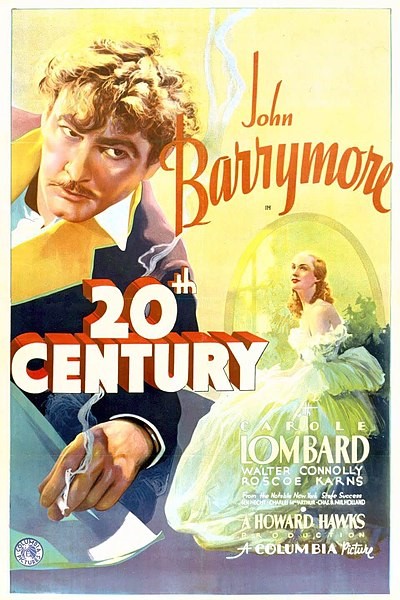
Twentieth Century poster created by Columbia Pictures.

I said earlier in this review how Ebert and Siskel were only given a few minutes to talk about the year’s worst films. This made Siskel’s discussion of Gable and Lombard sound vague, as he states “in real life, you can get arrested for playing around with dead bodies. The same should be true for movie-makers who desecrate the memory of great, dead actors”. Because this review affords me more time to elaborate on my opinion, I will now discuss what I didn’t like about Gable and Lombard. At the beginning of the movie, Clark is told Carole was in a plane crash, but her whereabouts are unknown. The very next scene shows Carole riding in an ambulance, alive and appearing uninjured. That scene took place years before the plane crash happened. With no on-screen text acknowledging the story’s time and place, it was sometimes difficult to figure out the story’s timeline. I liked James’ and Jill’s portrayal of Clark and Carole. However, I found their on-screen chemistry inconsistent. When their story began, Carole and Clark went from enemies to lovers. For the rest of the story, they continuously broke up then got back together. I recognize Gable and Lombard is based on a real-life relationship. But because of the back-and-forth nature of that relationship, I couldn’t stay fully invested in the relationship of Clark and Carole.

Comparing with the Critics banner created by me, Sally Silverscreen. TV show title cards created by WTTW National Productions, WTTW, Public Broadcasting Service (PBS), Lifetime Television, Tribune Entertainment, Buena Vista Television, and Disney-ABC Domestic Television

Looking back on Gable and Lombard, I believe Siskel’s, and even Roger Ebert’s, thoughts on the film were a tad harsh. I wouldn’t call it a “dog” or “lousy”, as the movie does have its merits. But I do believe the marketing is a bit misleading. The quotes on Gable and Lombard’s poster are “It was the wildest, wackiest love affair Hollywood ever knew” and “They had more than love – they had fun”. In the ‘Best Films of 1976’ episode of Opening Soon…at a Theater Near You, Carole dumped salad on Clark’s head, one of the more humorous scenes from the film. While there were comedic moments sprinkled throughout the story, the movie’s marketing presents the false idea it is solely a comedy. Seen from the lens of the Breen Code, Gable and Lombard presents a character study of how a portion of the Breen Code era affected the professional and personal lives of the Hollywood landscape. With the story emphasizing Carole and Clark’s relationship, they navigate complicated decisions, as well as honesty about feelings and emotions. The balance of comedy and tragedy adds a sense of maturity to the overall story. At worst, the movie prioritizes style over substance. as most of the budget seems to be put toward the set design. But, at best, Gable and Lombard is just ok.

This review was brought to you by

Sally Silverscreen

Take 3: The Chalk Garden Review + 505 Follower Thank You

For last year’s We Are Family Blogathon, my original plan was to write about both the Diagnosis Murder episode, “Guardian Angel” and 1964’s The Chalk Garden. But as I explained in my review of hoops&yoyo’s Haunted Halloween, my plan to discuss the movie fell through. Despite this setback, I had always wanted to feature The Chalk Garden on my blog. Recently, I received a second chance to review the film! So for the first Blog Follower Dedication Review of 2025, I thought the 1964 production was the perfect title for this occasion! The Chalk Garden was recommended by Maddy (from Maddy Loves Her Classic Films) when I reviewed Marriage on the Rocks five years ago. In total, I have written about seven of Deborah Kerr’s films, with her best picture being The King and I. How will this eighth movie compare to those seven? Keep reading to find out!

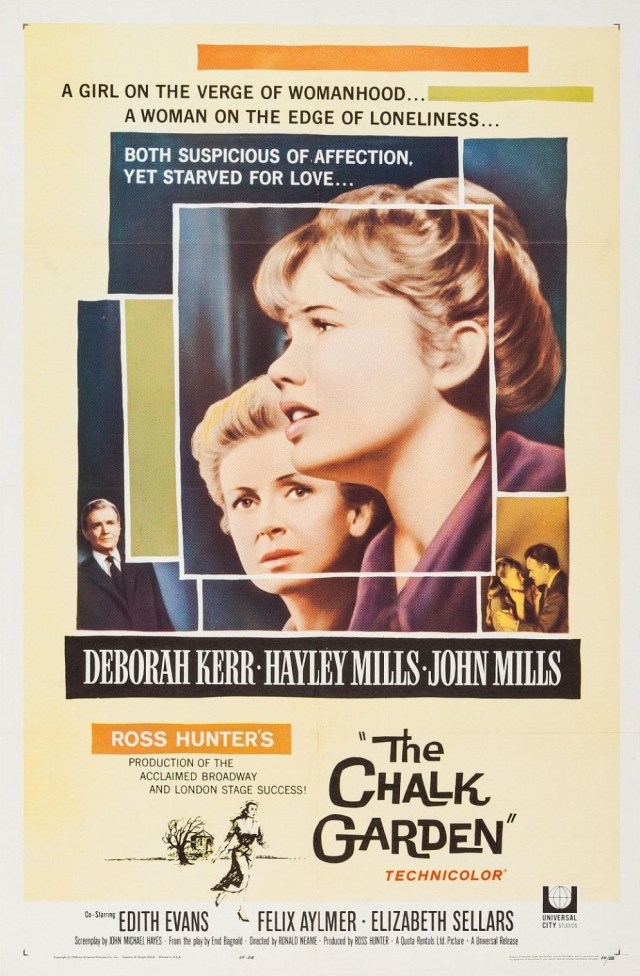
The Chalk Garden poster created by Quota Rentals Limited, Ross Hunter Productions, and Universal Pictures

Things I liked about the film:

The acting: The Chalk Garden is a character-driven story where part of the script serves as a character study. For these types of movies, it’s important to recruit a cast whose talents are strong enough to help make the characters interesting. While watching the 1964 film, I was invested in the story from beginning to end. One reason why is the quality of the acting performances! This is a movie where it’s difficult to choose a favorite performance, as each one was good for different reasons. Hayley Mills’ portrayal of Laurel incorporates a variety of emotions and animated expressions. These aspects of her performance showcase just how complex Laurel is. Meanwhile, Deborah Kerr’s character, Miss Madrigal, was a no-nonsense woman who subtly expressed emotion. Through her acting talents, Deborah found a way to present her character as nurturing and a promoter of “tough love”. As for John Mills’ portrayal of Maitland, his character’s consistently welcoming persona put the other characters at ease. Maitland’s laid-back personality and calm way of approaching situations reminded me of Mr. Rogers from Mister Rogers’ Neighborhood.

Mrs. St. Maugham’s residence: The story of The Chalk Garden takes place at Mrs. St. Maugham’s house. Since Mrs. St. Maugham was a woman with a financially comfortable life, her house perfectly reflected this. The sunroom was introduced in the movie’s first five minutes. Wrap-around windows looked out to a view of a large grassy hill. Plants filled the inside of the sunroom. In the center of the area, four white metal chairs were set around a smaller table. The furniture looked like it came straight out of an old-fashioned ice-cream parlor. On Mrs. St. Maugham’s property was her backyard shed. Though this space was not frequently shown in The Chalk Garden, I really liked its interior design! Underneath a window was a white wicker desk housing some potted plants. A wicker table was surrounded by wicker chairs of varying sizes. The white stone walls and differently shaped windows helped make the backyard shed a quaint and classy space! These finer details successfully captured Mrs. St. Maugham’s sophisticated taste!

The dialogue: Toward the beginning of The Chalk Garden, Miss Madrigal arrives at Mrs. St. Maugham’s house to be interviewed for the available governess job. When Maitland greets her at the door, he asks Miss Madrigal if she’s worked as a governess before. She cleverly replies with a question of her own, asking “do you usually interview applicants in the doorway”? This was the funniest moment in The Chalk Garden because of how well-written and delivered this exchange was! After Miss Madrigal accepts the governess job, she moves in to Mrs. St. Maugham’s house. While Miss Madrigal unpacks her belongings, Laurel explains how she doesn’t like to be told “good morning”. Her reasoning is “what is a good morning to someone else is rarely a good morning to me”. When people tell each other “good morning”, they are typically saying that in the hopes the other person has a good morning. But unless we consider things from the other person’s point of view (yes, that To Kill a Mockingbird reference was intentional), we don’t know if that person has, indeed, had a good morning. So, I found Laurel’s quote to be thought-provoking. The examples of dialogue I provided display the quality screenwriting within The Chalk Garden! How memorable the dialogue was is a result of that quality!

Good sailing day image created by Freepik at freepik.com. <a href=’https://www.freepik.com/free-vector/summer-landscape-with-a-houselight-and-a-boat_866882.htm’>Designed by Freepik</a>. <a href=”https://www.freepik.com/free-photos-vectors/design”>Design vector created by Freepik</a>. Image found at freepik.com.

What I didn’t like about the film:

A quickly resolved conflict: Throughout The Chalk Garden, Mrs. St. Maugham is at odds with her daughter, Olivia. Their relationship is so strained, Mrs. St. Maugham wants to obtain sole custody of her granddaughter, Laurel. This conflict lasts the entire movie. While I will not spoil The Chalk Garden, I will say the conflict was resolved within the film’s last ten minutes. The way it was resolved was too abrupt. As a result of this abrupt resolution, Laurel’s change in attitude and behavior happened too quickly. The reason for these flaws is how the second half of the story focuses on unearthing secrets.

Unanswered questions: There were times in The Chalk Garden when characters would make a claim, only for that claim to not be met with confirmation or denial. One example shows Laurel telling Miss Madrigal about the aftermath of when she was attacked in the park. Laurel says even though the police never got involved, it was an “open and shut case”. Before this conversation, however, Maitland warns Miss Madrigal how Laurel has a penchant for lying and fabricating the truth. Did the incident in the park actually take place or was Laurel bending the truth to get a reaction? This is one of the claims in The Chalk Garden that should have been clarified.

An unresolved metaphor: Along with being Laurel’s governess, Miss Madrigal is the resident gardener. This is because Mrs. St. Maugham lacks a “green thumb”. Miss Madrigal uses Mrs. St. Maugham’s garden as a metaphor for Laurel, even referring to it as “a chalk garden”. In order for the metaphor to work, the garden’s growth should have paralleled Laurel’s personal journey. Unfortunately, the garden itself makes infrequent appearances in the film. It also doesn’t help how Mrs. St. Maugham never puts Miss Madrigal’s words into practice, making the metaphor seem unresolved.

Paint palette image created by Freepik at freepik.com <a href=’https://www.freepik.com/free-vector/hand-drawn-artsy-tools_836777.htm’>Designed by Freepik</a> <a href=”https://www.freepik.com/free-photos-vectors/hand”>Hand vector created by Freepik</a> Image found at freepik.com

My overall impression:

Before I share my overall impression on The Chalk Garden, I want to take the time to thank the followers of 18 Cinema Lane. The support my blog receives still amazes me, even seven years after 18 Cinema Lane began! While I appreciate 18 Cinema Lane’s followers, I also appreciate when my blog’s readers provide film recommendations. This is why I try to write about these recommendations whenever possible. As I mentioned in this review’s introduction, The Chalk Garden was suggested by Maddy (from Maddy Loves Her Classic Films). I’m thankful to have not only been recommended the movie, but to also have finally checked it out! The 1964 production is part character study, part mystery. Because of the strength of the acting performances and screenwriting, this story worked! Liked I said in my review, I was invested in the story from beginning to end. The characters were interesting and the mysterious elements were intriguing. Though I wish some questions had been answered and a major conflict hadn’t been resolved so quickly, The Chalk Garden did more things right when it came to film-making. I can, honestly, say I would recommend this movie for those looking for a good cinematic story!

Overall score: 7.8 out of 10

Have you seen The Chalk Garden? What is the best movie you’ve been recommended? Let me know in the comment section!

Have fun at the movies!

Sally Silverscreen

Take 3: Argylle Review

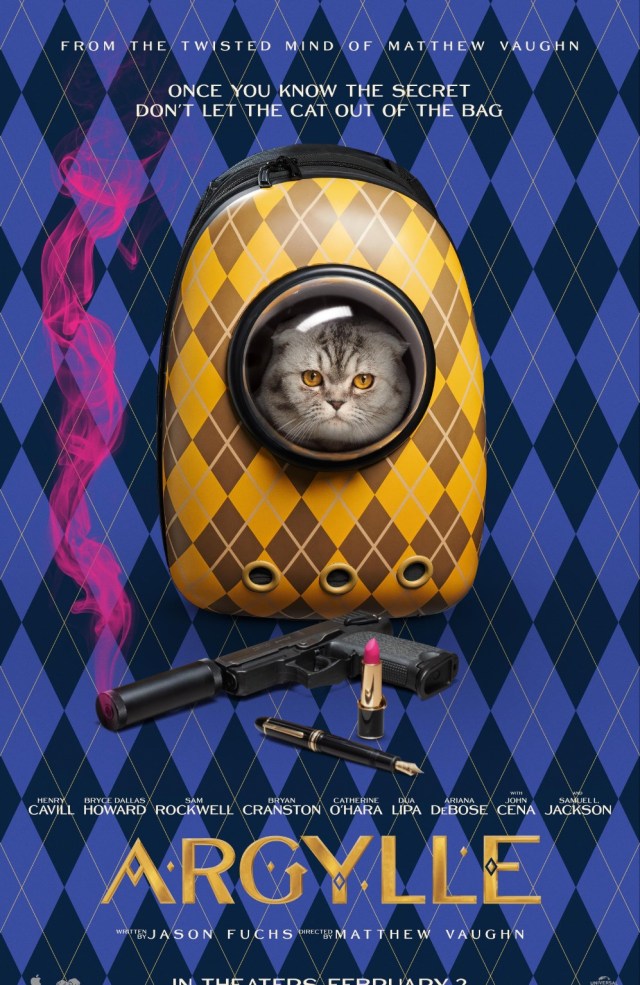
Here at 18 Cinema Lane, “newer” theatrically released movies are rarely reviewed. One reason for this is how I have prioritized older films and made-for-TV productions. But since I recently saw Argylle, I found a good excuse to write about a “newer” theatrical film! The mystery genre is the most popular genre on 18 Cinema Lane, as I have stated before. While Argylle isn’t exactly a mystery film, it seemed to contain elements of mystery based on the movie’s marketing. The marketing also had a distinct color scheme and style, boasting argyle patterns in either blue or yellow. However, any fan of film would know it takes more than pretty looking marketing to make a good movie. All of the right pieces have to fall into place in order for a movie to not only be financially successful, but to also be acclaimed by both the critics and the audience. So, what are my thoughts on Argylle? Keep reading my review to find out!

Argylle poster created by Apple Original Films, Marv Films, Cloudy Productions, Apple Studios, and Universal Pictures

Things I liked about the film:

The acting: When an actor or actress portrays a protagonist, what can work in their favor is bringing a sense of likability to their role. In Bryce Dallas Howard’s case, her portrayal of Elly presented a realistic looking performance that could make the audience feel empathetic for the story’s main character. A great example is when Elly takes her first plane ride. Due to her anxious feelings, she consistently taps and shakes her head while also shutting her eyes. She explains to Aiden how these physical gestures are intended to be a coping mechanism. Another example takes place when Elly is reunited with her cat, Alfie. When this reunification happens, Elly’s hands are shaking, a visually sign she was distressed over Alfie’s well-being.

Throughout Argylle, Elly interacts with Aiden. Portrayed by Sam Rockwell, Aiden had a laid-back personality and a dry sense of humor. Sam had nice on-screen chemistry with Bryce as well. A good scene between Elly and Aiden is during her aforementioned first plane ride. As Elly is trying to cope with her anxious feelings, Aiden helps Elly through her ordeal, calmly talking to her with a soothing tone of voice. He also gives her direct eye contact, emphasizing how he has Elly’s undivided attention. To me, this scene was one of the better scenes in Argylle, as the interaction between Aiden and Elly felt genuine!

Based on what I know about Bryan Cranston’s performances, he seems to, typically, be cast as characters that either have no-nonsense attitudes or a dry sense of humor. In Argylle, Bryan portrayed a character called Director Ritter. While Bryan consistently carried his character with a serious persona, there wasn’t much room in his performance for humor, as he portrayed an antagonist. Despite this, Bryan was expressive throughout the film! When he is frustrated by an agent’s mistake, Director Ritter has an irritated look on his face. He also has a stern look in his eye, indicating his bottled-up anger. More subtle expressions like this one worked in Bryan’s favor, allowing his character to have a distinct personality!

Fight choreography: Because Argylle is classified as an action film, there are a collection of action scenes scattered throughout the story. Several of these scenes involve choreographed fights between characters. The way the fights were choreographed was fluid and fast paced. The back-and-forth action between the characters sometimes felt like a ping pong game in motion. One such example is when Aiden fights multiple people on a moving train. As he goes from car to car, the ultimate fight continues. The adrenaline remained consistent in this scene, which helped it be an exciting moment in the film! The fight scenes in Argylle were also presented in creative ways. Different elements and materials were used to bring unique ideas to the big screen.

The allegories: Action movies aren’t typically known for having thought-provoking or creative writing. In Argylle, though, I was impressed by the incorporation of allegories! A scene that showcased a good example is when Elly and Aiden enter an empty room. Prior to this scene, Elly is told to write her next book as she and Aiden go along. Based on how I interpreted it, the empty room represented Elly’s writer’s block. The evidence that supports this claim is how, earlier in the story, Elly is experiencing difficulty writing another novel in her book series. An empty room is waiting to be furnished, just like a story is waiting to be told. While still in the empty room, Elly rips wallpaper off the walls. This, from my interpretation, was an allegory for a writer finding a breakthrough from their writer’s block!

Tools of a writer image created by Freepik at freepik.com. <a href=’https://www.freepik.com/free-photo/camera-and-coffee-near-notebook-and-accessories_2399437.htm’>Designed by Freepik</a>. <a href=”https://www.freepik.com/free-photos-vectors/vintage”>Vintage image created by Freepik</a>. Image found at freepik.com.

What I didn’t like about the film:

A drawn-out story: According to IMDB, Argylle has a run-time of 2 hours and 19 minutes. Though stories set at a little over two hours can be well paced and delivered, Argylle is drawn out. The problem was the creative team trying to satisfy their film’s run-time by placing an abundance of plot twists into their story. Most of these plot twists were effective. But I think a few of them could have been cut from the script.

Things that don’t make sense: There are moments in Argylle that don’t make sense the longer you think about them. One example is when Elly and Aiden are trying to locate someone. While sitting in a public park, Aiden and Elly do their research on Elly’s laptop. Meanwhile, antagonists are trying to locate Elly and Aiden, using technology at their disposal. Why would Elly and Aiden put themselves in a vulnerable position when they know the antagonists could easily figure out what they are doing?

Henry Cavill’s limited presence: In my review’s introduction, I briefly mentioned Argylle’s marketing. One aspect of this movie’s marketing was Henry Cavill’s inclusion. From what I remember, Henry was heavily featured in the marketing, making it seem like he was one of the film’s main stars. Even though his character, Argylle, was important in the story, Henry’s overall presence in the movie was limited. Without spoiling the film, I will say this limited presence was explained. However, this creative decision made Argylle’s marketing seem somewhat misleading.

Ice skating pair photo created by fxquadro at freepik.com. Image by fxquadro on Freepik

My overall impression:

When I chose to watch Argylle, I thought I had an idea what type of movie I was about to watch. While I was correct on some aspects, there were surprises along the way. A few of these surprises were the allegories sprinkled throughout the story and the abundance of plot twists. Out of the expected elements of the movie, Argylle had its strengths; from the acting performances to the fight choreography. But the film does have its flaws. Some of them range from having a drawn-out story to presenting misleading marketing. In my opinion, though, Argylle was an exciting, enjoyable picture! It won’t become one of the best movies of the year. But the film was, for me, a memorable experience!

Overall score: 7.2 out of 10

Have you seen Argylle? Which 2024 movie releases are you looking forward to? Let me know in the comment section!

Have fun at the movies!

Sally Silverscreen
Take 3: The Truth About Spring Review

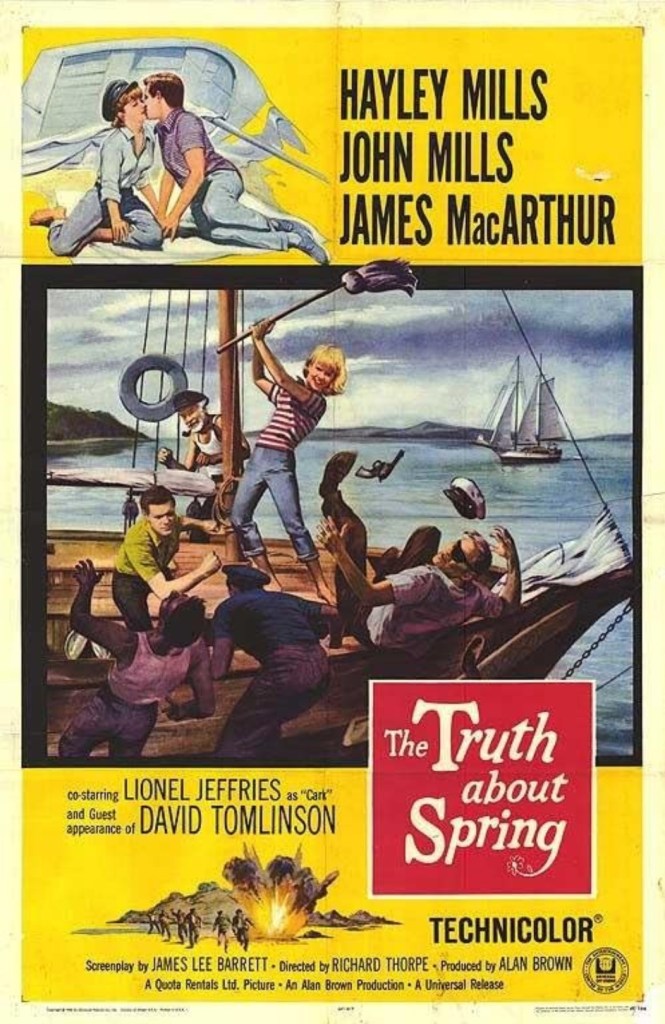
It’s been a while since I last wrote a movie review. As I just wrote about a Hallmark Hall of Fame film, I wanted to talk about something beyond the realm of Hallmark. I recently remembered a movie I had heard good things about for years. That movie is 1965’s The Truth About Spring! I have covered some of Hayley Mills’ films in past reviews on my blog. These titles are Summer Magic, The Moonspinners, and The Trouble with Angels. While I found Summer Magic to be just ok, I did like The Trouble with Angels and The Moonspinners. Since The Truth About Spring revolves around Hayley’s character traveling, I wondered if I’d like this film as much as The Moonspinners. That answer will be discovered as we sail through this review of The Truth About Spring!

The Truth About Spring poster created by Quota Rentals Limited and Universal Pictures

Things I liked about the film:

The acting: In The Truth About Spring, Hayley portrays the protagonist, Spring Tyler. One of the few characters she interacts with is William Ashton, portrayed by James MacArthur. When William prepares for his voyage on Tommy’s ship, Spring is curious about an outfit William packed. After she asks about the outfit in question, William explains it is a set of pajamas, which he wears for sleep. Spring’s face goes from inquisitiveness to sad realization, as she confesses how she doesn’t own pajamas. This subtle change in facial expressions shows how Spring is being exposed to a different way of living life. Because of Hayley’s acting abilities, the aforementioned realization appeared realistic!

Spring is not the only character William interacts with. Another key character in The Truth About Spring is Spring’s father, Tommy, portrayed by John Mills. During their voyage, Tommy witnesses William in his pajamas for the first time. Because Tommy is also not used to the idea of pajamas, he gives William a confused look. Meanwhile, William displays an embarrassed facial expression, as he wasn’t expecting Tommy to walk into the room. The interaction between these characters creates a moment that is awkward for both of them. John’s and William’s acting talents allow this awkwardness to radiate off the screen, making the scene feel believable!

The interior design: The majority of The Truth About Spring takes place outdoors, as the characters sail to various locations. However, there are a few scenes featuring the interior design of the characters’ ships. The sitting room in the yacht of William’s uncle is surrounded in bleached wood. Paired with beige chairs and a large painting of flowers, this room is reflective of the affluent lifestyle of the Ashton family. On Tommy’s ship, the cabin has dark wood walls. Tommy, Spring, and William sit around a table covered in a red and white checkered pattern. The small windows are gifted with green curtains. These combined design details showcase the humbleness of Tommy and Spring’s surroundings.

The discussion of educational experiences: A consistent topic between Spring and William is education. During one of their discussions, Spring learns there are different types of lawyers. This lesson came after William told her and Tommy he had graduated from law school and passed his bar exam. On a trip to the beach, Spring explains to William how it is the seagulls’ nesting season. She knows this information because of her experiences at sea. These conversations highlight how these characters’ life experiences shaped their educational foundations. I hadn’t thought about this concept until I saw The Truth About Spring!

Sailing on the sea image created by Michele L at freeimages.com. “FreeImages.com/Michele L.”

What I didn’t like about the film:

A missed opportunity: Throughout The Truth About Spring, the characters engage in a treasure hunt. This treasure hunt was, unfortunately, not emphasized in the story. Instead, the movie splits its time between the interactions of Spring and William, as well as Tommy’s conning schemes. For me, this was disappointing because a treasure hunt can give a story intrigue, suspense, and a sense of adventure. Not emphasizing the treasure hunt is, in my opinion, a missed opportunity.

A limited amount of urgency: As I mentioned in my previous point, the film’s treasure hunt wasn’t emphasized. That creative decision caused The Truth About Spring to contain a limited amount of urgency. Within the movie’s hour and forty-two-minute run-time, a strong sense of urgency was featured in only three scenes. Most of the movie ended up feeling like an unexciting journey.

A drawn-out story: Like I said in this review, The Truth About Spring is an hour and forty-two-minutes. But the story itself was straight-forward, primarily focusing on three key characters. Therefore, this combination made the film feel drawn-out. Personally, I feel the movie should have been given a run-time of an hour and ten to fifteen minutes. That way, the script would been tighter.

Tropical island image created by Brgfx at freepik.com. <a href=’https://www.freepik.com/free-vector/island-background-design_1020626.htm’>Designed by Freepik</a>. <a href=”https://www.freepik.com/free-photos-vectors/background”>Background vector created by Brgfx – Freepik.com</a>. Image found at freepik.com.

My overall impression:

As I stated in the introduction, I have reviewed some of Hayley Mills’ films. These films range from ok to enjoyable. When it comes to The Truth About Spring, I thought it was just ok. There are aspects of the 1965 movie I like, such as the discussion of educational experiences between Spring and William. However, I didn’t find the story itself very interesting. Instead of emphasizing the treasure hunt, more focus is given to Tommy’s conning schemes. Giving this simplistic story a run-time of almost two hours didn’t help either. If you’re looking for a movie where Hayley’s character falls in love and goes on an adventure, I’d recommend The Moonspinners over The Truth About Spring. The Moonspinners contains suspense and intrigue, as well as a tighter script.

Overall score: 6 out of 10

Have you seen The Truth About Spring? What is your favorite movie starring Hayley Mills? Please tell me in the comment section!

Have fun at the movies!

Sally Silverscreen
Take 3: Fried Green Tomatoes Review

When it comes to this year’s Genre Grandeur reviews, I have chosen not to write about Hallmark films, even though I could have. This trend is the result of wanting to expand my cinematic horizons. But that is not the only trend among my Genre Grandeur reviews this year. Most of the movies I’ve talked about, so far, were recommended by my readers. With April’s Genre Grandeur theme being “Films About Food”, I selected a movie suggested by Jillian from The Classic Film Connection. That title is 1991’s Fried Green Tomatoes! At first, I had no idea how food was significant to this story. While I knew Fried Green Tomatoes was based on a pre-existing book, I had not read the book prior to watching the film. As I watched the movie, though, I began to see how the story prioritizes food. So, set the table and get the entrée ready, for I’m about to review Fried Green Tomatoes!

Fried Green Tomatos poster created by Universal Pictures, Act III Communications, Avnet/Kerner Productions, Electric Shadow Productions, and Fried Green Tomatoes Productions

Things I liked about the film:

The inclusion of food: As I mentioned in the introduction, I did not know the role food would play in Fried Green Tomatoes. But as the story progressed, the significance of food became clearer! This aspect of the film is included in two ways. The first is forming connections between the characters, building bridges of communication and even camaraderie. When Evelyn and Ninny first meet, Evelyn shares one of her candy bars with Ninny. This exchange served as the starting point for these characters’ friendship. Food also represented the world surrounding the characters. When Ninny is first telling Idgie and Ruth’s story to Evelyn, the story starts at a wedding. At the wedding reception, a table of decadent desserts is shown on screen, from a variety of pies to the wedding cake itself. The picture-perfect presentation of these desserts emphasized the affluent backdrop these characters existed in. Those two ways food was placed into the story allowed food to be the thread that kept the movie together!

The acting: I’ve seen some of Kathy Bates’ films prior to watching Fried Green Tomatoes. Out of those movies, I noticed Kathy has portrayed characters who were head-strong and confident. But with her portrayal of Evelyn in Fried Green Tomatoes, this performance was different. That’s because Evelyn slowly, but surely, became confident over time. Kathy’s approach to her character was very reminiscent of a chameleon. This was achieved through a combination of body language, emotions, and facial expressions. Another great aspect of Kathy’s performance was her on-screen camaraderie with Jessica Tandy! With Jessica’s effortless portrayal of Ninny, the interactions between Evelyn and Ninny appeared so natural, as if their friendship was always meant to be. I also felt this way about Idgie and Ruth’s friendship. Portrayed by Mary Stuart Masterson and Mary-Louise Parker, these characters presented a classic example of “opposites attract”! One of my favorite scenes in Fried Green Tomatoes was when Ruth and Idgie are giving non-perishable food items to members of a homeless camp. At first, Ruth is alarmed by Idgie’s actions, believing Idgie is stealing. But Idgie explains how people at church only say they do good work instead of practicing what they preach. This explanation shows Ruth how Idgie’s free-spirited nature could be directed toward helping others, as Idgie sees Ruth is in her corner and willing to support her.

The addition of a mystery: In Fried Green Tomatoes, there is a murder mystery woven into Ruth and Idgie’s story. In fact, the movie begins with the murder victim’s car being pulled out of a river. But this murder mystery is simply a part of the story, not the main focus. Because it is drawn out throughout the film, it gave the audience a reason to stay invested in what was happening on screen. The mystery unfolded as the story progressed, with pieces revealed as Ninny told Evelyn Idgie and Ruth’s story. Since the audience is learning information alongside Evelyn, a shared experience is created between viewers and the characters.

Picnic basket in Autumn image created by Stockgiu at freepik.com. Picnic basket vector created by stockgiu – www.freepik.com

What I didn’t like about the film:

Confusing parts of the story: For this part of my review, I will share some spoilers for Fried Green Tomatoes. If you haven’t seen this movie or read the book and are interested in checking this story out, please skip this paragraph and resume at the paragraph titled ‘Ninny’s unknown involvement in Idgie and Ruth’s story’.

There were some parts of Fried Green Tomatoes I found confusing. One example is Ruth’s reaction to train tracks. At the beginning of Ruth and Idgie’s story, they witness their friend, Buddy, get run over by a train. His foot got caught in the train track, preventing him from escaping his demise. Years later, Ruth has a son named Buddy Jr., naming her son after her and Idgie’s deceased friend. But Buddy Jr. loses his arm after playing on a train track. This begs the question; why would Ruth allow her son anywhere near train tracks, especially after what her friend went through?

Ninny’s unknown involvement in Idgie and Ruth’s story: When Ninny first introduces herself to Evelyn, she claims she married into Idgie’s family. Yet throughout Idgie and Ruth’s story, a younger version of Ninny is nowhere to be seen. None of the characters in Ruth and Idgie’s story mention Ninny either. This left me confused as to what Ninny’s involvement in Idgie and Ruth’s story was. Even the movie’s ending made me question Ninny’s identity.

Some unsmooth scene transitions: Fried Green Tomatoes features two timelines: one for the past (Ruth and Idgie’s story) and one for the “present” (Ninny and Evelyn’s story). While it was interesting to see these timelines unfold, I did not like the scene transitions from the past to the present. They were too abrupt, with little to no indication of the change in time. No voiceovers brought the audience, as well as Evelyn, out of the past. These unsmooth scene transitions felt jarring.

Illustrated beekeeper image created by macrovector at freepik.com. Business vector created by macrovector – www.freepik.com

My overall impression:

In the 1990s, it seems like a popular cinematic trend was stories that primarily took place in the past. In these movies, a protagonist is either telling a story to other characters or a protagonist is reflecting on their life. Fried Green Tomatoes is one of these films, as there are two timelines in the story: one from the past and one from the “present”. But among these types of movies, there are titles I feel are stronger than Fried Green Tomatoes. With the inclusion of two timelines, it felt like they were competing for the audience’s attention. In fact, I thought Idgie and Ruth’s story was more interesting than Ninny and Evelyn’s story. There were also confusing parts of the movie, such as Ninny’s involvement in Ruth and Idgie’s story. Despite these flaws, though, I found Fried Green Tomatoes to be a fine, well-made film.

Overall score: 7.4 out of 10

Have you seen or read Fried Green Tomatoes? Are there any food related movies you’d like me to check out? Tell me in the comment section below!

Have fun at the movies!

Sally Silverscreen
Why Das Sound Machine Should Represent Germany at Eurovision 2023

Ok, so you probably read the title of my editorial and thought, “Sally, don’t you know Das Sound Machine is not a real musical group”? Readers who are familiar with Eurovision will likely think, “Isn’t Germany planning on hosting a national contest”? As of November 9th, 2022, Germany’s national broadcasters, NDR/ARD, have announced their plans to host a national final “in early March”, according to Eurovoix News. The application process for potential representatives is currently open. There’s even the likelihood of the broadcasters seeking out artists and their respective record labels to participate in the selection. With Germany still looking for a Eurovision representative, I think it would be really cool if the cast members who portrayed Das Sound Machine in Pitch Perfect 2 represented Germany in Eurovision next year! It sounds like a pipe dream on paper. But the more I’ve thought about it, the more I realized how my idea could realistically work. Before I explain how Das Sound Machine could compete in 2023’s Eurovision, I’d like to first explain why this plan should work.

Das Sound Machine image created by Gold Circle Films, Brownstone Productions, and Universal Pictures

Germany Desperately Needs a Showstopper

In 2023, there will be thirty-seven countries participating in Eurovision. Twenty-six of those countries will compete in the grand final, with Germany being one of them. Even though Germany automatically qualifies for the grand final, because they are one of the “Big Five” countries, they still need to stand out with a memorable entry. But if Germany is serious about their chances at Eurovision success, they need an entry that will stand out for the right reasons. In 2021, Germany placed second to last in the grand final, with a total of three points. This year, Germany received last place with only six points. As NDR/ARD searches for the perfect representative, they can use that desperation to not get a low score as motivation to submit the best entry possible. Germany was not the only country in 2021’s grand final to receive disappointing results. The United Kingdom didn’t receive any points, while Spain only got six points. The following year, Spain and the United Kingdom sent Chanel and Sam Ryder to Eurovision, who both placed in the top three.

Map of Germany image created by Macrovector at freepik.com. Background vector created by macrovector – www.freepik.com. Image found at freepik.com.

There Has Never Been an A Capella Entry at Eurovision

Over Eurovision’s fifty plus year history, a variety of musical genres have been represented. But according to my research, no country has ever submitted an a capella entry. If Germany were to select Das Sound Machine to represent them next year, an original a capella number would not only bring something new to Eurovision’s table, it would give Germany a chance to try something different. According to an article from Wiwibloggs, this year’s national final, Unser Lied für Turin, was not met with favorable results. This is because of “the lack of variety within the songs but also for its production”. Before 2021, Italy had never sent an entry that was strictly rock. Sure, their entries may have contained elements of rock. But Måneskin and their song, “Zitti e buoni”, was the first rock group Italy selected for Eurovision. This huge musical risk led to huge rewards, as Italy not only won Eurovision for the first time since 1990, but Måneskin has also found success after their song contest victory. The public’s response to Unser Lied für Turin and Italy’s recent Eurovision achievements should encourage Germany to think outside the box.

String of musical notes image created by Freepik at freepik.com. <a href=’https://www.freepik.com/free-vector/pentagram-vector_710290.htm’>Designed by Freepik</a> <a href=”https://www.freepik.com/free-photos-vectors/background”>Background vector created by Freepik</a>. Image found at freepik.com. 

Das Sound Machine’s Performance Abilities

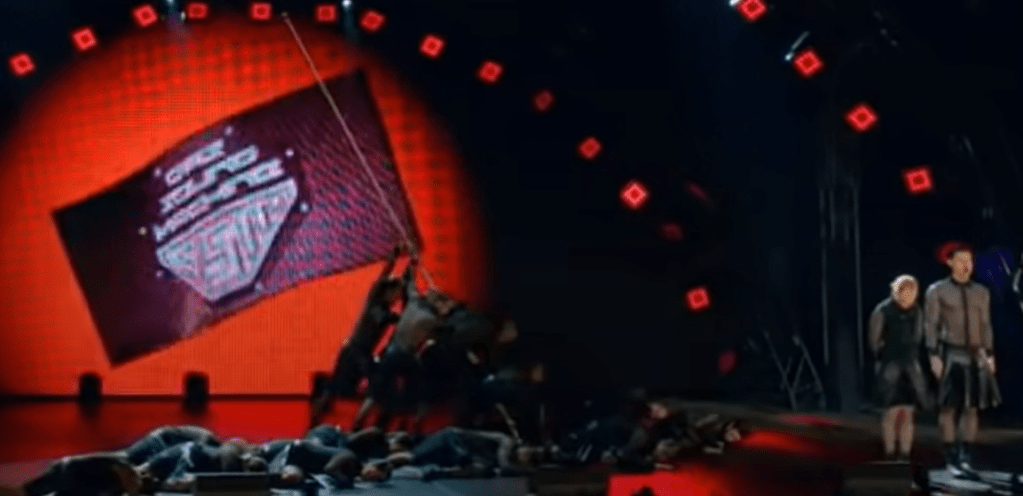
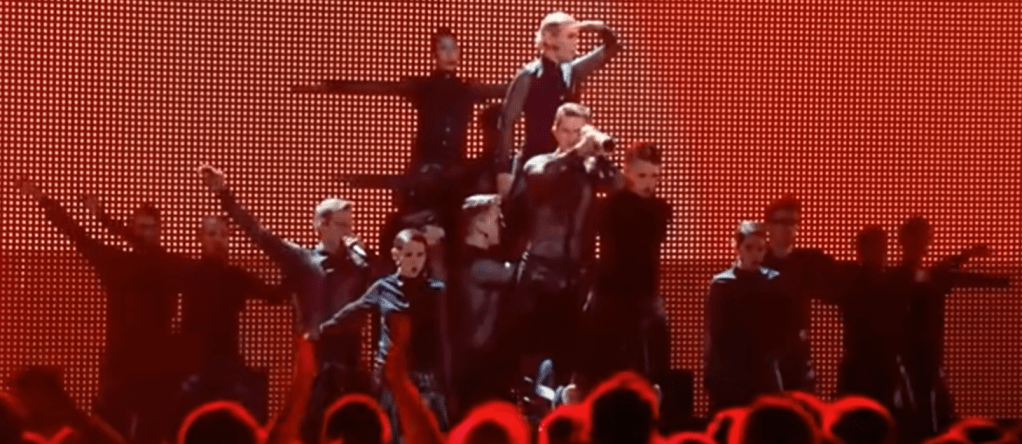
Das Sound Machine was given only two performances in Pitch Perfect 2: their Car Show number and their World Championship Finale number. Despite these limited performance opportunities, Das Sound Machine uses their talent to create what is, in my opinion, the best moments of the film! While reflecting on these two performances, there are three key elements that could help Das Sound Machine at Eurovision. The first is their energy! As I said earlier in this editorial, there will be twenty-six countries competing in the grand final. From what I’ve heard, the grand final’s run-time can reach up to four hours. Having performers who can consistently maintain a high energy level during their performance would keep viewers both in the stadium and at home invested in the show.  

Das Sound Machine’s second key element is their mastery of the choreography!  Because Eurovision is a live show, representatives need to give the audience something interesting to look at. Whether it’s dance routines, large scale props, or cool special effects, these ingredients could work in a representative’s favor. Based on Das Sound Machine’s aforementioned performances, each member displays control over their body, allowing every movement to stay parallel to the beats within the songs. This understanding between the physical and the musical showcase Das Sound Machine’s musicality. The third key element is the group’s creativity! During their World Championship Finale number, Das Sound Machine had very few props at their disposal. Instead of seeing it as a limitation, they used this as an opportunity to be creative! While performing Fall Out Boy’s “Light Em Up”, some Das Sound Machine members got into a strategic formation, coming together to create a ship. Other members of Das Sound Machine stood on either side of the formation, giving the appearance of water.

Das Sound Machine image created by Gold Circle Films, Brownstone Productions, and Universal Pictures

Built-in Enthusiasm

After seeing Pitch Perfect 2 for the first time, I remember thinking, “I wish Das Sound Machine was a real group”. Whenever I think about that movie, I always feel Das Sound Machine is the much stronger group than the Barden Bellas. If I get the opportunity to watch Pitch Perfect 2, I only watch the scenes featuring Das Sound Machine. It seems like I’m not the only one who feels this way. On the Youtube channel, King Samo, there are two videos featuring Das Sound Machine’s performances. In the comment sections of these videos, over a thousand commenters praised Das Sound Machine. Most of the comments were about how the group should have won the film’s World Championship. But there are other commenters who simply want to express their love for Das Sound Machine. Three commenters on the World Championship Finale video have made the following comments this year:

  • As a German person it’s insanely hilarious to me how every other country seams to think of us as this overly perfect nation when really, we’re not comparable with incredible groups like “Das Sound Machine“ at all. Just look at our contestants for the Eurovision Song Contest. We embarrass ourselves everytime. So can we please have them perform for us this year?
  • If DSM were a real group they would’ve won Eurovision and they would of deserved to win.
  • this would win the eurovision

As the comment section of the aforementioned videos show, there is built-in enthusiasm for Das Sound Machine. If Germany sent Das Sound Machine to Eurovision next year with a strong, original a capella number, that could translate well for grand final televoting.

Music and stage image created by Topntp26 at freepik.com. <a href=’https://www.freepik.com/free-photo/music-sign_1179519.htm’>Designed by Topntp26</a>. <a href=”https://www.freepik.com/free-photos-vectors/vintage”>Vintage image created by Topntp26 – Freepik.com</a>. Image found at freepik.com.

How This Could Work

According to official Eurovision rules, the maximum number of group members is six. This means Das Sound Machine couldn’t have the number of members they did in Pitch Perfect 2. From an a capella perspective, though, a six-person group could still create a strong original number. According to Wikipedia, only two Pitch Perfect 2 cast members are listed as official members of Das Sound Machine: Flula Borg and Birgitte Hjort Sørensen. NDR/ARD would recruit four German a capella singers to accompany Flula and Birgitte. If Das Sound Machine were selected to represent Germany at next year’s Eurovision, expenses related to the contest would be co-funded by NDR/ARD and Universal Music Group, as Das Sound Machine was created specifically for Pitch Perfect 2. Universal Music Group is Universal Studio’s music label. On their website, there are eight German music labels associated with Universal Music Group. If possible, more than one of these labels could help fund any Eurovision expenses.

Hand holding gold trophy image created by Macrovector at freepik.com. <a href=”https://www.freepik.com/free-photos-vectors/background”>Background vector created by macrovector – http://www.freepik.com</a>. Image found at freepik.com.

As of early to mid November, 2022, only three participating countries have chosen their representative. About half of the participating countries are planning on hosting a national contest. With the weeks leading up to Eurovision, it’s exciting to hear who will be selected to compete. This anticipation reminds me of Willy Wonka and the Chocolate Factory, as the golden tickets are waiting to be discovered. Unlike Ronald Dahl’s story, receiving a “golden ticket” to Eurovision is not as simple as tearing open the wrapper of a candy bar. Each participating country has their own process of choosing their representative. Even if they do choose to host a national contest, various factors go into making that event a reality. My idea of Das Sound Machine representing Germany at 2023’s Eurovision is just that: an idea. Even if Das Sound Machine were selected to participate in Unser Lied für Liverpool, there’s no guarantee they’ll be granted that “golden ticket”. But no matter who ends up representing Germany next year, I still believe Das Sound Machine should receive their “standing ovation”. So NDR/ARD, if you’re reading this, will you consider giving Das Sound Machine their Eurovision “golden ticket”?

Have fun at Eurovision!

Sally Silverscreen

Here are the link to the sources for this editorial:

https://en.wikipedia.org/wiki/List_of_Eurovision_Song_Contest_winners

https://www.universalmusic.com/labels/global/

https://en.wikipedia.org/wiki/Eurovision_Song_Contest_2021

https://en.wikipedia.org/wiki/Eurovision_Song_Contest_2022

https://en.wikipedia.org/wiki/Eurovision_Song_Contest_2023

https://en.wikipedia.org/wiki/Pitch_Perfect_2

https://eurovision.tv/about/rules

Take 3: Marnie Review (A Month Without the Code — #1)

For the 4th Alfred Hitchcock Blogathon, I wanted to review a movie that was released after 1954 or before 1934. This is because I’m also participating in Pure Entertainment Preservation Society’s A Month Without the Code Blogathon. While searching through Alfred’s filmography, I came across the 1964 film Marnie. The idea of the female protagonist being the center of the film’s mystery was something I hadn’t seen in the other Alfred Hitchcock projects I saw. As of August 2020, I have seen five of his movies, including Marnie. Two years ago, I said The Birds was the worst film I saw in 2018. However, Strangers on a Train appeared in my Honorable Mentions for my 2018 best movies list. Will Marnie appear on my best or worst of 2020 list? That mystery will get solved by reading this review!

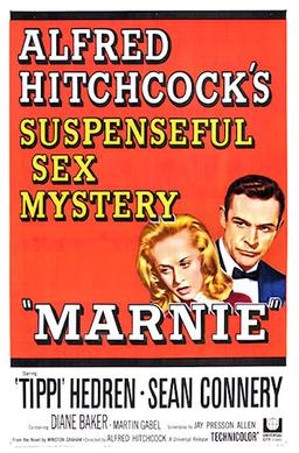
Marnie poster created by Universal Pictures and Geoffrey Stanley Productions. Image found at en.wikipedia.org/wiki/File:Marnie1.jpg

Things I liked about the film:

The acting: Tippi Hendren worked with Alfred Hitchcock when she starred in The Birds. In Marnie, she knew what to expect with the direction of her performance because of this pre-existing partnership. Tippi was given more acting material to work with in this film compared to the previous one from 1963. Her portrayal of the titular character was well-rounded, allowing her to express a variety of emotions. Marnie and Mark’s honeymoon serves as a good example of this. During a nice evening dinner, Tippi displays feelings of content. But when her character is having a heated argument, she provides a fierceness and strength to Marnie that projects off the screen. Before watching this movie, I had seen some of Sean Connery’s films. Even when the film surrounding him doesn’t hold up, he still gives his performance everything he has, talent wise. When I watched Marnie, Sean’s portrayal of Mark reminded me of Rhett Butler from Gone with the Wind. What I mean by this is Sean had a commanding presence that captured the attention of the audience. He also carried himself with confidence throughout the film. Despite appearing in the movie for about two scenes, I thought Louise Latham’s performance was strong! Without giving away any spoilers, I’ll say her portrayal of Marnie’s mother, Bernice, was powerful in the movie’s climax. It was captivating to watch and had a good amount of emotionality.

The cinematography: One of the staples of an Alfred Hitchcock film is the interesting uses of cinematography that can be seen. Marnie features camera work that was creative and appealing to the eye. My favorite example is when Marnie is stealing the money from the office. While she’s doing this, a custodian is mopping the floor in the same vicinity. The shot shows the custodian on the left side of the screen and Marnie on the right side. As this part of the story played out, it built suspense and left me on the edge on my seat. Another good use of cinematography happened at the beginning of the film. When Marnie is first introduced, her face is not shown on screen. This creates a sense of mystery that surrounds her presence. It’s not until she changes her hair color from black to blonde that we finally see Marnie’s face.

The use of the color red: Throughout the movie, the color red appears in various forms. When a red object crosses paths with Marnie, she reacts with panic and fear. One example is when Marnie and Mark go to a horse race. As soon as she notices the red dots on a jockey’s shirt, she immediately wants to leave. This aspect served as a consistent component of this character. It also allows the audience to engage in the mystery surrounding this visual choice.

The 4th Alfred Hitchcock Blogathon banner created by Maddy from Maddy Loves Her Classic Films. Image found at https://maddylovesherclassicfilms.wordpress.com/2020/06/18/announcing-the-4th-alfred-hitchcock-blogathon/.

What I didn’t like about the film:

The scene transitions: When a cinematic story moves from one scene to another, that transition can make or break the movie’s overall flow. In Marnie, some scenes ended abruptly, causing the transitions to feel clunky. A good example is when Marnie is leaving the office after she steals some money. As soon as she walks down the stairs, an employee shows up and greets a custodian. All of a sudden, the next scene begins. Had these transitions been smoother, the film wouldn’t feel like it was in stop-and-go traffic.

Light on thrills: Before watching this movie, I knew it was classified as a thriller. Because Marnie was directed by Alfred Hitchcock, I was expecting a mysterious and suspenseful tale that fits the brand he created. While it did have moments of suspense, the film as a whole was not thrilling. The majority of the story focused on the drama within the narrative. In fact, Marnie felt like it belonged in the drama genre. If Alfred wanted to try something new and go out of his comfort zone, that’s understandable. Unfortunately, this movie seemed out of character for him.

The run-time: Alfred Hitchcock once said “the length of a film should be directly related to the endurance of the human bladder”. However, it seems like Alfred forgot his quote when he directed this movie. Marnie is two hours and ten minutes. Because of this creative decision, some scenes were drawn out longer than necessary in order to satisfy the run-time. One example is a conversation between Mark and Lil after Marnie goes horse-riding. Personally, I thought this scene went on for too long. Had scenes like that one been trimmed down, it might have put the film’s run-time under two hours.

A Month Without the Code Blogathon banner created by Tiffany and Rebekah Brannan from Pure Entertainment Preservation Society. Image found at https://pureentertainmentpreservationsociety.wordpress.com/2020/07/27/announcing-amonthwithoutthecode2020/.

My overall impression:

Alfred Hitchcock is a director who has created a distinct brand for himself. Known as the “Master of Suspense”, Alfred’s work consists of mystery and thrills. This decision is the reason why Marnie sticks out like a sore thumb. I want to make it clear that this is not Alfred’s worst film. The mystery itself was intriguing and the creative choices involving visuals were interesting. But the drama in this story overshadows the thrills, making the overall project feel like it should have been classified as a drama. As I said in my review, this felt out of character for Alfred. It would be like if an author like Debbie Macomber, an author known for writing heart-warming stories, published a gruesome murder mystery novel out of the blue. This would feel out of the character for the brand she created. Because this is my first review for A Month Without the Code, it’s time for me to point out how Marnie could be “breened”! I believe this story could be made into a Breen Code era film. However, these are the things that need to be changed in order for this to happen:

  • Throughout the film, there is language used that does not belong in a Breen Code era film. This ranges from swearing to using God’s name in vain. These words would either be removed or switched to more appropriate choices.
  • There is one scene that heavily implies Mark and Marnie had sex. Even though this happens after they get married, the scene itself would need to be rewritten or omitted.
  • One scene shows Marnie attempting suicide. Because this is a sensitive subject, this scene would to be removed or rewritten.
  • The robe Lil wears has a low-cut neckline. Changes to the style of the robe would need to take place before filming begins.
  • A large amount of blood is featured in one scene. The use of blood would need to be reduced.
  • A horse gets injured and killed in two inter-connected scenes. This would have to get omitted or the scene would have to be rewritten.

Overall score: 6.4 out of 10

What are your thoughts on Alfred Hitchcock’s filmography? Do you have a favorite movie from the “Master of Suspense”? Share your thoughts in the comment section!

Have fun at the movies!

Sally Silverscreen