What the Code Means to Me: Breen, Hallmark, and Me

Dumbo (2019). Men in Black International. Poms. Dark Phoenix. These are a few examples of movies that have, recently, lost their battles in the Cinematic Colosseum. When a film underperforms or doesn’t reach expectations, people always look for reasons why this happened. It is a way of providing a sense of closure to the situation. Some say that the reason why 2019 has seen more cinematic failures than successes is because of an absence of original and innovative ideas. Others say that the creative teams behind these projects put more emphasis on politics than the story itself. Another reason that has been discussed is having too many remakes, sequels, and franchise continuations competing against each other within a short amount of time. Whatever the reason, I think we can all agree that these films probably failed because, simply, movie-goers just weren’t interested in the overall product. This seems very different from the time-period of 1934 to 1954, when the Breen era not only existed, but also thrived. During this particular stretch of time, it feels like more films were both successful and memorable for the right reasons. Take 1939, for example. Within this year alone, movie-goers were given three films that cemented their place in cinematic history; Gone with the Wind, Mr. Smith Goes to Washington, and The Wizard of Oz. The fact that these very distinct films placed in the Top 10 at that year’s box office proves that during the Breen era, there was something for everyone at the cinema. With the Breen Code absent in today’s cinematic world, an interesting media company that, I feel, has embraced Joseph I. Breen’s way of thinking is Hallmark. The more I’ve thought about the Breen Code and its impact on film, the more I see the similarities within the kinds of movies that Hallmark creates. Even though these films are featured on either television or digital services, it proves that there is hope for the Breen Code to make a comeback.
What the Code Means to Me poster
What the Code Means to Me poster created by Tiffany and Rebekah Brannan from Pure Entertainment Preservation Society. Image found at https://pureentertainmentpreservationsociety.wordpress.com/2018/12/17/what-the-code-means-to-me/.

Before discovering the blog, Pure Entertainment Preservation Society, I had never known about Joseph I. Breen and the Breen Code. In fact, I had always believed that the MPAA (the Motion Picture Association of America) was the “end all, be all” when it came to judging a film’s content. It wasn’t until I watched the video, “Why You Shouldn’t Listen to the MPAA (Podcast Excerpt)” from the Youtube channel, Rachel’s Reviews, that I started to change my views about this particular rating system. In this video, Rachel and her friend, Conrado, talk about why movie-goers should form their own self-censorship than solely rely on the MPAA. When I came across Pure Entertainment Preservation Society last October, while looking for upcoming blogathons to participate in, I was introduced to who Joseph I. Breen was as well as the Breen Code itself. In preparation for this article, I read as much as I could about Joseph and his Code. Tiffany and Rebekah Brannan, the creators of Pure Entertainment Preservation Society, have done a wonderful job at educating their readers and followers about the Breen Code and advocating its return to entertainment. Their articles are very informative and interesting to read. After learning all of this information, I feel that a newer and stronger code for judging a film’s content needs to be put in place. While having the MPAA is better than having nothing at all, its rules and guidelines seem to be more on the relaxed side. In the previously mentioned video, Rachel and Conrado discuss some of the ways that a film receives a particular rating. One example is the use of blood within the film’s context. Rachel brings up the example of The Hunger Games receiving a PG-13 rating due to the absence of blood while “contestants” are dying during the event within the story. She feels that because blood isn’t shown during these moments, the film is “dehumanizing the situation”. Had The Hunger Games been created during a time when something similar to the Breen Code existed, either this film would have never seen the light of day or the “contestants” would have died off-screen.
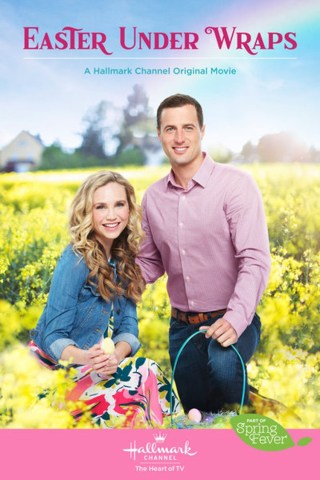
Easter Under Wraps poster
Easter Under Wraps poster created by Crown Media Family Networks and Hallmark Channel. Image found at https://www.crownmediapress.com/Shows/PRShowDetail?SiteID=142&FeedBoxID=845&NodeID=302&ShowType=&ShowTitle=Easter%20Under%20Wraps&IsSeries=False.

The movies and shows from Hallmark make up a large percentage of the content on my blog. Sometimes, I review films from Hallmark Channel, Hallmark Movies & Mysteries, and Hallmark Hall of Fame. In some of my Word on the Street posts, I’ve talked about movie news related to upcoming Hallmark projects. I also conduct two re-cap series for When Calls the Heart and Chesapeake Shores. Hallmark has created a reputation as being a family-friendly company in both appearance and content. As I mentioned in the introduction, things within the Breen Code sound like the type of material that Hallmark creates and distributes on their networks. Within the Hallmark entertainment spectrum, there are three television networks that air movies; Hallmark Channel, Hallmark Movies & Mysteries, and Hallmark Drama. Each network has their own unique and consistent tone, while still maintaining the company’s created image. Hallmark Channel features films that primarily contain light-hearted, romance stories. However, the relationships featured in these movies are wholesome. In the Breen Code, it states that “pictures shall not infer that low forms of sex relationship are the accepted or common thing”. Typical Hallmark Channel films do not feature or talk about sex. The only two films that I can think of that either mention sex or imply that a couple was having sex are A Family Thanksgiving and Audrey’s Rain. Hallmark Movies & Mysteries has a darker tone than Hallmark Channel, as the majority of the network’s content is mystery related. The type of mystery that is common in these movies is the murder mystery. However, this aspect of the story is always handled in a very tasteful way. Not only is a small amount of violence shown, but a limited amount of blood is featured on-screen. The Breen Code contains a whole section about featuring murder in film. One of the points in this section says that “methods of crime should not be explicitly presented”. Sometimes, these films show how a victim is murdered. This is included to introduce the mystery and present the seriousness of the situation. Toward the end of the movie, the guilty party reveals how and why they committed the crime. But the guilty party is never “presented in such a way as to throw sympathy with the crime”. Even though Hallmark Drama has only been around for two years, it has been a network where Hallmark’s more dramatic films can be seen. These types of films are either from Hallmark Hall of Fame or from Hallmark Channel and Hallmark Movies & Mysteries that haven’t be aired in recent years. Some of these projects were created before Hallmark embraced the image they have today, even before the Hallmark Channel was introduced back in 2001. One of these films is Ellen Foster, which is a Hallmark Hall of Fame movie that was released in 1997. In this film, there is one scene where Ellen is being physically abused by her father. If this exact same movie were released by Hallmark today, that scene would never have been featured in the film. The subject of child abuse would have only been implied through the use of dialogue and subtle visual references. This suggestion would fit with the Breen Code and Hallmark’s current image, as the Code itself states that “excessive and inhuman acts of cruelty and brutality shall not be presented. This includes all detailed and protracted presentation of physical violence, torture, and abuse”. Despite this aforementioned detail, Hallmark Drama still features content that is family oriented.

Crossword Mysteries -- A Puzzle to Die For poster
Crossword Mysteries: A Puzzle to Die For poster created by Crown Media Family Networks and Hallmark Movies & Mysteries. Image found at https://www.crownmediapress.com/Shows/PRShowDetail?SiteID=143&FeedBoxID=845&NodeID=307&ShowType=&ShowTitle=Crossword+Mysteries+A+Puzzle+to+Die+For.

The previous paragraph contains some examples of how the Breen Code can be found within Hallmark’s movies. I could provide more examples, but that would mean this article would be longer than it already is. Hallmark’s commitment to providing family friendly content to their audience shows that the Breen Code, or some form of it, can return to the entertainment world. It will most likely happen in a process of events rather than a quick succession. However, this is proof that Joseph I. Breen’s intentions still have a place in our world. In the article, “The Production Code of 1930’s Impact on America” from Pure Entertainment Preservation Society, it was said that “films are merely rated but not censored”. Since this is the case, we, the movie-goers, need to take the initiative to discover a film’s content, understand why a rating was given to a particular film, and form our own choice to view or not view a film. Until the day when Joseph I. Breen’s dream can come true again, this is the only option that movie-goers currently have.

Hallmark Hall of Fame's Love Takes Flight review
Hallmark Hall of Fame’s Love Takes Flight poster created by Crown Media Family Networks and Hallmark Channel. Image found at https://www.crownmediapress.com/Shows/PRShowDetail?SiteID=142&FeedBoxID=845&NodeID=302&ShowType=&ShowTitle=Love+Takes+Flight.

For my two Breening Thursday suggestions, I would like to recommend Wild Oranges and The Trouble with Angels. Wild Oranges is a silent film from 1924 that I reviewed when I received 95 followers on my blog. The Trouble with Angels is one of the films that I reviewed during the Rosalind Russell blogathon earlier this month. It was released in 1966.


Have fun at the movies!

Sally Silverscreen


If you want to check out the references I mentioned in this editorial, you can type “Why You Shouldn’t Listen to the MPAA (Podcast Excerpt)”  into Youtube’s search bar or visit Rachel’s Youtube channel, Rachel’s Reviews. You can also visit these links:

The Motion Picture Production Code with Its Revisions

The Production Code of 1930’s Impact on America

Take 3: Where Angels Go, Trouble Follows Review (Rosalind Russell Double Feature Part 2)

When I looked through Rosalind Russell’s IMDB filmography in preparation for The Rosalind Russell Blogathon, I discovered that The Trouble with Angels was given a sequel called Where Angels Go, Trouble Follows. This is a movie that I had never seen or heard of. But, since I haven’t created a double feature for a blogathon since last August, I decided to review The Trouble with Angels and Where Angels Go, Trouble Follows! If you read my review for the first film, you would know that I enjoyed it. The synopsis for the sequel sounded interesting and different from the previous movie. This is what caused me to want to give this project a chance. Was this a complimentary story to The Trouble with Angels? Find out in my review of Where Angels Go, Trouble Follows!

Where Angels Go, Trouble Follows poster
Where Angels Go, Trouble Follows poster created by Columbia Pictures. Image found at http://www.tcm.com/tcmdb/title/95524/Where-Angels-Go-Trouble-Follows/#.

Things I liked about the film:

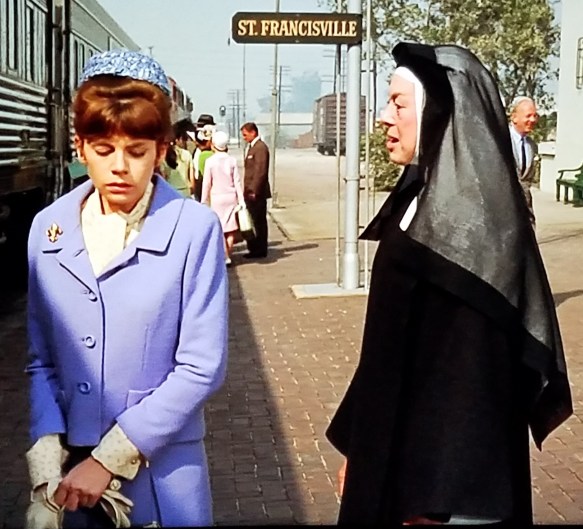
  • The acting: Like in the first movie, the cast of Where Angels Go, Trouble Follows was good! One of things that helped was having some of the actresses who portrayed the nuns in the previous film return for the second one. This kept a sense of continuity between the characters. Also, like in the first movie, Rosalind shined in her role of Mother Superior! Her performance was very consistent with how she portrayed the character in The Trouble with Angels. It continued to make this character just as likable as she was in the previous picture.


  • The inclusion of Sister George: Because Mary Clancy graduated from St. Francis Academy at the end of The Trouble with Angels, Sister George, portrayed by Stella Stevens, replaced her as a counteracting presence for Mother Superior to interact with. Both Rosalind and Stella gave a strong acting performance, which allowed their talents to compliment one another. These characters were also well-written, both of them providing interesting points to their stance. I found this aspect of the film to be the most interesting. Seeing these characters progress as the movie went on was one of the strengths of this story.


  • The scenery: I’m glad that the building from The Trouble with Angels made an appearance in the sequel! While there weren’t many scenes that took place inside of the school, a few more exterior shots of the grounds were shown. These outdoor spaces were captured really well on film! It kind of allowed the viewer to explore this location a little bit more. Most of the movie took place on a class field trip, which consisted of traveling through several states in order to reach a peace rally in California. This gave the creative team an excuse of include scenery-heavy scenes in the movie. These scenes were interesting to look at, as they showcased the natural landscapes from each state that the characters traveled through. This was, honestly, one of the more memorable parts of the film.
The Rosalind Russell Blogathon banner
The Rosalind Russell Blogathon created by Crystal from In The Good Old Days Of Classic Hollywood. Image found at https://crystalkalyana.wordpress.com/2019/03/08/announcing-the-rosalind-russell-blogathon/.

What I didn’t like about the film:

  • A weak plot: As I’ve already mentioned, this movie is about the nuns and some of the students of St. Francis Academy going on a field trip to a peace rally in California. Besides the conflict between Sister George and Mother Superior, this story was very weak. A large portion of the scenes in this film consist of the school’s bus traveling through various states. Instead of one overarching story, this narrative was written as a series of short vignettes. Not only were none of these vignettes that interesting, but they seemed to string the movie along just for the sake of keeping this weak plot going.


  • Scenes lasting for way too long: Throughout this movie, I found several scenes that lasted way too long. One example is when some of the students from St. Francis Academy attend a party that is hosted by an all-boys school. The scene itself felt like a two-minute music video. It didn’t really add anything to the plot or the development of the characters. The length of these scenes feel like they are trying to make up for the weakness of the plot.


  • Charismatic-less characters: Since Rachel and Mary graduated in the first movie, Marvel Ann, portrayed by Barbara Hunter, and Rosabelle, portrayed by Susan Saint James, acted as their replacements. Barbara and Susan tried the best they could with the acting material they were given. But these characters weren’t as charismatic as Rachel and Mary were. Because of this, it made Marvel Ann and Rosabelle seem unlikable. It also made me not care about their story.


My overall impression:

I was very disappointed by Where Angels Go, Trouble Follows. This movie had interesting ideas that could have lent themselves to a good sequel. However, all of these ideas were wasted on poor execution. When it comes to fictional stories, I am more than willing to suspend my disbelief. But this movie tried to make me suspend more of my disbelief than I had wanted to. The only interesting aspect of this story was the conflict between Mother Superior and Sister George. This part of the film was not only well-acted, but also well-written. Unfortunately, I can’t say the same about the rest of the movie. While I would recommend The Trouble with Angels, I would suggest skipping the sequel.

66
Colorful travel suitcase image created by Pikisuperstar at freepik.com. <a href=’https://www.freepik.com/free-vector/beautiful-illustration-of-travel_2686674.htm’>Designed by Freepik</a>. <a href=”https://www.freepik.com/free-photos-vectors/watercolor”>Watercolor vector created by Pikisuperstar – Freepik.com</a>. Image found at freepik.com.

Overall score: 5.8 out of 10


Have you seen any of Rosalind Russell’s films? Which sequel did you find to be disappointing? Tell me in the comment section!


Have fun at the movies!

Sally Silverscreen

Take 3: The Trouble with Angels Review (Rosalind Russell Double Feature Part 1)

Before signing up for The Rosalind Russell Blogathon, I had never heard of Rosalind Russell. Like I did to prepare for the 90 Years of Jean Simmons Blogathon, I visited Rosalind’s IMDB filmography. After searching this page, I discovered that Rosalind starred in the film, The Trouble with Angels. This is a film that I’ve heard of, but never seen. So, I used my participation in the blogathon as an excuse to watch this movie! I was also aware that Hayley Mills starred in The Trouble with Angels. Before watching this film, I had seen a few of her movies. In fact, I reviewed The Moon-Spinners earlier this year! So, I was looking forward to seeing what her acting abilities had to offer in this production. Was my movie-viewing experience a blessing or a curse? You can fly through my review of The Trouble with Angels if you want to find out!

The Trouble with Angels poster
The Trouble with Angels poster created by Columbia Pictures. Image found at http://www.tcm.com/tcmdb/title/16482/The-Trouble-With-Angels/#.

Things I liked about the film:

  • The acting: I really liked the cast of The Trouble with Angels! Every actor and actress pulled off a performance that not only appeared realistic, but also was effective. Rosalind Russell’s portrayal of Mother Superior was interesting to watch. This character was strict, yet she always had her heart in the right place. I couldn’t help but find Mother Superior to be a likable character. I also enjoyed seeing Haley Mills in this film! Prior to watching The Trouble with Angels, I have seen The Parent Trap (1961), That Darn Cat and The Moon-Spinners. Hayley’s portrayal of Mary Clancy is somewhat different from her roles in those aforementioned films. However, Hayley’s performance had a sense of maturity to it. This particular role complimented both her age and acting abilities. Because of this, it made Hayley’s portrayal of Mary that much more entertaining to watch!


  • The set/scenery: The Trouble with Angels takes place at St. Francis Academy. According to IMDB, the building that was used in the exterior shots is a real-life facility in Ambler, Pennsylvania. But the interior shots were filmed in a California studio. Despite this difference in filming locations, I thought the scenery/set was absolutely magnificent! The building itself looks like a castle, the footage of it probably doesn’t do this place justice. There were grounds surrounding the building that I liked seeing as well! All four seasons was showcased in the film, which helped highlight the beauty that these grounds had to offer. The set looks like it would compliment the real-life structure. A combination of stone, wood, and stained glass were appealing to the eye. The location scout(s) and set decorator(s) did a great job with bringing this school to life!


  • A sense of humanity: In this story, there were moments where a sense of humanity shown through. This happened through dialogue and situations amongst the characters. One example is when Mary and Rachel (portrayed by June Harding) try to lie to Mother Superior about their whereabouts. When Mother Superior suspects that Mary and Rachel are making fun of one of their teachers, she shares the truth about this particular teacher with them. Another example is when some of the students visit a Retirement Home during Christmas-time. When Mary overhears some of the residents sharing their loneliness with others, it shows the audience that this specific season might not be the most wonderful time of the year for some people. The incorporation of this sense of humanity felt genuine, like the creative team behind this film had good intentions for including it.
The Rosalind Russell Blogathon banner
The Rosalind Russell Blogathon created by Crystal from In The Good Old Days Of Classic Hollywood. Image found at https://crystalkalyana.wordpress.com/2019/03/08/announcing-the-rosalind-russell-blogathon/.

What I didn’t like about the film:

  • A limited amount of humor: While there were moments of humor found throughout the film, I felt like the story favored the dramatic moments more than the comedic ones. These moments of humor seemed far and few between. Most of the film’s humor came from the pranks and mishaps that are caused by Mary and Rachel. Even though The Trouble with Angels would be classified as a comedy, this movie feels more like a dramedy (a mix of comedy and drama).


  • Mostly static characters: The Trouble with Angels is primarily about the characters of Mary and Rachel. This story follows them from the beginning of their freshmen year of high school to their graduation. In that time-frame, however, Mary and Rachel didn’t really seem to have that significant of a transition of rambunctious youngsters and responsible young adults. For more than half of the film, Mary and Rachel were static, continuously pulling pranks and despising their peers and teachers. It wasn’t until they joined their school’s band when these characters started to grow as individuals. This part of the story feels a little bit rushed, like the creative team behind this movie was trying to make up for lost time.


  • Little emphasis on academics: In movies that take place in a school setting, there is usually an emphasis on either an important teacher or an influential school assignment. But that wasn’t the case for The Trouble with Angels. Instead, the story focused on the character development of Mary and Rachel. There were moments that showed these characters in the middle of a school lesson, such as when Mary and Rachel were trying to avoid their swim tests. But these moments didn’t last long enough to have a large impact on the narrative.
20190605_185743[1]
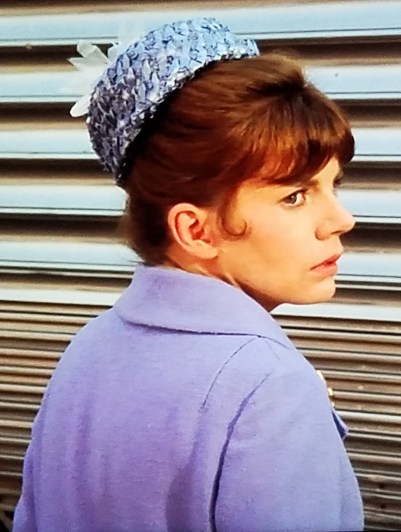
We interrupt this movie review to give you a moment to appreciate Rachel’s hat. Screenshot taken by me, Sally Silverscreen.
20190605_1858261.jpg
This is, honestly, the coolest pill-box hat I’ve ever seen in my life! Screenshot taken by me, Sally Silverscreen.
20190605_1900001.jpg
As soon as I saw this hat, I knew I had to have it in my life. Screenshot taken by me, Sally Silverscreen.

My overall impression:

The Trouble with Angels is a fine film. This story had more heart and soul than I expected, especially due to the sense of humanity found within the narrative. While this movie could have been stronger, there were elements about it that made the project enjoyable. Rosalind and Hayley definitely helped carry the film! Though these actresses were at different places in their careers, their acting abilities complimented each other. When it comes to films about teenagers, The Trouble with Angels is one of the better ones. The story primarily focused on Mary and Rachel. But, with the incorporation of the teachers and Mother Superior, the best intentions for the students could be seen throughout the story. That’s how I would define this movie; the creative team making this film with the best of intentions.


Overall score: 7.4-7.5 out of 10


Have you seen The Trouble with Angels? Which movie of Rosalind Russell’s would like me to watch next? Please tell me in the comment section!


Have fun at the movies!

Sally Silverscreen

Take 3: Little Nellie Kelly Review

I know that it’s been two weeks since I last wrote a movie review. Because I was out of town around that time, I chose to reschedule several of my planned blog posts to later dates. But, when it comes to posts relating to blogathons, I always try my best to be a blogger of my word and publish my lists, reviews, or editorials within the blogathon time-frame. When I signed up for the 2nd Annual Broadway Bound Blogathon, I knew, right away, that I would be reviewing the film, Little Nellie Kelly. Before this review, I had never seen or heard of this movie. Plus, the synopsis on Turner Classic Movies’ (TCM’s) website said that this film is about “the daughter of Irish immigrants patches up differences between her father and grandfather and rises to the top on Broadway”. Because I knew that Judy Garland was the star of this production, I figured that I would, at least, find some enjoyment in this movie. Was my prediction correct? Was there enjoyment to be found in Little Nellie Kelly? Please keep reading if you want to find the answer!

Little Nellie Kelly poster
Little Nellie Kelly poster created by Metro-Goldwyn-Mayer. Image found at https://commons.wikimedia.org/wiki/File:Poster_-_Little_Nellie_Kelly_03.jpg

Things I liked about the film:

  • The acting: Something I’ve noticed about Judy’s films (specifically the ones that I’ve seen) is that she surrounds herself with a talented cast. This is no different for Little Nellie Kelly. Charles Winninger’s portrayal of Michael Noonan was such a pleasant surprise! He brought so much emotion to his performance that it ended up being effective. Judy’s performance was also great to watch! Her emotions and musicality helped her portrayal of Nellie Kelly be as strong as it was. I also liked George Murphy’s performance as Jerry Kelly! His acting talents helped carry this film alongside his co-stars.


  • The comedy: In Little Nellie Kelly, there were comedic moments that I truly found to be hilarious. One scene has Nellie telling her father that she’s going to get married to Jerry. As soon as her father hears this, he unexpectedly spits out his coffee and makes a big mess. This moment made me laugh out loud! As I watched the film, I noticed that the majority of these comedic moments were caused by Charles’ character, Michael. Because of this particular actor’s quality of talent, it made the film’s comedy stick the landing.


  • Some of the montages: There were two montages in Little Nellie Kelly that I really liked. The first one was when Jerry, Nellie, and Michael go through the process of becoming citizens of the United States. When it comes to cinematic stories about people immigrating to the United States, this aspect of the narrative is rarely explored. The second montage I liked showed the process of Jerry becoming a police officer. In film, when a character chooses to be a police officer, they are usually shown either before or after they accept the job. Like the first montage, this process is not always featured in cinematic narratives. Even though these montages didn’t last very long, I’m glad they were included in this story.
2nd Annual Broadway Bound Blogathon banner
The 2nd Annual Broadway Bound Blogathon banner created by Rebecca from Taking Up Room. Image found at https://takinguproom.wordpress.com/2019/03/07/announcing-the-second-annual-broadway-bound-blogathon/.

What I didn’t like about the film:

  • An inability to hold an accent: Because some of the characters are from Ireland, hearing accents from them is to be expected. While Charles Winninger did a good job when it came to carrying the accent, I felt that Judy and George’s ability to carry an Irish accent wasn’t as strong. When I watched Little Nellie Kelly, I never heard Jerry talk with an Irish accent. Meanwhile, the only time Nellie spoke with an Irish accent was when she sang “A Pretty Girl Milking Her Cow”. Because of Judy and George’s inability to carry an accent, this prevented a sense of continuity to exist amongst the characters.


  • A limited amount of musical numbers and comedy: Even though I liked the comedy in this film, there were very few comedic moments to be found. Throughout this one hour and thirty-eight minute picture, there were more dramatic moments than comedic ones. In this movie, there were a total of about four to five musical numbers. That’s a lot less than I was expecting. The film’s opening credits said that Little Nellie Kelly was based on a “musical comedy”. But, if anything, this project felt more like a “dramedy” (a combination of comedy and drama), with an emphasis on drama.


  • Judy Garland portraying Nellie Kelly Sr. and Jr.: In the movie, Judy portrays two characters; Nellie Kelly and her daughter. While different hairstyles helped, a little bit, to differentiate between the two characters, this creative decision still baffled me. I understand that MGM wanted to utilize Judy’s talent as much as possible. However, I still think that Judy should have portrayed only one character. Because this movie is called Little Nellie Kelly, Judy could have portrayed the daughter, while another, slightly older actress could have portrayed Nellie Kelly Sr. That way, Judy could have still been the leading star of the movie, while the other actress could also receive a significant amount of recognition.
233200-P2SBE6-483
St. Patrick’s Day image created by Freepik at freepik.com. <a href=’https://www.freepik.com/free-vector/st-patrick-s-day-background_1640464.htm’>Designed by Freepik</a>. <a href=”https://www.freepik.com/free-photos-vectors/background”>Background vector created by Freepik</a>. Image found at freepik.com. 

My overall impression:

I like Little Nellie Kelly for what it is. There are elements to the film that make it enjoyable, such as the musical numbers and the acting. However, I found this movie to be somewhat misleading. As I said in the introduction, this synopsis said that the protagonist “rises to the top on Broadway”. Not only was this location never mentioned in the film, but Nellie never aspired to be an entertainer. What makes this even more frustrating is how few musical numbers there were and how little comedy there was in the film despite it being called a “musical comedy” in the opening credits. From what I’ve heard, this movie is based on a pre-existing Broadway musical. Because I have never seen the stage version of this story, it’s difficult for me to say if the movie was anything like the play. This kind of reminds me of how I felt about Edward, My Son. Both of these films were based on plays and made me felt like I was misled. I can’t fault the creative teams behind these movies too much, since their job was to adapt their respective plays to the screen. However, a good amount of honesty should have been included into each film’s synopsis.


Overall score: 7.2 out of 10


Have you seen any of Judy Garland’s movies? If so, which one is your favorite? Let me know in the comment section!


Have fun at the movies!

Sally Silverscreen

Take 3: Sunnyside Review + 100 Follower Thank You

Well, I did it. I finally received 100 followers! When I started 18 Cinema Lane last February, I never thought I would achieve this many followers in such a short amount of time! So, I’d like to say thank you to every single person who has chosen to follow my blog. If it weren’t for you, I never would have reached this milestone so soon. You’re probably thinking that it would be nearly impossible to find a movie that was released 100 years ago, in 1919. But, surprisingly, I ended up finding a movie on Turner Classic Movies’ (TCM’s) schedule. It’s a movie titled Sunnyside, which was directed, written, produced, composed by and starred Charlie Chaplin. In my Wild Oranges review, I mentioned that the only other silent film I’d seen was The Kid. By reviewing Sunnyside, it means that this is not only the third silent film I’ve seen, it’s also the second Charlie Chaplin picture that I’ve seen. When I recorded this movie on my DVR, I was shocked to discover that the film itself was less than an hour long. But, since Sunnyside is considered a short film, I realized that this run-time actually made sense. So, let the sunshine come pouring into your heart, as we’re about to begin this review of Sunnyside!

20190509_213523[1]
Not only did I surprise myself by finding a movie that was released 100 years ago, but I also found a poster of the movie (which appeared on my TV). Screenshot taken by me, Sally Silverscreen.
Things I liked about the film:

  • The comedy: Out of the two films of Charlie Chaplin’s that I’ve seen, it seems like Charlie’s cinematic work is known for being humorous. Because Sunnyside is a silent film, the creative team behind this movie had to rely on physical comedy, such as silly behaviors and actions, to make the audience laugh. This style of comedy was executed well in the film! While this form of comedy was more simplistic, I felt like it was effective! One such example is when Charlie’s character brings a cow into his house and milks it on the spot just so he can put milk in his beverage. The incorporation of humor helped make Sunnyside an interesting film!


  • The music: As I’ve mentioned in the introduction, Charlie Chaplin composed the music in Sunnyside. It felt like Charlie put a good amount of thought into the type of music that was incorporated into the film. Throughout the movie, I noticed that the overarching music matched the mood of whatever scene it was featured in. Whenever the scene was humorous, light-hearted music could be heard. If the scene had a more serious tone, dramatic music was placed over the on-screen events. This aspect of the movie provided a sense of understanding to what was happening in the story!


  • The use of title cards: In my review of Wild Oranges, I talked about the importance of title cards within the film. Just like that movie, Sunnyside also used title cards to their full advantage. These title cards were, sometimes, placed at the beginning of each scene. This helped introduce locations and characters to the audience. Title cards were also used to provide dialogue between some of the characters. It assisted the audience in helping them figure out what was going on within the narrative.
125843-OSCVR0-64
Happy sun image created by Freepik at freepik.com. <a href=”https://www.freepik.com/free-photos-vectors/background”>Background vector created by freepik – http://www.freepik.com</a>. Image found at freepik.com.

What I didn’t like about the film:

  • Some scenes lasting longer than others: Throughout Sunnyside, I noticed that some of the scenes lasted longer than others. One example is the opening scene, when Charlie’s character wakes up in the morning. For scenes like this, I felt that they were as long as they were just to satisfy the film’s run-time. In my opinion, these specific scenes could have been cut to a shorter length.


  • A simplistic story: The main plot of Sunnyside was more on the simpler side. Because of this, it caused the first half of the movie to appear as a series of vignettes. The story didn’t seem to have a cohesive narrative until the character called “City Chap” showed up in the film. It made the film like it was an experiment of how to make a movie.


  • A drowned out piano: In Sunnyside, there was one scene where Charlie’s character is playing the piano. However, when he did play the piano, the instrument’s sound was drowned out by the overarching music featured in that scene. I understand that the cinematic technology of 1919 was vastly different than what it is today. But I think the sound of the piano should have been omitted from this film. That way, the only sound that the audience should focus on is the music that helps highlight the mood of that scene.
Note_lines_horizontal1
String of musical notes image created by Freepik at freepik.com. <a href=’https://www.freepik.com/free-vector/pentagram-vector_710290.htm’>Designed by Freepik</a> <a href=”https://www.freepik.com/free-photos-vectors/background”>Backgroundvector created by Freepik</a>. Image found at freepik.com.

My overall impression:

As I’ve said in my Wild Oranges review, I don’t often watch movies in the silent film genre. However, because Sunnyside was the only film from 1919 that I was able to find, I decided to give the movie the chance. I’m glad I did, as this ended up being a good film! Because this was a short film and because, for the most part, I was able to understand what was going on in the narrative, I didn’t have a need to provide my own commentary to the film. It is interesting to see how movies have evolved over these 100 years. Seeing what’s changed and what’s remained the same in cinema is fascinating. This makes me appreciate the earlier projects of film, including Sunnyside.


Overall score: 7.6 out of 10


Do you watch silent films? Have you seen any of Charlie Chaplin’s movies? Let me know in the comment section!


Have fun at the movies!

Sally Silverscreen

Take 3: Wild Oranges Review + 95 Follower Thank You

18 Cinema Lane received 95 followers last week! To all of my followers, thank you for helping me achieve this milestone! Your interest in this blog means a lot to me. Because I now have 95 followers, I can review a film that was released 95 years ago (in 1924). One day, when I was scrolling through Turner Classic Movies’ (TCM’s) schedule, I discovered a film called Wild Oranges. Before choosing this movie for this post, I had never heard of this title. In fact, the only silent film I’ve seen prior to the aforementioned movie was The Kid, starring Charlie Chaplin. So, I thought this would be a good opportunity to expand my cinematic horizons. According to the pre-movie commentary, Wild Oranges was one of the first movies to be filmed on-location as well as having a smaller cast. These facts interested me into seeing how they would work within the overall context of the film. Before I begin this review, I would just like to share that I actually ate oranges while watching Wild Oranges (I thought it would appropriately fit the occasion).

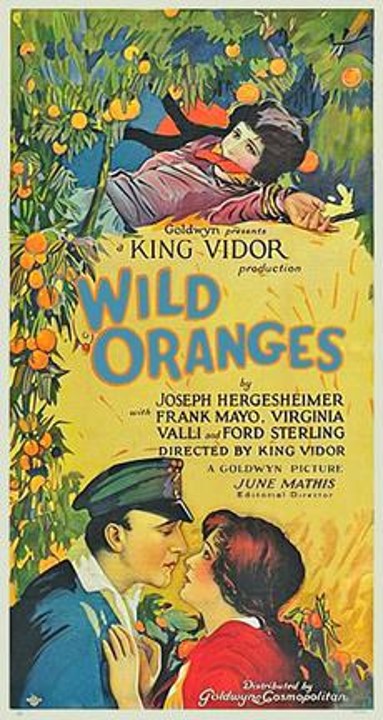
Wild Oranges poster
Wild Oranges poster created by Goldwyn Pictures. Image found at https://en.wikipedia.org/wiki/File:Wild_Oranges_(film_poster).jpg

Things I liked about the film:

  • The acting: Because Wild Oranges is a silent movie, the actors have to rely on body language, facial expressions, and actions/behaviors to portray what their characters are saying and feeling. All of the actors in this cast accomplished their goal of doing just that! The acting performances in this movie played an essential role in telling this story, helping to fill in the blanks when words were not available. These performances were also well-rounded, adding to the intrigue and investment of the film. Looking back, I believe the most memorable performance in this movie came from Charles A. Post as the film’s antagonist, Iscah Nicholas! Despite the unheard dialogue, Charles effectively conveyed the nasty and disturbing nature that his character contained. This performance truly added a sense of suspense and dread whenever he appeared on-screen.


  • The scenery: As I mentioned in the introduction, Wild Oranges was one of the first movies to be filmed on-location. According to TCM’s pre-movie commentary, this movie was filmed in Georgia and Florida. Filming on-location was the right decision, as it gave a sense of realism to the movie. The natural elements of the scenery, from the forests to the dilapidated home of the Stope family, added a haunting feel to the overall atmosphere. Even the beauty of the beachfront was captured very well within the lighter moments of the film. This element made Wild Oranges a wonderful sight to see!


  • The use of title cards: While the body language, facial expressions, and actions/behaviors of the actors helped carry the story, there were times when title cards were necessary. In Wild Oranges, title cards were used to not only highlight the dialogue between the characters, but also to transition between scenes. These title cards provided some depth to the narrative, as it explained things that the acting performances couldn’t. Having the title cards be presented on illustrations of oranges trees was very creative. It also fit with the continuity of the film.
wormsloe-plantation-ii-1334468-1278x677
Forest in Georgia image created by Roger Kirby at freeimages.com. “FreeImages.com/Roger Kirby.”

What I didn’t like about the film:

  • A limited amount of title cards: While I liked the use the title cards in Wild Oranges, I thought that the amount of them was fewer than I’d expected. Some scenes were accompanied with very few title cards to support the dialogue or other details within the narrative. This left me guessing as to what was going on in the film. It also debunked my personal stereotypical view of title cards in silent films, where title cards are used to explain everything. Wild Oranges definitely could have benefited from the use of more title cards.


  • The run-time: At an hour and twenty-eight minutes, I felt that Wild Oranges was a little too long. Sometimes, there were scenes that went on longer than they should have. Two examples of this are a fight sequence between the antagonist and protagonist as well as a boating scene. If these scenes were a little bit shorter, it would have had a big impact on the overall run-time. In my opinion, this movie should have been, at least, an hour.


  • An unclear connection between Nicholas and the Stope family: While watching this movie, I was really confused about the connection between Nicholas and the Stope family. Sure, Nicholas was in love with Millie. However, Nicholas was allowed on the Stope family property without any issues. Even though Millie revealed more about Nicholas’ character to John Woolfolk, it didn’t explain what his connection was to her family. The only thing I was able to do was guess this connection as I continued watching the film.
oranges-at-tree-1325437-1280x960
Oranges in tree image created by Jose Luis Navarro at freeimages.com. “FreeImages.com/Jose Luis Navarro.”

My overall impression:

The silent film genre is one that I don’t watch often. The two reasons for this are 1.) Silent films are not as easily available as other genres and 2.) The on-screen events might be confusing to decipher without dialogue. Despite these concerns, I ended up having an enjoyable experience watching Wild Oranges! Part of this has to do with the fact that I was able to provide my own personal commentary to the film. Besides this, the movie itself stands on its own, thanks to the merits found in the film. The various creative pieces came together to tell a cohesive story. The historic choices that were made, such as filming on-location, ended up working in this film’s favor. It gave the project a special uniqueness that helped make the film so memorable. If you haven’t seen silent films before and would like to give them a chance, I think Wild Oranges is a good introduction to the genre!


Overall score: 7.6 out of 10


Have you seen any silent films? Would you want to give silent films a chance? Put your thoughts in the comment section!


Have fun at the movies!

Sally Silverscreen

Take 3: The Broadway Melody Review + 90 Follower Thank You

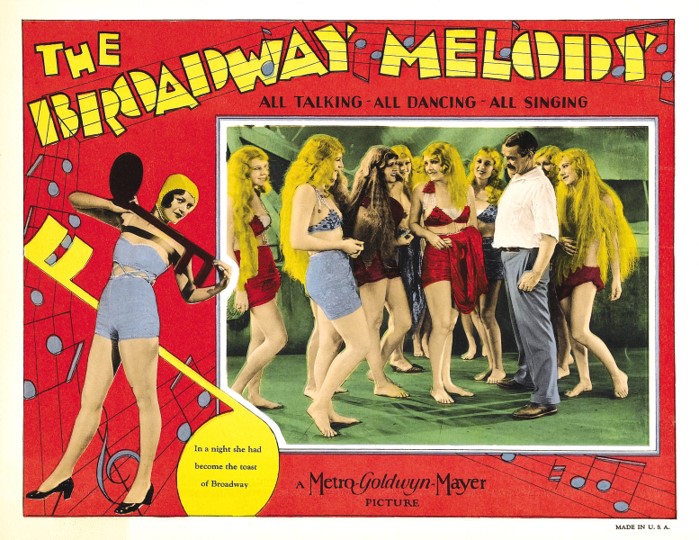
This week, I received 90 followers on 18 Cinema Lane! To all my followers, thank you for helping me reach this accomplish! In honor of this achievement, I’m going to review a film that was released 90 years ago (in 1929). While looking through Turner Classic Movie’s (TCM’s) schedule one day, I found a film titled The Broadway Melody. Because this film turned 90 years old this year, I chose to review this movie for this special post. Before this review, I had never heard of The Broadway Melody. So, I was looking forward to expanding my cinematic horizons. Was this film a show-stopper or stumble over its own dancing shoes? Keep reading my review of The Broadway Melody if you want to find out!

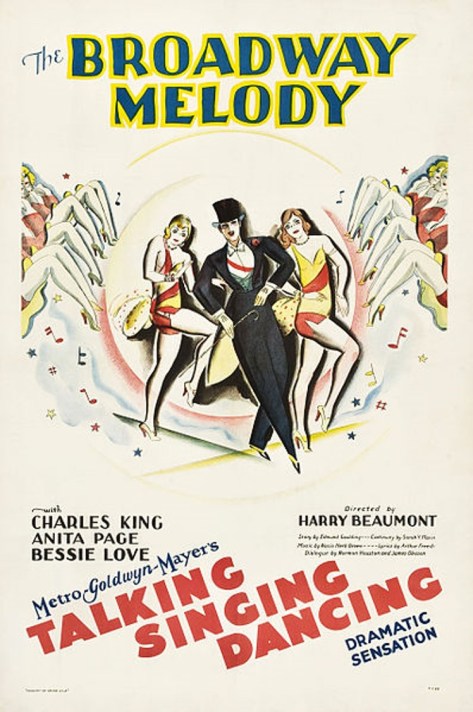
The Broadway Melody poster
The Broadway Melody poster created by Metro-Goldwyn-Mayer. Image found at https://commons.wikimedia.org/wiki/File:Broadway_Melody_poster.jpg

Things I liked about the film:

  • The acting: As a whole, the cast of The Broadway Melody was good! Anita Page and Bessie Love both gave a memorable performance as the singing and dancing duo, Hank and Queenie! What was so great about these characters is how they displayed their own distinct personalities. While Hank was out-spoken and spunky, Queenie was a quieter individual with a sweet personality. I also liked Jed Prouty’s performance as Uncle Jed! His portrayal of this character came across very believably, making Uncle Jed feel like a real person. Having him stutter was an interesting choice, as this is not common amongst characters in cinema. However, I thought that this component was incorporated well from both an acting and writing perspective.


  • Use of title cards: At some points in the film, title cards were used as scene transitions and location indicators. This choice was not only creative, but also interesting. Since The Broadway Melody was the first movie musical to be “all-talking”, I felt this was a good transition from silent films to talking pictures. These title cards also added a unique stamp to the overall project.


  • The musical numbers: One of the strongest aspects of The Broadway Melody is, definitely, the musical numbers! My favorite group routine was “Wedding of the Painted Doll”, as it was really well choreographed and performed! There was so much going on in that number, but it was all great to look at. Throughout this film, the best solo performance came from a ballerina who performed a tap dance on ballet pointe. Her routine was incredible and I had never seen anything like it before! This was absolutely the best dance solo in any movie musical I’ve ever seen!
The Broadway Melody poster card
The Broadway Melody lobby card image created by Metro-Goldwyn-Mayer. Image found at http://www.tcm.com/tcmdb/title/12482/The-Broadway-Melody/#tcmarcp-173805.

What I didn’t like about the film:

  • Large spaces between musical numbers: While I enjoyed seeing the musical numbers in The Broadway Melody, it seemed like this movie had far more dialogue-focused scenes. In my opinion, a good musical finds a way to balance the dialogue and music-focused scenes, creating a film that tells an interesting story and provides entertaining content. Throughout The Broadway Melody, however, there were only seven musical numbers. The ratio between the musical numbers and dialogue-focused scenes was weaker than I had expected.


  • The run-time: Before I watched this movie, I was surprised to find that it was almost two hours long. Looking back on this specific production, I don’t think this story needed to be an hour and forty minutes. Because of this run-time, it caused the movie to feel longer than intended and some scenes to feel too drawn out. There was also the inclusion of scenes for the sake of satisfying the run-time. This movie would have worked better with a run-time of an hour and twenty or thirty minutes.


  • A “slice of life” story: It seems like the more movies I watch, the more I don’t like “slice of life” stories (unless they have intriguing plots). The premise in The Broadway Melody felt like it was following a year in the life of the Mahoney sisters. I did not find this type of story-telling very interesting. This story also contained petty drama that I really didn’t care about. Because this drama lasted for a good portion of the film, it caused the plot to feel drawn-out.
Note_lines_horizontal1
String of musical notes image created by Freepik at freepik.com. <a href=’https://www.freepik.com/free-vector/pentagram-vector_710290.htm’>Designed by Freepik</a> <a href=”https://www.freepik.com/free-photos-vectors/background”>Backgroundvector created by Freepik</a>. Image found at freepik.com.

My overall impression:

The Broadway Melody was an ok film. I can see why this movie received the honors that it did in its time. However, I think there are movie musicals that are stronger than this one. While, the story wasn’t as interesting as I had hoped, the musical numbers were the highlight of this film. They were very enjoyable and fun to watch. I found myself rewinding my recording of The Broadway Melody in order to re-watch some of the musical scenes. “Wedding of the Painted Doll” was such a great ensemble routine and the tap dance on ballet pointe solo was fantastic! With its merits and flaws, I’m still glad I chose to review this film.


Overall score: 6.3 out of 10


What did you think of my review? Which movie musical is your favorite? Let me know in the comment section!


Have fun at the movies!

Sally Silverscreen

Take 3: The Man with Two Faces Review + 85 Follower Thank You

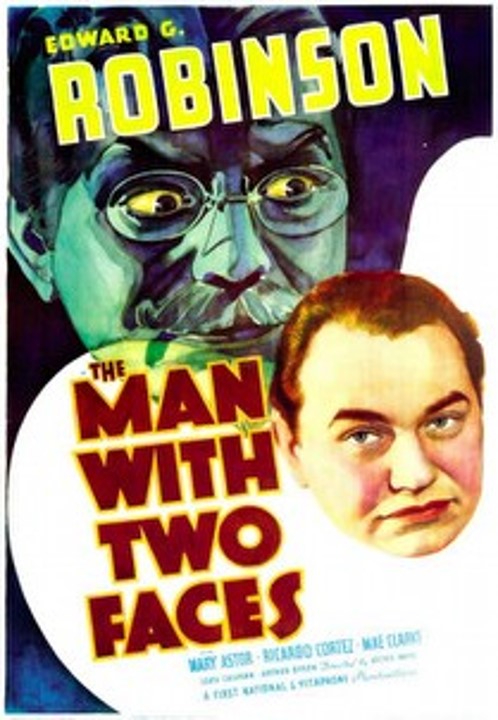
Last week, my blog finally received 85 followers! This new wave of followers was partly because of the unexpected success I experienced from my Book Adaptation Tag post (that post currently has 16 views and 13 likes). Thank you for helping 18 Cinema Lane acquire these many followers! I remember like it was just yesterday when I published my first blog follower dedication review last March. I had reviewed the film Saving Mr. Banks when I received only five followers. Looking back, I never thought I’d have almost a hundred followers in this short amount of time. If you followed or read my blog for a significant period of time, you would know that any time I receive a milestone number of followers, I review a film that was released in the number of years of that milestone number. So, since I’ve received 85 followers, I will review a film that was released 85 years ago (in 1934). When I was doing my research on which films premiered in 1934, I came across a film called The Man with Two Faces. The one thing that made me interested in seeing this movie was the idea of an actor portraying a character who also portrays a character. In the general scope of cinema, I feel that this concept is rarely seen. Personally, the only time I’ve ever seen an actor portray a character who portrayed a character was when Max Lloyd-Jones was cast in the film The Unauthorized Beverly Hills, 90210 Story. In that movie, Max portrayed Jason Priestley, who portrayed Brandon Walsh on the show. So, without further ado, let’s start this review for The Man with Two Faces!

The Man with Two Faces poster
The Man with Two Faces poster created by Warner Bros. Pictures, Inc. Image found at https://en.wikipedia.org/wiki/File:The_Man_With_Two_Faces.jpg

Things I liked about the film:

  • The acting: To me, the acting was one of the strongest aspects of this film! Mary Astor’s portrayal of Jessica Wells really shined, making it feel like her character was a real-life person! When it comes to this performance, I think that Mary’s career as a silent film actress worked in her favor. Since silent films rely on the emotions and expressions of its actors to convey a certain message, it makes sense for Mary’s performance to be as well-rounded as it was in this movie. I also liked Margaret Dale’s portrayal of Aunt Martha Temple. Her performance successfully conveyed the moral compass that was needed for this particular story.


  • The portrayal of “the man with two faces”: While this film had a strong cast, it was Edward G. Robinson’s portrayal of “the man with two faces” that really stole the show! As I mentioned in the introduction, performances where actors portray characters who also portray characters are not that common. But Edward did a good job with his performance of both Damon Wells and Jules Chautard! From the emotions to even the accent, Edward effectively made these characters feel like distinct individuals, even though it was the same person the entire time. What also adds to this portrayal was how the character was written. Having both Damon and Jules be very unique from one another enhances the experience of seeing these individuals on-screen. Both the acting and writing helped make “the man with two faces” live up to this film’s title.


  • The villain: The main conflict in this movie was Jessica Wells having to deal with her husband, Stanley Vance. He was, obviously, the villain of this story. Stanley not only treated his wife very terribly, but he also threatened physical violence to anyone who stood in his way of getting what he wanted. Even though I found this character to be despicable, I have to applaud Louis Calhern’s performance. He did a great job at portraying those hurtful behaviors and making the audience feel negatively toward this character. Even when he didn’t say anything, his facial expressions made his character come across as very unsettling. I also have the applaud the screenwriting that was associated with the character of Stanley Vance. The way this character was written added to the effectiveness of how he appeared on-screen. These two factors made this character and performance as memorable as it could be.
12 size
Masks of comedy and tragedy images created by freepik at freepik.com. <a href=”https://www.freepik.com/free-photos-vectors/background”>Background vector created by freepik – http://www.freepik.com</a>. Image found at freepik.com.

What I didn’t like about the film:

  • A lack of suspense: When I first watched the trailer for The Man with Two Faces, I was led to believe that this story would be suspenseful and mysterious. If anything, this movie felt more like a drama. There was no mystery associated with this story and there was no suspense to be found. The story was written in a way that showed how someone chose to resolve another person’s conflict.


  • A slower pace: Throughout this movie, I found the pace to be slower than I had expected. This caused the story to feel more drawn out. It also made the run-time feel longer than it was realistically set at. The pace was definitely one of the weaker aspects of the film.


  • Some of the scene transitions: Toward the beginning and end of The Man with Two Faces, I noticed the transitions between scenes came a little too quickly. Because of this, the flow of the film felt choppy. These transitions also caused some of the scenes to either feel too short or unnecessary within the overall picture.
Theater seats image
Theater seats image created by weatherbox at freeimages.com. “FreeImages.com/weatherbox.”

My overall impression:

I found The Man with Two Faces to be just ok. While it’s not a terrible or poorly written film, I think that the movie could have been better. I will say that the best part of this film was the acting. This makes the movie a character driven project. There were several stand-out performances within The Man with Two Faces, from Mary Astor to Louis Calhern. However, the most memorable performance in this entire cast came from Edward G. Robinson! Through his portrayal of Damon Wells and Jules Chautard, he was able to do what very few actors have done before, during, and after his time: portray a character that also portrays a character. As I watched this film, I could see that Edward successfully conquered this challenge and made this performance the best that it could be. I would be interested in seeing other films from Edward’s filmography and sharing my thoughts about them with you on 18 Cinema Lane!


Overall score: 6 out of 10


What are your thoughts on my review? Which movie from 1934 is your favorite? Please share your thoughts in the comment section!


Have fun at the movies!

Sally Silverscreen

Take 3: Allegheny Uprising Review + 80 Follower Thank You

Last week, 18 Cinema Lane received 80 followers! I was going to post this review last weekend. However, because of the Gold Sally Awards and the unexpected success of my Book Adaptation Tag post, I chose to postpone my 80 follower dedication review to this week. Since this post is a celebration of achieving 80 followers, I will review a film that was released 80 years ago (in 1939). Before this accomplishment became a reality, I was contemplating which movie I should review; Allegheny Uprising or No Place to Go. In the end, I chose Allegheny Uprising because, prior to this review, the only movie of John Wayne’s that I’ve ever seen was Stagecoach. I’m always excited when I create movie reviews because it gives me a chance to watch films that I probably would have never seen otherwise. Before this review officially begins, I wanted to say thank you to all my 80 followers! If it weren’t for you, this post would have never been a reality.

Allegheny Uprising poster
Allegheny Uprising poster created by RKO Radio Pictures. Image found at https://en.wikipedia.org/wiki/File:AlleghenyUprisingposter.jpg

Things I liked about the film:

  • The acting: I thought the cast of Allegheny Uprising was good! Everyone’s performance came across on-screen very believably. Throughout this film, the camaraderie between Jim Smith, MacDougall, and Professor was very well portrayed. This is because John Wayne’s, Wilfrid Lawson’s, and John F. Hamilton’s performance had the right amount of versatility and sincerity. Even though Claire Trevor was the only starring actress in this entire cast, she definitely finds a way with shine within this film! Her portrayal of Janie MacDougall had a good amount of versatility. Claire’s performance also appeared very convincing. The acting within this film was definitely a highlight!


  • The historical accuracy: I was very impressed with the amount of historical accuracy within this movie. From the costumes to the sets, everything looked and felt like it came straight from the 1700s. The dialogue between the characters was also very reflective of the film’s time period. These details show how much the creative team behind this project cared about the story they chose to tell. This amount of care was also present within the overall quality of the film.


  • The educational aspect: It was surprising to find some educational aspects in this specific story. Allegheny Uprising is inspired by true events, so I received a little bit of a history lesson while watching this movie. Also, in this film, there was a scene where Jim Smith goes on trial for a crime he didn’t commit. Within this scene, it was interesting and informative to see how court trials, specifically in film, were depicted in the 1700s compared to today. Seeing these similarities and differences made me think about the significance of the court system within cinema.
horse saddle - soft focus with film filter
Horse with saddle photo created by Topntp26 at freepik.com. <a href=’https://www.freepik.com/free-photo/stallion-black-equine-race-sky_1104246.htm’>Designed by Freepik</a>. <a href=”https://www.freepik.com/free-photos-vectors/background”>Background image created by Topntp26 – Freepik.com</a>. Image found at freepik.com.

What I didn’t like about the film:

  • No “big battles”: Whenever I think about John Wayne’s movies, I think of a story that features at least one climatic battle led by John Wayne’s character. In Allegheny Uprising, however, there wasn’t really a climax. Because of this, there weren’t any large-scale battles within this narrative. All of the action scenes lasted for a few minutes. This caused the majority of the film to be dialogue heavy.


  • The character of Janie MacDougall: While Claire Trevor gave a good acting performance, I was not a fan of her character. Janie MacDougall was not only poorly written, she was also one-dimensional. During her time on-screen, Janie either whines, complains, or talks about how much she loves Jim Smith. The only time Janie serves a legitimate purpose within the overall narrative is in the last twenty minutes of the film. Honestly, I think this is too bad because she could have been a really good character.


  • The subplot including the kidnapped children: Toward the beginning of Allegheny Uprising, there was a subplot about Native Americans kidnapping two children from a nearby neighborhood. Within the context of the overall narrative, this subplot didn’t seem to go anywhere. It also wasn’t referenced in any other moment of the film. During this subplot, as well as in another scene, it was never explained why Jim Smith and his comrades chose to disguise themselves as Native Americans. All of this made me wonder why this subplot was featured in the story at all.
Colonial horse and carriage picture
Colonial horse and carriage image created by Lee Adcock at freeimages.com. “FreeImages.com/Lee Adcock.”

My overall impression:

In the grand scheme of things, Allegheny Uprising was just ok. I don’t think it was John Wayne’s worst movie, but it wasn’t his best movie either. Personally, I’m glad I chose this movie for this blog follower dedication review because I was able to expand my cinematic horizons. I was also able to add another John Wayne film to my personal movie repertoire. What’s so great about these movie reviews is that, with the support of my followers, I get the chance to watch movies that I probably would have never seen before. This helps me become the best movie blogger I can be as well as make 18 Cinema Lane the best movie blog it can realistically be.


Overall score: 6.1 out of 10


What are your thoughts on my review? Have you seen any of John Wayne’s films? Let me know in the comment section!


Have fun at the movies!

Sally Silverscreen

Take 3: Meet Me in St. Louis Review + 75 Follower Thank You

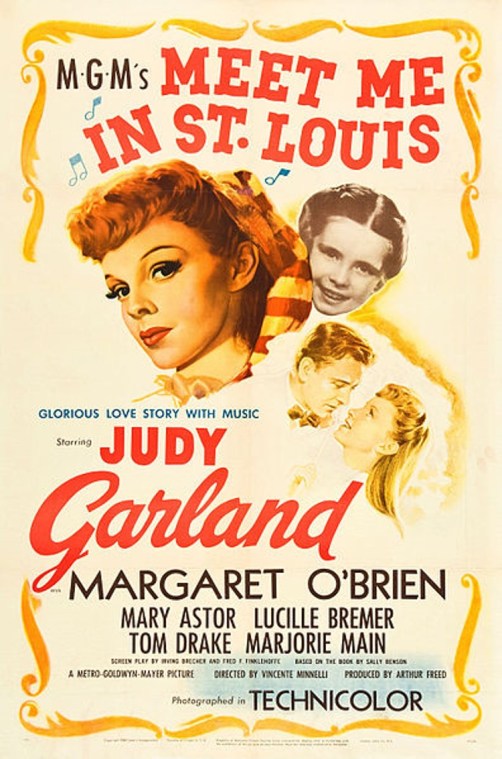
Last week, 18 Cinema Lane received 75 followers! Before I start this review, I’d like to take a moment to thank all of my followers for making this achievement possible. Without you, my blog would never have received this milestone (especially in this short amount of time). So, like I’ve done in the past, I will now review a film that was released 75 years ago (in 1944). Because I’ve only seen bits and pieces of Meet Me in St. Louis, I’ve chosen this movie to celebrate this accomplishment! When I picked this movie to review, I realized that the only films of Judy Garland’s that I had ever seen were The Wizard of Oz and A Child is Waiting. This gave me a good excuse to not only watch a movie that I had never seen in its entirety, but to also explore Judy’s filmography! Now, let’s finally start this review for Meet Me in St. Louis!

Meet Me in St. Louis poster
Meet Me in St. Louis poster created by Metro-Goldwyn-Mayer and Loew’s, Inc. Image found at https://commons.wikimedia.org/wiki/File:Meet_Me_in_St._Louis_poster.jpg

Things I liked about the film:

  • The acting: The cast was very talented in Meet Me in St. Louis! To me, the two strongest performers in this film were Judy Garland and Margaret O’Brien! Like in The Wizard of Oz and A Child is Waiting, Judy has both the musical and acting talents to carry a significant weight of the film. Judy also has good on-screen chemistry with Tom Drake, who portrays John Truett in the film. Margaret O’Brien’s portrayal of “Tootie” Smith was one of the strongest elements of this film! During the scene where “Tootie” is so upset about moving to New York that she destroys the snowpeople outside, Margaret’s performance was so emotionally powerful. In fact, her performance was so emotionally powerful, that it was an affective way to make the audience feel sorry for the character. Both Judy’s and Margaret’s performance complimented the performances of the other actors as well.


  • The music: I really liked the music in this film! The collection of songs was a good balance of light-hearted and emotional material. Judy’s musical performances were a treat to see, as they were all delightful and enjoyable! My favorite musical number in this movie was when Judy and Margaret performed “Under the Bamboo Tree”. This performance was so joyful and added to the light-hearted nature of the film. When it comes to more emotional performances, I really liked Judy’s rendition of “Have Yourself a Merry Little Christmas”. Her version of the song was emotional enough to affectively reflect the mood of what’s going on in the film. It’s sad, as it addresses reflecting on times gone by, and it’s hopeful, as it talks about appreciating the things you have in your life. This assortment of songs made seeing this movie an enjoyable experience!


  • The sets: All of the sets in Meet Me in St. Louis were impressive! I’m not sure if the Smith family home is a real-life house or a house built on a studio lot. However, the facility itself was absolutely gorgeous! Everything in this house looked and felt like a home from the early 1900s. I also liked how the ballroom looked in the scene where Esther, Rose, Lon, and Grandpa attend the annual Christmas ball. The way the Christmas tree was placed in the greenroom was so pretty. The Christmas tree’s placement was also a good way to effectively pull off a surprise within the story!
2097039
St. Louis, Missouri sticker image created by Freepik at freepik.com. <a href=”https://www.freepik.com/free-photos-vectors/label”>Label vector created by freepik – http://www.freepik.com</a>. Image found at freepik.com.

What I didn’t like about the film:

  • A weak first segment: From a story-telling perspective, I thought the story during the “Summer 1903” segment was the weakest element of the movie. Within the first twenty minutes, the primary story focused on whether Rose would become engaged via a long-distance telephone call. Because the first few minutes of a film is, usually, reserved for providing exposition, I don’t think Rose’s story was an effective way to start this movie. It is as if the screenwriters expected their audience to automatically care about a character whom they just met. For me, the overall narrative wasn’t interesting until the “Fall 1903” segment began.


  • Too many characters: Even though Meet Me in St. Louis had a talented cast, I feel there were too many characters associated with this story. In this movie, the overall narrative seemed to serve only a few of the characters. The individuals that benefited the most from this narrative were Esther, Rose, “Tootie”, John Truett, and Mr. & Mrs. Smith. The rest of the characters either feel like they’re there for the sake of being there or like they weren’t given enough screen-time.


  • The limited presence of the World’s Fair: Throughout this movie, the World’s Fair is referenced by several characters on several different occasions. It’s even mentioned in the opening song, “Meet Me in St. Louis, Louis”. However, the World’s Fair itself was only featured within the last twenty minutes. Even in those few moments, the World’s Fair isn’t incorporated into the story enough to make me, as an audience member, feel satisfied. If anything, the World’s Fair in Meet Me in St. Louis was just a glorified extra.
Note_lines_horizontal1
String of musical notes image created by Freepik at freepik.com. <a href=’https://www.freepik.com/free-vector/pentagram-vector_710290.htm’>Designed by Freepik</a> <a href=”https://www.freepik.com/free-photos-vectors/background”>Backgroundvector created by Freepik</a>. Image found at freepik.com.

My overall impression:

Meet Me in St. Louis is a good film! The music is entertaining and the story is interesting enough to keep the audience invested. As I mentioned in my review, the acting is what helped keep this movie going. While Judy and Margaret were the two strongest performers in this movie, the rest of the cast was also talented. Yes, this film did have its flaws. However, there was a good amount of content that made the experience of watching this movie enjoyable. I’m glad I chose this movie to review for my 75 follower dedication post because it allows me to explore the filmography of both Judy Garland and Margaret O’Brien! It also gave me a good excuse to watch a film that I had never seen in its entirety.


Overall score: 7.5-7.6 out of 10


What are your thoughts on my review? Are you looking forward to seeing which movies I review in future blog follower dedication posts? Leave your thoughts in the comment section!


Have fun at the movies!

Sally Silverscreen