Take 3: A Walk in the Spring Rain Review

Every beloved film star has at least one movie on their IMDB filmography that has earned the distinction of being a “classic”, “iconic” or “fan favorite”. But for every “classic” title, there’s also that one film that is under-rated or unheard of. In the case of Ingrid Bergman, one of those movies is A Walk in the Spring Rain! Prior to The Wonderful World of Cinema’s 6th Wonderful Ingrid Bergman Blogathon, I had never heard of the 1970 picture. However, that’s the great part of participating in a blogathon; discovering films that are “new-to-you”! As I said in my review of Evel Knievel, I haven’t had the best of luck, this year, finding a movie from the 1970s I like. By expanding my cinematic horizons, I am hoping to solve that problem. Where does A Walk in the Spring Rain rank among the other ‘70s movies I’ve reviewed this year, so far? Keep reading my review in order to find out!

A Walk in the Spring Rain poster created by Columbia Pictures and Pingree Productions

Things I liked about the film:

The chemistry between the cast: When watching characters interact with one another, the believability of those interactions depends on the strength of the cast’s acting talents. Though the cast in A Walk in the Spring Rain was smaller, this believability could be felt. In a scene between the protagonist, Libby, and her daughter, Ellen, the interaction appeared realistic, presenting the idea of a mother and daughter discussing a personal matter. Concerned about her mother’s apparent unhappiness, Ellen (portrayed by Katherine Crawford), seems genuinely worried, that worry with a touch of sadness consistently shown on her face. Meanwhile, Libby (portrayed by Ingrid Bergman) is distraught over personal turmoil. Her face shows her distress, tears in her eyes and sadness spread over her face. She even goes so far as to violently push a tea cup off the kitchen table in an act of sudden anger. During their stay in Tennessee, Libby and her husband, Roger, meet a local man named Will. One evening, the three go frog hunting, with Roger and Libby trying moonshine for the first time. This scene shows the on-screen chemistry between Ingrid Bergman, Fritz Weaver, and Anthony Quinn. Their smiles, laughter, and jovial demeanor radiates off the screen. It feels like they are three close friends who are picking things up where they last left off.

The set design: In A Walk in the Spring Rain, Libby and Roger rent a cabin in Tennessee. This cabin featured design choices that I found memorable! The main focal point in the living room is a fireplace. Surrounded by exposed stone and a dark wood mantle, good décor complimented the darker shades of both wood and stone. The living room was not the only room where exposed stone was found. In the kitchen, an antique stove guarded a wall of exposed stone. Also in the kitchen, a dark wood corner shelf housed the fine china and fancy dinnerware. This shelving unit was a unique way to make the best use of the room’s available space!

The scenery: A Walk in the Spring Rain was filmed in Tennessee, specifically at Great Smoky Mountains National Park. The story takes place during two seasons: winter and spring. Despite the difference in seasons, the scenery was very picturesque, stealing the show from time to time! In some establishing shots, Tennessee’s snowy landscape was beautifully captured on film. The scenery honestly looked like a Christmas greeting card. In a scene where Will shows Libby the first blooms of the season, a tree with small, magenta flowers provides a nice pop of color amid the background of green foliage and rolling hills. Even when characters are driving through the country-side, these surroundings were pretty to look at!

The 6th Wonderful Ingrid Bergman Blogathon created by Virginie from The Wonderful World of Cinema

What I didn’t like about the film:

A meandering story: According to a synopsis I read for A Walk in the Spring Rain, Libby and Will have an affair. This affair didn’t fully come into fruition until fifty-three minutes into an hour and thirty-eight-minute movie. That forced the audience to wait more than half the film for the inevitable to happen. Even though Will and Libby flirted with one another leading up to the affair, these interactions were brief. While waiting for the affair to happen, the script focused on other parts of the story, such as the Merediths adopting baby goats.

The run-time: Like I mentioned in my previous point about the film’s meandering story, A Walk in the Spring Rain has a run-time of an hour and thirty-eight-minutes. Because of how drawn out the story was, that hour and thirty-eight-minutes felt longer. There were several stretched out scenes serving the movie’s run-time. One example is a ten-to-fifteen-minute scene of Libby and Roger’s trip to Gatlinburg, with the majority of this scene showing the Merediths walking down a tourist heavy street. Had scenes like this one been trimmed, A Walk in the Spring Rain’s run-time might have been about an hour and ten minutes.

Drawn-out subplots: There were some subplots in A Walk in the Spring Rain that were drawn out, likely to satisfy the movie’s run-time. One of these subplots revolved around the Merediths’ daughter, Ellen. Ellen desires to go to law school. However, Libby and Roger feel her decision would disrupt her family. While this subplot does get resolved, it takes the entire movie for the resolution to happen. Because of this, the resolution feels anticlimactic.

Image by macrovector on Freepik

My overall impression:

In the introduction of this review, I said I had never heard of A Walk in the Spring Rain prior to The 6th Wonderful Ingrid Bergman Blogathon. Looking back on this movie, I think I know why. If I could describe the 1970 film in one word, it would be ‘bland’. The drawn-out, meandering story causes the movie to feel longer than an hour and thirty-eight-minutes. Great Smoky Mountains National Park provides this story with beautiful scenery. But as I’ve said in past reviews, “the scenery can’t save you”. The cast in A Walk in the Spring Rain is solid, maintaining strong on-screen chemistry. However, when a project has a weak script, there’s only so much the cast can do to salvage that script. I know this film was released toward the end of Ingrid’s career. But, honestly, she, as well as the rest of the cast, deserved better material.

Overall score: 5 out of 10

Have you seen or heard of A Walk in the Spring Rain? Are there any of Ingrid Bergman’s films you’d like to see me review? Let me know in the comment section!

Have fun at the movies!

Sally Silverscreen

Take 3: The Truth About Spring Review

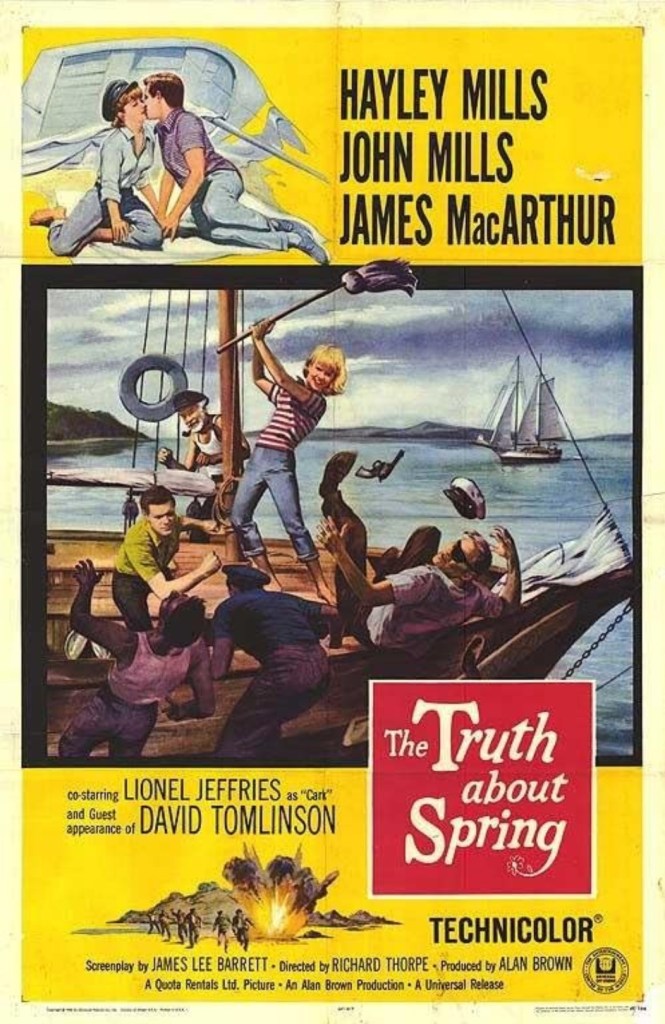
It’s been a while since I last wrote a movie review. As I just wrote about a Hallmark Hall of Fame film, I wanted to talk about something beyond the realm of Hallmark. I recently remembered a movie I had heard good things about for years. That movie is 1965’s The Truth About Spring! I have covered some of Hayley Mills’ films in past reviews on my blog. These titles are Summer Magic, The Moonspinners, and The Trouble with Angels. While I found Summer Magic to be just ok, I did like The Trouble with Angels and The Moonspinners. Since The Truth About Spring revolves around Hayley’s character traveling, I wondered if I’d like this film as much as The Moonspinners. That answer will be discovered as we sail through this review of The Truth About Spring!

The Truth About Spring poster created by Quota Rentals Limited and Universal Pictures

Things I liked about the film:

The acting: In The Truth About Spring, Hayley portrays the protagonist, Spring Tyler. One of the few characters she interacts with is William Ashton, portrayed by James MacArthur. When William prepares for his voyage on Tommy’s ship, Spring is curious about an outfit William packed. After she asks about the outfit in question, William explains it is a set of pajamas, which he wears for sleep. Spring’s face goes from inquisitiveness to sad realization, as she confesses how she doesn’t own pajamas. This subtle change in facial expressions shows how Spring is being exposed to a different way of living life. Because of Hayley’s acting abilities, the aforementioned realization appeared realistic!

Spring is not the only character William interacts with. Another key character in The Truth About Spring is Spring’s father, Tommy, portrayed by John Mills. During their voyage, Tommy witnesses William in his pajamas for the first time. Because Tommy is also not used to the idea of pajamas, he gives William a confused look. Meanwhile, William displays an embarrassed facial expression, as he wasn’t expecting Tommy to walk into the room. The interaction between these characters creates a moment that is awkward for both of them. John’s and William’s acting talents allow this awkwardness to radiate off the screen, making the scene feel believable!

The interior design: The majority of The Truth About Spring takes place outdoors, as the characters sail to various locations. However, there are a few scenes featuring the interior design of the characters’ ships. The sitting room in the yacht of William’s uncle is surrounded in bleached wood. Paired with beige chairs and a large painting of flowers, this room is reflective of the affluent lifestyle of the Ashton family. On Tommy’s ship, the cabin has dark wood walls. Tommy, Spring, and William sit around a table covered in a red and white checkered pattern. The small windows are gifted with green curtains. These combined design details showcase the humbleness of Tommy and Spring’s surroundings.

The discussion of educational experiences: A consistent topic between Spring and William is education. During one of their discussions, Spring learns there are different types of lawyers. This lesson came after William told her and Tommy he had graduated from law school and passed his bar exam. On a trip to the beach, Spring explains to William how it is the seagulls’ nesting season. She knows this information because of her experiences at sea. These conversations highlight how these characters’ life experiences shaped their educational foundations. I hadn’t thought about this concept until I saw The Truth About Spring!

Sailing on the sea image created by Michele L at freeimages.com. “FreeImages.com/Michele L.”

What I didn’t like about the film:

A missed opportunity: Throughout The Truth About Spring, the characters engage in a treasure hunt. This treasure hunt was, unfortunately, not emphasized in the story. Instead, the movie splits its time between the interactions of Spring and William, as well as Tommy’s conning schemes. For me, this was disappointing because a treasure hunt can give a story intrigue, suspense, and a sense of adventure. Not emphasizing the treasure hunt is, in my opinion, a missed opportunity.

A limited amount of urgency: As I mentioned in my previous point, the film’s treasure hunt wasn’t emphasized. That creative decision caused The Truth About Spring to contain a limited amount of urgency. Within the movie’s hour and forty-two-minute run-time, a strong sense of urgency was featured in only three scenes. Most of the movie ended up feeling like an unexciting journey.

A drawn-out story: Like I said in this review, The Truth About Spring is an hour and forty-two-minutes. But the story itself was straight-forward, primarily focusing on three key characters. Therefore, this combination made the film feel drawn-out. Personally, I feel the movie should have been given a run-time of an hour and ten to fifteen minutes. That way, the script would been tighter.

Tropical island image created by Brgfx at freepik.com. <a href=’https://www.freepik.com/free-vector/island-background-design_1020626.htm’>Designed by Freepik</a>. <a href=”https://www.freepik.com/free-photos-vectors/background”>Background vector created by Brgfx – Freepik.com</a>. Image found at freepik.com.

My overall impression:

As I stated in the introduction, I have reviewed some of Hayley Mills’ films. These films range from ok to enjoyable. When it comes to The Truth About Spring, I thought it was just ok. There are aspects of the 1965 movie I like, such as the discussion of educational experiences between Spring and William. However, I didn’t find the story itself very interesting. Instead of emphasizing the treasure hunt, more focus is given to Tommy’s conning schemes. Giving this simplistic story a run-time of almost two hours didn’t help either. If you’re looking for a movie where Hayley’s character falls in love and goes on an adventure, I’d recommend The Moonspinners over The Truth About Spring. The Moonspinners contains suspense and intrigue, as well as a tighter script.

Overall score: 6 out of 10

Have you seen The Truth About Spring? What is your favorite movie starring Hayley Mills? Please tell me in the comment section!

Have fun at the movies!

Sally Silverscreen

Take 3: To Catch a Thief Review

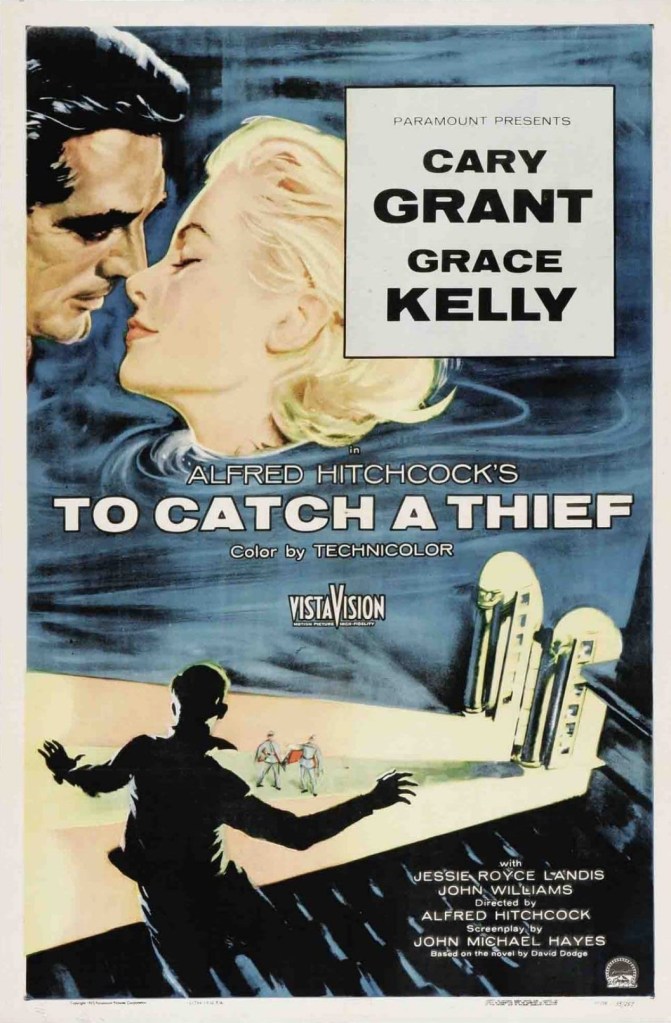
For The Master Of Suspense Blogathon, I was originally going to review the 1958 classic, Vertigo. I selected this film because it had been recommended by one of my readers. Unfortunately, my plans fell through at the last minute. So, I had to quickly choose an alternative. As I looked back at the blogathon’s participant list, I discovered the 1955 film, To Catch a Thief, hadn’t been selected. That is the film I am now reviewing for The Master of Suspense Blogathon. I have seen some of Alfred Hitchcock’s movies before this event. From what I know of To Catch a Thief, the 1955 production is different from other titles such as Psycho and Rear Window. But will this difference impact the quality of the film? Keep reading my review in order to solve this mystery!

To Catch a Thief poster created by Paramount Pictures

Things I liked about the film:

The acting: In To Catch a Thief, Cary Grant portrayed John Robie, a former jewel thief looking to clear his name. A man of suave charisma, John was afraid of being accused of something he didn’t do. But he never lets this fear get to him. Instead, with the talents of Cary Grant, John was confident and intelligent. Grace Kelly was also cast in To Catch a Thief, portraying Frances Stevens. Frances carried herself with dignified confidence. However, this confidence did not come across as snobbish or arrogant. It added to Frances’ likability, along with her gentle demeanor and respectful elegance. Danielle Foussard is a friend of John’s. Portrayed by Brigitte Auber, Danielle had a spunky streak in her, adding liveliness to her and John’s interactions. A scene I really liked was when John, Frances, and Danielle are swimming in the ocean together. This scene perfectly showcased their personalities, as their banter bounced among each other like a soaring beach ball. What made that scene great to watch was the joining of the acting talents of Cary Grant, Grace Kelly, and Brigitte Auber!

The scenery: Most of the car chases in To Catch a Thief are captured in long, establishing shots. This is very different from car chases in other films, where the chases are shown in medium or close up shots. To Catch a Thief’s approach to car chases emphasizes the scenery surrounding these chases. Looking back on this film’s scenery, I can understand why To Catch a Thief’s creative team would make that decision. With the majority of the production filmed in France, the story shows pieces of the French countryside and seaside. Giant green mountains and deep blue waters present an isolated oasis. A smattering of orange roofed houses perched on these mountains add to the movie’s vibrant color palette. On the French seaside, bright yellow sands welcome the deep blue waters of the ocean. Most of the story’s exterior shots feature a blue sky with a handful of clouds. Even the flowers are appealing bursts of color, boasting shades of red, pink, and even purple. To Catch a Thief is a pretty looking movie and it knows it!

The dialogue: During discussions of Alfred Hitchcock’s movies, use of music, cinematography, and lighting are typically talked about by fans and film enthusiasts. But one area of film-making I feel is overlooked, specifically when it comes to Alfred’s work, is the dialogue. This element of story-telling was a pleasant surprise in To Catch a Thief! It not only suited the characters respectively, it also sounded like the screenwriters put a lot of thought into what the characters told each other. While driving through the French countryside, John and Frances are discussing Frances’ past. As the discussion carries on, John accuses Frances of looking for a husband on her trip. But Frances responds by saying, “The man I want doesn’t have a price”. This statement represented the respectful elegance Grace consistently carried throughout the film. It also hinted at foreshadowing.

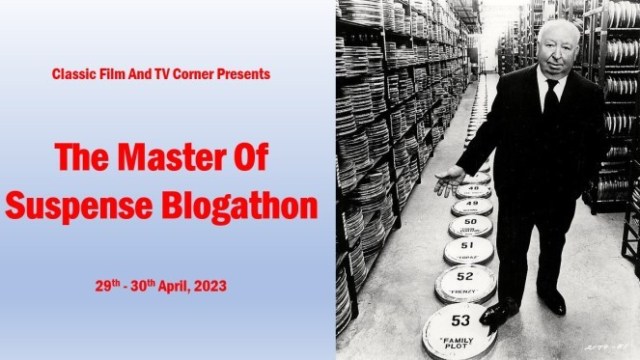
The Master Of Suspense Blogathon banner Maddy from Classic Film And TV Corner

What I didn’t like about the film:

Limited amount of urgency: At the beginning of To Catch a Thief, John learns he is accused of stealing valuable jewelry. He evens claims to have ten days in order to clear his name. You’d think with this tight timeline, there would be a strong sense of urgency in the story. But this urgency to find the truth is, unfortunately, inconsistent. Instead, more emphasis is placed on the scenery, the romance, and the “finer things in life”. While the mystery was resolved, the limited amount of urgency held the story’s suspense and intrigue back.

A small amount of suspense and intrigue: Alfred Hitchcock’s productions are known for incorporating suspense and intrigue. This reputation has earned Alfred the title of “Master of Suspense”. In To Catch a Thief, however, suspense and intrigue were only served in small amounts. Part of this problem results from the limited amount of urgency I previously talked about. Another reason for this problem is how suspense and intrigue were used sparingly instead of evenly spread out throughout the story. It got to the point where I almost forgot this story had a mystery.

Lack of suspects: A typical mystery will include a collection of suspects, individuals who may or may not have a reason to be the guilty party. These characters are presented as uniquely as possible, in order to help the audience remember them and their reasoning. To Catch a Thief lacked this ingredient. Because the mystery was not as prioritized as in other works from Alfred Hitchcock, no room was made to include suspects. There was a red herring in To Catch a Thief, but this reveal felt random. Even the reveal of the mystery’s guilty party wasn’t completely surprising.

Illustration of Paris, France created by Freepik at freepik.com. <a href=”https://www.freepik.com/free-photos-vectors/travel”>Travel vector created by freepik – http://www.freepik.com</a>. Image found at freepik.com.

My overall impression:

As I said in this review, To Catch a Thief is a pretty looking movie and it knows it. While the scenery was the film’s crown jewel, there were other aesthetically pleasing components of this production, like the costume design and the set design. When it comes to the story, though, it wasn’t as suspenseful and intriguing as other Alfred Hitchcock movies. The visuals ended up overshadowing the script. I will give Alfred Hitchcock credit where it’s due, as it seems like he tried to take a different approach to cinematic story-telling. But out of his films I have seen, I prefer titles like Strangers on a Train.

Overall score: 6.3-6.4 out of 10

Have you seen To Catch a Thief? Which titles of Alfred Hitchcock’s do you prefer? Please tell me in the comment section!

Have fun at the movies!

Sally Silverscreen
Buzzwordathon 2023: Review of ‘The Geography of Bliss: One Grump’s Search for the Happiest Places in the World’ by Eric Weiner

At the beginning of this year, I announced I was participating in the Eurovisionathon readathon. Created by Helen, from the Youtube channel, Helen’s Book Haven, the goal of this readathon is to read books associated with countries competing in Eurovision within a month-long time-frame. One of the books I planned to read was The Geography of Bliss: One Grump’s Search for the Happiest Places in the World, as one of the countries featured in the text is Moldova. When the themes for 2023’s Buzzwordathon were announced, I discovered April’s theme was ‘emotions’. This means at least one emotion related word had to be in a book’s title. The Geography of Bliss: One Grump’s Search for the Happiest Places in the World happens to contain three emotion related words: bliss, grump, and happiest. Therefore, I was able to read this book for both readathons!

In The Geography of Bliss: One Grump’s Search for the Happiest Places in the World, Eric Weiner, the book’s author, attempts to find the happiest countries in the world, based on data and research. Each chapter to devoted to this exploration, with Eric including study results, some of a country’s history, and even insight from a few of a country’s residents. Throughout the text, Eric brings up thought-provoking ideas that made me contemplate how Eric’s findings applied outside of the book. One common finding was Eric’s discovery of more ways to describe sadness than happiness. This discovery reminded me of my best and worst movies of the year lists. When I write these lists, I find it easier to talk about movies I don’t like. That’s because I feel compelled to explain why a movie is bad. But if I come across a movie I like, that movie, in my opinion, speaks for itself. This makes me put more thought into writing about good movies.

Colorful travel suitcase image created by Pikisuperstar at freepik.com. <a href=’https://www.freepik.com/free-vector/beautiful-illustration-of-travel_2686674.htm’>Designed by Freepik</a>. <a href=”https://www.freepik.com/free-photos-vectors/watercolor”>Watercolor vector created by Pikisuperstar – Freepik.com</a>. Image found at freepik.com.

The Geography of Bliss: One Grump’s Search for the Happiest Places in the World contains ten chapters. Most of these chapters are longer in page length, ranging from about fifteen to twenty pages. If I were reading this book just for Buzzwordathon, the length of the chapters wouldn’t be an issue. Since I read the book for Buzzwordathon and Eurovisionathon, the chapters made the book feel longer than necessary. Despite its flaws, though, The Geography of Bliss: One Grump’s Search for the Happiest Places in the World is a fine and interesting book. While I don’t plan on revisiting it, the book did allow me to expand my literary horizons!

Overall score: 3.6 out of 5

Have fun during Buzzwordathon and Eurovisionathon!

Sally Silverscreen

Disclaimer: The Geography of Bliss: One Grump’s Search for the Happiest Places in the World contains content that may be offensive to some readers, as Eric’s approach to each country discussed is honest and realistic. Reader discretion is encouraged.

Take 3: Charlie Chan at Treasure Island Review

‘Movies featuring beaches or waterfront scenes’ is March’s theme for Genre Grandeur. I could have selected a Hallmark title, but I chose a different film instead. This seems to be a recurring theme on 18 Cinema Lane this year. Back when I published my editorial, Oh, The Places She’ll Go: A Map of Esther Williams’ Travels, Paddy Lee suggested I check out Charlie Chan at Treasure Island. Since then, I’ve been trying to find the right time to watch the film. When I searched through my movie recommendation board on Pinterest, I knew it would be the perfect movie to write about for this month’s Genre Grandeur! Before Paddy Lee’s suggestion, I had never heard of the Charlie Chan series. From what I’ve gathered, this is a mystery series from the 1920s to the 1940s. A made for TV movie, The Return of Charlie Chan, was released in 1972 and the last movie in the series, Charlie Chan and the Curse of the Dragon Queen, premiered in 1981. Starting this journey in the middle of the series, it’s time to review Charlie Chan at Treasure Island!

Charlie Chan at Treasure Island poster created by Twentieth Century Fox

Things I liked about the film:

The acting: I’ve seen a handful of Cesar Romero’s projects from his filmography. Out of those projects, he has carried his character with charisma. In Charlie Chan at Treasure Island, Cesar portrayed a magician named Rhadini. Not only did Rhadini have the charisma I’ve come to expect from Cesar’s performances, he also contained a strong amount of showmanship you’d expect from a magician! Consistency worked in Cesar’s favor, with his performance appearing effortless. Another acting performance that came across as effortless was Victor Sen Yung’s! Portraying Charlie’s son, Jimmy, Victor gave his character a great on-screen personality. His expressions while interacting with other cast members wove together seamlessly. A great example is when Jimmy is helping Charlie get ready for a dinner party. As he is interacting with his father, Jimmy’s emotions transition from pride to confusion to determination without missing a beat! Despite appearing in the film for a limited amount of time, I liked Billie Seward’s portrayal of Bessie Sibley! She had great control over her character’s emotions, allowing her talents to go toe-to-toe with the talents of the other cast members.

The inclusion of magic: As I just mentioned in this review, Rhadini is a magician. He performs magic tricks on a few occasions within the story. These tricks range from a disappearing bird to a levitating table. There were even times when the secrets behind these tricks were revealed, showing the audience how the illusion was achieved. This was a pleasant surprise for me, as I didn’t expect any magic to be featured in the movie. Its inclusion in the story added a unique aspect to the film’s identity!

The humor: In past reviews, I’ve brought up how some mystery films have incorporated humor into their story, as humor gives the audience a break from the heaviness of the mystery itself. Honestly, I was surprised by the inclusion of humor in Charlie Chan at Treasure Island. This is because I was not expecting this aspect to be as strong as it was in the story. In Charlie Chan at Treasure Island, Jimmy was the comic relief. Some of the things he said were genuinely hilarious. During Rhadini’s magic show, Jimmy is recruited to participate in the levitating table trick. Horrified at the idea of being lifted off the ground, Jimmy tells his father, “Oh, but flying makes me seasick, Pop”.

Image of magic show essentials created by Macrovector at freepik.com. <a href=”https://www.freepik.com/free-photos-vectors/card”>Card vector created by macrovector – http://www.freepik.com</a>. Image found at freepik.com.

What I didn’t like about the film:

A misleading title: Charlie’s adventures in Treasure Island are the reason why I chose this movie for March’s Genre Grandeur. Because of the film’s title, I expected Charlie to primarily spend his time at the titular location. But when I watched the movie, I discovered that wasn’t the case. While there was an aerial shot of Treasure Island, not much time was spent there. In fact, the characters talked about Hawaii, specifically Honolulu, more than Treasure Island. With that said, it made me wonder why this movie didn’t take place in Hawaii?

Charlie’s outdated “quirk”: In my editorial, Why ‘Francesca Quinn, PI’ is the Worst Hallmark Movie I’ve Ever Seen, I talked about how fictional detectives have a “quirk”, something that sets a detective apart from other sleuths. Charlie Chan does have his own “quirk”. However, it seems very outdated. Throughout the story, Charlie speaks in proverbs. His speech also sounds like broken English. I know the 1930s was a different time compared to the 2020s. But these factors make Charlie’s “quirk” seem stereotypical.

A limited amount of urgency: The main mystery in Charlie Chan at Treasure Island is a murder mystery, as a guest on a plane mysteriously dies during the trip. Charlie and the San Francisco police department discover a series of deaths that took place around the time of the aforementioned murder. But most of the story focuses on the mystery of who “Dr. Zodiac” is, a physic who is ripping off his clients. This focus caused the overall story to have a limited amount of urgency.

Image of Hawaiian poster created by Freepik at freepik.com. <a href=”https://www.freepik.com/free-photos-vectors/poster”>Poster vector created by freepik – http://www.freepik.com</a>. Image found at freepik.com.

My overall impression:

As someone who actively seeks out programs from the mystery genre, I’m always looking for titles I can recommend to my readers. However, I am aware of how mystery films and shows are not created equally. Charlie Chan at Treasure Island was my introduction to the world of Charlie Chan. Unfortunately, this introduction was not as strong as it could have been. While there were aspects of the movie I liked, such as the acting and the humor, the story itself was weak. The misleading title made me wish the film had taken place in Hawaii. Charlie’s “quirk” also makes the story dated on arrival. I’m not sure if I’ll continue watching this series. Perhaps if a particular title fits a blogathon theme, then maybe I will check another film out.

Overall score: 6.7 out of 10

Have you seen any films from the Charlie Chan series? Are there mystery films you’d like to see reviewed on 18 Cinema Lane? Tell me in the comment section!

Have fun at the movies!

Sally Silverscreen
Take 3: A Room with a View Review

My approach to February’s Genre Grandeur is similar to my approach for last month’s blogathon. As the theme this time around is ‘movies that take place or feature Italian settings’, I could have selected one of several Hallmark productions where Italy serves as the story’s backdrop. Instead, I overlooked the realm of Hallmark for a movie that happened to be on my DVR; 1985’s A Room with a View! When I discovered the film’s protagonist, Lucy, travels to Florence, Italy, I knew it would the perfect selection for this month’s Genre Grandeur. Because my choices for 2023’s blogathon have, so far, featured a female protagonist traveling abroad (A Room with a View and Black Narcissus), I saw this is as a very interesting coincidence. In my review of Black Narcissus, I thought the 1947 film was just ok, as the movie emphasized style over substance. Did I feel the same way about A Room with a View? Take a trip through this review to find out!

A Room with a View poster created by
Merchant Ivory Productions, Goldcrest Films, FilmFour International,
Curzon Film Distributors, and Metro-Goldwyn-Mayer

Things I liked about the film:

Interactions between characters: A Room with a View is an ensemble film, with the actors and actresses coming from all walks of life and journeys in their careers. The characters reflect this idea, as they travel to Italy for various reasons. Because of everything I just said, it was interesting to see each interaction between the characters unfold. One of the funniest scenes was shared between Charlotte, portrayed by Maggie Smith, and Eleanor, portrayed by Judi Dench. Eleanor is a writer, a woman who adopts a more romantic view of the world. Meanwhile, Charlotte is more of a realist, someone who views the world through a practical lens. As they explore Florence, Eleanor encourages Charlotte to breath in the scent of the city, in an attempt to make the most of their traveling experience. Instead, Charlotte puts a handkerchief over her nose, as she and Eleanor just walked past a group of smokers. Due to the screenwriting, as well as Judi’s and Maggie’s performance, this scene elaborates my aforementioned points!

The scenery: As I stated in the introduction, I chose to review A Room with a View because of Lucy’s trip to Florence. Therefore, my discussions about the movie’s scenery will focus on the Italian background. Toward the beginning of the film, Lucy visits a cathedral. In the interior of this massive structure, the main hall is surrounded in light gray stone. Symmetrical stone columns with matching hue and carved designs burst from the cathedral’s high ceiling. Filled with giant statues, a sprinkling of candles, and artwork within the cathedral’s alcoves, the large scale of this space was captured well through various camera angles!

During Lucy’s trip, she and several tourists visit Florence’s countryside. While enjoying their picnic, the characters sit on rolling green hills, coated in varying shades of green. Trees proudly stood among the guests, joining their event from a distance. A few red-orange poppies poked out of the sea of grass, providing the landscape with a pop of bright color. Wrapped up in a clear, sunny sky, Florence’s countryside looked postcard perfect!

Lucy’s wardrobe: Since this was my first time watching A Room with a View, I had no expectations when it came to Lucy’s wardrobe. But as the story progressed, I found myself adoring Lucy’s attire, as it was classy and elegant! An excellent example is what Lucy decided to wear to her piano recital. Lucy wore a cream-colored gown with puffed lace sleeves. The scooped neckline was surrounded by embroidered flowers. Sparkles covered the bodice of the dress, providing just enough twinkle. Paired with a jeweled belt, Lucy’s gown was simply beautiful!

Italian countryside image created by Bill Silvermintz at freeimages.com. “FreeImages.com/Bill Silvermintz.” Photo by <a href=”/photographer/edudflog-58908″>Bill Silvermintz</a> from <a href=”https://freeimages.com/”>FreeImages</a&gt;.

What I didn’t like about the film:

The drawn-out story: A Room with a View’s primary focus was Lucy’s growing attraction for George, who she met on her trip to Florence. But alongside that part of the story were situations involving the other characters from this ensemble. These situations were competing against one another for the audience’s attention. One situation happened after Lucy came home to England. She tries to recruit some of the trip’s guests to stay in a local cottage. Her fiancé, Cecil, recruits guests to the cottage, who just so happen to be George and his father. However, the emphasis on the cottage’s status is one of the reasons why Lucy’s attraction for George isn’t resolved until the last forty minutes of the movie. Because of these things and the film’s two hour run-time, the story itself felt drawn out.

Lack of on-screen chemistry: Helena Bonham Carter and Julian Sands, the actors who portrayed Lucy and George, did a good job with the material they were given. But when their characters were interacting together, I didn’t feel a strong sense of on-screen chemistry. A reason why is because of how infrequently George and Lucy crossed paths. Within the film’s first forty minutes, Lucy and George spend time together in about two or three scenes. Shortly after those first forty minutes, Lucy becomes engaged to Cecil, a character who a) was never brought up during the Florence trip and b)didn’t appear on screen until forty minutes into the film. Even after the engagement, George and Lucy’s time together isn’t consistent. This resulted in the missed opportunity to watch this relationship grow over time.

The title cards and on-screen text: At various moments in A Room with a View, title cards announced when a character was about to do something. On-screen text would sometimes replace these title cards. One example takes place when Lucy and several tourists travel to Florence’s countryside. Before their excursion, white text appeared on the screen, explaining what they were about to do. I was not a fan of this creative decision because these title cards and on-screen text told the audience what they could see or figure out for themselves. This creative decision was also not consistently featured in the movie.

Hand-written letter image created by Veraholera at freepik.com. <a href=”https://www.freepik.com/free-photos-vectors/background”>Background vector created by Veraholera – Freepik.com</a>. <a href=’https://www.freepik.com/free-vector/love-letter-pattern_1292902.htm’>Designed by Freepik</a>. Image found at freepik.com.

My overall impression:

When it comes to A Room with a View’s style, this movie excels! It’s a pretty looking film, as the scenery, set design, and even Lucy’s wardrobe made the production pleasant to the eye. But when it comes to the substance, the film falls short. I didn’t find the story compelling, which is caused by the story itself being drawn out. I also did not sense strong on-screen chemistry between Helena Bonham Carter and Julian Sands. The more historical fiction/period drama media I consume, I find myself, more often than not, gravitating toward stories whose casts are smaller. This creative decision prevents the stories from competing for attention, as there are less characters to keep track of. Because A Room with a View contained an ensemble cast, there were so many ideas brought up and so few time to address it all. As the saying goes “time flies when you’re having fun”.

Overall score: 6.1 out of 10

Have you seen A Room with a View? Do you prefer movies with bigger or smaller casts? Please tell me in the comment section below!

Have fun on your travels!

Sally Silverscreen

The Sun Sets on My Great Muppet Guest Star Caper Double Feature!

Now that The Great Muppet Guest Star Caper Blogathon has concluded and I reviewed both films, it’s time to share my overall thoughts! First, I’d like to thank Gill, from Realweegiemidget Reviews, and Rebecca, from Taking Up Room, for hosting this event! A Muppets themed blogathon was not only a creative idea, it also gave me an excuse to check out Muppet related films. Out of the two movies I reviewed, The Great Muppet Caper and Follow That Bird, one clearly stood out more than the other. That would be 1981’s The Great Muppet Caper! I had such a great experience watching this movie! It felt reminiscent of productions like Anchors Aweigh and Singin in the Rain, where the interactions between the characters and the musical numbers prevented the simpler story from being weak or predictable. Follow That Bird, on the other hand, was a fine, first attempt at creating a film. However, there were several story-telling elements within the project that weren’t utilized to their fullest extent. Some creative decisions were confusing as well. Now that another successful double feature has been completed, I wonder what will be the theme of my next double feature?

The Great Muppet Guest Star Caper banner created by Rebecca from Taking Up Room and Gill from Realweegiemidget Reviews

Have fun on Sesame Street!

Sally Silverscreen

Take 3: Sesame Street Presents: Follow That Bird Review (The Great Muppet Guest Star Caper Double Feature Part 2)

Welcome to part two of The Great Muppet Guest Star Caper Double Feature! Like my review of The Great Muppet Caper, this review of Sesame Street Presents: Follow That Bird will be spoiler-free. I will also be referring to the movie as ‘Follow That Bird’ instead of its full title. If you would like to know why I selected this movie, I will provide the link to this double feature’s introduction. The link to my review of The Great Muppet Caper will be provided as well.

The Great Muppet Guest Star Caper Double Feature is On Its Way!

Take 3: The Great Muppet Caper Review (The Great Muppet Guest Star Caper Double Feature Part 1)

Sesame Street Presents: Follow That Bird poster created by Warner Bros. and Children’s Television Workshop

1. Were you familiar with Follow That Bird before The Great Muppet Guest Star Caper Blogathon?

Similar to The Great Muppet Caper, I was familiar with Follow That Bird before participating in the blogathon. I own a copy of the film’s soundtrack, so I knew what the story was about. When it comes to the movie itself, I’d only seen pieces of it.

2. Who was the featured guest star in Follow That Bird?

Sesame Street’s Big Bird was a guest on The Muppet Show. As I said in my review of The Great Muppet Caper, The Muppets and Sesame Street were created by Jim Henson. Keeping this fact in mind, I’ve always seen the characters from each intellectual property (IP) as being extended members of the same family. So, when it comes to The Muppet Show, I was surprised Big Bird was considered a “guest”.

3. How would Follow That Bird’s story change if a different Sesame Street character was the main character?

Like The Muppets, Sesame Street has a large cast of characters. Whether that character is a human or a muppet, each one has their own unique personality, set of likes and dislikes, and talents to offer. With that said, this would be a completely different movie if the story revolved around a different Sesame Street character. Grover is one example, as an important part of his character is his desire to become a superhero. If Grover were the main character of a Sesame Street movie, his story would likely be a “superhero’s tale”, where the protagonist fights crime and saves the day with superpowers.

4. Did you develop any thoughts and/or questions while watching this film?

While watching Follow That Bird, I found some parts of the story confusing. As some of the characters watch a news report on a television at Mr. Hooper’s store, Chevy Chase makes a cameo appearance as a newscaster. During the weather report, he quotes the theme song to Mister Rogers’ Neighborhood. Out of all the references Chevy could make in a Sesame Street movie, why that one? Wouldn’t it make more sense for Fred Rogers to appear in the film and quote the theme song of his own show? Another example is when several characters spot Big Bird in a parade. These characters can clearly see their feathered friend, but their path is blocked due to the parade taking place. How come none of the characters considered getting out of their car and following Big Bird through the parade on foot? It’s decisions like this one that, for me, didn’t make sense.

Similar to The Great Muppet Caper, I was surprised by which characters were included in the movie and how much screen-time they received. Toward the end of Follow That Bird, Elmo makes such a brief cameo appearance, he doesn’t even have any lines. On one hand, Elmo was introduced on Sesame Street in 1980. By the time Follow That Bird was released in theaters, he had been on the show for about five years. On the other hand, at the time of Follow That Bird’s premiere, Elmo was not as popular as he would later become. Despite these facts, I was kind of surprised by Elmo’s limited appearance.

5. Follow That Bird was the first Sesame Street movie ever created. Why do you think it took the show’s creative team that long to make a film?

I have two answers why this decision was likely made. A lot of the cast members from the Sesame Street show worked on Follow That Bird. This includes cast members who worked on Muppet related projects, such as The Great Muppet Caper and The Muppet Show. Like I said in my review of The Great Muppet Caper, my guess is Sesame Street’s creative team wanted to prevent creative burn-out and spreading their talent too thin.

At the time Follow That Bird was released, Sesame Street had been on the air for sixteen years. During that time, the show’s creative team worked very hard to cultivate a program that was creatively and educationally consistent. Like any television show, Sesame Street’s audience grew over time. When it comes to creating a movie, I would guess Warner Brothers, the studio who distributed Follow That Bird, and Children’s Television Workshop, Sesame Street’s production company, wanted to wait until they felt they could make a satisfying profit on the film.

The Great Muppet Guest Star Caper banner created by Rebecca from Taking Up Room and Gill from Realweegiemidget Reviews

6. Is there anything about Follow That Bird you liked or didn’t like?

As I said in answer number four, I was surprised by which characters were included in the movie and how much screen-time they received. But I also found it interesting how these characters were utilized in the story. On Sesame Street, Oscar the Grouch, more often than not, stays in his trash can and maintains a negative disposition. These factors cause Oscar to appear on the show in certain situations, such as interacting with The Wicked Witch of the West from The Wizard of Oz. While he still had a negative disposition in Follow That Bird, Oscar explored the world beyond his trash can. That’s because he was one of the assigned drivers searching for Big Bird. In Follow That Bird, Oscar was a lot more humorous than I expected. My favorite line of his was spoken during the road trip preparations. Oscar exclaims how he loves a good goose chase. Then, he randomly says, “Let’s get lost”. Giving Oscar more humorous lines and allowing him to join the road trip gave this character an opportunity to be utilized more than he has on the show!

In my review of The Great Muppet Caper, I mentioned the characters’ knowledge of being in a movie as one of the story’s overarching jokes. This was one of the highlights of the 1981 film, as the dialogue relating to the joke was cleverly written and successfully delivered. Two of the characters in Follow That Bird, Oscar the Grouch and Count von Count, acknowledged the film’s audience was watching their movie. But other than “The Grouch Anthem” and the end credits, this knowledge was not consistently brought up in the script. That is just one example of a creative element that wasn’t fully utilized in the 1985 movie.

7. Could a new Sesame Street movie work in 2023?

Since its debut in 1969, Sesame Street has become a global phenomenon. The success of the show has encouraged countries outside of the United States to create their own version of Sesame Street. In the thirty-eight years since Follow That Bird’s premiere, the cinematic landscape has become more globalized. If Sesame Street’s creative team wanted to make another movie, an important question they would have to answer is which characters will be included in the story. Would it exclusively focus on the characters from Sesame Street or would it also feature characters from one of the international shows? If you wanted to create a movie in 1985, you had three distribution options: releasing the film in theaters, premiering the movie on television, or putting the production directly on video cassette. With the invention of streaming services, studios and production companies are now given the option to forgo the process of theatrical releases, as well as selling a movie on physical media. The distribution of a Sesame Street film is another important question the show’s creative team would have to address.

8. What does Sesame Street mean to you?

To me, Sesame Street represents the idea of timelessness. The show has found its place in the pop cultural landscape and stayed there for over fifty years. In that timeframe, the world and Sesame Street itself has seen so many changes. But despite all of that, some elements of the program have remained the same. Each episode has been given an official letter and number. Follow That Bird even adopted this component from the show, with ‘W’ and ‘B’ being the movie’s letters, representing the studio that distributed the film, Warner Brothers. That simple creative decision has taught children the alphabet and how to count. This knowledge lays the educational foundation so children can master other skills, such as constructing sentences and mathematical equations. The simplicity and consistency of including letters and numbers into Sesame Street is a reminder of the timeless nature of these lessons.

9. After watching Follow That Bird, is there anything you can take away from your movie viewing experience?

According to Muppet Wiki, Sesame Street created three television specials in the 1980s focusing on Big Bird traveling around the world; Big Bird in China, Big Bird in Australia, and Big Bird in Japan. With Follow That Bird being released in 1985 and with the story about Big Bird traveling outside of Sesame Street, it makes me wonder if the movie was meant to correlate with the aforementioned television specials? Speaking of the movie, I thought it was a fine, pleasant, cute enough production. But compared to The Great Muppet Caper, Follow That Bird could have been stronger. There were several creative elements within the movie that weren’t consistently utilized. “The Grouch Anthem” and the end credits being the only two instances of the characters acknowledging the audience is watching their movie is just one example I mentioned in my review. As I also mentioned in my review, some creative decisions didn’t make sense, such as Chevy Chase quoting the theme song of Mister Rogers’ Neighborhood. However, this wasn’t a bad first attempt at making a movie. In fact, there are aspects of the project that worked in the movie’s favor, like the musical numbers! I feel Follow That Bird is one of those films that younger children would enjoy more than an older audience member would.

Image of Colorado road created by welcomia at freepik.com. <a href=”https://www.freepik.com/free-photos-vectors/mountain”>Mountain photo created by welcomia – http://www.freepik.com</a>. Image found at freepik.com.

Have fun at the blogathon!

Sally Silverscreen

Take 3: Anna and the King Review

I know what you’re thinking, “What does Anna and the King have to do with the number five”? Well, I’m glad you asked! As Rebecca has stated in the announcement post for the Fifth Broadway Bound Blogathon, all entries had to have something to do with the number five, to commemorate the event’s fifth anniversary. For my selection, Anna and the King, which stars Bai Ling, was released in 1999, five years after The Crow premiered. From what I’ve heard, The Crow was Bai Ling’s first American/English film. Last year, when I reviewed the 1956 adaptation of The King and I, I mentioned Anna and the King was a non-musical version of the story. As I write this review, I realize I haven’t seen many non-musical film adaptations of musicals. Sure, I’ve heard of these types of productions. But, off the top of my head, a non-musical adaptation doesn’t immediately come to mind. So, with this review, I will expand my cinematic horizons!

Anna and the King poster created by Fox 2000 Pictures, Lawrence Bender Productions, and 20th Century Fox

Things I liked about the film:

The acting: Anna and the King is a drama film with a more serious tone. Therefore, Jodie Foster’s portrayal of Anna is sterner in nature. However, Anna also comes across as being fair. A great example of this is when she is disciplining both her son and King Mongkut’s eldest son. In the evening, when the royal family is bringing Anna dinner, Jodie presents a mild-mannered sweetness that feels genuine. As she’s realizing the dinner is for her and not King Mongkut’s son, Anna never displays any meanness toward her student, as she truly wants to teach him a valuable lesson. King Mongkut himself is also a stern, yet fair character. Chow Yun-fat balances the seriousness and loving sides of his character consistently throughout the film. In one of their many conversations, King Mongkut is asked by Anna if his wives ever get jealous of one another. Even though this question is a personal one, King Mongkut never appears offended. Instead, his calm, collected, and approachable demeanor make the conversation less awkward than it could have gotten. One of these aforementioned wives is Tuptim. Portrayed by Bai Ling, Tuptim is an emotional character that expresses herself in subtle ways. It’s not until she faces a life-or-death moment where more of her emotions are drawn forward. While I won’t spoil Anna and the King for those of my readers who might be interested in seeing it, Bai delivers on the emotional intensity needed for a moment like the one I just mentioned. But even outside of that moment, Bai knows how to use emotion in her and her character’s favor.

The set design: Anna and the King is a beautiful looking film! One of the reasons why is its set design. Everywhere you look, exquisite detail and impressive structure helped elevate the world around Anna and King Mongkut. The royal family takes a trip in a massive river boat. This boat was a deep blue with gold etched artwork. At the head of the boat, a set of giant golden dragons adorn this beautiful mode of transportation. On the walls of King Mongkut’s palace, a full-length mural consistently coats the interior perimeter of rooms and even a hallway. The mural itself appears painted, depicting the natural landscape of Siam. Smaller elements like the ones I mentioned added to the overall beauty of the set design!

The costume design: Similar to the 1956 adaptation, the costume design in Anna and the King was simply elegant! One notable example was Anna’s reception gown. At this event, Anna wore a full length, white gown. The off the shoulder bodice and sparkly skirt was not only eye-catching, it also felt reminiscent of Belle’s gown from the 1991 animated film, Beauty and the Beast. At this same reception, King Mongkut’s wives also wear beautiful gowns. Tuptim’s was especially pretty, a simple yet classy red dress. What also complimented Tuptim’s ensemble was a sparkly gold and bronze crown that adorned her dark hair. The exquisiteness of the costume design carried the spirit of The King and I story!

The Fifth Broadway Bound Blogathon banner created by Rebecca from Taking Up Room

What I didn’t like about the film:

The war story-line: Because Anna and the King is a non-musical version of The King and I, there needs to be something to replace the musical numbers. In the 1999 adaptation, that replacement was a subplot about a war between the Siamese and the Burmese. While it was interesting to explore the tense side of ruling a country, I found this subplot to be the weakest one. That subplot was drawn-out, getting resolved at the very end of the movie. With the run-time being two hours and twenty-eight minutes, the war story-line felt longer than it really was.

Under-utilized characters: Anna and the King contains a larger cast of characters. Therefore, some of them are bound to receive less screen-time than others. Tuptim was, once again, one of those characters. After seeing how under-utilized Rita Moreno’s talents were in the 1956 adaptation, I was hoping Bai Ling would receive more screen time. Sadly, she only appeared in a handful of scenes. In the 1956 adaptation, Tuptim created a play based on Uncle Tom’s Cabin, giving her a reason to stay on screen a little bit longer. Because there is no Uncle Tom’s Cabin play in the 1999 adaptation and because only King Mongkut’s oldest son reads Uncle Tom’s Cabin, Tuptim, in Anna and the King, has less reasons to stay on screen.

No musical Easter eggs: Before I wrote this review, I was well aware Anna and the King was not a musical film. But because the film is an adaptation of a musical, it was a missed opportunity to not include musical related Easter eggs. In the 1956 adaptation, King Mongkut says “Et cetera, et cetera, et cetera” on multiple occasions, whenever he had something important to say. In the 1999 adaptation, however, King Mongkut never says the aforementioned quote. One of the songs from the 1956 adaptation is ‘Shall We Dance?’. During both versions of this story, King Mongkut and Anna dance with one another. However, it would have been nice to hear one of them say “shall we dance.”

Hand-written letter image created by Veraholera at freepik.com. <a href=”https://www.freepik.com/free-photos-vectors/background”>Background vector created by Veraholera – Freepik.com</a>. <a href=’https://www.freepik.com/free-vector/love-letter-pattern_1292902.htm’>Designed by Freepik</a>. Image found at freepik.com.

My overall impression:

Anna and the King is a fine, competently made film. The movie’s creative team clearly knew what they doing, displaying the clear direction they wanted to take their adaptation. But compared to the 1956 musical, I find myself liking the musical more. Without the musical numbers, it feels like the story is missing something. Even though the 1999 adaptation found a replacement for the lack of musical numbers, I was wishing they hadn’t been omitted. I would have even accepted Easter eggs related to the musical, such as quotes from the songs woven into the dialogue. But despite its shortcomings, Anna and the King does attempt to make meaningful changes that were not in the 1956 musical. One of these changes is giving Anna’s son, Louis, and some of King Mongkut’s children their own unique personalities and a little more involvement in the overall story. As for Bai Ling’s involvement in the film, I wish she was given more on-screen appearances. But because Anna and the King is based on The King and I, which also showed Tuptim in only a handful of scenes, maybe I was naïve to think more material was available?

Overall score: 7.2 out of 10

Have you seen Anna and the King or The King and I? Can you think of any musicals that received a non-musical adaptation? Let me know in the comment section!

Have fun at the movies!

Sally Silverscreen

Take 3: Woman in Gold Review + 440 Follower Thank You

For this Blog Follower Dedication Review, I was originally going to review some episodes of Murder, She Wrote. The two reasons for that decision were a) I haven’t reviewed Murder, She Wrote episodes since 2020 and b) I was going to offer something different for my readers and followers. But since I recently watched Woman in Gold, I chose to write about that movie instead. The 2015 film revolves around the subject of art restoration, specifically art stolen during World War II. When it comes to entertainment media, this subject seems to have received more awareness within the previous decade. Two years after the release of Woman in Gold, the Signed, Sealed, Delivered series tackled this subject in their movie; Signed, Sealed, Delivered: Home Again. In 2014, Robert M. Edsel’s book, The Monuments Men: Allied Heroes, Nazi Thieves, and the Greatest Treasure Hunt in History, was adapted into a film. These are just three movies, with two of them based on a true story. Think of all the other stories like these that haven’t been covered in film yet?

Woman in Gold poster created by BBC Films, Origin Pictures, Entertainment Film Distributors, The Weinstein Company, and Constantin Film

Things I liked about the film:

The acting: Helen Mirren is an actress who has a commanding presence. While I’ve only seen a handful of her movies, the ones I have watched feature her as a lead actress or in a prominent role within an ensemble. In Woman in Gold, Helen portrays Maria, a woman desiring to reunite with a painting of her aunt. Maria was eccentric in the film. But the way she was presented in the movie was pleasant and inviting! On a trip to the airport, Randol ‘Randy’ Schoenberg and his wife are giving Maria a lift. When Randy mentions how much luggage was packed, Maria replies, nonchalantly, how they should arrive in Austria in style. Before meeting with the art museum’s archivist, Maria excitedly tells Randy how their mission is like a James Bond film, with Randy as Sean Connery. This presentation, as well as the on-screen camaraderie, made Maria someone to root for!

In my years of watching and reviewing movies, I have noticed a more successful transition of comedic actors in dramatic roles. This was Ryan Reynolds’ case in Woman in Gold. When Randy first meets Maria, the subject of her recently deceased sister is brought up. After seeing how much stuff Maria inherited from her sister, Randy jokingly remarks how she will no longer have to argue with her roommate. Remembering why Maria has her sister’s belongings, he quickly apologizes for the ill-timed joke. Even when scenes are more light-hearted, Ryan utilized his comedic acting skills. However, it never overshadowed his dramatic efforts!

The more of Daniel Brühl’s movies I see, the more I appreciate his acting talents! So, when I discovered his involvement in Woman in Gold, it piqued my interest in watching the film. Daniel portrayed Hubertus Czernin, a reporter from Austria. Because he supports the art restoration movement, Hubertus uses his resources to help Maria and Randy. The scene where these three characters are interacting for the first time showcases Daniel’s acting skills! While Hubertus is speaking about who he is and why the aforementioned movement is so important to him, you can sense how at ease Daniel is in his role. His mannerisms come across so naturally, the interaction between these three characters felt realistic. With all that said, I wish Daniel had more appearances in this film, as he was only in a handful of scenes.

The historical accuracy: As I’ve said in past reviews, an indicator of a movie’s time period is the inclusion of technology. Some parts of Woman in Gold take place in the late ‘90s. Therefore, bigger, boxier computers are shown at Randy’s law firm. Randy’s cell phone looks like one sold from around that time period, even sporting an antenna. But technology is not the only indicator of when a story takes place. A series of flashbacks show pieces of Maria’s life, including moments from around World War II. In these flashbacks, wardrobe elaborates on that story’s respective time. The World War II segments show Maria wearing sensible blouses and skirts that reach the knees. These parts of the flashbacks even show characters in tailored coats.

The legal side of art restoration: When I think of art restoration, I reflect on the process of restoring a piece to its original form. But because Woman in Gold revolves around restoring art to its original origin, the legal component is explored. A lot of well-known pieces I’m familiar with were acquired by respected museums and institutions. Therefore, I, more often than not, assumed those museums and institutions legally owned those pieces. Even if a museum or institution acquires an art piece, Randy and Maria’s story shows how difficult it is to obtain ownership of such a priceless artifact. Woman in Gold not only highlights United States law, it also addresses Austrian law. This allows the audience to witness the similarities and differences between these two legal systems.

Art tools image created by Freepik at freepik.com. <a href=’https://www.freepik.com/free-vector/flar-art-tools-pack_835368.htm’>Designed by Freepik</a>.  <a href=”https://www.freepik.com/free-photos-vectors/paint”>Paint vector created by Freepik</a>. Image found at freepik.com.

What I didn’t like about the film:

How Randy’s grandfather was an afterthought: Throughout the story, Randy’s grandfather, a renowned composer, is brought up by various characters. Maria even claims to have crossed paths with him. Since the film primarily focuses on Maria’s efforts to reunite with her aunt’s portrait, Randy’s grandfather seems like a footnote within the overall narrative. As a viewer, I get the impression Randy deeply cared about his grandfather. A shot of Randy tearing up at a concert celebrating his grandfather’s work serves as one example of this assumption. Unfortunately, I don’t feel I learned enough about Randy’s grandfather from this story.

Some rushed parts of the story: Another thing I’ve said in past reviews is how there’s only so much story you can tell within a given run-time. In the case of Woman in Gold, the movie is an hour and forty-nine minutes. Because of this and because of how long and complimented the legal process is, some parts of the story were rushed. One example was when Maria and Randy took the Austrian government to court in California. I know that any on-screen court case is going to be abbreviated for the sake of time. However, the aforementioned California case only presented the opening arguments and the end result. As someone who wanted to learn more about the legal side of art restoration, it felt like the script skipped some key elements just to get to the exciting parts of the case.

Weak segues between flashbacks and “present time”: I like how the story incorporated pieces of Maria’s life through flashbacks, giving depth to the overall narrative. Unfortunately, I found the segues between these flashbacks and “present time” weak. In one scene, Maria is looking out a window. All of a sudden, a flashback begins. Several moments later, the flashback ends abruptly. Weak segues like this one caused the flow of these scenes to feel a bit choppy.

Courtroom image created by Macrovector at freepik.com. <a href=”https://www.freepik.com/free-photos-vectors/isometric”>Isometric vector created by macrovector – http://www.freepik.com</a>. Image found at freepik.com.

My overall impression:

Before I share my overall impression, I’d like to thank every follower of 18 Cinema Lane! I appreciate the time you’ve given to reading and engaging with my content! Now, on to my overall impression of Woman in Gold! The subject of restoring art stolen during World War II has, in the past decade, received more awareness within entertainment media. In the case of the aforementioned film, it explores the legal side of that subject. I did learn how complicated the process of art ownership can be. The movie also had its strengths, such as the acting performances and the project’s historical accuracy. But due to the film’s heavier subject matter, the re-watchability rate isn’t as strong as other films I’ve reviewed. The movie had its flaws as well, with some rushed parts of the story as one example. With all that said, Woman in Gold is a film I would recommend, especially if you’re interested in the topics brought up in this review.

Overall score: 7.4 out of 10

Do you see Woman in Gold? Have you seen any films about restoring art stolen during World War II? Let me know in the comment section!

Have fun at the movies!

Sally Silverscreen