Sally Reads…‘Santa Cruise: A Holiday Mystery at Sea’ by Mary Higgins Clark and Carol Higgins Clark

When I signed up for Midnite Drive-In’s Hit The Road Blogathon, one of the basic rules was to choose “a movie, TV show or book” that had something to do with travel. Since I figured I’d be one of the few participants selecting a book for the event, I found an opportunity to write a book review! On 18 Cinema Lane, I occasionally talk about books in an effort to bring a sense of variety to my blog’s content. My last book review was published last September, when I wrote about Murder, She Wrote: Dying to Retire by Jessica Fletcher and Donald Bain. This is ironic, as that book revolved around Jessica traveling to Florida. For the Hit The Road Blogathon, I selected another mystery story; Santa Cruise: A Holiday Mystery at Sea by Mary Higgins Clark and Carol Higgins Clark! Years ago, I saw this book’s film adaptation, 2013’s The Mystery Cruise. Though I was not a fan of the film, I still wanted to read its source material, as I had heard of the book before seeing the movie. Is this a case where the book is better than the film? Keep reading my review to solve this mystery!

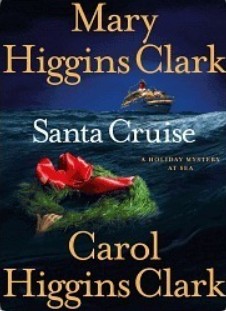
Santa Cruise: A Holiday Mystery at Sea book cover found on Goodreads

If you’re going to write a story that involves travel, the journey or destination needs to sound appealing. Whether the travels of characters are exciting or the characters arrive somewhere intriguing, the reader may stay invested in what is happening in the story. In Santa Cruise: A Holiday Mystery at Sea, the protagonist, Alvirah, won an all-expenses paid cruise through a charity auction. She, along with her husband, Willy, and their friends embark on an oceanic adventure where there is never a dull moment. Mary and Carol worked well together to create a setting that felt realistic. Descriptive imagery and attention to detail worked in the favor of the story’s world-building. One example is when rooms on the ship, Royal Mermaid, are described. While observing Alvirah and Willy’s room, one of their friends, Nora, states “The closet is practically a room unto itself”. This statement alone provides context for the size of the space. It also addresses the luxurious nature of not just the room itself, but the ship as a whole.

Cruise ship near an island image created by Freepik at freepik.com. <a href=’https://www.freepik.com/free-vector/holiday-background-on-a-cruise_1182003.htm’>Designed by Freepik</a>. <a href=”https://www.freepik.com/free-photos-vectors/background”>Background vector created by Freepik</a>. Image found at freepik.com.

Mystery stories, sometimes, include a group of characters. If these characters are working together to solve a mystery, it’s important for them to maintain a sense of camaraderie. This way, genuineness can be felt as the characters come together to reach a common goal. Throughout Santa Cruise: A Holiday Mystery at Sea, solving mysteries was a team effort among Alvirah, Willy, and their friends, the Reillys. It helped how these characters possessed their own set of skills and life experiences, allowing them to bring something unique to the table. It also helps how they knew each other before the events of the story. Because of how well-written the dialogue was, readers can pick up on how Willy, Alvirah, and the Reillys got along. Toward the beginning of the book, Alvirah is encouraging her friends, Regan and Jack, to join her and Willy on the cruise. Bringing up the couple’s already known vacation plans, Alvirah says, “I just heard from Jack’s own lips that he’s on vacation for two weeks”. She addresses this in an effort to give them a once-in-a-lifetime experience, keeping the best interests of her friends in mind. Because she recognizes Alvirah’s good intentions, Regan replies to Jack, “we’ve never been on a cruise together. I think it would be fun”.

News reporter being filmed image created by Macrovector at freepik.com. <a href=’https://www.freepik.com/free-vector/journalist-reporter-profession-isometric-banner_2875517.htm’>Designed by Macrovector</a>. <a href=”https://www.freepik.com/free-photos-vectors/banner”>Banner vector created by Macrovector – Freepik.com</a>, Image found at freepik.com.

Two of the villains in Santa Cruise: A Holiday Mystery at Sea are Bull’s-Eye and Highbridge. These criminals are on the run to avoid being sentenced for their crimes. There were times while reading this book where I had difficulty telling these characters apart. That’s because their personalities were not distinct enough. Another flaw of Santa Cruise: A Holiday Mystery at Sea was how some mysteries were solved before the reader could figure it out for themselves. During the titular Santa Cruise, two Santa suits go missing, becoming one of the story’s overarching mysteries. But shortly after this mystery is introduced, the “whodunit” is already revealed. This felt reminiscent of an episode of Columbo, where the audience is forced to observe the protagonist solving the mystery themselves instead of interacting with the story by figuring out the mystery alongside the characters.

Adorable Santa image created by Freepik at freepik.com. <a href=’https://www.freepik.com/free-vector/christmas-background-with-funny-santa_1324597.htm’>Designed by Freepik</a>. <a href=”https://www.freepik.com/free-photos-vectors/background”>Background vector created by Freepik</a>. Image found at freepik.com.

Santa Cruise: A Holiday Mystery at Sea is, in my opinion, a fine book that is interesting and entertaining enough. Carol and Mary use attention to detail and descriptive imagery in their favor to build a literary world that feels realistic. They also utilize dialogue to create strong camaraderie between the protagonists and their friends. However, I wish the story’s villains were given more distinct personalities, as it could have allowed them to stand out more. Having more interactive mysteries for the readers would have helped as well. There were parts of the story that were, sometimes, repetitive. Examples include referencing the number fifteen and the same events being brought up over and over again. Despite these flaws, the book does have a steady to faster pace, which makes Santa Cruise: A Holiday Mystery at Sea a quicker read.

The Hit The Road Blogathon banner created by Quiggy from The Midnite Drive-In

Overall score: 3.5 out of 5 stars

Have fun sailing!

Sally Silverscreen

Disclaimer: Santa Cruise: A Holiday Mystery at Sea is a mystery story that occasionally features violence and characters receiving injuries. There’s also brief references to grief.

Take 3: A Little Romance (1979) Review

Back in 2022, I wrote a list of the top ten movies I’d love to review. One of the films on that list was 1979’s A Little Romance. Since publishing that article three years ago, I haven’t gotten around to reviewing the movie. But Gill’s (from Realweegiemidget Reviews) and Barry’s (from Cinematic Catharsis) blogathon, Adventure-A-Thon, finally gave me an opportunity to check A Little Romance out! When it comes to “adventure” in cinema, that term can have different meanings depending on who you ask. For me, an “adventure” movie is when the story’s characters go on a journey to achieve something. In the case of A Little Romance, the protagonists, Daniel and Lauren, travel to Italy to prove the legitimacy of a legend. The 1979 film is not the only picture I’ve reviewed this year involving Italian travel. I wrote about Roman Holiday back in January. In my opinion, the movie was just ok, as I wanted to like it more than I did. Was A Little Romance ok like Roman Holiday? Let’s start the adventure of this review!

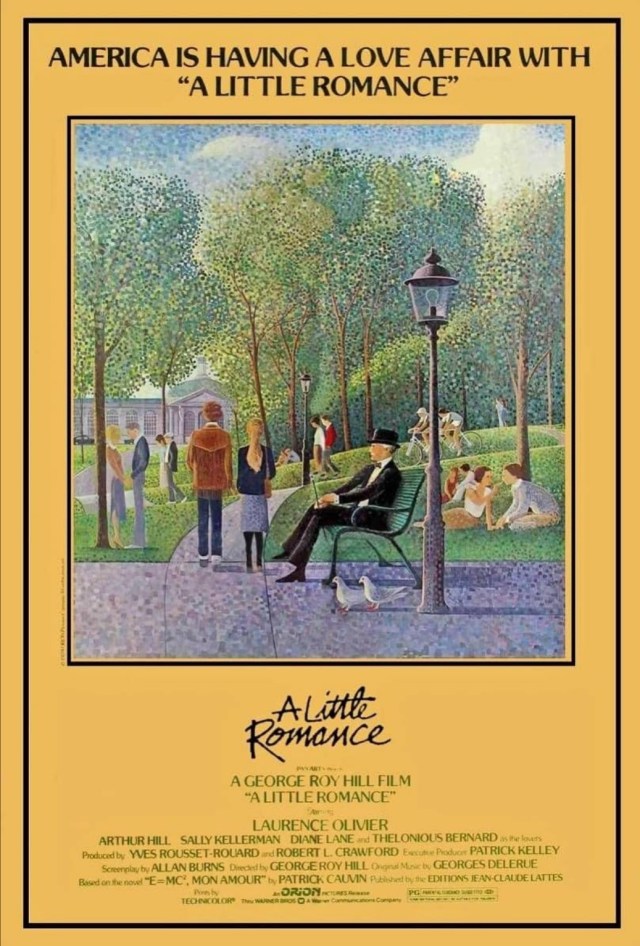
A Little Romance (1979) poster created by Orion Pictures, Pan Arts, Trinacra Films, and Warner Bros.

Things I liked about the film:

The acting: When it comes to teenagers in movies, it can be easy for a creative team to present those characters stereotypically. If written or directed to adopt certain behaviors and attitudes, teenage characters could even come across as caricatures. Fortunately, this was not the case in A Little Romance! Though there are only four teenage characters in the movie, their interactions didn’t feel scripted, making the characters themselves seem realistic. One example shows Lauren (portrayed by Diane Lane) and her friend, Natalie (portrayed by Ashby Semple), looking at sculptures during a class trip. As they observe the sculptures, Lauren nonchalantly tells tall tales about her time spent with Daniel. Natalie naively believes Lauren, her eyes becoming wide and her tone of voice revealing how shocked she is. Lauren, with a casual smile on her face and a giggle in her voice, then shares with Natalie how her tall tales were fabricated. This exchange between the two friends illustrates how teenagers can sometimes tease and joke with each other.

In this review’s introduction, I mentioned how the protagonists, Daniel and Lauren, travel to Italy to prove the legitimacy of a legend. Their journey was enjoyable to watch because of how strong Diane Lane and Thelonious Bernard’s on-screen chemistry was! Every time Lauren and Daniel interacted with one another, they always looked like they got along so well. There was a sweetness to their relationship that was wholesome and charming. It also helps how both Daniel and Lauren had likable personalities that complimented each other. While Thelonious and Diane deserve credit for their performances, credit should also be given to the screenwriting.

An appreciation for film: Before watching A Little Romance, I knew what the basic premise was about. But when I finally saw the 1979 picture, I was pleasantly surprised by the appreciation for film woven into the script! As soon as the movie starts, the audience sees Daniel watching a collection of films in a local cinema. As the story progresses, he sometimes quotes the movies he sees and even wants Lauren to call him “Boggie”, as he believes Humphrey Bogart and Lauren Bacall were meant to be together. Daniel’s decisions and perspectives are also influenced by the world of film. When Daniel receives rude comments about his relationship with Lauren from a movie director named George de Marco, Daniel punches George. Not only does Daniel strongly dislike George’s films, Daniel believes George’s comments cheapen the meaning of love he’s learned from movies.

The dialogue: In some of the movies I’ve reviewed this year, one of the strengths was the dialogue. The way it was written and delivered allowed this film-making component to be memorable for the right reasons. The dialogue was also a strength in A Little Romance! Through the screenwriting, the audience can tell how much thought was put into this aspect of the 1979 production. While Lauren talks about her family, Daniel asks her why she calls her stepfather ‘Richard’. Lauren replies by saying “It’s easier to lose a Richard than a dad”. From that one quote, Lauren is able to express how her mother’s multiple marriages have affected the family dynamic. In order to make enough money for their trip to Italy, Daniel and Lauren plan to bet on race horses. They want to figure out the betting odds to increase their chances of choosing a winning horse. When Lauren suggests using a computer to get these numbers, Daniel says “I am not a computer”. This simple quote stresses how humans, as well as betting odds, don’t always provide the correct answers.

The Adventure-A-Thon banner created by Gill from Realweegiemidget Reviews and Barry from Cinematic Catharsis

What I didn’t like about the film:

The adventure’s prolonged delay: Like I said in this introduction, Daniel and Lauren travel to Italy to prove the legitimacy of a legend. But their Italian journey doesn’t begin until a little over an hour into an hour and fifty-minute story. That’s because the first half of the movie is devoted to setting up the motives for the journey and building up to the trip itself. It’s important for any creative team to set up their movie’s premise and provide build up to significant parts of the presentation. For A Little Romance, however, that set up/build up took a little too long.

Lack of subtitles: About half of A Little Romance takes place in France. This means some scenes feature characters speaking in French to one another. But when the story presented French dialogue, subtitles did not appear on screen. For viewers who are not fluent in French, they may feel like the creative team is withholding context from them. Even though clues such as body language can help the audience assume what is happening in the story, I still wish subtitles had been included in A Little Romance.

An absence of Daniel’s father: At the beginning of A Little Romance, the audience is introduced to Daniel and his father, Michel. According to Daniel, Michel is a taxi driver who watches horse races from time to time. Throughout the movie, however, Michel’s appearances are so far and few between, I almost forgot he was in the movie. Meanwhile, Lauren’s parents, Richard and Kay, are consistently involved in the story. I recognize A Little Romance revolves around Daniel and Lauren’s relationship and adventure. But I still think Michel should have received a larger role in the film. Perhaps his involvement in the story could have related to one of the movie’s central themes.

Colorful travel suitcase image created by Pikisuperstar at freepik.com. <a href=’https://www.freepik.com/free-vector/beautiful-illustration-of-travel_2686674.htm’>Designed by Freepik</a>. <a href=”https://www.freepik.com/free-photos-vectors/watercolor”>Watercolor vector created by Pikisuperstar – Freepik.com</a>. Image found at freepik.com.

My overall impression:

When I first brought up A Little Romance in 2022, I said the story seemed like a light-hearted version of Rich Kids. While there is some truth to this statement, my initial claim now seems a bit too simplistic. Both Rich Kids and A Little Romance revolve around adolescent characters relying on themselves and each other to navigate the world around them. But unlike Rich Kids, there’s a hopeful optimism in A Little Romance! Because the story emphasizes Daniel and Lauren’s Italian journey, the audience witnesses Lauren and Daniel’s relationship grow throughout the story. The acting performances and screenwriting allow these characters to share meaningful and heart-felt moments together. Strong messages and themes are sprinkled into the script, from the importance of being your authentic self to having the courage to achieve dreams. Though it took a little over an hour for the journey to begin, A Little Romance is a delightful, pleasant film! A significant point the film makes is how adventure can come in different forms. The 1979 picture can also cause viewers to think about what it truly means to be a “legend”.

Overall score: 7.3 out of 10

Have you seen A Little Romance? What does the term “adventure movie” mean to you? Let me know in the comment section!

Have fun at the movies!

Sally Silverscreen

Take 3: Roman Holiday Review

Reviewing Roman Holiday is a full circle moment for me. Back in 2019, the Hallmark Channel movie, Rome in Love became one of the top three best films I saw that year. That movie was about a woman starring in a remake of Roman Holiday. I also read the book Rome in Love was based on. When I signed up for the Journey to Italy Blogathon, I was surprised no one had chosen the 1953 production. Because Roman Holiday is considered a “classic”, I would have expected the movie to be one of the first to be selected. So, I was grateful for the opportunity to check out the film! Audrey Hepburn and Gregory Peck are no strangers to 18 Cinema Lane. Some of their films have been covered on my blog. In fact, there’s been a few pictures I’ve liked; such as Funny Face, The Nun’s Story, and To Kill a Mockingbird. How does Roman Holiday compare to those movies? Find out in this review!

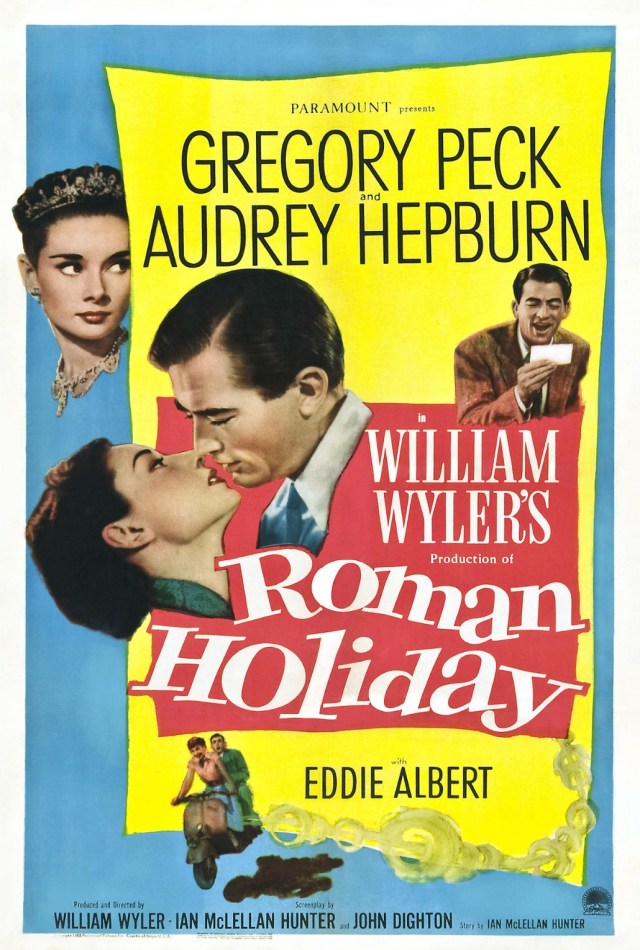
Roman Holiday poster created by Paramount Pictures

Things I liked about the film:

The acting: Roman Holiday introduced cinema’s audience to Audrey Hepburn as a lead actress. Not only that, the 1953 presentation earned Audrey an Oscar. Thinking about her portrayal of Princess Ann, I can understand why Audrey was, at least, nominated for an Academy Award! Even though this was her first starring role, Audrey proved her talents were strong enough to appear convincing. A great example happened when Princess Ann was sleepily wandering around Rome. Through her wanderings, Princess Ann meets Joe Bradley (portrayed by Gregory Peck). The stumbling and mumbling of Princess Ann make her look drunk. Even Joe thinks Princess Ann had too much to drink, due to her speech sounding slurred and her eyelids consistently rising and falling. In Audrey’s performance, Princess Ann proves looks can, indeed, be deceiving.

One of my favorite scenes in Roman Holiday takes place toward the beginning of the story. During a ball, Princess Ann’s shoe is visible on the floor. The shoe was noticed by Countess Vereberg (portrayed by Margaret Rawlings) and General Provno (portrayed by Tullio Carminati). But the way these characters looked at each other and the shoe communicated the shock and embarrassment they were feeling. With the use of eye movements and facial expressions, this exchange was such a hilarious moment! Another performance I liked was Gregory Peck’s portrayal of Joe Bradley! A newspaper reporter from the United States, Joe had a consistent confidence that made him sure of himself. His reactions appeared believable; from a surprised look at seeing Princess Ann’s portrait in the paper to the joy on his face while dancing on a boat. Gregory used a variety of emotions throughout the film. This is one of the reasons Joe became a likable character!

The Italian setting: During the opening credits of Roman Holiday, it’s revealed the production was filmed in Rome, Italy. Through the cinematography and screenwriting, Princess Ann’s time in Italy served as an introduction to the film’s audience. Several iconic landmarks were featured; including the Colosseum, the Trevi Fountain, and the Mouth of Truth. There were even some lesser-known areas from The Eternal City included in the story. During Princess Ann’s day in Rome, she and Joe visit a wall of granted wishes. As explained through dialogue, if someone’s wish came true, they must place a commemorative plaque on the wall. Unfortunately, I couldn’t find any confirmation this wall actually exists. But if it is real, I loved this tradition!

Avoiding the “it’s not what you think” cliché: In Roman Holiday, Joe Bradley makes a bet with his boss to conduct an interview with Princess Ann, including photos to prove the interview took place. This, along with Joe keeping his identity a secret, provided the perfect excuse to include the “it’s not what you think” cliché. However, the film’s creative team didn’t utilize this predictable piece of story-telling. Instead, Joe changes his mind about the bet, which gave him some character development. Even Joe’s friend, Irving Radovich, reconsiders submitting his photographs of Princess Ann’s adventure. After watching my fair share of rom-coms where the same tropes and clichés are incorporated, I appreciate Roman Holiday thinking outside the box!

The Journey to Italy Blogathon banner created by Gill from Realweegiemidget Reviews and Kristina from Speakeasy.

What I didn’t like about the film:

A drawn-out story: Roman Holiday has a run-time of one hour and fifty-eight minutes. While watching the movie, that run-time was felt. The story of Princess Ann running away to go on an adventure was drawn-out. One reason is how some moments are longer than necessary. A perfect example is when Princess Ann meets a group of reporters. Each introduction was a slow procession that seemed to last about a minute and a half. Another example is when Princess Ann’s governess reads an itinerary. She slowly reads each event listed on Princess Ann’s schedule, making that part of that scene feel like almost a minute had crawled. To avoid this flaw, the script needed to be tighter.

Little sense of urgency: As I already brought up in this review, Princess Ann runs away to go on an adventure. While Princess Ann was having the time of her life, those in her life were frantically trying to find her. But very few scenes stressed this point. In fact, only three scenes addressed the urgency of bringing Princess Ann home. By providing the story with little sense of urgency, the seriousness of Princess Ann going missing was downplayed. Though I recognize how Roman Holiday is primarily Princess Ann’s story, her actions having consequences were mostly ignored.

Almost no one recognizing Princess Ann: The reason Princess Ann spends time in Italy is because the country was included in her “goodwill tour”. Shortly after running away, Princess Ann’s portrait is printed in every Italian newspaper, according to Joe Bradley’s boss. However, throughout Princess Ann’s adventure, only two people recognize her; Joe and his friend, Irving Radovich. Even before Princess Ann receives a hair-cut, no one acknowledges her true identity. I know fictional stories like Roman Holiday require a suspension of disbelief. But I couldn’t take that part of the movie seriously.

Princess tiara image created by Freepik at freepik.com. <a href=’https://www.freepik.com/free-vector/ornamental-princess-crowns_1109199.htm’>Designed by Freepik</a>. <a href=”https://www.freepik.com/free-photos-vectors/gold”>Gold vector created by Freepik</a>. Image found at freepik.com.

My overall impression:

Before reviewing Roman Holiday, I had heard so many good things about the movie. As I said in the introduction, the film is considered a “classic”. This is definitely not a bad picture. But I wanted to like it more than I did. Roman Holiday’s run-time feels as long as it is. At almost two hours, the story is drawn-out, partly due to moments that last longer than necessary. Having little sense of urgency not only downplays the seriousness of Princess Ann running away, it also mostly ignored Princess Ann’s actions having consequences. However, I believe the 1953 production has merit. The acting was one of the strongest aspects of this movie. Like I said in my review, I can understand why Audrey was, at least, nominated for an Academy Award! I actually think Roman Holiday should have been included in American Film Institute’s 100 Movies list. According to IMDB, it was “the first American film to be made in its entirety in Italy”. While I’m thankful for the chance to have finally seen Roman Holiday, I prefer Audrey’s pictures like The Nun’s Story and Funny Face. For Gregory Peck, I still believe To Kill a Mockingbird is the stronger movie.

Overall score: 6.1 out of 10

Have you seen Roman Holiday? Which films from Audrey Hepburn’s or Gregory Peck’s filmography do you like? Please tell me in the comment section!

Have fun in Italy!

Sally Silverscreen
Sunset Over Hope Valley: Knock Three Times

As a piece of advice to Lucas, Minnie says in order to seek reconcile, you have to knock three times. This was Minnie’s way of encouraging Lucas to reach out to the person he had a disagreement with. Despite not hearing Minnie’s advice, Earl Wyatt came back to Hope Valley and “knocked three times”, seeking reconcile for bullying Opal years ago. But reconciliation is not the only reason characters, figuratively, knock on each other’s doors on When Calls the Heart. Sometimes, it’s in search of help, like when Oliver sought Elizabeth’s guidance on his Mountie writing sample. Other times, characters “knock three times” to find answers. One example is Rosemary’s quest for the origin of a valuable coin. The idea of characters, figuratively, knocking on each other’s doors shows how the residents of Hope Valley, and even guests, rely on each other when it matters most. This is an example of the kind of place Hope Valley is.

Just a reminder: If you did not see this episode of When Calls the Heart, there will be spoilers within this re-cap.

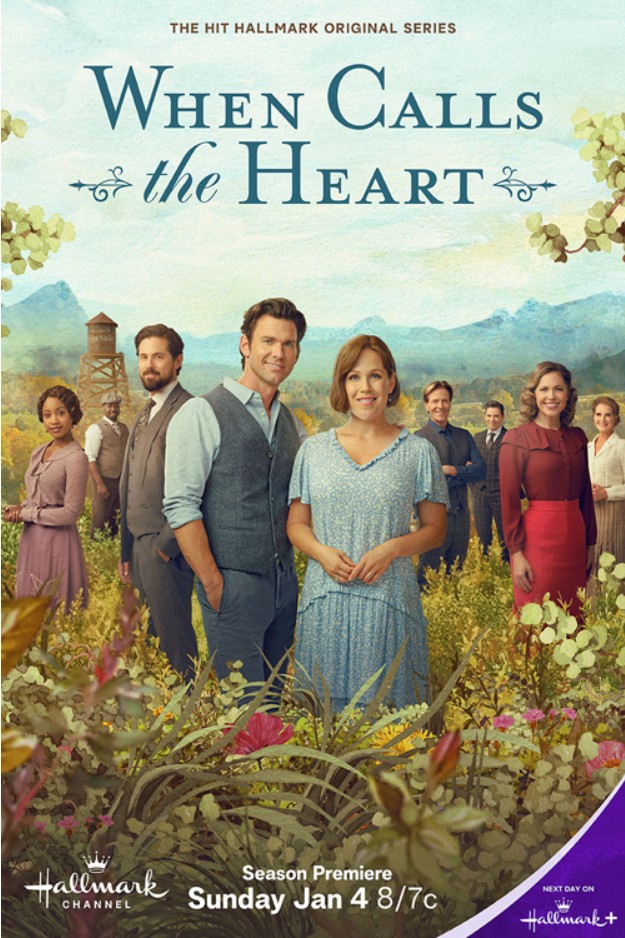
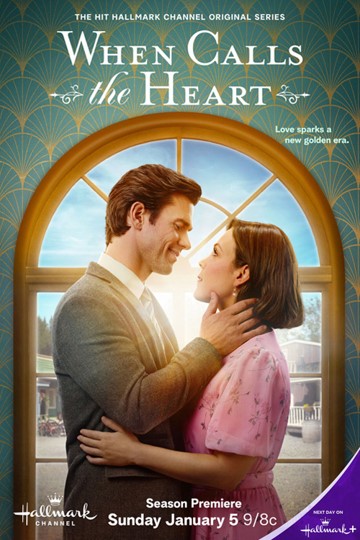
When Calls the Heart season twelve poster created by Hallmark Media, Crown Media Family Networks and Hallmark Channel

Season: 12

Episode: 3

Name: All That Glitters

Major stories:

Oliver’s one-month evaluation is fast approaching. The only step left is his writing sample. After Oliver submits the writing sample, Nathan takes note of its weak writing quality. When Elizabeth makes this discovery, she volunteers to help Oliver improve his writing sample. At the Jack Thornton School, Oliver shows up for his first tutoring session. He claims he attended a school in Hamilton called Briarcliff. But later in the episode, Elizabeth finds out the school closed five years prior to Oliver’s arrival in Hope Valley. This fact, along with Oliver’s decision to resign from the Mounties, raises alarm in Nathan. So, he and Elizabeth confront Oliver at the stables. Oliver confesses he lied about attending Briarcliff. His reason is how he sought a better life for himself, due to being a foster child. Oliver also reveals how he didn’t finish school because his foster parents believed working on their farm was more important. He explains to Nathan his decision to resign from the Mounties was due to not wanting Nathan to get in trouble. Oliver’s loyalty gives Nathan a reason to not give up on Oliver. Later in the episode, Superintendent Hargreaves arrives for the one-month evaluation. Oliver passes with flying colors.

Rosemary has two mysteries on her hands. The first is why Lee is so secretive. She becomes curious after being told Lee created a will and recently had a doctor’s appointment. As Rosemary shares her concerns with Elizabeth at the Mercantile, they overhear Lee telling Ned he’s going on a hike. So, Elizabeth and Rosemary follow Lee and Mike into the forest. After Mike and Lee discover the women’s hiding place among the bushes, Rosemary and Elizabeth learn the purpose of the hike; so Lee could create a hiking trail named after Goldie. Lee explains how he hopes the trail will remind Lucas of the national park’s importance. The second mystery revolves around a coin bearing a double headed bird. When Ned discovers a rare coin, Rosemary makes it her mission to track down its original owner. She writes an article about the coin in The Valley Voice. But no one comes forward. Bill volunteers to help Rosemary crack the case. After he retrieves the Mountie file about the coin, Bill shares with Rosemary how the coin was one of twenty thousand coins stolen in the Rocky Mountain train robbery of 1907.

Silver coin image created by Welcomia at freepik.com. <a href=’https://www.freepik.com/free-photo/american-one-dollar-coin_1180385.htm’>Designed by Freepik</a>. <a href=”https://www.freepik.com/free-photos-vectors/money”>Money image created by Welcomia – Freepik.com</a>. Image found at freepik.com.

Minor stories:

At Capitol City, Edwin and Lucas learn Jeanette’s trial is coming up. Edwin encourages Lucas to leave Capital City to avoid more negative press. Lucas takes Edwin’s advice and goes back to Hope Valley. On the train ride home, Lucas learns Edie is also headed towards Hope Valley, in order to take care of her uncle’s ranch. Once in the town, at The Café, Edie reveals to Lucas how she’s considering opening a law firm in Hope Valley. But those plans are on hold because she can’t find the space.

Earl Wyatt returns to Hope Valley and apologizes to Opal for bullying her when she was younger. Earl’s arrival intrigues Allie, as he shares how his father works for the railroad, allowing him to travel wherever he wants. Before meeting Earl, Allie tries to decide what she wants to do for her upcoming 17th birthday. What she does know is she wants to host a party among her friends. At the Queen of Hearts saloon, Allie and some of her friends hear dance music. When she sees Earl dancing, Allie chooses to have a dance party for her birthday.

String of musical notes image created by Freepik at freepik.com. <a href=’https://www.freepik.com/free-vector/pentagram-vector_710290.htm’>Designed by Freepik</a> <a href=”https://www.freepik.com/free-photos-vectors/background”>Background vector created by Freepik</a>. Image found at freepik.com. 

Some thoughts to consider:

  • You’re probably wondering why I spelled Goldie’s name with an ‘ie’ instead of with a ‘y’ like I usually do. That’s because her name is spelled G-O-L-D-I-E in this episode. When it comes to characters’ names, I try to spell them how the show’s creative team intended. So, from now on, I will spell Goldie’s name with an ‘ie’ in future re-caps.
  • Thinking about the mystery of the coin and Earl Wyatt’s return to Hope Valley, I wonder if Earl’s family has something to do with the Rocky Mountain train robbery of 1907? As I mentioned in this re-cap, Earl said his father works for the railroad. Plus, Earl’s arrival and the discovery of the coin took place around the same time. This would explain why Earl and his family left Hope Valley all those years ago.
  • In this re-cap, I said Rosemary becomes curious after being told Lee created a will and recently had a doctor’s appointment. In a scene where Lee pays Faith a visit, it’s revealed Lee’s father died of an unnamed medical condition. Lee is not only concerned about developing this medical condition himself, he’s also worried about leaving a legacy behind for his daughter. Faith reassures him that he has a clean bill of health. However, I wonder if Lee’s medical history will become an overarching story this season?
Sunset image created by Photoangel at freepik.com. <a href=”https://www.freepik.com/free-photos-vectors/background”>Background image created by Photoangel – Freepik.com</a>.<a href=’https://www.freepik.com/free-photo/red-sunset-clouds-over-trees_1254327.htm’>Designed by Freepik</a>. Image found at freepik.com.

What are your thoughts on this episode? Who do you think is behind the Rocky Mountain train robbery of 1907? Let me know in the comment section!

Have fun in Hope Valley!

Sally Silverscreen

Sunset Over Hope Valley: Enjoying the Time We Have

Going into the twelfth season of When Calls the Heart, a Heartie can’t help but become reflective over their favorite show. However, it seems like When Calls the Heart’s creative team wanted their fans to look back at how far the show has come. A few examples are Elizabeth teaching her son the meaning of the word, ‘reflective’, and Rosemary reminding Nathan how no one knows what the future holds. It’s amazing this program has stayed on the air for eleven years and twelve seasons! In the history of television, few shows have made it that far. But if the history of television has taught us anything, another season is not guaranteed. While renewal news has usually come quickly for When Calls the Heart, it’s easy for Hearties to take that news for granted. Earlier in this introduction, I mentioned Rosemary telling Nathan how no one knows what the future holds. She followed that up by saying how we should enjoy the time we have. So, let’s enjoy this re-cap of When Calls the Heart’s season twelve premiere!

Just a reminder: If you did not see the season premiere of When Calls the Heart, there will be spoilers within this re-cap.

When Calls the Heart season twelve poster created by Hallmark Media, Crown Media Family Networks and Hallmark Channel

Season: 12

Episode: 1

Name: The Mountie Way

Major stories:

Superintendent Andrew Hargreaves arrives in Hope Valley to give Elizabeth one of Jack’s prized possessions. This object is a medal Jack earned before he passed away. The medal leads Elizabeth to explain to her son what ‘reflective’ means. She also allows Jack Jr. to wear his father’s medal on his first day of school. Inspired by Jack’s bravery, Jack Jr. lets Lilly borrow the medal when he learns she’s nervous about being one of the youngest kids in Elizabeth’s class. Jack Jr. and Elizabeth also agree how having the medal is a reminder that Jack will always be with them. Meanwhile, Superintendent Hargreaves assigns Nathan to train a Mountie cadet named Oliver Garrett. Nathan is told Oliver is at the bottom of his class. But after he and Bill talk to Oliver, they think something isn’t adding up. That’s because Oliver seems enthusiastic about being a Mountie. In fact, he expresses interest in the forensic and scientific sides of the profession.

Throughout this episode, Lucas encourages Lee to go to Capitol City to work on their national park project. Lee is hesitant because of how much time he thinks he’ll spend away from his family. Rosemary is also hesitant about Lee’s potential travels for the same reason. Henry comes up with the idea to name the national park after Goldy. This development makes Rosemary reconsider letting Lee go to Capitol City. In the end, Lee and Rosemary compromise. Lee goes to Capitol City during the week and comes home on the weekends. When Lee is contemplating his potential trips to Capitol City, Rosemary is frustrated by The Valley Voice’s decreased readership. Lee jokingly recommends radio shows advertise in the newspaper. This suggestion inspires Rosemary to create her own radio program.

Winner’s medal image created by Freepik at freepik.com. <a href=’https://www.freepik.com/free-vector/golden-awards-set-with-colors-details_844356.htm’>Designed by Freepik</a>. <a href=”https://www.freepik.com/free-photos-vectors/gold”>Gold vector created by Freepik</a>. Image found at freepik.com.

Minor story:

Lucas and Lee have different priorities when it comes to the national park project. For Lucas, it’s about revitalizing his disastrous approval rating. For Lee, on the other hand, the project is about providing Goldy and her generation with a gift that keeps on giving. On the train ride to Capital City, Lee and Lucas cross paths with Edwin Mitchel, who used to work with Lucas. Edwin brings up Lucas’ approval rating and says he has some ideas to save Lucas’ reputation. Even though Lee is skeptical of Edwin’s offer, Lucas is open to hearing what Edwin has to say.

Railway Train image created by Freepik at freepik.com. <a href=’https://www.freepik.com/free-vector/hand-drawn-train-retro-background_1112415.htm’>Designed by Freepik</a>. <a href=”https://www.freepik.com/free-photos-vectors/background”>Background vector created by Freepik</a>. Image found at freepik.com.

Some thoughts to consider:

  • Back in 2021, I wrote a list of the top ten things I’d like to see in When Calls the Heart’s ninth season. One of those things was Hope Valley’s first female Mountie. When I discovered a new Mountie would be introduced in season twelve, I was so excited at possibly getting my wish. But season twelve’s premiere left me disappointed. Oliver has potential to be a well-written, well-acted character. However, not giving Hope Valley their first female Mountie is such a missed opportunity.
  • Is it just me or has Lee’s sawmill disappeared from Hope Valley? When Lee made his debut in season two, one of his purposes was to open a sawmill and provide job opportunities for Hope Valley’s residents, especially after the coal mine’s closure. But ever since Rosemary started the town’s newspaper, it seems like the sawmill isn’t a priority for Lee like in past seasons. In fact, the sawmill wasn’t brought up in this episode. If Lee is not running his sawmill anymore, who is?
  • Throughout season twelve’s premiere, the children of Hope Valley become obsessed with a comic book about a character named Captain Billie. It even gets to the point where the children debate if comic books should be considered literature. I found this debate ironic because When Calls the Heart is based on a pre-existing book series. I also think it would be a good idea for Elizabeth to take that aforementioned obsession and turn it into a class project where her students create their own comic books!
  • In this re-cap, I mentioned Rosemary being inspired to create her own radio show. For me, this part of the episode was ironic. That’s because, in my re-cap post about season ten’s finale, I said I wanted to see Fiona create her own radio show. From the way Rosemary described her ideal radio program, the primary focus would be on news within Hope Valley and its surrounding areas. Since Rosemary has written for The Valley Voice for a few seasons, this seems like a good idea that I can’t wait to see upfold!
Sunset image created by Photoangel at freepik.com. <a href=”https://www.freepik.com/free-photos-vectors/background”>Background image created by Photoangel – Freepik.com</a>.<a href=’https://www.freepik.com/free-photo/red-sunset-clouds-over-trees_1254327.htm’>Designed by Freepik</a>. Image found at freepik.com.

What are your thoughts on When Calls the Heart’s season twelve premiere? What are you most excited about this season? Please tell me in the comment section below!

Have fun in Hope Valley!

Sally Silverscreen

Sally Reads… ‘Murder, She Wrote: Dying to Retire’ by Jessica Fletcher and Donald Bain

*This book review was written before Hurricane Helene*

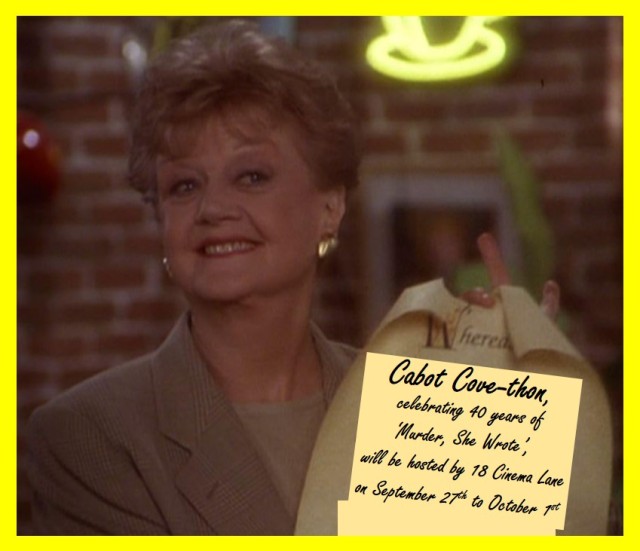
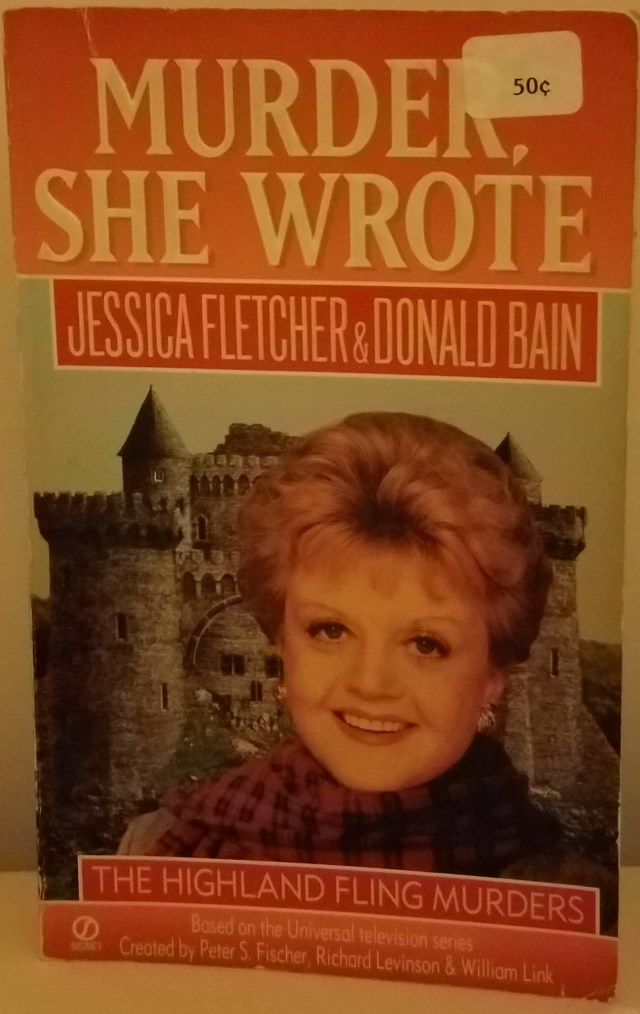
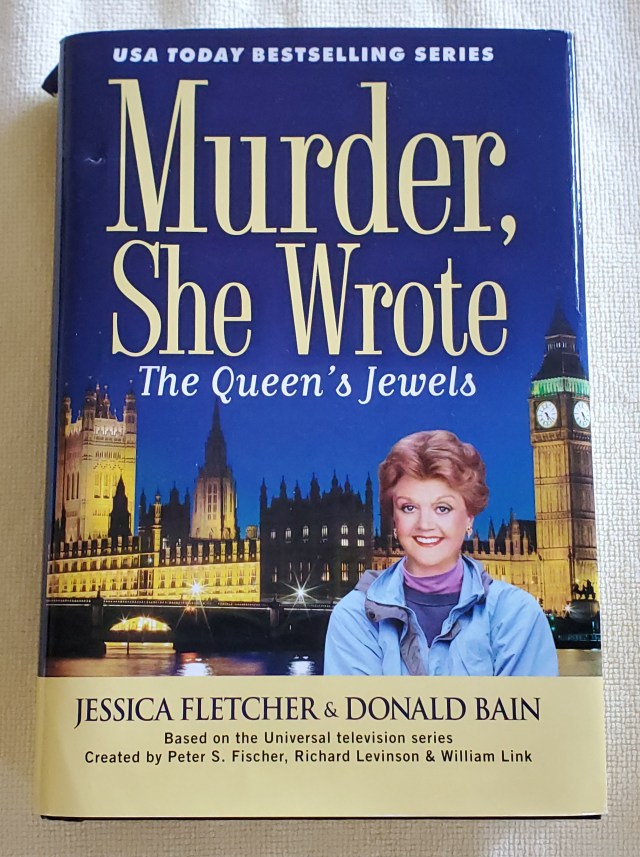
On this day in 1984, Murder, She Wrote made its television debut. What started as a simple story of a woman solving mysteries in her own backyard grew into a legacy standing strong in the test of time. I mentioned in my Cabot Cove-thon announcement post how Murder, She Wrote is a multifaceted program. One contributor is the Murder, She Wrote book series! Two of these books, Murder, She Wrote: The Highland Fling Murders and Murder, She Wrote: The Queen’s Jewels, have been reviewed on 18 Cinema Lane. This time, I’ll be writing about Murder, She Wrote: Dying to Retire! The reason why I selected this book for Cabot Cove-thon, let alone a review, is how the story takes place in Florida. On the first day of my blogathon, I published an editorial about why Universal Orlando Resort should host a fan event called Murder, She Wrote Weekend. Knowing ahead of time I would be discussing the show’s connection to Universal Studios Florida, I thought Murder, She Wrote: Dying to Retire was an appropriate selection!

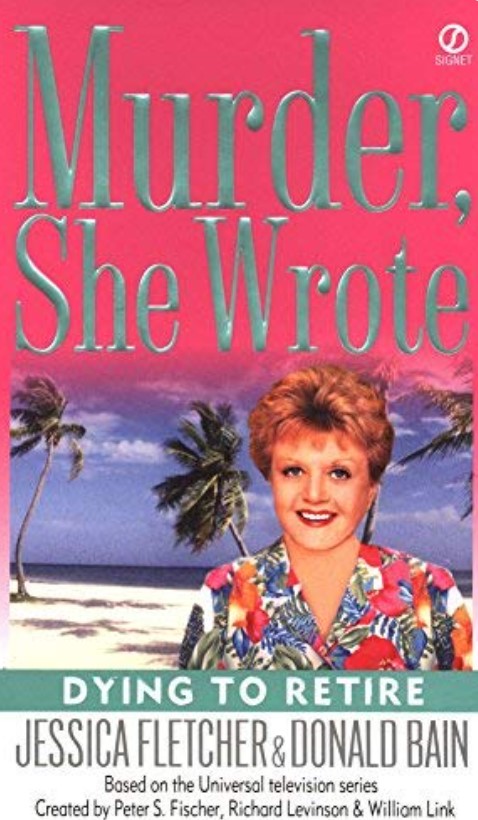
Murder, She Wrote: Dying to Retire book cover found on Goodreads

Murder, She Wrote: Dying to Retire is not only the third Murder, She Wrote book reviewed on 18 Cinema Lane, it’s also the third book where Jessica travels outside of Cabot Cove. In these stories, the destinations are exciting and inviting. What made South Florida such an appealing location in Murder, She Wrote: Dying to Retire was the combination of descriptive imagery, facts, and tidbits of information sprinkled throughout the story. While taking a road trip to Key West, Jessica searches for the perfect present for Seth’s friend; a key lime pie. During her search, Jessica (as well as readers) learn about the different ingredients used to make this beloved dessert. Other cultural elements are woven into Jessica’s travels, such as a “ceremony” where residents and visitors of Key West applaud the setting sun. These elements help introduce readers to South Florida, as well as educate them about this destination!

Colorful travel suitcase image created by Pikisuperstar at freepik.com. <a href=’https://www.freepik.com/free-vector/beautiful-illustration-of-travel_2686674.htm’>Designed by Freepik</a>. <a href=”https://www.freepik.com/free-photos-vectors/watercolor”>Watercolor vector created by Pikisuperstar – Freepik.com</a>. Image found at freepik.com.

The Murder, She Wrote book series creates original stories instead of rehashing already existing episodes. However, the spirit of the show exists in the books because of the inclusion of characters and locations from Murder, She Wrote. In Murder, She Wrote: Dying to Retire, the characters felt like they either came directly from the show or should have been on the show. This was achieved because of how the dialogue was written and how characters were described. Sam Lewis is a resident of Foreverglades, Florida. He not only volunteers with the local police department, Sam also drives a pink Cadillac and, at one point, even wears purple sneakers. While he is a quirky individual, he is endearing as he tries to make his neighborhood a better place. Sam was so well integrated into the story, he felt like he belonged in Jessica’s world! Sam also represents a consistent strength of the Murder, She Wrote books; the creation of unique, distinct characters.

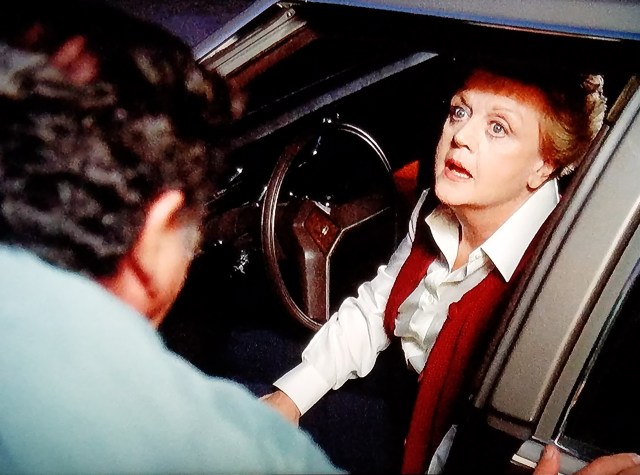
Even though Jessica takes a road trip in Murder, She Wrote: Dying to Retire, fans of the show would know she wasn’t the one driving. Screenshot taken by me, Sally Silverscreen.

Murder mystery stories typically contain a sense of urgency. Because the murder takes place within the story, there is an urgent race against time to stop the perpetrator from hurting anyone else. For the majority of Murder, She Wrote: Dying to Retire, however, urgency was lacking. The emphasis on the laid-back, easy-going atmosphere of Florida and the victim being murdered prior to the story are the reasons for this creative flaw. Dialogue is an important component of any story. But Murder, She Wrote: Dying to Retire was dialogue-heavy, with very few non-verbal clues provided. If readers aren’t actively paying attention to what they’re reading, they may miss key information. It also doesn’t help how some of Jessica’s conclusions seemed a bit far-fetched.

Magnifying fingerprints image created by Balintseby at freepik.com. <a href=”https://www.freepik.com/free-photos-vectors/glass”>Glass vector created by Balintseby – Freepik.com</a>. <a href=’https://www.freepik.com/free-vector/fingerprint-investigation_789253.htm’>Designed by Freepik</a>. Image found at freepik.com.

When I reviewed Murder, She Wrote: The Queen’s Jewels back in 2022, I claimed that book was my least favorite among the Murder, She Wrote books I read. Two years later, it looks like I found a new least favorite. Murder, She Wrote: Dying to Retire is not a bad book. But most of the story lacking a sense of urgency decreased the mystery’s intrigue and caused the book to, sometimes, feel meandering. A dialogue-heavy story may frustrate some readers, forcing them to actively pay attention or they’ll miss important information. However, there are strengths found in this book. New characters and even familiar faces were well integrated into the story. The South Florida setting was a delight to read about due to the incorporated creative elements. Similar to the show, the Murder, She Wrote book series boasts creative ideas and interesting topics, which always gives Jessica and company something to do. As far as I know, this book series is still in publication. That allows the stories of Cabot Cove to continue, even after the show itself concluded.

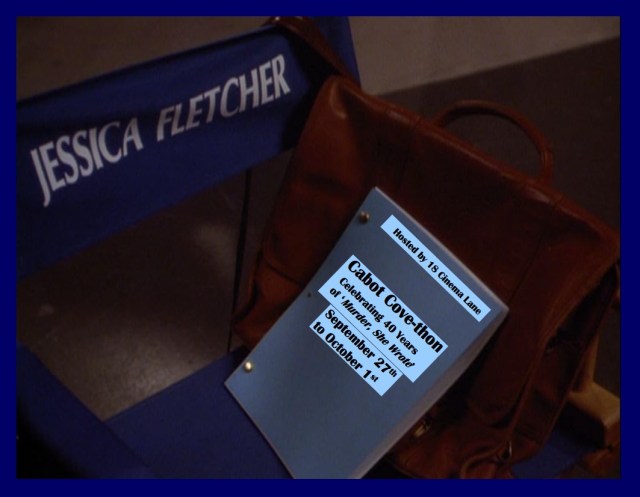
Cabot Cove-thon banner created by me, Sally Silverscreen. Original picture found on IMDB.

Overall score: 3.1 out of 5 stars

Have fun in Cabot Cove!

Sally Silverscreen
Disclaimer: Murder, She Wrote: Dying to Retire is a murder mystery story, so the subject of murder will be brought up from time to time. Swearing does occur on a few occasions and there are mentions of violence. Other topics include chronic illness, grief, and the fair treatment of older people/the elderly.

Why Universal Orlando Resort Should Host ‘Murder, She Wrote’ Weekend

*This editorial was written before Hurricane Helene*

For the Cabot Cove-thon, I originally wanted to write an editorial about the Universal Studios Florida attraction, Murder, She Wrote Mystery Theatre. This show having a presence in any theme park, let alone Universal Studios, was an intriguing concept to discuss during my blogathon. But the more I learned about Murder, She Wrote Mystery Theatre from the Youtube channel, Poseidon Entertainment, the more I discovered that once guests consumed the information from Jessica and the actors associated with the Mystery Theatre, they had little reason to return. A behind-the-scenes look at how to create an episode of Murder, She Wrote from the post-production stage is both fascinating and educational. However, with the aforementioned details from Poseidon Entertainment in mind, I wondered how I could improve Murder, She Wrote Mystery Theatre. If Murder, She Wrote were to return to Universal Studios’ theme park, bringing the show back as an event instead of an attraction would give fans and park guests a reason to come back. This is how I created the idea of Universal Orlando Resort hosting a fan event called Murder, She Wrote Weekend! In this editorial, I will explain why Universal Orlando Resort should host Murder, She Wrote Weekend by providing a basic concept of the event’s schedule. My editorial is, simply, proposing an idea, so any decisions related to event creation will be determined by Universal Orlando Resort themselves.

Cabot Cove-thon banner created by me, Sally Silverscreen. Original picture found on IMDB.

Friday

The beauty of having Universal Orlando Resort host Murder, She Wrote Weekend are the amenities and accommodations at their disposal. One of them are the soon to be ten hotels on their property. Each hotel has its own unique identity, offering their guests a variety of experiences. These unique identities could work in the favor of Murder, She Wrote Weekend, as the chosen hotel could play a role in the event’s theme. Murder, She Wrote has created some episodes related to music. In the season nine episode, “The Sound of Murder”, Jessica witnesses the filming of a rock music video. With the themes of rock n’ roll and music, the Hard Rock Hotel would serve as the perfect venue.

Using the Hard Rock Hotel as this editorial’s example, attendants of Murder, She Wrote Weekend would check in on Friday. At the front desk, hotel information as well as weekend itinerary, badges, and goodie bags will be presented. There will be a large gap in time between check-in and the first official event. This will give attendants an opportunity to rest, explore Universal Orlando Resort, or create a schedule for the weekend. When it’s time for the first official event, attendants will gather in the theater of either Velvet Sessions or Velvet Unplugged for a trivia contest. Trivia will include a variety of topics connected to Murder, She Wrote’s twelve season history. Attendants who win the trivia contest could receive prizes such as a signed script from the show, a shopping spree at the Tribute Store Plaza (if the store was open at the time of Murder, She Wrote Weekend), or an expenses paid trip to Blair House Inn (the house that portrayed Jessica’s home on Murder, She Wrote).

Since Murder, She Wrote: The Highland Fling Murders is about Jessica traveling to Scotland, I figured this photo would be an appropriate choice for my editorial. Screenshot taken by me, Sally Silverscreen.

Saturday

The first official day of Murder, She Wrote Weekend will begin with a panel in the morning. This panel could focus on a topic related to the show, the mystery genre, or the event’s theme. According to the synopsis for “The Sound of Murder”, “Jessica records one of her novels for the blind”. So, in this editorial’s example, the panel on Saturday would revolve around the topic of audiobooks. The panel itself would consist of five people: an executive of a publishing firm, an author whose book was transformed into an audiobook, an audiobook’s narrator, the president of an audiobook company, and an employee of a recording studio. This diverse group of people would hold a discussion on what it takes to create an audiobook, exploring this topic from different perspectives. Toward the end of the panel, attendants will receive an opportunity to ask the panelists questions.

Another amenity Universal Orlando Resort has at their disposal are their theme parks. With Universal Studios Florida and Islands of Adventure, a water park known as Volcano Bay, and their Epic Universe on the horizon, Universal Orlando Resort provides guests with a bundle of attractions to make their day action-packed and fun-filled. Attendants of Murder, She Wrote Weekend can take advantage of their time in the parks by participating in a scavenger hunt. Clues related to Murder, She Wrote would be hidden throughout the parks. During this activity, participants will encounter various attractions, giving them a reason to stay in the parks after the scavenger hunt is over. Winners of the scavenger hunt will earn a prize, like a commemorative pin. Murder, She Wrote Weekend attendants also have the option of a Murder, She Wrote themed escape room. Similar to Universal CityWalk’s Universal’s Great Movie Escape, attendants can be transported to the world of Jessica Fletcher as they try to escape locations relevant to the show, such as Jessica’s living room. Winners of the escape room can also earn a commemorative prize like the aforementioned scavenger hunt. To close out Murder, She Wrote Weekend’s first day, a screening of a Murder, She Wrote episode and/or an upcoming movie from the mystery genre will take place at Universal CityWalk’s Universal Cinemark cinema.

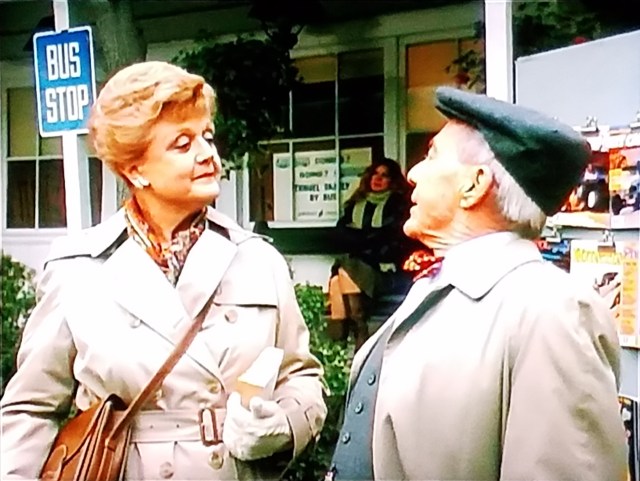
In the Murder, She Wrote episode, “Murder Takes the Bus“, Jessica travels on, you guessed it, a bus. Screenshot taken by me, Sally Silverscreen.

Sunday

The schedule for the second and final day of Murder, She Wrote Weekend is similar to Saturday’s schedule, except for two major differences. While Sunday will begin with a panel, this panel, in my editorial’s example, will feature a collection of actors, producers, screenwriters, and directors who worked on Murder, She Wrote. Like the aforementioned panel on Saturday, attendants of Murder, She Wrote Weekend will be able to ask the panelists questions toward the end of the panel. But this time, the attendants will have the chance to take photographs with the panelists in a meet & greet. The second major difference is the event that will conclude Murder, She Wrote Weekend. This event would either be a costume party (where attendants are invited to dress up as characters from Murder, She Wrote, programs from Universal Studios, or from ‘80s and ‘90s productions) or a mystery dinner theatre presentation. If attendants of Murder, She Wrote Weekend already participated in the scavenger hunt and escape room I talked about earlier in this editorial, they will have the opportunity to explore Universal Orlando Resort at their leisure.

As I have already mentioned, Universal Orlando Resort has a bundle of attractions in their parks. At Universal CityWalk, a collection of shops, restaurants, and entertainment options are located under Universal Orlando Resort’s umbrella. These attractions and facilities are another amenity Universal Orlando Resort can use to their advantage, especially if they hosted Murder, She Wrote Weekend. When bringing up ideas for trivia contest prizes, I mentioned the Tribute Store Plaza. This store, which operates during limited times, sells merchandise that represent a specific theme. In the case of Murder, She Wrote Weekend, the store could sell products related to Murder, She Wrote; from Cabot Cove postcards to a typewriter that mirrors Jessica’s. “The Sound of Murder” takes place in New York City. Keeping this editorial’s example in mind, Cold Stone Creamery could create a Murder, She Wrote Weekend exclusive flavor based on New York cheesecake. The Toothsome Chocolate Emporium & Savory Feast Kitchen could also capitalize on Murder, She Wrote Weekend by crafting a blueberry pie flavored milkshake in honor of Jessica Fletcher’s home in Cabot Cove, Maine.

Since Murder, She Wrote: The Queen’s Jewels is about Jessica traveling on a cruise trip, I figured this photo would be an appropriate choice for my editorial. Screenshot taken by me, Sally Silverscreen.

2024 became the year when fan events failed. Two notable examples are the Bluey event in Las Vegas that disappointed families and Glasgow’s unimpressive Willy Wonka & the Chocolate Factory themed event. But for every fan event that attracts attention for the wrong reasons, there is a desire to see a fan event succeed. With the resources and amenities at their disposal, Universal Orlando Resort has the potential to host a Murder, She Wrote themed event that meets and even exceeds expectations. It also helps how Universal Orlando Resort is familiar with Murder, She Wrote’s IP (intellectual property), as this show has had a presence in Universal Studios Florida. Murder, She Wrote benefits from having a twelve-season lifespan. The abundance of stories, ideas, and famous faces can provide ideas for a Murder, She Wrote themed event. At the beginning of my editorial, I pointed out how bringing the show back as an event instead of an attraction would give fans and park guests a reason to come back to the parks. Hosting a Murder, She Wrote themed event would also create a new tradition and celebrate the legacy of Jessica Fletcher.

Have fun in Cabot Cove!

Sally Silverscreen
Featured references:

Poseidon Entertainment’s video, “A Deep Dive Into Classic Universal Studios Florida (Part 1)

(segment about Murder, She Wrote Mystery Theatre is featured from 28:12 to 31:46)

http://www.blairhouse.com

orlandoinformer.com/blog/the-tribute-store-plaza-universal-studios-florida/

universalorlando.com

IMDB synopsis for “The Sound of Murder” — http://www.imdb.com/title/tt0653664/?ref_=ttep_ep10

Take 3: The National Tree (2009) Review + 475 and 480 Follower Thank You

Back in August, I published an editorial about why Evan Williams and George Blagden should go to Eurovision 2024. While doing research for that editorial, I discovered Evan had starred in a Hallmark Christmas movie! Since that film, 2009’s The National Tree, is one I haven’t seen before, I decided to choose it for my next Blog Follower Dedication Review! Reflecting on Hallmark’s Christmas line-ups over the past few years, it seems like the network isn’t making a strong effort to include older Christmas movies in their programming. This, in my opinion, is a shame because some of those older films are more creative than most of the newer Hallmark projects. The National Tree is a part of this conversation, as the film was not only released fourteen years ago, it also doesn’t include a lot of tropes and cliches found in Hallmark’s Christmas pictures. Before we take a trip through this review, I want to thank all the followers of 18 Cinema Lane!

The National Tree (2009) poster created by Hallmark Channel, QVF, and Cypress Point Productions

Things I liked about the film:

Evan Williams’ performance: There are times when an actor or actress gives such a strong performance, they practically carry the movie they’re starring in. This was the case for Evan’s portrayal of Rock in The National Tree! In my opinion, Evan shined the brightest in this film! Rock’s charismatic personality made him a memorable character. Along with that, Evan gave a versatile performance that showcased a variety of expressions and emotions. From being terrified of driving a semi-truck during a forest fire to expressing gratitude over people’s interest in the soon-to-be National Tree, these moments felt realistic, which allowed me to stay engaged in Rock’s story. Because The National Tree premiered over ten years ago, I’d be interested in seeing Evan star in a Christmas movie in the near future!

Creative storytelling: In most of Hallmark’s Christmas movies from the past five, maybe ten, years, the same tropes and cliches have been incorporated into the script. Whether it’s the inclusion of the “woman from the city going back to her small hometown” cliché, showcasing a bundle of Christmas activities, or focusing on planning a party, those elements cause little creativity among these stories. With The National Tree, however, the story revolves around Rock and his father delivering their tree from Oregon to Washington D.C. in order for their tree to become the National Tree. A lot of cliches and tropes that typically find a place in Hallmark’s Christmas programming were avoided because of this story’s more creative approach. Even though there is a romance in The National Tree, it isn’t a primary focus like in other Hallmark projects. The movie provides a different perspective of how people can spend their time during the Christmas season, which creates variety among Christmas projects!

Rock’s interest in filmmaking: During their trip from Oregon to Washington D.C., Rock claims to his father how film is his life. There are several examples and references throughout The National Tree that prove Rock’s point. At the beginning of the movie, the audience witnesses Rock’s award-winning video, the same video that got his tree selected as the National Tree. Segments of the video are filmed in black-and-white imagery, appearing as scenes from a western film. Rock even dresses the part, wearing attire from what looks like the 19th or early 20th century. Before and during his trip, Rock creates videos chronicling the journey. In one video, he uses postcards to show the viewer where he and his father will go. These postcards serve as animation in between scenes, giving visual representations of each state along the trip. Rock’s interest in filmmaking not only makes him an interesting character, it gives the movie a unique identity!

Blue sparkly Christmas tree image created by Macrovector at freepik.com. <a href=”https://www.freepik.com/free-photos-vectors/frame”>Frame vector created by Macrovector – Freepik.com</a>. <a href=’https://www.freepik.com/free-vector/merry-christmas-card_2875396.htm’>Designed by Macrovector</a>. Image found at freepik.com.

What I didn’t like about the film:

Things that don’t make sense: There were some parts of The National Tree that, to me, didn’t make sense. One example was the claims made by Rock’s father, Corey. During the trip, Corey believes people coming to see the tree are ripping off its branches. But throughout the movie, the tree is wrapped tightly in a big canvas sheet and bound to the truck in what appears to be heavy duty rope, bungee cord, and straps. Even Rock records a video of the tree being placed on the truck, providing proof that the tree was secure. There are no scenes in the movie showing anyone vandalizing the tree. With all that said, Corey’s claims seem confusing.

Lack of on-screen chemistry: In The National Tree, Corey works alongside Faith to transport the tree across multiple states. Since Faith’s company is sponsoring the contest that selected the titular tree, she volunteers to supervise the tree’s journey. As I watched this movie, I didn’t sense on-screen chemistry between Andrew McCarthy and Kari Matchett. This had to do with The National Tree adopting the same flaw as Christmas at Castle Hart: showing the characters spending more time in a professional context. Faith and Corey are, more often than not, professional acquaintances. While they do spend personal time together, these moments are far and few between. The lack of romantic connection between Corey and Faith prevented Kari and Andrew from sharing on-screen chemistry.

Relying more on a premise than a plot: Looking back on movies I’ve seen and even reviewed, I realize how I don’t gravitate toward road-trip films. My reason is the story focuses so much on the trip itself, there is little to no room for a conflict or a plot. The National Tree would be considered a road-trip film, as the story revolves around Rock and Corey’s trip to Washington D.C. While I appreciate how this story is more creative than others from Hallmark Christmas movies, The National Tree relied on a premise more than a plot. A premise is what entices a viewer to watch a film, which in this case is Rock and Corey traveling across the United States to transport a tree. But a story’s plot allows the audience to ask “and then what happened”. Like other road-trip movies, The National Tree focuses on the trip itself. The straight-forward nature of the story didn’t leave room for the audience to ask questions.

Children holding American flags during a sunset image created by rawpixel.com at freepik.com. <a href=”https://www.freepik.com/free-photos-vectors/people”>People photo created by rawpixel.com – http://www.freepik.com</a>. Image found at freepik.com.

My overall impression:

In recent years, older Christmas movies have made fewer appearances during Hallmark’s Christmas line-ups. The National Tree is one of these films, as it was created during a time when the network didn’t release forty movies in one season. This has allowed the 2009 project to display a more creative story, not relying on the usual tropes and cliches from Hallmark’s Christmas programming. However, the story doesn’t leave much room for a plot or conflict, as the script focuses on the road-trip. There are even parts of the story that don’t make sense and lack of on-screen chemistry. But there are good things about The National Tree. One of them was Evan Williams’ performance, as he carried the film from start to finish! If you are interested in watching this movie, I’d recommend viewing it as a Thanksgiving film, as the story takes place around Thanksgiving. There is even a scene where some of the characters share Thanksgiving dinner. I’d also recommend watching this movie for Evan’s performance, which was the brightest star of this production!

Overall score: 6 out of 10

Have you seen The National Tree? Would you like to see Evan Williams star in another Christmas movie? Tell me in the comment section!

Have fun at the movies!

Sally Silverscreen

Take 3: Christmas at Castle Hart Review

You’re probably wondering why I’m reviewing a Christmas movie right before Halloween, especially since I tend to wait until about November to write about Christmas films. That’s because I chose this particular title, Christmas at Castle Hart, for the Genre Grandeur blogathon! When I discovered October’s theme was ‘Mistaken or Stolen Identity Films’, the first movie that came to mind was the 2021 Hallmark Channel project, Christmas at Castle Hart. But Genre Grandeur isn’t the only reason why I wanted to check this film out. Back in 2018, in my Movie Blogger’s Christmas Wish List, I wrote how I wanted to see Stuart Townsend and Marguerite Moreau star in a Hallmark Hall of Fame movie together. Since the publication of that Christmas wish list, Hallmark has abandoned Hallmark Hall of Fame, not releasing a film for that collection since 2019. Despite that, I kind of got what I wanted, with Stuart co-starring in a Hallmark Christmas movie. Will Christmas at Castle Hart reach expectations? Keep reading this review to find out!

Christmas at Castle Hart poster created by Leif Films Media., Merlin Films, and Hallmark Channel

Things I liked about the film:

The acting: I will admit I haven’t seen many projects from Stuart Townsend’s filmography, with Queen of the Damned being his only project I’ve seen in its entirety. A reason why I wanted to see Stuart star in a Hallmark production was to see if he had what it takes, talent wise, to carry a Hallmark film. He proved he could with his portrayal of Aiden in Christmas at Castle Hart! During the movie, Aiden takes Brooke, portrayed by Lacey Chabert, to a run-down chapel in desperate need of repair. This trip encourages Aiden to tell Brooke a story of a renovation project gone wrong. When telling this part of the story, Aiden looks completely defeated, looking back on how he let someone down. Aiden’s defeated attitude radiated through the screen, as the emotions Aiden felt appear genuine. Stuart’s ability to show emotions genuinely helped create a protagonist that was likable!

Lacey Chabert is one of the strongest actresses Hallmark has in their community! She has proven she can work with both comedic and dramatic material. One of the great things about Lacey’s acting abilities is how easily she adapts to various situations. When her character, Brooke, learns about her mistaken identity, she displays a collection of reactions. At first, Brooke appears confused at being referred to by another name. When she realizes what is going on, Brooke looks shocked, but never makes the other characters suspicious. She then seems irritated by what the mistaken identity entails. Yet Brooke maintains a professional persona the entire time. This scene serves as a great example of Lacey’s acting talents!

When a Hallmark movie features older members of royalty or nobility, those characters will, more often than not, carry a snobbish attitude. This attitude will especially be present whenever they interact with characters that are labeled as “commoners”. But Kate O’Toole’s portrayal of Duchess of Abercorn was much different from those aforementioned characters. In fact, her on-screen personality was so pleasant! The Duchess of Abercorn was so friendly toward Brooke and her sister, Margot. She even goes out of her way to help the sisters in their search for their family history. Kate’s performance helped break a trope that is typically found in Hallmark’s “royal” films. This made me wish the Duchess of Abercorn had more appearances in this film!

The scenery: When I reviewed Chasing Leprechauns, I talked about how that movie’s creative team didn’t seem to take the initiative to capture Ireland’s natural beauty on film. The creative team of Christmas at Castle Hart learned from the previous movie’s mistakes, showcasing Ireland in a much more appealing light! While Ireland’s greenery was made visible through long, establishing shots, a light sprinkle of snow veiled the countryside. From the movie’s titular castle to the small-town streets, everything looked like it existed inside a snow-globe! When Brooke and Aiden were riding horses, there were some establishing shots near Ireland’s coast. The icy blue and gray water complimented the white and green of the nearby landscape, creating an interesting winter palette. Because of the creative team’s desire to feature the best of Ireland’s natural environment, the scenery looked inviting!

The set design: More often than not, the set design in Hallmark’s Christmas films appear beautiful. While this is the case for Christmas at Castle Hart, there were some design choices that really stood out! One example is the Christmas party Brooke and Margot plan. The ballroom is covered in shades of gold and cream. Lighted tree branches serve as walls surrounding the space. The branches made the room feel intimate, creating a smaller event that felt more private and exclusive. That design choice was one of the more creative Christmas decorations I’ve seen in a Hallmark production! At a local pub, the wooden bar shelves and countertop are covered in string lights. Even the large, red-framed, exterior windows are given Christmas attention, paired nicely with green garland. Creative decisions like the ones I mentioned show how this creative team paid attention to the space they had at their disposal!

Blue sparkly Christmas tree image created by Macrovector at freepik.com. <a href=”https://www.freepik.com/free-photos-vectors/frame”>Frame vector created by Macrovector – Freepik.com</a>. <a href=’https://www.freepik.com/free-vector/merry-christmas-card_2875396.htm’>Designed by Macrovector</a>. Image found at freepik.com.

What I didn’t like about the film:

Bad CGI: CGI (computer generated images) is a component that isn’t common in Hallmark’s programming. I’m also aware how Hallmark projects tend to have smaller budgets. Even though the movie’s poor CGI wasn’t a consistent flaw, it was still noticeable enough to point out. In one scene, Aiden is driving through the Irish countryside. Whenever he looked over at Brooke, a green outline was visible around Aiden’s head, revealing pieces of the creative team’s green-screen. When the titular castle was first presented in the film, I wondered if the wreaths on the castle were images added in post-production. In a close-up shot of the castle, it appears I may be correct. One of the wreaths had a visible shadow that made it look like the wreath was floating over the stone wall of the castle. Looking back on Christmas at Castle Hart, I wonder why CGI was used in this film in the first place?

The underutilization of Stuart Townsend: Since 2018, I’ve wanted to see Stuart Townsend in a Hallmark production, specifically a Hallmark Hall of Fame movie. While I kind of got what I wanted, I didn’t get it the way I wanted it. In Christmas at Castle Hart, Stuart wasn’t given much material to work with. In fact, Aiden spent the majority of the story driving Brooke around Ireland. There were opportunities for Aiden to be more involved in the story, such as restoring a local chapel. Sadly, these opportunities weren’t given to Aiden. Instead, the story heavily revolved around Brooke and her efforts to plan a Christmas party.

An underutilized subplot: A subplot within Christmas at Castle Hart was Brooke and her sister, Margot, trying to trace their family roots and learn more about their father. This part of the movie created a more unique element to Hallmark’s Christmas programming. But most of the story focused on Brooke and Margot’s efforts to plan a Christmas party. This creative decision led to the aforementioned subplot being treated like an afterthought. While this search for Brooke and Margot’s family heritage was brought up in a few scenes, the search itself was not elaborated on. Even though this subplot was resolved, the resolution was underwhelming.

Weak on-screen chemistry: As I mentioned earlier in this review, I liked Stuart’s and Lacey’s performance in Christmas at Castle Hart. However, I found their on-screen chemistry weak. This weakness had more to do with the material itself. Aiden and Brooke spend most of the story interacting in a professional context. That prevented the characters from developing a romantic spark between them. While there were sweet moments between Aiden and Brooke, such as baking a plum pudding together, I never got the impression they were falling in love.

Irish heart image created by Freepik at freepik.com. <a href=”https://www.freepik.com/free-photos-vectors/label”>Label vector created by freepik – http://www.freepik.com</a>. Image found at freepik.com.

My overall impression:

I haven’t seen all of Hallmark’s movies taking place in Ireland. But out of the ones I’ve seen, most of them have been underwhelming. Christmas at Castle Hart is, sadly, one of those titles I wasn’t impressed with. For me, the biggest flaw was the writing. Brooke and Margot’s search for their family history was a more unique story for Hallmark’s Christmas programming. Unfortunately, this part of the story was treated as an afterthought. There were opportunities for Stuart’s character, Aiden, to become more involved in the story. Yet, Stuart’s talents were underutilized, giving him little material to work with. Christmas at Castle Hart is an example of Hallmark’s focus on quantity instead of quality. Had this same movie been created during the prime of Hallmark’s ‘Countdown to Christmas’ line-up, more attention to detail would have been given, especially for a project starring Lacey Chabert.

Overall score: 5.2 out of 10

Have you seen Christmas at Castle Hart? What is your favorite Christmas movie starring Lacey Chabert? Please tell me in the comment section!

Have fun at the movies!

Sally Silverscreen
Take 3: The Third Man Review

When the terms “American Film Institute”, “classic”, and “Austria” are put in the same sentence, most people would think of the 1965 film, The Sound of Music. While that movie has become a beloved staple in cinema, there’s another title that fits the aforementioned criteria; 1949’s The Third Man. This film also fits the criteria for Hometowns to Hollywood’s Celluloid Road Trip Blogathon: International Edition. I’ve seen several movies from American Film Institute’s list of the top one hundred films of all time. Some of these films have, in my opinion, earned their respective places on that list. Other films have left me confused, questioning why a given film is on the list in the first place. While American Film Institute’s list comes across as objective, I have learned that almost any movie list is subjective. Therefore, I’m checking out The Third Man for myself, determining if I think the 1949 film should be on American Film Institute’s list!

The Third Man poster created by London Film Productions, StudioCanal International, and Selznick Releasing Organization

Things I liked about the film:

The acting: In The Third Man, Ernst Deutsch portrayed Baron Kurtz, a friend of Harry Lime. Despite appearing in the film for a limited period of time, Ernst, in my opinion, stole the show! Anytime he appeared on screen, Ernst’s facial expressions were very fluid and expressive, allowing his character’s reactions to be on point. His performance makes me wish he had more appearances in The Third Man! Individual portrayals were not the only memorable performances, as I liked the on-screen chemistry between Joseph Cotten and Alida Valli. One scene shows Holly and Anna discussing Holly’s friend, Harry. This scene gave Alida and Joseph the opportunity to give their characters genuine emotion, from Anna shedding tears over how the world grew up around Harry to Holly smiling over a past memory of his friend. Their performances made their characters feel like they were meant to be together.

The set design: As mentioned in the introduction, The Third Man takes place in Austria. With the story set in Vienna, the landscape is urban, boasting a European charm that is reflective in the set design. Toward the beginning of the film, Holly goes to a restaurant in the middle of the city. The crown jewel of this location is the marble columns holding up the ceiling. Carved detailing bordered the edges on the ceiling, adding quaint elegance to the restaurant. Even the police station featured elegant design choices, such as the patterned wallpaper. The set design of The Third Man serves as a visual example of timeless beauty, still holding up 74 years later!

An honest glimpse of post-World War II Europe: The story of The Third Man takes place after World War II. Through visual presentation and the dialogue, the state of Vienna, Austria is showcased in an honest way. In one scene, Holly is being chased through the city. During this chase, Holly runs over rubble and hides in an abandoned car. Holly’s hiding place, as well as the rubble, are remnants of the war. Featuring these remnants prominently in the chase scene highlights the aftermath Vienna, Austria faced.

The Celluloid Road Trip Blogathon: International Edition banner created by Annette from Hometowns to Hollywood

What I didn’t like about the film:

Tilted angles: The role of a cinematographer is to present a scene in visually appealing ways. Creative decisions relating to cinematography can make a scene memorable, allowing the audience to bring up specific moments. In The Third Man, several scenes stood out because of cinematography, as these scenes were delivered at a tilted angle. However, there was no reason for those scenes to be presented that way. In fact, the tilted angles came randomly. It felt like those scenes were filmed that way simply for the sake of it.

Tonally unfit music: Acoustic guitar served as the only soundtrack for The Third Man. While this sound was pleasant to hear in some scenes, it was jarring to hear in other scenes. When the police, in one scene, dig up a grave in order to solve a mystery, the acoustic guitar sound gave off a cheerful tone. Yet, the scene itself was very serious in tone, as the film’s mystery is a murder mystery. This is just one example of the music being tonally unfit.

Inconsistent sense of urgency: As I just mentioned, the mystery in The Third Man is a murder mystery. In these types of stories, there is typically a strong sense of urgency, as the protagonist wants to stop the guilty party from hurting other people. But in The Third Man, the sense of urgency was inconsistent. Chase scenes and the climax are where the urgency was present. However, these moments were far and few between. Most scenes featured characters talking with one another. While there can be urgency included in these moments, urgency was not prioritized in the script.

My overall impression:

In 2008, the American Film Institute released a revised list of their one hundred films of all time. On this list, The Third Man was replaced by other titles. However, it does make me wonder why this film was on American Film Institute’s original list in the first place? As I stated in my review of The Bridge on the River Kwai, movies that appear on lists such as American Film Institute’s should, in my opinion, fit one of two categories; those that represent the time they were released and those that brought something new to the cinematic table. The only explanation I can think of is how The Third Man shows Europe post-World War II. Yet Roman Holiday takes place in Italy post-World War II and never appeared on any of American Film Institute’s lists. As for bringing something new to the cinematic table, I can’t think of how The Third Man achieved that. Similar to The Bridge on the River Kwai, this movie has left me confused.

Overall score: 6-6.1 out of 10

Have you seen The Third Man? How many movies from American Film Institute’s lists have you watched? Please share your thoughts in the comment section below!

Have fun at the movies!

Sally Silverscreen