A Movie Blogger’s Ten “Hot Takes” on Television

I published a list article last December about my ten “hot takes” on film. That was the first time I had ever written a list exclusively about movie “hot takes”. Since publishing that article, it has been well received by 18 Cinema Lane’s readers, obtaining over one thousand views. This success inspired me to write another “hot takes” list. But this time, I’ll be discussing my ten “hot takes” on television, as I have talked about TV shows and television related topics from time to time on my blog. Like my movie “hot takes” list, all my TV “hot takes” have never been brought up on 18 Cinema Lane before, in order to keep the list interesting and fresh. Also, like my movie “hot takes” list, I organized each television “hot take” based on how “hot” each take could be perceived. Before I begin this list, I’d like to state how my list is not intended to be mean-spirited or negative. It’s just simply a way to express my opinion.

Campfire with marshmellows and shooting stars image created by macrovector at freepik.com.

10. Harris Trinsky Should Have Appeared in the Freaks and Geeks episode, ‘Chokin’ and Tokin’’

Last year, I published an editorial explaining the similarities between Harris Trinsky (from Freaks and Geeks) and Eddie Munson (from Stranger Things). One of my main talking points was how Harris (as well as Eddie) showed his leadership through putting others before himself, using the example of Harris’ attempts to protect the younger “geeks” (Bill, Sam, and Neil) from Alan (the “freshman tormentor”/bully of the “geeks”) in the Freaks and Geeks’ Halloween episode, “Tricks and Treats”. But another episode I think Harris should have appeared in is “Chokin’ and Tokin’”. In this episode, Alan believes Bill is lying about having a peanut allergy. To prove Bill is telling the truth, Alan contaminates Bill’s sandwich with peanuts, causing Bill to have a severe allergic reaction. Had Harris appeared in “Chokin’ and Tokin’”, the audience could have seen how Bill’s emergency affected him, especially since a) Harris knows what Alan is capable of when it comes to his bullying behavior, b) Harris was bullied when he was a freshman (to the point his tailbone became broken), and c) Harris knows about Bill’s peanut allergy (Bill admitted this while Harris and the “geeks” went trick-or-treating in the episode, “Tricks and Treats”). The dynamic of the friendship between Harris and the “geeks” not only could have been further explored, the audience also could have learned more about Harris, better understanding why he is an older brother figure to the “geeks”. I think this aspect of the story would have been more compelling than the redemption arc Freaks and Geeks’ creative team tried giving Alan in “Chokin’ and Tokin’”, which I, personally, don’t believe was affective. This “hot take” is placed at the bottom of my list due to Freaks and Geeks lasting only one season.

9. Moses Valentine, from Miss Scarlet, Should Have Received His Own Spin-off Show

While I have talked about Miss Scarlet before on my blog, I’ve never talked about my favorite character from the show, Moses Valentine. For three seasons, he possessed a captivatingly commanding presence, using his charm and street smarts to help Eliza Scarlet (the show’s titular character) solve mysteries. In the third episode of Miss Scarlet’s sixth season, ‘The Delivery’, the story primarily revolves around Moses as he searches for a missing diamond. Not only was this the best episode from the sixth season (in my opinion), it made me wish Moses had received his own spin-off show. From seasons four to six, Moses has been living in Paris. This backdrop could have given the spin-off show a colorful landscape and an eccentric group of characters, allowing the show to be distinct from Miss Scarlet’s London environment. It was revealed in ‘The Delivery’ and the fifth episode of Miss Scarlet’s sixth season, ‘The Night Shift’, that Moses is not only married, he also has a son. His family would have offered a unique dynamic from Miss Scarlet, as Eliza is not married and isn’t a mother. There could have even been a crossover episode between Moses’ spin-off show and Miss Scarlet, where Eliza visits Moses in Paris and helps him solve a mystery. But, sadly, a Moses centered spin-off show will likely not happen because the seventh season of Miss Scarlet will be the show’s last.

8. I Don’t Think Lauren Should Have Won the Reach for the Stars Competition in the Matlock episode, ‘The Starlet’

Toward the beginning of the Matlock episode, ‘The Starlet’, a talent contest called the Reach for the Stars Competition takes place. Whoever wins the competition will receive a two-year studio contract, a brand-new car, and $25,000. The final four contestants, Morgan, Dana, Abby, and Lauren, have their talent performances featured in ‘The Starlet’. While Morgan captivated by singing an energetic pop song, Abby sang a country song that sounded like it came straight from the heart. Dana’s performance of a song on saxophone was solid, adding her strong contribution to the soundtrack of the 1980s. But Lauren’s performance, which helped her win the Reach for the Stars Competition, was, in my opinion, unimpressive compared to the aforementioned three performances. Lauren performed a dance routine that was, to put it simply, basic. Its contents were a few arm movements, stepping in place several times, and some simple turns. I know Lauren’s victory was intended to create a domino effect for the events that took place in ‘The Starlet’. I also recognize what the creative team behind this Matlock episode was trying to say about connections being prioritized over talent when it comes to success, as Lauren’s mother, Janet, won the very first Reach for the Stars Competition. But I still don’t think Lauren should have won the contest based on talent performance alone.

7. I wish Tommy Vaughn Hadn’t Been the Murder Victim in the Murder, She Wrote episode, ‘Murder in Tempo’

In the Murder, She Wrote episode, ‘Murder in Tempo’, Dr. Seth Hazlitt organizes a benefit concert in an effort to save a local forest called Cabot Woods, with a band named In Tempo being the stars of the concert. One of In Tempo’s band members, Tommy Vaughn, has a dinner plate full of personal issues; from alcohol dependency that led him to rehab to dealing with a stalker prior to coming to Cabot Cove and even almost getting shot during the band’s concert rehearsal. But during his interactions with a Cabot Cove resident named Rachel, there are glimmers of hope that Tommy could, potentially, turn his life around. In a conversation he shared with Rachel, Tommy confesses his father passed away in an alcoholic ward, admitting his father’s issues made him look at the world pessimistically. He also acknowledges how he’s developed a poor reputation and how he needs to seek medical attention when he experiences problems with his vocal cords. Tommy even agreed to perform at the benefit concert because he truly believed in the cause of saving Cabot Woods, refusing to quit the concert despite pressure from the band’s manager, Wylie Trey. I’m aware Murder, She Wrote possesses a limited number of recurring characters and ‘Murder in Tempo’ premiered within the show’s last season. But I’d like to think if Tommy’s life had been spared, he would have received a second chance to obtain a happier next chapter to his story. Tommy could have even appeared in one of Murder, She Wrote’s made-for-TV movies or one of the books from the Murder, She Wrote book series. While advocating for the preservation of Cabot Woods, Jessica Fletcher says, “But even small battles are important”. Sadly, Tommy never got the chance to win at least one of his “small battles”.
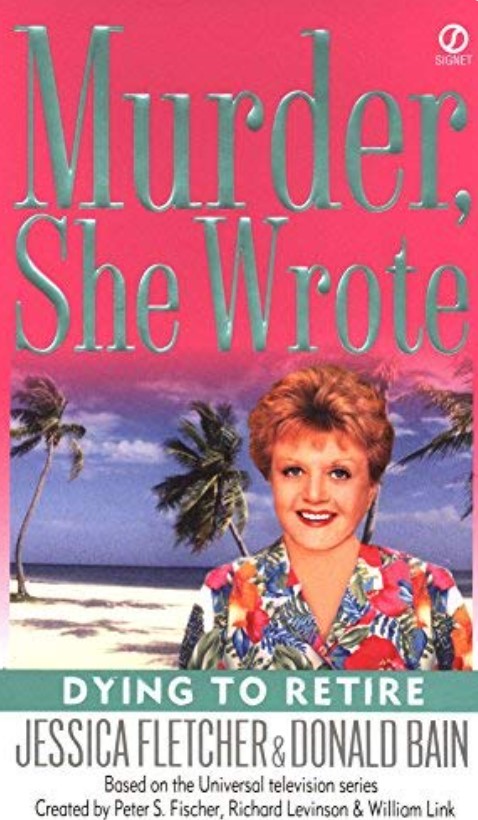
Since one of my television “hot takes” relates to Murder, She Wrote, I thought featuring the book cover for Murder, She Wrote: Dying to Retire in this list article made sense. Murder, She Wrote: Dying to Retire book cover found on Goodreads

6. One of the HGTV Dream Homes Should Have Been Built in Hawaii

For almost thirty years, HGTV (Home and Garden Television) has hosted their annual Dream Home sweepstakes, with a completely furnished house as the grand prize. Eighteen of the fifty United States have hosted a prize home in varying styles and diverse landscapes. But, in my opinion, one of those states should have been Hawaii. The “gimmick” of HGTV’s Dream Home sweepstakes is for someone to win a “dream” home in a “dream” location. For years, Hawaii has been known as a “dream” travel destination for many people, yet owning a home in Hawaii is a “dream” few people can achieve for a variety of reasons. Realistically, I’m not sure what the logistics would be in order to make an HGTV Dream Home in Hawaii a reality. On paper, however, a Hawaiian Dream Home would fit the intent of HGTV’s contest.

5. I wish Sophia’s Son, Phil, Had Made, At Least, One On-Screen Appearance on The Golden Girls

Looking back on all the times I’ve watched The Golden Girls, one consistent story element always comes to mind; how Sophia singles out her son, Phil, whenever she brought up her children. Because it seemed like he was mentioned often on the show, I always wondered if what was said about him by the other characters was true. This curiosity made me want to see, at least, one on-screen appearance of him, in order to learn more about Phil from his perspective. Unfortunately, this never happened as Phil died off screen, with his death acknowledged in the season six episode, ‘Ebbtide’s Revenge’. It would have been fascinating to see Phil’s interactions not only with Sophia, but with the other “golden girls” as well. Plus, this role would have given an up-and-coming or underrated actor a chance to start or progress his career, especially considering The Golden Girls is one of the most successful and beloved television shows of all time. It also would have been interesting to see how The Golden Girls’ audience responded to Phil’s appearance on the show, if perhaps he had become a fan favorite. Though to quote the iconic Tootsie Pop commercial, “the world may never know”.

4. I Don’t Find the Gilligan’s Island episode, ‘The Hunter’, Funny or Entertaining

Gilligan’s Island is a show that is known for being light-hearted and hilarious, typically presenting the characters in low-stakes situations despite being stranded on the titular island. But the episode, ‘The Hunter’ is quite different from what the show is known for. Jonathan Kincaid is introduced in this episode as a big-game hunter. When he is unable to find any animals on the island to hunt, Jonathan then decides to hunt the other characters. The story of ‘The Hunter’ is tonally inappropriate for the type of program Gilligan’s Island is. With the show’s laugh track still featured in this episode, it makes the characters’ fear seem like it is played for laughs instead of being taken seriously. I was so horrified by ‘The Hunter’, I couldn’t find anything entertaining or funny about it. I, honestly, questioned what the creative team behind Gilligan’s Island was thinking creating and airing the episode. Because ‘The Hunter’ has been received better than other episodes of Gilligan’s Island, obtaining a 7.3 out of 10 on IMDB, this “hot take” is ranked higher on my list.

3. I Don’t Understand the Hype Surrounding ‘Shark Week’

According to Wikipedia, Shark Week debuted almost forty years ago on Discovery Channel with educational intentions, emphasizing conservation and debunking misconceptions. But as time went on, the annual event grew a life of its own. The term “shark week” has been added to the pop cultural lexicon, with people knowing what that is even if they’ve never watched any program associated with the event. Merchandise has been created to capitalize Shark Week, from shirts to scouting patches and even stuffed animal sharks from Build-A-Bear Workshop. But despite the promotion and fanfare it’s received, I don’t understand the hype surrounding Shark Week. With the amount of information available about sharks now than there was thirty-eight years ago, it almost seems unnecessary to reserve only one week to shark related education. In fact, shark related education can be accessed any time of year. Because sharks are such a specific subject, the event could run the risk of running out of content or programming. Plus, there are other animals who would also benefit from receiving education about them and conversation efforts for them. Yet they don’t receive their own special week.

2. If Eddie Munson Had Been Introduced on Stranger Things Sooner, The Show’s Creative Team Would Have Prioritized His Popularity, Similar to Steve Urkel (from Family Matters)

Once upon a time, on December 15th, 1989, Steve Urkel made his debut on the sitcom, Family Matters. What started as Steve asking one of the show’s key family members, Laura Winslow, to a dance turned into Steve becoming one of the most popular characters in television history. As Steve’s popularity grew, he received more screen-time and significance in the story. He not only became very marketable, having products based off Steve like Urkel-O’s Cereal and a talking doll, Family Matters also became defined by Steve’s iconic catchphrase, “Did I do that?”. But Steve’s popularity came at the expense of the titular Winslow family and their matters, which defied the original intent of the sitcom. If Eddie Munson had been introduced on Stranger Things sooner, I believe the show’s creative team would have allowed a similar scenario to happen. Like Steve Urkel, Eddie Munson became very popular after appearing in one season of his respective show. Also, like Steve, Eddie became very marketable, with products ranging from a replica of his Hellfire Club shirt to books about Eddie’s side of the story. But Eddie made his debut in Stranger Things’ fourth out of five seasons, with Eddie also passing away at the end of the fourth season. Though if Eddie had debuted in either season one or two, Eddie’s popularity would have given the show’s creative team an excuse to not only keep him on the show, but to also upgrade his status from ‘recurring’ to ‘main’ character. But, similar to Steve on Family Matters, the emphasis on Eddie’s popularity could have run the risk of other characters and stories getting overshadowed, potentially leaving mysteries and story-threads unresolved. There’s also a chance Stranger Things‘ creative team could have turned Eddie into “too much of a good thing”, giving Eddie elements to his story that may not make sense, such as receiving a catchphrase that seems unnecessary.

1. Writing Jack Thornton Off When Calls the Heart is the Show’s Biggest Mistake

    When the creative team behind When Calls the Heart decided to write Jack Thornton (one of the show’s main characters) off the show by having him die off screen, that was one of the most controversial creative decisions in Hallmark Channel history, as characters are typically not written off the network’s programs in this fashion. But looking back on this creative choice eight years later, writing Jack off When Calls the Heart has proven, in my opinion, to be pointless. If Jack had stayed on the show, other creative decisions I’m, personally, not a fan of wouldn’t have been made. Some of these decisions are the love triangle between Elizabeth, Lucas, and Nathan (that lasted three seasons), as well as backtracking Elizabeth’s decision to fall in love with and become engaged to Lucas. When it comes to the argument for why Elizabeth should be in a romantic relationship with Nathan, the McGarries (fans of Elizabeth and Nathan) have claimed that because Elizabeth falls in love with a Mountie in the book series the show is based on, she has to fall in love with a Mountie on the television show. With that logic in mind, if it was so important for Elizabeth to be in a romantic relationship with a Mountie, why write Jack off the show at all? I’m aware of Daniel Lissing’s (the actor who portrayed Jack) desire to leave the show to pursue other projects. However, I think recasting Jack would have attracted less backlash than writing him off the show. When Jack was still on When Calls the Heart, it seemed like his relationship with Elizabeth organically complimented the show’s overarching story. It also helped that Daniel and Erin Krakow (the actress who portrays Elizabeth) had stronger on-screen chemistry together. But now that Elizabeth and Nathan’s relationship has been prioritized since season eleven, its promotion, in my opinion, not only feels forcefully manufactured, it has come at the expense of other characters and stories, such as Rosemary, once again, not receiving her theater and new characters like Fernando becoming underutilized.
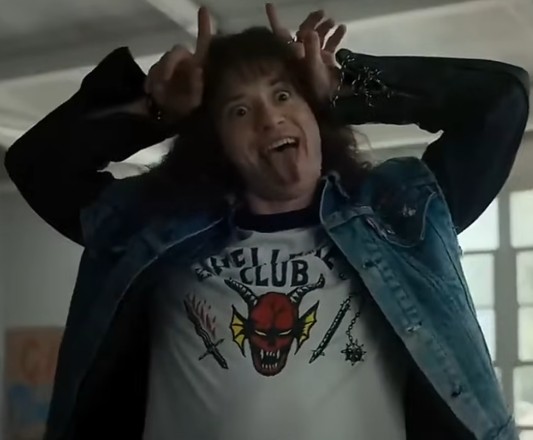
    Since another television “hot take” in this list article relates to Eddie Munson and Stranger Things, I believed including this iconic picture of Eddie in this post was appropriate. Original image created by 21 Laps Entertainment, Monkey Massacre, Netflix, and Upside Down Pictures

    What are your thoughts on my TV “hot takes”? Do you have a TV related “hot take” you’d like to share? Please tell me in the comment section below!

    Have fun on television!

    Sally Silverscreen
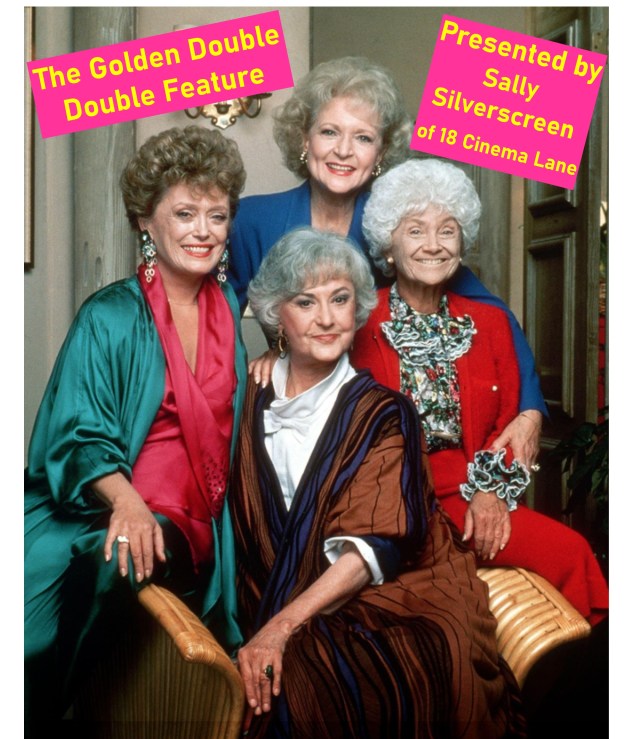
    Thank You for Being a Friend of The Golden Double Double Feature

    When I chose the theme for this year’s double feature, I wanted to do something different from previous double features I’ve hosted by reviewing four films. With The Golden Girls featuring four main stars (Betty White, Estelle Getty, Bea Arthur, and Rue McClanahan) and with those stars possessing their own filmographies, I found a reason to seek out more of their projects. The movies I selected, Hallmark Hall of Fame’s The Lost Valentine, Mask, Mame, and The Little Match Girl, are just as unique as the “golden girls” themselves! I was reminded why I like Hallmark Hall of Fame’s The Lost Valentine when I decided to revisit it. Not only did I rediscover forgotten elements like the story’s humor, I, once again, came to appreciate what makes the film good. Mask was such a pleasant surprise because of how solid the movie is! It’s a biopic that brings something different to the genre’s table as well as genuineness. While I found both Mame and The Little Match Girl fine, I enjoyed the films for different reasons. Mame’s choreography and colorful palette helped make the film as entertaining as it was. Meanwhile, the cleverly written dialogue in The Little Match Girl allowed interactions between characters to be memorable. Now, as the sun sets on Miami and all the cheesecake has been eaten, I’d like to say thank you for being a friend of the Golden Double Double Feature!

    The Golden Double Double Feature banner created by me, Sally Silverscreen. Original image created by Touchstone Television, Witt/Thomas/Harris Productions, 20th Television, and National Broadcasting Company (NBC)

    Have fun on the lanai!

    Sally Silverscreen

    Take 3: The Little Match Girl (1987) Review (Golden Double Double Feature Part 4)

    Thanks for joining me for the fourth part of my Golden Double Double Feature! The majority of my review of The Little Match Girl is spoiler-free. If you’d like to learn more about why I chose this year’s double feature theme, you can check out the introduction in the link below.

    Announcing The Golden Double Double Feature!

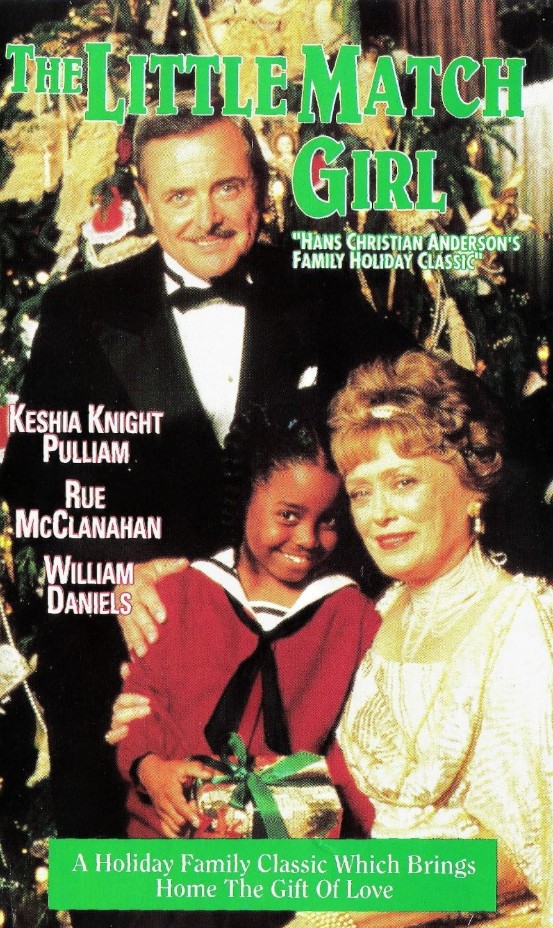
    The Little Match Girl (1987) poster created by NBC Productions and National Broadcasting Company (NBC).

    1. Out of the movies from Rue McClanahan’s filmography, why did you select The Little Match Girl?

    Unlike my decision to review Mask and Mame, I knew Rue starred in The Little Match Girl before selecting the movie for the Golden Double Double Feature. However, similar to when I wrote about Mame and Mask, I had heard of The Little Match Girl, but hadn’t seen it prior to this double feature review. I also knew the 1987 film was an adaptation of one of Hans Christian Andersen’s stories. When it comes to The Little Match Girl, though, I was surprised to learn how many times that story was adapted, including in the 1980s. Throughout my eight-year blogging journey, I have covered my fair share of Christmas movies, especially those of the made-for-TV variety. With all that said, I decided to give The Little Match Girl a chance!

    2. In The Little Match Girl, Rue portrays Frances Dutton. How is Frances Dutton similar or different from Blanche?

    From what I remember, Blanche Devereaux came from a wealthy, Southern background. This fact was brought up from time to time on The Golden Girls. Rue’s character in The Little Match Girl, Frances Dutton, comes from a wealthier background as well. However, Frances and Blanche possess a major difference. While Blanche is sassy, bold, and even flirty, Frances is the complete opposite. In The Little Match Girl, Frances is not only soft-spoken and tender-hearted, she also has a gentler persona. So, it was interesting to see Rue portray a very different character in the 1987 Christmas film.

    3. According to The Little Match Girl’s poster, the movie is based on Hans Christian Andersen’s story of the same name. Is there any story from Hans’ bibliography you wish had received a film adaptation?

    As I mentioned in answer number one, I was surprised to learn how many times The Little Match Girl was adapted, including in the 1980s. But there have been other stories from Hans’ bibliography that received adaptations, with The Little Mermaid being a notable one. Therefore, I’d like to see an adaptation of one of Hans’ more overlooked titles. For example, The Bell revolves around the mystery of a bell that only rings at sunset. With nature playing a major role in The Bell, an adaptation of this story could be presented as live-action, with the cinematography of natural landscapes stealing the show. However, I think The Bell could also work as an animated project.

    4. Was there anything about The Little Match Girl you liked or didn’t like?

    Screenwriting, including the dialogue, in made-for-TV movies can be hit or miss. In 1987’s The Little Match Girl, however, I found some of the dialogue cleverly written. One example is when Neville meets the titular little match girl, Molly. When he orders a coffee, Neville adds alcohol from his flask. After Molly asks Neville about the flask, he tells her its “courage”. Molly then responds by telling him, “It doesn’t come in a bottle”. Later in the film, Police Chief Murphy threatens to shut down a local newspaper if there are any reports of Fennel Street’s residents being forced to leave their homes before Christmas. Joseph, the newspaper’s editor, tells Murphy, “Why don’t you crawl back in my father’s pocket where you belong”? Murphy spats out his response to Joseph when he says, “Cause I’m too big”. Because of how clever these responses were, it made these interactions (and the scenes themselves) memorable.

    Like I just mentioned in this review, Police Chief Murphy threatens to shut down a local newspaper if there are any reports of Fennel Street’s residents being forced to leave their homes before Christmas. Joseph wants to report this injustice in order to save the homes of Fennel Street’s residents. One tactic is placing Molly’s picture on the newspaper’s front page to draw empathy for the intended cause. But the movie’s viewers don’t know if this tactic worked. That’s because the viewers never see the newspaper with Molly’s picture on the front page in circulation. This is an example of telling instead of showing. It’s also an example of how the movie prioritizes the stories of the grown-up characters despite The Little Match Girl being the movie’s title.

    5. As I mentioned in my review of 1974’s Mame, there were two Christmas episodes of The Golden Girls; ‘ ‘Twas the Nightmare Before Christmas’ and ‘Have Yourself a Very Little Christmas’. If the show had created more Christmas episodes, what type of story would you have proposed?

    In The Golden Girls’ sixteenth episode from the fourth season, ‘Two Rode Together’, Dorothy and Sophia take a trip to Walt Disney World. This creative decision was part of a trend where various sitcoms would set aside a special episode showing their characters taking a Walt Disney World trip. Based on what I recall, I don’t think any of these episodes take place around Christmastime. So, I would propose an episode of The Golden Girls where the “golden girls” spend Christmas in Orlando. Walt Disney World at Christmastime has been known for its beautiful decorations. Plus, I can think of hilarious antics that could be written into a story like this. Since three of Walt Disney World’s parks were open during the lifespan of The Golden Girls, there are a variety of attractions that could be featured in the episode.

    Adorable Santa image created by Freepik at freepik.com. <a href=’https://www.freepik.com/free-vector/christmas-background-with-funny-santa_1324597.htm’>Designed by Freepik</a>. <a href=”https://www.freepik.com/free-photos-vectors/background”>Background vector created by Freepik</a>. Image found at freepik.com.

    6. Did you develop any thoughts and/or questions while watching this film?

    For this part of my review, I will spoil The Little Match Girl. If you have not seen this movie and are planning on watching it, skip ahead to question number seven.

    Whenever Molly uses one of her matches, the flame sparkles. A snow angel she makes toward the beginning of the movie sparkles as well. In one scene, Molly explains to Joseph’s son, Jamie, that angels ride on shooting stars directly from Heaven if anyone in the world is in trouble. When Molly is discovered missing by Jamie’s grandpa, Haywood, it’s implied Molly was an angel the entire time. While this was an interesting plot twist, it’s a creative decision that left me with more questions than the movie was willing to provide answers for. Did Molly pass away prior to the events of The Little Match Girl or was she an angel that always existed in Heaven, similar to the angels from Touched by An Angel? How long has Molly been an angel? Has anyone known about Molly’s angel identity? The more I think about this plot twist, I more I believe there’s important lore missing from the script.

    7. Throughout The Golden Girls, cheesecake became an iconic staple of the show. What would you say is the iconic staple of The Little Match Girl?

    You would think I’d choose Molly’s matches, as the 1987 film is titled The Little Match Girl. But I’m selecting a candle instead. The residents of Fennel Street organize a protest at the Dutton family house, in an effort to save their homes. During the protest, they carry candles, with one of the protesters’ candles being lit by Molly herself. Toward the end of The Little Match Girl, Molly lights the candles of an angel themed Christmas decoration. But beyond the movie itself, candles are sometimes associated with Christmas décor; from candles in windows to candles placed on Christmas trees. Light is also a major theme of the Christmas holiday, such as the season of Advent and the Nativity Star. I’d even say light is a major theme of The Little Match Girl.

    8. The Little Match Girl is a made-for-TV film. How does this movie compare to other Christmas television movies you’ve seen and even reviewed?

    Looking back on the Christmas television films I’ve seen and reviewed, some of those titles featured at least one younger protagonist. But if I had to compare The Little Match Girl to another made-for-TV movie I’ve covered, it would have to be the 1999 film, If You Believe. Both stories possess a younger protagonist whose actions significantly impact the life of at least one of the story’s key characters. If You Believe and The Little Match Girl contain a sense of magical realism. These movies share the flaw of telling instead of showing as well.

    9. The Little Match Girl was released on December 21st, 1987 (within the third season of The Golden Girls). Do you think the show had any impact on the movie?

    In my review of Hallmark Hall of Fame’s The Lost Valentine, I speculated why the Hallmark Hall of Fame collection may not have cast any of the “golden girls” (Rue, Bea, Estelle, and Betty) in their movies during The Golden Girls’ lifespan. One of those speculated reasons was how Hallmark Hall of Fame and The Golden Girls were broadcast on separate networks. According to IMDB, 1987’s The Little Match Girl was not only produced by NBC Productions, it was also distributed by National Broadcasting Company (NBC). As I mentioned in my Hallmark Hall of Fame’s The Lost Valentine review, The Golden Girls aired on NBC. With that said, I don’t believe it was a coincidence for The Little Match Girl’s creative team to consider casting Rue in their movie.

    10. After watching The Little Match Girl, is there anything you can take away from your movie-viewing experience?

    Like I said in answer number one, I have covered my fair share of Christmas movies throughout my eight-year blogging journey, especially those of the made-for-TV variety. When it comes to 1987’s The Little Match Girl, I found the movie fine and serviceable. While there were strengths within the film, such as the acting performances and the cleverly written dialogue, the movie’s flaws held it back from being a stronger presentation. Despite the movie’s title being The Little Match Girl, the script prioritizes the stories of the grown-up characters. This creative decision kind of makes the title seem misleading, as I expected the story to focus more on the titular little match girl, Molly. Even though the plot twist was interesting, it left behind more questions than the movie was willing to provide answers for. In my opinion, it feels like important lore may have been omitted from the script. Reflecting on The Little Match Girl, as well as other Christmas films I’ve seen and reviewed, I can think of titles that are stronger than the 1987 picture. However, I can also think of movies that are weaker than The Little Match Girl.

    The Golden Double Double Feature banner created by me, Sally Silverscreen. Original image created by Touchstone Television, Witt/Thomas/Harris Productions, 20th Television, and National Broadcasting Company (NBC)

    Thank you for being a friend!

    Sally Silverscreen

    Take 3: Mame (1974) Review (Golden Double Double Feature Part 3)

    Thanks for joining me for the third part of my Golden Double Double Feature! My review of 1974’s Mame is spoiler-free. If you’d like to learn more about why I chose this year’s double feature theme, you can check out the introduction in the link below.

    Announcing The Golden Double Double Feature!

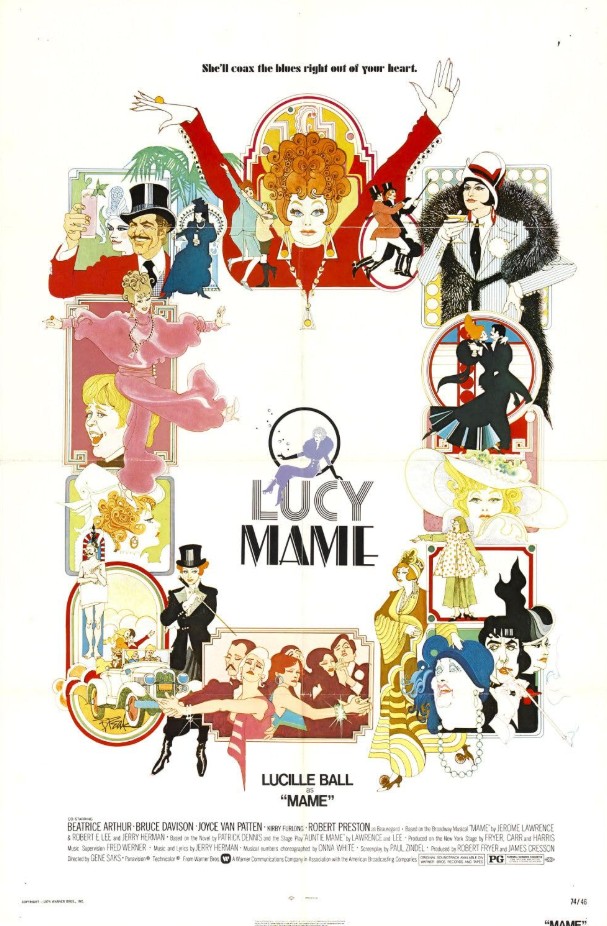
    Mame (1974) poster created by Warner Bros. and American Broadcasting Company (ABC)

    1. Out of the movies from Bea Arthur’s filmography, why did you select Mame?

    Similar to what I said about my decision to review Mask, I had no idea Bea starred in Mame until I saw the movie listed on her IMDB filmography. While I have heard of Mame prior to selecting it for the Golden Double Double Feature, I had never seen the film. But as I researched Mame before publishing this review, I learned the movie’s reception was mostly negative. Even though I watch every film I write about with an open mind, including Mame, the aforementioned reception led me to approach Mame with low expectations.

    2. In Mame, Bea portrays Vera Charles. How is Vera Charles similar or different from Dorothy?

    If I could choose one word to describe Dorothy Zbornak, it would be “honest”. In fact, her brutal honesty helps her achieve distinctiveness on The Golden Girls. I remember one scene on the show when Rose asks Dorothy if she can ask her a question. Dorothy matter-of-factly responded to Rose by saying, “Better than anyone I know”. Bea’s character in Mame, Vera Charles, shares this brutal honesty with Dorothy. The musical number, “Bosom Buddies”, perfectly highlights this characteristic. But there is a major difference between Dorothy and Vera. Because Vera is a stage actress, her personality is more dramatic. Meanwhile, Dorothy carries herself with a “tell it like it is” attitude. Though some viewers could perceive this type of attitude as rude, it has become appreciated not just by the other characters on The Golden Girls, but by the show’s fans as well.

    3. According to Wikipedia, Mame was the Easter attraction at Radio City Music Hall. Yet, on The Golden Girls, it doesn’t seem like there was an Easter themed episode. Why do you think The Golden Girls didn’t capitalize on the Easter holiday?

    Radio City Music Hall choosing Mame as their Easter attraction is a surprising decision. This is because, according to Wikipedia, Disney’s adaptation of Alice in Wonderland (a movie with more family-friendly appeal and a rabbit as one of the main characters) was re-released in March of 1974. To answer question number three, I believe the creative team behind The Golden Girls just never found an Easter themed story that was worth telling on the show. This belief is similar to my answer for the fifth question of my Hallmark Hall of Fame’s The Lost Valentine review, where I speculate why The Golden Girls never received a television film.

    4. Was there anything about Mame you liked or didn’t like?

    As I said in answer number two, Vera was a brutally honest woman with a dramatic personality. These qualities, along with a drier sense of humor, allowed Vera to add some comic relief to Mame. One of the film’s funniest scenes is when Vera wakes up in Mame’s bathtub after Mame throws an extravagant party the previous evening. To help Vera become more awake, Mame turns on the shower. Vera just stands in the middle of the bathtub, providing no reaction to the shower’s water. I found that lack of reaction hilarious because I wasn’t expecting Vera to just stand in the middle of the bathtub and simply appear irritated due to the interruption caused by the shower’s water. In my opinion, Bea’s portrayal of Vera stole the show!

    According to IMDB, Mame has a run-time of two hours and twelve minutes. This run-time could be felt, especially after Mame’s nephew, Patrick, grows up. The second half of Mame was drawn-out, which caused the film’s pace to slow down. In fact, the overall pace of Mame was inconsistent because of how drawn-out the second half was. Had the movie been trimmed to about an hour and forty minutes, Mame’s pace could have been a bit faster.

    5. Mame is an adaptation of its respective Broadway musical. Several musical moments were featured on The Golden Girls, from the song about Miami I mentioned in my Mask review to “The Sky Is Falling” number from the episode, ‘Henny Penny – Straight, No Chaser’. What Broadway musical do you wish had been referenced on the show?

    Like I said in my third answer of my Mask review, the overarching story of The Golden Girls is grounded in reality, meaning the situations depicted on the show seem realistic, more often than not. Though I haven’t seen any performances of Cats, I have heard it’s a musical that prioritizes performance and presentation over the story, forcing the audience to suspend a lot of their disbelief. I’m not sure if Cats was ever referenced on The Golden Girls. But if it wasn’t, I wonder how a show like The Golden Girls would have incorporated a musical like Cats into the story?

    Colorful galaxy image created by Freepik at freepik.com. <a href=’https://www.freepik.com/free-vector/lovely-hand-drawn-galaxy-background_2943080.htm’>Designed by Freepik</a>. <a href=”https://www.freepik.com/free-photos-vectors/background”>Background vector created by Freepik</a>. Image found at freepik.com.

    6. Did you develop any thoughts and/or questions while watching this film?

    If you look at Mame’s poster, you’ll notice the bright colors sprinkled across the plain white background. This poster is such a good representation of the movie because Mame is a colorful film! The set and costume design adopts bold hues that nicely burst on screen. A great example presents itself during the musical number, “Mame”. All the men in that number, including Mame’s love interest, Beau, wear red riding jackets. Meanwhile, all the women, especially Mame, wear black riding jackets. These two colors effectively contrasted against the green foliage of the Burnside family plantation. While we’re still on the subject of the musical number, “Mame”, I want to talk about the choreography. As I just mentioned, the “Mame” number takes place at the Burnside family plantation. This sprawling space provided plenty of opportunities to showcase impressive dance sequences. Multiple groups of three men each leaped over hedges lining a walkway. These leaps felt reminiscent of horses jumping, which makes sense because, prior to the number, the characters participated in a fox hunt. Later in the number, both men and women leaped around a circular fountain. This creative choice was a simple yet visually appealing way of utilizing the landscape Mame’s creative team had at their disposal.

    7. Throughout The Golden Girls, cheesecake became an iconic staple of the show. What would you say is the iconic staple of Mame?

    Similar to when I reviewed Mask, there are several good answers I could choose for this question. Since I can pick only one “iconic staple” for Mame, though, I’ll select Vera’s telescope. In Mame, Vera portrays an astronomer in one of her plays. During the musical number, “The Man in the Moon”, Vera carries a beautiful telescope prop covered in gold glitter and pearls. Telescopes are typically associated with exploring, especially when it comes to space. This particular tool can help people see places and objects clearer, as well as discovering new possibilities. Mame’s musical number, “Open a New Window”, stresses one of the film’s major themes of opening your heart and mind to new opportunities, possibilities, and experiences in order to make life more fulfilling. What I said about the telescope perfectly correlates with this major theme from Mame!

    8. Christmas plays a role in Mame, as “We Need a Little Christmas” is one of the movie’s musical numbers. Meanwhile, there are two Christmas episodes of The Golden Girls; ‘‘Twas the Nightmare Before Christmas’ and ‘Have Yourself a Very Little Christmas’. When it comes to Christmas stories, do the aforementioned episodes and Mame share any similarities?

    Based on the “We Need a Little Christmas” musical number from Mame, as well as the synopsis for both Christmas episodes of The Golden Girls, I’d say a major similarity is how the events of each story affect a small group of characters to varying degrees. Though it’s a week before Thanksgiving, according to Patrick, Mame makes the decision to celebrate Christmas early. Because she, as well as the other characters in Mame, have been impacted by the Great Depression, she attempts to create joy during a time of hopelessness. Meanwhile, the “golden girls” not only discover Stan’s situation while volunteering at a soup kitchen together, they are also held hostage together by “Santa Claus”. Each Christmas episode of The Golden Girls emphasizes the characters working together to deal with the events affecting them.

    9. Mame was released in 1974 (11 years before The Golden Girls premiered). Was there any element from the movie you think could have impacted the show?

    I already brought up in this review how the musical number, “Bosom Buddies”, perfectly highlights Vera’s brutal honesty. However, this musical number also highlights how Mame can be brutally honest. The purpose of “Bosom Buddies” is to stress how, despite the brutal honesty among Mame and Vera, their friendship remains valued by each woman. As I was watching this musical number, I was reminded of the friendship between Sophia, Dorothy, Blanche, and Rose on The Golden Girls. There have been times where, at least, one of these women has been so honest, it catches the others off-guard. But, at the end of the day (or by the end of an episode), the friendship among the “golden girls” is cherished, even over a serving of cheesecake. So, to answer this question, I’d say the honest friendship in Mame could have impacted the friendship on The Golden Girls.

    10. After watching Mame, is there anything you can take away from your movie-viewing experience?

    When I answered question number one in this review, I brought up how I learned Mame’s reception was mostly negative. On IMDB, the film received a score of 5.9. Personally, I think the negativity toward Mame is a bit harsh. Yes, the movie has its flaws, such as its two hour and twelve-minute run-time. But, in my opinion, Mame is fine and entertaining-enough. The set and costume design clearly showed the film’s creative team had a strong vision and consistently stuck with it. The choreography was executed well, especially during the musical number, “Mame”. Bea’s portrayal of Vera was such a highlight, I wish she was featured in the movie more. Vera’s brutal honesty, dramatic personality, and drier sense of humor helped her steal the show! I’m honestly glad I approached Mame with low expectations. Those expectations were surpassed, allowing me to enjoy this film.

    The Golden Double Double Feature banner created by me, Sally Silverscreen. Original image created by Touchstone Television, Witt/Thomas/Harris Productions, 20th Television, and National Broadcasting Company (NBC)

    Thank you for being a friend!

    Sally Silverscreen

    Take 3: Mask (1985) Review (Golden Double Double Feature Part 2)

    Thanks for joining me for the second part of my Golden Double Double Feature! My review of 1985’s Mask is spoiler-free. If you’d like to learn more about why I chose this year’s double feature theme, you can check out the introduction in the link below.

    Announcing The Golden Double Double Feature!

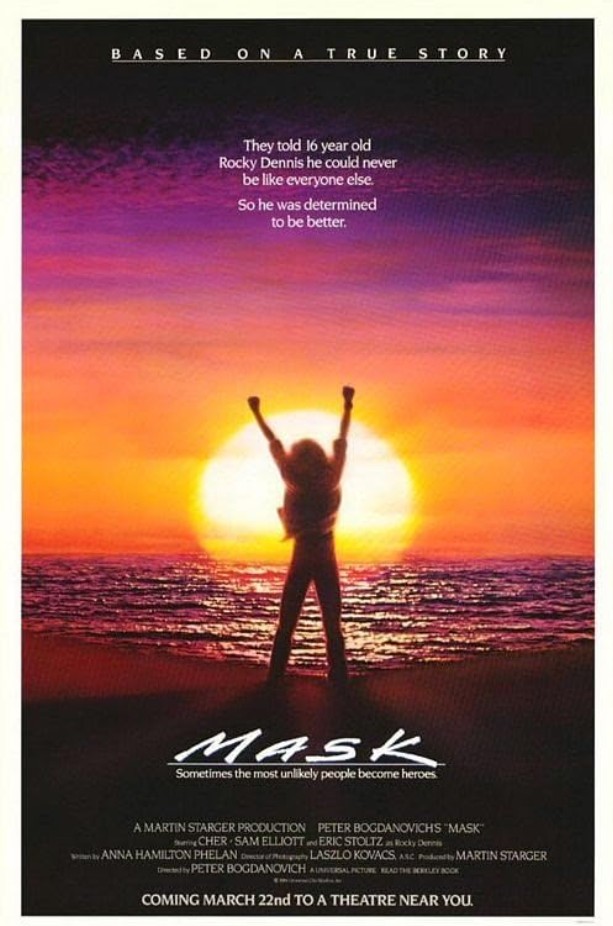
    Mask (1985) poster created by Universal Pictures

    1. Out of the movies from Estelle Getty’s filmography, why did you select Mask?

    I had no idea Estelle had starred in Mask until I saw the movie listed on her IMDB filmography. Prior to selecting it for the Golden Double Double Feature, I had heard good things about the movie. In fact, I learned about Rocky’s story as I researched the film before this review. By choosing it for this year’s double feature, I found the perfect excuse to finally check Mask out!

    2. In Mask, Estelle portrays Evelyn Steinberg. How is Evelyn Steinberg similar or different from Sophia?

    In Mask, Estelle portrayed Evelyn Steinberg. Evelyn is not only Rocky’s grandmother, but also the mother of Rusty (Rocky’s mom). While Evelyn is the mother of a main character like Sophia on The Golden Girls, she isn’t as outspoken or a storyteller like Sophia. Instead, Evelyn tries to keep the peace within her family and doesn’t get involved in family conflicts. She ended up receiving less screen-time in Mask than Sophia did on a typical episode of The Golden Girls.

    3. Mask is based on the real-life story of Roy L. “Rocky” Dennis. Can you think of a time on The Golden Girls when real-life stories, themes, or ideas were woven into the script?

    Though The Golden Girls is classified as a sit-com, the overarching story is grounded in reality, meaning the situations depicted on the show seem realistic, more often than not. One classic example is the sixth episode from the third season, ‘Letter to Gorbachev’. Because the episode aired on Halloween in 1987, that could have given The Golden Girls’ creative team an excuse to make a Halloween-themed episode. Instead, the creative team crafted a story where Rose writes a letter to both President Ronald Reagan and Soviet Premier Mikhail Gorbachev sharing her thoughts on nuclear war. Because nuclear war, as well as The Cold War, were two of the most discussed issues during the 1980s, fans of The Golden Girls were probably comforted by one of their favorite characters being just as concerned as they were about these real-life subjects. Rose’s decision to write the aforementioned letters also shows viewers how anyone, no matter their age, can make a difference.

    4. Was there anything about Mask you liked or didn’t like?

    I said in the past how I typically don’t gravitate toward “slice of life” stories. In my opinion, these types of stories are not as intriguing as other story types. But the “slice of life” approach to storytelling worked in Mask’s favor. It presented Rocky’s story as a glimpse into his life instead of the chronological presentation most biopics adopt. This creative decision brought something different to the biopic genre. What also worked in Mask’s favor was the strength of the acting performances. Each cast member, from Cher’s portrayal of Rusty or Eric Stoltz’s portrayal of Rocky, put genuine emotion behind their performance, finding the heart of the people they’re portraying and bringing the humanity to their names. That genuineness made me feel like I was watching people living their lives instead of actors portraying another person.

    As I said in answer number two, Evelyn ended up receiving less screen-time in Mask than Sophia did on a typical episode of The Golden Girls. I was disappointed by her limited amount of screen-time, as Estelle is one of the reasons why I chose to watch Mask. According to Wikipedia, Evelyn “tries to mediate the tension between her husband and her daughter”. This statement made me believe she’d play a bigger role in the story. But as I already mentioned, Evelyn received a limited amount of screen-time. Her limited involvement in the story disappointed me as well.

    5. Looking back on 1985’s box office, several movies, including Mask, feature younger protagonists (children, teenagers, young adults). Yet younger characters don’t often appear on The Golden Girls. If a younger character had been included within one of the show’s scripts, what kind of story would you have pitched?

    One of the sweetest moments in Mask is when Rusty, her boyfriend, Gar, and their motorcycle friends help Rocky in his time of need. Rocky is worried about not having the appropriate attire for his upcoming junior high graduation. After hearing Rocky’s concern over what to wear, Gar tells Rocky to get him a beer from the refrigerator. When Rocky opens the refrigerator, he finds a brand-new suit his mom, Gar, and the rest of the motorcycle friends pitched in to pay for. Inspired by this moment, I would have advocated for a story on The Golden Girls where Dorothy helps one of her students attend either their graduation or prom by funding one of their expenses, whether it’s attire, a ticket, or a ride to the event. Blanche, Rose, and Sophia could also help Dorothy in her effort to assist her student.

    Travel suitcase image created by Freepik at freepik.com. <a href=’https://www.freepik.com/free-vector/water-color-travel-bag-background_1177013.htm’>Designed by Freepik</a>. <a href=”https://www.freepik.com/free-photos-vectors/background”>Background vector created by Freepik</a>. Image found at freepik.com.

    6. Did you develop any thoughts and/or questions while watching this film?

    Rocky volunteers at a summer camp for blind and visually impaired youth called Camp Bloomfield. While there, he falls in love with a camper named Diana. They attend a New Year’s Eve themed camp party, which was officially called ‘New Year’s Eve in July’. While I’m familiar with the concept of ‘Christmas in July’, I’ve never heard of ‘New Year’s Eve in July’ before. This makes me wonder why the concept of ‘New Year’s Eve in July’ didn’t catch on in pop culture, let alone entertainment media?

    7. Throughout The Golden Girls, cheesecake became an iconic staple of the show. What would you say is the iconic staple of Mask?

    There are several good answers I could choose for this question. But, if I can select only one “iconic staple” for Mask, it would have to be Rocky’s map of Europe. Throughout the film, Rocky dreams about taking a motorcycle trip across Europe with his friend, Ben. He even places pins on the map to keep track of which cities he’d like to visit. Rocky’s map of Europe is a perfect visual representation of why dreams are important. However, the map is also a good representation of a lesson Rocky learned from one of Rusty’s motorcycle friends, Red. Rocky shares with Rusty how Red said a person’s spirit is everywhere after they pass away. This lesson, along with the map, show just how powerful the human spirit can be, even long after a person’s death.

    8. The Golden Girls takes place in Miami, Florida. This location has been referenced throughout the show, from mentions within the dialogue to an entire song about the city. Does the setting in Mask impact the film’s story like Miami impacted The Golden Girls? If so, how?

    Mask not only takes place in California, it was also filmed there. But this location doesn’t impact the story like Miami impacted The Golden Girls. That is because the script prioritized the connections Rocky had with the people in his life. This creative decision was reminiscent of home being more about who you share it with.

    9. Mask was released on March 22nd, 1985 (six months before The Golden Girls premiered). Was there any element from the movie you think could have impacted the show?

    Throughout Mask, Rocky is concerned about Rusty’s addiction to drugs. He not only places pamphlets about the subject in his home, he also directly confronts his mom about her addiction. The topic of drug addiction was woven into Mask in an honest way, realistically showing viewers how it can affect the person with the addiction as well as their family. As I mentioned in this review, the overarching story of The Golden Girls is grounded in reality, with several episodes incorporating real-life topics into the script. One example is the eighth episode from the first season, ‘Break In’. In this episode, Rose is shaken after a burglary takes place in the home she shares with Dorothy, Blanche, and Sophia. It not only gets to the point where Rose’s sleep schedule is impacted, the other “golden girls” (Blanche, Sophia, and Dorothy) encourage Rose to seek counselling. To answer question number nine, I believe Mask showed the creative team behind The Golden Girls how to honestly address real-life topics in their stories.

    10. After watching Mask, is there anything you can take away from your movie-viewing experience?

    Mask perfectly embodies the quote, “Those who mind don’t matter, and those who matter don’t mind”. The genuineness of the acting performances helped contribute to this embodiment, showing each actor’s and actress’s portrayal as someone realistically living their life. What also contributed to this embodiment was how Rocky’s story was told. Instead of adopting a chronological presentation, the creative team behind Mask chose the “slice of life” route, giving viewers a glimpse into Rocky’s life. Like I said in answer number one, I had heard good things about the movie. Now that I’ve seen Mask, I can honestly say this praise is warranted! In fact, I’d say this is one of the best biopics I’ve ever seen. Watching this movie reminded me of Amadeus, as both biopics brought something different to the genre’s table.

    The Golden Double Double Feature banner created by me, Sally Silverscreen. Original image created by Touchstone Television, Witt/Thomas/Harris Productions, 20th Television, and National Broadcasting Company (NBC)

    Thank you for being a friend!

    Sally Silverscreen

    Take 3: Hallmark Hall of Fame’s The Lost Valentine Review (Golden Double Double Feature Part 1)

    Thanks for joining me for the first part of my Golden Double Double Feature! The majority of my review of Hallmark Hall of Fame’s The Lost Valentine is spoiler-free. If you’d like to learn more about why I chose this year’s double feature theme, you can check out the introduction in the link below.

    Announcing The Golden Double Double Feature!

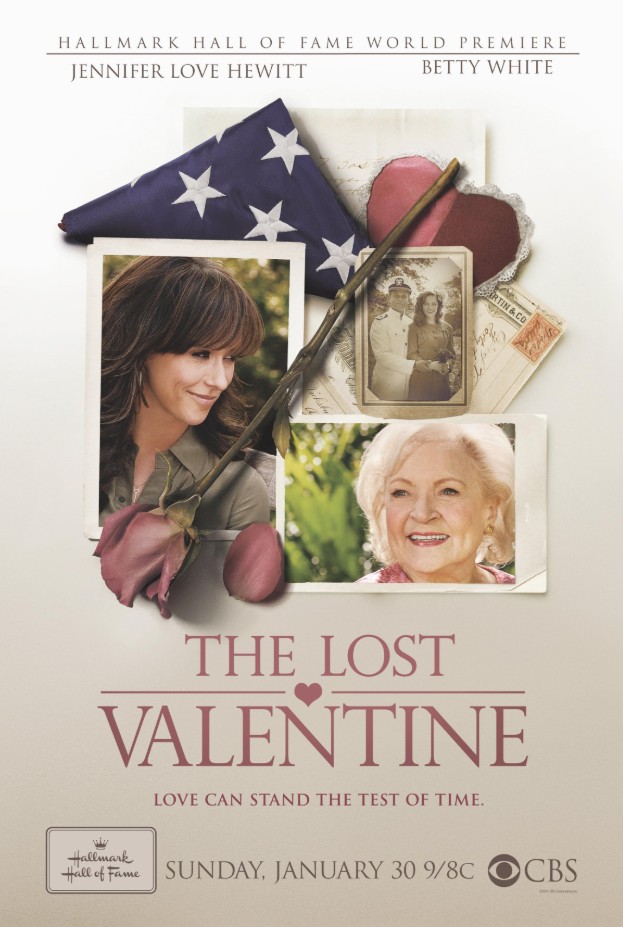
    Hallmark Hall of Fame’s The Lost Valentine poster created by Hallmark Hall of Fame Productions, Ridini Entertainment, and CBS

    1. Out of the movies from Betty White’s filmography, why did you select Hallmark Hall of Fame’s The Lost Valentine?

    When I created my Hallmark Hall of Fame tier rank list in 2020, I not only placed The Lost Valentine in the “Get It On Sale for Half Off” (a.k.a. Good) tier, I also recommended the film because of the use of flashbacks and recognition of Valentine’s Day. But it’s been over eight years since I’ve seen The Lost Valentine. While selecting the 2011 Hallmark Hall of Fame picture for this review, I didn’t know if my opinion on the film would remain the same as it was years ago. On my Year-Long Bingo Card, three of the bingo squares are “Review at least 2 Hallmark Hall of Fame films”, “Revisit a movie you haven’t seen in over 5 years”, and “Review a holiday themed movie that isn’t Christmas”. So, when I saw The Lost Valentine on Betty’s filmography, I remembered liking the movie, as well as how the movie would complete those aforementioned bingo squares.

    2. In Hallmark Hall of Fame’s The Lost Valentine, Betty portrays Caroline Thomas. How is Caroline Thomas similar or different from Rose?

    On The Golden Girls, Rose Nylund is known for her innocence and naivete. These qualities add charm to Rose’s character, as well as provide some of the show’s comedic moments. Betty’s character in The Lost Valentine, Caroline Thomas, lacks Rose’s naivete for two reasons. Caroline’s experiences during World War II and even afterwards give her an awareness of how unpredictable life can truly be. Her lack of naivete also makes sense with the story itself, as The Lost Valentine is a serious drama grounded in reality.

    3. Hallmark Hall of Fame’s The Lost Valentine is based on a book by James Michael Pratt. What book adaptation would you have liked to see Betty star in?

      For 2024’s Eurovisionathon readathon, I read The Readers of Broken Wheel Recommend by Katarina Bivald. From what I remember of the book, I could picture Betty portraying a character from that story. Katarina crafted characters that sounded and felt distinct from one another. Plus, the small-town setting seemed Hallmark-esque, creating a sense of community through dramatic and comedic character interactions. The “golden girls” have distinct personalities on The Golden Girls, allowing each character to be unique. Even though the show is classified as a sit-com, there were emotional, serious moments woven into episodes. With all that said, I think a story like The Readers of Broken Wheel Recommend would have complimented Betty’s acting talents, as The Lost Valentine perfectly showcased her comedic and dramatic timing.

      4. Was there anything about Hallmark Hall of Fame’s The Lost Valentine you liked or didn’t like?

      As I mentioned in answer number one, I recommended The Lost Valentine because of the use of flashbacks. These flashbacks added context to the events presented on screen, especially when it came to Caroline’s part of the story. Meghann Fahy portrayed Caroline’s younger self while Billy Magnussen portrayed Caroline’s husband, Neil. Both Meghann’s and Billy’s acting performance was strong. But together, their on-screen chemistry effectively sold the believability of Neil and Caroline’s relationship! What works in the favor on this relationship is the emotional depth Billy and Meghann bring. A great example is how Caroline’s and Neil’s eyes possessed the pain of being apart from each other. Watching Meghann’s and Billy’s performance felt like witnessing a couple upholding their promise of love instead of two actors simply portraying characters. I wish Billy and Meghann had been cast in more Hallmark projects together.

      Jennifer Love Hewitt stars in The Lost Valentine as a television reporter named Susan Allison. Susan received a subplot where she contemplates her future with her boyfriend, Andrew. This is one of those subplots where you know the relationship isn’t going to last because the film’s female protagonist will eventually fall in love with the male protagonist, which, in The Lost Valentine, is Caroline’s grandson, Lucas. That creative decision led to Susan’s subplot being predictable. Instead, her subplot should have prioritized her reconciliation with her family, especially since Susan mentioned toward the beginning of The Lost Valentine how she doesn’t have a strong relationship with them.

      5. The Golden Girls didn’t receive any television films (like other shows such as Little House on the Prairie, Murder, She Wrote, etc.) In your opinion, why do you think this creative decision was made?

      A typical episode of The Golden Girls is about thirty minutes long. Meanwhile, most television movies receive a run-time between an hour and thirty minutes to two hours. If a tv show’s creative team chooses to make a made-for-TV movie, they need to create a story that justifies a longer length of time. So, I’m guessing the creative team behind The Golden Girls never figured out a story that couldn’t be told in half an hour.

      Rose illustration image created by Freepik at freepik.com. <a href=”https://www.freepik.com/free-photos-vectors/background”>Background vector created by freepik – http://www.freepik.com</a>. Image found at freepik.com.

      6. Did you develop any thoughts and/or questions while watching this film?

      Like I said in my number one answer, it’s been over eight years since I’ve seen The Lost Valentine. Because of this, I had completely forgotten the humor woven into the story. Comedic moments sprinkled throughout the film was such a pleasant surprise for me. One of my favorite scenes was when Caroline reads a sports magazine to a group of veterans at a local hospital. While she’s talking about the New York Yankees, Caroline says she doesn’t hate the team, she just doesn’t like it when they beat a team she likes more. How that piece of dialogue was written, as well as Betty’s sweetly honest delivery, created a scene that was genuinely hilarious. Moments like the one I described alleviated some of The Lost Valentine’s heavier scenes yet never overshadowed the story’s serious subject matter.

      For this part of my review, I will spoil The Lost Valentine. If you have not seen this movie and are planning on watching it, skip ahead to question number seven.

      Toward the end of The Lost Valentine, after Caroline welcomes Neil home, she discovers rose buds growing on a rose bush in her garden. That specific rose bush was not only the first plant Caroline and Neil planted when they moved into their home, the rose bush was believed to be dead for the majority of the movie. When Caroline discovers the rose buds, she reminisces about Neil as she dances to music from the past. All of a sudden, a man who I assumed was Neil’s ghost appeared behind Caroline. After that, the hose Caroline was holding falls to the ground. But the scenes that follow are flashbacks of Caroline and Neil and scenes featuring Lucas and Susan. Is the fallen hose implying Caroline passed away, joining Neil in the afterlife? Or was Caroline so caught up in remembering the past, she dropped the hose by accident? That part of the story was, in my opinion, too open-ended for a stand-alone film. But because The Lost Valentine is based on a book, maybe the source material would provide a clearer explanation than the adaptation did.

      7. Throughout The Golden Girls, cheesecake became an iconic staple of the show. What would you say is the iconic staple of Hallmark Hall of Fame’s The Lost Valentine?

      You’d think I’d pick the titular valentine, as it plays a significant role in The Lost Valentine. But, instead, I’m choosing the red rose. When it comes to growing roses, it takes time, patience, commitment, and care. Even as Lucas wants to uproot a rose bush he believes is dead, Caroline reminds her grandson how she doesn’t give up on things that easily. These aspects perfectly represent some of the major themes of The Lost Valentine; like serving others and putting your love toward something you believe matters. Caroline’s rose bush also provides the story with a nice full-circle moment.

      8. The Hallmark Hall of Fame collection overlapped with The Golden Girls (in terms of existence). Why do you think Hallmark Hall of Fame didn’t try to capitalize on the popularity of the “golden girls”?

      From 1979 to 2011, Hallmark Hall of Fame movies aired on CBS. The Golden Girls existed on NBC. While Hallmark Hall of Fame and The Golden Girls overlapped (between 1985 to 1992), there were two to four Hallmark Hall of Fame films released per year, implying tighter production schedules. Though a typical season of The Golden Girls ran from September to May, a certain amount of time needed to be set aside to film episodes, especially since The Golden Girls was filmed in front of a live studio audience. These factors may have made casting any of the “golden girls” in a Hallmark Hall of Fame presentation difficult, but not impossible. However, trying to accommodate any of the “golden girls” schedules could have affected the schedules of the other cast and crew members of a Hallmark Hall of Fame project.

      9. Hallmark Hall of Fame’s The Lost Valentine was released in 2011 (19 years after The Golden Girls ended). Is there any element from the movie you wish was incorporated on the show?

        One of the overarching themes of The Lost Valentine is serving others. A great example is when Caroline visits veterans at a local hospital. On The Golden Girls, there were two episodes involving veterans; ‘From Here to the Pharmacy’ and ‘Charlie’s Buddy’. However, these episodes prioritized Rose’s and Blanche’s attempt to finding romance. As far as I know, there wasn’t an episode of The Golden Girls where the “golden girls” took the time to honor veterans. Therefore, I wish this type of story had been incorporated on the show. One example is the “golden girls” volunteering at an Honor Flight ceremony.

        10. After watching Hallmark Hall of Fame’s The Lost Valentine, is there anything you can take away from your movie-viewing experience?

        For years, Hallmark’s motto has been “When you care enough to send the very best”. Hallmark Hall of Fame’s The Lost Valentine perfectly represents that motto! The amount of care that Caroline put into waiting for Neil is a beautiful display of putting the needs of others before oneself, one of the major themes of The Lost Valentine. Other parts of the story represent this theme as well, such as Susan’s quest to find the truth about Neil’s whereabouts. By revisiting the 2011 Hallmark Hall of Fame movie, I was reminded why I like it. Strong elements, such as the acting performances and the screenwriting, made my movie-viewing experience enjoyable. I was also reminded of things I had completely forgotten, like the humor woven into the story. As I said in this review, the comedic moments alleviated some of The Lost Valentine’s heavier scenes yet never overshadowed the story’s serious subject matter. This is a Hallmark Hall of Fame movie that still holds up, even fifteen years later. Therefore, it will stay in the “Get It On Sale for Half Off” (a.k.a. Good) tier of my Hallmark Hall of Fame tier rank list!

        The Golden Double Double Feature banner created by me, Sally Silverscreen. Original image created by Touchstone Television, Witt/Thomas/Harris Productions, 20th Television, and National Broadcasting Company (NBC)

        Thank you for being a friend!

        Sally Silverscreen

        Announcing The Golden Double Double Feature!

        When I publish one hundred posts, I create a double feature as one of 18 Cinema Lane’s traditions. My review of Autumn Sonata achieved the aforementioned milestone by becoming my one thousandth published post! But this was not the only milestone my Autumn Sonata review reached. That would also be becoming my four hundred and fiftieth published movie review! Because one post accomplished both milestones, I decided to do something different for this double feature. Instead of reviewing two movies, I’ll be reviewing four of them. As I thought about possible double feature themes, I came to a realization. Each of the “golden girls” (Bea Arthur, Betty White, Rue McClanahan, and Estelle Getty) has a filmography. So, for this double feature, I will cover movies featuring the stars of The Golden Girls! These films will be Mame, Hallmark Hall of Fame’s The Lost Valentine, The Little Match Girl, and Mask.

        The Golden Double Double Feature banner created by me, Sally Silverscreen. Original image created by Touchstone Television, Witt/Thomas/Harris Productions, 20th Television, and National Broadcasting Company (NBC)

        Thank you for being a friend!

        Sally Silverscreen