Take 3: Hallmark’s Frankenstein (2004) Review (Double Feature: 2004 Edition Part 2)

Thank you for joining me for the second part of Double Feature: 2004 Edition! Similar to my review of Sesame Street Presents: Follow That Bird, this review of Hallmark’s Frankenstein will be spoiler-free. If you’re curious about why I chose Hallmark’s Frankenstein for this double feature, you can check out the introduction in the link below.

Introducing my Double Feature: 2004 Edition!
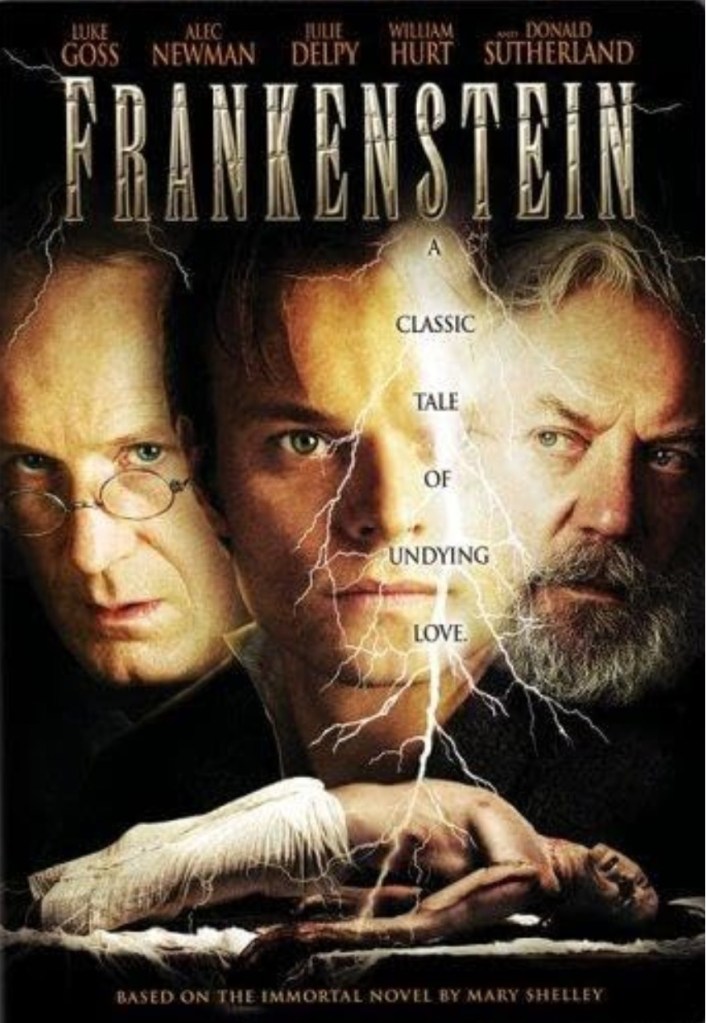
Hallmark’s Frankenstein poster created by Hallmark Entertainment, Hallmark Channel, Silverstar Ltd., Larry Levinson Productions, and RTL

Before I start this review, I need to explain why I’m referring
to this version of Frankenstein as ‘Hallmark’s Frankenstein’. On
Wikipedia, there is a page chronicling all the Hallmark Channel movies released
between 2000 to 2015. In the section listing Hallmark Channel’s films from
2004, Vincent Perez is listed as one of the stars of Hallmark’s version of Frankenstein.
But if you click on the italicized title of Frankenstein, the link goes
directly to Wikipedia’s page about the Hallmark movie starring Alec Newman. While
Vincent did star in an adaptation of Frankenstein released in 2004, it
is not the Hallmark version. I didn’t discover this error until after I had
seen Vincent’s film.

The reason why I included this screenshot in my review is to show my readers how Hallmark’s Frankenstein is listed on Wikipedia. Screenshot taken by me, Sally Silverscreen.

1. What are your thoughts on 2004 as a cinematic year?

2004 was a year where “event entertainment” took place. When I say “event entertainment”, I mean television or movie premieres that are popular enough to become anticipated events. I remember when full print ads would boast a new Hallmark Hall of Fame production, marking the movie itself as “must see television”. Four sequels for popular predecessors were released in 2004, earning a spot among the top ten highest grossing films of the year. Twenty years later, consumers have more options when it comes to entertainment. This provides fewer opportunities for “event entertainment” to take place. Even events that have always been considered “event television” are struggling to capture audience’s attention.

2. Frankenstein premiered on Hallmark Channel on October 5th and 6th, 2004. How has the network evolved since the movie’s release?

When Hallmark’s adaptation of Frankenstein premiered, Hallmark Channel was three years old. At the time, the network didn’t have the distinct identity it does today.  This allowed content to be less restrictive when it comes to creativity. 2004 saw the debut of Hallmark’s second network, Hallmark Movie Channel. On that network, a lot of Hallmark Channel’s previously aired programming made up Hallmark Movie Channel’s catalogue, as well as Hallmark Hall of Fame titles and acquired content. But in the twenty years this second network has existed, the channel’s name has changed twice, with the network now known as Hallmark Mystery. With Hallmark creating two channels, it provided more opportunities to create movies. As time passed, both networks adopted a more distinguishable identity.

3. Is there anything about Frankenstein you liked or didn’t like?

While I think the acting was one of the strengths of this movie, the two strongest performances came from Alec Newman and Luke Goss! Alec’s portrayal of Victor Frankenstein was so captivating because of the wide range of emotions incorporated into the role. His versatility made Victor feel like an authentic human being. From crying over the loss of a loved one to playfully teasing Elizabeth, Alec’s performance allowed Victor’s interactions with other characters to be interesting, with each interaction appearing genuine. Meanwhile, Luke utilized emotion to make The Creature a complicated character like he was in the novel. In fact, Luke’s emotionality spoke volumes in scenes where dialogue wasn’t required. One example shows The Creature after he escapes from Victor’s laboratory. When he seeks refuge in a barn, The Creature bursts into tears, overwhelmed by the fear and rejection directed toward him.

When Frankenstein premiered on Hallmark Channel, it was released as a two-part mini-series. The first part revolved around Victor’s desire to create life, leading up to The Creature coming to fruition. But the second part was more drawn out, with scenes either longer than necessary or completely unnecessary. Frankenstein’s second part features a wedding reception that lasts about five minutes. I understand why that scene was included in the adaptation. In my opinion, though, the wedding reception should have been cut shorter or omitted from the script.

4. In your Word on the Street story about a potential sequel for The Polar Express, you talked about the technology applied to that film. Could you detect any technology incorporated into Frankenstein?

There were a few scenes where it appears CGI (computer generated images) was included in the film. Other than that, it didn’t look like technology (besides cinematography, sound editing, etc.) was relied on to create this adaptation.

Snowy mountain image created by Freepik at freepik.com. <a href=’https://www.freepik.com/free-vector/landscape-background-of-snow-track-and-mountains_968656.htm’>Designed by Freepik</a>. <a href=”https://www.freepik.com/free-photos-vectors/background”>Background vector created by Freepik</a>. Image found at freepik.com.

5. Did you develop any thoughts and/or questions while watching this film?

In one of Victor’s science classes, Victor claims the brain is the most important body part because of its electrical connections between nerves and other body parts. As he is attempting to create life, Victor collects various body parts from the morgue and the graveyard. When The Creature is awakened, wouldn’t he remember his life and identity prior to passing away? Wouldn’t The Creature recognize the body Victor gave him is not the body he was born with? With Victor’s statement about the brain, wouldn’t the nerves in The Creature’s brain not connect with the rest of his body? I never thought of these questions until I saw Hallmark’s adaptation of Frankenstein.

6. You’ve mentioned reading Frankenstein, but seeing few adaptations of the story. How does Hallmark’s version compare or contrast to the Frankenstein related movies you’ve seen?

Besides Hallmark’s adaptation of Frankenstein, I’ve seen three films that incorporate elements of Mary Shelley’s story. But because The Curse of Frankenstein follows the source material closer than the other two films, I’ll be discussing that movie alongside Hallmark’s version of Frankenstein. When I reviewed The Curse of Frankenstein last year, I was disappointed by the creative liberties the film’s creative team adopted. One of these creative liberties was presenting The Creature as a bumbling, destructive machine. As I mentioned in answer number three, The Creature was a complicated character in the novel. While he was destructive, The Creature’s actions were not always impulsive. In Hallmark’s adaptation of Frankenstein, Luke’s performance and the screenwriting illustrated how complicated The Creature is. The Creature’s intelligence was also highlighted in this adaptation, adding to The Creature’s complexity. Shortly after he escapes from Victor’s laboratory, the audience can hear how The Creature already understands the English language, grasping concepts like God and Heaven, as well as reading Paradise Lost.

7. Hallmark’s adaptation of Frankenstein is a made-for-TV production. Has there been a change in small screen cinema from 2004 to now?

In the same year Hallmark Channel premiered their version of Frankenstein, Hallmark Hall of Fame movies debuted on major networks. But fast forward to 2024, Hallmark Hall of Fame is no longer utilized by Hallmark, even after moving to Hallmark Channel in 2014. These decisions are examples of how made-for-TV programming has become more exclusive. Since 2004, Hallmark Channel has grown into one of the biggest creators of made-for-TV content. In fact, Hallmark Channel and its two networks, Hallmark Mystery and Hallmark Family, are three of the few places creating and/or distributing made-for-TV movies today. Rewinding to twenty years ago, major networks were still willing to include made-for-TV programs in their schedules. With the changing television landscape, including the invention of streaming services, major networks are just trying to stay afloat.

8. Now that it’s been twenty years since Frankenstein premiered, has it stood the test of time or become a product of its time?

For the most part, Hallmark’s adaptation of Frankenstein stands the test of time! It helps how this project is bringing to life a story that is iconic and timeless. I mentioned in my review of The Curse of Frankenstein how an overarching message in Mary Shelley’s novel is some good intentions possibly leading to bad results. This message also overarches Hallmark’s adaptation of Frankenstein, as Victor strives to do the impossible. There are other timeless messages in this version of Mary’s story, such as prioritizing what is irreplaceable.

9. After watching Frankenstein, is there anything you can take away from your movie viewing experience?

Similar to my review of I Am David, I will describe Hallmark’s version of Frankenstein in one word. That word would be ‘immersive’. This production made me feel like I was transported to another time and place. A combination of the acting performances, set design, costume design, and screenwriting achieved the illusion of an immersive experience. As someone who has read Mary Shelley’s novel, I appreciate how close to the source material Hallmark’s project is. From what I remember, the majority of the book’s key events and elements were included in the script. With that said, I understand why Hallmark chose to split Frankenstein into two parts. But, in my opinion, the second part was weaker than the first part. Looking back on Hallmark’s adaptation and I Am David, Frankenstein is a more underrated film that was not only forgotten by time, but also overshadowed by other titles released in 2004, like A Boyfriend for Christmas and Love’s Enduring Promise. I’m hoping my review inspires other fans of Hallmark to discover this hidden gem!

Popcorn and movie ticket image created by Freepik at freepik.com. <a href=’https://www.freepik.com/free-photo/cinema-tickets-in-bucket-with-popcorn_2303439.htm’>Designed by Freepik</a>. <a href=”https://www.freepik.com/free-photos-vectors/layout”>Layout image created by Freepik</a>. Image found at freepik.com.

Have fun at the movies!

Sally Silverscreen
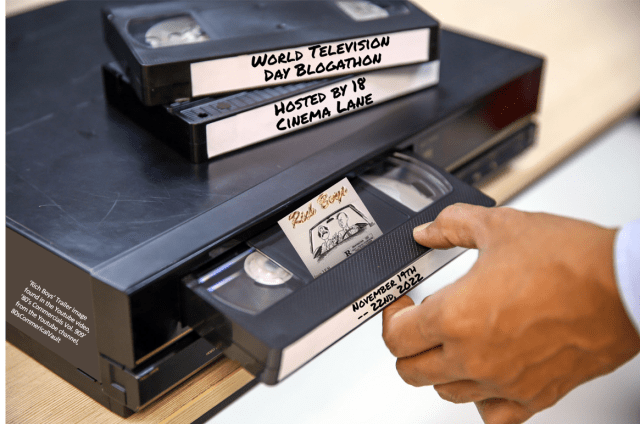


Have You Signed Up for The World Television Day Blogathon?

Do you like TV? Do you like talking about television? Then you’ll love The World Television Day Blogathon! If you’re interested in joining this fun, exciting event, you still have a month to sign up. All the information about the blogathon can be found at this link:

Coming to a TV near you: The World Television Day Blogathon!

Created by Sally Silverscreen at Adobe Creative Cloud Express

Have fun on World Television Day!

Sally Silverscreen

Coming to a TV near you: The World Television Day Blogathon!

When I published my review of Murder, She Wrote: The Queen’s Jewels for August’s Buzzwordathon, I announced I would be hosting a new blogathon this November. I also said more details were to follow. Well, the time has come to reveal more information about the event! As I mentioned in the aforementioned review, the theme is ‘World Television Day’. Because this particular holiday takes place on November 21st, my blogathon will happen between November 19th  and November 22nd. Television is such a broad topic, so here is a list of ideas if you are interested in participating:

  • Television Shows (favorite or least favorite, specific episodes, talent involved, etc.)
  • TV Movies and Mini-Series
  • Films based on or inspired a show (Downton Abbey: A New Era, Jimmy Neutron: Boy Genius, etc.)
  • Books based on or inspired a TV show (Murder, She Wrote, etc.)
  • Songs used in TV productions
  • Sports Events (Super Bowl, Olympics, etc.)
  • Televised Contests (pageants, Eurovision, etc.)
  • Historical Events (Challenger Disaster, etc.)
  • Podcasts or Youtube videos about TV shows
  • History of Television
  • Lost/Found Media related to TV (Sesame Street’s infamous Wicked Witch episode, etc.)
  • Public Service Announcements (PSA) or Public Information Films (PIF)
  • Commercials, Trailers, or TV Spots
Created by Sally Silverscreen at Adobe Creative Cloud Express

Once you’ve selected an idea, take a moment to read the official rules:

  1. Please be respectful toward other participants and the subject(s) you’re writing about (especially if you choose to write about historical events on television).
  2. Please let me know in advance if you plan on publishing your post(s) earlier or later than the allotted time-frame (November 19th to 22nd).
  3. Only new posts will be eligible for the event.
  4. Because of how broad the subject of television is, I will not be allowing duplicate entries.
  5. There is a three-entry limit for each participant.
  6. All entries must be original work.
  7. Subjects from any genre, year, or country are allowed.
  8. If you’re interested in participating, please share your idea(s) in the comment section below.
  9. Pick one of the four banners and spread the word about the World Television Day Blogathon!
Created by Sally Silverscreen at Adobe Creative Cloud Express

World Television Day Participants

Sally from 18 Cinema Lane — The Flamingo Rising: Book vs. Movie, Top 10 or 15 Characters Who Didn’t Reach Their Full Potential

Rebecca from Taking Up Room — List of Top 10 Gilmore Girls episodes

Andrew from The Stop Button — Review of Jericho Mile (1979 made-for-tv movie)

oldbooksandmovies from Old Books and Movies — Ten Favorite Songs Preformed Live on TV During the Golden Age (1948-1959), Raymond Burr’s two appearances on the Jack Benny Show

Created by Sally Silverscreen at Adobe Creative Cloud Express

Have fun at the blogathon!

Sally Silverscreen

Take 3: Scarlett Review

Originally, I was going to review a different movie for the 3rd Annual So Bad It’s Good Blogathon. But when I found a DVD copy of Scarlett at a local consignment store, I couldn’t pass up an opportunity to review the film! Last year, I discovered Gone with the Wind received a sequel many years after its release. While I’m not a fan of the sequel’s predecessor, I thought the 1994 film would be perfect content for the aforementioned event. According to IMDB, Scarlett premiered as a TV mini-series. This gives the sequel a run-time of six hours, which is even longer than the first movie. I never thought Gone with the Wind needed another chapter, as everything ended on a definitive note. However, curiosity got the best of me, as I wanted to find out if this could finally be the “so bad it’s good” movie I’ve been looking for!

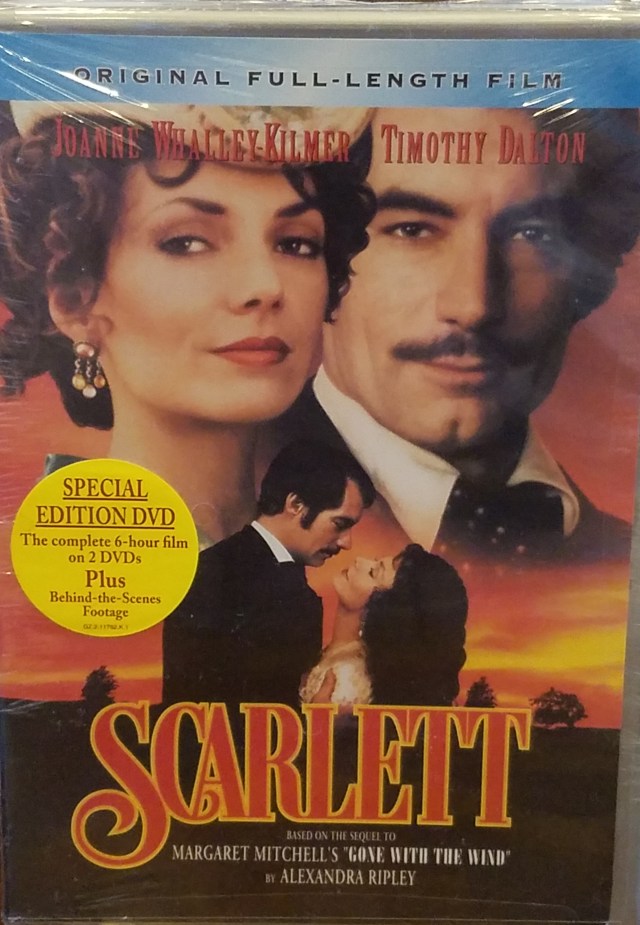
This is the DVD I purchased from a local consignment store. Even the packaging calls Scarlett a six hour film. Screenshot taken by me, Sally Silverscreen.

Things I liked about the film:

The acting: While I like the acting overall, there were three performances that were stand-outs. The first one came from Sean Bean. I haven’t seen much from his filmography, but I remember his portrayal of Ian Howe from National Treasure. Based on these two movies, it seems Sean is very talented when it comes to portraying on-screen villains!  Without spoiling the film, I will say Lord Richard Fenton is a despicable individual. However, it was interesting to see how Sean carried his character in each scene he appeared in. Whenever in public or around Scarlett, Richard comes across as a dashing gentleman. But behind closed doors, he reveals himself to be selfish and controlling, which makes Richard’s overall persona very ugly. In all my years of watching movies, I’ve seen few actors effectively portray characters that had likable and unlikable qualities. Within the film, Scarlett, Sean single-handedly accomplished this; making the audience despise Richard, but appreciate Sean’s acting abilities! The second stand-out performance was Annabeth Gish’s! In historical fiction/period stories, few female characters from a wealthier background contain a personality that is gentler in nature. With the way Annabeth approached her character, Anne, she brought something to the table that isn’t seen often. This not only provided a contrast to Scarlett, but allowed Anne to be her own character. Anne’s gentleness came across on screen very naturally as well! Tina Kellegher’s portrayal of Mary Boyle is the third stand-out performance! A strong sense of emotionality worked in Tina’s favor. This component to her performance presented her character as a believable individual, as if Mary had actually existed at some point in time. Miss Boyle experiences some difficult situations throughout the movie. However, Tina pulled off a performance that appeared flawless!

The costumes: In period films, one of the notable aspects is the costumes. They are one example of a physical representation of the story’s respective time period. The costumes in Scarlett not only looked historically accurate, but also impressive! It also helps how the costumes compliment the actors wearing them. Scarlett’s wardrobe was amazing! It featured a color palette that never appeared over-the-top. Each piece featured patterns and textures that felt fitting for the 1870s, with color combinations working well together. I honestly can’t choose a favorite outfit, as it was fun to discover what outfit Scarlet would wear next! While I realistically don’t have any place to wear one of Scarlett’s outfits, it’s nice to think about which piece I’d like to own in real-life.

The conflict between the British and Irish: Within the overall story, there was an ongoing conflict between the British and Irish. According to the Irish characters, this was due to the British wanting to take over Ireland. I’m not familiar with this particular period in world history. Despite that, I found this part of the story to be fascinating! Because of Scarlett’s Irish heritage and the fact she had family living in Ireland, it gave Scarlett a reason to be aware of the political and social environment around her. Her interactions with Richard also highlight the different sides of the conflict itself. There were other people in this story who were directly connected to this conflict as well. One of Scarlett’s cousin’s, Colum, is a priest. However, he is also a member of a group of Irish people fighting for freedom against the British. It was interesting to see how Colum navigated his own struggles of religious duty and standing up for his people.

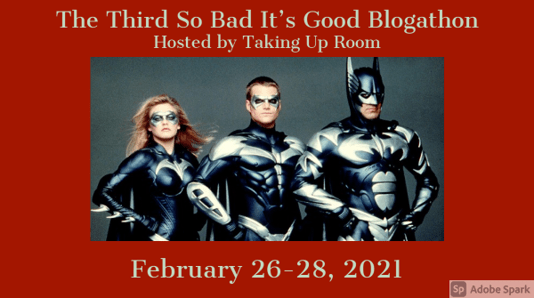
The Third So Bad It’s Good Blogathon banner created by Rebecca from Taking Up Room.

What I didn’t like about the film:

Scarlett and Rhett’s on-again/off-again relationship: I am not a fan of Scarlett and Rhett’s relationship. Even when I try to give it a fair chance and watch it with an open mind, I still do not like their relationship in this movie. One of the reasons why is how it was continually on-again/off-again. This was so repetitive, it became tiresome. It was also difficult to determine if Joanne Whalley and Timothy Dalton, the actor and actress who portrayed Scarlett and Rhett, had any on-screen chemistry. Scarlett and Rhett’s relationship problems did not need to be explored, especially after Gone with the Wind’s ending. In fact, seeing Scarlett and Rhett’s on-again/off-again relationship diminishes one of the most famous scenes and quotes in cinematic history, where Rhett says “Frankly, my dear, I don’t give a damn”. In my opinion, this situation took place simply to justify the sequel’s existence.

Unnecessary stories: As I already mentioned in my previous point, Scarlett and Rhett’s on-again/off-again relationship felt like it was taking place simply to justify the sequel’s existence. This wasn’t the only story within the film to make me feel this way. In the first half of Scarlett, Ashley is struggling to keep his business afloat. Scarlett recruits Sam, a former slave of the O’Hara household, to assist Ashley in building more homes, in order to save Ashley’s business. That storyline is one I found myself not caring about. It also didn’t lead anywhere, as it didn’t have a consistent presence in the overall film. Scarlett’s feud with her sister was another story I thought was unnecessary. Throughout the film, they refused to see eye-to-eye about the future of Tara. While Scarlett’s sister was still living in the house, Scarlett was considering selling it. I thought it was odd for Scarlett to think about selling Tara. In the first movie, she loved Tara so much, Scarlett slapped a woman in the face for expressing her opinion against the place. For Scarlett to completely change her mind without any explanation seemed random.

Choppy scene transitions: At some points in the movie, there were scene transitions that were so abrupt, it caused the film’s overall flow to feel choppy. When visiting a family member, Scarlett is about to share how she became so wealthy. Right as she was about to tell her story, the next scene started, showing another family member walking toward his house. It seemed like parts of the movie were missing. Some of these scene transitions were so jarring because the change of tone was so drastic. One scene showed Colum speaking with an Irish neighbor about their plans to fight the British. This dramatic and serious moment was met with a light-hearted scene where Scarlett goes to a horse fair. The journey from point A to point B needed a bridge.

Irish heart image created by Freepik at freepik.com. <a href=”https://www.freepik.com/free-photos-vectors/label”>Label vector created by freepik – http://www.freepik.com</a>. Image found at freepik.com.

My overall impression:

I can’t call Scarlett “so bad it’s good”. In fact, I would never consider it a bad movie. Objectively, this is a competently made project, where the creative team behind it clearly knew what they were doing. Subjectively, Scarlett is a mixed bag. The conflict between the British and Irish was the best part of this story! It was fascinating to see it unfold and discover how the characters were involved. With the parts of the story directly referencing Gone with the Wind, I found those to exist simply to justify the sequel. Until Scarlett went to Ireland, I was questioning why the movie was made. Personally, I would rather watch a miniseries about the British and Irish conflict over the one I just did. As I wrap up this review, I realize I still haven’t found my “so bad it’s good” movie. Time to go back to square one.

Overall score: 6.1 out of 10

Do you have a movie in your life that you’d consider “so bad it’s good”? If so, what is it? Let me know in the comment section!

Have fun at the movies!

Sally Silverscreen