Take 3: Interrupted Melody Review

Prior to signing up for Maddy Loves Her Classic Films’ Eleanor Parker Blogathon, I had seen two of Eleanor’s films; The Sound of Music and Return to Peyton Place. However, both titles are ensemble films, leaving Eleanor to act in someone else’s shadow. My entry for the blogathon is a review of Interrupted Melody, a film that allows Eleanor’s acting talents to be the center of attention! The 1955 film is one I had never heard of until this year. Before 2020, I didn’t know who Marjorie Lawrence, the Australian opera singer, was. When I learned Marjorie was diagnosed with polio and overcame her illness, I was interested in seeing this part of Marjorie’s life depicted on film. This is because I, personally, haven’t seen many cinematic stories from the perspective of polio patients. I also don’t talk about Australians in cinema, as I don’t often receive an opportunity to do so. This is another reason why I chose to review Interrupted Melody.
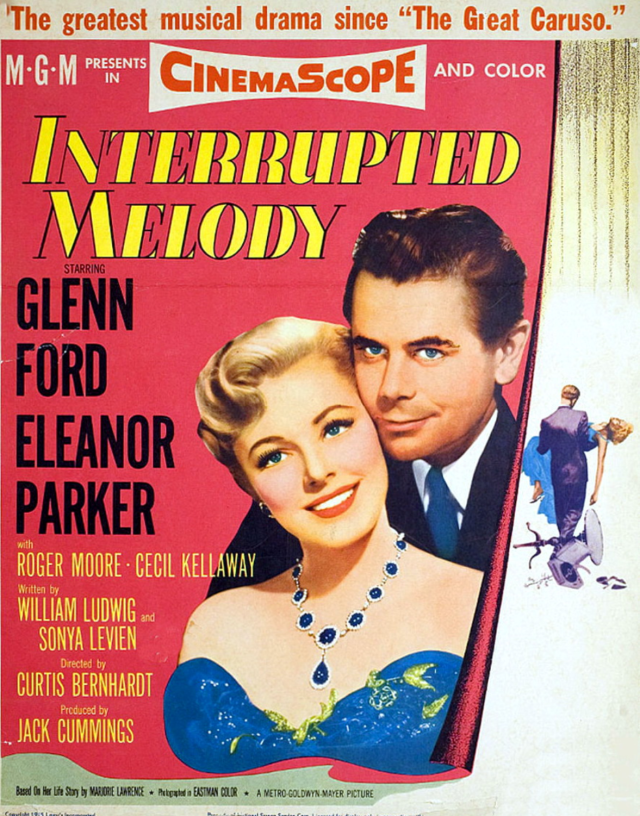
Interrupted Melody poster created by Metro-Goldwyn-Mayer.

Things I liked about the film:

The acting: This is the first movie I’ve seen where Eleanor Parker was the star of the show. I was not disappointed, as Eleanor gave a very strong performance! While Eileen Farrell served as the vocals for the role of Marjorie Lawrence, Eleanor provided the power, passion, and showmanship one can expect from an opera performance. Outside of the opera world, Marjorie experienced several heartbreaks and joys in her life. Through all of this, Eleanor brought forth a portrayal that was emotional, allowing her character to appear and feel realistic. A good example of this is when Marjorie is crawling toward the record player in an attempt to turn it off. One of the key players in Marjorie’s life is her husband, Dr. Thomas King. Portrayed by Glenn Ford, Thomas was her biggest supporter. With a variety of emotions, Glenn also gave a realistic performance! He was able to show the audience how much Thomas cared about Marjorie. Even the supporting actors in Interrupted Melody were strong, which provided strength to the overall cast! Cyril, portrayed by Roger Moore, is Marjorie’s brother and manager. The conversations between him and Marjorie were well performed by both actors, coming across as two siblings having different perspectives on a central topic. This allowed both on-screen personalities to shine as well as showcasing their distinct personas!

The set design: Because Marjorie is an opera star, several opera performances are shown in the film. The movie’s creative team didn’t skimp on the set design within these scenes, as they all felt so immersive. When Marjorie is performing in Madame Butterfly, the stage’s setting is a room from Japan. The window in the background features a large tree, appearing more like a realistic landscape than a painted image. Fine details helped make these spaces appealing to look at. In Marjorie’s first opera, the characters were placed on a Parisian street, with a set of string lights shown over their heads. A detail like this added a three-dimension aspect to the set. Even scenes that didn’t involve the opera looked really good! In one scene, Marjorie and Thomas are on a beach in Florida. While this movie was filmed in Culver City, California, according to IMDB, this was still a photogenic location!

The costumes: In Interrupted Melody, Eleanor Parker wore costumes that were absolutely gorgeous! It also helps that these costumes complimented her so well! In the aforementioned opera, Madame Butterfly, Eleanor’s kimono was light-pink with beautiful embroidery on the collar and sleeves. The embroidery featured flowers, which represented the tree that was featured in the scene’s background. While Marjorie is performing as Carmen in the opera of the same name, her outfit featured a color combination of blue and orange. This was paired nicely with Marjorie’s brown hair. Eleanor even wore some impressive costumes that were not worn during opera performances. Within the film’s second half, she wore a sparkly white gown that was one of my favorites! Eleanor looked beautiful in that dress and I wished she had worn it for a longer period of time.
The Eleanor Parker Blogathon banner created by Maddy from Maddy Loves Her Classic Films.

What I didn’t like about the film:

Missing context: There were areas of the story where I wish context was provided. For starters, how did Marjorie become a singer in the first place? Was this a dream she had since she was a child or a passion she discovered shortly before the events of the film? These questions certainly could have been answered within the script. For a portion of the movie, Cyril disappears from the story. While he eventually appears toward the end of the movie, it isn’t really explained where he went or why he was suddenly absent from the plot. This is something that could’ve been brought up in passing.

More emphasis on the opera world: Since opera played such a huge role in Marjorie’s life, it is going to have a place in the overall story. However, the film put so much emphasis on the glitz and glamour of the opera world, that it caused Marjorie’s polio diagnosis to, kind of, sit on the backburner. This part of Marjorie’s life didn’t come until an hour into the movie. From that point on, it felt like I was watching a highlight reel of Marjorie’s attempts to overcome her illness. I found this disappointing, as I was expecting that part of Marjorie’s story to have a larger presence in the film.

No Australian accents: Before watching Interrupted Melody, I was curious to see if Eleanor could carry an Australian accent. This was, sadly, not the case. In fact, an Australian accent was not consistently used by any of the actors who portrayed members of Marjorie’s family. Toward the beginning of the film, Roger Moore could be heard with an Australian accent. But as the movie goes on, his voice morphs into a British accent. This specific accent was also adopted by the other actors portraying Australians, including Eleanor. While I got used to the lack of Australian accents over time, it is still a flaw I noticed.

String of musical notes image created by Freepik at freepik.com. <a href=’https://www.freepik.com/free-vector/pentagram-vector_710290.htm’>Designed by Freepik</a> <a href=”https://www.freepik.com/free-photos-vectors/background”>Backgroundvector created by Freepik</a>. Image found at freepik.com.

My overall impression:

Like I said in my Follow Your Heart review, Interrupted Melody is not the “end all, be all” of Marjorie Lawrence’s story, as one should learn more about her in their own time. However, I do think this movie serves as a good introduction to this particular individual as well as to opera! Through music, set design, and costumes, Interrupted Melody effectively shows the heart and soul that go into this specific form of entertainment. Within Eleanor Parker’s performance, the audience can see just how resilient Marjorie Lawrence was. Speaking of Eleanor Parker, this movie made me appreciate her more! Strong acting talents and a beautiful presence help create a captivating portrayal that was thoroughly enjoyable to watch. An overarching flaw of Interrupted Melody is how the film becomes so caught up in the glitz and glamour of the opera world, it, at times, forgets its original purpose. In the end, though, the movie was a fine picture that I would recommend.

Overall score: 7.4 out of 10

Have you seen Interrupted Melody? Is there a film about a musician you like to watch? Share your thoughts in the comment section!

Have fun at the movies!

Sally Silverscreen
Take 3: Anchors Aweigh Review

This is it, my 200th movie review! It’s hard to believe I’ve reached this accomplishment in only two years! The recent occurrence and my participation in Pure Entertainment Preservation Society’s Joe Pasternak Blogathon caused me to choose Anchors Aweigh as the next movie to review! This film was recommended to me by The Classic Movie Muse from the blog, The Classic Movie Muse. Anchors Aweigh is also the fourth Frank Sinatra picture I’ve written about in 2020. When reading about Joe Pasternak in the announcement post for the blogathon, I learned that Joe put a lot of thought into the films he produced. Prior to joining the event, the only movie of his I’ve seen is The Unfinished Dance. Back in April, when I reviewed the project, I said it was a good, solid picture! I also mentioned how the movie did a good job at exploring thought-provoking ideas, such as the disappearance of truth. I’m looking forward to talking about Anchors Aweigh, as it is very different from The Unfinished Dance!

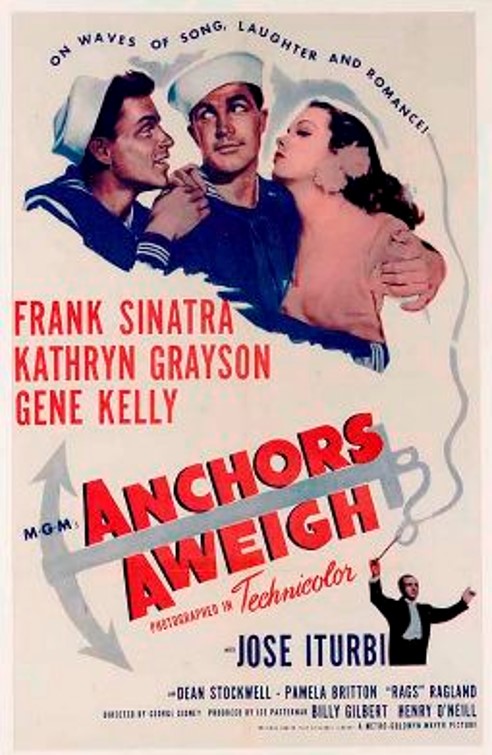
Anchors Aweigh poster created by Metro-Goldwyn-Mayer, M-G-M Cartoons, and Loew’s Inc. Image found at en.wikipedia.org/wiki/File:Anchors_aweigh.jpg

Things I liked about the film:

The acting: Anchors Aweigh is the fourth movie of Frank Sinatra’s I’ve seen, as I said in the introduction. His performance as Clarence “Brooklyn” Doolittle was different from his roles in Marriage on the Rocks, High Society, and Ocean’s Eleven. This is because his on-screen personality was sweet-natured. It was a good contrast to Gene Kelly’s character, Joseph “Joe” Brady. In Anchors Aweigh, Gene displayed a confident and headstrong personality. This set of opposites is what helped Gene and Frank become one of the best on-screen duos I’ve ever seen in film! Despite watching only one of Joe Pasternak’s films, I have noticed how the female characters are intelligent women who always hold their head up high. Kathryn Grayson’s character, Susan Abbott, is a great example! Even though she is a single parent, she never gives up on her dreams of being a singer. Because of a believable performance, Kathryn made Susan someone worth rooting for! While Pamela Britton appears in Anchors Aweigh for a limited time, I really liked her character! She not only had a good on-screen personality, but she also had good-screen chemistry with Frank Sinatra. Watching Pamela in Anchors Aweigh was a joy to watch, as her presence brought a bright light to any of her scenes!

The comedy: I found Anchors Aweigh to be a genuinely funny movie. That’s because the humor in this film was well-written and delivered! When Susan and Clarence are on their way to dinner, Clarence suggests that Joe join them. When Joe asks Clarence why he should go, Clarence tells him he won’t know what was said in Joe’s phone conversation. Not only was this conversation clever, but it was also executed well by Frank and Gene. Another funny scene involving Gene and Frank is when Joe is chasing Clarence around the service lodge. This moment was caused by Joe sleeping in, making him miss his meeting with Lola.

The musical numbers: In Anchors Aweigh, the musical numbers were definitely a highlight! There were so many good scenes, it is difficult to choose a favorite. Gene’s dancing talents were utilized to their fullest extent, from his duet with Jerry (the animated mouse) to his Latin inspired solo. These dance numbers were very colorful. The costumes and set design were bright and cheery, allowing the overall mood to be light-hearted and joyful. Frank’s singing abilities were also well incorporated into the story. His solos were slower, ballad pieces. This choice complimented the more romantic moments of the narrative. Having Frank and Gene perform together was a great decision! They were able to keep up with each other’s fortes as well as work well with one another. “I Begged Her” and “If You Knew Susie” showcases this creative partnership wonderfully!

The joining of animation and live-action: In one scene, Joe finds himself in a magical make-believe land where he interacts with animated animals. This is because he is telling a story to the children of Hollywood Day School how he earned his Silver Star. This part of the movie looked really good, especially for a film released in the mid-‘40s! It felt like Gene was actually in that world, as the technology of the time appeared top-notch. I also liked the quality of the animation! It contained bright colors and clear lines, reminding me of the older films from Disney.  Seeing Gene and Jerry dance together was impressive, as it seemed like they were in the same room. Before the actual dance routine, Gene led Jerry onto the ballroom floor by holding his hand. Because of how good the technology looked, this interaction between these two characters was convincing!

The Joe Pasternak Blogathon banner created by Tiffany and Rebekah Brannan from Pure Entertainment Preservation Society. Image found at https://pureentertainmentpreservationsociety.wordpress.com/2020/08/21/announcing-the-joe-pasternak-blogathon/.

What I didn’t like about the film:

A drawn-out conflict: The main conflict of Anchors Aweigh shows Joe and Clarence trying to set up an audition for Susan. While conflicts take time to be resolved, I wasn’t expecting the conflict in this film to last the entire story. Quality script-writing made the conflict itself interesting. But I honestly feel it could have been resolved sooner.

Less Tom, More Jerry: Tom and Jerry, the famous animated cat and mouse, are listed in the opening credits of Anchors Aweigh. I was not expecting this special guest appearance, so seeing these characters in the film was a pleasant surprise. Even though I liked Jerry’s duet with Gene, Tom showed up for only a few seconds. I found their cast listing misleading, as an equal amount of screen time is expected when Tom and Jerry are included in a program.

I had this patch lying around my house and thought it would be perfect to include in this review! Screenshot taken by me, Sally Silverscreen.

My overall impression:

For someone who had never seen any of Frank Sinatra’s films, I have really made up for lost time in 2020. By selecting Anchors Aweigh for the Joe Pasternak Blogathon, I gave myself an opportunity to watch one of Frank’s earlier works. It also gave me an excuse to see more of Joe’s films. I can honestly say Anchors Aweigh is, so far, the best movie I’ve watched this year! There is so much to like about this project and it was pleasantly joyful! I spent most of my time smiling and laughing, as the humor was one of the strengths of this story. The entire movie was well thought out, showcasing an engaging film that was also entertaining. Thank you, Classic Movie Muse, for suggesting this film to me. If not for your recommendation, I might have never seen this delightful movie!

Overall score: 8.9 out of 10

Have you seen any of Joe Pasternak’s films? If so, which one is your favorite? Share your thoughts in the comment section!

Have fun at the movies!

Sally Silverscreen
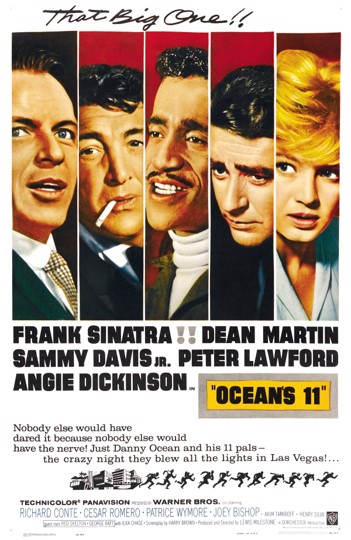
Take 3: Ocean’s Eleven (1960) Review

Peter Lawford is an actor I was not familiar with prior to my participation in the 1st Annual Peter Lawford Blogathon. But, like I’ve said in past blogathons, I didn’t let this stop me to joining Kristen’s event! As I was looking through Peter’s filmography on IMDB, I discovered he had starred in the original Ocean’s Eleven. This is the movie I chose to review for the blogathon because of how rarely heist films are talked about on 18 Cinema Lane. Two years ago, I wrote a review for Logan Lucky when I participated in my very first blogathon. Anyone who has read that article would know how I did not like that film. Another point I’d like to make is how Frank Sinatra, Dean Martin, and Cesar Romero (who all appear in Ocean’s Eleven) starred in another movie I reviewed for a blogathon; Marriage on the Rocks. Like Logan Lucky, I was not a fan of the 1965 movie. With my review of Ocean’s Eleven, however, I’m hoping my luck will start to turn around!

Ocean’s Eleven (1960) poster created by Warner Bros. Image found at http://www.tcm.com/tcmdb/title/18360/Ocean-s-Eleven/#tcmarcp-196918.

Things I liked about the films:

The acting: As I said in the introduction, I have seen and reviewed Marriage on the Rocks. Three of the film’s stars, Frank Sinatra, Dean Martin, and Cesar Romero, reunite in Ocean’s Eleven! The 1960 picture allowed Dean and Cesar to work with acting material that was different from Marriage on the Rocks, with their performances appearing more dramatic. Meanwhile, Frank’s portrayal of Danny Ocean contained the same ease he displayed in the aforementioned 1965 movie. Ocean’s Eleven also introduced me to talent that I had never seen before, such as Peter Lawford and Sammy Davis Jr. What I liked about Peter’s performance was how he was able to adapt to any situation placed in his character’s path. Even though this was the first time I’ve ever seen Sammy act, I was impressed with the smooth confidence he consistently carried throughout the story! One thing that stood out to me was the on-screen chemistry among the cast! Every actor appeared to work well with each other and compliment their co-stars.

The differentiation among the casinos: In a movie showcasing five casinos, it’s important to differentiate these locations for the audience. This choice avoids confusion and prevents the casinos from blending in with each other. The various New Year’s Eve parties feature creative ways these facilities were able to set themselves apart! At the party in the Flamingo casino, pink balloons served as party decorations. Down the street at the Sands casino, blue balloons could be seen. The costumes of the on-stage performers also highlighted the differences between each location. Dancers wearing burnt orange and white checkered costumes were found at the Desert Inn. Meanwhile, black costumes were worn by dancers at the Sands.

The dialogue: For the most part, the dialogue in Ocean’s Eleven was smartly written and sounded clever! One example takes place during a conversation between Danny’s ex-wife and Sam Harmon. When she is talking about her relationship with her ex-husband, Sam responds by saying how Cloud 9 must have been boring. Another example of smart writing happens when Josh Howard to talking with one of the members of Danny’s group. In their conversation, they talk about bravery. Josh shares that being brave doesn’t make someone invincible. These two examples I shared show how there was effort placed in the script.

The 1st Annual Peter Lawford Blogathon banner created by Kristen from KN Winiarski Writes. Image found at https://knwiniarski.com/peter-lawford-blogathon/.

What I didn’t like about the film:

A dialogue heavy first half: Every heist movie sets aside time to lay out the plans for the heist. While the first half of Ocean’s Eleven does feature these plans, it also included explanations of why the members of Danny’s group wanted to pull off the heist. The first half of the story featured explanations of the characters’ personal issues as well. This caused the movie’s entire first half to be dialogue heavy. If some of these explanations had been shortened or cut, it would have presented the heist sooner.

A “bait and switch” third act: With a movie titled Ocean’s Eleven, the audience expects a good portion of the story to focus on the heist itself. While the planning and execution of the heist was shown, the story transitions its focus to Duke Santos and his investigation after the heist takes place. This creative choice made the third act seem like a “bait and switch”. It also caused this part of the story to drag a little bit, preventing the film from ending earlier than it did.

Too many characters: Despite the film containing an all-star cast, I felt there were too many characters in this story. There were times when I had difficulty keeping track of who was who. The large number of cast members also caused some actors to receive less screen time than others, with Red Skelton being one of them. When I saw his name on a casino marquee, I was given the impression he would perform a comedy sketch on the casino’s stage. However, Red was briefly featured in one scene where he was seen arguing with a casino employee. I wondered why this film’s creative team would recruit such a well-known star for such a small part, especially when Red Skelton’s claim to fame, comedy, wasn’t utilized?

Money image created by Freepik at freepik.com. <a href=’https://www.freepik.com/free-vector/bills-and-coins-in-isometric-design_1065328.htm’>Designed by Freepik</a>. <a href=”https://www.freepik.com/free-photos-vectors/business”>Business vector created by Freepik</a>. Image found at freepik.com.

My overall impression:

Ocean’s Eleven is the first film of Peter Lawford’s I have ever seen. But I have not seen the “Ocean” movies from the 21st century, so I cannot make a comparison. Despite all this, I found the 1960 movie to be a fine first impression! Unlike Logan Lucky, Ocean’s Eleven showcased a heist that was interesting, exciting, and even suspenseful. Clever dialogue and creative set design at each casino were worth seeing and listening. Even the acting was solid, not just from Peter, but from the cast as a whole! However, there are factors that held Ocean’s Eleven back from being a stronger film. While I liked the dialogue, I found the movie’s first half very dialogue heavy. There were also too many characters and the third act felt like a “bait and switch”. But I still thought it was better than Logan Lucky and Marriage on the Rocks. If Kristen brings this blogathon back next year, it’ll be interesting to see what I choose!

Overall score: 7.2 out of 10

Have you seen any of the “Ocean” movies? Which film of Peter Lawford’s would you want to check out? Please share your thoughts in the comment section!

Have fun at the movies!

Sally Silverscreen

Take 3: Marnie Review (A Month Without the Code — #1)

For the 4th Alfred Hitchcock Blogathon, I wanted to review a movie that was released after 1954 or before 1934. This is because I’m also participating in Pure Entertainment Preservation Society’s A Month Without the Code Blogathon. While searching through Alfred’s filmography, I came across the 1964 film Marnie. The idea of the female protagonist being the center of the film’s mystery was something I hadn’t seen in the other Alfred Hitchcock projects I saw. As of August 2020, I have seen five of his movies, including Marnie. Two years ago, I said The Birds was the worst film I saw in 2018. However, Strangers on a Train appeared in my Honorable Mentions for my 2018 best movies list. Will Marnie appear on my best or worst of 2020 list? That mystery will get solved by reading this review!

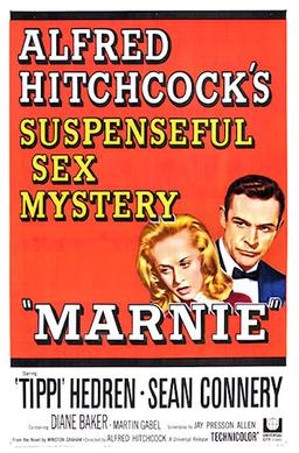
Marnie poster created by Universal Pictures and Geoffrey Stanley Productions. Image found at en.wikipedia.org/wiki/File:Marnie1.jpg

Things I liked about the film:

The acting: Tippi Hendren worked with Alfred Hitchcock when she starred in The Birds. In Marnie, she knew what to expect with the direction of her performance because of this pre-existing partnership. Tippi was given more acting material to work with in this film compared to the previous one from 1963. Her portrayal of the titular character was well-rounded, allowing her to express a variety of emotions. Marnie and Mark’s honeymoon serves as a good example of this. During a nice evening dinner, Tippi displays feelings of content. But when her character is having a heated argument, she provides a fierceness and strength to Marnie that projects off the screen. Before watching this movie, I had seen some of Sean Connery’s films. Even when the film surrounding him doesn’t hold up, he still gives his performance everything he has, talent wise. When I watched Marnie, Sean’s portrayal of Mark reminded me of Rhett Butler from Gone with the Wind. What I mean by this is Sean had a commanding presence that captured the attention of the audience. He also carried himself with confidence throughout the film. Despite appearing in the movie for about two scenes, I thought Louise Latham’s performance was strong! Without giving away any spoilers, I’ll say her portrayal of Marnie’s mother, Bernice, was powerful in the movie’s climax. It was captivating to watch and had a good amount of emotionality.

The cinematography: One of the staples of an Alfred Hitchcock film is the interesting uses of cinematography that can be seen. Marnie features camera work that was creative and appealing to the eye. My favorite example is when Marnie is stealing the money from the office. While she’s doing this, a custodian is mopping the floor in the same vicinity. The shot shows the custodian on the left side of the screen and Marnie on the right side. As this part of the story played out, it built suspense and left me on the edge on my seat. Another good use of cinematography happened at the beginning of the film. When Marnie is first introduced, her face is not shown on screen. This creates a sense of mystery that surrounds her presence. It’s not until she changes her hair color from black to blonde that we finally see Marnie’s face.

The use of the color red: Throughout the movie, the color red appears in various forms. When a red object crosses paths with Marnie, she reacts with panic and fear. One example is when Marnie and Mark go to a horse race. As soon as she notices the red dots on a jockey’s shirt, she immediately wants to leave. This aspect served as a consistent component of this character. It also allows the audience to engage in the mystery surrounding this visual choice.

The 4th Alfred Hitchcock Blogathon banner created by Maddy from Maddy Loves Her Classic Films. Image found at https://maddylovesherclassicfilms.wordpress.com/2020/06/18/announcing-the-4th-alfred-hitchcock-blogathon/.

What I didn’t like about the film:

The scene transitions: When a cinematic story moves from one scene to another, that transition can make or break the movie’s overall flow. In Marnie, some scenes ended abruptly, causing the transitions to feel clunky. A good example is when Marnie is leaving the office after she steals some money. As soon as she walks down the stairs, an employee shows up and greets a custodian. All of a sudden, the next scene begins. Had these transitions been smoother, the film wouldn’t feel like it was in stop-and-go traffic.

Light on thrills: Before watching this movie, I knew it was classified as a thriller. Because Marnie was directed by Alfred Hitchcock, I was expecting a mysterious and suspenseful tale that fits the brand he created. While it did have moments of suspense, the film as a whole was not thrilling. The majority of the story focused on the drama within the narrative. In fact, Marnie felt like it belonged in the drama genre. If Alfred wanted to try something new and go out of his comfort zone, that’s understandable. Unfortunately, this movie seemed out of character for him.

The run-time: Alfred Hitchcock once said “the length of a film should be directly related to the endurance of the human bladder”. However, it seems like Alfred forgot his quote when he directed this movie. Marnie is two hours and ten minutes. Because of this creative decision, some scenes were drawn out longer than necessary in order to satisfy the run-time. One example is a conversation between Mark and Lil after Marnie goes horse-riding. Personally, I thought this scene went on for too long. Had scenes like that one been trimmed down, it might have put the film’s run-time under two hours.

A Month Without the Code Blogathon banner created by Tiffany and Rebekah Brannan from Pure Entertainment Preservation Society. Image found at https://pureentertainmentpreservationsociety.wordpress.com/2020/07/27/announcing-amonthwithoutthecode2020/.

My overall impression:

Alfred Hitchcock is a director who has created a distinct brand for himself. Known as the “Master of Suspense”, Alfred’s work consists of mystery and thrills. This decision is the reason why Marnie sticks out like a sore thumb. I want to make it clear that this is not Alfred’s worst film. The mystery itself was intriguing and the creative choices involving visuals were interesting. But the drama in this story overshadows the thrills, making the overall project feel like it should have been classified as a drama. As I said in my review, this felt out of character for Alfred. It would be like if an author like Debbie Macomber, an author known for writing heart-warming stories, published a gruesome murder mystery novel out of the blue. This would feel out of the character for the brand she created. Because this is my first review for A Month Without the Code, it’s time for me to point out how Marnie could be “breened”! I believe this story could be made into a Breen Code era film. However, these are the things that need to be changed in order for this to happen:

  • Throughout the film, there is language used that does not belong in a Breen Code era film. This ranges from swearing to using God’s name in vain. These words would either be removed or switched to more appropriate choices.
  • There is one scene that heavily implies Mark and Marnie had sex. Even though this happens after they get married, the scene itself would need to be rewritten or omitted.
  • One scene shows Marnie attempting suicide. Because this is a sensitive subject, this scene would to be removed or rewritten.
  • The robe Lil wears has a low-cut neckline. Changes to the style of the robe would need to take place before filming begins.
  • A large amount of blood is featured in one scene. The use of blood would need to be reduced.
  • A horse gets injured and killed in two inter-connected scenes. This would have to get omitted or the scene would have to be rewritten.

Overall score: 6.4 out of 10

What are your thoughts on Alfred Hitchcock’s filmography? Do you have a favorite movie from the “Master of Suspense”? Share your thoughts in the comment section!

Have fun at the movies!

Sally Silverscreen
Take 3: Shock (1946) Review (Clean Movie Month #5)

It’s now the end of Pure Entertainment Preservation Society’s Clean Movie Month. For my second year participating, I’d say I did a pretty good job staying consistent with my content! Throughout July, I have reviewed five films; two from the ‘30s and three from the ‘40s. The film I will talk about in this review, Shock, is a part of those aforementioned five, boasting a release date from early 1946. This film was included in The Blog Complainer’s Random Movie Roulette series, which ended up being the best movie out of that collection. Because of Cameron’s review, I chose to include Shock in my Clean Movie Month line-up! While I usually watch movies from my DVR, cable, or through physical media, the only way I could watch this film is from Youtube, where it was posted on the Cult Cinema Classics channel. I’m glad I was able to watch it so I could bring you this review of Shock!

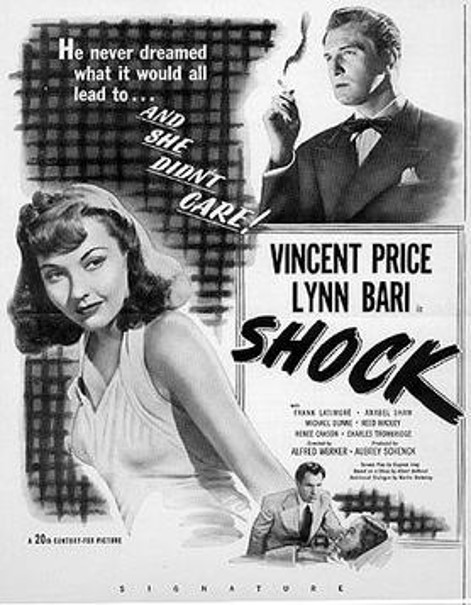
Shock poster created by 20th Century Fox. Image found at en.wikipedia.org/wiki/File:Shock_movie_poster.jpg

Things I liked about the film:

The acting: So far, I have seen The Whales of August and House of the Long Shadows. Despite seeing a small amount of films from Vincent Price’s filmography, I noticed something different about his performance in Shock. In this film, the character of Dr. Richard Cross was terrifying because of his influence and choices. Vincent also expressed emotions in subtle ways. Good examples came from when Richard expressed fear anytime someone brought up his wife’s murder. This cast was so strong, even secondary characters were memorable! Even though his character, Mr. Edwards, was in the movie for a short amount of time, John Davidson did a good job with the acting material he was given! His performance was emotionally driven, as he didn’t rely on dialogue. It added intensity to one of the film’s suspenseful scenes. The one actor who stole the show was Anabel Shaw, who portrayed Janet Stewart. Her emotionality was on point in this film! One beautiful example is when Janet witnesses the murder.

The music: The music in Shock did a good job setting the tone throughout the story! Whenever a suspenseful scene played out, ominous or dramatic music was heard. In a scene featuring Richard and Elaine, a sweeping tune that would usually be heard in romance films served as background music. Musicality also boosted these scenes, with the strong percussion of that scene’s tune landing right on an intense moment. This helped the musical element of the project maintain a sense of consistency.

Moments of suspense: In Shock, suspense was included in a few scenes. Within these parts of the story, the suspense’s execution was well done! One example is when Mr. Edwards has a fight with Elaine. The build-up toward the moment itself was steady, like someone walking to their destination. The surroundings of the characters were dark and mysterious, which worked in the favor of that scene. Mr. Edwards’ lack of speech makes the audience question his motives. All of these elements effectively came together to create one of the best scenes in this film!

Clean Movie Month banner created by Tiffany and Rebekah Brannan from Pure Entertainment Preservation Society. Image found at https://pureentertainmentpreservationsociety.wordpress.com/2020/07/01/cleanmoviemonth2020-is-here/.

What I didn’t like about the film:

Limited amount of suspense: As I previously mentioned, I liked the suspenseful scenes in this film. However, these scenes were very limited. When I read Cameron’s review of Shock, I believed the film would be similar to a story like Rear Window. In the Alfred Hitchcock picture, there was a consistent use of suspense, as the audience receives the mystery in pieces. Because the whodunit, howtheydunit, and whytheydunit of the mystery was revealed early on in Shock, it caused the story to not be as suspenseful as I thought it would be.

Under-utilized characters: A few under-utilized characters could be found in Shock. One of them was Mr. Edwards, who was featured in about three inter-connected scenes. Before these particular scenes appeared in the movie, Richard talks about Mr. Edwards’ mental regression, saying how the patient may need to be moved to a new facility. Because of these story-telling details, I was hoping Mr. Edwards would play a larger role in this story. Sadly, it just felt like he was in the film for the sake of being there.

A slower pace: Because Shock is classified as a film noir, the pace is going to be on the slower side. But most films in this specific genre have an under-lying suspense that consistently weaves through the overall narrative. Since the suspense in this film was limited, it caused the pace to be slower than it should have been, as the majority of the movie revolved around Janet’s prognosis. I’ve mentioned before that mysteries, more often than not, have faster paces. As I already said in this review, the mystery was revealed early in the story. This also prevented the pace from picking up speed.

Love of mental health image created by freepik at freepik.com. <a href=”https://www.freepik.com/free-photos-vectors/people”>People vector created by freepik – http://www.freepik.com</a>. Image found at freepik.com.

My overall impression:

All of the movies I chose for Clean Movie Month were enjoyable in their own respective ways. If I were to rank them, however, Shock and Goodbye, Mr. Chips would be tied toward the bottom of the list. Shock was a fine film, with memorable aspects that made me like the picture for what it was. Anabel Shaw’s performance was one of the best parts of this project, outshining bigger stars like Vincent Price. But some things in this movie held it back from being stronger. One of the movie’s biggest flaws was the limited amount of suspense. Because of this creative choice, the majority of the story felt like a drama than a film noir. Shock is a Breen Code friendly film. But I was surprised by the references of excessive alcohol use that were included in the script.  When Janet’s husband is asking about Richard’s medical credentials, one of the hotel’s employees says that Richard can cure a hangover. When an investigator working on Richard’s wife’s case is talking to Richard about a potential suspect, he tells Richard that the suspect is a “drunkard”. An excessive amount of alcohol use is never glorified or promoted in a typical Breen Code film. This is why I was shocked (yes, that word choice was intentional) to find these statements in a movie from 1946.

Overall score: 7 out of 10

What are your thoughts on this year’s Clean Movie Month? Are you excited for A Month Without the Code? Tell me in the comment section?

Have fun at the movies!

Sally Silverscreen
Take 3: Alice in the Cities Review + 210 & 215 Follower Thank You

Three weeks ago, 18 Cinema Lane received 210 followers! Because I was in the middle of coordinating my PB & J Double Feature and reviewing films for Pure Entertainment Preservation Society’s Clean Movie Month, I postponed my 210-follower dedication review. During that time, my blog also received 215 followers! This caused me to combine my 210 and 215 follower dedications into one review. Since last March, I’ve had a recording of Alice in the Cities on my DVR. As you can tell by the title of this post, this is the film I have chosen to write about. Every so often, I try to watch and/or review a movie that was created outside of North America. Most of these films have come from Europe. Prior to watching Alice in the Cities, the only German film I’ve written about on 18 Cinema Lane was Nosferatu. What’s interesting is how, like the 1922 movie, Alice in the Cities was restored as a result of two different versions of the project. According to a message at the beginning of the film, the movie was filmed in two separate millimeters.

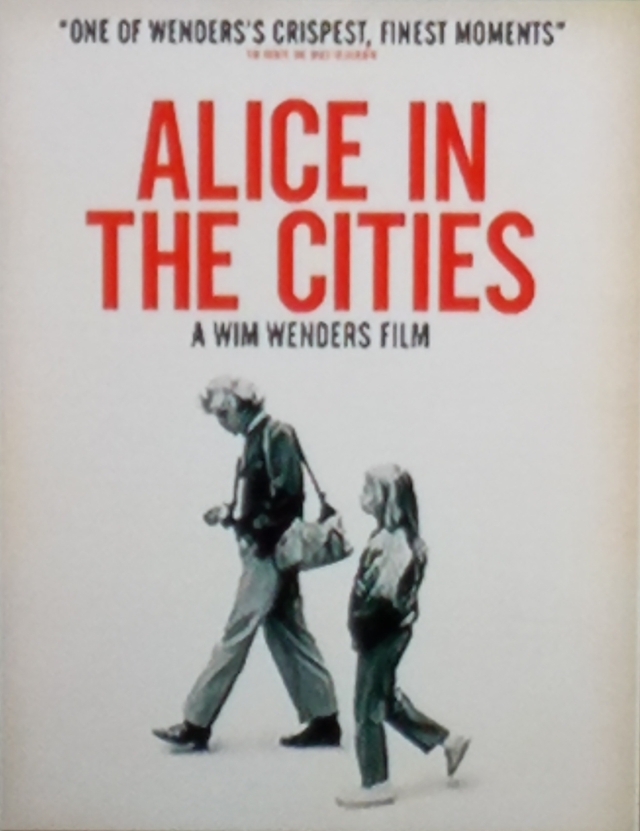
This is a screenshot of the poster I took with my phone that happened to be featured on my television. Screenshot taken by me, Sally Silverscreen.

Things I liked about the film:

The acting: According to an article from Turner Classic Movies’ (TCM’s) website, Wim Wenders, the director of Alice in the Cities, was inspired to create this film after watching Rüdiger Vogler and Yella Rottländer perform together in a previous project. Having these two actors reunite for Alice in the Cities was a smart decision! I liked Rüdiger’s portrayal of Philip because it was consistent. Not only that, but he had a coolness about him as his character moved from one scene to the next. No matter what scenario was thrown in his path, Philip was calm and collected. This made Rüdiger’s performance appear effortless! Something that I noticed while watching Yella’s performance was how believable it was. Whether she was questioning Philip’s “scribbles” or asking for food, Yella’s body language, facial expressions, and overall demeanor appeared as one would expect from a child in Alice’s particular situation. It also helps that Yella worked with Wim and Rüdiger prior to this movie. Because of this, Yella appeared comfortable in the role she was given!

The cinematography: Alice in the Cities is filmed in black-and-white. This was done not only because of a personal decision by the director, but also to avoid having Alice in the Cities be compared to Paper Moon, a movie that was released a year before Wim’s project. When film fans think about black-and-white movies, productions that were released before 1965 will likely come to mind. However, it’s important to remember those titles were presented in black-and-white because filming in color was rarely an option. With Alice in the Cities, its presentation was purposefully chosen, which proved to be more interesting than I would have expected. It caused the story to be frozen in time, allowing the narrative to serve as a time-capsule. Having a few characters appear on screen at a given moment makes each interaction feel intimate, like the audience is directly a part of these verbal exchanges. I also liked how some scenes looked like the view came straight from Philip’s perspective. One great example is when Philip is boarding a train in Amsterdam.

Philip and Alice’s interactions: The majority of this story revolves around Philip’s search for Alice’s grandmother, which results in Philip and Alice spending a significant amount of time together. As I mentioned before, Rüdiger and Yella had worked together in a previous film. This helped their interactions come across as realistic. In the aforementioned TCM article, one of Wim’s inspirations for Alice in the Cities was his friend, who happened to be a single parent. This explains why Philip and Alice’s interactions feel like they are between father and daughter. Because of the quality of their acting abilities, Rüdiger and Yella were able to bring this idea to life in their performance! They were also able to equally carry the film.

Map of Germany image created by Macrovector at freepik.com. Background vector created by macrovector – www.freepik.com. Image found at freepik.com.

What I didn’t like the film:

Scenes feeling like padding: There were some scenes in Alice in the Cities that ended up feeling like padding. One example is when Philip and Alice go to an ice cream shop. Within this scene, a shorter scene of a child eating their ice cream next to a juke box is included. This scene didn’t serve the overall story and felt like it was there just to be there. Personally, I think scenes like the shorter one I mentioned should have been cut from the film.

The run-time: IMDB lists Alice in the Cities with a run-time of one hour and fifty minutes. To me, this caused the movie to feel a bit too long. Like I previously stated, there were scenes in this film that felt like padding. Their purpose seemed to be that of satisfying this run-time. The story itself was also straight-forward. These two factors made me believe that, at least, ten minutes of this movie could have been shaved off.

An inconsistent exploration of Philip’s beliefs: At certain points in Alice in the Cities, Philip expresses his beliefs about topics like his dislike toward television and why he takes photos. Philip presents an interesting way of looking at things that most people wouldn’t think twice about. Unfortunately, these beliefs were not explored to a satisfying extent. As the story places a primary emphasis on Philip’s search for Alice’s grandmother, this exploration gets lost in the shuffle. It also creates an inconsistent inclusion of this part of the story.

New York City skyline with letters image created by Freepik at freepik.com. <a href=’https://www.freepik.com/free-vector/new-york-skyline-typographic-silhouette_719554.htm’>Designed by Freepik</a>. <a href=”https://www.freepik.com/free-photos-vectors/background”>Background vector created by Freepik</a>. Image found at freepik.com.

My overall impression:

Turner Classic Movies (TCM) features an interesting article about Wim Wenders and the creation of Alice in the Cities. After reading about Wim’s personal struggles as a filmmaker and after learning about this film’s restoration efforts, it makes me glad that Alice in the Cities was able to see the light of day! Movies involving road trips usually don’t interest me. But because of Rüdiger Vogler and Yella Rottländer’s performance, I found myself invested in the journey of their characters! Creative cinematography and addressing Philip’s beliefs also help make this film likable and well-made. Even though Alice in the Cities is a fine film, there were things about it that prevented the overall project from being better. The main plot didn’t allow Philip’s beliefs to be explored to their fullest extent. It also doesn’t help that some scenes felt like padding. However, I’m thankful to have been given the opportunity to share this film with my followers! Thank you for helping 18 Cinema Lane reach these milestones! This blog would not be the same without you!

Overall score: 7.4 out of 10

Have you seen any movies created outside your home country? If so, what was your movie-viewing experience? Share your thoughts in the comment section below!

Have fun at the movies!

Sally Silverscreen

Here’s a link to the article from Turner Classic Movies that I mentioned in my review:

http://www.tcm.com/this-month/article/719889%7C0/Alice-in-the-Cities.html

Take 3: The Wife of Monte Cristo Review (Clean Movie Month #2)

Last November, in my Movie Blogger’s Christmas Wish-List, I talked about how I wanted to see The Wife of Monte Cristo. My plan was to review the film for Pure Entertainment Preservation Society’s Clean Movie Month, as the movie was released in 1946. Based on the title of this post, it means my Christmas wish came true! Several months ago, I purchased a DVD copy of this film. I waited until July to watch it, so I could contribute to Clean Movie Month. Now that this blogathon has finally arrived, I can write about The Wife of Monte Cristo! In my aforementioned post, I shared how the movie’s story made me want to see it, as it seemed to focus on Monte and Haydée’s relationship, as well as allowing Haydée to become a more prominent character. Monte Cristo and Haydée are one of my favorite couples from pop culture. Unfortunately, their relationship is barely addressed in any film adaptation of The Count of Monte Cristo. These film adaptations also give Haydée a small amount or no amount of screen time. The Wife of Monte Cristo allows these two voids to be filled.

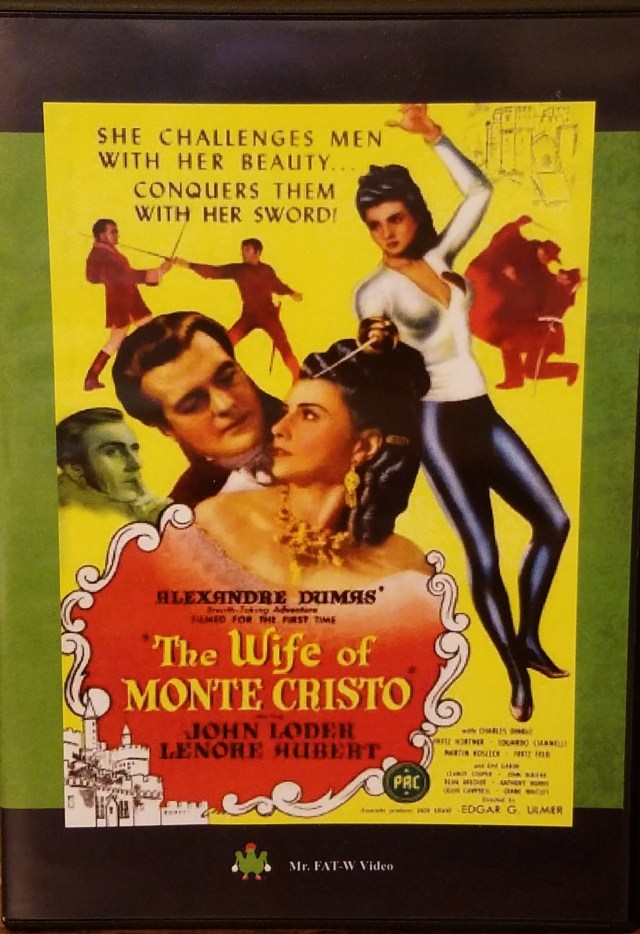
Here is a picture of the DVD I purchased for this review. Screenshot taken by me, Sally Silverscreen.

Things I liked about the film:

The acting: All of the acting performances in The Wife of Monte Cristo shared one common factor: they made every cast member appear natural in their role! Because of this and the believability that came from these performances, each interaction felt like it was taken directly from real-life. Haydée has a greater appearance in this film than Edmund/Count of Monte Cristo, so I’d like to mention Lenore Aubert’s portrayal of Haydée. Her on-screen personality was pleasant, making Haydée a character worth rooting for. Through body language and facial expressions, Lenore showed how Haydée can be intelligent, resourceful, and just a good person overall! I also liked watching John Loder’s performance! In The Wife of Monte Cristo, he portrayed De Villefort, the head of Paris’ police force. What impressed me was how he could adopt two different personas for the same character. Whenever he was socializing or interacting with Haydée, De Villefort was charismatic and had a certain amount of charm to him. But when he is with comrades, planning on catching “The Avenger”, De Villefort is cunning and sinister.

The historical accuracy: The Wife of Monte Cristo takes place in Paris of 1832. The story’s time period and the location within this time period can be seen in every aspect of the film. Characters’ wardrobes are a good example of this. Male characters wore solid colors, with wealthier men in society sporting some embellishment on their outfit. In one scene, De Villefort wore a dark jacket that featured white embroidery. The female characters, Haydée and Lucille, wore elegant dresses that boasted a simple pattern. During a meeting with one of De Villefort’s comrades, Haydée wore a black dress with consistent sparkly detailing. This outfit was eye-catching, but not over-the-top. Another indicator of this historical accuracy were the choices in the set design. In De Villefort’s office space, chandeliers with candles can be seen. Because light bulbs did not exist in 1832, this design choice fits the story’s time period.

The on-screen chemistry: As I already mentioned, Haydée has a greater presence in the film than Edmund/Count of Monte Cristo. This causes Haydée and Edmund to spend a limited amount of time together on screen. In the scenes where they are together, Lenore Aubert and Martin Kosleck displayed strong on-screen chemistry! The on-screen chemistry between Lenore and Martin allowed the audience to see how much Haydée and Edmond truly loved and cared about each other. Even when they were apart, the love between these two characters could still be felt. In one scene, Edmund visits the daughter of a supporter of “The Avenger”. During their conversation, Edmund explains how Haydée saved his life and helped him see the good in humanity after he escaped from prison. What Edmund tells this character is very telling of the love he feels for his wife.

Clean Movie Month banner created by Tiffany and Rebekah Brannan from Pure Entertainment Preservation Society. Image found at https://pureentertainmentpreservationsociety.wordpress.com/2020/07/01/cleanmoviemonth2020-is-here/.

What I didn’t like about the film:

The audio: In my review of The Boy Who Could Fly, I mentioned how the audio of the actors was on the quieter side. I noticed the same flaw when watching The Wife of Monte Cristo. The actors were so quiet, I had difficulty understanding what they were saying. I needed to turn up my television’s volume just to hear them. I’m not sure if this was an issue with the movie itself or with the audio on my entertainment system.

A somewhat misleading title: I said in the introduction that Haydée’s prominence in the story is what caused me to see the film. While she did have an important role in the overall narrative, she wasn’t the central focus. The majority of The Wife of Monte Cristo revolved around “The Avenger” and the villains’ attempts to foil his plans. Because of the title, I was led to believe the film would be a sequel to The Count of Monte Cristo, but from Haydée’s perspective. However, it was simply a sequel to The Count of Monte Cristo.

Edmond and Haydée’s limited interactions: Earlier in this review, I briefly mentioned how Edmond and Haydée spend a limited amount of time together on screen. This disappointed me, as I was hoping to witness the continual growth of their relationship. I was also hoping to see more adorable moments between them, especially since their relationship is barely shown in any film version of The Count of Monte Cristo. While I appreciate the times I did get to see these characters together, there was more to be desired in this department.

Illustration of Paris, France created by Freepik at freepik.com. <a href=”https://www.freepik.com/free-photos-vectors/travel”>Travel vector created by freepik – http://www.freepik.com</a>. Image found at freepik.com.

My overall impression:

Seeing and reviewing this movie is a Christmas wish come true! As someone who is a fan of Monte Cristo and Haydée’s relationship, I am thankful to have discovered this film! It was enjoyable and interesting, as it gives Haydée an opportunity to save the day. Through clever problem solving, teamwork, and wits, we see Haydée making a difference in her world and lending a hand when possible. Despite the film being titled The Wife of Monte Cristo, she is not the star of the film. She does serve an important role though, as she receives a bigger part in this story than she has in other versions of The Count of Monte Cristo. As a film released in the Breen Code Era, it is, for the most part, Breen Code friendly. However, there were two aspects of this movie that I was surprised to see in a Breen Code film. In some scenes, both Haydée and Lucille wear dresses with low necklines. While this style of dress was likely common in the 1830s, its presence would not be frequent in a Breen Code film. There is one scene where the deceased body of one of De Villefort’s comrades is briefly shown on screen. In Breen Code films, a death would usually be implied, not seen.

Overall score: 7.5 out of 10

What are your thoughts on my Clean Movie Month reviews so far? Are you looking forward to my next review? Tell me in the comment section!

Have fun at the movies!

Sally Silverscreen
Take 3: Goodbye, Mr. Chips (1939) Review (Clean Movie Month #1)

1939; a year that many people have considered the “Golden Year of Film”. As I mentioned in my editorial, What the Code Means to Me: Breen, Hallmark, and Me, it seems like there was something for everyone at the cinema. Several films that are well known today were able to find success in the box office in 1939. One of those films was Goodbye, Mr. Chips. I had planned on reviewing this film exclusively for The Robert Donat Blogathon. But because July is Pure Entertainment Preservation Society’s Clean Movie Month, I decided to review Goodbye, Mr. Chips for that event as well. Like last year, I will be writing about films that were released during the Breen Code Era. Some of my other submissions for upcoming blogathons will also double as entries for Clean Movie Month. Now, it’s time to read this review of the 1939 movie, Goodbye, Mr. Chips!

Goodbye, Mr. Chips poster created by Metro-Goldwyn-Mayer and Denham Studios. Image found at http://www.tcm.com/tcmdb/title/76737/Goodbye-Mr–Chips/#.

Things I liked about the film:

The acting: This was my first time watching any of Robert Donat’s performances, so I didn’t know what to expect. However, I was impressed with what I saw! Robert did a good job using a multitude of emotions at various moments in the film. Even when he wasn’t speaking, his performance still carried emotional weight. A great example is anytime something bad happened to Mr. Chips, as his facial expressions alone show how emotionally exhausted he can become. Despite appearing in the film for a limited amount of time, Greer Garson gave a pleasant performance as Katherine Ellis! Not only did she have a good on-screen personality, but she also had good on-screen chemistry with Robert Donat. One of their best interactions took place on a mountain in Austria. As they exchange witty banter, it is obvious to see that both actors enjoy each other’s company. Because most of the story takes place at the Brookfield school, many young actors are present in various scenes. Even though the movie doesn’t favor one child or a small group of children, the acting from the young actors was very on-point for what those scenes called for. On April Fool’s Day, the students are excited at the idea of pranking their teacher. As soon as one of their fellow classmates shares some unfortunate news about Mr. Chips, their happy expressions quickly turn somber. This collective acting quality shows what these young actors are capable of talent-wise!

The set design: A visually appealing aspect of this film was definitely the set design! The Brookfield school alone boasted several eye-catching design choices. One of those was the ornate detailing found on wood surfaces, such as doors and walls. In the Headmaster’s office, you can even see these details over the marble fireplace. Exposed stone walls are a consistent feature at the school, bearing the old-world charm found in structures with a long life-span. These design elements reminded me of Hogwarts from the Harry Potter series. Brookfield is not the only place that highlights fine details. The ballroom in Vienna was a showstopper! Like the Headmaster’s office, there was ornate wood detailing found on the walls. It also showcased sparkling chandeliers and a spacious layout. All of the combined elements gave this room a grand and larger-than-life personality!

The dialogue: Throughout the movie, I was very impressed by the characters’ dialogue! As I mentioned before, the banter between Mr. Chips and Katherine was witty. But it’s also important to point out how the dialogue was written with care and thought. During a private gathering, one of the fellow teachers of Brookfield states that he read a book by H.G. Wells. Another teacher comments about H.G. Wells’ short-term success, saying that his works are too “fantastical” for a lasting career. Earlier in the film, Mr. Chips falls ill. When his housekeeper tells him to address his medical concerns to the doctor, Mr. Chips says he’ll give the doctor “a piece of his mind”. The film is based on a pre-existing novel, so I’m not sure if some of the dialogue can also be found in the book. However, the lines in the movie were memorable and, at times, thought provoking because they were crafted so well!

The Robert Donat Blogathon banner created by Maddy from Maddy Loves Her Classic Films. Image found at https://maddylovesherclassicfilms.wordpress.com/2020/02/29/announcing-the-robert-donat-blogathon/.

What I didn’t like about the film:

Little to no impact on the students: In stories about teachers playing a role in the lives of their students, the audience comes to know the students as characters while witnessing their growth as young scholars and individuals. Since there were so many students at Brookfield, there was no possibility for this to happen. Even when this opportunity arose in the story, it was not taken advantage of. When Mr. Chips reflects on his past, he remembers meeting a new student that was so upset, he ends up crying on the train. Several scenes and years later, this same student visits Mr. Chips to thank him for changing his life. This exchange would have been emotionally affective had we seen this character evolve from a scared child to an independent young man.

Some parts feeling rushed: I know there is only so much a movie can accomplish in an hour and fifty-four minutes. But this should not be an excuse to rush through important parts of a story. When Mr. Chips starts looking back on his past, he recalls his time as a new teacher at Brookfield. After a montage featuring students during various sporting activities, the story progresses by several years, making Mr. Chips a seasoned teacher. Personally, I don’t feel this was a smooth transition between the two points in time, as it made the story feel like it was in a hurry to reach its destination. What would have helped instead was showing a title card with the year before a new part of the story started.

A weaker plot: Before watching Goodbye, Mr. Chips, I knew the story would be about Mr. Chips’ life. While this was the case, it made the story straight-forward. The straight-forwardness of the narrative left little to no room for intrigue. Like I mentioned earlier in this review, the evolution of the students was not shown. This means that the ways Mr. Chips impacted his students or how his lessons affected the people around him wasn’t put on display. There was never an opportunity to wonder how Mr. Chips would accomplish his goals or what would happen to the students. Instead, the story put more emphasis on his private life than his career as a teacher.

Clean Movie Month banner created by Tiffany and Rebekah Brannan from Pure Entertainment Preservation Society. Image found at https://pureentertainmentpreservationsociety.wordpress.com/2020/07/01/cleanmoviemonth2020-is-here/.

My overall impression:

This is the first movie of Robert Donat’s I’ve ever seen. As I said in my review, I didn’t know what to expect, so I approached this film with an open mind. Now that I have seen Goodbye, Mr. Chips, I can honestly say that it was a fine film. There are definitely elements that help make the project a likeable picture. These are the strengths of the movie, from acting performances that come across as believable to dialogue that is clever and witty. But it does contain flaws that hold Goodbye, Mr. Chips back from being better than it was. Parts of the story were rushed and the plot was on the weaker side. This film is mostly Breen Code friendly. However, I was surprised by some of the language used in the movie. One example is when some of the students say the word “ass” as a swear word. I’m aware of how Gone with the Wind was able to include the word “damn” in their script. But I guess I was naïve to think that was the only exception in the Breen Code Era.

Overall score: 7 out of 10

Have you seen either version of Goodbye, Mr. Chips? Are you looking forward to my Clean Movie Month reviews? Let me know in the comment section!

Have fun at the movies!

Sally Silverscreen
Take 3: Never a Dull Moment Review

Like I said in my Follow Me, Boys! review, I have several movies on my DVR. Most of these films were recorded last year or over a year ago. Last night, I chose to watch one of these films, which I added to my DVR last June. This film is Never a Dull Moment! Sometime, Turner Classic Movies (TCM) will host a marathon called “Treasures from the Disney Vault”. When this event takes place, the network will show a collection of smaller titles and lesser known films from Disney. In one of these marathons, Never a Dull Moment was included in the line-up. While I had never heard of this film prior to the marathon, I have seen two of Dick Van Dyke’s movies. Because one of those films was Mary Poppins, which I have enjoyed, I had a good indication that I might like Never a Dull Moment. Was this the case? Keep reading my review if you want to find out!

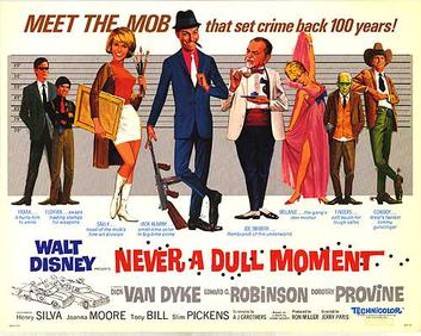
Never a Dull Moment poster created by Walt Disney Productions and Buena Vista Distribution. ©Disney•Pixar. All rights reserved. Image found at en.wikipedia.org/wiki/File:NeverADullMoment1968.jpg

Things I liked about the film:

The acting: Before watching Never a Dull Moment, I had seen Chitty Chitty Bang Bang and Mary Poppins. A consistent component of Dick Van Dyke’s acting abilities I have noticed is the strong adaptability. In one scene, his character, Jack, is acting drunk in an attempt to impersonate a gangster. Moments later, Jack is crying over the loss of a fictional Aunt Gladys. This is a great example of how Dick could effortlessly take on any situation through his performance! At limited moments in the film, a gangster named Florian would appear. This character was portrayed by Tony Bill. What I liked about his performance is how calm and collected his persona came across. Even though Florian was Leo Smooth’s henchman, he presented an idea of a gangster that people have come to recognize in film. While I liked Dorothy Provine’s portrayal of Sally, I want to talk about Joanna Cook Moore’s portrayal of Melanie, as her on-screen presence was shorter. Joanna’s personality was bubbly, which appeared natural for her character. During a scene where Melanie is showing Jack some of her figure skating photos, Joanna seemed to use her performance to light up the room. Her on-screen presence was memorable, despite being featured in only three scenes.

The set design: I was really impressed by the set design in Never a Dull Moment! Since the movie takes place in New York, tall skyscrapers and even the Brooklyn Bridge can be seen. This specific set looked impressive, making the location feel larger than life! Another great example of set design was Leo Smooth’s mansion. My favorite feature of this set was the consistency and fine detailing of the woodwork, especially on the staircase! A local art museum is where the film’s heist is featured. During the climax, various art exhibits are showcased. The Pop Art exhibit was the best one, as the art itself was colorful. It was also large in scale, creating a space that felt grand.

The music: If used well, music can help set a tone for either the whole movie or a particular scene. The music certainly did that for Never a Dull Moment! Whenever Jack was sneaking around Leo’s mansion, smooth jazz music could be heard. This fits the tone of those scenes because it emulates a feeling of curiosity that usually comes from film-noir and mysteries. In a scene involving a spinning piece of art, music from a merry-go-round was playing in the background. Since the art itself is colorful and the scene is meant to be humorous, this musical selection makes sense.

Art tools image created by Freepik at freepik.com. <a href=’https://www.freepik.com/free-vector/flar-art-tools-pack_835368.htm’>Designed by Freepik</a>.  <a href=”https://www.freepik.com/free-photos-vectors/paint”>Paint vector created by Freepik</a>. Image found at freepik.com.

What I didn’t like about the film:

A drawn-out story: One overarching narrative of Never a Dull Moment revolves around a group of gangsters planning to steal a valuable painting. While an important component of any heist is the preparation stage, this part of the process lasted longer than it should have. Only one scene is dedicated to highlighting the plans for the heist. But the rest of that time was spent focusing on things not related to the heist. One example is Melanie Smooth attempting to relive her glory days as a famous figure skater. Moments like this had nothing to do with the heist and caused the overall story to feel drawn out.

Little sense of urgency: Heist films are usually fast paced, as there is a sense of urgency to carry out the heist. But, in Never a Dull Moment, the amount of urgency within the story was small. For most of the film, Jack hangs out at Leo Smooth’s mansion. This part of the movie was mundane, as little to no excitement was taking place. Even the gangsters’ activities didn’t feel out of the ordinary. A good example is when Leo is painting in his office. While the overall level of excitement picked up when the heist started, the build-up itself was not exciting.

A dull first half: With a title like Never a Dull Moment, you’d think the movie as a whole would be intriguing and action-packed. However, that is not the case for this film. I found the first half of the movie to be dull. This is the result of the story being drawn out and a small amount of urgency. Even though a part of the overall narrative focuses on a heist, this aspect of the story seemed to be an afterthought within the film’s first half. The heist itself took place in the second half of the movie. But this doesn’t make up for the weak nature of the previous segment.

New York City skyline with letters image created by Freepik at freepik.com. <a href=’https://www.freepik.com/free-vector/new-york-skyline-typographic-silhouette_719554.htm’>Designed by Freepik</a>. <a href=”https://www.freepik.com/free-photos-vectors/background”>Background vector created by Freepik</a>. Image found at freepik.com.

My overall impression:

As of late June to early July 2020, I have reviewed four live-action Disney films from the ‘60s. Three out of four of these movies have been ok or “middle of the road”. Never a Dull Moment was one of them. I will say this is a better heist movie than Logan Lucky. However, it wasn’t as exciting as I had expected it to be. The film is titled Never a Dull Moment, but the first half of the story is just that: dull. It also doesn’t help that there was a small amount of urgency. But the movie did contain elements that I did like. Some of them includes the acting and the set design. As weird as it sounds, Never a Dull Moment doesn’t feel like a Disney movie. It’s understandable for a studio to try new things and think outside the box. Never a Dull Moment, however, seems like belongs to a different studio. Like my Follow Me, Boys! review, I can’t fully recommend this movie, but I’m not going to dissuade anyone from watching it either.

Overall score: 6.2 out of 10

Have you seen any of Dick Van Dyke’s films? Which live-action Disney film from the ‘60s do you like or dislike? Tell me in the comment section!

Have fun at the movies!

Sally Silverscreen

Take 3: The Clown Review

I would like to reminder everyone that the winners of the 2nd Annual Gold Sally Awards have been announced! You can discover who won at this link:


The results of the 2nd Annual Gold Sally Awards are finally here!


Before I signed up for The Great Ziegfeld Blogathon, I had no idea who Florenz “Flo” Ziegfeld Jr. was. But during my two years of blogging, I’ve learned that the most important aspect of blogathon participation is having something interesting to say. For me, my contribution is talking about the 1953 film, The Clown. This was the first film I saw when I looked through Zoe’s list of film recommendations. What caused me to choose this movie was discovering Red Skelton was the lead actor. I am familiar with who Red is as an entertainer. However, this is the first film of his I’ve ever seen. So, I thought this was the perfect opportunity to finally watch one of Red’s comedic performances!

The Clown poster
The Clown poster created by Metro-Goldwyn-Mayer. Image found at en.wikipedia.org/wiki/File:The_Clown_poster.jpg

Things I liked about the film:

The acting: Over the years, I’ve noticed how comedic actors have had a successful experience transitioning to dramatic acting. This is certainly the case for Red Skelton. Even though this is the first movie of Red Skelton’s I’ve seen, I know he is known for his comedic work. But I think Red did a good job with the dramatic material he was given! His portrayal of Dodo was so effective, there were times where I felt like I could empathize with him. One example was when Dodo was upset by the idea of his son leaving his custody. Speaking of Dodo’s son, I really liked Tim Considine’s portrayal of Dink, as he did such a good job for an actor so young! Because of the quality of Tim’s performance, the audience was able to see how Dodo’s choices affected Dink without completely breaking his spirit. In the scene where Dodo promises another fishing trip, you can see that Dink is disappointed. However, he never stopped loving his father and wanting the best for him. Despite having a limited on-screen presence, Jane Greer’s performance was memorable! She effectively portrayed the mannerisms and behaviors you’d expect from a mother. A great example is whenever Jane’s character, Paula, tried to give Dink a hug. Even though she barely knew Dink, she still put his best interests before her own.


The messages and themes: An overarching theme in The Clown is how everyone is prone to experience troubles in their life. While some people’s issues are greater than others, an individual’s personal situation has the ability to affect the people around them. In this movie, Dodo struggles with alcoholism and a gambling addiction. These struggles not only affect Dodo’s ability to hold a job, but it also affects Dink’s life. No matter how hard he tried to turn his life around and despite all the chances he was given, Dodo had difficulty escaping his demons. Dodo’s story shows viewers how we still have to deal with the darkness in our lives, even when we finally find a light. His story also shows viewers how important it is to put family first. In one scene, Dink visits the office of Dodo’s agent, Goldie. Dink makes this choice because he cares about his father’s well-being and wants to see him succeed.


The ballet lesson: In a flashback, Dodo is shown attending a ballet lesson because he lost a bet. Out of all the comedic scenes, I found this one to be the funniest! It wonderfully showcases Red’s comedic talents, which fall in line with the slap-stick style. What’s also great about this scene is how the dancers at the studio contributed to the comedy. During the lesson, various dancers pass along a sticky candy wrapper in an attempt to get rid of it. As someone who appreciates dance, I liked how Red’s comedy was paired with something that I’m interested in.

12 size
Masks of comedy and tragedy images created by freepik at freepik.com. <a href=”https://www.freepik.com/free-photos-vectors/background”>Background vector created by freepik – http://www.freepik.com</a>. Image found at freepik.com.

What I didn’t like about the film:

An emphasis on drama: Prior to watching this film, I knew it would contain some dramatic elements. However, because this film is called The Clown and because Red Skelton is the film’s lead, I expected the picture to have more comedy than it did. The movie put more emphasis on drama, with some comedic elements added to the script. This means that moments with comedy were used sparingly. While this creative choice prevented the story from becoming too light-hearted, it did a disservice to Red’s comedic talents. He wasn’t given as much creative freedom to do the kind of performances he is known for.


The “tell, don’t show” approach: Throughout the movie, various characters praised Dodo for being a Ziegfeld performer. Goldie, Dodo’s agent, recalls what caused Dodo’s down-fall. A local store-owner treats Dodo’s watch, that he received from Ziegfeld, better than any military medal. But we, the audience, never get to see Dodo during his hey-day. No flashbacks are dedicated to this time period and we never truly get to witness the start of Dodo’s downward spiral. Everything that was said about Dodo’s time in Ziegfeld’s performing company feels like hear-say.


A misleading title: As I’ve said before, this film is called The Clown. The film’s poster also features Red Skelton wearing clown makeup. While Red’s character, Dodo, performs comedy sketches, he doesn’t really adopt a clown persona or dress up as a clown. Yes, Dodo portrayed a clownish character in the movie’s first scene. But that was the only scene where this was the case. It causes the title to seem kind of misleading.

The Great Ziegfeld Blogathon banner
The Great Ziegfeld Blogathon banner created by Zoe from Hollywood Genes. Image found at https://zestyz.wordpress.com/2020/03/08/announcing-the-great-ziegfeld-blogathon-2020/.

My overall impression:

During this film, Dodo says that fame can go up and down faster than an elevator. There is truth to what he said, especially in an age where social media exists. Movie reviewing can also go up or down. Sometimes, you find a winner. Other times, the film just misses the mark. When it comes to The Clown, I thought it was fine. There were elements within the film that I liked. However, the overall project was more dramatic and sadder than I expected it to be. Because of Red Skelton’s involvement, I thought there would be more comedy in the story. I feel the limited use of comedy held Red back from pulling off the types of performances that made him well-known in the first place. He did a good job with the film’s dramatic material, but Red is not a dramatic actor. If you are a fan of Red Skelton’s comedy, don’t go into this movie expecting Red’s comedic work to be heavily emphasized.


Overall score: 7.4 out of 10


Have you seen any of Red Skelton’s acting work? If so, which piece is your favorite? Let me know in the comment section!


Have fun at the movies!

Sally Silverscreen