Sunset Over Hope Valley: Stars in a Lantern

To help Lily feel more at home in Hope Valley, Minnie gives Lily Cooper’s lantern from when he was younger. This golden lantern is covered in stars, lighting up the ceiling with bright star-shaped images. When we think about stars, the idea of a collection of stars existing in the night sky usually comes to mind. Within that collection, the stars come together to make the sky brighter. The aforementioned idea could also be applied to the residents of Hope Valley. Each character is a star, shining in their own right. But when they either come together for a special occasion or work together to solve a problem, the town as a whole becomes a brighter place. Characters coming back to the show after an extended period of time are like shooting stars. Their return is so memorable, they captivate the audience’s attention.

Just a reminder: If you did not see this episode of When Calls the Heart, there will be spoilers within this re-cap.

When Calls the Heart season eleven poster created by Hallmark Media, Crown Media Family Networks and Hallmark Channel

Season: 11

Episode: 11

Name: Run to You

Major story:

Bill and Nathan recruit Lee, Henry, and even Mike to not only protect Lucas, but Hope Valley as well. They agree to guard the town from outside, waiting for Casimir Shaw to show up. Jeanette returns to Hope Valley to warn Lucas of Casimir’s arrival. However, in one scene, Jeanette is shown shining her compact in the sun, signaling Casimir himself. Frustrated by the lack of information, Rosemary wants to know what’s going on in town. But she’s not the only curious person. Randall, Rosemary’s rival reporter, also wants answers. His quest for answers is fueled by his family being threatened by his source. After Randall shares this information with Rosemary, they discover Randall’s source and Jeanette possess the same handwriting. Rosemary goes to the Queen of Hearts Hotel to share this news with Lucas, only to fall into Jeanette’s trap and become a hostage. Elizabeth also becomes a hostage because she went to the hotel looking for Rosemary. During this situation, Rosemary realizes Jeanette and Casimir are the same person. She confronts Jeanette with this realization. Meanwhile, outside of Hope Valley, Randall shares his and Rosemary’s findings with Bill, Nathan, and Lucas. The men return to Hope Valley in order to rescue Rosemary and Elizabeth. At first, there is a struggle at the hotel that causes Bill to get hurt. But after Lucas talks Jeanette into turning herself over to authorities and Elizabeth gets away by jumping into a pile of hay with Nathan, the situation de-escalates. Multiple Mounties arrive to take Jeanette to jail.  

Mountie face image created by Bakar015 at freepik.com. <a href=’https://www.freepik.com/free-vector/a-set-of-canada-icons_1050671.htm’>Designed by Freepik</a>. <a href=”https://www.freepik.com/free-photos-vectors/food”>Food vector created by Bakar015 – Freepik.com</a>. Image found at freepik.com.

Minor stories:

One day, Lily shares with Faith how, when she lived with her grandmother, she and Dora used to look at the stars from her bedroom window. Faith is suddenly reminded how Lily’s room window at The Café doesn’t have a good view of the sky. In order to solve this problem, as well as helping Lily feel more at home, Minnie offers Cooper’s lantern that was referenced in this re-cap’s introduction. Joseph even provides an electric bulb for the lantern. Later in the episode, when Faith is reading a story to Lily, the lantern works as intended. Meanwhile, Mei receives a letter from her brother. The letter reveals Mei’s brother will be in Cape Fullerton. Originally, Mike and Mei plan to meet Mei’s brother in an out-of-town trip. Instead, Mike suggests having Mei’s brother come to Hope Valley. Mike suggests this because he wants to marry Mei. He shares his feelings to Mei in an official wedding proposal. Mei accepts the proposal, despite not receiving a ring.

Colorful galaxy image created by Freepik at freepik.com. <a href=’https://www.freepik.com/free-vector/lovely-hand-drawn-galaxy-background_2943080.htm’>Designed by Freepik</a>. <a href=”https://www.freepik.com/free-photos-vectors/background”>Background vector created by Freepik</a>. Image found at freepik.com.

Some thoughts to consider:

  • At the beginning of the episode, Mollie and Florence talk about the recently cancelled hotel. This discussion causes Minnie to ask about the upcoming merger between Benson Hills and Hope Valley. Now that the hotel seems to not be moving forward, there is little to no reason to merge these towns. But if that plan gets cancelled too, what will serve as the overarching plot for season twelve? I’m pretty sure the creative team behind When Calls the Heart will think of something. However, I would be disappointed if Hope Valley and Benson Hills didn’t merge.

  • This episode of When Calls the Heart was very well written! Having Jeanette and Casimir be the same person is one of the most clever decisions this show’s creative team has made in quite some time. I also like how the tension built up over the course of the episode, leading to a climactic and suspenseful moment. Now that this story has wrapped up, I’m curious to see how season eleven ends, as well as what cliff-hangers will be left in preparation for season twelve!

  • When I first read the synopsis for When Calls the Heart’s season finale, I discovered a wedding was on the horizon. Out of all the characters that were eligible to get married, I figured the aforementioned wedding would be Mei and Mike’s. This decision makes sense, especially since the hints throughout this season have not been subtle. At the same time, I think Mike and Mei’s relationship is moving a little too fast, considering they just became a couple in season eleven. I understand the show’s creative team needed a big event to close out the season. But when it comes to any of the characters get married, I wish the creative team waited at least one more season to host another wedding in Hope Valley.
Sunset image created by Photoangel at freepik.com. <a href=”https://www.freepik.com/free-photos-vectors/background”>Background image created by Photoangel – Freepik.com</a>.<a href=’https://www.freepik.com/free-photo/red-sunset-clouds-over-trees_1254327.htm’>Designed by Freepik</a>. Image found at freepik.com.

What are your thoughts on this episode? Are you looking forward to the season finale? Share your thoughts in the comment section!

Have fun in Hope Valley!

Sally Silverscreen

Sunset Over Hope Valley: A Promise Made is a Promise Kept

Rosemary wants the Governor to visit Hope Valley. She writes a letter to the Governor himself, making her town look impressive and worthwhile. When Rosemary gets her wish, she is both excited and overwhelmed, due to the Governor’s arrival happening sooner than anyone expected. In order to get the Governor to come to Hope Valley, Rosemary makes several promises. Throughout this episode, she is a woman of her word, trying to keep as many promises as realistically possible. Rosemary is not the only character to keep a promise on When Calls the Heart. Hope Valley’s residents try to make their words have meaning, giving other characters and viewers a reason to trust them. When this happens, problems get solved and goals are achieved!

Just a reminder: If you did not see this episode of When Calls the Heart, there will be spoilers within this re-cap.

When Calls the Heart season ten poster created by Crown Media Family Networks and Hallmark Channel

Season: 10

Episode: 9

Name: Deep Water

Major stories:

Rosemary receives the exciting news of the Governor’s visit to Hope Valley! However, she is concerned about how she will deliver on all the promises she made to the Governor. This is because the Governor plans to arrive the following day. Keeping her word, Rosemary recruits as many residents to help her deliver her plan. Because Rosemary promised a radio broadcast, Fiona is in charge of locating a microphone. Meanwhile, Mike and Mei are responsible for creating an original song. Joseph and Lee volunteer to build a grandstand. Even Lucas helps organize a black-tie gala during the Governor’s first night in Hope Valley. But after Mr. Mitchell, one of the town’s guests, informs Lucas of the missing water in Hope Springs, he also informs Lucas of the Governor’s change of plans. Now, the Governor will arrive in Hope Valley in three hours. When Lucas asks Mr. Mitchell how he knows this information, Mr. Mitchell reveals he works closely with the Governor. Determined to make things as perfect as possible, Rosemary strives to bring her promises to life, especially upon hearing the Governor’s new plans. As the Governor arrives, everything runs smoothly. Hope Valley’s choir performs an original song, created by Angela and Ally. The Governor seems impressed with this introduction. But during his visit, he’s interested in meeting with Lucas.

Nathan receives a mission to settle a dispute between a farmer and a group of Pinkertons. When he arrives at the farmer’s house, Nathan agrees to trade places with the farmer’s hostage. After the hostage and Nathan switch places, the farmer accuses Nathan of working with Montague. While convincing the farmer how this accusation is false, Nathan learns how Montague is attempting to buy the farmer’s land. Because the Pinkertons are trying to hurt Nathan and the farmer, they escape from the farmer’s property, with Bill’s help. The three return to Hope Valley unharmed. Both Nathan and Bill learn more about Montague’s plans from some of the other characters. Lee reveals how he received a huge lumber order from Montague, with plans to build large wooden structures. Elizabeth comes to the conclusion Montague is building aqueducts, used for stealing water from other sources. They also become suspicious of Madeleine and Jaime’s whereabouts. Elizabeth finds it strange how Jaime mailed the library’s book about geology, even though he claimed he and his mom were returning to Hope Valley in a few weeks. Mike confesses how Montague told him he isn’t sure where Madeleine is, making Mike believe Montage and Madeleine aren’t engaged.

Wish list image created by Vectorjuice at freepik.com. Task list vector created by vectorjuice – www.freepik.com

Minor stories:

Because this episode’s stories revolved around the Governor’s arrival and the conflict involving the Union City Holdings company, there were no minor stories.

Heart shaped balloons image created by Katemangostar at freepik.com. <a href=”https://www.freepik.com/free-photos-vectors/background”>Background vector created by katemangostar – http://www.freepik.com</a>. Image found at freepik.com.

Some thoughts to consider:

  • On Twitter, I saw one fan ask why Rosemary isn’t the mayor of Hope Valley. Reflecting upon this question, I realized how much of a good idea that would be! It’s been several seasons since a woman has become Hope Valley’s mayor. Plus, Rosemary has proven of multiple occasions how she can accomplish anything her heart desires when she sets her mind to something. At this point, there’s no knowing what’s in store for season eleven. However, I hope When Calls the Heart’s creative team strongly considers making Rosemary Hope Valley’s next mayor!
  • During Hope Valley’s preparations for the Governor’s arrival, Henry volunteers to build a stage for the choir. Rosemary replies by saying “Hope Valley will finally get a stage”. For years, fans have been waiting for Rosemary to receive her theater. While Lucas has brought movie nights to Hope Valley, Henry’s construction of the stage is the closest step to creating that theater. With Henry taking the time to build the park’s plant boxes and the stage, I wonder if he’ll choose to build a theater for Hope Valley?
  • Ever since Hope Valley’s choir was formed, some of its members seem eager to pair Mei and Mike together. This makes me wonder if Mike and Mei will start a romantic relationship? I think they would make a nice couple. I also think Amanda Wong and Ben Rosenbaum have pleasant on-screen chemistry. As I’ve said before, there’s no knowing what’s in store for season eleven. However, Mei and Mike falling in love could lend itself to an interesting subplot!
Sunset image created by Photoangel at freepik.com. <a href=”https://www.freepik.com/free-photos-vectors/background”>Background image created by Photoangel – Freepik.com</a>.<a href=’https://www.freepik.com/free-photo/red-sunset-clouds-over-trees_1254327.htm’>Designed by Freepik</a>. Image found at freepik.com.

What are your thoughts on this episode? Where do you think Madeleine and Jaime are? Please tell me in the comment section!

Have fun in Hope Valley!

Sally Silverscreen

Take 3: No Country for Old Men Review

Recently, I wrote about a movie that was recommended by one of my readers. That film was the 1998 romantic comedy, You’ve Got Mail, a title I chose to review for a recent blogathon! But that’s not the only film recommendation I’m talking about for a blogging event this month. Because September’s Genre Grandeur theme is ‘Movies That Take Place in Mexico’, I had to research titles that would be eligible for the event. When I discovered one of these movies was No Country for Old Men, I remembered how Annlyel, from Annlyel Online, had once recommended the film to me. Finding another good opportunity to review a recommended title, I selected the 2007 film for this edition of Genre Grandeur! No Country for Old Men is a movie I had heard of, as it was nominated for several awards during “awards season”. But since I hadn’t seen the film until this blogathon, I couldn’t form an opinion on it. Now that I have checked out No Country for Old Men, I can finally share my thoughts on the 2007 picture!

No Country for Old Men poster created by Paramount Vantage, Miramax, Scott Rudin Productions, and Mike Zoss Productions

Things I liked about the film:

The scenery: In some scenes, the story takes place in a desert. Through screen-writing and cinematography, the desert looked photogenic on film! One of my favorite shots is when Llewelyn is returning to his truck. While he does this, a huge gray storm-cloud is slowly overtaking the sand-colored desert in the background. Thunder can also be heard. This shot looked striking on screen, as well as serving a visual representation of what was to come in the story.

Showing instead of telling: The script of No Country for Old Men doesn’t rely on dialogue. This is to emphasize the visual presentation of the story. Choosing to show instead of tell also allows the audience to figure things out for themselves. Throughout the story, Llewelyn is being chased by Anton. During this chase, it is unknown how Anton knows where Llewelyn is. Until Llewelyn makes a discovery that explains Anton’s knowledge of his whereabouts. This discovery and its connection to Anton are visually presented, with no dialogue included. The audience is given the opportunity to piece the story together because of this creative decision.

Hiding causes of suspense: As I already explained, No Country for Old Men emphasizes showing instead of telling. Another way this is accomplished is by hiding characters that cause suspense. When Llewelyn discovers a crime scene, he sees another truck is parked next to his truck, with characters entering and exiting their vehicle. Because this takes place at dawn, only the silhouette of the characters and their truck is shown. Later in the movie, Llewelyn is being chased through a small town. During the chase, the film’s antagonist can be seen in the reflection of a nearby store window. But only their silhouette is shown in this window, causing suspense to take place in the story. Both suspense and intrigue were incorporated into the film because of the use of showing instead of telling!

Joshua Tree National Park in California image created by Welcomia at freepik.com. <a href=”https://www.freepik.com/free-photos-vectors/tree”>Tree photo created by welcomia – http://www.freepik.com</a>. Image found at freepik.com.

What I didn’t like about the film:

The run-time: No Country for Old Men is a movie that boasts a run-time of a little over two hours. While a competently written, directed, and acted story can be captured in a two-hour time-frame, I don’t think it was necessary for the 2007 film to be this long. Scenes were either drawn-out or added for the sake of satisfying this run-time. This creative decision caused the story to take longer to get to its intended point. In my opinion, No Country for Old Men could have benefitted from having a shorter run-time, say an hour and twenty or thirty minutes. The story would have reached its point sooner and the script would have been a bit tighter.

Almost no sense of urgency: Like I just mentioned in this review, No Country for Old Men has a run-time that, in my opinion, is longer than necessary. The film’s run-time caused the story to contain almost no sense of urgency, making suspense and intrigue far and few between. No Country for Old Men has a “cat and mouse” type narrative, with the protagonist constantly trying to get away from the antagonist. The chase between these characters felt like it was taking place in slow motion because of the drawn-out story. This resulted in the picture, sometimes, feeling boring.

Some things left unexplained: While I appreciate the script respecting the audience’s intelligence by allowing them to figure things out for themselves, there are some parts of the story I wish had been explained. One example is when Anton stops at a gas station. He explains to the gas station’s owner how he has a special coin that he’s carried for 22 years, stressing how his coin was meant to be at that specific place in time. Throughout the movie, however, there are no explanations provided for the coin’s significance. In fact, Anton never brings up that coin again after his stop at the gas station.

Money image created by Freepik at freepik.com. <a href=’https://www.freepik.com/free-vector/bills-and-coins-in-isometric-design_1065328.htm’>Designed by Freepik</a>. <a href=”https://www.freepik.com/free-photos-vectors/business”>Business vector created by Freepik</a>. Image found at freepik.com.

My overall impression:

Throughout cinema, there have been movies that have received an abundance of praise. Some of these films have left me confused, questioning why it has achieved its positive recognition. For me, No Country for Old Men is one of these movies. While it’s not a bad title, it does leave me wondering why it won Best Picture, let alone get nominated at all? The film has a run-time of a little over two hours. Instead of benefitting the story, the run-time caused the movie to feel too drawn-out and, sometimes, boring. There are strengths within No Country for Old Men, such as utilizing the storytelling technique of showing instead of telling. However, these strengths do not outweigh the flaws. Looking back on the movies from the western genre I’ve reviewed, I haven’t found a film from this genre I actually liked. Similar to made-for-tv movies from the 1970s and my choice for a “so bad it’s good” title, I guess it’s time to go back to square one and continue the quest.

Overall score: 6 out of 10

Have you seen No Country for Old Men? Are there any movies from the western genre you’d like to see me review? Please tell me in the comment below!

Have fun at the movies!

Sally Silverscreen

Take 3: Cut, Color, Murder Review

The last time I reviewed a Hallmark Movies & Mysteries film was last August, when I wrote about Poisoned in Paradise: A Martha’s Vineyard Mystery. To make up for that, I thought it made sense to review one of the network’s newest titles. As of February 2022, Hallmark Movies & Mysteries only has two new mystery releases; Cut, Color, Murder and Aurora Teagarden Mysteries: Haunted by Murder. Like the title of this review says, I’ll be writing about Cut, Color, Murder! For years, I’ve been waiting for Hallmark to create a movie that revolved around pageants. Sure, I received Signed, Sealed, Delivered: The Impossible Dream back in 2015. But the pageant in that movie played such a minor role in the overall story. I’ve also heard some of the network’s series have been cancelled, such as Picture Perfect Mysteries, Hailey Dean Mysteries, and Matchmaker Mysteries. So, the idea of a new series is exciting! But is Cut, Color, Murder worthy of the crown? Let’s solve this mystery by starting this review!

Cut, Color, Murder poster created by Crown Media Family Networks and Hallmark Movies & Mysteries

Things I liked about the film:

The chemistry among the cast: In most of my movie reviews, I talk about specific acting performances. But this time, I’ll be writing about the chemistry among the cast in Cut, Color, Murder! Within Hallmark Movies & Mysteries’ movie series, the chemistry and camaraderie between the characters has been a consistent component. This is especially true when it comes to the network’s newest mystery film! At the beginning of the movie, the protagonist’s sister, Chelsea, is concerned about an upcoming college tuition payment. After the protagonist, Ali, suggests working on pedicures at the salon in order to make extra money, Chelsea sarcastically responds to her sister by saying, “I’ve seen some of those women’s feet. I’d rather drop out”. The interaction I just described came across as realistic, like a conversation two siblings might typically have. This is because Julie Gonzalo’s and Grace Beedie’s acting talents complimented one another. At a restaurant called ‘The Jackson’, Ali and Chelsea have lunch with their mom and some of Ali’s co-workers. Their conversation during this meal revolves around Chelsea possibly joining the Miss Golden Peak Pageant. In this scene, each character is presented with their own unique personality. Ali’s co-workers play a specific role at the salon, as each one volunteers to help Chelsea on pageant day. The way these characters interacted with one another feels like a family, with each member giving Chelsea their love and support. Interactions like this one feel genuine and believable because of the cast’s acting strength!

The banter: A component that can make or break a film is the banter among the characters. With Cut, Color, Murder, the banter was one of the strongest aspects of the overall production! While at the aforementioned restaurant, ‘The Jackson’, Ali meets Golden Peak’s newest detective, Kyle Crawford. During their initial interaction, Ali makes educated analyzes about Kyle’s background based on her observations about him. The way these analyzes were delivered was sharp and precise, showcasing the strength of Julie’s acting abilities and the screen-writing. Kyle takes Ali’s words in stride, as Ryan McPartlin, the actor who portrays Kyle, remains consistent in his performance. At the salon, Ali talks with Golden Peak’s resident officer, Fred Wright, about new develops in the film’s murder mystery. As they exchange details with one another, their banter sounds like an exciting game of ping-pong! Both Julie and Fred Henderson, the actor who portrays Fred Wright, are quick with their line delivery, with each actor effectively meeting with other at their level. The screen-writing also helps with the strength of Ali and Fred’s banter!

How the subject of death was handled: When a mystery story revolves around a murder, death is going to be one of the story’s overarching themes. In the case of Cut, Color, Murder, I’m referring to how the movie’s creative team handled the subject of a deceased spouse, which was unrelated to the movie’s main mystery. During the film, Ali reveals how she lost her husband, Dan, in the line of duty. Whenever this subject was brought up, it was spoken by the characters with a serious tone in their voices. But it was also brought up with a sense of reverence and respect. At two points in Cut, Color, Murder, Ali visits Dan’s gravesite. She has conversations with him as if Dan was sitting right next to her. Ali does try to move forward from Dan’s passing, as his death took place two years prior. Ali decides to move forward on her own terms and she doesn’t receive any negativity for visiting Dan’s gravesite. With the strong acting performances and screen-writing, Ali’s gravesite visits and the characters’ reactions to Ali’s grief felt realistic. The inclusion of Dan’s passing also emphasized how death can impact a community and the people within it.

Princess tiara image created by Freepik at freepik.com. <a href=’https://www.freepik.com/free-vector/ornamental-princess-crowns_1109199.htm’>Designed by Freepik</a>. <a href=”https://www.freepik.com/free-photos-vectors/gold”>Gold vector created by Freepik</a>. Image found at freepik.com.

What I didn’t like about the film:

A limited insight on pageantry: When I discovered Cut, Color, Murder would take place during a pageant, I was excited to see the world of pageants shown through a Hallmark lens. While I did receive some insight into this particular industry, I was left desiring more. It was interesting to see how local businesses and aspiring professionals were affected by a pageant. But other aspects related to this subject felt surface level, such as squabbling pageant mothers. The majority of the story focused on the mystery itself. Because Ali’s sister was the one entering the Miss Golden Peak Pageant, the pageantry in this story felt like a subplot. Looking back on this film, it makes me wish the story had been set in the pageant world, instead of being a bystander to it.

An unclear setting: The majority of Hallmark Movies & Mysteries’ movie series take place in a small town. While this is true for Cut, Color, Murder, I was unsure where this story took place. For about half the movie, I was confused over the story’s location. When I first saw the salon Ali works at, I thought the story took place in New York City. Because Fred Wright consistently wore a cowboy hat, I then thought Ali’s town was situated in Texas. Before realizing the owner of ‘The Jackson’ shared the restaurant’s name, I also thought the town was in Jackson Hole, Wyoming. At the film’s half-way point, I learned Ali, her family, and her co-workers lived in Idaho. Despite receiving this knowledge, the setting didn’t feel like Idaho. In fact, it looked and felt like any other small town from any other Hallmark production.

Few interactions with Ali and Kyle: A lot of mystery films from Hallmark Movies & Mysteries feature a male and female protagonist who eventually form a romantic relationship. In the case of Cut, Color, Murder, these protagonists are Kyle Crawford and Ali Bowden. Since it’s unknown at this time if this movie will lead to a series, it’s unclear if Kyle and Ali will come together as a couple. But compared to other Hallmark Movies & Mysteries projects, these characters didn’t spend much time together. Their limited interactions mostly took place in a professional context, whether at the police station or while crossing paths interrogating suspects. Unprofessionally, Ali and Kyle stayed in their own worlds and focused on their own careers. I liked the on-screen chemistry between Julie Gonzalo and Ryan McPartlin. Because of their short amount of time together on-screen, however, I don’t know how this chemistry is going to work in a long-term series.

Image of hair and makeup station created by freepik at freepik.com. Woman photo created by freepik – www.freepik.com

My overall impression:

As the saying goes, “put your best foot forward”. This can apply to any movie, television, or book series. From what I remember, most of the series from Hallmark Movies & Mysteries have not only put their “best foot forward”, but have also presented a collection of films I enjoyed watching. Like I said in my review, it’s unknown at this time if Cut, Color, Murder will lead to a series. But if it is, the movie certainly was a strong start to a potential one! This film gave the audience a variety of suspects, providing many possible directions to the final outcome. Sometimes, clues were discovered through the characters’ dialogue, which showcased the unique inclusion of some of these clues. Cut, Color, Murder displayed other strong qualities, such as the banter and chemistry among the cast. The work of salon employees hasn’t often been featured in Hallmark films. Depending on who you ask, this work can also be seen as important. But as I said in my review, I wish the story had been set in the pageant world. While watching Cut, Color, Murder, I kept thinking how different this story/potential series would be if it had been from Chelsea’s perspective. Come to think of it, Chelsea’s perspective would have made the story a little more interesting. But what will also be interesting, though, is what will happen if this story receives a second chapter.

Overall score: 7.5 out of 10

Have you seen Cut, Color, Murder? Would you like to see this movie become a series? Please let me know in the comment section below!

Have fun at the movies!

Sally Silverscreen

Take 3: Red Corner Review

The theme of Gill’s, from Realweegiemidget Reviews, and Rebecca’s, from Taking Up Room, blogathon is one of the most creative! In The Odd Or Even Blogathon, a participant had to pick two movies; one released in a year ending in an odd number and one released in a year ending in an even number. The moderators then chose a movie for the participant out of those two options. One of my two options was the 1997 movie, Red Corner, which is the film I’m reviewing for the event. This isn’t the first time I’ve mentioned Red Corner. Last October, I reviewed the Touched by An Angel episode, ‘The Spirit of Liberty Moon’, in honor of Bai Ling’s birthday. While talking about that episode’s story, I mentioned how the episode was very reminiscent of the film due to topics discussed within the script. After watching ‘The Spirit of Liberty Moon’, I wondered how similar it was to Red Corner. Similar to the Touched by An Angel episode, curiosity got the best of me, which led to this review.

Red Corner poster created by Metro-Goldwyn-Mayer and Avnet/Kerner Productions

Things I liked about the film:

The acting: The cast of Red Corner was strong! But because the majority of the story revolves around Bai Ling’s and Richard Gere’s characters, I’ll focus on their performances in this review. The profession of a lawyer is typically presented in entertainment media as being serious. Therefore, when an actor or actress is cast as a lawyer, there aren’t many opportunities for them to be expressive in that role. Despite this, Bai found a way to bring expressive emotion to her portrayal of Shen Yuelin! Even when this emotion was displayed in a simple fashion, such as Shen looking at another character in a certain way, it was more than enough to prevent this character from becoming dull or forgettable. In my review of the Touched by An Angel episode, ‘The Spirit of Liberty Moon’, I talked about Bai’s strong sense of emotionality. While talking about this strength, I said it allowed Bai’s performance to contain depth. Once again, she uses her sense of emotionality to her advantage in Red Corner! But this time, Bai uses it to bring humanity to her character, allowing the audience to see Shen as more than just a lawyer. One example shows Shen and Jack visiting the nightclub where Jack first met the murder victim. During this scene, Jack recalls some of the events that led up to the crime. When he brings up something funny said by the murder victim, Shen giggles at the English translation of the murder victim’s comment.

Prior to watching and reviewing Red Corner, I had seen two of Richard Gere’s films; Pretty Woman and Hachi: A Dog’s Tale. What makes Richard’s role in Red Corner different from those in the two aforementioned films is how his character, Jack Moore, faced higher stakes. This gave me, as a viewer, an opportunity to see Richard work with different material. In Red Corner, he was very expressive in the lead role. Richard used a variety of emotions to show how a person in Jack’s situation might feel. While trying to obtain phone records, Shen explains to Jack how these records are unavailable. This causes Jack to feel frustrated. As his conversation with Shen continues, Jack becomes more agitated over the powerlessness of their situation. Tension grows between both characters because of the agitation.

The mystery: A large portion of Red Corner focuses on finding the truth behind a murder. This mystery is drawn out throughout the story, letting the audience see it unfold as the film goes on. While reflecting on this movie, I came to an interesting realization. When it comes to seeing “amateur” detectives in entertainment media, lawyers solving mysteries are not as common. Sure, there are series like Matlock, Perry Mason, and Darrow & Darrow. But these are the only lawyer led mystery stories I can think of off the top of my head. Having Shen play an integral role in Red Corner’s mystery was a good creative choice! This is one of the reasons why I enjoyed seeing the film’s mystery play out! The way Shen gathered clues and made discoveries was interesting to watch. Her professional interactions with Jack added to my enjoyment of the mystery. I was intrigued from start to finish, curious to see what happens!

The mise-en-scène: Good mise-en-scène seamlessly blends into a movie and effortlessly weaves within the story. Great mise-en-scène elevates a given scene to help it stand out for all the right reasons! When it comes to this part of Red Corner, I will talk about two scenes. The first one takes place at a fashion show, where Jack and a Chinese businessman named Dan attend. During the show, Jack and Dan are having a conversation, which is captured in a medium shot. When Dan is speaking to Jack, he is covered in a red light. Jack is also covered in this red light, but a faint blue light is shining on his head as well. Without spoiling the movie, I will say this was a good visual to foreshadow what is about to come. The second scene takes place at the prison. Jack and a group of soldiers are walking up a concrete staircase. This short journey is shown in a long to medium shot. The scene uses a limited amount of lighting, which sets a tense and suspenseful tone. Similar to the first scene I described, all of the elements in the second scene come together to indicate what is about to happen.

The Odd Or Even Blogathon banner created by Gill, from Realweegiemidget Reviews, and Rebecca, from Taking Up Room

What I didn’t like about the film:

Some held-back punches: As I said in my introduction, I saw the Touched by An Angel episode, ‘The Spirit of Liberty Moon’ If you read my review for that episode, you’d know I described it as being “emotionally intense” due to the nature of the story and the subject matter involved. Because Red Corner shares similar topics with the Touched by An Angel episode, I was expecting the film to be more emotionally intense, especially since it has an R rating. The brutality of the Chinese jail system and the strictness of the Chinese government are shown in this movie. However, the brutality I expected to frequently see was shown in glimpses. Meanwhile, the strictness was either confined to Jack’s court case or mentioned in passing. I understand there’s only so much you can include in an R rated film. But it seems like more emphasis was placed on figuring out “whodunit”.

Some characters talking over each other: Because Chinese is spoken by several characters, English translations are provided either through on-screen text or an official translator within the court and jail system. More often than not, I was able to understand what these characters were saying. But there were times when I had difficulty doing so. This is because some characters talked over one another. One good example is when Jack is first taken to jail. At the prison, a general is explaining to Jack, in Chinese, why he was arrested. An attending soldier provides necessary English translations to Jack and the audience. However, the soldier spoke at the same time as the general. I had to rewind the movie in order to catch what the soldier had said.

Some things left unexplained: Like I said earlier in my review, I liked seeing how the mystery in Red Corner played out! For the most part, I was able to follow along with the events happening on screen. But there were a few times where I wish explanations were given. During the murder investigation, Shen acquires a crucial piece of evidence that could impact Jack’s trial. But along the way, this piece goes missing. When Jack’s final trial arrives, Shen presents the aforementioned piece of evidence. This left me confused as to how she re-obtained it. While this is heavily implied, it isn’t thoroughly explained. As a viewer, I appreciate how the mystery’s information wasn’t spoon-fed. However, I think some of the connections within the mystery could have been stronger.

Courtroom image created by Macrovector at freepik.com. <a href=”https://www.freepik.com/free-photos-vectors/isometric”>Isometric vector created by macrovector – http://www.freepik.com</a>. Image found at freepik.com.

My overall impression:

Before watching Red Corner, I had come across a few reviews about the film. In those reviews, the general consensus was how the movie was predictable. While I respectfully disagree with this statement, I will say Red Corner left me wanting a little bit more. I was expecting the 1997 film to be ‘The Spirit of Liberty Moon’ times ten. As I said in this review, I thought Red Corner was going to be more brutal and emotionally intense. There was emotion to be found in this movie, with some brutality along the way. But I didn’t have the same reaction after watching this film like I did with the Touched by An Angel episode. Maybe I shouldn’t have set my expectations on the higher side. Just because two projects happen to share similar subjects and ideas doesn’t mean they will be executed in similar fashions. What I can say about Red Corner is it is an interesting and insightful picture that has something important to say. It is also somewhat educational, especially when it comes to international relations and law. If you are interested in seeing this movie, I’d recommend watching it as a companion piece to The Spirit of Liberty Moon. But if I were you, I would watch Red Corner first.

Overall score: 7.1 out of 10

Have you seen Red Corner? If so, what are your thoughts on the film? Please let me know in the comment section!

Have fun at the movies!

Sally Silverscreen
Take 3: Cape Fear (1962) Review

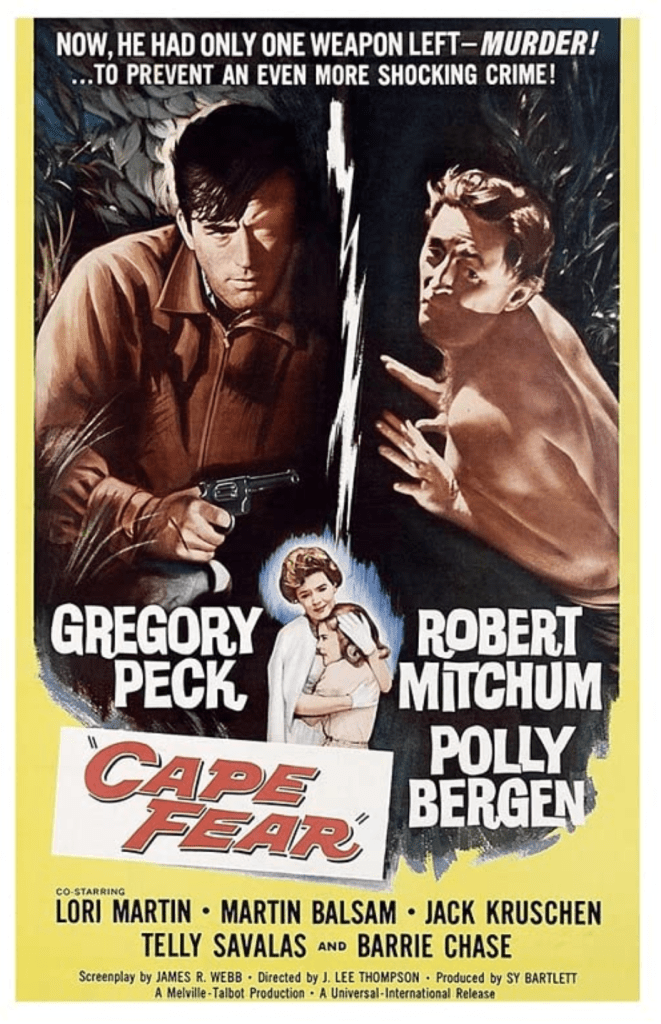
Happy Halloween to all my followers and readers! Like last year, I am participating in the Spooky Classic Movie Blogathon! For the first event, I reviewed 1953’s House of Wax, a movie I enjoyed. This time around, I’m reviewing the 1962 film, Cape Fear! When it comes to choosing which movie to watch around Halloween-time, the usual selections with fictious monsters, ghost stories, and haunted tales are preferred. But in my opinion, the most effective “scary movies” are the ones that involve real-life situations. In Cape Fear, a former prisoner seeks revenge against the lawyer who testified against him. This synopsis alone sounds more realistic and terrifying than even those scary movies that are considered “classic”. But is this movie as terrifying as it sounds? The only way to find out is if you keep reading!

Cape Fear (1962) poster created by Melville Productions, Talbot Productions, and Universal Pictures

Things I liked about the film:

The acting: Before watching Cape Fear, I had seen and reviewed Heaven Knows, Mr. Allison. One of the best aspects of that film was Robert Mitchum’s performance. In the 1962 movie, Robert’s portrayal of Max Cady stole the show! As a character, Max was a creepy and gross fellow. This was made possible through Robert’s facial expressions, body language, and dialogue. In Max’s first scene with Sam, there is a twinge of anger in Max’s voice. But his demeanor was controlled by a sense of calm. The combination of anger and calm within Max Cady added to the character’s unsettling nature. Another actor that effectively balanced two emotions was Lori Martin! In a scene that takes place after a family emergency, Lori’s character, Nancy, appears calm. Yet, she can be seen crying as she talks to her mother in an angry tone. Without spoiling anything, Nancy did have a legitimate reason to be both sad and angry. But I found this performance impressive, especially for an actress so young!

I’ve seen and reviewed To Kill a Mockingbird and Amazing Grace and Chuck. Based on these two movies, it seems like Gregory Peck gets type-casted as either a lawyer or a politician. While he portrays a lawyer in Cape Fear, the script emphasized how his character is a family man. Like the aforementioned movies, Gregory carried his character, Sam, with professionalism and classiness. At the same time, he was given plenty of opportunity to express emotion. A great example is when Sam meets Max at a nearby restaurant. As Max is telling his story, Sam grows increasingly angry. This scene highlights the fierce protectiveness of a husband and a father. It also gave a sense of realism to Gregory’s character!

The music: Legendary composer Bernard Herrmann provided the music for Cape Fear. Throughout the film, his signature musical style could be consistently heard. Bernard’s strength is using music to elevate the suspense within a given scene.  At the very beginning of the movie, Max is walking through the town as an ominous tune can be heard in the background. This effectively clued the audience in of what would come later in the story.  It also let the audience know to pay attention to Max. With all that said, the music definitely added something special to the overall project!

The cinematography: I was not expecting the cinematography in Cape Fear to be as memorable as it was! It, honestly, reminded me of pictures directed by Alfred Hitchcock! One of my favorite scenes is when Peggy, Sam’s wife, has a dream about her and Sam. While Peggy is sleeping, ghostly images of her and Sam are presented over the main image. These images reveal their concerns over the movie’s events, as well as emphasize their desire for action. This way of presenting dialogue and character interactions was very interesting. It added a sense of spookiness to an already suspenseful story!

2nd Annual Spooky Classic Movie Blogathon banner created by Kristen of Hoofers and Honeys

What I didn’t like about the film:

An exposition heavy beginning: Within the first twelve minutes of Cape Fear, the audience learns about Sam Bowden, his family, Max Cady, his arrest, and why he was arrested. Personally, I felt this was too much information to present in the film’s beginning. In fact, I was disappointed Max’s secrets were revealed so soon. What the screenwriter should have done was sprinkle this information throughout the story. That way, the audience would have a greater reason to stay invested in the mystery.

Dumb decisions from the characters: After a family emergency involving a dog, Sam warns his wife and daughter of Max’s dangerous nature. He instructs his daughter, Nancy, to only leave school and home with either him or his wife, Peggy. But more often than not, Nancy is left by herself, with Sam and Peggy putting her in a vulnerable position. One example is when Nancy gets out of school to find her mother’s car empty. While waiting in the car, Nancy sees Max and attempts to get away from him. Even though she succeeds in this plan, she ends up getting hit by an oncoming car in the process. I know her parents are human and humans make mistakes. However, these mistakes felt unbelievable after some time.

An unrelated court case: Featured in a few scenes, a court case involving an arthritic patient receiving surgery was addressed in Cape Fear. But the only connection this case had with the rest of the story was Sam as one of the associated lawyers. I wish the case had a more significant reason to be in the film. Maybe it could have something to do with Max’s past crime, with two separate mysteries becoming one. I, honestly, wanted to learn more about that case, but was sadly not given the chance.

Scared audience image created by Katemangostar at freepik.com. <a href=’https://www.freepik.com/free-photo/terrified-friends-watching-horror-movie-in-cinema_1027311.htm’>Designed by Freepik</a>. <a href=”https://www.freepik.com/free-photos-vectors/people”>People image created by Katemangostar – Freepik.com</a>. Image found at freepik.com.

My overall impression:

As I said in my introduction, the most effective “scary movies” are the ones that involve real-life situations. Even though this is a fictional story, it is effective at being a scarier film! Max Cady is one of the most unsettling characters in film, with Robert Mitchum’s acting abilities highlighting the reason why. Come to think of it, this performance showed a different side to Robert’s talents. Bernard Herrmann’s music added to the scary nature of the story, emphasizing the suspense within the script. But the multiple dumb decisions of the characters took away some from the film’s believability. The beginning of the film was also exposition heavy. However, the overall production felt like an Alfred Hitchcock picture without actually being affiliated with Alfred Hitchcock. With this said, I’d recommend Cape Fear as your next pick for Halloween!

Overall score: 7.5 out of 10

Have you seen Cape Fear? Which movie would you watch on Halloween? Tell me in the comment section!

Have fun at the movies!

Sally Silverscreen

Take 3: Suddenly (1954) Review

Movies that take place over a 24 Hour time frame (not including time loop movies) are the chosen subject for August’s Genre Grandeur. Since this theme is so broad, I needed to do some research before choosing my contribution. While reading through a list on Wikipedia, I came across the 1954 title, Suddenly. I have heard of this movie because it was recommended by Maddy from Maddy Loves Her Classic Films. Last year, I reviewed five of Frank Sinatra’s movies. While most of the movies I’ve seen were either a comedy or musical, Ocean’s Eleven was the only one that was dramatic in tone. This makes Suddenly a unique project in Frank Sinatra’s filmography. Movies from the Film-Noir genre have also been far and few between on my blog. So, I’m hoping this review makes up for that!

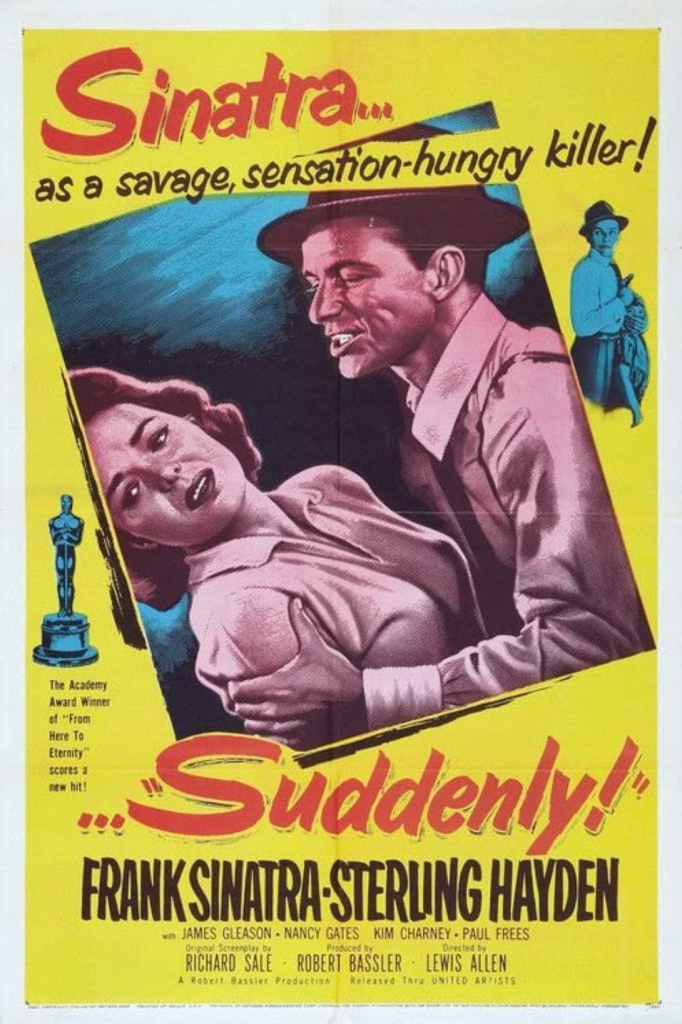
Suddenly (1954) poster created by Libra Productions and United Artists

Things I liked about the film:

The acting: In Frank Sinatra’s movies I’ve seen so far, he was given roles that allow him to achieve likability. This is made possible through a charismatic personality. While Frank’s character in Suddenly, John Baron, carries himself with suave charisma, he is not someone the audience wants to root for. In fact, this part of John’s personality can make viewers uncomfortable. That’s because, as the movie poster says, he is “a savage, sensation-hungry killer”. The darker material is different from what I’ve seen from Frank’s filmography, so far. However, Frank gave a strong performance that really showcased his range as an actor! While he carried his character with the charisma he has portrayed in other films, he was quick to adopt anger. Whenever someone gave him an insult, John immediately grew intense with rage. It not only showed how John had an underlying instability, but also showed how Frank was like a chameleon with expressions and emotions. These elements help create a character that puts the audience on edge.

Despite being the only actress in Suddenly, Nancy Gates’ did a good job portraying her character, Ellen Benson! While watching this film, I couldn’t help but be reminded of Judy Garland’s acting abilities. This is because, like Judy, Nancy brought a gentleness to her role. Throughout the movie, Ellen always put others before herself. She tries to protect her son, Pidge, from a world she feels is too dangerous. That part of Ellen’s story gives Nancy an opportunity to bring genuine emotion to her role. Toward the beginning of the film, Ellen and Sheriff Tod Shaw, portrayed by Sterling Hayden, debate over her overprotective nature. When Tod brings up her deceased husband, Ellen is immediately moved to tears. James Gleason provides a good counterpart to Ellen Benson with his portrayal of her father, Peter Benson. In the film, he has a more easy-going, light-hearted personality. While I wouldn’t say he was the movie’s comic-relief, Peter did prevent the story from being too dark. Peter’s ability to adapt to any situation and his quick thinking give the audience peace of mind, as it shows he has a good head on his shoulders and will know what to do. It also helps that Peter was the glue that kept his family together.

The subject matter: I was not expecting Suddenly to contain the real-life subjects it did. But they provided a good insight into the views, beliefs, and issues within the time period of the movie’s release. Because the movie takes place in and premiered a decade after World War II, the characters discussed the negative impacts of war. John Baron’s part of the story kind of serves as a cautionary tale when it comes to a war’s psychological aftermath. As John’s plan starts to unravel, the Benson family and Tod accuse John of being “un-American”. This reflects the McCarthyism that primarily took place in the ‘50s.  United States history is also included in the story, with presidential assassination attempts brought up within the script. Tod argues these attempts were failures, because the perpetrators were not only caught, but also frowned upon in history. His insight into this particular subject is interesting, especially remembering what would happen a decade after the film’s release.

Film-Noir’s new setting: Whenever I think of the Film-Noir genre, I think of stories that take place either in big cities or shady places with a dark, ominous tone. With Suddenly, the story takes place in a small, suburban town. This type of location usually hosts stories that are light-hearted and matched with a happy ending. Suddenly’s pairing provided a good contradiction. It also expanded Film-Noir’s horizons, showing that movies from this genre can take place anywhere. It was a creative decision that was definitely thought outside the box!

Children holding American flags during a sunset image created by rawpixel.com at freepik.com. <a href=”https://www.freepik.com/free-photos-vectors/people”>People photo created by rawpixel.com – http://www.freepik.com</a>. Image found at freepik.com.

What I didn’t like about the film:

Some weak performances: While I liked the majority of the acting performances in Suddenly, there were a few that were weak. One of those performances came from Sterling Hayden. When his character was involved in police/serious matters, Sterling successfully carried his character with stoic confidence. But when it came to tender-hearted moments, like when Tod is asking Ellen on a date, Sterling appeared stiff and wooden. Another performance that was weak was Kim Charney’s. I know Kim was a young actor when portraying Pidge. However, Kim carried one expression and emotion throughout the movie, causing Pidge to appear one-dimensional. I am aware that performances from young actors or actresses can be hit or miss. But, for me, Kim’s performance was a miss.

Unclear story details: Suddenly is the type of story where the audience figures out what’s going on as the film progresses. However, there are some parts of the story that don’t receive clarification. When John reveals his plan, he says he is being paid to carry it out. But the audience never learns who this anonymous benefactor is or why John is being paid in the first place. When telling Ellen about his past, John says the “experts” removed the feeling out of him. The identities of these “experts” and the reason for removing John’s feelings are never revealed. The omission of these answers feels like the film’s creative team is intentionally withholding information from the audience.

A self-contained story: The film-noir genre typically shows characters doing what they want and going where they please. This reminds me of Cady’s quote from Mean Girls: “The limit does not exist”. But in Suddenly, the majority of the story takes place in the Benson family home, as John is holding the family hostage. That part causes the movie to feel stagnant and limited, which is the opposite of film-noir’s nature. It also doesn’t help when the movie’s conflict is drawn out for most of the story.

Diner image created by Freepik at freepik.com. <a href=’https://www.freepik.com/free-vector/american-vintage-restaurant-hand-drawn_902205.htm’>Designed by Freepik</a>. <a href=”https://www.freepik.com/free-photos-vectors/food”>Food vector created by Freepik</a>. Image found at freepik.com.

My overall impression:

When I think about Tod’s view on presidential assassination attempts, I am reminded of the Touched by An Angel episode, “Beautiful Dreamer”. The majority of the episode’s story revolves around the assassination of President Abraham Lincoln, with John Wilkes Booth believing the act will make people see him as a hero. Instead, he is seen as not only a coward, but also one of the most hated people in history. I find it interesting that two different pieces of media from two different time periods share a similar belief. Suddenly also makes me think of the Hallmark Hall of Fame movie, Foxfire. That’s because the 1954 film felt more like a play than a movie. During my viewing experience, I found myself picturing the Benson family home as a stage, with any event outside of the home taking place off-stage. With the story being self-contained, I honestly feel this production works better in that format. Suddenly provides good insight into parts of the 1950s, with the characters’ dialogue sounding authentic. I also liked seeing Frank Sinatra’s performance, as it shows just how far he can stretch his acting abilities.

Overall score: 6.3 out of 10

Have you seen any of Frank Sinatra’s film? If so, which one is your favorite? Tell me in the comment section!

Have fun at the movies!

Sally Silverscreen
Take 3: Ships in the Night: A Martha’s Vineyard Mystery Review

Because my Hallmark Movies & Mysteries related content has been well-received, I try to make an effort to write about Hallmark’s mystery films whenever I can. Since the only new mystery movie to premiere this month is Ships in the Night: A Martha’s Vineyard Mystery, I wanted to review it. So far, I have been impressed with this particular series. The first two films, A Beautiful Place to Die: A Martha’s Vineyard Mystery and Riddled with Deceit: A Martha’s Vineyard Mystery were in my Honorable Mentions on my list of the best movies I saw last year! They were such a strong start to a new series, that I couldn’t wait to see the rest of the story unfold! Jeff and Zee, the lead characters of Martha’s Vineyard Mysteries, make a good mystery solving team. It also helps that the scenery is nice to look at. Now, let’s set sail through this review of Ships in the Night: A Martha’s Vineyard Mystery!

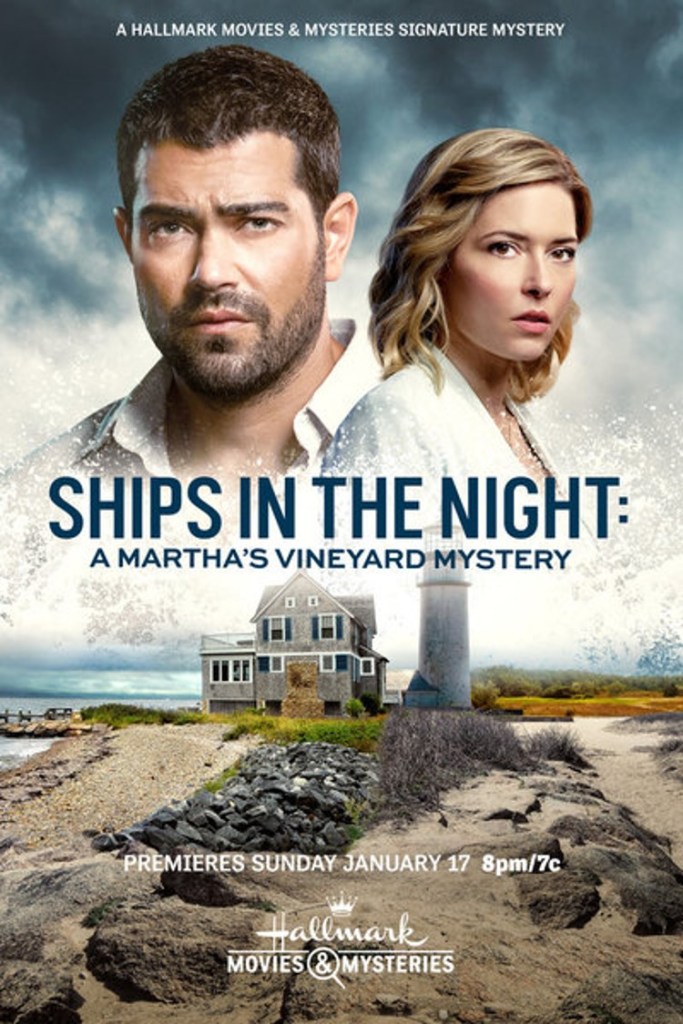
Ships in the Night: A Martha’s Vineyard Mystery poster created by Crown Media Family Networks and Hallmark Movies & Mysteries.

Things I liked about the film:

The acting: As I said in the introduction, Ships in the Night: A Martha’s Vineyard Mystery is the third film in the Martha’s Vineyard Mystery series. Because of this, the main cast from the previous films also star in the newest installment. It works in the cast’s favor, as it allows each actor and actress to become familiar with their characters. While watching this movie, I could tell the members of the main cast were comfortable in their roles. This included Jesse Metcalfe and Sarah Lind! They both adopted an on-screen personality that complimented their characters. Jesse and Sarah had good on-screen chemistry as well. With each new film in a mystery series comes new supporting actors. One of them was Garfield Wilson. Portraying a local artist named Carl, Garfield gave a performance that was memorable! When Jeff and Zee inform Carl that Bernie, an art studio manager, has passed away, Carl becomes distraught. With a strong sense of emotionality, Garfield was effectively able to show how much Bernie meant to his character.

Including an overarching story: An overarching story within the Martha’s Vineyard Mystery series is the mystery of who shot Jeff in the back prior to his retirement from the Boston Police. The inclusion of this story gives the series a sense of continuity. What also helps is allowing pieces of the mystery to be discovered as the series progresses. In Ships in the Night: A Martha’s Vineyard Mystery, Jeff comes across a breakthrough as he reflects on the past with Zee. While I won’t spoil this part of the story, it does give the audience something to look forward to for the next film!

Creative set design choices: While watching Hallmark films, I always enjoy seeing the interesting set design choices from the various sets of a given movie. With Ships in the Night: A Martha’s Vineyard Mystery, there were some interior and exterior design choices that I found visually appealing! In one scene, Jeff visits a restaurant in the hopes of meeting Zee there for dinner. Even though the main entrance features a plain glass door, its black frame pairs nicely with the gray stone exterior wall. This wall can also be seen inside the restaurant, complimenting the warm wood counter located nearby. In another scene, Jeff is using a punching bag on his porch. I have rarely seen punching bags found in outside spaces when it comes to cinema. So, this design choice was definitely creative! Plus, the view of the seaside makes the scene more photogenic!

Good sailing day image created by Freepik at freepik.com. <a href=’https://www.freepik.com/free-vector/summer-landscape-with-a-houselight-and-a-boat_866882.htm’>Designed by Freepik</a>. <a href=”https://www.freepik.com/free-photos-vectors/design”>Design vector created by Freepik</a>. Image found at freepik.com.

What I didn’t like about the film:

An overshadowed mystery: At the beginning at the movie, Zee’s doctor friend, Eli, is murdered. However, this character is barely referenced throughout the film. Zee and Jeff don’t discover the murder until the last thirty minutes of the movie. This is because the majority of their time is spent solving the murder of an art gallery manager named Bernie. It is possible to make a good mystery movie featuring more than one mystery. But for Ships in the Night: A Martha’s Vineyard Mystery, there either should have been an equal emphasis on both mysteries or have the main murder mystery be the only one in the story.

A glossed over event: Toward the start of the story, the characters are preparing for an upcoming regatta benefit gala. But similar to what I said about Eli, this event is barely referenced in the film. In fact, the event itself is not shown on screen. I found this disappointing because I like when events like this are featured in mystery stories, as it is interesting to see the ideas the movie’s creative team can come up with. Now that I think about it, I think this is one of the few times where an anticipated event in a mystery film doesn’t play a significant role in the overall story.

The mystery’s start time: Most mystery stories start their respective mysteries within a short amount of time. It is done to help the story move along at a steady pace. With Ships in the Night: A Martha’s Vineyard Mystery, the main mystery didn’t officially begin until a little over twenty-five minutes into the film. This time was used to set up the mystery and re-establish the significance of the series’ main characters. But, personally, I don’t think that needed to be done in almost thirty minutes. Ten to fifteen minutes is, in my opinion, more than enough time to address those two aforementioned aspects of the story.

Magnifying fingerprints image created by Balintseby at freepik.com. <a href=”https://www.freepik.com/free-photos-vectors/glass”>Glass vector created by Balintseby – Freepik.com</a>. <a href=’https://www.freepik.com/free-vector/fingerprint-investigation_789253.htm’>Designed by Freepik</a>. Image found at freepik.com.

My overall impression:

At best, Ships in the Night: A Martha’s Vineyard Mystery is a fine movie. But, at worst, it is a step backward from the first two films. What I like about this series is how it has created an identity that sets itself apart from the other series on Hallmark Movies & Mysteries. One way it has accomplished this is by including an overarching story that can be found throughout each movie. I know every project isn’t created equally, as some stories are better than others. However, the third chapter made the overall quality of the series stumble a little bit. The first mystery movie of the year should put their best foot forward. For Ships in the Night: A Martha’s Vineyard Mystery, it could have been a stronger first impression. With a glossed over event and an overshadowed mystery, there are areas of the story that might have added more interest to the overall plot. Starting the main mystery almost thirty minutes into the movie also hurts its case. According to a production sheet I found on UBCP/ACTRA’s (Union of British Columbia Performers/Alliance of Canadian Cinema, Television and Radio Artists) website, a fourth Martha’s Vineyard Mystery movie will go into production next month! Hopefully, that film will be better than this one was.

Overall score: 7 out of 10

Did you watch the films on Hallmark Movies & Mysteries? If so, which series is your favorite? Share your thoughts in the comment section!

Have fun at the movies!

Sally Silverscreen

Here is the link to the production sheet I mentioned in this review:

https://www.ubcpactra.ca/whats-shooting/ (click on the words “Current Film and TV Production List”)

Take 3: Stalker in the Attic Review + 255 & 260 Follower Thank You

At the end of last month, 18 Cinema Lane received 255 followers! However, I wasn’t able to write a blog follower dedication review sooner because of several blog and non-blog related projects. Within that time, 18 Cinema Lane also received 260 followers! Because of everything I just said, I decided to combine these accomplishments into one review. I recently watched a Lifetime movie called Stalker in the Attic. This is the reason why I chose this film to write about for my most recent blog follower dedication review. When I first read the film’s synopsis, it kind of reminded me of the 2016 movie, Boy in the Attic. For those of you who are not familiar with that film, it is about a young man who lives in the protagonist’s attic. Since I like that movie, I was curious to see how Stalker in the Attic would execute a similar idea.

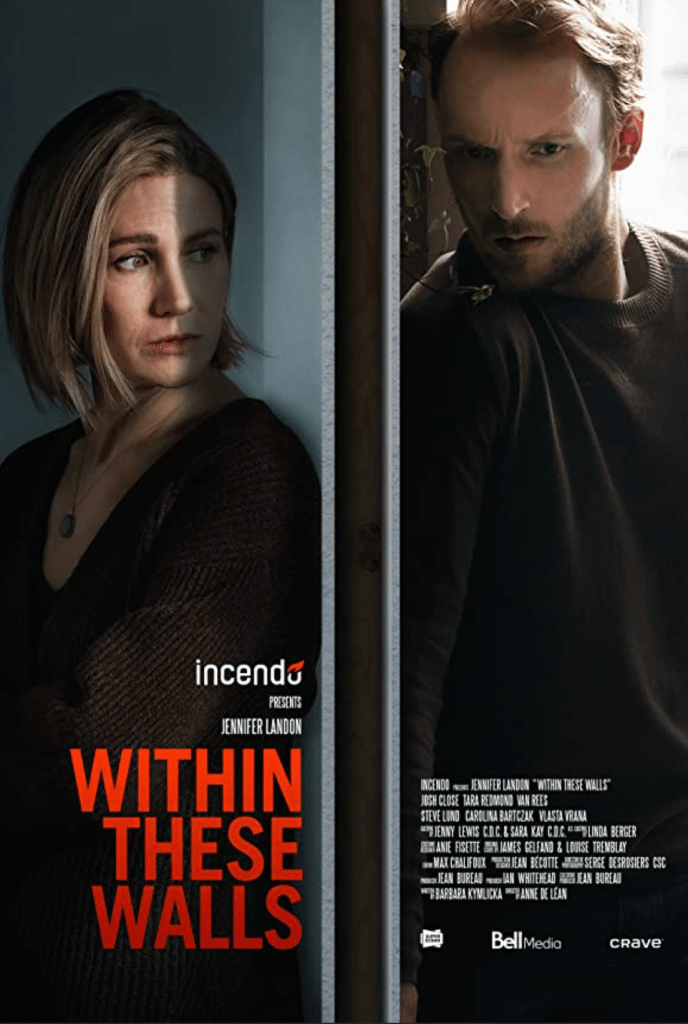
Stalker in the Attic poster created by Lifetime Entertainment Services. For some reason, this movie has two titles; Stalker in the Attic and Within These Walls.

Things I liked about the film:

The acting: I’m not familiar with Jen Landon or her filmography. Despite this, I liked watching her performance in Stalker in the Attic! Whenever her character, Mel, suspected someone was in her house, she appeared on edge. Fear could be seen on her face and she carried herself with a sense of urgency. The quality of Jen’s performance helped make moments like these seem believable! Another believable performance came from Steve Lund, an actor I recognize because of the Hallmark film, Christmas Incorporated! In the scene where his character, Sam, and Mel are about to binge-watch a show, Steve’s reaction was genuine. His demeanor was easy-going and his on-screen personality was down-to-earth. Tara Redmond van Rees did a good job portraying Mel’s daughter, Brook! In her house, Brook and her boyfriend are interrupted by the sound of the security alarm. Tara truly looked freaked out in that scene, reflecting what her character was feeling.

The music: One element that can affect a film’s tone is the music, as it can make the audience feel the emotions that are expected for a particular part of the story. In Stalker in the Attic, suspenseful music was used for scarier/intense moments. One example is when Mel is breaking up with Ben. Even though the act itself is not a surprise, the music makes it feel more important because the audience has a heightened anticipation for what will happen next. The music placement in that scene also highlights the moment’s significance within the story’s chain of events.

The suspenseful moments: Most Lifetime movies feature several suspenseful moments within their respective stories. Stalker in the Attic is no different. However, these moments were effective in keeping the audience invested in the story! As Sam is sleeping over at Mel’s house, Ben appears out of nowhere, watching both of them as they sleep. Because of how unpredictable Ben is, the audience is left wondering what he will do next. A darker atmosphere with limited lighting also helps, as it emphasizes a fear of the unseen.

Scared audience image created by Katemangostar at freepik.com. <a href=’https://www.freepik.com/free-photo/terrified-friends-watching-horror-movie-in-cinema_1027311.htm’>Designed by Freepik</a>. <a href=”https://www.freepik.com/free-photos-vectors/people”>People image created by Katemangostar – Freepik.com</a>. Image found at freepik.com.

What I didn’t like the film:

Some scenes ending too abruptly: There were a few scenes in Stalker in the Attic that ended too abruptly. A perfect example is when Brook and her boyfriend dealt with the security alarm in Brook’s house. Shortly after this happened, Brook’s neighbor comes over to see what was going on. As Brook tells him that she and her boyfriend are fine, the next scene immediately starts. Transitions like this one were so abrupt, that it was jarring.

The lighting: Lighting in a movie can help the audience see what is happening on screen. It can also set the tone for a particular scene. In Stalker in the Attic, however, most of the lighting was dim. Even when a scene was well-lit, it didn’t appear as bright as it should have. Characters’ faces were difficult to see because of the poor lighting. I’m not sure if this was a creative choice selected on purpose or a budget related issue.

A not-so-bright intruder: Even though Ben carries his stalking plan throughout the film, he makes several mistakes that bring more suspicion to him. To fool his ex-girlfriend into thinking he moved to a new apartment, Ben breaks into an apartment owned by one of his clients. Instead of noting where he moves certain personal belongings by taking a picture of the rooms with his phone, Ben grabs several items and hurriedly throws them into another room. The reaction of the aforementioned client is never shown, which gives the script an excuse to keep telling Ben’s story. But if the client’s reaction had been shown, the police would likely have been called. Ben would also likely be contacted for questioning, which may have deteriorated his plan to keep Mel in his life. Meanwhile, Mel starts to question Ben’s need to keep in contact with her, as her visit to see Ben causes her to assume he has found a new significant other.

Crossword puzzle image created by jaylopez at freeimages.com. “FreeImages.com/JayLopez.”

My overall impression:

Most of the Lifetime movies I’ve seen this year have either been ok or decent. Stalker in the Attic is one of those films I thought was just ok. While the idea itself is not bad, it has been executed better by stories that came before it, like Boy in the Attic. Stalker in the Attic is a “waiting for the other shoe to drop” story, where the audience is waiting for the inevitable to happen. Suspenseful moments helped carry the film. However, the outcome was predictable, something that was kept at the back of the audience’s mind.  Another aspect of the story that allows the plot to move forward was the convenient ways Ben was able to get away with his stalking scheme. Throughout the film, Ben makes several mistakes that would bring him more suspicion. But the movie always finds a way to prevent his plans from completely falling apart. As I mentioned earlier, Boy in the Attic is a film about a man living in an attic that did a better job at expressing similar ideas to Stalker in the Attic. I’d recommend the 2016 film over the 2020 movie I just reviewed.

Overall score: 6.1 out of 10

Have you seen Stalker in the Attic? If so, what are your thoughts on it? Tell me in the comment section!

Have fun at the movies!

Sally Silverscreen

Take 3: The Wrong Cheerleader Coach Review

Anyone who has followed or read my blog would know that Lifetime movies are rarely reviewed. In fact, the last time I wrote about a film from Lifetime was Killer Prom back in May. This is because I don’t always find the time to include this network’s projects into my blogging schedule. But since I just watched The Wrong Cheerleader Coach, I decided to review this film before the 1st Annual Classic Movie Blogathon and Halloween. It seems like Lifetime has created a series where an unstable woman tries to bring chaos into the lives of those around her, with her occupation included in the film’s title. One of these films is The Wrong Wedding Planner, which I was not a fan of. Since cheerleading, a sport that I like, would play a role in the story of The Wrong Cheerleader Coach, I chose to watch this movie with an open mind. Cheer me on as I share my thoughts on one of Lifetime’s most recent titles!

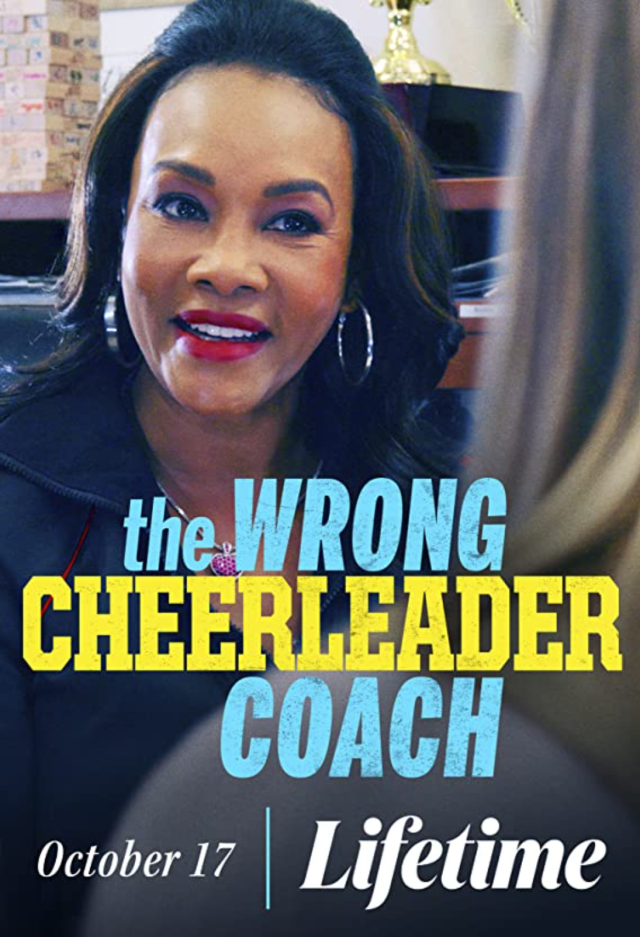
The Wrong Cheerleader Coach poster created by Lifetime Entertainment Services. 

Things I liked about the film:

The acting: Johanna Liauw is an actress I’m not familiar with. Despite this, I thought she stole the show in The Wrong Cheerleader Coach! Portraying the assistant coach, Devan, Johanna’s emotions were very fluid. A scene where Devan is eating dinner at Jon and Hanna’s house shows a perfect example of this. While eating her meal, Devan is happily enjoying her food and comfortable with spending time in their home. When Jon forces her to leave, Devan’s demeanor quickly changes, anger and discontent bursting forth. Corin Nemec’s performance is another one I liked seeing! Certain behaviors his character, Jon, adopted highlight how he experienced certain situations. One of these behaviors is when he takes his glasses off and puts them back on. This action effectively shows the audience how the stress of moving cross-country, raising a daughter on his own, and being the bread-winner of the family is visualized through a nervous habit. Even though she was in the film for a short amount of time, I enjoyed Mea Wilkerson’s portrayal of Hanna’s new friend, Claire! Mea’s on-screen personality is what made her character likeable. It also helped that Claire was the “voice of reason”, displaying skepticism and concern when interacting with the other characters. These factors made me feel that Claire truly had Hanna’s best interests in mind throughout their friendship!

The on-screen chemistry: While Jon is at work at a construction site, he meets a fellow architect named Melissa, who is portrayed by Bailey Kai. Their similarities in occupation and other areas in life bring them together. While I liked Corin’s individual performance, I liked Bailey’s performance as well. I also feel they both had good on-screen chemistry! Corin and Bailey’s personalities paired nicely with one another, giving the audience the impression their characters truly enjoyed each other’s company. This on-screen relationship also contained a brightness that served happier moments within the plot’s darkness. Seeing Jon and Melissa’s relationship unfold gave the audience a break from the story’s suspenseful nature.

The music: In most Lifetime movies, I find the music to be unmemorable or average. This is not the case for The Wrong Cheerleader Coach! During cheerleading practices, pop-techno music can be heard in the background. These musical selections were not only good to listen to, but I honestly wouldn’t change the channel if they played on the radio! When Melissa and Jon are on a dinner date, soft piano served as the scene’s official tune. It set the tone for that moment and fit within the scene’s context. Suspenseful scenes were also given music, as dramatic tunes were heard anytime a scarier situation took place. It certainly added intensity to those moments.

Cheerleading squad image created by Macrovector at freepik.com. Background vector created by macrovector – www.freepik.com

What I didn’t like about the film:

Very little cheerleading: With a film called The Wrong Cheerleader Coach, you’d think there would be a significant amount of cheerleading shown in the movie. But, in reality, this title actually featured very little cheerleading. Sure, a few stunts and practices can be seen. However, the sport itself felt more like an afterthought than a prominent part of the story. This film could have featured almost any athletic extracurricular activity and it wouldn’t make much of a difference.

A somewhat misleading title: Because of the film’s title and because Vivica A. Fox is the only cast member shown on the movie’s poster, it gives the audience the idea that Vivica’s character is the one the title is referring to. When the audience sees the film, they discover the title is actually referring to Devan, the assistant coach. By definition, Devan’s role is to assist Coach Burke, who is the head coach of the cheerleading team. This led to the result of showing Devan doing very little coaching. These factors also cause the film’s title to seem somewhat misleading.

Vivica A. Fox’s limited presence: In my One Christmas review, I talk about how Katharine Hepburn appears in the movie for a short amount of time despite being the top billed actor of the project. It felt like this decision did a disservice to Katharine’s talents, as well as the overall movie. The same thing happens with The Wrong Cheerleader Coach. This time, Vivica A. Fox is the top billed actor of the film. However, the actress who portrays Devan, Johanna Liauw, receives more screen and story time than Vivica does. Vivica did a good job with the acting material she was given. But if it was always The Wrong Cheerleader Coach’s creative team’s plan to cast Vivica as their top billed actor, they should have given her more material to work with.

Breaking heart image created by Kjpargeter at freepik.com. <a href=’https://www.freepik.com/free-vector/broken-heart-valentine-background_1041991.htm’>Designed by Freepik</a>. <a href=”https://www.freepik.com/free-photos-vectors/background”>Background vector created by Kjpargeter – Freepik.com</a>. Image found at freepik.com.

My overall impression:

The Wrong Cheerleader Coach and Killer Prom share one thing in common: both films are given an interesting concept. However, because Lifetime creates so many movies in a given year, the network creatively sells themselves short. This causes these interesting concepts to not reach their full potential. The Wrong Cheerleader Coach could have incorporated a glimpse into the pressures of being “perfect” and/or a student athletic representative of a school. Instead, the story focused on Devan’s growing attraction for Jon. This type of narrative is very typical for Lifetime, even finding a place in Killer Prom. As I’ve said about Hallmark, I’d like to see Lifetime step out of their comfort zone and use different story-telling techniques for future movies. One example would be including thought-provoking ideas that encourage viewers to think about the film long after they’ve seen it. This would help these projects stand out for a longer period of time.

Overall score: 7 out of 10

Do you watch Lifetime movies? Is there one that has been your favorite? Please tell me in the comment section!

Have fun at the movies!

Sally Silverscreen