The Top Ten Best Movies I Saw in 2024

For me, 2024 was a better year for movies. That’s because I saw more movies I liked, compared to 2023! Another difference from 2023 is how, on 2024’s list, more movies are theatrical pictures. However, there are still some made-for-TV productions that found a spot on my list. With more likable movies comes the return of the honorable mentions section! In that part of my list, most of the films are television projects. Since I reviewed almost all the movies on this year’s list, I will provide links to those reviews in this post. So, with 2025 on the horizon, let’s begin my list of the top ten best movies I saw in 2024!

Honorable Mentions

Legend of the Lost Locket, My Baby Is Missing, My Mother’s Split Personalities, Christmas on Division Street, and Interstellar

Image by starline on Freepik

10. I Heard the Bells

I Heard the Bells achieved so much in a short amount of time. The 2022 movie was chosen for my 500 Blog Follower Dedication Review. Then, I Heard the Bells became my 400th published movie review, as I recently revealed in my list of the ten movie trends I don’t understand. Now, the film is the only Christmas picture to earn a place on 2024’s best movies of the year list! When I wrote about I Heard the Bells, I compared it to It’s a Wonderful Life. Both titles are not only about more than just the Christmas holiday, they also cared about their overall presentation. I Heard the Bells was a visually immersive movie because of the attention to detail placed on historical accuracy. The strength of the acting performances allowed the story to be engaging. While it’s too early to say right now, I think I Heard the Bells could be a Christmas classic!

Take 3: I Heard the Bells Review + 500 Follower Thank You

9. Easter Parade

If I could choose one word to describe Easter Parade, it would be “colorful”. With the movie’s creative team taking advantage of Technicolor, costumes and décor boasted vibrant hues that complimented the story’s spring season! The musical numbers provide another strength in Easter Parade. From Fred’s festive and creative solo, “Drum Crazy”, to Ann’s energetic and fast-paced solo, “Shakin’ the Blues Away”, the movie’s musical numbers were enjoyable because of their choreography and delivery. The reason the 1948 film is placed lower on my list is due to the premise-driven story and the limited inclusion of Easter. However, Easter Parade’s positives outweigh the negatives!

Take 3: Easter Parade Review

8. For Me and My Gal

In my review of For Me and My Gal, I mentioned how Breen Code era movie musicals contain simpler stories. These simpler stories will typically feature lower stakes. But in For Me and My Gal, the story of Harry and Jo included stakes that were higher. The story wasn’t afraid to show Jo and Harry making difficult decisions when it came to their dreams. Along their journey, the duo even deals with regret and heartbreak. The way World War I was incorporated into For Me and My Gal gave the script a sense of realism. Creative decisions like that one gave the 1942 picture emotional depth!

Take 3: For Me and My Gal Review

7. Willow

When I started my Comparing with the Critics series, I knew there were some movies I would disagree with the critics on. What I didn’t know was how much I would like Willow. Now that I’ve seen the 1988 film, I can understand why some people have given it the coveted title of “classic”. Likable elements, such as humor and unique perspectives on familiar story ideas, provide arguments for the aforementioned claim. The simplistic and straight-forward nature of the story made it easier to follow what was happening on screen. For me, Madmartigan stole the show! Movies like Willow make me thankful for my Comparing with the Critics series.

Comparing with the Critics – Worst of 1988 – Willow

6. Curious Caterer: Forbidden Fruit

2024 saw the premiere of two Curious Caterer films; Curious Caterer: Foiled Plans and Curious Caterer: Forbidden Fruit. Though I liked Curious Caterer: Foiled Plans more than Curious Caterer: Forbidden Fruit, Curious Caterer: Forbidden Fruit was still a good movie. The fifth chapter in the series consistently carried the strong components of the Curious Caterer story, like the acting, humor, and prioritizing the mystery. A peek behind the music industry’s curtain and the incorporation of serious, real-world topics helped make the identity of Curious Caterer: Forbidden Fruit unique. As of the publication of this list, Hallmark has not provided any 2025 dates to the Curious Caterer series. If there are going to be more Curious Caterer films, I hope at least one of them is a seasonal picture.

Take 3: Curious Caterer: Forbidden Fruit Review
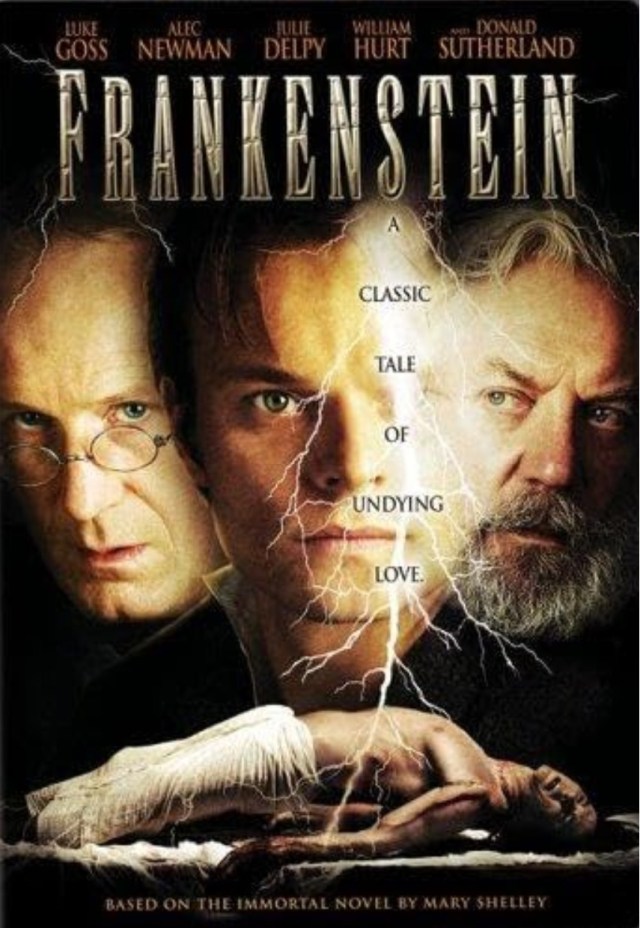
Hallmark’s Frankenstein poster created by Hallmark Entertainment, Hallmark Channel, Silverstar Ltd., Larry Levinson Productions, and RTL

5. Hallmark’s Frankenstein (2004)

Back in March, I called Hallmark’s adaptation of Frankenstein a “hidden gem”. This claim was based on my observation of how a good movie was not only forgotten by time, but also overshadowed by other titles released in 2004. What makes this version of Frankenstein a good movie, in my opinion, is how respectful it was toward Mary Shelley’s novel. One great example is Luke Goss’ portrayal of The Creature, as the way emotion was utilized throughout Luke’s performance highlighted how complicated The Creature is. Hallmark’s adaptation of Frankenstein is another movie where the visual presentation created an immersive experience. Combining set design, costume design, and attention to historical accuracy, the movie made me feel like I was transported to another time and place.

Take 3: Hallmark’s Frankenstein (2004) Review (Double Feature: 2004 Edition Part 2)

4. The Boys in the Boat

If you’re going to create a sports movie involving a team sport, it’s important to make the camaraderie among the team believable. An on-screen team with believable camaraderie helps the audience stay invested in the story, as well as the team’s journey. Because the acting performances were strong in The Boys in the Boat, the camaraderie within the team dynamic felt genuine. The 2023 film also makes rowing look exciting! This was accomplished through cinematography, editing, and music selection. The Boys in the Boat is a “based on a true story” film that, in my opinion, is worth the time! This is yet another production where historical accuracy was a top priority.

3. Amadeus

Out of all the movies I reviewed for my Comparing with the Critics series, Amadeus is, so far, the only movie I agreed with the critics on. While the biopic is a glamourous spectacle, it also contains substance. Thought-provoking material can be found in the script, such as how fame can negatively impact the human soul. The story is an immersive, detail-oriented character study that explores the good and bad sides of the music industry. The creative team’s focus on detail made Amadeus look and feel historically accurate, as can be seen in the costume and set design. F. Murray Abraham and Tom Hulce each gave a strong performance. I can, honestly, say the 1984 movie is one of the best biopics I’ve ever seen!

Comparing with the Critics – Best of 1984 – Amadeus

2. Curious Caterer: Foiled Plans

Remember when I said I liked Curious Caterer: Foiled Plans more than Curious Caterer: Forbidden Fruit? One reason why I said this is Goldy’s consistent involvement in Curious Caterer: Foiled Plans’ case. Other reasons why I liked the fourth chapter in the series are the creativity of the mystery, the quality of the acting performances, and how humor was written into the story. Looking back on Hallmark’s mystery films I saw in 2024, this Curious Caterer movie is pretty unique. That’s because, as I mentioned in my review, it’s a locked room mystery revolving around a costume party. In 2023’s best movies of the year list, I claimed Curious Caterer: Grilling Season was the best film in the series. I certainly changed my mind after I saw Curious Caterer: Foiled Plans!

Take 3: Curious Caterer: Foiled Plans Review

1. I Am David

It’s amazing how I Am David became 2024’s best movie in March and clung on to the number one spot all these months later! This impressive film allowed the story of David and his journey to be told with genuine emotion and sincerity. This was achieved through every aspect of the production, like the acting performances and the screenwriting. Exploring light and darkness, as well as showcasing Europe’s natural landscape, gave the production visual depth. Timeless, universal messages were also woven into the script. As I said in my review, I wish more people knew about this movie. Hopefully, my review or maybe this list can encourage someone to check out I Am David!

Take 3: I Am David Review (Double Feature: 2004 Edition Part 1)
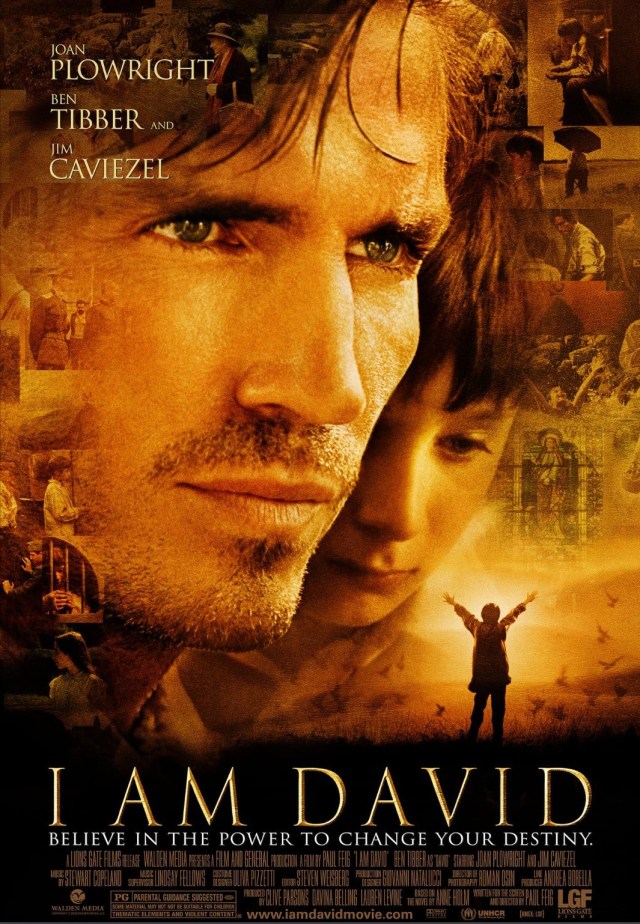
I Am David poster created by Walden Media, Film and General Productions, Lionsgate Films, Artisan Entertainment, and David Productions Ltd.

Have fun in 2025!

Sally Silverscreen
Buzzwordathon 2023: Review of ‘On Thin Ice’ by Alina Adams

July’s theme of the Buzzwordathon readathon is ‘weather related words’. Since some areas of the world experience weather related occurrences such as icy rain and icy roads, I chose to read the second book in the Figure Skating Mysteries series, On Thin Ice! Several years ago, I read the first book in this series, Murder on Ice. In fact, I brought it up in my 2019 edition of my Movie Blogger’s Christmas Wish List. In that book, the main mystery was a murder mystery. While there is a murder mystery in On Thin Ice, there was not one, but two missing persons cases that were given primary focus. This creative decision allowed Alina to tell a different type of story, instead of copying and pasting a similar story from the first book. There are nice connections between the first and second books, such as mentioning characters that were introduced in the predecessor. That connectivity helps the Figure Skating Mysteries series maintain a sense of continuity.

Book cover of On Thin Ice found on Goodreads

While the aforementioned connectivity assists the series in achieving a sense of consistency, the sense of urgency in On Thin Ice is not consistent. As I mentioned, there are two missing persons cases in this story. However, one of these cases occurred prior to the events of the book. Meanwhile, the text provides a logical explanation why another missing persons case isn’t more pressing to the characters. On Thin Ice doesn’t lack urgency. But when it is featured in the book, its presence is far and few between. This major flaw makes the sequel weaker than Murder on Ice. However, I think On Thin Ice is a fine, well-written continuation. The Figure Skating Mysteries series is still one of the most unique cozy mystery collections I’ve come across. Plus, I plan on reading the rest of the books in the series. I’m glad I decided to participate in this year Buzzwordathon, as it gave me an excuse to come back to the Figure Skating Mysteries series!

Overall score: 3.8 out of 5

Have fun during Buzzwordathon!

Sally Silverscreen

Disclaimer: As I mentioned in my review, there is a murder mystery in On Thin Ice. There are other aspects of the book that might not make On Thin Ice readers’ “cup of tea”, which is:

  • The discussion of abusive relationships, including the topics of physical and sexual abuse
  • Foul language, featuring a few slurs
  • Some psychological terms used out of context

Take 3: Space Jam (1996) Review

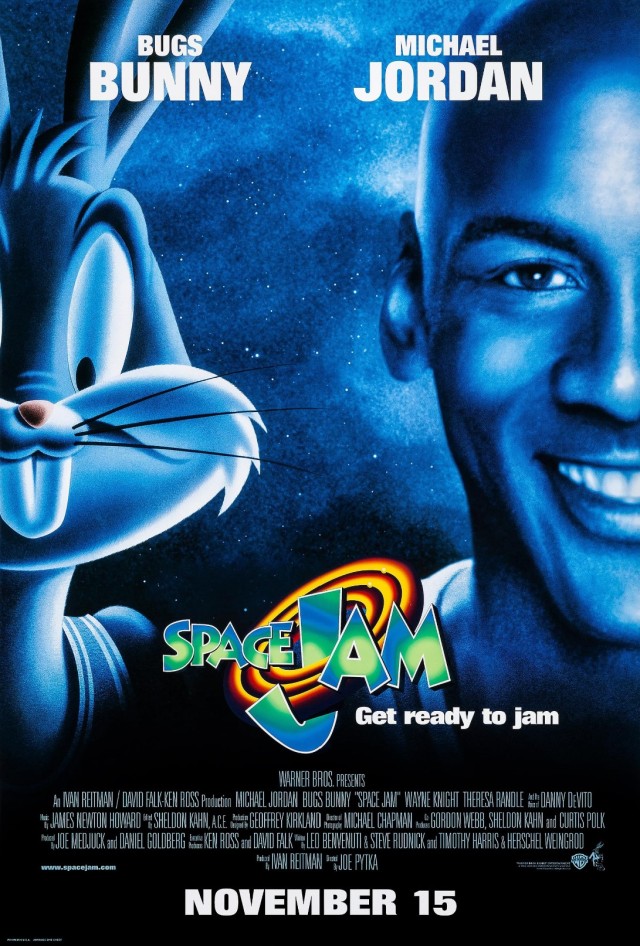
Some of my readers will know Michael Jordan as the reason why they cared about the Chicago Bulls. Other readers are familiar with Michael because of the infamous meme where Michael says in a calm and friendly way, “Stop it. Get some help”. Then there are my readers who are fans of Michael because of his appearance in the 1996 movie, Space Jam. Michael’s involvement in this film is one of the reasons why I’m reviewing it, as “movies where a star is playing themselves” is June’s theme for Genre Grandeur. Another reason why I chose to write about Space Jam is how I don’t often receive the opportunity to talk about animated films on 18 Cinema Lane. While I am familiar with this movie and what it’s about, I had never seen it in its entirety before. Now that I have checked out Space Jam, I can now give an honest opinion about it. So, sit back in your courtside seats, as this review is about to begin!

Space Jam (1996) poster created by Warner Bros. Family Entertainment, Northern Lights Entertainment, Courtside Seats Productions, and Warner Bros.

Things I like about the film:

The animation: In the 1990s, a trend in animation was the adoption of bright colors. Whether it was the Disney Renaissance or the first creatures in the world of Pokémon, bold hues and color schemes dominated both big and small screens. Space Jam follows this trend in various ways. One great example is the locations in the film’s animated world. There is a shot in the movie of the gym where Michael and the Looney Tunes train for their upcoming basketball game. The gym itself boasts a bright coral exterior, with the building set against a blue sky and a green, grassy lawn. The film’s colors emphasize the fun and energetic nature of it’s animated landscape. They also provide pops of color that make animated characters and their world interesting to look at.

Before the release of Space Jam, the Looney Tunes were an animated collection with their distinct histories, stories, and even voice acting performances. When bringing these characters into one overarching story, it could have been difficult to adapt them from one medium to another. Yet, every Looney Tunes character featured in the movie looked, sounded, and acted consistently with their pre-established shows. This crucial creative decision allowed the story to maintain a strong sense of continuity. It also gave audience members of all ages an opportunity to enjoy watching the Looney Tunes and their antics.

The messages and themes: At the beginning of Space Jam, Michael Jordan decides to take a break from the world of basketball to pursue a baseball career. According to the movie’s introduction, baseball is a sport Michael cared about. Yet, joining Major League Baseball (MLB) was a new direction in Michael’s career. His baseball endeavors aren’t as fruitful as his basketball endeavors. Yet, there are people surrounding Michael who are supportive of his decision. What this part of the story showed me was how one shouldn’t be afraid to try new things. Even when someone has a forte and has achieved their full potential, it could be beneficial to expand their horizons. That message can be a valuable lesson for younger viewers and a message older viewers can appreciate!

The humor: Animation and humor typically go hand in hand. Space Jam is no exception, as there were moments within this story I found genuinely funny. One way humor was incorporated into the film was through the dialogue. After Bugs Bunny and Daffy Duck retrieve Michael’s basketball attire, Daffy said they should name their team ‘The Ducks’. Bugs then responds by asking “Why would a Mickey Mouse corporation name their team ‘The Ducks’”? This question was meant to poke fun at Disney’s program, The Mighty Ducks. What added to the humor of this conversation was how the dialogue fit the personality of these characters.

What I didn’t like about the film:

Parts of the story that don’t make sense: In Space Jam, several basketball athletes have mysteriously lost their athletic abilities. This causes concern amongst the league’s other basketball teams. It gets to the point where the basketball season ends early. Here’s where the story doesn’t make sense: the film shows the National Basketball Association’s (NBA’s) season taking place at the same time as the Major League Baseball’s (MLB’s) season. A typical MLB season will take place between April to October, while the NBA runs their season from about fall to early summer. The only time these leagues’ schedules overlap is when the NBA Finals happen. With all that said, the basketball season in Space Jam would almost be over, with the Finals on the horizon. Yet, none of the characters bring up the Finals. This is just one example where the story doesn’t make sense.

A disjointed story: As I just mentioned, some basketball athletes have mysteriously lost their athletic abilities in Space Jam. Meanwhile, the Looney Tunes recruit Michael Jordan to compete in a basketball game in space. Because Michael spends most of the movie in the animated world, his story and the story of the basketball athletes feel like two separate stories, with a very loose connection to one another. When the film goes back and forth between the stories, the transitions are abrupt, with little segue provided. These creative decisions led Space Jam to feel disjointed.

The underutilization of Lola Bunny: Lola Bunny has found a place for herself in the world of Looney Tunes. From what I remember, she was prominently featured in Space Jam’s marketing. Yet in the movie, prior to the basketball game itself, Lola appears in only two scenes. Her first appearance took place forty minutes into an hour and twenty-seven-minute film. I’m unsure when Lola made her debut in the Looney Tunes universe. But if Space Jam was meant to be her introduction, I was disappointed by how unceremonious it was.

Collection of white rabbit images created by freepik at freepik.com Hand drawn vector created by freepik – www.freepik.com

My overall impression:

There are two categories for films that are products of their time; those that are dated on arrival and those that serve as a visual time capsule for when the movie was released. Space Jam belongs in the latter category, presenting a slice of the ‘90s through a combination of animation, athletics, and intergalactic silliness. Speaking of the animation, I was surprised by how the character designs, background designs, and blend with live-action mostly aged well. Though innovative at the time, this blend serves as an example of the creativity ‘90s animation has to offer. It was also interesting to see Michael Jordan’s career incorporated into the story, showing the audience how anyone, even the most celebrated of athletes, can try new things. Space Jam is, in my opinion, a fine film. Even though I won’t reflect on this movie as fondly as other films, I am glad I finally saw it in its entirety.

Overall score: 7.1 out of 10

Have you watched Space Jam? Which animated film from the 1990s do you like? Tell me in the comment section below!

Have fun at the movies!

Sally Silverscreen

Take 3: Brian’s Song (1971) Review

When MovieRob announced ‘Sports Themed Films’ as April’s Genre Grandeur theme, I knew right away which movie I would review: the 1971 tv movie, Brian’s Song! One reason for this decision was the fact I had this film on my DVR. But when I recently checked my DVR, Brian’s Song was nowhere to be found. This is not the first time this has happened to me, where a recorded program on my DVR has suddenly disappeared. But it did not deter me from reviewing Brian’s Song. On a recent trip to the library, I found a DVD copy of the film. It was perfect timing, as I was soon going to watch and write about the movie! In the world of made-for-tv film productions, there are those that are well-known, for better or worse. Brian’s Song is one of the more respected titles, garnering praise since its 1971 release. But will I join the choir and sing this movie’s praises? Or will I skip a trip on the bandwagon? You won’t know if Brian’s Song scored a touchdown unless you read this review!

Before I begin this review, I would like to point out there will be a few spoilers within this article.

This is a screenshot of the DVD copy of Brian’s Song I mentioned in my review. Screenshot taken by me, Sally Silverscreen.

Things I liked about the film:

The acting: I really liked the cast of Brian’s Song! But because this story primarily revolves around Brian and Gale’s friendship, this review will focus on the performances of James Caan and Billy Dee Williams. When I think of Billy Dee Williams, I think of Lando from Star Wars! It has been years since I’ve seen the original trilogy in the Star Wars franchise. But from what I remember, Billy’s on-screen personality was charismatic and larger-than-life. His portrayal of Gale Sayers was very different from his portrayal of Lando, as it was more reserved. However, it was packed with emotion! When Gale first meets Brian, he is taken aback by Brian’s outgoing personality. Gale’s eyes contain the awkwardness of the situation and his body language appeared tenser than Brian’s. Gale also spoke with few words, carefully choosing what to say next. Meanwhile, as I’ve just said, Brian was outgoing and confident. In this first meeting, Brian walks up to Gale, immediately recalling a conversation they had prior to training. At the first team dinner, Brian sings his alma mater’s fight song, not afraid to look silly in front of his team members. This on-screen personality was different from James’ westerns I’ve seen, where his character has typically been rugged and serious.

One of the best scenes in Brian’s Song is when Brian is building exercise equipment for Gale. Before this gesture, Gale injured his leg during a game. Angry about the situation, he is bitter toward Brian. Gale angrily objects to Brian’s plan, with this objection meeting Brian’s reason for the gesture. Brian recalls how, in high school, he was demoted on his football team due to a more talented team member. He also shares how he was demoted again, as Gale is the stronger player among the two of them. Now that Brian has a top position on the Chicago Bears, he would rather help Gale heal from his injury, as Brian claims his recent top position was given to him “for the wrong reasons”. This is one of those scenes where the audience can understand both characters’ reasoning. Through Billy’s expressions, Gale is less reserved, gaining some of Brian’s confidence to angrily explain his objections. James shows a side of gentle humbleness, as Brian recounts moments of self-doubt. It is a good example of how the differences in acting performances can complement both of them!

The football game footage: Brian’s Song featured game footage whenever the Chicago Bears made a game appearance. I’m not sure if this footage was taken from actual games or if it was filmed for the sake of the movie. Either way, its inclusion added a sense of realism to the overall narrative. In one scene, Gale and Brian are talking to each other on the sidelines. This scene was filmed as if it was part of a television broadcast, captured in a grainier image. This cinematography felt consistent to the game footage I talked about. It also presented a different way to include football games in a story, as most football themed movies place, at least, one football game during their story’s climax.

The voice-overs: During the aforementioned game footage, voice-overs of Brian and Gale could be heard. These voice-overs consisted of conversations between the two, with different topics being discussed. I like how the voice-overs were added over the footage. It reminded me of sports commentators, except the game itself was never brought up in these conversations. The voice-overs provided insight into Brian and Gale’s friendship. Their humor and perspectives could be picked up in these voice-overs, allowing the audience to learn more about them.

Image of football essentials created by bamdewanto at freepik.com. American football vector created by bamdewanto – www.freepik.com

What I didn’t like about the film:

Glossed over racism: After football training for the Chicago Bears begins, Gale is told by the team’s head coach that he and Brian will be the first interracial roommates in professional football history. Because of this, Chicago Bears’ staff prepare Gale for the racism he will likely experience. I know there is only so much to cover in a made-for-tv movie, especially one that is about an hour and thirteen minutes. But when it comes to the racism Gale encounters, there was more telling than showing. Besides the staff’s preparations, the only racism present in the story is when Brian reads Gale a mean letter through a voice-over. The glossing over of racism surprised me, since the story takes place in 1965, a year within a decade known for the Civil Rights Movement.

Confusing aspects of the football training process: The story of Brian’s Song starts at the beginning of Chicago Bears’ training. When this process began, I found myself confused by what was happening on screen. I wondered why a professional football team was gathering on a college campus? Why was the coach and his staff talking about cutting team members? Was a draft supposed to take place before training began? I know a certain amount of information about professional football. However, the training process isn’t one of those subjects. It also doesn’t help how the script was written as if expecting the audience to know that kind of information from that specific period in time. I wish explanations were provided in the dialogue.

Omitted grief of the team: Remember when I said there were a few spoilers in this review? Well, this is where I will bring those up. At one point in the story, Brian is diagnosed with cancer. After learning of Brian’s diagnosis, Gale makes an emotional pep talk to the Bears, vowing to dedicate their upcoming game to Brian. At the end of the movie, Gale reveals through a voice-over Brian passed away. In the aforementioned scene featuring Gale’s pep talk, the sadness of the news could be seen on the faces of the team members. While they all carried long, heartbroken faces, some of them even held tears in their eyes. With that said, I would guess Brian’s passing would leave everyone involved with the team devastated. As I said before in this review, there is only so much to cover in a made-for-tv movie. But I think a final scene/epilogue showing how the Bears dealt with Brian’s passing should have been included. Was Brian’s jersey honorably retired? Did he receive a posthumous MVP award? I’m not familiar with Chicago Bears’ history, so I’m not sure how the team responded to Brian’s passing in real life. However, omitting it from the script seems like a disservice to the team members who knew him.

Heartbeat image created by Freepik at freepik.com. <a href=’https://www.freepik.com/free-vector/medical-logo_763775.htm’>Designed by Freepik</a>. <a href=”https://www.freepik.com/free-photos-vectors/logo”>Logo vector created by Freepik</a>. Image found at freepik.com.

My overall impression:

Before Billy Dee Williams entered a galaxy far, far away and before James visited the wild, wild west, there was a little made-for-tv film called Brian’s Song. Fifty-one years after this movie debuted, it has still held a favorable reputation, regarded as one of the most beloved television films of all time. Brian’s Song is a fine production with its heart in the right place. But I wasn’t as emotionally affected by it as I expected. Yes, this movie’s story is a sad one. However, I was familiar with Brian and Gale’s story before I saw the film. This knowledge prevented me from being emotionally caught off guard when a sadder, more dramatic moment happened. Like I just said, this movie had its heart in the right place. One way this statement is put into action is how the cast appears to truly care about the respective material. The film also features interesting creative decisions, such as football game footage and voice-overs over that footage. Before I end this review, I would like to point out how accessible Brian’s Song is, as I happened to chance upon a copy of it on DVD. Not every made-for-tv movie is lucky, as some of them are either harder to find or lost to time.

Overall score: 7.1 out of 10

Have you seen Brian’s Song? Which made-for-tv movie would you consider a “classic”? Let me know in the comment section!

Have fun at the movies!

Sally Silverscreen

The 4th Annual Gold Sally Awards Has Arrived!

18 Cinema Lane recently celebrated its fourth anniversary! To commemorate such an important milestone, I am, once again, hosting the Gold Sally Awards! As I said last month, each award post will feature two polls at a time. This decision was made to help the voting process move at a faster pace. With that said, this year’s Gold Sally Awards will begin with the Best Movie and Story polls! Because I didn’t post any announcements for the Gold Sally Awards, the first two polls will be available for two weeks; from February 16th to March 2nd. Like years past, you are allowed to vote for more than one nominee. But you can only vote once per person. The link to the polls will be located under each poll. Just click on the word ‘PollMaker’.

Similar to last year, I thought featuring this anniversary image was appropriate for the start of the Gold Sally Awards! Anniversary image created by WordPress.
What was the Best Movie of 2021?
1. The Karate Kid (1984)
2. The Three Musketeers (1948)
3. The Love Letter
4. Perry Mason: The Case of the Telltale Talk Show Host
5. Sincerely, Yours, Truly
6. Rigoletto
7. Holly and Ivy
8. The King and I (1956)
9. A Star Is Born (1937)
10. Poisoned in Paradise: A Martha’s Vineyard Mystery
 
Created with PollMaker
What was the Best Story of 2021?
1. The Karate Kid (1984)
2. The Three Musketeers (1948)
3. The Love Letter
4. Perry Mason: The Case of the Telltale Talk Show Host
5. Sincerely, Yours, Truly
6. Rigoletto
7. Holly and Ivy
8. The King and I (1956)
9. A Star Is Born (1937)
10. Poisoned in Paradise: A Martha’s Vineyard Mystery
 
Created with PollMaker

Have fun voting!

Sally Silverscreen

The Top 10 Best Movies I Saw in 2021

Like I said in my list of the worst movies I saw in 2021, this year is a little different. Since 2018, most of the movies on my best list have been those I have reviewed. But a few titles on those lists weren’t covered on my blog. 2021 is the first year where every film on my best list has been reviewed on 18 Cinema Lane! It should also be noted how each of these titles were either blogathon entries or Blog Follower Dedication Reviews. Therefore, I will include a link to each of these reviews on my list! As I said in my worst movies of 2021 list, I saw several films this year that I liked. This article is reflective of those feelings. But unlike my aforementioned list, there will be Honorable Mentions. So, with that said, let’s end 2021 on a high note with the top ten best movies I saw in 2021!

Honorable Mentions

Cape Fear (1962), Bathing Beauty, Aurora Teagarden Mysteries: Til Death Do Us Part, Elizabeth Is Missing, and The Girl Who Spelled Freedom

<a href=”http://<a href=”https://www.freepik.com/vectors/christmas”>Christmas vector created by BiZkettE1 – http://www.freepik.com</a>&quot; data-type=”URL” data-id=”<a href=”https://www.freepik.com/vectors/christmas”>Christmas vector created by BiZkettE1 – http://www.freepik.com2021 New Year image created by BiZkettE1 at freepik.com.

10. Poisoned in Paradise: A Martha’s Vineyard Mystery

Hallmark Movies & Mysteries’ Martha’s Vineyard Mystery series is a newer story that began last year. Despite how young this series is, it has grown over the course of four movies! This chapter not only recognizes its strengths, but also improves on some of the previous movies’ mistakes. Giving equal focus to the main and side mysteries is one example. Speaking of the mysteries, the overarching story was intriguing and engaging. There were even new characters added to this film I wanted to know more about. In Poisoned in Paradise: A Martha’s Vineyard Mystery, Jeff’s story didn’t receive a lot of development. With this and everything else said, I hope this series continues in 2022!

Take 3: Poisoned in Paradise: A Martha’s Vineyard Mystery Review + 360, 365, 370, and 375 Follower Thank You

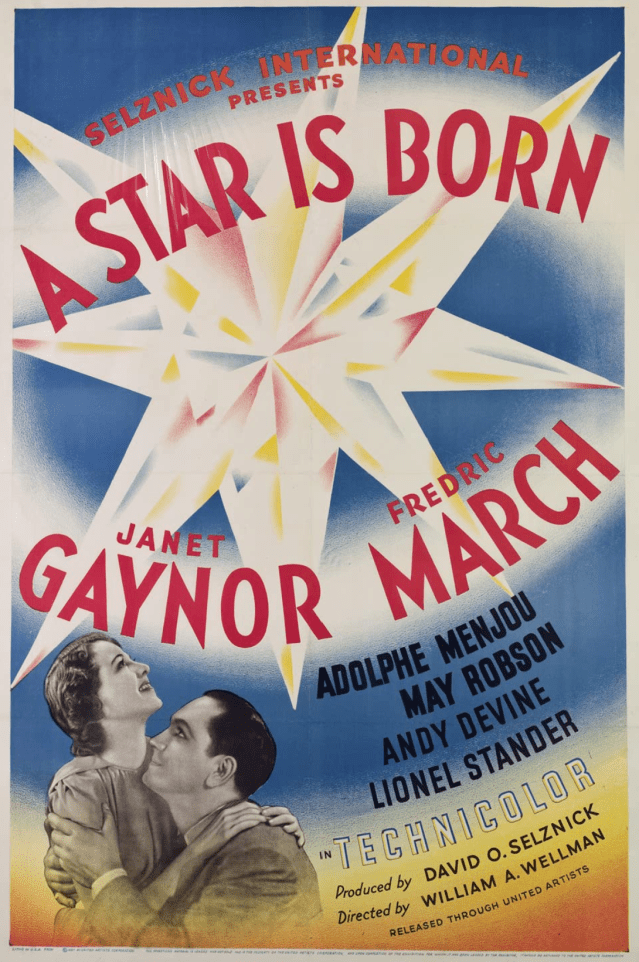
9. A Star Is Born (1937)

In my three (soon to be four) years of movie blogging, I never thought I’d ever see any version of A Star Is Born. But now that I have seen the original from the ‘30s, I can honestly say it was better than I expected! The story’s honesty about the entertainment industry and maturity toward heavier subjects was such a surprise. What was also a surprise was the use of mixed-media throughout the film, as it was ahead of its time. Even though A Star Is Born was released toward the beginning of the Breen Code era, it highlights the quality storytelling that came from this period in time. With the constant changes in the entertainment landscape, as well as technology, I can kind of see why this story has been remade on more than one occasion.

Take 3: A Star Is Born (1937) Review

8. The King and I (1956)

In 2021, there is at least one movie from the ‘50s on my best and worst movies list. But since I already talked about I Dream of Jeanie and The Trap, it’s time for The King and I to shine! This was the first time I had seen this version of the story in its entirety. Despite that, I found the film to be quite enjoyable! It is a good looking and sounding film, with the costume design, musical numbers, and set design building an aesthetically pleasing picture. The most memorable part of the movie was Tuptim’s interpretation of Uncle Tom’s Cabin! As I said in my review, it served as a good example of how everyone can view a text differently. The scene itself was more interesting than I expected.

Take 3: The King and I (1956) Review

7. Holly and Ivy

Because Hallmark creates so many Christmas movies, it can sometimes feel like they blend together. However, that is not the case for Holly and Ivy! What helps this title stand out is showing realistic characters dealing with realistic situations. This is quite different from those Hallmark pictures where the conflict either revolves around returning to a small town, saving a beloved establishment, or planning a major event. The emotional balance within this story added to my enjoyment of the picture. It never felt like the creative team was trying to emotionally manipulate me or force a reaction out of me. Looking back on the few Christmas films I reviewed this year, I can say with all honesty that Holly and Ivy was the best one!

Take 3: Holly and Ivy Review

6. Rigoletto

In my opinion, Rigoletto is to Beauty and the Beast what Ever After: A Cinderella Story was for Cinderella. What I mean by this is Rigoletto does an effective job at executing a non-magical version of Beauty and the Beast! Even though there have been musical versions of this particular story, such as the 1991 animated production from Disney, the 1993 film chose music as one of the story’s themes. This was an interesting choice, as it showed the audience the talent and skill it takes to be a good singer. Another interesting choice was the story taking place during The Great Depression. As I said in my review, this creative decision helped the film achieve its own identity.

Take 3: Rigoletto Review + 350 and 355 Follower Thank You

A Star Is Born (1937) poster created by Selznick International Pictures and United Artists

5. Sincerely, Yours, Truly

This is the first year an UP Network movie has appeared on any of my best lists! While Sincerely, Yours, Truly does contain a similar story to those found on Hallmark Channel, it makes up of that in genuineness and sincerity. The movie also presented interesting ideas, such as a grant proposal process and avoiding the “it’s not what you think” cliché. The on-screen chemistry and witty banter between the lead actor and actress definitely added to my enjoyment of this film! I don’t know what’s in store for UP Network in 2022. But I hope they continue to release quality productions like Sincerely, Yours, Truly!

Take 3: Sincerely, Yours, Truly Review + 295, 300, 305, 310, and 315 Follower Thank You

4. Perry Mason: The Case of the Telltale Talk Show Host

This entry in the Perry Mason movie series is one of the most memorable titles! One of the reasons why was the titular talk show host. Featuring real life talk show hosts in this story was a good idea. Having them portray talk show hosts on the radio was an even better idea, especially since some of those hosts had their own television show. That creative decision gave them new material to work with. The engaging nature of the mystery, where the outcome unfolds as the story goes on, maintained a steady amount of intrigue. This served as another way Perry Mason: The Case of the Telltale Talk Show Host stood out in the mystery genre!

Take 3: Perry Mason: The Case of the Telltale Talk Show Host Review + 290 Follower Thank You

3.  The Love Letter

Over the years, I have enjoyed finding and watching Hallmark Hall of Fame movies from years, even decades past. Sometimes, there are hidden gems that can be discovered. 1998’s The Love Letter is one of those gems! Unlike Chasing Leprechauns, the creative team behind the Hallmark Hall of Fame title found a way to allow the realistic and whimsical aspects of the story to co-exist. In fact, the whimsical part of the movie is what made the project one of the most unique in Hallmark Hall of Fame history! The film does contain the elements you’d usually find in a production of this nature, such as historical accuracy. But that just adds to the strength of The Love Letter!

Take 3: Hallmark Hall of Fame’s The Love Letter Review

2. The Three Musketeers (1948)

Isn’t it interesting how another Gene Kelly movie made it to my best list’s top three? Despite the weird coincidence, I did enjoy this version of The Three Musketeers! There was so much about this project I liked, from the strength of the ensemble cast to the stellar fight choreography. However, the best part of the film was how much detail went into it. This can be seen in the set design and costumes, where research and care are also reflected. While I still haven’t gotten around to reading the novel this movie is based on, The Three Musketeers was definitely an entertaining story!

Take 3: The Three Musketeers (1948) Review

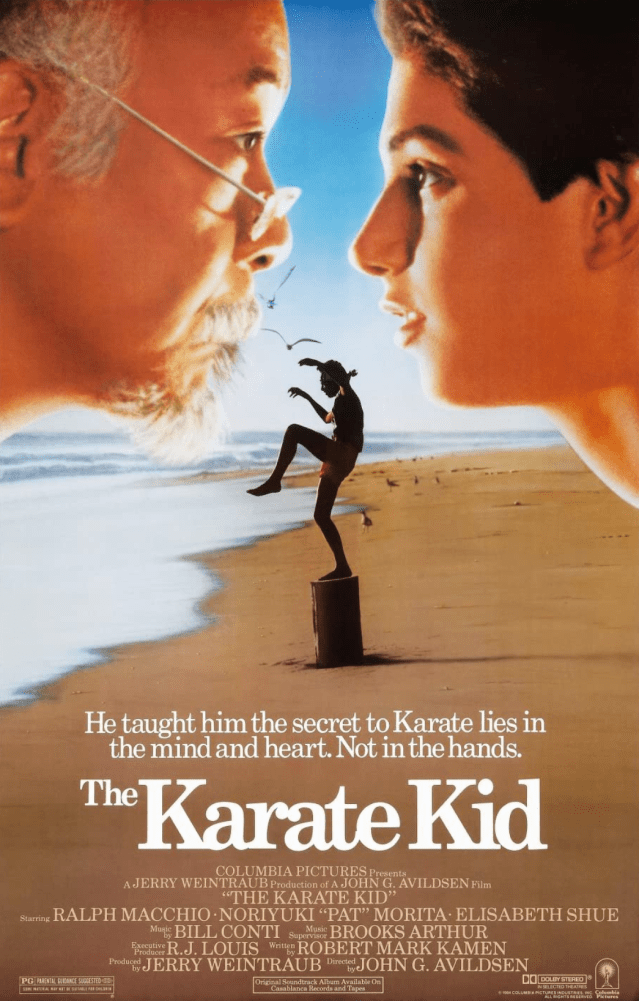
1. The Karate Kid (1984)

When it comes to the world of cinema, nothing beats the classics! The timelessness of 1984’s The Karate Kid allows the film to have a strong rate of re-watchability. The film’s story also contained ideas and messages that caused me to think, which is not something I’d expect from a sports movie. As I write this list, Mr. Miyagi’s words immediately come to mind. Whether it’s the famous “Wax on, Wax off” quote or his wisdom about karate, these words not only help The Karate Kid remain a memorable picture, but also give the audience something to apply to their lives. Add some exciting karate sequences and you have a solid film that has stood the test of time!

Take 3: The Karate Kid (1984) Review (Olympic Dreams Double Feature Part 1)

The Karate Kid (1984) poster created by Delphi II Productions, Jerry Weintraub Productions, and Columbia Pictures

Have fun in 2022!

Sally Silverscreen

Thank You for Another Great Blogathon!

As the Tokyo Olympic Games are under way, I’d like to thank everyone who participated in my ‘Olympic Dreams Blogathon’! Once again, my annual blogathon was a success, with a variety of content shared during the event! I really enjoyed reading each article, as a multitude of Olympic-related subjects were covered. I am going to host my yearly blogathon in 2022! However, I haven’t chosen a theme yet. Stay tuned!

Created by me, Sally Silverscreen, on Adobe Spark.

Having fun during the Olympics!

Sally Silverscreen

Take 3: The Karate Kid Part II Review (Olympic Dreams Double Feature Part 2)

Now that I’ve seen 1984’s The Karate Kid, it’s time for me to review its respective sequel; The Karate Kid Part II! Long before I even thought about starting a movie blog, I had only seen a snippet of this film. Like I said before, I am willing to give a chance to movies I haven’t watched in their entirety. Because of that and because the majority of The Karate Kid Part II takes place in Japan, which has hosted the Olympics four times, my blogathon became a good excuse for checking this sequel out! Sequels, like any type of film, can be hit or miss. There are times when the next chapter can allow the overall story to “go the distance”; expanding the narrative and bringing something new to the table. Meanwhile, there are sequels that waste their potential by trying to recapture the magic of the previous installment. At the end of the day, it all comes down to the creative team and their intention for creating another film. If you want to know what type of sequel The Karate Kid Part II is, you’ll just have to keep reading this review!

Because I had The Karate Kid Part II on my DVR since last year, I decided to use a screenshot of the movie’s poster from my television. Screenshot taken by me, Sally Silverscreen.

Things I liked about the film:

More focus on Mr. Miyagi: The first film was about Daniel’s personal journey; hence the film being titled The Karate Kid. While the majority of the movie revolved around the protagonist, we get to learn about Mr. Miyagi through his interactions with Daniel. But only parts of Mr. Miyagi’s backstory are revealed in these interactions. The Karate Kid Part II places more emphasis on Mr. Miyagi’s story. As I mentioned in the introduction, the sequel takes place in Japan, where Mr. Miyagi is originally from. However, the audience also witnesses people from Mr. Miyagi’s past interacting with him. The reason for the sequel primarily taking place in Japan is because Mr. Miyagi receives a letter from his former love interest, Yukie, about his father’s ill-health. By crossing paths with Yukie again, Mr. Miyagi is given the opportunity to reflect on past life choices. He also has to deal with the ramifications those choices had created. This new direction in the overall story shows that even though Mr. Miyagi is a good teacher with plenty of wisdom to share, he is still a human who, like Daniel, is constantly learning.

Interactions among the characters:  In my review for The Karate Kid, I talked about how the interactions among the characters were one of the strongest parts of that film. The sequel has the same strength as its predecessor, which provides consistency to the overall story! Having Ralph Macchio and Noriyuki “Pat” Morita reprise their roles helps maintain this consistency, as both actors are now familiar with each other’s talents. One of the strongest scenes in the movie is when Daniel and Mr. Miyagi are watching the sunset on the beach. In this moment, we not only learn more about Daniel, but we get to see him support his mentor and friend. The Karate Kid Part II shows Daniel having grown up since the events of the first film. Even though Daniel is still a teenager with a teenage perspective, he is more willing to put others before himself, as well as open his mind to new opportunities and experiences. Right as Mr. Miyagi boards his plane, Daniel joins him in the plane terminal. The reason why he wants to join Mr. Miyagi on this trip is because he wants to be there for his friend and mentor, especially since that friend and mentor has been there for Daniel. Not only does Daniel purchase a book about the specific place in Japan where Mr. Miyagi is from, but Daniel also uses some of the money from his savings account to pay for his ticket. Like I said in my review for the first movie, interactions like Mr. Miyagi and Daniel’s were made possible by the quality of the acting performances and the screenwriting!

The scenery: Although most of The Karate Kid Part II takes place in Japan, the movie was actually filmed in Oahu, Hawaii. Despite this change in location, the scenery was simply beautiful! Because Okinawa is presented in the film as a seaside town, there are several shots of the water that are featured. As I previously mentioned, Mr. Miyagi and Daniel are watching the sunset on the beach. Parts of this scene are shown through long shots, capturing the sun’s soft orange glow against the gray of the sky and water. In my review of the first installment, I talked about how one scene transitioned from a medium to a long shot, in an effort to showcase a part of the Grand Canyon. A scene where Daniel is practicing a breathing technique on a dock uses a similar transition. However, instead of starting with a medium shot, it begins with a close-up of Daniel. It then evolves into a long shot of the ocean, with clear blue water surrounding the dock and green palm trees found in the background.

Created by me, Sally Silverscreen, on Adobe Spark.

What I didn’t like about the film:

A limited presence of Kumiko and Daniel’s relationship: Before watching The Karate Kid Part II, I was interested in seeing how Kumiko and Daniel’s relationship differed from his relationship with Ali. Even though I liked seeing Ali and Daniel together, I can see why their relationship didn’t survive past the first film. Daniel and Kumiko were a nice couple. It also helps that Ralph and Tamlyn Tomita had really good on-screen chemistry. But Daniel and Kumiko’s relationship was shown less than Ali and Daniel’s relationship. Because of this, it caused their relationship to feel rushed. In one scene, when Daniel is getting into Kumiko’s car, Peter Cetera’s “Glory of Love” is playing on the radio. This is not only the film’s official song, but the song’s official music video heavily emphasizes Kumiko and Daniel’s relationship. Anyone who has heard “Glory of Love” would agree that it is better suited as a “wedding song”. Having this piece of music surround a teenage couple that has known each other for about less than three months feels a bit misleading. Also, The Karate Kid is a trilogy, followed by the television show, Cobra Kai. If the third movie and/or TV show is anything like the beginning of the second film, “this could all end in tears” (Bartok’s (from 1997’s Anastasia) words, not mine).

Karate fight sequences being used sparingly: One of the flaws of the first movie was how the karate fight sequences had a limited presence in the overall story. In The Karate Kid Part II, there are even less karate fight sequences. With a movie called The Karate Kid, you expect a certain amount of karate to be featured in the film. While both movies are not action oriented, fight sequences can add excitement to the overall story. Fighting was primarily avoided in The Karate Kid Part II, as both Mr. Miyagi and Daniel try to find other ways to resolve their issues. This was one of the central themes of the narrative: exploring other problem-solving avenues before using fighting as a last resort. However, karate is the heart of this series. When you choose to show only a handful of fight sequences, you have little exciting material to work with.

No satisfying resolutions for parts of the story: In The Karate Kid Part II, there were a few parts of the story that were not consistently told within the overall film. Because of this, I feel their resolutions were not satisfying. While taking a trip through town, Kumiko reveals to Daniel that she dreams of becoming a dancer. However, the type of dancing she’s interested in is not taught in Okinawa. Toward the end of the film, Kumiko tells Daniel that she plans on going to the United States in order to pursue her dream. But this resolution feels kind of random. There is no lead up to the resolution itself. Daniel also doesn’t provide any advice to Kumiko in regards to her personal dilemma. For this part of the story, the journey from Point A to Point B was missing.

Okinawa, Japan image created by Charlie Balch at freeimages.com. “FreeImages.com/Charlie Balch.”

My overall impression:

 The Karate Kid Part II is a fine film. But I don’t think the script was as tight as it was the first time around. I like how the story focused on Mr. Miyagi, as it offered new story-telling opportunities. But, to a degree, it came at the expense of Kumiko and Daniel’s relationship, as it was shown for a limited amount of time. If Peter Cetera’s “Glory of Love” had revolved around Mr. Miyagi and Yukie’s relationship, it would have made more sense. Not only is The Karate Kid Part II primarily Mr. Miyagi’s story, but he and Yukie have history together. While the theme of using fighting as a last resort is important, it prevented the movie from featuring more karate fight sequences than the previous film. As I’ve stated before on my blog, a movie’s title partially serves as a promise to the audience. With The Karate Kid Part II, I can’t say this promise was completely broken. This is because, according to Mr. Miyagi, karate should be used in self-defense only, emphasizing how karate consists of more than just fight sequences. But when a movie features any form of marital art, people, more often than not, come for the cool-looking and exciting fight sequences. I appreciate how this film wasn’t just a carbon copy of its predecessor. It shows the creative team put legitimate thought and care into their project. If you enjoyed the first film, I’d say give its second chapter a chance. Even though there are stronger sequels out there, The Karate Kid Part II is certainly not one of the worst.

Overall score: 7.3 out of 10

Have you seen The Karate Kid Part II? Are there any sequels you are a fan of? Please tell me in the comment section!

Have fun at the movies!

Sally Silverscreen

Take 3: The Karate Kid (1984) Review (Olympic Dreams Double Feature Part 1)

For my first two blogathons, I wrote editorials as my contribution for the event. These articles were ‘Phantom of the Megaplex’ at 20: A Reflection on the Movie-Going Experience and Roger Ebert’s Movie Yearbooks: How Relevant are They Anyway? This time around, I wanted to do something different. Therefore, I chose to write a double feature review! Because this year’s blogathon is Olympic themed, I selected The Karate Kid and The Karate Kid Part II. In 1984, the Summer Olympics were held in Los Angeles. The Karate Kid not only takes place in California, but it was also released in 1984. Years ago, I had seen about half of this movie. As I said in my review for It’s a Mad, Mad, Mad, Mad, World, I am willing to give films a second chance if I haven’t finished them or haven’t watched them in several years. It’s been a long while since I have seen The Karate Kid, so I thought my blogathon would provide a good excuse to revisit it.

The Karate Kid (1984) poster created by Delphi II Productions, Jerry Weintraub Productions, and Columbia Pictures

Things I liked about the film:

The interactions among the characters: In stories that heavily rely on the relationships between various characters, how well-acted those characters are and the quality of their interactions will make or break that story. With The Karate Kid, these interactions served as one of the strongest parts of the film! That is because all of them felt natural and believable. When Daniel and Ali go to Golf N’ Stuff for the first time, you can see these characters are genuinely having a good time. They acted the way you’d expect a typical teenager would; smiling while racing each other at the go-kart track, laughing as their bumper boat crashed into another boat, and critiquing their pictures from the photobooth. Because of Ralph Macchio and Elisabeth Shue’s performance, as well as the script, their relationship came across as realistic. When it comes to Daniel’s relationship with Mr. Miyagi, we are given the opportunity to witness healthy mentor/student interactions. If one were given instructions, but not the reason behind those instructions, it can be easy to get frustrated. This happens after Daniel receives a series of instructions from Mr. Miyagi. But when Daniel discovers the reason why he has been following these instructions, you start to see him gain an understanding and appreciation for what Mr. Miyagi has taught him. Similar to what I said before about Daniel and Ali’s relationship, this period of learning and discovery contains a lot of realism. It shows that, with the right support and guidance, we can learn things such as how to think for ourselves.

The cinematography: The Karate Kid is a movie that has better cinematography than most of the film fan community gives it credit for. To prove my point, I will bring up one of the film’s earliest scenes as an example. At the beginning of the movie, Daniel and his mom are driving through Arizona. This particular scene starts with a medium shot, placing primary emphasis on Daniel’s mom’s car. As their journey down this road plays out, the camera pulls away from the car and delivers a long shot of a section of the Grand Canyon. Characters’ interactions are also captured well on film! At a Halloween party, Daniel is dressed up as a shower. When Ali wants to talk to Daniel, she goes behind the costume’s curtain. Their conversation is shown in a close-up shot, which allows the audience to feel like they are that small space with Ali and Daniel. I really liked how the karate tournament was filmed! It involved a combination of medium and close-up shots, allowing the audience to witness the action. The camera was also steady, which made the scenes appear clear.

The music: Music is an important component of any movie. A song or instrumental piece can elevate the mood within a scene or highlight a scene’s intended point. The scene where Daniel attends his first day of school serves as a great example. In the background, “Cruel Summer” by Bananarama can be heard. Having this song play during this scene makes sense for several reasons. Daniel’s story starts in September, which is technically summer until September 21st or as late as September 24th. Daniel is also having a difficult time adjusting to his new home, believing the move to be a “cruel” gesture on his mother’s part. The music itself is light with a higher tempo, as the sunny California environment pairs nicely with the tune. The struggles Daniel is experiencing are heavily emphasized, with the help of Bananarama’s “Cruel Summer”.

Created by me, Sally Silverscreen, on Adobe Spark.

What I didn’t like about the film:

The on again/off again nature of Daniel and Ali’s relationship: I liked seeing Daniel and Ali together and I thought Ralph and Elisabeth had good on-screen chemistry. However, I didn’t like the on again/off again nature of their relationship. I know that every relationship, whether platonic or romantic, has their issues to deal with. I also understand that a relationship where both parties are younger are going to handle those issues differently than a relationship where both parties are older. With Ali and Daniel, they became frustrated over their issues too easily. This causes them to enter and exit their relationship too quickly. While I was glad to see Daniel and Ali work things out, I wish they were less hasty about their relationship by talking things through.

A limited presence of karate fight sequences: The Karate Kid is not an action movie, but a coming-of-age story where one develops a better understanding of karate. Even though I knew that before watching this film, I feel the presence of karate fight sequences was limited. We see about three fight sequences toward the beginning of the film, with the majority of them taking place during the tournament. The rest of the story focuses on Mr. Miyagi teaching Daniel the foundations of karate. In the middle of the movie, I think there should have been one or two fight sequences. For example, instead of simply showing Mr. Miyagi breaking the loiters’ glass bottles at the beach, a karate fight sequence had taken place. That way, the excitement that comes from these sequences would be consistent throughout the movie.

Small details that don’t make sense: While watching The Karate Kid, I noticed some small details that, to me, didn’t make sense. In one scene, Mr. Miyagi tells Daniel that karate is about what is in your mind and heart, not about what belt you have. If that is the case, why do belt ranks exist in the first place? Why work toward earning another belt when what’s in your mind and heart are more important? At the tournament, the people running the event acted like they weren’t familiar with Mr. Miyagi’s “dojo”. Yet, on the scoreboard, there is a pre-made logo next to Daniel’s name. How was this logo able to be made if no one organizing the tournament had heard of Mr. Miyagi’s “dojo”?

Martial arts image created by Freepik at freepik.com. <a href=”https://www.freepik.com/free-photos-vectors/red”>Red vector created by freepik – http://www.freepik.com</a>. Image found at freepik.com. 

My overall impression:

The Karate Kid is a film that is considered a “classic” for good reason. It not only features exciting karate fight sequences, but it also uses one-liners well and has a strong script. But, in my opinion, the reason why the 1984 picture has earned this title is because it’s the type of movie that sticks with you. “Wax on, Wax off” is one of the most quotable lines in film history. Whenever I hear that line, I think about how there’s a reason for everything. I also remember how Daniel had to learn the meaning of “Wax on, Wax off” for himself instead of Mr. Miyagi telling him what it means. The Karate Kid is also a movie that has the ability to make you think. Whether or not this was intentional, you can’t help but reflect on the things that Mr. Miyagi says. You also can’t help but think about how those things can apply to real life. It’s been amazing exploring the world of ‘80s cinema. I’ve found some hidden gems, revisited some classics, and stumbled upon some stinkers. With The Karate Kid, I’d say it is definitely a keeper! I hope you stick around, because I’ll be reviewing this story’s second chapter!

Overall score: 8.2 out of 10

Have you seen The Karate Kid? Are you looking forward to my review of The Karate Kid Part II? Let me know in the comment section!

Have fun at the movies!

Sally Silverscreen

I Call Upon the Bloggers of the World for the Olympic Dreams Blogathon!

The Summer Olympics is just around the corner! Because of this, I decided to choose an Olympic theme for my annual blogathon! In this post, every participant and their article will be featured in a collective list. This set up is similar to my previous blogathons. What is different this year is how there are no separate categories. Each entry represents a different aspect of the Olympics; from the location of a past or present Games to the sport featured in a chosen program.

Created by me, Sally Silverscreen, on Adobe Spark.

Olypmpic Dreams Roster

Realweegiemidget Reviews — TV… Those Glory, Glory Days (1983)

Critica Retro — Retro cartoon: Laff-A-Lympics

18 Cinema Lane — The Karate Kid (1984), The Karate Kid Part II (1986)

MovieRob — Olympic Dreams Blogathon – 16 Days of Glory (1986), Olympic Dreams Blogathon – Blades of Glory (2007), Olympic Dreams Blogathon – Eddie the Eagle (2016), Olympic Dreams Blogathon – Prefontaine (1997), Olympic Dreams Blogathon – Visions of Eight (1973)

Silver Screenings — When You’re Too Talented For Your Own Good

Dubsism — Sports Analogies Hidden In Classic Movies – Volume 113: “Personal Best”