Comparing with the Critics – Best of 1985 – Mad Max Beyond Thunderdome

This review is from my series, Comparing with the Critics. If you’d like to learn more about the series, click on the link below.

Introducing my new series, Comparing with the Critics!

In my Comparing with the Critics review of Amadeus, I mentioned the Falco song, “Rock Me Amadeus”, being one of the reasons why I was intrigued to review the movie. I actually have a similar experience with Mad Max Beyond Thunderdome. Every time I think of this film, I think of the Tina Turner song, “We Don’t Need Another Hero (Thunderdome)”. This is an ironic coincidence, as “We Don’t Need Another Hero (Thunderdome)” and “Rock Me Amadeus” were released in 1985. Another ironic coincidence is how, for the Comparing with the Critics series, I, once again, selected an ‘80s film both Roger Ebert and Gene Siskel liked. Though Mad Max Beyond Thunderdome only appeared on Roger’s list of the top ten best films of 1985, each critic gave the movie a thumbs-up when they reviewed it on an episode of At The Movies. Before this Comparing with the Critics review, I had never seen any of the Mad Max movies, let alone Mad Max Beyond Thunderdome. Therefore, I couldn’t agree or disagree when Roger stated that Mad Max Beyond Thunderdome was “the best of the Road Warrior movies” or when Gene declared it was “a great, violent, fun picture”. Now that I have seen the film, I can honestly say I don’t agree with Gene’s and Roger’s praise. It’s not that Mad Max Beyond Thunderdome is a bad movie, I just didn’t like or love it as much as the critics did.
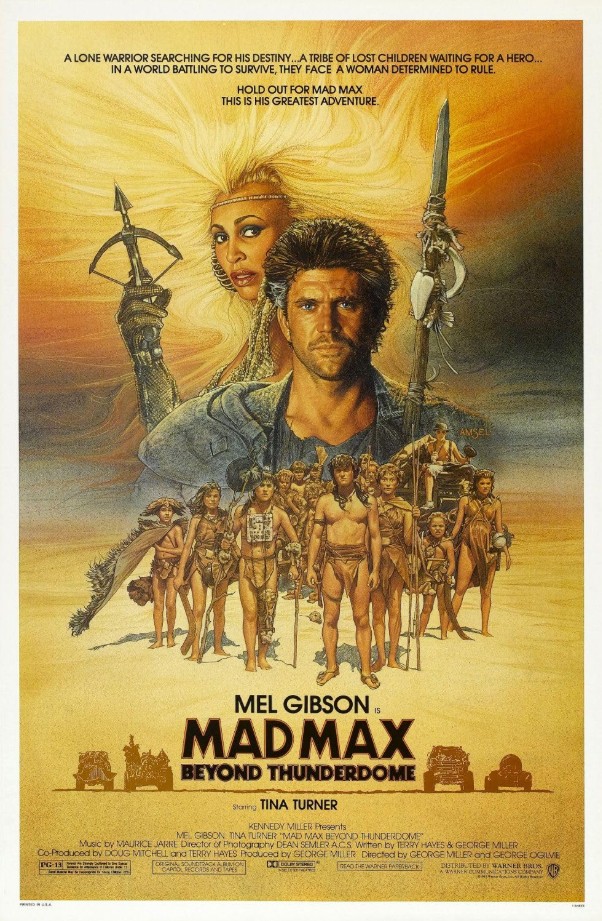
Mad Max Beyond Thunderdome poster created by Kennedy Miller Productions and Warner Bros.

While sharing his opinion on Mad Max Beyond Thunderdome in an episode of At The Movies, Gene complements the directors, George Miller and George Ogilvie, as both of them “successfully creates a complete alien world on film”. To add to Gene’s statement, Roger commented how the film’s “world is as rich as Casablanca or as rich as Oz”. I admit one of the strengths of Mad Max Beyond Thunderdome was its set design, as the movie’s creative team presented an atmosphere that felt immersive! One of the conflicts in the story is Max battling in a duel against a character named Blaster, in order to retrieve his stolen items. They fight within the titular Thunderdome, a circular caged structure built out of steel-like material. What adds to the scene’s immersion is the medium and close-up shots captured within the Thunderdome. The combination of these creative choices helps the audience feel like they are right in the middle of the excitement! Even the sign advertising the Thunderdome is a blend of color, light, and dirt. This specific prop captures the thrill of the dueling action while also consistently displays the film’s aesthetic.

Image by Freepik

As I said in this review’s introduction, Mad Max Beyond Thunderdome ended up on Roger’s list of the top ten best films of 1985. One of his reasons was how he “was overwhelmed by the wealth of new ideas they came up with in the third picture”. Specifically speaking about Max and Blaster’s aforementioned duel, Roger explains how this scene presents two new ideas; “a new place to put the audience, which is over the top of the dome, and a new way to fight by putting the people on elastic bands so they have a three or a four dimensional, if you will, fight instead of regular punching it out”. Adding to Roger’s explanation, both Max and Blaster were given more freedom to move around the Thunderdome because of their elastic harnesses. While there was fist-fighting in the duel, flips and large jumps were incorporated in the fight choreography. Blaster and Max were presented with a variety of weapons, which added to the duel’s unpredictability. It also shows how the duel itself was a battle of strategy. This scene is definitely one of the most memorable from Mad Max Beyond Thunderdome!
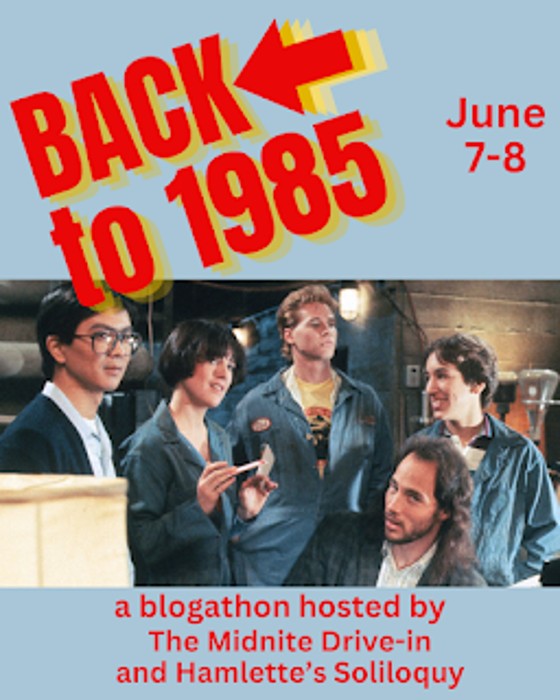
Back to 1985 Blogathon banner created by Quiggy from The Midnite Drive-In and Hamlette from Hamlette’s Soliloquy

While Gene and Roger sang the praises of Mad Max Beyond Thunderdome, I was disappointed they ignored Tina Turner’s portrayal of Aunty Entity. Personally, I think Tina is a better actress than some people give her credit for. Her performance in this film proves that. A great example is when Master confronts Aunty Entity about the true leadership of Bartertown. Before this confrontation, Aunty Entity is confident in her ability to rule over this little community. Master calls her out by questioning who’s in charge. Aunty’s confidence gradually turns into anger. She develops a stern look on her face, the anger itself filling her eyes. There’s even a point where Aunty’s bottled-up anger causes her to shake. This scene shows how Tina’s performance was able to say so much while utilizing very little dialogue.

Illustrated image of Arizona desert created by pikisuperstar at freepik.com. Background vector created by pikisuperstar – www.freepik.com

Like I brought up in my review’s introduction, I didn’t like or love Mad Max Beyond Thunderdome as much as Roger and Gene did. A reason for my opinion is how the script left several questions unanswered. When Max meets the children of the Planet Erf tribe, the children believe he is Captain Walker. They describe Captain Walker as a plane pilot who will lead them to a better land. Because Jedediah was introduced in Mad Max Beyond Thunderdome as a man who could successfully fly a plane, I thought he could be Captain Walker, connecting him to the Planet Erf tribe’s part of the story. But this wasn’t the case, leaving questions about Captain Walker’s whereabouts. I was also not a fan of the creative team’s decision to prioritize telling over showing. A good example is when Blaster is about to be defeated in his and Max’s duel. Master begs Max not to kill Blaster, as he has a lot of respect for Blaster. However, this respect isn’t shown leading up to that scene. The only interactions with Master and Blaster are Master simply using Blaster as a means of transportation. Had the respect and camaraderie between Blaster and Master been better displayed, the duel itself and even its aftermath would have carried more emotional weight.
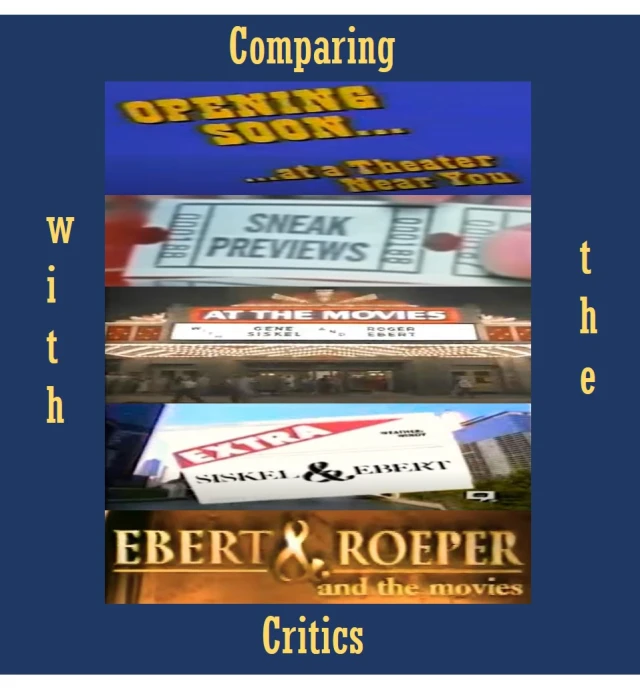
Comparing with the Critics banner created by me, Sally Silverscreen. TV show title cards created by WTTW National Productions, WTTW, Public Broadcasting Service (PBS), Lifetime Television, Tribune Entertainment, Buena Vista Television, and Disney-ABC Domestic Television

When Roger Ebert placed Mad Max Beyond Thunderdome on his list of the top ten best films of 1985, he called it “a great looking, high styled thriller”. Gene Siskel even claimed that “kids are gonna want toys out of this film” and “people are gonna dress like out of this film”. I can only speak for myself, but I wouldn’t go out of my way to seek out merchandise related to this movie or even revisit this movie. That’s because I thought Mad Max Beyond Thunderdome was just a fine, well-made picture. I couldn’t become fully invested in this story because of the collection of unanswered questions, which left me confused. I did not like the creative team’s decision to emphasize telling over showing as well. But the movie does have its merits. The world-building was one of the strongest aspects of the production, as the directors helped create an on-screen world that felt immersive. I not only liked the acting, I also believe the Thunderdome duel was one of the film’s most memorable scenes. So, this is yet another review where I didn’t agree with the critics. Now, if you’ll excuse me, I’ve got to go sing along to Tina Turner’s song, “We Don’t Need Another Hero (Thunderdome)”!

This review was brought to you by

Sally Silverscreen
Comparing with the Critics – Worst of 1985 – The Bride

This review is from my series, Comparing with the Critics. If you’d like to learn more about the series, click on the link below.

Introducing my new series, Comparing with the Critics!

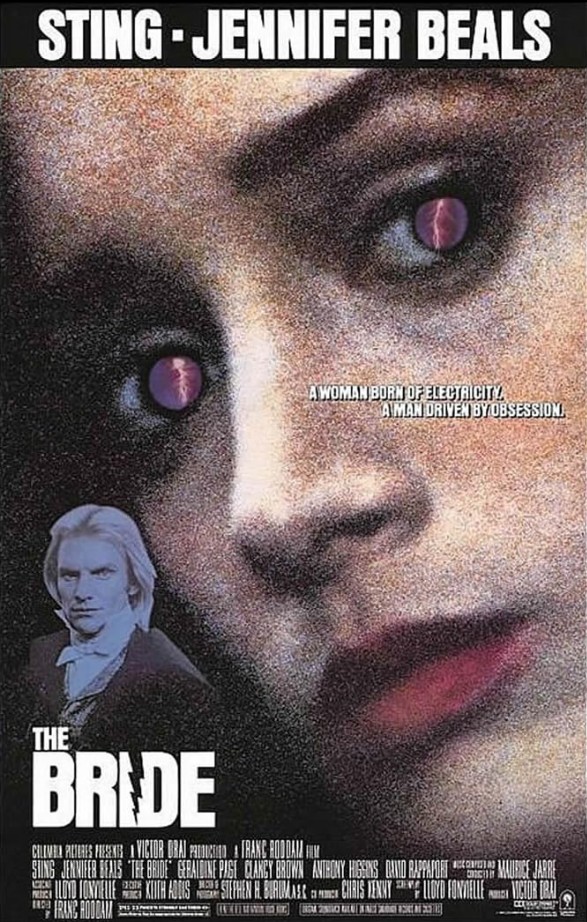
The summer of 1985 was a disappointing time for Gene Siskel and Roger Ebert. They were so let down by that particular time of the year, At The Movies dedicated an entire episode to discussing the worst movies of the summer. The Bride, which was released on August 16th, was the first film featured in this episode. It left such a bad impression on Roger and Gene, it also appeared on the ‘Worst of 1985’ episode of the show. In each of these episodes, Roger describes The Bride as “an ambitious film that lost it’s way” and a movie that “shot for the stars and failed miserably”. Because I hadn’t even heard of The Bride before starting my Comparing with the Critics series, I couldn’t agree or disagree with Roger’s sentiments. From the way the movie was described, it seemed to answer the question of what would happen if Victor Frankenstein’s female creation fell in love with him? This is a question that is infrequently asked in Frankenstein related media. As someone who has read Mary Shelley’s source material, I was curious to see how the film’s creative team would answer this question. But now that I have seen The Bride, I’m disappointed by how this question was approached. Unlike Gene and Roger, though, I wouldn’t go so far to say the movie is bad.

The Bride poster created by Colgems Productions Ltd., Delphi III Productions, Lee International Studios, and Columbia Pictures

After showing a clip from The Bride in At The Movies’ Worst Movies of the Summer episode, Roger claims the film “didn’t know whether it wanted to be a serious movie about the philosophical issues raised by the whole Frankenstein legend or whether it just wanted to be a glamourous, sleek remake”. I personally believe the movie’s creative team knew exactly what they were doing, accomplishing two goals in one picture. Throughout The Bride, there are two parallel stories; the first about Frankenstein and his female creation (Eva) and the second about Frankenstein’s male creation (Viktor) and Rinaldo. These stories show Viktor and Eva learning about the world around them as well as interacting with those they depend on. Every time Rinaldo introduces Viktor, he always refers to Viktor as “his friend”. Meanwhile, Frankenstein calls Eva “his ward”. The stories in The Bride were, in my opinion, intended to take a specific approach to the Nature vs. Nurture debate, presenting how two creations created by the same man could journey to the same outcome.

In Mary Shelley’s original source material, there aren’t really any heroes in that story. That’s because it focuses on the main message of some good intentions possibly leading to bad results. In The Bride, Viktor receives a “hero’s journey”, where he not only gets to fall in love, he also gets to save the day. His name, according to Rinaldo, even means “He will win”. As I mentioned in this review’s introduction, I have read Mary Shelley’s novel. From what I remember, Frankenstein destroys his female creation and his male creation is presented in the story as more of a cautionary tale. With that said, I think this creative liberty added an interesting dynamic to The Bride!

Hand-written letter image created by Veraholera at freepik.com. <a href=”https://www.freepik.com/free-photos-vectors/background”>Background vector created by Veraholera – Freepik.com</a>. <a href=’https://www.freepik.com/free-vector/love-letter-pattern_1292902.htm’>Designed by Freepik</a>. Image found at freepik.com.

While talking about The Bride’s two parallel stories, Gene says the story of Viktor and Rinaldo “was much more interesting than Frankenstein and the monster”. I find myself agreeing with Gene, especially since this story included a “hero’s journey” and a conflict that needed to be resolved. But another reason why I liked Rinaldo and Viktor’s story is David Rappaport’s portrayal of Rinaldo. When Rinaldo first meets Viktor, he’s surprisingly not intimidated by Viktor’s size. Instead, Rinaldo’s confidence helps Viktor find a sense of belonging as well as build a friendship between himself and Viktor. Rinaldo’s charisma shows the audience his good intentions, always striving to give Viktor a better life than Frankenstein did. As he’s giving Viktor a new shirt, Rinaldo is horrified by the scars on Viktor’s back. The sight immediately brings concern to Rinaldo’s face, his saddened tone of voice concluding how Viktor must have been mistreated. The scene I just described shows how David’s performance gave Rinaldo a genuineness that allowed him to be a likeable character. Though this film is titled The Bride, Rinaldo became this movie’s MVP!

Back to 1985 Blogathon banner created by Quiggy from The Midnite Drive-In and Hamlette from Hamlette’s Soliloquy

Both Roger and Gene agreed that Viktor and Eva should have spent more screen-time together. Roger proclaims “if we’re gonna have those parallel stories for two hours, let’s have a pay-off at the end”, with Gene adding “a pay-off for half an hour, not for five minutes”. Like I talked about earlier in this review, I believe the creative team’s intention for The Bride was to present a specific approach to the Nature vs. Nurture debate, as well as giving Viktor a “hero’s journey”. However, my biggest criticism with these parallel stories was the editing. The way these stories were sewn together made the movie feel disjointed. This is because some parts of the story were longer than others. One scene shows Eva studying a series of pictures by herself for only a few seconds. The very next scene shows Viktor and Rinaldo on their journey to the circus, with the scene itself lasting several minutes. Frankenstein and Eva receiving shorter screen-time sometimes prevented the audience from seeing interesting interactions between these two characters. This creative decision also gave Eva and Frankenstein’s story less intrigue.

Group of clowns image created by Freepik at freepik.com. Image by Freepik

When I was introduced to The Bride, I was given the impression the film was trying to answer the question of what if Victor Frankenstein’s female creation fell in love with him. This made me curious to see how the movie’s creative team would answer this question. But like I said in my review’s introduction, I’m disappointed by how this question was approached. That’s because the film’s creative team didn’t answer or explore the question at all. They bring up an equally interesting and infrequently asked question of what if Frankenstein fell in love with his female creation? However, so much time was spent focusing on Eva learning about the world around her, the aforementioned question was given little time for exploration or discussion. When it came to Frankenstein’s love for Eva, it simply came across as possessive and controlling. As I’ve been saying throughout this review, Viktor was given a “hero’s journey”. This means the story always intended to have Eva fall in love with Viktor, not Frankenstein. Even though I liked the creative decision of Viktor’s “hero’s journey”, I’m still disappointed by the potential questions that were left unanswered.

Comparing with the Critics banner created by me, Sally Silverscreen. TV show title cards created by WTTW National Productions, WTTW, Public Broadcasting Service (PBS), Lifetime Television, Tribune Entertainment, Buena Vista Television, and Disney-ABC Domestic Television

Toward the beginning of At The Movies’ Worst Movies of the Summer episode, Gene claims the summer of 1985 “happened to be one of the dullest, most juvenile, most homogenized summer movie seasons in recent memory”. Out of the movies that premiered during that time, I’ve only seen six pictures in their entirety, including The Bride. Personally, I didn’t find any of these films to be bad or disappointing. Specifically speaking about The Bride, I thought it was a fine, serviceable, interesting enough title. Though I was disappointed the movie’s creative team didn’t answer the question of what if Victor Frankenstein’s female creation fell in love with him, there were aspects of the film I liked. While the acting was one of the strengths of The Bride, David Rappaport’s portrayal of Rinaldo shined the brightest! Rinaldo was such a likable character, he became my favorite! Another strength of this film was Viktor receiving a “hero’s journey”. Even though it was a creative liberty, it added an interesting dynamic to The Bride’s story. It was also interesting to see the creative team’s approach to the Nature vs. Nurture debate. I apologize for sounding like a broken record, but this is yet another Comparing with the Critics review where I disagreed with Roger and Gene. As I continue with my series, I have to wonder how often this will keep happening?

This review was brought to you by

Sally Silverscreen
It’s Time for the 7th Annual Gold Sally Awards!

Here at 18 Cinema Lane, I maintain several annual traditions to give my readers something to look forward to. One of those traditions is the Gold Sally Awards, which commemorates my blog’s anniversary! The award categories are created by me and based on topics I’ve brought up on my blog. With two new awards in 2025, I’ll explain the significance of those categories. Like in 2024, I will discuss why I chose each recipient. Now, let the 7th Annual Gold Sally Awards begin!

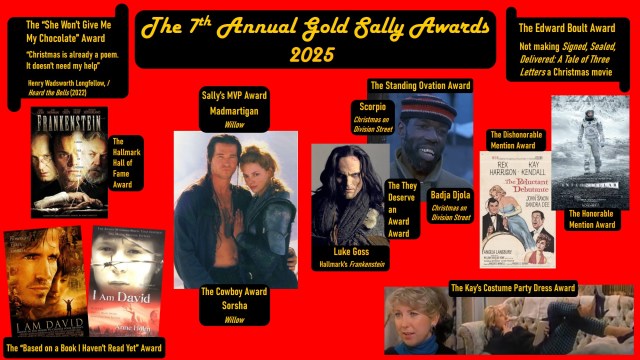
7th Annual Gold Sally Awards Winners created by me, Sally Silverscreen.

The Kay’s Costume Party Dress Award

(Best Outfit from a Movie)

Helen’s Christmastime Outfit from Hallmark Hall of Fame’s Pack of Lies

When I thought about the various categories of the Gold Sally Awards, I realized there was no category recognizing the wardrobe department of the movie industry. To fix that, I created the Kay’s Costume Party Dress Award! The name of this award references the dress Kay (Joan Collins’ character) wore at a costume party in the 1983 tv movie, Making of a Male Model. I loved this dress so much, it was featured in 2021’s Movie Blogger’s Christmas Wish-List! From the films I saw in 2024, there were several outfits I really liked. The one that was the most memorable, however, came from the Hallmark Hall of Fame presentation, Pack of Lies! The outfit in question was featured in my Movie Blogger’s Christmas Wish-List from last year; the black and blue ensemble Helen (portrayed by Teri Garr) wore during Christmastime. This timeless outfit was worn in only one scene. That fact is why Helen’s outfit earned the inaugural Kay’s Costume Party Dress Award!

The Edward Boult Award

(Missed Opportunity in Cinema)

Not making Signed, Sealed, Delivered: A Tale of Three Letters a Christmas movie

Last June, I speculated how Signed, Sealed, Delivered: A Tale of Three Letters could be a Christmas film. In my editorial about my speculation, I explained how the movie’s title could be a reference to either the Nativity story or A Christmas Carol. I also wondered if Signed, Sealed, Delivered: A Tale of Three Letters and “Signed, Sealed, Delivered: To the Moon and Back” could be a two-part adaptation of A Christmas Carol, with the rock star character intended to be a Marley-like character. The official marketing for Signed, Sealed, Delivered: A Tale of Three Letters proved my speculation wrong. But the more I think about how this movie could have been a Christmas picture, the more I wish it had been a Christmas production. As of early February, 2025, the Signed, Sealed, Delivered series has received only one Christmas movie. Plus, my aforementioned editorial provided ideas for a potential Christmas script. With Hallmark Mystery’s ‘Miracles of Christmas’ viewership numbers lower in 2024 than 2023, maybe the network will consider creating another Signed, Sealed, Delivered Christmas film.

The They Deserve an Award Award

(An Actor or Actress Who Deserves Recognition)

Luke Goss (for his performance in Hallmark’s Frankenstein) and Badja Djola (for his performance in Christmas on Division Street)

There were several good acting performances I saw in 2024. So, it was difficult to choose just one recipient for this year’s Gold Sally Awards. Both Luke Goss’ and Badja Djola’s performance was so impressive! In Hallmark’s Frankenstein, Luke’s use of emotion allowed The Creature to speak without actually speaking. An example I used in my review of the 2004 television film was when The Creature bursts into tears while seeking refuge in a barn. Luke’s acting skills made his character as complicated as he was in Mary Shelley’s source material. Badja made his character, Scorpio, so memorable, despite having limited appearances in Christmas on Division Street. With a consistently commanding presence, Scorpio was a character I looked forward to seeing on screen. That’s because Badja used his acting talents to give Scorpio captivating interactions with other characters. The scene where Scorpio shares some of his backstory with Cleveland is the example I used in my Christmas on Division Street review.

The Cowboy Award

(Character Who Makes an Unnecessary, Drastic Change)

Sorsha from Willow

You’re probably wondering why I gave Sorsha the Cowboy Award, even though I grew to like her as a character. While I found her transformation from villain to hero necessary, it was drastic. In my Comparing with the Critics review of Willow, I shared how Sorsha’s aforementioned evolution was too abrupt. The transformation gave Sorsha some character development, but it left some questions unanswered. For this flaw, blame lies in the screenwriting.

Sally’s MVP Award

(Character Who Left a Memorable, Showstopping Impression)

Madmartigan from Willow

When I watch a movie, there is, sometimes, a character who leaves such a memorable impression on me, they end up stealing the show. I have called these types of characters “MVP”. To acknowledge the “MVPs” of 18 Cinema Lane, I created the new Sally’s MVP Award! One of these “MVPs” was Madmartigan from Willow. In my Comparing with the Critics review of the 1988 film, I talked about how Madmartigan was the story’s comic relief. His personality and comedic timing captivated my attention and kept me invested in his story. What helped Madmartigan become the “MVP” of Willow was the screenwriting and Val’s performance.

The “She Won’t Give Me My Chocolate” Award

(Best Quote from a Movie)

“Christmas is already a poem. It doesn’t need my help” – Henry Wadsworth Longfellow, I Heard the Bells (2022)

In the 2022 movie, I Heard the Bells, Fanny (portrayed by Rachel Day Hughes) encourages her husband, Henry, to create a Christmas themed poem. Henry (portrayed by Stephen Atherholt) told his wife, “Christmas is already a poem. It doesn’t need my help”. When Henry said this, I started to think about what his quote meant. Poems require planning and putting the right pieces together, in order for that poem to have good flow and writing structure. Christmas festivities require a certain amount of planning, whether it’s a local church’s Nativity play or a family’s Christmas party. Using these two examples, finding the right pieces is important, such as who will portray the Three Wise Men or what will be the entrée of Christmas dinner. Poems can also tell stories. One classic example is ‘‘Twas the Night Before Christmas’. Christmastime is filled with stories, from the Nativity story to A Christmas Carol. Henry’s aforementioned quote made me see Christmas in a completely different way! Plus, a quote from a Christmas movie has never won the “She Won’t Give Me My Chocolate” Award before.

The Honorable and Dishonorable Mention Award

(Best and Worst Movie from the Honorable and Dishonorable Mention Category)

Best – Interstellar

Worst — The Reluctant Debutante

For last year’s Gold Sally Awards, there was only the Dishonorable Mention Award. That’s because I didn’t see enough movies to include an honorable mention category. With the honorable mention category returning in 2024, the Honorable Mention Award is also coming back! Science fiction stories about space exploration will typically emphasize the thrills and wonder of the galaxy. This can make it easy for a movie’s audience to get caught up in how adventurous and exciting outer space can seem. In Interstellar, a major focus is space travel’s effect on human beings. So, themes of family, sacrifice, and the price of scientific achievement are woven into the script. That, along with quality acting performances and impressive special effects, is why I liked Interstellar!

Out of all the movies that ended up in the dishonorable mention category, I had the highest expectations for The Reluctant Debutante. This is because I not only reviewed the film for The John Saxon Blogathon, there was some well-known talent involved with the project. Unfortunately, the 1958 movie fell short of those expectations. The Reluctant Debutante was a premise driven story that felt longer than one hour and thirty-four minutes, due to the jokes being drawn-out. It also didn’t help how some story ideas were overlooked. When I reviewed the 1958 film, I shared how movies from the 1950s are covered so infrequently on 18 Cinema Lane. So, it’s disappointing when a production from the ‘50s is weaker than expected.

The Hallmark Hall of Fame Award

(Movie That Feels Like It Belongs in the Hallmark Hall of Fame Collection)

Hallmark’s Frankenstein

There are different kinds of stories in the Hallmark Hall of Fame collection. One kind of story is adaptations of pre-existing literature. Sometimes, “classic” literature became Hallmark Hall of Fame presentations, like The Secret Garden and A Tale of Two Cities. When these adaptations are good, they can be an immersive experience. This is how I would describe Hallmark’s Frankenstein! Due to the combination of screenwriting, acting performances, set design, and costume design, the movie made me feel like I was transported to another time and place. I also appreciate how close to the source material the 2004 television film is. Looking back on Hallmark’s Frankenstein and the Hallmark Hall of Fame collection, I’m actually surprised Mary Shelley’s novel wasn’t adapted into a Hallmark Hall of Fame project. Everything I said is why I chose Hallmark’s Frankenstein for the Hallmark Hall of Fame Award!

The “Based on a Book I Haven’t Read Yet” Award

(Movie Based on Source Material I Have Not Yet Read)

I Am David

Movies that won the “Based on a Book I Haven’t Read Yet” Award were first placed on a best films of the year list. I Am David is continuing that tradition! The 2004 film earned the top spot on my best movies list of 2024. This is the second time a number one movie of the year received the “Based on a Book I Haven’t Read Yet” Award! After I reviewed I Am David, I learned the movie was based on a book. I’m not sure how affective the story’s plot twists will be, as I already know what they are because I saw the film. However, I’d still be interested in reading I Am David someday!

The Standing Ovation Award

(Character Most Deserving of Receiving Their Full Potential)

Scorpio from Christmas on Division Street

When the Gold Sally Awards presented the Standing Ovation Award, the recipients were characters who should have received their “standing ovation”, but were denied that for various reasons. Scorpio (from Christmas on Division Street) actively worked toward getting where he wanted to go. As I said during the They Deserve an Award Award, Scorpio had limited appearances in the 1991 made-for-TV movie. Despite that, the audience learned enough about him to know what he had gone through. During this limited period of time, Scorpio attempts to overcome his obstacles. While I won’t spoil Christmas on Division Street, I will say those attempts earned Scorpio the Standing Ovation Award!

Have fun at the movies!

Sally Silverscreen

Sally Watches…The Twilight Zone

When the curtains rose and the golden gates of Hollywood opened for him, Buster Keaton likely had one goal: to make people laugh. After conquering Vaudeville and starring in over a hundred film and television credits, Buster not only made people laugh, he left behind a legacy of humor, joy, and timeless entertainment! So, you probably saw the title of this article and wondered, “What does The Twilight Zone have to do with Buster Keaton”? One of Buster’s many film and television credits was an episode of The Twilight Zone. This is a show I am familiar with, having seen several episodes prior to The 10th Annual Buster Keaton Blogathon (hosted by Lea from Silent-Ology). However, on paper, The Twilight Zone and Buster Keaton seem like a random combination. Buster’s forte was comedy, while The Twilight Zone incorporates elements of science-fiction and horror. But is this episode, “Once Upon a Time”, an example of “opposites attract”? Let’s step into another dimension to find that answer through this review!

The 10th Annual Buster Keaton Blogathon banner created by Lea from Silent-Ology

Episode Name: Once Upon a Time

Season 3, Episode 13

Premiere Date: December 15th, 1961

What I liked about this episode:

As I stated in this review’s introduction, Buster’s forte was comedy. His specific acting forte was physical, “slapstick” performances. The creative team behind this episode paid attention to Buster’s comedic work, as Buster was given plenty of opportunities to showcase his comedy skills! One scene shows Buster’s character, Woodrow Mulligan, trying to hide from a police officer. At first, he walks behind Rollo, a character Woodrow meets in the “future”. When both men turn a corner, Rollo moves behind Woodrow, allowing Woodrow to walk in front of him. As they pass a rack of suit pants, Woodrow not only grabs a pair, Rollo picks Woodrow up so he can put the pants on. No beats were missed during this scene. The writing and delivery of this performance was simple, yet effective when it comes to the comedy!

What I didn’t like about this episode:

The run-time for “Once Upon a Time” is twenty-five minutes. Even though the script told a story that could be wrapped up in a short amount of time, there were parts of the episode that were drawn out. Chase scenes serve one example of moments lasting longer than necessary. When Woodrow first travels to 1962, the Time Helmet becomes misplaced. He spends several minutes trying to get the Helmet back, with the Helmet itself getting destroyed in the chase. Another drawn out scene is when Rollo argues with a man who owns a repair shop. While this argument takes place, Woodrow marvels at the “modern” inventions surrounding him. He also discovers a clothing store near the repair shop. In this part of the story, I found Woodrow’s observations hilarious. But I didn’t find the argument interesting.

Masks of comedy and tragedy images created by freepik at freepik.com. <a href=”https://www.freepik.com/free-photos-vectors/background”>Background vector created by freepik – http://www.freepik.com</a>. Image found at freepik.com.

The story itself:

Throughout this review, you’ve read references to a Time Helmet and Woodrow traveling to the “future”. That’s because “Once Upon a Time” is a story revolving around time travel! When the episode begins in 1890, Woodrow is disgruntled about the world around him. One of his major issues is how noisy his world is. However, this part of the story is presented as a silent film. After he seeks a quieter time period to travel to, he discovers the “future” (1962) is much noisier than he expected. Through this visual and auditory juxtaposition, the creative team behind this episode addressed how sounds can constitute our lives. If you know anything about The Twilight Zone, not everything is what it seems. Each episode shares a lesson or message with its audience, with the story leading up to that message or lesson. Without spoiling “Once Upon a Time”, the way the events play out provide a lesson that members of the audience can relate to.

The other factors from this episode:

For this part of my review, I will be spoiling “Once Upon a Time”. If you have not seen this episode and are interested in watching it, skip ahead to the second point in this section.

  • When the Time Helmet is first introduced in the story, Woodrow overhears how the Helmet can allow someone to travel in time for only thirty minutes. This is the conflict Woodrow experiences after he travels to 1962. Because Rollo finds 1890 an appealing time period, he is taken back to 1890 through the Time Helmet when Woodrow is on his way home. Toward the end of the episode, a title card states the story is now taking place one week later. Rollo is still in 1890, adjusting poorly to his new surroundings. If the Time Helmet can allow someone to explore different time periods for only thirty minutes, how has Rollo been able to stay in 1890 for a week?
  • Like I have mentioned in this review, the parts of the episode taking place in 1890 are presented as a silent film, complete with title cards and an overarching tune. Viewers familiar with Buster Keaton’s filmography will know he is one of the most celebrated actors from the silent film era. This creative choice in presentation was such a nice nod to Buster’s career! It also gave this episode its own distinct identity!
  • During Woodrow’s time in 1962, Rollo admits he is not only a scientist, he is also an expert on 1890. Yet, Rollo and Woodrow take the Time Helmet to a repair shop to get it fixed. Why didn’t Rollo fix the Helmet himself, especially since he seemed capable of knowing how to repair it? Had Rollo repaired the Helmet himself, there wouldn’t be the need for his argument with the man from the repair shop.
Image of vintage movie camera created by Macrovector at freepik.com. <a href=”https://www.freepik.com/free-photos-vectors/background”>Background vector created by macrovector – http://www.freepik.com</a>. Image found at freepik.com.

My overall thoughts:

 I said in this review’s introduction how I have seen several episodes of The Twilight Zone before. But this was the first time I saw “Once Upon a Time”. What surprised me was how light-hearted the story was compared to other episodes I’ve watched. The Twilight Zone is a show known for dabbling in the strange and even the sad. The best parts of “Once Upon a Time” were Buster’s comedic performances! Every comedy scene was written and delivered well, effectively making me laugh! What didn’t work in this episode were the drawn-out scenes. Even though the story was short, some scenes were just too long. When I reviewed television show episodes, I have stated if that episode would serve as a good introduction to its respective show. In my opinion, “Once Upon a Time” is a good place to start for those who either have never seen The Twilight Zone or who are just getting into the show. The story is strange, but not in an unsettling way. It even contains a happy ending. But if you want to know what that happy ending is, you’ll have to enter The Twilight Zone!

Rating: A 3.5 out of 5

Have fun on television!

Sally Silverscreen

The Top 10 Worst Movies I Saw in 2023

I’m going to be honest with my readers; in 2023, I saw more movies I disliked than liked. Luckily, I saw enough films to create a top ten best movies of the year list! When it comes to the movies I disliked, the majority of these titles were disappointing or average. This is different to my list of the worst movies of 2022. What’s also different about this year’s list is how my top three worst films are not all Hallmark projects. Like I have said in past lists, my top ten worst movies I saw in 2023 list is not intended to be mean-spirited, negative, or disrespectful. It’s just a list of my own, honest opinion. Since I reviewed some of the movies on my list, I will provide the links to those reviews in this article.

Dishonorable Mentions

Family History Mysteries: Buried Past, Sea Change, Murder 101: College Can Be Murder, Murder 101: The Locked Room Mystery, She Inherited Danger, My Diary of Lies, Double Nickels, A Zest for Death: A Hannah Swensen Mystery, Blackbeard, the Pirate, Christmas at Castle Hart, Shadow Island Mysteries: Wedding for One, and A Hidden Life (I turned this movie off after 42 minutes)

Image by starline on Freepik

10. The Curse of Frankenstein

After I watched and reviewed Frankenweenie, I was hoping the creative team of The Curse of Frankenstein would follow Mary Shelley’s source material closer than the Disney animated film did. Instead of doing that, they relied more on creative liberties. As I said in my review of The Curse of Frankenstein, I found this distracting, especially since I read the book prior to watching the film. Some of these creative liberties were adopted just for the sake of it. One of them was presenting Victor Frankenstein’s creature as a bumbling, destructive machine. This creative decision was a disservice not only to Mary Shelley’s work, but also to Christopher Lee, the actor who portrayed Frankenstein’s creature.

Take 3: The Curse of Frankenstein Review

9. The Last Child

I selected The Last Child for the Futurethon blogathon because of the film’s creative presentation; a futuristic story surrounded in a “contemporary” aesthetic. Unfortunately, the creativity of the 1971 made-for-TV movie didn’t reach beyond the surface. Despite the concern of population control within the story, there was little sense of urgency. That caused the movie to have too many low-stakes. It also didn’t help how the future in The Last Child wasn’t explained. This is another television film from the ‘70s that failed to impress.

Take 3: The Last Child Review

8. A Walk in the Spring Rain

Out of all the movies I saw and reviewed this year, A Walk in the Spring Rain is the most flavorless film. Even though this is a movie where the audience waits for the inevitable to happen, the meandering nature of the script forces viewers to focus on drawn-out subplots, such as the protagonists’ daughter, Ellen, thinking about law school. What adds to the film’s meandering nature are stretched out scenes, making A Walk in the Spring Rain feel longer than necessary. Like I said in my review of the 1970 production, every beloved film star has at least one project on their IMDB filmography that is lesser known. For Ingrid Bergman, A Walk in the Spring Rain is one of her more forgettable films.

Take 3: A Walk in the Spring Rain Review

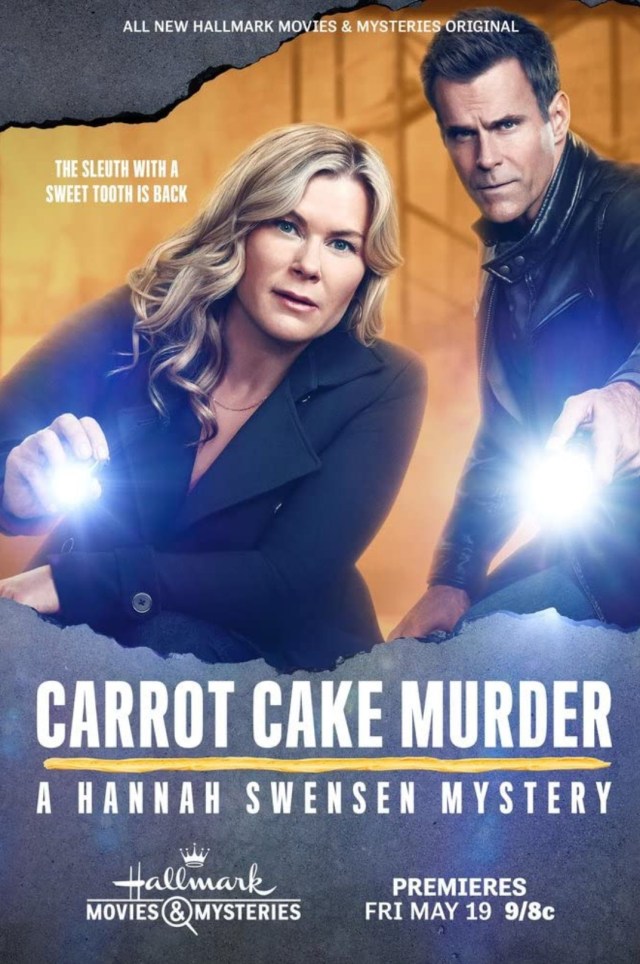
7. Carrot Cake Murder: A Hannah Swensen Mystery

In 2023, Hallmark Movies & Mysteries released two new chapters in the Murder She Baked/Hannah Swensen series: Carrot Cake Murder: A Hannah Swensen Mystery and A Zest for Death: A Hannah Swensen Mystery. While I found both entries disappointing, Carrot Cake Murder: A Hannah Swensen Mystery was the most disappointing movie out of the two. Other than solving a mystery, this story didn’t progress the series forward. Something happens in Mike and Hannah’s relationship that is resolved in A Zest for Death: A Hannah Swensen Mystery. This made Carrot Cake Murder: A Hannah Swensen Mystery an even more pointless chapter in the series. If you’ve never watched the Murder She Baked/Hannah Swensen series, skip this film, as you wouldn’t be missing much.

Take 3: Carrot Cake Murder: A Hannah Swensen Mystery Review

6. Silent Night, Fatal Night

Silent Night, Fatal Night is a Lifetime movie that is basically a gender-swapped, Christmas version of Misery, with a bit of a twist. Unlike the 1990 film, almost every character in Silent Night, Fatal Night makes one dumb decision after another. While the antagonist in the Lifetime film was unsettling, he was more annoying. Plus, I found it difficult to believe the protagonist, a mystery author, wouldn’t have more intuition to save herself. This isn’t the first time Lifetime has told a story similar to Misery. However, I wish the network would create stories that are less reminiscent of other, better movies from the 1990s.

Carrot Cake Murder: A Hannah Swensen Mystery poster created by Lighthouse Pictures, Looking Glass Productions, and Hallmark Movies & Mysteries

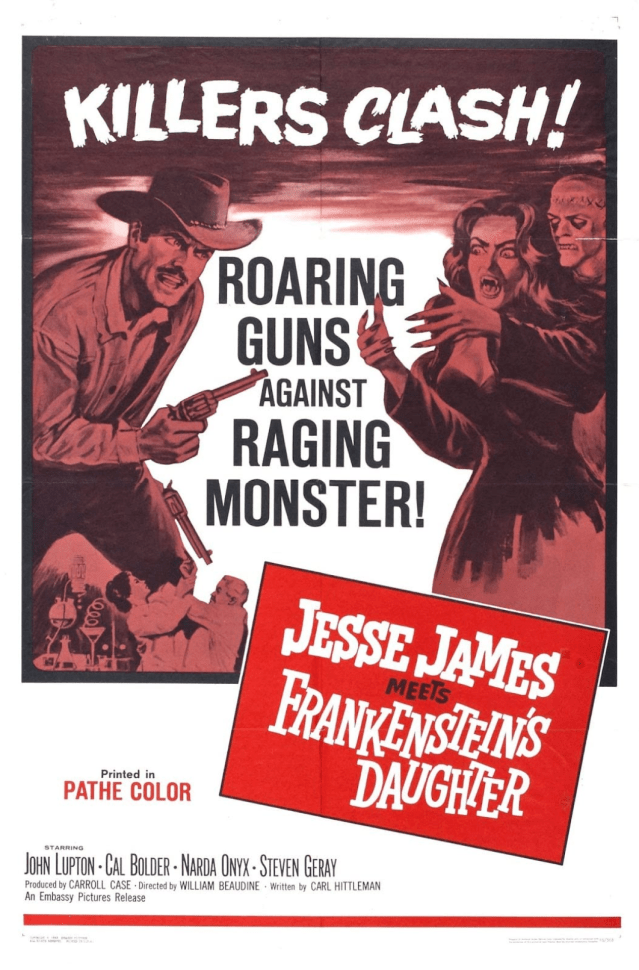
5. Jesse James Meets Frankenstein’s Daughter

Chosen for the Fifth So Bad It’s Good Blogathon, Jesse James Meets Frankenstein’s Daughter was built on a gimmick. Instead of embracing the silliness of that gimmick, the movie’s creative team took their project a little too seriously. Their project was misleading as well, no friendship or romance forming between Jesse and Frankenstein’s granddaughter. Though Jesse James Meets Frankenstein’s Daughter is classified under the western and horror genre, the western genre is emphasized more, preventing a balance between the two genres. The 1966 film is not my “so bad it’s good” movie. Since I did giggle a few times while watching it, I took a step in the right direction to find my “so bad it’s good” film!

Take 3: Jesse James Meets Frankenstein’s Daughter Review

4. Jesse Stone: Night Passage

For me, 2023 was not the year for mysteries, as the top four worst movies on my list are mystery films. The main issue with Jesse Stone: Night Passage is how none of the detectives do any detective work. What they do instead is pull assumptions out of their pockets, with those assumptions being conveniently correct. Subplots were prioritized over the mystery itself. This creative decision caused the story to lack any sense of urgency. It was nice to see familiar faces like Saul Rubinek (who portrayed Artie on Warehouse 13) and Liisa Repo-Martell (who portrayed Maida Flynn on Emily of New Moon). Sadly, there wasn’t much the cast could do to save Jesse Stone: Night Passage.

3. Mount Hideaway Mysteries: Heartache and Homecoming

This movie is so bad, it was, at times, unintentionally funny. Parts of the script reminded me of The Cookie Mobster, with the screenwriters not displaying an understanding for how some things worked. One such example is how Game Boy Color video game consoles were incorporated into the story. The film was riddled with other flaws, such as the color of a character’s earrings changing from scene to scene. Another, more consistent, flaw was telling instead of showing, like other characters mentioning how good looking the male protagonist is every time he appears in a scene. Also, just because the protagonist is a veterinarian does not mean she has to hold an animal every time a scene takes place at the veterinary clinic.

2. The Abigail Mysteries

I have never reviewed or talked about a movie from Great American Family on 18 Cinema Lane. So, it’s a shame that when I do talk about one of their movies, it’s because the project is bad. It is possible to create a good mystery story with elements of faith. But because The Abigail Mysteries heavily prioritized the elements of faith, the mystery was overshadowed, causing the overall story to lack a sense of urgency. From no on-screen chemistry to inconsistent audio quality, The Abigail Mysteries was filled with flaws. There were even times when actors would deliver their lines too quickly, making it difficult to understand what they were saying. I know this is the network’s first attempt at making a mystery movie. But if Great American Family is serious about creating more mystery projects, their efforts need to be better than The Abigail Mysteries.

1. Mystery Island

This is the second year in a row where a newly released Hallmark Movies & Mysteries movie is the worst film I saw. With Hallmark no longer prioritizing the mystery genre, I can’t say I’m that surprised. The poor writing is the biggest problem of Mystery Island. The mystery’s reveal is so ridiculously written, it makes the entire story feel pointless. Emilia Priestly, the film’s protagonist, has a legitimate reason to get involved in the movie’s mystery, as she is a psychiatrist for Scotland Yard. Instead of using her skills to solve the case, Emilia a) flips through books, b) eavesdrops on other characters’ conversations, and c) follows people into the jungle and runs out of that same jungle in wedge sandals. I’d like to think Hallmark will find the motivation to create better mystery productions. But as of late 2023/early 2024, I’m not getting my hopes up.

Jesse James Meets Frankenstein’s Daughter poster created by Circle Productions, Embassy Pictures, and Embassy Home Entertainment

Have fun in 2024.

Sally Silverscreen

Another Day, Another Buzzwordathon Fail

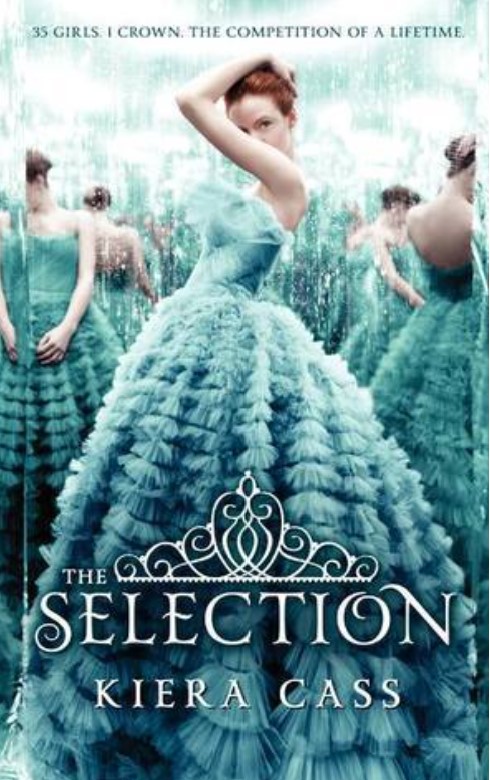
Last year, when I participated in the Buzzwordathon readathon for the first time, I experienced several fails. One of those fails took place when I read All the Light We Cannot See by Anthony Doerr, as I didn’t finish reading that book within the month of September. Once again, I didn’t finish September’s book for Buzzwordathon within that month. But I’m still going to review the book I chose, like when I reviewed The Grapes of Wrath. Since September’s theme was ‘game related words’, I read The Selection by Kiera Cass, as the contest in the story shares the name of the book’s title!

The Selection book cover found on Goodreads

Sometimes, the YA (young adult) genre receives a bad rap. One reason is how romantic relationships are portrayed, from the unrealistic to the unhealthy. While inconsistent, there were times in The Selection where more realistic perspectives on romantic relationships are shared. An example came from the protagonist’s father. When America asked her father if people of a different social status can marry, her father told her “you should know that love can wear away under the stress of being married”. This quote alone emphasizes how much work goes into maintaining a romantic relationship, especially a marriage. From what I can remember, I haven’t seen or heard of many YA stories that discuss the time, effort, and care that romantic relationships require. Therefore, I found this part of the story refreshing!

Princess tiara image created by Freepik at freepik.com. <a href=’https://www.freepik.com/free-vector/ornamental-princess-crowns_1109199.htm’>Designed by Freepik</a>. <a href=”https://www.freepik.com/free-photos-vectors/gold”>Gold vector created by Freepik</a>. Image found at freepik.com.

Toward the beginning of the novel, America learns she’ll become an “elite” if she places in The Selection’s top ten. If she wins, she and her family will become Ones, the highest level in the book’s social hierarchy. Because of the titles of The Selection’s sequels, as well as the titles of the novellas, the outcome of the contest is spoiled. This creative choice also prevents The Selection from being a suspenseful and intriguing story with an element of surprise. The majority of the story revolving around conversations between America and the prince, Maxon, also prevented the book from being intriguing. Even though conversations between characters are an important component of storytelling, there was no room in The Selection for a conflict or problem solving because of the priority placed on the aforementioned conversations.

Pink themed image created by Freepik at freepik.com. <a href=”https://www.freepik.com/free-photos-vectors/mockup”>Mockup psd created by freepik – http://www.freepik.com</a>. Image found at freepik.com.

When I published by TBR tag post three years ago, I talked about wanting to read The Selection. Since the series seems to be divisive on Booktube (the book community on Youtube), I wanted to check the first book out for myself, so I could form my own opinion on it. Now that I have read The Selection, I can understand why this series has received mixed results. The story had so much potential to stand out from other YA or even dystopian books. Instead, that potential was not reached, focusing on conversations between America and Maxon instead of showing the characters solving problems and seeking resolutions to conflicts. Even the young ladies participating in The Selection aren’t given much to do, preventing them from accomplishing challenges and showcasing their talents and skills. As I mentioned in this review, the titles of the sequels and novellas spoil the competition’s outcome. With that said, I’d rather read a book series where the story’s outcome is a surprise to the reader.

Overall score: 1.2 out of 5 stars

Have fun during Buzzwordathon!

Sally Silverscreen

Disclaimer: The Selection contains subject matter that some readers may find offensive, including:

Some swearing within the dialogue

Mention of a miscarriage

Some violence in the story

A drunken character

While learning more about The Selection, America is led to believe her consent won’t be respected. This implication turns out to be false.

Take 3: The Last Child Review

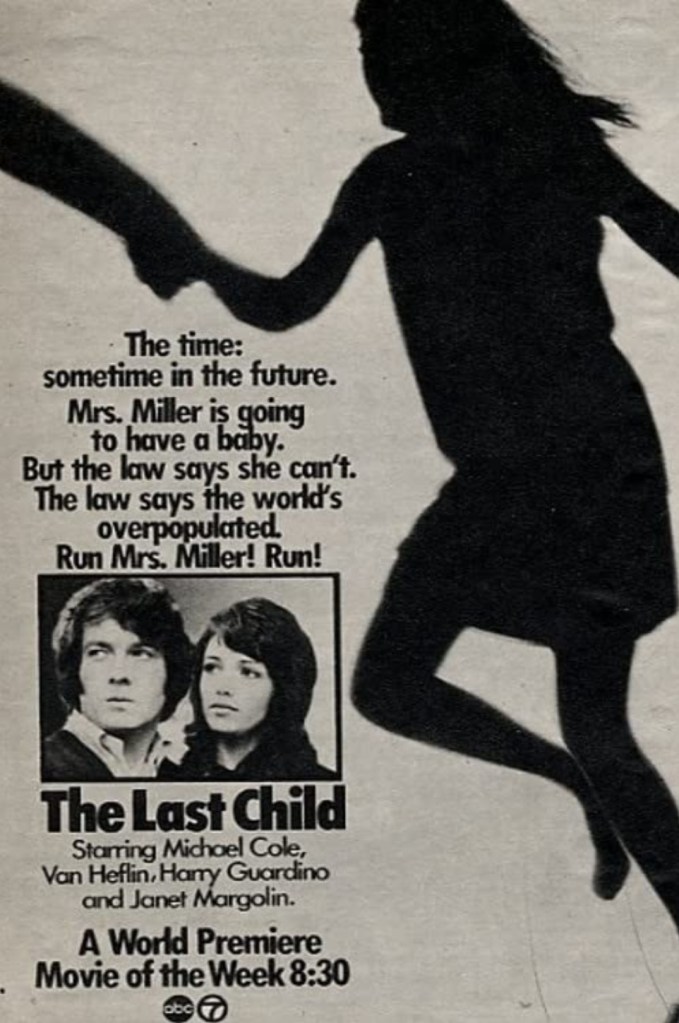
When the future is depicted in made-for-TV movies, that production is typically presented with a distinct, futuristic aesthetic. This creative choice makes that movie’s world look and feel different from the one the audience is living in. But when I came across the 1971 film, The Last Child, I took note of how the story adopted a “contemporary” appearance. That is the reason why I’m writing about this movie for the Futurethon event! Instead of putting on a futuristic appearance, The Last Child introduces their version of the future in more subtle ways. The dialogue among the characters is how the film’s creative team brings this idea to the screen. Sometimes, futuristic stories will feature a conflict that strikes fear into the story’s characters as well as the audience. The world in The Last Child discusses the subject of population control, which presents a dire circumstance for the protagonists.

The Last Child poster created by Aaron Spelling Productions and American Broadcasting Company (ABC)

Things I liked about the film:

Stand-out performances: When I watch a movie, sometimes an actor or actress will give a performance that stands out among the movie’s cast, leaving a memorable impression on me. In The Last Child, there were three actors who gave stand-out performances! I’ve seen some of Ed Asner’s films prior to watching The Last Child. In these films, Ed’s character has typically been presented as a friendly, kind-hearted individual. But in the 1971 made-for-tv movie, Ed’s role was different from those I saw in the past. Portraying a police officer named Barstow, Ed carried his character with a no-nonsense attitude. At the same time, he incorporated a sense of confidence into his portrayal, which allowed Ed to go toe-to-toe with other actors. One of these actors was Van Heflin, who portrayed Senator George. Van also incorporated confidence in his performance. However, this form of confidence was more dignified, reflective of George’s political background. Yet, there was a kindness within George, a kindness that felt genuine. The scene where the film’s protagonists, Allen and Karen, meet George for the first time perfectly showcases this kindness, as it can be heard in George’s voice and seen in his eyes.

The last stand-out performance came from Harry Guardino! Portraying Karen’s brother, Howard, Harry presents a man who is both concerned about his influential position and scared for his family. In a scene where Howard is trying to get Karen out of the Population Control Center, Howard’s voice sounds very professional over the phone. He even sounds professional when speaking to his brother-in-law. But throughout that scene, there is fear in Howard’s eyes. Because he is in the presence of family, Howard feels he can safely express this fear. The ability to present both the professional and emotional sides of Howard was made possible by Harry’s versatile acting talents!

The cinematography: Cinematography in made-for-tv movies can be hit or miss. It can either be surprisingly good or obviously bad. But in The Last Child, I was surprised by the cinematography, as some scenes were captured in ways I wasn’t expecting. In scenes where characters were moving in public crowds, the camera would use close-up shots. The camera would also be placed in front of or behind the characters. These techniques gave the audience the illusion they were moving alongside the characters, making those scenes feel immersive.

Senator George’s house: A location in a movie is meant to visually represent the environment the characters exist in. This holds true for a character’s house. As I mentioned in this review, George is a Senator. The interior and exterior spaces of George’s house are a reflection of his power and influence. Brick and stone make up the face of his house. Large, paned glass windows hint at rooms with high ceilings and expansive square feet. Inside George’s house, luxurious details can be seen in each room. One room features a floor to ceiling, cream colored fireplace, complete with carved detailing. Another room includes a dainty white, oval table that not only boasts drawers, it also appears to be utilized as a small dining table. These details show how the creative team cared about how George’s personal living space was presented in their movie!

Futurethon banner created by Gill from Realweegiemidget Reviews and Barry from Cinematic Catharsis

What I didn’t like about the film:

An unexplained future: In my review of Night of the Comet, I said a film’s science needed to be explained, in order for the audience to understand what’s happening in the story. The same can be said if creating a story set in the future. There has to be a reason for a film’s world being so different from the audience’s. These reasons can give the audience an understanding for these differences, allowing them to contemplate how they’d respond to that film’s world. In The Last Child, though, it was never explained why the movie’s world had strict population control laws. None of the characters mentioned how these laws came to be, what led to their existence. The audience was forced to accept the world of The Last Child at face value.

Little sense of urgency: The Last Child is about a couple expecting their second child, as their first child died shortly after birth. Because of their world’s strict population control laws, only allowing one child per family, the couple has a very difficult conflict on their hands. Despite this conflict, the sense of urgency in The Last Child was far and few between. There were times when a sense of urgency was present, such as during the film’s climax. But this element of the story was not consistent. This prevented me from truly fearing for the couple’s safety and well-being. It also caused the story to feel like it had too many low-stakes.

Inconsistent technology: The use of technology is established in the world of The Last Child. In fact, the incorporation of technology was introduced toward the beginning of the film. When Allen and his friend are questioned by the police, a police officer puts their identification cards into a computer. This computer not only reveals a person’s identification number, it also records a person’s personal information. But when Allen’s wife, Karen, is taken to the Population Control Center and can’t remember her identification number, the Center’s nurse doesn’t entertain the idea of looking Karen’s number up on the computer. Perhaps this nurse didn’t have the authority to use one of these computers. However, her reason for not using it wasn’t explained in the dialogue.

New York City skyline with letters image created by Freepik at freepik.com. <a href=’https://www.freepik.com/free-vector/new-york-skyline-typographic-silhouette_719554.htm’>Designed by Freepik</a>. <a href=”https://www.freepik.com/free-photos-vectors/background”>Background vector created by Freepik</a>. Image found at freepik.com.

My overall impression:

The Last Child is the seventh made-for-tv movie from the 1970s I’ve reviewed. These seven films have ranged from decent to ok to underwhelming. The Last Child is, in my opinion, in the latter category. The idea of a futuristic story with a “comtemporary” aesthetic is one I haven’t often seen through the made-for-tv movie realm. But in The Last Child, this idea seemed better on paper than on screen. The small amount of urgency kept the story’s stakes low, preventing me from feeling scared for the protagonists’ safety and well-being. The reason for the population control laws in The Last Child was never explained, forcing the audience to accept the movie’s world at face value. Even when there were things about the film I did like, such as stand-out performances and Senator George’s house, it wasn’t enough to leave a lasting, memorable impression on me. I’m starting to wonder if I’ll ever find a made-for-tv movie from the 1970s I like?

Overall score: 5.1 out of 10

Have you seen The Last Child? Are there any futuristic movies with “comtemporary” aesthetics you like watching? Let me know in the comment section!

Have fun in the future!

Sally Silverscreen

The Conclusion to my 80s-tastic Mall-tacular Double Feature!

The films I reviewed in this double feature, The Legend of Billie Jean and Night of the Comet, were referenced by Dan, from the Youtube channel, This is Dan Bell. Because both movies were classified as “mall movies”, I assumed at least one of these titles would primarily take place in a mall. But after I watched The Legend of Billie Jean and Night of the Comet, I discovered this was not the case, as both stories featured a mall for a very short amount of time. This made me reflect on the idea of movies being defined by a singular location and the inconsistency of that idea. As I’ve already said, Night of the Comet and The Legend of Billie Jean are labeled “mall movies”, despite their respective malls not being the story’s primary setting. Yet, I have never heard anyone call Phantom of the Megaplex a “movie theater movie”, even though more than fifty percent of that film takes place at the Megaplex movie theater. This can also be said about the “destination film”. Whenever a protagonist in a Hallmark movie travels to somewhere other than their small hometown, “destination film” is the distinction these titles are given. But by Hallmark’s logic, wouldn’t the Fast & Furious films be considered “destination films”, especially since, more often than not, the characters are shown traveling to destinations outside the United States? The idea of movies being defined by a singular location and its inconsistency is a fascinating one that might be covered in a future editorial or double feature!

Have fun at the movies!

Sally Silverscreen

Image by Freepik

If you want to read the other articles associated with this double feature, I’ll provide the links here:

The 80s-tastic Mall-tacular Double Feature Introduction!

Take 3: Night of the Comet Review (80s-tastic Mall-tacular Double Feature Part 1)

Take 3: The Legend of Billie Jean Review (80s-tastic Mall-tacular Double Feature Part 2)

Take 3: A Quiet Place Review + 445 Follower Thank You

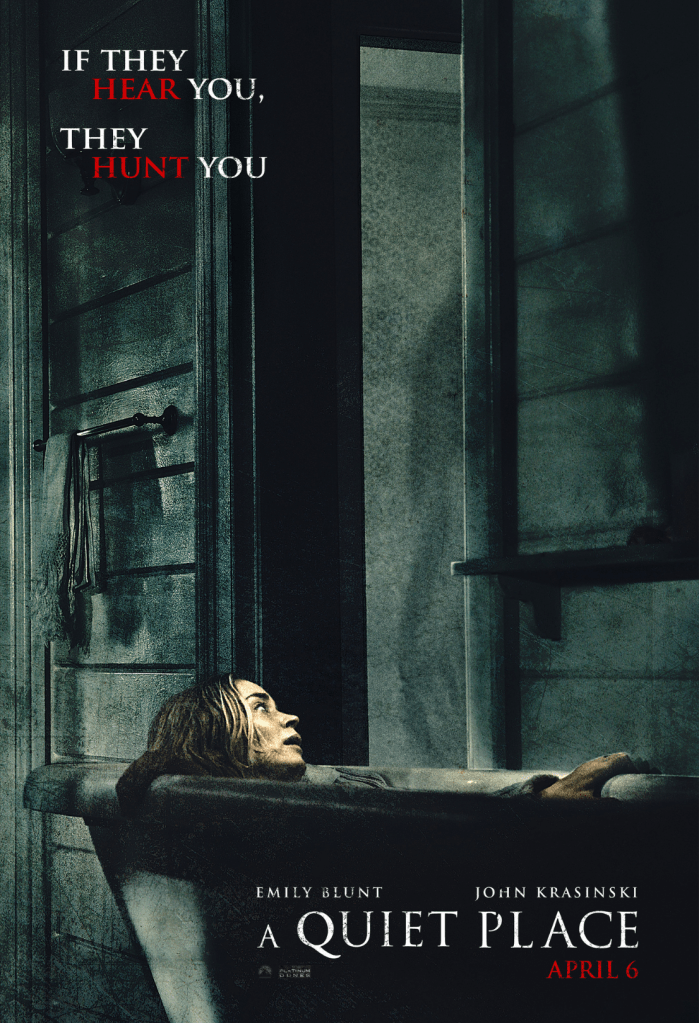
This month, 18 Cinema Lane received 445 followers! Therefore, a Blog Follower Dedication Review is in order! Since October is typically known as the Halloween season, I wanted to select a film that was appropriate for this time of year. But I’m also participating in Genre Grandeur, where the theme this month is ‘Movies Directed by the Main Actor/Actress’. So, as the title of this review says, I have chosen to write about A Quiet Place! Prior to this review, I had heard of the 2018 film. Mixed results are what I have heard; either viewers have loved the movie or they thought the story’s logistics didn’t make sense. I’ve also heard A Quiet Place is a horror film that thinks outside the box. This is another reason why I chose to review this movie, as I don’t often talk about titles from the horror genre.

A Quiet Place poster created by Platinum Dunes, Sunday Night Productions, and Paramount Pictures

Things I liked about the film:

The family dynamic: John Krasinski and Emily Blunt are two actors I am familiar with, primarily for their comedic performances. With John, I have seen clips of The Office, while one of Emily’s most notable performances was in The Devil Wears Prada. As I’ve said before on 18 Cinema Lane, I’ve seen more comedic actors successfully transition to dramatic acting. John’s and Emily’s performance definitely stuck the landing, as they were both able to convey a variety of emotions through facial expressions and body language! Portraying John and Emily’s on-screen children were Noah Jupe, Millicent Simmonds, and Cade Woodward. Adding their strong performances, the Abbott family had a really good family dynamic that felt believable and genuine. Toward the beginning of the film, Cade’s character, Beau, really wants a toy space shuttle. However, the toy makes noise, which is a no-no within the Abbott family’s world. Through sign language and facial expressions, John’s character, Lee, explains how Beau can’t have the toy. Beau’s response was a look of pure sadness and confusion on his face. Another memorable scene was when Regan refused a new cochlear implant. Throughout the film, Lee attempts to create a functioning cochlear implant for his daughter. When he gives Regan the implant, Lee is optimistic it will work this time, wide eyes and even a smile conveying this optimism. Regan is not impressed with the new implant, as she’s frustrated at the idea of another implant not working. She not only expresses frustration on her face, she even pushes away her father’s hand.  

The atmosphere: As I mentioned in my point about the family dynamic, noise is a no-no in the Abbott family’s world. That’s because unidentified extraterrestrial creatures have taken over their environment, destroying anyone or anything that makes noise. Right in the very first scene, the audience can see how these creatures have driven people away from a small town. It looks like what most people would call a “ghost town”; cars frozen in the street and leaves slowly blowing through the air. The store where the Abbott family visits appears to be an urban explorer’s dream. Natural light from the store’s windows provides the facility’s only source of light. Products are strewn on the floor, waiting for someone to finally pick them up. Cinematography and inclusion of light help create a film that feels very atmospheric!

Use of sound: Even though the Abbott family try to create as little sound as possible, the film itself was not devoid of sound. At various moments in the story, natural sound could be heard whenever the family traveled from place to place. One notable example is when Noah’s character, Marcus, and Lee walk near a river. Sounds could also be heard through headphones or earbuds. In a scene where Lee and Emily’s character, Evelyn, are slow dancing, Evelyn puts one of her earbuds in Lee’s ear. Not only can the song be heard through the earbud, the song is amplified so the audience can hear it too. It serves as a reminder how sound, even noise, plays a role in our lives.

Sunny autumn landscape picture created by Kotkoa at freepik.com. <a href=’https://www.freepik.com/free-photo/autumn-forest_1436222.htm’>Designed by Kotkoa</a>. <a href=”https://www.freepik.com/free-photos-vectors/background”>Background image created by Kotkoa – Freepik.com</a>. Image found at freepik.com.

What I didn’t like about the film:

A film that doesn’t feel like a horror film: Like I said in my introduction, A Quiet Place is a horror film. Even the poster bears the hallmarks of a typical horror production. But, to me, A Quiet Place didn’t feel like a horror movie. Sure, there were terrifying moments in the story. But, if anything, the film felt like a dystopian/apocalyptic film with sci-fi elements. As I watched A Quiet Place, it reminded me of a more creative version of Signs.

Questions that are left unanswered: While I appreciate the film’s creative team respecting the audience’s intelligence, there were some questions I wish were answered. For instance, why did the Abbott family choose not to wear shoes? During Lee and Marcus’ hike, they cross paths with an elderly couple. Who were they and why did the elderly man want the creatures to capture him? Couldn’t the couple join the Abbott family and seek safety together?

The science’s confusing logic: As Marcus and Lee attempt to catch fish in a river, Lee explains how it’s ok to make small sounds. While big sounds are bad, they can be cancelled out with bigger sounds. With this logic in mind, why aren’t the extraterrestrial creatures congregating near the river? Why would they even bother trying to capture people, animals, and objects that make noise? Statements like Lee’s made the story somewhat confusing.

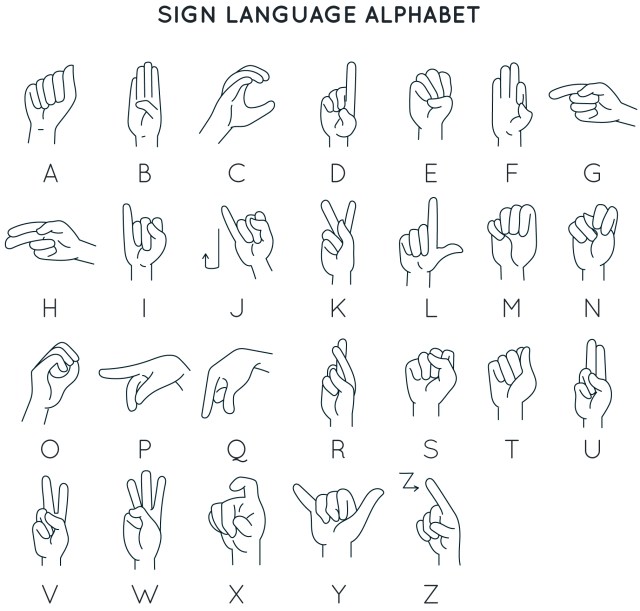
Sign language alphabet image created by Freepik at freepik.com. Hand sign vector created by freepik – www.freepik.com

My overall impression:

Before I share my overall impression of A Quiet Place, I’d like to thank all of 18 Cinema Lane’s followers! You are the reason why I continue to write and publish so many Blog Follower Dedication Reviews! Now, on to my thoughts on A Quiet Place. I will admit this is a fine, ambitious film that is one of the more unique titles of this nature. However, some aspects of the project could have been stronger. Like I said in my review of Night of the Comet, you need to explain the science in your science fiction story, especially in a way that satisfies the audience. While some of the science in A Quiet Place was explained, other parts of the story were confusing. The movie, to me, felt less like a horror movie and more like a dystopian/apocalyptic film with sci-fi elements. This makes the film’s marketing, as well as its horror classification, somewhat misleading. I am aware there is a sequel to A Quiet Place. Because I thought the movie was just fine, I’m not rushing to see the sequel anytime soon.

Overall score: 7 out of 10

Have you seen A Quiet Place? What movie do you like to watch around Halloween? Please tell me in the comment section below!

Have fun at the movies!

Sally Silverscreen

Take 3: Night of the Comet Review (80s-tastic Mall-tacular Double Feature Part 1)

Hello and welcome to the first part of the 80s-tastic Mall-tacular Double Feature! Before this review begins, I’d like to remind my readers there will be spoilers for Night of the Comet. If you’re interested, you can check out the double feature’s introduction at this link:

The 80s-tastic Mall-tacular Double Feature Introduction!

Night of the Comet poster created by Thomas Coleman and Michael Rosenblatt Productions, Film Development Fund, and Atlantic Releasing Corporation

1. How were you introduced to Night of the Comet?

At the beginning of Dan’s video, ‘DEAD MALL SERIES : Back to the 80s : The Gallery in Philadelphia (Hologram Plaza – Disconscious)’, the scene where Regina and Samantha, the film’s protagonists, go to the mall is included in the introduction. That scene is spliced with Dan’s footage of The Gallery in Philadelphia, as the song, Enter Through the Lobby by Disconscious, plays over the images. In Dan’s video, ‘DEAD MALL SERIES : Best Fountain in the US : Burlington Center Mall NJ **CLOSED**’, he brings up several of his favorite “mall movies”. One of these movies is Night of the Comet.

2. Was Night of the Comet filmed in a mall? If so, which one?

According to a Youtube comment, Night of the Comet was filmed at Bullocks Wilshire. Upon further research, I learned it was a high-end, Los Angeles department store, complete with its own tea room. As of late 2022, the building is owned by Southwestern Law School.

3. What role did the mall play in Night of the Comet?

Before Regina suggests she and Samantha go to the mall, their world had been turned outside down. Most of the population had either been disintegrated into dust or turned into a zombie, due to the aftermath of the titular comet. The sisters are at their wits end, desperately trying to not only defend themselves, but also trying to find answers. After Samantha tearfully confesses how a guy from her class was going to ask her out on a date, Regina sees going to the mall as an opportunity to get their minds off the confusion surrounding them.

4. Why do you think the mall was in the film for a short amount of time?

When Dan Bell referred to Night of the Comet as a “mall movie”, I assumed the mall would play a significant role in the story. I even predicted the mall would play a bigger role in Night of the Comet than in The Legend of Billie Jean, as I thought the story would primarily take place in one location. But the 1984 title is a more expansive narrative. Not only is the aftermath of the comet more widespread, there are more locations for the characters to explore. While Regina and Samantha’s mall excursion was fun to watch, it was interesting to see the comet’s effects on other locales, like the local movie theater and a mysterious science headquarters.

5. Besides including a mall and focusing on teenage characters, do The Legend of Billie Jean and Night of the Comet share a common theme, idea, or message?

I haven’t seen The Legend of Billie Jean yet. But based on the introduction of Dan’s video, ‘DEAD MALL SERIES : Tour of the SUNRISE MALL from THE LEGEND OF BILLIE JEAN (1985)’, I can safely assume a shared idea between The Legend of Billie Jean and Night of the Comet is younger characters taking matters into their own hands. As I mentioned in answer number three, Regina and Samantha are at their wits end, as they desperately try to defend themselves and figure out what is truly going on. Since there are very few people to turn to, they rely on themselves and each other, proving they are capable of anything they set their mind on. Through strength, resilience, and adversity, Regina and Samantha become the embodiment of Christopher Robin’s quote:

“You’re braver than you believe, stronger than you seem, and smarter than you think.”

Colorful galaxy image created by Freepik at freepik.com. <a href=’https://www.freepik.com/free-vector/lovely-hand-drawn-galaxy-background_2943080.htm’>Designed by Freepik</a>. <a href=”https://www.freepik.com/free-photos-vectors/background”>Background vector created by Freepik</a>. Image found at freepik.com.

6. Is there anything about Night of the Comet you liked or didn’t like?

Based on the synopsis and Dan’s thoughts on Night of the Comet, I knew the protagonists were described as “valley girls”. But I didn’t know what to expect from Regina and Samantha. When I watched the movie, though, I adored these characters, as they were so endearing! In fact, they’ve become two of my favorite characters from film! Part of this is due to Catherine Mary Stewart’s and Kelli Maroney’s performance. Through their well-rounded portrayals, Catherine and Kelli carried this film, making it worth the price of admission. No matter what their characters experienced, their expressions and reactions felt realistic. Even the on-screen camaraderie was believable, successfully selling the idea Regina and Samantha were sisters. According to Wikipedia, Thom Eberhardt, Night of the Comet’s director, asked teenage girls how they’d respond to a large-scale catastrophe while working on PBS specials. The answers he received were used as inspiration for the film’s script, adding to Regina and Samantha’s believability.

When creating a science fiction story, you need to explain the science in a way that satisfies the audience. Even if the science was made specifically for the story, you still need to provide a logical explanation. With Night of the Comet, though, most of the science was left unexplained. There were also parts of the story that were under-utilized. At the beginning of the movie, Regina is playing an arcade game. She discovers a gamer named “DMK” has beaten her high score. Not only does Regina attempt to beat “DMK”’s high score, she wonders who “DMK” is. While the audience learns the identity of “DMK” (a random survivor named Danny, who used his initials to record his high score), this part of the story was forgotten about until the end of the movie. To me, this was a missed opportunity. Regina could have used her video game/arcade game skills to save the day. She and “DMK” could have met face-to-face earlier in the story, setting aside their differences to recruit more survivors to safety. But, alas, it just wasn’t meant to be.

7. Did you develop any thoughts and/or questions while watching this film?

As I said in answer number six, most of the science was left unexplained. While watching Night of the Comet, I found myself more confused than entertained. I’ll list some of the questions I had after I saw the movie, as I don’t want this review to become even longer than it already is:

  • Why did the effects of the comet cause some people to disintegrate into dust while causing others to become zombies?
  • Why exactly did steel protect Samantha, Regina, and the other survivors from the comet’s effects?
  • How did Brian and Sarah survive? Where did they come from?
  • Why did Willy and his gang of zombies possess more intelligence than other zombies the survivors encountered?
  •  What was the mission of the scientists? Were they trying to save or harm humanity?
  • Why did Audrey White go rogue? Was she a zombie?

8. In your double feature for Rich Kids and Over the Edge, you discussed certain events from the ‘70s that likely influenced the creation of those films. Is there anything from the ‘80s that you think either affected Night of the Comet or teenagers from that time?

Imagine you’re a teenager in the 1980s. You’ve got a lot of your plate as it is, from trying to pass your upcoming math test to figuring out how you’re going to get that latest album from the music store. But from time to time, you hear about this thing called The Cold War. That phrase puts a concerned look on your parent’s face as they drive you to school. You hear about it on the news, with the President pleading to “tear down that wall”. Even your favorite tv show is bringing it up. The Cold War seems to be everywhere. You wish there was something you could do to end this conflict. But because you’re just a teenager, you feel powerless, like there’s not much you can do. As you’re reading this, you’re probably wondering, “What does The Cold War have to do with Night of the Comet”? Even though The Cold War isn’t brought up in the story, it was present around the time of the film’s release. And yes, the film is meant to be a form of escapism. However, through Regina and Samantha’s adventures, teenagers at that time could see there were things within their control they could do.

9. A lot has changed since the release of Night of the Comet. Have you come across any recent pieces of media that prominently feature a mall?

For this answer, I’m not going to bring up a piece of media. Instead, I’ll talk about an experience, as it makes more sense with Night of the Comet. In the U.K., there is a company called Zombie Experiences, providing customers with the opportunity to explore abandoned locations and defeat zombies. One of those locations was a mall. But according to Zombie Experiences’ website, this experience ended in February 2018. They did re-locate this particular experience to a shopping complex. However, on Zombie Infection’s website, it will end this December. There are two other shopping mall experiences offered, but they seem inactive at the time of this review’s publication.

10. After watching this movie, is there anything you can take away from your movie viewing experience?

Calling Night of the Comet a “mall movie” is, in my opinion, a bit of a stretch. This is because the mall only appears in a few scenes. If I had to call Night of the Comet anything, I’d call it an “alternative Christmas film”. The story takes place around Christmastime, but doesn’t rely on the tropes and clichés typically found in Christmas movies. Like I said in answer number seven, I was more confused than entertained by Night of the Comet. After watching this film, I was left with more questions than I planned to have. But one of the reasons why I kept watching was Catherine’s and Kelli’s performance. I also think the story itself contained interesting ideas. Overall, I think Night of the Comet is an ok film with some bright spots.

Image by evening_tao on Freepik

Have fun at the mall!

Sally Silverscreen