Take 3: Tarzan in Manhattan Review

During my search for my “so bad, it’s good” movie, I’ve learned to find two things: a film that is built on a gimmick and a film that is unintentionally funny. Though these things have helped me get one step closer to finding my “so bad, it’s good” movie, a film has yet to earn that coveted title. For the annual So Bad It’s Good Blogathon, I had several selected movies to choose from. But, in the end, I picked the 1989 film, Tarzan in Manhattan! That title alone gives away the project’s gimmick; an iconic character existing in a more contemporary setting. Based on the movie’s synopsis, there seems to be elements that could be unintentionally funny, such as Jane becoming more street-smart when she’s usually known for being book-smart. But what made me ultimately select Tarzan in Manhattan for the So Bad It’s Good Blogathon were the reviews on IMDB. According to what I read, it seemed like the movie’s creative team didn’t take their project seriously because they acknowledged the film’s gimmick. With all of that said, let’s see if this movie could become my “so bad, it’s good” film!

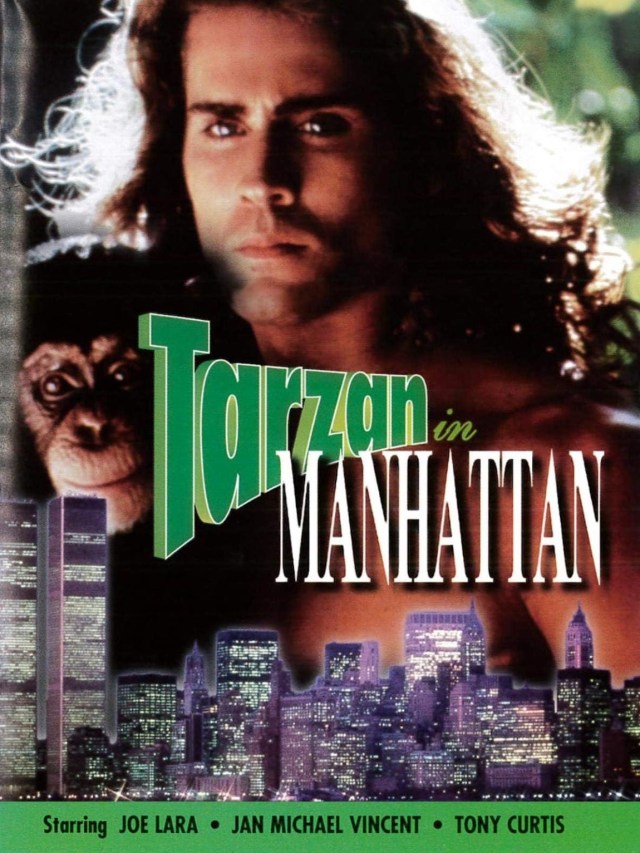
Tarzan in Manhattan poster created by American First Run Studios and CBS

Things I liked about the film:

The acting: When I reviewed The Chalk Garden earlier this month, I said I was invested in the story because of the acting performances’ quality. I also said each acting performance was good for different reasons. In Tarzan in Manhattan, the cast made a strong effort to make their performances as entertaining as possible. In my opinion, these efforts worked, as their performances kept me invested in the story! Joe Lara used emotion well while portraying the titular character. A great example comes from the first ten minutes of the movie. Tarzan experiences a tragedy, as he discovers someone close to him passed away. Upon making this discovery, Tarzan is understandably upset. His eyes are brimming with tears and his mouth presents a frown. Quickly realizing what possibly happened, Tarzan’s sadness turns into anger within seconds. He then grits his teeth and the rest of his facial features become tense.

Kim Crosby portrays Jane in Tarzan in Manhattan. In my review’s introduction, I pointed out how Jane became more street-smart. Because of this creative decision, Kim adopts a down-to-earth, laid-back personality she consistently carried throughout the movie. When Jane meets Tarzan, she’s unfazed by the situation. Her whole persona presented the idea she, as a cab driver, has seen it all. Portraying Jane’s father, Archimedes, is Tony Curtis. Similar to Kim’s performance, Tony’s on-screen no-nonsense attitude was consistent. What also worked in Tony’s favor was how believable his on-screen interactions were. Anytime Archimedes and Jane shared a conversation, it felt like a realistic discussion between father and daughter. The strength of Kim’s and Tony’s acting talents helped make that possible!

Respect toward the source material: While I haven’t read the book Tarzan in Manhattan is based on, I have seen another adaptation of the Tarzan story. Based on that experience, it appears the creative team of the 1989 film made efforts to respect the source material their project is based on. Remember when I said in this review’s introduction how Jane became more street-smart when she’s usually known for being book-smart? It is true she is street-smart in Tarzan in Manhattan. However, the book-smart aspect of her character actually worked in harmony with the street-smarts. Around the time she and Tarzan first meet, Jane shares how she has a Bachelor’s degree in Computer Science from NYU. Her book-smarts, along with problem-solving skills, help Tarzan find an important clue in figuring out Cheetah’s whereabouts. Throughout his New York City trip, Tarzan carries a bag of expensive jewelry as a form of currency. It is revealed the collection of jewelry belonged to Tarzan’s parents, the Lord and Lady of Greystone, before they passed away.

How humor was incorporated: I mentioned in my review’s introduction how Tarzan in Manhattan’s IMDB reviews were the reason I chose the film for the So Bad It’s Good Blogathon. Based on those reviews, it seemed the movie’s creative team didn’t take their project seriously because they acknowledged the film’s gimmick. As I watched the 1989 picture, I could detect a sense of self-awareness. From the dialogue to the “Easter Eggs”, it felt like the movie’s creative team recognized how much of a gimmick their project was built on. During the plane ride to New York City, Tarzan is reading a book about surviving in New York on five dollars a day. This “Easter Egg” calls out how expensive the Big Apple can be. After somersaulting his way into a locked room, Tarzan leaves that same room by escaping through an open window. This situation causes Archimedes to ask Jane why Tarzan can’t leave through the door like other people. The aforementioned self-awareness in Tarzan in Manhattan made comedic moments genuinely hilarious!

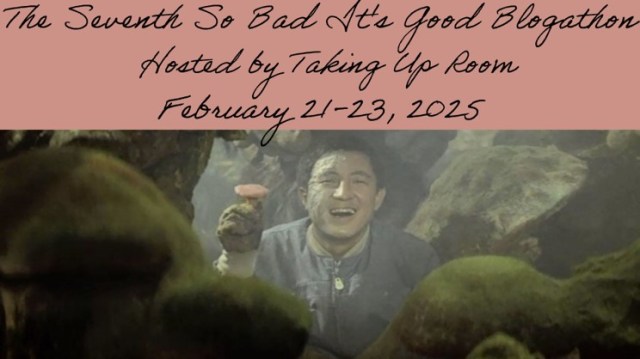
The Seventh So Bad It’s Good Blogathon banner created by Rebecca from Taking Up Room

What I didn’t like about the film:

Things that don’t make sense: There were some parts of Tarzan in Manhattan that didn’t make sense. One example takes place toward the beginning of the film. Within the first five minutes of the story, Tarzan is shown living a secluded life from civilization, how Tarzan is usually portrayed in other adaptations. Then, all of a sudden, a man named Joseph shows up to give Tarzan and Cheetah a pair of books. Based on their interaction, it seems like Joseph and Tarzan’s friendship has lasted even before the events of the movie. If Tarzan lives close enough to civilization where walking to Joseph’s store is possible, why does he still live isolated in the jungle?

Inconsistent sense of urgency: A reason why Tarzan travels to New York City is to rescue Cheetah. This part of the film’s synopsis would warrant a sense of urgency throughout the story. But Tarzan, along with Jane and Archimedes, don’t figure out what likely happened to Cheetah until more than twenty minutes into an hour and thirty-four-minute film. While there is a sense of urgency in Tarzan in Manhattan, it appears at certain moments in the movie. These creative choices made the story’s sense of urgency inconsistent.

Part of the story that doesn’t lead anywhere: On more than one occasion, the audience is reminded how Tarzan is the son of the Lord and Lady of Greystone. Jane even purchases a book featuring his family’s portrait. I appreciate the creative team’s efforts to respect the source material their project is based on. However, the part of the film about Tarzan’s family history didn’t lead anywhere. The story’s main conflict had nothing to do with the Greystone estate. Tarzan’s family weren’t even featured in a subplot. I wish that part of Tarzan in Manhattan had a stronger connection to the overall story.

New York City skyline with letters image created by Freepik at freepik.com. <a href=’https://www.freepik.com/free-vector/new-york-skyline-typographic-silhouette_719554.htm’>Designed by Freepik</a>. <a href=”https://www.freepik.com/free-photos-vectors/background”>Background vector created by Freepik</a>. Image found at freepik.com.

My overall impression:

When I started this review, I said I learned to find two things when looking for my “so bad, it’s good” movie; a film that is built on a gimmick and a film that is unintentionally funny. Tarzan in Manhattan is definitely built a gimmick, with enough self-awareness in the movie to acknowledge this. But what the film isn’t is unintentionally funny. The way the story’s humor was written and delivered gave the audience a reason to laugh with the creative team, not at them. Humorous moments felt like they were intended to be comedic. This is one of the reasons why Tarzan in Manhattan was as entertaining as it was! Though there were flaws in the 1989 picture, there were aspects of the project I liked. A few examples are the acting performances and the on-screen chemistry between Joe Lara and Kim Crosby. Even though moments with high-stakes and a sense of urgency are sprinkled throughout the story, Tarzan in Manhattan is, for the most part, silly and goofy fun. Out of all the movies I reviewed for the So Bad It’s Good Blogathon, I’d say Tarzan in Manhattan is the best one. So, when it comes to finding my “so bad, it’s good” movie, I ended up taking a detour this time.

Overall score: 7 out of 10

Have you seen Tarzan in Manhattan? Which adaptation of the Tarzan story is your favorite? Please tell me in the comment section!

Have fun at the movies!

Sally Silverscreen

Ten Movie Trends I Don’t Understand

Days before Christmas, I reviewed I Heard the Bells for my 500 Blog Follower Dedication Review. But this is not the only honor the movie achieved. I Heard the Bells became my 400th published movie review! To commemorate this milestone, I decided to write my sixth list article of 2024. Trends, whether in fashion or when it comes to the most popular toy of the Christmas/holiday season, exist for a reason. This statement also applies to the world of cinema. Sometimes, however, there are film related trends that leave me confused, wondering why film-makers continuously use them in their projects. So, for this list, I will be discussing ten movie trends I don’t understand! The intent of this list is to gain a better understanding for why the listed trends either existed or still exist, as I am genuinely curious about their purpose.

Image of 2010 and 2020 on chart created by Macrovector at freepik.com. Infographic vector created by macrovector – www.freepik.com

1. Food Fights

From about the late ‘80s to the mid-2000s, children’s/family media, especially movies, were fond of food fights. From 1996’s Matilda (where the children at Crunchem Hall Elementary School hurl their lunches at Miss Trunchbull) to the Disney Channel film, Eddie’s Million Dollar Cook-Off (where I remember two food fights taking place), film-makers saw food fights as a way to add excitement and hilarity to their film. But long after the janitor has cleaned up the mess, what sinks in is the realization that these film-makers likely spent hundreds of dollars on large quantities of food only to waste it. This realization not only makes me wonder why food fights were once a staple of children’s/family media, I also question how often food fights happen in real life.

2. Keeping Secrets

Around the time the aforementioned food fight trend was common, another popular movie trend was younger characters being encouraged to keep secrets. When I reviewed 1985’s Return to Oz, I brought up Princess Ozma telling Dorothy that she can go back to Oz whenever she wants, as long as she keeps it a secret. By bringing up that part of the film, I addressed how Princess Ozma’s statement could be misinterpreted as damaging messages such as holding back on creativity helping one become “normal” and bottling up ideas and feelings being accepted. As I mentioned in my review of The Best Christmas Pageant Ever, bullying is not addressed in the script, including in Alice’s part of the story. One reason why is how Imogene forces Alice to keep the bullying a secret. If you’re going to create a story for a younger audience, you need to be mindful when it comes to addressing serious, real-world issues because of how impressionable a younger audience can be. With that said, I kind of find it concerning how common the trend of younger characters keeping secrets was in children’s/family media.

3. New York City as a Selling Point

I brought up this trend back in 2021, when I reviewed Sherlock Holmes in New York. As I shared my overall impression of the 1976 film, I talked about how movie studios used their project’s New York setting as a selling point. Clear examples show New York City or New York City locations included in a film’s title, like A Troll in Central Park, The Muppets Take Manhattan, and Home Alone 2: Lost in New York. I don’t understand this need to single out a story’s New York location. Personally, I think the movie should show instead of tell their story is set in New York. What I also don’t understand is why the trend of using New York as a selling point occurred between about the mid- ‘70s to the mid-2000s.

4. Villains Receiving the Spotlight

2024 started with the release of Madame Web (a Spider-verse villain movie without the presence of Spider-Man) and ended with the premiere of Kraven the Hunter (a Spider-verse villain movie without the presence of Spider-Man). I bring up these movies to highlight a trend I first noticed in the 2010s that carried over to the 2020s. This trend is villains receiving the spotlight; whether this means villains are given their own movie, villains are presented as more “sympathetic”, or villains make arguments with seemingly valid points. When a movie studio adopts this trend, it gives their audience mixed messages. Within Spider-Man’s comic books, Kraven is known as a villain. The tagline of Kraven the Hunter is “Villains aren’t born. They’re made”. But based on what I’ve heard about the film, Kraven is presented as more of an anti-hero. Not only does giving villains the spotlight confuse the audience, it also makes villainous characters less straight-forward.

5. “Thrown Together” Movie Posters

A “thrown together” movie poster is the contents of a movie (like cast photos, story locations, and even a scene from the film) thrown together on that movie’s poster. The collage I just described appears overwhelming and leaves the audience with little surprises. I first became aware of this trend when Disney/Marvel used this style for their Avengers: Age of Ultron poster. After that movie came to theaters in 2015, the “thrown together” movie poster trend became the go-to style of cinematic advertising. It even got to the point where Hallmark adopted this trend, as the posters for Christmas Everlasting and Love Takes Flight are notable examples. Based on what I’ve seen, it seems like the “thrown together” movie poster trend is fading in the 2020s, as studios and networks have chosen more artistic styles for their movie posters. But I still wonder why the “thrown together” movie poster trend was ever popular.

New York City skyline with letters image created by Freepik at freepik.com. <a href=’https://www.freepik.com/free-vector/new-york-skyline-typographic-silhouette_719554.htm’>Designed by Freepik</a>. <a href=”https://www.freepik.com/free-photos-vectors/background”>Background vector created by Freepik</a>. Image found at freepik.com.

6. Men Drinking Black Coffee

In Great American Family’s A Little Women’s Christmas, Fritz orders a black coffee at a café in Alcott Grove. At that same café, Jo orders a sugary, seasonal coffee drink. This scene made me realize how often I’ve seen men ordering and/or drinking black coffee in movies. Not only do they order/drink black coffee, they usually get criticized for doing it. Similar to the previously mentioned food fight trend, I wonder how the men drinking black coffee trend reflects real life.

7. Cabins & Bed and Breakfasts

These trends are specific to Lifetime and Hallmark movies. In the world of Hallmark films, it seems common for characters to either own a Bed and Breakfast or know someone who knows a Bed and Breakfast. These Bed and Breakfasts are usually found in small towns. Meanwhile, on Lifetime, it seems like many characters either own a cabin or know someone who owns a cabin. The cabins themselves are typically treated as a vacation destination. I know both networks share the same flaw; telling the same types of stories and reusing the same ideas. This makes me wonder if that flaw is the reason for the abundance of Bed and Breakfasts on Hallmark and cabins on Lifetime.

8. Rival Girl Scouting Troop

This trend isn’t as common as other trends on my list. But I’ve seen it happen enough times to point it out. Troop Beverly Hills, The Cookie Mobster, and Smart Cookies share something in common; the “underdog” girl scouting troop must face a “rival” girl scouting troop. The rival girl scouting troop is always presented as bratty, wealthy, and popular. Their only purpose in the aforementioned movies is to win cookie season. The rival girl scouting troop trend is, in my opinion, an unnecessary conflict. The main and only conflict should be the protagonist girl scouting troop trying to achieve a goal within their own troop (such as having a successful cookie season). The rival girl scouting troop trend is yet another movie trend that makes me wonder how often it happens in real life.

9. The Sound of a Baby Crying in an Apartment Building’s Hallway

When one of a movie’s scenes takes place in an apartment building’s hallway, the sound of a baby crying can be heard. This trend has been present in so many movies, I wonder why that particular sound has been the go-to sound for film-makers. All walks of life can live inside an apartment building. This fact provides film-makers with a variety of sounds; such as dogs barking, music, or noise from a television. So, it confuses me when film-makers continuously use the same sound over and over again.

10. Calling out “Hello” in an Empty Room

Out of all the movie trends on my list, the calling out “hello” in an empty room trend is the most common one. From theatrical pictures to made-for-TV films, a character will call out “hello” when they enter an empty room. Predictably, no one calls “hello” back. But the character who called out “hello” will be taken by surprise by another character. The calling out “hello” in an empty room trend can usually be found in mystery, action, or thriller movies. When film-makers select this trend, they make suspenseful moments more predictable. It also makes characters who call out “hello” look absent-minded.

Coffee cup drawing image created by Valeria_aksakova at freepik.com. <a href=”https://www.freepik.com/free-photos-vectors/background”>Background image created by Valeria_aksakova – Freepik.com</a>. <a href=’https://www.freepik.com/free-photo/painted-cup-of-coffee-with-natural-coffee-beans-on-a-chalkboard_1013935.htm’>Designed by Freepik</a>. Image found at freepik.com.

Have fun at the movies!

Sally Silverscreen
Take 3: You’ve Got Mail Review

Every so often, I try to review a movie that has been recommended by one of my readers or a fellow blogger. It’s a wonderful opportunity when I can write about a recommended film for a blogging event. This is what happened when I joined the Everything Is Copy Blogathon! When I learned Rebecca’s, from Taking Up Room’s, event centered around the Ephron family, I realized no one had chosen You’ve Got Mail as their blogathon entry. Since the movie was recommended by Janis from Momshie Diaries, I found the perfect excuse to finally see the film in its entirety! You’ve Got Mail is far from the first romantic comedy (rom-com) I’ve talked about on 18 Cinema Lane. Several Hallmark Channel films have received their own review, ranging from terrible to the best I’ve ever seen. So, where does You’ve Got Mail rank among those Hallmark titles? Log in to this review to find out!

You’ve Got Mail poster created by Warner Bros.

Things I liked about the film:

Tom and Meg’s on-screen chemistry: An ingredient to a successful rom-com is casting an actor and actress who share strong on-screen chemistry. This ingredient creates an on-screen relationship that feels believable. In You’ve Got Mail, Tom Hanks and Meg Ryan portray Joe Fox and Kathleen Kelly; two literary business owners who have different perspectives on the world of bookselling. Yet, whenever they’re together, Kathleen and Joe share a spark between them, learning over time how they have more in common than they initially believed. The on-screen chemistry between Meg and Tom makes it feel like their characters have known each other for many years. It also helps how Tom and Meg brought a strong sense of likability to their characters. Even though Joe was a businessman who felt there was a time and a place for “big box stores”, his personality was more jovial than some of the businessmen who appear in a typical Hallmark Channel rom-com. Meanwhile, Kathleen’s personality was fun and fancy-free, trying to find a silver lining during autumn in New York City.

The set design: One of the conflicts in You’ve Got Mail was a bigger, chain bookstore affecting the business of a smaller, locally owned book shop. The interior design of the bigger bookstore was meant to imply how impersonal that store’s shopping experience was. But I actually liked the interior design of both stores! At the smaller book shop, the pale yellow walls paired nicely with warm wood shelves. With string lights circling near the store’s ceiling, the space itself felt cozy and quaint. At the bigger bookstore, white supporting columns, dark gray granite countertops, and shiny silver railings boasted a modern space that looked and felt heavenly. Quirky décor, such as a large, spinning silver globe and a replica of the Statue of Liberty reading a book prevented the store from being dull. Even the bookstore’s bakery section was promoted as a hip gathering space, a curved countertop with tall stools providing an area for readers to come together and enjoy each other’s company. Both spaces looked inviting and appeared photogenic!

The dialogue: The strength of dialogue can create or break a script. While the dialogue can be elevated through delivery, its believability and memorability lie in the writing talent. Within You’ve Got Mail, there was dialogue that I thought was cleverly written! One example was when Kathleen and Joe met each other at a restaurant. Using advice from her anonymous pen pal, Kathleen shared what was on her mind with Joe. Frustrated by Joe’s inability to see how his bookstore prevented other bookstores from thriving, Kathleen told Joe his brain was replaced by a cash register and his heart was taken over by the bottom line. While her statement was meant to be insulting, Kathleen’s quote was an eloquent way of illustrating how she saw Joe. Her quote also stressed how her love of literature helped her choose words that made her opinion sound mature and intelligent.

The Everything Is Copy Blogathon banner created by Rebecca from Taking Up Room

What I didn’t like about the film:

Forgettable secondary characters: In a rom-com, the main male and female character are not the only characters who can make a story work. A collection of secondary characters who interact with the protagonists can add humor, wit, and even thoughtful insight to the film. The story of You’ve Got Mail revolved so heavily around Kathleen and Joe, all of the movie’s secondary characters seemed like an afterthought. This group of actors and actresses did a good job with the material they were given. But the characters they portrayed weren’t as 3-dimensional as Joe and Kathleen. Some rom-coms will give at least one secondary character a subplot. However, no subplots were given to the secondary characters in You’ve Got Mail. Even when there was the possibility for a secondary character to receive their own piece of the story, this opportunity didn’t lead anywhere. It felt like You’ve Got Mail was the world according to Joe and Kathleen, where every other character was simply given permission to exist in it.

The protagonists’ love interests: I have seen some Hallmark rom-coms where the main male and female characters are already in a romantic relationship, only for these characters to end their previously established relationships in order to fall in love with each other. This trope is not limited to Hallmark’s films, as it appeared in You’ve Got Mail. At the beginning of the movie, the story established Kathleen is living with her boyfriend, Frank. Meanwhile, Joe is considering proposing to his girlfriend, Patricia. Because You’ve Got Mail is a rom-com, there is a greater likelihood Kathleen and Joe will fall in love. I’ve also mentioned in this review how, in my opinion, Tom and Meg had strong on-screen chemistry. Therefore, Joe and Kathleen’s previously established relationships feel pointless.

The run-time: You’ve Got Mail has a run-time of one hundred and twenty minutes. This is almost the same run-time as a typical Hallmark movie. Like I mentioned in this review, none of the story’s secondary characters were given a subplot, as the film revolved heavily around Joe and Kathleen. You’ve Got Mail’s plot includes anonymous pen pals desiring to connect in the real world. With the story being so simple and easier to follow, the movie’s run-time feels excessive. Some scenes are drawn out to likely satisfy the film’s run-time. In my opinion, You’ve Got Mail should have shown the anonymous pen pals meeting sooner. That way, they could not only help each other with their professional dilemmas, but the story itself could have become a contemporary retelling of Pride and Prejudice.

Envelope with hearts image created by Freepik at freepik.com. <a href=’https://www.freepik.com/free-photo/hearts-and-pink-envelope-for-mothers-day_1950691.htm’>Designed by Freepik</a>. <a href=”https://www.freepik.com/free-photos-vectors/love”>Love image created by Freepik</a>. Image found at freepik.com.

My overall impression:

Before and after the release of You’ve Got Mail, rom-coms have found their place in the world of film. Like any genre, there’s a variety of titles, some good and some bad. For me, You’ve Got Mail falls somewhere in the middle. The main romance was well written, directed, and acted. This combination allowed the protagonists to form a relationship that felt believable and charming. While the dialogue and set design certainly helped this picture, it wasn’t enough to outweigh the film’s flaws. From none of the secondary characters receiving their own subplot to the run-time, these things held the movie back from being a stronger story. With the film titled, You’ve Got Mail, and with the anonymous pen pals exchanging emails and instant messages, I’m surprised none of the story’s bookstores brought up the possibility of selling their merchandise online. In fact, I’m shocked the internet wasn’t a bigger topic/theme in this movie! I would say that was a missed opportunity. But with the film itself being just fine, I guess I don’t have much to complain about.

Overall score: 7.2 out of 10

Have you seen You’ve Got Mail? What’s your favorite rom-com? Tell me in the comment section below!

Have fun at the movies!

Sally Silverscreen

Take 3: USS Christmas Review

While looking through some of my movie reviews from last year, I came to the realization I only wrote about two Christmas films. To make up for that, I will make a greater effort this year to review more Christmas movies. As it was Veteran’s Day two days ago, I decided the first Christmas film review of 2022 would be for USS Christmas! In the two years since its release, I’ve heard good things about this particular Hallmark picture. The network also has a pretty consistent track record when it comes to their military related Christmas titles. This is not the first time I’ve talked about USS Christmas. Back in 2020, I wrote a Word on the Street story about the project. I mentioned that the only Tiger Cruise movie I knew of was the 2004 Disney Channel movie, Tiger Cruise. Therefore, USS Christmas was filling a creative void that hadn’t been revisited in over ten years.

USS Christmas poster created by Crown Media Productions and Hallmark Movies & Mysteries

Things I liked about the film:

The acting: Jen Lilley portrays the protagonist, Maddie. Her reason for joining the Tiger Cruise was to spend Christmas with her sister, Amelia, who was portrayed by Stefanie Butler. I really liked the on-screen camaraderie between the sisters! While sharing breakfast at a local restaurant, Amelia and Maddie talk about a variety of subjects. Throughout their conversation, Jen’s and Stefanie’s facial expressions changed with fluidity. The actresses also had nice on-screen chemistry, giving the impression the sisters got along really well. It’s been a while since I’ve seen one of Trevor Donovan’s movies. However, I have always thought he was one of Hallmark’s strongest actors. In USS Christmas, Trevor portrayed Lt. Billy Jenkins. At the start of the story, Billy is distant with Maddie, maintaining a sense of professionalism. As the film continues, a kind hearted, more spontaneous side to Billy breaks forth. This progression in Billy’s personality was well executed through Trevor’s acting talents! The naturalness of this progression allowed Billy’s part of the story to be believable.

The set design: Like any Hallmark Christmas film, USS Christmas contained its fair share of seasonal décor. But it was the way this décor was incorporated into the set design that caught my eye. When Maddie’s family has their first dinner on the Tiger Cruise, the dining room is surrounded by white walls. White and blue Christmas decorations are placed in the background, from a blue garland to a white Christmas tree with blue ornaments. These complimentary hues added a sense of elegance to this space! Garland was a nice touch to other sets. A traditional green garland paired with red ornaments and bows was framed around the dark wood windows of the Jenkin family home. A similar looking garland framed the kitchen window of the Contino family home, a room that contained white cabinets. That garland shows how a simple Christmas decoration can complement various different spaces!

The mystery: Mysteries are uncommon in Hallmark’s Christmas films. So, the inclusion of a mystery in USS Christmas was a pleasant addition! In an effort to write a story about finding love on a Tiger Cruise, Maddie finds a journal written by a man named Sam. In this journal, Sam talks about falling in love with a woman named Dorothy. Maddie and Billy spend the rest of the movie searching for Dorothy and Sam, going on a journey to figure out what happened to this couple. While I won’t reveal what Billy and Maddie discover, I will say the mystery itself was intriguing! It gave me a reason to stay invested in the story.

Children holding American flags during a sunset image created by rawpixel.com at freepik.com. <a href=”https://www.freepik.com/free-photos-vectors/people”>People photo created by rawpixel.com – http://www.freepik.com</a>. Image found at freepik.com.

What I didn’t like about the film:

The Tiger Cruise itself getting overshadowed: It’s been years since I’ve seen Tiger Cruise. From what I remember, the cruise itself was focused on to the point where it was its own character. With USS Christmas, I felt the cruise was overshadowed by the mystery of Sam and Dorothy. As I already said in this review, I liked the mystery in this story. However, that part was prioritized above everything else. When Maddie and Billy go to New York, I thought, “Wait, isn’t this movie supposed to be about the Tiger Cruise”?

Underutilized characters: On the Tiger Cruise, Charlotte is boarding alongside her brother, who is a member of the U.S.S. Polaris. Because Charlotte is also a writer, I assumed she would help Maddie in her quest to find Sam and Dorothy. Unfortunately, Charlotte and her brother briefly appeared in the film for about three scenes. These are just two characters I feel were underutilized.

Inconsistent use of Easter Eggs: The inclusion of Easter Eggs can be a nice treat for viewers and, if done right, can be cleverly woven into the story. There were some nice Easter Eggs in USS Christmas. But I was confused what the overarching direction for these Easter Eggs was. Toward the beginning of the movie, I found a few Easter Eggs related to It’s a Wonderful Life, as Maddie says that is her favorite Christmas film. Throughout the movie, there were at least two Easter Eggs referencing Top Gun. I even caught an Easter Egg connected to Hallmark itself. I wish the film’s creative team had chosen one topic for their Easter Eggs and consistently stuck with it.

Blue sparkly Christmas tree image created by Macrovector at freepik.com. <a href=”https://www.freepik.com/free-photos-vectors/frame”>Frame vector created by Macrovector – Freepik.com</a>. <a href=’https://www.freepik.com/free-vector/merry-christmas-card_2875396.htm’>Designed by Macrovector</a>. Image found at freepik.com.

My overall impression:

As I said in the introduction, Hallmark has a pretty consistent track record when it comes to their military related Christmas titles. While some of these titles have been better than others, I haven’t seen a military related Hallmark Christmas movie that was bad or disappointing. With USS Christmas, it was a nice, pleasant film. It isn’t an instant classic for me or a new favorite movie. But, for what it was, USS Christmas was fine. Hallmark’s efforts to tell more creative stories seems to be an exception to the rule. So, I appreciate how the creative team behind USS Christmas strove to create a type of story that isn’t common in entertainment media. It also helps how a mystery was incorporated into the film, as mysteries aren’t often found in Hallmark’s Christmas offerings. I’ve heard Jen Lilley and Trevor Donovan have begun appearing in Great American Family’s (GAF) movies. I’ll have to check out their films from that network!

Overall score: 7.1 out of 10

Have you seen USS Christmas? Which military related Hallmark Christmas movie do you like? Let me know in the comment section!

Have fun at the movies!

Sally Silverscreen

Take 3: Kyoko/Because of You Review

Kyoko/Because of You is a movie I first planned to review back in May. But as I explained in my review of The Pit and the Pendulum, my DVD copy of Kyoko/Because of You didn’t arrive in time for the blogathon I was participating in. Thanks to this month’s Genre Grandeur, I now have an excuse to finally check this movie out! ‘New York Films That Take Place Prior to 9/11’ was selected for September’s Genre Grandeur theme. Not only was Kyoko/Because of You released in 1996, the protagonist takes a trip to New York. When I first came across this movie on IMDB, the synopsis immediately caught my attention. It sounded heartfelt, almost like a Hallmark Hall of Fame production. Since this movie is a lesser-known title, it gave me a chance to try to find a hidden gem!

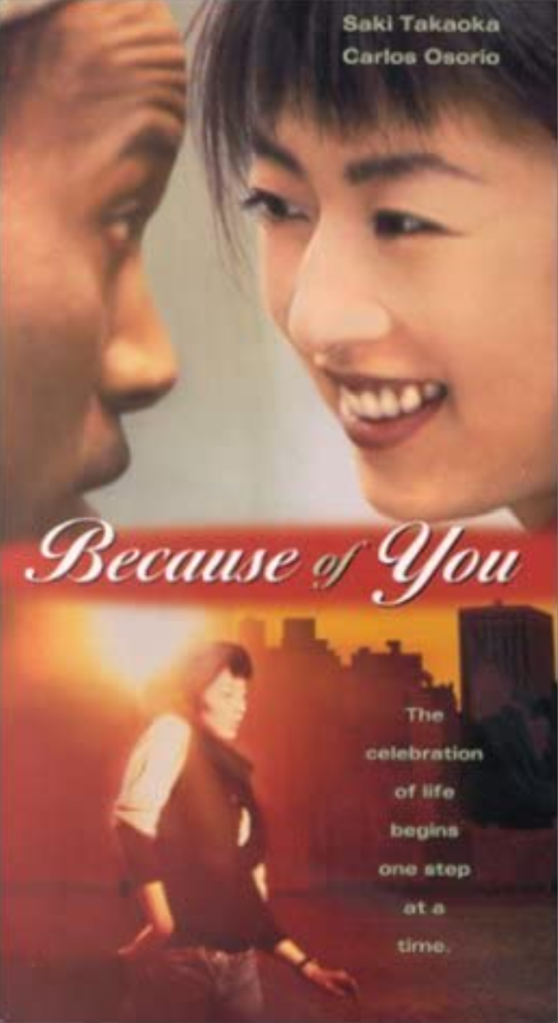
Kyoko/Because of You poster created by Concorde-New Horizons

Things I liked about the film:

The acting: I’m not familiar with Saki Takaoka’s filmography. Despite this, I thought her portrayal of the titular character was pleasant to watch! From scene to scene, Saki displayed genuine emotion. One great example is when Jose is telling her about a lampshade his mom loved. When the scene begins, Kyoko has a smile on her face, happy to be spending time with her mentor. But as Jose is sharing his story, Kyoko’s face slowly falls, highlighting just how sad his story is. At the end of Jose’s story, Kyoko smiles again and tells him she’ll help find this lampshade, making her response bittersweet.

Kyoko’s mentor, Jose, is portrayed by Carlos Osorio. For the majority of the film, Jose is dealing with the effects of not only AIDS, but also Dementia. Despite these struggles, the humanity of this character shown through, thanks to Carlos’ acting talents. Before Kyoko leaves to purchase a souvenir, Jose asks to keep the van door open, as he wants to feel the breeze. Jose’s face has a wistful look about it, like he is reminiscing on simpler times. When Kyoko returns, Jose is angry at a young man named Angel. He not only yells at Angel, Jose also uses his cane to protect himself.

While in New York, Kyoko meets a limousine driver named Ralph. Portrayed by Scott Whitehurst, Ralph was one of the best characters in this movie! He was so charismatic and such a good friend to Kyoko. During their first interaction, Ralph encourages Kyoko to take a ride in his limousine. Using charm to his advantage, Ralph’s encouragement sounded more like a sales pitch. Despite this, the pleasant demeanor and friendliness of Scott’s body language and facial expressions indicated his good intentions.

Various sides of New York: In any movie taking place in a well-known, beloved location, there are two angles a creative team can take their project: glamourize and glorify it or show the not-so-pretty sides of that location. When it came to New York in Kyoko/Because of You, the presentation of New York seemed balanced. Yes, there is a shot of Radio City Music Hall. But well-known landmarks were not the only places featured in this part of the story. While looking for Jose, Kyoko visits a dance studio and a local bar. While the dance studio visit was brief, the local bar is where Kyoko shows off her dance skills. Since New York is such a large city, it hosts a landscape of multiple restaurants and cultural hubs. The film shows how various communities can make their home in the Big Apple.

The soundtrack: Throughout the film, Latin tunes can be heard in the background. While the tunes themselves were pleasant, I liked how they contained a strong connection to the story. Jose is from Cuba, sharing through a voice-over how dancing plays a huge role in his culture. Both Jose and Kyoko are Latin dancers, with the music emphasizing their shared interest. What’s also good about the music is its consistency, as Latin music was the principal sound for this movie.

New York City skyline with letters image created by Freepik at freepik.com. <a href=’https://www.freepik.com/free-vector/new-york-skyline-typographic-silhouette_719554.htm’>Designed by Freepik</a>. <a href=”https://www.freepik.com/free-photos-vectors/background”>Background vector created by Freepik</a>. Image found at freepik.com.

What I didn’t like about the film:

Dancing has a limited presence: In the synopsis for Kyoko/Because of You, it states Jose taught Kyoko to dance when she was younger. With that in mind, I was expecting dance to be one of the film’s key themes. Sadly, there wasn’t much dancing within the story. In this hour and twenty-five-minute movie, there were two dance solos and three duets. Even though this film wasn’t a musical, I still found this disappointing.

The bait-and-switch: Because Kyoko travels to New York and because the New York City skyline is featured on the film’s poster, I assumed the majority of the story would take place in New York City. Even though the Big Apple is featured in the movie, only about a third of the film is set there. The rest of the movie becomes a road trip story, with some shots of a moving vehicle used as padding. Since I watched this film partly because of its New York City backdrop, this was somewhat misleading.

Drawn out scenes: As I just mentioned, some shots of a moving vehicle were used as padding. They were also used to satisfy the film’s run-time. One example is when Kyoko is driving out of New York. In this shot, she is driving her vehicle on a bridge, which lasts for about thirty seconds. Scenes like that one should have been cut shorter, giving more time to the plot.

Image of ballerina preparing to dance created by Pressfoto at freepik.com. <a href=”https://www.freepik.com/free-photos-vectors/people”>People photo created by pressfoto – http://www.freepik.com</a>. Image found at freepik.com.

My overall impression:

The story of someone reconnecting with their mentor could be heartwarming. While that potential was there for Kyoko/Because of You, it didn’t contain as much heart as I expected. The majority of this story focused on the road trip instead of the bond between Kyoko and Jose. Yes, I know Jose was experiencing Dementia. But it seems like the road trip, from a story-telling perspective, tried to make up for Jose’s disintegrating memory. The acting performances were nice to watch. I also enjoyed the dance routines. However, I wish dance had been a key theme in this movie. New York is such a diverse landscape, especially when it comes to dancing. Therefore, this felt, to me, like a missed opportunity. I’m glad I finally got a chance to review Kyoko/Because of You. But it’s not the hidden gem I thought it could be.

Overall score: 6.1 out of 10

Have you seen Kyoko/Because of You? Which ‘dance films’ do you like? Tell me in the comment section!

Have fun at the movies!

Sally Silverscreen

Take 3: Sherlock Holmes in New York Review

As of late 2021, there have been six actors who have portrayed one of the most iconic characters in cinematic history. Despite the fact I’m reviewing a Sherlock Holmes movie, the role I’m referring to is James Bond. Now, you’re probably wondering, “what does James Bond have to do with Sherlock Holmes”? Besides being British, both characters were portrayed by Roger Moore. When I was invited by Gill, from Realweegiemidget Reviews, to join the You Knew My Name: The Bond Not Bond Blogathon, I had to think about what film I wanted to write about. When I discovered Roger Moore starred in a Sherlock Holmes movie back in 1976, I thought it’d be an interesting title to cover. While I have reviewed my fair share of mystery films, including those that were made for television, I haven’t seen a lot of Sherlock Holmes related movies. Therefore, talking about Sherlock Holmes in New York will certainly make up for that!

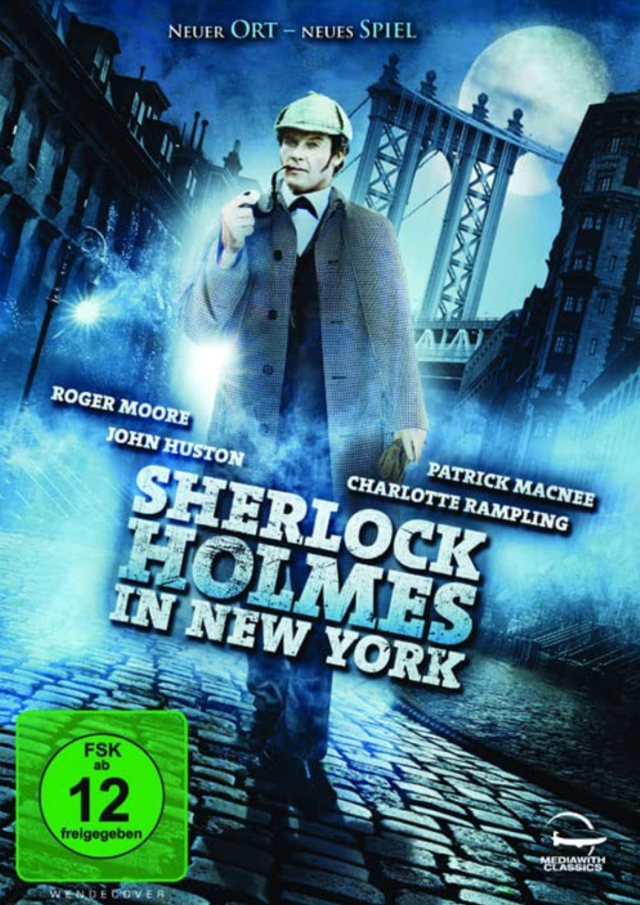
Sherlock Holmes in New York created by 20th Century Fox Televison, NBC, and Ascot Elite Home Entertainment

Things I liked about the film:

Roger’s portrayal of Sherlock Holmes: While I haven’t seen any of Roger Moore’s films from the James Bond franchise, I have seen his performance in the 2011 Hallmark Channel movie, A Princess for Christmas. From what I remember, Roger carried his character, Edward Duke of Castlebury, with class and dignity. These same qualities were present in his portrayal of Sherlock Holmes. During Sherlock Holmes in New York, I could see some James Bond-esque qualities in the titular character. Roger’s ability to be suave as well as calm under pressure are just two examples. At certain moments in the story, Sherlock interacts with a woman named Irene Adler. Because there is history between these characters, Sherlock and Irene’s interactions contain a romantic flair. This is where the suaveness comes in, as Roger uses this to emphasize his on-screen chemistry with Charlotte Rampling. At the very beginning of the film, Sherlock faces off against Professor Moriarty. In this scene, Moriarty tries to hurt Sherlock at every chance he gets. But Sherlock never cracks under pressure. Instead, he consistently keeps his composure.

The historical accuracy: Recently, I reviewed the movie, Let Him Go. In that review, I talked about how the set design appeared to come from the ‘50s, despite the story taking place in the ‘60s. This caused the film’s time period to be unclear. Sherlock Holmes in New York takes place in March of 1901. Unlike Let Him Go, everything in the 1976 movie looked and felt like the 1900s! The costume design appeared historically accurate, with Sherlock Holmes’ outdoor wear serving as one example. Toward the beginning and end of the film, Sherlock sported the iconic plaid short cape and cap. But in New York, he wore a longer black cape and top hat. The historical accuracy was so on point, even the posters in The Empire State looked like it came from 1901. The font and basic design of these posters were just one detail that helped this movie’s creative team achieve the aesthetic they wanted for their project!

The presentation of New York City: When a movie or television show takes place in a beloved location, that place can be presented in two ways: an over-glamourized empire or a disgusting landscape covered by a glittering mask. With Sherlock Holmes in New York, the titular city was given to the audience “as is”. Even though the more polished areas of this destination could be seen, that was not the “end all, be all” in the story. In a handful of scenes, Sherlock Holmes explores the performance community of New York. He even goes undercover as a stage performer. The Big Apple is known for being one of the world’s entertainment hot-spots. While that part of this location was not emphasized, it did show some of the different components of one of America’s largest cities.

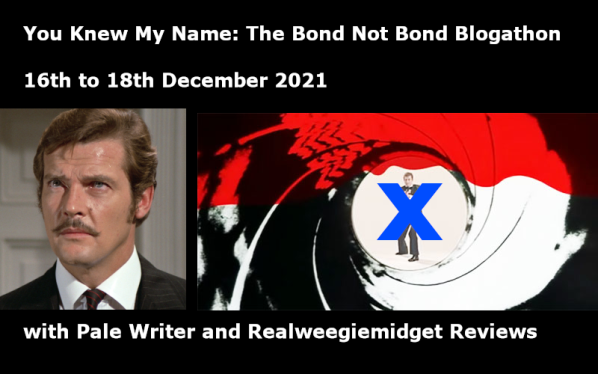
The You Knew My Name: The Bond Not Bond Blogathon banner created by Gill from Realweegiemidget Reviews

What I didn’t like about the film:

A pointless change of scenery: When a movie or television series chooses to change the location of their story, there needs to be a strong reason for that change. These reasons can range from expanding upon the overarching story to giving the protagonist(s) something interesting to do. With Sherlock Holmes in New York, though, none of these things happened. As a matter of fact, having Sherlock Holmes go to New York at all seemed unnecessary. If the mysteries in this film took place in England, it wouldn’t make much of a difference. That’s because none of the mysteries have any exclusive connection to New York itself. Having Sherlock solve the disappearances of immigrants from Ellis Island would have given him a stronger reason to be in New York, as Ellis Island is a part of New York and United States history. A child being kidnapped or a bank robbery can take place anytime and anywhere.

Not interactive enough: An appealing aspect of the mystery genre is the opportunity to solve the mystery alongside the protagonist. This allows the story to be interactive and engaging. I know one of Sherlock Holmes’ traits is his ability to figure out clues and possible scenarios in a short amount of time. But in Sherlock Holmes in New York, Sherlock figures things out so quickly, the audience doesn’t get a chance to engage with the mystery themselves. Instead, they’re forced to sit on the sidelines and watch the protagonist do everything, giving the audience a weak reason to stay invested in the story. Because of this, I found myself zoning out of the movie on a few occasions.

Lack of urgency: When a mystery takes place in current time, it gives that story a sense of urgency. The audience watches as the protagonist(s) races against the clock to solve a given mystery. While I won’t spoil Sherlock Holmes in New York, I will say a kidnapping takes place in the story. However, shortly after this crime takes place, Sherlock plays his violin in his hotel room. He then smokes his pipe all night. As I mentioned earlier, Sherlock Holmes is known for figuring out clues and scenarios in a short amount of time. That doesn’t give the story an excuse not to have urgency.

New York City skyline with letters image created by Freepik at freepik.com. <a href=’https://www.freepik.com/free-vector/new-york-skyline-typographic-silhouette_719554.htm’>Designed by Freepik</a>. <a href=”https://www.freepik.com/free-photos-vectors/background”>Background vector created by Freepik</a>. Image found at freepik.com.

My overall impression:

There was a time when having a movie take place in New York was the film’s selling point. From Friday the 13th Part VIII: Jason Takes Manhattan to A Troll in Central Park, movie studios wanted to take a bite out of The Big Apple for one reason or another. While I don’t know where or why this trend started, Sherlock Holmes in New York may have been one of the movies that caused this interesting ripple effect. Too bad the titular character didn’t have a stronger reason to visit The Empire State. The idea of Sherlock Holmes solving a mystery outside of England is not a bad one. But with the 1976 movie, the idea was better in theory than in practice. Add weak interactivity and a lack of urgency, this movie is not as strong as The Case of the Whitechapel Vampire, a Sherlock Holmes film I reviewed back in 2018. However, I did like Roger Moore’s portrayal of the famous detective. In fact, it’s a shame he didn’t receive more opportunities to appear in Sherlock Holmes stories. With this review completed, I need to make the time to see Roger’s films from the James Bond franchise. I just have to find the perfect opportunity to talk about them.

Overall score: 6-6.1 out of 10

Have you seen any Sherlock Holmes or James Bond films? If so, which one is your favorite? Let me know in the comment section below!

Have fun at the movies!

Sally Silverscreen

Take 3: Making of a Male Model Review

Any time I participate in a blogathon, I try to choose a film or topic that brings something different to the event. This allows my entry to stand out, as well as offer a sense of variety to the blogathon’s subject. When searching Joan Collins’ filmography, for Realweegiemedget Reviews’ Joan Collins Blogathon, I came across the 1983 television movie, Making of a Male Model. What intrigued me to the point of wanting to watch it was how it told a story from a completely different perspective. In films that revolve around modeling or the fashion industry, the story usually focuses on a female protagonist. With Making of a Male Model, a man is entering the modeling world. Out of the films I’ve seen involving modeling, the only one featuring a male model in the starring cast is the Disney movie, Model Behavior. Add the fact I’ve haven’t seen many of Joan’s projects, I am definitely eager to start this review!

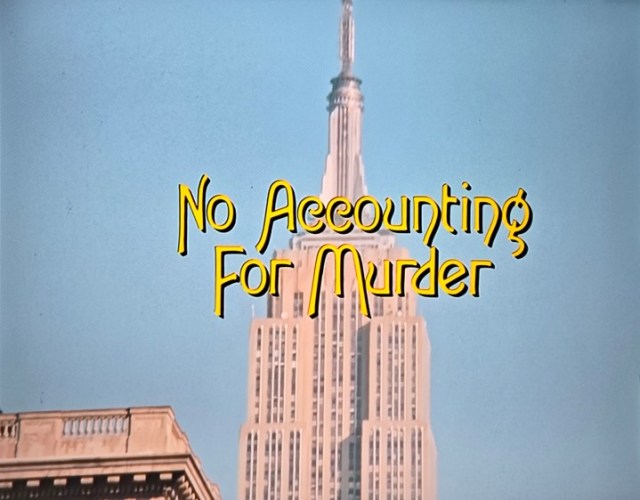
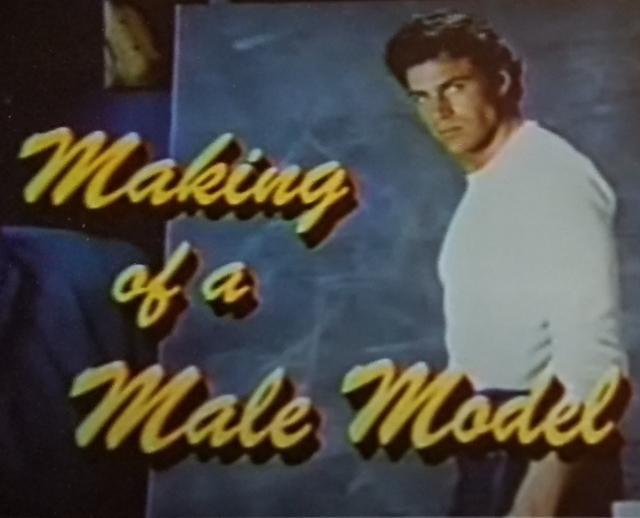
Here is a screenshot I took with my phone of the movie’s opening title. Screenshot taken by me, Sally Silverscreen.

Things I liked about the film:

The acting: Because Joan Collins’ involvement in this movie is one of the reasons why I chose to review this film, I’ll talk about her performance first. In stories where the head of a fashion or modeling firm is one of the main characters, they either have an obvious self-centered personality or they come across as emotionally distant. With Joan’s portrayal of Kay Dillon, she brought something different to a role like this. For most of the film, Kay appeared genuinely kind-hearted and nurturing. The only times Kay sounds self-centered is when she is upset. When Kay and Tyler discuss their plans over lunch is a perfect example, as she explains how she can’t spend much time with him because she had spent ten years building her career. Speaking of Tyler, I enjoyed watching Jon-Erik Hexum’s performance! He did a good job portraying a character in his specific situation. At the beginning of the movie, Tyler is a “fish out of water”, overwhelmed by the modeling world and taken aback by some of the things that take place in that world. As the film progresses, Tyler gains more confidence and his perspective begins to change. I also liked Jeff Conaway’s portrayal of Chuck Lanyard! It was dramatic and emotional without being over-the-top. One of Jeff’s best scenes is when his character is comparing the modeling world to a stage play. That scene proved to me Jeff has the talents for a Broadway show!

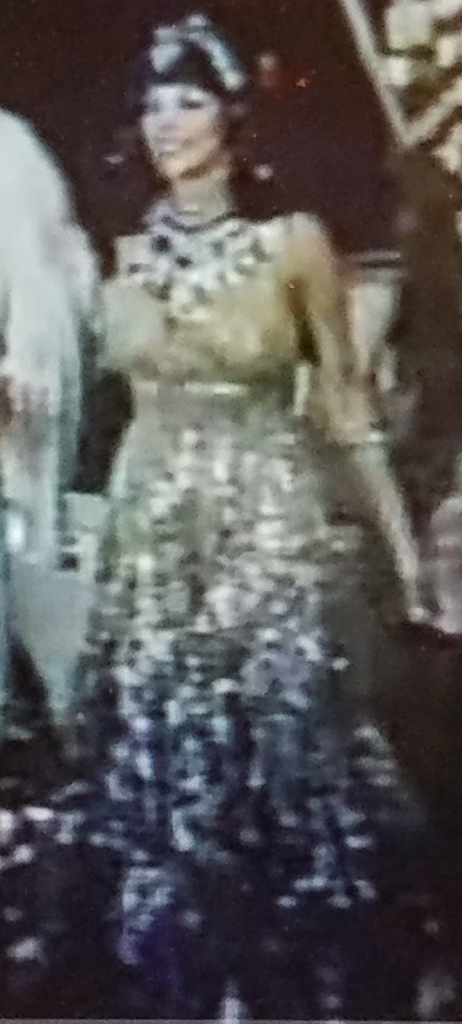
The costume design: In one scene, Tyler and Kay attend a costume party. The costumes were so elaborate and detailed, I honestly thought they were going to the Met Gala! One of the party goers wore a large hat in the shape of eyes. The piece around the blue eyes appeared periwinkle, with the hat portion blending into a pretty purple. Kay’s dress was absolutely gorgeous! It was covered in sparkles, allowing the dress to shine whenever Joan moved. The top of the dress was gold, with the skirt adopting an ombre design of blue and purple. A clear jeweled collar completed the look. During a photo shoot, one of the models was wearing a hat with a bird on it. The bird was covered in purple jewels, sparkling anytime the model moved her head. It was such a cool piece that I’d love to have in my wardrobe!

An insightful look into the world of modeling/advertising: Out of the episodes of Murder, She Wrote I’ve seen, my favorite one is ‘Film Flam’. One of the reasons is the behind the scenes look at how a movie premiere is organized. Throughout Making of a Male Model, the world of modeling and advertising is explored. When Tyler goes to apply for a catalogue modeling job, he is turned down due to his appearance and his lack of a portfolio. This instance shows how fast-paced this particular world can be and how one must always be prepared to bring a good first impression. At one point in Tyler’s journey, Tyler takes part in television commercials. Before a commercial for cologne was filmed, the director conducted a practice run in order to help Tyler remember what to do. It was interesting to see how the sets were constructed, how far the crew was willing to go to create an image or an idea. It was also interesting to see the prep work that goes into creating a commercial.

What I didn’t like the film:

Lack of on-screen chemistry: During the film, Tyler and Kay form a romantic relationship. However, I never sensed a spark between them. Jon-Erik and Joan worked well together from an acting perspective. But when it came time for their characters to become intimate, it felt like they were following story points within a script instead of allowing their characters to form a connection.  Tyler and Kay’s relationship comes to fruition after the costume party I mentioned earlier. But up until that moment, Tyler and Kay did not express any interest in falling in love with each other. So, the formation of their relationship, from a story telling perspective, felt forced and random.

Following the same beats: As I said in the introduction, I wanted to watch Making of a Male Model because it told a model’s story from a man’s perspective, which is not often explored in the world of cinema. Because of this, I was expecting the movie to tell a different kind of story from others of this nature. Sadly, it was just more of the same. The story followed a lot of the same beats as other modeling/seeking fame films. Making of a Male Model featured tropes such as “the two-faced boss”, “a cautionary tale about fame and fortune”, and “a friend in crisis”. This movie had an opportunity to take different avenues of the modeling or advertising world that either haven’t been or are rarely discussed in film. But that opportunity was not taken advantage of.

Telling more than showing: There were some moments in Making of a Male Model where characters told more than showed what was happening. As I already mentioned, Chuck compares the modeling world to a stage play. I did like Chuck’s monologue and Jeff’s performance. However, because this monologue was given before Tyler’s modeling career began, it denied the audience a chance of seeing Tyler’s journey firsthand, without being spoiled. At the costume party, a man named Ward accuses Kay of breaking a contract. It gets to the point where Ward starts causing a scene. Since this accusation is presented as hearsay, it is never determined who was telling the truth.

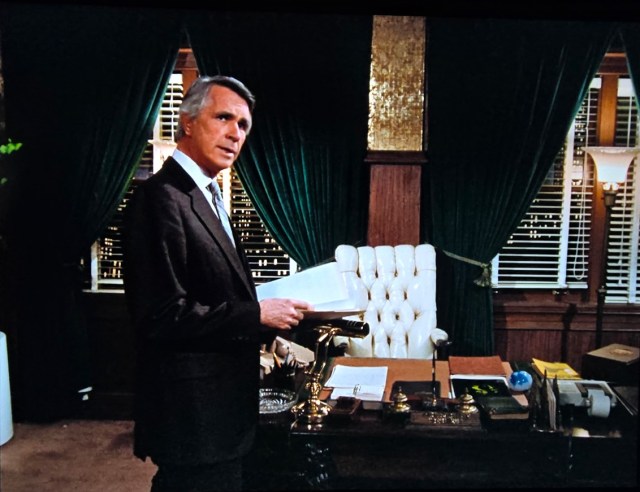
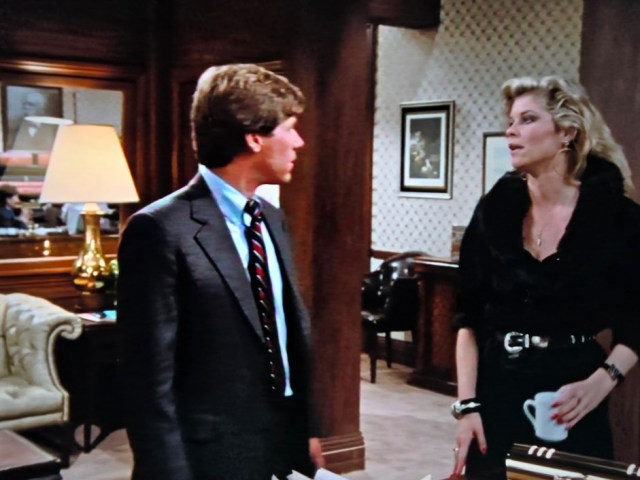
I apologize for the poorer quality of this photo, but it was one of the few complete shots of the dress this movie presented. Screenshot taken by me, Sally Silverscreen.

My overall impression:

I know that stories are bound to get repeated overtime. But there is a fine line between telling similar stories and rehashing material. Making of a Male Model fits into the latter category, as the same tropes are adopted from other films of this nature. Honestly, this disappoints me because I was expecting more from this movie. Despite finding Making of a Male Model to be just ok, there are aspects of the film I liked. One of them is the insightful look at the modeling/advertising world. This part of the story held my interest, as I found it to be a fascinating exploration. With that in mind, I think the concept of this movie would have worked better as a television show or documentary.

Before I finish this review, I’d like to let my readers know I did choose another book from my TBR Tin. For those who don’t know, I announced in January how I would choose which book to read next from a hot chocolate tin I won last year. My second TBR Tin book of the year is

(insert drumroll here)

Closed for the Season by Mary Downing Hahn!

Yes, this is a book I said I was going to read in 2019. But I’m glad to finally get around to reading it!

Overall score: 6.1 out of 10

Have you seen Making of a Male Model? Which projects of Joan Collins’ have you watched? Let me know in the comment section!

Have fun at the movies!

Sally Silverscreen

Take 3: Perry Mason: The Case of the Shooting Star Review

I am so close to publishing 200 movie reviews! Because of this, I have devoted this week to publishing my 199th and 200th movie reviews. Next week, I will publish a celebratory post to commemorate this accomplishment. Yesterday, I watched Perry Mason: The Case of the Shooting Star. When I posted my review of Perry Mason Returns last month, it ended up becoming more popular than I expected, with the article receiving nine likes! These factors are the reason why I chose to review Perry Mason: The Case of the Shooting Star. For the most part, I have enjoyed this particular series. While some films have been better than others, I haven’t come across an installment that was bad. What works in Perry Mason’s favor is having consistent elements, such as the acting performances. Because these elements have been, more often than not, strong, it has helped the memorability of the series!

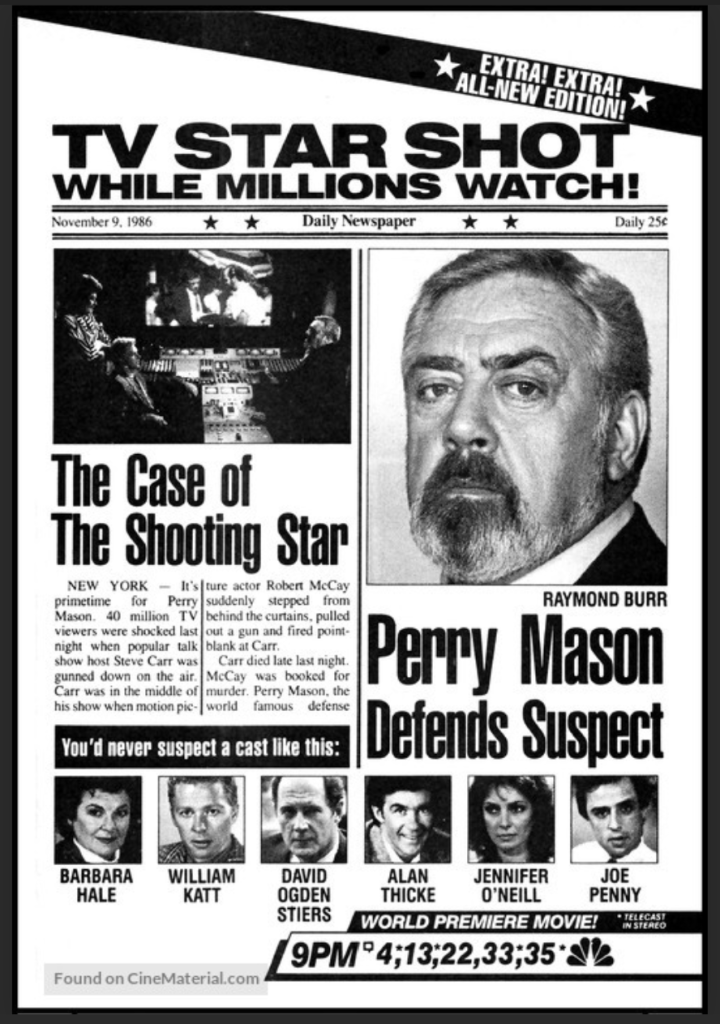
While searching the internet for this film’s poster, I took a screenshot of this one, as I love the overall design! Screenshot taken by me, Sally Silverscreen.

Things I liked about the film:

The acting: Joe Penny is an actor I’m familiar with because of his performance in Hallmark’s Jane Doe series. What I liked about his portrayal of Robert McCay in Perry Mason: The Case of the Shooting Star is how he was given more opportunities to use emotion! A great example is when Robert is being questioned by Perry Mason at the police station. For most of this scene, the sadness and concern of the situation can be seen on Joe’s face. As the scene progresses, Robert’s anger explodes. Another actor that uses facial expressions well is Jennifer O’Neill! Portraying the murder victim’s wife, Alison Carr, Jennifer used her eyes to enhance the emotions her character was feeling. Her best scene was when Alison and Perry are having a conversation at a law library event. During this conversation, Alison tries to convince Perry that despite everything she has experienced, she is fine. But because her eyes contain so much pain, it appears that Alison is falling apart at the seams. Something I enjoy about the Perry Mason TV movie series is how new, memorable characters have been introduced in each story. Michelle Benti, portrayed by Wendy Crewson, is one of these characters. A photo journalist from New York City, Michelle plays an integral part of the story. She also had a great on-screen personality! Because of these things, it makes me wish Michelle became one of the series’ regulars.

The cinematography: There are times when a mystery movie offers visually appealing cinematography to their audience. Perry Mason: The Case of the Shooting Star is one of these films, as I noticed some interesting cinematography while watching the movie! In the scene where Robert is being questioned by Perry, light is pouring into the room through the blinds of the windows. Both the light and shadows reflect off of Robert’s face, highlighting his facial expressions. Toward the beginning of the film, Robert is walking through the city at night. Smoke could be seen at various moments in that scene. This element helped add to the mysterious nature of the story!

Scenes that tricked the audience: Throughout Perry Mason: The Case of the Shooting Star, Robert McCay is filming a movie in New York City. This caused a few scenes to be presented in a way that tricked the audience. In the aforementioned beginning scene, Robert finds himself in the city at night. At one point, he is surrounded by two sets of gang members. As the scene goes on, it is revealed that Robert and the gang members are in the middle of shooting a film scene. Later in the film, Robert and one of his co-stars, Kate, are seen having a conversation with each other. At first, it seems like they are gaining a mutual understanding of the murder case. But, like the previously mentioned scene, this moment is also revealed to be a part of Robert’s movie.

New York City skyline with letters image created by Freepik at freepik.com. <a href=’https://www.freepik.com/free-vector/new-york-skyline-typographic-silhouette_719554.htm’>Designed by Freepik</a>. <a href=”https://www.freepik.com/free-photos-vectors/background”>Background vector created by Freepik</a>. Image found at freepik.com.

What I didn’t like about the film:

Characters with wasted potential: While each character in Perry Mason: The Case of the Shooting Star gets their moment to shine, there are a few characters that could have had a greater significance in the story. The gang members from the very first scene serve as a good example. I understand these characters were meant to be extras in Robert’s movie. However, I feel at least one of them could have been given more lines and screen time. Who knows? Maybe they would have become a series regular.

The funeral/memorial dinner: When I reviewed the Murder, She Wrote episode, ‘Hannigan’s Wake’, I mentioned how one funeral visitation felt more like a light-hearted dinner party. There was one scene in this movie that made me feel similar to the aforementioned episode. In Perry Mason: The Case of the Shooting Star, the funeral/memorial dinner for the murder victim felt more like an award ceremony. This is because of two things; the fact that some characters don’t wear black attire and how one of the murder victim’s closest friends incorporated jokes during his speech. As I said in my review of ‘Hannigan’s Wake’, funeral services are unique to the family hosting that gathering. However, the two factors I brought up prevented this scene from displaying strong feelings of sadness and grief.

An unbelievable stunt scene: I am aware how fictional stories make their audience suspend their disbelief to varying degrees. But in Perry Mason: The Case of the Shooting Star, there was one scene involving a stunt that didn’t seem believable to me. The stunt itself is not what caused me to feel this way. This was brought on by the stunt coordinator’s decision to allow a civilian, Perry’s colleague Paul, to participate in a stunt without taking precautionary steps beforehand. I understand this particular scene was meant to serve as a comedic moment. But I just can’t believe any stunt coordinator would willingly overlook details like that, especially in a mystery movie that appears grounded in reality.

Magnifying glass image created by Freepik at freepik.com. <a href=’https://www.freepik.com/free-vector/magnifying-glass-with-fingerprint-in-flat-style_2034684.htm’>Designed by Freepik</a>. <a href=”https://www.freepik.com/free-photos-vectors/flat”>Flat vector created by Freepik</a>. Image found at freepik.com.

My overall impression:

As the eighth movie I’ve seen in the Perry Mason TV movie series, I’d say Perry Mason: The Case of the Shooting Star is the best one! Despite its flaws, this film did contain a mystery that was not only intriguing, but also captivating from start to finish! Almost every series features at least one chapter that revolves around show business. When this creative decision is chosen, Hollywood usually serves as that chapter’s backdrop. In Perry Mason: The Case of the Shooting Star, a movie was being filmed in New York City. This allows a nice change of scenery and a different perspective to this tried-and-true plot point. While watching the film, I couldn’t help being reminded of the Brandon Lee tragedy. It is due to the murder victim also being killed by a prop weapon in Perry Mason: The Case of the Shooting Star. There’s no denying the major differences between the real-life and fictional situations. But after watching Perry Mason: The Case of the Shooting Star, it does make me wonder if there would have been a heightened sense of awareness had someone working on the film or a person who knew a cast or crew member had seen the 1986 movie prior to production on The Crow?

Overall score: 7.8 out of 10

What are your thoughts on the Perry Mason TV movie series? Do you have a favorite mysteries series? Let me know in the comment section!

Have fun at the movies!

Sally Silverscreen

Take 3: Alice in the Cities Review + 210 & 215 Follower Thank You

Three weeks ago, 18 Cinema Lane received 210 followers! Because I was in the middle of coordinating my PB & J Double Feature and reviewing films for Pure Entertainment Preservation Society’s Clean Movie Month, I postponed my 210-follower dedication review. During that time, my blog also received 215 followers! This caused me to combine my 210 and 215 follower dedications into one review. Since last March, I’ve had a recording of Alice in the Cities on my DVR. As you can tell by the title of this post, this is the film I have chosen to write about. Every so often, I try to watch and/or review a movie that was created outside of North America. Most of these films have come from Europe. Prior to watching Alice in the Cities, the only German film I’ve written about on 18 Cinema Lane was Nosferatu. What’s interesting is how, like the 1922 movie, Alice in the Cities was restored as a result of two different versions of the project. According to a message at the beginning of the film, the movie was filmed in two separate millimeters.

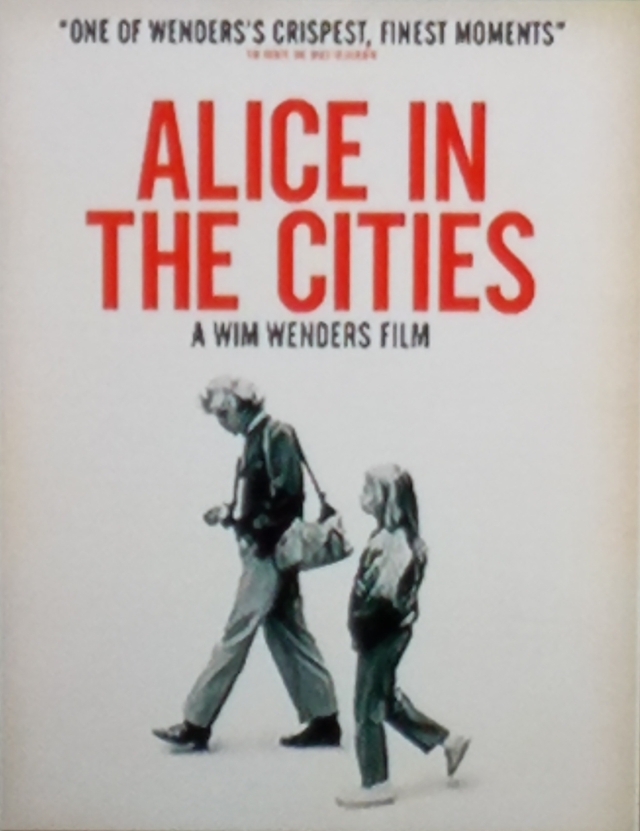
This is a screenshot of the poster I took with my phone that happened to be featured on my television. Screenshot taken by me, Sally Silverscreen.

Things I liked about the film:

The acting: According to an article from Turner Classic Movies’ (TCM’s) website, Wim Wenders, the director of Alice in the Cities, was inspired to create this film after watching Rüdiger Vogler and Yella Rottländer perform together in a previous project. Having these two actors reunite for Alice in the Cities was a smart decision! I liked Rüdiger’s portrayal of Philip because it was consistent. Not only that, but he had a coolness about him as his character moved from one scene to the next. No matter what scenario was thrown in his path, Philip was calm and collected. This made Rüdiger’s performance appear effortless! Something that I noticed while watching Yella’s performance was how believable it was. Whether she was questioning Philip’s “scribbles” or asking for food, Yella’s body language, facial expressions, and overall demeanor appeared as one would expect from a child in Alice’s particular situation. It also helps that Yella worked with Wim and Rüdiger prior to this movie. Because of this, Yella appeared comfortable in the role she was given!

The cinematography: Alice in the Cities is filmed in black-and-white. This was done not only because of a personal decision by the director, but also to avoid having Alice in the Cities be compared to Paper Moon, a movie that was released a year before Wim’s project. When film fans think about black-and-white movies, productions that were released before 1965 will likely come to mind. However, it’s important to remember those titles were presented in black-and-white because filming in color was rarely an option. With Alice in the Cities, its presentation was purposefully chosen, which proved to be more interesting than I would have expected. It caused the story to be frozen in time, allowing the narrative to serve as a time-capsule. Having a few characters appear on screen at a given moment makes each interaction feel intimate, like the audience is directly a part of these verbal exchanges. I also liked how some scenes looked like the view came straight from Philip’s perspective. One great example is when Philip is boarding a train in Amsterdam.

Philip and Alice’s interactions: The majority of this story revolves around Philip’s search for Alice’s grandmother, which results in Philip and Alice spending a significant amount of time together. As I mentioned before, Rüdiger and Yella had worked together in a previous film. This helped their interactions come across as realistic. In the aforementioned TCM article, one of Wim’s inspirations for Alice in the Cities was his friend, who happened to be a single parent. This explains why Philip and Alice’s interactions feel like they are between father and daughter. Because of the quality of their acting abilities, Rüdiger and Yella were able to bring this idea to life in their performance! They were also able to equally carry the film.

Map of Germany image created by Macrovector at freepik.com. Background vector created by macrovector – www.freepik.com. Image found at freepik.com.

What I didn’t like the film:

Scenes feeling like padding: There were some scenes in Alice in the Cities that ended up feeling like padding. One example is when Philip and Alice go to an ice cream shop. Within this scene, a shorter scene of a child eating their ice cream next to a juke box is included. This scene didn’t serve the overall story and felt like it was there just to be there. Personally, I think scenes like the shorter one I mentioned should have been cut from the film.

The run-time: IMDB lists Alice in the Cities with a run-time of one hour and fifty minutes. To me, this caused the movie to feel a bit too long. Like I previously stated, there were scenes in this film that felt like padding. Their purpose seemed to be that of satisfying this run-time. The story itself was also straight-forward. These two factors made me believe that, at least, ten minutes of this movie could have been shaved off.

An inconsistent exploration of Philip’s beliefs: At certain points in Alice in the Cities, Philip expresses his beliefs about topics like his dislike toward television and why he takes photos. Philip presents an interesting way of looking at things that most people wouldn’t think twice about. Unfortunately, these beliefs were not explored to a satisfying extent. As the story places a primary emphasis on Philip’s search for Alice’s grandmother, this exploration gets lost in the shuffle. It also creates an inconsistent inclusion of this part of the story.

New York City skyline with letters image created by Freepik at freepik.com. <a href=’https://www.freepik.com/free-vector/new-york-skyline-typographic-silhouette_719554.htm’>Designed by Freepik</a>. <a href=”https://www.freepik.com/free-photos-vectors/background”>Background vector created by Freepik</a>. Image found at freepik.com.

My overall impression:

Turner Classic Movies (TCM) features an interesting article about Wim Wenders and the creation of Alice in the Cities. After reading about Wim’s personal struggles as a filmmaker and after learning about this film’s restoration efforts, it makes me glad that Alice in the Cities was able to see the light of day! Movies involving road trips usually don’t interest me. But because of Rüdiger Vogler and Yella Rottländer’s performance, I found myself invested in the journey of their characters! Creative cinematography and addressing Philip’s beliefs also help make this film likable and well-made. Even though Alice in the Cities is a fine film, there were things about it that prevented the overall project from being better. The main plot didn’t allow Philip’s beliefs to be explored to their fullest extent. It also doesn’t help that some scenes felt like padding. However, I’m thankful to have been given the opportunity to share this film with my followers! Thank you for helping 18 Cinema Lane reach these milestones! This blog would not be the same without you!

Overall score: 7.4 out of 10

Have you seen any movies created outside your home country? If so, what was your movie-viewing experience? Share your thoughts in the comment section below!

Have fun at the movies!

Sally Silverscreen

Here’s a link to the article from Turner Classic Movies that I mentioned in my review:

http://www.tcm.com/this-month/article/719889%7C0/Alice-in-the-Cities.html

Take 3: Never a Dull Moment Review

Like I said in my Follow Me, Boys! review, I have several movies on my DVR. Most of these films were recorded last year or over a year ago. Last night, I chose to watch one of these films, which I added to my DVR last June. This film is Never a Dull Moment! Sometime, Turner Classic Movies (TCM) will host a marathon called “Treasures from the Disney Vault”. When this event takes place, the network will show a collection of smaller titles and lesser known films from Disney. In one of these marathons, Never a Dull Moment was included in the line-up. While I had never heard of this film prior to the marathon, I have seen two of Dick Van Dyke’s movies. Because one of those films was Mary Poppins, which I have enjoyed, I had a good indication that I might like Never a Dull Moment. Was this the case? Keep reading my review if you want to find out!

Never a Dull Moment poster created by Walt Disney Productions and Buena Vista Distribution. ©Disney•Pixar. All rights reserved. Image found at en.wikipedia.org/wiki/File:NeverADullMoment1968.jpg

Things I liked about the film:

The acting: Before watching Never a Dull Moment, I had seen Chitty Chitty Bang Bang and Mary Poppins. A consistent component of Dick Van Dyke’s acting abilities I have noticed is the strong adaptability. In one scene, his character, Jack, is acting drunk in an attempt to impersonate a gangster. Moments later, Jack is crying over the loss of a fictional Aunt Gladys. This is a great example of how Dick could effortlessly take on any situation through his performance! At limited moments in the film, a gangster named Florian would appear. This character was portrayed by Tony Bill. What I liked about his performance is how calm and collected his persona came across. Even though Florian was Leo Smooth’s henchman, he presented an idea of a gangster that people have come to recognize in film. While I liked Dorothy Provine’s portrayal of Sally, I want to talk about Joanna Cook Moore’s portrayal of Melanie, as her on-screen presence was shorter. Joanna’s personality was bubbly, which appeared natural for her character. During a scene where Melanie is showing Jack some of her figure skating photos, Joanna seemed to use her performance to light up the room. Her on-screen presence was memorable, despite being featured in only three scenes.

The set design: I was really impressed by the set design in Never a Dull Moment! Since the movie takes place in New York, tall skyscrapers and even the Brooklyn Bridge can be seen. This specific set looked impressive, making the location feel larger than life! Another great example of set design was Leo Smooth’s mansion. My favorite feature of this set was the consistency and fine detailing of the woodwork, especially on the staircase! A local art museum is where the film’s heist is featured. During the climax, various art exhibits are showcased. The Pop Art exhibit was the best one, as the art itself was colorful. It was also large in scale, creating a space that felt grand.

The music: If used well, music can help set a tone for either the whole movie or a particular scene. The music certainly did that for Never a Dull Moment! Whenever Jack was sneaking around Leo’s mansion, smooth jazz music could be heard. This fits the tone of those scenes because it emulates a feeling of curiosity that usually comes from film-noir and mysteries. In a scene involving a spinning piece of art, music from a merry-go-round was playing in the background. Since the art itself is colorful and the scene is meant to be humorous, this musical selection makes sense.

Art tools image created by Freepik at freepik.com. <a href=’https://www.freepik.com/free-vector/flar-art-tools-pack_835368.htm’>Designed by Freepik</a>.  <a href=”https://www.freepik.com/free-photos-vectors/paint”>Paint vector created by Freepik</a>. Image found at freepik.com.

What I didn’t like about the film:

A drawn-out story: One overarching narrative of Never a Dull Moment revolves around a group of gangsters planning to steal a valuable painting. While an important component of any heist is the preparation stage, this part of the process lasted longer than it should have. Only one scene is dedicated to highlighting the plans for the heist. But the rest of that time was spent focusing on things not related to the heist. One example is Melanie Smooth attempting to relive her glory days as a famous figure skater. Moments like this had nothing to do with the heist and caused the overall story to feel drawn out.

Little sense of urgency: Heist films are usually fast paced, as there is a sense of urgency to carry out the heist. But, in Never a Dull Moment, the amount of urgency within the story was small. For most of the film, Jack hangs out at Leo Smooth’s mansion. This part of the movie was mundane, as little to no excitement was taking place. Even the gangsters’ activities didn’t feel out of the ordinary. A good example is when Leo is painting in his office. While the overall level of excitement picked up when the heist started, the build-up itself was not exciting.

A dull first half: With a title like Never a Dull Moment, you’d think the movie as a whole would be intriguing and action-packed. However, that is not the case for this film. I found the first half of the movie to be dull. This is the result of the story being drawn out and a small amount of urgency. Even though a part of the overall narrative focuses on a heist, this aspect of the story seemed to be an afterthought within the film’s first half. The heist itself took place in the second half of the movie. But this doesn’t make up for the weak nature of the previous segment.

New York City skyline with letters image created by Freepik at freepik.com. <a href=’https://www.freepik.com/free-vector/new-york-skyline-typographic-silhouette_719554.htm’>Designed by Freepik</a>. <a href=”https://www.freepik.com/free-photos-vectors/background”>Background vector created by Freepik</a>. Image found at freepik.com.

My overall impression:

As of late June to early July 2020, I have reviewed four live-action Disney films from the ‘60s. Three out of four of these movies have been ok or “middle of the road”. Never a Dull Moment was one of them. I will say this is a better heist movie than Logan Lucky. However, it wasn’t as exciting as I had expected it to be. The film is titled Never a Dull Moment, but the first half of the story is just that: dull. It also doesn’t help that there was a small amount of urgency. But the movie did contain elements that I did like. Some of them includes the acting and the set design. As weird as it sounds, Never a Dull Moment doesn’t feel like a Disney movie. It’s understandable for a studio to try new things and think outside the box. Never a Dull Moment, however, seems like belongs to a different studio. Like my Follow Me, Boys! review, I can’t fully recommend this movie, but I’m not going to dissuade anyone from watching it either.

Overall score: 6.2 out of 10

Have you seen any of Dick Van Dyke’s films? Which live-action Disney film from the ‘60s do you like or dislike? Tell me in the comment section!

Have fun at the movies!

Sally Silverscreen