Take 3: Poisoned in Paradise: A Martha’s Vineyard Mystery Review + 360, 365, 370, and 375 Follower Thank You

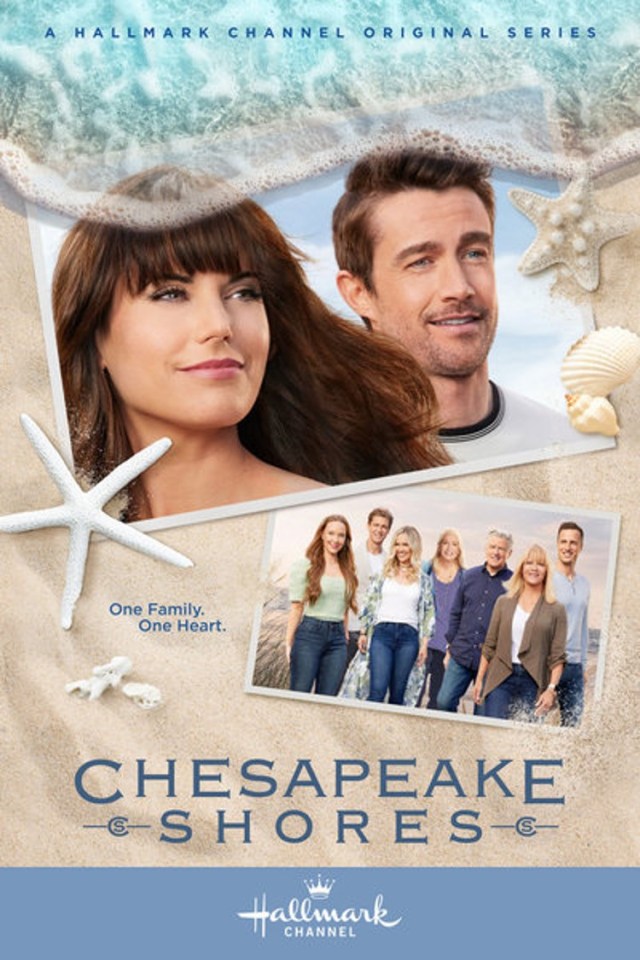
Back in May, I said I was planning on reviewing the newest Martha’s Vineyard Mysteries film. Since I try my best to be a blogger of my word, I’m finally getting around to writing about it. Out of all the times I could review this film, it seems like now is more perfect than ever. This is due to the start of Chesapeake Shores’ fifth season, the same season Jesse Metcalfe will be departing from. While I have seen all the movies in the Martha’s Vineyard Mysteries series, I only reviewed the previous title; Ships in the Night: A Martha’s Vineyard Mystery. In that review, I said the third movie was fine, but caused the series to stumble a little bit. This was because of several flaws in the project, including a mystery that was overshadowed. With any series, each chapter is hit or miss. But will Poisoned in Paradise: A Martha’s Vineyard Mystery sink or swim? To solve this mystery, you need to read this review!

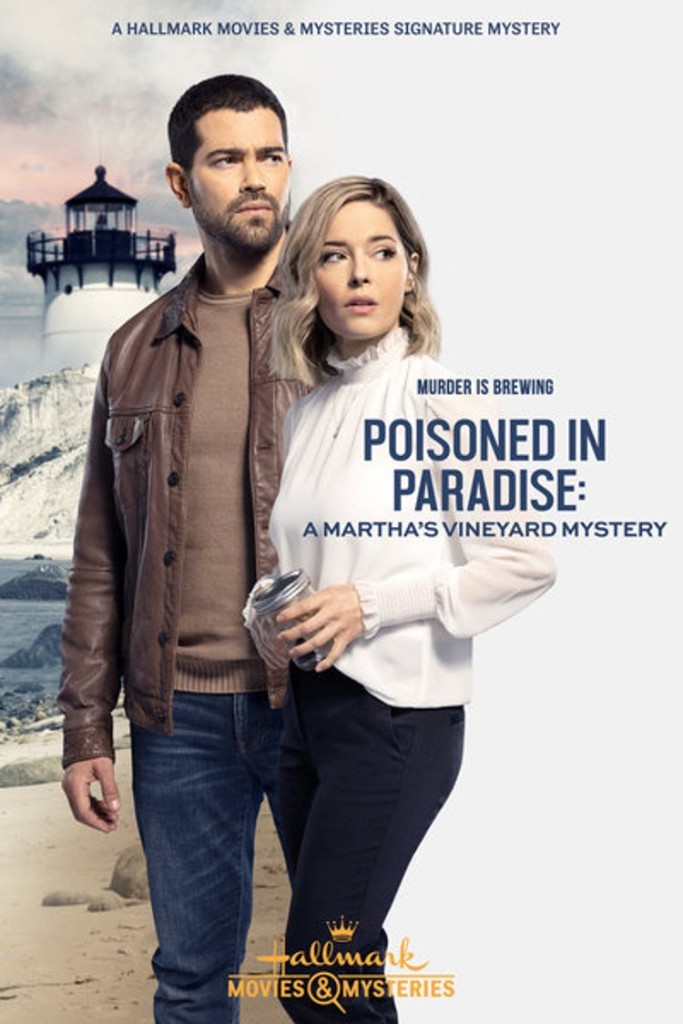
Poisoned in Paradise: A Martha’s Vineyard Mystery poster created by Crown Media Family Networks and Hallmark Movies & Mysteries

Things I liked about the film:

The acting: Since I mentioned Jesse Metcalfe in the introduction, I’ll talk about his performance first. Whenever Jesse is given a lead role in a Hallmark production, he carries his characters with a different kind of charisma compared to other lead actors. While Jesse’s performances are expressive, they feel more grounded and down-to-earth, like the character is a realistic individual. When Jeff and Zee discover the mystery’s victim, you can see sadness in his eyes. As he is looking away from the victim, he looks like he might cry due to how emotionally distraught finding a murder victim would be. Like Ships in the Night: A Martha’s Vineyard Mystery, Jesse and Sarah Lind had good on-screen chemistry! Their on-screen personalities work so well together, like their characters were meant to be with each other.

There are some supporting actors that caught my attention because of the quality of their talents. In Poisoned in Paradise: A Martha’s Vineyard Mystery, Drew Henderson portrayed a friend of Zee’s named Noah. When he appeared on screen for the first time, I immediately took note of how charismatic he was! He also transitioned between emotions very effortlessly. Because of these things, I would love to see Drew lead a Hallmark project! Another performance I liked was Reilly Dolman’s portrayal of Glen, the boyfriend of the murder victim. As he was questioned by Jeff and Chief Madieras, Glen came across as angsty and “rough around the edges”. But it didn’t feel stereotypical or one-dimensional. Instead, a mysterious aura surrounded Glen, making you want to learn more about him. I wish Glen had more appearances in this movie, because I really enjoyed seeing Reilly’s acting talents! Similar to Reilly, Nhi Do appeared in the film for a short amount of time. However, her portrayal of a bank teller named Hazel was very memorable! In her limited time on screen, Nhi showed how she had good on-screen chemistry with the other cast members. While Hazel is talking with Zee about the gossip around the bank, it felt like both characters got along well with each other. While I don’t know what’s in store for the future of this series, I would love to see Nhi Do become a series regular!

The humor: Compared to the other series on Hallmark Movies & Mysteries, the Martha’s Vineyard Mystery series has a more serious tone. This has been a consistent element throughout the overall story. There was humor found in Poisoned in Paradise: A Martha’s Vineyard Mystery. But it felt like it belonged in that world, simply breaking up the darkness of the film’s tone and subject matter.  While getting ready for his date with Zee, Jeff was looking through some shirts to determine what would look presentable. During this scene, he sniffs one of these shirts, displaying a disgusted look on his face afterward. While this was a simpler moment, it was well-executed because of the writing and acting. The moment itself also felt believable and relatable. In Boston, while Jeff and Andrew, Jeff’s former police partner, are waiting to question a bank robber, an FBI agent shows up. When Andrew questions who the agent is, Jeff replies by saying “A problem”. Similar to what I said before, this exchange was a simple one. Yet, its delivery is what made it funny.

The mystery: In my review of Ships in the Night: A Martha’s Vineyard Mystery, I said the film’s side mystery was barely referenced because it was overshadowed by the main mystery. Personally, I feel both mysteries should have received an equal amount of attention. In Poisoned in Paradise: A Martha’s Vineyard Mystery, there were two mysteries within the story. While the majority of the script focused on the main mystery, the side mystery was shown for a satisfying amount of time. What also helps is how the main mystery was written as if the audience is solving it alongside the characters. Each clue and suspect was introduced as the film went on, allowing for new surprises to keep viewers on the edge of their seat. This creates a cinematic experience that feels engaging and interactive!

Paper Boats in the Sea image created by Freepik at freepik.com. <a href=’https://www.freepik.com/free-vector/background-of-paper-boats-with-hand-drawn-waves_1189898.htm’>Designed by Freepik</a>. <a href=”https://www.freepik.com/free-photos-vectors/background”>Background vector created by Freepik</a>. Image found at freepik.com.

What I didn’t like about the film:

Little development in Jeff’s overarching mystery: As I mentioned in my review of Ships in the Night: A Martha’s Vineyard Mystery, Jeff is attempting to figure out who shot him back in Boston. This mystery is the series’ overarching story, where pieces to this puzzle are given to the audience in small doses as the series goes on. In Poisoned in Paradise: A Martha’s Vineyard Mystery, Jeff receives a lead in his case. I’m not going to spoil this mystery for anyone hasn’t seen the film. But all I’ll say is it feels like we take a step backward immediately after we step a step forward. I understand this series’ creative team wants to carry the story as long as possible, giving the audience a reason to stay invested. While I’m looking forward to seeing how this mystery unfolds, I feel like the audience should have received a little more.

The under-utilization of Britt Prajna: Zee’s friend, Britt, is one of the series regulars in the Martha’s Vineyard Mystery series. Her role is similar to Sally from the Aurora Teagarden Mysteries, a loyal and trust-worthy person in the protagonist’s life who provides advice and a listening ear. The difference between Sally and Britt is how Sally, sometimes, helps Aurora solve a mystery by using her journalistic skills to talk with potential suspects. As the Martha’s Vineyard Mystery series progresses, Britt has been featured less. She’s also not involved in a given mystery, never using her skills to help Zee or Jeff. I know civilians/hotel owners can only contribute so much when it comes to solving crimes. However, I think Britt has more to offer in the world this series has created.

The mystery’s start time: When I reviewed Ships in the Night: A Martha’s Vineyard Mystery, I stated the mystery’s start time was one of the movie’s flaws, as it didn’t begin until a little over twenty-five minutes into the film. While this was remedied a little bit in Poisoned in Paradise: A Martha’s Vineyard Mystery, it still took a while for the main mystery to start. This time around, the mystery didn’t begin until about twenty minutes into the movie. Before the mystery is introduced, the audience gets reacquainted with the characters and they are caught up on what has happened since the events of the previous film. I know this part of the story is important, especially when it has been several months since the last chapter was released. But I think the mystery should have been introduced sooner.

Magnifying glass image created by Freepik at freepik.com. <a href=’https://www.freepik.com/free-vector/magnifying-glass-with-fingerprint-in-flat-style_2034684.htm’>Designed by Freepik</a>. <a href=”https://www.freepik.com/free-photos-vectors/flat”>Flat vector created by Freepik</a>. Image found at freepik.com.

My overall impression:

When asked why he tries to solve cold cases, Sergeant Webber tells Jeff it helps him be at peace with what has happened in his career. I found this to be an interesting answer, especially coming from a network where the majority of stories are murder mysteries. Some viewers, from what I’ve heard, have voiced their complaints over this creative decision. But after thinking about Sergeant Webber’s answer, I’m starting to see why this might be the case. Stories involving any sort of crime are never pretty. They can invoke fear, bring out the uncertain, and cause confusion. When we see a detective, real or fictional, get involved with a case, we see them attempt to find answers. Sometimes, answers can give us peace of mind, the peace of mind that can help us feel like things are going to be ok.  The series on Hallmark Movies & Mysteries represent the familiar, featuring friendly faces the audience has come to know and trust. If surrounded by people or things we are familiar with, it can make us feel comfortable, even when uncomfortable subjects, such as murder mysteries, are brought up. Watching the detectives in these series can remind us of how good people can do good things in our world. Maybe we don’t have the ability to single-handedly solve cases like our favorite TV detectives do. But maybe, just maybe, we can give a little bit of peace.  Before I close this review, I just want to thank all my followers for making 18 Cinema Lane the success it is today!

Overall score: 7.7 out of 10

Do you watch the Martha’s Vineyard Mystery series? If so, what are your thoughts on the latest film? Tell me in the comments section!

Have fun in Martha’s Vineyard!

Sally Silverscreen

Bringing Back the Gold Sally Awards’ Best Supporting Actor Division!

As I promised, I am hosting a re-vote for the Gold Sally Awards’ Best Supporting Actor Division. I also plan to wrap up the Awards voting, as there are three polls lefts. But don’t worry, Sally’s Star of the Year will still be included. This round of voting will start today, June 30th, and end on July 7th. Like before, you can vote for more than one nominee. But you can only vote once per person. The link to the poll is featured under the list of nominees.


Who was the Best Supporting Actor of 2020?


Gene Kelly — Anchors Aweigh
Fred Savage — The Boy Who Could Fly
Omri Katz — Matinee
Noah Valencia — Sweet Nothing in My Ear
Andrew Tarbet — If You Believe
Jamie Bell — Nicholas Nickleby (2002)
Brock Peters — To Kill a Mockingbird
Vincent Perez — Cyrano de Bergerac (1990)
Joe Penny — Perry Mason: The Case of the Shooting Star
Steve Bacic — Mystery 101: An Education in Murder


Have fun voting!

Sally Silverscreen

Take 3: To Catch a Spy Review (Hallmark Mysteries Double Feature Part 2)

Now, the moment you’ve been waiting for; the second part of my Hallmark Mysteries Double Feature! I recently saw the latest mystery film from the network: To Catch a Spy. This picture’s location made the film seem interesting. When I think of movies taking place outside of North America, I can’t think of many that feature Malta as a prominent backdrop. In fact, this is the first Hallmark project to take place and be filmed in Malta! But “destination” movies from Hallmark have been met with mixed results. One of the best films I saw in 2019 was Rome in Love. To me, it captured almost everything this location had to offer. However, not every “destination” film can be as good as Rome in Love. How will To Catch a Spy compare? Keep reading my review if you want to find out!

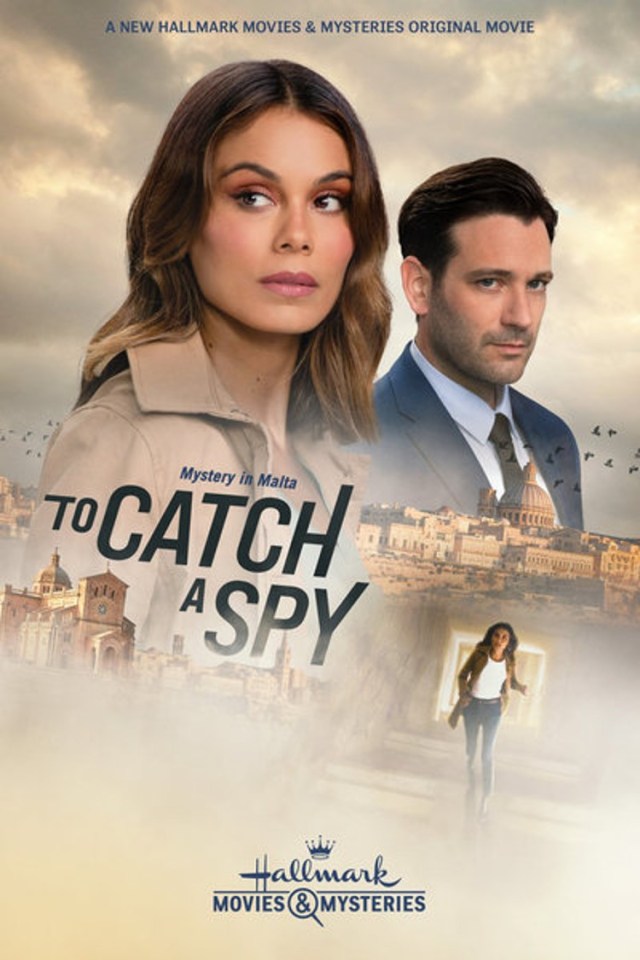
To Catch a Spy poster created by Crown Media Family Networks and Hallmark Movies & Mysteries

Things I liked about the film:

Standout performances: Within the movie, I saw standout performances from some of the actors and actresses. One of the film’s leads, Colin Donnell, gave one of those performances! His portrayal of Agent Aaron Maxwell came across as natural and believable. It reminded me of Stephen Huszar’s performance in the Ruby Herring series. His interactions with Nathalie Kelley’s character, Chloe, showcase this realism well. In the supporting cast, Joe Azzopardi portrayed a hotel employee named Isaac. His best scene was when Isaac’s true identity was revealed. Joe carried his character with suave confidence. This made Isaac so captivating to watch. Another captivating performance came from Becky Camilleri, who portrayed a maid named Rianne. What made her character so memorable was how expressive she was throughout the film! When Chloe is trying to check out of her hotel room, she runs into the hotel’s manager. After their interaction, Rianne walks into the room, appearing genuinely confused. Becky’s expressions helped her stand out among the cast!

Interior design: There were two rooms in To Catch a Spy that boasted fantastic interior design! The first was a sitting room inside Malta’s U.S. Embassy building. Beige and white wallpaper surrounded the interior, with white marble covering the floor. Providing pops of color were a dark wood table and chair set and a green potted plant. These elements came together to create a space that was both classy and elegant. The second space was a local church. When the interior of this location was first introduced, a painted mural on the church’s curved ceiling greeted the audience. Along the walls and pillars, gold was abundantly featured. This large venue could easily rival the Sistine Chapel. Because of everything I just said, I wish this church was shown in more than one scene.

Footage of Malta: According to IMDB, To Catch a Spy not only takes place in Malta, but the movie was filmed there as well. The creative team behind the project definitely took advantage of the country’s picturesque scenery by including it in establishing shots and in the background of some scenes. When Chloe goes on her hotel room’s balcony for the first time, she meets a beautiful view of the clear blue ocean and a city skyline. Because of the buildings’ sandy hue, the skyline ended up complimenting the ocean! In one scene, Aaron and Chloe are walking through a park. This location shared the same sandy stone as the buildings from Malta’s city skyline. It also paired well with a green, grassy field. The peaceful nature of the park certainly made this space inviting to the viewer!

Travel suitcase image created by Freepik at freepik.com. <a href=’https://www.freepik.com/free-vector/water-color-travel-bag-background_1177013.htm’>Designed by Freepik</a>. <a href=”https://www.freepik.com/free-photos-vectors/background”>Background vector created by Freepik</a>. Image found at freepik.com.

What I didn’t like about the film:

A disjointed story: There are three plots within To Catch a Spy. They are the travel writing plot, the murder mystery plot, and the international FBI plot. While these plots are interesting on their own, they ended up having a very loose connection. This caused the story as a whole to feel disjointed. Chloe’s occupation and Aaron’s role in the FBI prevented them from interacting with each other like other mystery film protagonists. In fact, Chloe’s skills as a travel writer weren’t really utilized when it came to being an amateur detective. Personally, I think the movie’s creative team should have chosen one or two of these plots and stuck with them.

Things that don’t make sense: Certain things happened in To Catch a Spy that, to me, didn’t make sense. Both examples I will give involve Chloe. After having a scary experience in the city, Chloe tells Aaron she doesn’t want the FBI badge anymore, indicating she doesn’t want any involvement in the case. A scene later, she eagerly attempts to follow a lead related to that case. The fact Chloe changed her mind so quickly was both confusing and jarring. Earlier in the film, one of Chloe’s friends goes missing. She enters her friend’s hotel room in order to discover what happened. Chloe finds two potential clues on the floor and picks them up with her bare hands. This is the same character who not only reads mystery novels in her spare time, but can also guess the guilty culprit early on. Because of this, wouldn’t Chloe know not to leave fingerprints on potential evidence?

Wasted potential for an overarching series storyline: In more recent series from Hallmark Movies & Mysteries, a storyline that is carried from film to film is included in the script. A perfect example is in the Martha’s Vineyard Mystery series, where Jeff is trying to figure out who shot him prior to the events of the series. In To Catch a Spy, the FBI was attempting to catch a criminal named Zypher. While watching the movie, I thought this would be the perfect overarching storyline if this film became a series. However, due to what happens in the movie, this idea did not become a reality. I was disappointed because of how the creative team wasted a potential storyline in their first film. Not every movie is meant to start a series. But if To Catch a Spy leads to a series, it makes me wonder what overarching storyline they could create?

Evening view of Malta skyline image created by bearfotos at freepik.com. Travel photo created by bearfotos – www.freepik.com

My overall impression:

Like any type of movie, Hallmark’s “destination” pictures are hit or miss. There have been some I liked, such as Rome in Love and Pearl in Paradise. But other titles featuring an exciting location have disappointed, like Christmas at Dollywood. With To Catch a Spy, it reminded me more of Christmas at Dollywood than Rome in Love. Sure, we got to see Malta in its picturesque beauty. However, as Dory said in an episode of the Hallmarkies Podcast, “The scenery can’t save you”. Unlike the protagonists in Rome in Love, we never get to see any of the characters experiencing the country’s culture or learning from the people of Malta. When Chloe’s co-worker, Sara, is asking Rianne about the history of Malta, the audience doesn’t get to hear what Rianne has to say. Plus, one of the film’s biggest flaws was its disjointed story. There is potential for this movie to start a new series. But if that is Hallmark’s plan, I don’t know how they’re going to, realistically, make it happen. As I said in my review, To Catch a Spy was filmed in Malta. Traveling to various countries in order to film on-location is going to get expensive. I guess we’re just going to have to wait and see.

Overall score: 7 out of 10

Have you seen To Catch a Spy? Do you want to see this story become its own series? Let me know in the comment section!

Have fun at the movies!

Sally Silverscreen
Take 3: Aurora Teagarden Mysteries: Til Death Do Us Part Review (Hallmark Mysteries Double Feature Part 1)

Because I haven’t reviewed a Hallmark Movies & Mysteries film since January, I thought writing about the newest Aurora Teagarden movie was a good idea! I also watched the latest mystery film, To Catch a Spy. Therefore, I decided to make my reviews a double feature! First though, we need to talk about Aurora Teagarden Mysteries: Til Death Do Us Part! While weddings have been shown in Hallmark’s mystery films, this is the first time one of the protagonists has gotten married within their respective series. Having Aurora finally walk down the aisle makes sense, especially since the Aurora Teagarden series has been on the air the longest. However, it’s still nice to see Aurora and her fiancé, Nick, reach this milestone in the lives. Speaking of miles and stones, let’s hop, skip, and jump through this review of Aurora Teagarden Mysteries: Til Death Do Us Part!

Aurora Teagarden Mysteries: Til Death Do Us Part poster created by Crown Media Family Networks and Hallmark Movies & Mysteries

Things I liked about the film:

Omitting the “planning-a-wedding-in-an-unrealistic-time-period” cliché: Anyone who has read my list of The Top 10 Worst Cliches from Hallmark Movies would know I am not a fan of the “planning-a-wedding-in-an-unrealistic-time-period” cliché. Because this is the first time Aurora and Nick have gotten married, let alone planned a wedding, it would have been easy for the series’ creative team to include this cliché in the script. Instead, part of the story revolved around Aurora and Nick finalizing wedding plans days before their big celebration. I like how the creative team took a different approach when it came to the subject of weddings. It also helps that the wedding itself didn’t dominate the story, like in some wedding movies. Showing a wedding’s planning process in a realistic fashion is quite refreshing. At one point in the film, Nick and Aurora seriously consider postponing their wedding, a conversation that felt mature and considerate. It was nice to see soon-to-be newlyweds take the planning process seriously instead of a) relying on the “power of love” to make everything fall into place or b) become so attached to a physical location, that they do anything it takes just to get married there.

A cold case mystery: Hallmark’s mystery series have sometimes featured cold cases. But these types of cases are not featured as often as cases that take place in an immediate time frame. This is especially true when it comes to the Aurora Teagarden series. The mystery in Aurora Teagarden Mysteries: Til Death Do Us Part first took place over twenty years ago. Not only that, but it also relied on dialogue as clues more than physical objects. This kind of story-telling is rarely seen in Hallmark mystery films. It gives the audience a reason to stay invested in the movie, as it forces them to pay attention to what the characters are saying and doing. I also applaud Aurora Teagarden’s creative team for choosing a different kind of mystery for this story. It keeps the overall series fresh and exciting!

Aurora’s wardrobe: An underrated strength in the Aurora Teagarden series is Aurora’s wardrobe! The outfits found in this film not only appeared stylish and modest, but they also complimented Candace Cameron Bure. In a scene where Nick brings Aurora donuts for breakfast, Aurora’s outfit consisted of a simple green skirt and a gray sweater with a green, yellow, and purple plaid pattern. When a piece of clothing features a pattern, you should pair it with a plain colored piece. This is the reason why Aurora’s outfit worked. Another memorable outfit was the one Aurora wore to her rehearsal dinner. The pink, short-sleeved dress was complimented by simple gold and silver jewelry. When Aurora went outside, she wore a navy-blue coat that boasted a light and dark pink plaid pattern. Because the coat featured the same color of pink as the dress, both pieces paired well together!

Wedding couple image created by Freepik at freepik.com. <a href=’https://www.freepik.com/free-vector/hand-drawn-wedding-invitation-with-happy-couple_1259848.htm’>Designed by Freepik</a>. <a href=”https://www.freepik.com/free-photos-vectors/wedding”>Wedding vector created by Freepik</a>. Image found at freepik.com.

What I didn’t like about the film:

A limited amount of humor: In Hallmark’s mystery series, including the Aurora Teagarden series, a certain amount of humor is incorporated into each story. This element prevents the film from becoming too dark. But Aurora Teagarden Mysteries: Til Death Do Us Part didn’t feature as much humor as other movies in the series. One reason for this was the absence of Miranda Frigon, who has portrayed Lynn since the series’ beginning. Her dry humor and criticism of Aurora’s involvement in each case has served as comic relief. Without Lynn, a percentage of the series’ humor is gone. Even though, there were two scenes that made me laugh out loud, this movie was one of the more serious stories in the series.

The mystery’s weak connection to the wedding: While I did like the film’s cold case mystery and how the wedding didn’t dominate the story, the mystery itself didn’t connect to the wedding. As I mentioned in this review, the mystery took place over twenty years ago. But as I watched the movie, I felt it could have been placed in its own story. I found myself wondering, “Do we really need a wedding to break up the darkness of this case”? If the series’ creative team really wanted Nick and Aurora’s wedding to remain an important part of the story, the mystery could have been something along the lines of a cold case being connected to the wedding reception venue or a florist being kidnapped.

The dynamic of Charles and Aida’s relationship: Aurora’s father, Charles, attends Aurora and Nick’s wedding. Because Charles and Aida, Aurora’s mother, divorced when Aurora was in college, this is the first time Aurora’s parents have interacted in years. If this had happened in real life, there would be a certain amount of awkwardness and discomfort between both parties. But for Aida and Charles, it seemed like they picked up where they left off. I can see the film’s creative team wanted to showcase cordial, co-parenting exes, similar to the Hallmark Channel movie, Love to the Rescue. What made that concept work in the 2019 film is how Nikki DeLoach’s character and her ex were currently raising a school-aged child. Therefore, both parents needed to co-parent. In the newest Aurora Teagarden chapter, Aurora is an adult. At this point in Aurora’s life, Aida and Charles no longer need to co-parent, let alone be on the same page when it comes to their daughter.

Magnifying glass and fingerprint image created by Alvaro_Cabrera at freepik.com. <a href=’https://www.freepik.com/free-vector/loupe-over-a-fingerprint_853908.htm’>Designed by alvaro_cabrera</a>. <a href=”https://www.freepik.com/free-photos-vectors/glass”>Glass vector created by Alvaro_cabrera – Freepik.com</a>. Image found at freepik.com.

My overall impression:

The Aurora Teagarden series is Hallmark Movies & Mysteries’ longest running series. Since 2015, fans have watched Aurora solve multiple murders, navigate her love life, and lead the Real Murders Club. With Aurora Teagarden Mysteries: Til Death Do Us Part, Aurora, as well as Nick, reach a new chapter in their lives. At the same time, our favorite librarian does what she does best: solve a mystery. This new film contains elements that serve as the series’ strengths; such as showing a type of mystery that isn’t always featured on the network and utilizing different ways to present clues. However, the film is one of the more serious titles in the series. Miranda Frigon’s absence was seen and felt. Because some of the series’ humor comes from her character, most of Aurora Teagarden’s comedy was not there. While Marilu Henner and Andrew Airlie, who portray Aida and Charles Teagarden, have good on-chemistry, I didn’t think the dynamic of their characters’ relationship was well executed. For this flaw, the fault lies in the screenwriting. I’m looking forward to the next installment in the series, Aurora Teagarden Mysteries: Honeymoon, Honeymurder! Since Hallmark hasn’t created any programs about a honeymoon before, it’ll be interesting to see how the overall story will play out.

Overall score: 7.5-7.6 out of 10

Have you seen Aurora Teagarden Mysteries: Til Death Do Us Part? Are you looking forward to Aurora Teagarden Mysteries: Honeymoon, Honeymurder? Let me know in the comment section below!

Have fun at the wedding!

Sally Silverscreen

The Gold Sally Awards is Back with the Best Supporting Actor Division

Despite being busy with some blog and non-blog related projects, I am still continuing to host the Gold Sally Awards! For this round of voting, you get to choose who will receive the title of Best Supporting Actor. Like the previous polls, you can vote for more than one nominee. But you can only vote once per person. This poll will be active until June 7th and the link to the poll is under the list of nominees.

Movie award essentials image created by Freepik at freepik.com. <a href=”https://www.freepik.com/free-photos-vectors/background”>Background psd created by freepik – http://www.freepik.com</a>. Image found at freepik.com. 


Who was the Best Supporting Actor of 2020?
Gene Kelly — Anchors Aweigh
Fred Savage — The Boy Who Could Fly
Omri Katz — Matinee
Noah Valencia — Sweet Nothing in My Ear
Andrew Tarbet — If You Believe
Jamie Bell — Nicholas Nickleby (2002)
Brock Peters — To Kill a Mockingbird
Vincent Perez — Cyrano de Bergerac (1990)
Joe Penny — Perry Mason: The Case of the Shooting Star
Steve Bacic — Mystery 101: An Education in Murder
 
Created with PollMaker

Have fun voting!

Sally Silverscreen

Sunset Over Hope Valley: Second Chances

In When Calls the Heart’s eighth season, the storylines of Henry, Ned, and Florence share one thing in common. Not only have these characters appeared on the show since its beginning, but their stories highlight the theme of second chances. As Rosemary mentioned at the beginning of this episode, it has been years since Ned and Florence have been married. However, they have formed a romantic bond by giving each other a chance. Meanwhile, Henry has reunited with his son, Christopher. He has also come back to work at the petroleum plant. While Henry has had many ups and down throughout his story, it’s been nice to see Henry grow as a character and watch his journey progress. In fact, Henry’s story has been one of the best this season! As of mid-April 2021, there have been no official announcements of a ninth season. However, if When Calls the Heart did receive another season, it would be interesting to see where Henry’s story goes. For now, though, let’s begin this week’s re-cap!

Just a reminder: If you did not see this episode of When Calls the Heart, there may be spoilers within this re-cap.

When Calls the Heart poster created by Crown Media Family Networks and Hallmark Channel.

Season: 8

Episode: 9

Name: Pre-Wedding Jitters

Major stories:

One morning, Rosemary shares with Elizabeth how she is having difficulty finding the right wedding dress for Florence. During this conversation, Elizabeth tells Rosemary what Nathan told her at Bill’s send-off celebration. When Elizabeth asks Rosemary what might have caused Nathan to withhold this information, Rosemary suggests that maybe the information itself isn’t as important to him as it is to Elizabeth. Offended, Elizabeth asks Rosemary why she would say that, with Rosemary telling Elizabeth she was only being honest. In town, Elizabeth notices Ally leaving the saloon. Ally reveals that she had a conversation with Lucas, which was shown in a previous scene. She tells Elizabeth that Nathan and Lucas plan to sort things out. When Lucas visits Elizabeth at the school, she tells him what Nathan told her at Bill’s send-off. Lucas asks if he should talk to Nathan, but Elizabeth refuses the offer. Later in the episode, Elizabeth visits Nathan at his office. When she asks him why he waited so long to tell her about his Fort Clay secret, he says that he felt guilty about what happened to Jack. This caused Nathan to ask for a transfer to Hope Valley, in order to protect Elizabeth and her son. Nathan also tells Elizabeth that he still loves her. Things between Elizabeth and Nathan become even more awkward at Florence’s bachelorette party. During a game Fiona introduces, Elizabeth is blindfolded and asked to identify her true love by holding hands with each male participant. When Elizabeth reaches Nathan, she assumes it is Lucas. She is shocked and embarrassed by her decision. The next day, she apologizes to Lucas for her mistake, with Lucas expressing no hurt feelings. Toward the end of the episode, Rosemary pays her a visit. After learning that Rosemary and Nathan were at the library, Elizabeth asks Rosemary if she said anything to Nathan to keep him interested in Elizabeth. Before Rosemary leaves, she tells Elizabeth she should seek out the truth of what she really said.

Florence’s bachelorette party and Ned’s bachelor party are just around the corner. As soon as Fiona arrives in Hope Valley, she agrees to help Florence fix her hair for the event. While Rosemary and Mollie help Florence choose a wedding dress, Minnie and Clara make baked goods for the party guests. Meanwhile, some of Ned’s friends convince Ned to host a bachelor party. But Ned is not invested in the idea like his friends are. After paying a visit to the dress shop, Clara comes back to the café to discover Mike and Jesse eating near the baked goods. Thinking they were eating the food for the party, Clara yells at Jesse and Mike to stop eating the food. Jesse shares that they were actually eating quiche. Throughout the episode, Bill is still trying to figure out who stole the car from this season’s seventh episode. Ned’s bachelor party turns out to be just as uneventful as Jesse’s bachelor party from last season. After Ned makes a comment about his hair, Bill makes a discovery in relation to the stolen car. With Ned’s help, Bill finds a shoe print inside the car’s removeable hood. During the evening, Lucas tells Henry that he hired Christopher to the petroleum plant in order to keep an eye on Henry. Upset by this news, Henry tells Lucas not to let Christopher know that he now knows this news. Despite these interruptions, the guests decide to combine their parties, just like Jesse and Clara’s party last season. They end up having a better time than when the parties were separate. Clara also apologizes to Jesse for yelling at him earlier, with Jesse forgiving her.

Baking essentials image created by Olga_spb at freepik.com. <a href=’https://www.freepik.com/free-vector/background-with-elements-of-the-bakery_903718.htm’>Designed by Olga_spb</a>. <a href=”https://www.freepik.com/free-photos-vectors/background”>Background vector created by Olga_spb – Freepik.com</a>. Image found at freepik.com.

Minor stories:

Toward the beginning of the episode, Christopher reveals to Henry that the stolen car from this season’s seventh episode was actually stolen by one of Christopher’s friends. Christopher says that even though he only borrowed the car, he plans on leaving that life behind. When Christopher shares that Rachel was the reason for this change, Henry tells his son how Abigail was one of the few people who gave him a second chance. Later in the episode, Christopher asks Henry what happened to Abigail. Henry says she left town to take care of her mother. After the bachelor and bachelorette party, Bill shares the discovery of the shoe print. Henry tells him he will help with the case. Instead, Henry burns Christopher’s shoes. Before this happens, Henry says goodbye to Christopher as he leaves for Bellingham in search of Rachel.

At the café, Clara tells Lee that Joseph has become Hope Valley’s official pastor. She also tells Lee that Joseph is preparing to officiate Ned and Florence’s wedding. After hearing this news, Lee pays Joseph a visit at his home. Even though he notices surveyors on Joseph’s property, Lee doesn’t think much of it because he joins Joseph on a out of town trip. The purpose of this trip is to pick up a church bell from a neighboring town. When explaining to Lee, on this trip, why he chose to become the pastor, Joseph explains that he had to think about what was best for his family. Meanwhile, Carson shares with Faith that he has accepted the John Hopkins offer. This brings Faith and Carson at a crossroads, as they don’t know how to find a resolution to their problem. They talk about this some more at Ned and Florence’s party. Carson suggests he and Faith should get married. While he says they can wait to get married, they do plan to work things out.

Detective work image created by Photoroyalty at freepik.com. <a href=’https://www.freepik.com/free-vector/investigation-background-design_1041877.htm’>Designed by Freepik</a>. <a href=”https://www.freepik.com/free-photos-vectors/background”>Background vector created by Photoroyalty – Freepik.com</a>. Image found at freepik.com.

Some thoughts to consider:

  • Ever since Jack passed away, I noticed how Elizabeth has become more unlikable as the show has progressed. In this episode, Elizabeth came across as selfish. The way she talked to Rosemary was, in my opinion, uncalled for, as Rosemary did nothing wrong. If When Calls the Heart receives a ninth season and Elizabeth continues to behave this way, I feel the show will lose a certain amount of viewership.
  • This episode felt like there was context missing, like parts of the story were unintentionally cut out of the show. Joseph’s decision to become a pastor is one example. He had been contemplating this new job opportunity for several episodes. But his final decision seemed to come out of the blue. The audience doesn’t get to witness why and how Joseph came to this decision.
  • On Crown Media Family Network’s website, I saw some promotional photos for the next episode. In at least one of the pictures, the décor at the church looks fall/autumn themed. At the beginning of the season, Elizabeth said that spring had arrived in Hope Valley. With everything said, I find this to be confusing.
Sunset image created by Photoangel at freepik.com <a href=”https://www.freepik.com/free-photos-vectors/background”>Background image created by Photoangel – Freepik.com</a> <a href=’https://www.freepik.com/free-photo/red-sunset-clouds-over-trees_1254327.htm’>Designed by Freepik</a> Image found at freepik.com

What are your thoughts on this episode? Are you looking forward to Florence and Ned’s wedding? Tell me in the comment section!

Have fun in Hope Valley!

Sally Silverscreen

Take 3: Perry Mason: The Case of the Lost Love Review + 320, 325, 330, and 335 Follower Thank You

For this blog follower dedication review, I was originally going to write about the PixL movie, The Cookie Mobster. However, that film became the worst one I’ve seen this year, so far. Because I feel my readers and followers deserve a better movie and because I just reviewed a bad movie two weeks ago (Chasing Leprechauns), I chose a different film for this post. Recently, I watched the 1987 TV movie, Perry Mason: The Case of the Lost Love, as it happened to be on my DVR. Mystery related media are some of my most popular content, so this review will be a treat for my readers! Even though some films are stronger than others, I have enjoyed the Perry Mason movie series. Three of these films have been covered on my blog, with all of them receiving good scores. Will Perry Mason: The Case of the Lost Love receive a similar score? Keep reading my review if you want to find out!

Perry Mason: The Case of the Lost Love poster created by Fred Silverman Company, Strathmore Productions, Viacom Productions, Dean Hargrove Productions, National Broadcasting Company, Starmaker Entertainment, and Viacom

Things I liked about the film:

The acting: Jean Simmons is an actress who I have talked about before, when I reviewed Howl’s Moving Castle two years ago. While that movie was the first of Jean’s I saw, she had a voice-acting role in that film. Perry Mason: The Case of the Lost Love contains the first live-action role of Jean’s I have seen! What I liked about her portrayal of Laura Robertson is how Jean carried a certain amount of grace throughout the movie. She also gave a different persona to a character of this nature. In films where a woman is involved with politics, the female politicians are usually portrayed with a “no nonsense” personality. Laura Robertson is different because she had a gentler personality, despite running for the United States Senate. Even though he appeared in the movie for a short amount of time, I liked Jonathan Banks’ portrayal of Luke Dickson! He was so expressive; he was like a chameleon. The meeting at the restaurant between Laura’s husband, Glenn, and Luke showcases a perfect example. Jonathan’s face displayed a variety of expressions. Toward the beginning of the meeting, Luke appears serious, as his face is set and he is glaring at Glenn. As he brings up some compromising information, Luke’s face brightens up and he becomes a bit animated.

The Robertson’s house: Despite appearing in the film for less than five scenes, I liked seeing the Robertson’s house in Perry Mason: The Case of the Lost Love! The house’s exterior was presented in the dark. But from what the audience can see, the house was covered in a gray stone brick. On the left side of the house, a stone cylinder was connected, making the house look like a castle. The most prominently featured part of the house’s interior is the staircase. Notable details are wrought-iron stair rails and a stained-glass window. These design details give subtle clues of how well off the Robertsons are.

The open discussion of mental health treatment: Because of Laura’s history with mental health, the subject of mental health treatment was briefly discussed in this film. While she is afraid this part of her life will prevent her from becoming a Senator, she still willingly brings it up. There is no shame detected in the voices and faces of the characters who address Laura’s mental health treatment. A debate about which kind of treatment is appropriate is even included in the script. This openness toward mental health treatment seems ahead of its time, as society is more aware of mental health now than four decades ago. It also highlights the importance of this particular subject.

Love of mental health image created by freepik at freepik.com. <a href=”https://www.freepik.com/free-photos-vectors/people”>People vector created by freepik – http://www.freepik.com</a>. Image found at freepik.com.

What I didn’t like about the film:

Ignored story points: A few story points within Perry Mason: The Case of the Lost Love’s script were ignored throughout the movie. One example is mentioned toward the beginning of the film. When Luke first called Glenn, he mentions a long-lost son who lives in Arizona. But when Glenn meets up with Luke at a local restaurant, this son was never brought up. In fact, this son is never referenced again. I was disappointed because I was not only curious to see who would portray this mysterious character, but also discover what role this long-lost son would play in the overall mystery. It makes me wonder why this “scandal” was included in the first place?

A late start time for the mystery: As I have said before, I am not a fan of mystery films that start their mysteries at later times. Perry Mason: The Case of the Lost Love is a movie that does this. The murder victim wasn’t discovered until about twenty minutes into the film. While this timespan featured build-up to this discovery, I think the mystery could have started sooner. In my opinion, introduction of characters and their connections should have been taken care of in the movie’s first ten minutes. The discovery of the murder victim could have taken place at the movie’s fifteen-minute mark.

The closeness of Perry and Laura’s relationship: Within this story, Perry reveals how he and Laura used to be a romantic couple. When Laura’s husband, Glenn, asks Perry if he still has feelings for Laura, Perry says no. However, his and Laura’s actions say otherwise. When Laura and Perry have drinks at a local hotel, they hold hands at one point, with Laura kissing Perry on the cheek. Later that night, Perry brings Laura to her house. Before Perry leaves, he and Laura share a kiss. I found these romantic displays of affection unnecessary. With Laura married and Perry going his own separate way, it felt like the actions among the characters were chosen just to get a reaction from the audience.

Courtroom image created by Macrovector at freepik.com. <a href=”https://www.freepik.com/free-photos-vectors/isometric”>Isometric vector created by macrovector – http://www.freepik.com</a>. Image found at freepik.com.

My overall impression:

Like I mentioned in the introduction, I have enjoyed the Perry Mason movie series. The films within this series I have reviewed received good scores, as I liked what I saw. However, Perry Mason: The Case of the Lost Love was weaker than those three movies. It definitely wasn’t bad, but I feel it could have been stronger. A long-lost son being briefly brought up, but never mentioned again took away some intrigue from this story. Similar to what I said in my review of Edward, My Son, the opportunity for an actor to achieve his “standing ovation” through this role was not available because this part of the story was abandoned. The film contained other flaws, like a later start time for the mystery and the unnecessary closeness of Perry and Laura’s relationship. But there are things about the movie I can appreciate. The openness of mental health treatment was a topic I never expected to hear addressed in a Perry Mason film. While there were advancements and progress made within the field of mental health in the ‘80s, society’s perceptions of this topic were not the same in 1987 as they are now. This reminded me of The Boy Who Could Fly, where the use of therapy was normalized. It was a pleasant surprise to see a Perry Mason film address this subject! Before I finish this review, I’d like to thank all of 18 Cinema Lane’s followers! My blog would have never reached this amount of success without you!

Overall score: 7.1 out of 10

Have you seen any of the Perry Mason films? Do you enjoy my mystery related content? Please tell me in the comment section!

Have fun at the movies!

Sally Silverscreen

Take 3: The Abominable Dr. Phibes Review

The Abominable Dr. Phibes was recommended by one of my readers named Michael. When I found out the movie was considered a horror-comedy, I thought it’d be a perfect entry for MovieRob’s Genre Grandeur, as horror-comedies are the theme for February. Then I discovered the film was released in 1971. Because Kim and Drew, from Tranquil Dreams and Drew’s Movie Reviews, are hosting the 6th Annual Ultimate Decades Blogathon, where the subject is movies premiering in years ending in 1, I decided to review The Abominable Dr. Phibes for both blogathons! As of early 2021, this is the fifth film of Vincent Price’s I’ve seen and written about. Most of these movies have either belonged in the horror genre or have been mysterious in nature. With The Abominable Dr. Phibes, this will be a little different, as part of the story is a comedy. Out of the movies of Vincent’s I have seen, none of them have featured a large amount of humor. So, by choosing this film for the aforementioned blogathons, I am given an opportunity to see Vincent work with slightly different material!

The Abominable Dr. Phibes poster created by American International Pictures.

Things I liked about the film:

The mystery: In horror movies, there is usually a mysterious element that can come in a variety of forms. One of these forms is a mystery. Throughout The Abominable Dr. Phibes, the detectives at Scotland Yard are attempting to figure out why several doctors in their neighborhood are dying of mysterious causes. The way the mystery is presented allows the audience to solve it alongside the characters. This presents the idea of the audience sharing an experience with the detectives in the film. Even though we see what is making these doctors die, it doesn’t take away from the intrigue of the mystery. In fact, it keeps the audience invested in what is about to happen next. Seeing how all the pieces of the story connected was interesting to see. It definitely kept my attention as I watched the film!

The craftmanship: There were several items in this movie that caught my eye due to their quality and artistry. A frog mask is just one example. The head covering mask is covered in three different shades of green, allowing it to shine from many different angles. Gold piping can also be found on the mask, assisting in distinguishing its shape. Jewels add finishing touches as the mask features gold gems around the frog’s eyes and an emerald clasp in the back. Dr. Phibes’ mask also boasts incredible craftsmanship! The eye covering mask is shaped like a bird and is coated in shiny shades of green, bronze, and gold. Both masks were two of the most beautiful I’ve ever seen!

The set design: The Abominable Dr. Phibes features several interesting set designs that are worth noting. Despite Dr. Phibe’s house only being shown at night and only part of its exterior could be seen, it was a magnificent structure! Its Victorian style brightened the night with its white frames and cherry wood doors. The house features a grand white marble staircase paired beautifully with chandeliers and crystal sconces. I wish more scenes had taken place by this staircase, as it is an impressive part of Dr. Phibes’ residence! Other locations in the story also displayed memorable set designs.  Dr. Vesalius’ apartment is a great example. Near the front door is a curved, frosted window. The door itself was covered in a light and dark wood that ending up complimenting the faded yellow walls. This location looked reflective of the late ‘60s to early ‘70s due to its color scheme and furniture selections.

Scared audience image created by Katemangostar at freepik.com. <a href=’https://www.freepik.com/free-photo/terrified-friends-watching-horror-movie-in-cinema_1027311.htm’>Designed by Freepik</a>. <a href=”https://www.freepik.com/free-photos-vectors/people”>People image created by Katemangostar – Freepik.com</a>. Image found at freepik.com.

What I didn’t like about the film:

The underutilization of Vincent Price: As I said in my introduction, this is the fifth film of Vincent Price’s I’ve seen. Therefore, I, as an audience member, know what he is capable of, talent wise. Despite being the top billed actor in The Abominable Dr. Phibes, Vincent wasn’t given much material to work with. He didn’t have any speaking lines in this movie. While there is an explanation given within the story, the only time we hear Vincent’s iconic voice is through recordings. It also doesn’t help that the different ways Dr. Phibes went after his victims overshadows Vincent’s performance. The more I think about it, the more I wonder if the creative team behind this film cast Vincent Price simply to get more people to see the movie?

Weak on comedy: The Abominable Dr. Phibes is classified as a horror-comedy. When I made this discovery, I was expecting the movie to be more like Young Frankenstein. Even though there were a few times I found myself giggling, the film didn’t contain much humor. The Abominable Dr. Phibes relies more on the horror genre. It also contains a mystery within the overall plot, which would make it a horror-mystery. I felt misled after these reveals.

Depiction of demises partially used for shock value: Strictly from a story-telling perspective, it was interesting to see how Dr. Phibes carried out his plan. But when the plan is put into practice, the depiction of his victims’ demises comes across as more gross than scary. Within a segment of the story involving rats, there was a brief shot of a rat chewing on what looks like a bloody bone. I won’t spoil The Abominable Dr. Phibes, in case any of my readers haven’t seen it. But parts of the film like the one I described feels like the movie’s creative team just wanted to shock their audience.

Ultimate Decades Blogathon (1) banner created by Kim and Drew from Tranquil Dreams and Drew’s Movie Reviews.

My overall impression:

When I think of the term “horror-comedy”, Young Frankenstein immediately comes to mind. Even though I haven’t seen this film, I am aware of its premise. Because of my expectations, I was somewhat let down by The Abominable Dr. Phibes. Sure, its mystery was intriguing and kept me invested in the overall story. But as I look back on this movie, I find myself expecting more. Despite its classification as a horror-comedy, it ended up being a horror-mystery, with very little comedy to be found. I was also disappointed to see Vincent Price underutilized in The Abominable Dr. Phibes. While he was given different material to work with, he didn’t have any speaking lines. The way Dr. Phibes’ victims met their demise overshadowed Vincent’s performance. These factors make his portrayal of the titular character feel like a part of an ensemble instead of someone leading a film. This is an interesting movie, but I can think of stories of this nature that are stronger than this one. I still prefer a picture like The Crow over The Abominable Dr. Phibes.

Overall score: 7-7.1 out of 10

Have you seen a horror-comedy? Which film of Vincent Price’s would you recommend? Share your thoughts in the comment section!

Have fun at the movies!

Sally Silverscreen

Take 3: Perry Mason: The Case of the Telltale Talk Show Host Review + 290 Follower Thank You

In February, Hallmark Movies & Mysteries will be airing two new mystery films! These movies are Crossword Mysteries: Terminal Descent and Chronicle Mysteries: Helped to Death. While I do plan on reviewing both films, they aren’t scheduled to premiere for another week or two, as their release dates are February 14th and February 21st. Until then, I’ll be talking about Perry Mason: The Case of the Telltale Talk Show Host! I enjoy watching films from this particular series. In fact, this isn’t the first time I’ve reviewed a Perry Mason movie. Last year, I wrote about Perry Mason Returns and Perry Mason: The Case of the Shooting Star, with both films receiving honorable mentions on my list of the best films I saw in 2020. Because I recently saw Perry Mason: The Case of the Telltale Talk Show Host and because I needed to publish my blog follower dedication review, in honor of my blog gaining 290 followers, this was the perfect opportunity to talk about another mystery film!

I wasn’t able to find a picture of this film’s poster, so I took a screenshot of this image from my television. Screenshot taken by me, Sally Silverscreen.

Things I liked about the film:

The acting: As of February 2021, I have seen some of the movies from the Perry Mason series. Based on those films, I’ve noticed how the acting performances have always been a consistent strength. Speaking of consistent, Raymond Burr does a good job bringing his character, Perry Mason, to life! The dry sense of humor and serious demeanor Perry is known for has had a constant presence in every film he has appeared in, including Perry Mason: The Case of the Telltale Talk Show Host. Toward the beginning of the film, Perry is talking on the phone with a colleague. When the conversation was almost finished, Perry responds that he is going to meet the colleague in two hours, when he was planning to wake up. Because the audience only sees Perry’s side of the conversation, they see that he was spending the night working on paperwork instead of sleeping. Perry Mason: The Case of the Telltale Talk Show Host features some real-life talk show hosts in the cast. Two of them are Regis Philbin and Montel Williams, as I’ve seen episodes of their respective shows before. In this film, Regis and Montel portrayed characters that were different from the personalities they have presented on their shows. Regis’ character, Winslow, was an antagonist who was self-centered and mean to those around him. Meanwhile, Montel’s character, Boomer, was only looking out for himself and avoided talking about issues from his past. These characters not only gave Regis and Montel interesting material to work with, but it also gave the audience something new to see. Like any mystery film, Perry Mason: The Case of the Telltale Talk Show Host provided an opportunity to introduce new characters. Cathy Paxton was one of them. Portrayed by Alex Datcher, Cathy had a spunky personality and the street smarts to help her with undercover police cases! She and Perry’s assistant, Ken Malansky, also worked well together. Out of the movies I’ve seen from the Perry Mason series, it doesn’t seem like Cathy made any appearances outside of this film. It makes me wish she would have joined the main cast of characters, as she fit in with the members of Perry Mason’s law firm so perfectly!

The inclusion of talk shows and their hosts: Like I just mentioned, Perry Mason: The Case of the Telltale Talk Show Host features some real-life talk show hosts in the cast. As their names were presented in the opening credits and based on the title itself, I was expecting the movie to focus on talk shows from television. But as I watched the film, I discovered it was about talk shows on the radio. To me, this was a pleasant surprise! It allowed the audience to see these hosts, like Regis and Montel, in a different media format. I also liked seeing the diverse personalities and shows within one radio station. When the story progresses and as each character is questioned by Perry, the audience can witness how they all bring something different to the table. A unique dynamic was formed because of this creative decision!

The mystery: On 18 Cinema Lane, I’ve mentioned there are mystery movies that adopt a type of story where the audience solves the case alongside the protagonist. The mystery in Perry Mason: The Case of the Telltale Talk Show Host is that kind of story. This case unfolds as the movie progresses, with Perry and his team making discoveries along the way. In that time, the audience learns more about the characters within the overall story. When Perry questions the talk show hosts from the radio station, we learn about their possible motives and even their backstories. It was a good way to incorporate character development. This kind of story worked for Perry Mason: The Case of the Telltale Talk Show Host because it maintained a steady amount of intrigue. My interest in this story also remained from the start to finish.

Recording studio image created by Senivpetro at freepik.com. Music photo created by senivpetro – www.freepik.com

What I didn’t like about the film:

An overlooked murder: At the beginning of the movie, Sheila, Perry’s newest client, discovers a dead body in her house. She then calls the police and the body is removed from her home at a later time. After this happens, that murder is not referenced again. In fact, it has nothing to do with the main mystery. From a story-telling perspective, these two cases should had been related in some way. It would have prevented that early part of the script from being overlooked.

A glossed over tragedy: In a few moments of the film, Sheila mentions that her daughter died of a drug overdose. Outside of those moments, this detail is never explored to a fuller extent. Similar to the overlooked murder I previously mentioned, the tragedy doesn’t really have anything to do with the main mystery. It would have made more sense if the movie had included a subplot where Sheila helps someone who is struggling with a drug addiction. This would have allowed her to work through her grief and make peace with what happened to her daughter.

The reveal of the guilty party: Whenever I review a mystery movie, I try not to spoil it for anyone, as there could be readers who haven’t seen the film yet. That is the case for Perry Mason: The Case of the Telltale Talk Show Host, as I won’t be revealing the mystery’s outcome. However, I’m going to say that I didn’t like how the guilty party was discovered. This is because it felt out of character for a series like Perry Mason. The best way I can describe it is it’s more like Murder, She Wrote; presenting an outcome that most of the audience would not easily guess. I know that Perry is known for creating theories and connections off-screen. But in the movies I’ve seen so far, the outcome could be figured out by the viewer.

Courtroom image created by Macrovector at freepik.com. <a href=”https://www.freepik.com/free-photos-vectors/isometric”>Isometric vector created by macrovector – http://www.freepik.com</a>. Image found at freepik.com.

My overall impression:

The Perry Mason series is a collection of films I enjoy talking about. Even though I don’t always get the opportunity to bring it up on my blog, I feel it is a series worth seeing. Based on the films I have seen from this collection, Perry Mason: The Case of the Telltale Talk Show Host is one of the stronger films! There are areas of the overall story that could have been elaborated upon or explained better. The murder that takes place at the beginning of the film and the tragedy in Sheila’s life are two examples. However, the movie as a whole was a solid production! It incorporated creative elements that made the story stand out from the other chapters in the series. The film also selected choices that I, personally, haven’t seen in any film before. Having real-life talk show hosts from television portraying talk show hosts on the radio is a perfect example of this. Before I end this review, I want to thank all of my 290 followers! I know this post is published later than expected, as the blog received 290 followers in January. However, I do appreciate your support.

Overall score: 8 out of 10

Do you watch the Perry Mason movies? If so, which one is your favorite? Share your thoughts in the comment section below!

Have fun at the movies!

Sally Silverscreen

Take 3: The Cabinet of Dr. Caligari Review

January’s theme for MovieRob’s Genre Grandeur is ‘Unreliable Narrator Movies’. I will admit this round of the blogathon wasn’t easy to find movies for, as most of the films that were continuously recommended were those I’d already seen. However, I discovered a movie that I had never even heard of on a list from IMDB. That film is The Cabinet of Dr. Caligari, a title from 1920! Silent movies and those from the ‘20s are not often covered on 18 Cinema Lane. This is due to the availability of the films themselves. Fortunately, I was able to rent The Cabinet of Dr. Caligari, as that is one of the reasons why I selected it for this blogathon. I was also curious to see who the unreliable narrator was. The Cabinet of Dr. Caligari sounded like an intriguing start to Genre Grandeur!

The Cabinet of Dr. Caligari poster created by Decla-Bioscop.

Things I liked about the film:

The acting: As I have said before, acting performances in silent films rely on facial expressions and body language. The actors in The Cabinet of Dr. Caligari utilize these acting techniques, as they represent one way to help the audience understand what is happening in the story. Lil Dagover gave a very expressive performance as a character named Jane! When one of her friends, Francis, tells her his friend, Alan, has died, horror and surprise wash over her face. In another scene, when Francis and Jane’s father are talking about a man named Cesare, fear can be seen in Jane’s eyes. This specific behavior tells the audience Jane is afraid of Cesare. The lead actor, Friedrich Fehér, gave an expressive performance as well! While portraying his character, Francis, Friedrich displayed a variety of emotions. A scene where Francis visits a police station serves as a perfect example, as he fearfully informs the police who is likely causing the murders throughout his neighborhood. For an earlier scene, his overall demeanor was much different, as Francis introduces his story as a joyful man with a positive outlook on life. As the titular character, Dr. Caligari, Werner Krauss gave a performance that comes across as unsettling. With wide eyes and exaggerated expressions, Werner appears excited whenever he’s presenting his sideshow act to his audience. Dr. Caligari’s animated demeanor truly makes up for the lack of dialogue!

The title cards: A common staple in silent films is the use of title cards. This concept is incorporated into The Cabinet of Dr. Caligari to help the audience understand what the characters are trying to say. Not only is this effectively shown, but we can also see other articles that the characters are given. Toward the beginning of the film, Francis and his friend, Alan, receive a flyer for an upcoming fair. In one shot, the text on this flyer is enlarged, revealing an advertisement for the fair itself. When Francis is figuring out Dr. Caligari’s true identity, he looks through books found in the doctor’s office. As he finds more clues, the audience is shown journal entries from Dr. Caligari himself. The inclusion of these articles makes the overall viewing experience more engaging!

The mystery: Throughout the film, Francis is attempting to solve the mystery surrounding a collection of murders in his neighborhood. In his efforts, he recruits the help of the local police and gathers clues. Out of all the silent films I’ve seen before, The Cabinet of Dr. Caligari has a pretty unique concept, as it is a mystery. This stands out from movies of this nature I have previously seen and/or reviewed, as those stories were either comedies, dramas, or horror. I also like how the audience gets to experience the story’s events alongside Francis. Even though pieces of the mystery are revealed as the film goes on, it allows the audience a chance to share an experience with the protagonist.

Carousel image created by Daviles at freepik.com. <a href=”https://www.freepik.com/free-photos-vectors/background”>Background image created by Daviles – Freepik.com</a>. <a href=’https://www.freepik.com/free-photo/carrousel-with-sky-background_954546.htm’>Designed by Freepik</a>. Image found at freepik.com.

What I didn’t like about the film:

The run-time: The Cabinet of Dr. Caligari is a little over an hour. Because of this, there were scenes throughout the movie that feel like “filler”. When the fair comes to town, scenes where people are walking around the fairgrounds for about a minute to two minutes each are shown. These scenes add up to a collection of moments that are there to satisfy the film’s run-time. In my opinion, this movie did not need to be over an hour. If the “filler” scenes had been shortened or removed, The Cabinet of Dr. Caligari could have been a forty- or fifty-minute short film.

An inconsistent use of title cards: While I appreciate the use of title cards in The Cabinet of Dr. Caligari, I feel its inclusion should have been more consistent. There were stretches of time where title cards were not used, watching as characters spoke with no form of dialogue. This caused confusion when certain scenarios happened on-screen. One of them was a flashback involving Dr. Caligari. Since there were no title cards indicating this was a flashback, it was a confusing transition from one scene to the next. Even the plot twist was confusing, as there was no clear indication, through title cards, that it was a separate component to Francis’ story. This made the overall movie less entertaining.

Some of the musical choices: Music plays a significant role in silent films, as it sets the stage for a particular scene’s tone. In The Cabinet of Dr. Caligari, however, there were a few scenes where the musical choices did not fit within a scene. When Francis is first introduced in the movie, as he is talking to a man sitting next to him, it sounded like there were two pieces of music playing at once. It made the scene itself feel jarring. Later in the film, when Francis goes to visit Dr. Caligari at his office, music that sounded more joyful than that scene called for could be heard. The piece of music itself felt out of place in that specific scene.

Magnifying glass image created by Freepik at freepik.com. <a href=’https://www.freepik.com/free-vector/magnifying-glass-with-fingerprint-in-flat-style_2034684.htm’>Designed by Freepik</a>. <a href=”https://www.freepik.com/free-photos-vectors/flat”>Flat vector created by Freepik</a>. Image found at freepik.com.

My overall impression:

The Cabinet of Dr. Caligari is a good example of how far cinema has come. Silent films show us how this particular entertainment medium has evolved over time. Even though I respect the movie for what it brought to the table, the overall project was weaker than it should have been. I found The Cabinet of Dr. Caligari to be more confusing than entertaining. This was caused by some of the musical choices and the inconsistent use of title cards. The limited amount of title cards prevented the reveal of the unreliable narrator from being surprising. Because of the film’s run-time, I felt tired by the length of the story. In fact, there were times where I felt taking a nap. Despite these flaws, I am glad I chose this movie for the blogathon! As I said in the introduction, silent films and those from the ‘20s are not often written about on my blog. Therefore, The Cabinet of Dr. Caligari joins 18 Cinema Lane’s growing list of movie reviews!

Overall score: 6 out of 10

Have you ever a silent film? If so, what was your viewing experience? Please tell me in the comment section!

Have fun at the movies!

Sally Silverscreen