What the Code Means to Me: Breen, Hallmark, and Me

Dumbo (2019). Men in Black International. Poms. Dark Phoenix. These are a few examples of movies that have, recently, lost their battles in the Cinematic Colosseum. When a film underperforms or doesn’t reach expectations, people always look for reasons why this happened. It is a way of providing a sense of closure to the situation. Some say that the reason why 2019 has seen more cinematic failures than successes is because of an absence of original and innovative ideas. Others say that the creative teams behind these projects put more emphasis on politics than the story itself. Another reason that has been discussed is having too many remakes, sequels, and franchise continuations competing against each other within a short amount of time. Whatever the reason, I think we can all agree that these films probably failed because, simply, movie-goers just weren’t interested in the overall product. This seems very different from the time-period of 1934 to 1954, when the Breen era not only existed, but also thrived. During this particular stretch of time, it feels like more films were both successful and memorable for the right reasons. Take 1939, for example. Within this year alone, movie-goers were given three films that cemented their place in cinematic history; Gone with the Wind, Mr. Smith Goes to Washington, and The Wizard of Oz. The fact that these very distinct films placed in the Top 10 at that year’s box office proves that during the Breen era, there was something for everyone at the cinema. With the Breen Code absent in today’s cinematic world, an interesting media company that, I feel, has embraced Joseph I. Breen’s way of thinking is Hallmark. The more I’ve thought about the Breen Code and its impact on film, the more I see the similarities within the kinds of movies that Hallmark creates. Even though these films are featured on either television or digital services, it proves that there is hope for the Breen Code to make a comeback.

What the Code Means to Me poster
What the Code Means to Me poster created by Tiffany and Rebekah Brannan from Pure Entertainment Preservation Society. Image found at https://pureentertainmentpreservationsociety.wordpress.com/2018/12/17/what-the-code-means-to-me/.

Before discovering the blog, Pure Entertainment Preservation Society, I had never known about Joseph I. Breen and the Breen Code. In fact, I had always believed that the MPAA (the Motion Picture Association of America) was the “end all, be all” when it came to judging a film’s content. It wasn’t until I watched the video, “Why You Shouldn’t Listen to the MPAA (Podcast Excerpt)” from the Youtube channel, Rachel’s Reviews, that I started to change my views about this particular rating system. In this video, Rachel and her friend, Conrado, talk about why movie-goers should form their own self-censorship than solely rely on the MPAA. When I came across Pure Entertainment Preservation Society last October, while looking for upcoming blogathons to participate in, I was introduced to who Joseph I. Breen was as well as the Breen Code itself. In preparation for this article, I read as much as I could about Joseph and his Code. Tiffany and Rebekah Brannan, the creators of Pure Entertainment Preservation Society, have done a wonderful job at educating their readers and followers about the Breen Code and advocating its return to entertainment. Their articles are very informative and interesting to read. After learning all of this information, I feel that a newer and stronger code for judging a film’s content needs to be put in place. While having the MPAA is better than having nothing at all, its rules and guidelines seem to be more on the relaxed side. In the previously mentioned video, Rachel and Conrado discuss some of the ways that a film receives a particular rating. One example is the use of blood within the film’s context. Rachel brings up the example of The Hunger Games receiving a PG-13 rating due to the absence of blood while “contestants” are dying during the event within the story. She feels that because blood isn’t shown during these moments, the film is “dehumanizing the situation”. Had The Hunger Games been created during a time when something similar to the Breen Code existed, either this film would have never seen the light of day or the “contestants” would have died off-screen.

Easter Under Wraps poster
Easter Under Wraps poster created by Crown Media Family Networks and Hallmark Channel. Image found at https://www.crownmediapress.com/Shows/PRShowDetail?SiteID=142&FeedBoxID=845&NodeID=302&ShowType=&ShowTitle=Easter%20Under%20Wraps&IsSeries=False.

The movies and shows from Hallmark make up a large percentage of the content on my blog. Sometimes, I review films from Hallmark Channel, Hallmark Movies & Mysteries, and Hallmark Hall of Fame. In some of my Word on the Street posts, I’ve talked about movie news related to upcoming Hallmark projects. I also conduct two re-cap series for When Calls the Heart and Chesapeake Shores. Hallmark has created a reputation as being a family-friendly company in both appearance and content. As I mentioned in the introduction, things within the Breen Code sound like the type of material that Hallmark creates and distributes on their networks. Within the Hallmark entertainment spectrum, there are three television networks that air movies; Hallmark Channel, Hallmark Movies & Mysteries, and Hallmark Drama. Each network has their own unique and consistent tone, while still maintaining the company’s created image. Hallmark Channel features films that primarily contain light-hearted, romance stories. However, the relationships featured in these movies are wholesome. In the Breen Code, it states that “pictures shall not infer that low forms of sex relationship are the accepted or common thing”. Typical Hallmark Channel films do not feature or talk about sex. The only two films that I can think of that either mention sex or imply that a couple was having sex are A Family Thanksgiving and Audrey’s Rain. Hallmark Movies & Mysteries has a darker tone than Hallmark Channel, as the majority of the network’s content is mystery related. The type of mystery that is common in these movies is the murder mystery. However, this aspect of the story is always handled in a very tasteful way. Not only is a small amount of violence shown, but a limited amount of blood is featured on-screen. The Breen Code contains a whole section about featuring murder in film. One of the points in this section says that “methods of crime should not be explicitly presented”. Sometimes, these films show how a victim is murdered. This is included to introduce the mystery and present the seriousness of the situation. Toward the end of the movie, the guilty party reveals how and why they committed the crime. But the guilty party is never “presented in such a way as to throw sympathy with the crime”. Even though Hallmark Drama has only been around for two years, it has been a network where Hallmark’s more dramatic films can be seen. These types of films are either from Hallmark Hall of Fame or from Hallmark Channel and Hallmark Movies & Mysteries that haven’t be aired in recent years. Some of these projects were created before Hallmark embraced the image they have today, even before the Hallmark Channel was introduced back in 2001. One of these films is Ellen Foster, which is a Hallmark Hall of Fame movie that was released in 1997. In this film, there is one scene where Ellen is being physically abused by her father. If this exact same movie were released by Hallmark today, that scene would never have been featured in the film. The subject of child abuse would have only been implied through the use of dialogue and subtle visual references. This suggestion would fit with the Breen Code and Hallmark’s current image, as the Code itself states that “excessive and inhuman acts of cruelty and brutality shall not be presented. This includes all detailed and protracted presentation of physical violence, torture, and abuse”. Despite this aforementioned detail, Hallmark Drama still features content that is family oriented.

Crossword Mysteries -- A Puzzle to Die For poster
Crossword Mysteries: A Puzzle to Die For poster created by Crown Media Family Networks and Hallmark Movies & Mysteries. Image found at https://www.crownmediapress.com/Shows/PRShowDetail?SiteID=143&FeedBoxID=845&NodeID=307&ShowType=&ShowTitle=Crossword+Mysteries+A+Puzzle+to+Die+For.

The previous paragraph contains some examples of how the Breen Code can be found within Hallmark’s movies. I could provide more examples, but that would mean this article would be longer than it already is. Hallmark’s commitment to providing family friendly content to their audience shows that the Breen Code, or some form of it, can return to the entertainment world. It will most likely happen in a process of events rather than a quick succession. However, this is proof that Joseph I. Breen’s intentions still have a place in our world. In the article, “The Production Code of 1930’s Impact on America” from Pure Entertainment Preservation Society, it was said that “films are merely rated but not censored”. Since this is the case, we, the movie-goers, need to take the initiative to discover a film’s content, understand why a rating was given to a particular film, and form our own choice to view or not view a film. Until the day when Joseph I. Breen’s dream can come true again, this is the only option that movie-goers currently have.

Hallmark Hall of Fame's Love Takes Flight review
Hallmark Hall of Fame’s Love Takes Flight poster created by Crown Media Family Networks and Hallmark Channel. Image found at https://www.crownmediapress.com/Shows/PRShowDetail?SiteID=142&FeedBoxID=845&NodeID=302&ShowType=&ShowTitle=Love+Takes+Flight.

For my two Breening Thursday suggestions, I would like to recommend Wild Oranges and The Trouble with Angels. Wild Oranges is a silent film from 1924 that I reviewed when I received 95 followers on my blog. The Trouble with Angels is one of the films that I reviewed during the Rosalind Russell blogathon earlier this month. It was released in 1966.


Have fun at the movies!

Sally Silverscreen


If you want to check out the references I mentioned in this editorial, you can type “Why You Shouldn’t Listen to the MPAA (Podcast Excerpt)”  into Youtube’s search bar or visit Rachel’s Youtube channel, Rachel’s Reviews. You can also visit these links:

The Motion Picture Production Code with Its Revisions

The Production Code of 1930’s Impact on America

The results of the 1st Annual Gold Sally Awards have finally arrived!

Earlier this February, I started the Gold Sally Awards as my way of celebrating 18 Cinema Lane’s first anniversary. These awards were created to be interactive for all my readers and followers. After several months and voting polls, it’s finally time to reveal the winners of the very first Gold Sally Awards! Instead of just listing the names of the winning actors and movies, I’ve created scrapbook pages that showcase photos of these winners. The pages are Christmas themed to represent the 10th anniversary of Hallmark Channel’s “Countdown to Christmas” movie line-up. Before this celebration begins, I want to say thank you to everyone who supported the Gold Sally Awards by voting in the polls or liking the posts. Because this became a successful experience, I will definitely continue to host these awards next year! Now it’s time to announce this year’s winners!

20190610_220612[1]
Scrapbook page and screenshot taken by me, Sally Silverscreen.

Hallmark Movies & Mysteries

Best Movie and Best Story: Northern Lights of Christmas

Best On-Screen Couple: Aimee Teegarden and Brett Dalton – Once Upon a Christmas Miracle

Best Actress: Alicia Witt – Christmas on Honeysuckle Lane

Best Actor: Colin Ferguson – Christmas on Honeysuckle Lane

Best Supporting Actress: Rebecca Staab – Christmas Bells are Ringing

Best Supporting Actor: Mark Humphrey — Christmas Bells are Ringing

Best Ensemble: Marrying Father Christmas

20190610_220949[1]
Scrapbook page and screenshot taken by me, Sally Silverscreen.

Hallmark Channel

Best Movie: Pearl in Paradise and Love, of Course (first tie in Gold Sally Awards history)

Best Story: Love, of Course

Best On-Screen Couple: Rukiya Bernard and Dewshane Williams – One Winter Weekend

Best Actress: Nikki DeLoach – Truly, Madly, Sweetly

Best Actor: Mark Deklin – Christmas in Evergreen: Letters to Santa

Best Supporting Actress: Rukiya Bernard – One Winter Weekend

Best Supporting Actor: Preston Vanderslice – Cooking with Love

Best Ensemble: It’s Christmas, Eve

Hand holding trophy
Hand holding gold trophy image created by Macrovector at freepik.com. <a href=”https://www.freepik.com/free-photos-vectors/background”>Background vector created by macrovector – http://www.freepik.com</a>. Image found at freepik.com.

Hallmark Star of the Year: Paul Greene

257408-p4tv5g-508
Star on red carpet image created by Freepik at freepik.com. <a href=”https://www.freepik.com/free-photos-vectors/background”>Background vector created by freepik – http://www.freepik.com</a>. Image found at freepik.com.

Have fun at the movies!

Sally Silverscreen
 

Take 3: Where Angels Go, Trouble Follows Review (Rosalind Russell Double Feature Part 2)

When I looked through Rosalind Russell’s IMDB filmography in preparation for The Rosalind Russell Blogathon, I discovered that The Trouble with Angels was given a sequel called Where Angels Go, Trouble Follows. This is a movie that I had never seen or heard of. But, since I haven’t created a double feature for a blogathon since last August, I decided to review The Trouble with Angels and Where Angels Go, Trouble Follows! If you read my review for the first film, you would know that I enjoyed it. The synopsis for the sequel sounded interesting and different from the previous movie. This is what caused me to want to give this project a chance. Was this a complimentary story to The Trouble with Angels? Find out in my review of Where Angels Go, Trouble Follows!

Where Angels Go, Trouble Follows poster
Where Angels Go, Trouble Follows poster created by Columbia Pictures. Image found at http://www.tcm.com/tcmdb/title/95524/Where-Angels-Go-Trouble-Follows/#.

Things I liked about the film:

  • The acting: Like in the first movie, the cast of Where Angels Go, Trouble Follows was good! One of things that helped was having some of the actresses who portrayed the nuns in the previous film return for the second one. This kept a sense of continuity between the characters. Also, like in the first movie, Rosalind shined in her role of Mother Superior! Her performance was very consistent with how she portrayed the character in The Trouble with Angels. It continued to make this character just as likable as she was in the previous picture.


  • The inclusion of Sister George: Because Mary Clancy graduated from St. Francis Academy at the end of The Trouble with Angels, Sister George, portrayed by Stella Stevens, replaced her as a counteracting presence for Mother Superior to interact with. Both Rosalind and Stella gave a strong acting performance, which allowed their talents to compliment one another. These characters were also well-written, both of them providing interesting points to their stance. I found this aspect of the film to be the most interesting. Seeing these characters progress as the movie went on was one of the strengths of this story.


  • The scenery: I’m glad that the building from The Trouble with Angels made an appearance in the sequel! While there weren’t many scenes that took place inside of the school, a few more exterior shots of the grounds were shown. These outdoor spaces were captured really well on film! It kind of allowed the viewer to explore this location a little bit more. Most of the movie took place on a class field trip, which consisted of traveling through several states in order to reach a peace rally in California. This gave the creative team an excuse of include scenery-heavy scenes in the movie. These scenes were interesting to look at, as they showcased the natural landscapes from each state that the characters traveled through. This was, honestly, one of the more memorable parts of the film.
The Rosalind Russell Blogathon banner
The Rosalind Russell Blogathon created by Crystal from In The Good Old Days Of Classic Hollywood. Image found at https://crystalkalyana.wordpress.com/2019/03/08/announcing-the-rosalind-russell-blogathon/.

What I didn’t like about the film:

  • A weak plot: As I’ve already mentioned, this movie is about the nuns and some of the students of St. Francis Academy going on a field trip to a peace rally in California. Besides the conflict between Sister George and Mother Superior, this story was very weak. A large portion of the scenes in this film consist of the school’s bus traveling through various states. Instead of one overarching story, this narrative was written as a series of short vignettes. Not only were none of these vignettes that interesting, but they seemed to string the movie along just for the sake of keeping this weak plot going.


  • Scenes lasting for way too long: Throughout this movie, I found several scenes that lasted way too long. One example is when some of the students from St. Francis Academy attend a party that is hosted by an all-boys school. The scene itself felt like a two-minute music video. It didn’t really add anything to the plot or the development of the characters. The length of these scenes feel like they are trying to make up for the weakness of the plot.


  • Charismatic-less characters: Since Rachel and Mary graduated in the first movie, Marvel Ann, portrayed by Barbara Hunter, and Rosabelle, portrayed by Susan Saint James, acted as their replacements. Barbara and Susan tried the best they could with the acting material they were given. But these characters weren’t as charismatic as Rachel and Mary were. Because of this, it made Marvel Ann and Rosabelle seem unlikable. It also made me not care about their story.


My overall impression:

I was very disappointed by Where Angels Go, Trouble Follows. This movie had interesting ideas that could have lent themselves to a good sequel. However, all of these ideas were wasted on poor execution. When it comes to fictional stories, I am more than willing to suspend my disbelief. But this movie tried to make me suspend more of my disbelief than I had wanted to. The only interesting aspect of this story was the conflict between Mother Superior and Sister George. This part of the film was not only well-acted, but also well-written. Unfortunately, I can’t say the same about the rest of the movie. While I would recommend The Trouble with Angels, I would suggest skipping the sequel.

66
Colorful travel suitcase image created by Pikisuperstar at freepik.com. <a href=’https://www.freepik.com/free-vector/beautiful-illustration-of-travel_2686674.htm’>Designed by Freepik</a>. <a href=”https://www.freepik.com/free-photos-vectors/watercolor”>Watercolor vector created by Pikisuperstar – Freepik.com</a>. Image found at freepik.com.

Overall score: 5.8 out of 10


Have you seen any of Rosalind Russell’s films? Which sequel did you find to be disappointing? Tell me in the comment section!


Have fun at the movies!

Sally Silverscreen

Take 3: The Trouble with Angels Review (Rosalind Russell Double Feature Part 1)

Before signing up for The Rosalind Russell Blogathon, I had never heard of Rosalind Russell. Like I did to prepare for the 90 Years of Jean Simmons Blogathon, I visited Rosalind’s IMDB filmography. After searching this page, I discovered that Rosalind starred in the film, The Trouble with Angels. This is a film that I’ve heard of, but never seen. So, I used my participation in the blogathon as an excuse to watch this movie! I was also aware that Hayley Mills starred in The Trouble with Angels. Before watching this film, I had seen a few of her movies. In fact, I reviewed The Moon-Spinners earlier this year! So, I was looking forward to seeing what her acting abilities had to offer in this production. Was my movie-viewing experience a blessing or a curse? You can fly through my review of The Trouble with Angels if you want to find out!

The Trouble with Angels poster
The Trouble with Angels poster created by Columbia Pictures. Image found at http://www.tcm.com/tcmdb/title/16482/The-Trouble-With-Angels/#.

Things I liked about the film:

  • The acting: I really liked the cast of The Trouble with Angels! Every actor and actress pulled off a performance that not only appeared realistic, but also was effective. Rosalind Russell’s portrayal of Mother Superior was interesting to watch. This character was strict, yet she always had her heart in the right place. I couldn’t help but find Mother Superior to be a likable character. I also enjoyed seeing Haley Mills in this film! Prior to watching The Trouble with Angels, I have seen The Parent Trap (1961), That Darn Cat and The Moon-Spinners. Hayley’s portrayal of Mary Clancy is somewhat different from her roles in those aforementioned films. However, Hayley’s performance had a sense of maturity to it. This particular role complimented both her age and acting abilities. Because of this, it made Hayley’s portrayal of Mary that much more entertaining to watch!


  • The set/scenery: The Trouble with Angels takes place at St. Francis Academy. According to IMDB, the building that was used in the exterior shots is a real-life facility in Ambler, Pennsylvania. But the interior shots were filmed in a California studio. Despite this difference in filming locations, I thought the scenery/set was absolutely magnificent! The building itself looks like a castle, the footage of it probably doesn’t do this place justice. There were grounds surrounding the building that I liked seeing as well! All four seasons was showcased in the film, which helped highlight the beauty that these grounds had to offer. The set looks like it would compliment the real-life structure. A combination of stone, wood, and stained glass were appealing to the eye. The location scout(s) and set decorator(s) did a great job with bringing this school to life!


  • A sense of humanity: In this story, there were moments where a sense of humanity shown through. This happened through dialogue and situations amongst the characters. One example is when Mary and Rachel (portrayed by June Harding) try to lie to Mother Superior about their whereabouts. When Mother Superior suspects that Mary and Rachel are making fun of one of their teachers, she shares the truth about this particular teacher with them. Another example is when some of the students visit a Retirement Home during Christmas-time. When Mary overhears some of the residents sharing their loneliness with others, it shows the audience that this specific season might not be the most wonderful time of the year for some people. The incorporation of this sense of humanity felt genuine, like the creative team behind this film had good intentions for including it.
The Rosalind Russell Blogathon banner
The Rosalind Russell Blogathon created by Crystal from In The Good Old Days Of Classic Hollywood. Image found at https://crystalkalyana.wordpress.com/2019/03/08/announcing-the-rosalind-russell-blogathon/.

What I didn’t like about the film:

  • A limited amount of humor: While there were moments of humor found throughout the film, I felt like the story favored the dramatic moments more than the comedic ones. These moments of humor seemed far and few between. Most of the film’s humor came from the pranks and mishaps that are caused by Mary and Rachel. Even though The Trouble with Angels would be classified as a comedy, this movie feels more like a dramedy (a mix of comedy and drama).


  • Mostly static characters: The Trouble with Angels is primarily about the characters of Mary and Rachel. This story follows them from the beginning of their freshmen year of high school to their graduation. In that time-frame, however, Mary and Rachel didn’t really seem to have that significant of a transition of rambunctious youngsters and responsible young adults. For more than half of the film, Mary and Rachel were static, continuously pulling pranks and despising their peers and teachers. It wasn’t until they joined their school’s band when these characters started to grow as individuals. This part of the story feels a little bit rushed, like the creative team behind this movie was trying to make up for lost time.


  • Little emphasis on academics: In movies that take place in a school setting, there is usually an emphasis on either an important teacher or an influential school assignment. But that wasn’t the case for The Trouble with Angels. Instead, the story focused on the character development of Mary and Rachel. There were moments that showed these characters in the middle of a school lesson, such as when Mary and Rachel were trying to avoid their swim tests. But these moments didn’t last long enough to have a large impact on the narrative.
20190605_185743[1]
We interrupt this movie review to give you a moment to appreciate Rachel’s hat. Screenshot taken by me, Sally Silverscreen.
20190605_1858261.jpg
This is, honestly, the coolest pill-box hat I’ve ever seen in my life! Screenshot taken by me, Sally Silverscreen.
20190605_1900001.jpg
As soon as I saw this hat, I knew I had to have it in my life. Screenshot taken by me, Sally Silverscreen.

My overall impression:

The Trouble with Angels is a fine film. This story had more heart and soul than I expected, especially due to the sense of humanity found within the narrative. While this movie could have been stronger, there were elements about it that made the project enjoyable. Rosalind and Hayley definitely helped carry the film! Though these actresses were at different places in their careers, their acting abilities complimented each other. When it comes to films about teenagers, The Trouble with Angels is one of the better ones. The story primarily focused on Mary and Rachel. But, with the incorporation of the teachers and Mother Superior, the best intentions for the students could be seen throughout the story. That’s how I would define this movie; the creative team making this film with the best of intentions.


Overall score: 7.4-7.5 out of 10


Have you seen The Trouble with Angels? Which movie of Rosalind Russell’s would like me to watch next? Please tell me in the comment section!


Have fun at the movies!

Sally Silverscreen

Take 3: Little Nellie Kelly Review

I know that it’s been two weeks since I last wrote a movie review. Because I was out of town around that time, I chose to reschedule several of my planned blog posts to later dates. But, when it comes to posts relating to blogathons, I always try my best to be a blogger of my word and publish my lists, reviews, or editorials within the blogathon time-frame. When I signed up for the 2nd Annual Broadway Bound Blogathon, I knew, right away, that I would be reviewing the film, Little Nellie Kelly. Before this review, I had never seen or heard of this movie. Plus, the synopsis on Turner Classic Movies’ (TCM’s) website said that this film is about “the daughter of Irish immigrants patches up differences between her father and grandfather and rises to the top on Broadway”. Because I knew that Judy Garland was the star of this production, I figured that I would, at least, find some enjoyment in this movie. Was my prediction correct? Was there enjoyment to be found in Little Nellie Kelly? Please keep reading if you want to find the answer!

Little Nellie Kelly poster
Little Nellie Kelly poster created by Metro-Goldwyn-Mayer. Image found at https://commons.wikimedia.org/wiki/File:Poster_-_Little_Nellie_Kelly_03.jpg

Things I liked about the film:

  • The acting: Something I’ve noticed about Judy’s films (specifically the ones that I’ve seen) is that she surrounds herself with a talented cast. This is no different for Little Nellie Kelly. Charles Winninger’s portrayal of Michael Noonan was such a pleasant surprise! He brought so much emotion to his performance that it ended up being effective. Judy’s performance was also great to watch! Her emotions and musicality helped her portrayal of Nellie Kelly be as strong as it was. I also liked George Murphy’s performance as Jerry Kelly! His acting talents helped carry this film alongside his co-stars.


  • The comedy: In Little Nellie Kelly, there were comedic moments that I truly found to be hilarious. One scene has Nellie telling her father that she’s going to get married to Jerry. As soon as her father hears this, he unexpectedly spits out his coffee and makes a big mess. This moment made me laugh out loud! As I watched the film, I noticed that the majority of these comedic moments were caused by Charles’ character, Michael. Because of this particular actor’s quality of talent, it made the film’s comedy stick the landing.


  • Some of the montages: There were two montages in Little Nellie Kelly that I really liked. The first one was when Jerry, Nellie, and Michael go through the process of becoming citizens of the United States. When it comes to cinematic stories about people immigrating to the United States, this aspect of the narrative is rarely explored. The second montage I liked showed the process of Jerry becoming a police officer. In film, when a character chooses to be a police officer, they are usually shown either before or after they accept the job. Like the first montage, this process is not always featured in cinematic narratives. Even though these montages didn’t last very long, I’m glad they were included in this story.
2nd Annual Broadway Bound Blogathon banner
The 2nd Annual Broadway Bound Blogathon banner created by Rebecca from Taking Up Room. Image found at https://takinguproom.wordpress.com/2019/03/07/announcing-the-second-annual-broadway-bound-blogathon/.

What I didn’t like about the film:

  • An inability to hold an accent: Because some of the characters are from Ireland, hearing accents from them is to be expected. While Charles Winninger did a good job when it came to carrying the accent, I felt that Judy and George’s ability to carry an Irish accent wasn’t as strong. When I watched Little Nellie Kelly, I never heard Jerry talk with an Irish accent. Meanwhile, the only time Nellie spoke with an Irish accent was when she sang “A Pretty Girl Milking Her Cow”. Because of Judy and George’s inability to carry an accent, this prevented a sense of continuity to exist amongst the characters.


  • A limited amount of musical numbers and comedy: Even though I liked the comedy in this film, there were very few comedic moments to be found. Throughout this one hour and thirty-eight minute picture, there were more dramatic moments than comedic ones. In this movie, there were a total of about four to five musical numbers. That’s a lot less than I was expecting. The film’s opening credits said that Little Nellie Kelly was based on a “musical comedy”. But, if anything, this project felt more like a “dramedy” (a combination of comedy and drama), with an emphasis on drama.


  • Judy Garland portraying Nellie Kelly Sr. and Jr.: In the movie, Judy portrays two characters; Nellie Kelly and her daughter. While different hairstyles helped, a little bit, to differentiate between the two characters, this creative decision still baffled me. I understand that MGM wanted to utilize Judy’s talent as much as possible. However, I still think that Judy should have portrayed only one character. Because this movie is called Little Nellie Kelly, Judy could have portrayed the daughter, while another, slightly older actress could have portrayed Nellie Kelly Sr. That way, Judy could have still been the leading star of the movie, while the other actress could also receive a significant amount of recognition.
233200-P2SBE6-483
St. Patrick’s Day image created by Freepik at freepik.com. <a href=’https://www.freepik.com/free-vector/st-patrick-s-day-background_1640464.htm’>Designed by Freepik</a>. <a href=”https://www.freepik.com/free-photos-vectors/background”>Background vector created by Freepik</a>. Image found at freepik.com. 

My overall impression:

I like Little Nellie Kelly for what it is. There are elements to the film that make it enjoyable, such as the musical numbers and the acting. However, I found this movie to be somewhat misleading. As I said in the introduction, this synopsis said that the protagonist “rises to the top on Broadway”. Not only was this location never mentioned in the film, but Nellie never aspired to be an entertainer. What makes this even more frustrating is how few musical numbers there were and how little comedy there was in the film despite it being called a “musical comedy” in the opening credits. From what I’ve heard, this movie is based on a pre-existing Broadway musical. Because I have never seen the stage version of this story, it’s difficult for me to say if the movie was anything like the play. This kind of reminds me of how I felt about Edward, My Son. Both of these films were based on plays and made me felt like I was misled. I can’t fault the creative teams behind these movies too much, since their job was to adapt their respective plays to the screen. However, a good amount of honesty should have been included into each film’s synopsis.


Overall score: 7.2 out of 10


Have you seen any of Judy Garland’s movies? If so, which one is your favorite? Let me know in the comment section!


Have fun at the movies!

Sally Silverscreen

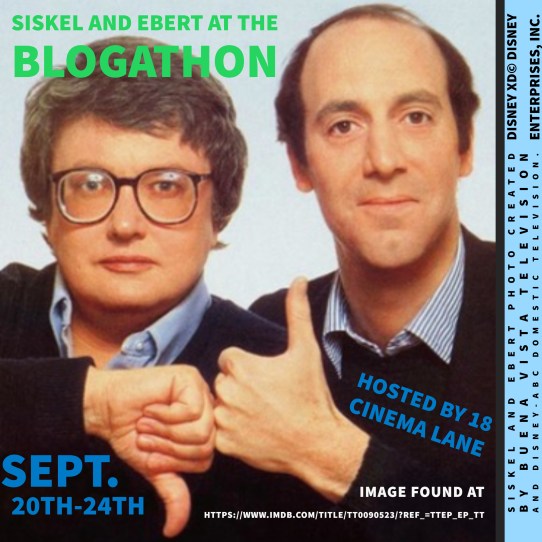
Announcing my new blogathon called ‘Siskel and Ebert at the Blogathon’!

One day, while I was on the internet, I came across some episodes of Gene Siskel and Roger Ebert’s show, At the Movies, on Youtube. As I was watching these episodes, I wondered why there wasn’t a show like this on television anymore. But, when I asked this question, I realized that there kind of is. Though not on television, I can think of several channels on Youtube dedicated to talking about film. There’s also lots of blogs related to movie criticism, especially on WordPress. As a movie blogger myself, I know that the growth of the movie review community might not have been possible without Siskel and Ebert. So, in honor of the Grandfathers of Movie Criticism, I have decided to dedicate my very first blogathon to them! Siskel and Ebert at the Blogathon will take place from September 20th to the 24th. If you would like to participate, you can sign up in one of the following categories:

Siskel and Ebert Profile banner

A. Siskel and Ebert Themselves – This category is for blog entries about Gene Siskel and/or Roger Ebert. Articles about their life, legacy, or career are most certainly welcome. If Siskel and/or Ebert have written any books, editorials, or articles, blog entries about that can be submitted to this category. If you do write an entry for this specific category, all I ask is that you please be respectful when writing about Siskel and/or Ebert. If your post is about how you disagree with their opinion, that’s fine. But please don’t be disrespectful or negative toward anybody.


B. Movies that Siskel and/or Ebert have reviewed or talked about: This category is pretty straight forward. Any movie that Siskel and/or Ebert have reviewed/talked about or that was covered on any of their shows is fair game. To find out which movies would be allowed for this category, you can find episodes of At the Movies on Youtube or search “At the Movies” or “Sneak Previews” on IMDB and look through the listed episodes section.


C. The Show Itself: For this category, you can write about anything related to Siskel and Ebert’s shows. Do you have a favorite episode of Sneak Previews or any version of At the Movies? Share it in your post! Was there a particular host that you were fond of? Feel free to talk about them in your article! Did the show play an important role in your life? Tell your story on your blog! Other topics that would be allowed in this category are trivia about the show, specific segments, and the show’s history, just to name to few.


D. Something movie related that has to do with Chicago: Because Siskel and Ebert were film critics in Chicago, this category is a creative way to honor the Grandfathers of Movie Criticism. For this category, you can talk about movies that either take place or were filmed in Chicago. You may also write about film festivals or movie related events that have been hosted in the Windy City. If you’ve had a movie-going experience in the city of Chicago, feel free to share your story!


The Official Blogathon Rules

  1. As I’ve already mentioned, please be respectful not only when writing about Siskel and Ebert, but also to other bloggers.
  2. If you plan on publishing your post(s) earlier or later than the allotted time-frame (September 20th to the 24th), please let me know in advance.
  3. Only new posts will be allowed for this blogathon.
  4. Three participants at a time are allowed to write about a singular topic. For example, if four people wanted to talk about Roger Ebert’s book, I Hated, Hated, Hated This Movie, only the first three participants would be able to write about the book.
  5. Each participant is allowed to publish a maximum of three entries.
  6. All entries must be original work.
  7. If your interested in participating, please share your idea(s) in the comment section below.
  8. Creativity is encouraged.
  9. Pick one of the five banners and spread the word about Siskel and Ebert at the Blogathon!
Siskel and Ebert Profile banner
Created by me, Sally Silverscreen, on Adobe Spark.
Siskel and Ebert Movie Theater banner
Created by me, Sally Silverscreen, on Adobe Spark.
Siskel and Ebert At the Movies banner
Created by me, Sally Silverscreen, on Adobe Spark.
Siskel and Ebert Film Reel banner
Created by me, Sally Silverscreen, on Adobe Spark.
Siskel and Ebert Newspaper banner
Created by me, Sally Silverscreen, on Adobe Spark.

The List of Participants

Category A

Sally from 18 Cinema Lane – (Editorial) Roger Ebert’s Movie Yearbooks: How Relevant are they Anyway?

Ruth from Silver Screenings — (Review) Roger Ebert’s book, The Great Movies

Edirin from Retro Movie Buff — (Editorial) Roger Ebert’s book, Your Movie Sucks

UpOnTheShelf from The Movie Shelf Reviews — (Discussion piece) Siskel and Ebert’s appearance on “The Critic”

Category B

Le from Critica Retro — (Review) Z (1969)

Gill from Realweegiemidget Reviews — (Review) Prizzi’s Honor (1985)

J-Dub from Dubsism — (Review) Casino (1995)

Quiggy from The Midnite Drive-In — (Review) The Silence of the Lambs (1991)

Rebecca from Taking Up Room — (Review) Straight Talk (1992)

Tiffany and Rebekah from Pure Entertainment Preservation Society — (Review) A Star is Born (1954)

Category D

Rob from MovieRob — (Review) About Last Night… (1986), Opportunity Knocks (1990), and Rookie of the Year (1993)


Have fun at the Blogathon!

Sally Silverscreen

Why Jiggy Nye is Not an Effective Villain in Felicity: An American Girl Adventure

When I first heard about The 5th Annual Great Villain Blogathon, I was originally going to write about a movie, that I haven’t seen yet, where the primary focus was on a villainous character. However, after accepting the Sunshine Blogger Award, I decided to talk about Jiggy Nye from the movie, Felicity: An American Girl Adventure. This film is based on the Felicity series from the American Girl Historical Collection. For almost three decades, the character of Felicity has represented the late 1700s, during the time of the Revolutionary War. In 2005, this particular series was adapted into the aforementioned film. As someone who has read some of Felicity’s stories, as well as seen this movie, I used to think that Jiggy Nye was an effective villain. Over time, I realized that he wasn’t as villainous as I remembered. Within this editorial, I will explain why I feel this way by primarily referencing Felicity: An American Girl Adventure. I will also be making a few references to two of the books in the Felicity series; Meet Felicity and Changes For Felicity. After making my points about why Jiggy’s not an effective villain, I will share some examples of villains and antagonists that are more effective than him. Now, let’s shed some light on Jiggy Nye and talk about why his reputation as a villain isn’t as strong as other cinematic villains and antagonists.

The Great Villain Blogathon banner
The 5th Annual Great Villain Blogathon banner created by Ruth from Silver Screenings, Karen from Shadows and Satin, and Kristina from Speakeasy. Image found at https://silverscreenings.org/2019/03/06/announcing-the-great-villain-blogathon-2019/.

The Incorporation of Jiggy’s Backstory

A cinematic trend that I’ve personally noticed in recent years is a realistic-sounding backstory being given to a respective film’s villain or antagonist. While this story-telling aspect can provide depth to this particular type of character, there are times when this concept can be executed poorly. This is the case for Felicity: An American Girl Adventure. A minute and forty seconds after Jiggy was introduced on screen, Edward Merriman (Felicity’s father) and Grandfather Merriman share Jiggy’s backstory with the entire family. Though this explanation is brief, they reveal that he used to be a respected gentleman who was very knowledgeable when it came to horses. After his wife died, Jiggy made some poor life choices that are possibly the result of his grief. This limited amount of information could have been useful in developing Jiggy’s character and helping the audience understand why he is the way he is. However, Jiggy’s backstory was, ultimately, given a “don’t-blink-or-you’ll-miss-it” moment. It’s not only addressed in casual passing, but it’s barely referenced throughout the film. The timing of this backstory also came way too early. Because it was brought up less than two minutes after the audience was introduced to Jiggy Nye, it didn’t give the audience an opportunity to become familiar with Jiggy as a villain. Had they spent, at least, half of the movie seeing Jiggy being a villain and then learned about his backstory before a climatic/important moment, it would have given the audience a chance to process this information as well as consider everything they thought they knew about this character.

It’s no secret that I talk about Bucky Barnes quite a bit on this blog. But, as an example, his involvement in Captain America: The Winter Soldier makes sense within the context of this editorial. In the aforementioned film, the audience spent about half of the movie watching Bucky as the Winter Soldier. The audience wasn’t aware that Bucky was the Winter Soldier until Steve Rogers/Captain America removed the mask from his face at about the halfway point of the film. A few moments after this reveal, the audience learned the shocking truth of how Bucky came to be involved with Hydra. This incorporation of Bucky’s backstory was better executed than Jiggy’s backstory in Felicity: An American Girl Adventure. In Captain America: The Winter Soldier, the audience was given enough time to become familiar with the film’s antagonist. This allowed them to form their own opinion of this character. When the truth about the Winter Soldier is revealed, it makes the audience contemplate these pieces of information as well as re-think everything they thought they knew about him. Because Bucky’s backstory was introduced moments before the film’s climax, it made this reveal more emotional and effective.

20190525_102927[1]
Even from the very beginning, Jiggy Nye was the main villain of this series. In fact, his backstory wasn’t introduced until Changes For Felicity. Screenshot taken by me, Sally Silverscreen.

No Substantial Evidence

In Felicity: An American Girl Adventure, some of the characters make statements about Jiggy Nye. However, the film fails to provide evidence to these characters’ claims. One example is the characters’ statements about how Jiggy treats his horse, known in the movie/book series as Penny. Toward the beginning of the film, a customer shares her displeasure about Jiggy to Mr. Merriman, saying “I do believe he beat his last horse to death”. When Jiggy arrives at the Merriman family home to retrieve Penny (a moment that I will talk about later), Mr. Merriman tells him “The only crime committed here, sir, is your mistreatment of the poor beast”. Also, when Felicity is trying to persuade her parents to let her keep Penny, she tells her father, “Father, he beats her…and he starves her”. Despite all of these aforementioned claims, there isn’t any substantial proof that Jiggy treats his horse poorly. In the movie, Penny appears to be well-cared for. This horse does not appear starved and there are no signs of injuries on her. The only things that Jiggy does that come close to being abusive toward Penny are tying her to a post in his yard and saying hurtful things toward and about her. In a story when there are claims made about a film’s villain, but no evidence/proof is given to support these claims, it doesn’t provide the audience with a reason to take this character seriously as a villain. It also doesn’t give the audience an explanation as to why they should dislike or be terrified of this character. Because the claims against Jiggy are not supported by evidence/proof, the characters who made the claims appear to have lost a certain amount of credibility.

The villain group, Hydra, in Captain America: The First Avenger is one that the audience doesn’t want to mess with. That’s because the creative team behind this movie portrayed Hydra as dangerous, evil, and cruel. Though this group was shown in the movie for a limited amount of time, their presence brought home the exact point that this film’s creative team was trying to make. It wasn’t until Captain America: The Winter Soldier that the creative team gave their audience solid evidence to the claims that were made about Hydra back in the first film. Not only does this story present examples of this group causing chaos and destruction, but their abuse toward Bucky also shows just how cruel they can be. Because the creative team behind Captain America: The Winter Soldier put in the effort to add evidence to the claims made about Hydra, this gave the audience reasons to not like this villainous group as well as take them seriously as villains. It also made the story and the creative team behind it seem very credible. This is very different from Felicity: An American Girl Adventure.

20190525_104025[1]
I’m sorry that the quality of this picture isn’t the best (because this is a screenshot from a made-for-TV movie from 2005), but I think it clearly shows that Penny doesn’t look mistreated. Screenshot taken by me, Sally Silverscreen.

No Transition

The way that Jiggy is portrayed in both the Felicity series and Felicity: An American Girl Adventure is in a “villain-turned-hero” way. This specific kind of character development isn’t often seen when it comes to cinematic villains or antagonists. Like with Jiggy’s backstory, however, this part of Jiggy’s story was also poorly executed. Within the first thirty-six minutes of the movie, Jiggy is shown as a villainous character. The next time the audience sees him is twenty-three minutes later, when Jiggy is sleeping on the floor of a jail cell, violently coughing and appearing to be ill. Eight minutes after that, it appears Jiggy has been released from prison, casually walking through the streets of Williamsburg, Virginia and looking like he has recovered from his illness. His final appearance in this movie starts eleven minutes later, when Felicity asks for Jiggy’s help as Penny is about to give birth to a foal. When assessing these gaps in time, it seems like there is an obvious pattern. Jiggy is, essentially, placed in the film for plot convenience. Throughout the movie, the audience, to a certain extent, is given the opportunity to get to know Jiggy as a character. But, when it comes to seeing how Jiggy evolves from villain to hero, the audience never gets to see the personal growth and self-discovery that is usually associated with this kind of character development. If anything, Jiggy’s journey from point A to B feels rushed and sudden, with a limited amount of background provided.

Even though Henry Gowen is from a television show, I believe that his story on When Calls the Heart corelates with the subject of this editorial. For three seasons, Henry Gowen was the resident villain of Hope Valley. It wasn’t until the fourth season when Henry’s villainous ways finally caught up to him. Since When Calls the Heart: The Christmas Wishing Tree, Henry has been making a conscious effort to turn his life around. What works in this character’s favor is that his story is a part of an on-going narrative. Because When Calls the Heart is a continuous television show, not a stand-alone film like Felicity: An American Girl Adventure, the screen-writers have more time to explore Henry’s journey of transforming from villain to hero. What also helps is that Henry is a part of the main cast of characters. This allows him to receive a good amount of screen-time and stay involved within the series. With Jiggy, on the other hand, he isn’t directly related to Felicity’s family or any of her friends/acquaintances. Therefore, he wasn’t given as much screen-time as some of the other characters in the film.

20190525_104739[1]
In Felicity: An American Girl Adventure, Geza Kovacs did a good job at portraying the character of Jiggy Nye! Screenshot taken by me, Sally Silverscreen.

A Hypocritical Protagonist

When an obvious villain/antagonist is placed within a story, there is usually an obvious protagonist to present a balance between right and wrong. Though the protagonist is not meant to be anywhere near perfect, they’re at least meant to make better decisions than the villain/antagonist. While Felicity’s heart was in the right place in Felicity: An American Girl Adventure, some of her choices seem hypocritical. As I mentioned earlier, Felicity and her father made claims about Jiggy mistreating his horse. However, this movie’s titular character is not as innocent as the film wants you to think. In an effort to “save” Penny, Felicity sneaks out of her family’s home in the early morning hours, breaking family rules and disobeying her parents. She also takes Ben’s (her close friend’s) breeches without his permission, trespasses on Jiggy’s property, and steals his horse due to a misunderstanding. On several occasions, some of Felicity’s family and friends try to help her make the right decisions. For example, while spending some time with her grandfather in the garden, he encourages Felicity’s love of horses. At the same time, Grandfather Merriman reminds her that she mustn’t bother Jiggy and his belongings. Despite her family and friends’ efforts, all of their advice goes in one ear and out the other. After Felicity gets reprimanded for stealing Jiggy’s horse, Felicity goes back to trespassing on Jiggy’s property. This time, she sets Penny free into the wild. Because Felicity seems to be making just as many poor choices as Jiggy within the film, it makes these two characters appear more like individuals just trying to get through life than a conflict between villain and protagonist. Even though she uses her grandfather’s advice about choosing kindness over anger later in the film, she doesn’t really set the best of examples, as a protagonist, at an essential time during Jiggy’s story as a villain.

Throughout his trilogy, Steve Rogers/Captain America has always been known for making good decisions, no matter how difficult they seem. One perfect example of this is in Captain America: Civil War. In this film, one of the over-arcing narratives was about the Sokovia Accords. With this document, the use of a superhero’s powers and abilities would be controlled by the government. Not only did Steve take the time to read the Accords, but he decided not to sign it for personal reasons. He knew that his decision would have consequences, but he still stuck by his beliefs. Steve made the choices he did because he felt it benefitted the people around him as well as himself. Unlike Felicity, Steve thought about his actions and choices before he carried them out. He also used a balance of emotion and logic in order to make these decisions. This is also very different from the aforementioned film’s villain, Helmut Zemo. Because he’s upset about losing his family in the tragic events from the previous film, Avengers: Age of Ultron, Zemo’s feelings and emotions fuel his criminal actions. Since Zemo blames the Avengers for the death of his family, he tries to do whatever he can to drive a wedge between the Avengers, from causing massive amounts of destruction to framing Bucky for a crime he didn’t commit. Unlike Steve, Zemo’s decisions seem very self-centered, his only focus being how he’s going to get revenge for his family.

20190525_103327[1]
Though the Felicity stories teach its readers valuable life lessons, its protagonist is far from perfect. Screenshot taken by me, Sally Silverscreen.

Not a Big Enough Threat

Usually, in tv shows and movies, the villain/antagonist has a consistent presence in the story. This is a way of showing that this character poses as a big enough threat to the protagonist. As I mentioned in argument number three, “No Transition”, Jiggy wasn’t given much screen-time compared to the other characters in Felicity: An American Girl Adventure. I also mentioned that it feels like Jiggy is placed in certain moments of the film for the sake of plot convenience. Because of these observations, Jiggy doesn’t seem like he poses as big of a threat to Felicity. During his “villain stage”, Jiggy and Felicity only interacted with each other on three separate occasions. Not only did they barely speak to one another, but no major conflicts were resolved. Another reason why Jiggy doesn’t really pose as big of a threat in this film is because he doesn’t necessarily do anything that’s villainous. Sure, he said some nasty things (including a threat to kill Penny if Felicity showed up on his property again) and tied his horse to a pole in his yard. But he never commits any serious or unspeakable crimes throughout the film. In argument number three, I said that Jiggy was seen in a jail cell. While his reason for being in prison is never mentioned in the movie, it is said in Changes For Felicity that Jiggy went to “debtors’ jail”. If this is the reason why Jiggy is in jail in Felicity: An American Girl Adventure, it seems like he was unable to pay for anything because of a result of his grief, not because he was trying to take advantage of the system in a criminal way.

For this argument, I’m going to be talking about two examples. The first is the Wicked Witch of the West from The Wizard of Oz. A major reason why this character is an effective villain is because she had a more consistent presence in her movie than Jiggy did in his. Even though she doesn’t appear in every scene, the Wicked Witch of the West shows up in enough of them to give the audience the feeling that she is always lurking around the corner. What also helps her case is the music that plays and the special effects that appear whenever she shows up. My other example is Scrooge from A Christmas Carol. While Scrooge is the antagonist at the beginning of the story, the audience never sees or reads about him ever doing anything villainous. Even though being selfish and greedy are not desirable qualities, his choices are not criminal. In fact, Scrooge’s story has similarities to Jiggy’s story, especially since they both transform from villain/antagonist to hero/protagonist. However, Scrooge’s journey is explored more in A Christmas Carol than Jiggy’s is in Felicity: An American Girl Adventure.

20190525_1053381.jpg
Something that both the book series and the movie have in common is Jiggy has a limited presence within the context of the overall narrative. Screenshot taken by me, Sally Silverscreen.

My Final Assessment of Jiggy Nye

In the introduction of this editorial, I said that I would describe why I didn’t believe Jiggy Nye was an effective villain in Felicity: An American Girl Adventure. After explaining my reasons why, I feel that Jiggy is presented more as a victim of his personal situation. As I mentioned in my first argument called “The Incorporation of Jiggy’s Backstory”, Jiggy’s wife passed away and his world was greatly affected by it. However, this important detail was barely referenced in the movie, pretty much getting glossed over. It didn’t seem like most of the characters were willing to connect Jiggy’s choices and behaviors to his grief. Because of this, Jiggy became a scapegoat for the sake of needing a villain/antagonist. While he does get a moment to redeem himself and become a hero, this transition wasn’t shown or explored. I understand that this movie was Felicity’s story (especially since her name is in the title) and that this movie is based on a series of books. But I just feel that this aspect of the narrative could have been better executed. If anything, Jiggy was a more effective villain in the first book, Meet Felicity, than in Felicity: An American Girl Adventure. Valerie Tripp, the author of this book, had an entire story to flesh out the character of Jiggy Nye and provide enough evidence to show that he was not a nice person. Because the movie adapted six books into one cinematic narrative, Jiggy’s part of the story was sacrificed and overshadowed.

Have fun at the movies!

Sally Silverscreen

Tomorrow is the last day to submit your nomination for the Gold Sally Awards’ Hallmark Star of the Year

Hi everyone! I just want to remind you that tomorrow, May 21st, is the last day to submit your nomination for the Gold Sally Awards’ Hallmark Star of the Year. In my most recent Sunset Over Hope Valley post, I mentioned that I would be out of town during the weekend of May 19th. I’m still out of town, so my next Sunset Over Hope Valley post and the results of the Gold Sally Awards will be published later than expected.

Have fun at the movies!

Sally Silverscreen

Take 3: Lean on Pete Review

For the It’s a Young World: Teen Movie Blogathon, I didn’t want to talk about a typical “teen movie”. I have nothing against these types of films. But whenever I participate in a blogathon, I try to think outside the box while following the theme. So that’s why I decided to review Lean on Pete. In my Book Adaptation Tag post, I mentioned that when I saw All the Money in the World, Charlie Plummer’s acting performance impressed me. As I read reviews for this movie, some people mentioned a film called Lean on Pete when referencing Charlie’s acting credits. When I looked for reviews of this movie, however, I found very few of them. In fact, on WordPress alone, I was only able to find four Lean on Pete reviews. This was one of the reasons why I chose this movie for the blogathon. My other reason for choosing this movie was because Charlie Plummer was the lead actor in this production. Since he gave a great performance in All the Money in the World, I had a feeling that he would give a good acting performance in Lean on Pete. After I chose this movie to review, an interesting coincidence that I noticed was Charlie’s birthday just so happens to take place in the weekend after this blogathon! So, it seemed like the stars aligned in this review’s favor. But did it really though? Or did the stars fly right past this review, completely leaving it in the dust? The only way to find out is by reading my review of Lean on Pete!

Lean on Pete poster
Lean on Pete poster created by A24 and Curzon Artificial Eye. Image found at https://a24films.com/films/lean-on-pete.

Things I liked about the film:

  • The acting: Though Lean on Pete had a smaller cast, every member of it did a good job portraying their characters! All of the actors and actresses displayed a sense of realism in their performance, making the movie feel like an engaging “slice of life” story. Every interaction between the characters had a good amount of on-screen chemistry. This added to the realism of their performances. But, just like All the Money in the World, Charlie Plummer stole the show! Charlie brings an emotional sincerity to his character, which is something that isn’t often found in cinema. This helped me, as an audience member, stay invested in what was happening to Charlie’s character in the movie.


  • The incorporation of scenery: What’s interesting about Lean on Pete is how scenery is incorporated into the film. Toward the beginning of the movie, Charlie is jogging throughout the neighborhood. Without the use of dialogue, this scene introduces the audience to the setting, as well as the scenery, where the story will begin. I’ve got to say that Lean on Pete is one of the most well-shot films I have ever seen! Some of the natural landscapes featured in this story were so beautiful, that the color palettes were shone really well on film! The scenery was appealing to the eye and presented an interesting element to the story.


  • A realistic look at equine sports: When it comes to the presentation of equine sports in film, it is, more often than not, shown through a glamorized, appealing, and an almost glorified lens. In Lean on Pete, the maintenance and preparation of horse racing is given a larger emphasis than the sport itself. This aspect of the story focuses on the employees associated with the sport, including how Charlie reacts to certain situations. It also highlights some of the heavier topics relating to the sport, such as the mistreatment of employees and the fate of race horses. Because this side of equine sports is rarely shown in movies, I found this creative choice to be very interesting.
It's a Young World Teen Movie Blogathon banner
It’s a Young World: Teen Movie Blogathon banner created by Robin from Pop Culture Reverie and Crystal from In The Good Old Days of Classic Hollywood. Image found at https://popculturereverie.wordpress.com/2019/02/17/announcing-the-its-a-young-world-teen-movie-blogathon/.

What I didn’t like about the film:

  • More scenery focused scenes than character focused scenes: While the scenery in this film was great to look at, it felt like this movie focused more on showcasing the background than the characters in the forefront. In fact, there were less scenes featuring dialogue than there were featuring scenery. There are many parts to a film, so primarily relying on just one aspect of it could cause the movie’s story-telling abilities to be ineffective. This imbalance of character and scenery focused scenes felt like there was more to be desired from the story.


  • A limited amount of character development: Because more scenes focused on the scenery than the characters, it seems like the character development was sacrificed. In Lean on Pete, there were interesting characters with interesting dynamics and stories. However, there was enough character development to keep the story going, but not enough to satisfy the audience. Whenever the character development seemed to be reaching an intriguing point in the story, the moment would get cut short with a scenery focused scene. This left me wanting more from this narrative.


  • The night-time scenes: Throughout Lean on Pete, there were a few scenes that took place during the night-time. Within these scenes, very little lighting was used. Because of this, it was difficult to see what was happening on-screen. Emotional situations took place in these scenes. But, since there was little lighting, I couldn’t really see the emotions and expressions of the characters in these moments. This seemed to undermine the emotional intensity contained within these scenes.
horse saddle - soft focus with film filter
Horse with saddle photo created by Topntp26 at freepik.com. <a href=’https://www.freepik.com/free-photo/stallion-black-equine-race-sky_1104246.htm’>Designed by Freepik</a>. <a href=”https://www.freepik.com/free-photos-vectors/background”>Background image created by Topntp26 – Freepik.com</a>. Image found at freepik.com.

My overall impression:

Lean on Pete made me feel the exact same way that Queen of the Damned did: it was a decent film that I liked for what it was, but it could have been a stronger film. This movie had merits that made the story interesting. But it also had flaws that held the movie back from being better than what it was. When I think about Lean on Pete, the biggest take-away for me is how you never really know someone unless you take the time to know and understand them. Throughout this story, Charlie’s character deals with several hardships. Because of how this narrative was presented, the audience is given an opportunity to get a glimpse into this character’s life. Another take-away from this movie is how kindness can make a difference. Even if the impact of that kind act only lasts 24 hours, it could still impact someone’s day and maybe even their life. These lessons are relatable to anyone who chooses to watch Lean on Pete.


Overall score: 7 out of 10


Have you seen Lean on Pete? What’s your favorite horse related movie? Share your thoughts in the comment section!


Have fun at the movies!

Sally Silverscreen

A Bucky Fan’s Response to one of Looper’s Avengers: Endgame related videos

THIS EDITORIAL DOES CONTAIN SPOILERS FROM AVENGERS: ENDGAME


If you’ve read either my spoiler or spoiler-free review of Avengers: Endgame, you would know that one of the things I didn’t like about this film was how some of the plot points featured in the overall narrative seemed to bring up confusion for the MCU’s future projects. One of these plot points was when Steve Rogers gave the Captain America title to Sam Wilson. While this was happening toward the end of the movie, Bucky was standing in the distance, watching everything happening in front of him. In my spoiler review, I talked about how this scene disappointed me. This is because a) Bucky didn’t receive the title of Captain America, b) his cure wasn’t confirmed in Avengers: Endgame and c) it didn’t seem like anything new or interesting was added to Bucky’s story in preparation for Disney’s new show, Falcon & Winter Soldier. I’ve been a fan of Bucky Barnes for three years, so I was determined to find answers to the questions that were raised because of this scene. This past weekend, I stumbled across a video from the Youtube channel, Looper, called “Endgame Director Addresses Vision’s Fate”. After watching this video, I felt that what was said only made things more confusing for the Disney show, WandaVision. But I knew that if Looper was going to talk about Vision’s absence in Avengers: Endgame and how it could connect to the show, I had a feeling that they were probably going to address Bucky’s lack of a superhero title upgrade. Sure enough, when I visited Looper’s official Youtube channel, I found a video titled “The Real Reason Bucky Wasn’t Given Captain America’s Shield”. After watching this video, I knew that I had to talk about it on 18 Cinema Lane. In this editorial, I will be analyzing each of the arguments provided in the video. I will also state whether or not I agree with these arguments. Toward the end of the editorial, I will provide a final assessment of the video itself.

Avengers Endgame Bucky poster
Avengers: Endgame Bucky Barnes poster created by The Walt Disney Company and Marvel Studios. © Disney•Pixar. All rights reserved. Marvel and Avengers Characters: ©2017 Marvel. Image found at https://www.marvel.com/articles/movies/mcu-heroes-unveil-avengers-endgame-character-posters

Argument #1: “Bucky Wouldn’t Accept It”

Towards the beginning of this video, the announcer says that, if given the choice, Bucky wouldn’t accept the shield. Their reasoning is that not only is Bucky fully aware of his past, but that he also hasn’t forgiven himself. They also state that Bucky would probably feel that accepting the Captain America title would be too much to handle. While all of these points are good ones that I can agree with, I think that we, the audience, should have seen Steve asking Bucky if he wants the shield. This way, Bucky would have been given a chance to choose. If Bucky would have turned down the opportunity, at least it could have been a decision that fans would have respected. Unfortunately, it appears that Bucky was never even acknowledged in that particular moment of Avengers: Endgame. As I’ve mentioned in the introduction, Bucky was standing in the distance, watching everything unfold in front of him. It’s almost as if Steve never really considered giving his title to Bucky, even though Steve doesn’t seem like an inconsiderate person. Overall, Bucky seemed to be excluded from that moment.

20181025_214145[1]
Captain America: The Winter Soldier: The movie where Bucky was shown as and stopped being the Winter Soldier. Screenshot taken by me, Sally Silverscreen.

Argument #2: “His Hydra Conditioning: Still Active?”

In this segment, the announcer states that we, the audience, don’t know for sure if the Hydra programming is completely removed from Bucky. I’m glad that the announcer brought this up, since Bucky’s cure not being confirmed as a part of official MCU canon was something that bothered me about both Avengers: Infinity War and Avengers: Endgame. The idea of Bucky being cured was indicated in an end-credit scene from Black Panther, featuring Bucky and Shuri. Because this scene was never referenced in either Avengers: Infinity War or Avengers: Endgame, it not only undermines the scene itself, but also the significance of it. Since Bucky will be one of the main characters on Falcon & Winter Soldier, this idea of a cure could be explored within the narrative. However, confirming Bucky’s cure in Avengers: Endgame would have added something new to Bucky’s story in preparation for the show. This also could have gotten the Bucky fans interested in Bucky’s next chapter.

20181025_203412[1]
Does anyone else notice the bracelet on Bucky’s wrist? I wonder it has to do with Wakandan technology? Screenshot taken by me, Sally Silverscreen.

Argument #3: “Trust Must Be Earned”

This next segment has the announcer explaining that, due to his horrific past, Bucky would have to earn the trust of the other heroes. Another statement that the announcer made was that Bucky hasn’t spent a lot of time interacting with most of the heroes in the MCU. While both of these points are understandable, I have come up with two counter-arguments. The first is the audience’s opportunity to see how the other heroes react to Iron Man learning more about Bucky. Because Bucky killed Tony’s parents while under Hydra’s control, Iron Man is the most affected by Bucky’s past actions. However, we will never see get to see this happen because Iron Man died toward the end of Avengers: Endgame. The second is Bucky’s next chapter taking place on the show, Falcon & Winter Soldier. Based on the title alone, it seems like Bucky will be primarily interacting with only one other hero, Sam Wilson/Falcon/Captain America. This would make it difficult for Bucky to interact with the MCU’s other heroes.

Avengers Infinity War Bucky poster
Throwback to when Bucky and Bucky went to see Avengers: Infinity War with me! Photo taken by me, Sally Silverscreen.

Argument #4: “He’d Be Too Powerful”

In the video’s final argument, the announcer says that Bucky has enough abilities and skills to be able to fight on his own. They say that giving him the shield would give him more power than he needs. Out of all the arguments in this video, I feel that this one is the weakest. Just because Bucky has a prosthetic arm and skills that he probably learned while in the Army and Hydra, that doesn’t mean that Bucky should be denied the title. It would be like saying that Hawkeye shouldn’t be an Avenger because he uses archery to fight crime. To be the next Captain America, Bucky should be assessed based on morals, character, and leadership skills. If the final argument in the video would have been that Bucky hasn’t displayed any leadership skills up until this point, then that statement is one that I would have understood. Because Bucky will be a co-lead on Falcon & Winter Soldier, I hope that he can gain a sense of independence, leadership, and confidence.

20190427_121759
I’m glad that Bucky, Bucky, and Thor were able to take a picture by the Avengers: Endgame stand-up display! Screenshot taken by me, Sally Silverscreen.

Conclusion

As a Bucky fan, I’m glad that Looper created this video. After hearing the presented arguments, it took away some of my disappointment about that scene in Avengers: Endgame. However, there was no mention of Falcon & Winter Soldier in the entire video. I understand that the purpose of this video was meant to discuss Bucky’s involvement in the MCU up until this point. But because the show was excluded from this conversation, it reminded me of my frustration toward the disconnection between that scene in Avengers: Endgame and how it will affect the show. When I re-watched this video for the sake of writing this editorial, I remembered what the Russo brothers said in their interview. When Annlyel, from Annlyel Online, told me about this interview, I almost immediately sought it out. In a portion of the interview, the Russo brothers explained why they gave the Captain America title to Sam Wilson. Their reasoning was the nature of Sam and Steve’s friendship and the state of Bucky’s mind. Both of these reasons are those that I can agree with. But, just like the Looper video, Falcon & Winter Soldier was not brought up. The purpose of the interview was to discuss Avengers: Endgame, not the show. But, once again, I was reminded of the disconnect between that scene in Avengers: Endgame and Falcon & Winter Soldier. When I was finishing this editorial, I came across a video from the Youtube channel, Screen Rant, called “Why Captain America’s MCU Future Isn’t What We Thought”. What I like about this video is that it not only talks about some of the same topics that the Looper video did, but it also asks questions and makes speculations about how the creative decisions in Avengers: Endgame could influence the upcoming Disney+ show. I’m glad I found this video, as the topics discussed actually took away some of my frustrations about the aforementioned disconnection. Hopefully, more information about this show can be announced at either San Diego Comic Con or D23 Expo. As Dale Travers said in Signed, Sealed, Delivered: Lost Without You, we just have to “trust the timing”.

20190427_120049[1]
I think it’s safe to say that Bucky, Bucky, and Thor had a good time watching Avengers: Endgame! Screenshot taken by me, Sally Silverscreen.
Have fun at the movies!

Sally Silverscreen


If you want to watch any of the videos I referenced in this editorial, you can search for the following:

  • Youtube Channel Name: Looper
  • Video Name: “The Real Reason Bucky Wasn’t Given Captain America’s Shield”


  • Youtube Channel Name: SiriusXM
  • Video Name: “The Russo Brothers’ Spoiler-Filled ‘Endgame’ Interview”

The segment about the Russo Brothers’ decision to give the Captain America title to Sam Wilson starts at 7:05 and ends at 9:24.


  • Youtube Channel Name: Screen Rant
  • Video Name: “Why Captain America’s MCU Future Isn’t What We Thought”


This video is not related to anything I talked about in my editorial, but I thought it would be a fun video to share with my readers and followers. The video is called “Marvel Studios’ Avengers: Endgame | Escape Room” and it’s from the Youtube Channel, Marvel Entertainment. If you are a fan of Bucky, Sam, Shuri, or Dr. Strange, I think you’ll like this video!