It seems like the most popular topic this week has been of Spider-Man leaving the Marvel Cinematic Universe. So, because I found this to be a fascinating topic, I decided to talk about it. Yesterday, on August 20th, Mike Fleming Jr. from Deadline reported that the creative partnership between Disney and Sony has ended. In the article, Mike writes that this was caused by Kevin Feige, Marvel Cinematic Universe’s president, and Tom Rothman, one of the leaders at Sony, not being able to come up with a satisfying financial agreement. Before this situation occurred, “Disney asked that future Spider-Man films be a 50/50 co-financing arrangement between the studios” because Disney didn’t want to keep “continuing the current terms where Marvel receives in the range of 5% of first dollar gross”. Sony, on the other hand, tried to create other deals that, hopefully, would appeal to Disney. This is because they didn’t want to face the possibility of losing profits and their intellectual properties. Within this article, Mike reported that “it is understandable that the fiscally shrewd Rothman would balk at giving up half of Sony’s biggest franchise to Marvel”. He then questions, “Does the Mouse really need half of the movie universe also?” But no matter what offer Sony gave Disney, the latter studio refused. It left Feige, Rothman, and their respective studios parting ways, for now. Mike updated his report with an official statement that Sony made about the situation. To summarize what the studio said, the statement expresses no negative feelings toward Disney. They state that Kevin Feige is no longer able to produce their films because of the various projects that Feige is attached to. As of the release of this Word on the Street story and Mike Fleming Jr.’s article, it seems that Disney or Marvel hasn’t made any statements about the situation.
When Spider-Man first entered the Marvel Cinematic Universe prior to the release of Captain America: Civil War, fans were more than thrilled with the idea. They made statements about how Spider-Man was “coming home” and that he would, once again, be “joining the family”. I, honestly, couldn’t help but feel shocked about the idea of Spider-Man leaving the MCU. While I haven’t seen this studio’s version of Spider-Man films, I have seen Captain America: Civil War, Avengers: Infinity War, and Avengers: Endgame. Even though he’s only been featured on screen for three years, Spider-Man has already made a big impact. Based on what I read in Mike Fleming Jr.’s article, it seems like both Disney and Sony both wanted a significant share in this cinematic pie. However, it sounds like Disney was expecting a bigger share than they already had. As I already wrote in this Word on the Street post, Mike was questioning if Disney truly needed more of the Spider-Man property. This is a good question to ask, especially since the MCU already has a lot of characters and stories within their roster. Speaking of rosters, something that Sony said in their statement made Disney look hypocritical. When addressing why Kevin won’t be working with Sony anymore, Sony said “that the many new responsibilities that Disney has given him – including all their newly added Marvel properties – do not allow time for him to work on IP they do not own”. Even though Marvel is owned by Disney, Disney purchased this studio in the late 2000s. This means that the characters and most of the stories are acquired from Marvel comics, not something that Disney created themselves. The same goes for the Star Wars franchise, which Disney bought from George Lucas in the mid-2010s. As for the classic animated films and live-action remakes, a large portion of these are adaptations of pre-existing, literary material. Even though Disney created their own version of the story, they did not create the story itself. So, yes, Disney owns a good amount of IP, but only on a technicality.
Do you think that Spider-Man will leave the MCU forever? If so, which superhero do you think will become the next face of the franchise? Put your thoughts in the comment section below!
Have fun at the movies!
Sally Silverscreen
If you want to read Mike Fleming Jr.’s article, here’s the link:
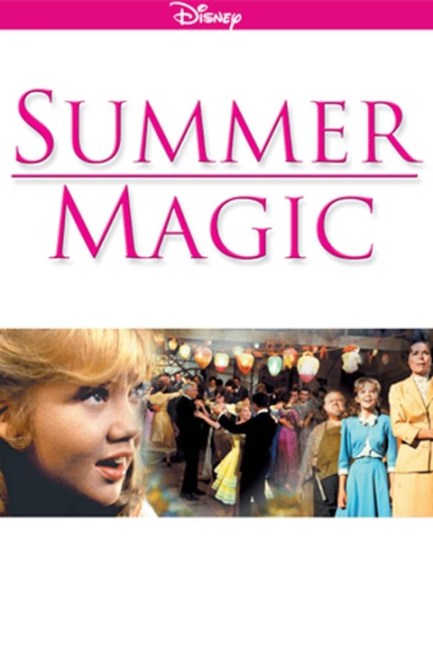
For a few years now, I have wanted to watch the film, Summer Magic. It’s a title that I had never heard of until I came across it on Pinterest. Even after I recorded the movie on my DVR, I didn’t make the time to watch it. Because of the A Month Without the Code Blogathon, I decided to include Summer Magic in my roster of films! This is the third movie of Hayley Mills’ that I’ve reviewed this year. I liked both The Moon-Spinners and The Trouble with Angels. When I read the movie’s tagline on their DVD cover, I saw the word “mystery” and was excited to see what kind of story would be told. I also discovered that Burl Ives was one of the stars of the film! Prior to watching Summer Magic, I had never seen Burl act. However, I was familiar with who Burl was as a singer, as I’ve heard his versions of various Christmas songs. So, I was curious to see if he was given a significant part in the movie or a cameo role where he got to portray himself. Well, what are we waiting for? Let’s find out in this review!
The acting: When it comes to films starring Hayley Mills, I, as an audience member, have never been disappointed! That’s because she has the acting talents to lead a film! Hayley had such a pleasant on-screen presence in Summer Magic, bringing her character, Nancy, to life with charm and likability. As I said in my introduction, I had never seen Burl Ives act before. His portrayal of Osh Popham was better than I expected it to be! He was so expressive in his acting performance and his singing performance could do no wrong. Deborah Walley is an actress that I am not familiar with. Despite this, I was entertained by her performance! Julia was such an interesting character to watch on screen. Deborah’s ability to pull off a well-rounded performance helped her achieve that goal. The rest of the cast was good as well. Because of the believability they brought to their roles, all of the characters appeared and felt like real-life people!
The music: If you’re going to cast Burl Ives in a film, you have to have him sing at least one song. Burl actually sang two songs in Summer Magic and both performances were really good! His first song “Ugly Bug Ball” not only featured music that reflected the story’s time period, but it also featured music that resembled when the film was released. Burl’s second song, “On the Front Porch”, as well as the rest of the music, felt like it belonged in the world of the early 1900s, when Summer Magic takes place. This helped the movie be immersive and bring this cinematic world to life.
The historical accuracy: Another aspect of Summer Magic that made the movie feel immersive was the historical accuracy of the overall production. For historical fiction stories, this aspect is so important because it provides a sense of authenticity. From the costumes to the architecture, everything seemed like it was brought back directly from that time period. Even things as simple as hairstyles helped the movie’s creative team realize their cinematic idea. Anytime I see a period film that appears and feels historically accurate, it gives me the impression the creative team behind that film not only knows what they’re doing, but that they care about the project they’re making. This is exactly how I felt about Summer Magic.
No “magic” and “mystery”: On the DVD cover for Summer Magic, the film’s tagline says “A Season Of Love, Music, And Mystery”. However, “magic” and “mystery” are nowhere to be found. Since The Moon-Spinners was created by the same studio as Summer Magic and since The Moon-Spinners was released the year after Summer Magic, I assumed the latter would have a mystery that was more light-hearted than the aforementioned title. Sadly, this plot didn’t leave any room for a mystery to be told. Even though this movie is called Summer Magic, there is no “magic” that is usually found in Disney films. When it comes to films from this particular studio, “magic” is not just coming from the things that happen on screen. It’s the way that the film makes an audience feel. For me, Summer Magic did not make me feel this way.
A basic plot: Because of what I just said, I thought there was going to be a mystery featured in this film’s plot. That didn’t happen, which caused the plot to be too basic for my liking. The story was also straight-forward, leaving no room for intrigue. Even when there was a chance for the narrative to have a sense of intrigue, those chances ended before they could begin. A perfect example is when Osh Popham was telling Nancy and her mother about the previous homeowner’s painting, only for his wife, Mariah, to confront him about his lie moments later.
Lack of musical numbers: For movie musicals, there’s, usually, at least one musical number. This scene will feature singing and dancing, but will also be presented as a grand spectacle. Summer Magic never had a scene like this. In fact, anytime a song was incorporated into the film, the characters would, mostly, sing the song while sitting down. Because Disney’s forte is musicals, I was quite surprised by the lack of musical numbers in this film. Since Mary Poppins was released the year after Summer Magic, I’m wondering if the first movie received more attention and financing from the studio, possibly viewing Summer Magic as an afterthought?
As of August 2019, I have seen four of Hayley’s Mills films in their entirety. For the most part, I have enjoyed these movies. But, if I were to rank them, Summer Magic would be at the bottom of the list. That’s because the film itself was just ok. Since there was no “mystery” or “magic” in the story, the film’s plot wasn’t as intriguing as I hoped it would be. Despite the fact that the movie’s tagline promised that there would be music, it wasn’t a musical in the typical sense. But the film did have its merit, such as the acting and the historical accuracy of the project. It’s a film that I can’t fully recommend, but not completely dissuade people from seeing. Like I said about The Nun’s Story, Summer Magic is one of the “cleaner” films in A Month Without a Code! While there are a few things that would need to change, this film could be “breenable”. These things are:
There is some language in Summer Magic that would need to be rewritten or removed. This is because some of the words that the characters said were unpleasant. One example is when Nancy is trying to put up wallpaper in the house. When her mother expresses her doubts about whether Nancy is capable of completing the task on her own, Nancy makes a statement like “Any idiot can do it”.
There were three lines in the song, “Ugly Bug Ball”, that I was very surprised were featured in a Disney film. The lines are highlighted in bold print:
“Then our caterpillar saw a pretty queen
She was beautiful in yellow, black and green
He said, “Would you care to dance?”
Their dancing led to romance.
And she sat upon his caterpillar knees
And he gave his caterpillar queen a squeeze
Soon they’ll honeymoon
Build a big cocoon
Thanks to the ugly bug ball”
Because of how suggestive these lines sound, they would need to be rewritten.
During the movie, Julia and Nancy develop a crush on Charles Bryant, a recent college graduate who comes to their small town as a school teacher. Julia admits that she completed “finishing school”, so I’m guessing she would be 17 or 18. Meanwhile, Nancy might be somewhere between 14 to 16. Since this is a Disney/family-friendly film, their interactions with him are innocent. But, the fact that two teenage girls would entertain the idea of falling in love with a grown man should not be in a family-friendly movie.
While Osh Popham is looking for a painting for give to Nancy’s family, he finds a picture of a scantily clad woman. When this painting is presented to the audience, jazz music can be heard in the background. If this film were created during the Breen Code era, this painting would not be shown on-screen. I don’t believe that the jazz music would be heard either.
Overall score: 6.3 out of 10
How are you enjoying my reviews for A Month Without the Code? Are you looking forward to my upcoming posts? Le me know in the comment section!
As the sun will soon set on the season of Summer, the sun is setting on this year’s Aurora Teagarden Month. Since I’ve reviewed the previous two films, it only makes sense to talk about the last movie, Aurora Teagarden Mysteries: A Very Foul Play. In my review of Aurora Teagarden Mysteries: An Inheritance to Die For, I said that I wasn’t going to get my hopes up about something I saw in the trailer for the next film. That “something” was a murder mystery play. Because I was disappointed by the murder mystery party in the aforementioned film, I figured that the murder mystery play was only going to make a brief appearance in Aurora Teagarden Mysteries: A Very Foul Play. Like I do with every film I see and/or review, I watched the movie with an open mind and low expectations, hoping that I would be proven wrong. Was I pleasantly surprised or proven right? Check out my review as Aurora Teagarden Month prepares to take its curtain call!
The acting: Once again, the cast in this installment of Aurora Teagarden Mysteries was top-notch! It was great to see returning characters interact with new characters. Ever since Dylan Sloane joined the series in Aurora Teagarden Mysteries: The Disappearing Game, his character, Phillip, has become a key member in this overarching story. Through his acting talents, Dylan has become unforgettable in the community of Hallmark Movies & Mysteries. The amount of believability and versatility he brought to his role in Aurora Teagarden Mysteries: A Very Foul Play helped me stay invested in his story as well as raise the stakes in this movie. Matthew James Dowden had such a pleasant on-screen presence in this latest film! He portrayed a new character named Robert Brown. With a healthy dose of likability, Matthew made his character favorable enough to not be too obvious in who he is or what he’s doing. What works in his favor is that he appeared in a Hallmark mystery film prior to being cast in this particular movie.
A new location: Because Aurora and her friends and family attended a Mystery & Crime Convention, the whole movie took place in an out-of-town hotel, as well as the surrounding area. From what I remember, this is the first time the Aurora Teagraden series had a film take place outside the typical small hometown and/or usual settings. Since Aurora Teagarden Mysteries: A Very Foul Play took place outside of Lawrenceton, it gave the story and mystery a new perspective. Even though Aurora always takes matters into her owns hands when it comes to solving the crime, she is compelled even more to find justice when a member of her family is falsely accused of the crime. This is also caused by the police force being different from the one in Aurora’s hometown. Because she doesn’t have connections with the police in this mystery, this forces Aurora to be even more resourceful than in previous films. What’s so great about Aurora Teagarden Mysteries: A Very Foul Play is that, with the new location, it gives this series a breath of fresh air. Even after four years and over ten films, the Aurora Teagarden series always find a way to be creative and engaging!
A sense of teamwork: In previous Aurora Teagarden films, audience members have seen various characters help Aurora solve the film’s mystery. But, as I just mentioned, all of the key characters were in a new setting. This means that they lacked some of the usual resources that they use in the series. It was harder for some more than others, especially Lynn. Instead of seeing it as a disadvantage, the characters used their surroundings to their advantage by working as a team and making the best of their situation. What helped them was having a group of people with unique talents and insight. For example, Nick Miller is a psychology professor, allowing him to think of possible motives for each suspect. Meanwhile, Arthur and Lynn are police officers, so they were able to give their perspective on the case. Seeing the camaraderie of the characters was entertaining, even when it came to characters who usually don’t get along very well. I feel that a story element like this could have only worked for an already established series.
A slower pace: It seems like in this year’s Aurora Teagarden Month, the pace has been a constant issue. It has made the movies feel slower than they should. In Aurora Teagarden Mysteries: A Very Foul Play, the pace caused the film to feel a little bit drawn out. One example is the part of the story where Phillip is being threatened with an arrest. Hopefully, next year’s Aurora Teagarden Month can resolve this flaw.
Some scenes being shorter than others: What I noticed while watching Aurora Teagarden Mysteries: A Very Foul Play is how some scenes ended up being shorter than others. An example of this is when Sally and Robert attend the victim’s funeral. Just when they were about to make a big discovery or say something important, the movie would quickly move on to the next scene. While I understand the intent for having some of these scenes be short, it felt a bit choppy within the film’s overall flow.
The “building condos” cliché: This part of the movie didn’t bother me as much as the first two points did. However, I felt that this cliché needed to be addressed. The more Hallmark movies I watch, the more I notice that whenever there’s a character who’s a contractor, architect, builder, or businessperson, they are almost always planning on putting condos into a particular neighborhood. This idea is usually met with disdain and objection. In this recent Aurora Teagarden film, one of the suspects’ plans was to purchase a piece of land in an effort to build condos on it. I’ve never understood why this cliché is incorporated into films so much. Sure, it can provide a conflict to the plot. But, in a film like Aurora Teagarden Mysteries: A Very Foul Play, this cliché was unnecessary.
Out of all the films that premiered during Aurora Teagarden Month, Aurora Teagarden Mysteries: A Very Foul Play was the best one! There were a number of things that made this film good. An overarching example was having the story and mystery take place in a new location. It provided a new perspective and a breath of fresh air. The murder mystery play that I mentioned in the introduction made a satisfying appearance in the film! When it comes to the first Aurora Teagarden Month, however, I’d say that it was just fine. The first movie, Aurora Teagarden Mysteries: A Game of Cat and Mouse was decent, while Aurora Teagarden Mysteries: An Inheritance to Die For ended up being ok. On the bright side, there were no films in this line-up that were bad. The Aurora Teagarden series is now the longest running mystery movie series on Hallmark Movies & Mysteries! With the series turning five years old next year, the creative team behind the Aurora Teagarden movies will have to step up their game if they want Aurora Teagarden Month to be an even bigger success. At this point, I think that everyone involved at Hallmark’s second network knows what they’re doing.
Overall score: 7.9 out of 10
What are your thoughts on Aurora Teagarden Month? Would you like to see this television event return next year? Share your thoughts in the comment section!
When I was choosing films to review for the A Month Without the Code blogathon, one of the movies that I wanted to see was The Nun’s Story. This is a film that I had never heard of until I read Debbie’s (from the blog, Moon in Gemini) review. After reading that article, I found the story of The Nun’s Story to be fascinating. I was especially curious to see how the concept of someone joining a Religious Order would be included. In movies that feature characters who are members of a Religious Order, the process of becoming a member is not often shown. Since The Nun’s Story was going to air on Audrey Hepburn’s day during the Summer Under the Stars marathon on Turner Classic Movies (TCM), this inspired me to make the decision to talk about Non-Code films for both the A Month Without the Code and Summer Under the Stars blogathon! Before watching The Nun’s Story, I saw Breakfast at Tiffany’s, which was the only film of Audrey’s that I had seen. Choosing this film for these blogathons has given me the opportunity to watch more of Audrey’s movies!
The acting: As I said in the introduction, the only other film of Audrey’s that I’ve seen is Breakfast at Tiffany’s. Her role in The Nun’s Story is very different from her aforementioned film. For one thing, there were times when her character, Gaby, was supposed to be silent due to the rules of the congregation. Audrey used this part of the script to her advantage by relying on her facial expressions as much as possible. An example of this is when Gaby is told that she will have to purposefully fail her exam in order for another Sister to pass. Audrey’s reaction allowed her character to say so much while using so few words. While watching this film, there was one performance that I felt needed to be addressed. During the story, Gaby is assigned to work in a psychiatric hospital, where she encounters a patient known as “Archangel Gabriel”. This character was portrayed by Colleen Dewhurst. Despite the fact that her screen-time was limited and that she was given very few lines, Colleen relied on facial expressions and emotions to bring her character to life. A perfect example is the scene where “Archangel Gabriel” asks Gaby for a glass of water.
The process of becoming a Nun: When it comes to movies featuring members of the Religious Order, the process of becoming a member is rarely featured. In The Nun’s Story, this process is thoroughly explored, allowing for this part of the story to be interesting and informative. It wasn’t just limited to a certain section of the film. The process is even observed after Gaby becomes a Nun. When she finally gets to do service work in the Congo, she still finds herself facing challenges and obstacles. This shows that being human is an on-going process, complete with personal growth and reflection. It also makes the character of Gaby relatable.
The messages and themes: Throughout this film, there were lots of messages and themes that I found relatable, even if Gaby’s specific experience isn’t relatable. An overarching example is the twists and turns that happen in Gaby’s life before her dream of volunteering in the Congo is realized. Life is unpredictable, with a limited amount of aspects being in our control. In The Nun’s Story, Gaby faces several situations that prevent her from achieving her dream. However, she never gave up and continued to work very hard toward her goals. Other messages and themes that are found in this movie were personal responsibility, honesty, and taking time to care for one’s self.
A limited amount of character development: Even though The Nun’s Story had a large cast, the film’s character development was very limited. For the character of Gaby, there is some character development to be found. However, because the story focuses more on Gaby’s journey of becoming a Nun, her character development seemed to sit on the side-lines. For the rest of the characters, their character development was either at a minimum or nonexistent. While the audience gets to become familiar with the characters, they never really get to know them.
Some segments being shorter than others: Because the narrative of The Nun’s Story focused on Gaby’s journey of becoming a Nun and her volunteer work in the Congo, other aspects of the story were shown in shorter segments. The beginning of World War II is a good example of this. Even though enough was shown to give audiences the intended point, it wasn’t explored as much as other parts of the film. If anything, it just felt like another stepping stone in Gaby’s journey.
Before and after Turner Classic Movie’s (TCM’s) presentation of The Nun’s Story, Ben Mankiewicz shared that Audrey’s favorite role in her career was her role in The Nun’s Story. After watching the movie, I can kind of understand why she would be so fond of this role. It’s very different from her other roles and the story itself is much more serious than some of her other films. Because of this, it allowed Audrey to become an even more well-rounded actress by exploring various acting methods. The Nun’s Story features a narrative that is rarely seen in films of its kind: the process of becoming a member of the Religious Order. Since this story filled a void that no one else had, it helped the movie bring a sense of uniqueness to cinema. Out of all the films I’ve seen for “A Month Without the Code”, I’d say that The Nun’s Story is one of the “cleaner” ones! It was even given a Production Code Administration seal of approval, the same one that was seen in the opening credits of many Breen Code films! There are only two things that I found that would have to be changed or eliminated if this film were released during the Breen Code era. The first is the underlying racism that can be found when Gaby goes to the Congo. Because this story takes place in the 1930s, I’m guessing that the inclusion of this topic was meant to provide commentary about the views of that time-period. The second is naked babies being shown on-screen. Since this happened in only one scene, these babies were not featured for very long.
Overall score: 7.8 out of 10
Have you seen The Nun’s Story? Which movie of Audrey’s would you like to see me review? Please share your thoughts in the comment section!
Have fun at the movies!
Sally Silverscreen
If you want to read Debbie’s article about The Nun’s Story, visit this link:
Yes, it’s been four months since I last posted a Word on the Street story. While looking through my Word on the Street posts from this year, I noticed that all of them were about Hallmark related projects. I don’t want to be a movie blogger that just talks about one thing. So, I took a short break to find interesting pieces of movie news that had nothing to do with Hallmark. Yesterday, I found a story that was quite fascinating. In a video from the Youtube channel, Clownfish TV, Kneon and Geeky Sparkles, the hosts of the video, talk about the various films from 20th Century Fox that Disney was planning on not greenlighting. Because Disney purchased the aforementioned studio, they inherited a lot of movie titles. Some of them hadn’t even gone into production yet. In this post, I will discuss these titles as well as my thoughts about them. Now, as the saying goes, “absence makes the heart grow fonder”!
In a video titled “Disney CANCELS Fox Films! Blue Sky Studios Gets Disney ‘DISCIPLINE!’”, Kneon and Geeky Sparkles, two of the creators of the Youtube channel, Clownfish TV, discuss some of the Fox titles that Disney will not be developing, as well as the articles that reported them. The first title that Disney eliminated, according to Collider, is an animated film called “Mouse Guard”. I’m not familiar with this particular project or its source material. Kneon and Geeky, however, were more knowledgeable about the subject, even going so far as to share the film’s production status. Geeky states that “you cannot have a competing mouse”, indicating that the only mouse that’s worth Disney’s attention is their one and only, Mickey. If this were true, that would make the company look a little bit hypocritical, especially since they’ve created beloved characters that were also mice. Some examples are Gus and Jaq from Cinderella, Roquefort from The Aristocats, Bernard and Miss Bianca from The Rescuers, Jake from The Rescuers Down Under, and the cast of characters from The Great Mouse Detective. In another article that was featured in the video, this time from Screen Geek, Kneon and Geeky examine the short list of films that will, probably, never see the light of day. These titles are Flash Gordon, League of Extraordinary Gentlemen, Chronicle 2, McClane, The Sims Movie, Assassin’s Creed 2, Mega Man, and Magic: The Gathering. I’m, honestly, not heartbroken that these films got cancelled. Most of the projects on the list sound like unnecessary sequels or reboots/remakes. Even Geeky and Kneon weren’t that upset about these films being cancelled. This particular article featured a link to a Reddit page that listed even more movie titles, which Kneon and Geeky also talked about. The first section of the article listed films that had a chance of not getting scrapped. While looking through these titles, Geeky expressed interest in seeing the Zorro reboot, currently titled Z. In my opinion, none of the movies on this list sound intriguing enough to make me want to pay theater admission for them. The next section listed movie titles that were not getting eliminated. When Geeky and Kneon were looking through the list, Kneon had a feeling that a film titled Nimona would either get scrapped or be placed on Disney’s new streaming service, Disney+. His reasoning was because the movie is, apparently, going to be animated by Blue Sky Animation, a division of Fox that Disney is disciplining (which, according to Kneon, means “budget cuts”). This is the first time I had heard about this project, so it’s not a title that I’m emotionally attached to.
While searching through the extensive list of film titles on Reddit, there was one movie that I didn’t see in the article. Back in March, I participated in the Book Adaptation Tag. In that post, I said that one of the “book movies” I was looking forward to was Words on Bathroom Walls. According to IMDB, this film is in post-production. Based on the limited amount of information I was able to find, it doesn’t seem like this movie has a distributor yet. Despite this, the fact that Words on Bathroom Walls wasn’t even a part of the conversation was something I found surprising. If this specific movie were included on the list, I’m guessing that it would have been saved from cancellation due to its production status. Hopefully, Words on Bathroom Walls will get a distributor sooner rather than later.
What are your thoughts on this piece of movie news? Which movie would you want to save from being scrapped? Tell me in the comment section!
Have fun at the movies!
Sally Silverscreen
If you want to check out the sources that I referenced in this article, you can watch the video by visiting Clownfish TV’s Youtube channel or typing “Disney CANCELS Fox Films! Blue Sky Studios Gets Disney ‘DISCIPLINE!’” into Youtube’s search bar. The link to the Reddit article is in the video’s description. You can also visit these links:
Imagine; you’re at a party that you’ve been invited to. You don’t know anyone there and you have no idea if you’re going to have a good time. Then, they show up. That one person that stands out from the rest. They seem so different, in a good way, from everyone else. Yet, they immediately catch your attention because of how interesting they seem. When they show up, that’s when you know this party just got a lot more memorable. This made-up scenario is similar to how I became a fan of Dr. Ian Malcom from Jurassic Park. I had seen this movie for the first time last year and I didn’t know if I was going to like it. When Ian showed up on screen, he instantly got my attention because of how cool he seemed. As the film went on, he became my favorite character in Jurassic Park. This list illustrates why Dr. Ian Malcolm is the one that became my favorite. I’ll bring up examples directly from the movie. Before I begin, I want to take the time to thank the moderators of the Jeff Goldblum Blogathon, Gill from Realweegiemidget Reviews and Emma from emmakwall (explains it all). Because of you, I now have an excuse to talk about one of my favorite characters!
Over-sized glasses. Suspenders. Obsessive conversations about “geek” or “nerd” related topics. These are some of the stereotypes that we’ve seen in books, movies, and television shows when it comes to characters that are labeled as “nerdy”. Because Dr. Ian Malcom is a mathematician and earned a doctorate degree, he would be someone that could get easily labeled as a “nerd”. His actions, behaviors, and even his wardrobe goes against the created image of what some people expect from a “nerd”. He looks as if he’s on his way to lead a sold-out concert at any moment. Confidence and a healthy dose of self-esteem are the things he carries in his pocket. The way that people interact with Ian in Jurassic Park shows the audience that not only is he well respected, but that he’s popular enough to get invited to theme parks before they’re open. This film was released in 1993, a time when we still saw characters display the stereotypical idea of a “nerd”, such as on Full House and Family Matters. The idea of a character with “nerdy” qualities going against the grain is something that was probably mind-blowing back in the day.
Influencing Other Characters
In my review of Queen of the Damned, I mentioned that Dr. Ian Malcom was probably one of the factors that influenced the creation of that film. My reasoning was that because Ian is a likable rock-star-esque mathematician, Lestat became a mostly likable rock-star-esque vampire compared to the film’s predecessor. Almost two decades after the release of Jurassic Park, the world was introduced to Iron Man. Robert Downey Jr.’s depiction of this character helped create a superhero that a large number of people would choose to be a fan of. Tony Stark is quick-witted, popular, and grows as an individual over the course of the Marvel Cinematic Universe. Similar to Ian in Jurassic Park, Tony becomes well-respected within the Avengers group. But beyond the glitz and glamour associated with this character, he has the qualities that would classify him as a “nerd”. He’s an inventor, works with Bruce Banner on scientific experiments, and has one of the most gifted minds in the MCU. Because a character like Dr. Ian Malcom broke the mold of what it means to be a “nerd”, it allowed Iron Man to distance himself from the stereotypes and portrayals of yesteryear.
The reason for the existence of Jurassic Park was because John Hammond wanted to create a unique experience for people of all walks of life. When all of the key characters come together to Jurassic Park and learn about the logistics of the operation, Ian Malcolm is the only person that’s bold enough to tell John that the park is a bad idea. Throughout the film, Ian’s point is proven right while John’s dream falls apart. Among these characters, Ian represents the Voice of Reason through a sense of realism and common sense. He doesn’t let the magnificence of the idea of Jurassic Park deter him from his beliefs. No matter how much objection he faced, he still stood up for what he believed in. Ian even became physically injured because of the violent nature of Jurassic Park. Instead of letting his emotions get the best of him, he helped the other characters find a way to stop the madness.
Great Writing and Acting
When it comes to movies, a character is only as good as the performance of its actor, as well as the screen-writing. Both acting and screen-writing need to work together, instead of contradicting each other. Ian Malcom is a good example of these two factors working side by side. The script allowed this character to be a likable and unique individual. It also gave the screen-writers the opportunity to go against the grain when it comes to how their characters are presented. If it wasn’t for the screen-writers taking creative risks, we would have never gotten the iteration of Ian that we did. Jeff Goldblum also helped when it came to bringing this character to life. With the right amount of charisma, Jeff gave audiences a character that they wanted to root for. What also added to his performance was a good amount of well-roundedness. Every emotion was expressed by Jeff with realism and believability. Because of the quality of his acting performance, it helps the audience stay invested in what was happening to Ian.
Even though I’m not talking about the movie itself, putting a picture of Jurassic Park‘s poster does make sense within this article. Screenshot taken by me, Sally Silverscreen.
Final Thoughts
Jurassic Park is a film that has captivated the world for over twenty years. The thrill of the adventure and the beauty of prehistoric creation are the things that, prior to its release, would be considered “the stuff of dreams”. While the idea of dreams is not necessarily a bad thing, reality shouldn’t be entirely excluded. This is why Dr. Ian Malcolm is so important in this story. He was the only one that kept his feet on the ground when everyone else was ready to fly toward John Hammond’s dream. John was so obsessed with the idea of Jurassic Park, that he, pretty much, forgot about the reality behind it. When we pair dreams with a healthy sense of reality and common sense, there is a chance that we can find more satisfaction. Our goals can be more attainable and results can be beneficial for ourselves, as well as the people around us. Had the characters in Jurassic Park paid more attention to what Ian had to say, they would have learned some important lessons a lot sooner.
After one week of not posting any reviews for the A Month Without the Code and Summer Under the Stars Blogathons, I am back to talk about another Non-Code film! For the Summer Under the Stars Blogathon, I signed up by requesting Ann Sothern as one of the stars I would discuss. Like Melvyn Douglas, I was not familiar with who Ann Sothern was as an actress. Also, I had never heard of The Whales of August, the film I have chosen for this review, until about a month ago. So, I familiarized myself with who Ann was, as an actress, as well as the basic synopsis of the film. When I read about Ann on Turner Classic Movies’ (TCM’s) website, I learned that she had her own show called “The Ann Sothern Show”. When I think of actors or actresses that were given their own television show, I think of those who are known for their comedic talents, such as Dick Van Dyke and Carol Burnett. Since this is the first time I had ever seen Ann Sothern act, I’m not sure if her acting talents are more comedic or dramatic. I was curious to see if her television experience would help her performance in The Whales of August. The only way to answer this question is by reading my review!
The Whales of August poster created by Nelson Entertainment and Alive Films. Image found at en.wikipedia.org/wiki/File:Whales_of_august_ver2.jpg
Things I liked about the film:
The acting: Even though she appeared in the film for only a limited amount of time, Ann Sothern gave a magnificent performance! Any time she appeared on-screen, she seemed to light up the room. Ann had great on-screen chemistry with all of her co-stars, helping to create an interesting dynamic and relationship between the characters. I was so happy whenever Tisha arrived at Sarah and Libby’s house, as she provided wise words and light-hearted moments. Vincent Price’s performance caught me off-guard because of how good it was! Before watching The Whales of August, I had never seen Vincent act on-screen. I was not only pleasantly surprised by how he was able to portray his character with a sense of charm and likability, but also by how well he was able to pull off a Russian accent! Despite the fact that this was a smaller cast, the acting was top-notch!
The cinematography: The Whales of August is one of the most well-shot films I’ve ever seen! There were some interesting ways in which scenes and images were captured. In the first few minutes of the film, Libby, Sarah, and Tisha are seen watching whales from the shore when they are younger. During this segment, the scenes are presented with a light brownish tint. This showed the audience that this part of the story took place in the early 1900s. With the incorporation of color to the film shortly after these scenes, it signifies that the story is now taking place in the present day. This kind of cinematography is not seen often in movies, so it was fascinating to see this transition between the time periods!
The messages and themes: Similar to films like I Never Sang for My Father, the messages and themes in The Whales of August are just as relevant today as they were in the mid to late ‘80s. While visiting Sarah and Libby’s house, Tisha reveals that she had her driver’s license suspended due to a fender bender. This aspect of the story represents a situation that some senior citizens face: the idea of voluntarily giving up driving privileges. Libby and Sarah’s discussions of mortality show the different mind-sets that elderly individuals may have. These messages and themes are included in the script as naturally as possible. It made the characters’ discussions and situations seem realistic.
A weak plot: When I read the synopsis for The Whales of August, I was led to believe that the story would be an exploration of the sisters’ relationship. In the film, however, the plot revolved around the days in the lives of Libby and Sarah. This made the story feel more like a “slice of life” tale than I had expected. There was no intrigue, which made it difficult for me to stay fully invested in what was happening on-screen. No subplots were found either. This made it difficult for any other story to carry the weight of the weak plot. A character-driven story shouldn’t be used as an excuse to not provide interesting elements to the narrative.
A misleading title: With a title like The Whales of August, featuring at least one whale in the film is expected. Whales were definitely mentioned by some of the characters. But no whales were physically seen. Because this movie is based on a play, I’m not sure if the whales’ absence was intended by the film’s creative team. By not showing any whales in the film, it kind of defeats the purpose of the title. I understand that there’s only so much room within a particular film’s budget. However, I do think there should have been at least one stock image of a whale in the movie.
Missed opportunities: In this narrative, there were a few story-telling opportunities that I thought were missed. During the film, Sarah was talking about selling her hand-crafted stuffed animals at a local fair. This is something that I was hoping to see because I wanted to witness how these characters interacted outside of the environment of Libby and Sarah’s home. Unfortunately, this fair was never featured in the movie or brought up again. Because the whole movie takes place inside and around this house, it limits which stories are told in this specific narrative. It also denies some characters the opportunity to serve the plot in a significant way.
The one word I would use to describe The Whales of August is mundane. The story itself is not as intriguing or thought-provoking as I had hoped. Despite what the title says, there are no whales in this film. The movie as a whole isn’t the most memorable. However, there are a few aspects of the film that I liked. As I said in my review, the acting was top-notch! The scenery is absolutely breath-taking! It makes me want to visit Maine’s Cliff Island someday. While watching this film, I only found one factor that would have prevented this film from being approved by the Breen Code. That factor was the use of language, especially when it came to swearing. Because the majority of this language was spoken by only one character, Joshua Brackett, these words could easily be omitted from the script.
Overall score: 6 out of 10
How have you liked my blogathon reviews so far? Which one has been your favorite? Please tell me in the comment section!
Welcome back to another Aurora Teagarden review! As I said in my last review, I stated that I was excited for the next movie. Why, you ask? Well that’s because I was looking forward to seeing how a murder mystery party was incorporated into the Aurora Teagarden series! Parties like this are not featured in films on Hallmark Movies & Mysteries. So, this particular creative decision intrigued me about this film. When I watched the trailer for Aurora Teagarden Mysteries: An Inheritance to Die For, I noticed that Preston Vanderslice appeared in two clips. Preston is becoming one of my favorite actors in the Hallmark community. He is one of the few actors who can successfully pull off a portrayal of both a likable and unlikable character. He also won the title of Best Supporting Actor from a Hallmark Channel Movie in this year’s Gold Sally Awards! Whenever Preston appears in a Hallmark production, I know, as a Hallmark fan, that he’s going to put everything he has, talent wise, into that performance!
The acting: Just like in the previous Aurora Teagarden movie, the acting was one of the best aspects! As always, Marilu Henner gave a great performance as Aida Teagarden! What helps is that she has consistently portrayed this character throughout the series. This not only helped Marilu become familiar with the role, but also include her talents to bring this character to life! As I said in my introduction, I was excited to see Preston Vanderslice appear in this film. His performance did not disappoint, as this helped me stay invested in his character from start to finish! His character, Cade, is a very multi-layered individual. This is something that is not always seen in mystery films on Hallmark Movies & Mysteries. Despite this, Preston shined as this role was the perfect fit for his talents!
The incorporation of the Real Murders Club: In the Aurora Teagarden series, the Real Murders Club plays a minor role in the overall narrative. In both Aurora Teagarden Mysteries: An Inheritance to Die For and Aurora Teagarden Mysteries: A Game of Cat and Mouse, this group actually worked together in an attempt to solve the mystery! Even though Aurora ended up solving the mystery by herself, as usual, the Real Murders Club was able to help the plot move forward. Seeing almost every individual provide their insight into the film’s main plot was interesting to witness. It kind of makes me wish that Hallmark Movies & Mysteries would create a television show based on the Real Murders Club from this series.
Arthur and Lynn’s subplot: Similar to the Real Murders Club, the characters of Arthur and Lynn are, usually, given minor roles within each film. While their subplot in Aurora Teagarden Mysteries: An Inheritance to Die For wasn’t spectacular, it gave Arthur and Lynn an opportunity to play larger roles in the story. Instead of just telling Aurora that she couldn’t help them solve the mystery, they are shown using their detective skills to carry out their jobs and provide their pieces of the puzzle to the overall conflict. Whenever there’s a character or characters that work for the police, but are not a love interest, their side of the story is usually not explored. In Aurora Teagarden Mysteries: An Inheritance to Die For, however, Arthur and Lynn were not only given more screen-time, but they were also given more of a story than they normally receive.
Vintage detective desk photo created by Olivier Bourgeois at freeimages.com. Photo by <a href=”/photographer/ornicar69-54520″>Olivier Bourgeois</a> from <a href=”https://freeimages.com/”>FreeImages</a> Image found at freeimages.com.
What I didn’t like about the film:
The murder mystery party: Now, I know what you’re thinking, “But Sally, I thought you were looking forward to this part of the film. How could not like it”? It’s not the murder mystery party itself that I didn’t like. The length of time it was given was what I had an issue with. In the trailer for Aurora Teagarden Mysteries: An Inheritance to Die For, it seemed like a large portion of the movie would take place at a murder mystery party. In reality, this part of the story only lasted for about five minutes. Also, this party barely played a role in the overall plot. This is not only an example of false advertising, but it makes me feel like it shouldn’t have been included in the film.
The pace: In the last Aurora Teagarden review, one of the flaws that I pointed out was the film’s slow pace. Aurora Teagarden Mysteries: An Inheritance to Die For also made this same mistake when it comes to the pace of the film. Because it was slow, it made the overall project feel longer than its intended two hour run time. What didn’t help was some of the scenes being drawn out in order to satisfy this run-time. This made ideas take a while to be expressed. I found myself enjoying this movie less than other mysteries on the network. It shows that a film’s pace can truly make or break a production.
An imbalance between comedy and drama: I said in my review of Aurora Teagarden Mysteries: A Game of Cat and Mouse that the overall tone of the movie was more serious than in previous films. The tone of Aurora Teagarden Mysteries: An Inheritance to Die For was also serious, with very few comedic moments. I also said in the aforementioned review that comedy is used to give the audience a break from the darkness associated with the film’s murder. But, if a mystery movie doesn’t give its viewers some distance between the grimness of the situation, it might make the experience of watching the film more depressing. This Aurora Teagarden movie didn’t provide their audience with that distance, which means that the primary focus of the story was on the darker and serious subjects.
Victoria house photo created by Nathan Benney at freeimages.com.Photo by <a href=”/photographer/nbunney-47645″>Nathan Bunney</a> from <a href=”https://freeimages.com/”>FreeImages</a>. Image found at freeimages.com.
My overall impression:
Compared to the last film and as a film in general, I found Aurora Teagarden Mysteries: An Inheritance to Die For to be just ok. Looking back on this movie, I’m still disappointed about how little time was given to the murder mystery party that was promised in the marketing. Besides that, this movie has some of the same flaws that the previous Aurora Teagarden film did. But, it’s important to point out the positives within this movie. One example is the acting, especially from Preston Vanderslice! For the most part, this series has been one of the strongest on Hallmark Movies & Mysteries. With one more film set to premiere during Aurora Teagarden Month, I hope this upcoming film is better than these first two Aurora Teagarden films combined. From what I’ve seen in the trailer, it looks like a murder mystery play will be involved. But, after the murder mystery party in Aurora Teagarden Mysteries: An Inheritance to Die For, I’m not getting my hopes up.
Overall score: 6.1 out of 10
What are your thoughts on Aurora Teagarden Month so far? Are you looking forward to the next movie? Let me know in the comment section!
Created by me, Sally Silverscreen, on Adobe Spark.
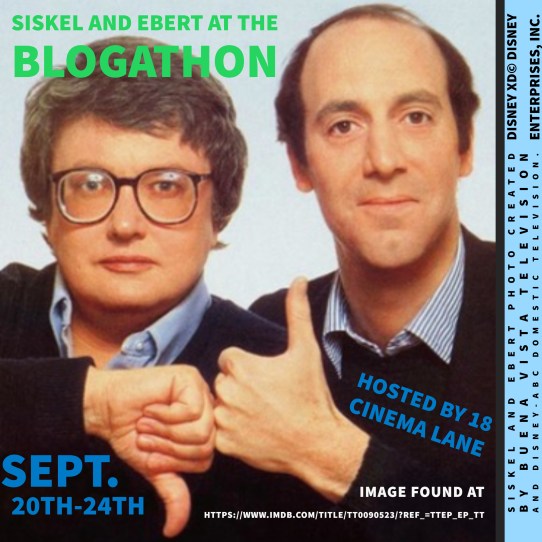
Greetings to all of my readers and followers! I just want to remind everyone that there’s only one month left to sign up for my blogathon, “Siskel and Ebert at the Blogathon”! If you’re interested, please request a topic as soon as possible. To check out the original blogathon announcement, click on the banner that’s located in the upper right-hand corner of the screen. I also want to share that I have just received The Baroness Orczy Blogging Award from the blog, Silver Screenings! I’m going to be honest, I had never heard of this particular author until I won this award. So, I went to Goodreads and learned more about her. Based on the presented information, she sounds like a fascinating individual! I’ll definitely have to check out one of her books sometime. Thank you to everyone at Silver Screenings for selecting me for this award. Having my written work compared to someone like Baroness Orczy is truly an honor!
So, I was, originally, not going to participate in the Summer Under the Stars Blogathon. This is because I already signed up for three other blogathons that are scheduled for August. But, when I discovered that there would be prizes involved, I was in it to win it! Since I’m also a participant in Pure Entertainment Preservation Society’s A Month Without the Code Blogathon, I will be incorporating the films I review for the Summer Under the Stars blogathon into my roster for the aforementioned blogathon. That way, I can help the Brannan sisters promote their message and try my best to win Kristen and Samantha’s blogathon! When I was looking through Turner Classic Movies’ (TCM’s) roster of films, I came across the movie, I Never Sang for My Father. It’s one that I had heard of, but had never seen. Before seeing this film, I was not familiar with who Melvyn Douglas was as an actor. So, I did some research on TCM’s website. The first thing I noticed was that he was a Broadway actor prior to appearing in films. This made me wonder if any of his on-stage talents were carried over to the screen. Keep reading my review of 1970’s I Never Sang for My Father in order to find out!
I was going to use this film’s poster from Wikipedia, but I decided to take a screenshot of this poster instead. Screenshot taken by me, Sally Silverscreen.Things I liked about the film:
The acting: As I’ve said in the introduction, I was not familiar with Melvyn Douglas before watching I Never Sang for My Father. This means that this is the first time I have ever seen him act. Despite this, I was very impressed with his performance in this film! His portrayal of Tom Garrison contained so much depth and emotion, that it was captivating to watch. He definitely stole the show in this movie! The other actors and actresses in I Never Sang for My Father brought a sense of realism to their performance, just like Melvyn did. One of them is Estelle Parsons, who portrays Gene’s sister, Alice. Whether it was the look in her eyes or the inflection of her voice, she always expressed her character’s concern and care with believability. Even though she wasn’t on screen for very long, she made a memorable impression with her performance!
Dynamics between the characters: Because every actor portrayed their characters with such realism, the interactions and dynamics between the characters were interesting to watch. Every time these characters communicated or spent time with each other, I always wondered what was about to happen next. That’s because it reflected how conversations, sometimes, work in real life. When it comes to interacting with someone, we can’t always predict how things will turn out. This was captured well in the film through the dynamics of the characters!
The messages and themes: Within this film, there were several messages and themes that are just as relevant today as they were in the early ‘70s. One of them was the care and well-being of elderly relatives. After their mother dies, Gene and Alice try to decide how to take care of their father. Several options are discussed, such as a live-in nurse and a nursing home. The way these ideas were expressed came across very realistically, like the situations themselves had come directly from real life. This made the interactions between the characters that much more interesting.
The run-time: I Never Sang for My Father has a run-time of one hour and thirty-two minutes. But the movie itself felt like it was two plus hours. This is because some scenes were drawn out longer than they needed to be. One example is when Tom Garrison reads a letter to his children. It seems like scenes like this one were as long as they were for the sake of satisfying the run-time. But it was already at a reasonable length of one hour and thirty-two minutes. Another aspect of the film that seemed to satisfy the run-time was unnecessary subplots. The part of the story about Gene’s affair really didn’t seem to lead anywhere. It made me think that the narrative would have improved if that part had been omitted.
Telling, but not showing: In almost any cinematic story, an effective way to persuade an audience is by verbally and visually presenting an idea. In I Never Sang for My Father, there were many cases where ideas about Tom Garrison were verbally expressed. However, there was no visual evidence to support these claims. When Gene stated that he was physically abused by his father, the behaviors and actions of Tom Garrison that were shown on-screen didn’t show him being physically abusive toward anyone. If anything, the things that were said about Tom sounded like hearsay that couldn’t always be taken seriously.
An over-exaggerated relationship: A significant part of this story is about the strained relationship between Tom and Gene Garrison. The film’s synopsis makes their relationship seem worse than it really is. Sure, it isn’t pleasant. But it didn’t seem like anything out of the ordinary. Throughout the film, Tom comes across as a lonely senior citizen who just wants someone to talk to. Meanwhile, Gene is presented as, simply, annoyed by how often his father speaks. I feel this is the result of the screen-writing. Both Gene and Melvyn did the best they could with the material they were given. But, for characters and their relationships, they have to be well acted and written.
Like I said in the introduction, I Never Sang for My Father is a movie that I’d heard of, but had never seen. I thought that the story would be deep and thought-provoking. But, now that I have seen the movie, I, honestly, think it’s just ok. The story itself was more straight forward than I had expected. I also thought that the plot was weaker than it could have been. However, one of the better parts of the film was, definitely, the acting! Melvyn Douglas’ performance was a highlight, bringing his character to life in such a captivating way. I’m glad that I gave I Never Sang for My Father a chance, as I was able to introduce myself to new actors and films! With several changes, this movie could have been approved by the Breen Code. These changes would be the following:
At the beginning of the movie, there is a couple that can be seen kissing passionately. Either the man or woman in the relationship would need to turn their head in order to block the kiss or the kiss itself would have to be cut shorter when it comes to length of time.
There are several instances when foul or suggestive language is used by the characters. One constant example is whenever someone swears. These words would need to be rewritten, with the screen-writer choosing words that are more appropriate.
As I mentioned in my review, there is a subplot about Gene having an affair. This part of the story would either get omitted or would be rewritten to make this relationship come across in a more subtle way. Any references to sex would be removed or rewritten to be as subtle in presentation as possible.
Overall score: 6 out of 10
Have you been keeping up with Turner Classic Movies’ “Summer Under the Stars” marathon? Which day of the marathon are you excited for? Share your thoughts in the comment section!







![20190807_161150[1]](https://18cinemalane.com/wp-content/uploads/2019/08/20190807_1611501-e1565233658665.jpg?w=497&h=594)

 18 Cinema Lane