Take 3: Dracula (1931) Review + 180 Follower Thank You

Before I start the introduction of this review, I want to remind everyone that Thursday, February 13th, is the last day to cast vote in the first poll of the 2nd Annual Gold Sally Awards! The second poll will be posted on Valentine’s Day! Here is the link to the poll:

The First Poll of the 2nd Annual Gold Sally Awards has begun!

In the past two years, I have reviewed a Valentine’s themed Hallmark movie on February 14th. But since this year’s polls for the Gold Sally Awards are taking place on Fridays and because Hallmark has chosen not to air a new Valentine’s themed movie on Valentine’s Day, I decided to do something different in 2020. Five days ago, 18 Cinema Lane received 180 followers! For this review, I chose to talk about Dracula for three reasons. 1. This movie was released in February of 1931. 2. The movie premiered on Valentine’s Day. 3. Valentine’s Day is a time when we show appreciation to those who have helped us along the way. My followers have definitely done that during my two years of blogging. With that, I have dedicated this special blog follower dedication review to all my followers in honor of Valentine’s Day! As I discuss this film, I realize Dracula is the fifth vampire movie I’ve reviewed on my blog! Who knew that vampires in cinema would be a recurring topic at 18 Cinema Lane?
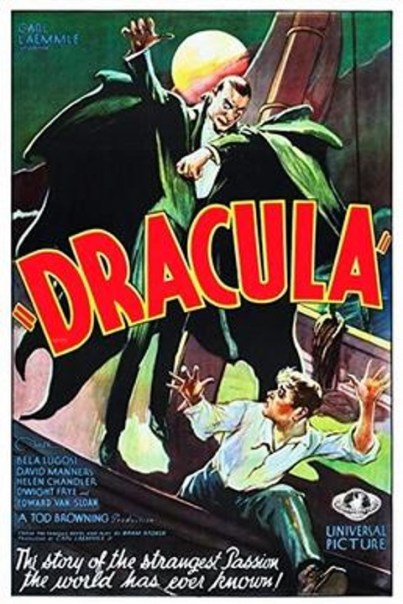
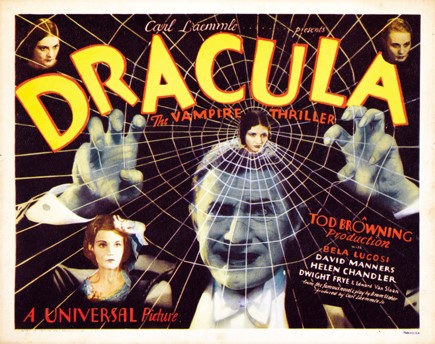
Dracula 1931 poster
Dracula (1931) poster image created by Universal Pictures. Image found at en.wikipedia.org/wiki/File:Dracula _-_1931_theatrical_poster.jpg

Things I liked about the film:

The acting: For years, I have heard great things about Bela Lugosi as an actor. Even though this is the first film of Bela’s I have seen, I can understand why people give him this amount of praise! His portrayal of Dracula was commanding and captivating, effortlessly directing the audience’s attention towards him. Bela was very expressive through his facial expressions and body language. But the emotions in his eyes are what elevated his performance! Great examples of this are whenever Dracula appeared in front of his victims. Another expressive performance came from Dwight Frye! The character of Renfield was executed really well because of the versatility of Dwight’s acting abilities. Before and during his stay at Dracula’s castle, his demeanor was calm and collected. After becoming Dracula’s victim, his persona changes to being paranoid and on-edge. I was also impressed with Helen Chandler’s portrayal of Mina! Her on-screen personality was likable and sweet. Similar to Bela Lugosi, her eyes provided the emotion for her performance. A great example is when Mina is looking intently at her fiancé toward the end of the film.

The set design: I really liked seeing the overall set design in Dracula! It was constructed really well and fit the world the film’s creative team was trying to bring to life. Dracula’s castle and the Abbey in London were the two best locations in this movie! These places were grand in scale and felt larger than life. For Dracula’s castle, elements like spiderwebs and trees growing through broken windows created an unsettling environment. In the Abbey, a large, winding staircase was impressively captured on film. The locations in this movie were grandiose and had a sense of style to them!

The lighting: The way that lighting was used in this film was very interesting! Even though parts of the movie took place at nighttime, enough lighting was used to show what was taking place on screen. The times when Dracula is waking up from his coffin are good examples. Another creative way that lighting was used was anytime Dracula approached his victims. His eyes are the only things captured by the light, highlighting one of Bela’s best qualities as an actor. It also indicates how intense the power of his eyes is on humans. The lighting in Dracula helped make the project visually appealing!
Dracula Lobby Card
Dracula (1931) lobby card image created by Universal Pictures. Image found at http://www.tcm.com/tcmdb/title/73563/Dracula/#.

What I didn’t like about the film:

Limited amount of music: The power of music can be very influential when it comes to film. Music can be used to set a tone for a particular scene or enhance the events happening on screen. In Dracula, however, music was used sparingly. Only two scenes and the opening credits is where music could be heard. The rest of the movie is music-free. Had there been orchestral music during moments when Dracula is in the presence of his victims, it would have brought a certain intensity toward those moments. It also would have highlighted the fear that can come from such an event. Sadly, music in this project felt underutilized.

Treading on familiar territory: It has been said that Nosferatu is the story of Dracula. But because of copyright laws at the time of the film’s creation, direct references to Dracula had to be removed. While watching the 1931 version of Dracula, I could tell that certain patterns in story-telling mirrored the 1922 silent film. In fact, certain events almost followed the predecessor beat-by-beat. Since I saw Nosferatu prior to seeing the 1931 picture, I feel like I knew what would happen, leaving little to no room for any surprises. While this movie did have some differences from the 1922 film, it wasn’t enough to create its own identity.


The run-time: Dracula is a one hour and fifteen-minute film. After Renfield meets Dracula in his castle, the movie kind of drags on, making it feel longer than its run-time suggests. Some moments felt like they were included to provide padding, such as the “woman in white” story. Personally, I think this film should have been less than an hour. This story is pretty straight-forward and has a recognizable character. If it were eighty or ninety minutes, the film could get straight to the point sooner.

217423-P10C89-771
Valentine’s Day rose image created by Freepik at freepik.com <a href=’https://www.freepik.com/free-vector/flat-valentine-s-day-background_1618951.htm’>Designed by Freepik</a> <a href=”https://www.freepik.com/free-photos-vectors/background”>Background vector created by Freepik</a> Image found at freepik.com

My overall impression:

Dracula is a film that I found to be decent. There are aspects within the project that I liked, such as Bela Lugosi’s performance. However, the script played it safe when it came to the story. The creative team behind the movie didn’t really take any chances or try to think outside the box. In the end, the final product failed to create its own identity from its predecessor, Nosferatu. What I can say about this film is if you’ve seen Nosferatu, you’ve already seen Dracula. Compared to the other vampire movies I’ve reviewed, this movie would be placed around the same range as Queen of the Damned. While I liked both films for what they were, I think they could have been stronger. Before I end this review, I’d like to thank my followers for helping 18 Cinema Lane get this far! This blog has thrived every day because of you!

Overall score: 7 out of 10

What you do think of this special blog follower dedication review? Are you looking forward to seeing what I review when I receive 185 followers? Let me know in the comment section!

Have fun at the movies!

Sally Silverscreen

The First Poll of the 2nd Annual Gold Sally Awards has begun!

With the 2nd anniversary of 18 Cinema Lane comes the start of voting for the 2nd Annual Gold Sally Awards! The first poll is to determine the best movie I saw in 2019! Just like last year, you are allowed to vote for more than one movie. But you can only vote once per person. This poll will run from today, February 7th to Thursday, February 13th.  Below is the poll and the link where you can vote. If you’re having any difficulties, don’t hesitate to mention it in the comment section.

SS Cinema Lane
The official logo of 18 Cinema Lane! Image found at https://katthemovies.wordpress.com/2019/03/30/graphic-design-is-my-passion/.

If you want to learn why the polls have changed this year, here’s the like to the announcement post.

An Announcement and Update for the 2nd Annual Gold Sally Awards


https://linkto.run/p/0BEKFU72

What is the Best Movie Sally saw in 2019?
Avengers: Endgame
Ben-Hur (1959)
Christmas in Evergreen: Tidings of Joy
Easter Under Wraps
Holiday for Heroes
Kubo and the Two Strings
Mystery 101: Words Can Kill
Rome in Love
Swept from the Sea
The Nine Lives of Christmas


Have fun voting!

Sally Silverscreen

Take 3: Hallmark Hall of Fame’s Promise Review

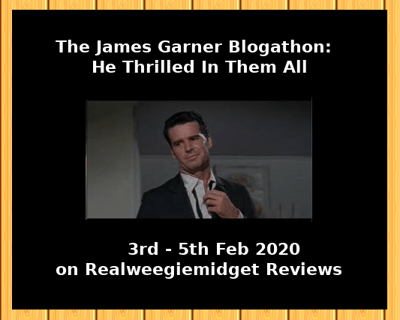
When Gill from Realweegiemidget Reviews announced that her blogathon would focus on James Garner, I found the perfect excuse to talk about one of his Hallmark Hall of Fame movies! For this review, I chose to write about the first one he starred in called Promise. This entry from the Hallmark Hall of Fame collection is one of the most beloved. It has not only received critical praise, but several awards as well. Movies that achieve a lot of praise can be hit or miss. I either find myself not liking the film as much as other people (in the case of The Christmas Card) or I gain understanding for why people like the movie so much (in the case of The Nine Lives of Christmas). With Promise, I wanted to judge it for myself. Is it worth its praise or is it overrated? I was lucky enough to find a copy of this movie on DVD, so I could bring this review to my readers and followers!

20200205_100611[1]
When getting this DVD, I was surprised by how rarer it was to find than other Hallmark Hall of Fame titles. Screenshot taken by me, Sally Silverscreen.
Things I liked about the film:

The acting: The acting in Promise was definitely one of the best parts of this film! Throughout the movie, James Garner and James Woods go toe-to-toe with their acting prowess. What brought believability to these respective roles were the versatility and emotionality of Garner and Woods. When it comes to the acting, the best scene in this movie is when Bob discovers D.J. having a psychological catatonic break. James Garner’s portrayal of Bob was heart-breaking, as his voice was battling sobs and his eyes were full of fear. As for James Woods’ portrayal of D.J., he was so listless and still that I honestly thought this character had died. Piper Laurie did a really good job bringing the character of Annie to life! What worked in her favor was the on-screen personality she presented. Since it was so sweet and gentle, it made Annie a likable individual. Even though she had a limited presence in Promise, Barbara Niven portrayed her character, Joan, wonderfully! The great thing about Barbara’s acting abilities is how expressive she is. A perfect example is when Joan spots D.J. watching her and Bob having an intimate moment, as she quickly changes from a passionate and flirty attitude to screaming in fear.


The set design: There were some interesting creative choices made when it came to the set design. For the interior design, I really liked the look of the restaurant where Bob visits his co-workers. The use of red and gold was magnificent, from the rich red carpet to the way the light illuminated off the gold details on the wall. There were also some visually appealing choices made for the film’s exterior design. On Annie’s porch, there was a large, white, multi-paned window at one end of it. It made that space feel like an outdoor room! It also provided a unique look from the other porches that were featured in this film. At one point in the movie, D.J. and Bob discover an abandoned castle. The way this castle looked was mysterious, but not scary. It reminded me of the abandoned places that are shown in urban exploring videos. Because of the look and feel of this place, it made me want to explore the castle alongside Bob and D.J.!


The scenery: Another appealing element of Promise was the scenery! My favorite place in this movie was the lake Bob and D.J. visit. This location was shown at different times of the day. It was even shown in the rain. But the lake always appeared serene and peaceful. Mixed with the forest’s foliage, it looked like an inviting environment! Long shots were used to showcase various landscapes. The field in front of D.J. and Bob’s mother’s house is one of them. The way this location was framed brought up the feelings of possibility and hope. This fit within the context of the story.

James Garner Blogathon banner
James Garner Blogathon banner created by Gill from Realweegiemidget Reviews. Image found at https://weegiemidget.wordpress.com/2019/11/26/james-garner-blogathon/.

What I didn’t like about the film:

The secondary storyline: In Promise, Bob tries to sell his and D.J.’s mother’s house. This part served as a secondary storyline. I wasn’t a fan of this narrative for a few reasons. Personally, I didn’t find it to be very interesting. Also, it felt distant from the main plot. I’m glad this story didn’t adopt a cliché similar to the “woman from the city coming back to her small hometown” cliché. However, I wish this movie kept its focus on Bob and D.J.’s story.


The discussion of Mental Illness: Promise’s discussion of Mental Illness is similar to A Time to Remember’s discussion of Alzheimer’s. I commend this film and its creative team for addressing the ways Mental Illness can affect an individual and the people around them. But I honestly think this discussion could have been executed better. For starters, D.J. ends up being a supporting character in the story instead of an equal co-lead. This does a disservice not only to D.J., but also to members of the audience who have been affected by Mental Illness in some fashion. Within the first half of the movie, D.J. is called “crazy” by Bob because he has Schizophrenia and because his beliefs happen to be different from his brother’s. I understand that stories like this are meant to feature unlikable protagonists, in an effort to showcase their personal growth throughout the movie. However, Bob’s attitude and views toward D.J. were unfair and they did not sit well with me. In one scene, D.J. explains to Bob what having Schizophrenia is like. While this monologue was well written and delivered, I think this explanation would have been a little more effective if the audience could see at least one of D.J.’s hallucinations and/or hear the audio from his “voices”. It would have shown and told the audience an idea of how Schizophrenia affects someone.


The editing: As I was watching Promise, the overall film felt uneven. This was caused by some scenes ending too quickly. One example is the scene where D.J. tells Bob that he feels normal again. Right after he says this, the next scene immediately starts. This not only felt abrupt, but there also wasn’t a smooth transition provided. The presentation of these scenes was the equivalent of stop-and-go traffic.

397576-PCQ5QP-924
Love of mental health image created by freepik at freepik.com. <a href=”https://www.freepik.com/free-photos-vectors/people”>People vector created by freepik – http://www.freepik.com</a>. Image found at freepik.com.

My overall impression:

As the cover of Promise’s DVD says, this movie is “the most-honored television movie of all time”. However, I thought the film was just ok. This is certainly not one of the worst projects Hallmark Hall of Fame has created. Elements like the acting, set design, and scenery prevent it from being unenjoyable. However, I can think of other Hallmark Hall of Fame stories that are stronger than this one. The primary focus of Promise should have remained on Bob and D.J.’s story. It also should have given D.J. an equal portion of the narrative as Bob. This way, he could have a bigger voice and more perspective to share in the film. Since this is one of four Hallmark Hall of Fame movies James Garner starred in, I would be interested to see how those movies compare to Promise. I have Decoration Day on my DVR, so I might have to review it in the near future!


Overall score: 6.9 out of 10


Have you seen any Hallmark Hall of Fame movies? Are there any Hallmark Hall of Fame films you’d like me to review? Share your thoughts in the comment section!


Have fun at the movies!

Sally Silverscreen

Word on the Street: Super Bowl rolls out 11 Movie Trailers

The day after the Super Bowl is filled with reflection. People share their favorite commercials and talk about highlights from the game itself. In this post, though, I’ll be sharing my thoughts on the movie trailers that aired for the Super Bowl. I referenced an article in my previous Word on the Street story that focused on movie studios trying to save money on game day advertising by choosing to show their trailers before or after the actual event. Unfortunately, I wasn’t able to watch the Super Bowl, as I was working on a non-blog related project that took up a lot of my time. But I did record the pregame, postgame, and the game itself on my DVR so I could watch the trailers and write about my thoughts on them. While watching each trailer, I kept reflecting on the aforementioned article from my Word on the Street story last week. Out of all eleven trailers that aired for Super Bowl, more of them were shown during the game than before or after it. While there were five trailers shown during the pregame, none were shown during the postgame. Also, almost all of the trailers belonged to films that have already started their marketing campaigns.

Football Sport Stadium Isometric Composition
Image of American football stadium in tropical environment created by Macrovector at freepik.com. <a href=”https://www.freepik.com/free-photos-vectors/design”>Design vector created by macrovector – http://www.freepik.com</a>. Image found at freepik.com.

Pregame

During the Super Bowl pregame, five movie trailers aired between interviews, performances, and early predictions. Two of them were Sonic the Hedgehog and The Invisible Man. It makes sense that they appeared during this segment because both films have a February release date. With Sonic the Hedgehog, the marketing team had a good idea with having athletes introduce Sonic. The second half of the trailer featured clips from the movie. I thought the visuals looked really good, especially Sonic’s redesign! Even though I think this trailer could have tailored to better reflect the Super Bowl event (having former Super Bowl champions introduce Sonic as one example), it was a well-crafted commercial. When it comes to visuals, The Invisible Man’s trailer provided a good balance between the colors of black and white. Most horror movies adopt a darker palette for their collection of marketing material. Seeing lighter hues in the trailer for The Invisible Man was an interesting choice. Personally, I’m not interested in seeing this film. However, it did present the synopsis in a simple way through visuals.


Another horror trailer that appeared during the pregame is A Quiet Place Part II. I was not a fan of this trailer for a few reasons. While I haven’t seen A Quiet Place, I’m aware of what the story is about. Audio could be heard in this commercial and all the characters were talking. This defeats the purpose of the title as well as the events of the first film. The monsters are also shown in at least two shots. Despite having good cinematography, I found this trailer to be the worst one to appear during the Super Bowl festivities. The Spongebob Movie: Sponge on the Run was, surprisingly, the best trailer from this collection. Their self-awareness for their pregame placement and for the cost of Super Bowl ads added humor to the trailer. They also did a great job explaining what the film was about through a series of visuals. Top Gun: Maverick is another trailer that had good visuals, this time due to cinematography. Having voice-overs over the clips was an interesting choice, even though I would have had the theme music playing over clips and text. I wish this trailer had been presented during the game, especially since Walmart referenced Bill & Ted’s Excellent Adventure in their commercial.

299832-P7FMT8-686
Popcorn and movie ticket image created by Freepik at freepik.com. <a href=’https://www.freepik.com/free-photo/cinema-tickets-in-bucket-with-popcorn_2303439.htm’>Designed by Freepik</a>. <a href=”https://www.freepik.com/free-photos-vectors/layout”>Layout image created by Freepik</a>. Image found at freepik.com.

Game

Like I mentioned in the introduction, most of the films presenting trailers during the Super Bowl festivities had already started their marketing campaigns. The only movie that didn’t was Minions: The Rise of Gru. In this trailer, the marketing team tried to do what The Spongebob Movie: Sponge on the Run did with their trailer. However, they ended up showing random scenes with little context. At the end of this trailer, the words, “Trailer Wednesday” appeared on the screen. Why wouldn’t the marketing team make their Super Bowl ad the official trailer? To me, this commercial wasn’t utilized as well as it could have. Two other trailers I didn’t like were the ones for Mulan and the 25th James Bond film, No Time to Die. The biggest flaw of both trailers is how choppy the editing is. This made it difficult for me to see the various featured clips. I was also confused when the words “The 25th Bond will change everything” were presented in the trailer. If this is Daniel Craig’s last time portraying James Bond, why wouldn’t the marketing team capitalize on that piece of information? Both trailers do have another thing in common: they didn’t make me excited for their respective films.


One similarity I noticed among these trailers were how they felt shorter than expected. Fast & Furious 9’s trailer is a good example. Because of its time length, there was no context provided as to what the story could be about. It also brought up more questions than it was willing to answer. Why is Han in one of the clips? Will the story revolve around the Olympics? Despite not receiving its own trailer, Wonder Woman 1984 made a surprise appearance during the game. The brief marketing for the film served as a collaboration with Tide’s Pod commercial that emphasized waiting until later when taking care of dirty clothes. This makes me wonder if Wonder Woman’s image will be featured on Tide products closer to the film’s release date? Another female superhero that has an upcoming movie is the MCU’s Black Widow. Her solo movie also had a trailer during the game. The best part of it was the collection of visuals, as they were captured very well through good cinematography. Similar to Top Gun: Maverick’s trailer, voice-overs were relied on to create the commercial’s tone. Black Widow’s trailer was one of the better pieces of movie marketing that was featured during the game.

Cinema Background Illustration
Coming soon movie image created by Macrovector at freepik.com. <a href=”https://www.freepik.com/free-photos-vectors/background”>Background vector created by macrovector – http://www.freepik.com</a>. Image found at freepik.com.

Have you seen any of the Super Bowl movie trailers? If so, which one was your favorite? Tell me in the comment section!


Have fun at the movies!

Sally Silverscreen

Word on the Street: Sebastian Stan Not Happy with Marvel + News about Super Bowl Movie Trailers

I’m going to be honest; I was not planning on writing a Word on the Street story today. But, yesterday, I discovered there was a movie news story involving Sebastian Stan. Being the Bucky fan that I am, I didn’t want to miss the opportunity to talk about it. With the Super Bowl just around the corner, I also wanted to discuss an interesting article that I happened to come across. Like I do with most Word on the Street stories, I will share the story and express my opinions. Now, let’s get started with the final Word on the Street story of January 2020!

20181025_204037[1]
I think this is the first time my Bucky Lego figure has made an appearance in a Word on the Street story! Screenshot taken by me, Sally Silverscreen.
In my post, A Movie Blogger’s Christmas Wish-List 2019, I said that I wanted to see Disney and Marvel stop treating Bucky like an afterthought. It looks like I’m not the only person who is tired of seeing this happen. In recent videos from Clownfish TV and Geeks + Gamers, it was reported that Sebastian Stan, who portrays Bucky Barnes in the MCU, shared his displeasure toward Marvel’s treatment of the character in a subtle but creative way. Kneon and Geeky Sparkles, creators of Clownfish TV, and Ryan, a contributor of Geeks + Gamers, talked about an Instagram post of Sebastian’s that indicated his feelings. In this post, Sebastian adds a blushing emoji over a picture of Bucky and Steve with the caption “Together until the end of the line”. Under that image, one person expressed their dislike over the way Steve’s story played out in Avengers: Endgame. In both videos, Kneon, Geeky, and Ryan mention that John Boyega, star of Disney’s Star Wars trilogy, responded to Sebastian’s post by saying “Welcome Mr. Stan” on Twitter. If Sebastian’s post was meant to express his views on how Bucky was treated in the MCU, then I’m glad he spoke up, even it was just through emojis. At the end of the day, honesty and being yourself will get you so much farther in life than trying to be everyone’s cup of tea. As Albus Dumbledore, from the Harry Potter series, once said, “It is our choices that show what we truly are, far more than our abilities”. Sebastian’s choice to speak his mind will, hopefully, earn respect from fans and appreciators of cinema who just want quality story-telling and well-crafted characters.

You can watch the videos I referenced in this story by typing “Sebastian Stan Throws Shade At Disney, John Boyega Welcomes Him To The Club!” and “John Boyega, Sebastian Stan Team Up AGAINST DISNEY?!” into Youtube’s search bar. If you do choose to watch these videos, I just want to let you know that they do contain language. You can also visit these links:

https://www.cinemablend.com/news/2489394/did-sebastian-stan-actually-criticize-captain-americas-ending

https://screenrant.com/avengers-endgame-ending-captain-america-bucky-criticism-sebastian-stan/

Football Sport Stadium Isometric Composition
Image of American football stadium in tropical environment created by Macrovector at freepik.com. <a href=”https://www.freepik.com/free-photos-vectors/design”>Design vector created by macrovector – http://www.freepik.com</a>. Image found at freepik.com.

With the Super Bowl coming this weekend, one of the most important pieces of the puzzle are the movie trailers. Yesterday, I came across an article that felt like a fitting topic for this week’s Word on the Street story. In an article from CinemaBlend, Nick Evans writes about the steep cost of commercial spots for this year’s Super Bowl. It’s said that “a 30-second TV spot airing during this weekend’s Super Bowl LIV between the San Francisco 49ers and the Kansas City Chiefs carries an eye-watering price tag of $5.6 million”. Nick also says that this new price is “roughly $186,666 per second and a $400,000 increase from the $5.2 million a spot cost just last year”. To save money within their marketing budgets, various studios are choosing to show their movie trailers before and after the game. With this choice, these trailers still have the ability to captivate the attention of social media, as the article says. However, some studios might also show their trailers during the game. The three studios that Nick expects to show trailers are Disney, Paramount, and Universal. While reading through this article, I noticed some of the movie titles belonged to animated films. When watching the Super Bowl in years past, I’ve primarily seen trailers for action-packed or big-budget movies. By having animated films take the stage, it creates a variety among the type of movies that get advertised and helps break the stigma of animated films being “just for kids”. Another thing I noticed was how some of these titles have already started their marketing campaigns. Nick reports that Sonic the Hedgehog’s trailer can already be seen. There has also been a teaser trailer and poster for Fast & Furious 9. While the article doesn’t mention either piece of marketing, Annlyel, from Annlyel Online, talks about the poster in a recent article! You can read about it here:

‘Fast and Furious 9’ Gets Its First Teaser Poster

You can also read Nick Evans’ article at this link:

https://www.cinemablend.com/news/2489363/super-bowl-2020-movie-trailer-ads-cost-a-fortune-so-studios-are-getting-creative?pv=search


What are your thoughts on this Word on the Street article? Which trailer do you hope makes a Super Bowl appearance? Please tell me in the comment section!


Have fun at the movies!

Sally Silverscreen

An Announcement and Update for the 2nd Annual Gold Sally Awards

cropped-ss-cinema-lane-e1554745243341.png
The official logo of 18 Cinema Lane! Image found at https://katthemovies.wordpress.com/2019/03/30/graphic-design-is-my-passion/.

In 2019, I started a special series of polls called The Gold Sally Awards. This was created as an interactive way to commemorate the anniversary of 18 Cinema Lane’s beginning. While I appreciate the success that came in the first year, I’m going to make a major change, in order to improve the awards. During each period of voting, I noticed that very few people cast their votes and participated in the Gold Sally Awards. Looking back on it, I realized something. While I do talk about Hallmark films, they’re not the only type of movie I discuss on this blog. Starting this year, the Gold Sally Awards will be more reflective of this blog and the kinds of films it covers. It will, hopefully, encourage more people to vote. So, the nominees for the 2nd Annual Gold Sally Awards will be based on the movies that were placed on my list of The Top 10 Best Movies I Saw in 2019! There also might be some nominees from the Honorable Mentions section as well! Like last year, the Gold Sally Awards will start in February. It will also commemorate the 2nd anniversary of the start of 18 Cinema Lane!


Have fun at the movies!

Sally Silverscreen

My Conclusion to the Youth-Led Film Double Feature!

V211-social media
Youth wearing 3D glasses image created by rawpixel.com at freepik.com. <a href=”https://www.freepik.com/free-photos-vectors/background”>Background vector created by rawpixel.com – http://www.freepik.com</a>. Image found at freepik.com.

It’s now been a week since I published my reviews for this double feature. Since that time, I’ve been able to ponder over the films I have seen and my thoughts on both of them. In the conclusion of my double feature, I will reflect on what I learned, as well as the three questions that I sought to answer. These questions were the following:


Is there any aspect of either film that could be seen as relevant today?

Besides having young actors as the leads, do these films share any similarities?

Do the socio-economics of each film’s world affect the characters or the story?


As I was watching Rich Kids and Over the Edge, I was surprised to discover that there was nothing about either film that could hold it back from standing the test of time. No bygone pop cultural references or lingo plagued the scripts. By having each story focus on a simple concept, it helps each film achieve a sense of universality. I was also surprised by how little influence socio-economics had in both films. Before watching them, I thought socio-economics would be an overarching theme. But Rich Kids and Over the Edge put an emphasis on the exact same thing: its characters. Speaking of characters, there were two similarities I noticed when writing my reviews. The first one is how the youth in both films desperately needed guidance in their lives. Because they weren’t receiving any from their parents, they chose to find it somewhere else. The second similarity is how the young characters turned toward their friends for advice and help, showing how youth need to spend time with their peers. After everything is said and done, I ended up liking Rich Kids more than Over the Edge, giving the former 7.1 and the latter 6.1. Despite this, I can now recognize that they share important similarities as well as differences.

Have fun at the movies!
Sally Silverscreen


If you want to read my articles related to this double feature, here are the links to those posts:

Introducing My Youth-Led Film Double Feature!

Take 3: Rich Kids Review (Youth-Led Film Double Feature Part 1)

Take 3: Over the Edge Review (Youth-Led Film Double Feature Part 2)

Take 3: A Time to Remember Review + 175 Follower Thank You

Just three days ago, 18 Cinema Lane received 175 followers! It still amazes me how successful this blog has become in such a short amount of time. To all of my followers, thank you for exceeding my expectations! You are the reason why 18 Cinema Lane keeps going! As I was about to find a movie that premiered in January of 2003, I realized I had a 2003 release on my DVR. Even though A Time to Remember first aired in November, I thought it would be a good choice for this particular review! I’ve been taking advantage of UP Network’s decision to air older Hallmark films, as I have been trying to see as many of them as realistically possible. Also, the last time I reviewed a Hallmark movie for a blog follower dedication review was last July, when I talked about a Western called Desolation Canyon. Before I end this introduction, I’d like to share that this is my 150th movie review! I’ll be publishing a special post to commemorate this achievement in early to mid-February, as there are some blog posts I’d like to publish before the end of January.

20200124_214502[1]
Since I wasn’t able to find a poster for this film on Crown Media Family Networks’ website, I just took a picture of the poster that appeared on my television. Screenshot taken by me, Sally Silverscreen.
Things I liked about the film:

The acting: While the cast in this film was good, the two stand-out performances came from Doris Roberts and Dana Delany! I’m more familiar with Doris’ comedic talents on Everybody Loves Raymond. Because a show like that mostly relies on humor, there aren’t many opportunities for the actors and actresses to pull off any dramatic performances. As I was watching A Time to Remember, I was very impressed with Doris’ portrayal of Maggie Calhoun! What stood out to me was how Doris’ eyes contained emotion throughout the movie, even when Maggie was experiencing the symptoms of Alzheimer’s. Any time I see an actor’s performance, I always focus on their eyes to determine how much emotion is in them. For me, this usually makes or breaks the quality of an actor’s talents. This aspect of Doris’ performance not only helped bring a sense of realism to her character, but it also made her portrayal of Maggie effective. As for Dana, she displayed a variety of emotions in her portrayal of Britt Calhoun. What worked in her favor was how well she was able to seamlessly transition between these emotions. In a scene where Britt and her friend are sitting by a pond, Britt is happy to be spending time with this friend one minute and then overwhelmed at being a single parent the next. Similar to Doris’ performance, Britt felt realistic as a character because of the quality of Dana’s acting talents!

How exposition was incorporated: Hallmark movies usually devote the first twenty minutes to delivering the exposition to their audience. This is done through lengthy conversation or drawn out montages. In A Time to Remember, the exposition was brief, subtle, and wasn’t just reserved for the beginning of the movie. Towards the middle of the film, the backstory of Billy, portrayed by Louise Fletcher, is revealed in a conversation with Britt. What Billy shares provides enough information for the audience to know this character to a satisfying extent. Another way that exposition was incorporated was through natural sounding dialogue. In a phone conversation between Britt and Valetta, portrayed by Megan Gallagher, the audience learns about the strained relationship between Britt and her mother. Through tone of voice and specific choices of words, it also reveals how the sisters view one another. The conversation itself sounds typical, but realistic. It also lasts long enough to get straight to the point.

The horse-riding scene: In one scene, Britt is riding horses with her childhood friend. I really liked this scene because of how well it was executed! It starts with a beautiful sunrise, which was simply picturesque. The locations surrounding the characters, from a grassy field to an isolated pond, appeared peaceful and serene. Their appearance is the result of how well they were captured on film! Speaking of film, the horses were sometimes filmed in slow-motion when they were running. This made them look majestic and powerful! All of these elements helped create a scene that was truly memorable!

38860-O1P610
Paint palette image created by Freepik at freepik.com <a href=’https://www.freepik.com/free-vector/hand-drawn-artsy-tools_836777.htm’>Designed by Freepik</a> <a href=”https://www.freepik.com/free-photos-vectors/hand”>Hand vector created by Freepik</a> Image found at freepik.com

What I didn’t like about the film:

Too many storylines: A Time to Remember contained six major stories. Personally, I think this was too many for one script. Because of this creative choice, it felt like all six stories were competing against each other to win the attention of the viewers. It also felt like there wasn’t enough time for each story to be fleshed out. This caused their conflicts to be resolved way too quickly and easily. Just one example is Valetta and Julian’s marital issues. The script tries to accomplish too much in two hours.

The discussion of Alzheimer’s: Historically, Hallmark has incorporated serious, real-life issues into their films. A Time to Remember attempts to shed light on the complicated and life-altering condition of Alzheimer’s. While I commend this movie’s creative team for addressing this particular medical situation, I think this discussion could have been executed better. For most of the film, the members of Britt’s family are either hiding Maggie’s Alzheimer’s diagnosis from Britt or trying to find the right time to tell her about the diagnosis. This makes the script look like it is unintentionally skirting the issue. This also ends up doing a disservice to the audience, especially those who have been affected by Alzheimer’s in some fashion. When Alzheimer’s is finally acknowledged in the story, within the last forty minutes, the characters’ conversations consist of talking about a game plan instead of actually coming up with one. These discussions didn’t feel productive or proactive.

The small presence of Thanksgiving: On my list of The Top 10 Worst Hallmark Movies of All Time, I talked about a movie called A Family Thanksgiving. One of the reasons why I don’t like this movie is because of how few references the Thanksgiving holiday received in that story. A Time to Remember, unfortunately, makes the exact same mistake. Throughout the movie, Thanksgiving is barely brought up by the characters. The story itself doesn’t really make a big deal out of the special occasion. The film’s last thirty minutes is when Thanksgiving finally gets the recognition it deserves. This aspect of the movie disappointed me because I was hoping this holiday would be given more emphasis in the story, similar to An Old Fashioned Thanksgiving or any of Hallmark’s Christmas films. If A Time to Remember took place in any other time of year, it wouldn’t change that much.

188136-OXN78C-430
Image of Thanksgiving dinner created by Freepik at freepik.com. <a href=”https://www.freepik.com/free-photos-vectors/background”>Background vector created by freepik – http://www.freepik.com</a>. Image found at freepik.com.

My overall impression:

A Time to Remember made me feel the same way When Calls the Heart: Home for Christmas did, as both films tried to say so much, but ended up saying so little. Another thing these films have in common is how they have too many stories featured in their respective scripts. For A Time to Remember, this choice hurt the film’s potential impact on its audience. Personally, I think the movie should have kept its primary focus on Maggie receiving an Alzheimer’s diagnosis. This way, the story could have explored the idea of finding adversity, hope, and the love of family in a time of hardship and uncertainty. It also doesn’t help that Thanksgiving plays such a minor role in this film. Since the three women of the Calhoun family, Maggie, Britt, and Valetta, are mothers, it would have made more sense for this movie to have been Mother’s Day themed. This choice would have better reflected the landscape of the project, as all the locations in this film looked more like springtime than autumn. It also would have been better reflected through the film’s messages and themes.

Overall score: 6.1 out of 10

Have you watched any of the films from UP Network’s current collection? Are there any older Hallmark films you’d like to me to review? Let me know in the comment section!

Have fun at the movies!

Sally Silverscreen

Take 3: Over the Edge Review (Youth-Led Film Double Feature Part 2)

Welcome to the second part of my Youth-Led Film Double Feature! This review will contain spoilers and here are the links to the double feature’s introduction and the first part:

Introducing My Youth-Led Film Double Feature!

Take 3: Rich Kids Review (Youth-Led Film Double Feature Part 1)

Over the Edge poster
Over the Edge poster created by Orion Pictures and Warner Bros. Pictures. Image found at en.wikipedia.org/wiki/File:Over_the_Edge_(1979)_poster.jpg

1. In your double feature’s introduction, you mentioned the fact both Rich Kids and Over the Edge were released in 1979. Is there anything from this time period that could have influenced these films?

At the beginning of the movie, a series of text appeared on the screen. This text stated that Over the Edge was based on true events. According to this part of the film, 110,000 youth under the age of 18 were arrested for crimes of vandalism in 1978. Also, the text revealed that one growing suburban community had young people under the age of 15 represent about a third of its population. Because of this, neighborhood planners/developers were having difficulty finding a way to deal with the situation. These true events not only influenced the film’s creation, but also gave it a reason to exist.


2. In this introduction, you also said you “had never heard of Over the Edge before” you saw Siskel and Ebert’s review. Why do you think this film has gotten very little recognition compared to other films from the ‘70s?

From the way I see it, cinema in the 1970s was about telling stories and doing things on film that had never been done before. Take, for instance, Star Wars: A New Hope and Jaws. Both of those films tested the limits of technology, through the use of animatronics and special effects. The contributions to cinema that were made through these two films helped them become products to remember and stand the test of time. Over the Edge, on the other hand, doesn’t really seem to break any new ground. Movies about youth were not a newer concept at this time. Also, this film had a story that was more grounded in reality. This is different from the previous two films I mentioned, Star Wars: A New Hope and Jaws, that focused on spectacle and creating a sense of escapism for their audience.


3. Do the socio-economics of each film’s world affect the characters or the story?

When it comes to Over the Edge, no. It doesn’t. Honestly, money and economic status are barely brought up in this film. Similar to Rich Kids, the primary focus was placed on the characters and how they reacted to and dealt with their problems. Giving these characters a sense of realism was more important to this creative team than talking about dollars and cents.


4. Do you agree or disagree with Siskel and/or Ebert’s views on these films? Why?

There are a few points both Siskel and Ebert make in their review of Over the Edge that I disagree with. When talking about this film, Ebert shared his disappointment over the movie’s “Hollywood ending” which involves “a big, explosive climax” where the kids of the neighborhood lock the adults inside of their school while they cause a night of chaos. I disagree with Ebert’s view on this third act because, to me, it didn’t feel like an ending you’d find in most blockbusters. While explosions made those scenes look visually interesting, I believe the purpose of those scenes are meant to show how bad a situation can get when the discovery of a solution is prolonged.


Once again, Siskel calls the parents in Over the Edge “a bunch of boobs”. And, once again, I would go so far as to say that these parents are uninvolved in the lives of their children. Throughout the story, they are so wrapped up in their own issues, that they don’t take the time to listen to and understand their children. Sure, there’s one scene where Richie White has a conversation with his mom during a car ride home. But this scene is brief and the conversation is short. In this review, Siskel also makes the argument that the film’s central message is how the country needs more recreational facilities. My counter-argument is how the film’s message is almost the same as the one in Rich Kids: if young people don’t receive guidance from a parent, guardian, or mentor figure, they are going to find it elsewhere.


5. When it comes to both films, Siskel and Ebert agreed on their views of the adult characters in each story. Did these characters have any significance within their respective movie?

Like I said in my Rich Kids review, the lack of involvement from the parents shows just how much they’re needed in their children’s lives. During the film’s third act, at a meeting in the neighborhood’s school, the adults are trying to figure out the reason behind the recent crimes. Teachers, parents, and even the teen center counselor are blamed for Richie White’s death as well as the poor choices of the youth. What this scene does is highlight my point perfectly. It also shows how they all could have done more to help the youth in their community.

Mountain Road Colorado
Image of Colorado road created by welcomia at freepik.com. <a href=”https://www.freepik.com/free-photos-vectors/mountain”>Mountain photo created by welcomia – http://www.freepik.com</a>. Image found at freepik.com.

6. Besides having young actors as the leads, do these films share any similarities?

One major aspect of this story was how the young characters stuck together and found more trust in each other than in the adults. In Rich Kids, Franny and Jamie were able to help each other deal with their parents’ divorce. For Over the Edge, these characters faced more than one issue, from the death of one of their peers to the changes in their neighborhood. Like Jamie and Franny, the young characters in Over the Edge try the best they can to figure everything out. They do this by talking to each other about their problems and creating their own ideas of “fun”.


7. Did you develop any thoughts and/or questions while watching this film?

While I came up with several thoughts and questions while watching Over the Edge, I’ll share just one question and one thought in this review. As I said in answer number four, the children lock the adults inside their school. The room where the adults are in, the auditorium, is located near the main entrance. This main entrance features double doors that have glass windows. Why didn’t anyone think of trying to break the windows in order to escape? To me, this decision not to was baffling, especially since there was a police officer among the group of adults.


Speaking of when the children lock the adults in the school, I saw something among those scenes that made me think about a potential plot twist. While the children are causing chaos, one boy is seen riding Richie’s bicycle. For a moment, I thought the script would pull off a plot twist where Richie ended up being alive and had just escaped police custody. However, that’s not the direction the story chose to take.


8. Is there anything about this movie that you liked or didn’t like?

Similar to Rich Kids, I thought the acting was one of the strongest parts of this film! Since the majority of this cast was made up of young actors and actresses, they proved they had what it took, talent wise, to carry a movie. One of the standout performances came from Michael Kramer, who portrayed Carl Willat. A memorable scene was when Carl was on the phone with one of his friends, curious about what happened to Richie. When he discovers that Richie died, Carl’s face quickly changes from genuine curiosity to being on the verge of tears.


Even though I liked the acting in this film, I think the character development could have been stronger. While I got to know the characters, I feel like I could’ve gotten to know them better. There was always this invisible distance between the characters and the audience. Things they said or did left me with unanswered questions. In the end, this aspect of the movie left more to be desired.


9. Is there any aspect of either film that could be seen as relevant today?

Throughout the film, the idea of actions leading to consequences was an overarching part of this story. One example is when Richie and Carl decide to run away. They steal Richie’s mom’s car and drive without a license or permit. They also carry a gun with them. As a result of these actions, Carl develops a juvenile record and Richie is killed in self-defense. The idea that I just mentioned reminds the audience of the importance of thinking before acting and accountability.


10. After watching Over the Edge, is there anything you can take away from your movie viewing experience?

In my opinion, a documentary about the events that inspired this movie would have been more interesting than the movie ended up being. It would be fascinating to hear from multiple perspectives and discover how their lives have changed since then. As for Over the Edge, it seems like the creative team tried to make an elaborate speech out of a simple message. While it can be thought-provoking to a certain extent, it doesn’t really try to do anything new. Over the Edge had so much going on, but at the same time had nothing happening at all.

Sticker design for different generation kids
’70s kid image created by brgfx at freepik.com. <a href=”https://www.freepik.com/free-photos-vectors/banner”>Banner vector created by brgfx – http://www.freepik.com</a>. Image found at freepik.com.

Have fun at the movies!

Sally Silverscreen

Take 3: High Society Review

I interrupt my Youth-Led Film Double Feature to bring you my review for The Wedding Bells Blogathon! One day, as I was searching Turner Classic Movies’ (TCM’s) schedule, I came across a film called High Society. Through its description, I learned it was a musical remake of The Philadelphia Story. Since I have enjoyed that movie, I figured there was a good chance I might like this picture from 1956. In my review of Marriage on the Rocks, I mentioned I would be reviewing the movie later this month. I also said in that review that I did not like Marriage on the Rocks. High Society is now the second film of Frank Sinatra’s and Grace Kelly’s that I’ve seen! While I knew that Frank and Bing Crosby had musical talents, it would be interesting to see what Grace had to offer to a movie musical. Now, as you’re waiting for the wedding to start, please take a moment to read this review of High Society.

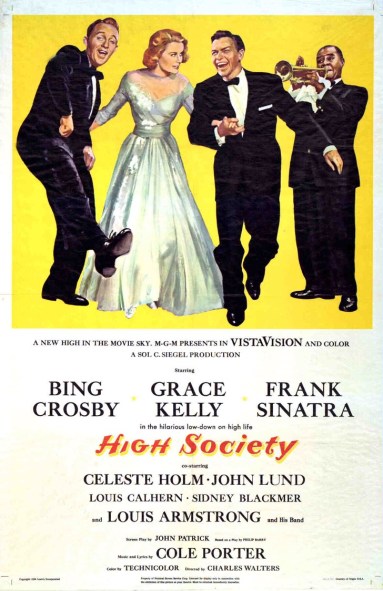
High Society poster
High Society poster created by Sol C. Siegel Productions, Bing Crosby Productions, and Metro-Goldwyn-Mayer. Image found at http://www.tcm.com/tcmdb/title/78008/High-Society/#.

Things I liked about the film:

The acting: It’s no secret that Grace Kelly is one of the most versatile actresses to ever exist! Her performance in High Society helps her maintain that reputation. Grace has the ability to adapt her emotions to any scene. When Grace’s character, Tracy, is talking with her father by the pool, she can go from angry to crying with sadness within a matter of minutes. Because of her experience working with various actors and actresses, Grace never had difficulty keeping up with her co-stars. Speaking of co-stars, I have seen Frank Sinatra and Bing Crosby in at least one film prior to watching High Society (Frank in Marriage on the Rocks and Bing in scenes from White Christmas). Similar to what I said in my Marriage on the Rocks review, both Frank and Bing appeared at ease in their respective roles. This allowed them to bring a natural charm to their characters, C. K. Dexter-Haven and Mike Connor. What also helped was how their singing talents complimented their acting talents. Even though he portrayed himself in the film, Louis Armstrong did a good job with the material he was given. He had a delightful on-screen personality and great musicality. These things made me enjoy Louis’s presence in the movie!


The sets: In High Society, the sets were absolutely gorgeous! Not only did they fit the environment the film’s creative team wanted to create, but these sets also looked magnificent on film! The great part about them are the textures, colors, and materials that were used in each space. In one of the Lord family’s sitting rooms, the sea green walls worked really well with the white wood paneling and crown molding. Another great set was Tracy’s uncle’s library. While the dark wood walls and bookshelves were beautifully crafted, it’s the hidden bar within the bookshelves that steals the show. The sets in High Society certainly made the movie visually appealing!


The musical numbers: For the most part, I enjoyed the musical numbers in High Society. They sounded pleasant and were, more often than not, lively. My favorite musical number is “Who Wants to Be a Millionaire?”, as it was one of the funniest scenes in the movie. In this number, Frank and Celeste Holm, the actress who portrayed Liz Imbrie, had really good on-screen chemistry and comedic timing. Frank and Celeste’s singing voices also sounded great together. I was pleasantly surprised by Grace’s singing abilities in the duet, “True Love”. She sounded excellent alongside Bing Crosby and the song itself sounded nice. I’m not sure how much singing experience Grace had prior to being cast in this movie. But it’s nice to see her trying different things and going out of her comfort zone.

Jewels sparkle in the golden wedding rings lying on the leather
Fancy jewelry image created by Freepic.diller at freepik.com. <a href=”https://www.freepik.com/free-photos-vectors/wedding”>Wedding photo created by freepic.diller – http://www.freepik.com</a>. Image found at freepik.com.

What I didn’t like about the film:

Unacknowledged commentary: In my Rich Kids review, I shared that one of the film’s messages was how wealth didn’t equal invincibility. This message can also be found in High Society, as Tracy shows Mike various houses in her neighborhood that are either boarded up or for sale due to homeowners no longer affording them. While this commentary added something interesting to the story, there was no room in the script for it to be explored or discussed. I understand there’s only so much you can do in an hour and fifty-one minutes. However, it was disappointing to see this commentary get ignored.


Few dance numbers: When I learned that High Society was a musical remake of The Philadelphia Story, I was excited for the song-and-dance fest that would take place. But, as I was watching the movie, I discovered it only contained two dance numbers. These numbers were a short solo performed by Frank and a short duet performed by Frank and Grace. Since White Christmas premiered two years prior, I’m surprised Bing wasn’t given at least a waltz with Grace, especially since that film featured both singing and dancing. Personally, I had expected more dance sequences in High Society. But I’m guessing there was no room in the budget to recruit a choreographer.


Dialogue-heavy scenes that felt a little drawn out: Within musicals, dialogue-heavy scenes are meant to give the audience a break from the high energy that can sometimes come from the musical numbers. However, in the case of High Society, these scenes felt a little drawn out. The scene where Mike and Liz meet the Lord family is one example. The pace of the scenes feel slower than I hoped. It also caused the film’s overall pace to seem uneven. Issues with pace and length of scenes are some reasons why I think this script was weaker than it could have been.

Wedding Bells Blogathon banner
The Wedding Bells Blogathon banner created by Annette from Hometowns to Hollywood. Image found at https://hometownstohollywood.com/2020/01/03/the-wedding-bells-blogathon/.

My overall impression:

High Society is a fine, enjoyable film! While it’s not one of my favorite musicals, I certainly liked it for what it was. It was also far more entertaining than Marriage on the Rocks! Because High Society is a remake of The Philadelphia Story, there are bound to be similarities between the two. However, there are also differences that give each movie their own identity. For the 1956 picture, this was the incorporation of the message that even wealthy people can experience hardship. Combined with the song, “Who Wants to Be a Millionaire?”, the film tells its audience to count their blessings and to focus less on what they don’t have. This shows that the film’s creative team not only wanted to bring something new to the story, but also respect the source material that came before it. As I end this review, I’d like to quote Louis Armstrong by saying “end of story”.


Overall score: 7.2 out of 10


Which movie musical is your favorite? Are there any you’d like me to review? Let me know in the comment section!


Have fun at the movies!

Sally Silverscreen