Word on the Street: Elite Dining Club from Disneyland Receives its Own Film

Disney has had a history of adapting their theme park attractions into live action spectacles. Some of these movies have either made money at the box office or left a special place in people’s hearts, such as the Pirates of the Caribbean franchise or 1997’s Tower of Terror. Other titles have been forgotten by time or were poor performers at the cinema, like The Haunted Mansion and The Country Bears. What all the movies I mentioned have in common, besides the obvious, is how the selected attractions are those the majority of the movie-going audience has either heard of or has experienced themselves. Now Disney is breaking that track record by creating a film around their dining club, Club 33. In an article from The Hollywood Reporter, Borys Kit writes how a movie about Disneyland’s Club 33 is in the pre-production stage. The project even has a synopsis, which is the following:

“…the story centers on a young aspiring detective who receives a mysterious invite to the highly secretive Club 33. In this case, it’s a magical and exclusive dining club whose members are the greatest and most iconic figures from across history. When a murder is committed on the premises, the patrons look to the young detective to solve it”.

Attached to the production are Darren Lemke (who will write the film’s script), Emily Morris (the executive of the studio, 21 Laps Entertainment), as well as Shawn Levy, Dan Levine, and Dan Cohen.

Restaurant waitress and guest image created by Freepik at freepik.com. <a href=”https://www.freepik.com/free-photos-vectors/food”>Food vector created by freepik – http://www.freepik.com</a>. Image found at freepik.com.

If I could describe this piece of movie news in one word, it would be “odd”. As of the publication of this article, Disney’s reputation and finances are not as strong as they were in years past. The financial woes of movie theaters are directly connected to the financial woes of film studios, including Disney. So, Disney’s solution to these problems is to create a movie about a piece of their park’s fabric that the majority of the movie-going audience will never get to experience? Club 33 was founded in 1967 and it is “a dining area where Disney hosted celebrities, dignitaries, and friends”. Throughout Disneyland’s history, Club 33 has earned the reputation of being “an elite stealth club”. What isn’t mentioned in The Hollywood Reporter article is just how exclusive Club 33 is, from membership dues costing thousands of dollars to a several years long wait list.

Carousel image created by Daviles at freepik.com. <a href=”https://www.freepik.com/free-photos-vectors/background”>Background image created by Daviles – Freepik.com</a>. <a href=’https://www.freepik.com/free-photo/carrousel-with-sky-background_954546.htm’>Designed by Freepik</a>. Image found at freepik.com.

Making movies, from a business perspective, is about trying to get as many people as possible to see a given movie. This, hopefully, will lead to that given movie earning as much money as possible. One strategy is to weave a story or theme into a movie that could be relatable for the majority of theater attendants. In my recent review of the 1988 made-for-TV film, Dance ‘Til Dawn, I mentioned how the story’s prom party reminded me of the Disneyland attraction, Videopolis. Though most theater patrons have never experienced or even heard of Videopolis, many people have a sense of longing or nostalgia for theme park attractions, places, and times gone by. Therefore, a movie about one of Disney’s older attractions makes more sense, to me, than a film about Club 33.

What are your thoughts on this piece of movie news? Which theme park attraction would you like to see adapted into a movie? Tell me in the comment section below!

Have fun at the movies!

Sally Silverscreen
Referenced article in this post: https://www.hollywoodreporter.com/movies/movie-news/disney-club-33-movie-darren-lemke-shawn-levy-1235904632/

Take 3: Dance ‘Til Dawn (1988) Review

You probably saw the title of this review, read the film’s synopsis on IMDB, and wonder, “What does this made-for-TV movie from the ‘80s have to do with the subject of neighbors”? What if I asked you to think about the subject of neighbors from Mr. Rogers’ perspective? On the television show, Mister Rogers’ Neighborhood, the opening theme song was “Won’t You Be My Neighbor?” The show’s overarching theme of neighbors is more about community and a sense of belonging to it. With this perspective in mind, the 1988 made-for-TV production, Dance ‘Til Dawn, fits this definition of neighbors. The story revolves around students and their families belonging to the community of Hoover High School. Most of the movie focuses on Hoover High School’s Senior Prom, showing different points of view throughout the event. Whenever I participate in a blogathon, I try to approach a given topic from a more unique perspective. With Dance ‘Til Dawn reviewed for The Neighbors Blogathon, hosted by Rebecca from Taking Up Room and Quiggy from The Midnite Drive-In, my entry will definitely show a different side to the subject of neighbors!

Dance ‘Til Dawn (1988) poster created by Konigsberg/Sanitsky Company and National Broadcasting Company (NBC)

Things I liked about the film:

The cast’s adaptability: One of the selling points of Dance ‘Til Dawn is the gathering of actors and actresses from television shows that were popular around the movie’s premiere. While television stars are used to working alongside a large group of talent, they grow accustomed to working with their cast from their respective show. They even become familiar with the character they portray, especially if a television show develops a long lifespan. In Dance ‘Til Dawn, the cast was not only given new material to work with, they also had to portray characters that were different from those they were used to. Alan Thicke and Tracey Gold represent everything I’ve been saying. Both actors starred as father and daughter on the sitcom, Growing Pains. Alan Thicke graced television screens as a kind yet fair soul who tried to set a good example for his children. Meanwhile, Tracey’s character, Carol, had a friendly personality (from what I remember), a good candidate for her high school’s welcoming committee. Though Tracey and Alan starred in the same film, they shared very few scenes together. Alan portrayed Dan’s father, Jack, an extroverted, over-confident man who wants his son to be just like him. Tracey portrayed Angela, a young lady who was more introverted and had little confidence to stand up for her dreams. Through Alan’s and Tracey’s performance, as well as the performances from the rest of the cast, every actor and actress sold the illusion of how this talent was always meant to work together. They also sold the idea these characters were always meant to co-exist.

The costume design: A school’s prom provides an excuse for students to dress up in fancy attire and partake in glamour. This is no different for the characters in Dance ‘Til Dawn. The film’s costume designer was Taryn De Chellis and Gingiss FormalWear provided the movie’s prom attire. In collaboration with Patricia Wolfe (the movie’s costume supervisor) and Steve Hicke (the movie’s costumer), the Hoover High School prom attendants looked photogenic in their formal outfits. This was achieved by providing the cast with formalwear that complimented their natural features. Out of the actors portraying high school students, Christina Applegate was the only blonde actress. Wearing an off-the-shoulder gown in a shade that appears to be metallic cherry red, Christina’s blonde hair presents a nice contrast with the bold hue of her character’s prom dress. Though Tracey Gold and Alyssa Milano are brunettes, Tracey’s hair looks a shade lighter than Alyssa’s hair. Similar to Christina receiving a dress in a darker shade, Tracey wore a stunning black, sparkly, sleeveless gown. Meanwhile, Alyssa was given a strapless white dress, paired with white satin pump heels and a pink hair bow.

Different ways of celebrating Prom: In films about Prom, so much focus is given to the party itself that one of two things happen; either prom alternatives are not presented or prom alternatives are frowned upon. But that was not the case in Dance ‘Til Dawn. While Hoover High School’s Prom party was highlighted throughout the story, not every student chooses to celebrate Prom this way. Angela’s original plan was to host a sleepover with her friend, Margaret, spending all night watching movies. No one criticizes or questions Margaret and Angela for wanting to commemorate Prom in this fashion. In fact, the film’s script celebrates the uniqueness of prom festivities. The idea of Prom being what you make it is rarely found in stories about this event, so I appreciate Dance ‘Til Dawn’s creative team making this one of the movie’s themes!

The Neighbors Blogathon banner created by Quiggy from The Midnite Drive-In and Rebecca from Taking Up Room

What I didn’t like about the film:

Some cliched stories: Throughout Dance ‘Til Dawn, creative ideas were expressed, from the aforementioned uniqueness of prom festivities to several pieces of dialogue. However, there were some stories within the movie that were cliched. One example is Angela and Kevin’s story. Angela is asked to Prom by Kevin, who wants to date her for the wrong reasons. Before arriving at the prom party, Angela transforms from an introverted “geek” to a beautiful young lady worthy of being prom royalty. Attending an event under false pretenses, as well as a My Fair Lady-esque makeover, have become so common in stories about teenagers, they are cliches at this point. Personally, I wish Angela and/or Kevin’s story had taken a different route. A more unique story option would be having Angela asking an Italian exchange student to Prom, developing a friendship and a shared interest in Italian art.

The underutilization of Tempestt Bledsoe: As I mentioned earlier in this review, Angela originally plans to host a sleepover with her friend, Margaret. Portrayed by Tempestt Bledsoe, Margaret was a character with her own style and not afraid to speak her mind. But compared to the other characters, Margaret appeared in only a handful of scenes. In fact, Margaret wasn’t given much to do in this story. Not only was Margaret an underutilized character, Tempestt’s acting talents were underutilized as well. Like I said about Angela and Kevin’s story, I wish Margaret’s story had been a bit more creative. An example would be Angela daring Margaret to go to Prom, with Margaret having a better time than she expected.

Some things that don’t make sense: There were a few times in Dance ‘Til Dawn where things don’t make sense. A good example takes place in Shelley and Dan’s story. Because Shelley lacks a date for Prom, she spends most of the evening trying to avoid people from Hoover High School to prevent embarrassment. While in the drive-thru of a fast-food restaurant, Shelley recognizes the voice on the other end of the drive-thru menu; a student whose locker is next to Shelley’s. What didn’t make sense to me was how Shelley and Dan did not realize how close they were to the menu’s microphone, meaning the student on the other end would recognize Shelley’s voice. Maybe the screenwriters forgot how drive-thru menus worked?

Image of high school students dancing at prom created by Jan Sundstedt at freeimages.com. Photo by <a href=”/photographer/jansun-33414″>Jan Sundstedt</a> from <a href=”https://freeimages.com/”>FreeImages</a&gt;. Image found at freeimages.com.

My overall impression:

Throughout this review, I’ve been using Dance ‘Til Dawn to elaborate on Mister Rogers’ perspective on neighbors. Learning more about the production after watching the movie, I realized some of the cast members would be considered neighbors, as their shows aired on the same network. With stars from other networks joining the aforementioned cast members, the group as a whole provides a blend of talents, personalities, and perspectives. The film’s behind-the-camera team also adds to this blend of people. When they came together, they created a made-for-TV film that, in my opinion, was just ok. The movie didn’t go above and beyond enough to be considered good or great. But at the same time, it wasn’t offensive enough to be bad or even disappointing. The on-camera talent worked together to sell the illusion that they were always meant to act together and their characters were always meant to co-exist. The behind-the-camera team, such as the costume department, collaborated to make the movie look photogenic and feel cohesive. Looking back on Dance ‘Til Dawn, I wonder why there was never a film about the Disneyland attraction, Videopolis. In fact, the prom party in the 1988 film made me think about that place in Disneyland. Now that I completed this review, I guess I have a new mystery to solve!

Overall score: 6 out of 10

Have you seen Dance ‘Til Dawn? Are there any stars you wish had appeared in the movie? Please let me know in the comment section!

Have fun at the movies!

Sally Silverscreen
Comparing with the Critics – Best of 1984 – Amadeus

This review is from my series, Comparing with the Critics. If you’d like to learn more about the series, click on the link below.

Introducing my new series, Comparing with the Critics!

I was intrigued to review Amadeus for a number of reasons. One of those reasons was the song, “Rock Me Amadeus” by Falco. For years, I thought the song was created to promote the movie, given the coincidence of two pieces of Amadeus related media debuting in the ‘80s. With the song released in 1985, a month before Amadeus won Best Picture at the 57th Academy Awards, I’d like to believe I was kind of right. In At The Movies’ ‘Best of 1984’ episode, both Gene Siskel and Roger Ebert liked the glamourous, musical biopic. Roger made the film his “personal choice for the best film of 1984”. Like Network and Harry & Son, I had never seen Amadeus, so I approached the movie with little to no expectations. Though I heard good things about the picture since its premiere in 1984. As I write this review after watching the movie, I can definitely see why Amadeus was, at least, nominated for an Oscar.

Amadeus poster created by The Saul Zaentz Company, AMLF, and Orion Pictures

When I reviewed RKO 281 last July, I complimented Liev Schreiber’s portrayal of Orson Welles. In that review, I said Liev brought humanity back to Orson’s name, finding the heart of the “genius” and putting some genuine emotion behind it. This is the same way I felt while witnessing Tom Hulce’s portrayal of the titular man. Reading about an iconic figure like Amadeus can make one wonder what his personality was like. Similar to Orson Welles, Amadeus can be thought of as more than just a man with a gift. Through good times and bad times, Tom shows the film’s audience how Amadeus was, simply, human. As his father comes to visit him in Vienna, Amadeus expresses pure joy when he sees his father at the top of the stairs. Amadeus’ smile alone showcases the happiness within his heart. One evening, when Amadeus is composing an opera, he slowly slips into exhaustion. His eyelids rise and fall, he sways out of rhythm, and his face looks as white as the lace on his shirt. Roger claimed Tom’s portrayal of Amadeus was “one of the year’s most engaging performances”. Tom’s performance serves as an example where Roger, the Academy, and I were on the same page.

F. Murray Abraham’s portrayal of Antonio Salieri reminded me of Gloria Swanson’s portrayal of Norma Desmond in Sunset Boulevard. What I mean by this is the character in question’s search for fame is so strong, it forces the character to become increasingly obsessive, even making questionable choices. Throughout Amadeus, Antonio reflects on his life and how it was impacted by the success of Amadeus. At the beginning of his story, wistfulness can sometimes be heard in Antonio’s voice as he shares his dream of making music for God. As his reflected encounters with Amadeus continue, the tone in Antonio’s voice evolves into bitterness, hinting at the frustration he bottled up over the years. This frustration can also be seen if one looks closely at Antonio’s facial expressions. Before a scene from the movie was shared in the ‘Best of 1984’ episode, Roger called F. Murray’s portrayal “a brilliant performance”. The Academy certainly agreed with Roger, as F. Murray won the Best Actor Oscar instead of Tom at 1985’s Academy Awards. Personally, I liked both F. Murray’s and Tom’s performance for various reasons. Through their portrayals, Tom and F. Murray displayed how fame can negatively impact the human soul.

It’s In The Name Of The Title Blogathon banner created by Gill from Realweegiemidget Reviews and Rebecca from Taking Up Room

As I mentioned in this review’s introduction, Roger chose Amadeus as his “personal choice for the best film of 1984”. One reason why is how “this movie doesn’t contain one bit of the pretentious, solemnity that we usually associate with movie biographies of classical musicians”. To add to Roger’s comment, I’d like to point out how the film serves as an immersive, detail-oriented character study of how the music industry can be both rewarding and cruel. When Antonio shares his life story with a visiting priest, he emphasizes how he was the only member of his family who was interested in music. This organic talent and rise to prominence provide an opposite view of how Amadeus claimed his fame. Scenes and dialogue illustrate how Amadeus was raised to be a star, with his father providing both the music education and connections for a comfortable future. While discussing a new opera with the Emperor, Amadeus successfully argues why his opera should be performed. He states how he worked many hours on the project and how the opera’s lack of politics will prevent the audience from being alienated. The examples I provided in this paragraph show how, sometimes, talent isn’t enough when it comes to the music industry. It also highlights the effort that goes into making music, let alone one song.

String of musical notes image created by Freepik at freepik.com. <a href=’https://www.freepik.com/free-vector/pentagram-vector_710290.htm’>Designed by Freepik</a> <a href=”https://www.freepik.com/free-photos-vectors/background”>Background vector created by Freepik</a>. Image found at freepik.com. 

While sharing his thoughts on Amadeus, Roger stated how the film was “a cheerful, rambunctious, irreverent film”.  I disagree with his statement to an extent. There are cheerful moments within the movie. However, I wouldn’t claim the movie itself is “cheerful”. The overall story contains darker, sadder moments as well, especially toward the end of Amadeus’ life. One part of the story revolves around someone masquerading as a deceased loved one Amadeus knows. Due to his grief and unresolved issues, Amadeus truly believes the masquerading imposter is the loved one brought back from the dead. This imposter is so cruel to use Amadeus’ pain for their own personal gain. Another statement of Roger’s I disagree with is about how the movie views Amadeus himself. Roger claims how the film “doesn’t so much concern with the actual details of Mozart’s life as with its own feelings about his genius, his personality”. The movie allows the characters, including Amadeus, to be flawed. But there were a few instances where the story seemed one sided. After a successful opera performance, Antonio’s student is upset because she learned Amadeus was engaged to a woman named Constanze. This leads Antonio to believe Amadeus and the student had a relationship. However, the story never clarifies if Antonio’s belief was true. In fact, Antonio stated he didn’t know how his student and Amadeus met or how long they knew each other. To me, this goes against what a cinematic biography should do; introducing an audience to a historical figure through an unopinionated lens.

Comparing with the Critics banner created by me, Sally Silverscreen. TV show title cards created by WTTW National Productions, WTTW, Public Broadcasting Service (PBS), Lifetime Television, Tribune Entertainment, Buena Vista Television, and Disney-ABC Domestic Television

Before moving on to the next featured film in At The Movies’ ‘Best of 1984’ episode, Once Upon A Time in America, Gene tells Roger “what I love about the film is that it celebrates creativity and that is a subject that most Hollywood movies are simply not concerned with”. As I was about to disagree with Gene by bringing up RKO 281, I remembered that a) RKO 281 was an HBO made-for-TV movie and b) RKO 281 was released in 1999, a decade after Amadeus. But this review is not debating how much creativity is incorporated into Hollywood’s films, especially during the mid-80s. This article is simply an exploration of whether I agree or disagree with Roger and Gene’s thoughts on Amadeus. Earlier in this review, I mentioned how the film was an immersive, detail-oriented character study of how the music industry can be both rewarding and cruel. The movie’s immersion and focus on detail can be seen in the production’s costume and set design. These elements make the entire picture look and feel historically accurate. While Amadeus is a beautiful looking film, it also contains substance. The script provides thought-provoking material, exploring themes like how success can affect someone both positively and negatively. The glamourous and not-so-glamourous sides of the music industry are shown through the stories of both Amadeus and Antonio. Like I previously brought up in this review, Amadeus successfully argued why his opera should be performed. With everything I said, it makes me wonder how much Falco argued in favor of his song, “Rock Me Amadeus”?

This review was brought to you by

Sally Silverscreen

Comparing with the Critics – Worst of 1984 – Harry & Son

This review is from my series, Comparing with the Critics. If you’d like to learn more about the series, click on the link below.

Introducing my new series, Comparing with the Critics!

Toward the end of At The Movies’ ‘Stinkers of 1984’ episode, Gene Siskel and Roger Ebert share a collection of films they felt were some of the worst movies of 1984. One of the films Roger brought up was Harry & Son. In a brief segment about the movie, Roger refers to the picture as a “sincere, but misguided dream”. Roger also calls Harry & Son “a painfully contrived tear-jerker”. Gene responds before the segment ends that “he and Burt Reynolds are two of the worst in ‘84”, likely referring to Paul Newman. I honestly hadn’t heard of this film until I watched this episode of At The Movies. Therefore, I approached the title with little to no expectations. But now that I have seen Harry & Son, I think calling the picture one of the worst of 1984 is, actually, a bit harsh.

Harry & Son poster created by Orion Pictures

While briefly talking about Harry & Son, Roger brings up Robby Benson. But instead of simply referring to Robby by his name, Roger says “Robby “gee Dad, want a diet pop” Benson”, even saying it in a mocking tone. By addressing Robby’s name in this way, Roger gives the impression Robby’s character, Howard “Howie” Keach, is just a stereotypical surfer jock. As I got to know this character while watching Harry & Son, I discovered this assumption was far from the truth. Throughout the story, Howie always has his heart in the right place. More often than not, he brings a burst of positivity, choosing to look at the glass half full. In a scene where Howie and his father, Harry, are on their porch, Harry orders his son to find a job, a bitter tone in his voice due to his frustrations over his declining health. In a positive, yet matter-of-fact way, Howie informs his dad how he already has a job washing cars. Another scene shows Howie coming home, excited to see his dad arrive so early from work. A big smile is spread across his face and his eyes shine bright with joy. But as he learns his dad has just lost his job, Howie’s face changes to display confusion and fear. This change in persona is seamless, never missing an emotional beat. Moments like this one were made possible by Robby’s acting abilities, showcasing a wide range of emotions and expressions. In my opinion, I think Robby should have, at least, been nominated for his performance in Harry & Son.

It’s In The Name Of The Title Blogathon banner created by Gill from Realweegiemidget Reviews and Rebecca from Taking Up Room

As I just mentioned in the previous paragraph, Harry is frustrated over his declining health. After an incident at a construction site, Harry is forced to be honest about his poor eyesight. One scene has Harry talking with one of his co-workers about his health issues, raising concerns over how these issues will affect his employment. In the 21st century, specifically the 2020s, there has been a risen awareness for men to address their medical issues. So, for Harry to talk to a peer about his health in a movie from the ‘80s is kind of ahead of its time. Later in the story, Howie learns his friend doesn’t have health insurance. When he takes his friend to the hospital, Howie is frustrated by the rejection his friend faces due to the hospital’s policies. The importance of health insurance is another medical topic that has gained attention in the 21st century, including the 2020s. Similar to what I said about Harry’s honesty about his health, I appreciate these brief, yet necessary moments to bring up these serious health subjects, especially in a time when they weren’t found in common societal conversations yet.

Since Harry & Son takes place in Florida, I thought this picture of a Florida shaped pool would make sense for this review. Screenshot taken by me, Sally Silverscreen. Image originally found at https://www.youtube.com/watch?v=tiBkULOrf7Y.

In the introduction of my review, I quoted Roger Ebert’s statements about Harry & Son, with Roger saying the film was a “sincere, but misguided dream” and “a painfully contrived tear-jerker”. I will agree with Roger about the movie being sincere. There were some sweet moments that were written, acted, and directed with a strong amount of sincerity. One example is when Howie goes to a high-end clothing store to purchase a suit jacket. When I first saw that scene, I honestly thought Howie had bought the jacket for himself, showing his dad how he can afford nicer attire. So, imagine my shock when Howie gave the jacket to his dad as a birthday present.

Where Roger and I disagree is how the movie is a “misguided dream” and a “painfully contrived tear-jerker”. I will admit Harry & Son has its flaws, such as scenes ending too quickly and emphasizing showing without telling. But I wouldn’t go so far as to say the movie is “misguided” or “painfully contrived”. With scenes ending too quickly, it felt like the characters were expected to say more. When Nina (Harry’s daughter and Howie’s sister) is talking with a client at a hair salon, I thought Nina was going to respond to the client’s story about their estranged father. But the moment is quickly forgotten as the story moves on. As Howie is reconnecting with Katie, an ex-girlfriend, their conversation is one of the most cryptic pieces of dialogue I’ve ever heard in a movie. While I could see these characters still cared for one another, by observing their expressions and displayed emotions, it took me a few minutes to figure out what Katie and Howie were saying to each other. This is just one example of showing without telling.

Comparing with the Critics banner created by me, Sally Silverscreen. TV show title cards created by WTTW National Productions, WTTW, Public Broadcasting Service (PBS), Lifetime Television, Tribune Entertainment, Buena Vista Television, and Disney-ABC Domestic Television

Gene added his thought on Harry & Son, stating “he and Burt Reynolds are two of the worst in ‘84”, as he possibly referred to Paul Newman. Since I haven’t seen many of Paul’s or Burt’s films, I can’t agree or disagree with Gene’s statement. But what I can do is share my overall thoughts on Harry & Son. This is an ok, slice of life story, which, in my opinion, would have worked better as a stage play. My reason is how the cast is smaller and the story seems more condensed. While I liked the acting performances in this film, Robby Benson ended up being the star of the show. If anyone has an interest in watching Harry & Son, I’d recommend the film for Robby’s performance alone. With the flaws I already mentioned, I also felt like there was too much happening in a short amount of time. However, the story itself was easier to understand. Harry & Son will not become one of the best movies I’ve seen this year, so far. But compared to some of the films I’ve, so far, seen, there are far worse titles than Harry & Son.

This review was brought to you by

Sally Silverscreen

Comparing with the Critics – 1984 – Introduction

In the history books of cinema, 1984 is considered one of
the strongest years at the theater. This statement is based on the belief that an
abundance of quality films were released in 1984, with some of these titles
even earning the distinction of being a “classic”. A few of these movies
include, but are not limited to The Karate Kid, Indiana Jones and the
Temple of Doom
, and the highest grossing film of the year, Ghostbusters.
Though 1984 may have been a strong year in cinema, it definitely was not a
perfect year. In December of 1984, movie audiences were introduced to the
infamous “so bad it’s good” picture, Breakin’ 2: Electric Boogaloo. Sylvester
Stallone and Dolly Parton’s feature film, Rhinestone, failed to sparkle.
The movie was so bad, Sylvester earned a Golden Raspberry Award for Worst
Actor. For this edition of Comparing with the Critics, my choice for Best and
Worst of 1984 share one thing in common: each film features a name in the
title. The similarity between these movies is not a coincidence, as I’m
reviewing them for the upcoming event, It’s In The Name of The Title blogathon.
In this event, I’ve selected Harry & Son as the Worst of 1984 and
the Oscar winning movie, Amadeus, as the Best of 1984.

Comparing with the Critics banner created by me, Sally Silverscreen. TV show title cards created by WTTW National Productions, WTTW, Public Broadcasting Service (PBS), Lifetime Television, Tribune Entertainment, Buena Vista Television, and Disney-ABC Domestic Television


Take 3: Curious Caterer: Foiled Plans Review

Despite Hallmark Mystery creating less mystery series, the Curious Caterer series is, in my opinion, the strongest film collection the network currently releases. While I found the first and third film to be fine, I quite liked the second film. So, I was very excited when I discovered Curious Caterer: Foiled Plans was on the horizon! What intrigued me about the newest chapter was how the story revolved around a costume party. There have been costume parties featured in other Hallmark Mystery productions. However, these parties have played such a minor role in the overall story. Based on the film’s promotional photos and trailer, it looked like the set and costume design were being taken seriously by Curious Caterer: Foiled Plans’ creative team. But I didn’t want to get my hopes up too high, as Hallmark Mystery’s presentations have, so far, been underwhelming. Was Curious Caterer: Foiled Plans Hallmark’s “diamond in the rough”? The only way to solve this mystery is to read my review!

Curious Caterer: Foiled Plans poster created by Timeless Pictures, Basset Hound Distribution, and Hallmark Media


Things I liked about the film:

The acting: Throughout the Curious Caterer series,
Nikki Deloach and Andrew W. Walker have had consistently strong on-screen
chemistry. What has made this chemistry work is how Nikki and Andrew give solid
performances individually and together! Now that Goldy and Tom’s relationship
has progressed to being a dating couple, there are more romantic, even flirty
interactions between the characters. A great example is when Goldy is setting
up the appetizers at the costume party. Attempting to impress Goldy, Tom recites
Shakespearian poetry. But during the recitation, Goldy discovers the poem is written
on Tom’s hand. The interaction was not only humorous, but also a sweet moment
shared by Tom and Goldy.  This sweetness
feels genuine, as smiles and a mutual fondness are presented through the
expressions and emotions Nikki and Andrew share on screen!

Besides the main stars, the supporting cast gave good
performances throughout Curious Caterer: Foiled Plans. One performance I
was really impressed with came from Brock Morgan! Introduced in Curious
Caterer: Fatal Vows
as Detective Dave Trach, Brock reprises his role in
this new chapter of the series. Between these two films, Brock consistently
presented Dave with a serious persona. In Curious Caterer: Foiled Plans,
emotion was incorporated in more subtle, yet effective ways. While pursuing a
suspect, Dave’s father becomes injured. As the wound is being treated, Dave
shares a conversation with his father. If you look closely, you can see Dave is
shaking during this conversation, showing how the situation affected him.
Another scene shows Dave receiving terrible news. Throughout that scene, Dave
is visibly upset, his mouth formed into a frown and his eyes showing a look of discouragement.
But as the scene progresses, tears slowly appear in Dave’s eyes. After watching
this movie, I wish Brock Morgan was given a starring role in a Hallmark
production!


The mystery: As I brought up in the introduction, the story
of Curious Caterer: Foiled Plans revolves around a costume party. But
during this party, a snowstorm forces the guests to stay in a castle with
little to no technology. These elements create a locked room mystery, with the
characters utilizing the skills and tools they have at their disposal. While
trying to piece the mystery together, Goldy and company use tapestry as a
mystery board. Name cards, antique looking paper, and even caricature drawings
make up profiles for each suspect. Because Tom, Dave, and even Mason are guests
at the party, they don’t have their detective supplies with them. However, they
are able to use some of Goldy’s kitchen utensils, such as disposable gloves,
mason jars, and tweezers, to solve the case.  The ways the characters adapt to their environment
showcase the creativity of the film’s writing!


The incorporation of fencing: The costume party in Curious
Caterer: Foiled Plans
was a fundraiser for Elk Park Prep Academy’s fencing
team. There were even fencing matches held during the party. Though it was
given a smaller role in the story, I liked the incorporation of fencing. In my
opinion, fencing is such an underrated sport, especially in the world of Hallmark
movies. Because the fencing team’s coach was one of the mystery’s suspects,
some brief insight into fencing was provided in the script. This served as a
short introduction of the sport for the film’s audience.


The humor: Adding humor to a Hallmark mystery program can be
tricky. Not enough humor may make a film too serious in nature. But incorporate
too much humor and the movie might feel too goofy. With Curious Caterer:
Foiled Plans
, the overall humor was sprinkled throughout the story. This gave
the audience breaks from the darkness of the mystery while allowing the script
to be taken seriously. After the mystery had been introduced, Tom wonders who
among his group has a notebook with them. Because of the snowstorm, they can’t
reach their cars to retrieve a notebook. As everyone denies having a notebook
with them, Mason tells Tom how his pants don’t have pockets. This random comment
was funny because Mason answers Tom’s question without answering his question.

Castle photo created by Photoangel at freepik.com. <a href=’https://www.freepik.com/free-photo/old-castle-in-the-mountians_1286237.htm’>Designed by Freepik</a>. <a href=”https://www.freepik.com/free-photos-vectors/tree”>Tree image created by Photoangel – Freepik.com</a>. Image found at freepik.com.

What I didn’t like about the film:

A random attraction: When Dave Trach was introduced in Curious
Caterer: Fatal Vows
, he did not like Goldy’s friend, Marla. This dislike
was caused by Marla helping Tom with a case. In Curious Caterer: Foiled Plans, however, Marla and Dave act really friendly with
one another. They are so friendly, it feels like they are in a dating
relationship. To me, this attraction felt random because, from what I remember,
there were no hints that Dave and Marla were romantically interested in each
other. My guess is the film’s creative team made a weak attempt of including
the “enemies to lovers” trope.


Things that don’t make sense: After the story’s murder
victim was discovered, Dave’s father instructs the party’s guests to travel through
the castle in pairs. Later in the movie, Goldy’s daughter, Olive, finds a key
clue in the case. When this discovery was made, Goldy criticized Olive for
wandering the castle. Yet Olive did follow the instructions of Dave’s father,
as she made the case’s discovery while exploring the castle with a friend from her
school’s fencing team. This is just one example of parts of the story not
making sense.


An overshadowed crowd: A snowstorm causes the party’s guests
to remain stuck in the castle. The longer the mystery is drawn out, the more
frustrated the guests become. But this frustration isn’t really highlighted in
the story. Instead, the script focuses on the frustrations of the mystery’s
suspects. Because the crowd itself isn’t given as much attention in the story,
the magnitude of the crowd’s feelings is not felt. Though Goldy calms the crowd
by baking cookies and making hot chocolate, the crowd’s collective emotions remain
the same for most of the movie.

Magnifying fingerprints image created by Balintseby at freepik.com. <a href=”https://www.freepik.com/free-photos-vectors/glass”>Glass vector created by Balintseby – Freepik.com</a>. <a href=’https://www.freepik.com/free-vector/fingerprint-investigation_789253.htm’>Designed by Freepik</a>. Image found at freepik.com.

My overall impression:

When I reviewed Crimes of Fashion: Killer Clutch, I
shared how, at the time, I wasn’t impressed with Hallmark’s new mystery movies.
I was also not impressed with One Bad Apple: A Hannah Swensen Mystery,
as I found the film disappointing. After almost four months of underwhelming
productions, Curious Caterer: Foiled Plans was a much-needed breath of
fresh air! There are so many things this movie got right, such as the
creativity of the mystery itself. Other elements of the film were also well
delivered, like the set and costume design. I would say Curious Caterer:
Foiled Plans
is the best chapter in this series. In fact, I’d say this is the
best mystery movie Hallmark has released this year, so far! Because the bar was
raised so high in Curious Caterer: Foiled Plans, I’m not sure how Curious
Caterer
’s creative team will be able to top this film. But not matter where
the story goes, I’m pretty sure the Curious Caterer series will maintain
the momentum they’re currently traveling on!


Overall score: 8 out of 10

Have you seen Curious Caterer: Foiled Plans? Would you like to see more movies in the Curious Caterer series? Let me know in the comment section!


Have fun at the movies!

Sally Silverscreen



Comparing with the Critics – Best of 1976 – Network

This review is from my series, Comparing with the Critics. If you’d like to learn more about the series, click on the link below.

Introducing my new series, Comparing with the Critics!

There are two reasons why I chose Network for my first review of Comparing with the Critics. The first reason is how the movie is an appropriate title for The 6th Golden Boy Blogathon: A William Holden Celebration, hosted by Virginie and Emily from The Wonderful World of Cinema and The Flapper Dame. Network appearing on Gene Siskel’s and Roger Ebert’s list of the top five films from 1976 is the second reason. When I looked through William Holden’s IMDB filmography in preparation for the blogathon, I remembered how Ebert and Siskel liked Network. In fact, it was one of the few films they agreed on. I was aware of Network prior to the Comparing with the Critics series because I had heard it was adapted into a stage play. Toward the beginning of the ‘Best Films of 1976’ episode, Siskel proclaimed how “1976 was a pretty lousy year for movies”. I can’t speak on the cinematic year of 1976 as a whole. But based on my thoughts on Network, this movie would fit Siskel’s argument about the state of 1976 when it comes to film.

Network poster created by Metro-Goldwyn-Mayer (MGM) and United Artists


When it’s his turn to talk about Network, Siskel says
“I think she’s gonna win an Oscar for this picture”, referring to Faye Dunaway’s
performance in the film. Siskel got his wish when Faye did win the Best Actress
award at the 49th Academy Awards. While I can’t compare her portrayal
of Diana Christensen to the other performances that were nominated that year, I
can comment on how interesting some of Faye’s interactions were with William
Holden’s character, Max Schumacher. While having dinner one evening, Diana asks
Max a series of questions, in order to learn more about her co-worker. The more
personal the questions become, the more reserved Max appears. This reserved demeanor
is consistently carried by William throughout the movie, using emotion more
subtly. When Max does become more emotional, it happens at certain moments,
such as when he’s recalling a story about his first broadcasting job. Meanwhile,
Diana expresses her emotions more openly. She’s more honest when it comes to
her perspective, believing no subject is off limits. The pairing of Max and Diana,
portrayed by William and Faye, represents the “old school” and “new school”
mentality of the world of broadcast television. It also represents “old” and “new”
Hollywood.

News reporter being filmed image created by Macrovector at freepik.com. <a href=’https://www.freepik.com/free-vector/journalist-reporter-profession-isometric-banner_2875517.htm’>Designed by Macrovector</a>. <a href=”https://www.freepik.com/free-photos-vectors/banner”>Banner vector created by Macrovector – Freepik.com</a>, Image found at freepik.com.

Some of Hallmark’s movies have pulled back the curtain on
certain industries. One great example, Cooking with Love, shows a
behind-the-scenes look at how to create a television show. As you’re reading
this editorial, you’re probably wondering what a film such as Cooking with
Love
has to do with Network. Similar to the 2018 aforementioned production,
the 1976 film explores the behind-the-scenes operations of network television. Network shows the various steps that are needed
to make network television run as smoothly as possible. The movie also
addresses how television programs are brought to the screen. During a typical
work day, Diana was presented with a set of tv pilots. Hearing the premise of these
pilots makes her realize how similar they all sound. This revelation inspires Diana
to create a program that is drastically different. While talking about Network,
Siskel shares how “I also like movies that deal with what’s really going on in
the world”. Because the movie, more often than not, grounds itself in reality,
the realistic presentation of network television’s behind-the-scenes are
insightful and even educational for the audience.

The 6th Golden Boy Blogathon: A William Holden Celebration banner created by Virginie and Emily from The Wonderful World of Cinema and The Flapper Dame

As I just wrote about in this editorial, Network explores
the behind-the-scenes operations of network television. While I liked this
aspect of the movie, there were times when I felt the movie’s creative team
expected their audience to know what they were talking about. The mention of “shares”
is just one example. The term “shares” was thrown around like confetti on New
Year’s Eve. Diana even dreams about creating a show that will earn a certain number
of shares. Trying to figure out what this part of network television was, I was
confused if the characters were referencing the Stock Market or a program’s
viewership. According to Wikipedia, Network is considered a “satirical
drama”. I could tell when moments were intended to be satire. But, in my
opinion, effective satire is when a story’s creative team knows when to play it
straight and when to acknowledge the joke. Network’s creative team
played it a little too straight, taking their production too seriously. All of
this led to a movie that was pretentious.

Newspaper image created by Zlatko_plamenov at freepik.com. <a href=’https://www.freepik.com/free-psd/newspaper-mockup_1386098.htm’>Designed by Freepik</a>. <a href=”https://www.freepik.com/free-photos-vectors/mockup”>Mockup psd created by Zlatko_plamenov – Freepik.com</a>. Image found at freepik.com.

In this review’s introduction, I mentioned how Network was one of the few films Ebert and Siskel agreed on. They both stated how comedic Network was. While Ebert called the film “funny”, Siskel said “I laughed a lot at Network”. Comedy, like cinema, is subjective. With that said, the only time I giggled during the film was when Max Schumacher suggests hiring a psychic to report the weather. The story overall was not only dry, it took itself too seriously, as I already mentioned in this review. Network’s first half was a drawn-out search for a resolution to the story’s conflict. The movie’s second half turned into a contest to figure out which character could yell the loudest and angriest. To me, this was a recipe for a headache and not a hilarious two hours. Then again, I don’t find characters yelling and screaming at each other funny.

Comparing with the Critics banner created by me, Sally Silverscreen. TV show title cards created by WTTW National Productions, WTTW, Public Broadcasting Service (PBS), Lifetime Television, Tribune Entertainment, Buena Vista Television, and Disney-ABC Domestic Television


Network was one of the films featured in the ‘Best Films
of 1976’ episode of Opening Soon…at a Theater Near You. As stated in
this review’s introduction, the movie appeared on Gene Siskel’s and Roger Ebert’s
list of the top five films of 1976. If I made a guest appearance on the show, Network
would not be on my top five or even top ten films list of that year. In fact, I’d
consider the movie as one of the “Dogs of the Year”. Network, for me,
was an endurance test that almost made me fall asleep. Taking itself too
seriously by expecting too much from the audience and telling a dry, boring
story didn’t help Network’s case. Though comedy is subjective, I didn’t
find the film very funny. However, there were aspects of the film I liked, such
as the acting and the peek behind network television’s curtain. But, like
network television itself, there are many parts needed to make a movie work. As
I wrap up this review for Comparing with the Critics, I’d like to respond to
the film’s overarching quote; I’m bored as heck, and I wish Network used
its indoor voice.


This review was brought to you by

Sally Silverscreen


Introducing my new series, Comparing with the Critics!

Comparing with the Critics banner created by me, Sally Silverscreen. TV show title cards created by WTTW National Productions, WTTW, Public Broadcasting Service (PBS), Lifetime Television, Tribune Entertainment, Buena Vista Television, and Disney-ABC Domestic Television


Back in January, I announced a new series I was starting
called Comparing with the Critics. A brief explanation was provided for what readers
could expect from the series. But this article will go into further detail
about how Comparing with the Critics will work. As I stated months ago, I will
choose one movie from each of the ‘Worst of’ and ‘Best of’ episodes of every
iteration of Gene Siskel and Roger Ebert’s show. After watching the chosen
films, I will write an editorial style review explaining why I agree or disagree
with Siskel, Ebert, or any critic that appeared on the program. Here are the
following guidelines of the movies that are and are not eligible for Comparing
with the Critics.


n 
Movies that are either featured on the show or
brought up by any of the critics

n 
Films I either have never seen, haven’t seen in
its entirety, or haven’t seen in over five years

n 
If a movie has been reviewed on 18 Cinema Lane
prior to Comparing with the Critics, it will not be re-reviewed for the series


In the reviews, I will be referencing the episode a chosen
movie was included in, incorporating quotes from the critics. For each year of
the show’s existence, I will provide an introduction explaining why I chose those
films and giving an overview of the year itself. While I try to write
spoiler-free reviews, I will inform readers if a review contains spoilers.


Have fun at the movies!

Sally Silverscreen



Take 3: The 39 Steps Review

For the first annual Master of Suspense Blogathon (hosted by Maddy from Classic Film And TV Corner), I wrote about the 1955 film, To Catch a Thief. While I addressed how it was a “pretty looking movie”, I found To Catch a Thief prioritizing style over substance. In this year’s event, I have selected the 1935 production, The 39 Steps, which was recommended by Maddy from Maddy Loves Her Classic Films! There are several titles in Alfred Hitchcock’s filmography that have gained popularity over the years. But The 39 Steps has been overshadowed by Alfred’s more well-known projects. In fact, before signing up for the second annual Master of Suspense Blogathon, I knew very little about the film. However, I was familiar with Alfred’s forte for mystery and suspense, assuming I was, at least, going to see a creative concept come to life on screen. Was I correct in my assumption? Keep reading my review of The 39 Steps to find out!

The 39 Steps poster created by Gaumont British Picture Corporation and Gaumont British Picture Corporation of America

Things I liked about the film:

Robert Donat’s performance: Throughout The 39 Steps, I found the acting performances ranging from fine to well-done. However, I did like Robert Donat’s portrayal of Richard Hannay! What stood out to me was how at ease Robert appeared on screen. A perfect example is when Richard shares some of his family history with Pamela, who was portrayed by Madeleine Carroll. While telling Pamela about his family, Richard was comfortable giving this information, despite barely knowing Pamela. His body language appears relaxed and his facial expressions presented on his face effortlessly. The story itself rolled off Richard’s tongue as if he had told it multiple times. During this conversation, Richard was also yawning, indicating how tired he was by the events surrounding him during the film’s story.

The set design of Alt-na-Shellach: During the movie, Richard visits Alt-na-Shellach, the home of a man named Professor Jordan. The only room shown on screen was the sitting room, where a party was taking place. Despite appearing in only one scene, the room boasted nice set design pieces! Characters were greeted by a large, carved, wooden door. These carvings were intricately detailed, showing how much care went into creating that door. A big, ornate rug covered the majority of the floor, nicely complimenting the space. But the showstopper was the huge window overlooking a nearby river and featuring stained glass designs. I wish more scenes had taken place at Alt-na-Shellach, as I’m pretty sure other rooms would have looked great on screen too!

The mise-en-scène: For those who aren’t familiar with the term, mise-en-scène, it means how a scene is presented in a movie. In The 39 Steps, mise-en-scène was utilized in clever and visually intriguing ways. A great example is when Richard boards a train. On this trip, Richard is sitting across from two men. To avoid eye contact, Richard hides his face behind a newspaper. Wondering if the two men are watching him, Richard peeks over the top of the newspaper, where the audience can only see the men’s eyes. These visuals symbolized how Richard was hiding something behind the windows of his soul, how the eyes are sometimes described.

The Second Master Of Suspense Blogathon banner created by Maddy from Classic Film And TV Corner

What I didn’t like about the film:

Limited sense of urgency: Based on Alfred Hitchcock’s films I’ve seen, I’ve come to expect his stories to be filled with mystery and suspense. Because of these elements, I also expect a given story to contain a strong sense of urgency. While there were suspenseful, urgent moments sprinkled throughout The 39 Steps, these moments were not consistent. This made the story take its time being told instead of getting straight to the point sooner. During these suspenseful, urgent moments, there was no music playing in the background. A low amount of adrenaline and excitement was present in these moments partly due to the lack of music.

The “Insta-love” trope: In my recent review of Easter Parade, I explained what the “insta-love” trope was and why it was a major flaw in the 1948 movie. The “insta-love” trope was a major flaw in The 39 Steps as well. Richard and Pamela do not like each other. Even after being arrested, they continue to dislike one another. When they check into a hotel and pose as a married couple, Pamela and Richard’s dislike carries on. But hours later, they act like they’ve always been in a romantic relationship. The inclusion of the “insta-love” trope caused Richard and Pamela’s attraction to be abrupt, with the abruptness preventing on-screen chemistry between Robert and Madeleine.

An over-shadowed mystery: As I just mentioned in this review, I have come to expect stories filled with mystery based on Alfred Hitchcock’s movies I’ve seen. Because of those selected titles from Alfred’s filmography, I expect the mystery to be the story’s primary focus. In The 39 Steps, however, the story’s mystery was overshadowed due to the film’s creative team emphasizing Richard being on the run from the authorities. The mystery taking a backseat in the movie means the mystery itself wasn’t solved until the very end of the film. A longer wait time for answers causes The 39 Steps to feature a limited amount of intrigue.

Essentials of Scotland image created by macrovector_official at freepik.com. <a href=”https://www.freepik.com/free-photos-vectors/background”>Background vector created by macrovector_official – http://www.freepik.com</a>. Image found at freepik.com.

My overall impression:

Alfred Hitchcock has obtained a reputation for creating memorable productions. Whether it’s incorporating “modern” technology in The Birds or showcasing a pretty location in To Catch a Thief, Alfred’s movies have boasted his stamp of approval through various creative ideas. But out of Alfred’s films I have seen, and even reviewed, The 39 Steps is the most “meh” title from his filmography. The 1935 picture had such a limited sense of urgency and intrigue, I almost fell asleep while watching it. Richard and Pamela’s relationship was heavily affected by the “insta-love” trope, causing the relationship to feel like it belonged in a different film. This is a movie that seems longer than an hour and twenty-six minutes, creating a slow and boring build-up to a reveal that feels kind of ridiculous and anti-climactic. With all the flaws I discussed in this review, it’s a shame The 39 Steps turned out this way. That’s because there were aspects of this movie I liked, such as Robert Donat’s performance.

Overall score: 5 out of 10

Have you seen The 39 Steps? Are there any films of Alfred Hitchcock’s you like or don’t like? Let me know in the comment section!

Have fun at the movies!

Sally Silverscreen
Concluding my Double Feature: 2004 Edition

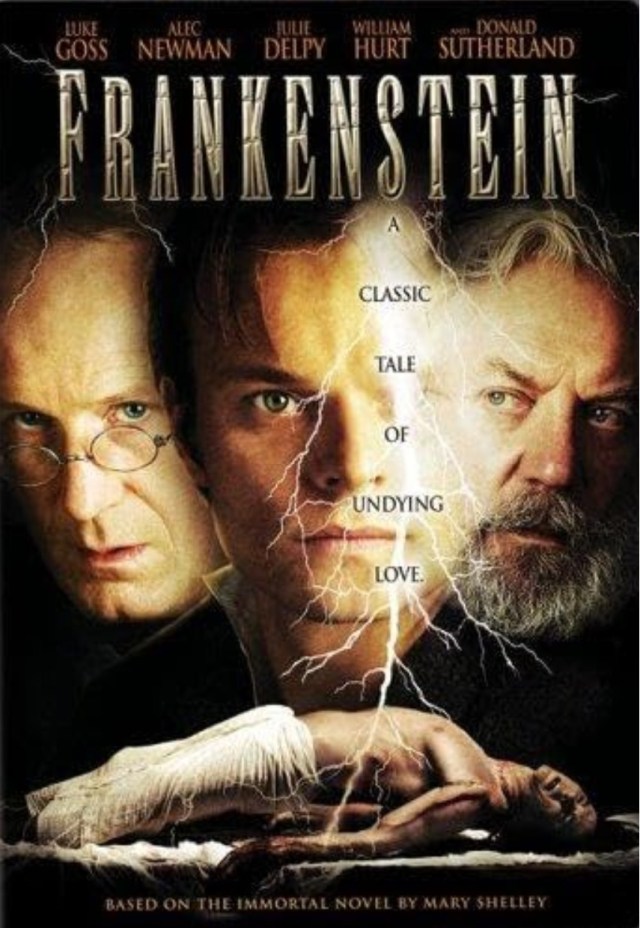
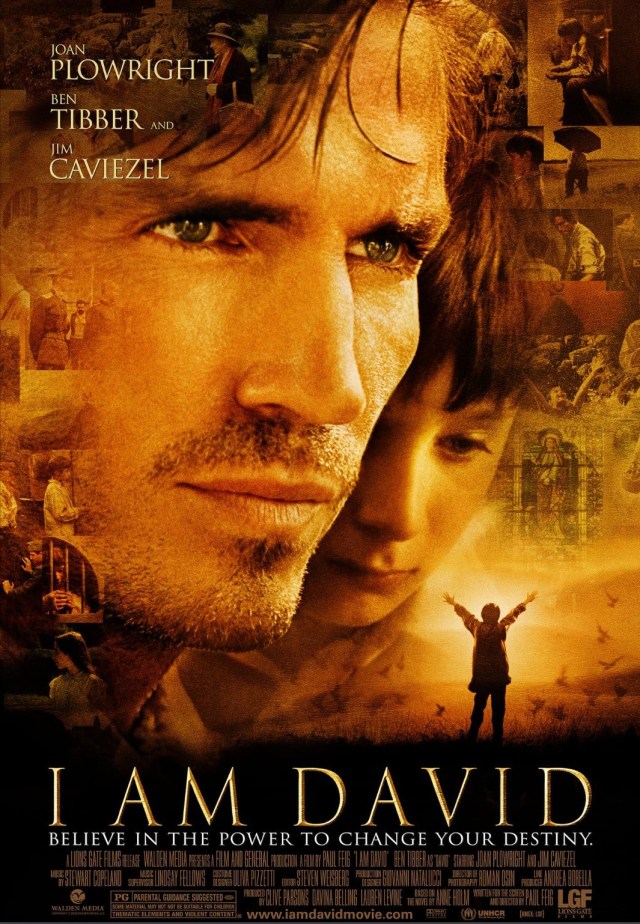
It’s time to wrap up another double feature, as both chosen titles, Hallmark’s Frankenstein and I Am David, have now been watched and reviewed! In the introduction, I brought up the following question:

Based on these two movies, how has the cinematic landscape changed in twenty years?

Looking back on each movie, a realization came to me. One thing I Am David and Hallmark’s Frankenstein have in common is the timelessness each story contains. It also helps how these stories are more straight-forward, which makes it easier for the audience to understand what is happening on screen. Realizing these statements could also be applied to The Polar Express, my answer to the aforementioned question is how, back in 2004, it seems like there was a desire on the cinematic landscape to create timeless entertainment. Now, twenty years later, studios and film companies are competing with one another to make the most relevant titles possible. On the current cinematic landscape, it’s all about capitalizing on trends and fads, creating titles for the here and the now. The problem with this film-making approach is how five, even ten plus years from that movie’s release, that movie will be dated on arrival. This film-making approach also makes movies seem more disposable instead of a long-lasting product with more opportunities to be revisited.

Popcorn and movie ticket image created by Freepik at freepik.com. <a href=’https://www.freepik.com/free-photo/cinema-tickets-in-bucket-with-popcorn_2303439.htm’>Designed by Freepik</a>. <a href=”https://www.freepik.com/free-photos-vectors/layout”>Layout image created by Freepik</a>. Image found at freepik.com.

Have fun at the movies!

Sally Silverscreen