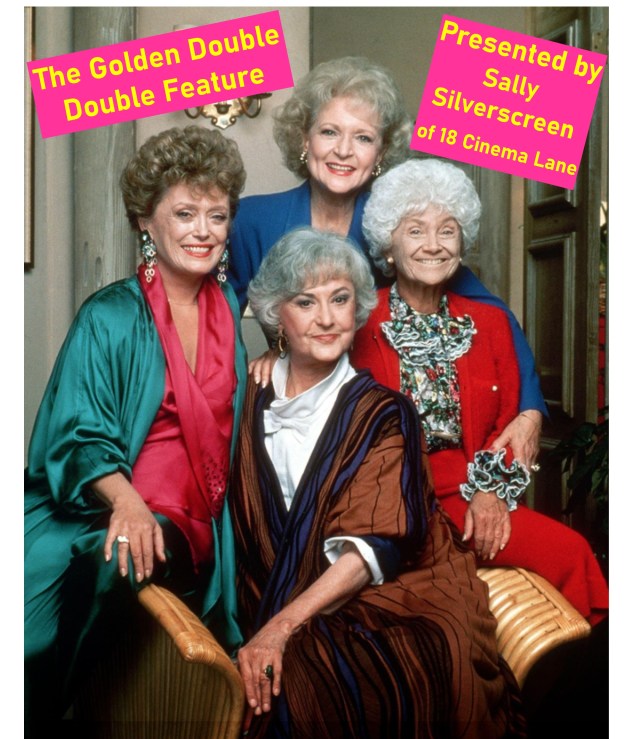
When I publish one hundred posts, I create a double feature as one of 18 Cinema Lane’s traditions. My review of Autumn Sonata achieved the aforementioned milestone by becoming my one thousandth published post! But this was not the only milestone my Autumn Sonata review reached. That would also be becoming my four hundred and fiftieth published movie review! Because one post accomplished both milestones, I decided to do something different for this double feature. Instead of reviewing two movies, I’ll be reviewing four of them. As I thought about possible double feature themes, I came to a realization. Each of the “golden girls” (Bea Arthur, Betty White, Rue McClanahan, and Estelle Getty) has a filmography. So, for this double feature, I will cover movies featuring the stars of The Golden Girls! These films will be Mame, Hallmark Hall of Fame’s The Lost Valentine, The Little Match Girl, and Mask.
The Golden Double Double Feature banner created by me, Sally Silverscreen. Original image created by Touchstone Television, Witt/Thomas/Harris Productions, 20th Television, and National Broadcasting Company (NBC)
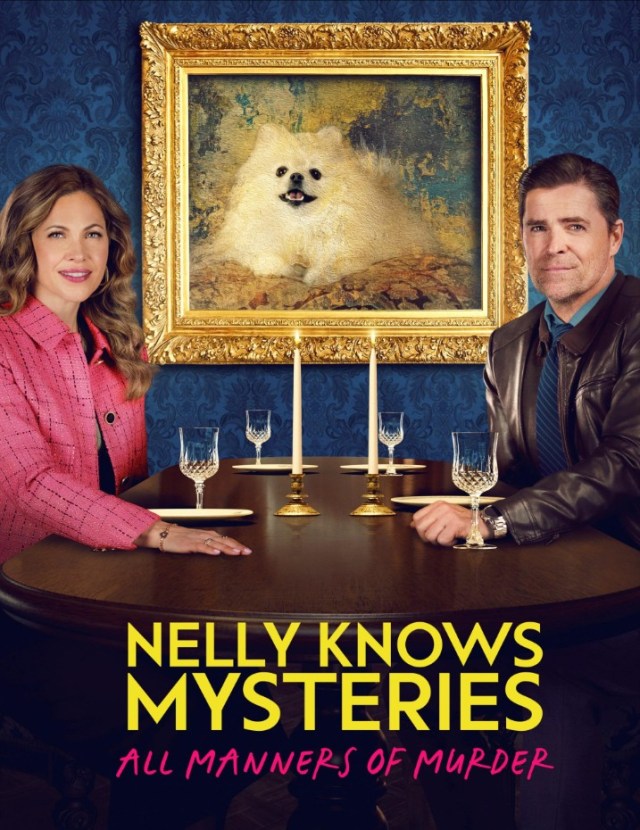
Compared to the previous decade, Hallmark hasn’t prioritized the mystery genre. While the network has released new titles, the overall quality has greatly fluctuated. Some pictures, like Haunted Harmony Mysteries: Murder in G Major and Curious Caterer: Foiled Plans, were solid projects that brought uniqueness to Hallmark’s table. But other pictures, like Mystery Island and Francesca Quinn, PI, left audiences desiring more. Hallmark also seems to be more selective about which titles receive a sequel. One of those titles is Nelly Knows Mysteries. I reviewed Nelly Knows Mysteries: A Fatal Engagement in 2024. Though I thought the movie was just ok, there were aspects that I believed could have provided multiple chapters to the story. So, when I discovered Nelly Knows Mysteries would receive a sequel, Nelly Knows Mysteries: All Manners of Murder, I wanted to check the film out (and review it) with an open mind. Is the second Nelly Knows Mysteries chapter better or worse than the first one? In order to solve this mystery, you’ll have to read this review!
The set design: The majority of Nelly Knows Mysteries: All Manners of Murder takes place at Palmer Arlott’s house. Because the Arlott family is one of the more affluent families in Nelly’s neighborhood, the set design throughout Palmer’s home perfectly reflects this aspect of her life. One notable example is Palmer’s dining room. In the dining room, black walls surround the space, including a black wood wall over the fireplace. Gold frames around paintings nicely contrast with the dark hue of the walls. A detailed maroon rug is placed over the cherry wood floor. The cherry wood dining room set and the antique gold and crystal chandelier help balance the darker and lighter colors of the room. Even the fireplace boasted stone carvings. All of these details created a dining room that exuded elegance!
How the mystery affects the protagonist: Murder mystery stories will often place so much emphasis on the protagonist solving the case, the case’s effect on the protagonist is rarely brought up. In Nelly Knows Mysteries: All Manners of Murder, Nelly shares her feelings about the murder to Michael. After the murder victim is discovered, Nelly feels guilty about the crime that took place. She believes if the dinner party the murder victim attended (and was hosted based on advice her advice column provided) hadn’t happened, no one would have been murdered. Not only does Nelly honestly express these feelings with Michael, Michael reassures Nelly what happened was beyond her control. Similar to Nelly Knows Mysteries: A Fatal Engagement adding realism by addressing one of Nelly’s flaws, acknowledging Nelly’s feelings about the murder mystery brought realism to Nelly Knows Mysteries: All Manners of Murder, as well as added a different story element to the realm of Hallmark mysteries.
The costume design: When I reviewed Nelly Knows Mysteries: A Fatal Engagement, I praised Nelly’s wardrobe because it not only complimented Pascale herself, it was also stylishly presented on screen. This strength continues in Nelly Knows Mysteries: All Manners of Murder! Once again, Nelly incorporates pink into her attire, wearing a pink tweed jacket in one outfit. But the rest of the outfit was built around the jacket, with simple gold jewelry, black shoes, and black pants coordinating nicely with the jacket’s black and gold buttons. Green provides a bridge between the darker and lighter hues of the outfit, with Nelly wearing a green shirt and a green crossbody purse. While watching Nelly Knows Mysteries: All Manners of Murder, I noticed how the wardrobe of the other characters stood out! One great example is what Palmer wore when she was first introduced in the film. Similar to Nelly’s aforementioned outfit, Palmer wore a grayish blue tweed jacket, with the rest of the outfit built around the jacket. A white blouse, faded powder blue pants, and black shoes give a nice blend to the outfit’s varying colors. Palmer’s simple silver belt adds elegance to the outfit!
Lack of urgency: In my review of Sugar & Vice: A Hannah Swensen Mystery, I criticized the film’s lack of urgency. That flaw caused the movie’s pace to slow down and it drew the story out a bit. Nelly Knows Mysteries: All Manners of Murder also lacked urgency. More often than not, Nelly and Michael are shown sharing conversations between each other and other characters than actively solving the case. This made it seem like the protagonists took their time catching the culprit. Like Sugar & Vice: A Hannah Swensen Mystery, the pace of Nelly Knows Mysteries: All Manners of Murder was slowed down and the story felt drawn out due to the amount of urgency in the movie.
Prioritizing the family drama: Prior to the murder taking place, Palmer invited her family over to her house to discuss who would receive her inheritance. Her decision causes drama among the Arlott family, every member having their reason for disagreeing with Palmer’s choice. But the script placed so much emphasis on the family drama, it ended up overshadowing the mystery. In fact, Nelly Knows Mysteries: All Manners of Murder felt less like a mystery story and more like an extended episode of a soap opera. If the script had found a balance between the family drama and the mystery, more intrigue would have been added to the film.
Underutilizing Eli Flint: When Nelly Knows Mysteries: All Manners of Murder was announced back in January, it was revealed Eli Flint (from True Justice: Family Ties) would appear in the movie. I was looking forward to his inclusion in the story, especially since I believe this is the first cross-over between two Hallmark mystery titles. But when I saw Nelly Knows Mysteries: All Manners of Murder, Eli only appeared in two scenes. Not only that, his role in the mystery was minimal. Because Eli now has experience solving a mystery, it would make sense for him to play a larger role in the story. Underutilizing Eli’s skills and perspective was, in my opinion, a missed opportunity. For Hallmark’s first mystery cross-over, it was disappointing.
I recently said Sugar & Vice: A Hannah Swensen Mystery was an ok film not only because of the movie’s lack of urgency, but also because Hannah’s sister, Michelle, was underutilized in the story. I feel similarly about Nelly Knows Mysteries: All Manners of Murder. Like the latest Hannah Swensen Mystery chapter, the newest Nelly Knows Mysteries film lacked urgency, making it seem like the protagonists took their time catching the culprit. Eli Flint, from True Justice: Family Ties, was underutilized, despite his inclusion providing the first cross-over in Hallmark mystery movie history. But, like Sugar & Vice: A Hannah Swensen Mystery, Nelly Knows Mysteries: All Manners of Murder possessed elements I liked. The story, once again, welcomed realism by acknowledging Nelly’s feelings about the murder mystery. Another consistent strength was the costume design, perfectly suiting Nelly as well as the rest of the characters. The set design in the Nelly Knows Mysteries sequel was visually appealing and perfectly represented the affluence in Palmer’s life. But with me finding both Nelly Knows Mysteries titles just ok, I wonder what the future of this series is?
Overall score: 6 out of 10
Have you seen Nelly Knows Mysteries: All Manners of Murder? Would you like to see Hallmark cross over more of their mystery films? Tell me in the comment section!
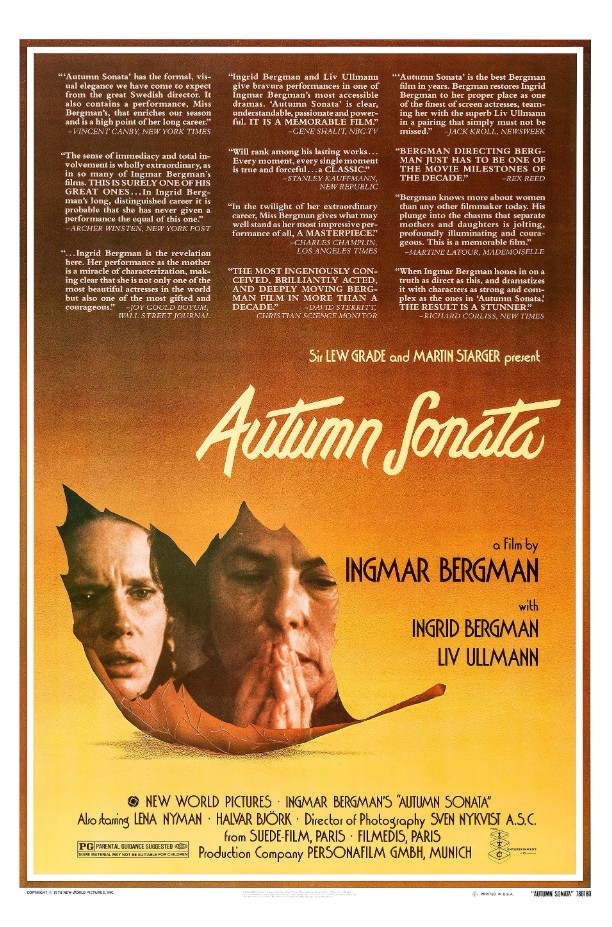
March’s theme for Genre Grandeur is “Oscar Losing Movies (Oscar nominees that failed to garner even one win)”. Upon learning this theme, I was going to select a movie nominated for the 76th Academy Awards, when The Lord of the Rings: The Return of the King won a history-making eleven awards. But after researching which films were nominated the evening of February 29th, 2004, I discovered other pictures besides The Lord of the Rings: The Return of the King walked away with a trophy. This discovery meant there weren’t as many Oscar “losers” as I initially believed. So, as I continued my research for March’s Genre Grandeur, I learned Autumn Sonata was nominated for two awards at the 51st Academy Awards. These categories were Best Writing and Best Leading Actress. Sadly, Autumn Sonata lost both categories to a movie titled Coming Home. I have heard of Autumn Sonata prior to choosing it for this particular review. Not only was the film recommended to me by Virginie (from The Wonderful World of Cinema), it was also featured in ‘The Best Films of 1978’ episode of Gene Siskel’s and Roger Ebert’s show, Sneak Previews. In that episode, both Roger and Gene admitted to placing Autumn Sonata on their lists of the ten best films of 1978. Now that I’ve seen the movie for myself, I can understand why it would find a place on their lists. I can also understand why Autumn Sonata was nominated for its respective categories at the 51st Academy Awards in 1979.
Autumn Sonata poster created by Persona Film, Suede Film, Incorporated Television Company (ITC), Svensk Filmindustri, Constantin Film, ITC Film Distributors, and New World Pictures
As I just mentioned in this review’s introduction, Autumn Sonata was nominated for two awards at the 51st Academy Awards. One of these categories was Best Leading Actress, with Ingrid Bergman as one of five actresses to receive a nomination. While discussing Autumn Sonata in Sneak Previews’ ‘The Best Films of 1978’ episode, Gene called Ingrid’s portrayal of Charlotte Andergast “riveting”. Even after a scene featuring Ingrid and Liv Ullmann (who portrayed Charlotte’s daughter, Eva) is presented in the episode, Gene says “Again, some real pain there”, referring to the emotions on display through Liv’s and Ingrid’s performance. Though I agree with Gene’s assessment of Ingrid’s portrayal of Charlotte, the word I’d use to describe it (as well as Liv’s portrayal of Eva) is captivating. In one of the best scenes from Autumn Sonata, Charlotte shares with Eva how her close friend, Leonardo, passed away. Throughout her recount of Leonardo’s last days in the hospital, Charlotte has a pained, disgusted look on her face. With a glossy, teary-eyed stare and a drawn-out frown, Charlotte is heartbroken over the loss of her friend. When I saw that scene, I wasn’t watching an actress portraying a character. I was witnessing a woman experiencing grief, with Ingrid’s performance possessing a strong sense of realism.
Like I also said in my review, Liv Ullmann’s portrayal of Charlotte’s daughter, Eva, was captivating. This is because Liv was able to go toe-to-toe with Ingrid, acting-wise, understanding how to utilize emotion to her character’s advantage, as well as when to increase or decrease the intensity of those emotions. As I previously mentioned, there was a scene from Autumn Sonata featuring Ingrid and Liv in Sneak Previews’ ‘The Best Films of 1978’ episode. In that scene, Charlotte and Eva share an emotionally explosive conversation over the reasons why their relationship is strained. Eva states how she didn’t like Charlotte’s desire to turn her daughter into someone she wasn’t. During her reflections of her past, Eva is visibly distraught. With gritted teeth and eyes overflowing with tears, even shaking at one point, Eva confesses how Charlotte’s decisions have deeply impacted her and her life choices. Because of her performance in Autumn Sonata, I wish Liv Ullmann had been nominated for an Oscar as well.
During their discussion of Autumn Sonata in ‘The Best Films of 1978’ episode of Sneak Previews, neither Roger nor Gene brought up the film’s screenwriting. This is a shame, as the screenwriting was one of the movie’s strengths. Autumn Sonata is a character-driven, “slice of life” story. However, the quality of the dialogue made conversations between characters sound emotionally deep and thought provoking. In one scene, Eva asks her husband, Viktor, if he thinks she’s an adult. Viktor responds by telling her, “I guess being an adult is being able to handle your dreams and hopes, not longing for things”. He could have simply given his wife a “yes” or “no” answer. But Viktor’s response gives Eva, as well as the audience, meaningful insight about growing up, managing expectations, and even gratitude. Later in Autumn Sonata, Charlotte confesses one of her realizations to Eva. She says, “I have never grown up. My face and my body have aged. I acquire memories and experiences but inside all that I haven’t even been born.” Similar to Viktor’s aforementioned quote, Charlotte’s quote addresses growing up. In Charlotte’s case, however, her reflections sound more regretful. Disappointment can even be heard in her voice, with those pent-up feelings finally being addressed through words. As I stated in this review’s introduction, Autumn Sonata was nominated for the Best Writing category. Through a thoughtfully crafted script, that nomination was, in my opinion, earned.
While continuing their discussion of Autumn Sonata, Roger tells Gene about a call he received from a reader who was interested in seeing Autumn Sonata. Roger then says the reader told him, “I couldn’t make head or tail of it. What is it about?” Meanwhile, Gene claims “the conflict is how do you reconcile your public career with your personal responsibilities to your family”. Based on my experience watching Autumn Sonata, I think it’s not just about balancing a public and personal life. I think it’s also about the brutal honesty of strained familial relationships. When Eva and Charlotte talk about the past, no figurative punches are held back. They tell each other exactly what’s on their minds and hearts, no matter who’s feelings get hurt. It would have been easy for Autumn Sonata’s creative team to paint either Charlotte or Eva as the “villain” of the story. Instead, both women are not only flawed, they have valid points to their sides of the narrative. How the story plays out kind of reminds me of The Royal Tenenbaums, where the strained relationship between Eva and Charlotte is the result of little things culminating over time. The acting performances and the screenwriting successfully bring a sense of realism to Autumn Sonata.
According to IMDB, Autumn Sonata was filmed in Norway. Based on the scene where Charlotte drives to Eva and Viktor’s house, the Norwegian scenery looked like a beautiful painting. But the majestic hills, mountains, and large body of water from Norway wasn’t incorporated into Autumn Sonata beyond that one scene. I wish the “autumn” in Autumn Sonata played a larger role in the story, perhaps visually representing some of the movie’s themes. Another aspect of the story I wish had been utilized more was Eva’s sister, Helena. When Charlotte first arrives at Eva and Viktor’s house, Eva reveals how Helena is now living at their house instead of at a hospital. Throughout Autumn Sonata, Helena deals with an illness that greatly affects her mobility. I thought she was intended to be a bridge between Eva and Charlotte, helping them find a more peaceful middle ground. One reason for this belief came from Helena falling out of her bed during an emotionally explosive conversation between Charlotte and Eva. Sadly, it seems like Helena was in Autumn Sonata just for the sake of it.
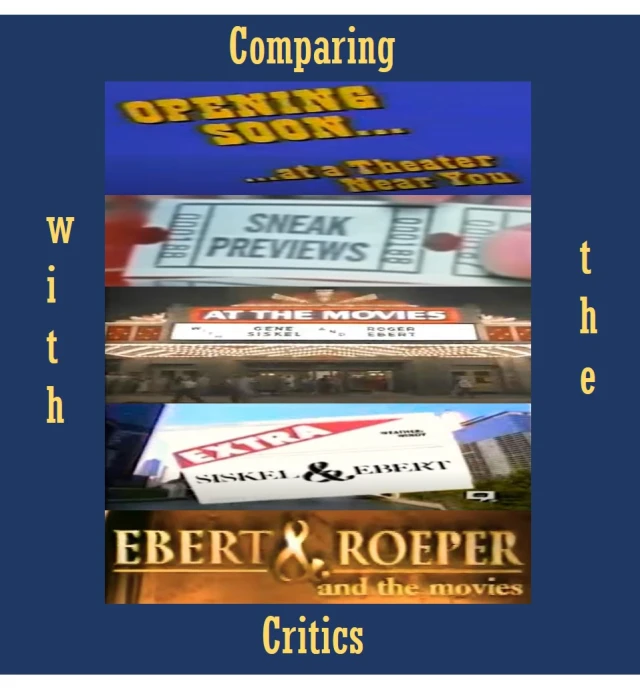
Comparing with the Critics banner created by me, Sally Silverscreen. TV show title cards created by WTTW National Productions, WTTW, Public Broadcasting Service (PBS), Lifetime Television, Tribune Entertainment, Buena Vista Television, and Disney-ABC Domestic Television
Prior to reviewing Autumn Sonata, the only movie I agreed with Gene and Roger on was 1984’s Amadeus. I could also see why the film was, at least, nominated for an Oscar. Now I can confidently say that Autumn Sonata is the second film I agree with Roger and Gene on! While I typically don’t gravitate toward “slice of life” stories, the 1978 movie works because of the strength of the screenwriting and acting performances. Similar to The Royal Tenenbaums, the brutal honesty woven into the script brought a sense of realism when to came to addressing strained familial relationships. The story itself was emotionally deep and thought provoking because of the effort put into it by Autumn Sonata’s creative team. I understand why the movie is titled Autumn Sonata, as music plays an integral role in Charlotte’s life. However, I wish the “autumn” in Autumn Sonata was utilized more in the story, especially considering how beautiful the Norwegian landscape was in the film. The movie also doesn’t have a high rewatchability rate due the some of the heavier subject matter incorporated into the story. But I can honestly say that Autumn Sonata is one of the best films I’ve seen in 2026, so far!
I first brought up The Wild Robot last March in my list of the Top Ten Best Stand-Alone Films. Then, in another list, I brought up the 2024 movie again. This time it was The Best and Worst Movies I Saw in 2025. As I was talking about the second best film I saw last year, I said while it was too early to say how The Wild Robot will stand in the test of time, I think it has potential. With the announcement of a sequel, this second chapter could help strengthen The Wild Robot’s legacy. Jeff Dodge, from ScreenRant, reported the creative talent involved in the upcoming project. The sequel, which is currently titled The Wild Robot Escapes, will be directed by Troy Quane. Directing alongside Troy is Heidi Jo Gilbert, who was promoted from The Wild Robot’s story team. Jeff Hermann will return as one of the sequel’s producers and Chris Sanders will also return to write the film’s screenplay. At the time of this Word on the Street article’s publication, the cast list and release date for The Wild Robot Escapes are still unknown.
As I said in this Word on the Street article, The Wild Robot was the second best film I saw last year. Not only was the animation itself impressive, I was pleasantly surprised by the movie’s emotional depth as well as an abundance of good messages and themes. With all that said, the news about The Wild Robot Escapes is, for me, an intriguing piece of movie news! What’s also intriguing is how The Wild Robot and The Wild Robot Escapes are adaptations of a pre-existing book trilogy. I honestly didn’t know about the book trilogy until I learned about The Wild Robot’s upcoming sequel. It looks like I may have some reading to do while waiting for the release of The Wild Robot Escapes!
What are your thoughts on this piece of movie news? Have you seen The Wild Robot? Tell me in the comment section!
I will admit I wasn’t familiar with Kenneth Williams as an actor before joining the Carry On Kenny! 100 Years of Kenneth Williams Blogathon. But like other blogathons I’ve participated in, I saw the event as an opportunity to expand my cinematic horizons. As I looked through Kenneth’s filmography, I discovered he starred in the 1984 made-for-tv movie, Aladdin and the Forty Thieves. Since I cover my fair share of television films, including those from the 1980s, I chose this production as my blogathon entry! When I recently wrote about Brigadoon, I said the fantasy genre was underrepresented on 18 Cinema Lane. I also said Brigadoon itself was a fine, pleasant presentation. With Aladdin and the Forty Thieves being the second movie from the fantasy genre to be reviewed this year, it almost seems like I’m making up for lost time. And now that I’ve seen the 1984 television film, I can say whether its stronger or weaker than Brigadoon.
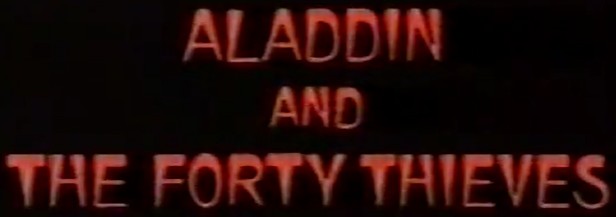
Since Aladdin and the Forty Thieves doesn’t have an offical movie poster, I have to use this title card for my review. Title card created by British Broadcasting Corporation (BBC)
Things I liked about the film:
Kenneth Williams’ performance: Since Kenneth Williams is the reason why I chose to review Aladdin and the Forty Thieves, I’ll talk about his portrayal of Mustapha Drink. In the 1984 movie, Mustapha is a storyteller who shares a tale about two Mandarins named Wing and Wong. Throughout this tale, Kenneth utilizes facial expressions and vocal inflictions to bring the story to life. He even gives the characters distinct voices to add memorability to the tale. Even though Mustapha appeared in only one scene, Kenneth did a good job, acting wise, with the material he was given. I, honestly, wish Kenneth had been the narrator of Aladdin’s story, presenting the illusion he was reading a storybook to the audience.
The costume design: While we’re on the subject of Kenneth’s portrayal of Mustapha Drink, I want to talk about the movie’s costume design. As he told the tale of Wing and Wong, Mustapha wore a long blue jacket with gold trim and detailing. Whether he walked or sat, the jacket sparkled in the light. Mustapha also wore a long red gown boasting an intricate gold design. The elegance of his outfit allowed Mustapha to stand out, even though he appeared in only one scene. This is just one example of the attention to detail and effort that went into the costume design of Aladdin and the Forty Thieves!
Certain ways Aladdin’s story was adapted: I must confess the adaptation of Aladdin’s story I’m most familiar with is the Disney animated picture from 1992. With that said, it was interesting to see how Aladdin and the Forty Thieves adapted Aladdin’s story compared to Disney’s production. The 1984 film features two genies, Genie of the Lamp and Genie of the Ring. Though I think it was a missed opportunity not to have the genies interact with one another, it was still an interesting creative decision to have more than one genie solve the characters’ problems. Toward the end of Aladdin and the Forty Thieves, Aladdin and The Princess Balroubador receive a magic carpet as a wedding gift. From what I remember of the 1992 movie, the magic carpet was more of a sidekick for Aladdin. The iconic “A Whole New World” scene just wouldn’t be the same without the magic carpet. Though Aladdin and the Forty Thieves and the Disney film each approached the same story, they brought it to life in their own unique way!
The musical numbers: Before I selected Aladdin and the Forty Thieves for the Carry On Kenny! 100 Years of Kenneth Williams Blogathon, I had no idea it was a musical. So, you can imagine my surprise when Genie of the Ring started randomly singing and dancing. Though the musical numbers themselves weren’t bad, some of them seemed like they were added to the movie just for the sake of including a musical number. When Aladdin’s Chinese village was first introduced in Aladdin and the Forty Thieves, some of the residents sang “Zip-a-Dee-Doo-Dah”. As I was watching this musical number unfold, I kept wondering what this song had to do with Aladdin and his story, especially considering the song itself was released in 1946. Creative decisions like this musical number left me confused of the creative team’s intent.
Unclear time period: Remember when I questioned the inclusion of “Zip-a-Dee-Doo-Dah” in Aladdin and the Forty Thieves, pointing out how the song was released in 1946? I brought this up to address one of the flaws of the 1984 television film; an unclear time-period. Based on the set and costume design, it appears the story takes place in Ancient China. Yet, in one scene, a vending machine not only served drinks, but also “hot & cold food”. Because of creative choices like the two I described, it makes Aladdin and the Forty Thieves look like it’s having an identity crisis.
The special effects: I know a television movie is, more often than not, going to receive a smaller budget. I’m also aware how cinematic technology from the 1980s is going to be different from today’s cinematic technology. But with all that said, I couldn’t look past the poor special effects throughout Aladdin and the Forty Thieves. One painfully obvious example is when, toward the beginning of the film, Abanazar transforms into a bird. This very fake-looking bird is superimposed over still photographs of landscapes, trying to present the illusion of traveling from one place to another. Making a movie isn’t easy and does require working within your means. However, I think using special effects hurt Aladdin and the Forty Thieves instead of helped it.
Have you ever watched a movie and wondered “what the heck did I just watch”? That’s what I was thinking when I saw Aladdin and the Forty Thieves. Was the 1984 movie supposed to be taken seriously or was it supposed to be silly, goofy fun? Why was it difficult to determine the story’s time period? It’s a shame this wasn’t a stronger picture because there are aspects of it I liked. Kenneth Williams did a good job, acting wise, in his role as Mustapha Drink. In fact, I think Kenneth should have been the one narrating Aladdin’s story. It looked like there was a good amount of effort and detail put toward the set and costume design. I even liked some of the ways Aladdin’s story was adapted in the 1984 film. But I have no idea what I was supposed to get out of Aladdin and the Forty Thieves. Therefore, I hesitate recommending it.
Overall score: 5.3 out of 10
Have you seen Aladdin and the Forty Thieves? Which adaptation of Aladdin’s story is your favorite? Let me know in the comment section!
I have a confession to make: up until this month’s edition of Genre Grandeur, I had never seen an Elvis Presley movie before. Hence the reason why I put “Check out one of Elvis Presley’s movies” on my Year-Long Bingo Card, to expand my cinematic horizons. The opportunity to finally see one of his films presented itself with February’s Genre Grandeur theme; “Movies Featuring Surfing”. According to the official IMDB page for the 1961 title, Blue Hawaii, there are some pictures of Elvis surfing or on a surfboard. Because of that, I selected Blue Hawaii for Genre Grandeur! Based on what I know about his career, there are three locations associated with Elvis Presley; Graceland, Las Vegas, and Hawaii. Now that I’ve seen Blue Hawaii, it makes me wonder if Elvis’ association with Hawaii was a result of this film or other factors? I admit this question is a discussion for another time. But for now, let’s review Blue Hawaii!
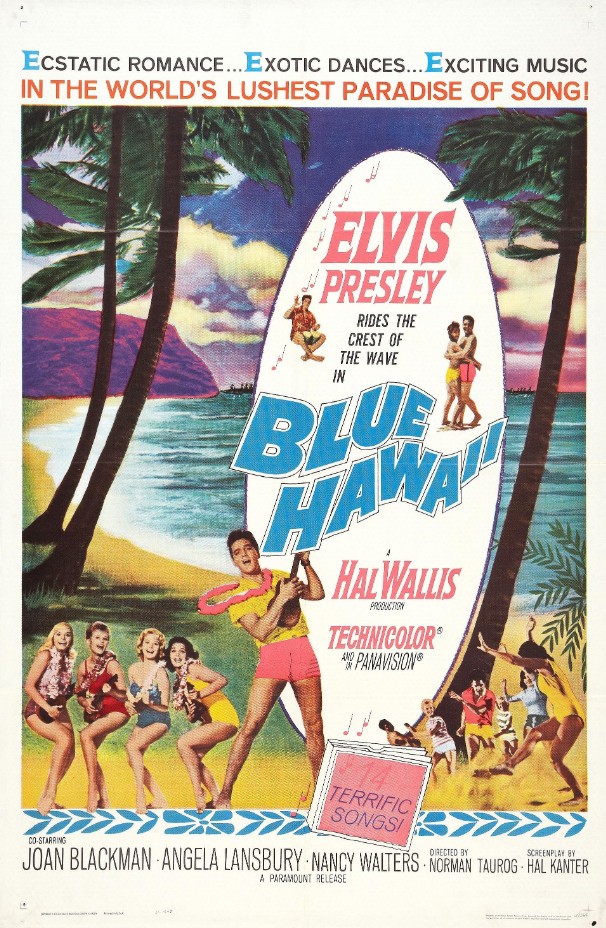
Blue Hawaii poster created by Hal Wallis Productions and Paramount Pictures
Things I liked about the film:
The on-screen chemistry: Elvis Presley stars in Blue Hawaii as Chad Gates. When he returns home from the Army, his girlfriend, Maile Duval (portrayed by Joan Blackman), excitedly waits for him at the airport. From the film’s very first musical number, “Almost Always True”, Elvis and Joan’s on-screen chemistry lit up the screen! Their acting performances helped sell the believability of Chad and Maile’s relationship, his consistently laid-back personality pairing nicely with her genuine sweetness. The delivery of the script’s clever banter felt like a friendly game of beach volleyball, with Maile and Chad’s conversations sounding pleasant to listen to. I honestly wish Joan and Elvis shared more screentime together because Chad and Maile’s relationship added a nice romantic touch to Blue Hawaii!
The musical numbers: Elvis’ forte is music, which is why Blue Hawaii features over ten musical numbers. When I think about these musical numbers, I take note how they are, more often than not, joyful in tone. This reminded me of when Frederick told his daughter, Annette, in Million Dollar Mermaid how music should be a source of joy. But I also took note of how Blue Hawaii’s musical numbers were utilized in the story’s context. In one scene, Chad attends the birthday party of Maile’s grandmother. He gives Maile’s grandmother an Austrian music box as a present, with the tune being “Can’t Help Falling in Love”. This song is one of the most iconic from Elvis’ discography. However, its inclusion in the movie didn’t feel like it was there just because it was a popular Elvis Presley tune. Instead, “Can’t Help Falling in Love” feels like it had an intended, meaningful purpose within the story. Creative decisions like this one helped make Blue Hawaii’s musical numbers one of the strengths of the movie!
The dialogue: Since watching Blue Hawaii was my first time watching any of Elvis Presley’s films, I really didn’t know what to expect. But what I didn’t expect was the dialogue being cleverly written! One of my favorite examples of cleverly written dialogue is when one of Chad’s friends is preparing lunch. During these preparations, he realizes he doesn’t have any ketchup. Chad’s friend then asks Maile if she has any ketchup, with her response being how she only has lipstick, which happens to share a similar shade to the condiment. How this conversation was written and delivered made this one of the funniest moments in Blue Hawaii! Like I mentioned earlier in this review, Chad gives Maile’s grandmother an Austrian music box as a birthday present. As he’s giving Maile’s grandmother the music box, Chad says, “it plays European love songs, but they’re the same in any language”. Through this one quote alone, Chad is acknowledging how love, especially expressing love through music, is a universal and relatable theme. It ended up being a profound statement without trying too hard to be.
A drawn-out story: Blue Hawaii’s story revolves around Chad wanting to create his own career path instead of accepting a position at his family’s fruit company. While this was an interesting conflict, it was too drawn-out. With Blue Hawaii’s run-time set at one hour and forty-two minutes, it feels like the story was drawn-out to satisfy the run-time. For the first thirty minutes of the film, Chad simply talks about wanting to solve his problem instead of actually solving his problem. Even though he and Maile come up with a resolution to the conflict, it took too long, in my opinion, for that resolution to be found. Maybe if Blue Hawaii’s run-time had been trimmed, Chad could have created his career path sooner.
Ellie’s subplot: In Blue Hawaii, Chad becomes a tour guide and leads a group consisting of a female teacher named Abigail Prentice, and her four female teenage students. One of these students is a 17-year-old named Ellie Corbett. I wasn’t a fan of the subplot Ellie received for two reasons. She was a static character for the majority of the movie. Plus, Ellie’s attraction for older men (including Chad) made me uncomfortable, as it was too inappropriate for a character her age. When it comes to Ellie’s part of the story, she was dealing with some serious issues of self-esteem and even self-worth. So, her aforementioned attraction was completely unnecessary because she already had a conflict she could have worked through during the movie. Had the script prioritized Ellie growing as a character by building a healthy sense of self, it would have been a much stronger (and age-appropriate) subplot.
Lack of surfing: As I said in my review’s introduction, the pictures of Elvis surfing or on a surfboard from Blue Hawaii’s official IMDB page are one of the reasons why I reviewed the 1961 movie for February’s Genre Grandeur. A quote on Blue Hawaii’s poster even says, “Elvis Presley rides the crest of the wave in Blue Hawaii”. But throughout the hour and forty-two-minute film, there wasn’t any surfing to be seen. Sure, Chad is on a surfboard in one scene and he teaches Abigail and her students how to surf. But none of the characters actually go surfing. Not only was this creative decision disappointing, it contributed to false advertising.
In the past, I’ve talked about films that emphasized style over substance. While these films have looked beautiful or offered aesthetically pleasing worlds through cinema, the script itself left me desiring more. This is exactly how I felt about Blue Hawaii. But in the case of the 1961 picture, it wasn’t just style over substance; it was also music over substance. I did enjoy the musical numbers, as they were mostly joyful and even had a purpose within the story. However, the story ended up becoming overshadowed by the music. Even though the conflict of Chad trying to create his own career path was interesting, it was too drawn-out, likely due to the film’s run-time. I also wasn’t a fan of Ellie’s subplot because it was too inappropriate for her age and she spent most of the movie being a static character. Despite these flaws in the script, Blue Hawaii does have its strengths. Besides the musical numbers, I liked the on-screen chemistry between Elvis Presley and Joan Blackman. To me, they effectively sold their characters’ relationship as being believably loving. I also found the dialogue cleverly written, which was such a pleasant surprise. But overall, I found Blue Hawaii to be just ok.
Overall score: 6.1 out of 10
Have you seen Blue Hawaii? Which other films from Elvis Presley’s filmography would you like me to review next? Let me know in the comment section below!
I haven’t talked about anything Hallmark Hall of Fame related since last August, when I reviewed the 1990 presentation, Face to Face. To make up for lost time, I decided to write a list article about a topic associated with this collection of Hallmark’s movies. With Hallmark Hall of Fame lasting from 1951 to 2019, numerous actors and actresses have graced television screens in one or several projects from this branch of Hallmark programming. But there are some actors and actresses who never received that opportunity. So, in this list, I will be selecting five actors and five actresses who, in my opinion, should have starred in a Hallmark Hall of Fame movie. While the chosen actresses and actors are categorized in no particular order, they were selected based on two criteria: 1) the trajectory of their career in correlation with the existence of Hallmark Hall of Fame and 2) if their acting talents would have been well utilized within the types of stories Hallmark Hall of Fame told.
Hallmark Hall of Fame logo created by Hallmark Entertainment and Hallmark Hall of Fame Productions
1.Stephen Lang
I will admit I’ve seen only three projects from Stephen Lang’s filmography; Don’t Breathe, Death of a Salesman, and 2009’s Avatar. But from what I remember, Stephen put a great amount of effort and care into his roles. Even based on some of his interviews I have seen and heard, it seems like Stephen takes the roles given to him very seriously. With all this said, I truly believe he would have brought that same amount of care and effort into a Hallmark Hall of Fame title. Plus, according to IMDB, Death of a Salesman is labeled a “tv movie”. Therefore, Stephen has some experience working in the realm of made-for-tv cinema. Had the opportunity to star in a Hallmark Hall of Fame movie presented itself, I wonder what type of role Stephen would have received, let alone what type of movie he would have been cast in?
2. Jane Seymour
Throughout her career, Jane Seymour has starred in several Hallmark films; Lake Effects, Dear Prudence, PerfectlyPrudence, and A Royal Christmas. You’d think with Jane’s connection to Hallmark, as well as her star power, she would have starred in, at least, one Hallmark Hall of Fame presentation. But surprisingly, this opportunity never came to be. Besides her appearance in Hallmark’s movies, Jane has starred in projects that were related to the historical fiction genre, such as Somewhere in Time and Dr. Quinn, Medicine Woman. In fact, I’m surprised Hallmark Hall of Fame and the creative team behind Dr. Quinn, Medicine Woman didn’t work together to create a television event related to the show. This idea actually would have made sense, especially since Hallmark Hall of Fame was broadcast on the same network as Dr. Quinn, Medicine Woman during the show’s lifespan.
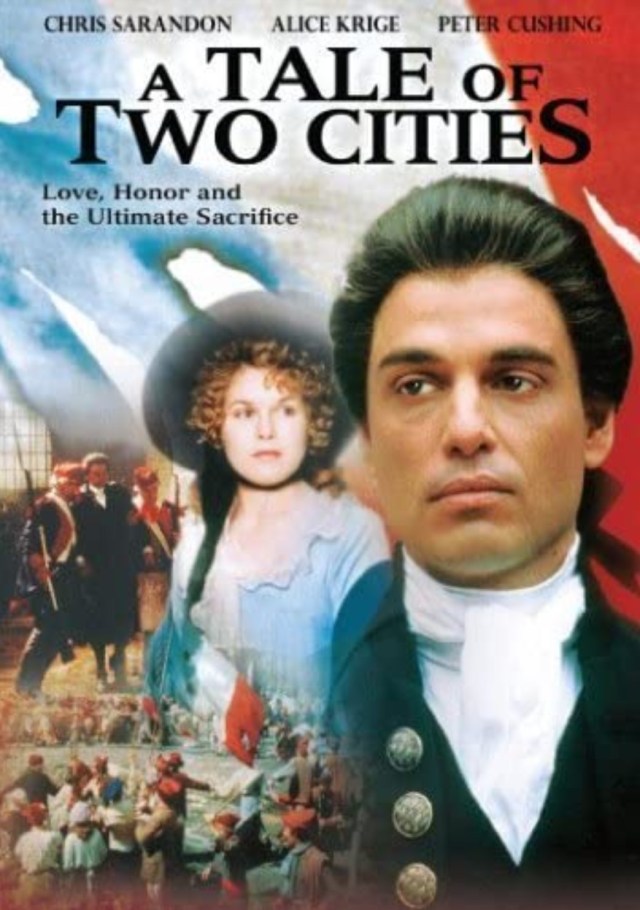
Hallmark Hall of Fame’s A Tale of Two Cities poster created by Hallmark Hall of Fame Productions, Marble Arch Productions, Norman Rosemont Productions, and Columbia Broadcasting System (CBS)
3. Michael Wincott
I recently talked about Michael Wincott in my review of an episode from Miami Vice. Based on his performances I’ve seen, Michael has consistently displayed an understanding, as well as control, over his character’s emotions. His adaptability has also been very chameleon-like. If given the opportunity to star in a Hallmark Hall of Fame film, I believe Michael could have helped create a character with a captivating presence. Even though the movies in the Hallmark Hall of Fame collection were primarily dramatic in tone, various genres were covered within this series. Therefore, I think Michael’s acting talents could have been best utilized in a film from either the historical fiction, western, or mystery genre.
4. Bai Ling
I’ve seen several projects from Bai Ling’s filmography, including the 2001 Hallmark movie, The Lost Empire/The Monkey King. The one consistent strength I have noticed within these projects is Bai’s strong sense of emotionality. Whether in a made-for-tv movie or a theatrically released title, Bai’s understanding and utilization of her character’s emotions have added depth to her performances. I could have seen this acting strength incorporated into a Hallmark Hall of Fame movie, especially since, like I mentioned earlier, movies in the Hallmark Hall of Fame collection were primarily dramatic in tone. Since I have seen Bai star in at least one film from the mystery and fantasy genre, it would have been interesting to see what a fantasy or mystery Hallmark Hall of Fame movie starring Bai would have looked like. Or perhaps the Hallmark Hall of Fame collection could have given her a chance to tackle a genre I haven’t seen her appear in before.
5. Vincent Perez
If you have followed 18 Cinema Lane long enough, you would know one of the best movies ever reviewed on the blog was Swept from the Sea. Vincent Perez’s portrayal of Yanko is one of the reasons why. There were times in Swept from the Sea where, by utilizing emotion, he was able to say so much without saying anything at all. Vincent’s acting versatility not only made his performance captivating, it was also both heart-warming and heart-breaking. I’ve liked his performance from his other movies I have seen, from his emotional intensity in The Crow: City of Angels to his sincerity in Cyrano de Bergerac. Even in 2004’s Frankenstein (a movie I didn’t like), Vincent’s performance is one of the few good aspects of that film. I guess the 1998 HBO movie, Shot Through the Heart, is the closest thing to seeing Vincent in a Hallmark Hall of Fame presentation I’ll ever get.
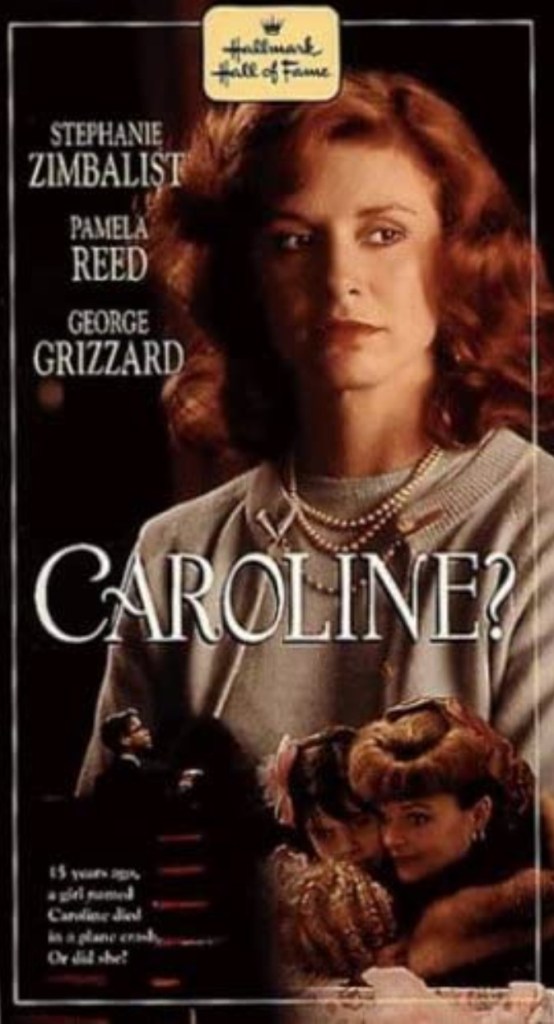
Hallmark Hall of Fame’s Caroline? poster created by Hallmark Hall of Fame productions, CBS, and Republic Pictures Home Video
6. Jasmine Guy
Whenever I think of Jasmine Guy, I think of her portrayal of Kathleen on Touched by An Angel. I also think about how strong Jasmine’s performance was on that show. Kathleen became a character I looked forward to seeing appear on screen. This was the result of the expressiveness, sassiness, and charisma Jasmine brought to her role. She even had good on-screen chemistry will Bill Nunn in the Touched by An Angel episode, “Lost and Found”, as it sold the concept of Kathleen and Bill’s character, Frank, being compatible, under different circumstances. Since Touched by An Angel was more dramatic in tone, like the Hallmark Hall of Fame collection, Jasmine’s portrayal of Kathleen gave me an idea how Jasmine’s acting talents could have been utilized within a Hallmark Hall of Fame presentation.
7. Adewale Akinnuoye-Agbaje
Fans of the television show, Lost, will recognize Adewale Akinnuoye-Agbaje as the actor who portrayed Mr. Eko. Adewale’s performance on that show is one of the reasons why I liked Mr. Eko as a character. His captivating presence commanded attention from the audience, which sometimes made Mr. Eko intimidating. Yet, the kind-hearted and thoughtful persona Adewale gave to Mr. Eko also allowed his character to be approachable, making the audience want to get to know Mr. Eko and see where the story took him next. Adewale’s acting versatility would have been such a valuable asset in a Hallmark Hall of Fame project. What also worked in Adewale’s favor is his chemistry with the other cast members on Lost. This acting element would have been beneficial to any Hallmark Hall of Fame movie, especially since some films from Hallmark Hall of Fame featured ensemble casts.
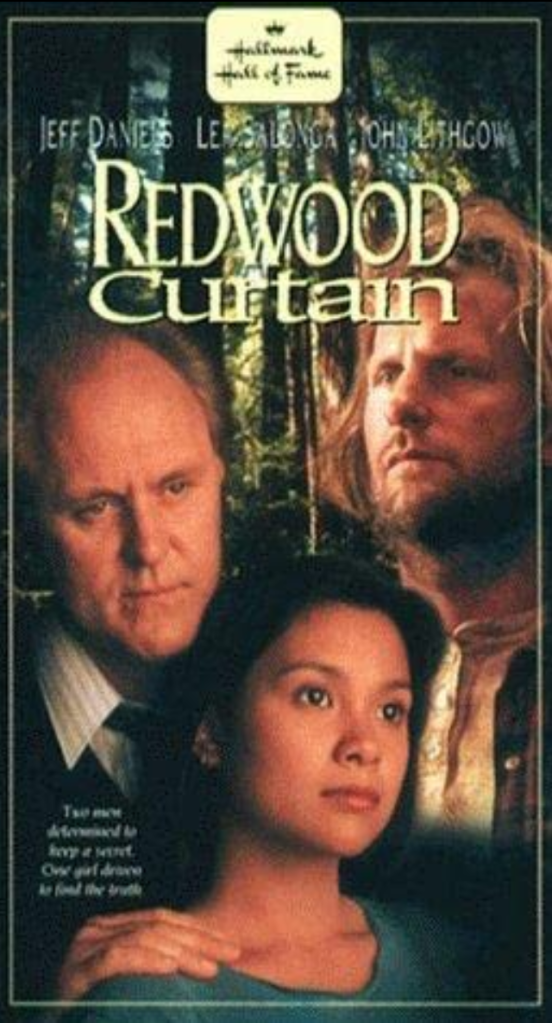
Redwood Curtain poster created by Chris/Rose Productions, Hallmark Hall of Fame Productions, American Broadcasting Company (ABC), and Republic Pictures (II)
8. Hayley Mills
Hayley Mills was at the height of her popularity in the 1960s. Plus, based on her performances I have seen, Hayley has been able to utilize her expressions and emotions to make her characters seem as believable as possible. With these facts in mind, I’m surprised Hallmark Hall of Fame didn’t try to capitalize on Hayley’s popularity and talent by offering her a role in one of their films. When it comes to Hallmark Hall of Fame’s movies from the 1960s, I haven’t seen any of them. But based on my research, it appears these projects were either adaptations of plays, literature, or historical events. Because Hayley has starred in dramatic films like The Chalk Garden, I believe Hayley’s acting talents could have been incorporated well into one of these genres.
9. Dulé Hill
Dulé Hill is best known for his role as Burton “Gus” Guster from the television show, Psych. However, I’m more familiar with his performance on Suits as Alex Williams. Though it’s been a while since I’ve seen Suits, I remember Alex was introduced later in the show’s lifespan. Despite this, Dulé’s adaptability allowed his character to share chemistry with the other characters, making me as a viewer feel like Alex was always meant to be on the show. Dulé’s television experience, as well as his experience alongside an ensemble cast, worked in his favor. These acting qualities and Dulé’s name recognition from Psych could have given a Hallmark Hall of Fame film a built-in audience. Plus, I have heard Dulé is a tap dancer, so maybe Hallmark Hall of Fame could have incorporated his dancing talents into a musical.
10. Joanne Whalley
Back in 1994, Joanne Whalley starred in the movie/mini-series, Scarlett. When I reviewed it back in 2021, I said the mini-series/movie was a competently made project where the creative team behind it clearly knew what they were doing. This statement holds true for Joanne’s performance, as she did a fine job with the acting material provided. Since Hallmark was one of Scarlett’s distributors and since the movie/mini-series premiered on the same network Hallmark Hall of Fame’s movies aired on, it would have made sense if Joanne had been chosen to star in a Hallmark Hall of Fame movie. I’ve also seen Joanne star in at least one historical fiction and one fantasy film, which are two genres that have been explored within the Hallmark Hall of Fame collection. But, for whatever reason, the opportunity to work on a Hallmark Hall of Fame project never came to fruition for Joanne.
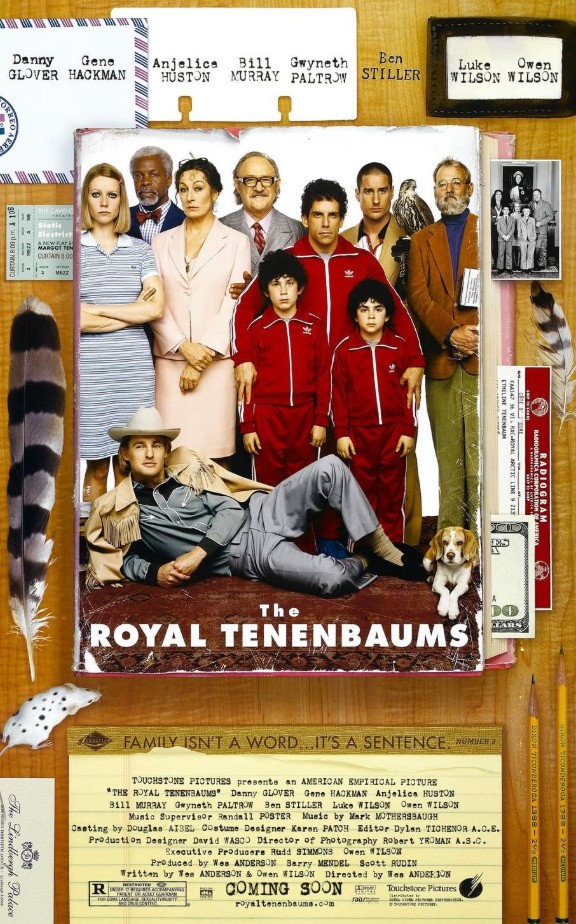
I’ve mentioned in the past how my favorite character from Freaks and Geeks is Harris Trinsky. To show my gratitude to one of the people responsible for bringing this character to life, Stephen Lea Sheppard (the actor who portrayed Harris), I decided to review one of the projects from Stephen’s filmography on his birthday. When I looked at his official page on IMDB, I discovered Stephen has only one movie on his filmography. That film is 2001’s The Royal Tenenbaums. While I have heard of this movie, I had never seen it before. Stephen’s birthday was the perfect opportunity to, once again, expand my cinematic horizons! Two years ago, I published a list of the Top 10 “Icks” from Hallmark Hall of Fame Movies. In that list, I discuss how Saint Maybe did a better job than Back When We Were Grownups at showcasing a dysfunctional family. When I learned The Royal Tenenbaums revolved around a dysfunctional family, I wondered if the film would remind me more of Back When We Were Grownups or Saint Maybe. Now that I’ve seen the 2001 movie, I can find the answer to that question in this review!
The Royal Tenebaums poster created by Touchstone Pictures, American Empirical Pictures, Scott Rudin Productions, and Vantage Media, and Buena Vista Pictures Distribution
Things I liked about the film:
Dudley’s bluntness as comic relief: In The Royal Tenenbaums, Stephen portrays Dudley Heisenbergen. Throughout the story, Dudley resides with Bill Murray’s character, Raleigh St. Clair, because he is researching Dudley’s medical condition. Though he receives a very limited amount of screen-time, as well as lines within the script, Dudley left a memorable impression on me. That’s because his bluntness was effectively utilized as comic relief. One example is when Raleigh discusses Dudley’s medical condition through a tape recorder. Raleigh addresses how Dudley has Color Blindness, yet marvels at Dudley’s exceptional hearing. In the very next scene, while Dudley is in another room, Dudley asks Raleigh if he is Color Blind, with Raleigh confirming this fact. Why I found this exchange hilarious is how Dudley’s bluntness felt reminiscent of Stephen’s portrayal of Harris on Freaks and Geeks, as Harris’ brutal honesty sometimes led to humorous moments. I wish Dudley’s bluntness was incorporated more in The Royal Tenenbaums.
Use of mixed media: Before watching The Royal Tenenbaums, I knew the movie had an offbeat and quirky presentation. But because I hadn’t seen the movie before, I didn’t give much thought to why it was presented this way. Now that I’ve seen The Royal Tenenbaums, I know what gave the 2001 film its unique identity was the creative team’s use of mixed media. The entire story is told as if the audience is reading a book, complete with parts of the film being separated by “chapters”. If a character wrote a book, a cover of their book was presented on screen to emphasize that character’s progress and/or success. When Richie and his father, Royal, talk about a disastrous tennis match, the tennis match is shown in the movie as a television broadcast, which provided additional context to what Royal and Richie were saying. Details like the ones I described show how The Royal Tenenbaums’ creative team creatively and cleverly told their story!
Brutal honesty about family dysfunction: I brought up in the introduction of this review how Saint Maybe did a better job than Back When We Were Grownups at showcasing a dysfunctional family. This is because there was a very clear reason for the family in Saint Maybe to be dysfunctional, as a death in the family caused a ripple effect which led to the family’s dysfunctionality. The Tenenbaum family’s dysfunctional nature felt reminiscent of the 1998 Hallmark Hall of Fame presentation. But in the case of The Royal Tenenbaums, the Tenenbaum’s dysfunction was caused by a series of little things that culminated over time. A great example is when Margot debuted a play she created on her 11th birthday. When Margot asks her dad, Royal, what he thought of her play, Royal honestly tells his daughter the play didn’t feel believable because it seemed like a child wrote it. Prior to that moment, Margot had been praised as a playwright protégé, so her father’s criticism affected her in the long run. Scenes like the one I described showcase the brutal honesty of what can lead families to become dysfunctional. The acting performances and screenwriting made this dysfunctionality feel realistic.
Margot and Richie’s romantic attraction for each other: As the story of The Royal Tenenbaums carries on, the script reveals Margot and Richie have developed romantic feelings for each other. These feelings come years after Richie and Margot grew up together as brother and sister. However, Margot was adopted into the Tenenbaum family, so she and Richie are only related by familial connection. But despite this fact, Margot and Richie’s romantic attraction creates an awkwardness that can’t be overlooked. Plus, this attraction has little bearing over the plot. It would have made more sense if Richie and Margot’s subplot had instead revolved around helping their friend, Eli, overcome his addiction, especially since Eli grew up infatuated with the Tenenbaum family.
Endings wrapping up too neatly: Earlier in this review, I talked about the brutal honesty about family dysfunction in The Royal Tenenbaums. The script’s brutal honesty brought a sense of realism to the family dysfunction, even addressing issues family dysfunction can cause, like addiction and self-harm. But by the end of the movie, all of the stories are wrapped up in neat little packages, giving the characters a semblance of a “happily ever after”. It seems like The Royal Tenenbaums’ creative team wanted to have their cake and eat it too. What I mean by this is they didn’t want to sugarcoat family dysfunction, yet, at the same time, they wanted to make sure all the characters were ok. One solution to this flaw is showing the characters gradually working through their dysfunction as the story goes on. This way, the “happily ever afters” would have felt more earned and complimentary to the story’s realism.
Dudley’s unclear connection: When I discussed Dudley’s bluntness as comic relief in The Royal Tenenbaums, I brought up how Dudley resides with Bill Murray’s character, Raleigh St. Clair, because he is researching Dudley’s medical condition. But other than this fact, the script never provides a clear explanation how Dudley connects to the other characters. Did Raleigh and Margot adopt Dudley? Does Dudley’s parents allow him to spend time with Raleigh whenever he feels like it? Are Raleigh or Margot Dudley’s legal guardian? This lack of explanation left me confused, especially since the connections between the other characters in The Royal Tenenbaums were made clearer.
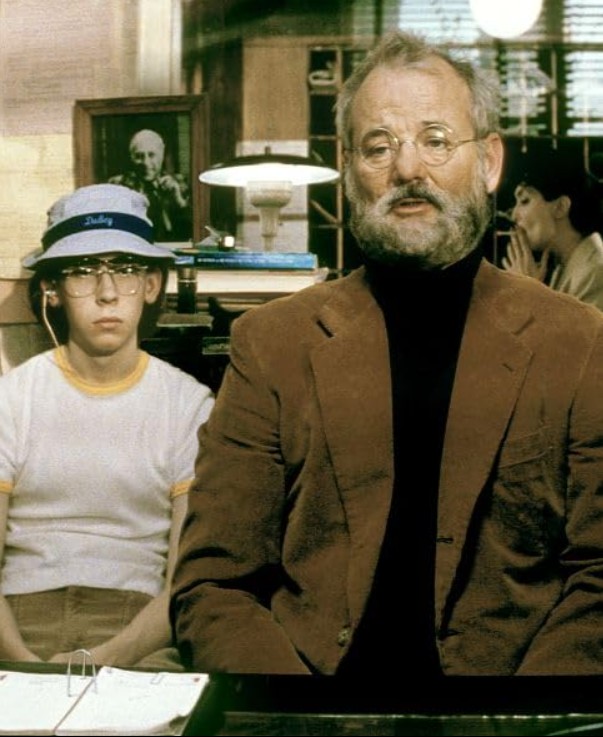
Since I’m reviewing The Royal Tenenbaums in honor of Stephen Lea Sheppard’s birthday, I decided to include this photo of Shephen’s character, Dudley, and Bill’s character, Raleigh. Photo created by Touchstone Pictures, American Empirical Pictures, Scott Rudin Productions, Vantage Media, and Buena Vista Pictures Distribution
My overall impression:
The 1998 Hallmark Hall of Fame movie, Saint Maybe, proves stories about family dysfunction can work. What helped Saint Maybe was not only providing a clear reason for the family’s dysfunction, but also showing the family using their dysfunction as motivation to make impactful changes in their lives. Like the 1998 film, The Royal Tenenbaums gives the audience reasons to explain why the titular family is dysfunctional. However, the impactful changes in the Tenenbaum family’s lives don’t happen until toward the end of the film. In my opinion, these changes should have been more gradual throughout the story. What I can appreciate about The Royal Tenenbaums is the brutally honest approach to the subject of family dysfunctionality. A sense of realism was brought to the story because of this creative decision. But as I stated in the introduction of this review, Stephen Lea Sheppard is the reason I sought out The Royal Tenenbaums. His character’s bluntness left a memorable impression on me and even reminded me a bit of Harris Trinsky. So, if you’re reading this, Stephen, I just want to say Happy Birthday and thank you for making Harris Trinsky a sparkling, shooting star in our landscape known as entertainment.
Overall score: 7 out of 10
Have you seen The Royal Tenenbaums? What stories about family dysfunction do you think work in film? Please tell me in the comment section!
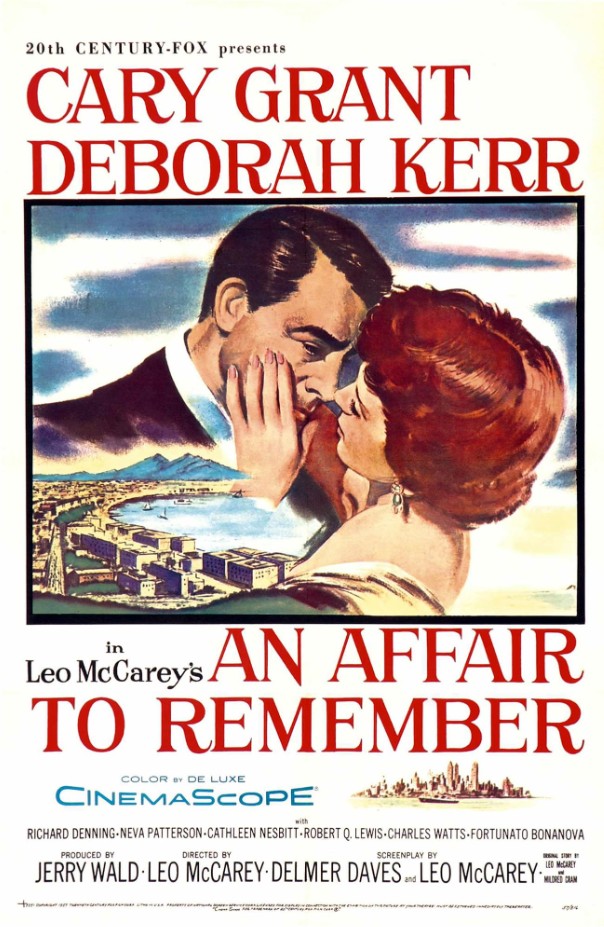
January’s theme for Genre Grandeur seems fitting; “Movies That Celebrate a New Year”. When I learned this was the theme of this edition of Genre Grandeur, I was excited because I don’t often receive an opportunity to review New Year’s themed films. As I was looking for a movie to select, I learned the protagonists in 1957’sAn Affair to Remember meet on New Year’s Eve. With this piece of information in mind and because An Affair to Remember was recommended by Maddy (from Maddy Loves Her Classic Films) as well as Emily (from The Flapper Dame), I found the perfect time to check out the 1957 picture! Out of all the actresses I’ve talked about on 18 Cinema Lane, Deborah Kerr is the one I’ve discussed the most. As of early 2026, I have reviewed ten of her films, with An Affair to Remember now being the eleventh film. But some of these pictures have been better than others. How will An Affair to Remember stand against the aforementioned ten titles? Check out my review to find out!
An Affair to Remember(1957) poster created by Jerry Wald Productions and Twentieth Century Fox
Things I liked about the film:
The on-screen chemistry: In a movie like An Affair to Remember, where the story heavily revolves around one romantic relationship, it’s important to cast an actor and actress who possess such strong on-screen chemistry. This element of their combined performance will help them sell the believability of their characters’ relationship to the audience. As soon as their characters, Terry and Nickie, first meet in An Affair to Remember, I could immediately sense the strong on-screen chemistry between Deborah Kerr and Cary Grant! The fluidity of their acting abilities allowed them to compliment each other’s performance. Clever, witty banter also worked in their favor because of how it was written and delivered. Because of the combination of acting, screenwriting, and on-screen chemistry, Cary and Deborah helped create a couple that was captivating to watch!
The dialogue: When a film’s screenwriting is good, the dialogue of the characters can sound realistic. But if the screenwriting is thoughtfully and carefully curated, like in An Affair to Remember, the characters are allowed to say what’s on their minds and hearts in eloquent and even profound ways. As Nickie and Terry visit Nickie’s grandmother, Janou, Terry confesses how she’d like to stay in Janou’s garden forever. Janou then responds by telling Terry, “It [the garden] is a good place to sit and remember, but you have still to create your memories”. By Janou saying this to Terry, she is kindly yet artfully encouraging Terry to create her own space of reflection and tranquility. Later in the movie, when Terry and Nickie are creating their plan to reunite in six months, they agree to meet at the Empire State Building. Terry explains how “It’s the nearest thing to heaven we have in New York”. While I’ve always known the Empire State Building held great importance within New York City, I’ve never heard it described the way Terry described it before. Because the dialogue in An Affair to Remember received such quality screenwriting, I was given the opportunity to see an iconic landmark in a completely new way!
Janou’s garden: As I talked about the dialogue in An Affair to Remember, I brought up how Terry wants to stay in Janou’s garden forever. Reflecting on this part of the set design, I can understand why Terry would fall in love with this space! The enclosed garden prominently displays a large tree with green leaves and red flowers. Bright hues of other flowers burst within the garden. A small circular pond greets visitors, with yellow and white flowers floating over the tranquil water. There’s even a connected chapel both Terry and Nickie retreat to. Though Janou’s garden was shown in An Affair to Remember for only a limited number of scenes, it left a memorable impression!
New Year’s Eve’s limited incorporation: I said in the introduction of this review how Terry and Nickie meeting on New Year’s Eve is one of the reasons why I selected An Affair to Remember for this month’s Genre Grandeur. Based on that aforementioned detail, I believed the holiday would play a bigger role in the story. But when I watched the 1957 movie, I discovered New Year’s Eve is actually an afterthought. If it wasn’t for the passengers on the SS Constitution singing “Auld Lang Syne”, I wouldn’t have known Nickie and Terry’s cruise was taking place around New Year’s Eve. Had the SS Constitution’s passengers participated in counting down to midnight or some of the characters talked about their New Year’s resolutions, it would have better established when the story was taking place.
Scenes that feel like padding: IMDB lists An Affair to Remember’s run-time as one hour and fifty-five minutes. However, some scenes feel like they are padding out the story just to satisfy this run-time. The musical number, “The Tiny Scout (He Knows You Inside Out)” easily comes to mind. I recognize this musical number, as well as the musical number, “Tomorrow Land”, were intended to emphasize the direction Terry’s career has taken. But, in my opinion, featuring only one of these musical numbers would have been enough to make this point. If An Affair to Remember’s creative team had cut scenes like “The Tiny Scout (He Knows You Inside Out)” musical number, the film’s run-time would have been trimmed down.
A drawn-out story: Like I just mentioned in this review, an hour and fifty-five minutes is the run-time for An Affair to Remember. This run-time seemed to give the film’s creative team an excuse to draw their story out. The first half of the movie builds up to the affair of Nickie and Terry. Their affair doesn’t come to fruition until the movie’s halfway point. The second half of the movie chronicles how Terry’s and Nickie’s life turned out after their cruise. Personally, I don’t think the affair’s build-up needed to last half the film. With a tighter script, An Affair to Remember not only could have received a short run-time, the story could have also reached its intended points sooner.
Based on Deborah Kerr’s movies I’ve seen, the quality of these pictures has fluctuated. While I liked The King and I and The Chalk Garden, I wasn’t a fan of Marriage on the Rocks. But I found An Affair to Remember to be just ok. While the on-screen chemistry between Deborah Kerr and Cary Grant was strong and the dialogue was well-written, I didn’t like how drawn-out the story was. Plus, some scenes felt included simply to pad out the script to satisfy the run-time. However, the most disappointing part of An Affair to Remember was how New Year’s Eve was treated as an afterthought. Before seeing the 1957 picture, I was led to believe the holiday would play a larger role in the story. My first movie selected for 2026’s Genre Grandeur was not the best, but not the worst. Hopefully, this year-long blogathon will introduce me to stronger films.
Overall score: 6.2-6.3 out of 10
Have you seen An Affair to Remember? Which film from Deborah Kerr’s or Cary Grant’s filmography would you like to see me review next? Let me know in the comment section!
2025 has been a strange year for 18 Cinema Lane. That’s because most of the movies I’ve seen and/or reviewed this year have been ok or fine. After seeing so few good or bad films in 2025, I wasn’t able to create separate top ten best and worst movies lists like in years past. So, instead, I wrote a combined list where I discuss the movies I saw this year that I liked and didn’t like. What’s also different about this year’s end of year list is how there are no Honorable Mentions, due to how few good movies I saw in 2025. But there are two Dishonorable Mentions; Recipe for Murder and Black Bag. The only reason why these films are considered Dishonorable Mentions is because I DNFed (did not finished) both of them. For this year’s list, I will start talking about 2025’s worst movies then end the list by talking about 2025’s best movies. If I reviewed any of the movies on my list, I will provide a link to those reviews.
Lifetime movies, like Hallmark movies, are not created equally. The 2024 film, Stalked by My Amish Boyfriend, is just one example of this statement. While it was interesting to see and hear how information about Amish culture was woven into the story, that part of the script couldn’t overshadow the major flaws of the movie. I was frustrated by how some characters would make dumb decisions simply for the sake of making dumb decisions. Stalked by My Amish Boyfriend was also, in my opinion, a mostly forgettable film. This is the reason why the 2024 picture is at the bottom of my list.
6. She Wore a Yellow Ribbon
As I said in my review of She Wore a Yellow Ribbon, I expected the 1949 movie to be an action-packed, suspenseful, and even intriguing story. What I got instead was an underwhelming film that prioritized presentation over product. I praised She Wore a Yellow Ribbon for its pretty looking scenery. But a photogenic background was unable to save the film from its weak script. A limited amount of action took away a lot of the story’s suspense and intrigue. It also doesn’t help how I only became familiar with most of the characters instead of truly getting to know them. She Wore a Yellow Ribbon is one of two movies I saw this year that almost made me fall asleep.
Kind Hearts and Coronets is the second film I saw in 2025 that almost made me fall asleep. But the flaws in this movie greatly differ from She Wore a Yellow Ribbon’s emphasis on scenery over substance. Despite Kind Hearts and Coronets being classified as a “comedy”, I didn’t laugh at all while watching the film. I also had no idea what the story’s moral was supposed to be, due to the moral being treated as an afterthought. Like I said in my Kind Hearts and Coronets review, I’m not entirely sure what this movie was trying to say. That lack of clarity not only makes the movie underwhelming, it also makes the movie confusing.
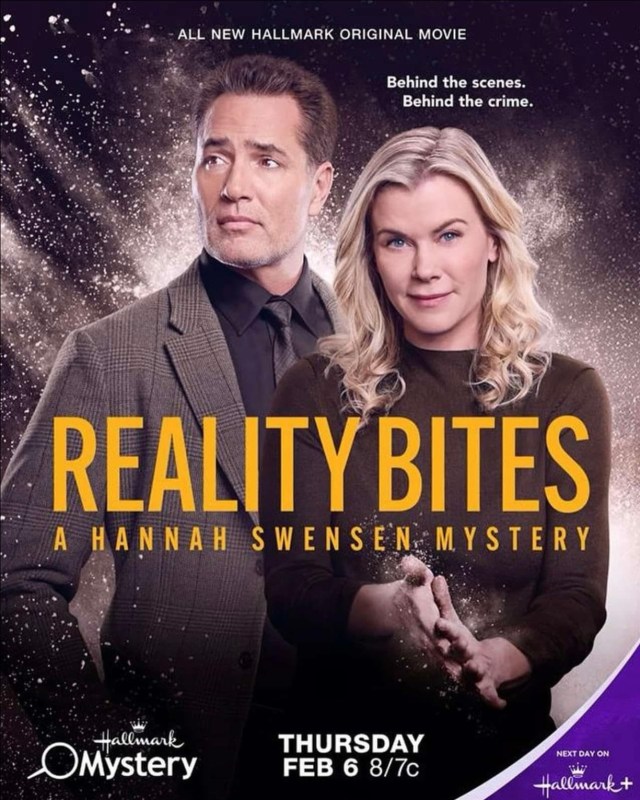
Having Reality Bites: A Hannah Swensen Mystery on my worst movies of the year list and finding Pie To Die For: A Hannah Swensen Mystery slightly better than its predecessor feels like déjà vu. That’s because One Bad Apple: A Hannah Swensen Mystery was placed on my worst of 2024 list, with its follow-up, A Sprinkle of Deceit: A Hannah Swensen Mystery, being slightly better. Though Reality Bites: A Hannah Swensen Mystery had its own set of flaws. Forced humor felt straight out of a sit-com, especially when Delores was involved in the story. As I said in my review, I wondered why a laugh track was missing. Both of the film’s mysteries contained such a small sense of urgency, the run-time felt a bit drawn-out. The story’s overall intrigue was weaker due to this flaw. If the Murder, She Baked/Hannah Swensen series continues in 2026, I’d like to see the quality become more consistent.
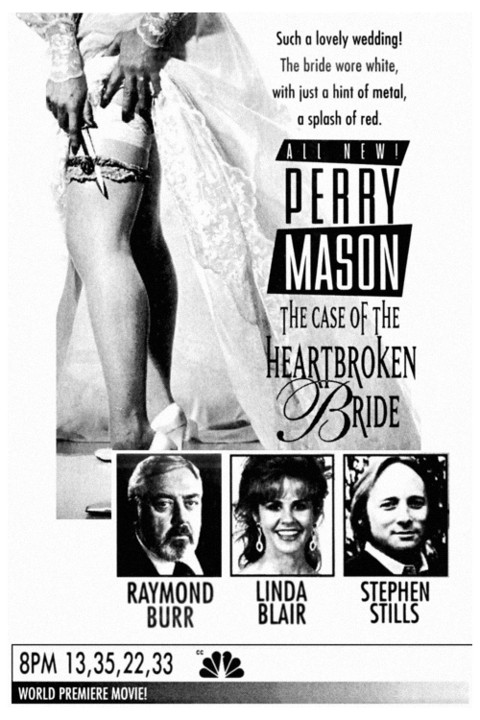
Perry Mason: The Case of the Heartbroken Bride is the most disappointing movie I saw in 2025. There were so many missed creative opportunities in this story, the film itself was under-cooked and uninspired. The movie was sometimes boring because of the lack of urgency. Seeing Perry, Della, and even Kevin meanderingly take their time building a legal case sucked the energy out of the story. I said in my review how any movie series boasting over ten titles was going to have at least one “bad day at the office”. I also said in my review how Perry Mason: The Case of the Heartbroken Bride was one of those days for the fictional detective.
This 2014 movie is a perfect example of Hallmark putting the cart before the horse. Instead of creating a solid stand-alone film that could have naturally led to more chapters, the network put more effort into trying to build the foundation for a potential series. Parts of this story didn’t make sense. One glaring example is when an itinerary shows the protagonist couple’s plans of going dancing at 11 p.m. on Saturday then going to church at 8 a.m. on Sunday, begging the question of when these characters were supposed to go to sleep. The on-screen chemistry between Cameron Mathison and Rachel Blanchard made their characters, Henry and Sunday, feel less like a married couple and more like a couple who are about to start dating. It’s, honestly, a shame My Gal Sunday wasn’t a stronger picture. Mystery stories about married couples are uncommon from Hallmark, so this 2014 story could have offered something unique to the network’s table.
1.Mystery by the Book
This film actually has two titles; Mystery by the Book and Key to Love. However, I saw the movie on Great American Family under the title, Mystery by the Book. Therefore, I will be referring to that title for the sake of my list. For a movie with the word ‘mystery’ in the title, the story’s mystery is an afterthought, which makes the title itself very misleading. Instead, the characters develop other priorities, like playing dress-up and tapping glasses four times during one dinner date. Parts of the script don’t make sense, like how the protagonists find a treasured antique key. Mystery by the Book is even so bad, it’s, at times, unintentionally funny. A perfect example is when Corey Sevier’s character, Josh, is looking for a set of keys, only to find a set of keys seconds later on a key hook labeled “Keys”. Thank goodness Great American Family’s Ainsley McGregor Mysteries series is growing stronger in quality. But if the network wants to expand their mystery library, they have a long road ahead of them.
Perry Mason: The Case of the Heartbroken Bride poster created by Fred Silverman Company, Viacom Productions, Dean Hargrove Productions, National Broadcasting Company, and Viacom
I’m still shocked by how the 1925 version of The Phantom of the Opera was never included on any of American Film Institute’s 100 movies lists, even months after I reviewed the film. Looking at everything the movie has to offer, I believe there is an argument to be made for its inclusion on, at least, one of those lists. Lon Chaney’s performance alone highlights how make-up, body language, and even the eyes can enhance an acting performance. Each area of the Opera House was presented through color coded film, which gave the movie a unique identity. What also helps 1925’s The Phantom of the Opera standout is how the cinematic lens showed the audience the expansive nature of storytelling. This is why, in my opinion, the story of the Phantom and his opera house is better suited for film than the stage.
For an introduction to Bruce Lee’s filmography, I think Fist of Fury is a good one! The martial arts choreography was definitely one of the strengths of this film. But the movie contained other aspects I liked as well. Bruce’s portrayal of Chen is a reason why Fist of Fury was so memorable. Clever writing and higher stakes woven into the script create a story that was clever, suspenseful, and intriguing. Because of how much I enjoyed watching Fist of Fury, I hope to check out more of Bruce’s movies in 2026!
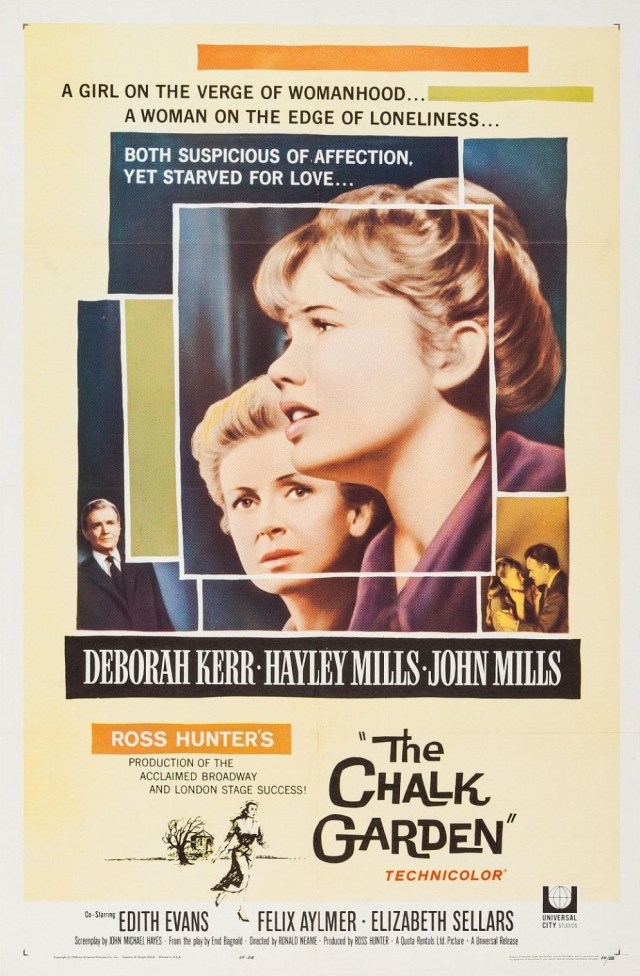
Even though I reviewed this film back in February, I still think about what Laurel said about not liking being told “good morning”. How well-written the dialogue was is one of the reasons why I remember Laurel saying, “what is a good morning to someone else is rarely a good morning to me”. Speaking of Laurel, Hayley Mills’ utilization of animated expressions and a variety of emotions helped the audience see how complex her character truly is. But Hayley is not the only actress whose performance was strong. The Chalk Garden is a movie where every actor and actress does a great job with the acting material they were given. The 1964 presentation is part character study, part mystery that works!
The Night Before the Night Before Christmas is another movie I saw (and reviewed) this year where it was difficult to choose a favorite acting performance. The strength of the cast’s acting abilities not only made watching the story unfold more enjoyable, it even helped characters become more likable. Emphasizing the theme of giving painted a portrait of Santa I hadn’t really thought of before; someone who has a reputation for giving. It was also a clever way to remind viewers of one of the Christmas season’s important components. How Christmas activities were included in the script was a breath of fresh air as well. As I said in my review, I wish Hallmark went back to creating titles that didn’t rely too much on a formula, tropes, and/or cliches.
The Chalk Gardenposter created by Quota Rentals Limited, Ross Hunter Productions, and Universal Pictures
4. Ben-Hur: A Tale of the Christ (1925)
It’s amazing how two movies on this year’s best films list not only turned 100 years old, they also utilized color coded film to their advantage! But what sets Ben-Hur: A Tale of the Christ apart from The Phantom of the Opera is how title cards went above and beyond in Ben-Hur: A Tale of the Christ due to how well-written they were. Another aspect that distinguishes Ben-Hur: A Tale of the Christ is the cinematography’s capturing of the scope of the film. Long and medium shots effectively showcased a world that looked and felt larger than life. The visual presentation of the movie was certainly impressive. However, Ben-Hur: A Tale of the Christ found a balance between style and substance!
Despite being the most recently reviewed movie on my list, The Man Who Invented Christmas is one of the best biopics I’ve ever seen! How the creation of A Christmas Carol lent itself to exploring Charles Dickens’ life story brought a unique element to the biopic genre. Watching Charles’ iconic tale come to live, literally and figuratively, provided the film a creative and memorable identity. The “Easter Eggs” related to A Christmas Carol sprinkled throughout the story was an engaging way to stay invested in the movie. The Man Who Invented Christmas is a solid Christmas title that would make a good double feature with I Heard the Bells.
I first talked about The Wild Robot in my list of The Top Ten Best Stand-Alone Films. Even though I published that list back in March, the 2024 animated movie has still held up as one of the best titles I saw this year! Like I said in The Top Ten Best Stand-Alone Films list, the animation was gorgeous, appearing as a blend of paintings and priceless photographs. A pleasant surprise was how much emotional depth the story contained. What adds a sense of timelessness to the production was the abundance of good messages and themes. While it’s too early to say how The Wild Robot will stand in the test of time, I think it has potential.
1.An Old Fashioned Thanksgiving
I actually revisited this film in preparation for my review of An Old Fashioned Christmas. Watching An Old Fashioned Thanksgiving again after so many years reminded me why I love this movie! Attention to detail and historical accuracy created the illusion of taking the audience to another time and place. How the messages and themes of the Thanksgiving holiday were woven into the story allow An Old Fashioned Thanksgiving to truly embrace the holiday itself. The more I think about the 2008 movie, it makes me surprised it wasn’t a Hallmark Hall of Fame presentation. My belief is due to An Old Fashioned Thanksgiving containing elements that would likely be found in a Hallmark Hall of Fame project, such as strong acting performances and a historical fiction lens.
The Man Who Invented Christmasposter created by The Mazur Kaplan Company, The Mob Film Company, Ingenious Media, Nelly Films, Parallel Films, Rhombus Media, and Bleecker Street Media















 18 Cinema Lane