Take 3: The Deep End of the Ocean Review

In the We Heart Siblings Stories Week event, hosted by Hamlette (from Hamlette’s Soliloquy), I wanted to review a movie that was more underrated. While searching for the perfect title, I discovered a list on IMDB about the best movies about siblings. On that list, the 1999 movie, The Deep End of the Ocean, was featured. Back in 2021, when I reviewed Taming Andrew, I remember Gill, from Realweegiemidget Reviews, recommending The Deep End of the Ocean for a future review. Since I try to write about a recommended picture every now and then and since the 1999 film fit the blogathon’s criteria, I found the perfect title to discuss! Similar to Taming Andrew, The Deep End of the Ocean revolves around a family whose child was kidnapped and eventually returned. Since the missing child in the 1999 movie has siblings, those children’s perspective are included in the story. So, without further delay, let’s begin this review of The Deep End of the Ocean.

The Deep End of the Ocean poster created by Columbia Pictures, Mandalay Entertainment, Via Rosa Productions, and Sony Pictures Releasing

Things I like about the film:

The acting: If a story includes a teenage character, it can be easy for that character to be written as an angsty or rebellious stereotype. But in The Deep End of the Ocean, Vincent never seemed like a stereotype or caricature.  Through Jonathan Jackson’s performance, Vincent came across as a realistic individual, trying his best to bottle up his emotions while putting on a brave face. After Ben/Sam was identified as Beth and Pat’s son, Vincent reveals to Beth how he has seen Ben/Sam around their neighborhood. When Beth questions him about this occurrence, Vincent’s demeanor is very nonchalant. His face displays a relaxed look and the tone of his voice sounds annoyed. But as the conversation continued, Vincent’s tone changed to irritation, his words sharply leaving his mouth. His eyes also took on an intense stare, which sometimes happens when Vincent is included in more dramatic scenes. This portrayal of Vincent was consistent with his younger self, keeping his feelings to himself while also trying to keep his family together. The subtle expressions from Jonathan Jackson do a good job at showing how emotions can trickle out of a character who has bottled up their emotions for so long.

Treat Williams is an actor I’m familiar with because of his inclusion in the Hallmark community. Through his involvement in projects such as Chesapeake Shores, his emotions and expressions have always come across as genuine. This is also the case for his portrayal of Pat in The Deep End of the Ocean. One morning, Pat brings up the idea of growing their family with his wife, Beth. At the start of this conversation, Pat appears happy, even adopting a playful tone in his voice. When Beth, portrayed by Michelle Pfeiffer, explains why she doesn’t want more children, Pat gradually becomes frustrated. This frustration grows into anger, with both Pat and Beth yelling at each other. The way this argument unfolds feels realistic, each character bringing up good points with a sense of honesty. Because of the acting abilities and on-screen chemistry of Michelle and Treat, scenes like this one don’t feel over-the-top or melodramatic.

Because this story revolves around the disappearance of Ben/Sam, I need to talk about Ryan Merriman’s performance. When I reviewed Taming Andrew, I said casting a young actor or actress who could, talent-wise, carry most of the movie is essential when a story revolves around a young character. The difference between Taming Andrew and The Deep End of the Ocean is how the whole family deals with Ben’s/Sam’s kidnapping in the 1999 movie, allowing Ryan is carry only part of the film. Despite this, Ryan still brought a good performance to the table, with a variety of emotions and expressions displayed. A great example was when Ben/Sam plays basketball with Vincent. The game starts off as a friendly duel, all smiles and playful banter. As the game continues, Ben/Sam becomes confused and even afraid as Vincent’s demeanor changes. Slowly but surely, Vincent allows his frustrations and irritation to get the better of him, going so far as to accidently hit Ben/Sam in the face. Ryan’s acting talents help Ben’s/Sam’s interactions with various characters create an interesting dynamic within the story.

Showing the process of searching and locating a missing person: As I just mentioned in this review, the difference between Taming Andrew and The Deep End of the Ocean is how the whole family deals with Ben’s/Sam’s kidnapping in the 1999 movie. Another major difference between the two films is how The Deep End of the Ocean shows the entire process of searching and locating a missing person. When Ben/Sam is first reported missing, the story addresses the sense of urgency in the 24 hours to about a week after Ben/Sam is kidnapped. A clock is routinely shown to indicate how much time has passed. A television interview and a cover of People magazine show the desperation Ben’s/Sam’s family has in finding Ben/Sam. Even the community surrounding Ben’s/Sam’s family come together to create posters and make phone calls. Even though Ben/Sam is found almost ten years later, this part of the process is also taken seriously, from addressing the need for a search warrant to placing Ben/Sam in a foster home before reintroducing him to his family. Because this entire process was shown in the movie, it gives the audience a sense of closure.

Featuring different perspectives: Like I’ve been saying in this review, The Deep End of the Ocean addresses how the whole family deals with Ben’s/Sam’s kidnapping. Each member of Ben’s/Sam’s family handles his disappearance differently throughout the course of the story. Beth is filled with grief over the situation. From giving up on her photography career to staying in bed most of the day, she carries a great sadness in her mind and heart. Meanwhile, Pat tries desperately to find the silver lining in life. He continues to work at a local restaurant while maintaining his dream of opening his own restaurant. Young Vincent is troubled by what happened, as well as becoming overshadowed by his little brother. He bottles up his feelings and tries to hold his family together. With the strength of the acting performances and the screenwriting, the dynamic among the family becomes fascinating to watch.

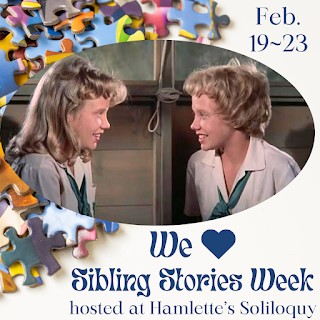
The We Heart Sibling Stories Week banner created by Hamlette from Hamlette’s Soliloquy

What I didn’t like about the film:

An underutilized perspective: When Ben/Sam was kidnapped, Kerry was just a baby. Years later, Kerry is confused by her mother’s, Beth’s, reaction after a chance encounter with Ben/Sam. This is because she has no recollection of the events surrounding her brother’s disappearance. Because of everything I just said, Kerry’s perspective didn’t add much to the overall story. In order to utilize Kerry’s perspective, I wish she was written as either a teenager or slightly younger than Vincent at the time of Ben’s/Sam’s kidnapping.

A few continuity errors: After the time jump from the late ‘80s to “nine years later”, Vincent is reintroduced as a sixteen-year-old with long hair. In the very next scene he’s featured in, Vincent is shown with short hair. No explanation is provided for the sudden change in hair style and none of the other members in Vincent’s family seem to notice this change. Yes, Officer Candy Bliss mentioned to Beth how Vincent needs a haircut. But that doesn’t explain this error in continuity. Even though this flaw was a minor one in The Deep End of the Ocean, the specific continuity issue I described is a glaring one.

A random dramatic moment: Toward the end of The Deep End of the Ocean, Vincent is arrested. To me, this dramatic moment felt random. I’m aware how this film is based on a book I haven’t read. But according to what the movie shows, Vincent never came across as a character who was a trouble-maker or someone seeking attention. Jonathan Jackson’s portrayal of Vincent shows this is a character that is not a stereotypical teenager displaying “teenage angst”. With the inclusion of Vincent’s arrest, however, it almost seems like that part of the story is contributing to the angsty and rebellious teenager stereotype.

Restaurant waitress and guest image created by Freepik at freepik.com. <a href=”https://www.freepik.com/free-photos-vectors/food”>Food vector created by freepik – http://www.freepik.com</a>. Image found at freepik.com.

My overall impression:

Throughout this review, I’ve been comparing and contrasting Taming Andrew and The Deep End of the Ocean. That’s because I was recommended The Deep End of the Ocean when I reviewed Taming Andrew. After seeing (and writing about) both films, it seems the only similarity these titles have is how the story revolves around a missing child being reunited with their family. If anything, The Deep End of the Ocean shares similar ideas and themes with The Face on the Milk Carton. Speaking specifically about the 1999 movie, this is a production I could take seriously. The acting performances were strong, creating a dynamic among the characters that was interesting to watch unfold. The screenwriting allowed the story and subjects within them to be honestly and respectfully told. But because of how serious the subject matter is, The Deep End of the Ocean does not have a high re-watchability rate. However, the film provides a mostly complete picture of the emotional rollercoaster the story’s family experienced.

Overall score: 7.3 out of 10

Have you seen The Deep End of the Ocean? Have you read the movie’s source material? Tell me in the comment section below!

Have fun at the movies!

Sally Silverscreen

Take 3: No Postage Necessary Review

For my review of No Postage Necessary, my original plan was to publish it on Valentine’s Day. This decision was made because, last year, I wrote about Evan Williams’ Hallmark film, The National Tree, in honor of the Christmas season. While working on my aforementioned review, I was also finding research for my upcoming Sally Solves a Mystery article. However, locating research for my Sally Solves a Mystery entry took longer than I expected. That means I ran out of time to publish my review of No Postage Necessary as originally intended. But I haven’t reviewed a movie since last week, so that’s why I’m still publishing my No Postage Necessary review. When it comes to “chick flicks” and “rom coms”, Hallmark has capitalized on both genres. But Hallmark is not the “end all, be all” when it comes to romantic comedies. Will No Postage Necessary mirror the quality viewers come to expect from Hallmark? Keep reading my review to find out!

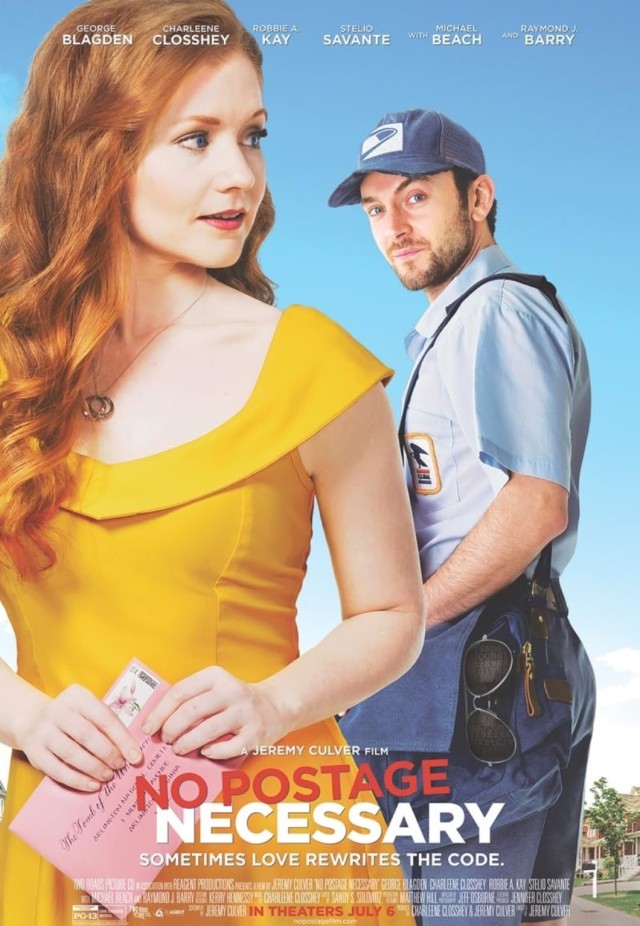
No Postage Necessary poster created by Two Roads Picture Co. and Deep C Digital

Things I liked about the film:

George Blagden’s performance: While I liked the acting throughout No Postage Necessary, the strongest performance, in my opinion, came from George Blagden. That, along with how George is the reason why I sought out this movie, is why I’ll be highlighting George’s performance in this review. The most notable aspect of George’s portrayal of the protagonist, Sam, is how effortless he makes his performance appear. Toward the beginning of the film, Sam is a pessimistic man, using sarcasm to combat disappointment. During these moments, the sarcasm rolls off George’s tongue, with the delivery being sharp. As the story progresses and Sam becomes attracted to the film’s female protagonist, Josie, his attitude begins to soften. George adopts a calm, yet playful demeanor to show Sam’s changing persona. The aforementioned effortlessness, along with George’s ability to readily change emotions and expressions, allows Sam’s transformation to come across as believable!

The on-screen chemistry: For any romantic comedy to work, there needs to be, at least, some on-screen chemistry between the lead actor and actress. If this on-screen chemistry is strong, it believably sells the protagonists’ romantic relationship to the audience. As I previously mentioned in this review, Sam becomes attracted to Josie. Throughout the story, Josie and Sam spend time together and eventually fall in love. While interacting with each other, I could sense on-screen chemistry between George Blagden and Charleene Closshey. These interactions were not only very sweet, but it seemed like their characters developed a sense of understanding between each other. I also want to point out how natural Sam and Josie’s interactions were in No Postage Necessary. The acting abilities of George and Charleene worked in this movie’s favor!

The messages and themes: Similar to other romantic comedies, especially from Hallmark, there were some good messages and themes within the script of No Postage Necessary. One major theme is taking responsibility for one’s own actions. Prior to the events of this movie, Sam was arrested and faced accountability for the crime he committed. He is on probation during the events of the film. But when he discovered a letter from Josie, Sam takes the initiative the turn his life around. He seeks out better employment so he can prove how self-sufficient he is. Sam even purchases a new car, trying to give Josie a good impression of himself. Because of the screenwriting and acting performances, this theme was delivered well in this movie!

Envelope with hearts image created by Freepik at freepik.com. <a href=’https://www.freepik.com/free-photo/hearts-and-pink-envelope-for-mothers-day_1950691.htm’>Designed by Freepik</a>. <a href=”https://www.freepik.com/free-photos-vectors/love”>Love image created by Freepik</a>. Image found at freepik.com.

What I didn’t like about the film:

The cyber security/Bitcoin subplot: George’s character, Sam, is a computer hacker who was arrested for his crime. Despite his criminal past, he still believes he could use his skills for good. Throughout the movie, Sam is accused by Agent Ames of stealing Bitcoins, even though Sam has never worked with Bitcoins before. While I’m aware Sam needed a conflict to work through, as well as a reason to change his ways, the overall tone of this subplot clashed with the cozy, sweet nature of the main romance plot. It felt like a Hallmark Channel movie tried to incorporate a Lifetime movie conflict into their script. This aforementioned subplot also, at times, seemed to serve a talking point for bigger, real-world issues. That prevented the film from completely adopting escapism.

Underutilized conflicts: In one of Josie’s letters, Josie shares how she wants to enroll her daughter, Daisy, into a prestigious school for gifted children. This decision was sparked by Daisy’s inability to socialize with her peers, to the point she is physically harming other students. But during the movie, Josie spends more time talking about what she wants to do instead of creating a plan to accomplish her goals. I know achieving goals and dreams takes time as well as determination. But in an hour and forty-four-minute film that prioritizes the main romance plot and the cyber security/Bitcoin subplot, this is one example of a conflict becoming underutilized.

Omission of George’s musical talents: When I published my editorial about why George Blagden and Evan Williams should go to Eurovision 2024, one of my arguments was George and Evan’s musical talents. I highlighted how both Evan and George are not only musically gifted as individuals, they also sound good together. With that said, I feel it was a missed opportunity not to include George’s musical talents in No Postage Necessary. In this movie, Josie shares with Sam how she has dreamed of becoming a singer. There’s even a scene where Josie performs with her former band at a local pub. If the creative team behind the movie knew they would be incorporating music into their production, they should have given George an opportunity to perform at least one acoustic musical number. Even a cover of Stevie Wonder’s “Signed, Sealed, Delivered (I’m Yours)” playing over a scene would have made sense.

Hand-written letter image created by Veraholera at freepik.com. <a href=”https://www.freepik.com/free-photos-vectors/background”>Background vector created by Veraholera – Freepik.com</a>. <a href=’https://www.freepik.com/free-vector/love-letter-pattern_1292902.htm’>Designed by Freepik</a>. Image found at freepik.com.

My overall impression:

Hallmark has gained a reputation of having some of their movies look and feel too similar to each other. This creative choice has caused viewers like myself to crave creativity and uniqueness from the network. No Postage Necessary tries to give their romantic comedy a different identity from other movies of this genre, including those from Hallmark. While I appreciate this effort at creativity, the tones of the main romantic plot and the cyber security/Bitcoin subplot clashed with one another, causing them to feel mismatched. When the movie focuses on the romantic plot, the story feels reminiscent of a Hallmark production. Even though there is cozy, sweetness shared between the protagonists and the messages and themes within the script are good, the creative team behind No Postage Necessary still found a way to tell their own story without appearing to copy Hallmark’s homework. If you’re a fan of George Blagden or have enjoyed his performance in other programs he has starred in, I’d recommend watching this film for his performance!

Overall score: 6.8 out of 10

Have you seen No Postage Necessary? Are there any romantic comedies you’d like to read about on my blog? Tell me in the comment section!

Have fun at the movies!

Sally Silverscreen

Take 3: Gilded Newport Mysteries: Murder at the Breakers Review

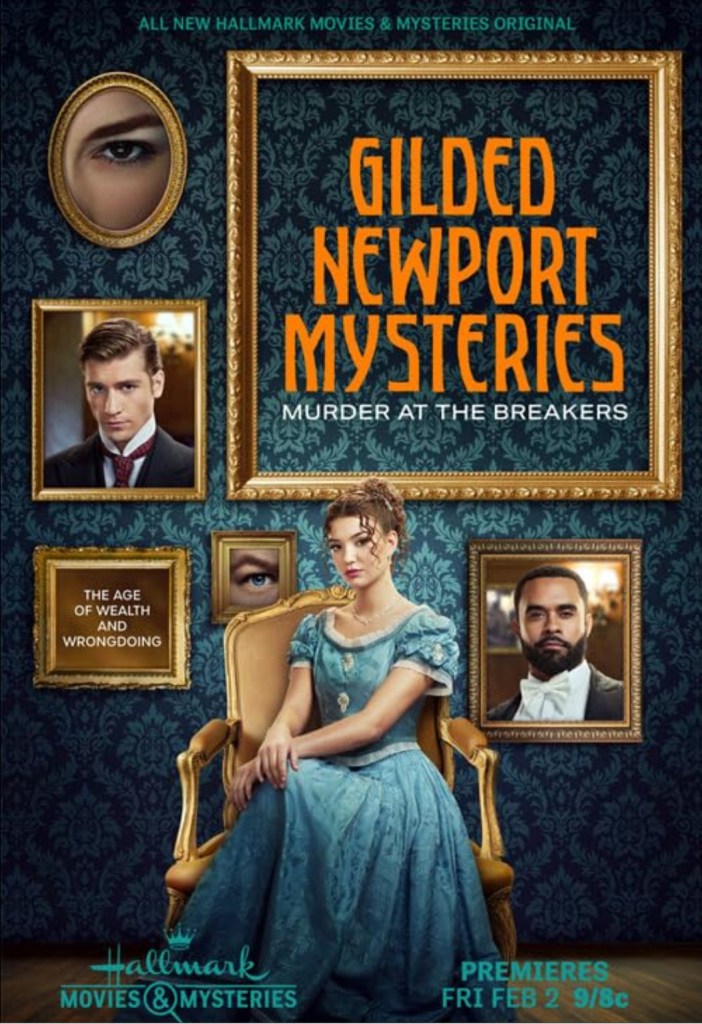
It’s been stated before on 18 Cinema Lane that my Hallmark related content is some of my most popular content. I’ve also mentioned how the mystery genre is the most popular one on my blog. Whenever Hallmark releases a mystery film through Hallmark Movies & Mysteries, that has, usually, been a recipe for success for my movie reviews. With all that said, I chose to write about the second Hallmark Movies & Mysteries film to premiere in 2024; Gilded Newport Mysteries: Murder at the Breakers! In my review of True Justice: Family Ties, I brought up how Hallmark’s newest mysteries boasted distinct identities. With Gilded Newport Mysteries: Murder at the Breakers, it is Hallmark’s first historical fiction mystery title! As I stated in my Word on the Street article about CrimeTime: Freefall, these new mystery movies from Hallmark Movies & Mysteries have the potential to start a new series. So, let’s take a carriage ride and solve a mystery, as I review Gilded Newport Mysteries: Murder at the Breakers!

Gilded Newport Mysteries: Murder at the Breakers poster created by Front Street Pictures and Hallmark Movies & Mysteries

Things I liked about the film:

The acting: Once upon a time, Ali Skovbye starred on When Calls the Heart, portraying Abigail’s daughter, Becky. By appearing on the show, Ali was given the opportunity the work alongside various actors and actresses. While watching Gilded Newport Mysteries: Murder at the Breakers, I could tell Ali’s television experiences worked in her favor! Throughout the movie, Ali was able to maintain good on-screen chemistry and camaraderie with the other cast members! After Emma’s half-brother, Brady, is arrested, Emma visits Brady in jail. During their visit, Brady appears frightened, fear displayed in his eyes and concern woven into his speech. Not only is concern seen in Emma’s eyes, a mixture of concern and reassurance can be heard in her voice. Any time Brady and Emma interact, Ali Skovbye and James Drew Dean’s on-screen camaraderie shown through, thanks to their acting talents! In the film, Emma interacts with her friend, Harriet. Portrayed by Amira Anderson, Emma and Harriet’s friendship appears genuine, making the audience believe these characters were friends long before the events of the movie. Once again, the on-screen camaraderie worked because of Ali and Amira’s acting abilities!

The wardrobe: Attention to detail can make or break any movie, especially a historical/period film. One way attention to detail can be showcased is through the wardrobe. Emma is surrounded by elite society in Gilded Newport Mysteries: Murder at the Breakers. This social status is reflected in the characters’ attire. However, how wealthy a character is can be found in specific details. While Emma is connected to the Vanderbilt family, she doesn’t enjoy the financial benefits of being a Vanderbilt. At a debutante party, Emma wears a simple blue gown, displaying smaller details such as a lace collar, sparkly appliqués, and a little diamond necklace. Emma’s cousin, Gertrude, is also a wealthy relative. But her dress is a light pink gown covered in lace and featuring bigger puffy sleeves. Gertrude not only wore a bigger diamond necklace, she also wore a diamond tiara.

The set design: Wardrobe is not the only department where a film’s creative team can display attention to detail. In historical fiction or period specific movies, the set design can give the audience the illusion they traveled back in time. A creative team’s attention to detail can successfully pull off this illusion, as well as feature interesting design choices! In some of the homes in Gilded Newport Mysteries: Murder at the Breakers, stained-glass windows could either be seen in the background or in exterior shots. At Emma’s house, beautiful stained-glass windows featuring grapes were shown in the kitchen. Some homes also included fireplaces, boasting unique styles and designs. At Uncle Cornelius’ office, engraved wood patterns framed the fireplace. In another house, mosaic tiles surrounded the fireplace.

Hand-written letter image created by Veraholera at freepik.com. <a href=”https://www.freepik.com/free-photos-vectors/background”>Background vector created by Veraholera – Freepik.com</a>. <a href=’https://www.freepik.com/free-vector/love-letter-pattern_1292902.htm’>Designed by Freepik</a>. Image found at freepik.com.

What I didn’t like about the film:

Keeping track of who’s who: In any mystery story, there are a collection of characters. Most of these characters serve as potential suspects for the audience to speculate over. An abundance of characters were featured in Gilded Newport Mysteries: Murder at the Breakers. But some of these characters did not make frequent appearances in the film, with their names being brought up more than they were shown on screen. It should also be noted how this movie had a larger cast. All this made it difficult to keep track of who’s who.

A dialogue heavy story: Dialogue is an important component of any film. For the mystery genre, dialogue can contain clues and necessary information about the film’s case. In Gilded Newport Mysteries: Murder at the Breakers, there were few physical clues included in the story. This forced the characters to rely on dialogue to solve the mystery. The movie having a dialogue heavy story also forces the audience to pay attention to what the characters are saying. If an audience member misses one piece of dialogue, they will be confused by what is happening in the film.

A low sense of urgency: There is, typically, a sense of urgency in murder mystery stories. This is because the characters express desire to catch the guilty party quickly, in order to prevent more people from getting hurt. While there is a murder mystery included in Gilded Newport Mysteries: Murder at the Breakers, the overall sense of urgency was low. Emma’s involvement in elite society is prioritized throughout the story. The low sense of urgency in the movie also caused the story to feel a bit drawn out.

Magnifying glass image created by Freepik at freepik.com. <a href=’https://www.freepik.com/free-vector/magnifying-glass-with-fingerprint-in-flat-style_2034684.htm’>Designed by Freepik</a>. <a href=”https://www.freepik.com/free-photos-vectors/flat”>Flat vector created by Freepik</a>. Image found at freepik.com.

My overall impression:

Because Gilded Newport Mysteries: Murder at the Breakers is Hallmark’s first historical fiction mystery title, it allows the movie to stand out among the network’s other mystery programs. While this uniqueness can encourage viewers to check the movie out, the true question lies in if this uniqueness can serve a movie series. It’s unknown at this time if Gilded Newport Mysteries will inspire more than one film. But only speaking about Gilded Newport Mysteries: Murder at the Breakers, the 2024 release emphasizes style over substance. It’s obvious the creative team behind the movie cared about the presentation of their project. The finer details of the set and costume design allowed the film to feel immersive, giving the audience the illusion they traveled back in time. When it comes to the mystery itself, however, it could have been stronger. Keeping track of who’s who and a dialogue heavy story could leave some viewers confused as the movie moves along. The low sense of urgency within the story makes the film kind of feel drawn out. If there is another chapter given to Gilded Newport Mysteries, I’d like to see a crossover between Gilded Newport Mysteries and A Biltmore Christmas! Since both titles have some connection to Vanderbilt, it would be interesting to see the protagonists of both movies interacting with each other!

Overall score: 6-6.1 out of 10

Have you seen Gilded Newport Mysteries: Murder at the Breakers? Would you like to see Gilded Newport Mysteries develop into a series? Let me know in the comment section!

Have fun at the movies!

Sally Silverscreen

Take 3: A Horse Called Wish Review + 485 Follower Thank You

For this Blog Follower Dedication Review, I wanted to step away from the realm of Hallmark movies. I do enjoy reviewing Hallmark productions and writing about Hallmark related topics. But with my recent review of True Justice: Family Ties, my list of the top ten Hallmark movies that should have received a sequel, and my Word on the Street story about CrimeTime: Freefall, I wanted to offer my readers other cinematic titles through my articles. I just checked out a movie titled A Horse Called Wish. Though I have written about “horse films” before, these types of films are rarely featured on 18 Cinema Lane. Another reason why I chose to write about A Horse Called Wish is because the story not only takes place in Mauritius, the movie was filmed there as well. I haven’t heard of many stories or movies from this African country. In fact, A Horse Called Wish is probably the first I’ve come across. With that said, I wanted to see how a more unique perspective would impact the landscape of the “horse film”!

A Horse Called Wish poster created by Perplexia Pictures, Great Point Media, Red Rabbit Media, Two Oceans Production (TOP), and Jetpack Distribution https://www.imdb.com/title/tt11860462/mediaviewer/rm283290113/?ref_=tt_ov_i

Things I liked about the film:

Avoiding “horse movie” cliches: Within the realm of “horse movies”, there are certain cliches found within each story. While some of these cliches can be found in A Horse Called Wish, the creative team behind the film avoided other cliches. One cliché from “horse movies” is the “misunderstood horse” cliché, where the horse in question is either a wild horse that would rather be set free by the protagonist or the horse is a descendent of wild horses and has a spirit that can’t be tamed. While the titular horse, Wish, is misunderstood, he is perceived that way for different reasons. I won’t be discussing those reasons because I don’t want to spoil the movie for any of my readers who are interested in watching it. In “horse movies”, one of three landscapes will be commonly featured in the story. These types of landscapes are either desert, mountainous, or the “manicured lawn” (where riding academies or stables are surrounded by lawns and foliage that appear well-cared for). Since A Horse Called Wish takes place in and was filmed in Mauritius, the landscape surrounding the characters and horses is tropical. Through long and medium shots, volcanic mountains, green fields, and even glimpses of the ocean display the natural beauty Mauritius has to offer. This creative decision also gave A Horse Called Wish a unique identity among other “horse movies”!

Hannah Gonera’s performance: No matter the genre, it’s important for a story’s main character to be a likable individual with a good personality. Cindy Moreau, the protagonist of A Horse Called Wish, was able to be this type of character thanks to Hannah Gonera’s performance! Hannah’s expressions and reactions were fluid, appearing seamlessly throughout the movie. The strength of Hannah’s acting abilities made her portrayal of Cindy seem realistic! Cindy’s interactions with other characters proves this point. Sometimes, Cindy confides in her boss from the food truck where they work together. These scenes are reminiscent of Daniel and Mr. Miyagi from The Karate Kid, as Cindy is guided by her mentor. Whenever her boss gives useful advice or encouraging words, Cindy always looks appreciative. From being thankful over receiving a job interview to being disappointed by her mother’s refusal for Cindy to work at a local riding academy, Cindy’s emotions came across as genuine.

The messages and themes: “Horse movies” will typically include themes and messages that younger viewers can learn from and older viewers can appreciate. Within A Horse Called Wish, there are some good messages and themes that were incorporated in the story well! Cindy is passionate about equine sports, from constantly reading a book about horses to frequently visiting a local riding academy. Toward the beginning of the movie, she accepts a job as a stable-hand. I once heard a quote about dreams not working unless you do. As montages of Cindy cleaning the stables and taking care of the horses are shown on screen, she lives by that quote as she creates a good foundation of being a good equestrian. I also heard a quote about finding a job that makes you look forward to go to work. Through another montage, viewers can see Cindy excited to go to the riding academy, as she displays a smile on her face every time she wakes up in the morning. The message of actively working toward dreams and the theme of finding a job that makes you happy can give viewers advice to apply to their lives.

White horse image created by Gabor Palla at freeimages.com. “FreeImages.com/Gabor Palla.”

What I didn’t like about the film:

Contradictory dialogue: In A Horse Called Wish, there were a few times when the dialogue contradicted the characters’ surroundings. Toward the start of the movie, two riding academy students (Elizabeth and Charlotte) visit the food truck Cindy works at. This food truck has restaurant space near the truck for patrons to sit down and eat their meal. While Cindy is waiting on their table, Charlotte claims the salt shaker has fallen on the floor. However, the restaurant space is outdoors, so the salt shaker fell on the ground. Later in the movie, Elizabeth is trying to have a conversation with her father. In order to quickly finish the conversation, he tells his daughter to go home and go to bed. Based on the lighting surrounding these characters, it appears this conversation took place in the afternoon.

Limited scenes of equine performance: One of the staples of a “horse movie” is the inclusion of equine performance. Whether it’s equine competitions, horses performing stunts, or simply seeing horses jumping, these types of equine performance can look impressive on screen and can provide a story with action and excitement. While there was equine performance found in A Horse Called Wish, these moments were far and few between. Since the story’s riding academy prioritizes the English riding style, there is a show-jumping competition featured in the film. However, this competition serves as the story’s climax, meaning it doesn’t take place until the movie is almost over. Most of the time, horses are shown trotting or walking in a canter.

Too many story elements: As I mentioned earlier in this review, Cindy is passionate about equine sports, willing to work to make her dreams a reality. But this serves as only one element of the overall story. Other story elements are included in the script, such as Cindy dealing with bullying and Cindy’s mother looking for employment. Because of how many story elements were featured in the film, some parts of the story happened too quickly. It also caused the overall story to feel bogged down. With that said, I wish A Horse Called Wish had one main plot and two subplots.

Horse with saddle photo created by Topntp26 at freepik.com. <a href=’https://www.freepik.com/free-photo/stallion-black-equine-race-sky_1104246.htm’>Designed by Freepik</a>. <a href=”https://www.freepik.com/free-photos-vectors/background”>Background image created by Topntp26 – Freepik.com</a>. Image found at freepik.com.

My overall impression:

Before I share my thoughts on A Horse Called Wish, I want to thank every follower of 18 Cinema Lane! With these special Blog Follower Dedication Reviews, I always try to find movies that my readers will enjoy and films that expand their cinematic horizons. I look forward to finding more titles my readers are excited to read about! Now, back to talking about A Horse Called Wish. While watching this movie, I could tell the creative team behind the movie had their hearts in the right place. With some of their creative decisions, A Horse Called Wish brought a more unique perspective and identity to the world of “horse films”. But the 2019 film shared qualities of other “horse films”, such as good messages and themes. A Horse Called Wish does have its flaws. These flaws, like limited scenes of equine performance, held the movie back from being a stronger production. What I do appreciate is how this film gave me an opportunity to watch a piece of cinema created in Mauritius. With the Summer Olympics on the horizon, it makes me wonder if, one day, we’ll see an equestrian from Mauritius winning a medal on the Olympic stage?

Overall score: 6 out of 10

Have you seen A Horse Called Wish? Are there any “horse films” you’d recommend for a future review? Let me know in the comment section!

Have fun at the movies!

Sally Silverscreen
Take 3: True Justice: Family Ties Review

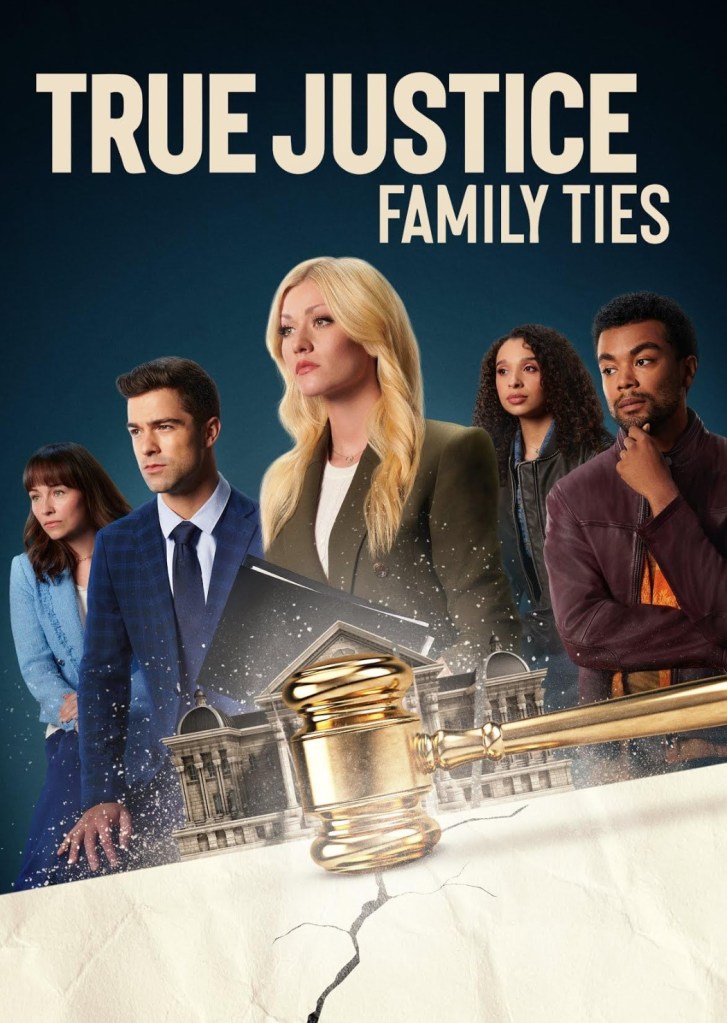
Recently, I’ve been referencing the newest Hallmark Movies & Mysteries title, True Justice: Family Ties; within my list of the top ten best movies I saw in 2023 and when I talked about CrimeTime: Freefall in a Word on the Street story. Because the mystery genre is the most popular one on my blog and since I haven’t reviewed a mystery film since last October, I chose True Justice: Family Ties as the first movie to review in 2024! The 2020s has, so far, not been a strong decade for Hallmark Movies & Mysteries. When it comes to their mystery programs, the network has produced more stand-alone films, leaving only two series to continue. But as I mentioned in my aforementioned Word on the Street story, the three new mystery films premiering on Hallmark Movies & Mysteries this year, so far, have potential to create a multi-story series. It should also be noted how each of these three movies seem to have their own unique identity, allowing them to stand out against one another. Could True Justice: Family Ties be the start of a new chapter for Hallmark Movies & Mysteries? Turn the page on this review to find out!

True Justice: Family Ties poster created by Hallmark Movies & Mysteries

Things I liked about the film:

The acting: Katherine McNamara portrays the film’s protagonist, Casey. Throughout the movie, she tries to prove her brother, Marcus, was falsely accused of committing a murder. Even though Casey and Marcus shared only a few scenes together, both Katherine and Sam Ashe Arnold, the actor who portrayed Marcus, sold the idea their characters were siblings who truly cared about one another! In the scenes where Casey visits Marcus in prison, there is very present fear in Marcus’ eyes. You can even hear concern and uncertainty in his voice. While in prison, Marcus seems shaken up due to his surroundings. Meanwhile, the tears Casey sheds for her brother appear genuine. She looks and sounds heartbroken by Marcus’ fate. Because of Sam and Katherine’s performance, I wish these characters shared more scenes together.

True Justice: Family Ties is about a team of characters who come together to solve the film’s mystery. In order for this idea to work, it’s important to cast a group of actors who will make that on-screen teamwork appear believable. That was achieved in this movie, as the friendship among the “Justice Warriors” felt genuine, showcasing the camaraderie between these characters! One example presents Sarah and Liam discussing their plans for the future and what inspired them to make certain choices in their life. With Sarah being a law school student and Liam having his own private investigation business, differences are set aside to show them forming a friendship and getting along well with each other. Because of Alexander Nunez’s charisma and Marisa McIntyre’s believable performance, I could honestly see their characters forming a romantic relationship if True Justice: Family Ties became a series!

Utilized talents and skills: As I previously mentioned in this review, True Justice: Family Ties is about a team of characters who come together to solve the film’s mystery. To create a story with a good team of characters, each character needs to receive an opportunity to utilize their respective skills and talents. This movie allows Casey and her friends to use their talents, skills, even their intern/business experiences to their advantage. Because each character brings something different to the table, every character plays a role in solving the case. Sarah is a law school student who is also an intern at a forensic office. She is able to utilize her knowledge of the law and her internship to find fingerprints and rule out suspects. This was a great way to make Sarah a valued member of the “Justice Warriors”!

A unique perspective: A decade ago, Hallmark created the Darrow & Darrow mystery series. In that series, the characters solved mysteries by approaching each case from a legal perspective. If someone were to only read the synopsis of True Justice: Family Ties after watching Darrow & Darrow, they would wonder what the difference between these two titles are. Casey and her friends are law school students in True Justice: Family Ties. The only exception is Liam, as he has his own private investigation business. The overarching story in the Darrow & Darrow series primarily revolves around Claire Darrow and Miles Strasberg. As I mentioned in this review, the story of True Justice: Family Ties focuses on a group of characters instead of just the male and female protagonist. These creative differences allow the 2024 mystery film to adopt an identity that sets it apart from its predecessors and other current mystery titles!

Law school textbooks image created by Peter Skadberg at freeimages.com. “FreeImages.com/Peter Skadberg.”

What I didn’t like about the film:

Situations happening too quickly: Fans of the mystery series from Hallmark Movies & Mysteries will know that solving a mystery is a process. This process involves multiple steps, with these steps broken down to allow the audience to solve the mystery alongside the protagonist(s). In True Justice: Family Ties, however, situations happened too quickly. From discovering suspects to finding clues, these steps were sped up, making the mystery solving less interactive. Even the reveal of the guilty party happened so fast within the film’s last ten minutes.

Weak on-screen chemistry: In most of Hallmark Movies & Mysteries’ mystery series, the main male and female protagonist will form a romantic relationship over the course of the series. Sometimes, the foundation of that relationship will be set up in a series’ first film. If True Justice: Family Ties becomes a series, it is assumed Eli and Casey will become the main romantic couple. But, in my opinion, Katherine McNamara and Markian Tarasiuk did not have strong on-screen chemistry. This is because their characters went back and forth between disliking each other and being friends. I recognize the screenwriters were attempting to incorporate the ‘enemies to lovers’ trope into the story. But in True Justice: Family Ties, that trope was not effective.

A random romance: Nikki Deloach and Benjamin Ayres star in True Justice: Family Ties as Professor Ambrose and D.A. Quinn. When returning to class to retrieve her notebook, Casey discovers Professor Ambrose and D.A. Quinn are sharing a romantic relationship. To me, this part of the story was random. That is because a) prior to that scene, there was no indication these characters even knew each other and b) these characters appeared in only a handful of scenes. Maybe if D.A. Quinn and Professor Ambrose had been given their own subplot where they built their relationship over time, their romance wouldn’t seem so sudden.

Magnifying fingerprints image created by Balintseby at freepik.com. <a href=”https://www.freepik.com/free-photos-vectors/glass”>Glass vector created by Balintseby – Freepik.com</a>. <a href=’https://www.freepik.com/free-vector/fingerprint-investigation_789253.htm’>Designed by Freepik</a>. Image found at freepik.com.

My overall impression:

As of the release of this review, two other mystery films are scheduled to premiere on Hallmark Movies & Mysteries; Gilded Newport Mysteries: Murder at the Breakers and CrimeTime: Freefall. These movies, including True Justice: Family Ties, have potential to spark a multi-story series while boasting distinct identities. Even though it’s too early to determine what is in store for these titles, I can share my thoughts on True Justice: Family Ties! The first film to be released on Hallmark Movies & Mysteries this year was, in my opinion, just ok. The mystery wasn’t interactive enough for the audience because situations happened too quickly. Not only was D.A. Quinn and Professor Ambrose’s romance random, Katherine McNamara and Markian Tarasiuk’s on-screen chemistry was weak due to the screenwriting. However, the movie did have its strengths, such as the acting performances and how each character was able to utilize their skills and talents. It was also nice to see a story focus on a group of characters, providing a different type of story for Hallmark’s collection of mystery titles. At the end of the year, it’ll be interesting to see how True Justice: Family Ties compares to Hallmark’s other 2024 released movies!

Overall score: 6 out of 10

Have you seen True Justice: Family Ties? Are you excited for Hallmark’s other mystery movies? Please tell me in the comment section below!

Have fun at the movies!

Sally Silverscreen
18 Cinema Lane Looks Ahead to 2024!

A new year comes new content and changes for 18 Cinema Lane! At the beginning of the year, I inform my readers of what they can expect for the rest of that year. Similar to 2023, I have four major announcements for 2024! But first, I’ll list my blog stats from the previous year!

Image by starline on Freepik

2023

Total Blog Posts: 87

Total followers: 33

Total Comments: 364

Total Likes: 358

Awards: 2

Participated Blogathons: 29

Total Movie Reviews: 362

Total Word on the Street stories: 1

Changing the ‘Welcome to 18 Cinema Lane!’ Message

For years, readers have been introduced to 18 Cinema Lane through the ‘Welcome to 18 Cinema Lane!’ message. Located on the right-hand side of the website, this message gives readers an idea of what they can expect from my blog. Since publishing that message in 2018, so much has changed on 18 Cinema Lane. Therefore, in the near future, I will be rewriting the message, to better reflect the current state of my blog.

Changing the format of ‘Sally Solves a Mystery’

Last year, I published the first post of my series, Sally Solves a Mystery. This series explores television related mysteries I find interesting. While I will continue the Sally Solves a Mystery series in 2024, it will become an annual series. Posts will now be published once every year.

Readathon Plans

Since 2022, I’ve been participating in the Buzzwordathon readathon. I also participated in the Eurovisionathon readathon for the first time in 2023. Looking back on last year, though, I thought about how I was devoting so much time to two readathons that required a significant amount of preparation. Therefore, I will participate in 2024’s edition of Eurovisionathon but take a break from Buzzwordathon. However, I will still publish my reviews for October, November, and December’s books from 2023.

New Series – ‘Comparing with the Critics’

As I have said on 18 Cinema Lane, film is subjective. This statement also applies for critic reviews, including those from household names like Gene Siskel and Roger Ebert. There are times where I have disagreed with Ebert and Siskel. But I was curious to know how often I disagreed with the legendary critics. Cue the introduction of my new series, Comparing with the Critics! In this series, I will choose one movie from each of the ‘Worst of’ and ‘Best of’ episodes of Sneak Previews/At The Movies. After watching the chosen films, I will write an editorial style review explaining why I agree or disagree with Siskel, Ebert, or any critic that appeared on the show.

Image by starline on Freepik

Have fun in 2024!

Sally Silverscreen

Take 3: Christmas Princess (2017) Review

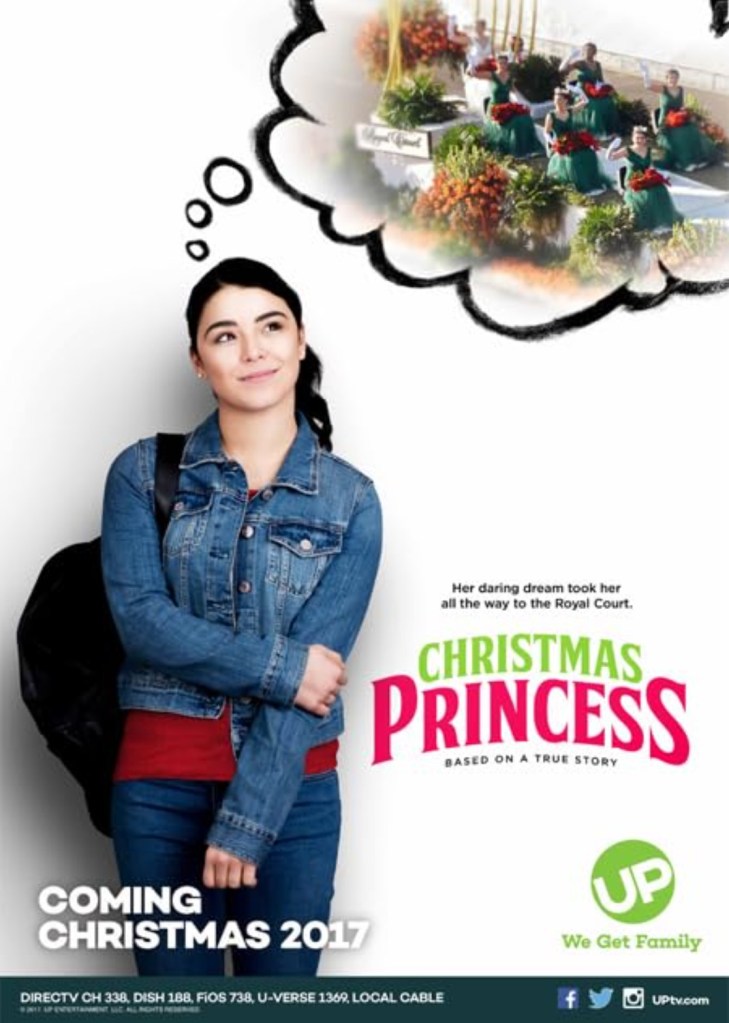
My last movie review was for the 1983 adaptation of The Best Christmas Pageant Ever. Revisiting the film after so many years, I learned the production was more of a “very special episode” of a television show than a movie. Wanting to revisit more movies of Christmas past, I remembered how much I liked the 2017 made-for-TV project, Christmas Princess! In the early days of 18 Cinema Lane, I mentioned how Christmas Princess was my favorite film of 2017. I recall enjoying the movie more than Hallmark’s offerings that year. But like any film from the past, perspectives can change. A movie once loved may not hold up when viewed twice. However, a film that was labeled as “bad” may not seem so bad the second time around. Not having seen Christmas Princess in six years, I wanted to review the film to see if any of my opinions on it have changed!

Christmas Princess (2017) poster created by Entertainment One and Really Real Films

Things I liked about the film:

The acting: A well-acted scene in Christmas Princess is when Donaly, portrayed by Nicole Muñoz, comes face-to-face with her biological mother, Roberta, portrayed by Kaaren de Zilva. Remembered by Donaly as a bitter woman, Roberta still carries a chip on her shoulder. Anytime she speaks to Donaly, Roberta has a passive aggressive tone in her voice. She also has a pessimistic attitude and uses that attitude to try to belittle Donaly. In Roberta’s presence, Donaly appears small. There’s a grimace on her face, troubled at what Roberta might tell her. But when Roberta asks about Donaly’s siblings, Abraham and Emily, Donaly slowly gains confidence. As she’s recalling Emily’s trip to Madrid, Donaly displays a sense of sincerity, refusing to let Roberta dull her sparkle. Smiling while reflecting on this trip, Donaly’s tone of voice makes her sound sure of herself.

Zak Santiago will be familiar to Signed, Sealed, Delivered fans as Ramon Rodriguez. A frequent patron of the local grille restaurant, Ramon is a ray of sunshine, carrying himself with a cheerful attitude and a smile almost always on his face. Portraying Ignacio Marquez, the husband of Sara Marquez and father of Donaly, Abraham, and Emily, Zak displays a different persona. This time, Zak carries his character with a more serious attitude. Yet, a kind and caring personality shines through. During a conversation between Ignacio and Donaly, Donaly confesses a fear she’s been working to overcome. After hearing Donaly’s explanation, Ignacio gently tells his daughter why he was hesitant to let Donaly try out for the Rose Court in the first place. He also reassures Donaly how it’s ok to take care of those you love, but how important it is to trust those same people. Zak’s performance in Christmas Princess compared to his performances in the Signed, Sealed, Delivered series provides a great example of how versatile his acting talents are!

Process of the Rose Court: An honored tradition of the Tournament of Roses is the Rose Court. During the Rose Parade, the Rose Court receive their own special float, waving to every viewer in Pasadena and to those watching the parade at home. When the Rose Court float appears, the parade’s announcers will typically provide a brief explanation of how the young ladies on the float became a member of the Rose Court. Donaly’s journey in Christmas Princess gives a thorough explanation of how one becomes a Rose Princess. From a series of interviews to a montage of community service, the role of a Rose Princess, shown in the movie, means more than just sitting pretty on a parade float. This thorough look at the Rose Court process is educational to viewers who are not familiar with the Rose Parade or the Rose Court.

The wardrobe: In movies with a more contemporary story, I typically don’t talk about the wardrobe. But in Christmas Princess, there was one detail I missed when I first saw the movie. There are times when Donaly and even her friend, Chloe, wear attire that is either red or contains a flower pattern. In a scene where Donaly receives an email about the Rose Court, Donaly wears a red denim jacket. Not only is her phone case red, the following scene shows Donaly wearing red shoes. At the beginning of the film, Donaly and Chloe attend their first day of senior year. While Chloe wears an outfit with a floral design, Donaly’s blouse is covered in a pattern of flowers. These wardrobe choices were a clever and subtle way of complimenting the movie’s theme.

Rose illustration image created by Freepik at freepik.com. <a href=”https://www.freepik.com/free-photos-vectors/background”>Background vector created by freepik – http://www.freepik.com</a>. Image found at freepik.com.

What I didn’t like about the film:

Roberta seeking out Donaly: One of the conflicts in Christmas Princess is Donaly facing her traumatic past. A reason why Donaly’s past was traumatic was the result of her biological mother, Roberta. While I thought Roberta’s confrontation with Donaly was a well-acted scene, Roberta’s attempts to find Donaly don’t make sense. Toward the beginning of the film, Roberta shows up at a rummage sale Donaly’s youth group is sponsoring. There’s no explanation provided how Roberta knew Donaly was a part of that specific youth group or how she found out about the rummage sale in the first place. Later in the movie, Roberta looks up the Rose Court finalists, including Donaly, on the Rose Court’s website. How would Roberta get the idea that Donaly was even trying out for the Rose Court when, in a previous scene, she was standing several feet away from Sara Marquez’s car, where, while sitting inside the car, Donaly received the email she’d made it to the next round of try-outs? To me, it would have made more sense if Roberta had learned about Donaly’s Rose Princess crowning in a newspaper article.

The “friends upset at protagonist for not spending more time with them” cliché: The “friends upset at protagonist for not spending more time with them” cliché is typically found in stories for younger audience members. With this cliché, something will happen that inflates the protagonist’s ego, causing the protagonist’s friends to feel abandoned. In Christmas Princess, Donaly’s friends, Chloe and Trent, are frustrated by Donaly’s busy schedule, partly caused by her Rose Court responsibilities. Even though this cliché had a brief appearance in the movie, its inclusion in the script made Chloe and Trent look hypocritical. Both of Donaly’s friends were supportive of Donaly’s decision to try-out for the Rose Court. Chloe even attended the Rose Court crowning when Donaly was selected. It should also be noted how Chloe also tried out for the Rose Court. She and Donaly attended the same Rose Court seminar, where they learned about what it would take to become a Rose Princess.

The “it’s not what you think” cliché: When I discussed the top ten worst cliches from Hallmark movies, I brought up the “it’s not what you think” cliché. This cliché shows a character taking what they saw or heard out of context, making them assume the worst out of a situation. One day, while shopping, Sara Marquez becomes injured in a car accident. At home, Donaly overhears Ignacio talking on the phone about Sara’s injury. After Donaly hears Ignacio saying how he doesn’t know what to do about the children, she assumes she and her siblings will be kicked out of their home. Donaly evens packs a suitcase in case she and her siblings are forced to leave. The utilization of the “it’s not what you think” cliché was better in Christmas Princess than other made-for-TV productions. But with Christmas Princess already containing a few conflicts in the script, from Roberta’s confrontation to feelings of self-doubt, I don’t think the inclusion of this cliché was necessary.

Princess tiara image created by Freepik at freepik.com. <a href=’https://www.freepik.com/free-vector/ornamental-princess-crowns_1109199.htm’>Designed by Freepik</a>. <a href=”https://www.freepik.com/free-photos-vectors/gold”>Gold vector created by Freepik</a>. Image found at freepik.com.

My overall impression:

Back in March, I wrote about the Touched by an Angel episode, “Perfect Little Angel”. In that review, I talked about how the script prioritized Tracy’s journey to the pageant, which prevented the story from adopting several pageant related tropes and cliches. Similarly, Christmas Princess revolves around Donaly’s journey to the Rose Court. Because of this creative decision, several Christmas related cliches and tropes were avoided. Even though Christmas Princess shows secular elements of the holiday, such as gift giving and Christmas trees, these things are not a central focus like in other Christmas films. To me, the 2017 movie is one of the better made-for-TV Christmas titles. It features a more unique story that provides an interesting perspective on the holiday. What also helps are the strength of the various creative elements, such as the acting performances and the wardrobe. While there are some cliches in the story that I don’t think are necessary, the movie has more positives than negatives. Six years later, I’d say Christmas Princess still hold up pretty well!

Overall score: 7.7-7.8 out of 10

Have you seen Christmas Princess? Are there any Christmas movies from 2017 you’d like to see me review? Please tell me in the comment section below!

Have fun at the movies!

Sally Silverscreen

Take 3: The Best Christmas Pageant Ever Review

1983 saw the release of A Christmas Story. In the forty years since that movie’s premiere, it has earned the coveted title of “classic” Christmas cinema. It has even become one of the most merchandized Christmas films of our time. But A Christmas Story was not the only Christmas movie released in 1983. That same year saw the premiere of The Best Christmas Pageant Ever! While figuring out which Christmas movies to review this year, I reflected on all the Christmas titles I’d seen in the past. During this reflection, I realized I hadn’t seen The Best Christmas Pageant Ever in a very long time. However, I remember liking the film. So, in this review, I’ll be evaluating whether this movie still holds up forty years later!

The Best Christmas Pageant Ever title card created by Comworld Productions, Schaefer/Karpf Productions, and American Broadcasting Company (ABC)

Things I liked about the film:

The acting: One of my favorite scenes in The Best Christmas Pageant Ever is when Grace Bradley, portrayed by Loretta Swit, explains the Nativity story to the Herdman children. Because religion is not prioritized in the Herdman household, the Herdman children become curious about the story behind the play they are starring in. While Grace is reading the Nativity story, the Herdman children ask questions and make assumptions. From Gladys stating to Imogene how the Wise Men were “the welfare” to Leroy asking why King Herod isn’t in the Nativity play, this scene shows how children are trying to grasp the basic understanding of the Nativity story. What makes this scene work is the candid and realistic portrayals of the actors and actresses portraying the Herdman children. With the Herdman children trying to connect the story to aspects of their own lives, the film’s audience can see the children attempting to make sense of what they are being told. The motherly persona and patience Loretta displays throughout the Nativity reading also helps. Grace is recognized as someone who is trying her best to do a good deed because of Loretta’s performance.

The messages and themes: Helen Armstrong, the Sunday School teacher and director of the Christmas pageant, tells Grace how every child participating in the pageant should feel important. Grace takes Helen’s advice to heart when she includes the Herdman children in the Christmas pageant. From telling the Herdman children about the Nativity story to giving the Herdman children major roles in the play, Grace tries her best to make the Herdmans feel important. Because of Grace’s efforts, the Herdman children begin to take the play seriously. They even start to change some of their ways. This part of the story showcases a central message of The Best Christmas Pageant Ever: making others in your life feel important and included. While this message can be found in movies from any season, it was nice to see it in a Christmas film.

Christmas from a religious perspective: Most Christmas movies, especially from Hallmark, will prioritize the secular components of the holiday. From Christmas trees to gift giving and even Santa Claus, these elements have become staples in Christmas cinema. While there are Christmas films that acknowledge the religious component of Christmas, few of them prioritize it. This is what sets The Best Christmas Pageant Ever apart! The story itself revolves around the production of a church’s Nativity play. As I previously mentioned, Grace Bradley explains the Nativity story to the Herdman children. While there are Christmas decorations throughout the movie, these decorations are far and few between. There is no mention of Santa Claus and none of the children discuss what they want for Christmas. Because of The Best Christmas Pageant Ever’s emphasis on the religious component of Christmas, the film avoided a lot of cliches and tropes typically found in Christmas films.

Three Wise Men themed wish list paper image created by Freepik at freepik.com. <a href=”https://www.freepik.com/free-photos-vectors/christmas”>Christmas vector created by freepik – http://www.freepik.com</a>. Image found at freepik.com.

What I didn’t like about the film:

Breaking the fourth wall: At certain points of the story, Beth Bradley breaks the fourth wall, talking directly to the audience about the Herdman children. While I recognize Beth is explaining things that came from the book, I found the broken fourth wall inconsistent. Even toward the end of the movie, Beth explains the Herdman’s actions through a voice-over. I wish parts of the story, such as the Herdman’s home life, had been brought up through dialogue. If there had to be a narrator, I wish the book’s author and film’s screenwriter, Barbara Robinson, had narrated the story.

Parts of the story that don’t lead anywhere: There were parts of The Best Christmas Pageant Ever that didn’t lead anywhere. One example is Alice’s role in the overall story. During rehearsals for the Christmas pageant, Alice records all of the Herdman children’s mischief in a notebook. She shows this notebook to Beth, explaining how she will show the notebook to the grown-ups in the parish if the Christmas pageant turns out to be a disaster. As the story progresses, nothing becomes of this notebook. After she shows it to Beth, Alice doesn’t bring up the notebook again. Instead of this unresolved subplot, Alice’s part of the story should have focused on Alice learning to stand up for herself and dealing with bullies.

Not addressing bullying: As I just mentioned in my previous point, Alice’s part of the story should have focused on Alice learning to stand up for herself and dealing with bullies. Had this idea been included in the script, the story would have showed younger audience members how to resolve the issue of bullying. In The Best Christmas Pageant Ever, the Herdman children bully their peers. The children affected by the Herdmans don’t stand up against them. Even when someone did speak up, such as Charlie telling his father about Leroy Herdman stealing his lunch, the grown-ups in the children’s lives don’t deal with the conflict. Because bullying was not addressed in The Best Christmas Pageant Ever, some younger audience members could walk away from this movie thinking they shouldn’t bother talking about bullying.

Necessary Christmas items image created by Moonstarer at freepik.com. <a href=’https://www.freepik.com/free-vector/christmas-elements-collection_994916.htm’>Designed by Moonstarer</a>. <a href=”https://www.freepik.com/free-photos-vectors/christmas”>Christmas vector created by Moonstarer – Freepik.com</a>. Image found at freepik.com.

My overall impression:

In television shows of yesteryear, a show’s creative team would create a “very special episode”. These episodes would either bring up a serious, real-world topic or would take place around a major holiday. When this type of episode premiered, it would sometimes feel like an event, with a show’s creative team inviting guest stars to add excitement or relevance to the episode’s story. The Best Christmas Pageant Ever felt more like a “very special episode” of a television show than a movie. As someone who watches and reviews movies, I found myself expecting more from the 1983 film. The adaptation does have merit, which can be seen in the acting performances and heard in the messages and themes. But there are parts of the story where the film falls short. Instead of having Alice record the Herdman children’s mischief in a notebook but not do anything about the notebook, Alice should have learned how to stand up for herself against bullies. The book’s author and film’s screenwriter, Barbara Robinson, should have narrated the story instead of having the fourth wall inconsistently broken. Looking back on the Christmas movies I’ve seen, it seems like The Best Christmas Pageant Ever has been forgotten by time. Then again, I don’t know how many people would purchase merchandise associated with this movie.

Overall score: 6 out of 10

Have you seen or read The Best Christmas Pageant Ever? Are there any Christmas movies from the 1980s you enjoy watching? Let me know in the comment section!

Have fun at the movies!

Sally Silverscreen

Take 3: The Curse of Frankenstein Review

When I was first introduced to the world of Hammer-Amicus films, it was through the Third Hammer-Amicus Blogathon, hosted by Gill and Barry, from Realweegiemidget Reviews and Cinematic Catharsis. For that event, I reviewed the 1972 movie, Vampire Circus, which I thought was just ok. With the return of the aforementioned blogathon, I’ve decided to choose a Hammer-Amicus production that was recommended to me. Back when I wrote about Vampire Circus, Barry, from Cinematic Catharsis, suggested I check out several films, with 1957’s The Curse of Frankenstein being one of them. In my review of Frankenweenie, I mentioned how I haven’t seen many adaptations of Mary Shelley’s Frankenstein. To make up for lost time, I selected The Curse of Frankenstein for the blogging event!

The Curse of Frankenstein poster created by Hammer Films and Warner Bros.

Things I liked about the film:

The use of WarnerColor: When discussing “classic” cinema, there has been a debate over whether a film should remain with black-and-white imagery or if it should receive the Technicolor treatment. In my opinion, I’m glad The Curse of Frankenstein was released in WarnerColor, which I believe was the studio’s version of Technicolor. This creative decision allowed certain elements within scenes to appear vibrant! In Victor’s laboratory, various jars and bottles were scattered throughout the room. Liquid filled these bottles and jars, boasting bright colors like red, blue, even purple. These hues provided a nice contrast to the gray walls of the laboratory. The incorporation of color worked in the favor of the film’s wardrobe department! While working on his experiment, Victor wore a beige three-piece suit. He also wore a maroon neck scarf, which gave his outfit a pop of color. Another character who wore a mostly beige outfit is Elizabeth, whose gown was covered in a silky beige material. Her dress featured a light blue bow and sash, providing the gown with a nice color combination!

Historical accuracy: Mary Shelley’s Frankenstein was published in 1818. Reflecting on The Curse of Frankenstein, it seems like the movie’s creative team kept this fact in mind as the project looked and felt historically accurate! Remember when I mentioned Victor wore a three-piece suit with a maroon neck tie? His friend, Paul, also wore a three-piece suit. Victor even wore a pocket watch, an accessory that he occasionally used. The attire of both Paul and Victor highlighted how men dressed in the 1800s. Home décor is also reflective of when a story takes place. In the upstairs hallway and in the sitting room of Victor’s house, the walls were covered in intricate wallpaper. The wallpaper, which featured elegant patterns, showcases the artistic details that homeowners in the 1800s favored.

The acting: From what I remember of Mary Shelley’s story, Elizabeth’s presence was very limited. Her appearances in the book were so small, readers only became familiar with her. In The Curse of Frankenstein, Elizabeth was given more appearances in the story. This allowed Hazel Court, the actress who portrayed Elizabeth, to present her character as a friendly woman with a likable personality! One scene I liked was when Elizabeth is having a debate with Victor and Professor Bernstein. Professor Bernstein warns Victor about being consumed by science, also reminding Victor of how he should use science for good. Elizabeth adds to the debate by stating it would be better for Victor to go outside and get some fresh air. The way she suggests this to Victor is of kind encourage. A pleasant smile is shown on her face and she is comfortably sitting in an armchair.

In order to bring his experiment to life, Victor recruits the help of his friend, Paul. Because of how often Paul interacts with Victor, Peter Cushing and Robert Urquhart share several scenes together. What Robert’s and Peter’s performance have in common is how effective they utilized emotion! As Victor is conducting his first experiment, bringing a puppy to life, Victor’s face is filled with curiosity. Realizing his experiment was a success, his face slowly transforms into happiness. Victor is so happy, even his eyebrows move. Anytime Paul is upset over Victor’s obsession with his experiment, Robert consistently presents his face with a stern look. His voice also sounds stern, with a hint of anger detected. Based on their performance in The Curse of Frankenstein, I was impressed by Peter and Robert’s acting talents!

The Hammer-Amicus Blogathon IV banner created by Gill from Realweegiemidget Reviews and Barry from Cinematic Catharsis

What I didn’t like about the film:

A prolonged appearance of Frankenstein’s creature: Within Mary Shelley’s novel, a key character is Frankenstein’s creature himself. Through interactions between the creature and Victor Frankenstein, readers are reminded of how some good intentions can lead to bad results, a message that overarches Mary’s story. In The Curse of Frankenstein, however, so much time is spent showing Victor creating the creature to the point where the creature doesn’t become alive until almost fifty minutes into this hour and twenty-three-minute movie. Even when the creature, portrayed by Christopher Lee, appears in the film, he is only on screen for a handful of scenes. He also doesn’t have many interactions with Victor.

Changed context: After watching Oliver! from 1968, I read Charles Dickens’ novel. Comparing the book to the film, I discovered how the creative liberties made to the adaptation changed the context of certain parts of the story. Since I have read Mary Shelley’s novel before seeing The Curse of Frankenstein, I took notice of how the 1957 movie changed the context of certain narrative parts. A great example is Victor’s motivation for creating the creature. Mary Shelley’s book explains how the inspiration for Victor’s experiment came to him at college. Victor was curious about whether he could, from a scientific perspective, create a human being out of nothing. The adaptation shows Victor being encouraged by his tutor to bring people back from the dead, after Victor and his tutor bring a puppy back to life. Looking back on The Curse of Frankenstein, it seems like some of these creative liberties were made just for the sake of it.

Some inconsistent parts of the story: There were some parts of The Curse of Frankenstein that were inconsistent. One example is Victor’s quest to create the creature. When his tutor encourages him to bring people back to life, Victor declares he will set out to create “the perfect man”, using the “hands of an artist” and the “brain of a genius”. Several scenes later, when Victor shows his friend, Paul, his progress, Paul is disgusted by what he sees. Victor states how the looks don’t matter, but how he brought the creature to life at all. But when Paul criticizes Victor for the creature’s lack of intelligence, Victor blames Paul for destroying the creature’s brain. If Victor’s goal was to bring the creature to life at all, why would he be so upset over the creature’s brain? Victor’s motivation for creating the creature should have been consistent like it was in the book.

Scared audience image created by Katemangostar at freepik.com. <a href=’https://www.freepik.com/free-photo/terrified-friends-watching-horror-movie-in-cinema_1027311.htm’>Designed by Freepik</a>. <a href=”https://www.freepik.com/free-photos-vectors/people”>People image created by Katemangostar – Freepik.com</a>. Image found at freepik.com.

My overall impression:

When a book or pre-existing story is being adapted into a form of visual media, there are bound to be creative liberties included in the final product. Sometimes, these creative liberties can improve upon the source material, making the piece of visual media more entertaining. But there are times when creative liberties are incorporated just for the sake of it. When I chose to review The Curse of Frankenstein, I was hoping the creative team behind the 1957 film would display a stronger understanding for Mary Shelley’s story, especially after seeing Frankenweenie. Instead, the film’s creative team relied so much on creative liberties, I found it distracting. What also didn’t help was prolonging the appearance of Frankenstein’s creature. Based on the movie’s appearance, it looks like the creative team cared about how their project was presented. I not only liked the acting performances, I also appreciate the project’s historical accuracy and the use of WarnerColor. But, unfortunately, The Curse of Frankenstein is another movie that emphasizes style over substance.

Overall score: 5.1 out of 10

Have you seen The Curse of Frankenstein? Would you like to see me review more films from Peter Cushing’s or Christopher Lee’s filmography? Please tell me in the comment section!

Have fun at the movies!

Sally Silverscreen
Take 3: The National Tree (2009) Review + 475 and 480 Follower Thank You

Back in August, I published an editorial about why Evan Williams and George Blagden should go to Eurovision 2024. While doing research for that editorial, I discovered Evan had starred in a Hallmark Christmas movie! Since that film, 2009’s The National Tree, is one I haven’t seen before, I decided to choose it for my next Blog Follower Dedication Review! Reflecting on Hallmark’s Christmas line-ups over the past few years, it seems like the network isn’t making a strong effort to include older Christmas movies in their programming. This, in my opinion, is a shame because some of those older films are more creative than most of the newer Hallmark projects. The National Tree is a part of this conversation, as the film was not only released fourteen years ago, it also doesn’t include a lot of tropes and cliches found in Hallmark’s Christmas pictures. Before we take a trip through this review, I want to thank all the followers of 18 Cinema Lane!

The National Tree (2009) poster created by Hallmark Channel, QVF, and Cypress Point Productions

Things I liked about the film:

Evan Williams’ performance: There are times when an actor or actress gives such a strong performance, they practically carry the movie they’re starring in. This was the case for Evan’s portrayal of Rock in The National Tree! In my opinion, Evan shined the brightest in this film! Rock’s charismatic personality made him a memorable character. Along with that, Evan gave a versatile performance that showcased a variety of expressions and emotions. From being terrified of driving a semi-truck during a forest fire to expressing gratitude over people’s interest in the soon-to-be National Tree, these moments felt realistic, which allowed me to stay engaged in Rock’s story. Because The National Tree premiered over ten years ago, I’d be interested in seeing Evan star in a Christmas movie in the near future!

Creative storytelling: In most of Hallmark’s Christmas movies from the past five, maybe ten, years, the same tropes and cliches have been incorporated into the script. Whether it’s the inclusion of the “woman from the city going back to her small hometown” cliché, showcasing a bundle of Christmas activities, or focusing on planning a party, those elements cause little creativity among these stories. With The National Tree, however, the story revolves around Rock and his father delivering their tree from Oregon to Washington D.C. in order for their tree to become the National Tree. A lot of cliches and tropes that typically find a place in Hallmark’s Christmas programming were avoided because of this story’s more creative approach. Even though there is a romance in The National Tree, it isn’t a primary focus like in other Hallmark projects. The movie provides a different perspective of how people can spend their time during the Christmas season, which creates variety among Christmas projects!

Rock’s interest in filmmaking: During their trip from Oregon to Washington D.C., Rock claims to his father how film is his life. There are several examples and references throughout The National Tree that prove Rock’s point. At the beginning of the movie, the audience witnesses Rock’s award-winning video, the same video that got his tree selected as the National Tree. Segments of the video are filmed in black-and-white imagery, appearing as scenes from a western film. Rock even dresses the part, wearing attire from what looks like the 19th or early 20th century. Before and during his trip, Rock creates videos chronicling the journey. In one video, he uses postcards to show the viewer where he and his father will go. These postcards serve as animation in between scenes, giving visual representations of each state along the trip. Rock’s interest in filmmaking not only makes him an interesting character, it gives the movie a unique identity!

Blue sparkly Christmas tree image created by Macrovector at freepik.com. <a href=”https://www.freepik.com/free-photos-vectors/frame”>Frame vector created by Macrovector – Freepik.com</a>. <a href=’https://www.freepik.com/free-vector/merry-christmas-card_2875396.htm’>Designed by Macrovector</a>. Image found at freepik.com.

What I didn’t like about the film:

Things that don’t make sense: There were some parts of The National Tree that, to me, didn’t make sense. One example was the claims made by Rock’s father, Corey. During the trip, Corey believes people coming to see the tree are ripping off its branches. But throughout the movie, the tree is wrapped tightly in a big canvas sheet and bound to the truck in what appears to be heavy duty rope, bungee cord, and straps. Even Rock records a video of the tree being placed on the truck, providing proof that the tree was secure. There are no scenes in the movie showing anyone vandalizing the tree. With all that said, Corey’s claims seem confusing.

Lack of on-screen chemistry: In The National Tree, Corey works alongside Faith to transport the tree across multiple states. Since Faith’s company is sponsoring the contest that selected the titular tree, she volunteers to supervise the tree’s journey. As I watched this movie, I didn’t sense on-screen chemistry between Andrew McCarthy and Kari Matchett. This had to do with The National Tree adopting the same flaw as Christmas at Castle Hart: showing the characters spending more time in a professional context. Faith and Corey are, more often than not, professional acquaintances. While they do spend personal time together, these moments are far and few between. The lack of romantic connection between Corey and Faith prevented Kari and Andrew from sharing on-screen chemistry.

Relying more on a premise than a plot: Looking back on movies I’ve seen and even reviewed, I realize how I don’t gravitate toward road-trip films. My reason is the story focuses so much on the trip itself, there is little to no room for a conflict or a plot. The National Tree would be considered a road-trip film, as the story revolves around Rock and Corey’s trip to Washington D.C. While I appreciate how this story is more creative than others from Hallmark Christmas movies, The National Tree relied on a premise more than a plot. A premise is what entices a viewer to watch a film, which in this case is Rock and Corey traveling across the United States to transport a tree. But a story’s plot allows the audience to ask “and then what happened”. Like other road-trip movies, The National Tree focuses on the trip itself. The straight-forward nature of the story didn’t leave room for the audience to ask questions.

Children holding American flags during a sunset image created by rawpixel.com at freepik.com. <a href=”https://www.freepik.com/free-photos-vectors/people”>People photo created by rawpixel.com – http://www.freepik.com</a>. Image found at freepik.com.

My overall impression:

In recent years, older Christmas movies have made fewer appearances during Hallmark’s Christmas line-ups. The National Tree is one of these films, as it was created during a time when the network didn’t release forty movies in one season. This has allowed the 2009 project to display a more creative story, not relying on the usual tropes and cliches from Hallmark’s Christmas programming. However, the story doesn’t leave much room for a plot or conflict, as the script focuses on the road-trip. There are even parts of the story that don’t make sense and lack of on-screen chemistry. But there are good things about The National Tree. One of them was Evan Williams’ performance, as he carried the film from start to finish! If you are interested in watching this movie, I’d recommend viewing it as a Thanksgiving film, as the story takes place around Thanksgiving. There is even a scene where some of the characters share Thanksgiving dinner. I’d also recommend watching this movie for Evan’s performance, which was the brightest star of this production!

Overall score: 6 out of 10

Have you seen The National Tree? Would you like to see Evan Williams star in another Christmas movie? Tell me in the comment section!

Have fun at the movies!

Sally Silverscreen