Take 3: Aurora Teagarden Mysteries: A Game of Cat and Mouse Review

So, it’s been five months since I last reviewed a mystery film from Hallmark Movies & Mysteries (yes, you read that right). And I was surprised to discover, recently, that my review of Aurora Teagarden Mysteries: The Disappearing Game is one of my more popular reviews. Currently, it has four likes and 390 views! Because of these two factors, I decided to review all three films that will premiere during the first ever Aurora Teagarden Month! This is one of my favorite series on Hallmark Movies & Mysteries, so I wouldn’t pass on an opportunity to talk about these movies! The first one to air was Aurora Teagarden Mysteries: A Game of Cat and Mouse. Not only was I excited to revisit these characters, but also to see some newer faces return. What are we waiting for? Let’s begin this review of Aurora Teagarden Mysteries: A Game of Cat and Mouse

Aurora Teagarden 10 poster
Aurora Teagarden Mysteries: A Game of Cat and Mouse poster created by Hallmark Movies & Mysteries and Crown Media Family Networks. Image found at https://www.crownmediapress.com/Shows/PRShowDetail?SiteID=143&FeedBoxID=845&NodeID=307&ShowType=&ShowTitle=Aurora+Teagarden+Mysteries+A+Game+of+Cat+and+Mouse.

Things I liked about the film:

The acting: The acting performances in the Aurora Teagarden series are, always, a highlight. Aurora Teagarden Mysteries: A Game of Cat and Mouse is no exception, as the entire cast did a great job with their on-screen performances! Once again, Candace Cameron Bure shines in the lead role! She helped carry the film with a likable personality and charm. I also liked seeing Niall Matter again as Nick Miller. Even though this character hasn’t appeared in the series for very long, he has already become a favorite! Supporting actors and actresses also did a wonderful job, whether they were series regulars or newcomers! Since the very beginning of the series, Ellie Harvie has portrayed Lillian Tibbett, Aurora’s co-worker at the library. She only makes limited on-screen appearances, but her performances make up for that. With enough believability, Ellie has been able to bring her character to life and give the audience the impression that Lillian is not Aurora’s biggest fan. The Aurora Teagarden series would not be the same without her.


The mystery: In almost every mystery film on Hallmark Movies & Mysteries, the main mystery revolves around a murder. Aurora Teagarden Mysteries: A Game of Cat and Mouse was about a different kind of mystery; where thefts, vandalism, and danger were the key ingredients. While there was a murder associated with the story, it was not the primary focus. Enough suspects and clues allowed the audience to stay invested in the story. Incorporating Aurora’s occupation with the mystery itself was not only clever, but also showed how well-written this movie was!


The surprises: I’m not going to spoil anything for those of you who haven’t seen this movie yet. But I will say that there were a few surprises that were well executed. One of them was so effective, that it made me jump in my seat! As I’ve said, this movie was well-written when it came to the film’s mystery. I also felt this way about the surprises in this movie. This was a good way to try to help the audience stay focused on what was happening on-screen.

City Library Isometric Illustration
Interior view of library image created by Macrovector at freepik.com. <a href=”https://www.freepik.com/free-photos-vectors/business”>Business vector created by macrovector – http://www.freepik.com</a>. Image found at freepik.com.

What I didn’t like about the film:

A slower pace: Most of the mystery films on Hallmark Movies & Mysteries have a faster pace. This is to maintain the suspense and intrigue that the mystery provides. In Aurora Teagarden Mysteries: A Game of Cat and Mouse, though, the overall pace was on the slower side. While the story itself were intriguing, the slower pace made the film feel like it was a little bit drawn out. This also made the movie seem like the suspense was very limited.


Rehashed material: There are two ongoing narratives in the Aurora Teagarden series: people disapproving of the Real Murders Club and the police not wanting Aurora to help them solve the case. I understand that things like this help a series maintain its continuity. But when this is the tenth movie in a four-year-old movie series, those narratives start to become stale. In every film, Aurora ends up solving the mystery without the help of the police. As for the Real Murders Club, the mayor of Aurora’s town became a member of the group a few movies ago. Hopefully, these narratives can be dropped or changed within the next two films.


Lack of comedy: Even though the films on Hallmark Movies & Mysteries are known for having a more serious tone than the movies on Hallmark Channel, comedy is, more often than not, incorporated into their projects. The reason for this is to give the audience some distance between the darkness of the film’s murder. The overall tone of Aurora Teagarden Mysteries: A Game of Cat and Mouse was serious, which left very little room for comedy. Sure, there were a few moments that made me chuckle. But the humor that is usually found in this series was sorely missed.

Private detective office interior cartoon vector
Interior image of detective’s office created by Vectorpocket at freepik.com. <a href=”https://www.freepik.com/free-photos-vectors/vintage”>Vintage vector created by vectorpocket – http://www.freepik.com</a>. Image found at freepik.com.

My overall impression:

As a film, Aurora Teagarden Mysteries: A Game of Cat and Mouse was decent. But, as the first movie in Aurora Teagarden Month, this was a good start! There are very few times when this series disappoints. This film definitely did not do that, as interesting creative choices were made and the story itself was thoroughly thought out. I’ve been a fan of this series since the very beginning, so I’m glad that it finally got its own month! Because I enjoyed this entry in the Aurora Teagarden story, I am looking forward to the next two installments! Based on the commercial, it looks like the eleventh movie will feature a murder mystery party. From what I remember, there hasn’t been a party like this featured in any of Hallmark Movies & Mysteries’ mystery films. It looks like August is shaping up to be a very fascinating time of year!


Overall score: 7.3 out of 10


What are your thoughts on the start of Aurora Teagarden Month? Are you looking forward to the next two films? Tell me in the comment section!


Have fun at the movies!

Sally Silverscreen

Take 3: Nosferatu Review (A Month Without the Code — #1)

Like last month, I will be participating in Pure Entertainment Preservation Society’s A Month Without the Code Blogathon! Unlike the Clean Movie Month Blogathon, the purpose of this month’s blogathon is to watch and talk about films that were released outside of the Breen Code era. That way, elements of the Breen Code can be applied to these films through discussion and analysis. For the very first review, I have chosen Nosferatu! It’s a film that I had definitely heard of, but had never seen. So far, I’ve had a good track record when it comes to the silent film genre. The Kid, Wild Oranges, and Sunnyside are films that I have seen and enjoyed. Also, I thought it would be interesting to apply the Breen Code to a film that was released before the Breen Code existed. It’s time to start this unfrightening and not-so-spooky review of 1922’s Nosferatu!

20190803_151228[1]
Like the poster for Les Enfants Terribles, I’ve seen other posters for Nosferatu. This one, however, is the one I like the most! Screenshot taken by me, Sally Silverscreen.
Things I liked about the film:

The acting: As I’ve said in my review of Wild Oranges, actors and actresses in silent films have to rely on body language, facial expressions, and actions/behaviors. The cast in Nosferatu used these acting elements to their full advantage, as if the “silent” part of silent films was never considered as a disadvantage. Both Gustav von Wangenheim and Greta Schroder, the actors who portrayed the characters of Hutter and Ellen, were very expressive! Their acting abilities helped the audience figure out what their characters were thinking and feeling. The two actors that stole the show, though, were Max Schreck and Alexander Granach! Even though their characters, Count Orlok/Nosferatu and Knock, are only on-screen for a limited time, they made the most of their on-screen presence. Both of these actors use their facial expressions to make their characters appear as creepy as possible. Because their acting abilities were that good, it made the portrayal of their characters appear believable!


The music: Similar to films like Sunnyside, the music in Nosferatu represented the tone of the overall film. This movie is classified as a horror movie, so the music during frightening scenes was tense and suspenseful. For less scary moments, the music was calmer and gentler. While Hutter visits an inn on his trip to Count Orlok’s castle, the music is light-hearted. This shows what Hutter is feeling, which is excitement toward his journey. When he shares his destination with the innkeeper, every patron in the inn becomes scared. At this moment, the music quickly changes to sound more mysterious and eerie. The fact that the music was always on-point with what was happening on-screen helped make the movie-viewing experience that much more engaging!


The on-screen chemistry: Even though their relationship wasn’t featured on-screen for very long, I liked seeing the on-screen chemistry between Gustav von Wangenheim and Greta Schroder! Anytime Hutter and Ellen interacted with each other, it was apparent that these characters truly cared about one another. As I already said, Gustav and Greta’s performances were very expressive. This not only helped make their portrayals endearing, but also help the audience stay invested in Hutter and Ellen’s relationship. This part of the story was a good way to balance out the scariness of Count Orlok/Nosferatu’s character. It was just one way of providing enough light-hearted moments to not frighten the audience too much.

176402-OWIP8M-64
Happy vampire image created by Freepik at freepik.com. <a href=’https://www.freepik.com/free-vector/several-vampires-ready-for-halloween_1317599.htm’>Designed by Freepik</a>. <a href=”https://www.freepik.com/free-photos-vectors/party”>Party vector created by Freepik</a>. Image found at freepik.com.

What I didn’t like about the film:

Nosferatu’s limited presence: Before I watched this film, I had assumed that Count Orlok/Nosferatu would have a significantly large presence on-screen. Unfortunately, he was only featured in a handful of scenes. I also thought that most of the plot would revolve around Count Orlok/Nosferatu, especially since the movie is titled Nosferatu. However, the plot was about the fear associated with this character. While Count Orlok/Nosferatu was not an afterthought, it felt like the movie was about everything but him. This character ended up serving the plot very sparingly.


Not so subtle dialogue: Because Nosferatu is a “silent film”, the film’s dialogue is featured on title cards and shots that look like the audience is reading a page from a book. But this dialogue didn’t want to hide the fact that there was a vampire in the movie. Toward the beginning of the film, Knock, Hutter’s boss, tells him that in order to sell a house to Count Orlok, it would require a little bit of blood. When Count Orlok sees a picture of Hutter’s wife, Ellen, he says that she has a nice-looking neck. These are just two examples of how this dialogue was not so subtle about who Count Orlok really was. This happened so frequently, that I felt annoyed by it.


Contradicting logic: In, at least, two instances, there were times when logic in Nosferatu was contradicted. One example is when Count Orlok tells Hutter that he only sleeps during the day, which causes people to think that he doesn’t exist. But, when he boards a ship on his way to Wisborg, Count Orlok/Nosferatu walks around the ship’s deck in broad daylight. In a shot that was sharing the film’s plot, it was revealed that the people of Wisborg were afraid to leave their homes because they were unaware of who was affected by the “plague”. When they accused Knock of infecting the town with the “plague”, these same townspeople were chasing Knock throughout the town and a neighboring field. Moments like these made the story seem like it wasn’t as strong as it could have been.

A Month Without the Code banner
A Month Without the Code Blogathon banner created by Tiffany and Rebekah Brannan from Pure Entertainment Preservation Society. Image found at https://pureentertainmentpreservationsociety.wordpress.com/2019/07/31/announcing-amonthwithoutthecode65/.

My overall impression:

After watching Nosferatu, I can see that this year’s A Month Without the Code is off to a good start! I have been lucky when it comes to the silent film genre, as I enjoyed every film I’ve seen and/or reviewed so far! Nosferatu has such a rich story, making for an interesting and engaging movie. The stories of how this project was made and restored are also fascinating. It makes me thankful that someone went out of their way to preserve this piece of cinema and save it from obscurity. If this film was created during the Breen Code era, it would be very different. For one thing, it would not be a silent film, as movies released between 1934 to 1954 had audio where cast members could be heard. From the perspective of content, there are a few things that would need to change. These things are the following:


  • The references to blood would need to be reduced. Since one of the characters in Nosferatu is a vampire, talking about blood makes sense. But, because mentions of bodily functions are looked down on, blood would have to be talked about at a minimum.


  • There are two shots in this movie that could be seen as disturbing: one shows a Venus Fly Trap eating a fly and one shows a spider eating its prey. These scenes would have to be removed.


  • On two separate occasions, a dead body is shown on-screen. These images would have to be removed and the on-screen deaths would need to be implied either through dialogue or clever visuals.


Overall score: 7.5 out of 10


Have you seen Nosferatu? What is your favorite movie featuring vampires? Share your thoughts in the comment section!


Have fun at the movies!

Sally Silverscreen

Take 3: All About Eve Review (Clean Movie Month — #5)

Well, this is it. The final review for Clean Movie Month. As I look back on my entries for this particular blogathon, I notice that most of these movies were decent, according to my opinion. Only Madeleine was just ok. Again, this is based on my opinion. This observation was very interesting, something that I hadn’t expected. As All About Eve is the last movie I’m reviewing for Clean Movie Month, I wanted to see if I liked this movie any more or less than the other movies I’ve previously talked about. This specific film was released in 1950, within the final years of the Breen Code era. Several days ago, I had reviewed two other films from this same year: Madeleine and Les Enfants Terribles. Among these two films, Madeleine was the one that seemed to follow the Breen Code more closely. Les Enfants Terribles, on the other hand, only partially incorporated the Breen Code. Would All About Eve follow the footsteps of the crime drama from the United Kingdom or be influenced by the character-driven French film? Hold your applause and get right for the curtain call, as we’re about to review 1950’s All About Eve!

All About Eve poster
All About Eve poster created by 20th Century Fox. Image found at https://www.foxmovies.com/movies/all-about-eve.

Things I liked about the film:

The acting: As I mentioned in my review of Hush…Hush, Sweet Charlotte, Bette Davis excels that portraying characters that are unsettling and over-the-top. Her portrayal of Margo Channing, however, is very different from her performances in Hush…Hush, Sweet Charlotte and What Ever Happened to Baby Jane?. This is because the character is more grounded and subtle in presentation and personality. Despite this, Bette successfully brought versatility to her role! Watching Anne Baxter’s portrayal of Eve Harrington was entertaining! She was able to capture that sense of awe and wonder that most people would display when entering the theater world. As her character grew, she allowed her performance to evolve. The other cast members had good on-screen chemistry, keeping their interactions interesting and engaging. They effectively brought their characters to life and gave great performances!


The voice-overs: At various points in the film, voice-overs could be heard from some of the characters. They were narrating how Eve came into their lives and how she impacted their relationships. Eve, however, never gets to narrate her own story. But, through these voice-overs and interactions, the audience gets to see her develop as an individual. This type of story-telling is very reminiscent of Citizen Kane. The difference between this film and All About Eve is that in All About Eve, the audience has the chance to connect with each of the characters. The characters who are narrating the story are still given a chance to tell their stories. Their narrations also provide a sense of depth to the overall plot.


The behind-the-scenes look at the theater world: All About Eve is about a group of people who work in the theater industry. While this film showed the “glitzy” and “glamourous” side of things, it also showed the not-so-glamourous side. Seeing both of these perspectives was not only refreshing, but also insightful! I also liked how these characters were portrayed in a realistic and relatable way. When it comes to cinematic stories about the theater or movie industry, the characters are, sometimes, portrayed as being something greater than what they really are. All About Eve, instead, shows the characters dealing with situations and issues that other people could experience. Margo wanting to help Eve enter the theater world is a good example of this.

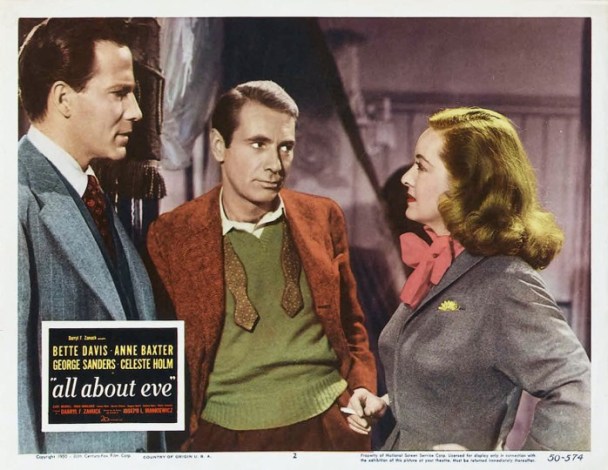
All About Eve photo card
All About Eve lobby card created by 20th Century Fox. Image found at http://www.tcm.com/tcmdb/title/67044/All-About-Eve/#tcmarcp-373822.

What I didn’t like about the film:

Drawn-out scenes: There were some scenes in All About Eve that felt more drawn-out. One example is the scene where Margo is hosting a dinner party. It introduced characters that only appear on-screen for minutes at a time, but furthered certain story-lines forward. While this part of the movie provided character development, I think it lasted a little too long. Had this scene been cut in half, the narrative would have gotten straight to the point. This would also shorten the film’s run-time.


A predictable plot twist: All About Eve contains a plot twist that changes the overall perception of one of the characters. I won’t share what this plot twist is, in case you haven’t seen this movie. But, when I learned more about this particular character, I knew that something wasn’t right. When the plot twist happened, I was not surprised. Because of how predictable this plot twist was, it took away the mystery and surprise that could have been incorporated into the story. What I got instead was a story element that I was aware of all along.


A misleading title: As this movie is titled All About Eve, it gives the impression that the film focuses on the character of Eve Harrington. While this is true to a certain extent, the movie is also about Bette Davis’ character, Margo Channing. When looking at the cast of characters, Margo is the one who is leading this story. Even on the movie’s poster, Margo is the only character that is featured in the image. It makes the title appear misleading, as if the creative team behind this film is not holding up their end of the bargain. If the film were given an honest title, it would be called “Mostly About Margo” or “Sometimes About Eve”.

Clean Movie Month banner
Clean Movie Month banner created by Tiffany and Rebekah Brannan from Pure Entertainment Preservation Society. Image found at https://pureentertainmentpreservationsociety.wordpress.com/2019/07/01/cleanmoviemonth85-is-here/.

My overall impression:

All About Eve will close this year’s Clean Movie Month as being a decent film. There were elements to this movie that I thought were interesting. The insightful look into the world of theater is just one example. However, certain aspects prevented the film from being a better project. As I already mentioned, the predictable plot twist is one of the reasons. It was nice to see a different side to Bette Davis’ acting abilities, as I’ve previously only seen her portray characters that are unsettling and over-the-top. It shows just how talented Bette Davis is. Even though All About Eve was approved by the Breen Code, I was surprised by some of the language that was featured in the script. During the aforementioned dinner party, Margo tells an ill guest that they’ll “burp” if they take a particular solution. This reminded me of something that Tiffany and Rebekah said in their Breening Thursday review of “The Trouble with Angels”. According to this article, references to bodily functions were looked down on. Because All About Eve was released in the Breen Code era, this mention of “burping” shouldn’t have been featured in the film. Another thing that I noticed was how one character got slapped in the face, which wasn’t done in self-defense. In the films that I reviewed during Clean Movie Month, the violence was either frowned upon or done in self-defense. Like I said about the “burping”, this action should not have been featured.


Overall score: 7 out of 10


What are your thoughts on Clean Movie Month? Would you like to see me participate in next year’s blogathon? Please tell me in the comment section!


Have fun at the movies!

Sally Silverscreen

Take 3: Desolation Canyon Review + 120 Follower Thank You

Two weeks ago, 18 Cinema Lane received 120 followers! I had wanted to publish this post much sooner. But due to other blog posts that I felt had to be posted before the end of the month and technical difficulties related to the weather, this blog follower dedication review had to be put on hold. Fortunately, I now set aside some time to publish this important post! For my 120 follower dedication review, I chose a movie that was released in July of 2006. Originally, I was going to talk about Monster House. However, when I discovered that there were two Hallmark movies that were released in the aforementioned month and year, I decided to choose one of those films instead. Desolation Canyon is the movie that I ended up picking. Since I haven’t reviewed a Western film since Allegheny Uprising back in March, I wanted to see how Hallmark approached this particular genre. Films of this nature are rarely seen on Hallmark Channel or Hallmark Movies & Mysteries. In fact, when it comes to stand-alone films, the last Western that either network created was JL Family Ranch from 2016. Despite this, I know that Hallmark has what it takes to tell stories from this genre, especially after watching programs like When Calls the Heart. Now, let’s see if Hallmark pulled off a good movie in this review of Desolation Canyon!

20190724_154323[1]
I apologize if this poster doesn’t have the best quality image. I decided to take a picture of it on my phone. Screenshot taken by me, Sally Silverscreen.
Things I liked about the film:

The acting: I was really impressed with the acting in Desolation Canyon! Before watching this movie, the only Hallmark film of Patrick Duffy’s that I saw was The Christmas Cure. In that movie, his character was more light-hearted, in order to fit the tone of that film. In Desolation Canyon, Patrick’s portrayal of Tomas had that same light-heartedness. But this time, his character was also tough and rugged, which was a good fit for the genre. Patrick was able to successfully bring both of these elements to his character, helping him to be a likable protagonist. Stacy Keach also did a good job at portraying the character of Samuel. Even though he has a tougher persona than Tomas, Samuel still was an honorable individual. Stacy was able to incorporate these aspects of the character through the believability of his performance. The rest of the cast brought the best of their acting abilities to their roles, keeping me investing in their on-screen stories!


The script: Desolation Canyon’s script was such a pleasant surprise by how well written it was! Anytime the three protagonists spoke to each other, their dialogue was witty and clever. In fact, all of the dialogue in this film sounded like real-life conversations. It’s also important to point out that the character development was well done. There was one character in particular who not only grew as an individual, but also pulled off a very effective plot twist. I’m not going to say which character it was, in case you haven’t seen this movie. But I thought this part of the film shows how good this movie’s script was!


The movie’s created world: Hallmark doesn’t create period films often. But, when they do, the network puts all they have into their projects. Everything in Desolation Canyon looked and felt like the time period this story took place in. Even the natural scenery felt like it fit within that cinematic world! The care for detail showed, as even smaller props added a sense of authenticity to the narrative. It tells me, as an audience member, that the creative team behind this film made the best effort possible to bring this world to life on-screen!

horse saddle - soft focus with film filter
Horse with saddle photo created by Topntp26 at freepik.com. <a href=’https://www.freepik.com/free-photo/stallion-black-equine-race-sky_1104246.htm’>Designed by Freepik</a>. <a href=”https://www.freepik.com/free-photos-vectors/background”>Background image created by Topntp26 – Freepik.com</a>. Image found at freepik.com.

What I didn’t like about the film:

Under-utilized characters: Even though this movie had well-crafted characters, some of them were under-utilized. One example was Alejandra, who was the wife of Samuel. Since she was given an interesting backstory, I had assumed that she would serve a significant purpose within the overall narrative. Unfortunately, Alejandra didn’t really do anything besides keep Olivia, Samuel’s daughter-in-law, company. This disappointed me because Alejandra was both a well-written and well-acted character. It just seemed like all of the potential this character had was wasted.


A weak plot for the bandits: In Desolation Canyon, the group of bandits play a key role in the story. Their subplot, however, wasn’t as strong as their on-screen presence. For most of the movie, the bandits were primarily seen on their journey. The only things they talked about were the journey itself or about an injured member of the group. It wasn’t until about the last thirty minutes when the bandits receive any semblance of a plot. While the father-son relationship between Johnny and Abe was an interesting element, it felt like it had little connection to the bandits’ subplot. If anything, the aforementioned element should have been its own plot.


The inclusion of the bounty hunters: The story of Desolation Canyon featured two bounty hunters who, like the protagonists, were searching for the bandits. While these characters were interesting, they didn’t really add anything to the overall story. Throughout the film, these bounty hunters follow the protagonists in an attempt to seek revenge toward the bandits. But anytime they showed up, it seemed like they were there for the sake of plot convenience. If this part of the story was eliminated from the film, it wouldn’t have made a difference.

90242-OJM5E8-442
Small, western town image created by Freepik at freepik.com. <a href=”https://www.freepik.com/free-photos-vectors/background”>Background vector created by freepik – http://www.freepik.com</a>. Image found at freepik.com.

My overall impression:

Desolation Canyon is a much different Hallmark movie than what the network provides today. It doesn’t feature the usual tropes and clichés that are found in the romantic comedies that dominate Hallmark Channel. Instead, this Western is filled with interesting character development, action, suspense, and a story with stakes. Desolation Canyon was released in 2006, only five years after Hallmark Channel premiered. This was a time when movies had more creative freedom and thought outside the box. While I wish that Hallmark would go back to this kind of story-telling, I’m glad to have been given the opportunity to revisit the films of the network’s past. Desolation Canyon is a film that I found entertaining! There are things about the story that could have better. On the other hand, this movie had creative choices that I liked seeing. It amazes me how my followers continue to be supportive of 18 Cinema Lane! With that, I will end this review by thanking each and every one of my 120 followers!


Overall score: 7.4 out of 10


Do you like watching Hallmark movies? What genre would you like to see the network incorporate into their stories? Please tell me in the comment section!


Have fun at the movies!

Sally Silverscreen

Take 3: Christmas Camp Review

This movie review was written before July 14th

For the Christmas in July Blogathon from Drew’s Movie Reviews, I knew that I wanted to review a Hallmark Christmas movie. However, I was originally going to talk about Hallmark Hall of Fame’s A Heavenly Christmas. Because I forgot to record that movie and because I have a lot of movies stored on my DVR, I chose to review Christmas Camp instead. This is the latest Christmas movie from Hallmark Movies & Mysteries. Having a new Christmas film air in July is not a new concept, as this has been done on both of Hallmark’s channels in the past. What makes this film sound interesting is the idea of a Christmas-themed camp. This idea has never been featured in a Hallmark movie before, so I wanted to see how it would be executed in the story. Did this movie make me a “happy camper”? Take a sleigh ride through this review of Christmas Camp to find out!

Christmas Camp poster
Christmas Camp poster created by Hallmark Movies & Mysteries and Crown Media Family Networks. Image found at https://www.crownmediapress.com/Shows/PRShowDetail?SiteID=143&FeedBoxID=845&NodeID=307&ShowType=&ShowTitle=Christmas+Camp.

Things I liked about the film:

The acting: I was not familiar with Lily Anne Harrison’s acting abilities before watching Christmas Camp. In fact, this was the first Hallmark movie that Lily had ever starred in. Despite this, she did a good job with the acting material she was given! Because of her performance, her character, Haley, came across as a very pleasant individual. Another character that was a pleasant person was Jeff. Bobby Campo also did a good job at bringing this character to life, providing the charm and likability that made his performance enjoyable. The rest of the cast was talented! They complimented one another’s acting abilities and shined on their own merits!


The cinematography: For some of the scenes involving natural landscapes, the cinematography was really good! Anytime a snowy forest was featured in the movie, it looked beautiful on-screen. What stood out to me was a shot of a sunset behind a snowy forest. This was captured very well on film! There was other good cinematography inside the Christmas Camp. In one instance, a close-up of a gorgeous Christmas tree was shown before a scene began. This was a great way to showcase some of the facility’s Christmas decorations!

Christmas in July Blogathon 2019 banner
Christmas in July Blogathon 2019 created Drew from Drew’s Movie Reviews. Image found at https://drewreviewmovies.wordpress.com/2019/06/18/announcing-the-christmas-in-july-blogathon-2019/.

What I didn’t like about the film:

A pointless plot: The premise of this movie is a businesswoman being sent to Christmas Camp in order to find inspiration for an upcoming business project. But within the first ten minutes of the film, Haley’s boss gives the coveted business project to another employee. This made me wonder why she would entertain the idea of giving Haley the project if she already gave it to someone else? During her time at Christmas Camp, Haley discovers her idea for the aforementioned business project. This idea was found at the local community center, not at the Christmas Camp. It made me ask why she was forced to go to the Camp when she was able to find inspiration elsewhere?


A hypocritical message: The overarching message of Christmas Camp was to uphold Christmas traditions. However, this message ended up coming across as hypocritical. Earlier in the film, Haley shares that her Christmas tradition is taking a family vacation to the Caribbean and watching Christmas movies in the hotel room. Her boss thinks that she needs an “attitude adjustment” because her traditions aren’t “traditional”. Throughout the film, Haley is guilted into changing her Christmas traditions to align more with those of the Camp. Another guest of the Camp shared that one of his Christmas traditions was opening presents on Christmas Eve, due to his father being a professional basketball coach. Shortly after sharing this, the guest’s wife is critical about this particular tradition. Everyone has their own unique and special way of celebrating Christmas. So, for this story to look down on that is very frustrating.


Christmas Camp as an afterthought: The idea of a Christmas-themed camp is something that has never been shown in a Hallmark movie before. Because of this, I was curious to see how this concept would be incorporated into the story. Unfortunately, the Camp itself was treated as an afterthought. The activities associated with Christmas Camp seemed so interesting. Yet, most of these activities were barely shown in the film. One example is when the campers are required to pick out a Christmas tree and decorate it. However, the only person the audience sees doing this activity is Haley. Also, for a place called Christmas Camp, Haley’s bedroom was poorly decorated. It barely featured any Christmas decorations, which made the room look less than festive.

458653-PFQPMM-331
Cute Christmas image created by freepik at freepik.com. <a href=”https://www.freepik.com/free-photos-vectors/background”>Backgroundvector created by freepik – http://www.freepik.com</a>. Image found at freepik.com.

My overall impression:

After watching this movie, I’m starting to understand why Hallmark Movies & Mysteries aired Christmas Camp in July and not during their “Miracles of Christmas” line-up. This film had so much potential to do something different from other Christmas movies on the network. There was also potential to share a message that would have been relatable. Unfortunately, all of this potential was not taken advantage of by Christmas Camp’s creative team. Instead, I ended up getting the worst Hallmark movie I’ve seen this year, so far. I’m hoping that during Hallmark Movies & Mysteries’ “Miracles of Christmas” line-up and Hallmark Channel’s “Countdown to Christmas” line-up, movies as disappointing as Christmas Camp will be a rarity.


Before I end this review, I would like to add a name to the invitation list for Drew’s Christmas Party. The actress that I would like to see get invited to Drew’s Christmas party is Karina Arroyave. I’ve seen several of her acting work in various television shows and movies, including two Hallmark Hall of Fame films (Blind Spot from 1993 and Missing Pieces from 2000). I think she’s a very talented actress. But, at the same time, she is also very underrated. By suggesting Karina’s name for Drew’s invitation list, I’m hoping that she can, sooner or later, receive the recognition she deserves!


Overall score: 5.1 out of 10


Have you seen Christmas Camp? Do like watching Christmas movies in July? Leave your thoughts in the comment section!


Have fun at the movies!

Sally Silverscreen

Take 3: Les Enfants Terribles Review (Clean Movie Month — #4)

Several months ago, I recorded the French film, Les Enfants Terribles, on my DVR. Since I don’t watch many foreign films, I wanted to see this film as a way to expand my cinematic horizons. When I found out that this particular movie was released during the Breen Code era, in 1950, I was curious to see if any traces of the Breen Code could be found in the film. So, that is why I chose Les Enfants Terribles for one of my Clean Movie Month reviews! If you read my review of Madeleine, you would know that Les Enfants Terribles is not the first foreign film I reviewed for this blogathon. In fact, I was quite surprised that Madeleine was approved by the Breen Code. An interesting coincidence is both Madeleine and Les Enfants Terribles were released in the same year. So, it’ll be interesting to see how this French film from 1950 compares to the British film, also from 1950!

20190721_222820
I’ve seen other posters for this movie, but I like this one the best! Screenshot taken by me, Sally Silverscreen.

Things I liked about the film:

The acting: The acting in Les Enfants Terribles was one of the finer points of the movie! The two main characters, Paul and Elisabeth, were very interesting to watch because of the lead stars’ acting performances! Nicole Stephane brought the character of Elisabeth to life with a sense of fierceness and strength. These two elements helped her carry the film. She was also able to stand on her own merits when it came to acting among the other actors and actresses! Edouard Dermit portrayed Elisabeth’s brother, Paul. The well-roundedness of his acting talents was very clear to see in this film. Paul goes through a lot in Les Enfants Terribles. In every scene, Edouard brought his A game and even made his character seem like he was a real person. Over the course of this story, Edouard not only incorporates a sense of realism to his character, but also pulls off an acting performance that was mesmerizing to watch!


The music: At certain points in the film, orchestral music could be heard. This type of music would normally come into the movie anytime a new location was introduced. I thought this was an interesting choice because it fit the film’s overall tone. The orchestral music was grand yet sinister, highlighting Paul and Elisabeth’s journey through wealth and growing up. In one scene, Elisabeth’s husband, Michael, sings a song while playing the piano. Not only did the piano music sound good, but the song was also sung well. The music’s role in Les Enfants Terribles brought a special significance to the project!


The dynamics of the characters: Les Enfants Terribles puts more focus on the characters than the story itself. Despite this, it was fascinating to see how the characters interacted with one another. Throughout the film, lives are transformed and relationships are built among Paul, Elisabeth, and the people around them. What makes this part of the movie work is the screen-writing as well as the acting. These two elements provide the perfect combination for making the characters as interesting as they were.

Clean Movie Month banner
Clean Movie Month banner created by Tiffany and Rebekah Brannan from Pure Entertainment Preservation Society. Image found at https://pureentertainmentpreservationsociety.wordpress.com/2019/07/01/cleanmoviemonth85-is-here/.

What I didn’t like about the film:

Lack of explanation for Paul and Elisabeth’s “game”: During the movie, Paul and Elisabeth play a game that only the two of them know about. However, no explanation to what this game is or how it’s played was ever given in the story. While watching the film, I tried to figure out more about the game. But, without an explanation, it was very difficult to understand the importance of it. I also noticed that this game was featured in the story when it was convenient for the plot. This is because the game itself was mentioned on very few occasions.


A misleading premise: According to Turner Classic Movies’ (TCM’s) website, Les Enfants Terribles is about “a brother and sister close themselves off from the world by playing an increasingly intense series of mind games with the people who dare enter their lair”. As I’ve already mentioned, Paul and Elisabeth’s “game” wasn’t well explained or featured in the movie for very long. The sibling relationship of Paul and Elisabeth seemed very toxic, from calling each other names to treating each other horribly. If anything, this movie was about two things: siblings who grow apart and a young woman who slowly becomes obsessed with power and control. Since the movie was different than its synopsis, I found TCM’s description to be misleading.


An unclear time-line: Les Enfants Terribles takes place over the course of several years. But, to me, this movie felt like all the events happened within a year. This was because there were no clear explanations about when certain situations were taking place. Time-cards and any mentions of the year were not found in this movie. Even the narrator didn’t talk about how much time had passed. The film’s time-line became very confusing, leaving me wondering how many years were included in the story. Because of the unclear time-line, the characters appeared as if they were frozen in time.

3 paris
Illustration of Paris, France created by Freepik at freepik.com. <a href=”https://www.freepik.com/free-photos-vectors/travel”>Travel vector created by freepik – http://www.freepik.com</a>. Image found at freepik.com.

My overall impression:

I ended up liking Les Enfants Terribles more than I thought I would! It was an interesting film that had a few surprises in store. The movie itself is a character study/character driven story, showing how they evolve as time goes on. The acting was really good and the characters were well developed, helping this narrative become engaging. As I was watching Les Enfants Terribles, I could see some of the Breen Code’s influence. One example was anytime the doctor came to examine Paul. Either the examination itself was not shown on-screen or the doctor would only be shown listening to Paul’s heartbeat. However, when it came to this film, the Breen Code could have been enforced more. There were several times where characters were swearing, either at each other or just for the sake of it. This shocked me because not only was Les Enfants Terribles released in 1950, but it was also released during the Breen Code era. I was surprised that this movie got away with having this much language in the early ‘50s. Was this particular film the beginning of the end for the Breen Code? That’s definitely a question for another day.


Overall score: 7 out of 10


Have you ever watched a French film? Which foreign film have you always wanted to see? Share your thoughts in the comment section!


Have fun at the movies!

Sally Silverscreen

Take 3: Madeleine Review (Clean Movie Month — #3)

When I discovered the film, Madeleine, on Turner Classic Movies’ (TCM’s) website, the movie’s premise is what caught my attention. I recorded the film on my DVR and saved it for a special occasion. Since Madeleine was released in 1950, during the Breen Code era, I finally found that special occasion. While learning more about the movie, I made some surprising discoveries. The first was who the director is. David Lean not only directed Madeleine, but he also directed Lawrence of Arabia, which I reviewed last November. Another discovery I made was where the film was made. Madeleine was created in the United Kingdom, meaning that it’s considered a foreign film. The fact that this movie was approved by the Breen Code, as the logo can be seen during the opening credits, surprised me. This is because I was given the impression, after reading the article, “The Production Code of 1930’s Impact on America” from Pure Entertainment Preservation Society, that foreign films weren’t directly impacted by the Breen Code. On IMDB, Madeleine is labeled as a crime drama. This detail made me curious as to how the Breen Code would influence this story. Well, the wait is over, as it’s now time to review 1950’s Madeleine!

Madeleine poster
Madeleine poster created by The Rank Organization. Image found at https://en.wikipedia.org/wiki/File:Madeleine_1950.jpg.

Things I liked about the film:

The acting: I liked watching the various acting performances in this film! Everyone did a good job with the acting material they were given! This is especially the case for the star of the movie. Throughout Madeleine, Ann Todd carried the movie with versatility. This helped her portrayal of the titular character be as believable as possible. Another performance that I enjoyed seeing was Ivan Desny’s! The way he portrayed Emile L’Angelier came across very believably. One such example is anytime Emile appeared ill. Like Ann, Ivan brought versatility to his performance. It worked in his favor, as his character was captivating to watch on-screen!


The setting: Like I said about Jersey Boys, the world in Madeleine was well crafted! All of the locations, as well as other aspects of the film, looked and felt like the movie’s respective time period. Even the artwork on the walls of the Smith family home reflected the Victorian era. This showed me that the creative team behind this movie were very detail oriented, caring about what was presented on-screen. Also, like Jersey Boys, the world in Madeleine was very immersive! It made the audience feel like visiting this created world was possible.


The on-screen chemistry: I was pleasantly surprised by the on-screen chemistry of Ann Todd and Ivan Desny! Anytime they were on-screen together, they made the relationship of Madeleine and Emile appear believable. Because of this, it was interesting to watch their relationship evolve as the film went on. Ann and Ivan’s on-screen chemistry kept me invested in their on-screen interactions. Even though I knew the fate of Madeleine and Emile’s relationship, I was curious about which directions they would go in. This aspect of the characters definitely added something interesting to the story!

265038-P4TIN9-926
Envelope with hearts image created by Freepik at freepik.com. <a href=’https://www.freepik.com/free-photo/hearts-and-pink-envelope-for-mothers-day_1950691.htm’>Designed by Freepik</a>. <a href=”https://www.freepik.com/free-photos-vectors/love”>Love image created by Freepik</a>. Image found at freepik.com.

What I didn’t like about the film:

The accents: As I said in my Jersey Boys review, accents in movies can be hit or miss. The characters in Madeleine had accents, but they didn’t reflect where they were from. This story takes place in Glasgow, Scotland. However, every member of the Smith family speaks with a British accent. Emile L’Angelier is known as a Frenchmen. While Ivan tried his best to speak with a French accent, it wasn’t consistent enough to sound believable. More often than not, Ivan could be heard speaking with a British accent. I understand that the film was created in the United Kingdom. But it never felt like an effort was made from the film’s creative team to encourage the appropriate accents for their characters.


A drawn-out plot: Madeleine is about a woman who is accused of murdering her lover. However, the crime itself isn’t featured in the story until the film’s half-way point. The first half of the movie is dedicated to showing the build-up to the crime. Personally, I think this part of the story didn’t need to last that long. At most, the build-up could have been fifteen or twenty minutes. If this was done, the narrative would get straight to the point, expressing the script’s idea sooner. This also could have helped shorten the film’s run-time.


A lack of mystery: When I found out that this film was considered a crime drama, I was looking forward to seeing a mysterious and intriguing story unfold on-screen. Unfortunately, there wasn’t a lot of mystery in this movie. The creative team behind Madeleine tried to incorporate a mystery in the second half of the film. But because the build-up to the crime was featured in the first half of the story, the second half wasn’t as effective as the creative team had hoped. Madeleine should have taken place during Madeleine’s trial, with flashbacks coming into the story during people’s testimonies. With this approach to the story-telling, the audience could have been left wondering throughout the film if Madeleine was, indeed, guilty.

Clean Movie Month banner
Clean Movie Month banner created by Tiffany and Rebekah Brannan from Pure Entertainment Preservation Society. Image found at https://pureentertainmentpreservationsociety.wordpress.com/2019/07/01/cleanmoviemonth85-is-here/.

My overall impression:

Madeleine made me feel the same way that Jersey Boys did. Both films are just ok. There are things about them that I can appreciate. Yet, they were held back from being better than they were. I expected more from Madeleine, thinking I would get an intriguing mystery story. Instead, the narrative was drawn-out and the mystery aspect was poorly executed. But, throughout the movie, I could tell that the creative team behind Madeleine had put in an effort to make the best film they could. Similar to Citizen Kane, I could see the Breen Code’s influence within Madeleine. Anytime Madeleine and Emile kissed, they turned their heads to hide the kiss from the audience. All of their kisses only lasted a few seconds. Madeleine and Emile engaged in an affair throughout the film. But because of how the script was written, their relationship was never labeled as an affair. Also, the word “affair” was never said by any of the characters. After watching this film, I’m now curious to find out what other foreign films were approved by the Breen Code.


Overall score: 6 out of 10


Have you seen any of David Lean’s films? Which foreign film released during the Breen Code era is your favorite? Share your thoughts in the comment section!


Have fun at the movies!

Sally Silverscreen

Take 3: Jersey Boys Review + 115 Follower Thank You

Before I begin this review, I would like to thank all 115 of my followers! I achieved this accomplishment two weeks ago! However, I wasn’t able to publish this post as early as I had wanted to. That’s because I started my Clean Movie Month reviews and was participating in a few blogathons. But I fortunately found the time to share this blog follower dedication review with the people who have helped my blog grow and thrive! For this post, I have chosen a movie that was released in June of 2014. Even though I talked about a musical in my previous blog follower dedication review, I chose the film, Jersey Boys, for this particular post. I was familiar with the music of Frankie Valli and The Four Seasons, so I could appreciate the songs that appear in this film. When it comes to the band itself, I didn’t know much information about them. This movie was, to a certain extent, educational. That’s because this film explores the history of The Four Seasons. It also talked about how some of the songs were created, as well as who the members of the band were. So, let’s learn more about Jersey Boys through this review!

Jersey Boys poster
Jersey Boys poster created by GK Films, Malpaso Productions, and Warner Bros. Pictures. Image found at https://www.warnerbros.com/movies/jersey-boys/.

Things I liked about the film:

The acting: One of the strongest components of this film is the acting performances! From what I’ve heard, the cast consisted of actors and actresses who also starred in the Jersey Boys stage play. I feel that this was a good decision because this means that before film production began, they already knew their characters. This shows in all of the acting performances, as the actors and actresses appeared to be comfortable in their roles. Something I noticed while watching this film was the accents. As I’ve said before, accents in movies can be hit or miss. In Jersey Boys, however, the accents sounded authentic enough to be satisfying. This goes back to the fact that the cast is from the original stage play, as they had plenty of time to perfect that part of the performance!


The aesthetic: I really liked the world that was created in this film! Everything looked and felt like the time period in which this story took place in. Even the cinematography correlated with the previously mentioned time period. This showed how much the creative team behind this movie cared about the details that went into their project. It also made the movie feel immersive, like the audience themselves are visiting that world. The locations and settings of Jersey Boys were visually appealing!


The music: Because this movie is about Frankie Valli and The Four Seasons, the majority of their music is featured throughout the story. Since I like their music, I found these parts of the film to be enjoyable. Jersey Boys was a stage play before becoming a movie, as I’ve said before. This aspect worked in the performers’ favor because they were familiar with the music prior to the film’s production. All of the actors in the band sounded close enough to the original group to keep me, as an audience member, satisfied. It added to the authenticity of their collective performance!

music sign
Music and stage image created by Topntp26 at freepik.com. <a href=’https://www.freepik.com/free-photo/music-sign_1179519.htm’>Designed by Topntp26</a>. <a href=”https://www.freepik.com/free-photos-vectors/vintage”>Vintage image created by Topntp26 – Freepik.com</a>. Image found at freepik.com.

What I didn’t like about the film:

Breaking the “fourth wall”: At certain points in the movie, some members of The Four Seasons told their story directly to the audience. While this was an interesting idea, it didn’t work as well as it could have. This is because the “fourth wall” was broken so infrequently, it ended up feeling out of place. Only three members of the group get to break the “fourth wall”. The only time Frankie Valli gets this kind of moment was toward the end of the movie. The fact that more than one person was trying to tell the story made it difficult to decipher who the key narrator was supposed to be.


Scenes that don’t mesh together: When it comes to movie musicals, the segments of story and music are supposed to work together to create a cohesive narrative and propel the story forward. One example is when Mother Abbess sings “Climb Ev’ry Mountain” in The Sound of Music. But I never felt that the story segments and musical segments meshed together in Jersey Boys. Anytime a musical segment appeared in the film, it felt like the story segments were paused for the sake of presenting the musical segments. This disrupted the flow of the narrative.


The run-time: Jersey Boys is a two hour and fourteen-minute film. Because of this run-time, the movie felt longer than it was intended and some scenes were too drawn-out. Having the film set at one hour and thirty or forty minutes would have worked better for the overall production. Drawn-out scenes could be shortened to a length of time where that part of the story could get straight to the point. If the “fourth wall” moments that I mentioned earlier were reserved for the end of the movie, this would shorten the run-time as well.

61511-OANU9Y-551
Diner image created by Freepik at freepik.com. <a href=’https://www.freepik.com/free-vector/american-vintage-restaurant-hand-drawn_902205.htm’>Designed by Freepik</a>. <a href=”https://www.freepik.com/free-photos-vectors/food”>Food vector created by Freepik</a>. Image found at freepik.com.

My overall impression:

At best, Jersey Boys is an ok film. I can definitely see how this project could work as a Broadway stage show. However, this particular story would have worked better as either a documentary or as a mini-series. There was so much interesting content to this narrative, that I actually learned more about Frankie Valli and The Four Seasons than I had expected. But, because of the set run-time, there was only so much material that was discussed. Even though I learned a lot about this particular musical group, I feel like I could have discovered this same information on the internet. When it comes to movie musicals, Jersey Boys is not the worst of them. But there are movies within this genre that are better than this one.


Overall score: 6 out of 10


Do you like that music of Frankie Valli and The Four Seasons? Which movie musical do you like? Please tell me in the comment section!


Have fun at the movies!

Sally Silverscreen

Take 3: Citizen Kane Review (Clean Movie Month — #2)

For my second review for Clean Movie Month, I decided to talk about Citizen Kane! Yes, the same movie that received a lot of critical acclaim and was placed in the number one spot on AFI’s list of the Top 100 Movies of All Time. This was the first time I had ever seen this film. Since I happened to have this movie on my DVR, I finally had an excuse to watch it. It’s interesting to see how many films from the Breen Code era have become beloved classics. On AFI’s list, twenty-nine films are from the Breen Code era. This tells me that the beliefs of Joseph I. Breen and the way he saw film are not only important to film history, but also to cinema in general. So, without further ado, let’s give this review of 1941’s Citizen Kane a grand welcome!

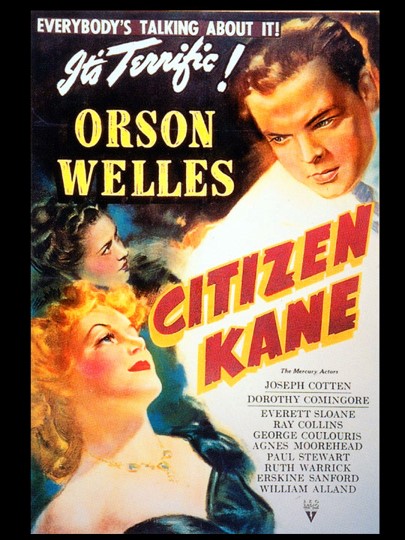
Citizen Kane poster
Citizen Kane poster created by Mercury Productions and RKO Radio Pictures. Image found at http://www.tcm.com/tcmdb/title/89/Citizen-Kane/#.

Things I liked about the film:

The acting: I was pleasantly surprised by the acting performances in Citizen Kane! Before watching this movie, I had never known that Orson Welles was an actor. His portrayal of Charles Kane impressed me more than I expected! Orson’s ability to convey emotions at the right moments enhanced his performance, making his character appear more realistically. Another performance that I was impressed with was Dorothy Comingore’s! She made her character, Susan, interesting by the way she interacted with the other cast members/characters. Her reactions to different situations made Susan feel like she was more than just a character. From performing at the opera to meeting Charles for the first time, Susan came across as a real-life person on-screen.


The evolution of Charles Kane: The majority of this story is about the life of Charles Kane. Throughout the film, the audience gets to witness how he evolves as a person. This evolution is shown in a very believable way! The screen-writing and the acting performance of Orson Welles helped make this part of the story effective. Besides portraying the lead character, Orson co-wrote the film’s script. Because of this, it shows that he appeared to have an understanding of not only the character he was portraying, but also the character he was writing.


The cinematography: Citizen Kane had some interesting cinematography! Toward the beginning of the film, the camera appeared to use a special lens that made the audience feel like they were looking through Charles’ fallen snow-globe. This gave that scene a unique visual perspective. In some scenes, a person was in the foreground and another person was in the background. One example is when Charles is finishing Jedediah’s article about Susan’s opera performance. This was an interesting way of showing who the focus of the scene was. The cinematography in this film made the overall project have a compelling visual aesthetic!

Clean Movie Month banner
Clean Movie Month banner created by Tiffany and Rebekah Brannan from Pure Entertainment Preservation Society. Image found at https://pureentertainmentpreservationsociety.wordpress.com/2019/07/01/cleanmoviemonth85-is-here/.

What I didn’t like about the film:

  • No connection to the characters: When characters are introduced in a film, there is always a chance for the audience to connect with, at least, one of them. An experience that a character has or a character’s unique talent can help make this connection happen. In Citizen Kane, however, I never felt like I was able to connect with any of the characters. Yes, I got to know them over the course of the story. But, getting to know a character and connecting with them are two different things. What didn’t help was having other people share Charles Kane’s life-story. This reminded me of the movie, Edward, My Son, where the audience never gets to connect with the character of Edward, but get to know him through the dialogue of the other characters. The only thing that the audience could do was observe Charles’ story. Charles himself, as well as the other characters, always felt like they kept their distance from anyone watching the film.


  • Drawn-out scenes: There were several scenes in Citizen Kane that lasted longer than they should have. One example is when Emily and Charles’ marriage is deteriorating. I understand that the purpose of this scene was to show how Emily and Charles’ relationship evolved as time went on. However, this idea could have been expressed in a shorter amount of time. Another example is when Susan is putting her puzzles together. Similar to my previous statement, I understand that this scene was meant to show how trapped and isolated Susan felt in her new home. But, again, the visual explanation of this concept could have been shortened.


  • The run-time: The more I review movies on 18 Cinema Lane, the more I notice that a film’s run-time can make or break that film. This goes for Citizen Kane, whose run-time was one hour and fifty-nine minutes. Personally, I think this run-time made the movie feel longer than it was intended. This is probably why some scenes felt drawn-out, as I previously mentioned. I think Citizen Kane could have benefited from having a run-time set at one hour and about twenty minutes. That way, drawn-out scenes are shortened and their ideas would be straight to the point.
OYHKOT0
Newspaper image created by Zlatko_plamenov at freepik.com. <a href=’https://www.freepik.com/free-psd/newspaper-mockup_1386098.htm’>Designed by Freepik</a>. <a href=”https://www.freepik.com/free-photos-vectors/mockup”>Mockup psd created by Zlatko_plamenov – Freepik.com</a>. Image found at freepik.com.

My overall impression:

So, now that I’ve finally seen Citizen Kane, it’s time for me to share my overall impression of the movie. Personally, I thought it was just decent. It’s not as good or great as other people have claimed it to be. The way I feel about this movie is similar to how I felt about The Christmas Card. There are so many Hallmark fans who like or love that film, yet I think it’s just ok. In my opinion, Citizen Kane has been over-hyped as the years have gone on. But I’m glad I gave this movie a chance because I can now form my own honest opinion about it! The effect of the Breen Code was more obvious in Citizen Kane than in Stowaway. One example is when Charles says “Gosh only knows”. Also, in this story, there’s a subplot about Charles having an affair with Susan. Because of the way the script was written, the idea of an affair or the word itself is never explicitly stated. Even though I didn’t like Citizen Kane as much as other people did, it’s nice to see a Breen Code era film receive a good amount of recognition.


Overall score: 7.1 out of 10


Have you enjoyed my Clean Movie Month reviews so far? Is your favorite Breen Code era film on AFI’s list of movies? Leave your thoughts in the comment section!


Have fun at the movies!

Sally Silverscreen

Take 3: Stowaway Review (Clean Movie Month — #1)

For the first time ever, I am participating in Pure Entertainment Preservation Society’s Clean Movie Month! Every July, participants are encouraged to watch and write about films that were released within the Breen Code era. This era started in 1934 and ended in 1954. On 18 Cinema Lane, I will be reviewing a Breen Code era film every week during this month! These reviews will be released in the chronological order of the film’s premiere. For my first Clean Movie Month review, I have chosen the Shirley Temple film, Stowaway! Earlier this year, I wrote an editorial about my thoughts on all three of Shirley’s films from 1938. As I said in that editorial, my goal is to watch every single Shirley Temple film ever made. So, if I have a chance to watch a Shirley Temple movie that I haven’t seen before, I will definitely make an effort to do that. So, let’s sail away in Clean Movie Month with 1936’s Stowaway!

Stowaway poster
Stowaway poster created by 20th Century Fox. Image found at https://en.wikipedia.org/wiki/File:Film_Poster_for_Stowaway.jpg.

Things I liked about the film:

  • The acting: One of the great things about this movie was Shirley’s performance! Like I said about Shirley’s role, Betsy, in Little Miss Broadway, her role in Stowaway felt like it was created just for her. Not only did this role compliment Shirley’s acting abilities, but it challenged her as an actress. At certain moments in the film, Shirley’s character, Barbara/Ching-Ching speaks Chinese. This means that Shirley had to learn her lines in English and learn a new language that she was probably not familiar with before. Shirley was surrounded by a cast of actors and actresses that were just as talented as her! Everyone’s acting talents were equally showcased in this film, helping each performer receive their moment to shine!


  • The humor: A pleasant aspect of Stowaway was the humor within the story! One of the funniest scenes in this film was when Ching-Ching is trying to find Tommy Randall while wearing a dragon head. What made moments like this so hilarious was the screen-writing. The way that the dialogue and actions were written was not only innocent, but clever as well. An example of this is when Tommy and Ching-Ching are at a restaurant. While ordering food off of a menu that’s written in Chinese, Tommy tells Ching-Ching, “It’s all Greek to me”. She then replies, “But it’s in Chinese”. This type of humor is what made Stowaway an enjoyable story!


  • A unique location: I am not an expert on Shirley Temple’s filmography. But, out of the films that I’m aware of, it seems like most of her movies take place in the United States. Stowaway, however, mostly takes place in China and on a cruise ship. These locations provided a unique look and feel to the overall production. It was interesting to see the Chinese culture playing an influential role within the narrative. The language, music, and even some proverbs could be found in Stowaway. Seeing the various areas of the cruise ship was interesting as well. This backdrop worked really well for the story!
316988-P9JAM8-876
Traditional Chinese dragon image created by Freepik at freepik.com. <a href=”https://www.freepik.com/free-photos-vectors/design”>Design vector created by freepik – http://www.freepik.com</a>. Image found at freepik.com.

What I didn’t like about the film:

  • A limited amount of musical numbers: Earlier this year, when I talked about Just Around the Corner, I said that there was a limited amount of musical numbers in the movie. This made the story feel drawn out and a little bit longer than intended. Similarly, there was a limited amount of musical numbers in Stowaway. Throughout the whole film, there were four musical numbers. However, the first musical number doesn’t appear in the film until after the first thirty-seven minutes. Personally, I think that the first musical number should have, at least, started at the fifteen-minute mark. That way, the audience could get quickly invested into the musical aspect of the movie.


  • No Chinese influences in the music: I liked how the Chinese locations, as well as the culture, were incorporated into the film! But I was surprised that there were no Chinese influences in Stowaway’s music. Every song that Shirley sang sounded like the typical musical melody, the usual sounds that are found in Shirley’s films. Even though Shirley spoke Chinese in the movie, none of the lyrics were in Chinese. I feel that the creative team behind Stowaway missed a special opportunity to expand the musical horizons of both the studio and the audience. Who knows? Maybe this could have encouraged someone to learn another language.


  • Shirley’s limited involvement in the film: Most of Shirley’s films involve a subplot that allows Shirley’s character to play an important role in the film. While Ching-Ching was a significant character in Stowaway, she didn’t play as big of a role as Shirley’s other characters. It felt like most of the story was about the characters who were adults. In fact, it seemed like Shirley had the least amount of screen-time out of all the performers in the starring cast. While it’s understandable that Shirley was the youngest cast member in this film, it kind of felt like Stowaway wasn’t Shirley’s movie compared to her other titles.
Clean Movie Month banner
Clean Movie Month banner created by Tiffany and Rebekah Brannan from Pure Entertainment Preservation Society. Image found at https://pureentertainmentpreservationsociety.wordpress.com/2019/07/01/cleanmoviemonth85-is-here/.

My overall impression:

For my first Clean Movie Month review, we’re off to a decent start! Stowaway, in my opinion, is better than something like Just Around the Corner. But there are films in Shirley’s filmography that I think are stronger than Stowaway. The most memorable part of this film was the Chinese locations as well as the cruise ship backdrop. They were very unique for a film starring Shirley Temple, especially since most of her films take place in the same continent. The setting of Stowaway provided an interesting component to the story, influencing how the characters interacted with each other and how they accomplished their goals. I can’t say much about the content of the film, since it was approved by the Production Code Administration (as the logo was featured in the bottom left hand corner of the opening credits) and it was released two years after the start of the Breen Code era. It’ll be fascinating to see how this movie compares with the other movies I’ll review during Clean Move Month!


Overall score: 7.2 out of 10


What are your thoughts on Clean Movie Month? Are you looking forward to my next review? Please tell me in the comment section!


Have fun at the movies!

Sally Silverscreen