Take 3: Twentieth Century Review

Originally, I was going to write a double feature for The Sixth Annual Barrymore Trilogy Blogathon by reviewing Twentieth Century and Young at Heart. However, due to technical difficulties on my end, I was only able to find the time to publish one review. Because I’ve written about five of Frank Sinatra’s movies this year, I chose to take a break by selecting Twentieth Century. Back in January, I watched and reviewed In Name Only for The Carole Lombard Memorial Blogathon. At the time, it was my first time seeing any film from Carole’s filmography. Despite this, I ended up liking the film! As I have mentioned before, I try to feature movies on my blog that were recommended by visitors and followers of 18 Cinema Lane. Twentieth Century was suggested by Patricia from Caftan Woman and Vincent from Carole & Co.

Twentieth Century poster created by Columbia Pictures.

Things I liked about the film:

The acting: In my review of In Name Only, I praised Carole’s portrayal of Julie Eden, as her on-screen personality was down-to-earth and her overall performance contained the right amount of emotion. Carole portrays Lily in Twentieth Century, a character who is very different from Julie in In Name Only. This is because Lily experiences frustration on several occasions. One example is when Lily is forced to stay late at rehearsal because Oscar wants her to scream. Lily’s emotions spill over, causing her to yell and burst into tears because of her pent-up frustration. These emotions were able to be felt through the screen because of how good Carole Lombard’s talents were in this film! Speaking of Oscar, I liked watching John Barrymore’s performance in Twentieth Century! It showed a transition from a theater director who seemed to have his heart in the right place to a man who let power and influence get to his head. After Lily’s first performance on stage, Oscar visits her in her dressing room. The way he speaks to her indicates he is putting all his attention on her. But when you look and listen closely, there are hints of his possessive mentality. A good example is when Oscar tells Lily she was a diamond who needed some polishing.

The set design: While watching Twentieth Century, there was some impressive set design I noticed! Toward the beginning of the film, Oscar’s office was shown. Dark wood walls surrounded the space, with a medium shot signifying the room’s high ceiling. Eye-catching details helped give the space a unique identity, such as the inclusion of a suit of armor and stained-glass windows. Details in other scenes stood out, stealing the show whenever they appeared on screen. Lily’s bed is just one example, a massive piece of furniture that was shaped like a boat. It’s white woodwork and bedding is paired beautifully with dark wood carvings on the bed. On the train, there are sketches of animals located near the ceiling of the sitting room area. The style of the sketches looked like they came from a storybook from Medieval times.

Carole’s wardrobe:  I really liked seeing Carole’s wardrobe in Twentieth Century! However, there were two outfits that were the most memorable! On the night of Lily’s first performance, she wears an off the shoulder sparkly white dress. Despite the film being presented in black-and-white, the sparkly nature of the dress shown through beautifully! The second outfit was a silk pair of pajamas, complete with fine detailing on the shirt. The pajamas complimented Carole very well, highlighting her true beauty!

Masks of comedy and tragedy images created by freepik at freepik.com. <a href=”https://www.freepik.com/free-photos-vectors/background”>Background vector created by freepik – http://www.freepik.com</a>. Image found at freepik.com.

What I didn’t like about the film:

The mystery: In Twentieth Century, there was an on-going mystery revolving around the appearance of religious stickers on the train. The mystery itself felt randomly placed in the overall story, offering no strong significance within the plot. Had the religious stickers served as a reminder to not lose personal beliefs and values in the quest for fame and fortune, that would have added a meaningful moral to the movie. Sadly, it was a small piece just to keep the plot moving forward. When the guilty party is finally revealed, it seems like the script is providing them with excuses for their destruction of public and personal property. This can be heard through the characters’ dialogue; from the train security saying the guilty party has a “sickness” to describing the guilty party as “a little crazy, but harmless”.

An awful group of characters: I understand characters from any movie are not going to be everyone’s “cup of tea”. However, there is a fine line between personal preference and the characters themselves being awful. Twentieth Century is a perfect example of this, featuring a host of characters that are unlikeable to varying degrees. Oscar treats everyone around him horribly. He “fires” his friends on multiple occasions and he is abusive toward Lily, even after their relationship ends. Despite this, Oscar’s friends still try to help him fix his relationship with Lily, even going so far as to blame her for Oscar’s failures. Meanwhile, Lily turns into a diva after she becomes a movie star. It got to the point where I found myself not caring about the characters’ outcomes because their ugly personalities made me lost investment in them.

Lily and Oscar’s abusive relationship: I briefly mentioned in my previous point that Oscar is abusive toward Lily, even after their relationship ends. In the beginning, when Lily was starting out as an actress, Oscar gives the impression of having her best interests in mind. An example of this is when, after Lily expresses her frustrations over staying late at rehearsal, Oscar reminds her of her dream and how he’ll help her reach that dream. As Lily’s career grows, so does Oscar’s jealousy and obsession. He not only controls Lily’s life, but he also physically harms her, poking her with a pin just to get her to scream on stage. Oscar even goes so far as to threaten suicide if Lily does not stay with him. Even though Lily ends the relationship, Oscar is still obsessed with her. One of his worst actions in Twentieth Century is faking his own death just to trick Lily into signing his contract.

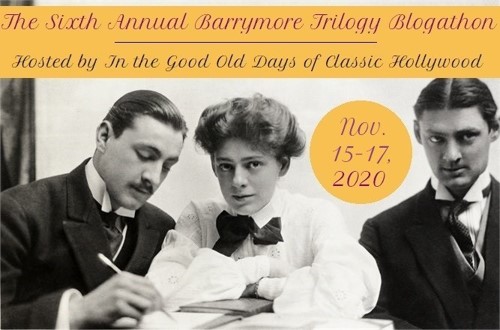
The Sixth Annual Barrymore Trilogy Blogathon banner created by Crystal from In the Good Old Days of Classic Hollywood.

My overall impression:

Back in January, when I reviewed Marriage on the Rocks, I said the film made me feel uncomfortable because of the movie’s one-sided view on marriage and divorce. Watching Twentieth Century made me appalled for several reasons. The abusive nature of Lily and Oscar’s relationship is just one example, especially since it exists throughout the whole film. It also doesn’t help that Oscar doesn’t face any accountability for his actions and behavior.  Another issue is the characters themselves, as all of them are horrible to certain degrees. Despite being poorly treated by Oscar, Oscar’s friends still support him. They even encourage Oscar to get back together with Lily. According to IMDB and Wikipedia, Twentieth Century is labeled as a “romantic comedy”. I will admit there were a handful of moments I found funny. But the aforementioned relationship, random mystery, terrible characters, and the story being ninety one minutes of those same characters complaining about their personal issues overshadows all of the movie’s strengths.

Overall score: 4.4 out of 10

Have you seen any of Carole Lombard’s or John Barrymore’s films? If so, which one do you like the most? Please let me know in the comment section!

Have fun at the movies!

Sally Silverscreen

Take 3: Stalker in the Attic Review + 255 & 260 Follower Thank You

At the end of last month, 18 Cinema Lane received 255 followers! However, I wasn’t able to write a blog follower dedication review sooner because of several blog and non-blog related projects. Within that time, 18 Cinema Lane also received 260 followers! Because of everything I just said, I decided to combine these accomplishments into one review. I recently watched a Lifetime movie called Stalker in the Attic. This is the reason why I chose this film to write about for my most recent blog follower dedication review. When I first read the film’s synopsis, it kind of reminded me of the 2016 movie, Boy in the Attic. For those of you who are not familiar with that film, it is about a young man who lives in the protagonist’s attic. Since I like that movie, I was curious to see how Stalker in the Attic would execute a similar idea.

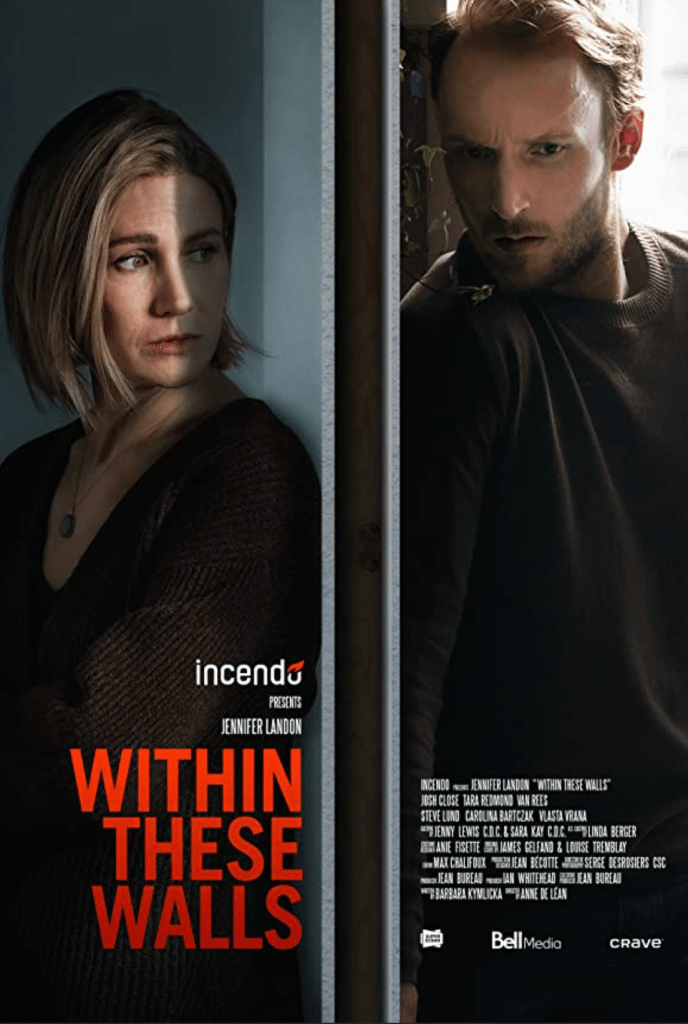
Stalker in the Attic poster created by Lifetime Entertainment Services. For some reason, this movie has two titles; Stalker in the Attic and Within These Walls.

Things I liked about the film:

The acting: I’m not familiar with Jen Landon or her filmography. Despite this, I liked watching her performance in Stalker in the Attic! Whenever her character, Mel, suspected someone was in her house, she appeared on edge. Fear could be seen on her face and she carried herself with a sense of urgency. The quality of Jen’s performance helped make moments like these seem believable! Another believable performance came from Steve Lund, an actor I recognize because of the Hallmark film, Christmas Incorporated! In the scene where his character, Sam, and Mel are about to binge-watch a show, Steve’s reaction was genuine. His demeanor was easy-going and his on-screen personality was down-to-earth. Tara Redmond van Rees did a good job portraying Mel’s daughter, Brook! In her house, Brook and her boyfriend are interrupted by the sound of the security alarm. Tara truly looked freaked out in that scene, reflecting what her character was feeling.

The music: One element that can affect a film’s tone is the music, as it can make the audience feel the emotions that are expected for a particular part of the story. In Stalker in the Attic, suspenseful music was used for scarier/intense moments. One example is when Mel is breaking up with Ben. Even though the act itself is not a surprise, the music makes it feel more important because the audience has a heightened anticipation for what will happen next. The music placement in that scene also highlights the moment’s significance within the story’s chain of events.

The suspenseful moments: Most Lifetime movies feature several suspenseful moments within their respective stories. Stalker in the Attic is no different. However, these moments were effective in keeping the audience invested in the story! As Sam is sleeping over at Mel’s house, Ben appears out of nowhere, watching both of them as they sleep. Because of how unpredictable Ben is, the audience is left wondering what he will do next. A darker atmosphere with limited lighting also helps, as it emphasizes a fear of the unseen.

Scared audience image created by Katemangostar at freepik.com. <a href=’https://www.freepik.com/free-photo/terrified-friends-watching-horror-movie-in-cinema_1027311.htm’>Designed by Freepik</a>. <a href=”https://www.freepik.com/free-photos-vectors/people”>People image created by Katemangostar – Freepik.com</a>. Image found at freepik.com.

What I didn’t like the film:

Some scenes ending too abruptly: There were a few scenes in Stalker in the Attic that ended too abruptly. A perfect example is when Brook and her boyfriend dealt with the security alarm in Brook’s house. Shortly after this happened, Brook’s neighbor comes over to see what was going on. As Brook tells him that she and her boyfriend are fine, the next scene immediately starts. Transitions like this one were so abrupt, that it was jarring.

The lighting: Lighting in a movie can help the audience see what is happening on screen. It can also set the tone for a particular scene. In Stalker in the Attic, however, most of the lighting was dim. Even when a scene was well-lit, it didn’t appear as bright as it should have. Characters’ faces were difficult to see because of the poor lighting. I’m not sure if this was a creative choice selected on purpose or a budget related issue.

A not-so-bright intruder: Even though Ben carries his stalking plan throughout the film, he makes several mistakes that bring more suspicion to him. To fool his ex-girlfriend into thinking he moved to a new apartment, Ben breaks into an apartment owned by one of his clients. Instead of noting where he moves certain personal belongings by taking a picture of the rooms with his phone, Ben grabs several items and hurriedly throws them into another room. The reaction of the aforementioned client is never shown, which gives the script an excuse to keep telling Ben’s story. But if the client’s reaction had been shown, the police would likely have been called. Ben would also likely be contacted for questioning, which may have deteriorated his plan to keep Mel in his life. Meanwhile, Mel starts to question Ben’s need to keep in contact with her, as her visit to see Ben causes her to assume he has found a new significant other.

Crossword puzzle image created by jaylopez at freeimages.com. “FreeImages.com/JayLopez.”

My overall impression:

Most of the Lifetime movies I’ve seen this year have either been ok or decent. Stalker in the Attic is one of those films I thought was just ok. While the idea itself is not bad, it has been executed better by stories that came before it, like Boy in the Attic. Stalker in the Attic is a “waiting for the other shoe to drop” story, where the audience is waiting for the inevitable to happen. Suspenseful moments helped carry the film. However, the outcome was predictable, something that was kept at the back of the audience’s mind.  Another aspect of the story that allows the plot to move forward was the convenient ways Ben was able to get away with his stalking scheme. Throughout the film, Ben makes several mistakes that would bring him more suspicion. But the movie always finds a way to prevent his plans from completely falling apart. As I mentioned earlier, Boy in the Attic is a film about a man living in an attic that did a better job at expressing similar ideas to Stalker in the Attic. I’d recommend the 2016 film over the 2020 movie I just reviewed.

Overall score: 6.1 out of 10

Have you seen Stalker in the Attic? If so, what are your thoughts on it? Tell me in the comment section!

Have fun at the movies!

Sally Silverscreen

Take 3: Angel on My Shoulder Review

Last November, I participated in Pure Entertainment Preservation Society’s Second Annual Claude Rains Blogathon. My contribution was a review of the 1963 movie, Twilight of Honor, which I thought was ok. I also recognize the film was released outside of the Breen Code era. This year, I will write about the 1946 film, Angel on My Shoulder. I chose to review this title for two reasons. The first is my curiosity in seeing how a film from the Breen Code era would address topics such as the afterlife and the devil. The second is how the story’s basic concept reminded me of the animated film,  All Dogs Go To Heaven. As I mentioned in my Twilight of Honor review, I have seen some of Claude Rains’ films. Since Angel on My Shoulder is the sixth movie of his I have watched, I knew what to expect from him as an actor!

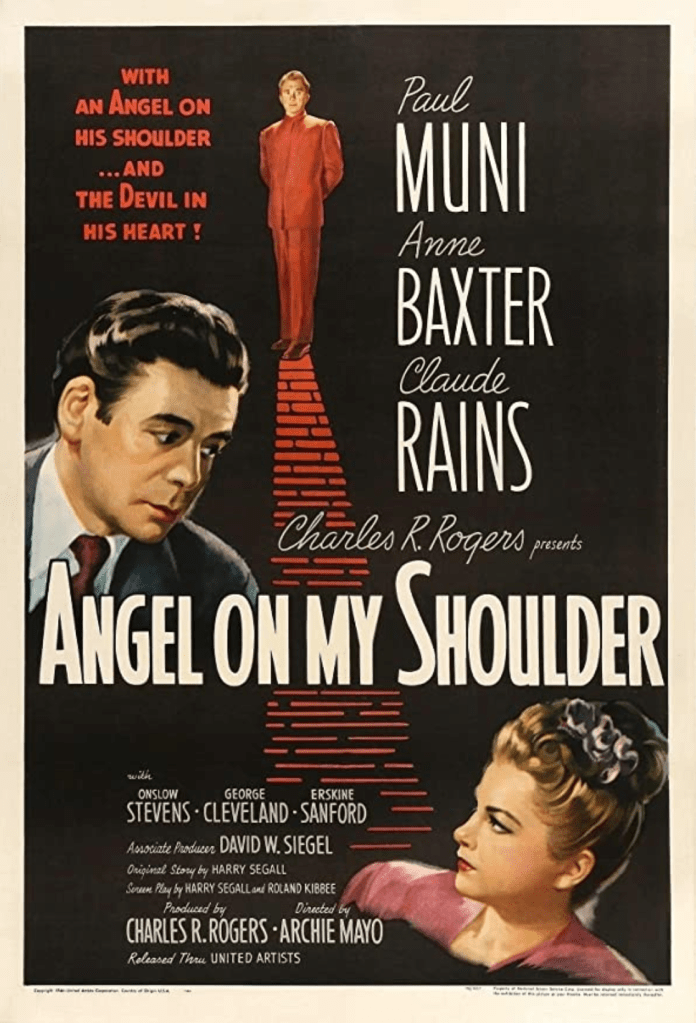
Angel on My Shoulder poster created by Premier Productions and United Artists.

Things I liked about the film:

The acting: Because Claude Rains is one of the reasons why I chose to review this movie, I’ll talk about his performance first. His role as Nick, the devil, was very different from his other roles I’ve seen. In Angel on My Shoulder, Claude carried himself with a kind of confidence that one would expect from a villainous character. Nick was an arrogant person. However, Claude made this component work by keeping his performance consistent. Another consistent performance came from Paul Muni! Throughout the movie, Eddie was on the edge of his seat, unsure of who to trust. This was an interesting quality for Paul to add to his character, as gangsters in movies sometimes deal with untrust-worthy people. Eddie also tells things as they are, another piece of his personality that Paul pulls off! Anne Baxter did a good job portraying Barbara Foster! In her performance, she utilized emotion, especially through her eyes, to make her character believable. When Eddie, as Judge Frederick Parker, interacts with Barbara for the first time, it is clear she is very uncomfortable with the way her fiancée is behaving. She pushes him away and attempts to walk away from the situation, showing her displeasure the entire time.

The depiction of Hell: Like I said in the introduction, I was curious to see how a Breen Code film would approach the subject of Hell and the devil. The way Hell is depicted in Angel on My Shoulder evokes fear into audience members who support good winning over evil. The underworld is a dark environment that only uses fire as its source of light. Shadows were cast over the characters, with light only being shown over the characters’ eyes. In entertainment media that features the devil, he will sometimes appear as an other-worldly creature. In Angel on My Shoulder, Nick, the name the devil goes by, appears as a human. This shows the reality of how someone can turn to the dark side.

The dialogue: Since Angel on My Shoulder was released during the Breen Code era, any talk of Hell or the devil needed to meet Breen Code standards. Within the story, the word “hell” is never spoken. Nick is not called “the devil”, but Mephistopheles instead. The script does feature subtle references to who Nick is that respects the intelligence of the audience. One scene shows Eddie and Nick riding in a plane. When Eddie notices how Nick appears uncomfortable, he asks Nick if he is ok. Nick tells Eddie that he likes being near the ground more than in the sky.

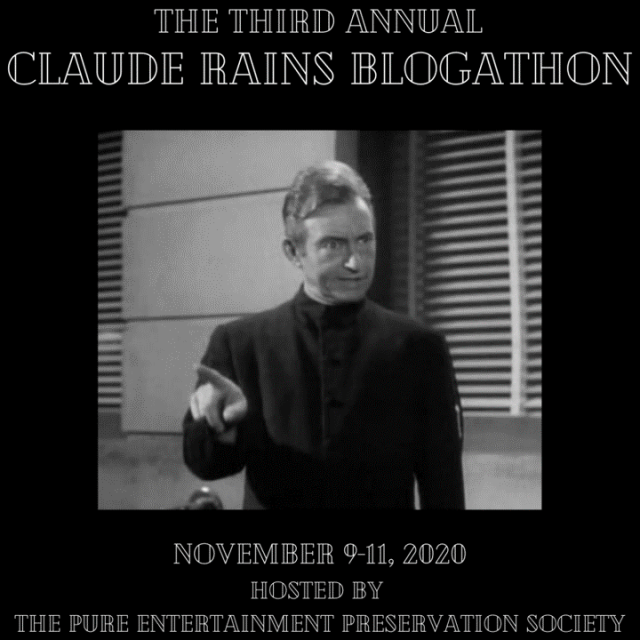
The Third Annual Claude Rains Blogathon banner created by Tiffany and Rebekah Brannan from Pure Entertainment Preservation Society.

What I didn’t like about the film:

A limited use of music: Music in film can help set a tone for a particular scene. One example is when suspenseful music is played during a scene that is more intense. Without music, the scene would be missing an emotional component. Angel on My Shoulder is an hour and forty-minute film. In that amount of time, about seven scenes feature music. To me, this seems disproportionate to the movie’s run-time. It also forbids certain moments in the film from having a more emotional impact.

A mostly static character: In a story like Angel on My Shoulder, it’s common for the audience to witness the protagonist grow as an individual over the course of the movie. While we do see Eddie change his ways, the transformation doesn’t happen until sometime between an hour and eleven to twenty-three minutes into the film. Beforehand, Eddie remains the same as he did before he died. He even refuses to act more like Judge Frederick Parker, even though acting more like Frederick would have helped avoid suspicion from those around him. Breen Code era movies typically feature a core lesson or message for the audience to take away. Even though Angel on My Shoulder does have a good message, it takes quite some time to get there.

A meandering story: Angel on My Shoulder is about a recently deceased gangster who works with Nick, the devil, to satisfy a favor. As I mentioned in the introduction, this concept reminded me of All Dogs Go To Heaven. But where Angel on My Shoulder failed is not having a sense of urgency. Because of this decision, the majority of the movie is spent showing Eddie reliving his life as Judge Frederick Parker. Any course of action for Nick and Eddie’s plan doesn’t appear in the story until an hour and eleven minutes into the movie. For me, I was waiting for something interesting to happen instead of actually watching something interesting happen.

Angelic statue image created by Marcelo Gerpe at freeimages.com. “FreeImages.com/Marcelo Gerpe.”

My overall impression:

 Angel on My Shoulder is a painfully average film. Because the movie placed more emphasis on showing Eddie reliving his life as someone else, it took almost the entire story just to get to the intended point. I liked seeing how this film addressed subjects such as the afterlife, Hell, and the devil in the time of the Breen Code era. But it should have been included in a stronger script. There were aspects of this movie I did like. The acting was enjoyable to watch and the script was intelligently written. But when I find myself checking the time on multiple occasions in order to see when this film would end, my unenjoyment of the overall project overshadows its strengths. If you’d like to watch a movie with a similar concept to Angel on My Shoulder, I would recommend All Dogs Go To Heaven. In my opinion, that movie did a better job executing almost the same idea.

Overall score: 5.5 out of 10

Have you seen Claude Rains’ films? If so, which one is your favorite? Comment below in the comment section!

Have fun at the movies!

Sally Silverscreen

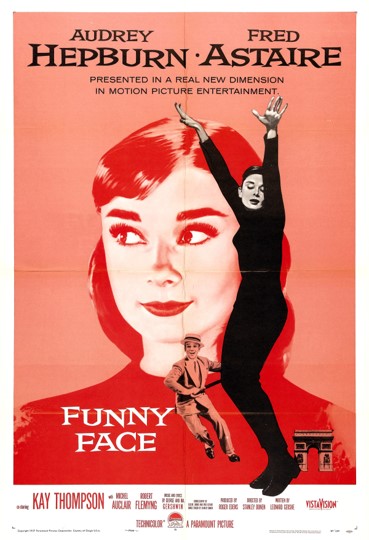
Take 3: Funny Face Review (Fred Astaire and Gene Kelly Blogathon Part 2)

For the second part of my Fred Astaire and Gene Kelly double feature, I’ve chosen to review the 1957 film, Funny Face! Last September, when 18 Cinema Lane received 135 followers, I reviewed my first Fred Astaire movie. That was The Sky’s the Limit, which I thought was just ok. Speaking of firsts, reviewing Funny Face is a first for 18 Cinema Lane, as it is the first musical film starring Aubrey Hepburn I’ve seen! Even though I have seen Breakfast at Tiffany’s and The Nun’s Story, those films would be classified as dramas. Since this was my first time seeing Audrey perform in a different genre, I was curious to see if she would be able to hold her own. When I read the synopsis for Funny Face, it sounded similar to another musical starring Audrey: My Fair Lady. Because I haven’t seen that movie, I can’t make a comparison between it and Funny Face.

Funny Face poster created by Paramount Pictures.

Things I liked about the film:

The acting: The one word I’d use to describe the cast in Funny Face is comfortable. I chose this word because every actor and actress appeared comfortable in their role! This presented the characters as if they were real-life people dealing with real-life situations. Watching Audrey’s performance in this movie reminded me of her performance in The Nun’s Story for this reason: her character grows over the course of the movie. In Funny Face, Jo opens her heart and mind to a new chapter in her life that she never thought she’d embark on. She steps out of her comfort zone to not only follow her dream of meeting her favorite philosopher, but she also creates new dreams for herself. Audrey’s ability to adapt to any scenario helped her make Jo’s journey seem believable! As I mentioned in the introduction, I saw The Sky’s the Limit last September. Personally, I liked Fred’s character in Funny Face more than his character in the 1943 film. This is because Dick Avery had a better personality. He came across as easy-going and approachable, someone who you would want to tour Paris with. This made Dick Avery worth rooting for! Kay Thompson stood out to me as Maggie Prescott! While her character was no-nonsense and straight-forward in what she wanted, she was never cold-hearted or mean for the sake of it. This is different from other characters of this specific type. What’s also different is how Maggie was allowed to be silly, as could be seen when she and Dick are attempting to find Jo at the home of Jo’s favorite philosopher. This gave Kay an opportunity to apply her acting abilities to various situations!

The use of color: I love how color was used in Funny Face! Whenever scenes had a primarily plain color palette, like white or beige, objects or pieces of clothing were added to bring a pop of color to the space. The opening scene is such a great example! Each door of Quality magazine’s office was painted a bright shade of various colors, providing visual appeal to a mostly white lobby and hallway. Maggie’s office adopted a beige hue for about 85% of that location. However, certain pieces of fabric and even an assistant’s green coat add bold colors to a place that would have remained dull without them. This decision to use color was very detail oriented and showed how the film’s creative team really paid attention to how their project would be presented!

The musical numbers: Funny Face’s musical numbers were not only entertaining to watch, they also incorporated creative ideas that made them memorable. The very first musical number, “Think Pink!”, showed a montage of the different ways the color pink could be worn. Through the use of colorful visuals, it helped illustrate the point Maggie was trying to stress to her assistants as well as the audience. “Bonjour, Paris!” showed Maggie, Dick, and Jo simultaneously in a split screen shot. I have never seen a musical use a split screen before, so this detail is the one I remember the most! Each performer in these musical numbers looked like they truly enjoyed what they were doing! “Basal Metabolism” showed Audrey Hepburn having fun performing her dance trio. She appeared in her element and joy radiated from her routine. This definitely added to the overall enjoyment of Funny Face’s musical numbers!

Illustration of Paris, France created by Freepik at freepik.com. <a href=”https://www.freepik.com/free-photos-vectors/travel”>Travel vector created by freepik – http://www.freepik.com</a>. Image found at freepik.com.

What I didn’t like about the film:

No major conflict: While watching Funny Face, I noticed something was missing from this movie. That would be a major conflict, which I think would have made the story a little more interesting. Smaller conflicts, like finding a new face for Quality magazine, kept the film moving forward. But, because a major conflict was absent, it made situations feel like they worked out too easily in the characters’ favor. One idea could have shown Dick struggling to decide if he should continue to be a fashion photographer or become a stage performer. If this would have been a conflict in the story, it would have presented a mystery as to which career path Dick will choose.

A prolonged transformation: Like I said in the introduction, I haven’t seen My Fair Lady. Therefore, I can’t compare the two movies. What I will say about Funny Face is how Jo’s transformation doesn’t happen until the film’s halfway point. In the first half of the story, Jo’s perspective starts to change, allowing her to expand her intellectual horizons. But the physical transformation, from bookworm to fashion model, happens a lot later than most movies of this nature. When a character makes a dramatic change to their appearance, that moment may be the audience’s most anticipated moment. If they are forced to wait too long, they may start to lose interest.

An attraction that happened too quickly: In my review of The Crow: City of Angels, I pointed out how, to me, Ashe and Sarah’s attraction for one another was a flaw of that movie because it came about so quickly. The attraction between Jo and Dick in Funny Face makes the same error, as it also happens too quickly. Minutes after meeting for the first time, Jo and Dick share a kiss. Shortly after this encounter, Jo sings “How Long Has This Been Going On?”, a song about falling in love. If this song had been sung later in the film, after she had spent more time with Dick, the song itself would have been more impactful. Even though it is somewhat predictable for Jo and Dick to form a relationship, it should have taken its time to come to fruition.

With Glamour & Panache: A Fred Astaire & Gene Kelly Musicals Blogathon banner created by Heidi from Along the Brandywine.

My overall impression:

Funny Face is a film I had heard of for years, but had never seen. Whenever I heard about classic films or even movies starring Aubrey Hepburn, this film has, more often than not, been brought up. Now that I have seen Funny Face, I have developed an understanding for why this is the case. This is not just a good musical or a good Audrey Hepburn title. It is a good movie in general! Creative ideas within this project help it stand out. Some examples include using a split screen and incorporating objects with color into scenes with plain color palettes. Musical numbers were well-choreographed, featuring performers that appeared to enjoy the material they were given. Every actor and actress seemed comfortable in their roles, giving their characters a life of their own. While Funny Face does have its strengths, it has its weaknesses as well. Just one example is how Jo’s transformation happens much later in the film. Despite having seen only two of Fred Astaire’s movies, I’d pick Funny Face over The Sky’s the Limit. I would even choose Funny Face over Take Me Out to the Ball Game!

Overall score: 7.8 out of 10

Have you seen Funny Face? Which Fred Astaire musical is your favorite? Please share your thoughts in the comment section!

Have fun at the movies!

Sally Silverscreen
Take 3: Take Me Out to the Ball Game (Fred Astaire and Gene Kelly Blogathon Part 1)

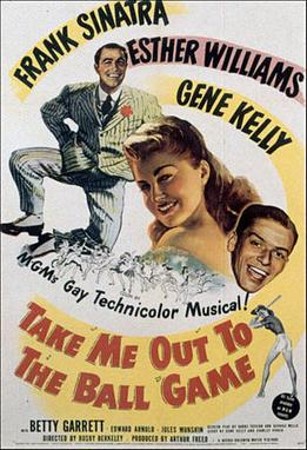
Because Heidi’s new blogathon celebrates two classic film stars, Fred Astaire and Gene Kelly, I decided to write a double feature in their honor. I’m starting with one of Gene Kelly’s movies first, as my movie selection had a shorter run-time. On 18 Cinema Lane’s Pinterest account, there is a recommendation board where people who visit the blog can make a suggestion for future reviews. That board hosts some Gene Kelly titles, so I had plenty of options to choose from. In the end, I picked the 1949 film, Take Me Out to the Ball Game, which was recommended by Kristen from KN Winiarski Writes! The idea of a musical surrounding an athletic sport was a fascinating concept. It also gave me an excuse to finally watch one of Esther Williams’ films, as I had not seen one up until this point. 2020 has become the year of Frank Sinatra films on this blog, as Take Me Out to the Ball Game is now the fifth film from Frank’s filmography I’ve reviewed. An interesting coincidence I just noticed is how most of these movies have had a musical element included.

Take Me Out to the Ball Game poster created by Metro-Goldwyn-Mayer.

Things I liked about the film:

The acting: As I said in the introduction, I reviewed Anchors Aweigh back in September. In that review, I said that Frank Sinatra and Gene Kelly were one of the best on-screen duos I’ve ever seen because of how different their characters were from each other. Because of Frank and Gene’s experience working together, it allowed them to be familiar with the other performer and know what to expect from them in Take Me Out to the Ball Game! Like Anchors Aweigh, their characters in the 1949 film, Dennis and Eddie, were opposites of one another. This time, however, it was for different reasons. While Eddie was interested in the night life of his world, Dennis has a quieter soul that seems to notice the finer details within his surroundings. While I wrote a list article about the travels of Esther Williams, this was my first time watching one of her films. Even though Esther spent more time on land than in the water, she appeared at ease in her role as K.C. Higgins! When people tried to stand in her way, K.C. always stood her ground. At the same time, she tried to instill fairness into the situation. One great example is when she insists on a curfew penalty for every member of the Chicago Wolves. On the surface, it seems like K.C. is being unfair toward the team. In reality, she is looking out for their best interests by making sure they get a good night’s sleep so the team can perform better on in their baseball games.

The set design: Because a significant amount of time in Take Me Out to the Ball Game takes place in Florida, the sets surrounding the characters are going to reflect the Sunshine State. This is done through a variety of design choices. What made me like these sets so much was how appealing they were! When Dennis and Eddie arrive in Florida for Spring Training, the audience is introduced to the stadium, located right on the beach. With fair weather in the scene and the sandy shore taking center stage, the beach looked inviting! At night, when K.C. is interacting with both Dennis and Eddie near the pool area, lights illuminated this location to show off its exterior design. The white balcony of K.C.’s hotel room complimented the dark sky shown in the background. Light colored outdoor furniture consistently carried the color scheme this set was striving for! In an outdoor sitting area occupied by K.C. and Eddie, tan wicker chairs were paired well with green plants placed in various spots. This design choice showcased a good color combination!

The majority of the musical numbers: For the most part, I liked seeing the musical numbers in Take Me Out to the Ball Game! They were well choreographed and each performer looked like they truly enjoyed what they were doing. Like I said earlier, Frank and Gene’s experience working together helped them become familiar with the acting/performance style of the other actor. This certainly worked in their favor when it came to the musical numbers! In the opening number, “Take Me Out to the Ball Game”, both actors wonderfully pull off a tap-dance duet! Even though tap was out of Frank’s creative comfort zone, he was able to hold his own throughout the routine. Like I also said in this review, Esther spends more time on land than water. However, she was given one scene where she swam and sang the song from the movie’s opening number. Because of Esther’s experience with musicals, she was able play her own unique role in the film’s musical department that allowed her to stand out. Esther also appeared comfortable with the performance material given.

With Glamour & Panache: A Fred Astaire & Gene Kelly Musicals Blogathon banner created by Heidi from Along the Brandywine.

What I didn’t like about the film:

Two songs that didn’t age well: In Take Me Out to the Ball Game, there are two songs that have aged poorly. The first song, “Yes, Indeedy”, is performed by Frank and Gene when their characters are telling the Chicago Wolves about the females they met during their traveling talent tour. The lyrics reveal how one woman committed suicide and another female was 11 years old. Because the song itself is faster paced and upbeat, it almost sounds like Dennis and Eddie make light of the woman’s passing. Even though they say they didn’t interact with the 11-year-old for long, it makes me wonder why this child would have anything to do with Dennis and Eddie in the first place? The second song, “It’s Fate Baby, It’s Fate”, is performed by Frank Sinatra and Betty Garrett. The purpose of this song is for Betty’s character, Shirley, to share her feelings for Dennis. How she does it is very forceful, with the musical number showing Shirley blocking Dennis’ path, chasing him through the stadium, and picking him up against his will. Because of her aggression in the situation and her lack of accepting rejection, it feels like a unhealthy relationship in the works.

The character of Shirley: While Betty Garrett did a good job with the acting material she was given, I was not a fan of her character. Personally, I found Shirley to be a selfish individual who didn’t seem to care about the feelings of others. As I just mentioned, Shirley is very forceful when it comes to expressing her feelings for Dennis. If her musical number, “It’s Fate Baby, It’s Fate”, wasn’t bad enough, she wants to treat Dennis like she’s his mother. The way she talks to him in a scene where she blocks Dennis’ path with her horse and buggy shows Shirley talking to Dennis like she has more authority than him. More often than not, Dennis expresses how he doesn’t like Shirley in a romantic sense. He goes out of his way to avoid her and shows displeasure when she’s nearby. However, everyone surrounding him overlooks Shirley’s actions and encourages Dennis to spend more time with her.

An unclear time period: According to Wikipedia, Take Me Out to the Ball Game takes place in 1908. Certain aspects of the movie reflect this, with the various modes of transportation being one example. But there were some outfit choices that appeared to belong in a different decade. Whenever the Chicago Wolves are spending time in the hotel, all the team members wear team sweaters featuring their team logo. This style of sweater looked like it came from somewhere between the ‘30s and ‘50s. Like previously said, Esther has a swimming scene in this film. Her swimsuit resembles the style she wore in her “aqua musicals” of the ‘40s and ‘50s. These costume choices prevented me from getting fully immersed in the movie’s world.

Baseball game image created by Macrovector at freepik.com. <a href=’https://www.freepik.com/free-vector/baseball-game-illustration_2871359.htm’>Designed by Macrovector</a>. <a href=”https://www.freepik.com/free-photos-vectors/man”>Man vector created by Macrovector – Freepik.com</a>. Image found at freepik.com.

My overall impression:  

Even though Take Me Out to the Ball Game is the second Frank Sinatra and Gene Kelly collaboration I’ve seen, I’d still prefer Anchors Aweigh over the aforementioned film. While Take Me Out to the Ball Game is a fine movie, I feel the 1945 film was a stronger picture overall. However, I’m not going to dismiss the movie completely. One of the strengths of the 1949 project is the acting performances! Musical experience from Frank, Esther, and Gene definitely worked in this movie’s favor, with each actor appearing comfortable in their roles! I also enjoyed most of the musical numbers! They were certainly entertaining and fun to watch! Even though I didn’t mention it in my review, I feel the film’s conflict was underutilized. Within the last thirty minutes, Eddie tries to juggle baseball and performing in a café. Eventually, he learns that he can’t have everything he wants. Story wise, I think the film’s main conflict should have been Eddie’s struggle to fit his love of performing and baseball into his life. I actually found this part of the story more interesting than the Chicago Wolves dealing with a new team owner.

Overall score: 7.2 out of 10

Have you seen Take Me Out to the Ball Game? Which Frank Sinatra and Gene Kelly collaboration is your favorite? Tell me in the comment section!

Have fun at the movies!

Sally Silverscreen

Take 3: The Crow: City of Angels Review

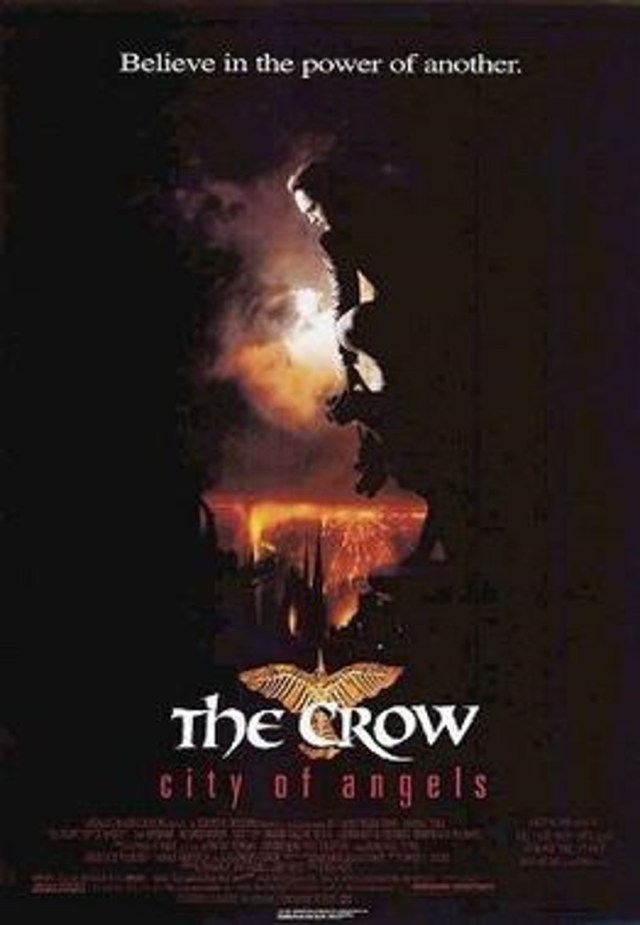
Because I received positive responses for the way I wrote my review of The Crow, I decided to write another open letter. This time, I’ve addressed it to The Crow: City of Angels. As I mentioned before, this isn’t the typical writing style I adopt for my reviews. But it’d only be fair to present this article in a similar fashion. Now, let me start this letter to The Crow: City of Angels.

The Crow: City of Angels poster created by Dimension Films and Miramax Films. Image found at en.wikipedia.org/wiki/File:The_Crow_2.jpg.

An Open Letter to The Crow: City of Angels,

I’m pretty sure you’ve heard of my editorial that I wrote back in May. You know the one; about how the Tim Pope cut should be released. A question you’re probably asking is “How can you advocate for a cut of a movie you’ve never seen”? Well, I’m glad you asked! I first learned about your experience with “studio intervention” from the Youtube video, “Exploring The Crow City of Angels”. I was not happy to hear what you had to go through, thinking it a circumstance that should have never happened. While scrolling through the video’s comment section, I read responses from people who expressed interest in seeing the Tim Pope cut. But despite this interest, it seemed like nothing was being done about the situation. From how I saw it, wishful thinking overshadowed any plans or ideas. After Justice League’s Snyder Cut was announced for a 2021 release, I knew it was the perfect time to bring up the Tim Pope cut and explain why it’s important. When other films were brought up in the discussion of special cuts, you weren’t really added to the conversation. So, I’m actually doing you a favor by advocating on your behalf. By the way, my original plan was to watch you and your predecessor, The Crow, around Halloween. But I’m guessing they told you about my change of plans.

Image of crow at sunset created by Rayudu NVS at freeimages.com. Photo by <a href=”/photographer/rayudu238-57835″>rayudu NVS</a> from <a href=”https://freeimages.com/”>FreeImages</a&gt;. Image found at freeimages.com.

Because of a grammatical error I stumbled across on the internet, where your title was written as The Crow, City of Angels, I honestly thought Vincent Perez had starred in your predecessor. However, when I discovered The Crow Wiki, I learned he was the lead actor in the second chapter. Like I’ve said about movies like Swept from the Sea and Cyrano de Bergerac, Vincent’s involvement is what made me want to check you out. In the previous films of Vincent’s I’ve seen, he always steals the show for the right reasons. He certainly did that this time around! Similar to Brandon’s portrayal of Eric, Vincent brought an emotional intensity that made his performance captivating to watch! However, he went out of his way to set his character, Ashe, apart by adding a sense of showmanship to his role. In a scene where some of the villains are shooting at Ashe in a club, Ashe acts performative about the situation, using the violence against him in his one-man show. He even bows after the villains have finished shooting. This acting decision ended up working in Vincent’s favor! I’m not sure how much acting experience Iggy Pop had prior to his casting. However, I feel he did a fairly good job with the material he was given! While portraying Curve, one of the villains, Iggy effectively showcased the anger and frustration a person in that situation or environment might feel. This can be seen when Curve goes to Noah’s tattoo parlor and fights with Sarah. As Curve’s hostility grew, I quickly became concerned for Sarah and Noah’s safety. This scene showed me that Iggy’s performance was convincing. Speaking of Sarah, I liked seeing Mia Kirshner portray this character! Through her performance, she brought a calmness that the world surrounding Sarah was missing. Sarah’s gentle demeanor was a physical representation that hope wasn’t completely lost. This definitely worked in Mia’s favor, as it helped her performance stand out!

Paint palette image created by Freepik at freepik.com <a href=’https://www.freepik.com/free-vector/hand-drawn-artsy-tools_836777.htm’>Designed by Freepik</a> <a href=”https://www.freepik.com/free-photos-vectors/hand”>Hand vector created by Freepik</a> Image found at freepik.com

Over the twenty-four years you have existed, I’m guessing you’re tired of being compared to your predecessor. You so desperately wanted to be your own individual, but “studio intervention” prevented you from doing so. However, I made sure to notice how you were different from the first chapter. Eric and Ashe’s face disguise are just one example. In The Crow, Eric painted his face to resemble a mask he and Shelly owned when they were still alive. Ashe, in The Crow: City of Angels, uses some paints his son, Danny, owned before he died. This contrast shows the personal, sentimental touches each character’s appearance was given. Throughout the second chapter, Ashe moves around Los Angeles by primarily riding on a motorcycle. Because he was a mechanic before he became the Crow, this distinction makes sense. While we’re on the subject of Los Angeles, I really liked your set design! It’s griminess and unruliness showed a different way a city can express chaos. The sets were also colorful, which is the opposite of your predecessor’s black-and-white color palette. Day of the Dead festivities certainly made a contribution, as various masks, flowers and other items related to the holiday helped scenes visually pop. I’m glad you decided to use more light when presenting the story! This decision allowed me to clearly see what was happening on screen. It certainly sets you apart from the first chapter, as they only used a certain amount of light throughout the story.

City of Los Angeles at night image created by Wirestock at freepik.com. City photo created by wirestock – www.freepik.com

Now it’s time for me to point out your flaws and mishaps. I’m not doing this to be mean, but only to be honest, as I do recognize your horrible experience with “studio intervention”. All of the villains were weak imitations of those who came before them. One perfect example is Sybil, who was the mystical figure Myca was in your predecessor. In a scene where she is explaining the connection between the crow and Ashe to Judah, Sybil sounded like she was quoting Myca word for word. Because of everything I just said, these villains were not allowed to have their own stories and be their own characters. It also made it easier for me to root for Ashe, as the villains didn’t have anything interesting or unique to offer. While I don’t have anything against Grace herself, I found her to be insignificant in the grand scheme of things. She didn’t add anything to the story or have a strong reason for being in that world. I’m guessing this was a “studio intervention” related decision, where the studio wanted Los Angeles to have their own “Sarah”. The difference between Sarah in The Crow and Grace in The Crow: City of Angels is Sarah receiving a vital role in the first chapter, serving as a reminder for Eric to keep his moral compass. In the second chapter, Grace could have been written out of the story and not much would change.

Breaking heart image created by Kjpargeter at freepik.com. <a href=’https://www.freepik.com/free-vector/broken-heart-valentine-background_1041991.htm’>Designed by Freepik</a>. <a href=”https://www.freepik.com/free-photos-vectors/background”>Background vector created by Kjpargeter – Freepik.com</a>. Image found at freepik.com.

Now that I mention Sarah, I was not a fan of her and Ashe’s attraction for one another. This has nothing to do with the characters themselves or the actors portraying them. I just found this part of the story to be unnecessary. This is because nothing became of this attraction, which prevented it from going anywhere. Even Ashe warns Sarah against this attraction, as he tells her that nothing will likely happen. If Ashe knew this all along, then why would he even entertain this idea in the first place? I could see what you were trying to do; give Ashe a conflicting choice between life on Earth and the afterlife. This would have been an interesting concept had more time been devoted to it. Because Ashe and Sarah’s attraction for each other came about so quickly and with everything else happening in the film, it ended up as a spark that had trouble igniting.

The image I created with the hashtag, #ReleasetheTimPopeCut. Screenshot taken by me, Sally Silverscreen.

As a movie, you’re a fine, run-of-the-mill action film. But, as a continuation to The Crow story, you were weaker than your predecessor. I did cut you a little bit of slack because of the one thing I’ve been mentioning throughout this letter: “studio intervention”. Now that I have seen you, I still believe the Tim Pope cut should see the light of day. You do deserve to be the movie you were meant to be and we the audience and fans deserve to see that happen. On 18 Cinema Lane, I feature a crow image with the hashtag, #ReleasetheTimPopeCut, on the homepage. This is so people who come to my blog can easily find my editorial and read it for themselves. I also posted the aforementioned hashtag on all of 18 Cinema Lane’s social media accounts. If you know anyone who wants to see the Tim Pope cut, please tell them to speak up. Paramount, the studio you now call “home”, will never hear the fans unless they say something. All I’m asking is for you to be kind and respectful if you share this letter with others. I recently watched Lee’s video review from his Youtube channel, Drumdums. When addressing the horrible circumstance you went through, he contemplated the likelihood of the Tim Pope cut’s release. While he felt anything was possible, he also didn’t believe this cut would ever be seen. As I close this letter, I’d like to remind Lee and those who may have doubts of what Eric said in The Crow: “It can’t rain all the time”.

Sincerely,

Sally Silverscreen

P.S. I’m giving you a score of 7 out of 10.

If you want to watch Lee’s review of The Crow: City of Angels, you can find it on Youtube by typing “The Crow: City of Angels Movie Review” into the search bar or visiting his channel, Drumdums.

Take 3: House of Wax (1953) Review

For KN Winiarski’s 1st Annual Spooky Classic Movie Blogathon, I chose to write about a film that was recommended to me by one of my fellow bloggers. As the title states, I will be reviewing the 1953 film, House of Wax, which was suggested by Patricia from Caftan Woman. This is a movie I’ve heard of, but had never seen. Since the film was released between 1920 and 1960 (one of the blogathon’s requirements), it gave me a good excuse to check it out! Even though I have seen and reviewed three of Vincent Price’s movies, only one of them was released during the Breen Code era. Because House of Wax premiered in the early ‘50s, it allowed me to view more of his films from that time period. Based on the synopsis, House of Wax is considered a “revenge film”. It made me curious to see how this type of story would work within the Breen Code era. I was also interested in comparing House of Wax to a project like The Crow, which I reviewed back in May.

House of Wax poster created by Warner Bros.

The acting: House of Wax is the fourth film of Vincent Price’s I’ve seen. While I enjoyed his acting performances in The Whales of August, House of the Long Shadows, and Shock, I really liked his performance in the 1953 film! When his character, Henry, is talking about his wax figures, the passion he has for his craft can be seen on his face and in his eyes. Vincent makes the audience feel bad for Henry when these figures and the museum burn to the ground. As time moves forward, Henry evolves into a man of sophistication. Through the power of his acting talents, Vincent makes this transition feel believable. Prior to watching House of Wax, I was not familiar with Phyllis Kirk as an actress. However, I really liked her portrayal of Sue Allen! The emotional intensity Phyllis brought to her role is what made her performance stand out! When she is chased through the city by a murderous criminal, the audience can see and feel the fear Sue is experiencing. This helped raise the intensity of that scene. After she reaches the safety of a neighbor’s house, she immediately bursts into tears. Sue’s emotions show just how emotionally exhausted she is from constantly looking over her shoulder.

The wax figures: Because this film is called House of Wax, a showcase of various wax figures is to be expected. What was unexpected for me was the overall quality of these wax figures! All of them were so well-crafted, they looked like real-life individuals. In fact, there were times when I was waiting for at least one of them to start moving on their own. Throughout the film, facts about the people these figures were representing and the artistic process were shared within the dialogue. One example is when Henry is explaining how he created his Marie Antoinette figure. He tells a potential investor that Marie’s eyes are glass and were inserted through a hallow part of the head before it was attached to the neck. I found this part of the story fascinating! I also wish there was a documentary about this particular art form.

The historical accuracy: House of Wax takes place during the early 1900s, with the time period influencing every aspect of the film. What works in this movie’s favor is how the visuals looked and felt like the time period the film’s creative team was striving for! As Henry’s wax museum is burning, a fire truck appears to put the fire out. A noteworthy point is the model of the truck resembled one from the early 1900s. Another way the time period was reflected was through the set design! The exterior of the House of Wax museum looked like a movie palace from decades past, commanding the attention of passers-by. The beige and red marble alcove leading to the museum reminded me of an outdoor market, with the museum itself selling a form of entertainment to potential customers. These design choices made the overall film feel immersive!

Scared audience image created by Katemangostar at freepik.com. <a href=’https://www.freepik.com/free-photo/terrified-friends-watching-horror-movie-in-cinema_1027311.htm’>Designed by Freepik</a>. <a href=”https://www.freepik.com/free-photos-vectors/people”>People image created by Katemangostar – Freepik.com</a>. Image found at freepik.com.

What I didn’t like about the film:

The 3D effects: One of House of Wax’s claims to fame is featuring one of the earliest forms of 3D in cinematic history. Any poster of the film and the movie’s opening credits boast this detail enthusiastically. However, the 3D in this movie stayed in 1953. In the scene where Henry opens his House of Wax museum, a spokesperson uses paddle-balls to get patrons’ attention. During his routine, the spokesperson breaks the fourth wall and tells a man in the audience that he is trying to hit his popcorn bag with one of the paddle-balls. When the paddle-ball moved toward the audience, the moment itself looked like it was filmed in 2D. The 3D in House of Wax comes across as an outdated gimmick that felt awkward and out of place.

A protagonist I can’t root for: More often than not, “revenge films” feature a protagonist who represents the opposite of the horrors committed against them. Eric Draven from The Crow is a perfect example. While he kills the villains who have wronged him and his fiancé, Shelly, Eric is fighting fire with fire when his city’s justice system is ineffective. He also chooses to keep his moral compass intact by helping those who are innocent. I won’t spoil House of Wax for those who haven’t seen it yet. But all I’ll say is that as time goes on, Henry throws away his moral compass and takes his mission too far. Because of this, I couldn’t bring myself to root for this character.

Scares that aren’t consistent: There are several moments in House of Wax that are truly unsettling to watch. Seeing Henry’s wax figures burning is just one of them. However, I expected the film to be much scarier than it was. The most terrifying moments happened toward the beginning and end of the movie. Everything in-between felt like a juggling act of darker and lighter moments. Right after Henry’s wax museum burns down, a happy dance party is shown. This feels like a major tonal shift from the ominous tone that was set up in the film’s opening scene.

1st Annual Spooky Classic Movie Blogathon banner created by Kristen from KN Winiarski Writes.

My overall impression:

As a movie, House of Wax is good! It is a horror title that relies more on tone and atmosphere. But as a “revenge story”, I feel a film like The Crow does a better job at expressing that type of narrative. One major difference is how the character of Henry is not worth rooting for, as he abandons his moral compass within the course of the film. I found this to be a surprising choice for a Breen Code era film. While it doesn’t overpower the movie, the 3D aspect of the project did not work. It was obvious that 2D filmed moments were waiting for the 3D effect to kick in. Sadly, the 3D failed to show up. I would say House of Wax is an interesting choice for Halloween viewing, as it utilizes wax figures to provide elements of horror. It eliminates the use of blood/gore and has the ability to put the audience on edge.  

Overall score: 7.5 out of 10

Have you seen House of Wax? Which film of Vincent Price’s is your favorite? Share your thoughts in the comment section!

Have fun at the movies!

Sally Silverscreen

Take 3: The Wrong Cheerleader Coach Review

Anyone who has followed or read my blog would know that Lifetime movies are rarely reviewed. In fact, the last time I wrote about a film from Lifetime was Killer Prom back in May. This is because I don’t always find the time to include this network’s projects into my blogging schedule. But since I just watched The Wrong Cheerleader Coach, I decided to review this film before the 1st Annual Classic Movie Blogathon and Halloween. It seems like Lifetime has created a series where an unstable woman tries to bring chaos into the lives of those around her, with her occupation included in the film’s title. One of these films is The Wrong Wedding Planner, which I was not a fan of. Since cheerleading, a sport that I like, would play a role in the story of The Wrong Cheerleader Coach, I chose to watch this movie with an open mind. Cheer me on as I share my thoughts on one of Lifetime’s most recent titles!

The Wrong Cheerleader Coach poster created by Lifetime Entertainment Services. 

Things I liked about the film:

The acting: Johanna Liauw is an actress I’m not familiar with. Despite this, I thought she stole the show in The Wrong Cheerleader Coach! Portraying the assistant coach, Devan, Johanna’s emotions were very fluid. A scene where Devan is eating dinner at Jon and Hanna’s house shows a perfect example of this. While eating her meal, Devan is happily enjoying her food and comfortable with spending time in their home. When Jon forces her to leave, Devan’s demeanor quickly changes, anger and discontent bursting forth. Corin Nemec’s performance is another one I liked seeing! Certain behaviors his character, Jon, adopted highlight how he experienced certain situations. One of these behaviors is when he takes his glasses off and puts them back on. This action effectively shows the audience how the stress of moving cross-country, raising a daughter on his own, and being the bread-winner of the family is visualized through a nervous habit. Even though she was in the film for a short amount of time, I enjoyed Mea Wilkerson’s portrayal of Hanna’s new friend, Claire! Mea’s on-screen personality is what made her character likeable. It also helped that Claire was the “voice of reason”, displaying skepticism and concern when interacting with the other characters. These factors made me feel that Claire truly had Hanna’s best interests in mind throughout their friendship!

The on-screen chemistry: While Jon is at work at a construction site, he meets a fellow architect named Melissa, who is portrayed by Bailey Kai. Their similarities in occupation and other areas in life bring them together. While I liked Corin’s individual performance, I liked Bailey’s performance as well. I also feel they both had good on-screen chemistry! Corin and Bailey’s personalities paired nicely with one another, giving the audience the impression their characters truly enjoyed each other’s company. This on-screen relationship also contained a brightness that served happier moments within the plot’s darkness. Seeing Jon and Melissa’s relationship unfold gave the audience a break from the story’s suspenseful nature.

The music: In most Lifetime movies, I find the music to be unmemorable or average. This is not the case for The Wrong Cheerleader Coach! During cheerleading practices, pop-techno music can be heard in the background. These musical selections were not only good to listen to, but I honestly wouldn’t change the channel if they played on the radio! When Melissa and Jon are on a dinner date, soft piano served as the scene’s official tune. It set the tone for that moment and fit within the scene’s context. Suspenseful scenes were also given music, as dramatic tunes were heard anytime a scarier situation took place. It certainly added intensity to those moments.

Cheerleading squad image created by Macrovector at freepik.com. Background vector created by macrovector – www.freepik.com

What I didn’t like about the film:

Very little cheerleading: With a film called The Wrong Cheerleader Coach, you’d think there would be a significant amount of cheerleading shown in the movie. But, in reality, this title actually featured very little cheerleading. Sure, a few stunts and practices can be seen. However, the sport itself felt more like an afterthought than a prominent part of the story. This film could have featured almost any athletic extracurricular activity and it wouldn’t make much of a difference.

A somewhat misleading title: Because of the film’s title and because Vivica A. Fox is the only cast member shown on the movie’s poster, it gives the audience the idea that Vivica’s character is the one the title is referring to. When the audience sees the film, they discover the title is actually referring to Devan, the assistant coach. By definition, Devan’s role is to assist Coach Burke, who is the head coach of the cheerleading team. This led to the result of showing Devan doing very little coaching. These factors also cause the film’s title to seem somewhat misleading.

Vivica A. Fox’s limited presence: In my One Christmas review, I talk about how Katharine Hepburn appears in the movie for a short amount of time despite being the top billed actor of the project. It felt like this decision did a disservice to Katharine’s talents, as well as the overall movie. The same thing happens with The Wrong Cheerleader Coach. This time, Vivica A. Fox is the top billed actor of the film. However, the actress who portrays Devan, Johanna Liauw, receives more screen and story time than Vivica does. Vivica did a good job with the acting material she was given. But if it was always The Wrong Cheerleader Coach’s creative team’s plan to cast Vivica as their top billed actor, they should have given her more material to work with.

Breaking heart image created by Kjpargeter at freepik.com. <a href=’https://www.freepik.com/free-vector/broken-heart-valentine-background_1041991.htm’>Designed by Freepik</a>. <a href=”https://www.freepik.com/free-photos-vectors/background”>Background vector created by Kjpargeter – Freepik.com</a>. Image found at freepik.com.

My overall impression:

The Wrong Cheerleader Coach and Killer Prom share one thing in common: both films are given an interesting concept. However, because Lifetime creates so many movies in a given year, the network creatively sells themselves short. This causes these interesting concepts to not reach their full potential. The Wrong Cheerleader Coach could have incorporated a glimpse into the pressures of being “perfect” and/or a student athletic representative of a school. Instead, the story focused on Devan’s growing attraction for Jon. This type of narrative is very typical for Lifetime, even finding a place in Killer Prom. As I’ve said about Hallmark, I’d like to see Lifetime step out of their comfort zone and use different story-telling techniques for future movies. One example would be including thought-provoking ideas that encourage viewers to think about the film long after they’ve seen it. This would help these projects stand out for a longer period of time.

Overall score: 7 out of 10

Do you watch Lifetime movies? Is there one that has been your favorite? Please tell me in the comment section!

Have fun at the movies!

Sally Silverscreen

Take 3: Aurora Teagarden Mysteries: Reunited and it Feels So Deadly Review

Hallmark Movies & Mysteries’ “Miracles of Christmas” line-up is just around the corner! But before that television event can begin, there is one more mystery film I need to talk about. Aurora Teagarden Mysteries: Reunited and it Feels So Deadly is the last new mystery movie to premiere until next year. Despite this, I was planning on reviewing the movie anyways, as I’ve seen this series since the very beginning. In the fourteenth film, a high school reunion is where the mystery takes place. While I did find this idea interesting, I said in a Word on the Street story that I was disappointed the story had nothing to do with Aurora’s ex, Martin. However, I didn’t let this affect my viewing experience!

Aurora Teagarden Mysteries: Reunited and it Feels So Deadly poster created by Crown Media Family Networks and Hallmark Movies & Mysteries.

Things I liked about the film:

The acting: One of the strengths of the Aurora Teagarden Mysteries series has always been the acting performances, with the actors’ and actresses’ expressive natures making these performances enjoyable to watch! Candace Cameron Bure’s portrayal of the titular character was definitely a highlight for this movie! A scene that was one of Candace’s best was when Aurora discovered the murder victim. The shocked expression on her face was very convincing and added suspense to that scene. Another actress that used facial expressions well was Tegan Moss. Portraying the wife of the murder victim, Tegan put a lot of emotion into her performance. This is especially the case in the scene where she is first questioned by the police, as she can be seen crying. Speaking of the murder victim, I was glad to see Toby Levins cast in this film as Jack Larsen! Even though he was in the movie for a short amount of time, Toby brought charisma to his role. This made his performance memorable, as well as make me wish he had stayed in the story a little bit longer.

The design of the high school reunion: This isn’t the first time Hallmark has included a high school reunion into one of their stories. However, the event in the latest Aurora Teagarden movie was the most memorable one I’ve seen! This is because some of the design choices were very creative! In several areas of the hotel’s banquet space, there were displays that represented different extracurricular activities. For example, a display titled “Memories of Cheerleading” featured pom-poms, a megaphone, and pictures of cheerleaders from the reunion’s graduating class. When attendees arrived at the reunion, they were given name tags that looked like school ID cards. The name tags even featured the attendees’ senior high school photos. These design decisions showed how the film’s creative team thought outside the box when it came to this specific story concept!

Aida stands up for Aurora: For most of the series, Aurora’s mother, Aida, has discouraged Aurora from solving mysteries and participating in the Real Murders Club. In Aurora Teagarden Mysteries: Reunited and it Feels So Deadly, however, Aida seems to have changed her tune a little bit. When visiting the mother of the murder victim, the mother shares her doubts about her son’s murder being solved. Aida takes the opportunity to stand up for her daughter. She tells Jack’s mother that even though she doesn’t approve of Aurora’s decisions, she knows that Aurora is the best at what she does. This was so refreshing to see after the “don’t-get-involved” cliché was placed in the series for so long!

Magnifying glass and fingerprint image created by Alvaro_Cabrera at freepik.com. <a href=’https://www.freepik.com/free-vector/loupe-over-a-fingerprint_853908.htm’>Designed by alvaro_cabrera</a>. <a href=”https://www.freepik.com/free-photos-vectors/glass”>Glass vector created by Alvaro_cabrera – Freepik.com</a>. Image found at freepik.com.

What I didn’t like about the film:

Details that don’t make sense: In this movie, Aurora and her friends attend their 20-year high school reunion. If this story takes place in 2020, it means that they graduated in 2000. Before the event, Aurora and Sally are looking through a memory box that Aurora put together after her graduation. When reflecting on music from their high school years, they bring up Britney Spears and Pink as their favorite artists, which makes sense from a chronological perspective. Shortly after this statement is made, Aurora takes out a Rubik’s Cube and a Walkman from the box, items that are typically associated with the ‘80s. Several scenes later, when the murder victim is discovered at the reunion, the police immediately come to the scene of the crime. During the initial investigation, the attendees of the reunion are not informed of the situation as they curiously wonder what happened to their missing friends. If a situation like this happened in real life, every attendee would be immediately notified of the crime.

No humor: Mystery films from Hallmark’s second network usually incorporate enough humor to prevent the story from becoming too dark. It also allows the actors to explore their dramatic and comedic talents. Aurora Teagarden Mysteries: Reunited and it Feels So Deadly did not contain this component. Lack of humorous or light-hearted moments caused the movie to adopt a more serious tone than previous entries. Audience members were also not given a break from the murder mystery.

Weaker audio: In my review of JL Family Ranch: The Wedding Gift, I mentioned how some of Hallmark’s recent films have experienced bad audio. While the audio in Aurora Teagarden Mysteries: Reunited and it Feels So Deadly was better than the audio in the aforementioned sequel, it did have its issues. Whenever a character talked loudly, my speakers produced a cracking sound. I’m not sure if this is a movie related or entertainment system related issue. But it is something I felt needed to be addressed.

Photo by Dave Di Biase from FreeImages.

My overall impression:

This chapter in the Aurora Teagarden Mysteries series made me feel similar to Picture Perfect Mysteries: Exit, Stage Death. At best, it is a fine mystery movie with strong elements. But, at worst, it seems like it just met a requirement. I did like the design of the film’s high school reunion, as well as the discussion on how people can change. However, this discussion could have served a greater importance within the overall story. One thing I didn’t like about the movie was how there was no humor to be found. Comedy is something that the mystery series on Hallmark Movies & Mysteries have in common, as this component helps the stories avoid being too dark. However, the overall tone in Aurora Teagarden Mysteries: Reunited and it Feels So Deadly was more serious because of the lack of humor. While I haven’t heard of any upcoming Aurora Teagarden Mysteries films, there was one commercial for a new Martha’s Vineyard Mysteries movie that will premiere in 2021! But if there are any new Aurora Teagarden Mysteries stories on the horizon, I hope they are stronger than Aurora Teagarden Mysteries: Reunited and it Feels So Deadly was.

Overall score: 7.1 out of 10

Did you see any of this year’s mystery films from Hallmark Movies & Mysteries? If so, which one was your favorite? Let me know in the comment section!

Have fun at the movies!

Sally Silverscreen
Take 3: The Sea of Grass Review

When I participated in last year’s Spencer Tracy & Katharine Hepburn Blogathon, I reviewed It’s a Mad, Mad, Mad, Mad, World and One Christmas. The first movie was not my cup of tea, but I found the second movie to be just ok. This time around, I decided to write about one movie starring both Spencer and Katharine. As I’ve mentioned before, I don’t watch films from the Western genre often. This is the reason why I chose to review The Sea of Grass. Looking back on the movies I’ve seen from Spencer and Katharine’s filmographies, this is the first time I’ve seen one of their titles where both actors were the leads. Spencer and Katharine are talented actors individually, so it was interesting to see them acting alongside one another!

The Sea of Grass poster created by Metro-Goldwyn-Mayer and Loew’s Inc.

Things I liked about the film:

The acting: In The Sea of Grass, Katharine Hepburn portrays Lutie Cameron, a St. Louis native who moves to the country in order to marry Colonel Jim Brewton. Toward the beginning of the film, Lutie comes across as naïve, as she is a romantic at heart. As she stays in the country, Lutie gains a sense of maturity and grows as a person. Throughout her character’s journey, Katharine was able to show this transition in her acting performance by adopting a variety of emotions. The “sea of grass” this film is named after is Colonel Jim Brewton’s favorite spot. While talking about it with Lutie, Jim describes the fields like a convincing salesman. His face contains a look of longing; reflecting on the past, present, and future of his prized field of grass. The way he talks about it shows how much he cares for this patch of earth. The facial expressions and tone of voice Spencer adopts persuade the audience of this location’s importance. Spencer’s expressions and vocal inflections also reveal the cracks in Jim’s foundation as the story continues. Brice Chamberlain, a local lawyer, is portrayed by Melvyn Douglas. Whenever his character interacted with Lutie, Melvyn was able to, talent-wise, go toe-to-toe with Katharine. He delivered thought-out remarks with a serious calm that one might expect from a respected lawyer. A professional composure was also present in Melvyn’s performance. Because his on-screen personality was different from Katharine’s, it created an interesting dynamic.

The scenery: The majority of The Sea of Grass takes place in the country. Because of this, the natural landscape of this environment is shown in several scenes! When characters travel through the desert, huge mountainous rocks illustrate just how small humans are compared to the large scope of nature. Long and medium shots are used to emphasis this idea. Even the “sea of grass” is featured in a few scenes, its beauty captured well on screen! Sweeping shots showed the vast size of this field. As the wind blew, the movements of the grass looked like the rippling of water. All of these components came together to create a calming space!

Katharine’s wardrobe: Throughout the movie, Katharine showcased an impressive wardrobe that complimented her well! This is because all of her outfits were simple, but elegant. When Lutie and Jim are sharing their first dinner after their wedding, she wears a white long-sleeved dress with a small set of flowers in the front of the dress’s top. Later in the movie, Katharine wears a black-and-white, over-the shoulder dress. This outfit was paired nicely with a dainty black choker and ponytail hair-do. What’s also worth pointing out is how Katharine’s wardrobe in The Sea of Grass appeared historically accurate with the film’s time period.

The Third Spencer Tracy & Katharine Hepburn Blogathon created by Crystal from In the Good Old Days of Classic Hollywood and Michaela from Love Letters to Old Hollywood.

What I didn’t like about the film:

More emphasis on telling: At the beginning of the movie, several people in Salt Fork inform Lutie about how awful of a person Jim is. He is, apparently, such a bad person, some compare him to a tyrant. While the audience can hear Jim say harmful things, they never get to see him do harmful actions. This creative decision gives the viewers only part of a bigger picture when it comes to Jim Brewton. Whenever the subject of people using the “sea of grass” is brought up, Jim is very specific about how the land should be used. If someone objects to these ideas, Jim tells others what he’s going to do instead of carrying out the deed.

No major conflict: Since the film is called The Sea of Grass, you’d think most of the story would revolve around the “sea of grass” itself. Instead, the film prioritizes the personal events of the characters. Stories that are character driven can work. But when you have an interesting conflict like how to utilize a field of grass, the character’s stories don’t seem as interesting. While the triumphs and tragedies of Lutie and company are highlighted, the “sea of grass” is relegated to a subplot.

Times moves too fast: In a movie where time progresses, there is usually some indicator that a jump in time has occurred. This is done through on-screen text or a voice-over. The Sea of Grass, unfortunately, doesn’t utilize any techniques to inform their audience that time has moved forward, causing changes to appear abruptly. A perfect example are the lives of Sara Beth and Brock. In one scene, Sara Beth is shown as a little girl, while Brock is a toddler. The very next scene shows Sara Beth and Brock as older children, appearing to be ten and eight.

Small, western town image created by Freepik at freepik.com. <a href=”https://www.freepik.com/free-photos-vectors/background”>Background vector created by freepik – http://www.freepik.com</a>. Image found at freepik.com.

My overall impression:

When I chose to review The Sea of Grass, I wanted to expand my Western genre horizons. This decision taught me that Western tragedies do exist. Despite seeing a handful of Westerns, the movie was quite different from other films I’ve seen in this genre. Even though I knew that this movie was about a rocky relationship, it was sadder than I expected. The Sea of Grass is a fine film with strong components, like the acting and scenery. However, it does have its flaws that shouldn’t be ignored. While the “sea of grass” is shown on screen, it isn’t as significant as the title would suggest. In fact, this location feels more like a glorified backdrop. I will say that Katharine Hepburn and Spencer Tracy do work well together as actors. As the years go by, I would like to see more of their films where they both star as the leads.

Overall score: 7.3 out of 10

Do you like watching Western films? Are there any Westerns you’d like to see me review? Let me know in the comment section below!

Have fun at the movies!

Sally Silverscreen