Take 3: Accidental Friendship Review + 275, 280, and 285 Follower Thank You

Last November and December were, for me, the busiest months of 2020. As I was completing articles and reviews before the end of the year, 18 Cinema Lane received 275, 280, and 285 followers! Instead of writing three reviews to commemorate each accomplishment, I am writing one review to recognize all three accomplishments. Since I felt like watching the 2008 Hallmark movie, Accidental Friendship, that’s the film I choose for this blog follower dedication review. This is a title that I’ve never seen in its entirety. Because of that, I didn’t know the movie was based/inspired by a true story. The idea of Hallmark creating films out of true stories is nothing new. However, I don’t recall many Hallmark movies from the perspective of people in homelessness. When I watch more Hallmark projects released before 2010, I notice how this particular time period saw stories that were more unique from those in recent years. It is one of the reasons why I find myself seeking out Hallmark’s older films than their newer ones.

Accidental Friendship poster created by Crown Media Family Networks and Hallmark Movies & Mysteries.

Things I liked about the film:

The acting: While I’m familiar with Chandra Wilson from seeing her on advertisements for Grey’s Anatomy, I have never seen any of her performances. Therefore, I didn’t know what to expect from her acting abilities. As I was watching Accidental Friendship, I saw how Chandra stole the show! From what I know about Grey’s Anatomy, it is dramatic and deals with a variety of circumstances. Because of her involvement on that show, Chandra was able to adapt to any situation her character, Yvonne, was facing. This made her performance emotional as well as believable! During the film, Yvonne experiences both heartbreak and joy, from losing a precious item to dancing to Christmas music with her dogs. In every situation, Chandra gave her performance her all to the point where you couldn’t help feeling bad and/or rooting for her character. When it comes to police officers in movies and television shows, they seem to share similar personality traits. This can range from being tough to “no nonsense”. With Kathleen Munroe’s portrayal of Tami, a newer type of personality is given to this kind of character. She was gentler than her fellow officers and also had an easy-going persona. This not only helped Tami form a friendship with Yvonne, but it helped Kathleen deliver a likable performance as well! I haven’t seen a lot of projects from Gabriel Hogan’s filmography. But some of the movies I have seen were those from the Murder, She Baked series. In that series, Gabriel portrayed a supporting character who was trying to win over Hannah’s heart. In Accidental Friendship, Gabriel was given more material to work with. This allowed him to show how he is capable of giving his character, Kevin, a charming personality! It also helped that he had good on-screen chemistry with Kathleen Munroe!

The lighting: Lighting can be an unsung hero when it comes to movie productions, as it can enhance a film’s tone and highlight the vision a creative team is striving towards. With Accidental Friendship, lighting was used to showcase the different lives of Yvonne and Tami. During Yvonne’s parts of the story, the scenes were cast with a grayish blue light. This represented the dire outcome Yvonne was facing on a day-to-day basis. Tami’s parts of the story were captured in a warm yellow light. It showcased how Tami’s life was desired and comfortable, complete with a successful career and a growing romance.

Yvonne’s dialogue: From time to time, Yvonne talks about her situation by referencing luxury items she doesn’t own. When she is making plans with Tami to meet up at a specific location, Yvonne says she’ll record the meeting in her Blackberry. Later in the film, when Yvonne is sharing a meal with a friend, she tells him she’ll have to get a new shopping cart. Yvonne says she’s getting an “upgrade”. The way she spoke about her circumstances was clever, especially from a screenwriting perspective. The references to luxury items provided a subtle contrast to Yvonne’s reality. This decision in writing was definitely “outside the box”, an idea I might not have thought of myself.

Dog collection image created by Freepik at freepik.com. <a href=”https://www.freepik.com/free-photos-vectors/dog”>Dog vector created by freepik – http://www.freepik.com</a>. Image found at freepik.com.

What I didn’t like about the film:

A somewhat misleading title: This film is called Accidental Friendship, implying that the story will revolve around a friendship that originally wasn’t meant to be. However, the friendship of Yvonne and Tami does not officially begin until the movie’s halfway point, with the film’s first half focusing on the differences between Yvonne’s and Tami’s life. Even when the halfway point does arrive, they don’t refer to each other as friends until the end of the movie. In fact, Yvonne refuses Tami’s help for most of the story. All of these factors cause the film’s title to come across as somewhat misleading.

Tami and Kevin’s relationship: Throughout the story, Tami develops a relationship with a police officer named Kevin. While this relationship was fine and there was good on-screen chemistry between Kathleen and Gabriel, I didn’t like how this was Tami’s only personal conflict. It didn’t serve a lot of interest because it was more predictable than other areas of the story. The inclusion of Tami and Kevin’s relationship feels like a network decision, making part of the project seem like a typical Hallmark Channel picture. Because the story itself is sadder than most of the films from Hallmark’s main channel, the relationship kind of felt out of place within the overall tone.

Situations that don’t get resolved: In the story, there are some situations in Yvonne’s life that don’t receive a resolution. Since readers who might not have seen this film may read this review, I won’t spoil the movie. Hallmark films are known for showing their characters reaching a resolution that is satisfying for both the character and audience. Even if the character doesn’t get exactly what they want, they receive answers that are close enough to their original goals. Had at least one of Yvonne’s situations been resolved within the story, it would have given the audience one less thing to worry about.

Winner’s medal image created by Freepik at freepik.com. <a href=’https://www.freepik.com/free-vector/golden-awards-set-with-colors-details_844356.htm’>Designed by Freepik</a>. <a href=”https://www.freepik.com/free-photos-vectors/gold”>Gold vector created by Freepik</a>. Image found at freepik.com.

My overall impression:

Before I share my overall impression, I want to thank all of my followers for their support and patience. 18 Cinema Lane has almost 300 followers, a stepping stone that would have never been reached without you. The blog does mean a lot to me, so I appreciate visitors taking the time to read my content. Now, on to my overall impression of Accidental Friendship! This is a fine, well-made film. In fact, the overall quality of the movie felt like a Hallmark Hall of Fame production. But I do wish the majority of the story had focused on Yvonne’s perspective, as I found it to be more interesting than Tami’s. I also thought the title was somewhat misleading, as the friendship doesn’t happen until the movie’s halfway point. As I said in my review, Accidental Friendship is sadder than the films that have recently been found on Hallmark Channel. Therefore, it doesn’t have the same amount of re-watchability like other Hallmark films. When I saw Accidental Friendship, I was surprised to see most of the story take place during the Christmas season. It makes me wonder why the movie isn’t included in Hallmark’s annual Christmas line-ups?

Overall score: 7.2 out of 10

How many of Hallmark’s pre-2010s films have you seen? Do you enjoy Hallmark movies that feel more like Hallmark Hall of Fame productions? Tell me in the comment section!

Have fun at the movies!

Sally Silverscreen

Take 3: The World of Suzie Wong Review

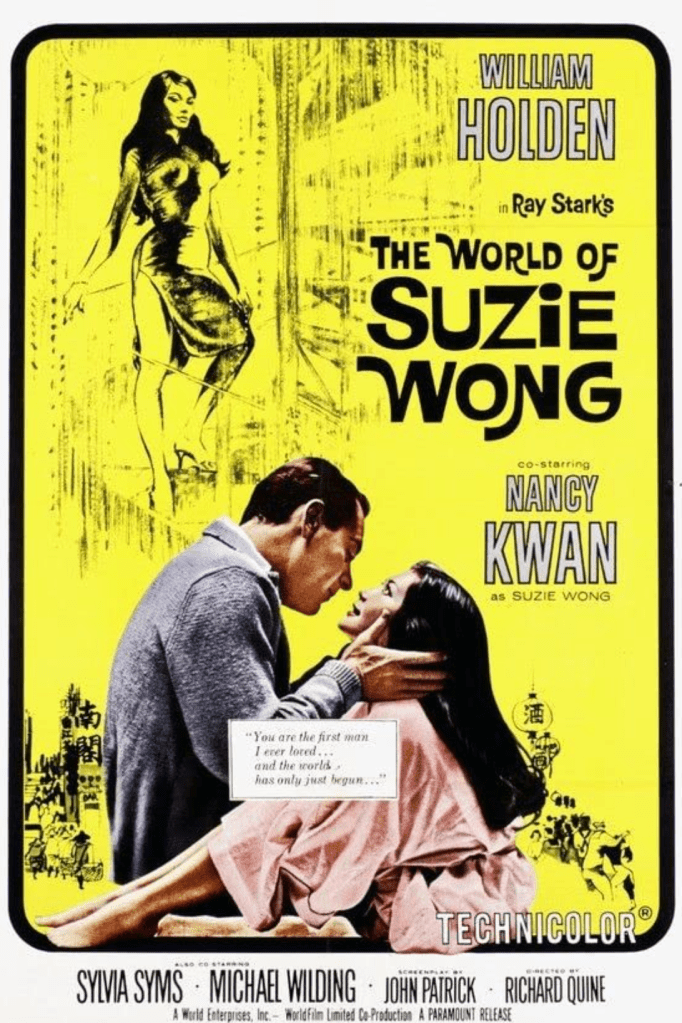
Sunset Blvd. is a “classic” that a majority of film fans have seen at least once in their lives. It is so iconic that the Brannan sisters, from Pure Entertainment Preservation Society, have decided to dedicate a blogathon to it! Because I’ve already seen Sunset Blvd., I choose a film that was new to me. As it is a brand-new year, I wanted the first movie of 2021 to be a fresh step forward. After looking through William Holden’s filmography, I selected the 1960 picture, The World of Suzie Wong! Whenever I think of William, I always think of Joe Gillis from Sunset Blvd. But, as a movie fan, I know that William, acting wise, is more than this iconic role. Therefore, I am grateful to be given this opportunity to explore more of his film work!

The World of Suzie Wong poster created by World Enterprises, Inc.
Worldfilm, Ltd, Paramount British Pictures, Ltd, and Paramount Pictures.

Things I liked about the film:

The acting: Since I’ve only seen Sunset Blvd. and Stalag 17, there’s only so much I can say about William Holden’s acting abilities. What I will say is how William’s performance in The World of Suzie Wong was consistent! From what I remember, William’s characters in Stalag 17 and Sunset Blvd. were serious and had their guard up due to being suspicious of those around them. In The World of Suzie Wong, his character was similar to those from the two previously mentioned movies. However, a major difference was how those characteristics were softened a bit. This was because William’s character, Robert, had a love interest, which is different from his characters in Stalag 17 and Sunset Blvd. I am not familiar with Nancy Kwan as an actress. Despite this, I really liked seeing her performance in this film! It reminded me of the portrayals from actresses in the “Golden Age” of film, where leading ladies not only worked well with other cast members, but were able to, talent wise, stand on their own. While starring as Suzie, Nancy was able to pull off a performance that was captivating, emotional, and memorable! Another performance I enjoyed seeing was Jacqueline Chan’s! As Gwennie Lee, she was able to use her on-screen personality to her advantage. The other female characters in The World of Suzie Wong carried themselves with a sense of sophistication, making themselves seem more mature than they really were. With Gwennie, her personality was joyful, carrying a youthful heart wherever she went. This creative decision helped Jacqueline stand out among the cast!

An educated and aware protagonist: In a story where a protagonist travels to a different country or new place, it can be easy for the screenwriter(s) to create a character that romanticizes a location to the point of being arrogant or clueless about that specific place. With Robert from The World of Suzie Wong, that was certainly not the case! While in Hong Kong, Robert tries to educate himself about his surroundings. When trying to find a hotel, he speaks Chinese to a police officer. Even though he didn’t memorize the question, it shows Robert was willing to go out of his way to learn the language of his temporary home. Robert also seems aware of the people and the customs of Hong Kong. When talking to a business associate, Ben, Robert senses that Ben is attempting to pursue a romantic relationship with Suzie for the wrong reasons. He stands up to Ben and reminds him how Suzie is a person with feelings. Everything I just mentioned effectively drives home a point Suzie made about “a boy cloud with a good heart”.

The use of color: A film’s color palette can help make a scene visually appealing as well as present creative ways to showcase various hues. With that said, I found the use of color in The World of Suzie Wong to be very interesting! At the bar next to Robert’s hotel, all of the female characters wore bright colors. This nicely contrasted the location of the bar itself, a place that didn’t feature a lot of color within the interior design. Color was also used in other ways throughout the movie. One example was the O’Neill family’s home, where a set of red seat cushions provide the only splash of color in their primarily white dining room. Another example is present when Robert tries to find Suzie in the city. Though this scene is brief, the colorful neon lights within this space nicely stand out against the city’s darkness.

Traditional Chinese dragon image created by Freepik at freepik.com. <a href=”https://www.freepik.com/free-photos-vectors/design”>Design vector created by freepik – http://www.freepik.com</a>. Image found at freepik.com.

What I didn’t like about the film:

The concept of “keeping face”: Throughout the film, Suzie and her friends talk about “keeping face”. One night, Gwennie asks Robert if he will enter the bar with her. She tells Robert that if she were to enter the bar by herself, she wouldn’t be able to “keep face”. Later in the film, after Suzie is physically injured by a drunken sailor, she tells Robert to say that he hurt her so she can “keep face”. Because there were no explanations for what “keeping face” was or why it was important, this concept ended up confusing me.

The run-time: The World of Suzie Wong is a little over two hours long. Personally, I don’t think this specific story needed its run-time. In fact, the film could have easily been set at an hour and thirty minutes. This might be achieved by shortening some of the movie’s longer scenes. One of them is when Suzie journeys to an undisclosed location for reasons unknown to Robert. In an attempt to find answers, Robert follows Suzie all the way to this undisclosed location in a scene that lasts about two minutes. When there are multiple scenes that are longer than necessary, they add up to a run-time that doesn’t feel justified.

An inconsistent relationship: While William Holden and Nancy Kwan had good on-screen chemistry, the on-screen relationship of their characters was inconsistent. Throughout the film, Robert and Suzie’s relationship was “on again/off again”. It also doesn’t help that Robert and Suzie don’t officially become a couple until about forty minutes into the movie. I understand that relationships take time to develop and that they contain good and bad moments. However, when a story includes a couple trying to pursue a romantic relationship, the relationship itself needs to be consistent enough for the audience to stay invested in.

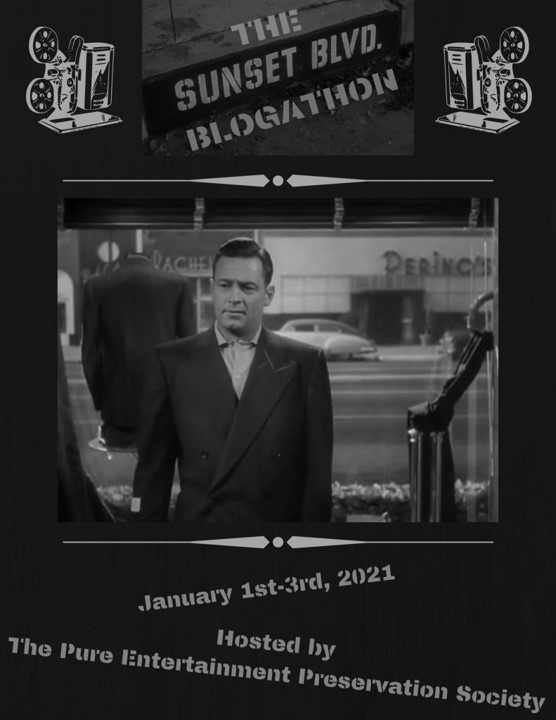
The Sunset Blvd. Blogathon banner created by the Brannan sisters from Pure Entertainment Preservation Society.

My overall impression:

The World of Suzie Wong is a film that gets hurt by its run-time. This two-hour story could have been an hour and thirty minutes, with longer scenes cut shorter to move the story along faster. This also would help Robert and Suzie’s relationship officially start a lot sooner. Without spoiling the movie for anyone who hasn’t seen it yet, I will say The World of Suzie Wong is much sadder than I expected. I am aware of everyone experiencing different situations in their lives. However, the sadness in this movie made the story feel like there was a gray cloud hanging over the characters’ heads. There are aspects of this film that I appreciate. One of them is the protagonists sharing an interracial relationship in a time when that idea wasn’t commonly shown in cinema. I also appreciate some of the film’s artistic merit, such as the acting performances and the use of color within various scenes. In the end, though, I found The World of Suzie Wong to be a just ok start to 2021.

Overall score: 6.4 out of 10

Have you seen The World of Suzie Wong? Has a movie ever enticed you to travel to its featured location? Tell me in the comment section!

Have fun at the movies!

Sally Silverscreen

Take 3: Royal Wedding Review (Ginger Rogers and Fred Astaire Double Feature Part 2)

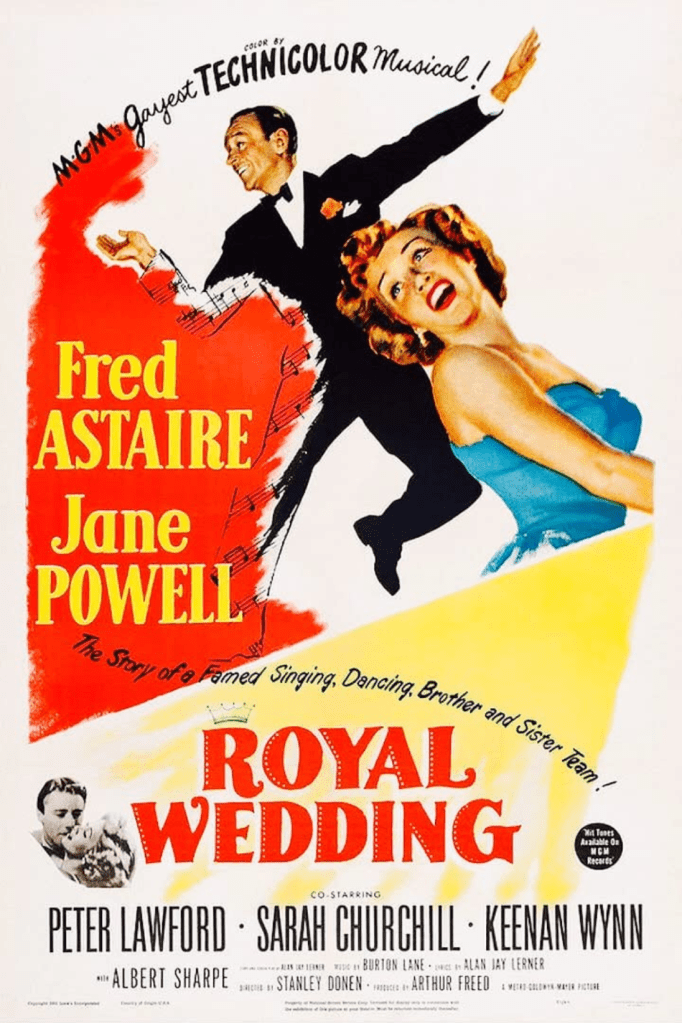
As I said in my review of Teenage Rebel, I haven’t seen many films from Fred Astaire’s filmography. In fact, the only two movies of Fred’s I’ve seen so far are The Sky’s the Limit and Funny Face. When I joined Crystal and Michaela’s blogathon, I knew which Fred Astaire picture I wanted to write about. Last month, I was recommended the 1951 film, Royal Wedding, by Heidi from Along the Brandywine. She suggested this film because of its use of split screens. Since I don’t have many Fred Astaire titles on my movie recommendation board on Pinterest, this was my first choice for this double feature! It is interesting that Royal Wedding is the last movie I’m reviewing in 2020. Musicals from the Breen Code era are usually seen as happy, up-beat productions. This is a contrast to the type of year 2020 ended up becoming.

Royal Wedding poster created by Metro-Goldwyn-Mayer.

Things I liked about the film:

The acting: A similarity I’ve noticed among Fred Astaire’s roles in The Sky’s the Limit, Funny Face, and Royal Wedding is how confident he comes across in each film! Speaking specifically about Royal Wedding, his character, Tom Bowen, had the showmanship you’d expect from a stage performer. Even though he was performing a duet in the movie’s opening number, “Ev’ry Night At Seven”, he had a stage presence that demanded the audience’s attention. This is because he had complete control over his part of the performance as well as experience leading other musicals. Fred also appeared comfortable as one of the leads in this film. Jane Powell’s on-screen personality in Royal Wedding was very sweet! Her character, Ellen Bowen, was also flirty without overdoing it. What worked in Jane’s favor was how she was able to keep up with Fred in their musical duets as well as hold her own in her solos. It definitely showed how strong of a performer she is! Because I’m not familiar with Sarah Churchill as an actress, I wasn’t sure how a Fred Astaire and Sarah Churchill on-screen pairing would work when I first saw them together. But as the film went on, I realized they had better on-screen chemistry than I expected! As an individual performer, Sarah gave her character, Anne, a sophisticated independence that never made her seem snobby or self-centered. In one scene, as she’s recalling to Tom how she came to be a dancer, Anne is so sure of herself when she talks about it. In scenes like this, you can tell that Anne has a healthy amount of self-confidence, partly because of Sarah’s captivating performance!

The musical numbers: When I watch musicals from the Breen Code era, I can’t help but notice the creativity that comes from some of the musical numbers! One example is Fred’s solo, “Sunday Jumps”. On paper, the idea of Fred dancing with a hatrack and exercise equipment might sound silly to some audience members. But because of the choreography and Fred’s dancing talents, that idea becomes a thoroughly entertaining one! Another solo of Fred’s, “You’re All the World to Me”, also showcases creativity well. In this musical number, Tom Bowen can be seen literally dancing on the walls and ceiling, as to visually represent what his heart is feeling for Anne. The number itself is also ahead of its time, as this particular idea wasn’t common in films from this era. I loved how a bright color palette was used in “I Left My Hat in Haiti”! It provided the musical number with an energy and personality that nicely contrasted the toned-down atmosphere of London. The musical number also did a good job at utilizing its ensemble.

The dialogue: Because of the Breen Code, screenwriters had to think and write cleverly when it came to expressing ideas that wouldn’t be allowed on film. That mentality can certainly be found in Royal Wedding’s script! After their performance, “Ev’ry Night At Seven”, Ellen complains about the theater’s lack of air conditioning due to the theater manager wanting to save money. Frustrated by that decision, Tom tells his sister how the theater manager will need a fan for one specific place. Subtle references like this one respect the audience’s intelligence and gave the screenwriters a chance to think outside the box when it comes to language. There were also memorable quotes within the script. During Anne and Tom’s conversation, Anne told him that dancing made her happy. She also said that she wanted to dance when she was happy.

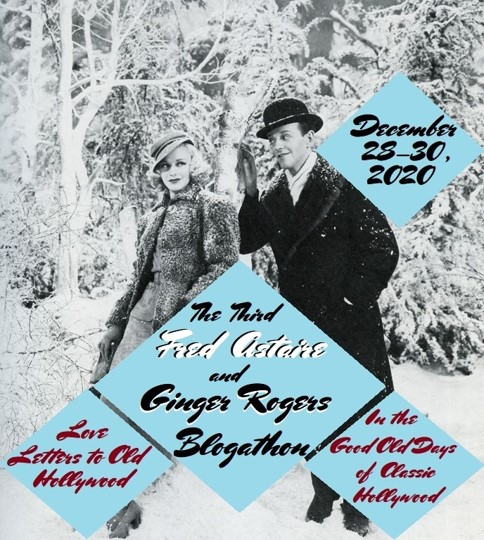
The Third Fred Astaire and Ginger Rogers Blogathon banner created by Crystal from In the Good Old Days of Classic Hollywood and Michaela from Love Letters to Old Hollywood.

What I didn’t like about the film:

No major conflicts: In Anchors Aweigh, Clarence “Brooklyn” Doolittle and Joseph “Joe” Brady help their new friend, Susan, get an audition with a well-known composer at a movie studio. This served as the main conflict for the film. With Royal Wedding, there was no main conflict to be found. Instead, the story focuses on the two relationships between Ellen and John and Tom and Anne. Even when sub-conflicts were introduced in the movie, they are resolved rather quickly. Having one overarching conflict would have added some intrigue to this story.

Too many boyfriends: At the beginning of the movie, Ellen is shown having multiple boyfriends. This was to highlight the point of Ellen having difficulty ending these relationships. When Ellen’s boyfriends are interacting with one another, I had trouble keeping track of who was who. I understand this creative decision was made on purpose, to emphasize the aforementioned point. But this gave the audience unnecessary confusion.

The titular royal wedding as an afterthought: When a film is titled Royal Wedding, most audience members would expect the wedding itself to play a significant role within the plot. Because the story focuses on the relationships of Tom and Anne and Ellen and John, the royal wedding is treated as an afterthought. Sure, the characters casually bring it up from time to time. But there is little to no excitement in London just days before such a historic event. When a pre-wedding parade is passing by Tom and Ellen’s hotel suite, the scene places more emphasis on John and Ellen’s conversation, preventing the parade from being shown on-screen. The day of the wedding appears in the last twenty minutes of the film, but even that part of the story is overshadowed by the previously mentioned relationships.

Princess tiara image created by Freepik at freepik.com. <a href=’https://www.freepik.com/free-vector/ornamental-princess-crowns_1109199.htm’>Designed by Freepik</a>. <a href=”https://www.freepik.com/free-photos-vectors/gold”>Gold vector created by Freepik</a>. Image found at freepik.com.

My overall impression:

Royal Wedding is the type of movie where the acting performances and musical numbers make up for the weaker story. While the plot isn’t bad, it could have benefited from having a major conflict. If the creative team behind this movie wanted their story to be more interesting, it would have contained a mistaken identity. Ellen Bowen would switch places with the princess and fall in love with the prince, while the princess is mistaken for Ellen and eventually forms a romantic relationship with Tom. With this conflict, the wedding itself would have a greater presence in the whole story. It would also create a series of hilarious hijinks. Personally, I’d recommend Anchors Aweigh over Royal Wedding. The former has a stronger story and, in my opinion, is a more enjoyable film overall.

Overall score: 6.2 out of 10

What are your thoughts on Royal Wedding? Which movie is your favorite out of the ones I’ve reviewed this year? Please tell me in the comment section!

Have fun at the movies!

Sally Silverscreen

Take 3: Teenage Rebel Review (Ginger Rogers and Fred Astaire Double Feature Part 1)

I haven’t seen many films from Ginger Rogers’ and Fred Astaire’s filmography. Despite this, I joined the third Fred Astaire and Ginger Rogers Blogathon, in the hopes of expanding my cinematic horizons! Because I figured other participants would cover Ginger’s musicals, I chose one of her movies that wasn’t a part of the musical genre. As the title says, I’ll be reviewing Teenage Rebel! The aftermath of a divorce/custody battle is rarely explored in film. This is what made me take notice of this particular title. What I also thought was interesting was how this story discussed the subject of divorce during a time when the concept was not as talked about as it is today. While I have reviewed the 1939 movie, In Name Only, that film revolved around the divorce itself and what led up to it. Now, let us begin part one of my Ginger Rogers and Fred Astaire Double Feature!

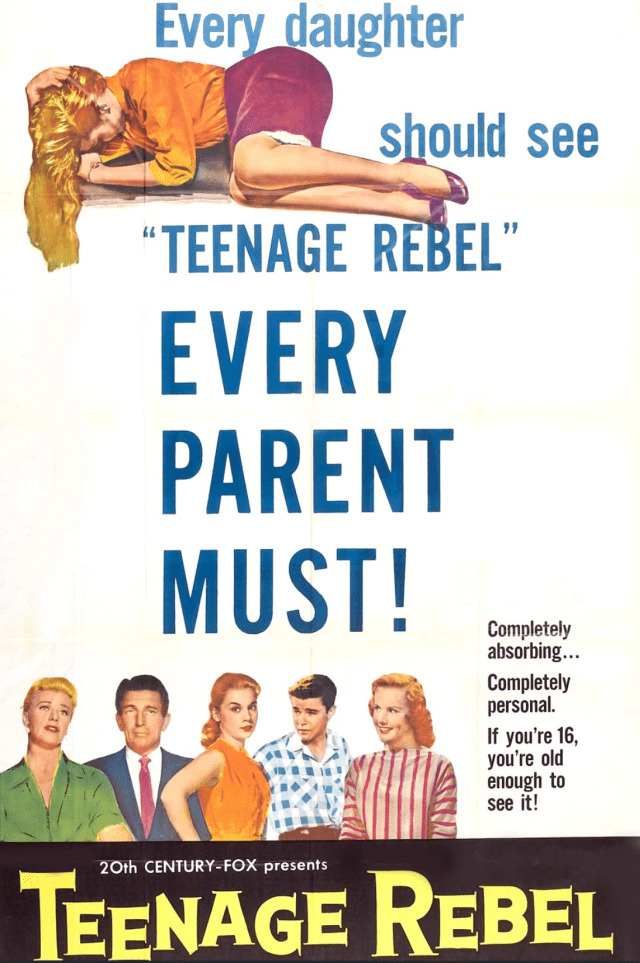
Teenage Rebel poster created by 20th Century Fox.

Things I liked about the film:

The acting: Ginger Rogers is an actress from what would be considered the “Golden Era” of Hollywood. This particular period in time is often depicted with a sense of glamour. Because of this, Ginger carried herself in Teenage Rebel with that same sense of glamour I just brought up. Not only that, her emotionality really shined through in her role as Nancy Fallon! Some of her best scenes featured her interacting with Dorothy/Dodie. Both actresses go toe-to-toe with each other, acting-wise, and make their characters feel believable and genuine. Out of context, Dorothy/Dodie could be written off as a spoiled brat. But Betty Lou Keim’s performance, plus the aftermath of the divorce, makes the audience feel bad for Dorothy/Dodie. While Betty’s portrayal is consistent, she is given enough flexibility to add emotion. This highlights the idea that Dorothy/Dodie is simply human, with thoughts and feelings that need to be expressed. Warren Berlinger portrays Dick, one of the Fallon’s next-door neighbors. What I liked about his performance is how animated it is. This animation livened Warren’s portrayal without coming across as over-the-top. Instead, it gave him a wide range of emotions to work with. His conversation with his family about his long distance girlfriend is a perfect example of this.

The use of symbolism: One night, as a literal storm is brewing in the neighborhood, Nancy finds Dorothy/Dodie sitting outside by herself. The wind outside is strong and doesn’t have any plans to calm down. During their conversation, the sound of cracking lightening can be heard in the background. When Dorothy/Dodie and Nancy return to the house, rain starts to fall. These elements represented the personal turmoil taking place between mother and daughter.

The messages and themes: In films where younger characters are the center of the story, there is always a place for meaningful messages and themes. This is certainly the case for Teenage Rebel. One of the notable themes of this movie is having compassion for others. No matter how closed-off Dorothy/Dodie was, Nancy never gave up on her daughter. Even though Nancy does express feelings of frustration and stress, she always tried her best to make Dorothy/Dodie feel welcome and loved. Even Dick and his sister, Jane, show compassion for Dorothy/Dodie. They invite her to teenage functions like dances and a local car race. Because of the time they spend with her, Dorothy/Dodie allows herself to open her heart to others. The reason why Dorothy/Dodie distances herself from people is because she has lost her trust in them due to the divorce. As the story progresses, Dorothy/Dodie changes her life around. In one scene, Nancy gives her daughter a lecture about how she needs to stop living in isolation.  That speech and the overall message of opening your heart comes across in this story as genuine.

The Third Fred Astaire and Ginger Rogers Blogathon banner created by Crystal from In the Good Old Days of Classic Hollywood and Michaela from Love Letters to Old Hollywood.

What I didn’t like about the film:

A very misleading title: This film is called Teenage Rebel. Paired with the quotes on the movie’s poster, the film is advertised as a cautionary tale about teenagers going “over the edge”. However, none of the teens in this story rebel or misbehave. Even when there is a car race, the event itself appears to be well organized and legal. While Dorothy/Dodie has a bad attitude and runs away from home, she does these things to 1.) put on a brave face to protect her true feelings and 2.) find some alone time to get away from the tension between her and her mother. The title and marketing built this movie up to be something it wasn’t.

The character of Larry: Larry Fallon, portrayed by Rusty Swope, is Nancy and Jay’s son. He had some funny lines in this movie, such as when he said “a man” after Dorothy/Dodie asks him what he wants to be when he grows up. However, after a while, Larry kind of overstays his welcome. I don’t fault Rusty for this, as there was only so much he could do for an actor of his age. This specific flaw is the result of the screenwriting. Larry doesn’t have much to do in the overall story. In fact, he has little to no significance within the main plot. Prior to watching Teenage Rebel, I was expecting to see an interesting dynamic between half-siblings who didn’t grow up together. But, in reality, Dorothy/Dodie and Larry only interacted once. Either Rusty needed more material to work with or the character should have been written out of the movie completely.

An abrupt transformation: When Dorothy/Dodie is introduced in the film, she carries herself with a chip on her shoulder. It gets to the point where she and her mother have an emotionally fueled, tension filled conversation. As I mentioned earlier, Dorothy/Dodie’s attitude was caused by an ugly divorce with an even uglier custody battle. After the aforementioned conversation between Dorothy/Dodie and Nancy, Dorothy/Dodie runs away, where Dick finds her and takes her to a local soda shop. When she returns home, she acts nice toward her mother, like their previous conversation never happened. Similar to what I said about Larry, this flaw was the result of the screenwriting. This change in character should have been a consistent progression throughout the film as a whole.

Breaking heart image created by Kjpargeter at freepik.com. <a href=’https://www.freepik.com/free-vector/broken-heart-valentine-background_1041991.htm’>Designed by Freepik</a>. <a href=”https://www.freepik.com/free-photos-vectors/background”>Background vector created by Kjpargeter – Freepik.com</a>. Image found at freepik.com.

My overall impression:

Teenage Rebel is an ok film. However, its dishonest title and poster doesn’t help its case. In a time when teen centered films were on the rise, the studio wanted to capitalize on that. While a significant part of this story focused on a teenage perspective, it was marketed as something different than what it honestly was. Instead of selling the movie as a meaningful drama exploring the aftermath of divorce, they decided to make the film sound like it was about misbehaving youngsters, despite never being found in the story. Even though it seems like the creative team had their hearts in the right place, I was not a fan of how the story was more “slice of life” than I had wanted. I don’t find these types of stories intriguing, but I appreciate Teenage Rebel’s incorporation of its messages and themes. If you want to watch a teen movie with similar ideas, I’d recommend The Boy Who Could Fly. Not only does it emphasize showing compassion to others, but it’s a much stronger film.

Overall score: 6.3 out of 10

Have you seen Ginger Rogers’ movies? Which film about divorce would you recommend? Tell me in the comment section!

Have fun at the movies!

Sally Silverscreen
Take 3: If You Believe Review

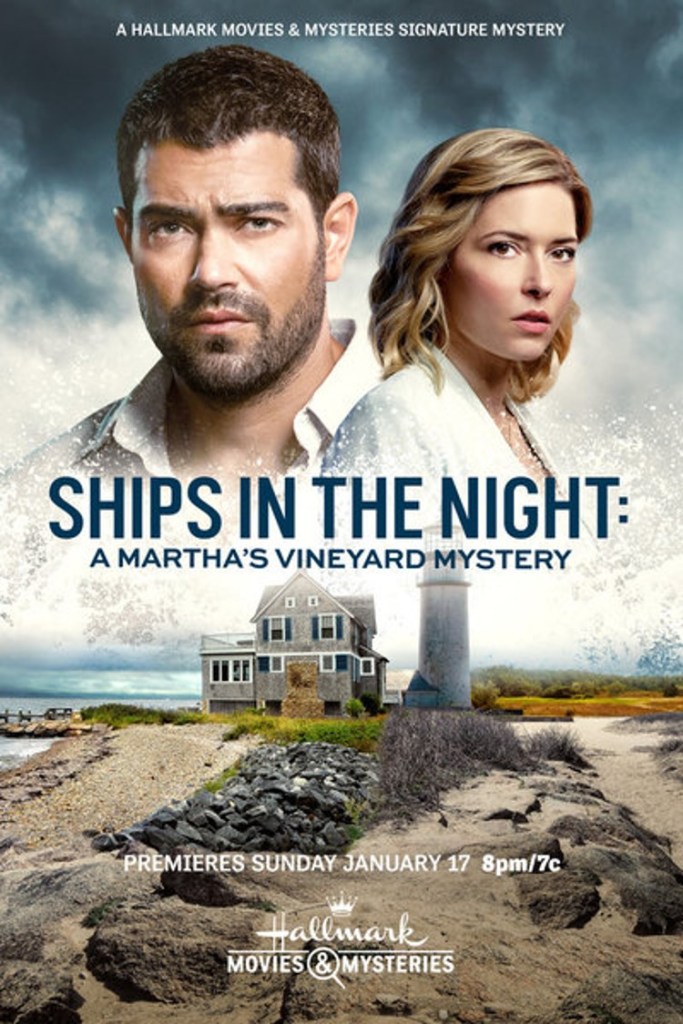
For last year’s Happy Holidays Blogathon, I reviewed the 2014 Hallmark Channel movie, The Nine Lives of Christmas. Even though it was my first time seeing the film, I found myself understanding why it has become so popular among Hallmark fans! Originally, I wanted to write about the 1999 film, If You Believe, and the 2020 Hallmark Movies & Mysteries film, Holly and Ivy. But because I wasn’t able to watch Holly and Ivy this week, due to a schedule that was busier than usual, I decided to stick with the one review of If You Believe. This is a film I have seen before, one I remember enjoying. However, it has been over twenty years since I last saw it. As Up Network was airing If You Believe one day, it was a perfect opportunity to take a trip down memory lane! From what I remember, this movie had a pretty unique concept for a Christmas story. In this film, the protagonist’s inner child comes into her present world to help her grow during the Christmas season.

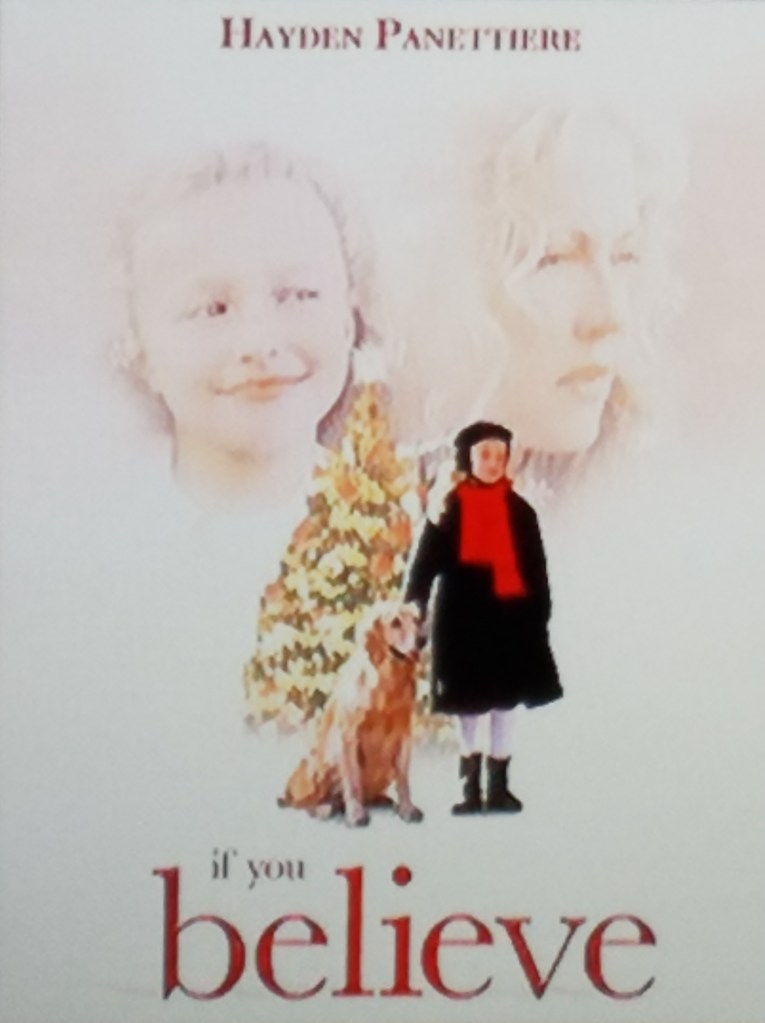
Screenshot of If You Believe‘s poster taken by me, Sally Silverscreen.

Things I liked about the film:

The acting: When you have a story that revolves around a young character, that specific role needs to be given to a young actor or actress who has the right amount of talent to carry that film. Even though Hayden Panettiere is the main supporting actress, she single-handedly steals the show! While portraying a younger version of the protagonist, she had so much charisma for an actress so young. The versatility found in Hayden’s performance also added enjoyment to her portrayal of Suzie. Some of the best scenes in If You Believe show Suzie interacting with the film’s protagonist, Susan. This is because both Hayden and Ally Walker had good on-screen chemistry and worked well together. Speaking of Ally Walker, I liked seeing her performance as the protagonist! She brought a wide range of emotions to her role, allowing her character to feel like a realistic individual. This was shown in a scene where Susan and her brother are having a disagreement. Throughout the conversation, frustration and anger could be seen on her face. When her brother says he doesn’t want to see her anymore, Susan immediately starts tearing up.

The cinematography: I was pleasantly surprised to find some creative cinematography in If You Believe! A perfect example is when Susan and a writer named Tom have lunch at a local restaurant. As they discuss Tom’s book, the camera zooms in on Susan’s and Tom’s meal at various moments. This was meant to show how much time was passing during their interaction. Another good use of cinematography can be seen toward the beginning of the film. When Susan is leaving her office for the day, there is a shot of her walking in the hallway. This location is lit with a row of fluorescent lights from the ceiling. As this scene plays out, these lights provide a good contrast to Susan’s dark colored outfit.

The messages and themes: If You Believe is a movie that relies more on the messages and themes of Christmas than the aesthetics of the holiday. Even though these messages and themes could be found in films outside of the Christmas season, the script provides a solid argument for why they should be included in a Christmas movie. One of the biggest themes of If You Believe is believing in yourself. What starts Susan’s journey of personal growth is when she tries to dissuade her niece, Alice, from believing in Santa. This is because she stopped believing in things such as dreams and the magic of the season because of those around her putting her down. As the story continues, the audience see Susan regain her confidence and start believing in herself again, with some encouragement from Suzie. A perfect example is when Suzie coaxes Susan to read a manuscript called “Phooey” in order to find the next bestselling novel for her publishing firm, instead of avoiding another new author to help.

The 2nd Happy Holidays Blogathon banner created by the Brannan sisters from Pure Entertainment Preservation Society.

What I didn’t like about the film:

A drawn out first half: I found the first half of If You Believe to be drawn out. A few scenes lasted longer than they needed to, which caused this problem to occur. Suzie wants to go out on the town, as a way to help Susan move out of her comfort zone. Susan objects this idea, arguing with Suzie during their entire conversation. While this is an important moment in Susan’s journey, I feel the scene could have been shortened by a few seconds. This way, the point could have been reached sooner.

Telling instead of showing: At several moments in the film, Suzie recalls memories from Susan’s past where she was confident and stood up for herself. She shares these memories in various conversations with Susan, but the audience never gets to see them. I know there’s only so much content that can be shared in two hours. However, there should have been at least one or two flashbacks scenes. That decision would have helped illustrate the points Suzie was trying to make.

Glossing over mental illness: In If You Believe, Susan has a writer friend who happens to have a mental illness. When she suggested her friend take medication, he said his medicine ruined his creativity. This friend doesn’t receive much screen-time and his issues are resolved rather quickly. While I’m glad to see Susan’s friend receive the care and attention he needed, the subject of mental illness was glossed over in this story. Even though this was not one of the main topics of the film, it would have been nice if mental illness were given a little more focus in the script.

Group of Christmas figures image created by Pikisuperstar at freepik.com. <a href=”https://www.freepik.com/free-photos-vectors/christmas”>Christmas vector created by Pikisuperstar – Freepik.com</a>. <a href=’https://www.freepik.com/free-vector/hand-drawn-cute-christmas-character_3188970.htm’>Designed by Pikisuperstar</a>. Image found at freepik.com.

My overall impression:

As I mentioned in the introduction, If You Believe is a film that was released in 1999. Despite this, the film still holds up! Even though there are some flaws in this production, the creative team behind the film did a good job at expressing their intended point to the audience. Like I said in my review, one of the messages of this story is believing in yourself. What Susan’s journey tells us is if we believe in ourselves, then we’ll have enough confidence to believe in others. If we believe in others, we are able to believe in the magic of the season. While If You Believe is a more unconventional Christmas project, it’s one that is definitely worth the two hours! If you are able to find this film, please take the time to watch it.

Overall score: 8.3 out of 10

Have you seen If You Believe? Which ‘90s Christmas movie do you like watching? Please tell me in the comment section!

Have fun at the movies!

Sally Silverscreen

Take 3: Chicago Review

Hometowns to Hollywood’s Celluloid Road Trip Blogathon is about discussing films that revolve around a particular U.S. city. For my entry, I’ve chosen the 2002 film, Chicago. This movie has been on my DVR for three years, the longest a film has ever sat on the device. In fact, Chicago has spent the most time on my DVR, staying there since May of 2017. So, this was the perfect opportunity to finally see it! Even though it was my first time seeing the movie, it was a title I had heard of before. Whenever cinematic musicals of the 21st century are discussed, Chicago is usually brought up in the conversation. However, I never made time to check the film out. Now, in 2020, I am ready to review Chicago!

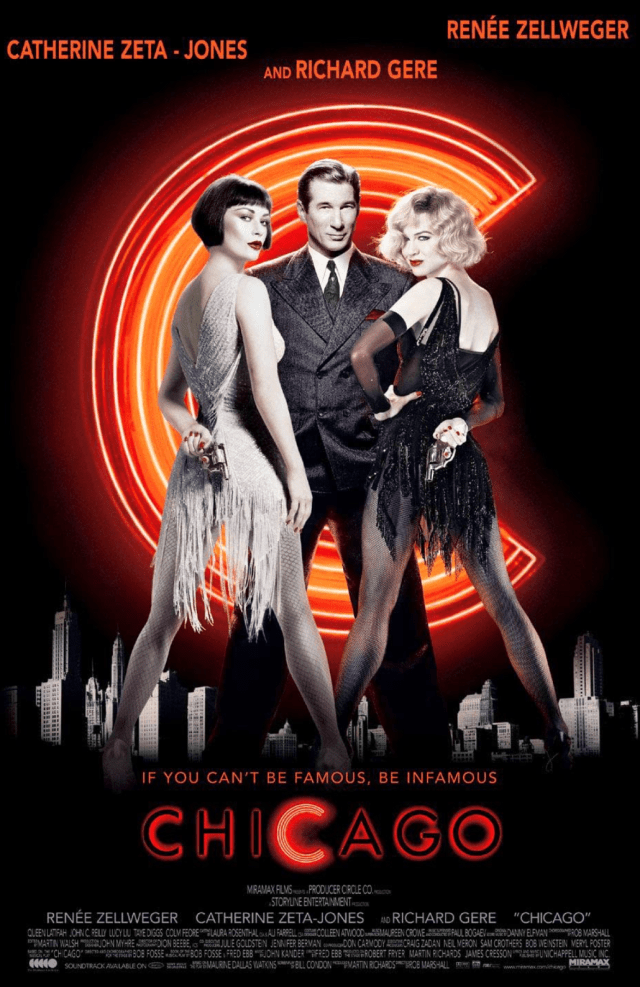
Chicago poster created by Miramax Films Producer Circle Co., Zadan/Meron Production, and Buena Vista Pictures.

Things I liked about the film:

The acting: Chicago is an ensemble film. Therefore, multiple actors pulled off a performance that was enjoyable to watch! Whenever I think about Queen Latifah’s portrayal of Matron “Mama” Morton, I think about how she carried her character with confidence! Even in the musical number, “When You’re Good to Mama”, she appeared comfortable performing in front of an audience. Through the use of music and theatrics, Queen Latifah was able to garner attention from the audience and create an effective on-screen presence! I have seen some of Richard Gere’s films prior to watching Chicago. However, most of those projects have leaned more toward the drama genre. His role, Billy Flynn, allowed him to step out of his comfort zone. Similar to what I said about Queen Latifah’s performance, Richard looked comfortable in his role! He even did a good job when it came to the musical numbers!  What I liked about Renée Zellweger and Catherine Zeta-Jones’ performances is how their on-screen personalities were so different from one another, yet complemented each other so well! It created such an interesting dynamic between these characters. Like I said about Richard Gere, Renée and Catherine did a good job pulling off the musical performances, as well as the portrayals of their characters!

The musical numbers: If you’re going to create a musical, you need to create musical numbers that are worth watching. When it comes to Chicago, the musical numbers were the highlight of this project! They are all presented as dream sequences, to show how Roxie views her world. I found this is to be an interesting creative choice, as most musicals include their musical numbers within the events of the plot. Chicago’s musical numbers were stylized, serving as visual spectacles. Bright colors and lights provide a consistent component, adding to their photogenic appeal. I also liked the creativity that could be found in these musical numbers. An example is “We Both Reached for the Gun”, where all the characters except for Billy are showcased as a puppet.

The historical accuracy: When I was watching Chicago, I noticed how the entire production appeared historically accurate! This film takes place in 1924, which is reflected in various ways. One of them is the hairstyles of the female characters. Both Roxie and Velma sport shorter hair-dos, showing women’s style choices of that time. The costumes, in Roxie’s world and the dream sequences, seemed to belong in that decade. Longer coats were worn by some of the female characters, with a millionaire named Kitty wearing a white one with embroidered flowers in a scene. Set designs and even vehicles showcased the historical accuracy I found in this film! It tells the audience that the creative team behind the project cared about their film’s presentation.

<a href="http://<a href='https://www.freepik.com/vectors/travel'>Travel vector created by pikisuperstar – http://www.freepik.com</a>&quot; data-type="URL" data-id="<a href='https://www.freepik.com/vectors/travel'>Travel vector created by pikisuperstar – http://www.freepik.comChicago neon sign image created by Pikisuperstar at freepik.com.

What I didn’t like about the film:

Too much burlesque: While there are plenty of musical numbers in Chicago, the majority of them featured burlesque. Personally, I am not a fan of this particular performance style. Therefore, I didn’t care for burlesque’s abundance. Aside from my personal opinion, the number of burlesque routines felt like they were rehashing the same idea. There was only so many times the movie could present a scantily clad dancer performing mature dance moves before the concept got old. Chicago is a film that, in my opinion, would have benefitted from having less burlesque.

Mixed messages: As I’ve said before, I watch movies to be entertained. However, I can appreciate a film that contains a good message. In Chicago’s case, there were mixed messages throughout the story. One good example revolves around Roxie’s quest for stardom. On more than one occasion, other women have gained more attention than her. This led me to believe the movie’s overarching message would be about how there will always be someone who has more than you no matter how much you strive for what you want. I won’t spoil the film for those who haven’t seen it. But what I will say is the film’s final outcome contradicts the message that seemed to be delivered.

Characters that are terrible people: When I reviewed Twentieth Century last month, I talked about how all the characters were awful individuals. This caused me to lose investment in them and their stories. Chicago has a similar flaw, with most of the characters being terrible people for different reasons. Toward the beginning of the film, Roxie is shown murdering a man, even though he was walking away when the crime was committed. The song, “Funny Honey”, highlights how Roxie is glad her husband, Amos, comes across as ignorant because she thinks that will help her cover up her crime. Out of all the characters in this film, the only one I cared about was Roxie’s husband, Amos. While he was a simple man, he was the only character who was a genuinely good person. I couldn’t help feeling sorry for him during the musical number, “Mister Cellophane”.

The Celluloid Road Trip Blogathon created by Annette from Hometowns to Hollywood.

My overall impression:

The way I feel about Chicago is the same way I feel about Moulin Rouge!: it was ok. The 2002 movie does have merit, which can be found in the acting performances and the musical numbers. But, similar to Moulin Rouge!, Chicago relies more on style than substance. Because the audience knows the protagonist committed a crime, there is no sense of intrigue. It also doesn’t help that the majority of the characters are terrible people. The mixed messages within the story are confusing, with the script saying one thing, but then being contradicted later on. If you’re not a fan of burlesque, then you probably won’t enjoy most of the film’s musical numbers, as they abundantly feature burlesque routines. However, the musical numbers in general were well-crafted, especially on a technical level. Therefore, I would recommend these parts of the film. As for the movie itself, this is one I don’t see myself revisiting.

Overall score: 6 out of 10

Have you checked out the other entries from the Celluloid Road Trip Blogathon? If so, which city that was addressed do you think is interesting? Share your thoughts in the comment section!

Have fun at the movies!

Sally Silverscreen

Take 3: The Strange Monster of Strawberry Cove Review

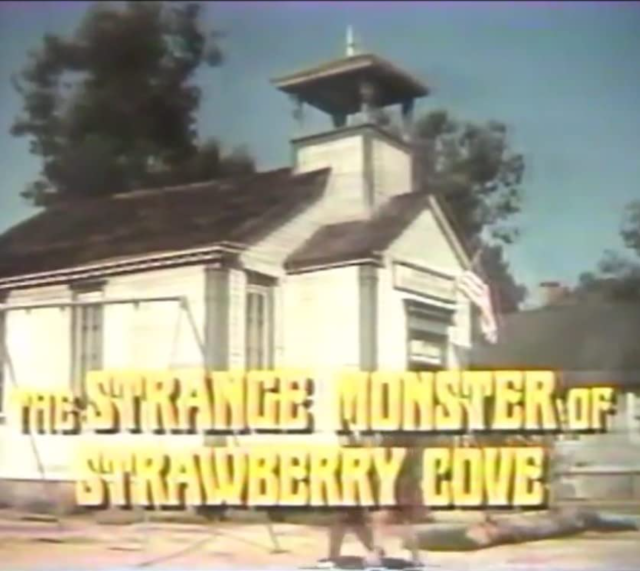
While hosting A Blogathon to be Thankful For, I was invited by Crystal to join her Agnes Moorehead blogathon. After accepting the invitation and making a quick search through Agnes’ IMDB filmography, I chose the 1971 Disney film, The Strange Monster of Strawberry Cove! According to the synopsis, this is about a small group of children who make a monster so their teacher wouldn’t be ridiculed by others in their town. Recently, Crystal’s brother, Jarrahn, shared the news that Crystal was in a coma. This meant that Jarrahn and Gill, from Realweegiemidget Reviews, would be co-hosting the event. Hearing the news about Crystal was saddening. However, I was glad to see Jarrahn and Gill step up to the plate to help a fellow blogger and sister in need.

The Strange Monster of Strawberry Cove created by The Walt Disney Company. ©Disney•Pixar. All rights reserved. 

Things I liked about the film:

Genuine portrayals: Since I chose to review this movie because of Agnes Moorehead’s involvement, I’ll talk about her performance first. She portrays Mrs. Pringle, a local bird watcher who is also a well-known gossip. Throughout the film, this character took everything she did seriously. It got to the point where she seemed to care too much. However, Agnes’ portrayal was so genuine, I actually liked seeing Mrs. Pringle show up. Other genuine portrayals came from Annie McEveety, Jimmy Bracken, and Patrick Creamer. As Tippy, Scott, and Catfish, these actors appeared to work well together. The friendship between the children felt realistic and it was nice to see their camaraderie over the course of the film!

The messages and themes: Within the story of The Strange Monster of Strawberry Cove, messages related to standing up for those you care about, teamwork, and listening to what someone has to say are found. A good example is when Annie, Jimmy, and Catfish work together to build the monster for their teacher. Because Henry Meade, the teacher, is important to the children, they stand up for him and help in any way they realistically can. Annie, Jimmy, and Catfish spend days building the monster by gathering material and putting the pieces together on their own. This part of the story also emphasizes putting others before yourself.

The mystery of the smugglers’ “boss”: A group of smugglers inhabit a run-down house near the protagonist’s small town. Throughout the film, these criminals briefly talk about their “boss”. However, this particular character isn’t revealed until about the last twenty minutes of the movie. The mystery of the “boss’s” identity kept me invested in the film, giving me an opportunity to figure out who this person was. Even though I had an idea of who the “boss” could be, I was surprised by the final outcome.

The Second Agnes Moorehead Blogathon banner created by Crystal from In The Good Old Days of Classic Hollywood.

What I didn’t like about the film:

The run-time: The Strange Monster of Strawberry Cove is an hour and thirty-minute film. While this is the typical length of time for a made-for-tv presentation, it was too long for this particular title. That’s because the story was simple and straight forward, needing only about thirty minutes to be told. The run-time of The Strange Monster of Strawberry Cove made the overall project too drawn out.

The smuggling subplot: In The Strange Monster of Strawberry Cove, there was a subplot involving smugglers importing valuables into the protagonist’s small town. The subplot itself wasn’t bad, but it felt like it was included in the film just to satisfy the run-time and push the plot forward. As I previously stated, the story is simple and straight forward. The inclusion of the smuggling subplot unnecessarily complicated a narrative that was easier to understand.

The main plot being overshadowed: As I mentioned in the introduction, The Strange Monster of Strawberry Cove is about a small group of children who create a monster in order to defend their teacher from being ridiculed. However, when the smuggling subplot is introduced, the children change their focus to finding the smugglers’ hidden treasure. This causes the main plot to be pushed to the side for the sake of highlighting the subplot. With a movie titled The Strange Monster of Strawberry Cove, a viewer would expect the film to primarily revolve around the monster the children create. Unfortunately, it doesn’t receive as much attention as the title suggests.

<a href="http://<a href='https://www.freepik.com/vectors/background'>Background vector created by bluelela – http://www.freepik.com</a>&quot; data-type="URL" data-id="<a href='https://www.freepik.com/vectors/background'>Background vector created by bluelela – http://www.freepik.comStrawberry background image created by Bluelela from freepik.com.

My overall impression:

To me, The Strange Monster of Strawberry Cove was ok. However, I feel this specific story would have been better served as an episode from a children’s/family-friendly show. The straight-forward plot could be resolved in a short amount of time. In the movie, it was drawn out to over an hour. It also doesn’t help that the smuggling subplot pushed the main plot out of the way. The Strange Monster of Strawberry Cove is not the worst film I’ve seen this year. In fact, I could tell the creative team behind this movie had their hearts in the right place. But when it comes to films of this nature, I have seen better. Younger children might enjoy this title, as it features young characters saving the day. But older audience members might find themselves more bored than entertained.

Overall score: 6 out of 10

Have you seen The Strange Monster of Strawberry Cove? Which made-for-tv movie would you like to see me review next? Tell me in the comment section!

Have fun at the movies!

Sally Silverscreen

Take 3: The Christmas Bow Review + 265 & 270 Follower Thank You

After a temporary break from blogging to work on a creative side project, I have returned to write a blog follower dedication review! 18 Cinema Lane received 265 followers right before my blogathon, A Blogathon to be Thankful For, started. Because I was reading participants’ articles, as well as writing my own editorial, I planned on publishing this review after the event. Shortly after the blogathon ended, 18 Cinema Lane received 270 followers. As the Christmas season is now upon us, I chose to talk about one of Hallmark’s newest seasonal titles. A film I had wanted to see was Hallmark Movies & Mysteries’ The Christmas Bow. What intrigued me was the story’s use of music and the dramatic nature of the plot. Even though Hallmark Movies & Mysteries is known for creating less light-hearted Christmas films than Hallmark Channel, the stories themselves do contain good messages and themes.

The Christmas Bow poster created by Crown Media Family Networks and Hallmark Movies & Mysteries.

Things I liked about the film:

The acting: While I’m not familiar with the acting talents of Lucia Micarelli, I feel she did a great job with the material she was given! Lucia’s best scene was when, during a flashback, her character, Kate, is playing the violin for her grandmother. Throughout this scene, Lucia was able to convey so much emotion with her face alone; trying to hold back tears while staying passionate about the music her character loved. Prior to watching The Christmas Bow, I had seen some of Michael Rady’s performances from his Hallmark projects. A consistent part of Michael’s acting abilities is how he makes his portrayals appear so effortless. Whether his character was interacting with his cousin or having deep conversations with his mother, Michael gave a performance that felt natural. The supporting cast in this film was strong, with some stand-out performers among the cast. One of them was James Saito, who portrayed Kate’s relative, Grandpa Joe! Whenever James’ character came on screen, he brought joy with him. That’s because he had a great on-screen personality and his smile lit up the room!

The interior design: I really liked seeing the interior design inside Kate’s family’s home! It was not only creative, but also photogenic. In Kate’s room, the décor was primarily white with splashes of color. With the addition of Christmas lights, the room appeared brighter. This prevented the space from looking drab or unimpressive. The living room featured light and dark stone along one wall and the fireplace. Light wood cabinets from the nearby kitchen complement the stone work. Within this house, there were interesting design choices when it came to specific elements in certain rooms or areas. The upstairs hallway contains a tall white bookshelf. A dark wood ladder and desk pairs nicely with the shelving unit.

The music: When I first read the synopsis for this movie, I knew that music would play a significant role in the story. However, all of the music in The Christmas Bow was pleasant to listen to! Because Kate is a violinist, classical music has a primary place in this film’s soundtrack. As she performs, the songs themselves are really good. From ‘Carol of the Bells’ to ‘Have Yourself a Merry Little Christmas’, these were familiar tunes that were strengthened by the sound of the violin. I also liked the story angle the film’s creative team took in regards to the influence music has during the Christmas season. When Kate and Patrick’s cousin meet for the first time at a café, Kate teaches him that closing his eyes will help him see the music. Patrick’s cousin tries this technique as Christmas music plays throughout the café. This lesson also shows how music can play a role in people’s lives.

Adorable Christmas card image created by Rawpixel.com at freepik.com. <a href=’https://www.freepik.com/free-vector/christmas-greeting-card-vector_2824854.htm’>Designed by Rawpixel.com</a>. <a href=”https://www.freepik.com/free-photos-vectors/christmas”>Christmas vector created by Rawpixel.com – Freepik.com</a>. Image found at freepik.com.

What I didn’t like about the film:

A less dramatic injury: Based on The Christmas Bow’s synopsis, I expected the film’s protagonist to be involved in a car accident that causes her to be so traumatized, she decides to avoid the violin as much as possible. In the movie, Kate ends up hurting her hand due to getting it caught in a door. Hand injuries and broken bones are serious. However, compared to what I expected, it seemed like this part of Kate’s story wasn’t as dramatic as it could have been.

Obligatory Christmas activities: In my review of I’m Not Ready for Christmas, I mentioned how the Christmas activities featured in the film were obligatory for the sake of reminding the audience that they were watching a Christmas movie. The Christmas Bow has a similar flaw, as Patrick’s cousin continually presents a list of Christmas activities he wants to complete before December 25th. While these activities were woven into the overall story better than I’m Not Ready for Christmas, their presentation in The Christmas Bow felt like they had to be there. The activities themselves were those that have been featured in countless Christmas movies before, such as buying a Christmas tree and making gingerbread houses.

A party planning subplot: One of the subplots in The Christmas Bow revolved around Kate’s family planning a Christmas party at their music store. The subplot itself wasn’t bad and preparation for a party can work as a story concept. But an influx of this type of story during last year’s Christmas line-ups made me hope both networks would move away from showing party planning in their movies. Sadly, Hallmark isn’t aware of that detail as they continue to recycle this plot point.

String of musical notes image created by Freepik at freepik.com. <a href=’https://www.freepik.com/free-vector/pentagram-vector_710290.htm’>Designed by Freepik</a> <a href=”https://www.freepik.com/free-photos-vectors/background”>Backgroundvector created by Freepik</a>. Image found at freepik.com.

My overall impression:

The Christmas Bow is the first 2020 released Christmas movie from Hallmark I’ve seen. Therefore, I can only compare it to the 2015 film, I’m Not Ready for Christmas. What I will say is The Christmas Bow is far better than I’m Not Ready for Christmas! Sure, there were flaws within the film. But the overall story was engaging with memorable strengths. Music was easily woven into the plot, feeling like it naturally fit in the movie. Character interactions and acting performances helped make the film worth watching. The story itself definitely belonged on Hallmark Movies & Mysteries, as the material was more emotional than projects found on Hallmark Channel. While it’s too early to say if The Christmas Bow will go on to become one of Hallmark’s “classics”, I can state here that I liked the film. Thank you to my followers who have supported 18 Cinema Lane! It truly is an accomplishment I appreciate!

Overall score: 7.8 out of 10

Have you seen any of Hallmark’s 2020 Christmas films? If so, which one has been your favorite? Let me know in the comment section!

Have fun at the movies!

Sally Silverscreen

Take 3: I’m Not Ready for Christmas Review

Before Pale Writer’s Maxwell Caulfield Blogathon, I had seen two of Maxwell’s three Hallmark films. These titles were Missing Pieces, a Hallmark Hall of Fame movie from 2000, and Second Chances, a Hallmark Channel film from 2013. With one movie remaining, I selected the 2015 title, I’m Not Ready for Christmas, as my entry for the event. From a network that features the same actors and actresses in multiple projects, it’s interesting to note that I’m Not Ready for Christmas was Maxwell’s only Hallmark Christmas movie. As is sometimes the case, my review of this film was also this blogathon’s only article discussing any Hallmark film. When the movie first premiered five years ago, I skipped it in favor of other titles. This is because it was being compared to Liar Liar, a film I had not seen in its entirety, but was aware of the general premise. Personally, I like watching Hallmark films that either seem less predictable or have a creative component. Because the type of story found in I’m Not Ready for Christmas is more unique than Hallmark films from the past three years, I finally decided to check it out!

I’m Not Ready for Christmas poster created by Crown Media Family Networks and Hallmark Channel.

Things I liked about the film:

The supporting cast: There were several actors in the supporting cast that gave stand-out performances. One of them was this blogathon’s star, Maxwell Caulfield! Even though he was only in a handful of scenes, Maxwell found a way to make his character, Greydon DuPois, memorable. This was achieved through a confident personality and a strong on-screen presence. Another stand-out performance came from Mia Bagley, who portrayed Anna Geller, Holly’s niece. Her sweet demeanor reminded me of Jenny Wilder from Little House on the Prairie. Anna, like Jenny, wanted the best for the people in her life. The Christmas wish Anna tells Santa, where she wishes her aunt were more honest, effectively shows this. Brigid Brannagh is an actress I’m familiar with because of her 2011 Hallmark movie, A Crush on You. While watching her portrayal of Anna’s mom, Rose, I could tell her previous experience with the network worked in her performance’s favor. This could be seen in the scene when Rose and Anna are at Anna’s Christmas recital. While Anna waits for Holly to show up, Rose’s face shows disappointment as she knows what lies ahead.

The messages and themes: Hallmark’s Christmas movies feature a variety of messages and themes that the audience can relate to. In I’m Not Ready for Christmas, a major theme is honesty, as Holly works on telling less lies throughout the film. Toward the end of the story, Holly is faced with a professional dilemma that could end her career. Instead of choosing what will benefit her, she chooses to do what is right. Seeing a character deal with a real-life conflict and make a positive decision is something that the audience can appreciate. It can also inspire them to apply these messages of truthfulness and placing others before one’s self to their own life.

The Cool Rider: Maxwell Caulfield Blogathon banner created by Pale Writer from Pale Writer.

What I didn’t like about the film:

An inconsistent performance: When it comes to Hallmark’s Christmas movies, Alicia Witt’s entries have been hit or miss. While I liked A Very Merry Mix-Up and Christmas on Honeysuckle Lane, I was not a fan of Our Christmas Love Song. In A Very Merry Mix-Up and Christmas on Honeysuckle Lane, Alicia was given material that complimented her acting abilities, allowing her performance to come across as consistent. Alicia’s performance in I’m Not Ready for Christmas, on the other hand, was very inconsistent. There were scenes where emotionality shined through, such as when Holly and Drew were sharing their life stories over apple cider. But whenever Holly was under her truth telling spell, she sounded robotic. Alicia’s performance made those moments feel awkward and jarring. I know Alicia has what it takes, talent wise, to carry a film. However, I feel she was miscast in this particular role.

Little to no sense in the story: Several moments in I’m Not Ready for Christmas made little to no sense. One example takes place toward the beginning of the movie. Anna and her mom, Rose, are upset that Holly, Anna’s aunt, has chosen to attend a private dinner over Anna’s Christmas recital. They feel Holly will miss Anna’s performance because of her personal choice. But this movie was released in 2015 and I’m pretty sure Rose owns a smart phone. With that said, wouldn’t Rose record a video of Anna on her phone and show Holly the video afterwards? Speaking of Anna, another confusing moment happens when Anna interacts with Santa after the recital. In this scene, there’s no clear indication that the Santa Anna is talking to is the real deal or that they had ever interacted before. However, when Santa calls Anna by her name, no one questions how he knows her.

Solving a problem with a problem: An overarching conflict in I’m Not Ready for Christmas is Holly learning how to be honest with others. However, one of the ways she learns this lesson is for some of the other characters to lie to her. In one scene, Holly’s assistant, Jordan, asks for some time off so she can take care of her grandmother. But several scenes later, Holly discovers that Jordan was lying about her personal life. In reality, Jordan was on a date with her boyfriend at the same ice-skating rink Holly and Anna were visiting. I understand why Hallmark made this creative decision, as to remind the audience to treat others as they would like to be treated. But in this story, it felt like the script was trying to solve a problem with a problem. This misstep made the moments where Holly was changing her ways seem like positive outcomes were happening too conveniently in her favor.

A story that doesn’t feel Christmas-y: Despite this movie being titled I’m Not Ready for Christmas, the story itself doesn’t need to belong in the Christmas season. The themes of honesty and self-improvement can be found in any time of year. In fact, this exact plot could have taken place outside of Christmas and it wouldn’t have made a difference. While there are Christmas activities featured in this film, they were obligatory for the sake of reminding the audience that this was indeed a Christmas movie. The scenes themselves forced the film to pause the story instead of allowing those moments to find a legitimate place in the narrative.

Blue sparkly Christmas tree image created by Macrovector at freepik.com. <a href=”https://www.freepik.com/free-photos-vectors/frame”>Frame vector created by Macrovector – Freepik.com</a>. <a href=’https://www.freepik.com/free-vector/merry-christmas-card_2875396.htm’>Designed by Macrovector</a>. Image found at freepik.com.

My overall impression:

As I said in this review, a major theme of I’m Not Ready for Christmas is honesty. Therefore, I will be honest by saying I did not like this film. This movie makes the exact same mistake 2019’s A Cheerful Christmas did: putting so much emphasis on creating a pointless, Christmas remake of a well-known ‘90s film, that the creative team forgets how to make a good movie. The story has a more unique premise than other films from Hallmark’s library. However, the execution of that story was very poor. The truth telling spell Holly falls under does not lend itself to comedy. Instead, it feels awkward and jarring. What also hurts this film is not utilizing the Christmas elements within the script, causing the film to be devoid of true Christmas spirit. Instead of trying to copy what Liar Liar did almost thirty years ago, I’m Not Ready for Christmas should have been a combination of a modern twist on It’s a Wonderful Life and a Christmas version of the Touched by An Angel episode, ‘Monica’s Bad Day’. If this had been the plan, it might have brought something new to the table.

Overall score: 4.9 out of 10

Have you seen Maxwell Caulfield’s Hallmark films? Are there any Hallmark Christmas films you’d like me to check out? Leave your thoughts in the comment section!

Have fun at the movies!

Sally Silverscreen

A Blogathon to be Thankful For has arrived!

Welcome to A Blogathon to be Thankful For, the second blogathon hosted on 18 Cinema Lane! From November 19th to the 22nd, participants will share posts about movies, people, and subjects related to Thanksgiving! This post will host the list of participates and their articles of choice, separated by the categories that were set up in May. Each participant put time and effort into their entry/entries, so please check out as many posts as you’d like!

Created by me, Sally Silverscreen, on Adobe Spark.

Collection of Participants

Category A

Movies Meet Their Match Movie Review: Holiday Inn (1942)

MovieRob — A Blogathon to Be Thankful For – The Vicious Kind (2009), A Blogathon to Be Thankful For – The Object of My Affection (1998), A Blogathon to Be Thankful For – The Daytrippers (1996), A Blogathon to Be Thankful For – The Myth of Fingerprints (1997)

Silver Screenings — The Bully at Thanksgiving Dinner

Hamlette’s Soliloquy — “Rocky” (1976)

Neil “The Musical Man” Powell — Thoughts From The Music(al) Man (2020) on… The Gold Rush (1925)

Taking Up Room — We Gather Together

themomshiediaries — DON’T YOU LOVE NEW YORK IN THE FALL? – A YOU’VE GOT MAIL REVIEW

Pure Entertainment Preservation Society — 100 New Code Films – #92. “Plymouth Adventure” from 1952; The True Meaning of Thanksgiving

Category B

KN Winiarski Writes — Thankful for Singin in the Rain

Pure Entertainment Preservation Society — Thankful for Code Films – A Blogathon to be Thankful For

Critica Retro — Rediscovering Marcel Perez

Category C

18 Cinema Lane — ‘Phantom of the Megaplex’ at 20: A Reflection on the Movie-Going Experience

Along the Brandywine — Movie Review // Pride & Prejudice (2005) with Keira Knightley and Matthew Macfadyen

Category D

Dubsism — Sports Analogies Hidden In Classic Movies – Volume 95: “The Why I’m Thankful For The Comedy of Jonathan Winters Double-Header”

Created by me, Sally Silverscreen, on Adobe Spark.