Take 3: Holly and Ivy Review

For the third year in a row, I am participating in the Christmas in July Blogathon, hosted by Drew from Drew’s Movie Reviews! This time around, I went back to the Hallmark well. When I first joined the blogathon, I reviewed a Hallmark film titled Christmas Camp. If you read that article, you would know that I wasn’t a fan of it. Last year, I wrote about Little House: Bless All the Dear Children, a film that was a fine, family-friendly picture. Since I still had the Hallmark Movies & Mysteries movie, Holly and Ivy, on my DVR, I chose to review this title for the 2021 blogathon. In 2020, I didn’t see a lot of Christmas films from Hallmark. In fact, the only newer release I watched and/or wrote about was The Christmas Bow. Within a year, I have heard good things about Holly and Ivy, with my family sharing similar sentiments. Therefore, I figured it was time to finally check the movie out. How does it compare to The Christmas Bow? Like a child counting down to Christmas Day, you’re just going to have to wait to find out!

Holly and Ivy poster created by Hallmark Movies & Mysteries and Crown Media Family Networks

Things I liked about the film:

The acting: If the interactions between the characters feel like they are having real-life conversations with each other, that’s how you know the acting in a given film is good. That was certainly the case within Holly and Ivy! All of the characters got along well with one another, as they had good on-screen chemistry. It also helps that the cast as a whole was talented! I’ll be honest, I have never seen any of Janel Parrish’s projects from her filmography. However, I did see her on Dancing with the Stars. The way Janel’s character reacts to various situations came across very naturally. While Melody and her neighbor, Nina, are decorating Melody’s Christmas tree, she shares her reason for collecting elf ornaments. The tone of Melody’s voice and the look in her eyes highlights how reminiscent she is over something as small and simple as ornaments. These acting techniques helped make Janel’s performance feel believable. While we’re on the subject of Nina, let’s talk about Marisol Nichols’ performance. While portraying this character, Marisol embodied what a good mother should be. Despite dealing with her own medical issues, she always tries to take an active role in her daughters’ lives. While decorating her family’s Christmas tree, Nina reveals a special tradition that involves Nina performing a dance routine with Holly and Ivy. This scene shows how much she enjoys the life she has created for herself. While I like the performances of Sadie Coleman and Piper Rubio, the actresses who portrayed the titular characters, I want to talk about Jeremy Jordan’s performance. Similar to Janel Parrish, I am not familiar with Jeremy’s filmography. However, I still liked seeing his portrayal of Adam. His on-screen personality was easy-going and care-free. While he took his profession and hobby seriously, Adam just wanted to have a good time. When he interacted with Melody, you could tell just by watching them that these characters were made for each other. It helped that both Adam and Melody had similar personalities, but were traveling on similar paths in regards to their respective careers.

The presentation of Christmas tropes/activities: Hallmark is known for featuring a plethora of Christmas related tropes and activities within each story. But sometimes, these films are oversaturated with them, as if there is a checklist that needs to be completed. Holly and Ivy shows some Christmas related activities that have been featured in other Hallmark films. It’s the way they are included in the story that sets Holly and Ivy apart from the network’s other titles. In one scene, Melody is decorating homemade Christmas ornaments with Holly and Ivy. The purpose of showing these characters creating Christmas decorations is to give the audience some of Melody’s backstory. That small piece of information was emphasized more than the activity. This scene is an example of how there was enough presentation of Christmas tropes and activities for the viewer to get the intended point. At the same time, if you were to put this same story around any other holiday, it would still work.

An emotional balance: In films that revolve around a serious, real world topic, such as a potentially terminally ill relative, the overall tone tends to be heavy. There are times when viewers warn one another to “have a box of tissues at hand” or share that the film will “pull at your heartstrings”. While there are somber moments in Holly and Ivy, the movie itself never felt sad. In fact, feelings of sorrow and despair never crossed my mind. That’s because the script doesn’t rely too heavily on the sadder parts of the story. Instead, the creative team strives for a balance by also focusing of happier, more joyous moments. As I mentioned earlier in this review, Nina is dealing with medical issues. Even though these issues are discussed and an emergency plan is created if the worst-case scenario happens, Nina puts her energy toward helping Melody and being present in her daughters’ lives. In fact, I can think of more scenes where Nina is enjoying the company of her friends and family than worrying about her medical situation.

The 2021 Christmas in July Blogathon banner created by Drew from Drew’s Movie Reviews

What I didn’t like about the film:

Adam’s conflict: It’s typical for the male and female protagonist to have their own conflicts within a Hallmark picture. However, I didn’t like Adam’s conflict in Holly and Ivy. Throughout the film, Adam’s parents wanted him to come work at the family car dealership. But Adam would rather stay a contractor and focus on his woodworking hobby on the side. This conflict reminded me of a young, college-bound adult not seeing eye-to-eye with their parents on a potential degree. Because of this, it felt a bit immature for a character that appears to be in his early 30s. One of the film’s messages and Adam’s parents’ mantra is “help where help is needed’. By being a contractor and taking up woodworking, Adam is doing exactly what his parents wanted; helping where help is needed. It baffled me how his parents failed to realize this until the end of the film.

 Chippewa Falls Library being unbelievably ill-equipped: I understand that some libraries deal with more challenges than others. But based on what the movie presented, the town of Chippewa Falls appeared to be doing just fine. There’s no evidence of the town being a predominantly low-income community or having a high crime-rate. What the characters said about the library’s issues didn’t match up with the visuals. During her time volunteering at the library, Melody comes up with several ideas in order to solve some of the library’s problems. Two of these ideas are renting out meeting rooms for events and setting up a “Mitten Tree” to collect hats and scarves for citizens in need. I can only speak from my own experience, but my local library already does these things. With that said, I find it hard to believe that the Chippewa Falls Library wouldn’t utilize these resources already.

The inclusion of Betty the dog: Holly and Ivy have a dog named Betty, who periodically appears in the film. While I don’t have anything against the dog itself, I don’t think it was necessary to include a dog in this story. Having Betty in the movie felt like she was there just for the sake of being there. If you had written the dog out of the script, I don’t think it would make a difference.

Christmas family image created by Freepik at freepik.com. <a href=’https://www.freepik.com/free-vector/nice-family-christmas-scene-singing-together_1458033.htm’>Designed by Freepik</a>. <a href=”https://www.freepik.com/free-photos-vectors/background”>Background vector created by Freepik</a>. Image found at freepik.com.

My overall impression:

Like I mentioned in the introduction, this is my third year participating in the Christmas in July Blogathon. Out of the three movies I’ve reviewed, Holly and Ivy is, by far, the best one! Within the past few years, Hallmark Movies & Mysteries has, in my opinion, made stronger films than their companion, Hallmark Channel. This is because Hallmark’s second network appears to try different things when it comes to storytelling. Holly and Ivy is a good example of this, as I highlighted in my review. There wasn’t a heavy emphasis on Christmas tropes/activities like in other Hallmark films. Creating a balance between the happier and sadder moments of the story also helps shape the film’s identity. I ended up liking this movie almost as much as I liked The Christmas Bow. Come to think of it, I wish Holly and Ivy was the Hallmark Hall of Fame movie for 2020. This story certainly has the ingredients for that to have been a reality. But I guess that wasn’t meant to be.

Since we’re still talking about Hallmark Movies & Mysteries, it’s time for me to share who I’d invite to Drew’s Christmas party! This year, I chose John Christian Plummer! For those who are not familiar with him, John is the father of Charlie Plummer and is one of the screen-writers of Hallmark Movies & Mysteries’ Mystery 101 series. When I look back on the celebrities that have been “invited” to Drew’s Christmas party in the past, actors and actresses made up the majority of the guests. While choosing an actor or actress as a guest is totally fine, I wanted to change things up a bit. To an extent, screen-writers are underrated, especially from Hallmark. Therefore, my invitation will, hopefully, give recognition to at least one of them. Like in 2019 and 2020, my invites are about giving “standing ovations”.

Overall score: 7.7 out of 10

What are your thoughts on Holly and Ivy? Which Hallmark movies do you wish had become Hallmark Hall of Fame titles? Tell me in the comment section!

Have fun at Drew’s Christmas party!

Sally Silverscreen

Take 3: Hallmark Hall of Fame’s Foxfire Review

Because yesterday was 4th of July, I wanted to review a movie that took place somewhere in the United States. While I wanted to publish this article on 4th of July, my day ended up being busier than expected. So, this review is published a day later than I had hoped. Recently, Hallmark Drama was airing several Hallmark Hall of Fame movies I had never seen before. One of these films was 1987’s Foxfire. Years ago, Hallmark’s stores sold select Hallmark Hall of Fame films on DVD for $20 apiece (yes, you read that price right), with Foxfire being one of the titles offered. Before recording it on my DVR, I didn’t know much about the movie. In fact, all I knew was that it was one of Hallmark Hall of Fame’s older titles. When I discovered the film took place in Appalachia, I thought it would be an interesting choice for this time of year. So, would I buy a DVD copy of Foxfire if I saw it at the store for $20? Before we head to the store’s checkout line, let’s start this review!

Like I’ve done in the past, I have taken a screenshot of Foxfire‘s poster that was featured on my TV. Screenshot taken by me, Sally Silverscreen.

Things I liked about the film:

The acting: I’m not familiar with Jessica Tandy’s acting abilities. While I have seen The Birds, I don’t remember her performance in that movie. Despite this, I did like her portrayal of Annie Nations in Foxfire! It was very expressive, using a variety of expressions and emotions throughout the film. When Annie receives an art project from her grandchildren, she appears genuinely overjoyed to receive the gift. A big smile is on Annie’s face and her demeanor is pleasant. At her son’s, Dillard’s, concert, Annie looks truly concerned as he sings a song about a broken relationship. Worry is in her eyes and she never lets Dillard out of her sight. Another actor whose career I’m not familiar with is John Denver. I have heard of his songs, but I didn’t know who he was. In fact, I thought John portrayed one of the brothers on The Waltons. This is because of the mannerisms he carried in Foxfire. When his character, Dillard, was happy, there was a youthful spirit about him. It highlighted how you can take the Appalachian man out of the mountains, but you can’t take the Appalachian culture and heritage out of the man. One of John’s strongest scenes was when, in Annie’s home, Dillard is reminding his mother about her age and potential risks of living alone. As he is talking to her, his eyes look like they are desperately searching for answers to his problems. Even the tone of his voice sounds concerned. A character that is close to both Annie and Dillard is Holly. Portrayed by Harriet Hall, this character kind of reminded me of Baby from Dirty Dancing. This is because when Holly cares about someone, she cares about them with her whole heart. What makes Holly differ from Baby is how her personality was gentler. Because she is a teacher, she chooses to put her students first. When Holly is talking to Dillard about her students, her mannerisms and tone of voice seem motherly. This gives the audience the impression that she truly cares about them.

The scenery: I haven’t seen many films that take place in Appalachia. In fact, I didn’t know Foxfire took place in this location until I read the synopsis. To my pleasant surprise, the scenery was very nice to look at! The Nation family house was surrounded by forestry, with the tall trees providing cozy seclusion and privacy. When Dillard wakes up one morning, he is greeted by the sight of rolling hills on a bright sunny day. These rolling hills could also be seen on a car ride Annie took. When a real estate agent named Prince gives Annie a trip to the market, he takes a scenic route. The aforementioned rolling hills steal the show, but are accompanied by a lake at the bottom and surrounding colonial style vacation homes that can be seen from the road. The locations in Foxfire appeared quaint, similar to the small towns in most of Hallmark’s films.

John Denver’s music: Before watching Foxfire, I had heard a few of John Denver’s songs. Even though I don’t listen to country music much, the songs I have heard were nice to listen to. Within Foxfire, John performed four songs. Most of them were slower, more soulful pieces. This fit the overall tone of the film. As I mentioned earlier in this review, Dillard performs a song about a broken relationship. After his concert, he performs an acoustic version of the song. What I’ve gathered about some country music is how emotional it can be. In that acoustic version of Dillard’s song, his heart and spirit sounded wounded. This can be heard in his voice.

Children holding American flags during a sunset image created by rawpixel.com at freepik.com. <a href=”https://www.freepik.com/free-photos-vectors/people”>People photo created by rawpixel.com – http://www.freepik.com</a>. Image found at freepik.com.

What I didn’t like about the film:

A televised play: Hallmark Hall of Fame has a history of adapting stage plays into movies. One of these titles I really like is the 1996 film, The Boys Next Door. However, what sets the 1996 production apart from Foxfire is how the overall project was executed. Because The Boys Next Door contains more key characters and locations within the story, the way this adaptation was delivered to the audience looked and felt like a movie. Foxfire, on the other hand, contained a smaller cast and had a condensed story, as most of the film takes places at Annie’s house. Even some of the scenes were drawn-out and isolated, like a stage production. While the project was shot like a movie, it felt more like a televised play.

Re-created moments from the past: Throughout Foxfire, Annie brings up several memories from her and her family’s past. Instead of providing flashbacks, four scenes were dedicated to showing the characters re-creating some of these moments. For example, a current day Annie and her late husband, Hector, are reenacting when he first proposed to her. Watching grown adults act like teenagers was a bit jarring, as this prevented me from getting fully investing in these scenes. If anything, the scenes made it look like the film’s creative team didn’t have enough room in their budget to hire additional actors.

Inconsistent elements: At the beginning of the movie, Hector provides a voice-over, explaining the significance of his family and their land. Thinking Foxfire would be from his perspective, I thought this was an interesting way to tell the story. But this was the only time any voice-overs were provided. The end of the film showed Hector breaking the fourth wall for one scene. Not only was the inclusion of this element random, but it made me wonder why it wasn’t consistently woven into the movie.

Oranges in tree image created by Jose Luis Navarro at freeimages.com. “FreeImages.com/Jose Luis Navarro.”

My overall impression:

Whenever I watch and/or review a Hallmark Hall of Fame movie, I always ask myself this: “if this movie were sold on DVD for $20, would it be worth my money”? When it comes to Foxfire, that answer would be no. At best, the movie was ok. I appreciate the film’s positive light that was shone on Appalachia. While I haven’t been there myself and while I personally don’t know anyone from there, I have heard of the hardships that the members of the community face. But despite the good will this film seemed to give, the biggest flaw was its overall execution. If I choose to watch a Hallmark Hall of Fame title, I expect to watch a movie. With Foxfire, it felt more like a televised play. Also, I wasn’t a fan of the re-created moments from the past. I couldn’t get past the adult characters acting younger than they were in the “current day”. Now that I’ve seen another Hallmark Hall of Fame movie, I can add it to my Tier Rank List! Last year, I created a tier rank list of every Hallmark Hall of Fame film I have seen so far. While I’d like to revisit this list, I will focus on adding more titles for now.

Overall score: 6.2 out of 10

Have you seen Hallmark Hall of Fame’s Foxfire? Are there any Hallmark Hall of Fame titles you’d like to see me review? Please let me know in the comment section!

Have fun at the movies!

Sally Silverscreen

Take 3: The Man in the Iron Mask (1939) Review

For the 2021 Swashbucklathon, I decided to review a movie that one of my readers recommended to me. It just so happens that one of my recent reccomendations, given to me by Patricia from Caftan Woman, was the 1939 version of The Man in the Iron Mask! Years ago, I had seen the 1998 adaptation of this specific title. However, I only have vague recollections of it, so I can’t give an honest opinion on that film. The aforementioned recommendation came after I had reviewed the 1948 version of The Three Musketeers. If you had read this article, you would know how much I enjoyed that film. But how does The Man in the Iron Mask compare to The Three Musketeers? Keep reading to find out!

The Man in the Iron Mask (1939) poster created by United Artists and Edward Small Productions.

Things I liked about the film:

The acting: I am not familiar with Louis Hayward as an actor. Despite this, I really enjoyed his dual performance as both King Louis XIV and Philippe of Gascony! Whenever Louis Hayward portrayed King Louis, he had a crazed look in his eyes, especially when King Louis was near something or someone he wanted. This can be seen when he meets Princess Maria Theresa for the first time. King Louis displayed a short temper as well. Meanwhile, Philippe had a gentler persona. He even got along with the people around him. When Philippe was apologizing to Maria about his inability to see her earlier in the day, the way he talked to her, as well as his body language, showed how he truly cared about her. Toward the beginning of the film, Philippe is sharing a meal with the Musketeers. He had a jovial disposition during this part of the scene, appearing to be enjoying the company. The Man in the Iron Mask is the first film of Joan Bennett’s I am reviewing. While I don’t have any other performance of Joan’s to compare to her portrayal of Princess Maria Theresa, I did like her performance in the 1939 film! What made it memorable was how well-rounded it was. Whenever Maria interacted with King Louis, she was headstrong, not afraid to stand up to him. But when she is with Philippe, she has a pleasant, more kind-hearted personality. Even though the Musketeers were on screen for a limited amount of time, I enjoyed seeing their camaraderie amongst them! It helps that the actors portraying the Musketeers had good on-screen chemistry!

The costume design: Back in April, I reviewed the 1948 adaptation of The Three Musketeers. A strength that movie and The Man in the Iron Mask share is the costume design! Exquisite is the word I would use to describe the costumes shown. One beautiful example is a coat Fouquet wore to a wedding. The black coat was adorned with black sparkly cuffs and edges. It was also covered with gold embroidery. Maria had an impressive wardrobe! One of my favorite outfits is a silk gown she wore when Philippe apologized to her. The gown itself complimented Joan’s dark hair. What adds to the look are the sparkling accessories! Diamond star hairpins could be found in Joan’s hair and a jeweled necklace was around her neck. A little bit of sparkle definitely helped elevate this outfit!

The set design: Another area of this film where the word, exquisite, could apply is the set design! In King Louis’ palace, the walls were covered with detailed wallpaper. Intricate wood carvings covered the chair in his office, showing off the affluence in his life. Carvings could also be seen in other palace spaces, such as over a fireplace in a sitting room. Fine details came in all shapes and sizes, as well as in various materials. In Maria’s room, two angel shaped lamps were located above a desk. These lamps looked like they were made of metal. The little things within these sets showcased the elegance this cinematic world had to offer!

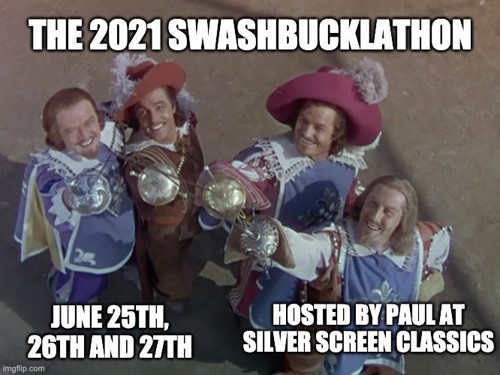
The 2021 Swashbucklathon banner created by Paul from Silver Screen Classics.

What I didn’t like about the film:

Unclear details: There were a few details within the overall story that weren’t made clear. At the beginning of the movie, the Musketeers were named enemies of the King. They were also taken in as prisoners. But I didn’t hear why they were declared enemies. In fact, I don’t remember this reason ever being spoken. Had details like this been clarified, certain parts of the story would be less confusing.

A limited amount of action scenes: After watching the 1948 adaptation of The Three Musketeers, I expected to see exceptional fight choreography in the 1939 film. While I did get to see some interesting fight sequences, there was less action in The Man in the Iron Mask than in The Three Musketeers. Looking back on the movie, I can think of only a handful of action scenes in this particular story. What this film emphasized was drama and romance. While having drama and romance can work in a film, this direction in The Man in the Iron Mask was much different than I had anticipated.

A somewhat misleading title: As I said in the introduction, I have seen the 1998 adaptation of The Man in the Iron Mask. From what I remember, the audience knew early on there was a literal man in an iron mask. Even though this titular character was in the 1939 film, the mask itself didn’t come in until an hour into the movie. I understand that moment needed build-up. However, I think that part of the story should have taken place much sooner.

Princess tiara image created by Freepik at freepik.com. <a href=’https://www.freepik.com/free-vector/ornamental-princess-crowns_1109199.htm’>Designed by Freepik</a>. <a href=”https://www.freepik.com/free-photos-vectors/gold”>Gold vector created by Freepik</a>. Image found at freepik.com.

My overall impression:

So far, the best film I’ve seen this year is the 1948 adaptation of The Three Musketeers. There was so much within that film I liked. When watching The Man in the Iron Mask, I wondered if this movie could compare to the 1948 film. While there were things about the project I did enjoy, I still like The Three Musketeers more. The 1939 picture was a likeable one. However, some flaws ended up holding this film back. One of them was how action was used sparingly. Other flaws, such as a somewhat misleading title and some unclear details, brought its score down. But I would recommend this film, especially if you’re looking for a title for Clean Movie Month. The Man in the Iron Mask makes me want to revisit the 1998 version in the future. For now, I need to focus on publishing my next blog follower dedication review!

Overall score: 7.4-7.5 out of 10

Have you seen any versions of The Man in the Iron Mask? If so, which one is your favorite? Please tell me in the comment section!

Have fun at the movies!

Sally Silverscreen

Take 3: Aurora Teagarden Mysteries: Til Death Do Us Part Review (Hallmark Mysteries Double Feature Part 1)

Because I haven’t reviewed a Hallmark Movies & Mysteries film since January, I thought writing about the newest Aurora Teagarden movie was a good idea! I also watched the latest mystery film, To Catch a Spy. Therefore, I decided to make my reviews a double feature! First though, we need to talk about Aurora Teagarden Mysteries: Til Death Do Us Part! While weddings have been shown in Hallmark’s mystery films, this is the first time one of the protagonists has gotten married within their respective series. Having Aurora finally walk down the aisle makes sense, especially since the Aurora Teagarden series has been on the air the longest. However, it’s still nice to see Aurora and her fiancé, Nick, reach this milestone in the lives. Speaking of miles and stones, let’s hop, skip, and jump through this review of Aurora Teagarden Mysteries: Til Death Do Us Part!

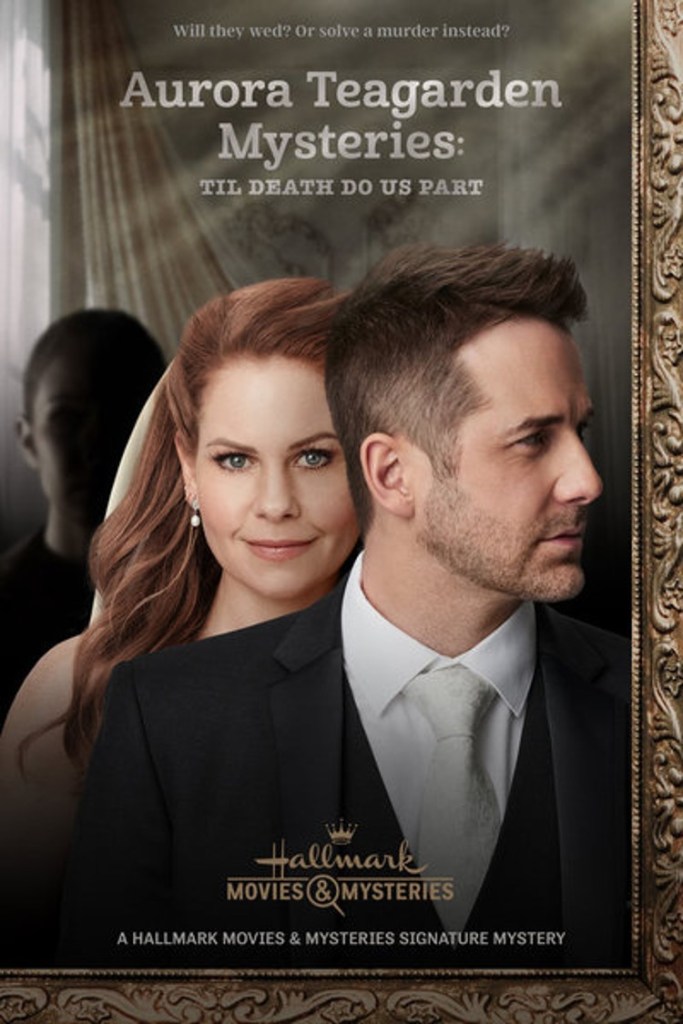
Aurora Teagarden Mysteries: Til Death Do Us Part poster created by Crown Media Family Networks and Hallmark Movies & Mysteries

Things I liked about the film:

Omitting the “planning-a-wedding-in-an-unrealistic-time-period” cliché: Anyone who has read my list of The Top 10 Worst Cliches from Hallmark Movies would know I am not a fan of the “planning-a-wedding-in-an-unrealistic-time-period” cliché. Because this is the first time Aurora and Nick have gotten married, let alone planned a wedding, it would have been easy for the series’ creative team to include this cliché in the script. Instead, part of the story revolved around Aurora and Nick finalizing wedding plans days before their big celebration. I like how the creative team took a different approach when it came to the subject of weddings. It also helps that the wedding itself didn’t dominate the story, like in some wedding movies. Showing a wedding’s planning process in a realistic fashion is quite refreshing. At one point in the film, Nick and Aurora seriously consider postponing their wedding, a conversation that felt mature and considerate. It was nice to see soon-to-be newlyweds take the planning process seriously instead of a) relying on the “power of love” to make everything fall into place or b) become so attached to a physical location, that they do anything it takes just to get married there.

A cold case mystery: Hallmark’s mystery series have sometimes featured cold cases. But these types of cases are not featured as often as cases that take place in an immediate time frame. This is especially true when it comes to the Aurora Teagarden series. The mystery in Aurora Teagarden Mysteries: Til Death Do Us Part first took place over twenty years ago. Not only that, but it also relied on dialogue as clues more than physical objects. This kind of story-telling is rarely seen in Hallmark mystery films. It gives the audience a reason to stay invested in the movie, as it forces them to pay attention to what the characters are saying and doing. I also applaud Aurora Teagarden’s creative team for choosing a different kind of mystery for this story. It keeps the overall series fresh and exciting!

Aurora’s wardrobe: An underrated strength in the Aurora Teagarden series is Aurora’s wardrobe! The outfits found in this film not only appeared stylish and modest, but they also complimented Candace Cameron Bure. In a scene where Nick brings Aurora donuts for breakfast, Aurora’s outfit consisted of a simple green skirt and a gray sweater with a green, yellow, and purple plaid pattern. When a piece of clothing features a pattern, you should pair it with a plain colored piece. This is the reason why Aurora’s outfit worked. Another memorable outfit was the one Aurora wore to her rehearsal dinner. The pink, short-sleeved dress was complimented by simple gold and silver jewelry. When Aurora went outside, she wore a navy-blue coat that boasted a light and dark pink plaid pattern. Because the coat featured the same color of pink as the dress, both pieces paired well together!

Wedding couple image created by Freepik at freepik.com. <a href=’https://www.freepik.com/free-vector/hand-drawn-wedding-invitation-with-happy-couple_1259848.htm’>Designed by Freepik</a>. <a href=”https://www.freepik.com/free-photos-vectors/wedding”>Wedding vector created by Freepik</a>. Image found at freepik.com.

What I didn’t like about the film:

A limited amount of humor: In Hallmark’s mystery series, including the Aurora Teagarden series, a certain amount of humor is incorporated into each story. This element prevents the film from becoming too dark. But Aurora Teagarden Mysteries: Til Death Do Us Part didn’t feature as much humor as other movies in the series. One reason for this was the absence of Miranda Frigon, who has portrayed Lynn since the series’ beginning. Her dry humor and criticism of Aurora’s involvement in each case has served as comic relief. Without Lynn, a percentage of the series’ humor is gone. Even though, there were two scenes that made me laugh out loud, this movie was one of the more serious stories in the series.

The mystery’s weak connection to the wedding: While I did like the film’s cold case mystery and how the wedding didn’t dominate the story, the mystery itself didn’t connect to the wedding. As I mentioned in this review, the mystery took place over twenty years ago. But as I watched the movie, I felt it could have been placed in its own story. I found myself wondering, “Do we really need a wedding to break up the darkness of this case”? If the series’ creative team really wanted Nick and Aurora’s wedding to remain an important part of the story, the mystery could have been something along the lines of a cold case being connected to the wedding reception venue or a florist being kidnapped.

The dynamic of Charles and Aida’s relationship: Aurora’s father, Charles, attends Aurora and Nick’s wedding. Because Charles and Aida, Aurora’s mother, divorced when Aurora was in college, this is the first time Aurora’s parents have interacted in years. If this had happened in real life, there would be a certain amount of awkwardness and discomfort between both parties. But for Aida and Charles, it seemed like they picked up where they left off. I can see the film’s creative team wanted to showcase cordial, co-parenting exes, similar to the Hallmark Channel movie, Love to the Rescue. What made that concept work in the 2019 film is how Nikki DeLoach’s character and her ex were currently raising a school-aged child. Therefore, both parents needed to co-parent. In the newest Aurora Teagarden chapter, Aurora is an adult. At this point in Aurora’s life, Aida and Charles no longer need to co-parent, let alone be on the same page when it comes to their daughter.

Magnifying glass and fingerprint image created by Alvaro_Cabrera at freepik.com. <a href=’https://www.freepik.com/free-vector/loupe-over-a-fingerprint_853908.htm’>Designed by alvaro_cabrera</a>. <a href=”https://www.freepik.com/free-photos-vectors/glass”>Glass vector created by Alvaro_cabrera – Freepik.com</a>. Image found at freepik.com.

My overall impression:

The Aurora Teagarden series is Hallmark Movies & Mysteries’ longest running series. Since 2015, fans have watched Aurora solve multiple murders, navigate her love life, and lead the Real Murders Club. With Aurora Teagarden Mysteries: Til Death Do Us Part, Aurora, as well as Nick, reach a new chapter in their lives. At the same time, our favorite librarian does what she does best: solve a mystery. This new film contains elements that serve as the series’ strengths; such as showing a type of mystery that isn’t always featured on the network and utilizing different ways to present clues. However, the film is one of the more serious titles in the series. Miranda Frigon’s absence was seen and felt. Because some of the series’ humor comes from her character, most of Aurora Teagarden’s comedy was not there. While Marilu Henner and Andrew Airlie, who portray Aida and Charles Teagarden, have good on-chemistry, I didn’t think the dynamic of their characters’ relationship was well executed. For this flaw, the fault lies in the screenwriting. I’m looking forward to the next installment in the series, Aurora Teagarden Mysteries: Honeymoon, Honeymurder! Since Hallmark hasn’t created any programs about a honeymoon before, it’ll be interesting to see how the overall story will play out.

Overall score: 7.5-7.6 out of 10

Have you seen Aurora Teagarden Mysteries: Til Death Do Us Part? Are you looking forward to Aurora Teagarden Mysteries: Honeymoon, Honeymurder? Let me know in the comment section below!

Have fun at the wedding!

Sally Silverscreen

Take 3: The Girl Who Spelled Freedom Review

Originally, I was going to publish a double feature review of Wild Hearts Can’t Be Broken and The Girl Who Spelled Freedom for the American Experience on Film Blogathon. However, I have also been working on another big project that required more time than I expected. Therefore, I was only able to watch one movie, which was The Girl Who Spelled Freedom. Don’t worry, though, because I will coordinate a double feature to celebrate the publication of 500 posts! The 1986 made-for-tv movie had been unknown to me until this year. I stumbled across The Girl Who Spelled Freedom when I was looking through an IMDB list about family-friendly films. After reading the synopsis, I was interested in watching the movie! There aren’t many cinematic stories that feature a spelling bee. In fact, the only one I can think of is Akeelah and the Bee from 2006. I also realize that Disney creates fewer “based on a true story” movies now than they did decades ago. Because a Disney project hasn’t been reviewed on my blog since last December, let’s begin talking about The Girl Who Spelled Freedom!

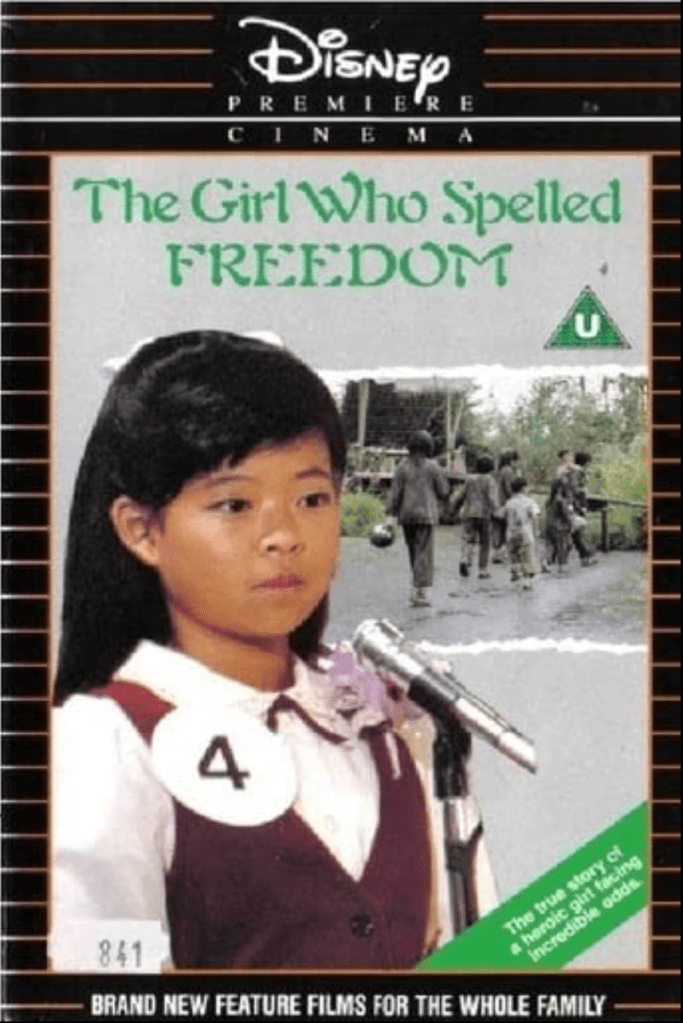
The Girl Who Spelled Freedom poster created by Buena Vista Home Video, American Broadcasting Company (ABC), ITC Entertainment Group, Knopf/Simons Productions, and Walt Disney Television. © Disney•Pixar. All rights reserved.

Things I liked about the film:

The acting: As I have stated in the past, it takes a very talented young actor or actress to carry a film. For Jade Chinn, she did such a great job with the material she was given! What made her performance so memorable is how she utilized body language, emotions, and facial expressions to illustrate Linn’s limited use of English. However, these techniques helped address what the character was experiencing. When Linn was traveling on a plane for the first time, she curled up on the floor in fear. The way Linn was behaving showed the audience that cultural differences and language barriers can turn something as simple as a plane trip into a terrifying experience. Another stand-out performer was Mary Kay Place, who portrayed Prissy Thrash! One of her best scenes took place toward the beginning of the film. Prissy and her husband, George, were dealing with the news of how many members are in Linn’s family. Prissy is so overwhelmed, she suddenly bursts into tears. This moment alone displays the emotionality Mary was able to bring to her performance! A heartwarming scene was when George was teaching Linn and her sisters how to count. The performances from the actors in this scene, especially from Wayne Rogers, appeared so genuine. It was also nice to see the dynamic between these characters!

The cinematography: I was pleasantly surprised by some of the cinematography in The Girl Who Spelled Freedom! Even though this is a made-for-tv movie from the mid ‘80s, the cinematography looked like it came from a theatrical production. At the beginning of the film, Linn and her family are crossing a river. One shot is presented as if the viewer is in the water, watching the family moving through the river toward safety. When Linn and her family are staying with the Thrash family, they discover one of the sons is missing. As George and Prissy are searching their home, the camera follows them. This gives the idea the audience are looking for this child alongside the characters.

A balance of heartbreaking and heartwarming moments: With films that deal with emotional material, there are bound to be heartbreaking moments. In The Girl Who Spelled Freedom, there were certainly scenes that were sadder in nature. An example is when Prissy takes Linn and some of her siblings to the park. When the children see a giant statue of the Crucifix, they become scared, as they are instantly reminded of the trauma they experienced. Even though Prissy reminds them that the statue isn’t real, the children are still shaken up by the imagery. At the same time, the film contained light-hearted moments that were heartwarming. At the Thrash family home, Linn accidently walks in on Laura, Prissy and George’s daughter, curling her hair. In an effort to prevent Linn from feeling embarrassed, Laura decides to not only curl Linn’s hair, but also curl Linn’s sisters’ hair. The scene itself was very sweet and showed how a little bit of kindness can make a big difference.

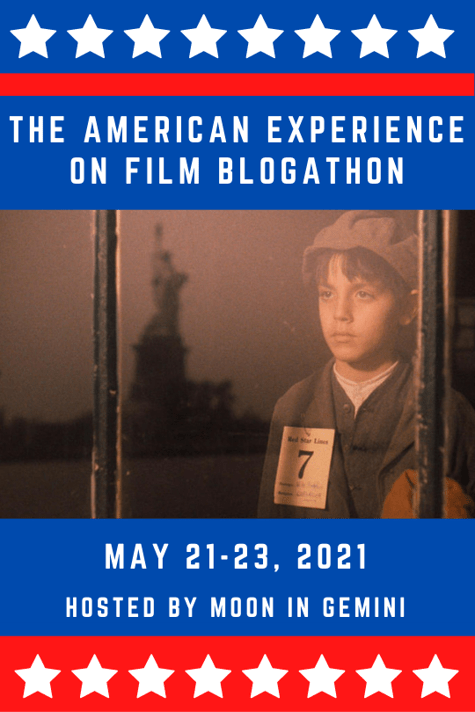
The American Experience on Film Blogathon banner created by Debbie from Moon in Gemini

What I didn’t like about the film:

Missing context: The Girl Who Spelled Freedom has the same flaw The Crow did: there are areas of the story that needed context. One strong example is Linn giving sentimental value to a ring. At the beginning of the film, Linn can be seen looking for a ring in the mud. When she is escaping from a group of soldiers in Thailand, she gives the ring to one of the soldiers. In the United States, Prissy gives one of her rings to Linn. Later in the film, Linn is upset when she accidently drops the ring down the sink. The significance of this ring is never addressed in the film. Linn herself never explains why the ring is so valuable to her. If context had been provided to this part of the story, the audience could try to understand why the ring is important to Linn.

A limited presence of the spelling bee: Before watching this movie, I knew there would be a spelling bee featured in the overall story. However, I was expecting a build-up to the spelling bee, similar to Akeelah and the Bee. While we get to see a spelling bee in The Girl Who Spelled Freedom, it was only referenced a few times before the actual event began. Most of the story focused on Linn’s adjustment to life in the United States. Even though watching the spelling bee unfold was satisfying, I wish it had received a little more emphasis in the film.

A few characters receiving character development: In films that feature bigger casts, it is not easy providing character development to every character involved. But when only a few characters receive character development, it can be disappointing. This is what happened with The Girl Who Spelled Freedom. The only characters who are given character development are the members of the Thrash family and Linn. With Linn’s family, the audience becomes familiar with them, but doesn’t get the opportunity to get to know them. This can also be said about other characters, such as Henry Turner, who helped the Thrash family bring Linn and her family to the United States.

Winner’s medal image created by Freepik at freepik.com. <a href=’https://www.freepik.com/free-vector/golden-awards-set-with-colors-details_844356.htm’>Designed by Freepik</a>. <a href=”https://www.freepik.com/free-photos-vectors/gold”>Gold vector created by Freepik</a>. Image found at freepik.com.

My overall impression:

The American Experience is a tricky thing to sum up, as everyone’s experiences are going to be different. This is especially the case if someone is a refugee or immigrant. The Girl Who Spelled Freedom is a perfect example of how unique the American Experience can be. For most of the film, Linn and her family deal with “culture shock”, coming across things and situations that they feel are “unusual”. But over time, they start to create their own American Experience. Linn enters a local spelling bee in 1983. An activity that is typically seen as fun and harmless was seen by Linn as a fight for survival, a view that was shaped by her past experiences. Therefore, she was partially responsible for creating her own American Experience. For a television film from the mid ‘80s, I’d say this is one of the better presentations! While the film does have its flaws, it did feel like a Hallmark Hall of Fame movie before the collection moved to Hallmark Channel. After the film, there was an interview with the real-life Thrash and Yann families. Because the audience was able to hear their sides of the story, it added to my enjoyment of the overall project! It’s a shame fewer networks have decided to create made-for-TV films. There are so many stories worth telling, so I hope they are able to get told someday.

Overall score: 7.6 out of 10

Have you seen The Girl Who Spelled Freedom? Are there any television films you’d like to see me review? Let me know in the comment section!

Have fun at the movies!

Sally Silverscreen

Take 3: The Three Musketeers (1948) Review

Last year, I participated in the Classic Literature On Film Blogathon. Since I was reading To Kill a Mockingbird at the time, I chose to review the book’s film adaptation. For this year’s event, I selected the 1948 version of The Three Musketeers! Because I’m using my TBR Tin to choose which book to read next, I wasn’t able to read the source material before I saw the movie, as I’m currently reading The Shadowy Horses by Susanna Kearsley. I was recommended this film by Patricia from Caftan Woman. As I try to see as many film suggestions as I can, this became one reason why I selected The Three Musketeers for this blogathon. I have seen the 1993 adaptation of the story. But I can’t give an honest opinion on that film, as I haven’t seen the movie in years. What will my thoughts be on the 1948 adaptation of The Three Musketeers? Keep reading to find out!

The Three Musketeers (1948) poster created by Metro-Goldwyn-Mayer and Loew’s, Inc.

Things I liked about the film:

The acting: Because The Three Musketeers contained an ensemble cast, it’s difficult to choose a favorite performance. However, I will still mention a few of them. For me, Gene Kelly is always going to be known for his performances in musicals. Seeing him work with different acting material was very interesting, as it forced him to utilize his expressions and emotions more. Out of Gene’s films I’ve seen so far, his portrayal of D’Artagnan has become one of my favorites! This performance was so well-rounded, D’Artagnan came across as a mutli-layered character. As Gene had a variety of expressions at his disposal, he was able to adapt to any situation D’Artagnan faced. I am not familiar with Van Heflin as an actor. But I was impressed with his portrayal of fellow Musketeer, Athos! Van’s best scene was when Athos drunkenly tells a story of an aristocrat who was betrayed by a woman from the country he fell in love with. Even though Athos is disoriented by the alcohol, you can tell there is deep emotion in his voice and eyes. Another performance that also became a favorite came from Lana Turner, who portrayed Countess de Winter! Her standout scene was when her character was in prison. The Countess appears disheveled as she begs for her life to end. What made this scene so memorable was the amount of emotion Lana put into her role. She presented a character that was so desperate, she’d be willing to do anything to get out of it.

The costumes: When it comes to scene-stealers, the costumes in The Three Musketeers definitely stole the show! I liked how colorful they were, as bright hues were used on various pieces of apparel. It not only made the characters stand out, but it also helped when telling characters apart from one another. The amount of detail on these costumes was also exquisite! In one scene, the Duke of Buckingham wore a purple shawl. Gold embroidery complimented the shawl’s shade of purple and prevented the piece from becoming plain. At a dinner party, Queen Anne wore a white gown. This gown also contained gold details, which were found on the skirt and bodice. Small jewels near the top of the dress completed Queen Anne’s elegant look!

The set design: If you’re going to create a period film, you have to pay attention to the finer details that go into each set. These details will reflect the effort, research, and care that went into how these sets look. The sets in The Three Musketeers show how much the film’s creative team cared about the presentation of their final product! What I love about the sets in this movie are the fine details that can be found. Carved images are shown in the Duke of Buckingham’s study, covering the fireplace and doorframe in these wooden pictures. They can also be found in other rooms and on other materials, such as on a tin-plated cabinet in a General’s office. My favorite design detail can be found in Queen Anne’s sitting room. As Queen Anne and the Duke of Buckingham are standing near the fireplace, Queen Anne turns a knob found near the top of the fireplace. This action reveals a secret compartment that hides a box of diamonds.

The fight choreography: Any action movie is just as good as its fight choreography. The performative presentation of the fights in The Three Musketeers helped make these fights so memorable! Because of Gene Kelly’s dancing skills, he was able to incorporate leaps into his fight sequences. Watching D’Artagnan leap from place to place gave him a natural superpower that he was able to use to his advantage! Humor can also be found during these fight sequences, which prevented them from being too dark or serious. D’Artagnan’s first duel was against the head of the French police. During this duel, hilarity ensued, from D’Artagnan splashing water in his opponent’s face to pushing his opponent in a pond. This inclusion of humor in the fight choreography allowed the creative team to present these fights in creative and interesting ways!

The 2021 Classic Literature On Film Blogathon banner created by Paul from Silver Screen Classics.

What I didn’t like about the film:

D’Artagnan’s romantic relationships: After rescuing Constance from a home invasion, D’Artagnan falls in love with her. He not only tells Constance he loves her, but they also share a romantic kiss. While I liked Constance and D’Artagnan’s relationship, I felt it was developed too quickly. Later in the film, Constance is kidnapped. In order to save her, D’Artagnan pretends to fall in love with Countess de Winter. However, after his initial meeting with the Countess, D’Artagnan tells Athos how much he loves her. If D’Artagnan was romantically interested in Constance, why would he even bother having feelings for the Countess? That part of the story was confusing.

A weaker villain: There are two villains in The Three Musketeers; Countess de Winter and Richelieu. But one of them definitely outshined the other. Countess de Winter was the stronger villain. She is a criminal by legal context and the audience can witness her committing several crimes. Richelieu, on the other hand, is not presented in the same way. The audience does see him commit a crime of theft, but it is never explained how this was done. Richelieu was also friends with the King of France, a character that was not written or portrayed as a villain. This made me puzzled as to what Richelieu’s true intentions were, whether he was a villain or simply a man who follows his own rules.

The Musketeers spending little time together: When you think of The Three Musketeers, you think of these heroes fighting alongside each other and saving the day together. As I watched this film, I noticed how they spent more time apart. I was disappointed to discover this because that team dynamic the Musketeers are known for had a limited presence. While this separation did allow the audience to get to know these characters individually, we didn’t really get to see this group of friends grow over time. Though there was a lot of content in this movie, I wish more time was given to show the Musketeers together.

Castle photo created by Photoangel at freepik.com. <a href=’https://www.freepik.com/free-photo/old-castle-in-the-mountians_1286237.htm’>Designed by Freepik</a>. <a href=”https://www.freepik.com/free-photos-vectors/tree”>Tree image created by Photoangel – Freepik.com</a>. Image found at freepik.com.

My overall impression:

Anchors Aweigh was the best movie I saw in 2020. This was a pleasant surprise, as I never expected one of Gene Kelly’s films to receive this honor. Even though it’s only April, the 1948 adaptation of The Three Musketeers has now become the best movie I’ve seen so far! There is so much effort that was put into this project, which is reflected in many parts. The costumes and set designs were impressive because of the detail that was incorporated into them. Many good acting performances can be found, making it difficult to choose the best one. These actors not only did a good job individually, but they also worked well together as a group! Similar to what I said in my Oliver! review, I might read The Three Musketeers because of how much I enjoyed its film adaptation! For now, my top priority is reading the books that are currently on my TBR shelf.

Overall score: 8 out of 10

Have you read or seen The Three Musketeers? What adaptations of classic literature do you like? Please let me know in the comment section!

Have fun at the movies!

Sally Silverscreen

Take 3: Heaven Knows, Mr. Allison Review

Easter is just around the corner. Because of this, Pure Entertainment Preservation Society is hosting The Faith in Film Blogathon! This event has given me the perfect opportunity to review Heaven Knows, Mr. Allison, which was recommended to me by Maddy from Maddy Loves Her Classic Films. Since the movie features a Nun as one of the main characters, I knew there would be some religious themes within this script. However, I have never seen this film before, so I didn’t know what these themes would be. Choosing Heaven Knows, Mr. Allison also gave me an excuse to watch more movies from Deborah Kerr’s filmography. So, let’s start this review to see where this film ranks!

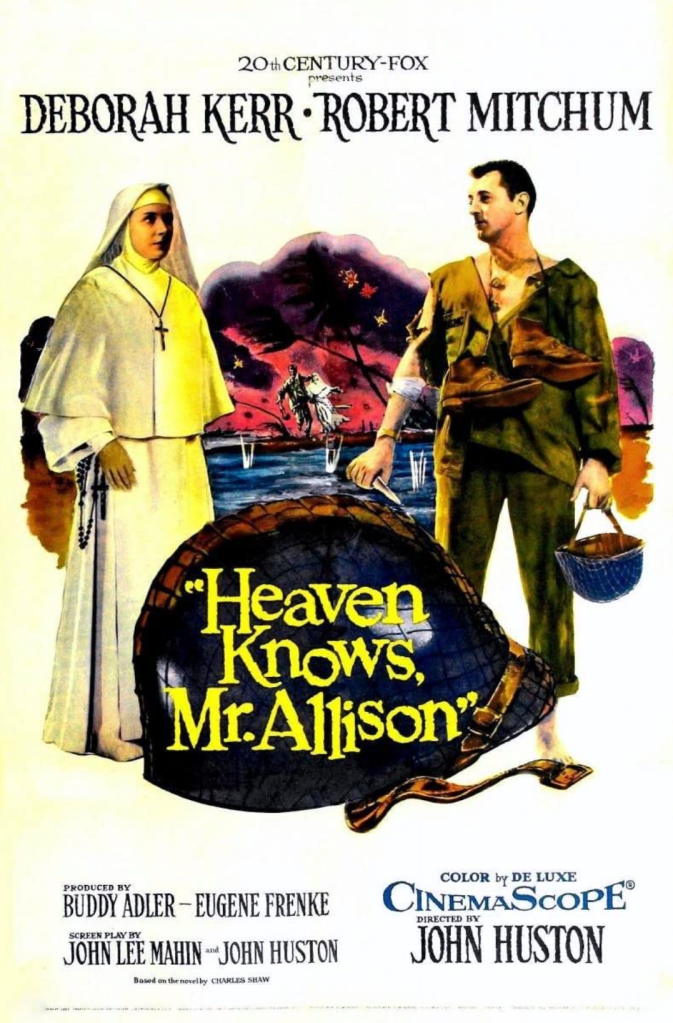
Heaven Knows, Mr. Allison poster created by 20th Century Fox.

Things I liked about the film:

The acting: Because Robert Mitchum and Deborah Kerr are the only two actors in this movie’s main cast, those are the only two performances I will be discussing in this review. This is the third film of Deborah Kerr’s I’ve seen, with the previous two being Edward, My Son and Marriage on the Rocks. The one consistent part of Deborah’s acting abilities is how she uses emotions and expressions to her advantage. This allows her to make each of her roles seem well-rounded! While Sister Angela, Deborah’s character, and Mr. Allison are fishing, Mr. Allison tries to catch a turtle with a tool he built himself. When Mr. Allison falls into the ocean, Sister Angela appears shocked and horrified, as the situation happened so quickly. Later in the film, Sister Angela and Mr. Allison are discussing their plans if they leave the island. As Mr. Allison is talking about how he has grown closer to Sister Angela, tears can be seen forming in Sister Angela’s eyes. Deborah’s face in that scene said so much more than dialogue could. Robert Mitchum is an actor I’ve heard of, but am not familiar with. Even though I have seen pieces of El Dorado and Scrooged, I don’t remember his performance in those projects. As I watched his portrayal of the titular character, it appeared as a combination of the laid-back personality of Clark Gable and the tough persona of John Wayne. But for Robert, his eyes contained emotion throughout his performance. As Sister Angela falls ill, you can tell Mr. Allison is genuinely concerned for her. Robert’s eyes are what worked in his favor, as they held a sense of sympathy for Sister Angela and longing for her well-being. The first scene of this movie contained no dialogue, as it focused on Mr. Allison’s reaction when he first arrives on the island. Because of this, Robert had to rely on his facial expressions and body language to explain what his character was going through. I found these creative decisions gave the film a good first impression, as it brought some realism to this story!

The scenery: According to IMDB, Heaven Knows, Mr. Allison was filmed in Trinidad and Tobago. Even though the location is not specified in the film, the scenery made the movie very photogenic! There is so much foliage to be seen, from the tall palm trees to the smaller bushes. The ocean boasted a consistent shade of blue, which was definitely appealing to the eye. Sandy beaches and dark brown rocks complete the natural look this space had to offer. Based on appearances alone, this island looked inviting!

The parallels between the religious order and the Marines: Within Mr. Allison and Sister Angela’s conversations, parallels between the Marines and the religious order are brought up. One of the them is discussed while they are building a sail for their raft. Sister Angela addresses the preparations she had to go through in order to become a Nun. She even talks about one mentor within the religious order she wasn’t a fan of. Meanwhile, Mr. Allison shares his basic training before he officially became a Marine. He also brings up a drill Sergeant that he didn’t like. I never thought about these parallels until I saw this film, so I like how this story was somewhat thought-provoking. The parallels between the religious order and the Marines also showed how Sister Angela and Mr. Allison were similar than they first realized.

The Faith in Film Blogathon banner created by the Brannan sisters from Pure Entertainment Preservation Society.

What I didn’t like about the film:

The limited presence of faith: While I did like seeing the parallels between the religious order and the Marines, I was disappointed by how limited faith’s presence was. Before watching Heaven Knows, Mr. Allison, I expected faith to be a cornerstone of this story, similar to films like Ben-Hur. Because the movie takes place during World War II, a correlation with the David and Goliath story would make sense. Seeing one of the characters question their faith or have their faith tested would be appropriate, given their circumstances. But faith in Heaven Knows, Mr. Allison was served in small doses.

A basic conflict: In movies, television shows, or books, I like conflicts that contain more depth. But the conflicts in Heaven Knows, Mr. Allison were more basic than I hoped. In theory, the idea of a Marine and a Nun surviving on an abandoned island sounds interesting. But as the story progresses, the conflict is the same as other films of this nature. Even when Japanese soldiers invade the island, survival is still a major conflict. Because of everything I mentioned, few new ideas were brought to this particular table.

Lack of resolution: At one point in the film, Sister Angela explains to Mr. Allison how some women change their minds when it comes to the religious order. Several scenes later, Mr. Allison tries to dissuade Sister Angela from taking her final vows by telling her he loves her. She even starts to weigh her options when it came to her future. However, we never find out what her final decision was. A brief explanation in the script would be solved this problem. But because this explanation was nowhere to be found, a sense of closure was missing.

Cute Easter image created by Freepik at freepik.com. <a href=”https://www.freepik.com/free-photos-vectors/background”>Background vector created by freepik – http://www.freepik.com</a>. Image found at freepik.com.

My overall impression:

Heaven Knows, Mr. Allison is a fine movie. Even though I found it better than Edward, My Son and Marriage on the Rocks, I was expecting more from this third film. I was hoping faith would have a bigger role in the story, especially since Heaven Knows, Mr. Allison was released two years before Ben-Hur. However, as I said in my review, faith was served in small doses. The conflict itself was typical for a movie that involves characters being stranded on an island. Because I like conflicts with more depth, this creative decision was disappointing. But the movie did have its strengths, such as the acting and the thought-provoking parallels. With all this said, this is a film I would still recommend to older viewers just in time for Easter!

Overall score: 7.2 out of 10

Have you seen Robert Mitchum’s or Deborah Kerr’s films? If so, which ones would you recommend? Let me know in the comment section below!

Have fun at the movies!

Sally Silverscreen

Take 3: Perry Mason: The Case of the Lost Love Review + 320, 325, 330, and 335 Follower Thank You

For this blog follower dedication review, I was originally going to write about the PixL movie, The Cookie Mobster. However, that film became the worst one I’ve seen this year, so far. Because I feel my readers and followers deserve a better movie and because I just reviewed a bad movie two weeks ago (Chasing Leprechauns), I chose a different film for this post. Recently, I watched the 1987 TV movie, Perry Mason: The Case of the Lost Love, as it happened to be on my DVR. Mystery related media are some of my most popular content, so this review will be a treat for my readers! Even though some films are stronger than others, I have enjoyed the Perry Mason movie series. Three of these films have been covered on my blog, with all of them receiving good scores. Will Perry Mason: The Case of the Lost Love receive a similar score? Keep reading my review if you want to find out!

Perry Mason: The Case of the Lost Love poster created by Fred Silverman Company, Strathmore Productions, Viacom Productions, Dean Hargrove Productions, National Broadcasting Company, Starmaker Entertainment, and Viacom

Things I liked about the film:

The acting: Jean Simmons is an actress who I have talked about before, when I reviewed Howl’s Moving Castle two years ago. While that movie was the first of Jean’s I saw, she had a voice-acting role in that film. Perry Mason: The Case of the Lost Love contains the first live-action role of Jean’s I have seen! What I liked about her portrayal of Laura Robertson is how Jean carried a certain amount of grace throughout the movie. She also gave a different persona to a character of this nature. In films where a woman is involved with politics, the female politicians are usually portrayed with a “no nonsense” personality. Laura Robertson is different because she had a gentler personality, despite running for the United States Senate. Even though he appeared in the movie for a short amount of time, I liked Jonathan Banks’ portrayal of Luke Dickson! He was so expressive; he was like a chameleon. The meeting at the restaurant between Laura’s husband, Glenn, and Luke showcases a perfect example. Jonathan’s face displayed a variety of expressions. Toward the beginning of the meeting, Luke appears serious, as his face is set and he is glaring at Glenn. As he brings up some compromising information, Luke’s face brightens up and he becomes a bit animated.

The Robertson’s house: Despite appearing in the film for less than five scenes, I liked seeing the Robertson’s house in Perry Mason: The Case of the Lost Love! The house’s exterior was presented in the dark. But from what the audience can see, the house was covered in a gray stone brick. On the left side of the house, a stone cylinder was connected, making the house look like a castle. The most prominently featured part of the house’s interior is the staircase. Notable details are wrought-iron stair rails and a stained-glass window. These design details give subtle clues of how well off the Robertsons are.

The open discussion of mental health treatment: Because of Laura’s history with mental health, the subject of mental health treatment was briefly discussed in this film. While she is afraid this part of her life will prevent her from becoming a Senator, she still willingly brings it up. There is no shame detected in the voices and faces of the characters who address Laura’s mental health treatment. A debate about which kind of treatment is appropriate is even included in the script. This openness toward mental health treatment seems ahead of its time, as society is more aware of mental health now than four decades ago. It also highlights the importance of this particular subject.

Love of mental health image created by freepik at freepik.com. <a href=”https://www.freepik.com/free-photos-vectors/people”>People vector created by freepik – http://www.freepik.com</a>. Image found at freepik.com.

What I didn’t like about the film:

Ignored story points: A few story points within Perry Mason: The Case of the Lost Love’s script were ignored throughout the movie. One example is mentioned toward the beginning of the film. When Luke first called Glenn, he mentions a long-lost son who lives in Arizona. But when Glenn meets up with Luke at a local restaurant, this son was never brought up. In fact, this son is never referenced again. I was disappointed because I was not only curious to see who would portray this mysterious character, but also discover what role this long-lost son would play in the overall mystery. It makes me wonder why this “scandal” was included in the first place?

A late start time for the mystery: As I have said before, I am not a fan of mystery films that start their mysteries at later times. Perry Mason: The Case of the Lost Love is a movie that does this. The murder victim wasn’t discovered until about twenty minutes into the film. While this timespan featured build-up to this discovery, I think the mystery could have started sooner. In my opinion, introduction of characters and their connections should have been taken care of in the movie’s first ten minutes. The discovery of the murder victim could have taken place at the movie’s fifteen-minute mark.

The closeness of Perry and Laura’s relationship: Within this story, Perry reveals how he and Laura used to be a romantic couple. When Laura’s husband, Glenn, asks Perry if he still has feelings for Laura, Perry says no. However, his and Laura’s actions say otherwise. When Laura and Perry have drinks at a local hotel, they hold hands at one point, with Laura kissing Perry on the cheek. Later that night, Perry brings Laura to her house. Before Perry leaves, he and Laura share a kiss. I found these romantic displays of affection unnecessary. With Laura married and Perry going his own separate way, it felt like the actions among the characters were chosen just to get a reaction from the audience.

Courtroom image created by Macrovector at freepik.com. <a href=”https://www.freepik.com/free-photos-vectors/isometric”>Isometric vector created by macrovector – http://www.freepik.com</a>. Image found at freepik.com.

My overall impression:

Like I mentioned in the introduction, I have enjoyed the Perry Mason movie series. The films within this series I have reviewed received good scores, as I liked what I saw. However, Perry Mason: The Case of the Lost Love was weaker than those three movies. It definitely wasn’t bad, but I feel it could have been stronger. A long-lost son being briefly brought up, but never mentioned again took away some intrigue from this story. Similar to what I said in my review of Edward, My Son, the opportunity for an actor to achieve his “standing ovation” through this role was not available because this part of the story was abandoned. The film contained other flaws, like a later start time for the mystery and the unnecessary closeness of Perry and Laura’s relationship. But there are things about the movie I can appreciate. The openness of mental health treatment was a topic I never expected to hear addressed in a Perry Mason film. While there were advancements and progress made within the field of mental health in the ‘80s, society’s perceptions of this topic were not the same in 1987 as they are now. This reminded me of The Boy Who Could Fly, where the use of therapy was normalized. It was a pleasant surprise to see a Perry Mason film address this subject! Before I finish this review, I’d like to thank all of 18 Cinema Lane’s followers! My blog would have never reached this amount of success without you!

Overall score: 7.1 out of 10

Have you seen any of the Perry Mason films? Do you enjoy my mystery related content? Please tell me in the comment section!

Have fun at the movies!

Sally Silverscreen

Take 3: Chasing Leprechauns Review

Happy Patrick’s Day to all my readers and followers! For Pure Entertainment Preservation Society’s Luck O the Irish Blogathon, I wanted to choose a Hallmark movie that was either filmed in Ireland or that takes place in Ireland. Since I have seen most of the network’s films that fit this criteria, I selected the 2012 presentation, Chasing Leprechauns. Despite this being my first time seeing the movie, I am familiar with its basic premise. The inclusion of leprechauns helps the film stand out from the tried-and-true rom-coms that frequent Hallmark Channel. I also liked how a relationship wasn’t the central focus of the story. Instead, Chasing Leprechauns revolves around finding a resolution to a conflict. But will these factors equal an enjoyable movie viewing experience? Keep reading to find out if a pot of gold is waiting at the end of this review!

Chasing Leprechauns poster created by Crown Media Family Networks.

Things I liked the film:

The forestry: There are two scenes in Chasing Leprechauns where Ireland’s forestry was beautifully filmed! When Michael and Sarah, two of the story’s lead characters, go to the leprechaun’s forest for the first time, the grass and moss poke out through the snow. It presents an image of spring forcing itself past the wintery barrier. On the beaten path, green trees can be seen in the background, with an afternoon sunlight being cast over the forest. This particular location appears peaceful and serene. Several scenes later, Sarah and Michael spend some time at an abandoned building. While sitting around a fire, the taupe structure of the building is behind them. Green from a nearby tree peeks out of a window, with a foggy view of a field visible from these windows. The space looks haunting and secluded, which is a pleasant change in scenery for a Hallmark project!

The characters of Evelyn and Sheamus: When Michael goes to Ireland, he stays at a Bed and Breakfast run by a woman named Evelyn. Throughout the film, Evelyn has a cheerful personality. She also dreams of traveling to New York City. Hearing Evelyn share which places she’d like to visit was such a joy. I also liked seeing her positive persona! Sheamus is a frequent patron of the local pub. At first, it can be easy to write him off as a man who just likes his glass of alcohol. But when the audience learns more about him, they see Sheamus carries a lot of wisdom and helpful advice. Evelyn and Sheamus were my favorite characters in Chasing Leprechauns! Not only were they well written, but they were also well acted by their respective actor and actress, Marion O’Dwyer and Terry Byrne. I honestly wish this story had focused more on them!

The Luck O The Irish Blogathon banner created by the Brannan sisters from Pure Entertainment Preservation Society.

What I didn’t like about the film:

No leprechauns: As I’ve said before on 18 Cinema Lane, a movie’s title partially serves as a promise to the audience. In the case of Chasing Leprechauns, that promise is featuring at least one leprechaun on screen. Despite what the title claims, there are no leprechauns in this film. Everyone in the small Irish town says there are leprechauns, even dedicating a museum to them. At various moments in the movie, squeaking noises can be heard, implying leprechauns are nearby. But never does a leprechaun show themselves to any of the characters in the story. How am I expected to care about the town’s “leprechaun problem” if the script doesn’t give me a reason to care? How am I to believe the town contains leprechauns when no evidence is provided? Chasing Leprechauns is a textbook example of why you shouldn’t just tell and not show when creating a story.

A drab looking film: Ireland is known for having beautiful landscapes that contain lush greenery and picturesque forestry. Too bad the creative team behind Chasing Leprechauns chose to film their movie in the middle of winter, when all that greenery is buried in snow. I know that snowy landscapes can be beautifully captured on film. However, the movie’s creative team appeared to not take any initiative to do so. This presents one reason why Chasing Leprechauns is such a drab looking film. The movie consistently carried dull shades of black, white, brown, and beige. Even when pops of colors did appear, such as on a scarf, those colors appeared muted. Even though I’ve never been to Ireland, I can honestly say this movie did not make the country look visually appealing.

No sense of urgency: Chasing Leprechauns is a movie where the protagonist says they are going to do something, but spends the majority of the film not doing what they said they were going to do. Though Hallmark doesn’t tell stories like this often, it is one I have grown to dislike. In this movie, Michael, our protagonist, is sent to Ireland in order to get approval for a future building project. Due to the town’s “leprechaun problem”, Michael faces an unexpected dilemma. Throughout the story, Michael spends more time experiencing Ireland than actually doing his job. It gets so bad that Michael’s boss shows up in Ireland to remind him how the trip was supposed to last two days, not two weeks.

A not so bright protagonist: Like I just mentioned, Michael spends two weeks in Ireland instead of the required two days. What is even worse is how it took Michael two weeks to solve his problems. I am aware of how some problems take longer to solve than others. But when Michael has a reputation of being his company’s “fixer”, then that should be embarrassing for him. Even though his job requires him to travel all over the world, he doesn’t take the time to learn about the countries he is visiting. As Michael and Sarah, the inspector, go to the forest where the leprechauns supposedly live, Michael suggests to call a priest and have him perform an exorcism. While Sarah calls him out for his lack of education, Michael reveals how foolish of a protagonist he is.

St. Patrick’s Day image created by Freepik at freepik.com. <a href=’https://www.freepik.com/free-vector/st-patrick-s-day-background_1640464.htm’>Designed by Freepik</a>. <a href=”https://www.freepik.com/free-photos-vectors/background”>Background vector created by Freepik</a>. Image found at freepik.com. 

My overall impression:

Chasing Leprechauns wants to have its cake and eat it too. What I mean by this is the film takes itself so seriously, yet they expect their audience to suspend almost all their disbelief. When you have a story where leprechauns are involved, a sense of magic or whimsy is usually found. But Chasing Leprechauns is devoid of those things. One of the film’s biggest mistakes was not showing at least one leprechaun on screen. I haven’t seen Fairy Tale: A True Story in years. But from what I remember, there was enough whimsy and charm to make up for the lack of fairies. If the creative team behind Chasing Leprechauns knew they weren’t going to put any leprechauns in their project, this is the direction they should have chosen. The magic within that world should feel believable, helping to create a whimsical and delightful place. It could be similar to the Good Witch series, where the magic is more figurative than literal. If you’re looking for a Hallmark film set in Ireland, I’d recommend Forever in My Heart from 2019. The story is much stronger than Chasing Leprechauns’ and the film is more grounded in reality, which gives the audience a reason to take it seriously.

Overall score: 4.7 out of 10

Have you seen any Hallmark movies set in or filmed in Ireland? If so, which one did you like? Please tell me in the comment section!

Have fun on St. Patrick’s Day!

Sally Silverscreen

Take 3: Sincerely, Yours, Truly Review + 295, 300, 305, 310, and 315 Follower Thank You

I know this review has been long overdue.  With several projects on my plate last month, I wasn’t able to get to my review as soon as I had wanted. Like I mentioned in my Peer Pressure Tag post, I am using March as the month where I catch up on important articles. This includes the newest blog follower dedication review. This time around, I wanted to choose a movie that was different from the film I wrote about for my last review; Perry Mason: The Case of the Telltale Talk Show Host. Even though there is a mystery in Sincerely, Yours, Truly, the overall story is more light-hearted in tone. It’s rare for an Up Network film to be covered on 18 Cinema Lane. This is because I just haven’t gotten around to watching many of them. Beginning at the start of 2021, Up Network has been releasing a new movie almost every Sunday night. Since Sincerely, Yours, Truly has been on my DVR for about a month, I finally had an excuse to watch it!

I took a screenshot of the film’s poster from my television. Screenshot taken by me, Sally Silverscreen.

Things I liked about the film:

The acting: Even though Natalie Hall has starred in Hallmark Channel movies since 2011, the only film of Natalie’s I have seen is A Winter Princess. The reason I bring this up is because it shows how Natalie has experience when it comes to working on films of this nature. Throughout Sincerely, Yours, Truly, Natalie was very expressive, which is reflective of her time appearing in Hallmark’s rom-coms and one of the Love Saga (Love Comes Softly) films. Toward the beginning of the movie, Natalie’s character, Hayley, and her friend, Elisa, have received good news about a potential grant for their non-profit, Growing Out. They dance around Hayley’s kitchen and squeal in delight, as they can’t contain their excitement. While we’re on the subject of Elisa, I also liked Nicki Whitely’s performance in Sincerely, Yours, Truly! Like Natalie, Nicki was also expressive. She had a good on-screen personality as well. Anytime Elisa interacted with Hayley, their friendship came across as realistic. The moments when they read the love letters are a good example. This was my first time watching any of Marshall Williams’ projects, so I didn’t know what to expect from Marshall, talent-wise. I have to say that I was very impressed by his portrayal of Josh! In the movie, he was charming, with his reactions and expressions appearing natural. Having good on-screen chemistry with Natalie also helped Marshall. One of Marshall’s best scenes was when Josh discovers a letter about a lost item. Josh receives his mail when he is on his way to work, not thinking twice about the task. As soon as he sees the letter, a look of curiosity immediately appears on his face.

The witty banter: In order to make any movie, let alone a rom-com, work, there needs to be good dialogue among the characters. Sincerely, Yours, Truly contained witty banter, which was one of the strongest parts of the film! Hayley and Josh meet when they argue over who should receive the last two jars of rhubarb jam. During this interaction, Josh lies about his reasons for wanting the jam. At first, he says he needs it for his sister because she’s having a bad day. Then he says he needs the jam because his sister is sick. Hayley comes back with witty remarks, calling out his falsehood in the process. After hearing both explanations of Josh’s, she asks him which one is true. This back-and-forth banter between these two characters was consistent, being both quick and sharp. Another example of this banter is when Josh is asking Hayley to put out her incense at their shared office facility. Because he’s entering her part of the office, Hayley responds by telling him not to spy, a reference from an earlier conversation. Not only do these interactions work because of the script, but also because of Natalie and Marshall’s talents!

The process of a grant proposal: A overarching narrative in Sincerely, Yours, Truly is Josh and Hayley attempting to win a financial grant for their respective non-profits. Throughout the film, the audience gets to see the entire process, from Josh and Hayley’s initial meeting to the final results. I found this part of the story interesting, as it allowed the characters to use problem solving skills and creativity. Even though Hayley’s non-profit was featured in the film more than Josh’s, I liked seeing her ideas come to life! This kind of insightful story-telling is what I’ve come to enjoy in stories like this.

Envelope with hearts image created by Freepik at freepik.com. <a href=’https://www.freepik.com/free-photo/hearts-and-pink-envelope-for-mothers-day_1950691.htm’>Designed by Freepik</a>. <a href=”https://www.freepik.com/free-photos-vectors/love”>Love image created by Freepik</a>. Image found at freepik.com.

What I didn’t like about the film:

Revealing the mystery too early: A mystery surrounding a collection of love letters was one of the major stories in Sincerely, Yours, Truly. This is one of the reasons why I wanted to watch this film. Within the first twenty minutes, a narration from a character the audience already met recites one of the love letters. The narration reveals the identity of the letters’ author. The mystery should have been drawn out for longer than twenty minutes, with the author’s identity remaining a secret for at least half the movie. This would give the audience more time to stay invested in the mystery.

No subplots for the supporting characters: While I liked the major stories in Sincerely, Yours, Truly, I didn’t find subplots for any of the supporting characters. What’s even more frustrating is how there were opportunities for subplots to take place. One example is Hayley’s mom, Camille. Over lunch between mother and daughter, it is revealed that Camille has a crush on a local butcher. However, this relationship is never explored and we only see Camille in two scenes. In the story, Elisa shares how she’s dating a dog-walker, whose profession is affecting her allergies. This conflict was not resolved anywhere in the movie.

Josh and Hayley never coming across as enemies: A classic rom-com trope that is found within the movie is “enemies to lovers”. Even though I enjoyed seeing Hayley and Josh’s interactions, I never felt like they were enemies. Sure, there were aspects of the other person they didn’t like. But their banter came across as playful than antagonistic. This made me question why the creative team behind Sincerely, Yours, Truly adopted this specific trope if they weren’t going to fully utilize it?

Fancy jewelry image created by Freepic.diller at freepik.com. <a href=”https://www.freepik.com/free-photos-vectors/wedding”>Wedding photo created by freepic.diller – http://www.freepik.com</a>. Image found at freepik.com.

My overall impression:

I’m glad to see Up Network releasing newer films on their channel! It gives their audience something to look forward to and allows the network to compete alongside their competitors. With Sincerely, Yours, Truly, it was a film I ended up liking! While the movie does have its flaws, its sincerity and genuineness make up for that. I didn’t bring this up in my review, but Sincerely, Yours, Truly successfully avoided the “it’s not what you think” cliché. There were two instances where this cliché could have been used in the story. However, the film’s creative team subverted my expectations and chose not to use it, which made me enjoy the movie more! I want to take the time now to thank all of my followers. Reaching 300 followers is a big deal for me, so I appreciate all of the support!

Overall score: 7.8 out of 10

Have you seen any of Up Network’s newer films? If so, which one has been your favorite? Please tell me in the comment section below!

Have fun at the movies!

Sally Silverscreen