Take 3: Woman in Gold Review + 440 Follower Thank You

For this Blog Follower Dedication Review, I was originally going to review some episodes of Murder, She Wrote. The two reasons for that decision were a) I haven’t reviewed Murder, She Wrote episodes since 2020 and b) I was going to offer something different for my readers and followers. But since I recently watched Woman in Gold, I chose to write about that movie instead. The 2015 film revolves around the subject of art restoration, specifically art stolen during World War II. When it comes to entertainment media, this subject seems to have received more awareness within the previous decade. Two years after the release of Woman in Gold, the Signed, Sealed, Delivered series tackled this subject in their movie; Signed, Sealed, Delivered: Home Again. In 2014, Robert M. Edsel’s book, The Monuments Men: Allied Heroes, Nazi Thieves, and the Greatest Treasure Hunt in History, was adapted into a film. These are just three movies, with two of them based on a true story. Think of all the other stories like these that haven’t been covered in film yet?

Woman in Gold poster created by BBC Films, Origin Pictures, Entertainment Film Distributors, The Weinstein Company, and Constantin Film

Things I liked about the film:

The acting: Helen Mirren is an actress who has a commanding presence. While I’ve only seen a handful of her movies, the ones I have watched feature her as a lead actress or in a prominent role within an ensemble. In Woman in Gold, Helen portrays Maria, a woman desiring to reunite with a painting of her aunt. Maria was eccentric in the film. But the way she was presented in the movie was pleasant and inviting! On a trip to the airport, Randol ‘Randy’ Schoenberg and his wife are giving Maria a lift. When Randy mentions how much luggage was packed, Maria replies, nonchalantly, how they should arrive in Austria in style. Before meeting with the art museum’s archivist, Maria excitedly tells Randy how their mission is like a James Bond film, with Randy as Sean Connery. This presentation, as well as the on-screen camaraderie, made Maria someone to root for!

In my years of watching and reviewing movies, I have noticed a more successful transition of comedic actors in dramatic roles. This was Ryan Reynolds’ case in Woman in Gold. When Randy first meets Maria, the subject of her recently deceased sister is brought up. After seeing how much stuff Maria inherited from her sister, Randy jokingly remarks how she will no longer have to argue with her roommate. Remembering why Maria has her sister’s belongings, he quickly apologizes for the ill-timed joke. Even when scenes are more light-hearted, Ryan utilized his comedic acting skills. However, it never overshadowed his dramatic efforts!

The more of Daniel Brühl’s movies I see, the more I appreciate his acting talents! So, when I discovered his involvement in Woman in Gold, it piqued my interest in watching the film. Daniel portrayed Hubertus Czernin, a reporter from Austria. Because he supports the art restoration movement, Hubertus uses his resources to help Maria and Randy. The scene where these three characters are interacting for the first time showcases Daniel’s acting skills! While Hubertus is speaking about who he is and why the aforementioned movement is so important to him, you can sense how at ease Daniel is in his role. His mannerisms come across so naturally, the interaction between these three characters felt realistic. With all that said, I wish Daniel had more appearances in this film, as he was only in a handful of scenes.

The historical accuracy: As I’ve said in past reviews, an indicator of a movie’s time period is the inclusion of technology. Some parts of Woman in Gold take place in the late ‘90s. Therefore, bigger, boxier computers are shown at Randy’s law firm. Randy’s cell phone looks like one sold from around that time period, even sporting an antenna. But technology is not the only indicator of when a story takes place. A series of flashbacks show pieces of Maria’s life, including moments from around World War II. In these flashbacks, wardrobe elaborates on that story’s respective time. The World War II segments show Maria wearing sensible blouses and skirts that reach the knees. These parts of the flashbacks even show characters in tailored coats.

The legal side of art restoration: When I think of art restoration, I reflect on the process of restoring a piece to its original form. But because Woman in Gold revolves around restoring art to its original origin, the legal component is explored. A lot of well-known pieces I’m familiar with were acquired by respected museums and institutions. Therefore, I, more often than not, assumed those museums and institutions legally owned those pieces. Even if a museum or institution acquires an art piece, Randy and Maria’s story shows how difficult it is to obtain ownership of such a priceless artifact. Woman in Gold not only highlights United States law, it also addresses Austrian law. This allows the audience to witness the similarities and differences between these two legal systems.

Art tools image created by Freepik at freepik.com. <a href=’https://www.freepik.com/free-vector/flar-art-tools-pack_835368.htm’>Designed by Freepik</a>.  <a href=”https://www.freepik.com/free-photos-vectors/paint”>Paint vector created by Freepik</a>. Image found at freepik.com.

What I didn’t like about the film:

How Randy’s grandfather was an afterthought: Throughout the story, Randy’s grandfather, a renowned composer, is brought up by various characters. Maria even claims to have crossed paths with him. Since the film primarily focuses on Maria’s efforts to reunite with her aunt’s portrait, Randy’s grandfather seems like a footnote within the overall narrative. As a viewer, I get the impression Randy deeply cared about his grandfather. A shot of Randy tearing up at a concert celebrating his grandfather’s work serves as one example of this assumption. Unfortunately, I don’t feel I learned enough about Randy’s grandfather from this story.

Some rushed parts of the story: Another thing I’ve said in past reviews is how there’s only so much story you can tell within a given run-time. In the case of Woman in Gold, the movie is an hour and forty-nine minutes. Because of this and because of how long and complimented the legal process is, some parts of the story were rushed. One example was when Maria and Randy took the Austrian government to court in California. I know that any on-screen court case is going to be abbreviated for the sake of time. However, the aforementioned California case only presented the opening arguments and the end result. As someone who wanted to learn more about the legal side of art restoration, it felt like the script skipped some key elements just to get to the exciting parts of the case.

Weak segues between flashbacks and “present time”: I like how the story incorporated pieces of Maria’s life through flashbacks, giving depth to the overall narrative. Unfortunately, I found the segues between these flashbacks and “present time” weak. In one scene, Maria is looking out a window. All of a sudden, a flashback begins. Several moments later, the flashback ends abruptly. Weak segues like this one caused the flow of these scenes to feel a bit choppy.

Courtroom image created by Macrovector at freepik.com. <a href=”https://www.freepik.com/free-photos-vectors/isometric”>Isometric vector created by macrovector – http://www.freepik.com</a>. Image found at freepik.com.

My overall impression:

Before I share my overall impression, I’d like to thank every follower of 18 Cinema Lane! I appreciate the time you’ve given to reading and engaging with my content! Now, on to my overall impression of Woman in Gold! The subject of restoring art stolen during World War II has, in the past decade, received more awareness within entertainment media. In the case of the aforementioned film, it explores the legal side of that subject. I did learn how complicated the process of art ownership can be. The movie also had its strengths, such as the acting performances and the project’s historical accuracy. But due to the film’s heavier subject matter, the re-watchability rate isn’t as strong as other films I’ve reviewed. The movie had its flaws as well, with some rushed parts of the story as one example. With all that said, Woman in Gold is a film I would recommend, especially if you’re interested in the topics brought up in this review.

Overall score: 7.4 out of 10

Do you see Woman in Gold? Have you seen any films about restoring art stolen during World War II? Let me know in the comment section!

Have fun at the movies!

Sally Silverscreen
Take 3: In The Good Old Summertime Review

Earlier this month, I said I would review In The Good Old Summertime for the Van Johnson Blogathon. Now, with the arrival of the aforementioned event, it’s time to talk about this film! There are two reasons why I selected the 1949 movie. The first is it was recommended to me by Becky, the same reader who suggested Easy to Wed. The second was how the summer season is winding down. Because the movie is titled, In The Good Old Summertime, I figured it would serve as a sort of last hurrah. As of 2022, the 1949 title is the fourth one of Van Johnson’s I’ve seen. While I found both Plymouth Adventure and Easy to Wed just ok, I was not a fan of Where Angels Go, Trouble Follows. Therefore, it’ll be interesting to see what I thought of In The Good Old Summertime!

In The Good Old Summertime poster created by
Metro-Goldwyn-Mayer

Things I liked about the film:

The acting: As I said in the introduction, In The Good Old Summertime is the fourth film of Van Johnson’s I have seen. Therefore, I knew what to expect from Van, talent wise. While portraying Andrew, Van utilized emotions well. A great example is when Andrew and Veronica are attempting to sell some sheet music to a customer. The sheet music in question was “Put Your Arms Around Me, Honey”. During this song, Andrew looks threatened, like he knows Veronica is doing a better job at selling the music than he would have. Because of the quality of his acting talents, Van was able to make scenes like this one feel believable.

In The Good Old Summertime is the fifth movie of Judy Garland’s I have watched. Looking back on those films, I have noticed how Judy is a more versatile actress than I feel she gets credit for. While waiting for her secret admirer, Veronica, Judy’s character, appears visibly nervous. She’s glancing around the restaurant and constantly readjusting her flower and poetry book. When Andrew arrives, Veronica’s unpleasant feelings toward her co-worker grow stronger. Her face appears troubled, frustrated over the fact he won’t leave. At some points during this interaction, Veronica raises her voice. When she eventually returns home, Veronica appears deflated, her night not going as she expected.

I am not familiar with Spring Byington as an actress. Despite this, I enjoyed her portrayal of Nellie Burke! Her on-screen personality was so pleasant. Even when she was upset at Otto Oberkugen, she was still a character worth rooting for. Spring and S.Z. Sakall had good on-screen chemistry. One good example is when Nellie is trying to explain a misunderstanding. During this conversation, Otto reveals his insecurities as a musician. This explanation comes across as genuine, as a businessman trying to save face. Meanwhile, through gentleness and kind words, Nellie reassures Otto he is the only man she cares about. It was nice to see two older characters fall in love, especially since this type of romance story doesn’t seem as common as those featuring younger couples. Through the acting performances and screenwriting, Spring and S.Z. brought forth a couple that was interesting to watch!

The musical numbers: At Otto’s music store, a harp is introduced among the instrumental stock. In order to sell the harp to a potential customer, Veronica plays the harp to a song called “Meet Me Tonight in Dreamland”. With the combination of Judy’s vocals and the harp instrumental sound, the song exuded the dreamlike tone the film’s creative team was striving for. Even with the inclusion of a piano, these sounds complimented one another. The aforementioned song, “Put Your Arms Around Me, Honey”, was performed in two tempos. At Veronica’s suggestion, the first tempo is slower, providing a romantic tone. But with the second, faster tempo, a jollier tone is presented. Because of this musical, creative decision, it was interesting to hear how one change can make a song sound so different.

The historical accuracy: In The Good Old Summertime takes place around the late 1800s to early 1900s. With that said, there are many aspects of this movie that appeared historically accurate! One of these areas was the wardrobe. Louise Parkson, portrayed by Marcia Van Dyke, is Andrew’s friend. She is attempting to win a prestigious audition. When this audition arrives, Louise wore a white dress with a full, floor length skirt. The sleeves are medium length, covering Louise’s upper arms. The dress also had a higher neckline. These design choices represented modesty in women’s fashion from that time.

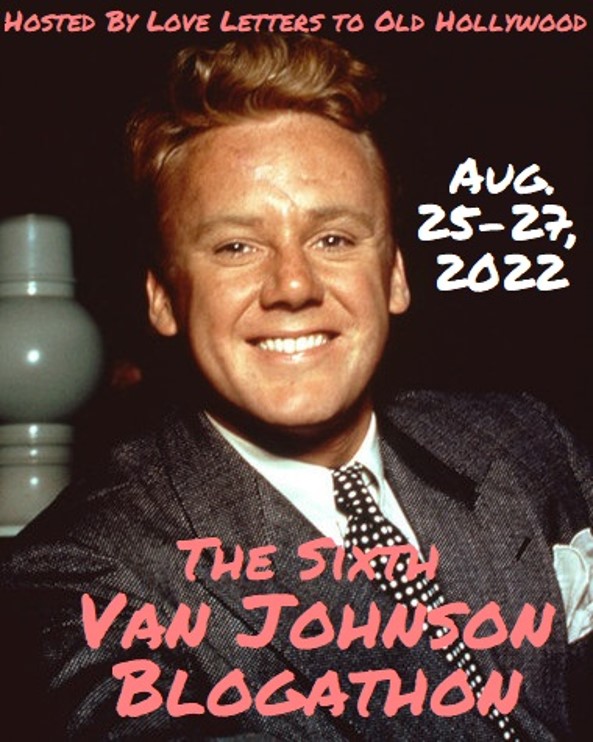
The Sixth Van Johnson Blogathon banner created by Michaela from Love Letters to Old Hollywood

What I didn’t like about the film:

The underutilization of Buster Keaton: I haven’t seen many of Buster Keaton’s films. But based on what I know about his filmography, he seems like he’s a comedic actor who utilizes physical comedy. In In The Good Old Summertime, however, Buster wasn’t given much material to work with. There were two scenes where Buster’s character, Hickey, trips and falls. But these felt like weak attempts at giving Buster something to do. If anything, it seems like Buster was cast in the film just for the sake of it.

A drawn-out plot: The story of In The Good Old Summertime revolves around Veronica’s and Andrew’s search for their respective pen-pals. While this plot can lend itself to a good story, it was drawn-out throughout the entire movie. It got to the point where, after Veronica’s secret admirer was revealed, she was being manipulated into believing the secret admirer is someone else. This was likely done to keep the plot going. But it just felt too cruel for my liking.

No strong subplots: So much time was given to the aforementioned main plot in In The Good Old Summertime. As a result, there were no strong subplots. Some aspects of the narrative could have lent themselves to good side stories. But because the script focused so much on the main plot, these ideas weren’t able to reach their full potential. For example, Otto is experiencing difficulty selling some harps. This felt like a running joke that didn’t lead anywhere. An interesting story idea would have been if a wealthy customer was looking for a specific harp. Otto would then spend the rest of the movie trying to locate this instrument.

String of musical notes image created by Freepik at freepik.com. <a href=’https://www.freepik.com/free-vector/pentagram-vector_710290.htm’>Designed by Freepik</a> <a href=”https://www.freepik.com/free-photos-vectors/background”>Backgroundvector created by Freepik</a>. Image found at freepik.com.

My overall impression:

This is the third time I have participated in the Van Johnson Blogathon. While I reviewed Van’s episodes of Murder, She Wrote the first time around, I wrote about Plymouth Adventure last year. Both Plymouth Adventure and In The Good Old Summertime have one thing in common: there were ok. With the 1949 film, I enjoyed the musical numbers. They were not only entertaining, but creative as well. But there were times where I felt more effort was placed in the musical numbers than the script. This movie adopted the “enemies to lovers” trope, which could work in a story. Unfortunately, this part of the script was drawn-out. While watching In The Good Old Summertime, I kept thinking back to Meet Me in St. Louis. The 1944 musical not only takes place in the early 1900s, but also stars Judy Garland. Personally, I think In The Good Old Summertime is a weaker version of Meet Me in St. Louis.

Overall score: 6.9 out of 10

Have you seen any of Van Johnson’s films? If so, which one is your favorite? Let me know in the comment section!

Have fun at the movies!

Sally Silverscreen
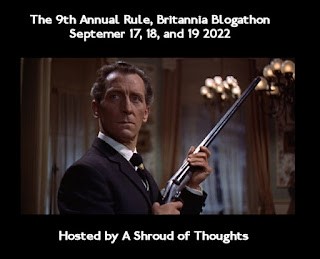
Take 3: Lake Effects Review

‘Family Vacation Films’, that’s the theme of August’s Genre Grandeur. When one mentions this subject, the idea of happy times or fun destinations usually come to mind. What also comes to mind is how a family chooses to go on these trips, mostly to have a good experience. But what if a family takes a vacation out of necessity? And what if it wasn’t possible for that family to take a literal trip? Perhaps a “staycation” would have to be in order. A figurative trip away from personal hardships, doubt, and stresses of everyday life. This is the case of Lake Effects, the movie I’ve selected for this month’s event. While Smith Mountain Lake, Virginia, could be a vacation spot, the protagonist and her family live in that location. But due to a family tragedy, they are forced to take a break from their daily lives. Whether a family vacation is close to home or travels abroad, what’s important are memories shared together.

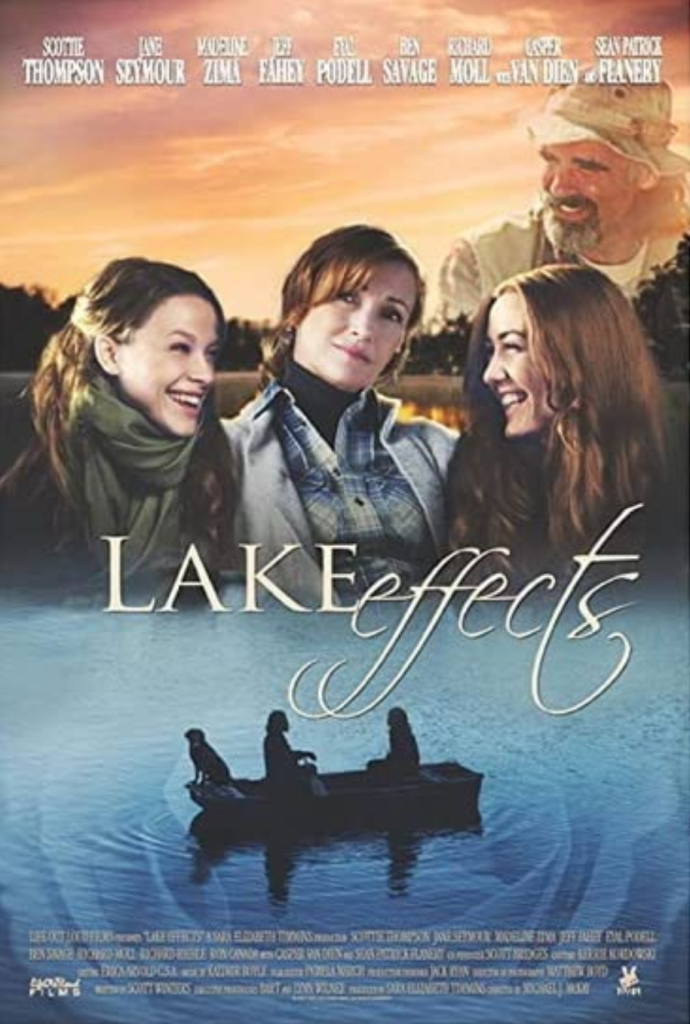
Lake Effects poster created by Life Out Loud Films (LOL), Hallmark Channel, and Anchor Bay Entertainment 

Things I liked about the film:

The acting: Around the time of this film’s release, 2012, Jane Seymour appeared in several Hallmark productions. Whether starring in Dear Prudence and Perfectly Prudence or in a supporting role in A Royal Christmas, these roles have been enjoyable to watch. In Lake Effects, Jane’s portrayal of Vivian was one of the strongest performances in this movie! A tradition Vivian and her husband, Ray, shared was Ray giving Vivian a pink rose every Friday. While cleaning out the closet, Vivian finds a box of old roses from Ray. Out of the blue, she starting sobbing. Because of Ray’s death, all Vivian’s bottled-up feelings bubbled over.

Another strong performance came from Scottie Thompson, who portrayed the protagonist, Sara. While sharing a drink with her sister, Lily, Sara reminisces over memories of her father. But when she remembers a secret her father kept from the family, Sara’s demeanor quickly changes. Her face falls in a serious expression, not sugarcoating anything she’s saying. Sara’s tone of voice is also serious, attempting to get Lily to see things from her perspective.

I was pleasantly surprised by Ben Savage’s performance in Lake Effects. His character, Carl, was very different from his portrayal of Corey Matthews from Boy Meets World and Girl Meets World. Carl was an enthusiastic man who was passionate about finding a mythical creature called the Smithy. But there are times when he can be awkward. This is the case when being interviewed by a television host. During the interview, Carl has a blank look on his face, unsure of what to do. Sitting tense on a couch, Carl is nervous about being filmed, especially since he’s never been interviewed before. What made this performance work was how believable it was.

The scenery: At the end of Lake Effects, on-screen text states the movie was “filmed entirely on location at Smith Mountain Lake, Virginia”. As someone who never knew this location existed until I watched this movie, I was impressed by the natural beauty it had to offer! The film opens with the sun rising over the lake. The peach-gray glow of the rising sun reflected off the water, creating a peaceful environment. In an overhead, cutaway shot, the lake was shown during the day. The clear, blue water was surrounded by green lawns and a mixture of green and orange trees. Topped off with a clear sky, this location appeared inviting!

Evening view from the shore image created by 0melapics at freepik.com. <a href=’https://www.freepik.com/free-vector/landscape-in-a-swamp-at-night_1042860.htm’>Designed by Freepik</a>. <a href=”https://www.freepik.com/free-photos-vectors/background”>Background vector created by 0melapics – Freepik.com</a>. Image found at freepik.com.

What I didn’t like about the film:

On-the-nose music: As I’ve stated before, music can highlight a scene’s intended mood and elevate emotions among the characters. Even if there are lyrics within the music, those songs should appropriately fit what’s happening on screen. But in the case of Lake Effects, the music was so on-the-nose, it was, honestly, cringey. One example happens when Sara and Lily are sharing drinks at a local restaurant. A live band performs a song containing the lyrics “there’s a storm that’s brewing outside”. A few minutes later, Sara shares Ray’s secret, causing animosity between her and Lily. Because this happened on more than one occasion, the on-the-nose music became annoying.

Inconsistent elements: There were some elements of the story that were inconsistent. Technology was one of them. When Sara is arriving at Smith Mountain Lake, Virginia, she is experiencing technical issues with her Bluetooth earpiece. She even says “is it still stringing tin cans around here”? A few scenes later, Sara accepts a call on her cell phone in her parents’ driveway. Based on that short call, it seems like her phone is working perfectly fine. As I already mentioned, Sara has a Bluetooth earpiece, as well as a cell phone. This phone looks like a smartphone from around the early 2010s. Meanwhile, Carl receives a call on a flip-phone from the previous decade. In one scene, a cassette boombox was featured at an event. With all that said, it seems like Hallmark forgot when Lake Effects was meant to take place.

Too many cliches: Back in 2020, I reviewed JL Family Ranch: The Wedding Gift. One of the flaws of that film was how many Hallmark movie cliches were featured in the story. Lake Effects has the exact same issue. The 2012 production was filled with cliches typically found in Hallmark Channel movies. A few of these cliches are the “woman from the city coming back to her small hometown” cliché, the “save the (insert establishment here)” cliché, the “business person is a jerk and/or out of touch” cliché, and the “small town festival conveniently taking place” cliché. What’s frustrating about Lake Effects is how it was originally shown on what is now known as Hallmark Movies & Mysteries. This second network has historically created films that were more dramatic and serious from Hallmark Channel’s lighter content. The inclusion of these cliches made the purpose of this story confusing. Was this film meant to be a Hallmark Channel movie, but Hallmark ended up premiering it on the second channel? Or was Lake Effects always meant to have a serious tone, border-lining Hallmark Hall of Fame?

So many story ideas: Like I just mentioned, there were too many cliches found in Lake Effects. These cliches lent themselves to several story ideas. Because of the inclusion of the “save the (insert establishment here)” cliché, part of the story revolved around Sara attempting to save her family’s home. Since so much emphasis was given to this part of the plot, other story ideas weren’t fully developed. In Smith Mountain Lake, there was a group called the “She-Doos”. This group consisted of women who take occasional trips on their jet-skis. With the “She-Doos”, there was an interesting story idea waiting to come to fruition. Unfortunately, it was competing with several other story ideas, trying to win over the audience’s attention.

Colorful travel suitcase image created by Pikisuperstar at freepik.com. <a href=’https://www.freepik.com/free-vector/beautiful-illustration-of-travel_2686674.htm’>Designed by Freepik</a>. <a href=”https://www.freepik.com/free-photos-vectors/watercolor”>Watercolor vector created by Pikisuperstar – Freepik.com</a>. Image found at freepik.com.

My overall impression:

Lake Effects is a movie Hallmark fans typically don’t talk about. It also seems to have been forgotten over the years. Now that I’ve seen the film, I think I have an idea why this is the case. The 2012 title is uninspiring. It’s filled with too many cliches, but doesn’t take the initiative to try anything new. Lake Effects attempts to adopt many different stories. However, the execution of these stories was weak. I will admit the scenery was aesthetically pleasing. But, as I’ve said before on 18 Cinema Lane, “the scenery can’t save you”. Like I’ve also said, a film’s script can make or break a production. If the script isn’t strong, there’s only so much a creative team can do to remedy the issue. While watching Lake Effects, there were a few story ideas trying to burst out of the murkiness of poor content. Sadly, these ideas couldn’t reach above the surface.

Overall score: 4.5 out of 10

Have you seen Lake Effects? Are there any lesser known Hallmark movies you’d like to see me review? Please tell me in the comment section!

Have fun at the movies!

Sally Silverscreen

Take 3: Easy to Wed Review

As the dawn of August arrives, so does the Esther Williams blogathon! Like last year, I have decided to review another movie from Esther’s filmography. But this time, I selected the 1946 title, Easy to Wed! Similar to the previous year, Easy to Wed was recommended to me. However, this film was suggested by a reader named Becky. That’s not the only reason why I’m reviewing the movie. I’m also participating in The Sixth Van Johnson Blogathon. Since Van happens to star in Easy to Wed, this is a good segue to that event. In the 1946 film, the characters’ trip to Mexico contained the “summer vibes” one would expect from the season. This is an interesting coincidence, as the movie I’m reviewing for the Van Johnson Blogathon is In The Good Old Summertime! My readers will have to wait a little while for that review. For now, though, it’s time to talk about Easy to Wed!

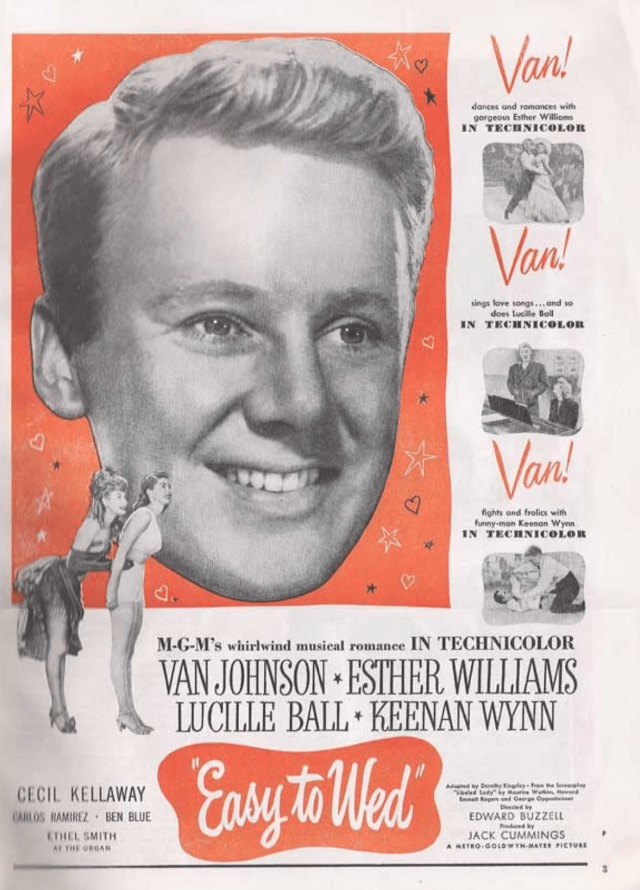
Easy to Wed poster created by Metro-Goldwyn-Mayer and Loew’s Inc.

Things I liked about the film:

The acting: In Easy to Wed, Esther portrayed Connie, a socialite who is wrongly accused of stealing another woman’s husband. Before she meets Van’s character, Bill, the employees at the New York newspaper that accused Connie label her as “spoiled” and “arrogant”. But when Bill meets Connie, he, and the audience, sees she is the complete opposite. In fact, Esther’s on-screen personality was very sweet! I enjoyed watching Connie and Bill’s interactions. The gentle sweetness of Connie’s personality and the charming yet cunning personality of Bill worked, as opposites attracted. Connie’s wittiness also helped this relationship’s favor. One of my favorite scenes is when Bill is riding on an inflatable raft in Connie’s pool. In an attempt to get him to join her in the pool, Connie tries to deflate the raft. Since she wants to catch Bill off guard, she deflates the raft with her foot during their conversation. Not only do Esther’s and Van’s acting abilities add to this on-screen relationship, so does their on-screen chemistry!

When it comes to Lucille Ball’s filmography, I’ve, so far, stuck with I Love Lucy. Therefore, I had an idea of what to expect in her portrayal of Gladys, the fiancé of Warren. Expectations aside, Lucille’s performance was enjoyable to watch! Not only did she work well with the other cast members, she used comedy to her advantage. During Bill’s stay in Mexico, he learns how to use a duck call whistle. While attempting to make a duck call, Gladys opens the door to Bill’s main sitting room and loudly yells “Happy New Year”. Personally, I found this scene hilarious, as the moment itself was unexpected. Speaking of Warren, let’s talk about Keenan Wynn’s performance. His portrayal reminded me of a more dramatic version of “Rooster” from the 1982 adaptation of Annie. What I mean by that is Warren was a cunning man who had a way with words. Another scene I liked was when Warren visited Bill about the newspaper’s libel suit. Because of how cunning both Warren and Bill are, they went toe-to-toe with each other, never missing a beat. What also helped was the quality of both Van’s and Keenan’s talents!

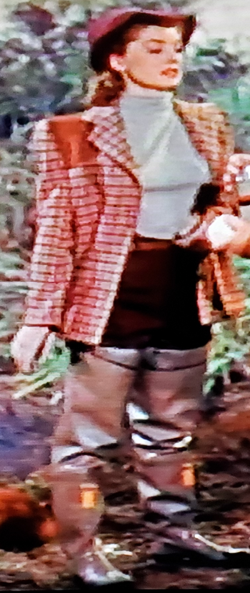
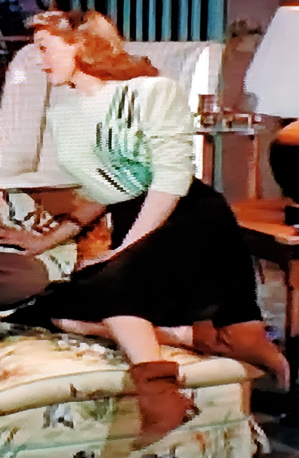
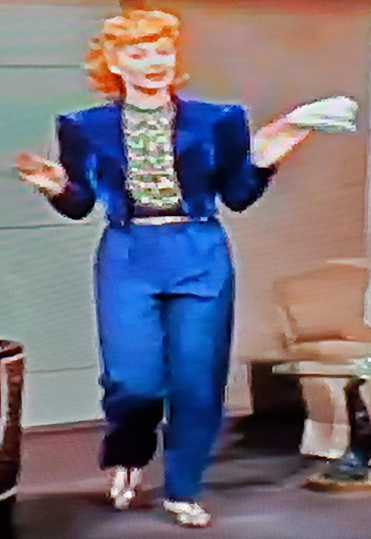
Lucille’s and Esther’s wardrobe: I loved Lucille’s and Esther’s wardrobe in Easy to Wed! However, there were three outfits that absolutely stole the show! Lucille wore the first outfit in the aforementioned duck call scene. A shiny gold top was covered by a velvety blue suit jacket. Deep blue slacks match the jacket, with the outfit complimented by shiny gold shoes. The blue and gold color palette paired beautifully with Lucille’s red hair and blue eyes! During a hunting trip, Connie wore fishing boots over a pair of black pants. A gray turtleneck shirt is under a red and orange plaid jacket. Finished with a maroon cap, the outfit is a classy ensemble that reminded me of the fall season. A few scenes later, Esther wore a light green sweater with cattails on them. A medium length black skirt compliments the cattails on the sweater, as well as Esther’s headband. A pair of brown boots helps pull off a look that would look great during fall or winter.

The “Boneca de Pixe” musical number: Toward the end of Easy to Wed, Connie and Bill perform in a musical number at a party. This number reflected their time together in Mexico. Both Esther and Van sung in Portuguese, dancing alongside each other and a large ensemble of dancers. The dancers’ costumes are so vibrant and colorful, boasting shades of red, yellow, and green. A small orchestra provided the sound, teaming up with Ethel Smith on the organ. Leading into this musical number, Ethel performed an organ solo that was fun to watch! This solo added the energy and excitement this piece needed. Overall, this number made me wish Easy to Wed was a musical.

The Third Esther Williams Blogathon banner created by by Michaela from Love Letters to Old Hollywood

What I didn’t like about the film:

A drawn-out conflict: Easy to Wed’s conflict revolves around Warren and Bill’s plan to prevent the libel suit from going to court. While it was interesting to see this plan unfold, it was drawn out for most of the story. In fact, this conflict was drawn out for so long, its resolution was delivered in a rapid-fire style within the last ten minutes of the movie. Had this script been a little bit tighter, the resolution’s delivery could have been more satisfying.

An inconsistent use of music: As I’ve said before, music can elevate the mood or tone of a given scene. It can also help make a scene more memorable. The film’s first half featured less music than its second half. Because of this, the memorability of some scenes was weaker. One example is when Bill is hosting a dinner party in his hotel’s sitting room. If music had been playing in the background, it would have heightened the anticipation of Connie’s arrival. The accompanying melody would highlight the growing feelings Bill and Connie have for one another as well. Instead, the scene felt mundane, slogging along to the next part in the story.

No subplots: Like I already mentioned, the conflict in Easy to Wed was drawn out for most of the movie. There are no subplots in this film, as the script focuses on the aforementioned conflict. Personally, I wish the story received a subplot. It would have given the audience additional intrigue to carry them through the film. The newspaper’s photographer could have formed a romantic relationship with the female organist. Maybe his camera goes missing and he has to find it. To me, the lack of subplots felt like a missed opportunity.

Since I loved the outfits described in this review, I decided to share screenshots of them, so my readers could see how great these outfits are! Screenshot taken by me, Sally Silverscreen.
Screenshot taken by me, Sally Silverscreen.

My overall impression:

In my opinion, Easy to Wed is a mixed bag. On the one hand, there are things about the movie I liked. The acting was strong, the “Boneca de Pixe” musical number was great, and I loved Lucille’s and Esther’s wardrobe. On the other hand, the script could have been stronger. Tighter writing might have helped the conflict reach a satisfying resolution. The conflict could have also been paired with at least one subplot. As I watched Easy to Wed, I was reminded of another movie with a drawn-out conflict: Anchors Aweigh. Because that movie’s musical numbers were more consistent, the audience had something to occupy their time until the conflict could be resolved. As I mentioned in this review, the music was inconsistent in Easy to Wed. Therefore, parts of the story felt longer than necessary. So far, I’ve seen three of Esther Williams’ films. Out of those titles, Easy to Wed is my least favorite. Hopefully, the next picture of Esther’s I watch will be better.

Overall score: 6.1 out of 10

Have you seen any of the Esther Williams’ films? Are you looking forward to my review of In The Good Old Summertime? Let me know in the comment section!

Have fun at the movies!

Sally Silverscreen

Take 3: Hallmark Hall of Fame’s O Pioneers! Review

When I participated in the Legends of Western Cinema Week last year, I reviewed the Hallmark Hall of Fame film, Durango. Unfortunately, the movie was weaker than I hoped. While thinking about what to write about for 2022’s event, I remembered how I had never seen O Pioneers! Therefore, I thought the Legends of Western Cinema Week was the perfect time to finally see the film! In the 1990s, Hallmark Hall of Fame had a history of adapting stories from the western genre. After the premiere of Sarah, Plain and Tall, the story’s sequels were released; Skylark in 1993 and Sarah, Plain and Tall: Winter’s End in 1999. Outside of this trilogy, Hallmark Hall of Fame created O Pioneers! (in 1992), Rose Hill (in 1997), and Durango (in 1999). While looking back on this history, one has to wonder if this was done in an effort to capitalize on Sarah, Plain and Tall’s success? Whatever the reason, these films provide more than one perspective of westerns. Now, with that introduction out of the way, let’s review O Pioneers!

O Pioneers! poster created by Craig Anderson Productions, Hallmark Hall of Fame Productions, Lorimar Television, and Prairie Films

Things I liked about the film:

The acting: I’ve seen a small handful of Heather Graham’s projects from her filmography. Based on what I’ve seen, she seems to receive one of two types of roles: a “damsel in distress” or the “ditzy” girl next door. But in O Pioneers!, Heather’s role was different. Portraying Alexandra Bergson in her younger years, she not only displayed a motherly persona, she also showcased a quieter strength. After trying to find more fertile farm land, Alexandra comes up with a plan to purchase the surrounding farm land near her family’s home. When she discusses this plan with her brothers, Alexandra explains it in a sure, yet calm way. Even when her brothers doubted her enthusiasm, she consistently maintained her composure, never letting uncertainty get in her way. Through her performance, Heather does a good job at foreshadowing who her character would become!

The majority of O Pioneers! revolves around Alexandra after her family’s farm is established and successful. Because this part of the story takes place fifteen years later, Alexandra is portrayed by Jessica Lange. Throughout the film, Alexandra experiences a variety of situations. This allowed Jessica to utilize different facial expressions, body languages, and emotions. As she reads a letter from her brother, Emil, a warm smile lights up Alexandra’s face. She appears to be sitting in a comfortable position, a friendly demeanor plain to see. Two scenes later, as Alexandra is sharing bad news with Emil, a sullen look is seen on her face. Her tone of voice is serious, as she’s trying to break this news as honestly, but gently as possible. The strength of Jessica’s acting abilities helped her performance appear believable!

One of the most important people in Alexandra’s life is Emil. Portrayed by Reed Diamond, Emil had a personality that was pleasant. Reed adapts to each situation in Emil’s life as well, similar to Jessica’s performance. In the aforementioned scene where Emil receives bad news, a concerned look is shown on his face. He also listens intently to what Alexandra had to say. Emil’s bottom lip quivers, as shock quickly morphs into sadness. The scene ends with Alexandra consoling her brother as he crumbles into tears.

Historical accuracy: O Pioneers! takes place between the late 1880s and early 1900s. Keeping this in mind, it’s important to note how the production looked and felt like the viewer was transported back to that time! In one scene, a man named Frank is walking around the interior of his house. On the wall in the kitchen, a telephone can be seen. The style of this phone is similar to those featured in programs like When Calls the Heart. Another timely piece of technology was the kerosene lamp hanging from the ceiling. This lamp was found in the dining room of Alexandra’s house. Three more kerosene lamps are located in Alexandra’s posh sitting room. Even though these props are smaller components of the movie, it shows how detail oriented this film’s creative team was!

Reed Diamond and Anne Heche’s on-screen chemistry: Anne Heche portrays Marie, a friend of Emil’s since childhood. Most of Emil and Marie’s interactions take place after they grew up, when they are able to live their own lives. During these encounters, I found their on-screen chemistry very sweet! Marie carried herself with a sense of whimsy, almost like she’s a “child at heart”. Meanwhile, Emil is more headstrong, choosing to ground himself in reality. Instead of clashing, these differences worked in Anne and Reed’s favor. The opposites attracting created a balance between their characters. During Marie and Emil’s interactions, they seemed to share an understanding with each other. Their shared history provided that layer of understanding, as well as Anne’s and Reed’s performance.

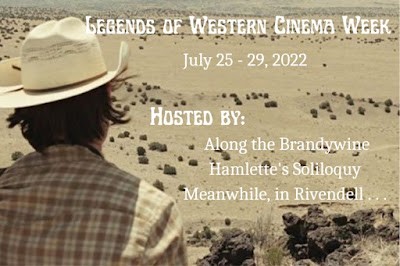
Legends of Western Cinema Week banner created by Heidi from Along the Brandywine, Olivia from Meanwhile, in Rivendell, and Hamlette from Hamlette’s Soliloquy.

What I didn’t like about the film:

An episodic story: The story of O Pioneers! revolves around Alexandra’s attempts at creating a successful farm with the land she inherited. But instead of those attempts providing an overarching conflict, the movie is filled with smaller conflicts that are resolved in a shorter amount of time. Ivar is a man Alexandra and her family have known for many years. He claims to have powers from God, which causes him to receive some negative attention. At one point, Ivar is threatened of being sent to an asylum. But in the very next scene, Alexandra simply talks to her brothers about what she’ll do if something happens. After that, the issue is unceremoniously resolved.

Too many characters: O Pioneers! is based on a book I haven’t read yet. Despite this, I could clearly see how large of a cast this production contained. Stories with a larger number of characters can be hit or miss. In the case of O Pioneers!, it didn’t work. Because of how many characters were in this story, some of them didn’t receive the amount of attention I feel they deserved. One of these characters was Amedee, a friend of Emil. A European baseball player, Amedee was such a charismatic character I wanted to learn more about. But with all the other characters trying to compete for attention, he only appeared in two scenes.

Some loose ends: Despite the movie having an hour and thirty-seven-minute run-time, there didn’t seem to be enough time to tie up some loose ends in the story. A good example is when one of the characters gets in trouble with the law. Alexandra visits this character in jail and claims she will help them. However, this issue is never resolved. That’s because this conflict takes place within the last eighteen minutes of the movie. It made me wonder why the creative team would include this part of the script when there was no intention to find a resolution to that conflict?

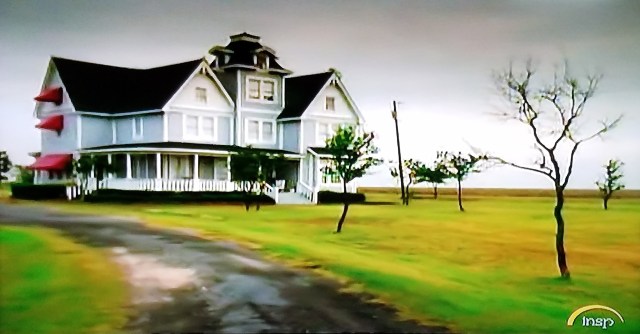
I know this is a screenshot of Wilma’s house from the Walker, Texas Ranger episode ‘The Lynching’. But Alexandra’s house in O Pioneers! reminded me of Wilma’s house, especially that wrap-around porch! Screenshot taken by me, Sally Silverscreen.

My overall impression:

There are some movies where the style is executed better than its substance. O Pioneers! is one of those films. As I said in my review, the project looked and felt like the story’s respective time period. The acting as a whole was good as well. But when it comes to the script, it could have been stronger. A major flaw is the movie’s run-time, which was an hour and thirty-seven minutes. This was not enough time to address the story points and characters within the narrative. Personally, I think O Pioneers! should have been adapted into a multi-part mini-series or a television show. With more time, the creative team would have been able to explore more stories and give some underrated characters more attention. Having an episodic narrative for a mini-series or television show would also make sense, as each story would be more condensed than a film’s plot. Like I mentioned in my review, I haven’t read this movie’s source material. Therefore, I don’t know if it’s better or worse than the 1992 Hallmark Hall of Fame production.

Overall score: 6 out of 10

Have you seen or read O Pioneers!? Is there a book-to-film adaptation you like? Please tell me in the comment section!

Have fun at the movies!

Sally Silverscreen

Watching ‘Singin in the Rain’ for the First Time

Throughout my years of movie viewing (and blogging), I have received the opportunity to check out films boasting a “classic” status. This status has, in my opinion, been earned on some occasions, as I gained an understanding for why a particular movie was granted its praise. However, there were certain titles I found myself unable to figure out why it is considered a “classic”. Out of all these “classic” films, I have been meaning to see one specific picture. That title is Singin in the Rain. The 1952 production needs no introduction. From the song, “Good Morning”, being featured in an orange juice commercial to a replica of Gene Kelly’s umbrella in Disney MGM/Hollywood Studios, Singin in the Rain has carved out a slice in America’s pop culture pie. But for someone, like me, who hasn’t seen this iconic film before, these references are going to seem like a company, individual, or creative team is, simply, taking advantage of the movie’s 50+ year popularity. That replica is just used for tourists to have their photo taken. That song was just an appropriate selection to promote a beverage primarily found at breakfast-time. With the arrival and fruition of the Singin in the Rain Blogathon, I finally have a wonderful excuse to watch Singin in the Rain. It also gives me an opportunity to gain more context of the film’s respective songs, images, and quotes.

Singin in the Rain poster created by
Metro-Goldwyn-Mayer and Loew’s Inc.

Creative Musical Numbers

Singin in the Rain is not just one of the most iconic movies of all time, it’s one of the most iconic musicals of all time! A musical with a “classic” status will bring something unique and creative to the table. The Wizard of Oz took on the power of Technicolor, in a time when that specific technology was more of a luxury. Xanadu showed the world roller skating can be magical. When it comes to Singin in the Rain, the creativity lies in the musical numbers themselves, presenting performances that hadn’t really been seen before 1952. Toward the beginning of the film, Gene and Donald perform a duet, “Fit as a Fiddle (And Ready for Love)”, at a vaudeville show. Throughout this musical number, Donald and Gene not only tap danced, but played the fiddle as well. For the 21st century viewer, dancing and playing an instrument at the same time doesn’t seem like a new concept, as Lindsey Stirling has capitalized on those talents. Within the realm of cinematic musicals, however, a routine like Gene and Donald’s isn’t often included.

Gene Kelly’s famous solo isn’t the first musical number featuring rain. Two decades prior, in Just Around the Corner, Shirley Temple performed “I Love to Walk in the Rain”, her film’s big musical number that represented the spirit of the movie. Looking back on “Singin in the Rain”, I, personally, feel Shirley’s number walked (no pun intended) so Gene’s solo could soar! The solo from the 1952 production takes place after Gene’s character, Don, takes Kathy home. Despite it raining outdoors, Don is head-over-heels in love with Kathy. Gene tap danced in his solo. But unlike “I Love to Walk in the Rain”, “Singin in the Rain” felt more immersive, as it wasn’t just a performative routine. Because the number takes place within the story’s context, it feels grounded in reality, a downtown street replacing a glamourized stage. Watching Gene jumping and splashing in puddles added uniqueness to the routine. Even though “Singin in the Rain” wasn’t the big musical number for its respective movie, it represents the film’s spirit, reminding the audience to see the good in a not-so-good situation.

String of musical notes image created by Freepik at freepik.com. <a href=’https://www.freepik.com/free-vector/pentagram-vector_710290.htm’>Designed by Freepik</a> <a href=”https://www.freepik.com/free-photos-vectors/background”>Background vector created by Freepik</a>. Image found at freepik.com. 

Strong Camaraderie

In most of my reviews, I talk about the acting. I will choose a few performances to discuss and write about what I liked about them. For this review, I want to talk about a different acting component. While the overall acting in Singin in the Rain was strong, what stood out to me more was the on-screen camaraderie between Gene Kelly, Debbie Reynolds, and Donald O’Connor! One of my favorite scenes is when Don, Kathy, and Cosmo are concocting a plan to save Don’s film. Each character’s personality shines through during this brainstorming session. Cosmo encourages Don to turn the film into a musical, as he spontaneously breaks out into song. Meanwhile, Kathy attempts to keep the group’s good spirits lifted, her kind demeanor certainly helping the situation. After hearing Cosmo’s idea, Don is open-minded about it, joyously realizing he can use his talents to his advantage. This scene, as well as the “Good Morning” musical number, is just one example of Gene, Debbie, and Donald’s on-screen camaraderie. Through their interactions, it felt like Don, Kathy, and Cosmo had been friends all along. This on-screen bond was so pleasant, I looked forward to each time these characters crossed paths!

Couple performing the waltz image created by Macrovector at freepik.com. <a href=”https://www.freepik.com/free-photos-vectors/background”>Background vector created by macrovector – http://www.freepik.com</a>. Image found at freepik.com.

Learning about Cinema’s Early Years

Singin in the Rain takes place in the 1920s, during the transitional period between silent films and “talkies” (movies with sound). Even though the 1952 film is a musical that takes time to focus on its numbers, it lifts the figurative curtain enough to educate the audience on how film-making was executed in that time period. Don’s respective studio, Monumental Pictures, adopted sound after Warner Bros. took a chance with their film, The Jazz Singer, a high risk that was met with high rewards. Because of that one creative decision, it forever changed the cinematic landscape. As emphasized in the musical number, “Moses Supposes”, actors had to not only memorize their lines, they also had to remember to annunciate those lines. Singin in the Rain also shows the audience how dialogue is incorporated into a movie. As someone who appreciates the film-making process, it was nice to see this part of movie-making shown in steps. This step-to-step process was a good introduction to some of the work that goes on behind the camera.

Image of vintage movie camera created by Macrovector at freepik.com. <a href=”https://www.freepik.com/free-photos-vectors/background”>Background vector created by macrovector – http://www.freepik.com</a>. Image found at freepik.com.

The Context of “Broadway Melody” in Don’s Film

While working to adapt his film, The Dancing Cavalier, into a musical, Don proposes the movie’s new opening scene. This scene is presented as the musical number “Broadway Melody”. As a musical number in Singin in the Rain, I liked this performance! It had colorful set and costume design, as well as strong choreography. But as an opening scene in The Dancing Cavalier, the musical number, in my opinion, doesn’t work. “Broadway Melody” is too long, my guess is ten minutes. The number itself kind of feels like an extension of Don’s past, as his journey to Hollywood came from simpler beginnings. Based on what the characters said about The Dancing Cavalier, Don’s proposed opening scene seems to have little connection to that film’s story. If Don’s movie were a real picture, some audience members might become bored with the film before the story began.

New York City skyline with letters image created by Freepik at freepik.com. <a href=’https://www.freepik.com/free-vector/new-york-skyline-typographic-silhouette_719554.htm’>Designed by Freepik</a>. <a href=”https://www.freepik.com/free-photos-vectors/background”>Background vector created by Freepik</a>. Image found at freepik.com.

No Subplot for Cosmo

As I mentioned earlier in this review, I liked the on-screen camaraderie of Gene, Debbie, and Donald. In fact, I liked Donald’s character, Cosmo! Not only was he hilarious and charming, but he was talented as well! The story of Singin in the Rain primarily revolved around the main plot; Monumental Pictures attempting to save their latest film. There is a subplot in the movie, but it mostly focuses on Lina, Don’s co-star. I would have loved to see Cosmo receive his own subplot. Since his contribution to the studio is musical, Cosmo’s part of the story would have pulled back that figurative curtain a little further to show the audience cinematic work behind the camera. I’ve said in previous reviews how important music is in film. Without it, there isn’t an opportunity for viewers to become emotionally affected by a given scene. Because Cosmo is a musician, that aspect of film-making could have been explored.

Masks of comedy and tragedy images created by freepik at freepik.com. <a href=”https://www.freepik.com/free-photos-vectors/background”>Background vector created by freepik – http://www.freepik.com</a>. Image found at freepik.com.

A Love Interest That Wasn’t Meant to be

In my point about Cosmo not receiving a subplot, I mentioned how Singin in the Rain’s subplot mostly focused on Don’s co-star, Lina. Personally, I think more of that time should have been given to Cosmo. I know Lina is meant to be the film’s antagonist. I also know her actions and choices are intended to fuel the movie’s conflict. But why would Lina receive so much time when she and Don were never meant to be? Before and after the premiere of The Royal Rascal, people speculate about Lina and Don’s relationship. Even Lina carries the assumption she and Don are romantically involved with one another. But Don makes it pretty clear he is not romantically interested in Lina. This part of the story reminded me of a Hallmark movie cliché I’ve talked about in the past: the “protagonist’s ex showing up unannounced” cliché.

The Singin in the Rain Blogathon banner created by Ari from The Classic Movie Muse

In Conclusion

Before the Singin in the Rain Blogathon, I had never seen the event’s namesake. That means if someone were to tell me one of the movie’s quotes or if I heard one of the film’s songs, I wouldn’t have thought much of it. Now that I have finally seen Singin in the Rain, I have gained an understanding and appreciation for it! When Kathy first meets Don, she claims, when referring to films, that “when you’ve seen one, you’ve seen them all”. However, I’d argue the 1952 musical built a solid identity that affords it a distinction from other musical movies. Even though Singin in the Rain was released within the Breen Code era, I was pleasantly surprised by the good messages and themes in the story. When I talked about the movie’s on-screen camaraderie, I shared one of my favorite scenes; where Kathy, Don, and Cosmo were figuring out how to save Don’s film. Through this interaction, the message of being one’s self is stressed. This message also allowed Don to use his talents in his favor. When I reviewed The Bridge on the River Kwai, I wondered what the criteria was for lists such as AFI’s 100 Greatest  American  Movies of All Time. One of my speculations was titles that brought something new to the cinematic table. It should be noted that Singin in the Rain is on AFI’s list. While I don’t know for certain how it got there, I think I have a pretty good idea why it’s there.

Have fun at the movies!

Sally Silverscreen
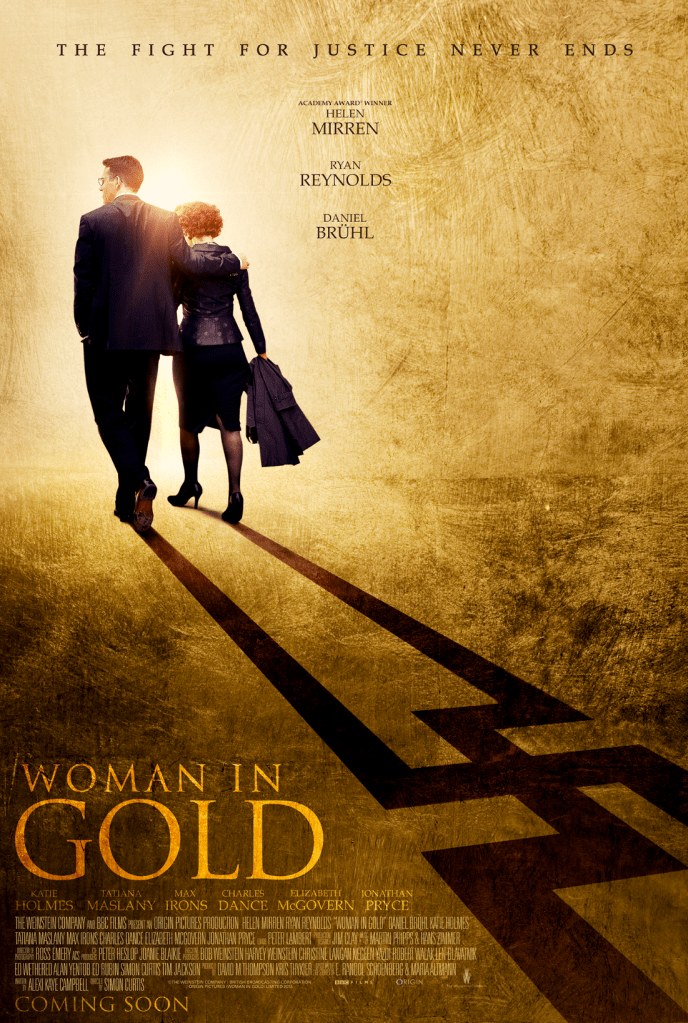
Take 3: Hallmark Hall of Fame’s Witness for the Prosecution (1982) Review

In my list of the Top 10 Movies I’d Love to Review, I mentioned finding Oliver 2: Let’s Twist Again on Diana Rigg’s IMDB filmography. During that trip on IMDB, I found another film I could review for the Other Than A Bond Girl Blogathon. As the title of this review says, that movie is the 1982 Hallmark Hall of Fame presentation, Witness for the Prosecution! I’ve gone on record to state how I’d like to watch as many Hallmark Hall of Fame titles as realistically possible. If I’m going to be honest, I didn’t think I would ever see Witness for the Prosecution. That’s because the film not only didn’t receive a DVD release, but it doesn’t seem to have received a VHS release either. So, imagine my shock when I found the full movie on Youtube! Mysteries are, arguably, the most popular genre on my blog. This is also not the first time I’ve reviewed an Agatha Christie adaptation. Back in April, I wrote about the 2022 film, Death on the Nile. In that review, I said the movie had a weaker execution than its 2017 predecessor, Murder on the Orient Express. How will Witness for the Prosecution fare against these aforementioned adaptations? All rise, as this review is now in session!

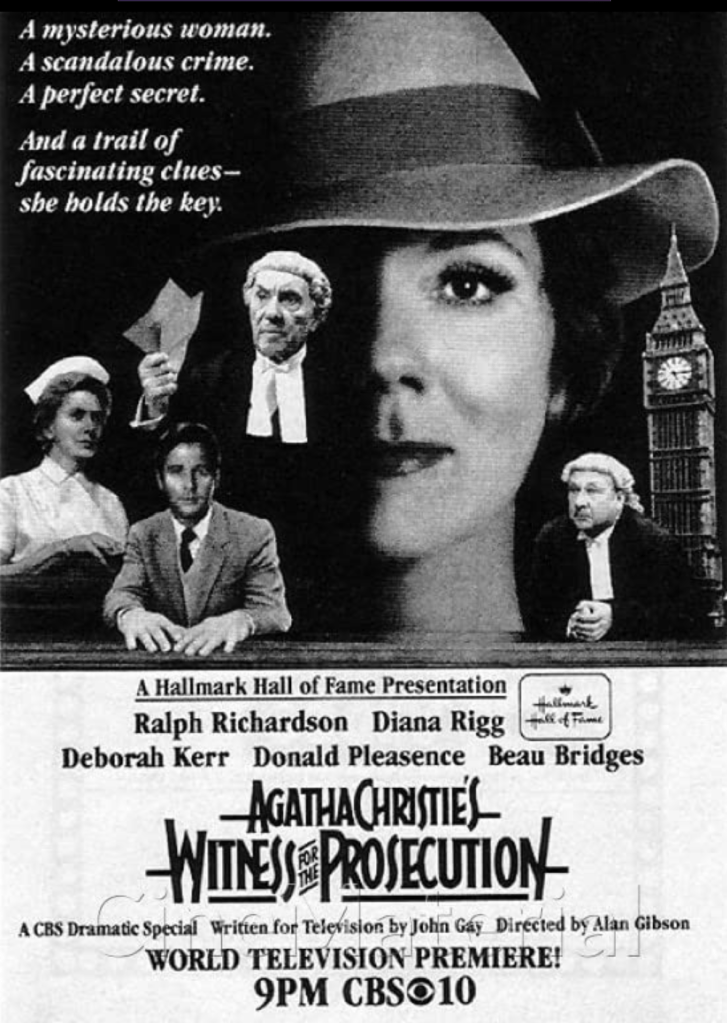
Hallmark Hall of Fame’s Witness for the Prosecution poster created by CBS Entertainment Production, Hallmark Hall of Fame Productions, Rosemont Productions, and United Artists Television

Things I liked about the film:

The acting: Diana Rigg is one of the eligible Bond Girls for the Other Than A Bond Girl Blogathon. Therefore, I will talk about her performance first. In Witness for the Prosecution, Diana portrayed Christine Vole, the wife of the accused party. Throughout the film, she carried her character as a woman from stories in the 1920s. What I mean by this is Christine held her own with confidence, never shaken by the probing of those involved in the legal side of the case. Even when she took the stand, Christine adopted a serious demeanor, as if putting on a “poker face” and refusing to show her deck of cards too early. These acting choices and the consistency of her performance allowed Diana to pull off a captivating and memorable portrayal!

Deborah Kerr is an actress I’ve talked about before on 18 Cinema Lane. While I have seen and reviewed five of her films, none of them were from the mystery genre. Despite this, Deborah held her own, acting wise, among the cast! She portrays Nurse Plimsoll in Witness for the Prosecution. While watching the 1982 production, her performance reminded me a bit of Donna Reed’s portrayal of Mary from It’s a Wonderful Life. Nurse Plimsoll cares about the health and well-being of the film’s protagonist, Sir Wilfred Robarts. Though Wilfred finds her overall nursing approach annoying, Nurse Plimsoll doesn’t give up on her mission. Even though she is stricter than other on-screen nurses, her heart is always in the right place. This can be seen through Deborah’s facial expressions, body language, and emotions.

Even though the cast as a whole was strong, there was one performance that stole the show. This came from Beau Bridges! Witness for the Prosecution shows Beau portraying an American named Leonard. Because his case is presented in a British/U.K. court system, he is a “fish out of water”. The situation itself provides an interesting dynamic for the cast, including Beau, to work with. It also gave Beau an opportunity to utilize a variety of emotions. During the case, one of the witnesses causes Leonard to have an emotional reaction. At the start of the witness’ questioning, Leonard presents a calm “resting face”. But as the questioning continues, he slowly becomes sadder, adopting a growing frown and his eyes filling with tears. This transformation was gradual, allowing Beau to adapt to the on-screen situation.

The set design: The majority of Witness for the Prosecution takes place within a British/U.K. court room. Despite the limited locations, there were some examples of set design that I liked! Inside the court room, the ceiling was domed, with clear glass exposing a view of the sky. Surrounding the dome are etched, white arches. With a green light shown on these arches, they gave the appearance of boasting an antique limestone material, which complimented the dark wood of the court room’s walls and furniture. In the lobby of the court room, painted murals are shown near the ceiling. The lobby’s walls appear to be covered in a two-tone marble material, with the floor revealing a black-and-white tile design. My favorite set in Witness for the Prosecution was Wilfred’s office! The room’s color scheme was brown, beige, and red. When this set was first introduced, a large, dark wood bookcase proudly stood. It was guarded by a dark wood table and two dark brown armchairs. While the walls were beige, the curtains on the window were red, giving the room a pop of color. The more time Wilfred spent in this space, the more the sophisticated, professional, and intelligent appearance of the office complimented his personality.

An in-depth look at the British/U.K. court system: As I mentioned in my point about the film’s set design, the majority of this story takes place in a British/U.K. court room. That part of the movie exposed the audience to the British/U.K. court system. Even though Witness for the Prosecution is not the “end all, be all” when it comes to this specific court system’s portrayal in entertainment media, it gives viewers a chance to compare and contrast it to other court systems in other productions. The layout of the court room itself provides one example. Toward the front of the court room, the witness stand is located at the judge’s right-hand side. This part of the court room is separate from the judge’s stand. Meanwhile, in court room productions taking place in the United States, the witness stand can either be located at the judge’s left or right-hand side. It is also connected to the judge’s stand.  

The Other Than A Bond Girl Blogathon banner created by Gabriela from Pale Writer and Gill from Realweegiemidget Reviews

What I didn’t like about the film:

The magical monocle: While working on the case, Wilfred wore a monocle when he was questioning the accused party and his wife. As he questioned them, a light shone through the monocle and directly landed on Leonard and Christine. But these were the only two times Wilfred used the magical monocle. The purpose of the monocle or Wilfred’s reason for using it was never explained. Was this monocle truly magical or was the monocle used as foreshadowing? I wish this part of Wilfred’s character was more consistent.

A dialogue heavy story: With any movie or tv show episode featuring a court case, there’s going to be a certain amount of dialogue within the story. But because Witness for the Prosecution mostly revolved around a court case, the 1982 production feels more dialogue heavy compared to Death on the Nile and Murder on the Orient Express. Before watching Witness for the Prosecution, I had expected more showing than telling when it came to the mystery. Instead of watching the characters making discoveries related to the mystery, I heard about it through the questioning in court. Because of this creative decision, I didn’t find the movie’s mystery as engaging as it could have been.

An inactive detective: In a story where a detective, amateur or professional, is the protagonist, the audience expects to see this character actively solve their respective film’s mystery. Sadly, the viewers won’t witness that in Witness for the Prosecution. Wilfred is a lawyer defending Leonard in his case. However, Wilfred places more emphasis in resolving the case than playing detective. Even though this movie’s mystery was solved, it felt like Wilfred was served the answer on a silver platter instead of discovering it himself. Similar to what I said about the dialogue-heavy story, I didn’t find the mystery engaging because of Wilfred’s inactive detective role.

Sketch of London image created by Archjoe at freepik.com. <a href=’https://www.freepik.com/free-vector/hand-drawn-houses-of-parliament_1133950.htm’>Designed by Archjoe</a>. <a href=”https://www.freepik.com/free-photos-vectors/background”>Background vector created by Archjoe – Freepik.com</a>. Image found at freepik.com.

My overall impression:

Hallmark Hall of Fame’s Witness for the Prosecution shares a similar plot with 1997’s Red Corner: an American man is accused of murder, with his case in a court system outside of the United States. But where Red Corner succeeded and Witness for the Prosecution didn’t is how Shen, Jack’s lawyer in Red Corner, not only played a role in the court case, but also went above and beyond in attempting to solve the mystery surrounding the case. This allowed Red Corner’s story to be intriguing and engaging for the audience. With the 1982 production, Wilfred spends more time on the court case than the mystery wrapped around it. This decreases the audience’s engagement. The dialogue heavy nature of Witness for the Prosecution’s story also affected the mystery’s intrigue. Hallmark Hall of Fame’s presentation is the third Agatha Christie adaptation I’ve seen, which I wasn’t overly thrilled with. I still want to, one day, read her literary work. But based on my reactions to the three adaptations I have watched so far, I’m starting to wonder if I’ll find an Agatha Christie story I like?

Overall score: 6.1-6.2 out of 10

Have you seen any of Agatha Christie’s adaptations? Do you have a favorite Agatha Christie story? Let me know in the comment section!

Have fun at the movies!

Sally Silverscreen

Take 3: The Princess and the Pirate Review + 435 Follower Thank You

Originally, I was going to review The Princess and the Pirate for The Metzinger Sisters’ MGM Blogathon. This is because my DVD copy of the film features the MGM logo on the cover and the film was released in 1944. However, The Metzinger Sisters informed me that the movie was not an MGM picture. Even Wikipedia claimed it was an RKO Radio Pictures production. Confused by this, I chose to review The Princess and the Pirate as my next Blog Follower Dedication Review instead. Bob Hope is a comedian I have heard of over the years. But, up until this point, I had never seen any of his films. Meanwhile, pirate themed movies are no stranger to 18 Cinema Lane. As of late June 2022, I have reviewed Captain Sabertooth and the Treasure of Lama Rama and China Seas. While I found China Seas to be just ok, I was disappointed by Captain Sabertooth and the Treasure of Lama Rama. What do I think of The Princess and the Pirate? Get ready to set sail as we start this review!

Here is a picture of my DVD copy of The Princess and the Pirate. Screenshot taken by me, Sally Silverscreen.

Things I liked about the film:

The acting: As I said in the introduction, Bob Hope is a comedian I have heard of before. But because I had never seen his movies, I didn’t know what to expect. While watching The Princess and the Pirate, I found Bob’s portrayal of Sylvester pleasant to watch! His expressions, emotions, and body language were fluid, allowing Bob to adapt to any on-screen situation. Bob’s impersonations were also a memorable component to his performance. Among the silliness and humor, Bob also showed a romantic side. In a scene where Sylvester and Margaret are sailing in a boat, he learns more about Margaret’s identity. During their conversation, Sylvester’s demeanor is softer, lowering his guard. This sweetness in Bob’s character was nice to see, as it showed how multi-layered Sylvester was!

Virginia Mayo portrayed Princess Margaret. As I watched this movie, her performance reminded me of Elizabeth Swann from the Pirates of the Caribbean trilogy. This is because she wasn’t afraid to stand her ground and help save the day. Margaret encouraging Sylvester to be brave during an on-deck battle is one example. What made Margaret different from Elizabeth is how, like Bob, Virginia showed a romantic side. Her performance of ‘Kiss Me in the Moonlight’ showcases this well. Even though the singing was performed by Louanne Hogan, Margaret’s facial expressions and body movements embodied the feminine songstress that appeared in musicals of the time of the movie’s release. Virginia’s portrayal prevented her character from becoming one dimensional!

One aspect of The Princess and the Pirate I liked was how the film made fun of status quos in the world of pirate films. The character of Featherhead is one example of this. Portrayed by Walter Brennan, this pirate is seen by his peers as being “dumb”. However, Featherhead’s interactions with Sylvester goes against that aforementioned claim. Walter’s performance was consistent and went toe-to-toe with Bob’s talents. While Featherhead is a more comedic character, he was more than being the film’s “comic relief”. Walter’s talents allowed his character to be memorable. Featherhead also helped progress the plot forward.

The humor: At the beginning of the movie, on-screen text explains who a pirate named The Hook is and what his mission will be. During this collection of text, Bob Hope breaks the fourth wall by explaining how he’s not portraying the character of The Hook. I found this part of the movie hilarious because of its unexpected nature! At one point in the story, Sylvester swims in a bathing pool with a character named La Roche. During this scene, Sylvester is hiding a secret he doesn’t want La Roche to discover. So, while in the pool, Sylvester quickly pops in and out of the water so La Roche doesn’t see him. Because of the scene’s consistency and because of the scene’s length, it was, in my opinion, funny!

The costume design: In the pirate films I’ve seen, costume design seems to have been a top priority. The combination of historical accuracy and design detail have created costumes that were exquisite and aesthetically pleasing. Throughout The Princess and the Pirate, I loved Virginia’s wardrobe! Each dress boasted a pastel palette, from a coral and teal gown Margaret wore on the Mary Ann to a pink and purple dress she was seen wearing toward the end of the film. This pastel palette also complimented Virginia’s hair color and skin tone. While at La Roche’s house, Sylvester wore a fancy suit. The suit jacket’s primary colors were white and fuchsia, a costume piece boasting a bright, fun palette. Embroidered flowers covered the jacket, which added beauty to the piece. Like the other pirate films I’ve watched, it looks like the costume design in The Princess and the Pirate was a top priority as well!

Princess tiara image created by Freepik at freepik.com. <a href=’https://www.freepik.com/free-vector/ornamental-princess-crowns_1109199.htm’>Designed by Freepik</a>. <a href=”https://www.freepik.com/free-photos-vectors/gold”>Gold vector created by Freepik</a>. Image found at freepik.com.

What I didn’t like about the film:

The island of Casarouge: In The Princess and the Pirate, Sylvester and Margaret go to the island of Casarouge, which is inhabited by pirates. Personally, this location didn’t sit well with me. Throughout Margaret and Sylvester’s time on Casarouge, the pirates’ actions and behavior are unsavory. Acts like murder, thief, and even drunkenness are on full display. I know not every fictional pirate is as friendly as Captain Jack Sparrow. I’m also aware The Princess and the Pirate was released during the Breen Code era, a time where the inhabitants’ choices would not be celebrated or glorified on film. In fact, while on Casarouge, Sylvester questions everything taking place around him. But The Princess and the Pirate has a, mostly, light-hearted tone, with some situations being played up for laughs. Because of these factors, the actions and behaviors of Casarouge should have been toned down.

The Hook’s buried treasure: When The Hook is first introduced in The Princess and the Pirate, he and his crew were seen burying a chest full of treasure. Throughout the film, a subplot involved searching for a treasure map. Without spoiling the movie, I will say the aforementioned treasure was never physically brought up again in the story. More emphasis was placed on finding the map than reclaiming the treasure chest. This made me wonder why the film’s creative team would include this in their story if they had no intention to follow through on it?

A confusing time period: While watching The Princess and the Pirate, the costume and set designs felt reminiscent of the Pirates of the Caribbean trilogy. This led me to believe the story was taking place in the 1700s. Yet Bob Hope’s dialog mentioned things that came to be after the presented time period. When crossing paths with The Hook, Sylvester claims the pirate’s hook would make a great beer can opener. However, I know beer cans did not exist until the 18th century had concluded. I’m not sure if these references were the result of Bob Hope’s comedy or the screenwriters wanting the dialog to be more reflective of the time of the movie’s release. No matter the reason, I found it confusing.

Paper Boats in the Sea image created by Freepik at freepik.com. <a href=’https://www.freepik.com/free-vector/background-of-paper-boats-with-hand-drawn-waves_1189898.htm’>Designed by Freepik</a>. <a href=”https://www.freepik.com/free-photos-vectors/background”>Background vector created by Freepik</a>. Image found at freepik.com.

My overall impression:

The Princess and the Pirate is a movie I’ve been meaning to review. Ever since I acquired my DVD copy of the film, I have been trying to find the perfect opportunity to write about it. Thanks to you, my followers, that time has come! Thank you for taking the time to read what I have to say and for paying 18 Cinema Lane a visit! Your interest in my blog means a lot to me. Now, on to my overall impression of The Princess and the Pirate. There are pirate stories that are stronger than this one. But, for it was, I enjoyed the 1944 movie! While I won’t give anything away, I want to mention there is a “bait and switch” ending. But because The Princess and the Pirate made fun of status quos in pirate films, this type of ending worked. What also worked was the acting and the humor. Since this was my first time watching any of Bob Hope’s films, I found this to be a good introduction to his filmography. In the future, I’d like to check out more of his movies.

Overall score: 7.6 out of 10

Have you seen any of Bob Hope’s movies? If so, which ones would you recommend? Let me know in the comment section below!

Have fun at the movies!

Sally Silverscreen

Take 3: Dr. Phibes Rises Again Review + 420, 425, and 430 Follower Thank You

While looking for a movie to review for my next Blog Follower Dedication Review, I realized it’s been a month since I wrote about a “spooky” title. It’s also been two months since I reviewed a sequel. Because of those factors, I choose to review the 1972 movie, Dr. Phibes Rises Again! Last year, I saw the predecessor, The Abominable Dr. Phibes, after one of my readers recommended it to me. In my opinion, the film was just fine, as I found the horror in the horror-comedy classification heavily emphasized. The fact The Abominable Dr. Phibes received a sequel was surprising to me. That’s because I had no idea the 1971 title received a second chapter until I recently stumbled across it. What other surprises are in store? Let’s take a trip through this review of Dr. Phibes Rises Again in order to find out!

Dr. Phibes Rises Again poster created by
American International Pictures and Anglo-EMI Film Distributors Ltd./MGM-EMI

Things I liked about the film:

A mystery-adventure: In my review of The Abominable Dr. Phibes, I stated how the story was more of a horror-mystery due to the limited incorporation of comedy. Like its predecessor, the sequel also features a mystery. But this time, an adventure story is included in the script, as the characters travel to Egypt. The change in scenery allowed something new to be brought to the overall story. It also added an exciting component, with the audience receiving an opportunity to witness new sights and join the ride with the characters. A new setting made the film’s twists and turns interesting, as Dr. Phibes came up with different ways to attempt to reach his goal. A distinct identity was given to Dr. Phibes Rises Again because of these creative decisions!

Toned down character demises: One of The Abominable Dr. Phibes’ flaws was how over-the-top demises of characters were, as they came across more gross than scary. These demises also overshadowed Vincent Price’s performance, which led to his talents being underutilized. While Dr. Phibes continued to go after anyone who stood in his way in Dr. Phibes Rises Again, the execution of his plan was toned down. Not only were there less demises, but there was also less on-screen gore compared to the first film. Vincent’s acting abilities received more emphasis because of this creative decision. That creative decision also allowed me, as a viewer, to focus on Vincent’s body language, facial expressions, and vocal inflections. Vincent’s role in Dr. Phibes Rises Again felt more like lead actor material compared to The Abominable Dr. Phibes.

Robert Quarry’s portrayal of Darius Biederbeck: When I talked about Queen of the Damned in my article, Twentieth Century vs. Queen of the Damned at the Against the Crowd Blogathon, I said the movie presented Lestat as a more likable protagonist. Stuart Townsend’s portrayal of Lestat helps make this statement accurate, as his consistent suave, confidence added to Lestat’s likability. Robert Quarry’s portrayal of Darius Biederbeck in Dr. Phibes Rises Again reminded me of Stuart Townsend’s portrayal of Lestat. This is because Darius’ suave, confidence was similar to Lestat’s. Darius was a goal-driven man, believing in himself and his mission. Even when those around him had their doubts, his confidence was unwavering, presented consistently by Robert. What also helped was how strong Robert’s acting abilities were, giving him an opportunity to present a stand-out performance. These aspects of Robert’s portrayal of Darius made it enjoyable for me to watch!

Egyptian hieroglyphic image created by wirestock at freepik.com. Luxor photo created by wirestock – www.freepik.com

What I didn’t like about the film:

A somewhat rehashed story: Dr. Phibes’ story in The Abominable Dr. Phibes revolved around trying to find a solution for his deceased wife, Victoria. This quest for a solution drove Dr. Phibes to go after those he felt wronged him and his wife. In Dr. Phibes Rises Again, Dr. Phibe travels to Egypt. But his mission is similar to the first film: find a solution for Victoria. I won’t claim this story is a carbon copy of The Abominable Dr. Phibes. However, I wish it had less similarities to the predecessor.

Confusing parts of the story: A confusing part of Dr. Phibes Rises Again is the return of Vulnavia. Dr. Phibes’ assistant, Vulnavia, was one of the key characters in The Abominable Dr. Phibes. Without spoiling the first movie, I will say something happens that prevents Vulnavia from appearing in the sequel. Yet, she does appear in Dr. Phibes Rises Again, with no clear explanation provided. This is just one example of confusing parts of the story that should have received more context.

An unresolved mystery: While in Egypt, Dr. Phibes discovers a sarcophagus. When he opens the sarcophagus, it appears a mummy had been removed. Dr. Phibes even questions what happened to the aforementioned mummy. But after this scene took place, the mystery is never resolved. In fact, it was never brought up after Dr. Phibes’ initial discovery. This made me wonder why the film’s creative team would include that mystery in their script if they had no intentions to solve it on screen?

Scary movie screening image created by Freepik at freepik.com. <a href=’https://www.freepik.com/free-photo/small-skeleton-with-popcorn-and-tv_1323292.htm’>Designed by Freepik</a>. <a href=”https://www.freepik.com/free-photos-vectors/background”>Background image created by Freepik</a>. Image found at freepik.com.

My overall impression:

Before I share my overall impression of Dr. Phibes Rises Again, I’d like to thank all my followers! I appreciate your support of 18 Cinema Lane! Now, on to my thoughts on Dr. Phibes Rises Again. On the one hand, the sequel tries to go in a different direction from the first movie. It even fixes some of the predecessor’s flaws. On the other hand, though, Dr. Phibes’ story was similar to his story in The Abominable Dr. Phibes. It also doesn’t help how parts of the story were confusing and a mystery was unresolved. Therefore, I will say this: as a movie, Dr. Phibes Rises Again is fine. As a sequel, it is slightly better than the first film.

Overall score: 7.2 out of 10

Have you seen The Abominable Dr. Phibes or its sequel? Are there any sequels you think are better than their predecessor? Please tell me in the comment section!

Have fun at the movies!

Sally Silverscreen
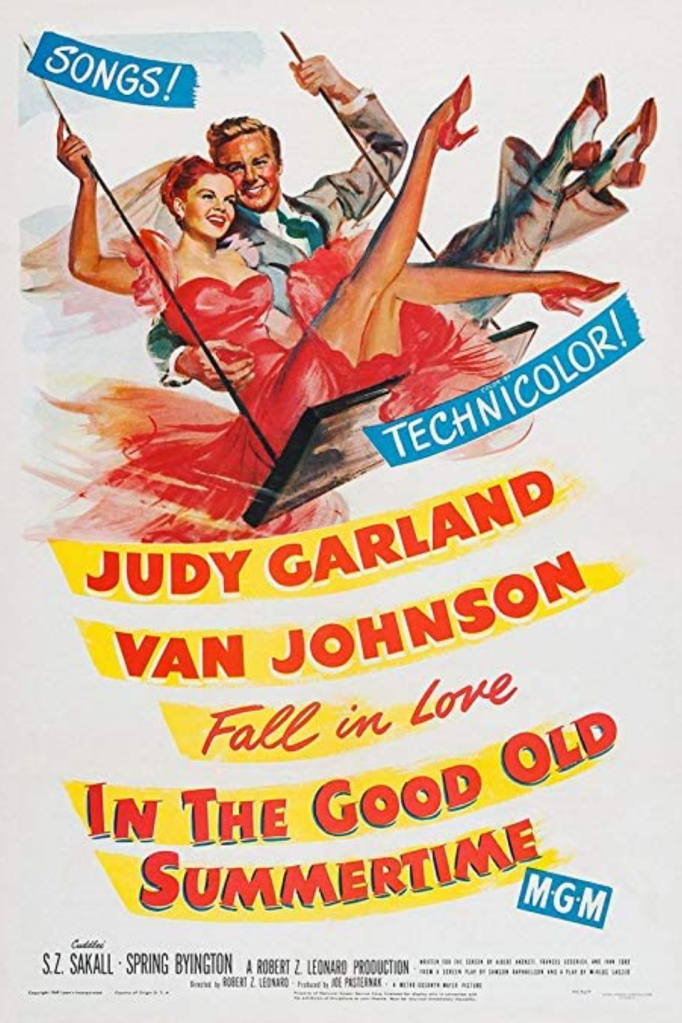
Take 3: Point of Origin Review

When the subject of “disaster films” is brought up, one will usually think of films revolving around over-exaggerated, fictionalized disasters. Whether it’s Sharknado or The Day After Tomorrow, these types of titles have become the faces of the “disaster film” category. But what if a movie depicts a real-life disaster that could be experienced by anyone? This is the case of my Disaster Blog-a-Thon entry, Point of Origin. Last month, I searched on Wikipedia for a title to review for May’s Genre Grandeur. During that search, I stumbled across the aforementioned 2002 HBO production. After reading the film was a “fact-based drama about an arson investigator searching for the perpetrator of a string of deadly fires in 1980s California”, I knew it was the perfect choice for J-Dub and Pale Writer’s event! Before I start this review, I would like to point out how this marks two firsts for 18 Cinema Lane. Not only is this my first time participating in the Disaster Blog-a-Thon, this is also the first HBO film reviewed on my blog!

Point of Origin poster created by HBO Films and New Redemption Pictures

Things I liked about the film:

The mystery: For the most part, the mystery in Point of Origin allowed the audience to experience it alongside the characters. What also helps is how the mystery started right at the beginning of the film. This immediately hooked the audience into the story, while also giving them a shared journey with the key players on screen. There was room for viewers to speculate what would happen in the story. That gave them the opportunity to interact with the film’s mystery. Three separate components played a role in the overarching narrative. While I won’t give anything away, it was interesting to see these components come together.

The special effects: When John was investigating a crime scene, he would attempt to figure out how the fire started. Toward the beginning of the film, this thought process was visualized through special effects. As John is recounting the information, the actual fire is played out in reverse on screen. This is very different from other mystery movies, as flashbacks might be utilized to speculate the cause of a crime. When it came to the fires themselves, it appeared as if they actually took place in a given scene. It may have been possible for the movie’s creative team to insert footage of fires through editing or CGI, as Point of Origin was released in 2002. However, practical effects were an interesting choice. This creative decision reminded me of productions like The Crow.

Showcasing the dangers of fire: While investigating a local fire, John and his co-worker, Keith, examine a young boy who died on the crime scene. Despite only the victim’s face being shown, it is blackened due to smoke and flame exposure. Later in the film, John visits a surviving burn victim in the hospital. The victim’s face and part of his hand are covered in burns. He even claims that it hurts to open his eyes. Due to the nature of Point of Origin, the story is heavier in tone. However, the incorporation of the dangers of fire never felt like they were there for “shock value” or as a tactic to scare the audience. If anything, it was shown just enough to get the point across.

The Second Disaster Blog-A-Thon banner created by J-Dub from Dubsism and Pale Writer from Pale Writer

What I didn’t like about the film:

Bai Ling’s limited presence: Bai Ling was cast as John’s wife, Wanda Orr, in the 2002 HBO film. Her involvement in Point of Origin is one of the reasons why I sought out this movie, as she is the top billed actress. When I watched the film, however, I discovered Bai appeared in only a handful of scenes. Compared to some of Bai’s other projects, her talents were under-utilized in Point of Origin. It also seems like the main supporting actress, Illeana Douglas, received more screen-time than Bai. Bai did a good job with the acting material she was given. But this situation is very reminiscent of Katharine Hepburn’s involvement in 1994’s One Christmas, where Katharine appeared in about five scenes despite being that film’s top billed actor.

A confusing time period: As I mentioned in the introduction, Point of Origin takes place in the 1980s. Elements from that decade were incorporated into the film, such as vehicles and a typewriter used by John at various moments in the story. Meanwhile, Bai’s wardrobe looked like it came straight from the early 2000s. There was also a scene where a store patron tells another patron not to smoke in the store. This attitude was more prevalent in the 2000s, as smoking in public places was more accepted in the 1980s. The inconsistency with the film’s historical accuracy was so confusing, it was, on a few occasions, distracting.

An unidentified red-haired man: Throughout the movie, a red-haired man made multiple appearances. I won’t spoil the movie for anyone who hasn’t seen it. But I will say when everything was said and done, I don’t feel like I received a satisfying explanation of who that character is. Yes, I can assume the red-haired man’s identity. However, when it comes to that character, the movie was building up to something without providing a pay-off.

Magnifying glass and fingerprint image created by Alvaro_Cabrera at freepik.com. <a href=’https://www.freepik.com/free-vector/loupe-over-a-fingerprint_853908.htm’>Designed by alvaro_cabrera</a>. <a href=”https://www.freepik.com/free-photos-vectors/glass”>Glass vector created by Alvaro_cabrera – Freepik.com</a>. Image found at freepik.com.

My overall impression:

For the Disaster Blog-a-Thon, I chose to talk about a film that revolved around a real-life disaster. This is because, in my opinion, these types of titles aren’t talked about as much within the realm of “disaster films”. When it comes to Point of Origin specifically, it was a fine, competently made, intriguing movie. But the 2002 HBO project made me feel similarly to Red Corner. This is ironic, as Bai Ling was cast as the lead actress in both films. What I mean by my aforementioned statement is I held higher expectations for each film, only to be somewhat let down by them. As I’ve said before on 18 Cinema Lane, the historical accuracy works when the creative team places emphasis on the details. In Point of Origin, however, it seems like the film’s creative team forgot, at times, their project took place in the 1980s. This is because some aspects of the film reflected the time of the film’s release; the early 2000s. I haven’t seen a lot of HBO films, so I can’t make any comparisons with Point of Origin. But I will say, based on other made-for-TV mystery productions, this one felt closer to the middle of the road.

Overall score: 7.2 out of 10

Have you seen Point of Origin? Are there any HBO films you’d like to see reviewed on 18 Cinema Lane? Please let me know in the comment section!

Have fun at the movies!

Sally Silverscreen