Ten Movie Trends I Don’t Understand

Days before Christmas, I reviewed I Heard the Bells for my 500 Blog Follower Dedication Review. But this is not the only honor the movie achieved. I Heard the Bells became my 400th published movie review! To commemorate this milestone, I decided to write my sixth list article of 2024. Trends, whether in fashion or when it comes to the most popular toy of the Christmas/holiday season, exist for a reason. This statement also applies to the world of cinema. Sometimes, however, there are film related trends that leave me confused, wondering why film-makers continuously use them in their projects. So, for this list, I will be discussing ten movie trends I don’t understand! The intent of this list is to gain a better understanding for why the listed trends either existed or still exist, as I am genuinely curious about their purpose.
Image of 2010 and 2020 on chart created by Macrovector at freepik.com. Infographic vector created by macrovector – www.freepik.com

1. Food Fights

From about the late ‘80s to the mid-2000s, children’s/family media, especially movies, were fond of food fights. From 1996’s Matilda (where the children at Crunchem Hall Elementary School hurl their lunches at Miss Trunchbull) to the Disney Channel film, Eddie’s Million Dollar Cook-Off (where I remember two food fights taking place), film-makers saw food fights as a way to add excitement and hilarity to their film. But long after the janitor has cleaned up the mess, what sinks in is the realization that these film-makers likely spent hundreds of dollars on large quantities of food only to waste it. This realization not only makes me wonder why food fights were once a staple of children’s/family media, I also question how often food fights happen in real life.

2. Keeping Secrets

Around the time the aforementioned food fight trend was common, another popular movie trend was younger characters being encouraged to keep secrets. When I reviewed 1985’s Return to Oz, I brought up Princess Ozma telling Dorothy that she can go back to Oz whenever she wants, as long as she keeps it a secret. By bringing up that part of the film, I addressed how Princess Ozma’s statement could be misinterpreted as damaging messages such as holding back on creativity helping one become “normal” and bottling up ideas and feelings being accepted. As I mentioned in my review of The Best Christmas Pageant Ever, bullying is not addressed in the script, including in Alice’s part of the story. One reason why is how Imogene forces Alice to keep the bullying a secret. If you’re going to create a story for a younger audience, you need to be mindful when it comes to addressing serious, real-world issues because of how impressionable a younger audience can be. With that said, I kind of find it concerning how common the trend of younger characters keeping secrets was in children’s/family media.

3. New York City as a Selling Point

I brought up this trend back in 2021, when I reviewed Sherlock Holmes in New York. As I shared my overall impression of the 1976 film, I talked about how movie studios used their project’s New York setting as a selling point. Clear examples show New York City or New York City locations included in a film’s title, like A Troll in Central Park, The Muppets Take Manhattan, and Home Alone 2: Lost in New York. I don’t understand this need to single out a story’s New York location. Personally, I think the movie should show instead of tell their story is set in New York. What I also don’t understand is why the trend of using New York as a selling point occurred between about the mid- ‘70s to the mid-2000s.

4. Villains Receiving the Spotlight

2024 started with the release of Madame Web (a Spider-verse villain movie without the presence of Spider-Man) and ended with the premiere of Kraven the Hunter (a Spider-verse villain movie without the presence of Spider-Man). I bring up these movies to highlight a trend I first noticed in the 2010s that carried over to the 2020s. This trend is villains receiving the spotlight; whether this means villains are given their own movie, villains are presented as more “sympathetic”, or villains make arguments with seemingly valid points. When a movie studio adopts this trend, it gives their audience mixed messages. Within Spider-Man’s comic books, Kraven is known as a villain. The tagline of Kraven the Hunter is “Villains aren’t born. They’re made”. But based on what I’ve heard about the film, Kraven is presented as more of an anti-hero. Not only does giving villains the spotlight confuse the audience, it also makes villainous characters less straight-forward.

5. “Thrown Together” Movie Posters

A “thrown together” movie poster is the contents of a movie (like cast photos, story locations, and even a scene from the film) thrown together on that movie’s poster. The collage I just described appears overwhelming and leaves the audience with little surprises. I first became aware of this trend when Disney/Marvel used this style for their Avengers: Age of Ultron poster. After that movie came to theaters in 2015, the “thrown together” movie poster trend became the go-to style of cinematic advertising. It even got to the point where Hallmark adopted this trend, as the posters for Christmas Everlasting and Love Takes Flight are notable examples. Based on what I’ve seen, it seems like the “thrown together” movie poster trend is fading in the 2020s, as studios and networks have chosen more artistic styles for their movie posters. But I still wonder why the “thrown together” movie poster trend was ever popular.

New York City skyline with letters image created by Freepik at freepik.com. <a href=’https://www.freepik.com/free-vector/new-york-skyline-typographic-silhouette_719554.htm’>Designed by Freepik</a>. <a href=”https://www.freepik.com/free-photos-vectors/background”>Background vector created by Freepik</a>. Image found at freepik.com.

6. Men Drinking Black Coffee

In Great American Family’s A Little Women’s Christmas, Fritz orders a black coffee at a café in Alcott Grove. At that same café, Jo orders a sugary, seasonal coffee drink. This scene made me realize how often I’ve seen men ordering and/or drinking black coffee in movies. Not only do they order/drink black coffee, they usually get criticized for doing it. Similar to the previously mentioned food fight trend, I wonder how the men drinking black coffee trend reflects real life.

7. Cabins & Bed and Breakfasts

These trends are specific to Lifetime and Hallmark movies. In the world of Hallmark films, it seems common for characters to either own a Bed and Breakfast or know someone who knows a Bed and Breakfast. These Bed and Breakfasts are usually found in small towns. Meanwhile, on Lifetime, it seems like many characters either own a cabin or know someone who owns a cabin. The cabins themselves are typically treated as a vacation destination. I know both networks share the same flaw; telling the same types of stories and reusing the same ideas. This makes me wonder if that flaw is the reason for the abundance of Bed and Breakfasts on Hallmark and cabins on Lifetime.

8. Rival Girl Scouting Troop

This trend isn’t as common as other trends on my list. But I’ve seen it happen enough times to point it out. Troop Beverly Hills, The Cookie Mobster, and Smart Cookies share something in common; the “underdog” girl scouting troop must face a “rival” girl scouting troop. The rival girl scouting troop is always presented as bratty, wealthy, and popular. Their only purpose in the aforementioned movies is to win cookie season. The rival girl scouting troop trend is, in my opinion, an unnecessary conflict. The main and only conflict should be the protagonist girl scouting troop trying to achieve a goal within their own troop (such as having a successful cookie season). The rival girl scouting troop trend is yet another movie trend that makes me wonder how often it happens in real life.

9. The Sound of a Baby Crying in an Apartment Building’s Hallway

When one of a movie’s scenes takes place in an apartment building’s hallway, the sound of a baby crying can be heard. This trend has been present in so many movies, I wonder why that particular sound has been the go-to sound for film-makers. All walks of life can live inside an apartment building. This fact provides film-makers with a variety of sounds; such as dogs barking, music, or noise from a television. So, it confuses me when film-makers continuously use the same sound over and over again.

10. Calling out “Hello” in an Empty Room

Out of all the movie trends on my list, the calling out “hello” in an empty room trend is the most common one. From theatrical pictures to made-for-TV films, a character will call out “hello” when they enter an empty room. Predictably, no one calls “hello” back. But the character who called out “hello” will be taken by surprise by another character. The calling out “hello” in an empty room trend can usually be found in mystery, action, or thriller movies. When film-makers select this trend, they make suspenseful moments more predictable. It also makes characters who call out “hello” look absent-minded.

Coffee cup drawing image created by Valeria_aksakova at freepik.com. <a href=”https://www.freepik.com/free-photos-vectors/background”>Background image created by Valeria_aksakova – Freepik.com</a>. <a href=’https://www.freepik.com/free-photo/painted-cup-of-coffee-with-natural-coffee-beans-on-a-chalkboard_1013935.htm’>Designed by Freepik</a>. Image found at freepik.com.

Have fun at the movies!

Sally Silverscreen

‘Phantom of the Megaplex’ at 20: A Reflection on the Movie-Going Experience

Anyone who knows me would know that one of my favorite movies is the Disney Channel film, Phantom of the Megaplex. In fact, this movie has had a great influence on my life, as it showed me that the world of film and the movie-going experience could be fun. Because its milestone 20th birthday was on November 10th, I decided to use my entry for my blogathon, A Blogathon to be Thankful For, to celebrate this special occasion. A lot has changed since 2000, especially the movie-going experience. With that said, this editorial will highlight how different a trip to the theater is now compared to its depiction in Phantom of the Megaplex. The actual birthday itself looked very different than expected, due to the months-long Coronavirus pandemic. For the sake of this editorial, I will be discussing today’s theater-going experience as if 2020 were a typical year. Also, all of the photos are screenshots I took, unless stated otherwise.

Phantom of the Megaplex poster created by the Walt Disney Company and Disney Channel. © Disney•Pixar. All rights reserved. Disney XD© Disney Enterprises, Inc.

Purchasing a Ticket

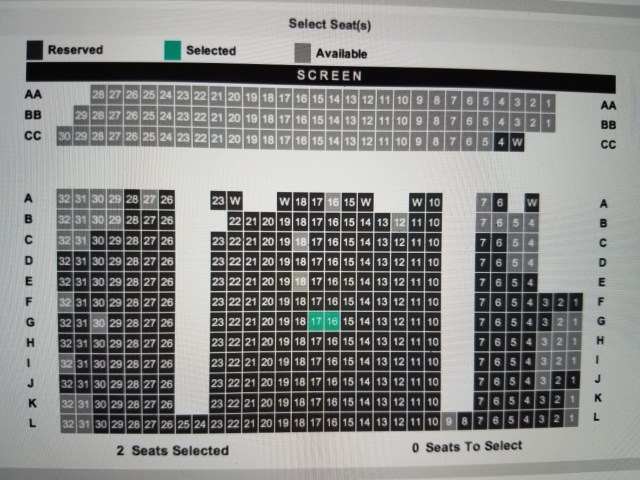
In Phantom of the Megaplex, Karen, the younger sister of the film’s protagonist, Pete, plans on arriving at the theater at 7:30 in order to catch a 7:50 showing of a movie called ‘University of Death’. When she and her younger brother, Brian, get to the theater, they are stuck waiting in a long line. This is the result of Movie Mason, a patron of the theater, spending more time persuading guests to see better films than taking their tickets. Fortunately, Karen isn’t late to her film. But, when she meets her friend outside the auditorium’s door, Karen and her friend briefly discuss the idea of their other friend saving seats for them. The example I just described shows how movie-goers in 2000 used to arrive much earlier than their movie’s run-time to not only purchase a ticket, but to also claim their seat of choice. In addition, movie-goers arrived early to the theater to avoid any unexpected hiccups like the one I mentioned. Twenty years later, it’s still encouraged to show up early to the theater so you’re not late to your film. However, buying tickets and choosing seats are not an issue like they were before. Thanks to the internet, movie-goers can purchase their tickets on their local theater’s website or from a third-party site like Fandango or Atom Tickets. Movie-goers are given an opportunity to reserve their seats as well. Had the story of Phantom of the Megaplex taken place now, all Karen and Brian would have to do is show an employee their pre-paid, printed out ticket and avoid a line like the one Movie Mason created.

The line on the left gives viewers an idea of how long Karen and Brian’s line was. They could have been walking up the stairs on the right with their pre-paid, printed out ticket if this movie was released in 2020.
When movie-goers purchase their tickets online, they will see an image like this screenshot when choosing their seats. Image found at https://giftofocpd.wordpress.com/2012/07/10/theatre-seat-selection/.

Auditorium Chairs

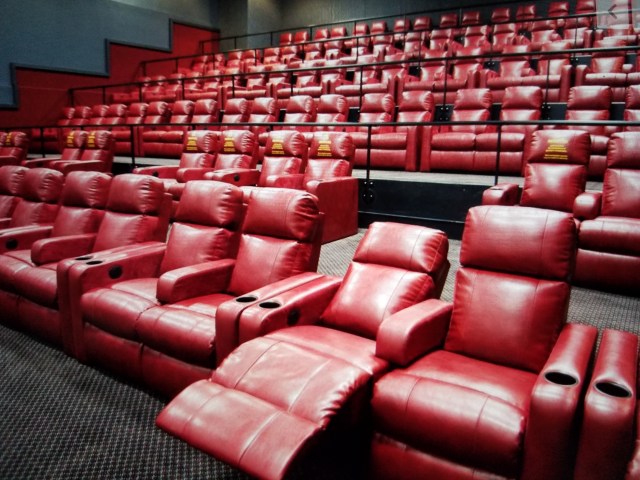
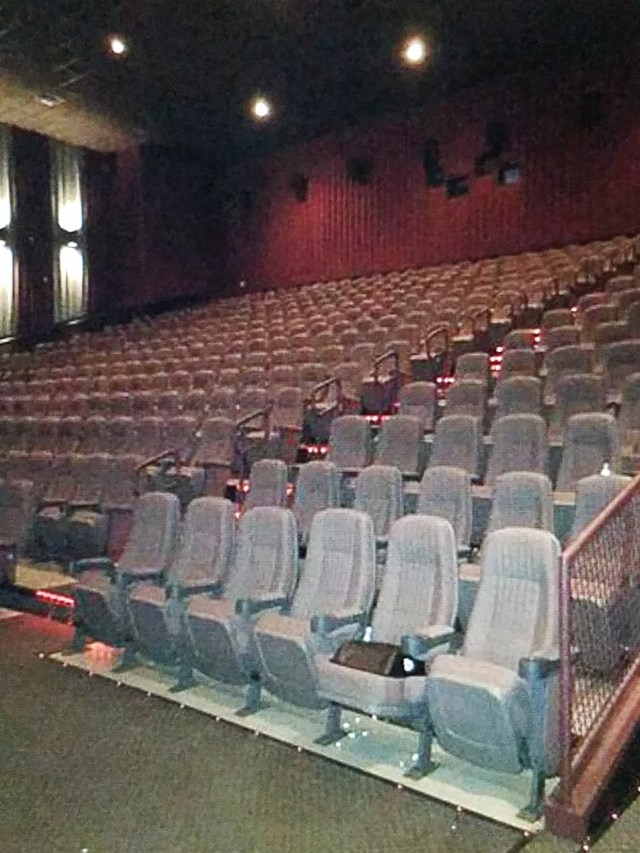
Several scenes in Phantom of the Megaplex show the auditoriums inside the theater. All of the chairs featured are covered in a red material with a folding seat. Theater-goers in 2000 would have this style of chair as their only option. But since then, more cinemas have adopted recliners. There are even theaters that have chosen other forms of seating, such as couches and lounge chairs. However, if you would like to sit in a theater chair from twenty years ago, there is one theater chain that has put these chairs to good use. Two Emagine theaters in Minnesota offer “retro seating”. According to the theater’s website, these are “retro auditoriums that don’t feature recliners, but have throwback seats with throwback prices”.

The Cotton Hills Megaplex is filled with red covered chairs with folding seats like the ones pictured above.
Red leather recliners from Marcus Theatres are just one example of how cinemas have evolved their seating options. Image found at https://journalstar.com/business/local/marcus-to-remodel-the-grand-add-recliners-to-all-auditoriums/article_ff46f554-0eeb-56ec-a153-2a8d79e00f71.html
While I wasn’t able to find an official photo of Emagine’s Retro Seating, I did find this picture from one of the theater’s auditoriums, which gives movie-goers an idea of the type of chairs found in this particular screening room. Image found at https://www.tripadvisor.com/LocationPhotoDirectLink-g43333-d8360379-i207947595-Monticello_15_Theatre-Monticello_Minnesota.html

Bars

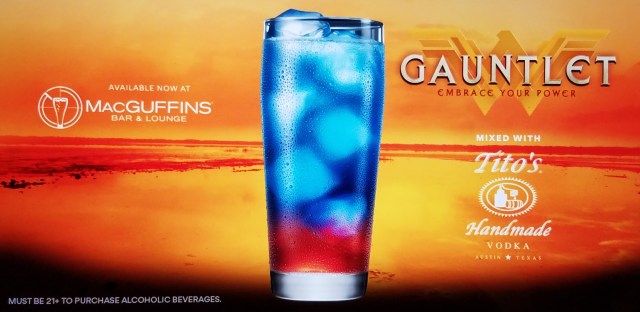
Because Phantom of the Megaplex is a family friendly film, bars would not be found at the cinema. However, theaters have added bars to their facilities within the past two decades. One example is AMC Theaters’ MacGuffins Bar. AMC’s official website states “the term “macguffin,” coined by Alfred Hitchcock, refers to a plot device that propels a movie forward”. The website, Run Pee (a site that informs audience members of the best times to take bathroom breaks during a movie), shares that MacGuffins Bar sometimes correlates drinks with the movies shown at the theater. One example is “a dino-themed bevvie when Jurassic World 2 was showing”.

This advertisement from MacGuffins Bar & Lounge takes advantage of Wonder Woman‘s 2017 release with an exclusive drink inspired by the movie. Image found at https://www.scoopnest.com/user/AMCTheatres/873698822307708929-wonderful-flavor-order-our-wonderwoman-themed-macguffins-drink-39gauntlet39-this-weekend

Movie’s Poster at the Door

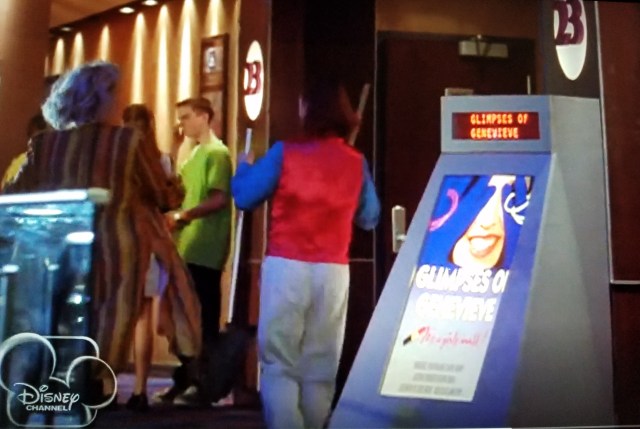
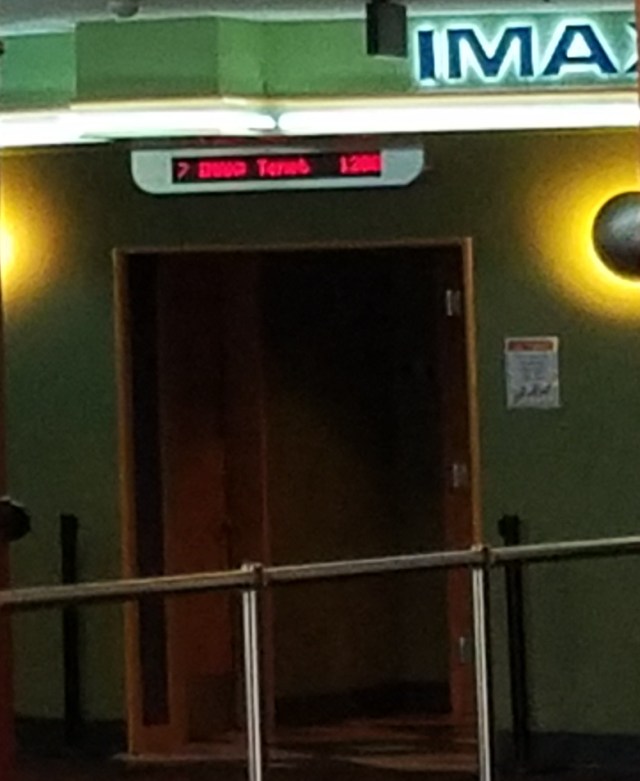
Throughout the Cotton Hills Megaplex, the theater where Phantom of the Megaplex takes place, a movie’s poster is located in front of the auditorium the movie will be playing. In a scene where the “Phantom” causes mischief, a poster for a movie titled ‘Glimpses of Genevieve’ is located right next to the theater’s twenty third auditorium. The film’s title is also electronically shown above the poster. Personally, I have never seen this particular set-up at any theater I’ve attended. Also, theaters today will either not have any indicator (besides the ticket itself) of what movie is playing in the auditorium or the film’s title will be electronically shown above the auditorium’s door. The poster itself will be located in another area of the theater, such as near the main entrance.

This image shows the poster for ‘Glimpses of Genevieve’ sitting right in front of Cotton Hills Megaplex’s twenty third auditorium.
My screenshot features an entrance to a cinema’s auditorium showing 2020’s Tenet. At this specific cinema, the film’s title is above the door.

Cinema Sitter

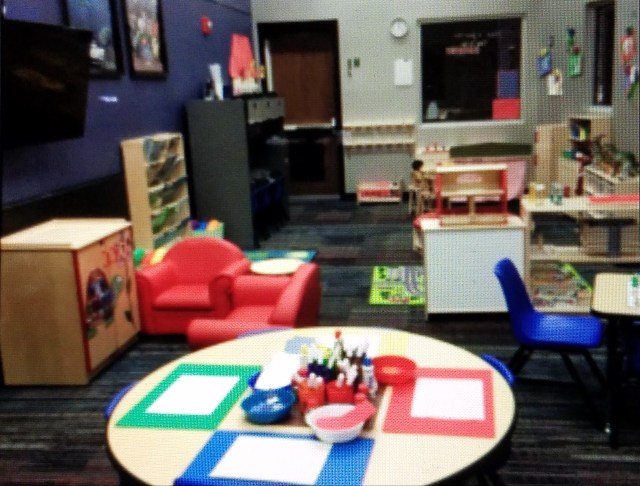
One of the characters in Phantom of the Megaplex is a “cinema sitter”, an elderly woman who walks around the premises and makes sure the theater’s patrons are on their best behavior. Her role is similar to that of a hall monitor, reprimanding guests who wander the halls of the Cotton Hills Megaplex. This is another concept that I have never seen or heard of at any theater I’ve attended. I’m also not aware of “cinema sitters” being an official component of movie theaters prior to the release of Phantom of the Megaplex. The only thing closest to a “cinema sitter” in real life is Harkins Theatres’ PlayCenter. This space, located in select Harkins Theatres, is dedicated to looking after children while their parents are seeing a movie. The PlayCenter itself would be compared to a typical day care center, a place where children can be occupied while their parents are away. According to the official Harkins Theatres website, “PlayCenter staff members are trained professionals who work exclusively in the PlayCenter. They are background checked and fingerprinted.”

Karen is trying to find Brian with the help of this cinema sitter. The cinema sitter takes her job so seriously, that her title is labeled on the back of her smock.
This photo of Harkins Theatres PlayCenter looks very similar to what people would expect a typical daycare center to look like. Image found at https://www.lblittles.com/cerritos-harkins-family-theater/

Payphones

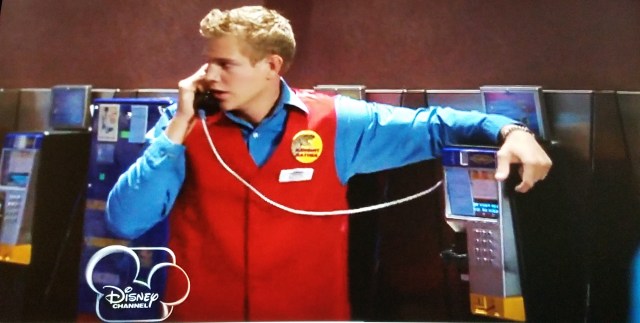
A row of payphones can be occasionally seen throughout Phantom of the Megaplex. From Pete calling his mom to one of Pete’s co-workers, Lacy, putting a phone back in the payphone holder, these payphones are used to scare Julie, Pete’s mom, and George, Julie’s boyfriend, into going to the cinema to check on Julie’s children. While I’m not denying the existence of payphones in movie theaters, I personally don’t remember seeing payphones in the cinema. Since the film’s release, cellphones, particularly the smart phone variety, have become more common in society. This modern advancement has ultimately led payphones to become more obsolete.

The row of payphones behind Pete are a reminder of how communication devices have changed.
Can you spot the payphone in this theater lobby?

The Projection Booth

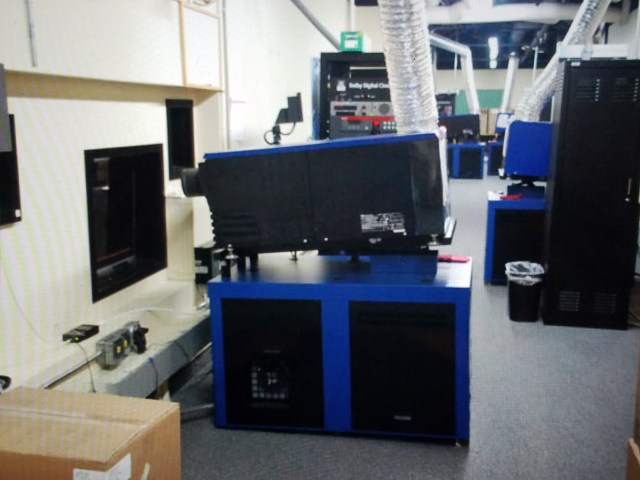
The projection booth in Phantom of the Megaplex is operated by Merle, the head projectionist at the Cotton Hills Megaplex. When Pete and Brian ask Merle to resolve one of the “Phantom’s” shenanigans, Merle inspects the projector equipment to show Pete and Brian what likely happened. He even pulls a piece of film strip, proving that the movie itself had not been tampered with. In 2000, movie theaters were not utilizing digital cinema like they are today. Instead of using a digitized film reel or hard drives and internet links, theaters used film reels with strips of film. The closest thing to “state of the art” film projection cinemas had in 2000 was IMAX. Today, theaters are developing their own versions of this projecting concept. One example is Cinemark XD, found at Cinemark Theatres. According to the official website, Cinemark XD uses a “state-of-the-art projector capable of 35 trillion colors”.

In this scene, Merle pulls at a piece of film strip to show how it is perfectly intact.
A typical projection booth at a digital cinema. Notice how the film strips are missing? Image found at https://library.creativecow.net/articles/lasson_russell/digital_cinema.php
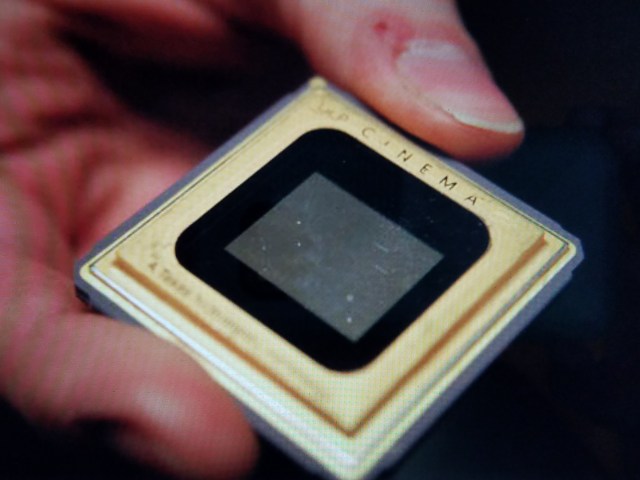
Computer chips, known to theaters as cinema chips, are replacing film strips in many cinemas. Image found at https://library.creativecow.net/articles/lasson_russell/digital_cinema.php

Spoilers

In an effort to figure out the “Phantom’s” next scheme, Brian visits a movie spoiler website to discover the plot of an upcoming movie called “Midnight Mayhem”. The idea of spoilers has not changed in twenty years. However, the reveal of movie details has expanded beyond websites devoted to the concept. Spoilers can be found everywhere. Social media platforms have been avoided when big blockbusters are released. Warnings for spoilers can be featured toward the beginning of film reviews. Causal word of mouth may slip a major plot point into the conversation. With recent technological progress and the ability to connect with people from across the globe, it has actually become harder to prevent surprises in movies from being spoiled.

While today’s spoilers may be found on the internet, they’re not limited to exclusive websites, like the one pictured above, anymore.

Conclusion

Change is inevitable, especially when it comes to the movie-going experience. Through the lens of film, we are given an opportunity to glimpse the past, even if it is only for a few hours. Phantom of the Megaplex captures how the cinema operated in the beginning of the millennium. It serves as a time capsule for those who remember that specific place in time. The movie is also a reminder of how far cinematic technology and the cinema itself has come. As of November 2020, it is unclear to determine what the landscape of movie theaters will look like by the time Phantom of the Megaplex turns twenty-five. While technology in film has made tremendous strides, there is still a lot that can be done. But will there be a facility to showcase these discoveries? There is no straightforward answer that can be given right now. However, we can still celebrate a movie’s milestone birthday through home entertainment and the internet. Like Movie Mason once said, “tell my theater that even when I’m not here, its magic is never far from my heart”.

Created by me, Sally Silverscreen, on Adobe Spark.

Have fun at the movies!

Sally Silverscreen

Links to topics I mentioned in this editorial:

Retro Seating: https://www.emagine-entertainment.com/theatres/emagine-rogers/, https://www.emagine-entertainment.com/theatres/emagine-lakeville/

MacGuffins Bar: https://runpee.com/macguffins-bars-at-amc-theaters/

Harkins Theatres’ PlayCenter: https://www.harkins.com/play-center

Cinemark XD: https://cinemark.com/technology/cinemark-xd/

Digital Cinema: https://en.wikipedia.org/wiki/Digital_cinema#:~:text=Whereas%20film%20reels%20have%20to%20be%20shipped%20to,drives%20or%20optical%20discs%20such%20as%20Blu-ray%20discs.