Watching ‘Singin in the Rain’ for the First Time

Throughout my years of movie viewing (and blogging), I have received the opportunity to check out films boasting a “classic” status. This status has, in my opinion, been earned on some occasions, as I gained an understanding for why a particular movie was granted its praise. However, there were certain titles I found myself unable to figure out why it is considered a “classic”. Out of all these “classic” films, I have been meaning to see one specific picture. That title is Singin in the Rain. The 1952 production needs no introduction. From the song, “Good Morning”, being featured in an orange juice commercial to a replica of Gene Kelly’s umbrella in Disney MGM/Hollywood Studios, Singin in the Rain has carved out a slice in America’s pop culture pie. But for someone, like me, who hasn’t seen this iconic film before, these references are going to seem like a company, individual, or creative team is, simply, taking advantage of the movie’s 50+ year popularity. That replica is just used for tourists to have their photo taken. That song was just an appropriate selection to promote a beverage primarily found at breakfast-time. With the arrival and fruition of the Singin in the Rain Blogathon, I finally have a wonderful excuse to watch Singin in the Rain. It also gives me an opportunity to gain more context of the film’s respective songs, images, and quotes.

Singin in the Rain poster created by
Metro-Goldwyn-Mayer and Loew’s Inc.

Creative Musical Numbers

Singin in the Rain is not just one of the most iconic movies of all time, it’s one of the most iconic musicals of all time! A musical with a “classic” status will bring something unique and creative to the table. The Wizard of Oz took on the power of Technicolor, in a time when that specific technology was more of a luxury. Xanadu showed the world roller skating can be magical. When it comes to Singin in the Rain, the creativity lies in the musical numbers themselves, presenting performances that hadn’t really been seen before 1952. Toward the beginning of the film, Gene and Donald perform a duet, “Fit as a Fiddle (And Ready for Love)”, at a vaudeville show. Throughout this musical number, Donald and Gene not only tap danced, but played the fiddle as well. For the 21st century viewer, dancing and playing an instrument at the same time doesn’t seem like a new concept, as Lindsey Stirling has capitalized on those talents. Within the realm of cinematic musicals, however, a routine like Gene and Donald’s isn’t often included.

Gene Kelly’s famous solo isn’t the first musical number featuring rain. Two decades prior, in Just Around the Corner, Shirley Temple performed “I Love to Walk in the Rain”, her film’s big musical number that represented the spirit of the movie. Looking back on “Singin in the Rain”, I, personally, feel Shirley’s number walked (no pun intended) so Gene’s solo could soar! The solo from the 1952 production takes place after Gene’s character, Don, takes Kathy home. Despite it raining outdoors, Don is head-over-heels in love with Kathy. Gene tap danced in his solo. But unlike “I Love to Walk in the Rain”, “Singin in the Rain” felt more immersive, as it wasn’t just a performative routine. Because the number takes place within the story’s context, it feels grounded in reality, a downtown street replacing a glamourized stage. Watching Gene jumping and splashing in puddles added uniqueness to the routine. Even though “Singin in the Rain” wasn’t the big musical number for its respective movie, it represents the film’s spirit, reminding the audience to see the good in a not-so-good situation.

String of musical notes image created by Freepik at freepik.com. <a href=’https://www.freepik.com/free-vector/pentagram-vector_710290.htm’>Designed by Freepik</a> <a href=”https://www.freepik.com/free-photos-vectors/background”>Background vector created by Freepik</a>. Image found at freepik.com. 

Strong Camaraderie

In most of my reviews, I talk about the acting. I will choose a few performances to discuss and write about what I liked about them. For this review, I want to talk about a different acting component. While the overall acting in Singin in the Rain was strong, what stood out to me more was the on-screen camaraderie between Gene Kelly, Debbie Reynolds, and Donald O’Connor! One of my favorite scenes is when Don, Kathy, and Cosmo are concocting a plan to save Don’s film. Each character’s personality shines through during this brainstorming session. Cosmo encourages Don to turn the film into a musical, as he spontaneously breaks out into song. Meanwhile, Kathy attempts to keep the group’s good spirits lifted, her kind demeanor certainly helping the situation. After hearing Cosmo’s idea, Don is open-minded about it, joyously realizing he can use his talents to his advantage. This scene, as well as the “Good Morning” musical number, is just one example of Gene, Debbie, and Donald’s on-screen camaraderie. Through their interactions, it felt like Don, Kathy, and Cosmo had been friends all along. This on-screen bond was so pleasant, I looked forward to each time these characters crossed paths!

Couple performing the waltz image created by Macrovector at freepik.com. <a href=”https://www.freepik.com/free-photos-vectors/background”>Background vector created by macrovector – http://www.freepik.com</a>. Image found at freepik.com.

Learning about Cinema’s Early Years

Singin in the Rain takes place in the 1920s, during the transitional period between silent films and “talkies” (movies with sound). Even though the 1952 film is a musical that takes time to focus on its numbers, it lifts the figurative curtain enough to educate the audience on how film-making was executed in that time period. Don’s respective studio, Monumental Pictures, adopted sound after Warner Bros. took a chance with their film, The Jazz Singer, a high risk that was met with high rewards. Because of that one creative decision, it forever changed the cinematic landscape. As emphasized in the musical number, “Moses Supposes”, actors had to not only memorize their lines, they also had to remember to annunciate those lines. Singin in the Rain also shows the audience how dialogue is incorporated into a movie. As someone who appreciates the film-making process, it was nice to see this part of movie-making shown in steps. This step-to-step process was a good introduction to some of the work that goes on behind the camera.

Image of vintage movie camera created by Macrovector at freepik.com. <a href=”https://www.freepik.com/free-photos-vectors/background”>Background vector created by macrovector – http://www.freepik.com</a>. Image found at freepik.com.

The Context of “Broadway Melody” in Don’s Film

While working to adapt his film, The Dancing Cavalier, into a musical, Don proposes the movie’s new opening scene. This scene is presented as the musical number “Broadway Melody”. As a musical number in Singin in the Rain, I liked this performance! It had colorful set and costume design, as well as strong choreography. But as an opening scene in The Dancing Cavalier, the musical number, in my opinion, doesn’t work. “Broadway Melody” is too long, my guess is ten minutes. The number itself kind of feels like an extension of Don’s past, as his journey to Hollywood came from simpler beginnings. Based on what the characters said about The Dancing Cavalier, Don’s proposed opening scene seems to have little connection to that film’s story. If Don’s movie were a real picture, some audience members might become bored with the film before the story began.

New York City skyline with letters image created by Freepik at freepik.com. <a href=’https://www.freepik.com/free-vector/new-york-skyline-typographic-silhouette_719554.htm’>Designed by Freepik</a>. <a href=”https://www.freepik.com/free-photos-vectors/background”>Background vector created by Freepik</a>. Image found at freepik.com.

No Subplot for Cosmo

As I mentioned earlier in this review, I liked the on-screen camaraderie of Gene, Debbie, and Donald. In fact, I liked Donald’s character, Cosmo! Not only was he hilarious and charming, but he was talented as well! The story of Singin in the Rain primarily revolved around the main plot; Monumental Pictures attempting to save their latest film. There is a subplot in the movie, but it mostly focuses on Lina, Don’s co-star. I would have loved to see Cosmo receive his own subplot. Since his contribution to the studio is musical, Cosmo’s part of the story would have pulled back that figurative curtain a little further to show the audience cinematic work behind the camera. I’ve said in previous reviews how important music is in film. Without it, there isn’t an opportunity for viewers to become emotionally affected by a given scene. Because Cosmo is a musician, that aspect of film-making could have been explored.

Masks of comedy and tragedy images created by freepik at freepik.com. <a href=”https://www.freepik.com/free-photos-vectors/background”>Background vector created by freepik – http://www.freepik.com</a>. Image found at freepik.com.

A Love Interest That Wasn’t Meant to be

In my point about Cosmo not receiving a subplot, I mentioned how Singin in the Rain’s subplot mostly focused on Don’s co-star, Lina. Personally, I think more of that time should have been given to Cosmo. I know Lina is meant to be the film’s antagonist. I also know her actions and choices are intended to fuel the movie’s conflict. But why would Lina receive so much time when she and Don were never meant to be? Before and after the premiere of The Royal Rascal, people speculate about Lina and Don’s relationship. Even Lina carries the assumption she and Don are romantically involved with one another. But Don makes it pretty clear he is not romantically interested in Lina. This part of the story reminded me of a Hallmark movie cliché I’ve talked about in the past: the “protagonist’s ex showing up unannounced” cliché.

The Singin in the Rain Blogathon banner created by Ari from The Classic Movie Muse

In Conclusion

Before the Singin in the Rain Blogathon, I had never seen the event’s namesake. That means if someone were to tell me one of the movie’s quotes or if I heard one of the film’s songs, I wouldn’t have thought much of it. Now that I have finally seen Singin in the Rain, I have gained an understanding and appreciation for it! When Kathy first meets Don, she claims, when referring to films, that “when you’ve seen one, you’ve seen them all”. However, I’d argue the 1952 musical built a solid identity that affords it a distinction from other musical movies. Even though Singin in the Rain was released within the Breen Code era, I was pleasantly surprised by the good messages and themes in the story. When I talked about the movie’s on-screen camaraderie, I shared one of my favorite scenes; where Kathy, Don, and Cosmo were figuring out how to save Don’s film. Through this interaction, the message of being one’s self is stressed. This message also allowed Don to use his talents in his favor. When I reviewed The Bridge on the River Kwai, I wondered what the criteria was for lists such as AFI’s 100 Greatest  American  Movies of All Time. One of my speculations was titles that brought something new to the cinematic table. It should be noted that Singin in the Rain is on AFI’s list. While I don’t know for certain how it got there, I think I have a pretty good idea why it’s there.

Have fun at the movies!

Sally Silverscreen

Take 3: The Picture of Dorian Gray (1945) Review

Whenever I think of Dorian Gray as a character, Stuart Townsend’s portrayal in The League of Extraordinary Gentlemen comes to mind. While I’ve never seen that film, I did watch a video review of it years ago. However, I know that, sometimes, no singular portrayal of a given character is the “end all, be all” when it comes to story-telling. This is one of the reasons why I chose to review the 1945 adaptation of The Picture of Dorian Gray. The other reason is Peter Lawford’s involvement in the project. Once again, I am participating in the Peter Lawford Blogathon, hosted by Kristen from Hoofers and Honeys of the Classic Movie Era/KN Winiarski Writes. Last year, I wrote about 1960’s Ocean’s Eleven. At the time, I was not familiar with Peter’s filmography. Now that I have seen at least one of his movies, I had a starting point for which film to choose next! Before Dorian’s portrait transforms on us, let’s get this review started!

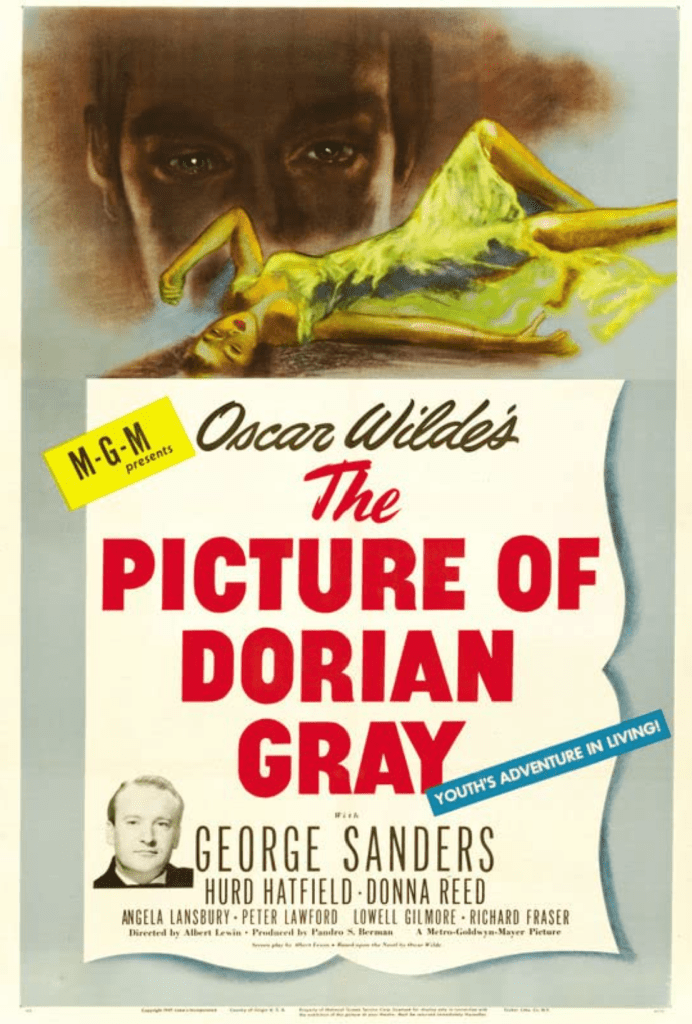
The Picture of Dorian Gray (1945) poster created by Metro-Goldwyn-Mayer and Loew’s Inc.

Things I liked about the film:

The acting: I haven’t seen many of Peter Lawford’s films. But based on 1960’s Ocean’s Eleven and 1945’s The Picture of Dorian Gray, it seems like he can be found in movies with larger ensembles. When it comes to the 1945 title, I was disappointed by this, as I was hoping to see more of his performance. Nevertheless, Peter did do a good job with the material he was given! Portraying David Stone, a man interested in courting Gladys Hallward, he resembled the youth Dorian himself desperately sought after. Despite appearing in a handful of scenes, David’s concern of Gladys felt genuine. You can hear it in the inflection of Peter’s voice and the expressions on his face. In a way, these things made David seem like a “voice of reason”.

During the film’s opening credits, I was surprised to discover Angela Lansbury also starred in The Picture of Dorian Gray. But similar to Peter Lawford, she also appeared in a handful of scenes. Despite this, I enjoyed seeing her portrayal of Sibyl Vane! Within this film, she sang a song called “The Little Yellow Bird”. It was nice to hear a musical performance from Angela, as I feel her singing abilities are underrated. When it came to her acting performance, Angela carried her character with a youthfulness I haven’t noticed in her other roles I’ve seen. Her expressions were more subtle, but worked for her character. Another actor who had subtle expressions was Hurd Hatfield. I’m not familiar with his acting work. But based on his portrayal of the titular character, he carried himself with a sense of professionalism. Hurd did, however, have very expressive eyes. At one point during the story, Dorian makes a mistake. When he realizes what he did, his eyes grow wide with alarm. Meanwhile, Hurd still shows a composure that he partly gave to Dorian, which maintains consistency.

The lessons and morals: Since this film premiered in 1945, that means it had to follow the Breen Code guidelines. The Picture of Dorian Gray certainly obeys those guidelines, but it also serves up some good lessons and morals. Toward the beginning of the story, Lord Henry tells Dorian how lucky he is to be young and attractive. He also tells Dorian to not squander his youth. These pieces of conversation can be used as lessons to appreciate the things you have and to not take anything for granted. Certain events in Dorian’s life highlight these lessons well. Another idea that is addressed in this script is actions speaking louder than words. This can be seen throughout Dorian’s relationship with Sibyl. While I won’t spoil what happens, I will say something comes up that relates to the aforementioned idea.

The cinematography: A surprising element in The Picture of Dorian Gray was the cinematography. This is because of how creative and well filmed it was! My favorite use of cinematography was when Sibyl visits Dorian’s house. As Dorian is playing the piano, Sibyl enters his study. But before she walks through the doorway, you can only see Sibyl’s shadow. Even when she does appear in the doorway, Sibyl’s face isn’t shown until she reaches Dorian’s piano. That was a good way of building anticipation for Sibyl’s appearance. A filming technique that appeared in several moments of the film was framing a scene as if the camera was following a character or hiding from them. A great example is when Dorian was placing a letter in his fireplace. The camera is positioned inside the fireplace while he is burning the letter. It provides the illusion of the audience watching from the outside looking in.

The 2nd Annual Peter Lawford Blogathon banner created by Kristen from Hoofers and Honeys of the Classic Movie Era/KN Winiarski Writes

What I didn’t like about the film:

Limited use of Technicolor: In the movie’s opening credits, it was mentioned that Technicolor was used in the movie. This made me excited to see how Technicolor would be utilized in the story. While I wasn’t expecting as much Technicolor as in The Wizard of Oz, I was hoping it would be consistently featured throughout the film. Unfortunately, that is not the case for The Picture of Dorian Gray. The Technicolor was applied to Dorian’s painting. But it was only used three times during the whole movie. I think if Dorian’s painting had been consistently presented in Technicolor, it would have highlighted the importance of the painting within the story.

The painting is kind of an afterthought: For those who don’t know, a MacGuffin can be an object that progresses a story forward. In the case of The Picture of Dorian Gray, Dorian’s painting is that story’s MacGuffin. However, its presence wasn’t as significant as I expected. In the script, the state of Dorian’s relationships is given more focus than the painting. In fact, the painting is sometimes not shown on-screen. This made the painting itself kind of seem like an afterthought.

Dorian’s confusing choices: There were times when Dorian made choices that left me confused. One of these choices took place during his relationship with Sibyl. Throughout that relationship, Dorian appears to truly love her. He even seriously considers marrying Sibyl. But, out of the blue, Dorian changes his mind. Even the build-up toward that moment was confusing, making it difficult to interpret what happened. I realize all of that connects with the lessons I mentioned earlier. However, Dorian’s sudden change in attitude and choices was, to me, confusing.

Paint palette image created by Freepik at freepik.com <a href=’https://www.freepik.com/free-vector/hand-drawn-artsy-tools_836777.htm’>Designed by Freepik</a> <a href=”https://www.freepik.com/free-photos-vectors/hand”>Hand vector created by Freepik</a> Image found at freepik.com

My overall impression:

There are movies that have fallen short of my expectations. Not all of these films have been bad. However, I was left desiring more from them. The Picture of Dorian Gray has now become one of those movies. Before watching this adaptation, I was familiar with the premise of this story. But that premise led me to believe the film would be more profound and thought-provoking than it was. The script did provide good lessons and morals. But I’m not left contemplating any deeper meaning on any particular theme. I was also disappointed by Peter Lawford’s limited appearance in the movie. Peter’s involvement in the project is one of the reasons why I chose to review it in the first place. Even though I liked his portrayal of David, I was expecting to see him receive a larger spotlight than in Ocean’s Eleven. If the Peter Lawford Blogathon returns for a third year, I’ll try to find a film where Peter was a leading actor.

Overall score: 7.2 out of 10

Have you seen any adaptation of The Picture of Dorian Gray? Would you like for me to read the book? Please let me know in the comment section!

Have fun at the movies!

Sally Silverscreen

Take 3: Plymouth Adventure Review

When I participated in the Fourth Van Johnson Blogathon last year, I reviewed the three episodes of Murder, She Wrote Van appeared in. For this year’s blogathon, I wanted to do something different by writing about one of his films. While looking through my Pinterest board of movie recommendations, I was reminded of the 1952 movie, Plymouth Adventure. This film was introduced to me by the Brannan sisters from Pure Entertainment Preservation Society, when they reviewed the movie during my blogathon, ‘A Blogathon to be Thankful For’. The Mayflower journey is one of the most important events in U.S. history. However, it is rarely covered in cinema. This is one of the reasons why I wanted to check this film out! I also liked reading what the Brannan sisters had to say about Plymouth Adventure. Therefore, I was curious to see if my opinion was similar to theirs.

Plymouth Adventure poster created by Metro-Goldwyn-Mayer

Things I liked about the film:

The acting: The blogathon I am participating in celebrates the filmography of Van Johnson. So, talking about his performance first makes sense. What I liked about Van’s portrayal of a carpenter named John Alden was how his emotions represented the audience, expressing the thoughts and feelings we might experience if we were in his shoes. The moment John boards the Mayflower provides a perfect example. As he is walking around the deck, he is in awe of the ship’s magnitude. When he crosses paths with Spencer Tracy’s character, Captain Christopher Jones, John distinguishes himself from the other passengers as a carpenter, wanting to stand out for his skills and talents. Van’s on-screen personality highlights this distinction among the film’s ensemble!

My favorite character in Plymouth Adventure is Gilbert Winslow, portrayed by John Dehner. John carried his character with class and wisdom, like a true sophisticated gentleman. These characteristics are highlighted well in a scene between Gilbert and Christopher. In this scene, they are discussing the settlers’ reasons for partaking in the journey. Christopher feels they are foolish for throwing their lives away for the unknown. But Gilbert respectfully rebuts that argument by saying the settlers are brave because they sacrificed so much in order to achieve a better, more free life. Dawn Addams portrayed one of these settlers, a woman named Priscilla Mullins. While she was only in the movie for a limited amount of time, Priscilla brought a kind gentleness to the story. This presented a good counterpart to the harshness of the journey itself. I also liked seeing Dawn and Van perform together! They had nice on-screen chemistry and I was interested in seeing where Priscilla and John’s relationship would go. I was not expecting a romance in this film, so that was a pleasant surprise!

The use of color in the costumes: When I think about the 1600s, I think of articles of clothing that look plain and unimpressive. Outfits made for royal family members are an exception, as they were meant to stand-out among a sea of commoners. In Plymouth Adventure, I was happy to see pops of color in the film’s costumes! It was also interesting to see which colors were used. As I mentioned before, Gilbert Winslow is my favorite character in this movie. Throughout the story, he wore an outfit that was covered in an emerald green material. That creative decision not only helped John stand out among the ensemble cast, but the costume itself also complimented his dark hair. Noel Drayton’s costume also complimented his hair! Because his hair is a lighter hue, his costume was a nice burnt orange. Because of this creative choice, I can remember who Miles Standish, Noel Drayton’s character, was, as I am able to pick him out from the crowd. During the Mayflower journey, Priscilla can be seen wearing a simple, yet modest dress. This dress was pink and light yellow, a color combination I liked seeing. Dawn’s costume contrasted nicely against the dark waters from the ocean. It also highlights the character’s kind gentleness.

Showing the journey’s reality: When a movie portrays a historical event or period in time, the serious parts of that story can sometimes get glossed over or even omitted. With Plymouth Adventure, the creative team didn’t shy away from bringing up the harsher, sadder realities of that titular trip. During the journey, the Mayflower is caught in the middle of a storm. One of the settlers fears her son might have gone onto the deck. In an attempt to rescue him, William Bradford makes the selfless choice to find the settler’s son. I won’t spoil the movie, but I will say, at one point, I didn’t think William was going to survive his mission. That scene did a good job highlighting the fear that was constantly present on the Mayflower. History will tell you that the Mayflower journey was a harsh one, with sickness, hunger, and even death boarding the famous ship. So, I appreciate the creative team’s attempts at making the story feel as accurate as possible.

The Fifth Annual Van Johnson Blogathon banner created by Michaela from Love Letters to Old Hollywood

What I didn’t like about the film:

Not enough character development: When a movie’s creative team contains an ensemble cast, it can be a challenge to give each actor or actress involved the recognition they deserve. But with Plymouth Adventure, the screen time each actor received felt inconsistent. This caused the story’s character development to be limited. When Gilbert was first introduced, I was excited to see what his role on the Mayflower would be. Even during his conversation with Christopher about the settlers, I knew Gilbert was important in some way. But as the film went on, he was reduced to being the story’s narrator. These narrations were presented as journal entries, as if he were recording the journey’s history. I’m not denying the importance of keeping historical records. However, I was expecting more for Gilbert Winslow.

How the settlers were referenced: At the beginning of the film, there was an on-screen message which stated Plymouth Adventure was dedicated to the adventurous settlers. As I was watching the movie, I questioned how honest that message was. The settlers in the story were referenced as “fools”. Their motives for taking the trip were constantly in question, even by the ship’s captain. Despite having supporters on their side, like Gilbert Winslow and William Brewster, the settlers faced more disrespect than I expected. Even Christopher Jones accused the settlers of running away in fear from their government, when, from what I remember, they were running to a place where they felt they could create a better government. I’m aware that the settlers probably did face criticism back when the Mayflower journey actually took place. But in the context of the movie and how the Mayflower journey actually played out, that aforementioned message kind of feels disingenuous.

Christopher and Dorothy’s relationship: Because the Mayflower journey was long and grueling, it makes sense for the film’s creative team to create subplots within the script. But out of everything that happened in this movie, Christopher and Dorothy’s relationship is my least favorite. There was one scene where, after a drunken escapade, Christopher approaches Dorothy in the middle of the night. I’m not going to lie, this exchange made me feel uncomfortable. As the story progresses, we learn that Christopher has fallen in love with Dorothy. However, Dorothy is married to William Bradford. Once again, I won’t spoil the movie for anyone who hasn’t seen it yet. But, honestly, that subplot was scandalous for a Breen Code era film. I also wish some of that story time had been given to Priscilla and John, a couple who actually had potential to form a lasting, romantic relationship.

Paper Boats in the Sea image created by Freepik at freepik.com. <a href=’https://www.freepik.com/free-vector/background-of-paper-boats-with-hand-drawn-waves_1189898.htm’>Designed by Freepik</a>. <a href=”https://www.freepik.com/free-photos-vectors/background”>Background vector created by Freepik</a>. Image found at freepik.com.

My overall impression:

Blogathons can be a great way to discover new films and share the ones you love. From my event, ‘A Blogathon to be Thankful For’, I discovered a movie that I had, honestly, never heard of before. With that same title being chosen for the Fifth Annual Van Johnshon Blogathon, it seems like things are coming full circle. When it comes to that title, Plymouth Adventure, I thought it was just ok. For the most part, it appears the movie’s creative team had good intentions for the project. However, I can think of period/historical films that are stronger than this one. I appreciate the creative team’s decision to show the harsher parts of this story, as it illustrates just how difficult the journey was. But there are areas of the script that could have been improved, such as giving Christopher and Dorothy a different subplot. As I finish writing this review, I now realize I need to search for another film to write about for Thanksgiving.

Overall score: 6.1 out of 10

Take 3: Bathing Beauty Review

Since I participated in last year’s Esther Williams Blogathon, it made sense for me to join the 100 Years of Esther Williams Blogathon. Hosted again by Michaela from Love Letters to Old Hollywood, I wanted to review one of Esther’s films this time. I try to watch and write about as many movie recommendations as I can. Because Rebecca from Taking Up Room suggested I check out Bathing Beauty, that’s the film I chose to review! In 2020, for a different blogathon, I saw my first film of Esther’s; 1949’s Take Me Out to the Ball Game. That film gave Esther only one swimming scene, with the majority of her scenes taking place on land. With a movie titled Bathing Beauty, I was excited to see more of Esther’s swimming routines! Also, in 2020, I saw my first movie of Red Skelton’s; 1953’s The Clown. So, I was looking forward to talking about one of his earlier films! Now, let’s dive into this review of Bathing Beauty!

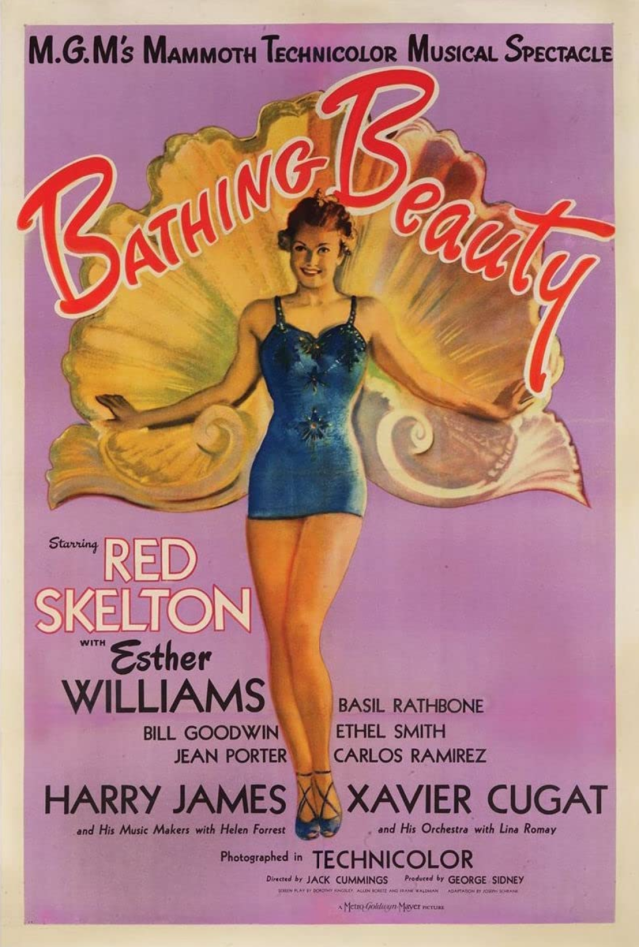
Bathing Beauty poster created by Metro-Goldwyn-Mayer

Things I liked about the film:

The costume designs: One thing I noticed while watching Bathing Beauty was the use of vibrant colors. This can definitely be seen within the film’s costume designs! At the very beginning of the film, Esther wore a hot pink swimsuit with a matching bow. The show-stopping piece, however, was her over-the-shoulder cape! This cream-colored piece was adorned in colorful flower appliques, adding touches of bright green, yellow, and pink. Besides pink, red was a common color found among the costumes. The students at Victoria College wore a uniform that consisted of a khaki dress. Red berets and neck ties provided a pop of color, not only pairing nicely with the khaki material, but also complimenting light and dark hair colors. During the performance of “I Cried for You”, Helen Forrest wore a rusty red colored dress. While the shape and style of the dress itself was simple, there was a sparkly belt and neckline. This small detail helped Helen’s dress appear elegant and appealing to the eye.

Red Skelton’s comedy: As I mentioned in my review of The Clown, I am familiar with Red Skelton as an entertainer. This knowledge caused me to be disappointed by the limited use of comedy in that film. Because Bathing Beauty is a romantic comedy, the material gave Red Skelton more opportunities to showcase his comedic talents. The ballet lesson from The Clown also appeared in Bathing Beauty. This time, Red’s character, Steve, took the lesson because it was a part of the college curriculum. Even after a year of first seeing it, this scene is still hilarious! The slapstick nature of Red’s comedy and the graceful reputation of ballet creates a funny oxymoron. Sometimes, Red’s comedy could be heard within the script. While at a local bar, Steve and a fellow patron explain their problems using nearby fruit. When Steve chooses to represent himself through a pineapple, he makes a comment about how he needs a haircut. Little comments like that one help include comedy into conversations among the characters!

The cinematography: An element within Bathing Beauty that stood out was the cinematography! It surprised me how good it was, especially for a film released in 1944! Anytime Esther swam underwater, those scenes were captured very well, presenting a clear view of what was happening under the surface. This added to the appeal of the swimming/water related scenes within the movie. In one scene, Esther’s character, Caroline, kisses Steve by the poolside. As she slowly dips under the water, Steve’s face follows her, with a close-up shot of his face shown under the water as well. Keeping in mind the limited technology of the ‘40s, these scenes were, to an extent, ahead of their time. A few scenes featured Harry James and His Music Makers. During these scenes, Harry was captured in close-up and medium shots. The camera also moved with him, presenting the illusion that Harry was floating among the orchestra. Because he was the star of those performances, this was a interesting way of highlighting Harry’s importance in those scenes!

100 Years of Esther Williams blogathon banner created by Michaela from Love Letters to Old Hollywood.

What I didn’t like about the film:

A somewhat misleading title: This movie is not only called Bathing Beauty, but it also stars Esther Williams. Therefore, certain expectations are placed on the film for those reasons. While we do see Esther in the pool, this was shown for two scenes: toward the beginning and end of the movie. The rest of the film shows Esther spending more time on land. Even when Basil Rathbone’s character, George, mentions a water pageant on several occasions, this was not the main focus of the overall story. After having Take Me Out to the Ball Game as my introduction to Esther’s filmography, I was left a little disappointed.

Red and Esther’s on-screen chemistry: While I have seen at least one film of Esther’s and Red’s, this was my first time seeing a movie starring both of them. Throughout the movie, they had nice on-chemistry. However, I thought Red had stronger on-screen chemistry with Jean Porter. Portraying one of the students at Victoria College, Jean displayed an on-screen personality that was similar to Red’s, coming across as easy-going and spunky. During the musical number, “I’ll Take the High Note”, Red and Jean performed so well together. I wanted Steve and Caroline to work out their relationship issues. But because of “I’ll Take the High Note”, I wish Jean and Red had led a film together.

A weak connection between the story and musical numbers: Musicals can be an enjoyable experience. Songs and instrumentals can progress a story forward, as well as help the audience get to know the story’s characters. With Bathing Beauty, there were several musical numbers sprinkled throughout the film. But anytime a musical number took place, it caused the story to pause. Even though these musical numbers were entertaining, the only one that directly connected to the film’s narrative was “I’ll Take the High Note”. This is because the number was a part of an assignment Steve had to complete in order to pass his music class. As I mentioned earlier, a water pageant is brought up on multiple occasions. However, this was the only water related spectacle in the movie. Because Esther was one of the stars of the film and because the story takes place in two states surrounding water (California and New Jersey), this feels, to an extent, like a missed opportunity for more water related numbers.

String of musical notes image created by Freepik at freepik.com. <a href=’https://www.freepik.com/free-vector/pentagram-vector_710290.htm’>Designed by Freepik</a> <a href=”https://www.freepik.com/free-photos-vectors/background”>Backgroundvector created by Freepik</a>. Image found at freepik.com.

My overall impression:

The end of any Olympics is an exciting time. A closing ceremony filled with spectacle and awe give athletes, fans, and people from that host country something to look forward to. As this year’s Tokyo Olympics come to a close, I can’t help but think of blogathons being similar to the Olympics. Think of it like this: the athletes that represent a particular country share one common goal. That goal is to bring home as many medals as realistically possible. The Olympics themselves have a start and end date, taking place in a different location. While there are typically no prizes involved in blogathons, participants share a common goal: talk about and celebrate the chosen subject. In this case, that subject is Esther Williams. Like the Olympics, Michaela’s event is an annual one that has a clear start and end date. Yes, it is known that Esther never went to the Olympics as planned. But I’d like to think she became a champion in her own right. An Olympic podium turned into an aqua-musical stage. Gold medals became a thirty-three project filmography. Instead of hearing the National Anthem after an Olympic win, show tunes are the chosen sound within Esther’s performances. I’d also like to think Esther paved the way for swimmers that came after her. Maybe aquamusicals haven’t made a comeback, but swimmers have been able to find own their success, almost like Esther did.

Overall score: 7.6 out of 10

Have you seen any of Esther Williams’ films? If so, which one would you want me to review next? Tell me in the comment section below!

Have fun at the movies!

Sally Silverscreen

Take 3: Another Man, Another Chance Review

When it comes to blog events taking place on or around Valentine’s Day, romantic stories or favorite couples are usually the chosen topic. But for Pure Entertainment Preservation Society’s Unhappy Valentines Blogathon, there was an interesting twist placed on their event. For this blogathon, the theme was love stories that were “unhappily ever after”. After reading the requirements, I knew exactly which film I wanted to write about! For about a year, I have had the 1977 movie Another Man, Another Chance on my DVR. In this film, a man and woman who have each lost their spouses fall in love with one another. For some people, Valentine’s Day may not be a happy time. This can be the case for a variety of reasons. Whenever I’ve reviewed a Valentine’s Day themed film in honor of this holiday, the tone of those stories were lighthearted. So, it was nice to be given the opportunity to select a change of pace!

Because the poster for Another Man, Another Chance was featured on my television, I decided to take a screenshot of it with my phone. Screenshot taken by me, Sally Silverscreen.

Things I liked about the film:

The acting: This isn’t the first western of James Caan’s I’ve seen. Prior to reviewing Another Man, Another Chance, I have seen JL Family Ranch and JL Family Ranch: The Wedding Gift (with the latter film receiving a review on this blog). In those films, James’ character was more reserved, his character, Tap, learning from his mistakes and defending his family. With his character in Another Man, Another Chance, David, he appeared surer of himself. However, he wasn’t afraid to express emotions. When he was looking for his wife, David expresses genuine concern throughout his search. As he discovers his wife has died, his eyes tear up as he physically turns away from the sight of his wife’s dead body. Within the movie, the relationship of Francis and Jeanne stole the show! Portrayed by Francis Huster and Geneviève Bujold, both actors had good on-screen chemistry, giving the impression their characters truly loved each other. Geneviève brought a gentleness to her role that is sometimes seen in female protagonists in westerns. This presented a contrast to the harsh environment Jeanne experienced in France and the United States. Francis had a way with words and thought outside the box. When Francis invites Jeanne to come to the United States with him, she reminds him how he barely knows her. Without skipping a beat, Francis tells her how he barely knows America. In order to earn extra money for his family, Francis tries to apply for a part time job at a newspaper by offering to be the Gazette’s photographer. These two examples show the intelligence and wisdom Francis was able to bring to his character!

Showcasing photography: It was interesting to see what the art and business of photography was like in the 1800s! Not only did the equipment look different, but the techniques were different as well. When a customer visits the studio, Jeanne makes him sit in a special chair. This chair features a vertical metal bar with a smaller, curved metal piece at the top. It helped customers sit up straight and keep their head in place as they had their picture taken. While in France, Francis says he can only take pictures for a certain amount of time and on certain days due to needing sunlight. His solution to this problem is moving to the United States and settling in the West, where he feels there will be more natural light.

An immigrant’s perspective: When it comes to stories in the western genre, most of them revolve around characters that were either born or raised in the United States. By devoting a large piece of the story to Francis and Jeanne, the audience is able to see a perspective that is rarely explored in this area of cinema. It also allowed the audience to witness these characters’ contributions to their environment. As I mentioned in this review, Francis tries to apply for a part time job at a newspaper by offering to be the Gazette’s photographer. In the 1800s, photographs were not included in newspapers. However, the editor in chief of the Gazette solved this dilemma by agreeing to create stencils of Francis’ photos and adding them to the paper. If it weren’t for Francis’ talent and profession, the Gazette would never have been ahead of their time!

The Unhappy Valentines Blogathon banner created by the Brannan sisters from Pure Entertainment Preservation Society.

What I didn’t like about the film:

Limited time spent with Jeanne and David’s relationship: One of the biggest plot points (and one of the reasons why I watched this film) is Jeanne and David learning to fall in love again. However, they don’t officially meet until an hour and twenty-eight minutes into the movie. Most of the film revolves around David’s and Jeanne’s life prior to their relationship. I know that context and build-up are important to any story. But for Another Man, Another Chance, there was too much build-up to Jeanne and David’s romance.

The run-time: Another Man, Another Chance is a two hour and sixteen-minute film. Personally, I think this run-time was unnecessary. Several scenes lasted longer than they needed to because of the creative team’s desire to satisfy this length in time. One example is when Francis and Jeanne open their photography studio. The scene itself is somewhere between two to five minutes. Because there are no major conflicts or significant moments happening, that scene could have reduced to either a few seconds or a minute. The film’s run-time might have been an hour and twenty or thirty minutes if scenes like that one had been shorter.

Too many unanswered questions: In the story of Another Man, Another Chance, there is a lot going on within the overall plot. This resulted in many questions remaining unanswered. At the beginning of the film, a wealthy woman named Alice is interested in opening a boarding school in France. She shares how she is unable to have children of her own and mentions her sympathy toward the French people. Later in the movie, Alice ends up starting a partial boarding school in her neighborhood. What caused her to change her mind about that boarding school in France? Where did her sympathy for the French people go? These questions were ignored throughout the story.

Small, western town image created by Freepik at freepik.com. <a href=”https://www.freepik.com/free-photos-vectors/background”>Background vector created by freepik – http://www.freepik.com</a>. Image found at freepik.com.

My overall impression:

Every so often, I come across a film that, intentionally or not, made a significant contribution to the world of film. In the case of Another Man, Another Chance, this was done by telling a type of story that isn’t often seen in westerns. The creativity found in this movie is something I can appreciate. It should also be noted how this is one of the few bilingual westerns. But, to me, the overall project could have been much stronger. Another Man, Another Chance did not need to be over two hours. While watching the film, I noticed several scenes that could have easily been cut shorter. It also doesn’t help that Jeanne and David’s relationship was not featured in the story as much as the synopsis advertised. Even though this blogathon highlights romance gone wrong, I feel there are better stories of this nature to watch on Valentine’s Day. My personal choice is the PixL film, Same Time Next Week. Similar to Another Man, Another Chance, the protagonists learn to fall in love again. But in the 2017 film, the overall story is a lot stronger.

Overall score: 6.1 out of 10

Have you watched a western on Valentine’s Day? If so, which one was it? Tell me in the comment section!

Have fun on Valentine’s Day!

Sally Silverscreen

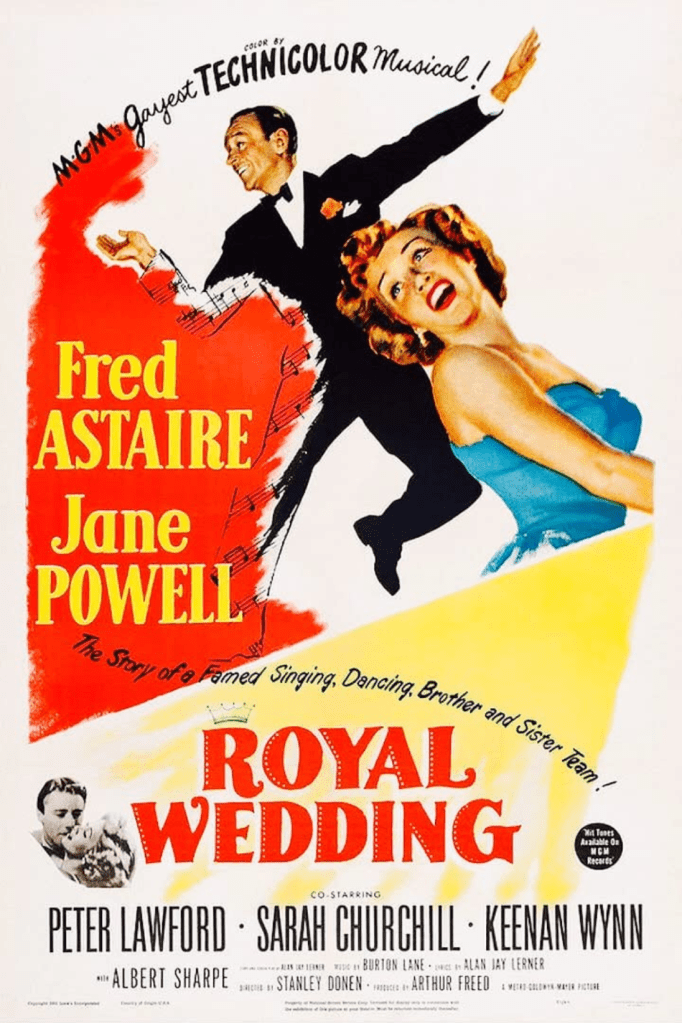
Take 3: Royal Wedding Review (Ginger Rogers and Fred Astaire Double Feature Part 2)

As I said in my review of Teenage Rebel, I haven’t seen many films from Fred Astaire’s filmography. In fact, the only two movies of Fred’s I’ve seen so far are The Sky’s the Limit and Funny Face. When I joined Crystal and Michaela’s blogathon, I knew which Fred Astaire picture I wanted to write about. Last month, I was recommended the 1951 film, Royal Wedding, by Heidi from Along the Brandywine. She suggested this film because of its use of split screens. Since I don’t have many Fred Astaire titles on my movie recommendation board on Pinterest, this was my first choice for this double feature! It is interesting that Royal Wedding is the last movie I’m reviewing in 2020. Musicals from the Breen Code era are usually seen as happy, up-beat productions. This is a contrast to the type of year 2020 ended up becoming.

Royal Wedding poster created by Metro-Goldwyn-Mayer.

Things I liked about the film:

The acting: A similarity I’ve noticed among Fred Astaire’s roles in The Sky’s the Limit, Funny Face, and Royal Wedding is how confident he comes across in each film! Speaking specifically about Royal Wedding, his character, Tom Bowen, had the showmanship you’d expect from a stage performer. Even though he was performing a duet in the movie’s opening number, “Ev’ry Night At Seven”, he had a stage presence that demanded the audience’s attention. This is because he had complete control over his part of the performance as well as experience leading other musicals. Fred also appeared comfortable as one of the leads in this film. Jane Powell’s on-screen personality in Royal Wedding was very sweet! Her character, Ellen Bowen, was also flirty without overdoing it. What worked in Jane’s favor was how she was able to keep up with Fred in their musical duets as well as hold her own in her solos. It definitely showed how strong of a performer she is! Because I’m not familiar with Sarah Churchill as an actress, I wasn’t sure how a Fred Astaire and Sarah Churchill on-screen pairing would work when I first saw them together. But as the film went on, I realized they had better on-screen chemistry than I expected! As an individual performer, Sarah gave her character, Anne, a sophisticated independence that never made her seem snobby or self-centered. In one scene, as she’s recalling to Tom how she came to be a dancer, Anne is so sure of herself when she talks about it. In scenes like this, you can tell that Anne has a healthy amount of self-confidence, partly because of Sarah’s captivating performance!

The musical numbers: When I watch musicals from the Breen Code era, I can’t help but notice the creativity that comes from some of the musical numbers! One example is Fred’s solo, “Sunday Jumps”. On paper, the idea of Fred dancing with a hatrack and exercise equipment might sound silly to some audience members. But because of the choreography and Fred’s dancing talents, that idea becomes a thoroughly entertaining one! Another solo of Fred’s, “You’re All the World to Me”, also showcases creativity well. In this musical number, Tom Bowen can be seen literally dancing on the walls and ceiling, as to visually represent what his heart is feeling for Anne. The number itself is also ahead of its time, as this particular idea wasn’t common in films from this era. I loved how a bright color palette was used in “I Left My Hat in Haiti”! It provided the musical number with an energy and personality that nicely contrasted the toned-down atmosphere of London. The musical number also did a good job at utilizing its ensemble.

The dialogue: Because of the Breen Code, screenwriters had to think and write cleverly when it came to expressing ideas that wouldn’t be allowed on film. That mentality can certainly be found in Royal Wedding’s script! After their performance, “Ev’ry Night At Seven”, Ellen complains about the theater’s lack of air conditioning due to the theater manager wanting to save money. Frustrated by that decision, Tom tells his sister how the theater manager will need a fan for one specific place. Subtle references like this one respect the audience’s intelligence and gave the screenwriters a chance to think outside the box when it comes to language. There were also memorable quotes within the script. During Anne and Tom’s conversation, Anne told him that dancing made her happy. She also said that she wanted to dance when she was happy.

The Third Fred Astaire and Ginger Rogers Blogathon banner created by Crystal from In the Good Old Days of Classic Hollywood and Michaela from Love Letters to Old Hollywood.

What I didn’t like about the film:

No major conflicts: In Anchors Aweigh, Clarence “Brooklyn” Doolittle and Joseph “Joe” Brady help their new friend, Susan, get an audition with a well-known composer at a movie studio. This served as the main conflict for the film. With Royal Wedding, there was no main conflict to be found. Instead, the story focuses on the two relationships between Ellen and John and Tom and Anne. Even when sub-conflicts were introduced in the movie, they are resolved rather quickly. Having one overarching conflict would have added some intrigue to this story.

Too many boyfriends: At the beginning of the movie, Ellen is shown having multiple boyfriends. This was to highlight the point of Ellen having difficulty ending these relationships. When Ellen’s boyfriends are interacting with one another, I had trouble keeping track of who was who. I understand this creative decision was made on purpose, to emphasize the aforementioned point. But this gave the audience unnecessary confusion.

The titular royal wedding as an afterthought: When a film is titled Royal Wedding, most audience members would expect the wedding itself to play a significant role within the plot. Because the story focuses on the relationships of Tom and Anne and Ellen and John, the royal wedding is treated as an afterthought. Sure, the characters casually bring it up from time to time. But there is little to no excitement in London just days before such a historic event. When a pre-wedding parade is passing by Tom and Ellen’s hotel suite, the scene places more emphasis on John and Ellen’s conversation, preventing the parade from being shown on-screen. The day of the wedding appears in the last twenty minutes of the film, but even that part of the story is overshadowed by the previously mentioned relationships.

Princess tiara image created by Freepik at freepik.com. <a href=’https://www.freepik.com/free-vector/ornamental-princess-crowns_1109199.htm’>Designed by Freepik</a>. <a href=”https://www.freepik.com/free-photos-vectors/gold”>Gold vector created by Freepik</a>. Image found at freepik.com.

My overall impression:

Royal Wedding is the type of movie where the acting performances and musical numbers make up for the weaker story. While the plot isn’t bad, it could have benefited from having a major conflict. If the creative team behind this movie wanted their story to be more interesting, it would have contained a mistaken identity. Ellen Bowen would switch places with the princess and fall in love with the prince, while the princess is mistaken for Ellen and eventually forms a romantic relationship with Tom. With this conflict, the wedding itself would have a greater presence in the whole story. It would also create a series of hilarious hijinks. Personally, I’d recommend Anchors Aweigh over Royal Wedding. The former has a stronger story and, in my opinion, is a more enjoyable film overall.

Overall score: 6.2 out of 10

What are your thoughts on Royal Wedding? Which movie is your favorite out of the ones I’ve reviewed this year? Please tell me in the comment section!

Have fun at the movies!

Sally Silverscreen

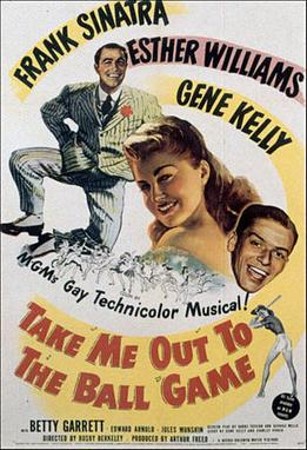
Take 3: Take Me Out to the Ball Game (Fred Astaire and Gene Kelly Blogathon Part 1)

Because Heidi’s new blogathon celebrates two classic film stars, Fred Astaire and Gene Kelly, I decided to write a double feature in their honor. I’m starting with one of Gene Kelly’s movies first, as my movie selection had a shorter run-time. On 18 Cinema Lane’s Pinterest account, there is a recommendation board where people who visit the blog can make a suggestion for future reviews. That board hosts some Gene Kelly titles, so I had plenty of options to choose from. In the end, I picked the 1949 film, Take Me Out to the Ball Game, which was recommended by Kristen from KN Winiarski Writes! The idea of a musical surrounding an athletic sport was a fascinating concept. It also gave me an excuse to finally watch one of Esther Williams’ films, as I had not seen one up until this point. 2020 has become the year of Frank Sinatra films on this blog, as Take Me Out to the Ball Game is now the fifth film from Frank’s filmography I’ve reviewed. An interesting coincidence I just noticed is how most of these movies have had a musical element included.

Take Me Out to the Ball Game poster created by Metro-Goldwyn-Mayer.

Things I liked about the film:

The acting: As I said in the introduction, I reviewed Anchors Aweigh back in September. In that review, I said that Frank Sinatra and Gene Kelly were one of the best on-screen duos I’ve ever seen because of how different their characters were from each other. Because of Frank and Gene’s experience working together, it allowed them to be familiar with the other performer and know what to expect from them in Take Me Out to the Ball Game! Like Anchors Aweigh, their characters in the 1949 film, Dennis and Eddie, were opposites of one another. This time, however, it was for different reasons. While Eddie was interested in the night life of his world, Dennis has a quieter soul that seems to notice the finer details within his surroundings. While I wrote a list article about the travels of Esther Williams, this was my first time watching one of her films. Even though Esther spent more time on land than in the water, she appeared at ease in her role as K.C. Higgins! When people tried to stand in her way, K.C. always stood her ground. At the same time, she tried to instill fairness into the situation. One great example is when she insists on a curfew penalty for every member of the Chicago Wolves. On the surface, it seems like K.C. is being unfair toward the team. In reality, she is looking out for their best interests by making sure they get a good night’s sleep so the team can perform better on in their baseball games.

The set design: Because a significant amount of time in Take Me Out to the Ball Game takes place in Florida, the sets surrounding the characters are going to reflect the Sunshine State. This is done through a variety of design choices. What made me like these sets so much was how appealing they were! When Dennis and Eddie arrive in Florida for Spring Training, the audience is introduced to the stadium, located right on the beach. With fair weather in the scene and the sandy shore taking center stage, the beach looked inviting! At night, when K.C. is interacting with both Dennis and Eddie near the pool area, lights illuminated this location to show off its exterior design. The white balcony of K.C.’s hotel room complimented the dark sky shown in the background. Light colored outdoor furniture consistently carried the color scheme this set was striving for! In an outdoor sitting area occupied by K.C. and Eddie, tan wicker chairs were paired well with green plants placed in various spots. This design choice showcased a good color combination!

The majority of the musical numbers: For the most part, I liked seeing the musical numbers in Take Me Out to the Ball Game! They were well choreographed and each performer looked like they truly enjoyed what they were doing. Like I said earlier, Frank and Gene’s experience working together helped them become familiar with the acting/performance style of the other actor. This certainly worked in their favor when it came to the musical numbers! In the opening number, “Take Me Out to the Ball Game”, both actors wonderfully pull off a tap-dance duet! Even though tap was out of Frank’s creative comfort zone, he was able to hold his own throughout the routine. Like I also said in this review, Esther spends more time on land than water. However, she was given one scene where she swam and sang the song from the movie’s opening number. Because of Esther’s experience with musicals, she was able play her own unique role in the film’s musical department that allowed her to stand out. Esther also appeared comfortable with the performance material given.

With Glamour & Panache: A Fred Astaire & Gene Kelly Musicals Blogathon banner created by Heidi from Along the Brandywine.

What I didn’t like about the film:

Two songs that didn’t age well: In Take Me Out to the Ball Game, there are two songs that have aged poorly. The first song, “Yes, Indeedy”, is performed by Frank and Gene when their characters are telling the Chicago Wolves about the females they met during their traveling talent tour. The lyrics reveal how one woman committed suicide and another female was 11 years old. Because the song itself is faster paced and upbeat, it almost sounds like Dennis and Eddie make light of the woman’s passing. Even though they say they didn’t interact with the 11-year-old for long, it makes me wonder why this child would have anything to do with Dennis and Eddie in the first place? The second song, “It’s Fate Baby, It’s Fate”, is performed by Frank Sinatra and Betty Garrett. The purpose of this song is for Betty’s character, Shirley, to share her feelings for Dennis. How she does it is very forceful, with the musical number showing Shirley blocking Dennis’ path, chasing him through the stadium, and picking him up against his will. Because of her aggression in the situation and her lack of accepting rejection, it feels like a unhealthy relationship in the works.

The character of Shirley: While Betty Garrett did a good job with the acting material she was given, I was not a fan of her character. Personally, I found Shirley to be a selfish individual who didn’t seem to care about the feelings of others. As I just mentioned, Shirley is very forceful when it comes to expressing her feelings for Dennis. If her musical number, “It’s Fate Baby, It’s Fate”, wasn’t bad enough, she wants to treat Dennis like she’s his mother. The way she talks to him in a scene where she blocks Dennis’ path with her horse and buggy shows Shirley talking to Dennis like she has more authority than him. More often than not, Dennis expresses how he doesn’t like Shirley in a romantic sense. He goes out of his way to avoid her and shows displeasure when she’s nearby. However, everyone surrounding him overlooks Shirley’s actions and encourages Dennis to spend more time with her.

An unclear time period: According to Wikipedia, Take Me Out to the Ball Game takes place in 1908. Certain aspects of the movie reflect this, with the various modes of transportation being one example. But there were some outfit choices that appeared to belong in a different decade. Whenever the Chicago Wolves are spending time in the hotel, all the team members wear team sweaters featuring their team logo. This style of sweater looked like it came from somewhere between the ‘30s and ‘50s. Like previously said, Esther has a swimming scene in this film. Her swimsuit resembles the style she wore in her “aqua musicals” of the ‘40s and ‘50s. These costume choices prevented me from getting fully immersed in the movie’s world.

Baseball game image created by Macrovector at freepik.com. <a href=’https://www.freepik.com/free-vector/baseball-game-illustration_2871359.htm’>Designed by Macrovector</a>. <a href=”https://www.freepik.com/free-photos-vectors/man”>Man vector created by Macrovector – Freepik.com</a>. Image found at freepik.com.

My overall impression:  

Even though Take Me Out to the Ball Game is the second Frank Sinatra and Gene Kelly collaboration I’ve seen, I’d still prefer Anchors Aweigh over the aforementioned film. While Take Me Out to the Ball Game is a fine movie, I feel the 1945 film was a stronger picture overall. However, I’m not going to dismiss the movie completely. One of the strengths of the 1949 project is the acting performances! Musical experience from Frank, Esther, and Gene definitely worked in this movie’s favor, with each actor appearing comfortable in their roles! I also enjoyed most of the musical numbers! They were certainly entertaining and fun to watch! Even though I didn’t mention it in my review, I feel the film’s conflict was underutilized. Within the last thirty minutes, Eddie tries to juggle baseball and performing in a café. Eventually, he learns that he can’t have everything he wants. Story wise, I think the film’s main conflict should have been Eddie’s struggle to fit his love of performing and baseball into his life. I actually found this part of the story more interesting than the Chicago Wolves dealing with a new team owner.

Overall score: 7.2 out of 10

Have you seen Take Me Out to the Ball Game? Which Frank Sinatra and Gene Kelly collaboration is your favorite? Tell me in the comment section!

Have fun at the movies!

Sally Silverscreen

Take 3: The Sea of Grass Review

When I participated in last year’s Spencer Tracy & Katharine Hepburn Blogathon, I reviewed It’s a Mad, Mad, Mad, Mad, World and One Christmas. The first movie was not my cup of tea, but I found the second movie to be just ok. This time around, I decided to write about one movie starring both Spencer and Katharine. As I’ve mentioned before, I don’t watch films from the Western genre often. This is the reason why I chose to review The Sea of Grass. Looking back on the movies I’ve seen from Spencer and Katharine’s filmographies, this is the first time I’ve seen one of their titles where both actors were the leads. Spencer and Katharine are talented actors individually, so it was interesting to see them acting alongside one another!

The Sea of Grass poster created by Metro-Goldwyn-Mayer and Loew’s Inc.

Things I liked about the film:

The acting: In The Sea of Grass, Katharine Hepburn portrays Lutie Cameron, a St. Louis native who moves to the country in order to marry Colonel Jim Brewton. Toward the beginning of the film, Lutie comes across as naïve, as she is a romantic at heart. As she stays in the country, Lutie gains a sense of maturity and grows as a person. Throughout her character’s journey, Katharine was able to show this transition in her acting performance by adopting a variety of emotions. The “sea of grass” this film is named after is Colonel Jim Brewton’s favorite spot. While talking about it with Lutie, Jim describes the fields like a convincing salesman. His face contains a look of longing; reflecting on the past, present, and future of his prized field of grass. The way he talks about it shows how much he cares for this patch of earth. The facial expressions and tone of voice Spencer adopts persuade the audience of this location’s importance. Spencer’s expressions and vocal inflections also reveal the cracks in Jim’s foundation as the story continues. Brice Chamberlain, a local lawyer, is portrayed by Melvyn Douglas. Whenever his character interacted with Lutie, Melvyn was able to, talent-wise, go toe-to-toe with Katharine. He delivered thought-out remarks with a serious calm that one might expect from a respected lawyer. A professional composure was also present in Melvyn’s performance. Because his on-screen personality was different from Katharine’s, it created an interesting dynamic.

The scenery: The majority of The Sea of Grass takes place in the country. Because of this, the natural landscape of this environment is shown in several scenes! When characters travel through the desert, huge mountainous rocks illustrate just how small humans are compared to the large scope of nature. Long and medium shots are used to emphasis this idea. Even the “sea of grass” is featured in a few scenes, its beauty captured well on screen! Sweeping shots showed the vast size of this field. As the wind blew, the movements of the grass looked like the rippling of water. All of these components came together to create a calming space!

Katharine’s wardrobe: Throughout the movie, Katharine showcased an impressive wardrobe that complimented her well! This is because all of her outfits were simple, but elegant. When Lutie and Jim are sharing their first dinner after their wedding, she wears a white long-sleeved dress with a small set of flowers in the front of the dress’s top. Later in the movie, Katharine wears a black-and-white, over-the shoulder dress. This outfit was paired nicely with a dainty black choker and ponytail hair-do. What’s also worth pointing out is how Katharine’s wardrobe in The Sea of Grass appeared historically accurate with the film’s time period.

The Third Spencer Tracy & Katharine Hepburn Blogathon created by Crystal from In the Good Old Days of Classic Hollywood and Michaela from Love Letters to Old Hollywood.

What I didn’t like about the film:

More emphasis on telling: At the beginning of the movie, several people in Salt Fork inform Lutie about how awful of a person Jim is. He is, apparently, such a bad person, some compare him to a tyrant. While the audience can hear Jim say harmful things, they never get to see him do harmful actions. This creative decision gives the viewers only part of a bigger picture when it comes to Jim Brewton. Whenever the subject of people using the “sea of grass” is brought up, Jim is very specific about how the land should be used. If someone objects to these ideas, Jim tells others what he’s going to do instead of carrying out the deed.

No major conflict: Since the film is called The Sea of Grass, you’d think most of the story would revolve around the “sea of grass” itself. Instead, the film prioritizes the personal events of the characters. Stories that are character driven can work. But when you have an interesting conflict like how to utilize a field of grass, the character’s stories don’t seem as interesting. While the triumphs and tragedies of Lutie and company are highlighted, the “sea of grass” is relegated to a subplot.

Times moves too fast: In a movie where time progresses, there is usually some indicator that a jump in time has occurred. This is done through on-screen text or a voice-over. The Sea of Grass, unfortunately, doesn’t utilize any techniques to inform their audience that time has moved forward, causing changes to appear abruptly. A perfect example are the lives of Sara Beth and Brock. In one scene, Sara Beth is shown as a little girl, while Brock is a toddler. The very next scene shows Sara Beth and Brock as older children, appearing to be ten and eight.

Small, western town image created by Freepik at freepik.com. <a href=”https://www.freepik.com/free-photos-vectors/background”>Background vector created by freepik – http://www.freepik.com</a>. Image found at freepik.com.

My overall impression:

When I chose to review The Sea of Grass, I wanted to expand my Western genre horizons. This decision taught me that Western tragedies do exist. Despite seeing a handful of Westerns, the movie was quite different from other films I’ve seen in this genre. Even though I knew that this movie was about a rocky relationship, it was sadder than I expected. The Sea of Grass is a fine film with strong components, like the acting and scenery. However, it does have its flaws that shouldn’t be ignored. While the “sea of grass” is shown on screen, it isn’t as significant as the title would suggest. In fact, this location feels more like a glorified backdrop. I will say that Katharine Hepburn and Spencer Tracy do work well together as actors. As the years go by, I would like to see more of their films where they both star as the leads.

Overall score: 7.3 out of 10

Do you like watching Western films? Are there any Westerns you’d like to see me review? Let me know in the comment section below!

Have fun at the movies!

Sally Silverscreen

Take 3: Anchors Aweigh Review

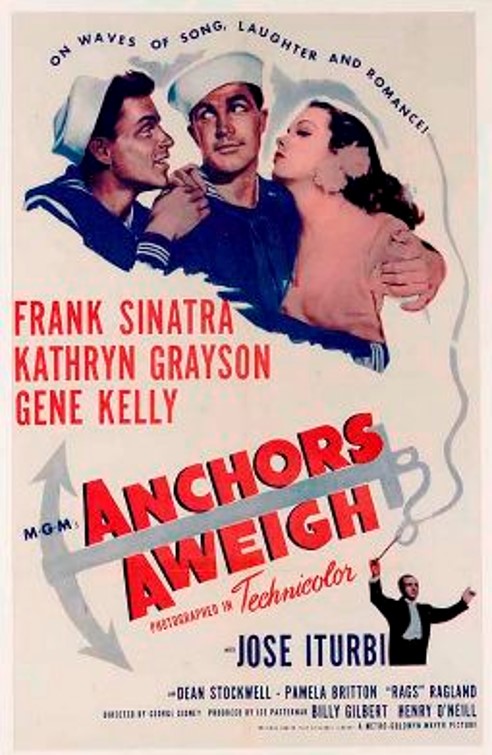
This is it, my 200th movie review! It’s hard to believe I’ve reached this accomplishment in only two years! The recent occurrence and my participation in Pure Entertainment Preservation Society’s Joe Pasternak Blogathon caused me to choose Anchors Aweigh as the next movie to review! This film was recommended to me by The Classic Movie Muse from the blog, The Classic Movie Muse. Anchors Aweigh is also the fourth Frank Sinatra picture I’ve written about in 2020. When reading about Joe Pasternak in the announcement post for the blogathon, I learned that Joe put a lot of thought into the films he produced. Prior to joining the event, the only movie of his I’ve seen is The Unfinished Dance. Back in April, when I reviewed the project, I said it was a good, solid picture! I also mentioned how the movie did a good job at exploring thought-provoking ideas, such as the disappearance of truth. I’m looking forward to talking about Anchors Aweigh, as it is very different from The Unfinished Dance!

Anchors Aweigh poster created by Metro-Goldwyn-Mayer, M-G-M Cartoons, and Loew’s Inc. Image found at en.wikipedia.org/wiki/File:Anchors_aweigh.jpg

Things I liked about the film:

The acting: Anchors Aweigh is the fourth movie of Frank Sinatra’s I’ve seen, as I said in the introduction. His performance as Clarence “Brooklyn” Doolittle was different from his roles in Marriage on the Rocks, High Society, and Ocean’s Eleven. This is because his on-screen personality was sweet-natured. It was a good contrast to Gene Kelly’s character, Joseph “Joe” Brady. In Anchors Aweigh, Gene displayed a confident and headstrong personality. This set of opposites is what helped Gene and Frank become one of the best on-screen duos I’ve ever seen in film! Despite watching only one of Joe Pasternak’s films, I have noticed how the female characters are intelligent women who always hold their head up high. Kathryn Grayson’s character, Susan Abbott, is a great example! Even though she is a single parent, she never gives up on her dreams of being a singer. Because of a believable performance, Kathryn made Susan someone worth rooting for! While Pamela Britton appears in Anchors Aweigh for a limited time, I really liked her character! She not only had a good on-screen personality, but she also had good-screen chemistry with Frank Sinatra. Watching Pamela in Anchors Aweigh was a joy to watch, as her presence brought a bright light to any of her scenes!

The comedy: I found Anchors Aweigh to be a genuinely funny movie. That’s because the humor in this film was well-written and delivered! When Susan and Clarence are on their way to dinner, Clarence suggests that Joe join them. When Joe asks Clarence why he should go, Clarence tells him he won’t know what was said in Joe’s phone conversation. Not only was this conversation clever, but it was also executed well by Frank and Gene. Another funny scene involving Gene and Frank is when Joe is chasing Clarence around the service lodge. This moment was caused by Joe sleeping in, making him miss his meeting with Lola.

The musical numbers: In Anchors Aweigh, the musical numbers were definitely a highlight! There were so many good scenes, it is difficult to choose a favorite. Gene’s dancing talents were utilized to their fullest extent, from his duet with Jerry (the animated mouse) to his Latin inspired solo. These dance numbers were very colorful. The costumes and set design were bright and cheery, allowing the overall mood to be light-hearted and joyful. Frank’s singing abilities were also well incorporated into the story. His solos were slower, ballad pieces. This choice complimented the more romantic moments of the narrative. Having Frank and Gene perform together was a great decision! They were able to keep up with each other’s fortes as well as work well with one another. “I Begged Her” and “If You Knew Susie” showcases this creative partnership wonderfully!

The joining of animation and live-action: In one scene, Joe finds himself in a magical make-believe land where he interacts with animated animals. This is because he is telling a story to the children of Hollywood Day School how he earned his Silver Star. This part of the movie looked really good, especially for a film released in the mid-‘40s! It felt like Gene was actually in that world, as the technology of the time appeared top-notch. I also liked the quality of the animation! It contained bright colors and clear lines, reminding me of the older films from Disney.  Seeing Gene and Jerry dance together was impressive, as it seemed like they were in the same room. Before the actual dance routine, Gene led Jerry onto the ballroom floor by holding his hand. Because of how good the technology looked, this interaction between these two characters was convincing!

The Joe Pasternak Blogathon banner created by Tiffany and Rebekah Brannan from Pure Entertainment Preservation Society. Image found at https://pureentertainmentpreservationsociety.wordpress.com/2020/08/21/announcing-the-joe-pasternak-blogathon/.

What I didn’t like about the film:

A drawn-out conflict: The main conflict of Anchors Aweigh shows Joe and Clarence trying to set up an audition for Susan. While conflicts take time to be resolved, I wasn’t expecting the conflict in this film to last the entire story. Quality script-writing made the conflict itself interesting. But I honestly feel it could have been resolved sooner.

Less Tom, More Jerry: Tom and Jerry, the famous animated cat and mouse, are listed in the opening credits of Anchors Aweigh. I was not expecting this special guest appearance, so seeing these characters in the film was a pleasant surprise. Even though I liked Jerry’s duet with Gene, Tom showed up for only a few seconds. I found their cast listing misleading, as an equal amount of screen time is expected when Tom and Jerry are included in a program.

I had this patch lying around my house and thought it would be perfect to include in this review! Screenshot taken by me, Sally Silverscreen.

My overall impression:

For someone who had never seen any of Frank Sinatra’s films, I have really made up for lost time in 2020. By selecting Anchors Aweigh for the Joe Pasternak Blogathon, I gave myself an opportunity to watch one of Frank’s earlier works. It also gave me an excuse to see more of Joe’s films. I can honestly say Anchors Aweigh is, so far, the best movie I’ve watched this year! There is so much to like about this project and it was pleasantly joyful! I spent most of my time smiling and laughing, as the humor was one of the strengths of this story. The entire movie was well thought out, showcasing an engaging film that was also entertaining. Thank you, Classic Movie Muse, for suggesting this film to me. If not for your recommendation, I might have never seen this delightful movie!

Overall score: 8.9 out of 10

Have you seen any of Joe Pasternak’s films? If so, which one is your favorite? Share your thoughts in the comment section!

Have fun at the movies!

Sally Silverscreen

Word on the Street: ‘Bill & Ted Face The Music’ Receives a Trailer + More Movie News

Yesterday, on June 9th, Orion Pictures/MGM Studios released an official trailer of the upcoming film, Bill & Ted Face The Music! The studio also released an official poster for the movie! I haven’t seen any of the films in the Bill & Ted series, but I really like what I’ve seen and heard about this third film so far. The poster itself adopts elements that were found in film posters from the past; artistic visuals that come together to create a singular image conveying mystery and intrigue. As for the trailer, I found it hilarious, as it had the kind of random humor that I resonate towards. This marketing campaign makes me want to watch the previous two Bill & Ted films! As of June 2020, the film has an August 21st premiere date. Bill & Ted is not the only Hollywood IP that has received sequel related news. Two weeks ago, Chris Murphy from Vulture reports how Sonic the Hedgehog will get a sequel! According to the article, “Paramount Pictures and Sega Sammy have begun development on a sequel to Sonic the Hedgehog”, which means the project is in the pre-production stage. The producers who have signed on to the film are Neal H. Moritz, Toby Ascher, Toru Nakahara, Hajime Satomi, Haruki Satomi, and Tim Miller. The first film’s director, Jeff Fowler, and screenwriters, Pat Casey and Josh Miller, are coming back for the second movie. While I haven’t seen Sonic the Hedgehog, I think this is great news for Sonic fans and for people who support studios that put their customers first. Even Chris, from Vulture, says “listening to feedback can be incredibly fruitful for everyone involved”. Hopefully, the sequel can be just as successful as its predecessor.

Article link for this news story:

https://www.vulture.com/2020/05/sonic-the-hedgehog-sequel-in-the-works-with-paramount.html

Bill & Ted Face The Music poster created by Orion Pictures, Hammerstone Studios, Dial 9, Dugan Entertainment, TinRes Entertainment, and United Artists Releasing. Image found at en.wikipedia.org/wiki/File:Bill_and_ted_face_the_music_poster.jpg

Months after Coronavirus forced businesses all over the world to pause their operations, steps are now being taken to reach a state of normalcy. In an article from The Hollywood Reporter, Etan Vlessing discusses how “the Quebec provincial government and health officials have given the green light for film and TV production to resume on June 8 amid the coronavirus pandemic”. Before this decision was made, Manitoba had resumed film and television production in their province of Canada. Toward the end of May, Vancouver Island said “the industry can resume shooting by June”. Robert Buffam, from CTV News, writes about the precautionary steps film and television teams will take to work as safely as possible. Ric Nesh, a television show producer, shares “We may reduce, revise, rewrite scenes without the larger crowds. No we may, we will revise scenes.” In the United States, film studios and movie theaters are making attempts to go back to work. A Hollywood Reporter article from June 8th states “anxious theater owners — and Hollywood studios — are being given the go ahead to flip on the lights later this week by California Gov. Gavin Newsom’s office and the Department of Public Health.” June 12th is the selected date when California’s cinemas may start their operations again. Similar to the film and television industry in Canada, safety precautions will be put in place. One example is adopting a 25% capacity limit “or no more than 100 people per auditorium”.

Sources for this news story:

https://www.hollywoodreporter.com/news/quebec-restart-film-production-pandemic-era-safety-guidelines-1297049

https://www.hollywoodreporter.com/news/california-allows-movie-theaters-reopen-june-12-restrictions-1297585

Movie night image created Macrovector at freepik.com. <a href=”https://www.freepik.com/free-photos-vectors/background”>Background vector created by Macrovector – Freepik.com</a>. <a href=’https://www.freepik.com/free-vector/cinema-festival-poster_2875637.htm’>Designed by Macrovector</a>. Image found at freepik.com.

I know this piece of news relates to television. But because it’s about Hallmark going out of their comfort zone, the story became an exception. Earlier last month, Emre Kaya from The Cinema Spot reported how Hallmark Channel is creating a new television show! The article shares that this is the network’s “first high-budget drama series”, which “is a science fiction soap drama series set on a space colony.” Emre’s post doesn’t reveal much information about the project. As of June 2020, Hallmark has not made an official statement about the show. When I first read this story, I was excited at the idea of Hallmark creating a project that is very different from their norm. On several occasions at 18 Cinema Lane, I have talked about how Hallmark should take creative risks and think outside the box. It looks like they’re starting to pay attention to these ideas. Maybe this show could be the beginning of a new era where creativity and originality reign.

Article link for this news story: https://www.thecinemaspot.com/2020/05/08/exclusive-hallmark-channel-set-to-develop-high-budget-sci-fi-series-first-entry-into-peak-tv/

Colorful galaxy image created by Freepik at freepik.com. <a href=’https://www.freepik.com/free-vector/lovely-hand-drawn-galaxy-background_2943080.htm’>Designed by Freepik</a>. <a href=”https://www.freepik.com/free-photos-vectors/background”>Background vector created by Freepik</a>. Image found at freepik.com.

Are you looking forward to any of these upcoming projects? What will be the first movie you see when theaters are open again? Please share your thoughts in the comment section below!

Have at the movies!

Sally Silverscreen