Aviation is one of the broadest topics when it comes to the world of cinema. However, I was determined to find a movie to review for Taking Up Room’s Aviation In Film Blogathon. While visiting the Youtube channel, Cult Cinema Classics, I came across a film titled The Disappearance of Flight 412. As this title suggests, there is a plane within the story. But the story itself is what led me to ultimately select the movie for this review! The idea of the military possibly crossing paths with a UFO is fascinating, especially in film. I also don’t receive many opportunities to review tv movies from the 1970s. So, fasten your seatbelts and get ready for takeoff, as we’re about to start this review of The Disappearance of Flight 412!
The use of time-stamps and a voice-over: Throughout the movie, a male voice-over can be heard explaining what was happening on screen. His tone is serious, which complemented the film’s tone. The inclusion of this technique reminded me of The Twilight Zone, where the narrator is presenting the film as a case study. Another technique used in this film was time-stamps. These showed how much time had passed since the mystery started. The time-stamps also shared locations, informing the audience when a scene transition took place. This technique added to the film’s intended delivery; a classified file the audience is given exclusive access to.
A different side of the military: When one thinks of the military’s presence in a film, movies involving war/combat typically come to mind. However, there are films that depict the military in less combative environments. The Disappearance of Flight 412 is one of those films, as members of the Air Force are performing daily operations or testing a plane. The 1974 tv movie also focuses on the leadership within the military. As the story revolves around the military’s approach to unexplained phenomena, various military leaders handle the situation in a way they feel is best. With all that said, The Disappearance of Flight 412 presents a different side of the military, allowing the film to have its own unique identity!
The mystery’s start time: I’ve stated before how I prefer mysteries start sooner rather than later. This is so the audience can get, and stay, invested in the mystery. In The Disappearance of Flight 412, the mystery started six minutes into the movie. Because of this, it allowed the audience to get hooked into the story. It also allowed the story to get straight to the point sooner.
A misleading title: This movie is titled The Disappearance of Flight 412. But throughout the story, the audience follows the members of the titular flight. Therefore, they know exactly where this plane ended up. There were two fighter jets, named Tango 1 and Tango 2, that did disappear. However, the title does not acknowledge those jets. With that said, I found this movie’s title misleading.
Few opportunities to know the characters: According to both IMDB and the title of the Youtube video, The Disappearance of Flight 412 is classified as a mystery. But because the story primarily revolves around this mystery, there aren’t many opportunities to get to know the characters. Sure, the audience learns a little bit of information about them, such as some of their military history. However, this information isn’t enough to truly get to know the characters. If anything, the audience simply becomes familiar with them.
The prolonged mention of UFOs: At the beginning of the movie, the aforementioned voice-over provides explanations and details about possible UFO sightings. This sets the stage for what’s to come in the story. After this introduction, though, the subject of UFOs isn’t brought up until about thirty-seven minutes into the movie. If that introduction hadn’t been included in the film, the first mention of UFOs would have been an unexpected surprise for the audience. But because of the introduction’s inclusion and because the introduction felt more like a news reel, it, in a way, presented false expectations of more serious UFO discussion.
There are movies where the subject itself is more interesting than the film. Some examples are Over the Edge and The Last Full Measure. In my opinion, The Disappearance of Flight 412 fits in this category. As I mentioned in my review, the story primarily revolves around the mystery of the disappearing fighter jets. Since the movie also covers the subject of the military dealing with unexplained phenomena, I think this topic would serve as an interesting documentary. That way, more time could be given to the subject, while also exploring the debates and perspectives surrounding it. At the end of the movie, a series of text states how the film’s characters and events are fictional. Maybe if The Disappearance of Flight 412 had been based on a real-life story, the project would be more memorable than it was.
Overall score: 6.2 out of 10
Have you seen The Disappearance of Flight 412? Are there any films involving aviation you like? Let me know in the comment section!
When MovieRob announced ‘Sports Themed Films’ as April’s Genre Grandeur theme, I knew right away which movie I would review: the 1971 tv movie, Brian’s Song! One reason for this decision was the fact I had this film on my DVR. But when I recently checked my DVR, Brian’s Song was nowhere to be found. This is not the first time this has happened to me, where a recorded program on my DVR has suddenly disappeared. But it did not deter me from reviewing Brian’s Song. On a recent trip to the library, I found a DVD copy of the film. It was perfect timing, as I was soon going to watch and write about the movie! In the world of made-for-tv film productions, there are those that are well-known, for better or worse. Brian’s Song is one of the more respected titles, garnering praise since its 1971 release. But will I join the choir and sing this movie’s praises? Or will I skip a trip on the bandwagon? You won’t know if Brian’s Song scored a touchdown unless you read this review!
Before I begin this review, I would like to point out there will be a few spoilers within this article.
This is a screenshot of the DVD copy of Brian’s Song I mentioned in my review. Screenshot taken by me, Sally Silverscreen.
Things I liked about the film:
The acting: I really liked the cast of Brian’s Song! But because this story primarily revolves around Brian and Gale’s friendship, this review will focus on the performances of James Caan and Billy Dee Williams. When I think of Billy Dee Williams, I think of Lando from Star Wars! It has been years since I’ve seen the original trilogy in the Star Wars franchise. But from what I remember, Billy’s on-screen personality was charismatic and larger-than-life. His portrayal of Gale Sayers was very different from his portrayal of Lando, as it was more reserved. However, it was packed with emotion! When Gale first meets Brian, he is taken aback by Brian’s outgoing personality. Gale’s eyes contain the awkwardness of the situation and his body language appeared tenser than Brian’s. Gale also spoke with few words, carefully choosing what to say next. Meanwhile, as I’ve just said, Brian was outgoing and confident. In this first meeting, Brian walks up to Gale, immediately recalling a conversation they had prior to training. At the first team dinner, Brian sings his alma mater’s fight song, not afraid to look silly in front of his team members. This on-screen personality was different from James’ westerns I’ve seen, where his character has typically been rugged and serious.
One of the best scenes in Brian’s Song is when Brian is building exercise equipment for Gale. Before this gesture, Gale injured his leg during a game. Angry about the situation, he is bitter toward Brian. Gale angrily objects to Brian’s plan, with this objection meeting Brian’s reason for the gesture. Brian recalls how, in high school, he was demoted on his football team due to a more talented team member. He also shares how he was demoted again, as Gale is the stronger player among the two of them. Now that Brian has a top position on the Chicago Bears, he would rather help Gale heal from his injury, as Brian claims his recent top position was given to him “for the wrong reasons”. This is one of those scenes where the audience can understand both characters’ reasoning. Through Billy’s expressions, Gale is less reserved, gaining some of Brian’s confidence to angrily explain his objections. James shows a side of gentle humbleness, as Brian recounts moments of self-doubt. It is a good example of how the differences in acting performances can complement both of them!
The football game footage: Brian’s Song featured game footage whenever the Chicago Bears made a game appearance. I’m not sure if this footage was taken from actual games or if it was filmed for the sake of the movie. Either way, its inclusion added a sense of realism to the overall narrative. In one scene, Gale and Brian are talking to each other on the sidelines. This scene was filmed as if it was part of a television broadcast, captured in a grainier image. This cinematography felt consistent to the game footage I talked about. It also presented a different way to include football games in a story, as most football themed movies place, at least, one football game during their story’s climax.
The voice-overs: During the aforementioned game footage, voice-overs of Brian and Gale could be heard. These voice-overs consisted of conversations between the two, with different topics being discussed. I like how the voice-overs were added over the footage. It reminded me of sports commentators, except the game itself was never brought up in these conversations. The voice-overs provided insight into Brian and Gale’s friendship. Their humor and perspectives could be picked up in these voice-overs, allowing the audience to learn more about them.
Glossed over racism: After football training for the Chicago Bears begins, Gale is told by the team’s head coach that he and Brian will be the first interracial roommates in professional football history. Because of this, Chicago Bears’ staff prepare Gale for the racism he will likely experience. I know there is only so much to cover in a made-for-tv movie, especially one that is about an hour and thirteen minutes. But when it comes to the racism Gale encounters, there was more telling than showing. Besides the staff’s preparations, the only racism present in the story is when Brian reads Gale a mean letter through a voice-over. The glossing over of racism surprised me, since the story takes place in 1965, a year within a decade known for the Civil Rights Movement.
Confusing aspects of the football training process: The story of Brian’s Song starts at the beginning of Chicago Bears’ training. When this process began, I found myself confused by what was happening on screen. I wondered why a professional football team was gathering on a college campus? Why was the coach and his staff talking about cutting team members? Was a draft supposed to take place before training began? I know a certain amount of information about professional football. However, the training process isn’t one of those subjects. It also doesn’t help how the script was written as if expecting the audience to know that kind of information from that specific period in time. I wish explanations were provided in the dialogue.
Omitted grief of the team: Remember when I said there were a few spoilers in this review? Well, this is where I will bring those up. At one point in the story, Brian is diagnosed with cancer. After learning of Brian’s diagnosis, Gale makes an emotional pep talk to the Bears, vowing to dedicate their upcoming game to Brian. At the end of the movie, Gale reveals through a voice-over Brian passed away. In the aforementioned scene featuring Gale’s pep talk, the sadness of the news could be seen on the faces of the team members. While they all carried long, heartbroken faces, some of them even held tears in their eyes. With that said, I would guess Brian’s passing would leave everyone involved with the team devastated. As I said before in this review, there is only so much to cover in a made-for-tv movie. But I think a final scene/epilogue showing how the Bears dealt with Brian’s passing should have been included. Was Brian’s jersey honorably retired? Did he receive a posthumous MVP award? I’m not familiar with Chicago Bears’ history, so I’m not sure how the team responded to Brian’s passing in real life. However, omitting it from the script seems like a disservice to the team members who knew him.
Before Billy Dee Williams entered a galaxy far, far away and before James visited the wild, wild west, there was a little made-for-tv film called Brian’s Song. Fifty-one years after this movie debuted, it has still held a favorable reputation, regarded as one of the most beloved television films of all time. Brian’s Song is a fine production with its heart in the right place. But I wasn’t as emotionally affected by it as I expected. Yes, this movie’s story is a sad one. However, I was familiar with Brian and Gale’s story before I saw the film. This knowledge prevented me from being emotionally caught off guard when a sadder, more dramatic moment happened. Like I just said, this movie had its heart in the right place. One way this statement is put into action is how the cast appears to truly care about the respective material. The film also features interesting creative decisions, such as football game footage and voice-overs over that footage. Before I end this review, I would like to point out how accessible Brian’s Song is, as I happened to chance upon a copy of it on DVD. Not every made-for-tv movie is lucky, as some of them are either harder to find or lost to time.
Overall score: 7.1 out of 10
Have you seen Brian’s Song? Which made-for-tv movie would you consider a “classic”? Let me know in the comment section!
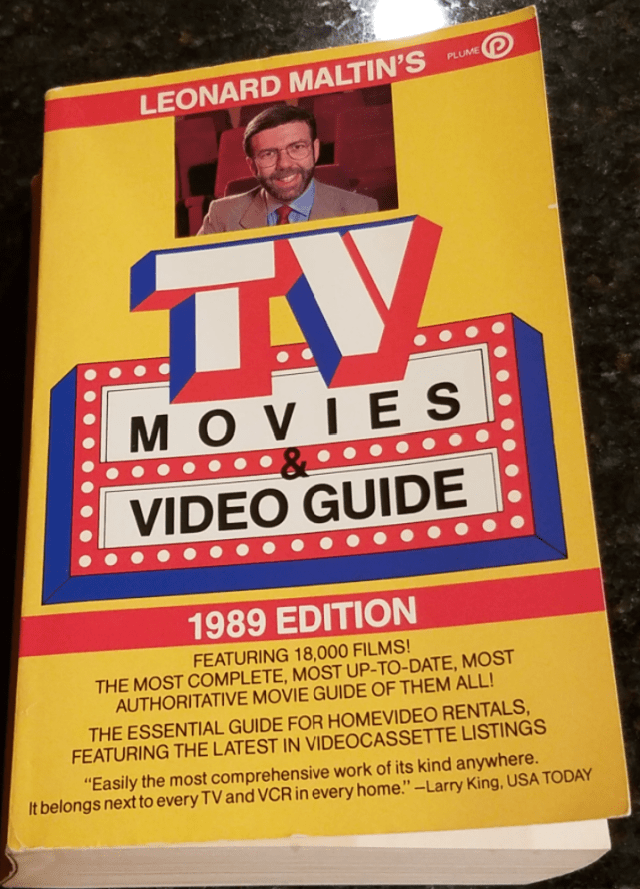
First, it was All Dogs Go to Heaven 2. Then, it was The Cabin, followed by Scarlett. Now, for the fourth So Bad It’s Good Blogathon, I am continuing my saga to find the one movie that can rightfully claim this coveted title! As you can see by the aforementioned films, my track record has been two ‘90s projects that were just ok and one 2011 Hallmark movie that was so bad, it was unenjoyable. This time around, I traveled further back in time to choose my fourth attempt at finding my “so bad it’s good” movie. In my review of The Lion, I mentioned Leonard Maltin’s TV Movies & Video Guide 1989 Edition. This is because that book introduced me to the 1962 title. Through this publication, Leonard introduced me to another movie. That film is 1978’s The New Adventures of Heidi! According to Leonard’s review of this picture, the movie contains the following:
A) A “modern” retelling of a well-known story
B) Musical numbers
C) New York City
D) Christmas
To me, these facts sounded like the ingredients of a “so bad it’s good” project. But has The New Adventures of Heidi finally claimed this sought-after title? Keep reading to see what’s on the other side of the mountain!
The acting: When it comes to acting performances in made-for-tv movies, it can be hit or miss. But in The New Adventures of Heidi, the acting was stronger than initially expected! Portraying the titular character, Katy Kurtzman gave a performance that appeared genuine, like the character’s goodness was true all along. Whenever Heidi is with her friend, Elizabeth, you can see they truly enjoy spending time together. Elizabeth meets Heidi after running away from school. Despite knowing each other for a short amount of time, they display a strong camaraderie. This camaraderie was displayed through a down-to-earth personality, pleasant facial expressions, and a kind demeanor from Katy. Executed with consistency, Katy also displayed authentic emotion. When Heidi first learns about her grandfather’s plans to send her away, her emotions effortlessly change over the course of the scene. Happiness turns to thoughtful concern, her eyes intently set on her grandfather. As the conversation continues, Heidi’s eyes grow sadder, eventually leading to shed tears. Because of Katy’s acting strength, her overall performance was enjoyable to watch!
Since I mentioned Elizabeth, I’ll talk about Sherrie Wills’ performance! On the surface, Elizabeth seems like aspoiled child who is rough around the edges. But beyond the surface, she doesn’t seem like a stereotype. Because of Sherrie’s acting abilities, Elizabeth is a character that gives the audience a reason to be sympathetic toward her. A great example is when she and Heidi go Christmas shopping. When they arrive toa toy store, they are overcome with happiness and wonder at the sights of the season. But as soon as Elizabeth sees a carousel music box, she immediately bursts into tears. This is because Elizabeth’s mother, who passed away before the film’s events, used to give her father a music box every Christmas. It is scenes like this one that show how there is more than meets the eye.
Back in 2019, I reviewed Summer Magic, a Disney production from 1963. One of the reasons why I wanted to see that particular film was Burl Ives’ involvement in the project. When I discovered he was cast in The New Adventures of Heidi, I was curious to see how his performance differed from Osh Popham of Summer Magic. Like his previous performance, I liked his portrayal of Heidi’s grandfather! While his acting abilities were expressive, there was a lot of heart in his performance. This heart can be seen during the musical number, “Heidi”. In that number, Heidi’s grandfather is singing about how thankful he is to have Heidi in his life. Throughout this scene, he appears genuinely happy, reminiscing over all the joy Heidi brought so far. A warm smile appears on his face and a pleasant demeanor is heard in his voice. Heidi’s grandfather seems approachable, showing him as a friendly man and lovable parental figure. Even though he was in a handful of scenes, Burl Ives did a good job with his role!
The messages and themes: The original Heidi is known for containing messages and themes of family, friendship, and finding a silver lining. Like the original, The New Adventures of Heidi also features themes and messages that are timeless and relatable! Before Christmas, Elizabeth’s father, Dan, tells his secretary how he’ll be too busy to celebrate the holiday with his daughter. His secretary, Mady, tells him “But no two are the same. And you’ll never have this one back again”. This simple statement reminds the audience how unpredictable time is. Therefore, it is wise to spend that time with those you love. When Heidi comes home, she is upset because her grandfather hasn’t returned. Dan shares with Heidi how even though it’s important to hold on to the memory of lost loved ones, time needs to be made to open hearts for those still living. This message is just as meaningful today as it was in 1978. That could also be said about all the messages and themes in The New Adventures of Heidi!
The scenery: This movie was filmed in California and Colorado, according to IMDB. For the scenes taking place in the Alps, my guess is they were filmed in Snowmass, Colorado. Despite this, the setting looked like a pretty convincing Switzerland! In some establishing shots, large mountains and dark green hills are captured in long to medium shots. A color palette of greens, browns, and white illustrated a natural landscape whose justice likely can’t be done through filmography. Red poppies are sprinkled around Heidi and her grandfather’s home. They can also be seen in expansive green fields. The vibrant hue of the flowers provide a striking component to this landscape. When all this is added together and paired with a bright blue sky, a welcoming and picturesque environment is presented to the audience!
Glaring cases of discontinuity: What makes or breaks any story is its continuity. This component is like a thread, tightly holding each piece of the story together, if strong enough. But when it comes to The New Adventures of Heidi, there were a few aspects that caused this thread to be looser. In the introduction, I mentioned the movie was a “modern” retelling of Heidi. While this statement is true, it looks like Heidi, hergrandfather, and Peter didn’t get the memo. That’s because their attire reflects the time period of the originalstory, which is set in the 1880s. Even Heidi and her grandfather’s home is reflective of an era gone by. During the movie, Heidi’s grandfather begins to lose his eyesight. Because of this, he decides to send Heidi to live with her cousins. But while singing the song, “Let Me Stay/Let Her Stay”, Heidi’s grandfather prays to God to have Heidi stay in the Alps, even going so far as to sacrifice his eyesight just to make his prayer a reality. It seems like he has forgotten that this decision was in his control since the very beginning. This example shows howdiscontinuity can muddy the waters of character development.
The musical numbers: As I mentioned in the introduction, there are musical numbers in The New Adventures of Heidi. I can tell the film’s creative team wanted to include musical numbers in an effort to give their project its own unique identity. In all honesty, though, I don’t think this movie needed musical numbers. My reason is how weak these numbers were. Some of these musical numbers were performed by Katy and Sherrie. I’m not going to give these actresses too much criticism, as they were children at the time of the movie’s production. But I will say they are better actresses than singers. Sherrie’s voice was flat, unable to reach higher notes. Meanwhile, Katy’s voice was stronger, but she couldn’t reach some higher notes either. This highlighted the actresses’ weaknesses, giving the audience the impression of how Katy and Sherrie werelikely not professionally trained singers. Even professional singers couldn’t catch a break either. Burl Ives is a talent who can do no wrong, singing wise. But he was caught up in one major weakness in these numbers: talking throughout the song instead of singing. This happened during the song, “Let Me Stay/Let Her Stay”, where Heidi’s grandfather is speaking his prayer when he’s meant to be singing it. Marlyn Mason also fell into this trap with the song, “That Man”. Because she tried to sing and talk through her lyrics at the same time, she performed the song faster than the music. To me, this felt so jarring, as the music and execution of the lyrics seemed like they belonged to two separate pieces.
A regurgitated story: This film is titled The New Adventures of Heidi. If you take the time to watch it, you’d see how the movie rehashes most of the story points fromJohanna Spyri’s original. Take for instance, the character of Elizabeth. In The New Adventures of Heidi, she’s meant to be a Clara representative; a wealthy young girl dealing with her own conflict that Heidi helps to resolve. But instead of dealing with a serious medical situation, Elizabeth wants to spend more time with her workaholic father, especially after the death of her mother. Similar to the original story, there is a medical situation present in The New Adventures of Heidi. But this time, Heidi’s grandfather is losing his eyesight, as I explained in my paragraph about the film’sdiscontinuity. The longer I watched this movie, the more I questioned what it’s intended point was.
A screenshot of my copy of Leonard Maltin’s TV Movies & Video Guide 1989 Edition. Screenshot taken by me, Sally Silverscreen.
My overall impression:
And now, the moment you’ve been waiting for! The answer to whether The New Adventures of Heidi will claim the title of “so bad it’s good” is…an unfortunate no. The longer I think about this film, the more I see how spectacularly average it is. As I mentioned throughout my review, there were musical numbers included in this production. I also noted how Christmas makes an appearance in the story. But when you look past allthe silver and gold decorations (that Burl Ives reference was definitely intentional), the movie is the same story as the original wrapped in pretty Christmas paper. Despite the title boasting “new adventures” with theworld’s favorite Swiss mountain girl, the script spends more time repeating history. At the same time, parts ofthe movie are treated as if the project were a sequel, the creative team expecting the audience to know exactly what is happening on screen. Reflecting on my fourth attempt at finding my “so bad it’s good” movie,I realize a script’s strength can determine a film’s overall quality. In the case of The New Adventures of Heidi,the acting was strong and the film itself did have other merits. But not even Burl Ives himself could save this picture. Bottom line is if a cinematic project chooses to use bells and whistles, that may mean the creative team is trying to make up for a loss in another department.
Overall score: 5.1 out of 10
Do you have a “so bad it’s good” film in your life? If so, what is it? Please share your thoughts in the comment section!
18 Cinema Lane recently celebrated its fourth anniversary! To commemorate such an important milestone, I am, once again, hosting the Gold Sally Awards! As I said last month, each award post will feature two polls at a time. This decision was made to help the voting process move at a faster pace. With that said, this year’s Gold Sally Awards will begin with the Best Movie and Story polls! Because I didn’t post any announcements for the Gold Sally Awards, the first two polls will be available for two weeks; from February 16th to March 2nd. Like years past, you are allowed to vote for more than one nominee. But you can only vote once per person. The link to the polls will be located under each poll. Just click on the word ‘PollMaker’.
Similar to last year, I thought featuring this anniversary image was appropriate for the start of the Gold Sally Awards! Anniversary image created by WordPress.
What was the Best Movie of 2021?
1. The Karate Kid (1984)
2. The Three Musketeers (1948)
3. The Love Letter
4. Perry Mason: The Case of the Telltale Talk Show Host
5. Sincerely, Yours, Truly
6. Rigoletto
7. Holly and Ivy
8. The King and I (1956)
9. A Star Is Born (1937)
10. Poisoned in Paradise: A Martha’s Vineyard Mystery
Another year, another Christmas wish list! Since I started my blog in 2018, I have created and maintained this annual tradition. In these posts, I share a list of movie-related things I would like to receive for Christmas. Most of the items on these lists have been realistic, but there have been a few items that were based on wishful thinking. For some of the categories on this year’s list, it took months to figure out what I wanted to wish for. This is much different from years past, as some of the wish list items were chosen almost immediately. But that didn’t stop me from creating a brand-new list! So, without any delay, it’s time for me to share what I’d like for Christmas!
Here is a screenshot of my Christmas tree this year! Screenshot taken by me, Sally Silverscreen.
Something You Want
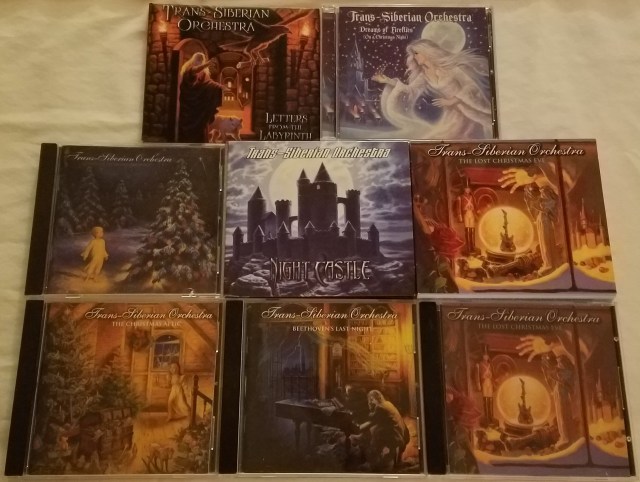
On my first Movie Blogger’s Christmas Wish-List, I said I wanted to see Hallmark Hall of Fame team up with Trans-Siberian Orchestra to create a Christmas movie musical. But since I published that list three years ago, it doesn’t seem like that is one of Hallmark’s priorities. Instead, I’d like to see the band team up with GAC Family to create a movie! While I haven’t seen any of this network’s films, I have heard good things about them. Plus, Trans-Siberian Orchestra has been known for being a family-oriented musical group. This collaboration could be a win-win situation. Because GAC Family is a newer network, they are probably still looking for new content ideas. As for TSO, it would be a good opportunity to showcase new music. From what I’ve heard, there weren’t any musicals among their selection of Christmas films. So, this would be something new for the network!
Since I’m talking about Trans-Siberian Orchestra again, I’m including this picture of my TSO CD collection. Screenshot taken by me, Sally Silverscreen.
Something You Need to See
As I mentioned in my post, Top 10 Things I’d Like to See in When Calls the Heart’s Ninth Season, 2021 is the second year in a row Hearties won’t receive a Christmas movie. This is such a puzzling decision for Hallmark Channel, especially since the show draws a lot of viewership numbers for the network. These viewership numbers have led these Christmas movies to be successful. I wish Hallmark, as well as the creative team behind When Calls the Heart, would consider creating another Christmas movie. It would be wonderful to see a Christmas wedding in Hope Valley! In recent years, it seems like Hallmark has made less Christmas-related wedding films. But since Hope Valley has never hosted a wedding at Christmas time, it would bring something new to their table!
A movie related piece of clothing or accessory I’d want to wear
Back in March, I reviewed a movie titled Making of a Male Model. In that review, I talked about how I loved Kay’s (the female protagonist’s) dress, describing it in detail. I even included a photo of the dress in my review, though its quality was poor. Because of how much this dress stood out to me, I knew it was going to appear on my Christmas Wish-List! Once again, I apologize for the photo’s poor quality. It’s one of those outfits that needs to be seen to be believed!
Here is a poor quality picture of the dress I was talking about. Screenshot taken by me, Sally Silverscreen.
A book I’ve read that I’d like to see adapted into a film
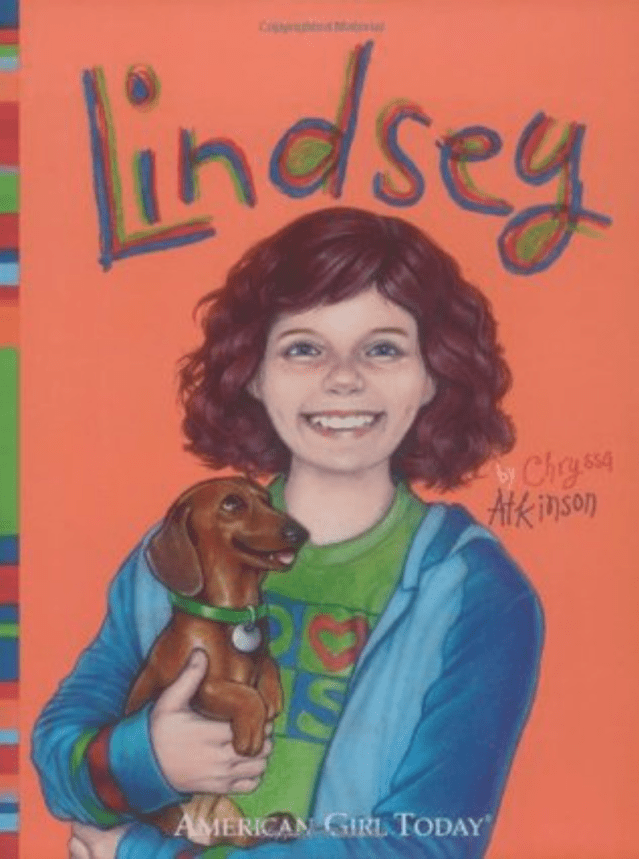
Earlier this year, I ventured into American Girl doll collecting. One aspect of this realm I find fascinating is stop motion short films. There have been several films released under the American Girl banner, with some of these titles focusing on a character from the company’s Girl of the Year line. While looking back on these movies, I took note of how only a few Girl of the Year characters received their own cinematic story. One of the characters that didn’t was Lindsey, who was American Girl’s first Girl of the Year. She was released in 2001, a time when the company never considered making movies for the Girl of the Year characters. To make up for this, I would love to love to see a fan-created, stop motion film based on Lindsey’s story! I reread her book this year and I enjoyed it the second time around. It was funny and intriguing, two qualities that would make a stop motion film interesting!
Lindsey book cover image found on Goodreads and created by American Girl.
What are your thoughts on my Christmas wish list? Which item did you find the most interesting? Let me know in the comment section!
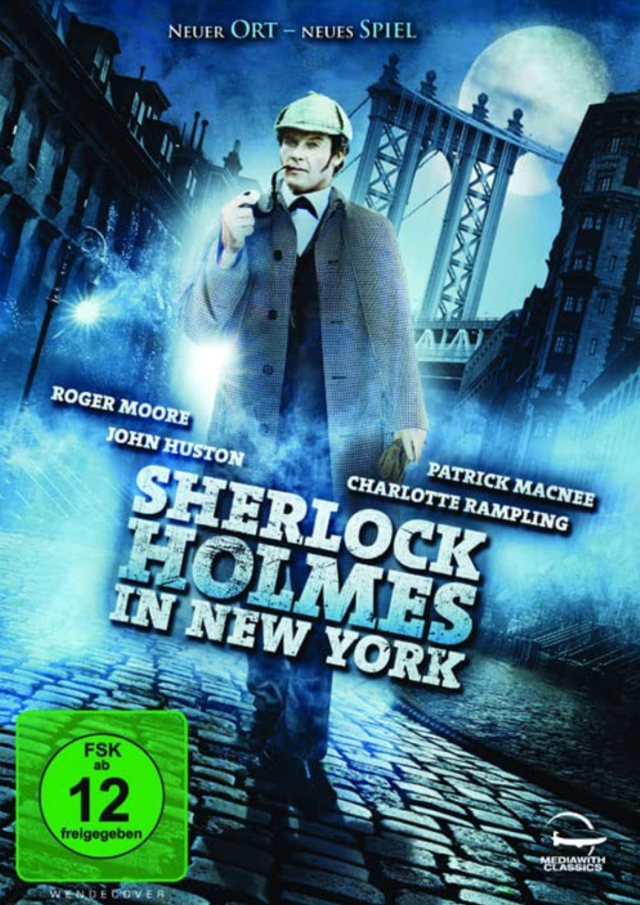
As of late 2021, there have been six actors who have portrayed one of the most iconic characters in cinematic history. Despite the fact I’m reviewing a Sherlock Holmes movie, the role I’m referring to is James Bond. Now, you’re probably wondering, “what does James Bond have to do with Sherlock Holmes”? Besides being British, both characters were portrayed by Roger Moore. When I was invited by Gill, from Realweegiemidget Reviews, to join the You Knew My Name: The Bond Not Bond Blogathon, I had to think about what film I wanted to write about. When I discovered Roger Moore starred in a Sherlock Holmes movie back in 1976, I thought it’d be an interesting title to cover. While I have reviewed my fair share of mystery films, including those that were made for television, I haven’t seen a lot of Sherlock Holmes related movies. Therefore, talking about Sherlock Holmes in New York will certainly make up for that!
Roger’s portrayal of Sherlock Holmes: While I haven’t seen any of Roger Moore’s films from the James Bond franchise, I have seen his performance in the 2011 Hallmark Channel movie, A Princess for Christmas. From what I remember, Roger carried his character, Edward Duke of Castlebury, with class and dignity. These same qualities were present in his portrayal of Sherlock Holmes. During Sherlock Holmes in New York, I could see some James Bond-esque qualities in the titular character. Roger’s ability to be suave as well as calm under pressure are just two examples. At certain moments in the story, Sherlock interacts with a woman named Irene Adler. Because there is history between these characters, Sherlock and Irene’s interactions contain a romantic flair. This is where the suaveness comes in, as Roger uses this to emphasize his on-screen chemistry with Charlotte Rampling. At the very beginning of the film, Sherlock faces off against Professor Moriarty. In this scene, Moriarty tries to hurt Sherlock at every chance he gets. But Sherlock never cracks under pressure. Instead, he consistently keeps his composure.
The historical accuracy: Recently, I reviewed the movie, Let Him Go. In that review, I talked about how the set design appeared to come from the ‘50s, despite the story taking place in the ‘60s. This caused the film’s time period to be unclear. Sherlock Holmes in New York takes place in March of 1901. Unlike Let Him Go, everything in the 1976 movie looked and felt like the 1900s! The costume design appeared historically accurate, with Sherlock Holmes’ outdoor wear serving as one example. Toward the beginning and end of the film, Sherlock sported the iconic plaid short cape and cap. But in New York, he wore a longer black cape and top hat. The historical accuracy was so on point, even the posters in The Empire State looked like it came from 1901. The font and basic design of these posters were just one detail that helped this movie’s creative team achieve the aesthetic they wanted for their project!
The presentation of New York City: When a movie or television show takes place in a beloved location, that place can be presented in two ways: an over-glamourized empire or a disgusting landscape covered by a glittering mask. With Sherlock Holmes in New York, the titular city was given to the audience “as is”. Even though the more polished areas of this destination could be seen, that was not the “end all, be all” in the story. In a handful of scenes, Sherlock Holmes explores the performance community of New York. He even goes undercover as a stage performer. The Big Apple is known for being one of the world’s entertainment hot-spots. While that part of this location was not emphasized, it did show some of the different components of one of America’s largest cities.
A pointless change of scenery: When a movie or television series chooses to change the location of their story, there needs to be a strong reason for that change. These reasons can range from expanding upon the overarching story to giving the protagonist(s) something interesting to do. With Sherlock Holmes in New York, though, none of these things happened. As a matter of fact, having Sherlock Holmes go to New York at all seemed unnecessary. If the mysteries in this film took place in England, it wouldn’t make much of a difference. That’s because none of the mysteries have any exclusive connection to New York itself. Having Sherlock solve the disappearances of immigrants from Ellis Island would have given him a stronger reason to be in New York, as Ellis Island is a part of New York and United States history. A child being kidnapped or a bank robbery can take place anytime and anywhere.
Not interactive enough: An appealing aspect of the mystery genre is the opportunity to solve the mystery alongside the protagonist. This allows the story to be interactive and engaging. I know one of Sherlock Holmes’ traits is his ability to figure out clues and possible scenarios in a short amount of time. But in Sherlock Holmes in New York, Sherlock figures things out so quickly, the audience doesn’t get a chance to engage with the mystery themselves. Instead, they’re forced to sit on the sidelines and watch the protagonist do everything, giving the audience a weak reason to stay invested in the story. Because of this, I found myself zoning out of the movie on a few occasions.
Lack of urgency: When a mystery takes place in current time, it gives that story a sense of urgency. The audience watches as the protagonist(s) races against the clock to solve a given mystery. While I won’t spoil Sherlock Holmes in New York, I will say a kidnapping takes place in the story. However, shortly after this crime takes place, Sherlock plays his violin in his hotel room. He then smokes his pipe all night. As I mentioned earlier, Sherlock Holmes is known for figuring out clues and scenarios in a short amount of time. That doesn’t give the story an excuse not to have urgency.
There was a time when having a movie take place in New York was the film’s selling point. From Friday the 13th Part VIII: Jason Takes Manhattan to A Troll in Central Park, movie studios wanted to take a bite out of The Big Apple for one reason or another. While I don’t know where or why this trend started, Sherlock Holmes in New York may have been one of the movies that caused this interesting ripple effect. Too bad the titular character didn’t have a stronger reason to visit The Empire State. The idea of Sherlock Holmes solving a mystery outside of England is not a bad one. But with the 1976 movie, the idea was better in theory than in practice. Add weak interactivity and a lack of urgency, this movie is not as strong as The Case of the Whitechapel Vampire, a Sherlock Holmes film I reviewed back in 2018. However, I did like Roger Moore’s portrayal of the famous detective. In fact, it’s a shame he didn’t receive more opportunities to appear in Sherlock Holmesstories. With this review completed, I need to make the time to see Roger’s filmsfrom the James Bond franchise. I just have to find the perfect opportunity to talk about them.
Overall score: 6-6.1 out of 10
Have you seen any Sherlock Holmes or James Bond films? If so, which one is your favorite? Let me know in the comment section below!
The results of The 3rd Annual Gold Sally Awards were many months in the making! Like last year’s awards, I continued the tradition of nominating films and talent not exclusive to Hallmark. I also started presenting two voting polls at a time. In 2022, I will publish two polls in each post, as a way to move the polls along at a smoother pace. But, for now, let’s start the moment you’ve been waiting for: the results of my annual awards!
A collage of this year’s winners I created on PowerPoint. Screenshot taken by me, Sally Silverscreen.
Best Movie and Story: From Up on Poppy Hill
Best Ensemble: If You Believe
Best On-Screen Couple: Ally Walker and Tom Amandes — If You Believe
Best Actress: Margaret O’Brien – The Unfinished Dance
Best Actor: Neal McDonough – Grace & Glorie
Best Supporting Actress: Collin Wilcox Paxton – To Kill a Mockingbird
Best Supporting Actor:Fred Savage – The Boy Who Could Fly
Happy National Read a Book Day! I want to let you know there will be spoilers for both the book and movie in this review. If you want to check out this double feature’s introduction, you can visit this link:
At Home in Mitford poster created by Crown Media Family Networks and Hallmark Channel
1. How did you come to know of this film?
I remember when Hallmark’s adaptation was announced four years ago. The biggest news associated with the project was the casting of Cameron Mathison and Andie MacDowell as Father Tim Kavanagh and Cynthia Coppersmith. This news made fans upset, due to the fact both Andie and Cameron were younger than their characters were described in the book. Their disapproval of the casting led the movie to be one of the lowest viewed films on Hallmark Channel that year, with 1.34 million viewers. I also remember the movie didn’t receive an encore presentation, as is customary for the majority of Hallmark productions. While I’m not sure if this information is accurate, I have heard Jan Karon, the author of the Mitford series, didn’t promote the film.
2. How did you acquire this movie’s respective source material?
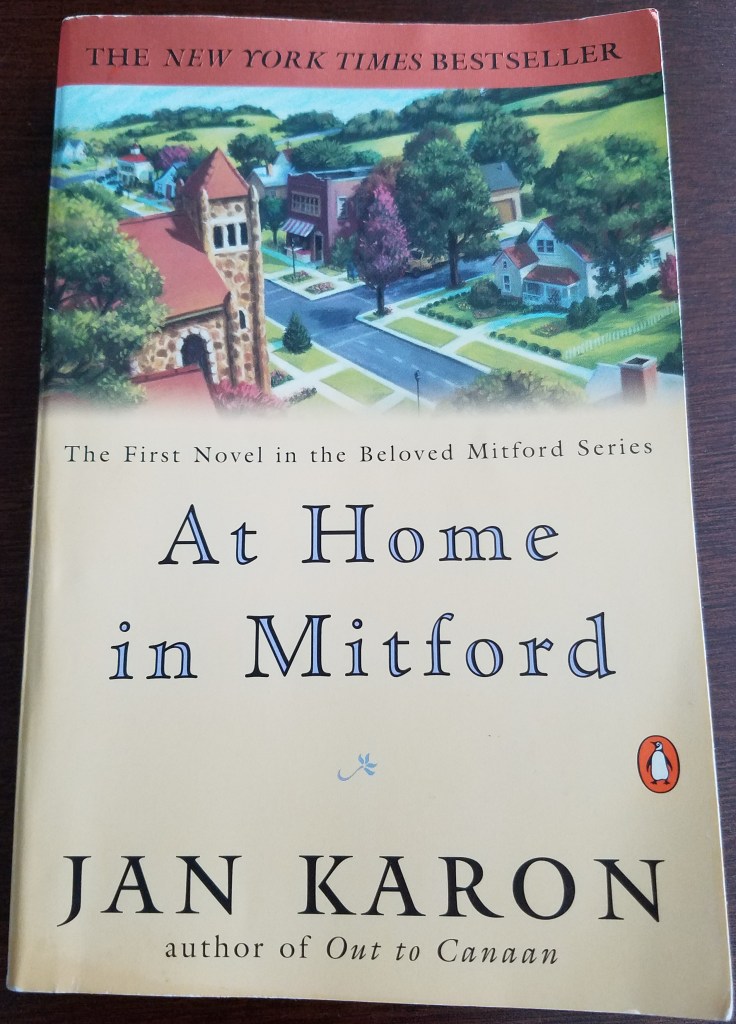
Two years ago, I purchased a used copy of At Home in Mitford at a library book sale. I became interested in reading the series before the adaptation’s premiere, as I heard so many good things about it. Since I never got to read any of the books before the movie aired, I was curious to see how different the book was from the film. At the sale, they had the whole series available for purchase. But since I didn’t know if I would like the series, I just bought the first book.
3. Have you read Jan Karon‘s work before? What are your thoughts on her writing?
Like I mentioned in the introduction, I have never read anything by Jan Karon before. So, I didn’t know what to expect from the book. Jan’s emphasis on detail was one of At Home in Mitford’s strengths! An example is when things are being listed off. In the book, Father Tim and Cynthia go to the movies. Within a paragraph, Jan takes the time to mention the snacks they purchased, saying “they went into the empty row with a box of popcorn, a Diet Sprite, a Coke, and a box of Milk Duds”. It’s details like these that make the characters and the story itself feel realistic.
Similar to Saint Maybe, At Home in Mitford is mostly a “slice of life” story. But there are a series of mysteries that are drawn out throughout the text. Because this book has elements of mystery, but is not a mystery novel, the overall sense of urgency was low. At times, it felt like there were too many characters and storylines. Mitford seemed like any other small town I’ve seen in Hallmark’s programming. While reading this book, I kept asking myself, “How is Mitford any different from Cedar Cove? Or Chesapeake Shores?” Maybe if I had read At Home in Mitford before watching any of those programs, I would think differently. But, at the end of the day, I thought this book was a fine, wholesome story.
4. Was the movie different from its source material? If so, how?
Even though there were some similarities between the movie and the book, At Home in Mitford’s film adaptation contained more differences. Some characters were either omitted or changed from the text. One of these characters was Olivia Davenport. In the film, she was a parishioner who was seeking Tim’s guidance for her rocky marriage. Her presence in the movie was very limited, which is different from the book. In the novel, Olivia was a part of At Home in Mitford’s ensemble cast of characters. Her storyline was one of the most important, as she desperately needed a heart transplant. Olivia also helped Mitford’s doctor, Hoppy Harper, move forward from the loss of his deceased wife. As I said in answer number three, I, at times, felt like there were too many characters and storylines in the book. Therefore, I don’t fault Hallmark for leaving out certain parts of the source material. However, if the adaptation’s creative team knew they were going to include one of the book’s characters in their script, then they should have given Olivia a greater significance in the film.
Despite the film adaptation’s differences from the book, some of them had purpose. The novel and film featured a character named Marge Owen. While she became pregnant in both versions of the story, she was given a greater importance in the movie. The book never revealed her occupation, where the film shows Marge owning her own bookstore. She also provides friendship and guidance to Cynthia in the adaptation. As a way to overcome her writer’s block, Cynthia volunteers to restore the church’s paintings. In Jan Karon’s book, Cynthia wasn’t involved with the church. She does attend church services, but she doesn’t go the extra mile for the parish. The movie version of Cynthia tells Tim that she wants to give back. Cynthia’s decision not only gives her a stronger connection to the church, but it also shows how someone living their faith can come in different forms.
This is the copy of At Home in Mitford I purchased two years ago. Screenshot taken by me, Sally Silverscreen.
5. Do you think the movie was better than the book or was the book better than the movie?
When it comes to At Home in Mitford, I can’t give a yes or no answer. So, I’ll say it like this: As a movie, At Home in Mitford is a fine, run-of-the-mill Hallmark Channel production, with some of the film’s changes improving upon the book. But as an adaptation, it feels like the network was trying to fit a round peg into a square hole. The first book in Jar Karon’s series was published before Hallmark Channel came into existence. By the time the adaptation was filmed, Hallmark was already well versed in their formula. Because the adaptation’s creative team tried so hard to fit At Home in Mitford into Hallmark’s brand of film-making, the story was watered down. If Hallmark were serious about faithfully adapting At Home in Mitford, they should have adapted it into a television show, as that is how the book read to me. I also think Jan Karon herself should have been one of the movie’s screen-writers.
6. Saint Maybe and At Home in Mitford share some similarities, such as how both books are written by women. Are there any other similarities you can think of?
Like I said in answer number three, At Home in Mitford is mostly a “slice of life” story. While there are mysteries within the text, the mysteries themselves feel lower in stakes. In the book, Father Tim finds some stolen jewels in an urn. Even though these jewels were connected to an international crime, Jan finds a way to connect this crime directly to Mitford. Father Tim wonders if his antique shop owner friend, Andrew Gregory, may have imported the jewels by hiding them in antique furniture. However, the culprit was a man named George Gaynor, a criminal on-the-run who found solace in Father Tim’s religious wisdom. Though George was arrested for his crime, he received the opportunity to become baptized. Father Tim even kept in touch with George after he left Mitford.
Saint Maybe is also a “slice of life” story featuring several mysteries. Similar to At Home in Mitford, the stakes of these mysteries were lower. Back in my review of Saint Maybe’s film adaptation, I mentioned how Ian discovered the identity of Agatha and Thomas’ father. Because this information was discovered long after Ian agreed to help raise Agatha and Thomas, there wasn’t a strong sense of urgency to do anything about the situation. He doesn’t even tell his family what he found. In fact, after speaking with Agatha and Thomas’ maternal grandmother, the movie version of Ian says to himself, “Thank goodness I didn’t find this information sooner”.
7. Should Hallmark adapt Jan Karon‘s other work? If so, why?
If At Home in Mitford’s film adaptation had received better reception from the viewers, then I’d be curious to see Hallmark adapt the other books in the Mitford series. Because that didn’t happen, Hallmark would have difficulty adapting Jan Karon’s other work, as most of her books are Mitford related. But since Hallmark created a few animated films in the past, I could honestly see them adapting Miss Fannie’s Hat or Jeremy: The Tale of An Honest Bunny. Similar to properties like Hoops and Yo-yo, Hallmark could create merchandise related to these stories as well. I’ve never read Miss Fannie’s Hat or Jeremy: The Tale of An Honest Bunny. But as long as Jan herself is involved with the project, I’d be fine with Hallmark adapting these books.
8. Is there anything about At Home in Mitford you liked or didn’t like?
I’ve heard complaints from Mitford fans about how different Dooley is in the film compared to the book. While I do agree about Dooley being very different in the movie, I actually liked the movie version of his character. Dooley was sometimes the comic-relief in the story. His grandfather, Russell, even called him “a prankster”. My favorite scene was when Dooley removed the ‘Dog Found’ posters almost immediately after Father Tim posted them. Throughout the film, Father Tim actively sought out Barnabas’ former pet parent. He spreads the word about the dog’s current whereabouts by posting ‘Dog Found’ posters throughout Mitford. Since Dooley doesn’t want to see Barnabas go away, he removes these posters behind Father Tim’s back. This scene was hilarious because of its believability.
Compared to the book, At Home in Mitford’s film adaptation felt formulaic. Like I said in answer number five, the movie’s creative team tried so hard to fit At Home in Mitford into Hallmark’s brand of film-making. Instead, the story followed the same beats and tropes/cliches as other Hallmark titles. The film included an adaptation exclusive character named Jack Emery. Throughout the story, he embodied the “business person is a jerk and/or out of touch” cliché, with his sole purpose being the worse datable candidate compared to Father Tim. At Home in Mitford’s film adaptation was released in 2017, two years after All of My Heart. The 2015 movie was one of the network’s most notable films to challenge the aforementioned cliché. Therefore, it made At Home in Mitford kind of seem outdated by comparison.
9. Did you develop any thoughts and/or questions while watching this film?
Similar to Saint Maybe, religion/faith was downplayed in At Home in Mitford’s film adaptation. Both Father Tim and Cynthia mentioned they were Episcopalian. In answer number four, I talked about how Cynthia volunteers to restore the church’s paintings. Even though several scenes took place inside the church, we don’t see any characters worshipping within its walls. The tail end of Father Tim’s sermon was shown as well. The book showed how religion/faith played a role in Father Tim’s everyday life. He quoted a Scripture passage to fit almost any situation, even using Scripture to discipline Barnabas. Father Tim also turned toward everyday life to find inspiration for his sermons. Because Hallmark gave us Signed, Sealed, Delivered and has incorporated faith into When Calls the Heart, I’m surprised the network chose to tone down the religion/faith in the At Home in Mitford movie. But, once again, it feels like a missed opportunity.
10. Would At Home in Mitford encourage viewers to read either its source material or any other book?
Because of how many differences are found in the adaptation, I think it might encourage some viewers to check the book out. I can only speak for myself, but this is what inspired me to read the first book in the Mitford series. When I started reading At Home in Mitford, I could immediately tell how different each story was. I said in answer number five that the book read more like a television show. This is because the story was abundant with characters and storylines, as well as storylines being drawn-out. If viewers find themselves watching more tv series than movies, then the book might be for them.
11. After watching this movie, is there anything you can take away from your movie viewing experience?
Because the stories in At Home in Mitford revolve around the citizens of a small town, I can see why Hallmark would want to adapt Jan Karon’s series. At the time of the film adaptation’s release, small towns were an exhausted backdrop in Hallmark’s productions, with most of their characters being former or current small-town residents. But it seems like the network was so eager to potentially start a new series, that they lost sight of who this project was intended for. Excluding Jan Karon from the creative process doesn’t help Hallmark’s case. Their inability to adapt pre-existing material, At Home in Mitford in this case, shows how creatively dependent they’ve become on the rom-com genre. In my honest opinion, this movie was made a decade or two too late. Since Hallmark spent so much time showing how every small town was special, Mitford wasn’t given the opportunity to stand out. This movie should have been released either as a Hallmark Hall of Fame production prior to 2010 or on Hallmark Channel between 2001 to 2007.
Happy National Read a Book Day! I want to let you know there will be spoilers for both the book and movie in this review. If you want to check out this double feature’s introduction, you can visit this link:
Anne Tyler’s Saint Maybeposter created by Hallmark Hall of Fame Productions and CBS
1. How did you come to know of this film?
If you’ve been following my blog, you would know that my least favorite Hallmark Hall of Fame movie is Back When We Were Grownups. Like a lot of Hallmark Hall of Fame productions, the 2004 film was based on pre-existing source material; a novel written by Anne Tyler. Over the years, I discovered that two other Hallmark Hall of Fame movies have been based on Anne’s work: Breathing Lessons and Saint Maybe. Before this double feature, I had never seen either film. All I knew about Hallmark’s 1998 adaptation was that a man took in a deceased relative’s children and that the story had something to do with forgiveness. I also remember how the film would sometimes air during Hallmark Movies & Mysteries’ ‘Miracles of Christmas’ marathon.
2. How did you acquire this movie’s respective source material?
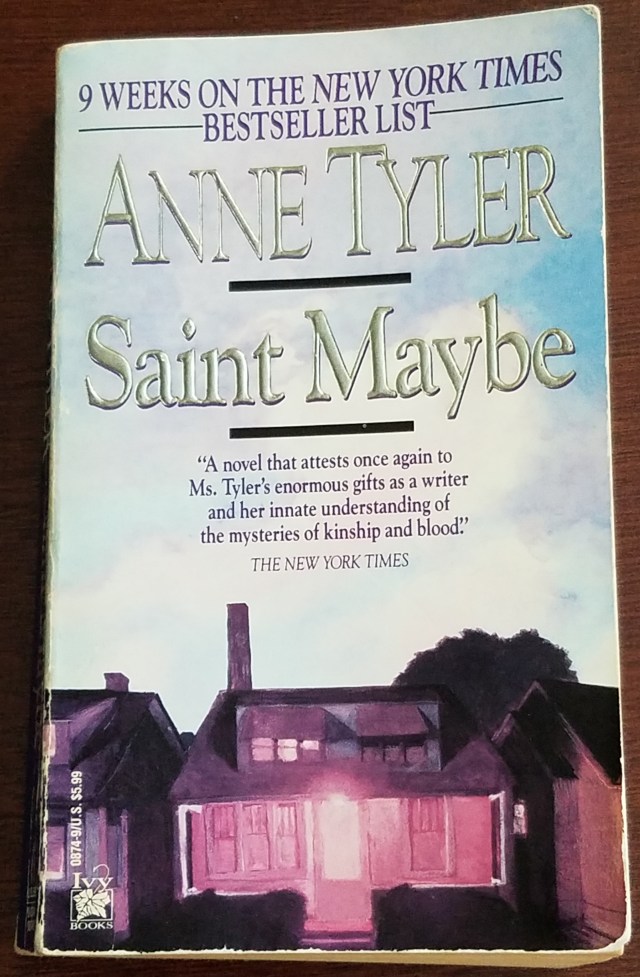
I purchased a second-hand copy of Saint Maybe at an estate sale earlier this year. As soon as I saw the book on a shelf, it reminded me of my Hallmark Hall of Fame Reading Challenge. Back in 2019, I created a reading challenge based on the books or plays that were adapted into Hallmark Hall of Fame titles. Since I’d like to read as many of these works as I realistically can, I purchased the book with that intention.
3. Have you read Anne Tyler‘s work before? What are thoughts on her writing?
As I said in the introduction, this was my first time reading anything by Anne Tyler. Based on what I read and based on what I saw in Back When We Were Grownups, I’m going to guess her forte is writing about larger families that are somewhat dysfunctional. Out of those two stories, I liked Saint Maybe more than Back When We Were Grownups. There was heart incorporated in the narrative and the Bedloe family had a legitimate reason for their dysfunctionality. I was also surprised by the inclusion of religion/faith. But I didn’t like how the chapters were too long. What Anne should have done instead is write shorter chapters and include them in separate sections for each character. I, personally, am not a fan of “slice of life” stories. About eighty percent of Saint Maybe is just that: a “slice of life” story. With all that said, I thought the novel was well-meaning and fine.
4. Was the movie different from its source material? If so, how?
For the most part, Saint Maybe was faithful to the source material, especially when it came to the most important parts of the story. But there were changes found in the adaptation. One of these changes was Agatha’s personality. In the book, when Agatha was introduced in the story as a young child, she came across as distant and matter-of-fact. As she grows up, Agatha comes to despise religion, as she feels religion was forced upon her life. The movie version of Agatha adopts the personality Thomas had in the book, coming across as sweet and mild-mannered. She grows up to be a friendly doctor who has no known opinion on religion. While she does criticize The Church of the Second Chance, she does this because she wants Ian to live his best life. Her criticism has nothing to do with religion itself.
Another difference between the movie and its source material is how Ian figures out the identity of Agatha and Thomas’ father. Agatha, in the book, is very protective over a jewelry box she claims belonged to her mother. Ian stumbles across this box by accident and finds Agatha’s and Thomas’ birth certificates among the jewelry and other items. These certificates reveal their father’s last name; Dulsimore. Ian learns this information differently in the movie. Similar to the book, Thomas and Agatha own a doll named Dulcimer. While Agatha is at Ian’s parents’ house, the audience can see her trying to remove something from the back of the doll. However, this information isn’t revealed until later in the movie. When the Bedloe family hires Rita diCarlo to organize their house, a lot of items end up getting thrown out. One of these items was Dulcimer the doll. As Ian is leaving the house, he sees the doll in a garbage bag. When he picks it up, he finds a slip of paper hidden in the doll’s back, revealing the doll’s name was also the last name of Agatha and Thomas’ father.
5. Do you think the movie was better than the book or was the book better than the movie?
Like its source material, I thought the movie adaptation of Saint Maybe was fine. Therefore, this is a difficult question to answer. But I will try to answer this question as best as I can by saying this: If you want to see a story about a family dealing with a personal tragedy, I’d recommend the movie. This is because the movie gets straight to the story’s point a lot sooner than the book did. If you’re interested in a story where the protagonist overcomes guilt and sin through religion/faith, I’d recommend the book. As I’ll explain later in this review, the movie didn’t feature religion/faith as much as in the book.
This is the copy of Saint Maybe I purchased earlier this year. Screenshot taken by me, Sally Silverscreen.
6. Saint Maybe and At Home in Mitford share some similarities, such as how both books were published in the 1990s. Are there any other similarities you can think of?
As I said in answer number three, I was surprised by the inclusion of religion/faith in Saint Maybe. Even though the movie and its source material are titled Saint Maybe, I wasn’t expecting religion/faith to play a large role in the text. But religion/faith is a cornerstone of both Saint Maybe and At Home in Mitford. References to God, the Bible, and Christianity can be found in each book. However, the way both authors incorporated these ideas into their stories is very distinct.Throughout Saint Maybe, the congregation of The Church of the Second Chance obeyed a rule that forbade them from consuming sugar. While this rule seems ridiculous on the surface, it is used as a metaphor for sin. Reverend Emmett, the leader of The Church of the Second Chance, explains that if one actively avoids sugar, they are actively avoiding sin. If someone tries to make excuses for consuming sugar, they are making excuses for committing sin.
7. Should Hallmark adapt Anne Tyler‘s other work? If so, why?
As of early September 2021, Hallmark has not made any announcements on whether they are bringing back the Hallmark Hall of Fame collection. But if Hallmark does choose to create more Hallmark Hall of Fame titles and would like to adapt more of Anne Tyler’s novels, there are plenty of stories for them to choose from. According to Goodreads, twenty-four books written by Anne Tyler have not been adapted into a Hallmark production. Since I’ve never read any of those books, I can’t say which one is more deserving of receiving an adaptation. But if I had to pick at least one title Hallmark should adapt into a film, it would either be A Patchwork Planet or Digging to America. This is based on each book’s synopsis, as I have not read either book.
Personally, I wouldn’t be opposed to seeing Hallmark adapt more of Anne Tyler’s stories. Based on my experience with Saint Maybe, the movie was mostly faithful to the source material. So, with the right creative team involved, maybe another Anne Tyler story could be lucky enough to receive similar treatment. Because three of Anne Tyler’s books have been adapted into Hallmark Hall of Fame titles, it appears Hallmark has had a good working relationship with the author. I’m not sure how much creative control Anne had on either film. But if Hallmark wants to work with Anne again, I’m pretty sure an agreement between both parties could be reached.
8. Is there anything about Saint Maybe you liked or didn’t like?
Saint Maybe is a story that takes place over the course of several years. In the movie, there were subtle clues revealing which time period was portrayed on screen. One establishing shot showed a boy riding his banana seat bicycle down the sidewalk. This brief image indicated how that specific part of the story took place in the 1970s, as banana seat bicycles were popular within that decade. During the movie, Ian adopted a pair of large rimmed glasses. Because this style of glasses was common in the 1980s, Ian’s accessory is very telling of how much time had passed since the beginning of the film. Movies are a visual form of story-telling. So, I liked how the film’s creative team took the initiative to show the passage of time in a creative way.
My favorite part of the book was when Daphne tried to set up Ian with her fifth-grade teacher, Miss Pennington. It was in this chapter that I started to like Daphne as a character, her free-spirited personality being introduced to me as the reader. Unfortunately, this part of the book wasn’t translated to the screen. I was disappointed by the omission of the book’s seventh chapter. The audience could have witnessed the evolution of Daphne’s personality, gaining an understanding of why she became who she was by the end of the story. Instead, there was a huge time jump from five-year-old girl to free-spirited woman. Because of missing context, this left questions without answers. But I recognize there is only so much story you can tell in eighty-four minutes.
9. Did you develop any thoughts and/or questions while watching this film?
While I didn’t develop any questions, I was surprised by how religion/faith was downplayed in Saint Maybe’s film adaptation. Yes, Ian’s introduction to The Church of the Second Chance was similar to the book. Agatha and Thomas tell Ian what they learned at summer camp, which was run by The Church of the Second Chance. Toward the end of the film, the Bedloe family are seen going to church. Other than these moments, religion/faith didn’t have an influence over the character’s lives. The Sugar Rule I talked about in answer number six was never brought up in the script. Reverend Emmett’s beliefs on how his congregation was led didn’t appear in any of the character’s dialogue. Even Reverend Emmett himself showed up in two or three scenes, having a much smaller presence than he did in the book. Saint Maybe’s film adaptation was released in 1998, a time when shows like Touched by An Angel were finding success on mainstream television. In hindsight, Hallmark choosing not to ride Touched by An Angel’s coattails kind of seems like a missed opportunity.
10. Would Saint Maybe encourage viewers to read either its source material or any other book?
I think it depends on what type of story someone wants to consume. As I said in answer number five, I’d recommend the book if you’re interested in a story where religion/faith is one of the key themes. But if you like films from the drama genre, those that explore relationships between characters, then the film adaptation is for you. I’ve said before that I am not a fan of “slice of life” stories. Like I mentioned in answer number three, Saint Maybe is primarily a “slice of life” story. If I hadn’t read the book beforehand, I would probably choose the movie over the text.
11. After watching this movie, is there anything you can take away from your movie viewing experience?
I now understand why Saint Maybe was sometimes shown during Hallmark Movies & Mysteries’ ‘Miracles of Christmas’ marathon. Several scenes took place during Christmas-time, with decorations associated with the holiday shown in the background. But I wouldn’t necessarily call Saint Maybe a Christmas story/movie. I said in answer number eight that this story took place over the course of several years. The themes and messages within the text are not exclusive to the Christmas season. In 2019, I created a tier rank list of every Hallmark Hall of Fame movie I’ve ever seen. Since posting that list, I have renamed each category. For Saint Maybe, I’d place this film adaptation in the category titled ‘Bought It at a Garage Sale for a Dollar’. The movie itself was fine, but I wouldn’t pay $20 if it was sold on DVD.
We are now toward the end of the Gold Sally Awards! Before I reveal this year’s winners, there are three polls left and the nomination of Sally’s Star of the Year. I’m going to try something different for these next two polls. The Best Supporting Actress Poll and the Best Ensemble Poll will be combined into one voting post. But the voting rules will still be the same as in previous polls. Even though you can vote for more than one nominee, you can only vote once per person. This set of polls will start today, July 30th and end on August 6th. The link to the polls are at the bottom of each individual poll. Just click on the word, “PollMaker”.