As I promised, I am hosting a re-vote for the Gold Sally Awards’ Best Supporting Actor Division. I also plan to wrap up the Awards voting, as there are three polls lefts. But don’t worry, Sally’s Star of the Year will still be included. This round of voting will start today, June 30th, and end on July 7th. Like before, you can vote for more than one nominee. But you can only vote once per person. The link to the poll is featured under the list of nominees.
Who was the Best Supporting Actor of 2020?
Gene Kelly — Anchors Aweigh
Fred Savage — The Boy Who Could Fly
Omri Katz — Matinee
Noah Valencia — Sweet Nothing in My Ear
Andrew Tarbet — If You Believe
Jamie Bell — Nicholas Nickleby (2002)
Brock Peters — To Kill a Mockingbird
Vincent Perez — Cyrano de Bergerac (1990)
Joe Penny — Perry Mason: The Case of the Shooting Star
Despite being busy with some blog and non-blog related projects, I am still continuing to host the Gold Sally Awards! For this round of voting, you get to choose who will receive the title of Best Supporting Actor. Like the previous polls, you can vote for more than one nominee. But you can only vote once per person. This poll will be active until June 7th and the link to the poll is under the list of nominees.
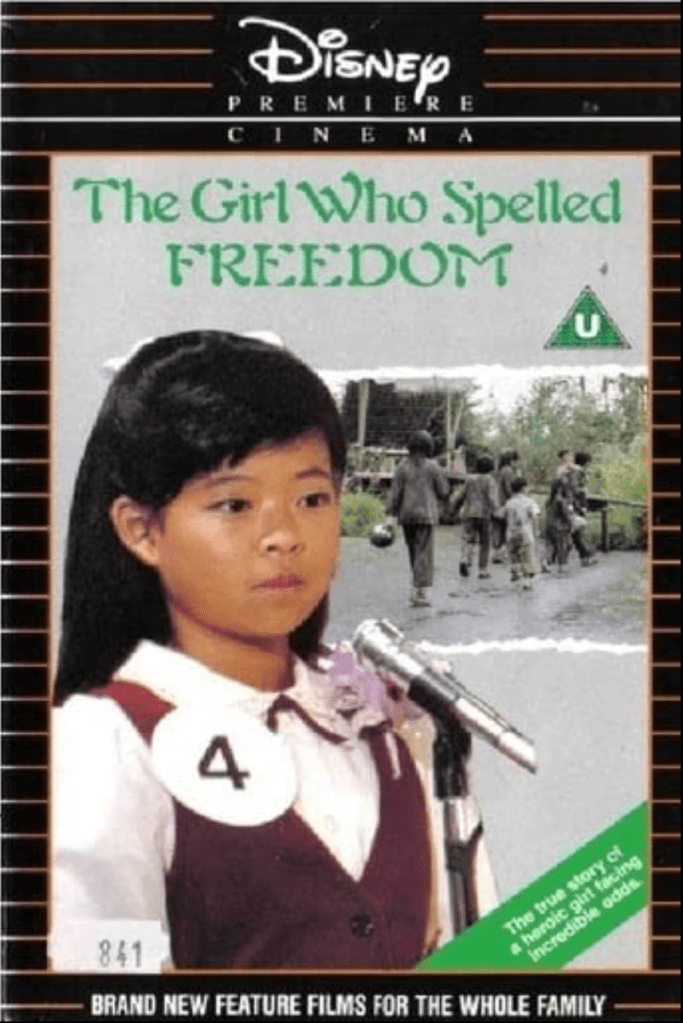
Originally, I was going to publish a double feature review of Wild Hearts Can’t Be Broken and The Girl Who Spelled Freedom for the American Experience on Film Blogathon. However, I have also been working on another big project that required more time than I expected. Therefore, I was only able to watch one movie, which was The Girl Who Spelled Freedom. Don’t worry, though, because I will coordinate a double feature to celebrate the publication of 500 posts! The 1986 made-for-tv movie had been unknown to me until this year. I stumbled across The Girl Who Spelled Freedom when I was looking through an IMDB list about family-friendly films. After reading the synopsis, I was interested in watching the movie! There aren’t many cinematic stories that feature a spelling bee. In fact, the only one I can think of is Akeelah and the Bee from 2006. I also realize that Disney creates fewer “based on a true story” movies now than they did decades ago. Because a Disney project hasn’t been reviewed on my blog since last December, let’s begin talking about The Girl Who Spelled Freedom!
The acting: As I have stated in the past, it takes a very talented young actor or actress to carry a film. For Jade Chinn, she did such a great job with the material she was given! What made her performance so memorable is how she utilized body language, emotions, and facial expressions to illustrate Linn’s limited use of English. However, these techniques helped address what the character was experiencing. When Linn was traveling on a plane for the first time, she curled up on the floor in fear. The way Linn was behaving showed the audience that cultural differences and language barriers can turn something as simple as a plane trip into a terrifying experience. Another stand-out performer was Mary Kay Place, who portrayed Prissy Thrash! One of her best scenes took place toward the beginning of the film. Prissy and her husband, George, were dealing with the news of how many members are in Linn’s family. Prissy is so overwhelmed, she suddenly bursts into tears. This moment alone displays the emotionality Mary was able to bring to her performance! A heartwarming scene was when George was teaching Linn and her sisters how to count. The performances from the actors in this scene, especially from Wayne Rogers, appeared so genuine. It was also nice to see the dynamic between these characters!
The cinematography: I was pleasantly surprised by some of the cinematography in The Girl Who Spelled Freedom! Even though this is a made-for-tv movie from the mid ‘80s, the cinematography looked like it came from a theatrical production. At the beginning of the film, Linn and her family are crossing a river. One shot is presented as if the viewer is in the water, watching the family moving through the river toward safety. When Linn and her family are staying with the Thrash family, they discover one of the sons is missing. As George and Prissy are searching their home, the camera follows them. This gives the idea the audience are looking for this child alongside the characters.
A balance of heartbreaking and heartwarming moments: With films that deal with emotional material, there are bound to be heartbreaking moments. In The Girl Who Spelled Freedom, there were certainly scenes that were sadder in nature. An example is when Prissy takes Linn and some of her siblings to the park. When the children see a giant statue of the Crucifix, they become scared, as they are instantly reminded of the trauma they experienced. Even though Prissy reminds them that the statue isn’t real, the children are still shaken up by the imagery. At the same time, the film contained light-hearted moments that were heartwarming. At the Thrash family home, Linn accidently walks in on Laura, Prissy and George’s daughter, curling her hair. In an effort to prevent Linn from feeling embarrassed, Laura decides to not only curl Linn’s hair, but also curl Linn’s sisters’ hair. The scene itself was very sweet and showed how a little bit of kindness can make a big difference.
Missing context: The Girl Who Spelled Freedom has the same flaw The Crow did: there are areas of the story that needed context. One strong example is Linn giving sentimental value to a ring. At the beginning of the film, Linn can be seen looking for a ring in the mud. When she is escaping from a group of soldiers in Thailand, she gives the ring to one of the soldiers. In the United States, Prissy gives one of her rings to Linn. Later in the film, Linn is upset when she accidently drops the ring down the sink. The significance of this ring is never addressed in the film. Linn herself never explains why the ring is so valuable to her. If context had been provided to this part of the story, the audience could try to understand why the ring is important to Linn.
A limited presence of the spelling bee: Before watching this movie, I knew there would be a spelling bee featured in the overall story. However, I was expecting a build-up to the spelling bee, similar to Akeelah and the Bee. While we get to see a spelling bee in The Girl Who Spelled Freedom, it was only referenced a few times before the actual event began. Most of the story focused on Linn’s adjustment to life in the United States. Even though watching the spelling bee unfold was satisfying, I wish it had received a little more emphasis in the film.
A few characters receiving character development: In films that feature bigger casts, it is not easy providing character development to every character involved. But when only a few characters receive character development, it can be disappointing. This is what happened with The Girl Who Spelled Freedom. The only characters who are given character development are the members of the Thrash family and Linn. With Linn’s family, the audience becomes familiar with them, but doesn’t get the opportunity to get to know them. This can also be said about other characters, such as Henry Turner, who helped the Thrash family bring Linn and her family to the United States.
The American Experience is a tricky thing to sum up, as everyone’s experiences are going to be different. This is especially the case if someone is a refugee or immigrant. The Girl Who Spelled Freedom is a perfect example of how unique the American Experience can be. For most of the film, Linn and her family deal with “culture shock”, coming across things and situations that they feel are “unusual”. But over time, they start to create their own American Experience. Linn enters a local spelling bee in 1983. An activity that is typically seen as fun and harmless was seen by Linn as a fight for survival, a view that was shaped by her past experiences. Therefore, she was partially responsible for creating her own American Experience. For a television film from the mid ‘80s, I’d say this is one of the better presentations! While the film does have its flaws, it did feel like a Hallmark Hall of Fame movie before the collection moved to Hallmark Channel. After the film, there was an interview with the real-life Thrash and Yann families. Because the audience was able to hear their sides of the story, it added to my enjoyment of the overall project! It’s a shame fewer networks have decided to create made-for-TV films. There are so many stories worth telling, so I hope they are able to get told someday.
Overall score: 7.6 out of 10
Have you seen The Girl Who Spelled Freedom? Are there any television films you’d like to see me review? Let me know in the comment section!
Similar to the Gold Sally Awards’ Best Actor Poll, I am extending the Best Actress Poll. This is because the Best Actress Poll did not receive any votes. If you are interested in voting, you have until May 10th to submit your votes. Even though you can only vote once per person, you can vote for more than one nominee. The link to the poll is listed under the poll image.
I’ve been working on a personal creative project that has taken me longer than I expected. But now I’m back to publish another poll for the 3rd Annual Gold Sally Awards! For this poll, you can vote for who is the Best actress from the movies I saw in last year. While you are able to choose more than one nominee, you can only vote once per person. This poll begins today, April 21st, and ends on April 28th.
Image of prom boutonniere created by Cynthia Lutes at freeimages.com. Photo by <a href=”/photographer/cindylutes-60975″>Cynthia Lutes</a> from <a href=”https://freeimages.com/”>FreeImages</a>. Image found at freeimages.com.
Last week, I posted the Best Actor poll for the Gold Sally Awards. But no votes were received within that week. So, I’m extending this poll from today, April 6th to April 13th. Like I’ve said before, you can vote for more than one nominee. However, you can only vote once per person. The link to the poll is listed at the bottom of the poll image.
For this blog follower dedication review, I was originally going to write about the PixL movie, The Cookie Mobster. However, that film became the worst one I’ve seen this year, so far. Because I feel my readers and followers deserve a better movie and because I just reviewed a bad movie two weeks ago (Chasing Leprechauns), I chose a different film for this post. Recently, I watched the 1987 TV movie, Perry Mason: The Case of the Lost Love, as it happened to be on my DVR. Mystery related media are some of my most popular content, so this review will be a treat for my readers! Even though some films are stronger than others, I have enjoyed the Perry Mason movie series. Three of these films have been covered on my blog, with all of them receiving good scores. Will Perry Mason: The Case of the Lost Love receive a similar score? Keep reading my review if you want to find out!
Perry Mason: The Case of the Lost Love poster created by Fred Silverman Company, Strathmore Productions, Viacom Productions, Dean Hargrove Productions, National Broadcasting Company, Starmaker Entertainment, and Viacom
Things I liked about the film:
The acting: Jean Simmons is an actress who I have talked about before, when I reviewed Howl’s Moving Castle two years ago. While that movie was the first of Jean’s I saw, she had a voice-acting role in that film. Perry Mason: The Case of the Lost Love contains the first live-action role of Jean’s I have seen! What I liked about her portrayal of Laura Robertson is how Jean carried a certain amount of grace throughout the movie. She also gave a different persona to a character of this nature. In films where a woman is involved with politics, the female politicians are usually portrayed with a “no nonsense” personality. Laura Robertson is different because she had a gentler personality, despite running for the United States Senate. Even though he appeared in the movie for a short amount of time, I liked Jonathan Banks’ portrayal of Luke Dickson! He was so expressive; he was like a chameleon. The meeting at the restaurant between Laura’s husband, Glenn, and Luke showcases a perfect example. Jonathan’s face displayed a variety of expressions. Toward the beginning of the meeting, Luke appears serious, as his face is set and he is glaring at Glenn. As he brings up some compromising information, Luke’s face brightens up and he becomes a bit animated.
The Robertson’s house: Despite appearing in the film for less than five scenes, I liked seeing the Robertson’s house in Perry Mason: The Case of the Lost Love! The house’s exterior was presented in the dark. But from what the audience can see, the house was covered in a gray stone brick. On the left side of the house, a stone cylinder was connected, making the house look like a castle. The most prominently featured part of the house’s interior is the staircase. Notable details are wrought-iron stair rails and a stained-glass window. These design details give subtle clues of how well off the Robertsons are.
The open discussion of mental health treatment: Because of Laura’s history with mental health, the subject of mental health treatment was briefly discussed in this film. While she is afraid this part of her life will prevent her from becoming a Senator, she still willingly brings it up. There is no shame detected in the voices and faces of the characters who address Laura’s mental health treatment. A debate about which kind of treatment is appropriate is even included in the script. This openness toward mental health treatment seems ahead of its time, as society is more aware of mental health now than four decades ago. It also highlights the importance of this particular subject.
Ignored story points: A few story points within Perry Mason: The Case of the Lost Love’s script were ignored throughout the movie. One example is mentioned toward the beginning of the film. When Luke first called Glenn, he mentions a long-lost son who lives in Arizona. But when Glenn meets up with Luke at a local restaurant, this son was never brought up. In fact, this son is never referenced again. I was disappointed because I was not only curious to see who would portray this mysterious character, but also discover what role this long-lost son would play in the overall mystery. It makes me wonder why this “scandal” was included in the first place?
A late start time for the mystery: As I have said before, I am not a fan of mystery films that start their mysteries at later times. Perry Mason: The Case of the Lost Love is a movie that does this. The murder victim wasn’t discovered until about twenty minutes into the film. While this timespan featured build-up to this discovery, I think the mystery could have started sooner. In my opinion, introduction of characters and their connections should have been taken care of in the movie’s first ten minutes. The discovery of the murder victim could have taken place at the movie’s fifteen-minute mark.
The closeness of Perry and Laura’s relationship: Within this story, Perry reveals how he and Laura used to be a romantic couple. When Laura’s husband, Glenn, asks Perry if he still has feelings for Laura, Perry says no. However, his and Laura’s actions say otherwise. When Laura and Perry have drinks at a local hotel, they hold hands at one point, with Laura kissing Perry on the cheek. Later that night, Perry brings Laura to her house. Before Perry leaves, he and Laura share a kiss. I found these romantic displays of affection unnecessary. With Laura married and Perry going his own separate way, it felt like the actions among the characters were chosen just to get a reaction from the audience.
Like I mentioned in the introduction, I have enjoyed the Perry Mason movie series. The films within this series I have reviewed received good scores, as I liked what I saw. However, Perry Mason: The Case of the Lost Love was weaker than those three movies. It definitely wasn’t bad, but I feel it could have been stronger. A long-lost son being briefly brought up, but never mentioned again took away some intrigue from this story. Similar to what I said in my review of Edward, My Son, the opportunity for an actor to achieve his “standing ovation” through this role was not available because this part of the story was abandoned. The film contained other flaws, like a later start time for the mystery and the unnecessary closeness of Perry and Laura’s relationship. But there are things about the movie I can appreciate. The openness of mental health treatment was a topic I never expected to hear addressed in a Perry Mason film. While there were advancements and progress made within the field of mental health in the ‘80s, society’s perceptions of this topic were not the same in 1987 as they are now. This reminded me of The Boy Who Could Fly, where the use of therapy was normalized. It was a pleasant surprise to see a Perry Mason film address this subject! Before I finish this review, I’d like to thank all of 18 Cinema Lane’s followers! My blog would have never reached this amount of success without you!
Overall score: 7.1 out of 10
Have you seen any of the Perry Mason films? Do you enjoy my mystery related content? Please tell me in the comment section!
After a short hiatus, the Gold Sally Awards polls are back! This time, you can choose which actor was the best one out of the movies I saw in 2020! As usual, you can vote for as many nominees as you’d like. But you can only vote once per person. The poll begins today on March 29th and ends on April 5th. You can vote by clicking on the link under the poll image.
The Gold Sally Awards recognizes the crucial role screenwriting plays in the filmmaking process. Among the best movies I saw in 2020, you can choose which film contained the best story! Even though you can only vote once per person, you are able to vote for more than one nominee. As I’ve said before, the link to the poll is featured under the list of nominees. This poll starts today, March 15th, and ends on March 21st.
In case you’re wondering, this is a screenshot from the Murder, She Wrote episode, ‘The Legacy of Borbey House’. Screenshot taken by me, Sally Silverscreen.
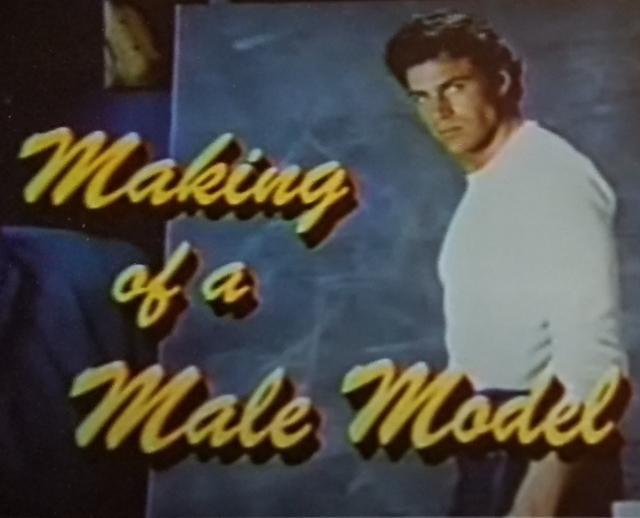
Any time I participate in a blogathon, I try to choose a film or topic that brings something different to the event. This allows my entry to stand out, as well as offer a sense of variety to the blogathon’s subject. When searching Joan Collins’ filmography, for Realweegiemedget Reviews’ Joan Collins Blogathon, I came across the 1983 television movie, Making of a Male Model. What intrigued me to the point of wanting to watch it was how it told a story from a completely different perspective. In films that revolve around modeling or the fashion industry, the story usually focuses on a female protagonist. With Making of a Male Model, a man is entering the modeling world. Out of the films I’ve seen involving modeling, the only one featuring a male model in the starring cast is the Disney movie, Model Behavior. Add the fact I’ve haven’t seen many of Joan’s projects, I am definitely eager to start this review!
Here is a screenshot I took with my phone of the movie’s opening title. Screenshot taken by me, Sally Silverscreen.
Things I liked about the film:
The acting: Because Joan Collins’ involvement in this movie is one of the reasons why I chose to review this film, I’ll talk about her performance first. In stories where the head of a fashion or modeling firm is one of the main characters, they either have an obvious self-centered personality or they come across as emotionally distant. With Joan’s portrayal of Kay Dillon, she brought something different to a role like this. For most of the film, Kay appeared genuinely kind-hearted and nurturing. The only times Kay sounds self-centered is when she is upset. When Kay and Tyler discuss their plans over lunch is a perfect example, as she explains how she can’t spend much time with him because she had spent ten years building her career. Speaking of Tyler, I enjoyed watching Jon-Erik Hexum’s performance! He did a good job portraying a character in his specific situation. At the beginning of the movie, Tyler is a “fish out of water”, overwhelmed by the modeling world and taken aback by some of the things that take place in that world. As the film progresses, Tyler gains more confidence and his perspective begins to change. I also liked Jeff Conaway’s portrayal of Chuck Lanyard! It was dramatic and emotional without being over-the-top. One of Jeff’s best scenes is when his character is comparing the modeling world to a stage play. That scene proved to me Jeff has the talents for a Broadway show!
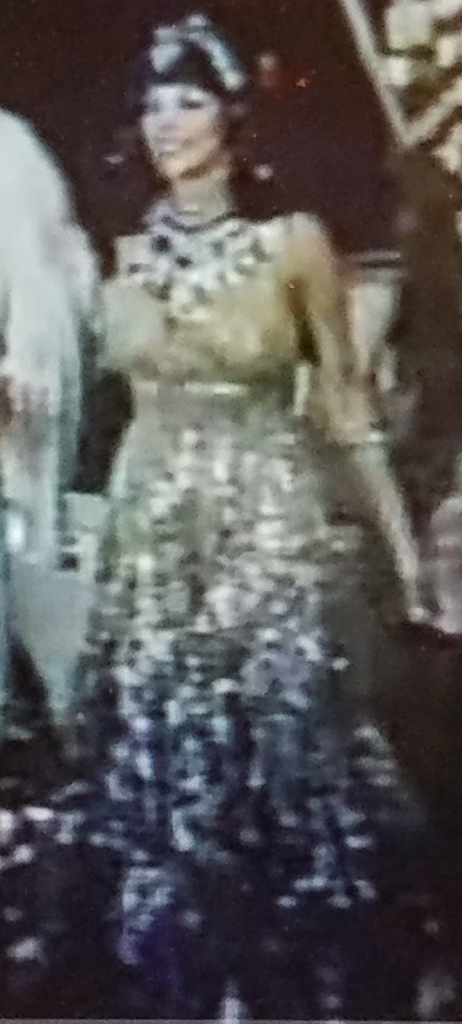
The costume design: In one scene, Tyler and Kay attend a costume party. The costumes were so elaborate and detailed, I honestly thought they were going to the Met Gala! One of the party goers wore a large hat in the shape of eyes. The piece around the blue eyes appeared periwinkle, with the hat portion blending into a pretty purple. Kay’s dress was absolutely gorgeous! It was covered in sparkles, allowing the dress to shine whenever Joan moved. The top of the dress was gold, with the skirt adopting an ombre design of blue and purple. A clear jeweled collar completed the look. During a photo shoot, one of the models was wearing a hat with a bird on it. The bird was covered in purple jewels, sparkling anytime the model moved her head. It was such a cool piece that I’d love to have in my wardrobe!
An insightful look into the world of modeling/advertising: Out of the episodes of Murder, She Wrote I’ve seen, my favorite one is ‘Film Flam’. One of the reasons is the behind the scenes look at how a movie premiere is organized. Throughout Making of a Male Model, the world of modeling and advertising is explored. When Tyler goes to apply for a catalogue modeling job, he is turned down due to his appearance and his lack of a portfolio. This instance shows how fast-paced this particular world can be and how one must always be prepared to bring a good first impression. At one point in Tyler’s journey, Tyler takes part in television commercials. Before a commercial for cologne was filmed, the director conducted a practice run in order to help Tyler remember what to do. It was interesting to see how the sets were constructed, how far the crew was willing to go to create an image or an idea. It was also interesting to see the prep work that goes into creating a commercial.
What I didn’t like the film:
Lack of on-screen chemistry: During the film, Tyler and Kay form a romantic relationship. However, I never sensed a spark between them. Jon-Erik and Joan worked well together from an acting perspective. But when it came time for their characters to become intimate, it felt like they were following story points within a script instead of allowing their characters to form a connection. Tyler and Kay’s relationship comes to fruition after the costume party I mentioned earlier. But up until that moment, Tyler and Kay did not express any interest in falling in love with each other. So, the formation of their relationship, from a story telling perspective, felt forced and random.
Following the same beats: As I said in the introduction, I wanted to watch Making of a Male Model because it told a model’s story from a man’s perspective, which is not often explored in the world of cinema. Because of this, I was expecting the movie to tell a different kind of story from others of this nature. Sadly, it was just more of the same. The story followed a lot of the same beats as other modeling/seeking fame films. Making of a Male Model featured tropes such as “the two-faced boss”, “a cautionary tale about fame and fortune”, and “a friend in crisis”. This movie had an opportunity to take different avenues of the modeling or advertising world that either haven’t been or are rarely discussed in film. But that opportunity was not taken advantage of.
Telling more than showing: There were some moments in Making of a Male Model where characters told more than showed what was happening. As I already mentioned, Chuck compares the modeling world to a stage play. I did like Chuck’s monologue and Jeff’s performance. However, because this monologue was given before Tyler’s modeling career began, it denied the audience a chance of seeing Tyler’s journey firsthand, without being spoiled. At the costume party, a man named Ward accuses Kay of breaking a contract. It gets to the point where Ward starts causing a scene. Since this accusation is presented as hearsay, it is never determined who was telling the truth.
I apologize for the poorer quality of this photo, but it was one of the few complete shots of the dress this movie presented. Screenshot taken by me, Sally Silverscreen.
My overall impression:
I know that stories are bound to get repeated overtime. But there is a fine line between telling similar stories and rehashing material. Making of a Male Model fits into the latter category, as the same tropes are adopted from other films of this nature. Honestly, this disappoints me because I was expecting more from this movie. Despite finding Making of a Male Model to be just ok, there are aspects of the film I liked. One of them is the insightful look at the modeling/advertising world. This part of the story held my interest, as I found it to be a fascinating exploration. With that in mind, I think the concept of this movie would have worked better as a television show or documentary.
Before I finish this review, I’d like to let my readers know I did choose another book from my TBR Tin. For those who don’t know, I announced in January how I would choose which book to read next from a hot chocolate tin I won last year. My second TBR Tin book of the year is
(insert drumroll here)
Closed for the Season by Mary Downing Hahn!
Yes, this is a book I said I was going to read in 2019. But I’m glad to finally get around to reading it!
Overall score: 6.1 out of 10
Have you seen Making of a Male Model? Which projects of Joan Collins’ have you watched? Let me know in the comment section!












 18 Cinema Lane