Take 3: Ainsley McGregor Mysteries: A Case for the Watchmaker Review

Great American Family’s Ainsley McGregor Mysteries series has become a pleasant surprise for 18 Cinema Lane. My review of Ainsley McGregor Mysteries: A Case for the Winemaker became one of my most popular movie reviews of all time, garnering over seven thousand views in almost two years. The positive reception of this review led me to cover the sequel, Ainsley McGregor Mysteries: A Case for the Yarn Maker. That review has also been well received, obtaining over two hundred views so far. When I discovered Great American Family was not only releasing a third chapter, they were also premiering the third chapter in January 2026, I knew that’d be one of the first movies to be written about in the New Year! Though there’s only been two movies in the Ainsley McGregor Mysteries series, so far, the series as a whole has been quite enjoyable. What has worked in the series’ favor is improving upon the flaws of the previous chapter and providing consistent strengths. Will the third chapter, Ainsley McGregor Mysteries: A Case for the Watchmaker, continue this pattern? Let’s find out in this review!

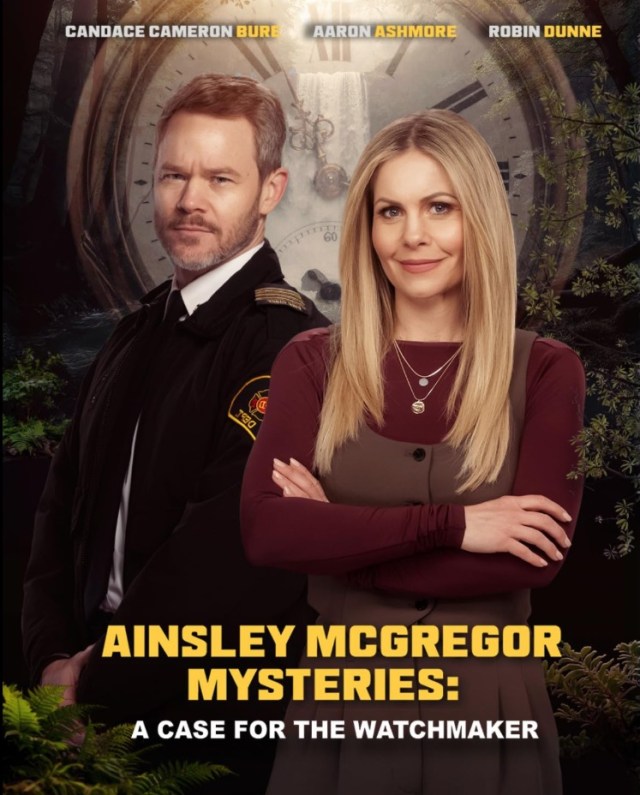
Ainsley McGregor Mysteries: A Case for the Watchmaker poster created by Candy Rock Entertainment, Happy Accidents, Syrup Studios, and Great American Family

Things I liked about the film:

Subtle hints of Texas: When I reviewed Ainsley McGregor Mysteries: A Case for the Winemaker, I criticized the film for its constant reminders of the story’s Texas setting. To me, these reminders tried to make the movie’s setting a little too obvious for the audience. This flaw was remedied in Ainsley McGregor Mysteries: A Case for the Watchmaker! References to the series’ Sweet River, Texas setting were represented through some of the women’s wardrobe. One of the Book Club members, Maria, sometimes dons turquoise jewelry. Another Book Club member, Lily, wears a sweatshirt featuring a cowboy/cowgirl hat and cowboy/cowgirl boots. Even Ainsley herself can be seen wearing a blouse similar to those worn by country music stars. Besides the wardrobe, there were other subtle hints of Texas found in Ainsley McGregor Mysteries: A Case for the Watchmaker. A great example is when one of the Book Club members uses a pen shaped like a cactus.

Selecting a cold case: While seeking another mystery to solve, the Book Club decides on a cold case. As they mentioned in the movie, the cold case provided a nice change of pace for them. Not only did this decision benefit the Book Club, it also benefitted Ainsley McGregor Mysteries: A Case for the Watchmaker! By having a cold case as the movie’s main mystery, it prevents the series from becoming repetitive, as the previous two chapters revolved around murder mysteries that happened in the present. This creative choice shows other ways mysteries can become solved as well. In the case of Ainsley McGregor Mysteries: A Case for the Watchmaker, most of the clues were found within the dialogue. Selecting a cold case for the characters to solve was definitely an interesting decision for the third film in the Ainsley McGregor Mysteries series!

Rance Moseby: A new character that was introduced in Ainsley McGregor Mysteries: A Case for the Watchmaker was Rance Moseby, the proprietor of a local pawn shop. At first, Ainsley and Jake believe Rance may be up to no good. But as the story progresses, Rance proves that looks can be deceiving. While I was watching Ainsley McGregor Mysteries: A Case for the Watchmaker, I grew to like Rance as a character. David Milchard, the actor who portrayed Rance, had great on-screen chemistry with the movie’s cast. The strength of David’s acting talents helped make Rance seem like he was always meant to exist in the world of the Ainsley McGregor Mysteries series. Rance’s drier sense of humor nicely provided the film’s comic relief as well. If there are more Ainsley McGregor Mysteries movies in the works, I really hope Rance Moseby becomes a part of the series’ regular cast!

Pocket watch with confetti image created by Freepik at freepik.com. Christmas clock photo created by freepik – www.freepik.com

What I didn’t like about the film:

An unnecessary subplot: Throughout Ainsley McGregor Mysteries: A Case for the Watchmaker, a subplot revolved around Jake’s past romantic relationship with the mayor of Sweet River, Jane Reval. Even though it was interesting to see how this new character connected to an established character like Jake, I found this subplot unnecessary. Because Jake and Ainsley are currently dating, Jake has no interest in reuniting with Jane. This fact prevents the subplot from going anywhere. It also doesn’t help that the subplot has a loose connection to the main mystery. In my opinion, the least interesting part of Ainsley McGregor Mysteries: A Case for the Watchmaker was the subplot between Jane and Jake.

Inconsistent humor: In my review of Ainsley McGregor Mysteries: A Case for the Yarn Maker, I praised the movie’s inclusion of humor. It was not only sprinkled throughout the story, it was also woven into the dialogue. While there was humor in Ainsley McGregor Mysteries: A Case for the Watchmaker, it wasn’t consistently featured in the story. In fact, most of the movie’s humor was found in the second half of the film, when Rance becomes more involved in the mystery. This flaw kind of makes me wish Rance debuted in Ainsley McGregor Mysteries: A Case for the Watchmaker sooner.

Limited screen-time for George: One of the aspects I liked in Ainsley McGregor Mysteries: A Case for the Winemaker was Ainsley’s dog, George. Moments where Ainsley talks to George gave viewers a break from the heaviness of the story’s murder mystery. Plus, his larger role in the first chapter gave the film a more unique identity. But in the second movie, Ainsley McGregor Mysteries: A Case for the Yarn Maker, George’s screen-time was reduced. I was hoping this flaw would be corrected in Ainsley McGregor Mysteries: A Case for the Watchmaker. But, unfortunately, George received even less screen-time, only appearing in two scenes. The reduction of George’s screen-time as the Ainsley McGregor Mysteries series continues disappoints me, especially since George is one of my favorite parts of this series.

Magnifying glass image created by Freepik at freepik.com. <a href=’https://www.freepik.com/free-vector/magnifying-glass-with-fingerprint-in-flat-style_2034684.htm’>Designed by Freepik</a>. <a href=”https://www.freepik.com/free-photos-vectors/flat”>Flat vector created by Freepik</a>. Image found at freepik.com.

My overall impression:

When I talked about Mystery by the Book in my list of The Best and Worst Movies I Saw in 2025, I brought up how Great American Family’s Ainsley McGregor Mysteries series is growing stronger in quality. The third chapter, Ainsley McGregor Mysteries: A Case for the Watchmaker, proves my statement correct, as I found it the best movie in the series so far! Selecting a cold case as the movie’s main mystery prevented the overarching story of Ainsley McGregor Mysteries from becoming repetitive. The creative team behind the 2026 film improved upon flaws from the previous titles, such as making subtle references to the series’ Texas setting. Even though the acting was, once again, one of the strengths of Ainsley McGregor Mysteries: A Case for the Watchmaker, David Milchard’s portrayal of Rance Moseby stole the show. In fact, I’d say Rance was the MVP of this movie! Despite the film having its flaws, the film itself shows the Ainsley McGregor Mysteries series is moving in the right direction. I do hope this series continues, as I believe there are many more stories to tell!

Overall score: 7.5-7.6 out of 10

Have you seen Ainsley McGregor Mysteries: A Case for the Watchmaker? What would you like to see happen if the series continues? Let me know in the comment section!

Have fun at the movies!

Sally Silverscreen
Take 3: Lovey: A Circle of Children, Part II (1978) Review

As I explained in my recent review of A Circle of Children, I’m covering the sequel, Lovey: A Circle of Children, Part II for the Film. Release. Repeat. Blogathon. Because I’ve been meaning to review the 1978 television film since 2022, I believed the blogathon was a great time to finally check the movie out! But as I also mentioned in my review of A Circle of Children, I haven’t found a made-for-tv movie from the 1970s I actually like. Whenever I’ve selected this particular type of film to write about, I find the film itself either fine, ok, or underwhelming. This is one of the reasons why I put “1970s Made-for-TV movie” on my Year-Long Bingo card, so I could, hopefully, find a television movie I enjoy from that decade. When I saw and reviewed A Circle of Children, I thought it was just ok. Will its sequel be better? Let’s begin this review to find out!

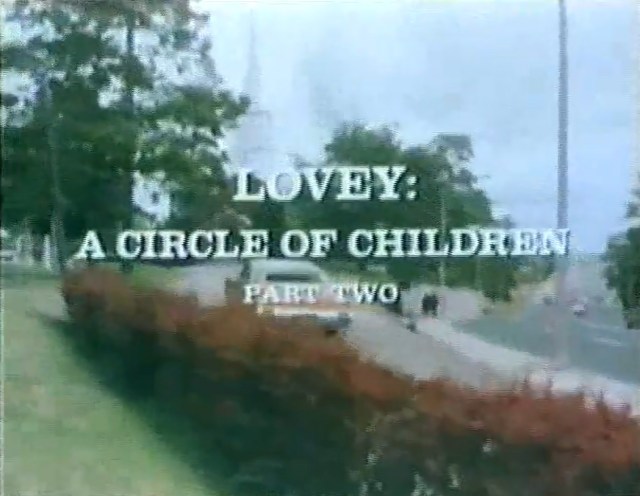
Lovey A Circle of Children, Part II title card created by Time-Life Television Productions and CBS

Things I liked about the film:

A smaller cast: In my review of A Circle of Children, I mentioned the film containing a large cast of characters. This is one of the reasons why the audience was forced to either only become familiar with the characters or not getting to know them at all. This flaw became remedied in Lovey: A Circle of Children, Part II! In the 1978 sequel, the cast is much smaller. Even Mary’s class contains fewer students. Because the story has less characters to keep track of, it gives the audience an opportunity to truly get to know the characters. The audience also has more time to spend with characters like Mary’s students and even Mary’s boyfriend, Cal, because of a tightly written script.

Progression that’s written gradually: When I reviewed A Circle of Children, I talked about how Sarah’s sudden achieved progress taking place after being a static character for half the movie felt like it was written into the story for the sake of plot and time convenience. Even though I was happy to see Sarah achieving progress, I wish that progress was gradually woven into the script. It seems like the creative team behind Lovey: A Circle of Children, Part II felt the same way I did, as Hannah’s/Lovey’s progression was gradual. Hannah/Lovey joins Mary’s class as an unruly child who is very unpredictable. But as the film goes on, Mary’s influence takes effect on Hannah/Lovey as she becomes more responsive, less violent, and even participates in class. The smaller cast size I talked about earlier certainly influenced this part of the story. It allowed Hannah’s/Lovey’s progression to receive emphasis instead of competing against other stories. The transformative power of Mary’s teaching abilities is also on full display because of the gradually written progression of Hannah/Lovey.

The dialogue: Like I said in my list of The Best and Worst Movies I Saw in 2025, how well-written the dialogue was in The Chalk Garden allowed me to remember what Laurel said about the term “good morning”. The quality of the screenwriting was also a strength in Lovey: A Circle of Children, Part II! Some of the dialogue in the 1978 movie sounded profound without trying too hard to be philosophical. A great example can be heard during a conversation between Mary and a fellow teacher named Patty. Patty feels discouraged over the lack of progress from her students. Mary reassures Patty that her impact on the students has been positive, reminding Patty how hope comes from believing the children can learn something. Patty then tells Mary, “Yeah, but you can’t mop the floors with hope”. Mary experiences her own period of discouragement after Hannah/Lovey has an angry outburst involving paint. In a voice-over, Mary says, “For a moment, my dreams and plans for Hannah shattered. But paint is only paint and never worth a dream. Besides, a teacher’s dream dies hard”. The two examples I provided show how Mary’s and Patty’s frustrations and concerns were eloquently and thoughtfully written into the script.

The Film. Release. Repeat. Blogathon banner created by Quiggy from The Midnite Drive-In and Hamlette from Hamlette’s Soliloquy

What I didn’t like about the film:

How Hannah was introduced: As I’ve already said in this review, Hannah/Lovey joins Mary’s class as an unruly child who is very unpredictable. However, I found her introduction in Lovey: A Circle of Children, Part II to be distasteful. As Mary walks down the hallway to retrieve Hannah/Lovey, suspenseful music plays over the scene. The music itself sounds as if it came straight out of a horror movie. The reveal of Hannah’s/Lovey’s face was prolonged because of specific camera angles that were utilized. When Hannah’s/Lovey’s face was finally revealed, a frozen close-up shot was presented to intentionally appear frightening. To me, the introduction I described felt sensationalized to the point of being counterproductive of what Lovey: A Circle of Children, Part II was trying to achieve; making the audience feel empathetic toward Hannah/Lovey by looking past her horrific behavior. I truly believe there was a more tasteful way Hannah/Lovey could have been introduced in the story, especially compared to how some of the students were introduced in A Circle of Children.

Doris’ limited involvement in the story: A Circle of Children introduced Doris as the director of the Children’s School for Special Education. Though she appeared in only a handful of scenes, Doris’ role was pivotal as she literally and figuratively opened the door for Mary to the world of Special Education. Doris was one of the few characters from the first movie to return in the sequel. But she was given even more limited involvement in the second film. While she was still the director of the Children’s School for Special Education, her role in Mary’s story had a reduced significance. I wish Doris received more to do in Lovey: A Circle of Children, Part II because I think she could have made a bigger impact.

Lack of further progression: I said earlier in this review how Hannah’s/Lovey’s progression was written gradually into the story. Even though this was one of the movie’s strengths, I didn’t like how there was a lack of further progression for two of Mary’s students. While Hannah/Lovey was improving her reading skills and Brian (from the first movie) was learning how to board the bus by himself, Rufus and Jamie were at a standstill in their education. With a smaller cast size I talked about in this review, there should have been room in the script to give Jamie and Rufus at least a small victory. At the end of Lovey: A Circle of Children, Part II, Mary reveals through a voice-over what happened to her students. However, not showing Rufus and Jamie achieving further progression in the movie was a missed opportunity.

Preschool classroom image created by Vectorpocket at freepik.com. <a href=”https://www.freepik.com/free-photos-vectors/background”>Background vector created by vectorpocket – http://www.freepik.com</a>. Image found at freepik.com.

My overall impression:

Sometimes, a sequel ends up becoming better than its predecessor. Lovey: A Circle of Children, Part II just so happens to be one of those films! Some of the flaws of A Circle of Children were improved upon in the second chapter, such as containing a smaller cast and the script featuring a gradual progression for Hannah/Lovey. The sequel even had its own unique strengths from its predecessor, like how well-written the dialogue was. But despite these positive aspects, Lovey: A Circle of Children, Part II did have its flaws. I believe there are more respectful ways Hannah/Lovey could have been introduced into the story, as her debut in the film was too sensationalized for my liking. I not only wish Jamie and Rufus had received further progression in the movie, I also wish Doris was given a greater significance in the script. But similar to what I said in my review of A Circle of Children, I’m grateful Lovey: A Circle of Children, Part II exists at all. The 1978 film gives the audience a glimpse into what Special Education was like in the 1970s. It’s a made-for-tv movie that was spared from getting lost to time as well.

Overall score: 7.2 out of 10

Have you seen Lovey: A Circle of Children, Part II? Are there any made-for-tv movies from the 1970s you’d like to see me cover on 18 Cinema Lane? Please tell me in the comment section!

Have fun at the movies!

Sally Silverscreen

Take 3: A Circle of Children (1977) Review

Back in 2022, I wrote a list of the Top 10 Movies I’d Love to Review. Each chosen film was categorized based on how accessible they are. Reflecting on this list, I realized that as of early January 2026, the only more “accessible” titles not yet covered on my blog were A Circle of Children and Lovey: A Circle of Children, Part II. With the Film. Release. Repeat. Blogathon (an event about remakes and sequels) on the horizon, I finally found a reason to review the 1978 sequel. However, I’ve never seen its predecessor, A Circle of Children. So, in preparation for my review of Lovey: A Circle of Children, Part II, I’m also writing about the first film. As I said in my list of the Top 10 Movies I’d Love to Review, both A Circle of Children and Lovey: A Circle of Children, Part II are based on the true story of a teacher named Mary MacCracken. Like I also said in my list, Mary’s books were not only the source material for these movies, Mary was also one of the screenwriters for both films. But over these eight years of 18 Cinema Lane’s existence, I haven’t found a made-for-tv movie from the 1970s I actually like. Will A Circle of Children change that? Let’s begin the first movie review of 2026 to find out!

A Circle of Children (1977) title card created by Edgar Scherick Productions, 20th Century Fox Television, and CBS

Things I liked about the film:

The acting: In A Circle of Children, the protagonist, Mary, visits the mother of a student named Brian O’Connell. During Mary’s conversation with Mrs. O’Connell, Brian’s mother consistently has a worn look on her face. Not only did Mrs. O’Connell’s eyes look heavy, her mouth was set in a straight line as well. Her voice almost sounded monotone, lacking emotion over her situation. Though she admits to Mary that she’s tired, Mrs. O’Connell was able to express how tired she was without relying too much on dialogue. That’s because Judy Lewis, the actress who portrayed Mrs. O’Connell, effectively utilized vocal inflection, facial expression, and even her eyes to emphasize what her character was going through.

Speaking of Brian O’Connell, I want to talk about Matthew Labyorteaux’s performance! I am familiar with his portrayal of Albert on Little House on the Prairie. Therefore, Matthew’s acting capabilities are already known to me. Mary teaching Brian to speak presents a great display of Matthew’s acting talents. When Mary is using a tape recorder in order to help Brian learn to speak, Brian has a blank look on his face. But when a teacher named Dan sings a song to the students, he offers the microphone to Brian. This time, Brian has a determined look on his face, as he intensely looks at the microphone and makes a great effort of trying to repeat Dan’s song. The next scene shows Brian receiving a second chance to speak into the microphone. His eyes become really wide and a smile spreads across his face, excited by the opportunity given by Mary and Dan. As I watched A Circle of Children, it made me believe Little House on the Prairie’s creative team chose wisely when they cast Matthew as Albert!

Since A Circle of Children is based on the true story of Mary MacCracken, I must discuss Jane Alexander’s portrayal of Mary. Throughout the movie, Jane’s performance brought empathy and relatability to her role. One great example happens when Mary encourages Brian to say his name. Brian puts together a puzzle resembling a short story he was reading earlier in the film. Because one of the characters in that story was named Brian, Mary uses this fact to motivate Brian to say his name for the first time since coming to the Children’s School for Special Education. When this plan fails, Mary develops a look of defeat on her face. Her mouth is turned into a frown and her eyes present a mixture of sadness and concern. This medium shot of Mary’s face not only says so much without saying anything at all, it also shows the audience how much she cares about the students, especially Brian.

The chemistry of Mary and Dan: When Mary first visits the Children’s School for Special Education, she meets a teacher named Dan. Over the course of A Circle of Children, Dan and Mary develop a friendship that is shown in only a handful of scenes. Despite this, their chemistry highlights how the two have become kindred spirits, bringing thoughtfulness and understanding to their friendship. The chemistry between Mary and Dan works because the on-screen chemistry between Jane Alexander and David Ogden Stiers (the actor who portrays Dan) works! The strength of their acting abilities allows David and Jane to effectively present a friendship that looked and felt believable. Because of how well they seemed to get along, I was hoping Dan and Mary’s friendship would gradually become a romance. Mary and Dan’s chemistry was such a pleasant surprise in A Circle of Children!

Creating a complex character: One of the teachers at the Children’s School for Special Education is Helga. At first, she and Mary don’t see eye to eye due to how Helga treats the students. Some examples include making a child plunge the toilet and intentionally hiding a young girl’s (literal) security blanket. But as the story goes on, Mary, as well as the audience, learns Helga actually has good intentions for the students. In fact, she wants the children to succeed just as much as Mary does. It would have been so easy for A Circle of Children’s creative team to present Helga as a one-dimensional mean teacher. Instead, the screenwriting and Rachel Roberts’ performance created a character that was complex, representing how, sometimes, approaches to education aren’t straightforward. Helga’s complexity made her a memorable character as well!

Preschool classroom image created by Vectorpocket at freepik.com. <a href=”https://www.freepik.com/free-photos-vectors/background”>Background vector created by vectorpocket – http://www.freepik.com</a>. Image found at freepik.com.

What I didn’t like about the film:

Only becoming familiar with characters: A Circle of Children consists of a large cast of characters. That’s because most of the characters are students from the Children’s School for Special Education. But A Circle of Children has a run-time of an hour and thirty-six minutes, leaving the audience with not enough time to truly get to know the characters. The film’s run-time actually forces the audience to either only become familiar with the characters or not getting to know them at all. Had A Circle of Children received a longer run-time, more opportunities to show Mary getting to know her students and help them could have been provided in the story.

Scene transitions that weren’t smooth: If a movie features smooth transitions between scenes, they can not only help the audience process the story unfolding, they can also maintain the film’s overarching pace. But in the case of A Circle of Children, choppy scene transitions sometimes created emotional whiplash. In one glaring example, Mary and her husband, Larry, confess to their daughter, Liz, of their recent separation. This confession is so upsetting, Mary herself appears to be on the verge of crying. However, the very next scene shows Mary being interviewed for a teaching aide position at the Children’s School for Special Education. This scene is intended to be less sad than the scene I previously described. To me, the transition between these two scenes felt jarring because the transition itself was choppy and abrupt.

Solutions happening for the sake of plot and time convenience: Within the first fifteen minutes of A Circle of Children, a young girl named Sarah is enrolled at the Children’s School for Special Education. According to Sarah’s mother, Sarah is unable to stand or walk. She’s also so attached to a blanket that she continuously screams at the top of her lungs if the blanket is taken away from her. For half the movie, though, Sarah is a static character. She’s either shown lying on the floor sucking her thumb or screaming because she can’t find her blanket. But at a Christmas party that takes place a little more than halfway through the movie, Sarah not only randomly starts walking, she also willingly trades her blanket for a doll. While I was happy to see Sarah achieving progress, I wish this progress was gradually woven into the script. Because Sarah suddenly achieved progress after being a static character for half the movie, the moment itself felt like it was written into the story for the sake of plot and time convenience.

String of musical notes image created by Freepik at freepik.com. <a href=’https://www.freepik.com/free-vector/pentagram-vector_710290.htm’>Designed by Freepik</a> <a href=”https://www.freepik.com/free-photos-vectors/background”>Background vector created by Freepik</a>. Image found at freepik.com. 

My overall impression:

In the introduction of this review, I said I haven’t found a made-for-tv movie from the 1970s I actually like. Sadly, A Circle of Children will not be the film to change that. The 1977 production isn’t a bad movie. In fact, it has its merits, especially when it comes to the acting performances. But I found the story itself to be too “slice of life” for my liking. Plus, there were other flaws that stood out to me, such as the run-time and choppy scene transitions. Looking back on A Circle of Children, however, I will admit my gratitude for its existence at all. This movie is like a time capsule when it comes to Special Education, giving viewers a glimpse into how this specific topic was approached in the 1970s. Though the film only shares one teacher’s perspective, it does express themes of helping others reach their full potential, working together to achieve a common goal, and not giving up on others. The creative team behind A Circle of Children definitely had their hearts in the right place. Now that I’ve finally seen this movie, it’ll be interesting to see where the story in Lovey: A Circle of Children, Part II goes from here.

Overall score: 6 out of 10

Have you seen A Circle of Children? Are you looking forward to my review of Lovey: A Circle of Children, Part II? Let me know in the comment section!

Have fun at the movies!

Sally Silverscreen

The Best and Worst Movies I Saw in 2025

2025 has been a strange year for 18 Cinema Lane. That’s because most of the movies I’ve seen and/or reviewed this year have been ok or fine. After seeing so few good or bad films in 2025, I wasn’t able to create separate top ten best and worst movies lists like in years past. So, instead, I wrote a combined list where I discuss the movies I saw this year that I liked and didn’t like. What’s also different about this year’s end of year list is how there are no Honorable Mentions, due to how few good movies I saw in 2025. But there are two Dishonorable Mentions; Recipe for Murder and Black Bag. The only reason why these films are considered Dishonorable Mentions is because I DNFed (did not finished) both of them. For this year’s list, I will start talking about 2025’s worst movies then end the list by talking about 2025’s best movies. If I reviewed any of the movies on my list, I will provide a link to those reviews.

Worst Movies I Saw in 2025

7. Stalked by My Amish Boyfriend

Lifetime movies, like Hallmark movies, are not created equally. The 2024 film, Stalked by My Amish Boyfriend, is just one example of this statement. While it was interesting to see and hear how information about Amish culture was woven into the story, that part of the script couldn’t overshadow the major flaws of the movie. I was frustrated by how some characters would make dumb decisions simply for the sake of making dumb decisions. Stalked by My Amish Boyfriend was also, in my opinion, a mostly forgettable film. This is the reason why the 2024 picture is at the bottom of my list.

6. She Wore a Yellow Ribbon

As I said in my review of She Wore a Yellow Ribbon, I expected the 1949 movie to be an action-packed, suspenseful, and even intriguing story. What I got instead was an underwhelming film that prioritized presentation over product. I praised She Wore a Yellow Ribbon for its pretty looking scenery. But a photogenic background was unable to save the film from its weak script. A limited amount of action took away a lot of the story’s suspense and intrigue. It also doesn’t help how I only became familiar with most of the characters instead of truly getting to know them. She Wore a Yellow Ribbon is one of two movies I saw this year that almost made me fall asleep.

Take 3: She Wore a Yellow Ribbon Review

5. Kind Hearts and Coronets

Kind Hearts and Coronets is the second film I saw in 2025 that almost made me fall asleep. But the flaws in this movie greatly differ from She Wore a Yellow Ribbon’s emphasis on scenery over substance. Despite Kind Hearts and Coronets being classified as a “comedy”, I didn’t laugh at all while watching the film. I also had no idea what the story’s moral was supposed to be, due to the moral being treated as an afterthought. Like I said in my Kind Hearts and Coronets review, I’m not entirely sure what this movie was trying to say. That lack of clarity not only makes the movie underwhelming, it also makes the movie confusing.

Take 3: Kind Hearts and Coronets Review

4. Reality Bites: A Hannah Swensen Mystery

Having Reality Bites: A Hannah Swensen Mystery on my worst movies of the year list and finding Pie To Die For: A Hannah Swensen Mystery slightly better than its predecessor feels like déjà vu. That’s because One Bad Apple: A Hannah Swensen Mystery was placed on my worst of 2024 list, with its follow-up, A Sprinkle of Deceit: A Hannah Swensen Mystery, being slightly better. Though Reality Bites: A Hannah Swensen Mystery had its own set of flaws. Forced humor felt straight out of a sit-com, especially when Delores was involved in the story. As I said in my review, I wondered why a laugh track was missing. Both of the film’s mysteries contained such a small sense of urgency, the run-time felt a bit drawn-out. The story’s overall intrigue was weaker due to this flaw. If the Murder, She Baked/Hannah Swensen series continues in 2026, I’d like to see the quality become more consistent.

Take 3: Reality Bites: A Hannah Swensen Mystery Review

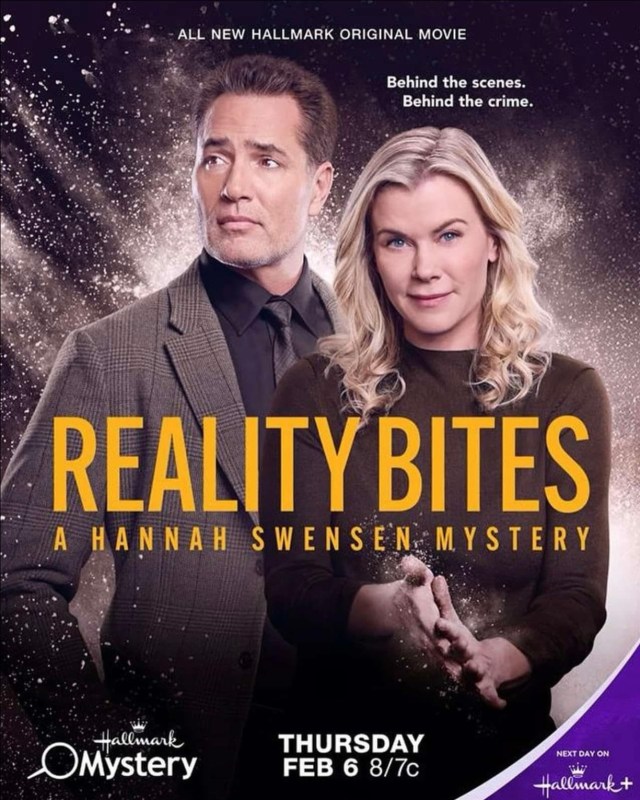
Reality Bites: A Hannah Swensen Mystery poster created by Hallmark Movies & Mysteries

3. Perry Mason: The Case of the Heartbroken Bride

Perry Mason: The Case of the Heartbroken Bride is the most disappointing movie I saw in 2025. There were so many missed creative opportunities in this story, the film itself was under-cooked and uninspired. The movie was sometimes boring because of the lack of urgency. Seeing Perry, Della, and even Kevin meanderingly take their time building a legal case sucked the energy out of the story. I said in my review how any movie series boasting over ten titles was going to have at least one “bad day at the office”. I also said in my review how Perry Mason: The Case of the Heartbroken Bride was one of those days for the fictional detective.

Take 3: Perry Mason: The Case of the Heartbroken Bride Review

2. My Gal Sunday

This 2014 movie is a perfect example of Hallmark putting the cart before the horse. Instead of creating a solid stand-alone film that could have naturally led to more chapters, the network put more effort into trying to build the foundation for a potential series. Parts of this story didn’t make sense. One glaring example is when an itinerary shows the protagonist couple’s plans of going dancing at 11 p.m. on Saturday then going to church at 8 a.m. on Sunday, begging the question of when these characters were supposed to go to sleep. The on-screen chemistry between Cameron Mathison and Rachel Blanchard made their characters, Henry and Sunday, feel less like a married couple and more like a couple who are about to start dating. It’s, honestly, a shame My Gal Sunday wasn’t a stronger picture. Mystery stories about married couples are uncommon from Hallmark, so this 2014 story could have offered something unique to the network’s table.

1. Mystery by the Book

This film actually has two titles; Mystery by the Book and Key to Love. However, I saw the movie on Great American Family under the title, Mystery by the Book. Therefore, I will be referring to that title for the sake of my list. For a movie with the word ‘mystery’ in the title, the story’s mystery is an afterthought, which makes the title itself very misleading. Instead, the characters develop other priorities, like playing dress-up and tapping glasses four times during one dinner date. Parts of the script don’t make sense, like how the protagonists find a treasured antique key. Mystery by the Book is even so bad, it’s, at times, unintentionally funny. A perfect example is when Corey Sevier’s character, Josh, is looking for a set of keys, only to find a set of keys seconds later on a key hook labeled “Keys”. Thank goodness Great American Family’s Ainsley McGregor Mysteries series is growing stronger in quality. But if the network wants to expand their mystery library, they have a long road ahead of them.

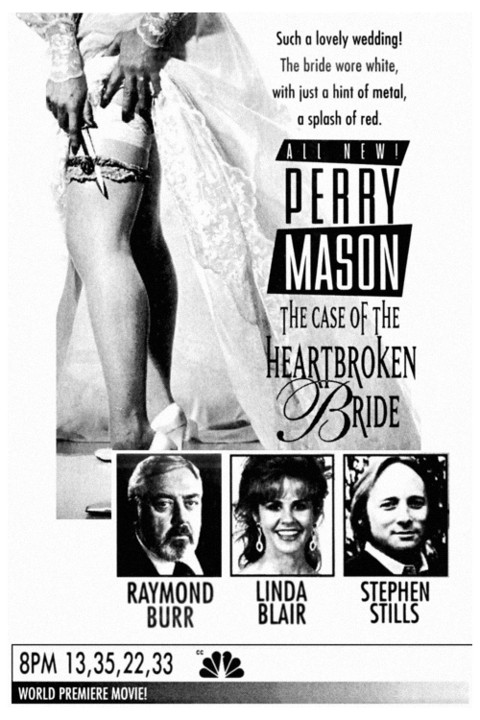
Perry Mason: The Case of the Heartbroken Bride poster created by Fred Silverman Company, Viacom Productions, Dean Hargrove Productions, National Broadcasting Company, and Viacom

Best Movies I Saw in 2025

8. The Phantom of the Opera (1925)

I’m still shocked by how the 1925 version of The Phantom of the Opera was never included on any of American Film Institute’s 100 movies lists, even months after I reviewed the film. Looking at everything the movie has to offer, I believe there is an argument to be made for its inclusion on, at least, one of those lists. Lon Chaney’s performance alone highlights how make-up, body language, and even the eyes can enhance an acting performance. Each area of the Opera House was presented through color coded film, which gave the movie a unique identity. What also helps 1925’s The Phantom of the Opera standout is how the cinematic lens showed the audience the expansive nature of storytelling. This is why, in my opinion, the story of the Phantom and his opera house is better suited for film than the stage.

Take 3: The Phantom of the Opera (1925) Review (Silent Pioneers Double Feature Part 2)

7. Fist of Fury

For an introduction to Bruce Lee’s filmography, I think Fist of Fury is a good one! The martial arts choreography was definitely one of the strengths of this film. But the movie contained other aspects I liked as well. Bruce’s portrayal of Chen is a reason why Fist of Fury was so memorable. Clever writing and higher stakes woven into the script create a story that was clever, suspenseful, and intriguing. Because of how much I enjoyed watching Fist of Fury, I hope to check out more of Bruce’s movies in 2026!

Take 3: Fist of Fury Review

6. The Chalk Garden

Even though I reviewed this film back in February, I still think about what Laurel said about not liking being told “good morning”. How well-written the dialogue was is one of the reasons why I remember Laurel saying, “what is a good morning to someone else is rarely a good morning to me”. Speaking of Laurel, Hayley Mills’ utilization of animated expressions and a variety of emotions helped the audience see how complex her character truly is. But Hayley is not the only actress whose performance was strong. The Chalk Garden is a movie where every actor and actress does a great job with the acting material they were given. The 1964 presentation is part character study, part mystery that works!

Take 3: The Chalk Garden Review + 505 Follower Thank You

5. The Night Before the Night Before Christmas

The Night Before the Night Before Christmas is another movie I saw (and reviewed) this year where it was difficult to choose a favorite acting performance. The strength of the cast’s acting abilities not only made watching the story unfold more enjoyable, it even helped characters become more likable. Emphasizing the theme of giving painted a portrait of Santa I hadn’t really thought of before; someone who has a reputation for giving. It was also a clever way to remind viewers of one of the Christmas season’s important components. How Christmas activities were included in the script was a breath of fresh air as well. As I said in my review, I wish Hallmark went back to creating titles that didn’t rely too much on a formula, tropes, and/or cliches.

Take 3: The Night Before the Night Before Christmas Review + 515 Follower Thank You

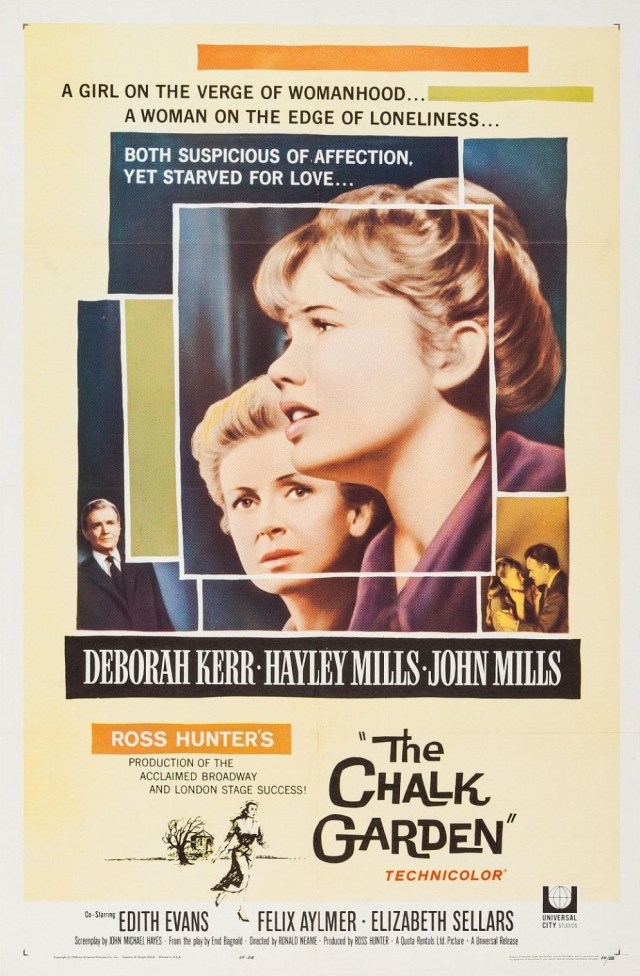
The Chalk Garden poster created by Quota Rentals Limited, Ross Hunter Productions, and Universal Pictures

4. Ben-Hur: A Tale of the Christ (1925)

It’s amazing how two movies on this year’s best films list not only turned 100 years old, they also utilized color coded film to their advantage! But what sets Ben-Hur: A Tale of the Christ apart from The Phantom of the Opera is how title cards went above and beyond in Ben-Hur: A Tale of the Christ due to how well-written they were. Another aspect that distinguishes Ben-Hur: A Tale of the Christ is the cinematography’s capturing of the scope of the film. Long and medium shots effectively showcased a world that looked and felt larger than life. The visual presentation of the movie was certainly impressive. However, Ben-Hur: A Tale of the Christ found a balance between style and substance!

Take 3: Ben-Hur: A Tale of the Christ (1925) Review

3. The Man Who Invented Christmas

Despite being the most recently reviewed movie on my list, The Man Who Invented Christmas is one of the best biopics I’ve ever seen! How the creation of A Christmas Carol lent itself to exploring Charles Dickens’ life story brought a unique element to the biopic genre. Watching Charles’ iconic tale come to live, literally and figuratively, provided the film a creative and memorable identity. The “Easter Eggs” related to A Christmas Carol sprinkled throughout the story was an engaging way to stay invested in the movie. The Man Who Invented Christmas is a solid Christmas title that would make a good double feature with I Heard the Bells.

Take 3: The Man Who Invented Christmas Review

2. The Wild Robot

I first talked about The Wild Robot in my list of The Top Ten Best Stand-Alone Films. Even though I published that list back in March, the 2024 animated movie has still held up as one of the best titles I saw this year! Like I said in The Top Ten Best Stand-Alone Films list, the animation was gorgeous, appearing as a blend of paintings and priceless photographs. A pleasant surprise was how much emotional depth the story contained. What adds a sense of timelessness to the production was the abundance of good messages and themes. While it’s too early to say how The Wild Robot will stand in the test of time, I think it has potential.

1. An Old Fashioned Thanksgiving

I actually revisited this film in preparation for my review of An Old Fashioned Christmas. Watching An Old Fashioned Thanksgiving again after so many years reminded me why I love this movie! Attention to detail and historical accuracy created the illusion of taking the audience to another time and place. How the messages and themes of the Thanksgiving holiday were woven into the story allow An Old Fashioned Thanksgiving to truly embrace the holiday itself. The more I think about the 2008 movie, it makes me surprised it wasn’t a Hallmark Hall of Fame presentation. My belief is due to An Old Fashioned Thanksgiving containing elements that would likely be found in a Hallmark Hall of Fame project, such as strong acting performances and a historical fiction lens.

The Man Who Invented Christmas poster created by The Mazur Kaplan Company, The Mob Film Company, Ingenious Media, Nelly Films, Parallel Films, Rhombus Media, and Bleecker Street Media

Have fun in 2026!

Sally Silverscreen

My Movie Blogger’s Christmas Wish-List 2025

As Christmas is almost here, it’s time for my yearly Movie Blogger’s Christmas Wish-List! If you’re new to 18 Cinema Lane, this is an annual tradition where I share the movie related things I’d like to receive for Christmas. The list’s format follows the quote; “Something you want, something you need, something to wear, and something to read”. The items on this list, like in past years, are a combination of realistic requests and wishful thinking. So, let’s start 2025’s Christmas wish-list!

Puppies and hearts Christmas wish-list image created by Freepik at freepik.com.

Something You Want

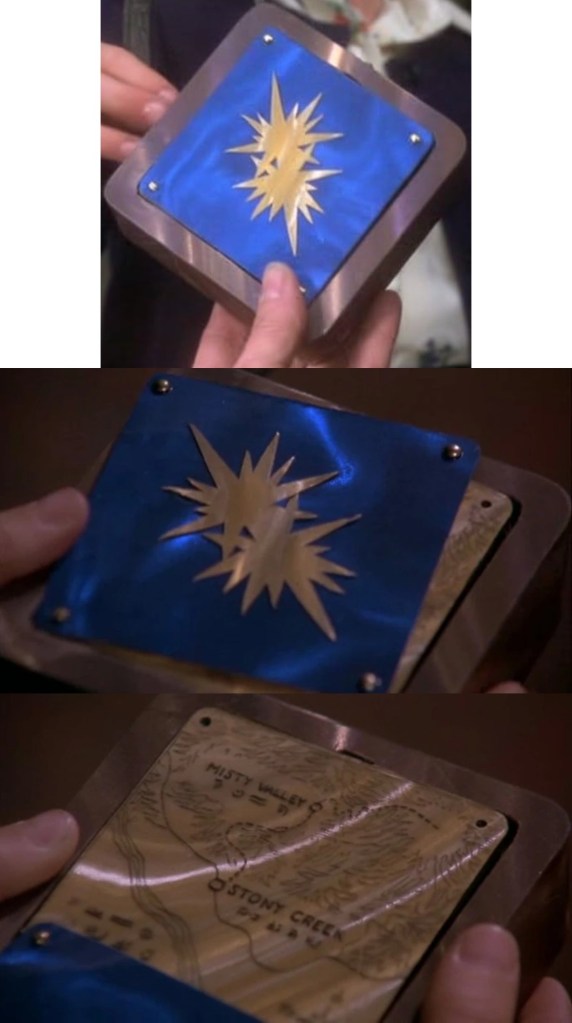
Back in 2018, I saw the 1975 movie, Escape to Witch Mountain. One of the most memorable aspects of that film was an object belonging to Tia, one of the story’s protagonists. Throughout Escape to Witch Mountain, Tia carries a Starcase. This box contains a map that helps her and her brother, Tony, find their way home. But ever since I saw the film, I’ve always felt the term “starcase” was misleading. That’s because I don’t recall seeing Tia putting anything into the case itself, like small toys or trinkets. Despite this, the Starcase is one of the most unique movie props I’ve seen. So, for this portion of my Christmas wish-list, I would like to receive a replica of Tia’s Starcase. But I want a replica that is truly a case where items can be placed inside. Plus, I would like the Starcase replica to feature a purse strap, so the Starcase can be carried either as a purse or a clutch.

Tia’s Starcase images created by Walt Disney Productions and Buena Vista Distribution Company

Something You Need to See

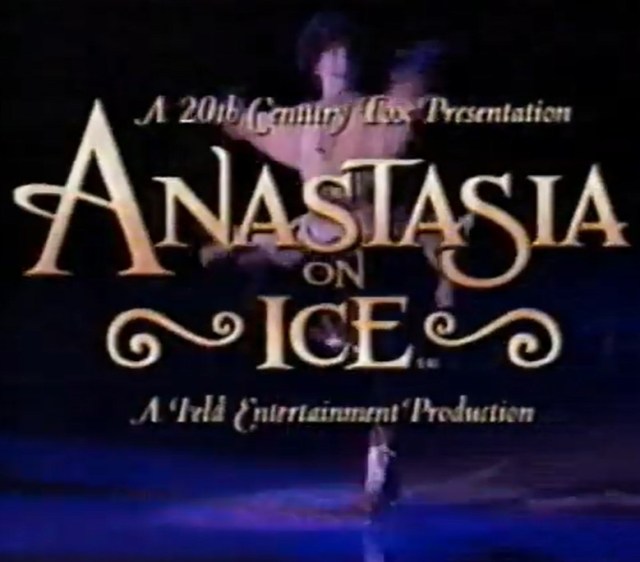
Two years ago, I started my series, Sally Solves a Mystery. In this annual series, I talk about television related mysteries in an attempt to solve them. For my upcoming Sally Solves a Mystery article, I will write about two mysteries related to the same movie. On the forum for Lost Media Wiki, I came across a post about a lost teaser trailer for the 1997 film, Anastasia. While I do love that movie, I personally don’t remember seeing the teaser trailer in question. Another piece of Anastasia media I don’t remember is Anastasia On Ice, an ice skating show based on the film. The only footage of the show I’ve seen are a few television commercials and a behind-the-scenes news segment about the show. Why these lost media mysteries are featured in this part of my Christmas wish-list is how much I’d love to see them solved by November 21st, 2027, which is Anastasia’s 30th anniversary.

Promotional image for Anastasia On Ice found on the Youtube channel, Commerical Collections.

A movie related piece of clothing or accessory I’d want to wear

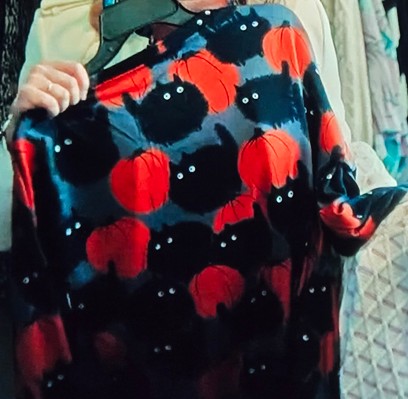
Looking back on past Christmas wish-lists, I haven’t selected a movie related piece of clothing or accessory that is holiday themed. But that is about to change with the Halloween themed sweater I will now discuss. In the Lifetime movie, Killing the Competition, my eye caught a gray sweater with pumpkins and black cats on it. Even though the sweater was featured very briefly in the film, it stuck in my memory, especially when it came time to create My Movie Blogger’s Christmas Wish-List. As I’m writing this article, I realized this is the second year in a row a sweater was chosen for this portion of my wish-list! With the Halloween sweater boasting a variety of colors, multiple outfits could be created around that sweater.

I apologize if this photo of the Halloween themed sweater isn’t the best. But as I explained in my Christmas wish-list, the sweater was featured very briefly in Killing the Competition. Screenshot taken by me, Sally Silverscreen.

A book I’ve read that I’d like to see adapted into a film

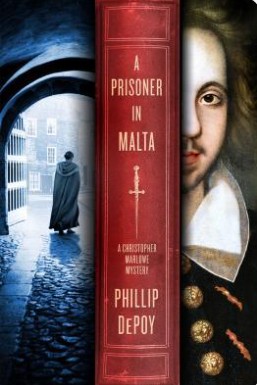
When I participated in the Eurovisionathon readathon, one of the books I read was A Prisoner in Malta by Phillip DePoy. It was, honestly, one of the better books I read for the event! A Prisoner in Malta is what would be considered a “page-turner”, as there was never a dull moment. The book contained other strengths like well-written banter between the characters, strong character development, and a mystery that was intriguing as well as complex. With all this said, I would be interested in seeing a film adaptation of A Prisoner in Malta! Based on what I’ve observed of the cinematic side of the mystery genre, historical mysteries seem far and few between. I also can’t think of many movies off the top of my head that are set in the 1580s. So, in my opinion, an adaptation of A Prisoner in Malta would offer something unique to the film-making table!

A Prisoner in Malta by Phillip DePoy book cover found on Goodreads.

What are your thoughts on my Christmas wish list? Are there any movie related things you’d like to receive during the Christmas/holiday season? Tell me in the comment section!

Have fun during the Christmas/holiday season!

Sally Silverscreen

Take 3: The Night Before the Night Before Christmas Review + 515 Follower Thank You

With today being Thanksgiving, I wanted to share my thanks to all the followers of 18 Cinema Lane. I am grateful for having a reason to keep writing and sharing my thoughts on film! For this Blog Follower Dedication Review, I decided to select a movie from one of my recommendations. In fact, the film I chose has been on my Pinterest Film Recommendation board for so long, it has been on the very bottom. That movie in question is 2010’s The Night Before the Night Before Christmas! Suggested by a reader named T. Ann, this is a film I actually recall watching before. Though the only clear memory I had of the movie was the teenage daughter being upset over receiving a hamburger phone for Christmas. This isn’t the first time (nor will it be the last time) I revisited a film from Christmas past. One of my more recent movie reviews was The Christmas Choir, a title I had expressed interest in watching again. But in that review, I shared how I didn’t find the film as strong as I had initially believed. What will my thoughts be on The Night Before the Night Before Christmas? Keep reading my review to find out!

The Night Before the Night Before Christmas poster created by Muse Entertainment Enterprises and Hallmark Channel

Things I liked about the film:

The acting: The Night Before the Night Before Christmas is one of those movies where I found it difficult to choose a favorite acting performance. That’s because the cast as a whole was strong! Expressions and emotions appeared genuine. Whether it was Hannah (portrayed by Rebecca Williams) looking forlorn when her younger brother, Toby, runs away or a volunteer named Yolanda (portrayed by Kim Roberts) being surprised when she receives an unexpected donation, the acting performances made watching the story unfold more enjoyable. There were even times when the strength of the acting talents helped characters become more likable. Two great examples are Toby and Nigel. The youngest member of the Fox family, Toby has such a sweet personality. Gage Munroe, the actor who portrayed Toby, does an excellent job showing what’s in his character’s heart through his face. In a scene where Toby and his mom are having a heart-to-heart conversation, Toby’s tear-streaked face and tear-filled eyes present how troubled he’s been over his parents’ decision to prioritize their jobs over their family. Meanwhile, Jordan Prentice’s portrayal of Santa’s head elf, Nigel, was very animated. His liveliness and comedic timing made Nigel one of the most memorable characters I’ve seen in a Hallmark, let alone Christmas, presentation! Out of the films I’ve seen (and reviewed) this year, so far, Jordan’s performance was one of the best.

Emphasis on giving: One of the interconnected conflicts in The Night Before the Night Before Christmas is the disappearance of Santa’s sack of presents. This particular conflict could have produced one of two types of stories; a villain stealing Santa’s sack in order to ruin Christmas or a selfish character taking the sack of presents for themselves. Instead, Santa’s sack of presents is mistaken for donations to those less fortunate. The recipients of the gifts and the volunteers of various non-profits are surprised and even grateful for the “donations” received. This decision in story-telling helps emphasize the movie’s major theme of giving. Toward the beginning of the film, Toby tells Hannah if they want Santa to give them presents, they should consider giving presents to others. What Toby said, as well as the movie itself, frames Santa in a way I hadn’t really thought of before; someone who has a reputation for giving. These two examples show the clever and thoughtful ways the creative team behind The Night Before the Night Before Christmas remind their viewers of an important component of the Christmas season!

How Christmas activities were incorporated: In Hallmark’s more recent Christmas offerings, activities related to the holiday feel like they’re incorporated into the story just for the sake of completing an unspoken checklist. This creative decision contributes to the network’s Christmas projects feeling repetitive. But in The Night Before the Night Before Christmas, whenever a Christmas activity was featured in the movie, it was there to compliment the story itself as well as the themes of the film. Santa losing his memory is the movie’s major conflict. In order to help Santa reclaim his memory, the other characters partake in activities like decorating a Christmas tree and baking cookies. Before the tree is decorated, Hannah and her mom talk about choosing a very tall tree because it looked similar to a tree the family had years prior. The activity of picking out a Christmas tree expresses one of the story’s main themes of sharing and keeping memories. What I selected as the examples for this review show how the creative team behind The Night Before the Night Before Christmas put effort and thought into how the aforementioned activities were included in the script.

Adorable Santa image created by Freepik at freepik.com. <a href=’https://www.freepik.com/free-vector/christmas-background-with-funny-santa_1324597.htm’>Designed by Freepik</a>. <a href=”https://www.freepik.com/free-photos-vectors/background”>Background vector created by Freepik</a>. Image found at freepik.com.

What I didn’t like about the film:

A drawn-out sense of urgency: As I mentioned earlier in my review, the major conflict in The Night Before the Night Before Christmas is Santa losing his memory. What gives the film a sense of urgency is how Santa must reclaim his memory before Christmas Eve so he can successfully deliver presents. While this conflict was eventually resolved, it ended up being drawn-out. The drawn-out nature of the conflict was caused by the story trying to divide its time between Santa searching for his memory, the whereabouts of his missing sack of presents, and the Fox family learning to reconnect. At one point in the movie, Nigel, as well as the other characters, frantically search for Santa’s sack of presents. The search then becomes interrupted by the characters’ attempts to help Santa get his memory back. These attempts last for about fifteen to twenty minutes, with the characters going back to looking for the sack of presents. This balancing act between the main conflict and subplots stretched out the story’s sense of urgency as well.

Things that don’t make sense: Christmas movies, like any fictional story, require the audience to suspend a certain amount of disbelief. But in The Night Before the Night Before Christmas, a few things didn’t make sense, sometimes requiring more than enough disbelief to be suspended. Like I said earlier in this review, Toby runs away. Santa and Toby’s mom find him riding on a carousel. As Toby’s mom and Santa are about to share a heart-to-heart conversation with Toby, the carousel is still moving. This raises the question of how Santa and Toby’s mom got on the carousel while it was still in motion?

Mrs. Claus’ minimal involvement: At the beginning of The Night Before the Night Before Christmas, Santa shares a heartfelt moment with Mrs. Claus. The on-screen chemistry between R.D. Reid and Marcia Bennett was so sweet and adorable, they effectually sold the idea of the loving relationship between Mrs. Claus and Santa. This aforementioned moment with Santa and Mrs. Claus is one of the few times she appears in the movie, as she is only featured in two scenes within the hour and twenty-eight-minute film. Personally, I found Mrs. Claus’ minimal involvement in the story disappointing. She could have played a larger role in helping Santa regain his memory sooner or locating his sack of presents faster.

Image of Thanksgiving dinner created by Freepik at freepik.com. <a href=”https://www.freepik.com/free-photos-vectors/background”>Background vector created by freepik – http://www.freepik.com</a>. Image found at freepik.com.

My overall impression:

In the introduction of this review, I said The Night Before the Night Before Christmas was suggested by one of my readers. Looking back on the 2010 picture, I can honestly say I’m glad it was recommended to me! The Night Before the Night Before Christmas is, in my opinion, one of Hallmark’s better films, especially among their collection of “older” titles! The acting alone helped make my movie-viewing experience enjoyable, as every actor and actress gave a solid performance. How Christmas activities were incorporated into the story was a breath of fresh air. They ended up complimenting the story itself and the film’s themes instead of trying to complete an unspoken checklist. The story’s emphasis on giving was woven into the script in clever and thoughtful ways as well. Even though The Night Before the Night Before Christmas has its flaws, it felt like the movie’s creative team got more right than wrong. A film like this one makes me wish Hallmark went back to creating titles that didn’t rely too much on a formula, tropes, and/or cliches.

Overall score: 8 out of 10

Have you seen The Night Before the Night Before Christmas? What “older” Hallmark Christmas movie would you like to check out this Christmas/holiday season? Share your thoughts in the comment section!

Have fun on Thanksgiving!

Sally Silverscreen

Take 3: The Christmas Choir Review

November’s theme for Genre Grandeur is “Movies about Music or Musicians”. As I was looking for a potential title to review, I remembered how this is the time of year when I write about Christmas movies. This then led me to recall my list of the top five Hallmark films based on a true story, where I brought up the 2008 movie, The Christmas Choir. Since I expressed interest in revisiting the film, I selected it for this month’s Genre Grandeur! In that aforementioned list, I stated my surprise over how The Christmas Choir isn’t a Hallmark Hall of Fame production. That’s because the story of a choir forming in a homeless shelter seems like perfect material for the Hallmark Hall of Fame collection. Though when it comes to Hallmark Hall of Fame presentations, I have wondered what the criteria is for a story or script to be chosen. While that topic would make a great editorial or list article, that will have to wait for another day. For now, let’s begin this review for 2008’s The Christmas Choir!

The Christmas Choir poster created by Muse Entertainment Enterprises, Towers Pictures, and Hallmark Channel

Things I liked about the film:

The cast’s on-screen chemistry: In my list of the top five Hallmark films based on a true story, I mentioned how the quality of the acting talents in The Christmas Choir allowed the characters to come across as realistic and endearing. To further articulate my point, the on-screen chemistry among the cast helped create interactions that felt believable. One of my favorite examples is when Juan (portrayed by Luis Oliva) sang for the first time. A rule for staying in the choir is to come to practices and performances sober. Hector (portrayed by Roc Lafortune) is not happy about this rule, angrily throwing the sheet music and storming toward the door in a huff. The other members, like Bob and Fred, and even the choir’s director, Peter, plead with Hector to stay. Worry, concern, and even disappointment are reflected on the men’s faces and in their voices. When Juan begins to sing, however, the look of surprise on everyone’s faces appears genuine. This is because, at the homeless shelter, Juan had a reputation for remaining silent. As Juan finds a nearby can and turns it into a makeshift drum, that surprise turns into joy, lifting the men’s spirits and boosting choir morale. Juan’s voice ended up becoming the glue that held The Christmas Choir together!

Incorporating Christmas’ religious elements: I said in my list of the top five Hallmark films based on a true story how it’s been years since I saw The Christmas Choir. Because of that, I had forgotten about Christmas’ religious elements woven into the film. Most of the songs performed by The Christmas Choir are religious. In fact, the only secular Christmas song the choir sings is ‘Deck the Halls’. Sister Agatha will occasionally quote the Bible and bring up Biblical examples when the situation calls for it. Even one of the movie’s overarching themes is serving as Jesus would have. Personally, I liked The Christmas Choir’s incorporation of Christmas’ religious elements because they’re not often found in Hallmark’s Christmas movies. This creative decision also allows The Christmas Choir to form its own unique identity!

The messages and themes: As I just mentioned in this review, one of the overarching themes in The Christmas Choir is serving as Jesus would have. Other themes and messages sprinkled throughout the story perfectly fit the Christmas season as well. When Peter gives a monetary donation to the homeless shelter, Sister Agatha tells him that while money is appreciated, what the homeless shelter really needs is for people to give their time. Sister Agatha’s words inspire Peter to utilize his time (and talents) to form The Christmas Choir. The conversation between Peter and Sister Agatha alone is such a perfect example of how money doesn’t always solve a problem, especially when it comes to being charitable. This overarching theme actually encourages the film’s audience to think outside the box in the season of giving.

Three Wise Men themed wish list paper image created by Freepik at freepik.com. <a href=”https://www.freepik.com/free-photos-vectors/christmas”>Christmas vector created by freepik – http://www.freepik.com</a>. Image found at freepik.com.

What I didn’t like about the film:

Too many conflicts: Within my review’s introduction, I brought up how The Christmas Choir is about a choir forming in a homeless shelter. While this is the movie’s main conflict, other conflicts like Peter’s issues with his father and The Christmas Choir competing for a permit are included in the script. As I watched the film, however, it felt like the creative team behind The Christmas Choir tried to squeeze as many conflicts as they could in an hour and thirty-minute timeframe. This choice made the movie overwhelming and the runtime feel longer. Though the 2008 movie is based on a true story, I’m not sure which parts of the script are based on fact or creative liberty. Therefore, the script should have focused on one main conflict with at least two subplots.

Sister Agatha’s inconsistent personality: When Sister Agatha was introduced in The Christmas Choir, she had a friendly personality with a bit of spunkiness. As I mentioned earlier in this review, Sister Agatha occasionally quotes the Bible and brings up Biblical examples when the situation calls for it. But as the story progressed, she became pessimistic and discouraging toward Peter and The Christmas Choir. Sister Agatha eventually returns to her spunky, friendly personality by the end of the film. However, the inconsistency of her personality is a flaw I couldn’t unsee. Rhea Perlman, who portrayed Sister Agatha, did a good job with the acting material provided. This mistake, though, lies with the screenwriter.

Things that don’t make sense: Sometimes, there were things in The Christmas Choir that didn’t make sense. One example happened at Peter’s office building. While at work, Peter’s colleague, Rita, tells Peter there are a group of homeless men singing in the office building’s lobby. Those “homeless men” were The Christmas Choir. Several scenes prior to this impromptu performance, however, Rita saw The Christmas Choir singing on television while at work in the aforementioned office building. Wouldn’t she have recognized The Christmas Choir when they spontaneously showed up in the office building’s lobby?

String of musical notes image created by Freepik at freepik.com. <a href=’https://www.freepik.com/free-vector/pentagram-vector_710290.htm’>Designed by Freepik</a> <a href=”https://www.freepik.com/free-photos-vectors/background”>Background vector created by Freepik</a>. Image found at freepik.com. 

My overall impression:

By revisiting The Christmas Choir, I was reminded of the film’s aspects I had forgotten about, like the inclusion of Christmas’ religious elements. This is one aspect of the movie I liked, as religious elements associated with Christmas are not often found in Hallmark’s seasonal presentations. I was also made aware of the flaws I overlooked. This is not a bad movie, but it wasn’t as strong of a picture as I initially believed. The abundance of conflicts in The Christmas Choir’s script made the film overwhelming and the runtime feel longer than an hour and thirty-minutes. There were not only some things in the story that didn’t make sense, Sister Agatha’s personality was also inconsistently written. But as I said in my list of the top five Hallmark films based on a true story, the 2008 picture is one of Hallmark’s more unique Christmas titles. This is due to the movie not following a formula or containing a certain set of Christmas movie tropes and cliches. What works in The Christmas Choir’s favor as well is the on-screen chemistry among the cast and the messages and themes stitched throughout the story. If you’re looking for a Christmas film from Hallmark that stands out within their festive collection, I’d recommend checking out The Christmas Choir.

Overall score: 7 out of 10

Have you seen The Christmas Choir? Are there any “older” Hallmark Christmas movies you’d love to see reviewed on 18 Cinema Lane? Please tell me in the comment section!

Have fun at the movies!

Sally Silverscreen
Take 3: Ainsley McGregor Mysteries: A Case for the Yarn Maker Review

Last year, I reviewed Ainsley McGregor Mysteries: A Case for the Winemaker. At the time, I knew there would be people interested in the film, as Great American Family has found its audience over the past few years. But I was shocked by how popular that review became. In a year’s time, my review of Ainsley McGregor Mysteries: A Case for the Winemaker has garnered over 6,000 views and counting! When I learned a sequel was on the horizon, I immediately made plans to write about it. Now that review has come to fruition, as I have recently seen Ainsley McGregor Mysteries: A Case for the Yarn Maker! In my review of Ainsley McGregor Mysteries: A Case for the Winemaker, I said it looked like this series had the potential to tell many more stories. From exploring another artisan avenue to progressing Ainsley and Jake’s relationship, the sequel proved my statement right. But how does it compare to its predecessor? Keep reading my review to solve this mystery!

Ainsley McGregor Mysteries: A Case for the Yarn Maker poster created by Candy Rock Entertainment, Happy Accidents, Syrup Studios, and Great American Family

Things I liked about the film:

The chemistry among the cast: If you’re creating a book, tv, or movie series, it’s important to maintain chemistry among the characters. If this chemistry is believable, interactions and relationships between characters become more enjoyable to watch unfold. A lot of the same cast members from Ainsley McGregor Mysteries: A Case for the Winemaker returned in the sequel. That worked in Ainsley McGregor Mysteries: A Case for the Yarn Maker’s favor! The chemistry among the cast was so strong, it not only made every situation between the characters feel realistic, it also made their connections seem genuine! One of the best examples is the friendship of Jake and Ryan. Ainsley’s brother, Ryan, carries a serious, “business comes first” attitude due to being a police officer. Meanwhile, Jake’s personality is laid-back and a bit sillier. These characters’ differences allowed their friendship to be complimentary, especially when it came to Jake and Ryan’s comedic timing. This friendship was, honestly, one of the best parts of Ainsley McGregor Mysteries: A Case for the Yarn Maker!

Inclusion of humor: As I watched Ainsley McGregor Mysteries: A Case for the Yarn Maker, I took note of how the film’s creative team improved upon the flaws of the previous movie. One of those improvements was the inclusion of humor. Sprinkled throughout the story, humor was woven into the dialogue. How this humor was written and delivered prevented the story from becoming too dark. One great example is when Gladys, one of the members of the “book club”, is being questioned by the police. Because Gladys knew Ellie Mitchum (the murder victim), she is considered a potential suspect. During her interrogation, the police ask Gladys if she was aware of any allergies Ellie might have had, as allergies are ruled as a likely cause of death. In a sassy yet matter-of-fact way, Gladys tells the police, “She was allergic to being a nice person”. To me, this was one of the funniest lines in the movie, as it was a great comeback to the question!

Ellie Mitchum’s house: Ellie Mitchum is a successful businesswoman who visits her former school in Sweet River, Texas. But, unfortunately, she becomes the murder victim in Ainsley McGregor Mysteries: A Case for the Yarn Maker. Ellie’s funeral reception takes place at her house, where Ainsley, Jake, and Ryan attend. While not much of the house’s exterior is shown, it did contain an impressive stone porte-cochère (covered entryway). That entryway made the house look like a castle. One of the interior spaces presented in the movie was the foyer. This space was circular, featuring intricately designed stained-glass windows, stone railings with carved designs, and a deep cherry-stained wood floor under an ornate rug. Even the house’s deck, though only shown in one scene, had a stone arch framing a beautiful view of the luscious green backyard and what appeared to be a lake. I wish more scenes had taken place at Ellie Mitchum’s house, as it was so gorgeous.

Heart of yarn image create by macrovector at freepik.com.

What I didn’t like about the film:

Learning very little about the protagonist: In the second movie of a film series, the project’s creative team can present more information to help the audience learn more about the protagonist. Whether in the form of dialogue or flashbacks, this information can expand the protagonist’s backstory, give them extra motivation to solve a problem, or provide an overarching component of a story. But in Ainsley McGregor Mysteries: A Case for the Yarn Maker, very little new information was revealed about Ainsley McGregor herself. While her reason for leaving Chicago was given, Ainsley didn’t share this until almost an hour into the movie. That means the audience had to wait a long time to learn anything new about the titular character. Had more information been provided about Ainsley, the story would have become a bit more enriched.

Not enough George: When I reviewed Ainsley McGregor Mysteries: A Case for the Winemaker, I talked about how much I liked Ainsley’s dog, George. He played a larger role in the first movie, giving that film a more unique identity. While watching the sequel, Ainsley McGregor Mysteries: A Case for the Yarn Maker, I noticed George’s screen-time was reduced. Though I recognize how difficult it can be to incorporate an animal into a film production, I was disappointed by this creative decision. In my opinion, George steals every scene he’s in. Plus, times when Ainsley talks with George give the audience light-hearted moments that take a break from the heaviness of the murder mystery. Without George, the Ainsley McGregor Mysteries series wouldn’t be the same.

Limited time spent with the “book club”: I mentioned in my Ainsley McGregor Mysteries: A Case for the Winemaker review how Ainsley’s book club turns into an investigation club. The dynamic shared between Ainsley and these members is what encourages her to solve the mystery in the first film. Even though the “book club” still holds their meetings in Ainsley McGregor Mysteries: A Case for the Yarn Maker, Ainsley didn’t consult with them as much as she did in the first movie. In fact, there were only two scenes where a “book club” meeting was featured. In the sequel, Ainsley relied more on Ryan and Jake to help her solve the case. I hope Ainsley finds a balance between turning toward Jake and Ryan and discussing the mystery with the “book club” in future films, as each perspective makes a positive impact on the story.

Magnifying glass image created by Freepik at freepik.com. <a href=’https://www.freepik.com/free-vector/magnifying-glass-with-fingerprint-in-flat-style_2034684.htm’>Designed by Freepik</a>. <a href=”https://www.freepik.com/free-photos-vectors/flat”>Flat vector created by Freepik</a>. Image found at freepik.com.

My overall impression:

In some film series, the second chapter is better than the first one. Ainsley McGregor Mysteries: A Case for the Yarn Maker is a movie where that statement holds true! The sequel improved upon some of the flaws of its predecessor, such as including humor. Strong chemistry among the cast has become a consistent strength of this series, with Jake and Ryan’s friendship being one of the best parts of chapter two. While I won’t spoil the second film, I will say I liked how there were no obvious choices for the mystery’s culprit. That creative decision leaves the audience guessing whodunit. Though I liked Ainsley McGregor Mysteries: A Case for the Yarn Maker more than the first chapter, there is still room to grow. I wish the sequel gave the audience more information about Ainsley and showed George in a few more scenes. This film series is based on a book series, with one of those books titled A Case for the Toy Maker. Perhaps we could get a Christmas mystery movie from Great American Family?

Overall score: 7 out of 10

Have you seen Ainsley McGregor Mysteries: A Case for the Yarn Maker? Would you like to see Great American Family create a Christmas mystery movie? Let me know in the comment section!

Have fun at the movies!

Sally Silverscreen
Word on the Street: Jobs are Cut at Hallmark and Lifetime in Pursuit of New Directions

Two weeks ago, I published a Word on the Street story about Michelle Vicary returning to Hallmark as the company’s head of programming. But this is not the only recent change happening at Hallmark. Lynette Rice, of Deadline, reports how the company “eliminated 30 jobs on Wednesday”. The desire “to “transition our workforce to meet the needs of the business today”” was the provided reason for the cut jobs. Jimmy Holcomb, who was Hallmark’s Vice President of Production, is one of the laid off employees. His role at the company was overseeing “the physical production of MOWs, series, and specials for Hallmark Media’s broadcast channels”. He is “credited for creating new ventures for Hallmark Media throughout the world” as well. Meanwhile, Peter White, also from Deadline, reports how Lifetime “cut the majority of its non-scripted team”. The article states the reason for the cut jobs is “Lifetime is focusing more on its television movie business”. Affected by this decision is Nicole Vogel, who was the network’s VP for Programming and Development. At the time of the article’s publication, “The only remaining member of the unscripted team is now Brie Miranda Bryant, SVP, Original Programming”.

Illustration of woman quitting her job created by stories at freepik.com. Office vector created by stories – www.freepik.com

When I wrote about Michelle Vicary coming back to Hallmark in my last Word on the Street story, I addressed the network’s declining viewership. At that time, two Hallmark Channel films, A Machu Picchu Proposal and Providence Falls: Chance of a Lifetime, attracted less than a million viewers. Five movies in a row have received under a million viewers at the publication of this Word on the Street story. These newer titles are Providence Falls: An Impossible Promise (592,000 viewers), Providence Falls: Thief Of Fate (592,000 viewers), and Mystery Island: Play for Keeps (350,000 viewers). Similar to what I said in my last Word on the Street story, I’m not surprised Hallmark is making decisions like cutting jobs, especially when no movie in 2025, so far, has seen two million viewers or more.

Employee leaving job image created by rawpixel.com at freepik.com. <a href=”https://www.freepik.com/free-photos-vectors/business”>Business vector created by rawpixel.com – http://www.freepik.com</a>. Image found at freepik.com.

Though I haven’t seen many Lifetime movies this year, most of the ones I have seen have been decent. However, I am aware of Lifetime’s reputation for distributing a large quantity of films with poor quality. Almost every year, at least one Lifetime movie ends up on my end of the year worst movies list. In 2024, three movies were placed on that list; Revenge Best Served Chilled, My Life Is on the Line, and Boy in the Walls. With this recent prioritization of made-for-tv movies, I’m hoping emphasis is not only placed on quality over quantity, I’m also hoping production value is raised as well.

What are your thoughts on these pieces of movie news? What other changes do you think are in store for Lifetime and Hallmark? Tell me in the comment section!

Have fun at the movies!

Sally Silverscreen
References in this article:

Deadline articles: https://deadline.com/2025/08/hallmark-eliminates-30-jobs-1236493506/, https://deadline.com/2025/08/lifetime-layoffs-unscripted-1236493483/

Viewership numbers for Providence Falls: An Impossible Promise: https://programminginsider.com/saturday-ratings-fox-and-nfl-network-share-leadership/

Viewership numbers for Providence Falls: Thief Of Fate: https://programminginsider.com/saturday-ratings-nfl-network-continues-to-lead-cable-with-preseason-football/

Viewership numbers for Mystery Island: Play for Keeps: https://programminginsider.com/sunday-ratings-buffalo-bills-chicago-bears-posts-fox-networks-most-watched-nfl-preseason-game-in-four-years/

Take 3: Hallmark Hall of Fame’s Face to Face Review

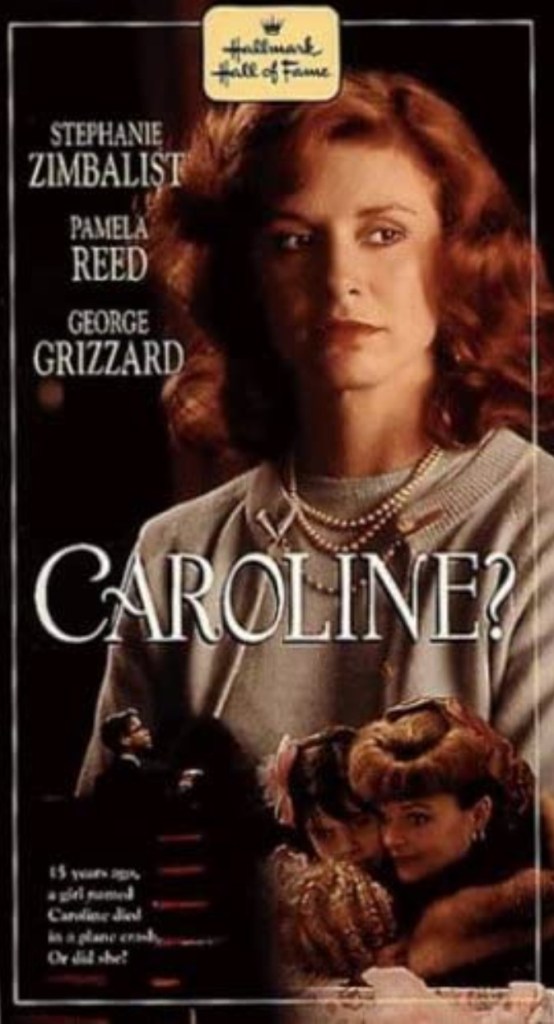
Any time I receive the opportunity to review a Hallmark Hall of Fame movie, I try to prioritize titles that are either VHS exclusive or harder to find. This decision has been made to help give those titles more recognition, as well as encourage more people to check those films out. One of these films is the 1990 picture, Face to Face! As far as I know, this Hallmark Hall of Fame presentation was not released on VHS or DVD. It also premiered months prior to the Hallmark Hall of Fame movie, Caroline?, which I have reviewed on 18 Cinema Lane. The synopsis is what intrigued me toward seeing Face to Face, as the story (according to IMDB) is about “an American paleontologist and a British miner get in a conflict over who has the rights to dig on a site in Kenya”. A conflict about two differing parties at odds over a shared problem isn’t often covered within the Hallmark Hall of Fame collection. In fact, the only movies I can think of that fit this description are The Summer of Ben Tyler and Sweet Nothing in My Ear. Face to Face’s Kenyan backdrop also provides a unique element to the movie. Africa is a setting that is rarely incorporated in Hallmark Hall of Fame’s films.

Hallmark Hall of Fame’s Face to Face poster created by Hallmark Hall of Fame Productions, Robert Halmi, and CBS

Things I liked about the film:

The scenery: As I mentioned in this review’s introduction, Face to Face takes place in Kenya. The creative team behind the film took advantage of the Kenyan landscape by featuring long and medium shots of the story’s natural surroundings. One example is an establishing shot of a sunset. Half the shot is engulfed in an orange and yellow sky, with a grey mountain at the sunset’s root. Nearby trees adopt a black hue, standing out against the sky’s bright colors. The ground appears to be a mix of rustic red and brown, warmed by the light’s glow. This establishing shot is so gorgeous, I doubt pictures would do it justice.

The dialogue: In my recent review of 1973’s From the Mixed-Up Files of Mrs. Basil E. Frankweiler, I praised the film’s dialogue. I mentioned how some lines were so well-written, they became a memorable part of the movie. Hallmark Hall of Fame’s Face to Face shares the same strength! The film’s dialogue was not only witty and clever, it was also, at times, thought-provoking. During one evening, Face to Face’s protagonists, Diana and Tobias, are listening to the sound of a flute. This music is created by a young man named Enjoro, who works with Tobias. Impressed by Enjoro’s talent, Diana says “Just think what he could do with an education”. Tobias quickly replies by asking “Isn’t what he’s doing enough”? This conversation is a great example of how good intentions may be quite different from what a person wants or needs. Earlier in Face to Face, Diana’s arrival in Kenya is met by a colleague named Dr. Brinkman. On a nearby map, Dr. Brinkman is trying to locate Diana’s dig site. As he’s searching for the site, Diana says to Dr. Brinkman “You’re close”. When he asks her “How close”, she matter-of-factly tells him, “Got the right country”. The exchange between these two characters showcases the wittiness found in Face to Face’s script!

Enjoro’s subplot: Like I just said in this review, the flute music is created by a young man named Enjoro, who works with Tobias. But music is not his only passion. Enjoro is also a talented artist, with his drawings impressing Diana so much, she gives him an art set. Unfortunately, these artistic passions are frowned upon by his village, who would rather see Enjoro become a warrior. This personal struggle between village tradition and personal pursuits provides a subplot in Face to Face. A conflict like Enjoro’s is rarely incorporated in Hallmark Hall of Fame’s movies. In fact, I found Enjoro’s part of the story more interesting than the main plot. Had this film focused primarily on Enjoro’s personal conflict, I think the overall movie would have been more compelling.

Illustrated African landscape image created by Macrovector at freepik.com. Background vector created by macrovector – www.freepik.com

What I didn’t like about the film:

An unlikable protagonist: I recognize the creative team behind Face to Face was trying to utilize the “enemies to lovers” troupe when it came to Tobias and Diana. I also acknowledge they were trying to give Diana and Tobias an “opposites attract” dynamic. Unfortunately, these parts of the story were not as effective as they could have been. One reason lies with how unlikable Diana was. For the majority of the movie, she was a static character; close-minded, stubborn, and entitled. When Tobias offered a compromise or tried to make peace with her, Diana shut down his offers and even saw him as beneath her. Even though Diana and Tobias eventually develop romantic feelings for each other, that attraction felt abrupt. If Diana’s change of heart had been more gradual, not only would she be a more likable character, the build up between her and Tobias’ attraction would have been stronger.

The audio: Face to Face premiered in 1990. Therefore, I’m aware of how film-making technology back then was not as advanced as it is today. But one of the signs of these times was the bad audio heard in the Hallmark Hall of Fame film. Most of Face to Face takes place outdoors. This means not only were the cast’s speech picked up by microphones, background noises were picked up as well. The collection of sounds sometimes made it difficult to understand what the characters were saying. Face to Face could have benefitted from using ADR (automated dialog replacement).

The “insta-love” troupe: When I talked about how unlikable Diana was, I brought up the “enemies to lovers” troupe Face to Face’s creative team tried to utilize. I also brought up how Diana and Tobias’ attraction for one another felt abrupt. This was caused by Tobias and Diana remaining “enemies” for more than half the movie. So much time was spent showing Diana and Tobias bickering, disagreeing, and being negative toward each other instead of the protagonists building a romantic bond over time. When Tobias and Diana eventually fall in love with one another, the “insta-love” troupe unnecessarily makes an appearance in Face to Face. Having the protagonists stay “enemies” for too long also made Elizabeth Montgomery and Robert Foxworth’s on-screen chemistry seem weak.

Image of male lion created by Wirestock at freepik.com. Animals photo created by wirestock – www.freepik.com

My overall impression:

With the publication of my Face to Face review, I have now seen all three Hallmark Hall of Fame movies released in 1990. Out of these films, I find Caroline? the best one. As for Face to Face, I thought it was just ok. This is one of those movies where a better story idea was buried within the presentation Hallmark Hall of Fame gave its audience. I honestly wish Enjoro’s story had been chosen as the main plot. His personal conflict between village tradition and personal pursuits provided a compelling narrative. I also wish Tobias and Diana had spent more time developing a romantic relationship and working together to solve their shared problem. These creative decisions would have prevented flaws like the appearance of the “insta-love” troupe. Face to Face features merits such as the dialogue and the scenery. But I can think of better movies also featuring these merits. Though there are interesting ideas woven into the script, I can kind of see why Face to Face became lost to time.

Overall score: 6.1 out of 10

Have you seen Hallmark Hall of Fame’s Face to Face? Are there any Hallmark Hall of Fame films you’d like to see reviewed on 18 Cinema Lane? Please tell me in the comment section!

Have fun at the movies!

Sally Silverscreen