The Winter Wonderland Book Tag!

At first, I was going to create a post about a Valentine’s Day book tag. But the Valentine’s themed book tags I found either heavily emphasized romance books or I couldn’t find an answer to all the provided questions. So, I decided to write about a winter themed book tag instead, as Valentine’s Day takes place within the winter season. When I came across the Winter Wonderland Book Tag, I could immediately think of answers for each question! Even though one of the questions mentions Christmas, the majority of the questions simply relate to the season of winter. Within these six questions, I will talk about books that have either been brought up on 18 Cinema Lane or books that haven’t been mentioned before. Now, let the book tag begin!

Ski lodge during winter-time image created by Freepik at freepik.com. <a href=’https://www.freepik.com/free-vector/ski-station-background_3423830.htm’>Designed by Freepik</a>. <a href=”https://www.freepik.com/free-photos-vectors/background”>Background vector created by Freepik</a>. Image found at freepik.com.

1. What book is so happy & sweet that it warms your heart?

    As soon I read this question, I immediately thought of The Christmas Child by Linda Goodnight! Having read this book back in 2018, I remember how sweet this story was. It, honestly, felt like I was reading a Hallmark movie. What I mean by that is The Christmas Child was heart-warming and wholesome. There were emotional moments woven into the text, but the book never felt too emotionally heavy. Plus, the relationship between Kade and Sophie was sweet!

    2. What is your favorite book with a white cover?

    Because there’s a lot of snow on the cover of David Baldacci’s The Christmas Train, that’s the book I’ll choose for this question. This is one of the few books I’ve ever given five out of five stars to! Though it’s been years since I read The Christmas Train, I recall how intriguing the mystery was and how distinctive the characters were. In fact, I think this book serves as a good introduction to David Baldacci’s literary work! I would also recommend the Hallmark Hall of Fame adaptation, as I remember how respectful it was toward the source material.

    3. You’re sitting in a nice comfy chair, wearing a onesie, with a lovely warm hot chocolate but what MONSTER read are you reading?

    When I read the term, “MONSTER read”, I interpreted it as a book with a large page count. Due to that interpretation, I chose All the Light We Cannot See by Anthony Doerr. Even though I thought the book was just ok, I liked the author’s use of descriptive imagery and attention to detail. Like I said in my review of All the Light We Cannot See from 2022, I, as a reader, could picture the story in my head because of the aforementioned elements. It also helps how each part contained a collection of shorter chapters, giving the book a steadier pace.

    Snowboarder on the slopes image created by Freepic.diller at freepik.com. <a href=’https://www.freepik.com/free-photo/woman-in-ski-suit-looks-over-her-shoulder-going-down-the-hill-on-her-snowboard_1620624.htm’>Designed by Freepic.diller</a>. <a href=”https://www.freepik.com/free-photos-vectors/tree”>Tree image created by Freepic.diller – Freepik.com</a>. Image found at freepik.com.

    4. It started snowing so you decided to have a snowball fight! What fictional character would you love to have the snowball fight with?

    My favorite character from Murder, She Wrote: The Fine Art of Murder is Victorio! He not only has a fascinating backstory, he also has a lively personality. Victorio was such a memorable character, I wish he received his own spin-off series. When participating in a snowball fight, it helps to surround yourself with people who have a good sense of humor and don’t take things too seriously. With everything I said, I would choose Victorio for this question!

    5. Sadly, your fire is beginning to go out. So what book would you tear the last few chapters out to throw into the fire?

    If you’re going to create stories for a younger audience, you need to be mindful about the content incorporated into that story. This is due to how impressionable a younger audience can be. In Smoke Screen by Amy Goldman Koss, I found some poor lessons found among the text. A few examples are it’s ok to not be a person of your word, breaking promises is fine as long as it benefits you, and making compromises is a waste of time. It also does not help how Mitzi, the protagonist, is a static, self-centered, and entitled character throughout the book. If younger readers were to read this book, they may get the wrong idea about how the world, problem-solving, and interactions with other people work. So, to answer the question, I would select the last few chapters of Smoke Screen and recommend a better ending.

    6. What book is so close to your heart that you would gift to someone this Christmas who hasn’t read before but wants to get into reading?

    Last year, I talked about The Princess Spy by Larry Loftis on more than one occasion. The book was featured in my post about the Finally Fall Book Tag and in my annual Movie Blogger’s Christmas Wish-List. Larry Loftis’ book, The Princess Spy, was the best book I read for last year’s Eurovisionathon readathon! As I said in the Finally Fall Book Tag, it was both educational and entertaining, showcasing the research and literary skill Larry incorporated. I would recommend The Princess Spy to readers who like nonfiction books or stories taking place during WWII. If one wants to read about WWII from a woman’s perspective, this book would be a good choice.

    Snowy mountain image created by Freepik at freepik.com. <a href=’https://www.freepik.com/free-vector/landscape-background-of-snow-track-and-mountains_968656.htm’>Designed by Freepik</a>. <a href=”https://www.freepik.com/free-photos-vectors/background”>Background vector created by Freepik</a>. Image found at freepik.com.

    Have fun during Winter!

    Sally Silverscreen
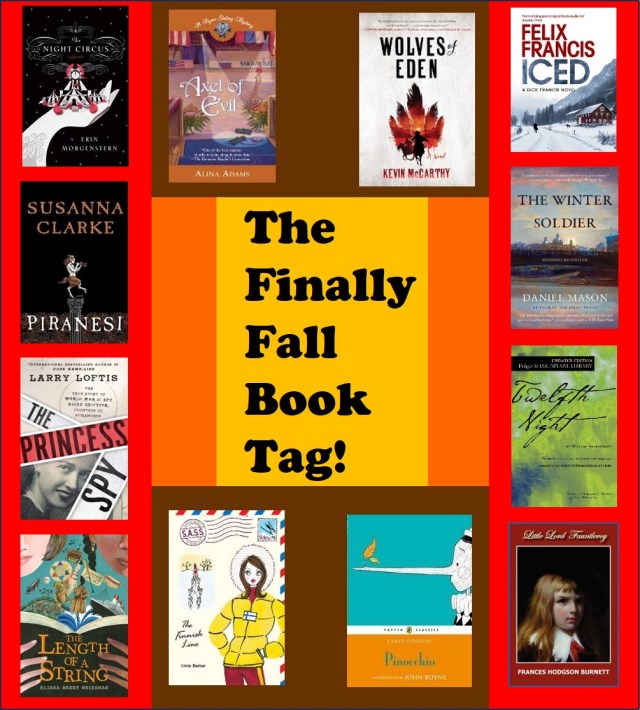
    The Finally Fall Book Tag!

    Back in April, my review of the 1976 film, Network, became my 375th movie review! Then, in July, my El Dorado movie review became my 850th published post! While figuring out how to commemorate these milestones, I realized it has been a year since I wrote a book tag. Now that Fall/Autumn has arrived, I chose the Finally Fall Book Tag! With Eurovision season in full swing, I will share in each tag prompt which books I read during this year’s Eurovisionathon readathon. I also included a picture of each book cover so my readers can visualize which books I’m referring to.

    Book cover images found on Goodreads. Finally Fall Book Tag image created by me, Sally Silverscreen.

    1. In fall, the air is crisp and clear: name a book with a vivid setting!

    One of the best aspects of The Night Circus (the book I read for Germany) was its descriptive imagery. Through elegant, descriptive writing, Erin Morgenstern crafted an immersive world readers can picture in their minds. From “The Ice Garden” at the circus to the tree Bailey likes to climb, the attention to detail helped places feel realistic. Even the circus itself became its own character because of Erin’s construction of the setting. After reading The Night Circus, I can now understand why some readers want to see this book adapted into a movie!

    2. Nature is beautiful… but also dying: name a book that is beautifully written, but also deals with a heavy topic like loss or grief.

    Though I won’t spoil the book I read for Greece, Piranesi, I will say there are heavier themes woven into the story. But the way Susanna Clarke wrote the book was logic driven while also evoking fantastical whimsy. The world surrounding the protagonist was truly unique, with descriptive imagery well used throughout the book! Each room Piranesi explores contains intrigue due to the nice, gradual build-up to the mystery’s reveal. Piranesi’s creativity worked in Susanna’s favor, as the book will be adapted into a Laika film!

    3. Fall is back to school season: share a non-fiction book that taught you something new.

    The Princess Spy by Larry Loftis tells the story of Aline Griffith, a woman who joined the United States war effort by working in the realm of espionage. The book not only shares Aline’s story, it also explores the history of the CIA’s predecessor; the Office of Strategic Services. I am so thankful I chose to read The Princess Spy for Spain! It was both an educational and entertaining book, showcasing the research and literary skill Larry incorporated. I would, honestly, recommend The Princess Spy, as it was the best book I read for this year’s Eurovisionathon!

    4. In order to keep warm, it’s good to spend some time with the people we love: name a fictional family/household/friend-group that you’d like to be a part of.

    In Elissa Brent Weissman’s book, The Length of a String, Imani has a tight-knit family. The story shows how they continually support one another, as well as remind each other what is truly important. Imani’s down-to-earth personality and realistic perspective are a reflection of her strong family unit. Through her interactions with her family, Imani and the reader learn important lessons, such as how Luxembourg was impacted by World War II. The Length of a String is the second-best book I read for 2024’s Eurovisionathon! One of the strengths of the story was how Imani and her family were well written.

    5. The colorful leaves are piling up on the ground: show us a pile of fall-colored spines!

    For this prompt, I will, instead, share four book covers that feature, at least, one fall color. These book covers are:

    • Axel of Evil – Ukraine (orange)
    • Wolves of Eden – Ireland (orange)
    • Pinocchio – Italy (orange and yellow)
    • The Finnish Line – Finland (yellow and red)

    6. Fall is the perfect time for some storytelling by the fireside: share a book wherein somebody is telling a story.

    Throughout Felix Francis’ book, Iced, Miles shares the story of his life and reflects on his career as a steeplechase jockey. His exploration of his past reveals his mental health and addiction related struggles. But Felix’s decision to prioritize Miles’ part of the story overshadowed the book’s mystery. This creative decision also gave the story little to no sense of urgency, suspense, or intrigue. When I first read the synopsis of Iced, I was intrigued by a whodunit revolving around a horse race in Switzerland. The book’s aforementioned major flaw left me disappointed.

    7. The nights are getting darker: share a dark, creepy read.

    While not considered a “creepy” read, The Winter Soldier is a “dark” read due to its darker subject matter. Because the story focuses on the medical and traumatic sides of World War I, medical procedures and injuries are described throughout the book. Despite the heavier topics within the story, Daniel Mason chose to present war from a more humane perspective by emphasizing human connections. With Lucius being The Winter Soldier’s protagonist, these human connections are found in Lucius’ life, from his early years in Austria to his time mending wounded soldiers in an abandoned church’s makeshift hospital.

    8. The days are getting colder: name a short, heartwarming read that could warm up somebody’s cold and rainy day.

    I will pick two books for this prompt. The first choice is William Shakespeare’s Twelfth Night! This is considered one of Shakespeare’s light-hearted plays, as it’s classified as a romantic comedy. There are also some musical moments within the story because the play takes place around Christmastime in what is now known as Croatia. The second book I selected was Little Lord Fauntleroy! This is such a wholesome, heart-warming story, emphasizing the themes of kindness and staying true to yourself. It helps that Cedric is a likable, selfless protagonist, as he doesn’t allow his new life in the U.K. to change him or his values.

    9. Fall returns every year: name an old favorite that you’d like to return to soon.

    As I mentioned in prompt number five, I read Axel of Evil by Alina Adams. This is the third book in the Figure Skating Mysteries series, a series I’ve found quite enjoyable. So, for this prompt, I would choose to return to the world of competitive figure skating and follow Bex’s adventures!

    10. Fall is the perfect time for cozy reading nights: share your favorite cozy reading “accessories”!

    What I have chosen for this prompt, instead, are two book covers featuring a cozy accessory. On the covers of The Finnish Line and The Length of a String, a coat is clearly visible. To me, this is the perfect cozy accessory for those cooler, fall days!

    Prompt eleven asks tag participants to tag more people. For my book tag post, I will let my readers decide if they want to participate in the tag.

    Have fun during Fall!

    Sally Silverscreen

    Take 3: You’ve Got Mail Review

    Every so often, I try to review a movie that has been recommended by one of my readers or a fellow blogger. It’s a wonderful opportunity when I can write about a recommended film for a blogging event. This is what happened when I joined the Everything Is Copy Blogathon! When I learned Rebecca’s, from Taking Up Room’s, event centered around the Ephron family, I realized no one had chosen You’ve Got Mail as their blogathon entry. Since the movie was recommended by Janis from Momshie Diaries, I found the perfect excuse to finally see the film in its entirety! You’ve Got Mail is far from the first romantic comedy (rom-com) I’ve talked about on 18 Cinema Lane. Several Hallmark Channel films have received their own review, ranging from terrible to the best I’ve ever seen. So, where does You’ve Got Mail rank among those Hallmark titles? Log in to this review to find out!

    You’ve Got Mail poster created by Warner Bros.

    Things I liked about the film:

    Tom and Meg’s on-screen chemistry: An ingredient to a successful rom-com is casting an actor and actress who share strong on-screen chemistry. This ingredient creates an on-screen relationship that feels believable. In You’ve Got Mail, Tom Hanks and Meg Ryan portray Joe Fox and Kathleen Kelly; two literary business owners who have different perspectives on the world of bookselling. Yet, whenever they’re together, Kathleen and Joe share a spark between them, learning over time how they have more in common than they initially believed. The on-screen chemistry between Meg and Tom makes it feel like their characters have known each other for many years. It also helps how Tom and Meg brought a strong sense of likability to their characters. Even though Joe was a businessman who felt there was a time and a place for “big box stores”, his personality was more jovial than some of the businessmen who appear in a typical Hallmark Channel rom-com. Meanwhile, Kathleen’s personality was fun and fancy-free, trying to find a silver lining during autumn in New York City.

    The set design: One of the conflicts in You’ve Got Mail was a bigger, chain bookstore affecting the business of a smaller, locally owned book shop. The interior design of the bigger bookstore was meant to imply how impersonal that store’s shopping experience was. But I actually liked the interior design of both stores! At the smaller book shop, the pale yellow walls paired nicely with warm wood shelves. With string lights circling near the store’s ceiling, the space itself felt cozy and quaint. At the bigger bookstore, white supporting columns, dark gray granite countertops, and shiny silver railings boasted a modern space that looked and felt heavenly. Quirky décor, such as a large, spinning silver globe and a replica of the Statue of Liberty reading a book prevented the store from being dull. Even the bookstore’s bakery section was promoted as a hip gathering space, a curved countertop with tall stools providing an area for readers to come together and enjoy each other’s company. Both spaces looked inviting and appeared photogenic!

    The dialogue: The strength of dialogue can create or break a script. While the dialogue can be elevated through delivery, its believability and memorability lie in the writing talent. Within You’ve Got Mail, there was dialogue that I thought was cleverly written! One example was when Kathleen and Joe met each other at a restaurant. Using advice from her anonymous pen pal, Kathleen shared what was on her mind with Joe. Frustrated by Joe’s inability to see how his bookstore prevented other bookstores from thriving, Kathleen told Joe his brain was replaced by a cash register and his heart was taken over by the bottom line. While her statement was meant to be insulting, Kathleen’s quote was an eloquent way of illustrating how she saw Joe. Her quote also stressed how her love of literature helped her choose words that made her opinion sound mature and intelligent.

    The Everything Is Copy Blogathon banner created by Rebecca from Taking Up Room

    What I didn’t like about the film:

    Forgettable secondary characters: In a rom-com, the main male and female character are not the only characters who can make a story work. A collection of secondary characters who interact with the protagonists can add humor, wit, and even thoughtful insight to the film. The story of You’ve Got Mail revolved so heavily around Kathleen and Joe, all of the movie’s secondary characters seemed like an afterthought. This group of actors and actresses did a good job with the material they were given. But the characters they portrayed weren’t as 3-dimensional as Joe and Kathleen. Some rom-coms will give at least one secondary character a subplot. However, no subplots were given to the secondary characters in You’ve Got Mail. Even when there was the possibility for a secondary character to receive their own piece of the story, this opportunity didn’t lead anywhere. It felt like You’ve Got Mail was the world according to Joe and Kathleen, where every other character was simply given permission to exist in it.

    The protagonists’ love interests: I have seen some Hallmark rom-coms where the main male and female characters are already in a romantic relationship, only for these characters to end their previously established relationships in order to fall in love with each other. This trope is not limited to Hallmark’s films, as it appeared in You’ve Got Mail. At the beginning of the movie, the story established Kathleen is living with her boyfriend, Frank. Meanwhile, Joe is considering proposing to his girlfriend, Patricia. Because You’ve Got Mail is a rom-com, there is a greater likelihood Kathleen and Joe will fall in love. I’ve also mentioned in this review how, in my opinion, Tom and Meg had strong on-screen chemistry. Therefore, Joe and Kathleen’s previously established relationships feel pointless.

    The run-time: You’ve Got Mail has a run-time of one hundred and twenty minutes. This is almost the same run-time as a typical Hallmark movie. Like I mentioned in this review, none of the story’s secondary characters were given a subplot, as the film revolved heavily around Joe and Kathleen. You’ve Got Mail’s plot includes anonymous pen pals desiring to connect in the real world. With the story being so simple and easier to follow, the movie’s run-time feels excessive. Some scenes are drawn out to likely satisfy the film’s run-time. In my opinion, You’ve Got Mail should have shown the anonymous pen pals meeting sooner. That way, they could not only help each other with their professional dilemmas, but the story itself could have become a contemporary retelling of Pride and Prejudice.

    Envelope with hearts image created by Freepik at freepik.com. <a href=’https://www.freepik.com/free-photo/hearts-and-pink-envelope-for-mothers-day_1950691.htm’>Designed by Freepik</a>. <a href=”https://www.freepik.com/free-photos-vectors/love”>Love image created by Freepik</a>. Image found at freepik.com.

    My overall impression:

    Before and after the release of You’ve Got Mail, rom-coms have found their place in the world of film. Like any genre, there’s a variety of titles, some good and some bad. For me, You’ve Got Mail falls somewhere in the middle. The main romance was well written, directed, and acted. This combination allowed the protagonists to form a relationship that felt believable and charming. While the dialogue and set design certainly helped this picture, it wasn’t enough to outweigh the film’s flaws. From none of the secondary characters receiving their own subplot to the run-time, these things held the movie back from being a stronger story. With the film titled, You’ve Got Mail, and with the anonymous pen pals exchanging emails and instant messages, I’m surprised none of the story’s bookstores brought up the possibility of selling their merchandise online. In fact, I’m shocked the internet wasn’t a bigger topic/theme in this movie! I would say that was a missed opportunity. But with the film itself being just fine, I guess I don’t have much to complain about.

    Overall score: 7.2 out of 10

    Have you seen You’ve Got Mail? What’s your favorite rom-com? Tell me in the comment section below!

    Have fun at the movies!

    Sally Silverscreen
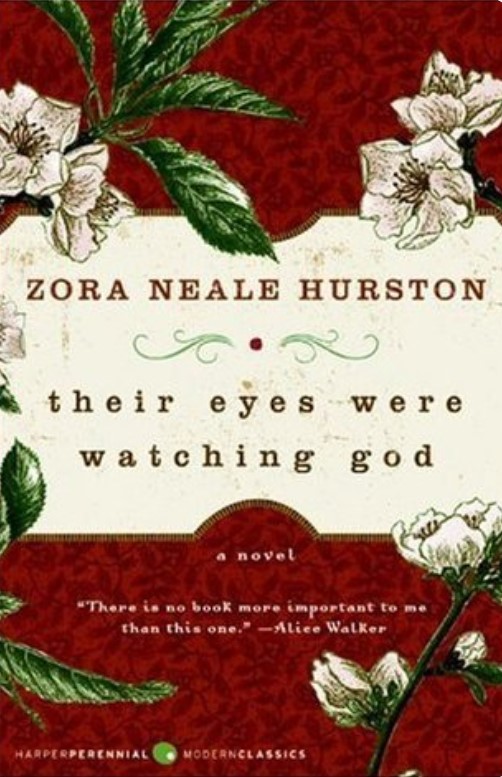
    Buzzwordathon 2023: Review of ‘Their Eyes Were Watching God’ by Zora Neale Hurston

    For August’s edition of the Buzzwordathon readathon, I chose to read Their Eyes Were Watching God by Zora Neale Hurston! This is because August’s theme was ‘body parts’, meaning that a body part had to be mentioned somewhere in a book’s title. While sharing Janie’s story, Zora is able to use words artistically and lyrically. However, this approach to storytelling never feels too “flowery”. A great example is when Zora describes a hurricane roaring over Florida’s Everglade region. She refers to the hurricane itself as a “monster”. As the storm is moving closer to the Everglade region, Zora writes, “The people felt uncomfortable but safe because there were the seawalls to chain the senseless monster in his bed”. In this sentence alone, Zora creates an image the reader can visualize. She also makes the hurricane larger than life, an antagonist for the characters to encounter.

    Their Eyes Were Watching God book cover found on Goodreads

    I’ve said before on 18 Cinema Lane that I don’t seek out “slice of life” stories. The reason is I don’t find “slice of life” stories to be as compelling as other types of stories. In the first half of Their Eyes Were Watching God, the story was more “slice of life”. Conflicts within the story don’t arrive until Tea Cake, Janie’s third husband, is introduced in the book. Because he appears in the story’s second half, I found the second half of the book more interesting than the book’s first half. Their Eyes Were Watching God is a fine, well-written novel. I am aware there was a 2005 made-for-tv adaption starring Halle Berry. Now that I have read the movie’s source material, I would be interested in reviewing the film in the future!

    Overall score: 3.6 out of 5

    Have fun during Buzzwordathon!

    Sally Silverscreen

    Disclaimer: Their Eyes Were Watching God contains subject matter that some readers may find offensive, including:

    Language reflective of the book’s release, the 1930s. This includes the use of racial slurs.

    References to heavier topics, such as death and abuse

    Swearing on some occasions

    Mrs. Turner’s beliefs, which are filled with prejudice

    The inclusion of a hurricane

    My First Buzzwordathon Fail of 2023

    When I first participated in the Buzzwordathon readathon last year, I experienced my first Buzzwordathon fail in May. At the time, I didn’t finish The Light Between Oceans within May because the book put me in a “reading slump”. For this year’s readathon, I encountered another fail. This time, however, I prioritized my involvement in the Eurovisionathon readathon, as well as preparing for next year’s Eurovisionathon. Despite this fail, I will still publish my review of The Grapes of Wrath, the book I chose for this month’s Buzzwordathon. I will also not let this fail deter me from my reading goals.

    The Grapes of Wrath book cover found on Goodreads.

    One of the criticisms of The Grapes of Wrath is the infamous “turtle chapter”. As the book’s third chapter, this part of the story has caused frustration and confusion among readers, from readers viewing the chapter as boring to readers questioning why the chapter exists. For me, though, the “turtle chapter” serves an even greater purpose. It not only provides foreshadowing for the next part of the story, it also showcases the book’s descriptive imagery. Throughout The Grapes of Wrath, John Steinbeck takes the time to describe almost every aspect of the story. In the aforementioned “turtle chapter”, John chooses words that will help readers picture the turtle in their minds. Some of these words are “high-domed shell”, “yellow-nailed feet”, and “fierce, humorous eyes”. John’s use of descriptive imagery allows scenes, characters, and environments to feel realistic. This element helped paint an almost complete picture surrounding the story.

    Joshua Tree National Park in California image created by Welcomia at freepik.com. <a href=”https://www.freepik.com/free-photos-vectors/tree”>Tree photo created by welcomia – http://www.freepik.com</a>. Image found at freepik.com.

    The way I feel about The Grapes of Wrath is similar to how I feel about All the Light We Cannot See. That’s because John Steinbeck prioritizes providing explanations for characters, situations, and the world surrounding the characters over telling a story. Getting to the heart of the story, it is a drawn-out, “slice-of-life” tale. As I’ve said in the past on 18 Cinema Lane, I don’t seek out “slice-of-life” stories, as I find them too mundane for my liking. In my opinion, The Grapes of Wrath is just that: mundane. I recognize this story has its time and place, as the book captures a fictionalized account of The Great Depression/Dust Bowl. However, it’s not a book I plan on revisiting.

    Overall score: 3 out of 5 stars

    Have fun during Buzzwordathon!

    Sally Silverscreen

    Disclaimer: Because The Grapes of Wrath was written and published in the late 1930s, the language, situations, and perspectives are going to be reflective of that period in time. Reader discretion is encouraged.

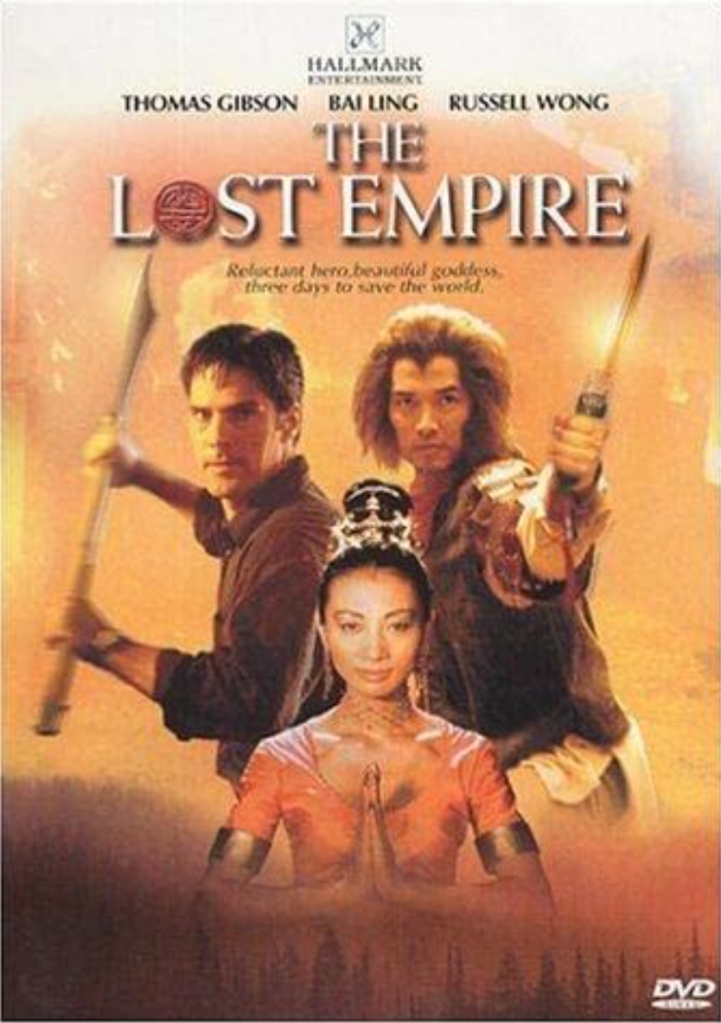
    Take 3: The Lost Empire/The Monkey King Review

    Last month, I wrote a list of movies I’d love to review someday. One of those films was The Lost Empire/The Monkey King. Originally, I was going to review the 2001 picture for Bai Ling’s birthday, as it is in October. But because July’s theme for Genre Grandeur is ‘Fantasy Movies of the 21st Century’, I found a reason to see this movie three months early! In my aforementioned list, I said the story of The Lost Empire/The Monkey King is based on Chinese folklore. This is very different from the types of films Hallmark creates today, which seem to, mostly, be recycled, predictable material. In fact, the only new Hallmark movies I’ve seen this year, so far, are Cut, Color, Murder, Aurora Teagarden Mysteries: Haunted by Murder, and Curious Caterer: Dying for Chocolate. The Lost Empire/The Monkey King was created during a time when Hallmark wasn’t afraid to take creative risks. But did those risks lead to cinematic rewards? Let’s journey through this review as we find that answer together!

    The Lost Empire/The Monkey King poster created by Hallmark Entertainment, RTL, Babelsberg International Film Produktion, Milk & Honey Pictures, National Broadcasting Company (NBC), and Hallmark Home Entertainment

    Things I liked about the film:

    The acting: When I reviewed Point of Origin last month, I was disappointed by Bai Ling’s limited presence in that film. To me, it seemed like her talents were underutilized. In The Lost Empire/The Monkey King, however, Bai was given more acting material to work with. This allowed her talents to be satisfyingly showcased! I’ve said in the past how Bai Ling has a strong sense of emotionality when it comes to her acting abilities. This was not only incorporated into her portrayal of Kwan Ying, but her on-screen performance was also fluid. A great example is when Kwan and Nicholas “Nick” Orton interact for the first time. While sharing drinks at a local restaurant, Kwan’s demeanor is giggly and somewhat flirty, reflecting her drunken state. She holds hands with Nick as she casually leans across the table. But as soon as Nick asks Kwan why she needed to see him, her mood changes without missing a beat. Kwan becomes very serious, as she sits up in her seat and even looks over her shoulder. This change in Kwan’s demeanor also indicates what’s to follow in the story.

    Years ago, I read American Born Chinese by Gene Luen Yang. From what I remember, the Monkey King was portrayed as an older, wiser character who younger characters looked up to. Russell Wong’s portrayal of the Monkey King was much different from what I expected. However, it was enjoyable to watch in The Lost Empire/The Monkey King! The Monkey King in the 2001 film was a humorous character. Russell’s dryer sense of humor and one liners worked in the story’s favor, as it provided a break from the tenser moments in the movie. The humor itself also fit within that movie’s world. When Nick first meets the Monkey King, he is taken aback by his change of scenery. The Monkey King uses that interaction to explain what is happening. Nick asks the Monkey King when the book, The Journey to the West will be destroyed. The Monkey King casually responded by saying, “Midnight. Next Thursday”. What also worked in Russell’s favor was his comedic timing. All of the Monkey King’s humorous moments were delivered at the right place and time. This was not only the result of the screenwriting, but the strength of Russell Wong’s acting abilities as well!

    One of the most relatable stories is the “fish out of water” story. In order for this story to work in film, you need an actor or actress who can believably sell this idea to the audience. Thomas Gibson in his portrayal of Nick did just that! The way Thomas expressed emotion appeared more realistic, adding to the believability of his performance. Thomas’ ability to adapt to each situation was strong, allowing the audience to witness Nick grow over the course of the movie. The Lost Empire/The Monkey King is not only a “fish out of water” story, but also a “hero’s journey” story. That means the protagonist makes a significant change in his or her life. Throughout the film, Nick makes a personal transformation, gaining confidence as he encounters each obstacle. The way Nick reacts to these changes adds a sense of relatability to the character.

    The set design: Immersive and imaginative worlds are a staple within the fantasy genre. The quality of a project’s set design can successfully present that illusion to the audience. I loved the set design in The Lost Empire/The Monkey King because it was able to pull the aforementioned illusion off! Nick is on a business trip to China. Some scenes showcased a typical Chinese city, with smaller details emphasizing the realism of this location. String lights and red lanterns can be seen overhead, which brings a softer glow in the middle of the evening. Vending booths line the streets, elaborating a greater number in population as extras and background characters walk by. Banners and signs in Chinese indicate how that specific part of the city is popular for business.

    As the story progresses, more fantastical worlds are shown on-screen. One of these worlds is Jade City. Massive structures boast an ancient Chinese architecture. The ground beneath the characters’ feet displays a pale green hue, subtly reminding the audience of the city’s name. Bright pink flowered trees nicely contrasted the buildings and landscape, bringing a pop of color to the city. Nearby lanterns and window screens are smaller details that show the craftmanship that went into the film’s set design!

    The discussion of literature: The main conflict in The Lost Empire/The Monkey King was the fate of the original copy of The Journey to the West. The villains want the book destroyed, while Nick and his friends are trying to save it. This main conflict led to a discussion of censorship versus preservation. The way the discussion is brought up, verbally and visually, was interesting. What was also interesting was the author of The Journey to the West, Wu Ch’eng En, receiving the opportunity to witness the impact of his literary work. I found this part of the story thought-provoking, as it made me think of authors who didn’t really have the chance to see their stories effect the world. The script’s focus on literature brought a sense of depth to a fantastical and whimsical story!

    Traditional Chinese dragon image created by Freepik at freepik.com. <a href=”https://www.freepik.com/free-photos-vectors/design”>Design vector created by freepik – http://www.freepik.com</a>. Image found at freepik.com.

    What I didn’t like about the film:

    Some of the special effects: When creating a television movie, there’s only so much technological resources at the creative team’s disposal. I’m also aware cinematic technology was not as strong in the early 2000s as it is in the 2020s. Despite these setbacks, the special effects in The Lost Empire/The Monkey King were not a consistent issue. But when they were an issue, it was noticeably rough. While Nick was trying to find a way back to his world, he encounters a tiger in a nearby forest. This tiger appears to have been created through computer technology. Instead of resembling a real-life tiger, it resembled one from a computer game from the time of the movie’s release. The longer the tiger was on screen, the more dated it looked.

    Lack of acknowledgment for Pigsy’s mistake: Pigsy is a character that tags along with Nick on his journey. During this journey, Pigsy makes a mistake that negatively impacts his friends and their mission. There were moments where Pigsy appears guilty about his choice. However, the mistake itself was not acknowledged like I hoped it would. Pigsy’s situation does get resolved. But this resolution was glossed over instead of being properly addressed. That was an underutilization of one of the movie’s themes, which was truth.

    Mentioning Nick’s ex: On more than one occasion, Nick’s ex-girlfriend is brought up in the story through flashbacks. At a more climatic moment, her inclusion made sense. But, personally, I found it unnecessary for the ex-girlfriend to be brought up more than once. These parts of the story reminded me of a Hallmark movie cliché I’ve talked about in the past: the “protagonist’s ex showing up unannounced” cliché. Nick’s ex-girlfriend is only shown through flashbacks, as I’ve already mentioned. However, I’ve also mentioned how pointless it is to bring up a protagonist’s ex when those characters have no plans to get back together.

    Tiger image created by Chevanon at freepik.com.  <a href=’https://www.freepik.com/free-photo/tiger-looking-straight-ahead_999674.htm’>Designed by Freepik</a>. <a href=”https://www.freepik.com/free-photos-vectors/pattern”>Pattern image created by Chevanon – Freepik.com</a>. Image found at freepik.com.

    My overall impression:

    As I watched The Lost Empire/The Monkey King, I noticed some parallels between this movie and The Wizard of Oz.  In the Hallmark production, the characters travel to Jade City. Meanwhile, in The Wizard of Oz, Dorothy and her friends seek out The Emerald City. But comparing The Lost Empire/The Monkey King to The Wizard of Oz does the 2001 film such a disservice. This is because the Hallmark film holds up on its own! I found this production so imaginative, creative, and one of the more unique pictures I’ve seen this year! It was entertaining, engaging, sometimes thought-provoking, and even somewhat educational. The Lost Empire/The Monkey King makes me wish Hallmark would make more movies like this instead of what they’re currently creating. Like I said in the introduction, the 2001 production was made during a time when Hallmark wasn’t afraid to take creative risks. In more recent years, Hallmark has over-relied on one genre to the point where it seems like they don’t want to try anything new. I, honestly, find this to be a shame, as there are so many more stories Hallmark could tell.

    Overall score: 7.9-8 out of 10

    Have you seen The Lost Empire/The Monkey King? Are there any older Hallmark films you wish received more recognition? Please tell me in the comment section!

    Have fun at the movies!

    Sally Silverscreen

    Buzzwordathon 2022 – Review of ‘A Little Princess’ by Frances Hodgson Burnett

    With my Travel Gone Wrong Blogathon underway and the start of May around the corner, it’s time for another Buzzwordathon book review! For April, the theme is ‘Big & Little’. Participants had one of two options: 1. Read a book that has the word ‘big’ or ‘little’ in the title or 2. The title has to feature a word associated with ‘big’ or ‘little’. Because I happen to own a beautiful copy of A Little Princess and because ‘little’ is in the middle of that book’s title, I decided to read Frances Hodgson Burnett’s classic! The 1905 story has been a favorite of mine for a very long time. However, this is the first time I read it in a novel format.

    Here is a screenshot of my copy of A Little Princess. Sorry if the cover’s bottom half appears blurry. I tried to capture how sparkly the cover is. Screenshot taken by me, Sally Silverscreen.

    While reading A Little Princess, I became nostalgic of the 1995 adaptation, as I have loved that film since its release. So, it was interesting to read how similar and different the movie was from its respective source material. One major difference is how Frances provides explanations for character motivations and situations. I haven’t seen the 1995 adaptation of A Little Princess in years. From what I remember, though, Sara’s dad goes missing during battle and is assumed dead. This provides the catalyst for Sara’s struggles and lost fortune. Looking back on the film, it never made sense, to me, for Sara to lose everything simply because her father was missing in action. If her dad knew there was a chance he could be in danger, wouldn’t he have created a will for Sara? The source material provided a stronger explanation for the lost fortune, as Sara’s father invested in diamond mines, but his money was mishandled. Even though this situation is resolved by the book’s end, the inclusion of these explanations was a strength for the book itself!

    Princess tiara image created by Freepik at freepik.com. <a href=’https://www.freepik.com/free-vector/ornamental-princess-crowns_1109199.htm’>Designed by Freepik</a>. <a href=”https://www.freepik.com/free-photos-vectors/gold”>Gold vector created by Freepik</a>. Image found at freepik.com.

    Another strength of the book is how Frances used descriptions to flesh out the characters and their world. At the beginning of the story, Sara is referred to as “wise beyond her years”. She’s also described as “intelligent”, “imaginative”, and “courageous”. Interactions between characters and narrations from an anonymous narrator provide proof of those statements. On the first day of class, Miss Minchin gives Sara a French textbook in preparation for an upcoming French lesson. Throughout this scene, Sara tries to explain to the headmistress that she already knows basic French, as she grew up learning the language from her dad. It’s not until the French teacher arrives that he and Miss Minchin discover how advanced Sara is in French. In the 1995 adaptation, important and timeless messages and themes can be found throughout the story. That is also true for the source material! Because Sara imagines she is a princess, she assumes how a princess would behave. This includes assuming how a princess would treat others. After finding some money on the ground, Sara plans to buy some food from a nearby bakery. But just before she enters the bakery, Sara sees a girl who appears to be worse off than herself. With the found money, Sara purchases a set of rolls. But she ends up giving most of the rolls to the aforementioned girl.

    Here is one of the full page illustrations that is featured in my copy of A Little Princess. Artwork created by Ethel Franklin Betts and found on https://en.wikisource.org/wiki/A_Little_Princess.

    Even though A Little Princess has been near and dear to my heart, I’ll be one of the first readers to admit it is not a perfect or near perfect book. Though this flaw wasn’t consistent throughout the text, there were times when parts of the story were repetitive. A portion of the book’s last chapter provides a great example, as it re-caps almost everything that happened prior to that point. As a reader, I don’t like longer chapters. This can, sometimes, cause a book’s pace to be slower. While A Little Princess’ pace was steady, the book contained longer chapters, with thirteen pages given to the longest chapter. In my copy of the book, there are full page illustrations that bring to life certain parts of the story. I honestly wish these illustrations had a more consistent presence, as they could have broken up some of the chapters. Other than that, though, I still enjoyed reading A Little Princess all these years later! I’m so glad I was given the opportunity to read it again!

    Overall score: 4.1 – 4.2 out of 5 stars

    Have fun during Buzzwordathon!

    Sally Silverscreen

    Disclaimer: Because A Little Princess was published in 1905, some of the words and phrases are reflective of that time, with their context different from today. A few of these words are “queer”, “gay”, “fat”, and “chubby”. At one point in the story, a man from India is referred to as “oriental”. There is also a stereotype about Chinese people included in the text. Again, these parts of the story are reflective of the book’s time; 1905.

    Take 3: The Three Musketeers (1948) Review

    Last year, I participated in the Classic Literature On Film Blogathon. Since I was reading To Kill a Mockingbird at the time, I chose to review the book’s film adaptation. For this year’s event, I selected the 1948 version of The Three Musketeers! Because I’m using my TBR Tin to choose which book to read next, I wasn’t able to read the source material before I saw the movie, as I’m currently reading The Shadowy Horses by Susanna Kearsley. I was recommended this film by Patricia from Caftan Woman. As I try to see as many film suggestions as I can, this became one reason why I selected The Three Musketeers for this blogathon. I have seen the 1993 adaptation of the story. But I can’t give an honest opinion on that film, as I haven’t seen the movie in years. What will my thoughts be on the 1948 adaptation of The Three Musketeers? Keep reading to find out!

    The Three Musketeers (1948) poster created by Metro-Goldwyn-Mayer and Loew’s, Inc.

    Things I liked about the film:

    The acting: Because The Three Musketeers contained an ensemble cast, it’s difficult to choose a favorite performance. However, I will still mention a few of them. For me, Gene Kelly is always going to be known for his performances in musicals. Seeing him work with different acting material was very interesting, as it forced him to utilize his expressions and emotions more. Out of Gene’s films I’ve seen so far, his portrayal of D’Artagnan has become one of my favorites! This performance was so well-rounded, D’Artagnan came across as a mutli-layered character. As Gene had a variety of expressions at his disposal, he was able to adapt to any situation D’Artagnan faced. I am not familiar with Van Heflin as an actor. But I was impressed with his portrayal of fellow Musketeer, Athos! Van’s best scene was when Athos drunkenly tells a story of an aristocrat who was betrayed by a woman from the country he fell in love with. Even though Athos is disoriented by the alcohol, you can tell there is deep emotion in his voice and eyes. Another performance that also became a favorite came from Lana Turner, who portrayed Countess de Winter! Her standout scene was when her character was in prison. The Countess appears disheveled as she begs for her life to end. What made this scene so memorable was the amount of emotion Lana put into her role. She presented a character that was so desperate, she’d be willing to do anything to get out of it.

    The costumes: When it comes to scene-stealers, the costumes in The Three Musketeers definitely stole the show! I liked how colorful they were, as bright hues were used on various pieces of apparel. It not only made the characters stand out, but it also helped when telling characters apart from one another. The amount of detail on these costumes was also exquisite! In one scene, the Duke of Buckingham wore a purple shawl. Gold embroidery complimented the shawl’s shade of purple and prevented the piece from becoming plain. At a dinner party, Queen Anne wore a white gown. This gown also contained gold details, which were found on the skirt and bodice. Small jewels near the top of the dress completed Queen Anne’s elegant look!

    The set design: If you’re going to create a period film, you have to pay attention to the finer details that go into each set. These details will reflect the effort, research, and care that went into how these sets look. The sets in The Three Musketeers show how much the film’s creative team cared about the presentation of their final product! What I love about the sets in this movie are the fine details that can be found. Carved images are shown in the Duke of Buckingham’s study, covering the fireplace and doorframe in these wooden pictures. They can also be found in other rooms and on other materials, such as on a tin-plated cabinet in a General’s office. My favorite design detail can be found in Queen Anne’s sitting room. As Queen Anne and the Duke of Buckingham are standing near the fireplace, Queen Anne turns a knob found near the top of the fireplace. This action reveals a secret compartment that hides a box of diamonds.

    The fight choreography: Any action movie is just as good as its fight choreography. The performative presentation of the fights in The Three Musketeers helped make these fights so memorable! Because of Gene Kelly’s dancing skills, he was able to incorporate leaps into his fight sequences. Watching D’Artagnan leap from place to place gave him a natural superpower that he was able to use to his advantage! Humor can also be found during these fight sequences, which prevented them from being too dark or serious. D’Artagnan’s first duel was against the head of the French police. During this duel, hilarity ensued, from D’Artagnan splashing water in his opponent’s face to pushing his opponent in a pond. This inclusion of humor in the fight choreography allowed the creative team to present these fights in creative and interesting ways!

    The 2021 Classic Literature On Film Blogathon banner created by Paul from Silver Screen Classics.

    What I didn’t like about the film:

    D’Artagnan’s romantic relationships: After rescuing Constance from a home invasion, D’Artagnan falls in love with her. He not only tells Constance he loves her, but they also share a romantic kiss. While I liked Constance and D’Artagnan’s relationship, I felt it was developed too quickly. Later in the film, Constance is kidnapped. In order to save her, D’Artagnan pretends to fall in love with Countess de Winter. However, after his initial meeting with the Countess, D’Artagnan tells Athos how much he loves her. If D’Artagnan was romantically interested in Constance, why would he even bother having feelings for the Countess? That part of the story was confusing.

    A weaker villain: There are two villains in The Three Musketeers; Countess de Winter and Richelieu. But one of them definitely outshined the other. Countess de Winter was the stronger villain. She is a criminal by legal context and the audience can witness her committing several crimes. Richelieu, on the other hand, is not presented in the same way. The audience does see him commit a crime of theft, but it is never explained how this was done. Richelieu was also friends with the King of France, a character that was not written or portrayed as a villain. This made me puzzled as to what Richelieu’s true intentions were, whether he was a villain or simply a man who follows his own rules.

    The Musketeers spending little time together: When you think of The Three Musketeers, you think of these heroes fighting alongside each other and saving the day together. As I watched this film, I noticed how they spent more time apart. I was disappointed to discover this because that team dynamic the Musketeers are known for had a limited presence. While this separation did allow the audience to get to know these characters individually, we didn’t really get to see this group of friends grow over time. Though there was a lot of content in this movie, I wish more time was given to show the Musketeers together.

    Castle photo created by Photoangel at freepik.com. <a href=’https://www.freepik.com/free-photo/old-castle-in-the-mountians_1286237.htm’>Designed by Freepik</a>. <a href=”https://www.freepik.com/free-photos-vectors/tree”>Tree image created by Photoangel – Freepik.com</a>. Image found at freepik.com.

    My overall impression:

    Anchors Aweigh was the best movie I saw in 2020. This was a pleasant surprise, as I never expected one of Gene Kelly’s films to receive this honor. Even though it’s only April, the 1948 adaptation of The Three Musketeers has now become the best movie I’ve seen so far! There is so much effort that was put into this project, which is reflected in many parts. The costumes and set designs were impressive because of the detail that was incorporated into them. Many good acting performances can be found, making it difficult to choose the best one. These actors not only did a good job individually, but they also worked well together as a group! Similar to what I said in my Oliver! review, I might read The Three Musketeers because of how much I enjoyed its film adaptation! For now, my top priority is reading the books that are currently on my TBR shelf.

    Overall score: 8 out of 10

    Have you read or seen The Three Musketeers? What adaptations of classic literature do you like? Please let me know in the comment section!

    Have fun at the movies!

    Sally Silverscreen

    Take 3: Little Lord Fauntleroy (1936) Review (Clean Movie Month #3)

    When I signed up for Pure Entertainment Preservation Society’s Code Classics Blogathon in June, I hadn’t publicly submitted the film I wanted to review. That’s because I planned on reading the source material before watching the movie. Originally, I was going to read Black Beauty and then see the 1946 adaptation of this story. Unfortunately, I wasn’t able to set aside time to read the book. Also, the 1946 version of Black Beauty was unavailable for rent. I then decided to watch a version of The Count of Monte Cristo that was released during the Breen Code Era. However, the only adaptations that were available for rent were the 2002 and the 1975 version. Then I remembered how I’ve always wanted to read Little Lord Fauntleroy by Frances Hodgson Burnett. I was happy to discover I was able to rent the 1936 adaptation! In my life, I have read A Little Princess and The Secret Garden. Having enjoyed both books, I was interested in hearing a similar story from a male perspective. How different would Ceddie be from Sara and Mary? Would his story contain any similarities with the two aforementioned novels? While I haven’t read Little Lord Fauntleroy yet, I wasn’t going to miss out on seeing this story come to life on screen!

    Little Lord Fauntleroy poster created by Selznick International Pictures, United Artists, and Walt Disney Studios Motion Pictures. ©Disney•Pixar. All rights reserved. Image found at en.wikipedia.org/wiki/File:Little-Lord-Fauntleroy-Poster.jpg

    Things I liked about the film:

    The acting: I’ve said before on 18 Cinema Lane that performances from young actors and actresses can be hit or miss. However, Freddie Bartholomew’s portrayal of Ceddie was a hit! The way this character carried himself was mature for his age without being too precocious. At the same time, Ceddie had the type of kind-heartedness you’d expect from a young character. The mannerisms and facial expressions Freddie adopted reminded me of Sara from A Little Princess, making me believe that Ceddie and Sara probably would have been good friends! Even though her presence in the film was limited, Dolores Costello Barrymore gave a memorable performance as Ceddie’s mom, Dearest! Her emotions gave the audience a glimpse of how her heart is always in the right place when it comes to looking out for her son. In one scene, Dearest is telling Ceddie that he’ll have to stay with his grandfather. This moment showcases how she continually shields her child from the animosity between her and the grandfather. Also, this scene highlights her ability to put Ceddie’s needs before her own, telling him she’ll place a candle in the window so the light will always guide his path.

    The music: While watching Little Lord Fauntleroy, I noticed how the background music always fit the tone of its respective scene. One great example is when Ceddie receives a bicycle for his birthday. A tune from a music box could be heard, indicating how this is a happy occasion. Whenever Ceddie’s grandfather is mentioned, the audience can hear orchestral music. The music itself sounded regal, highlighting how important this character is. Somber music was found in sadder scenes, like when Mr. Hobbs and Dick are missing their friend, Ceddie. This consistent detail shows how the film’s creative team cared about what their audience saw and heard.

    The messages and themes: The famous works of Frances Hodgson Burnett are known for having good messages and themes that audiences of all ages can appreciate. Little Lord Fauntleroy is no different. Throughout the movie, Ceddie always put others before himself. When his grandfather’s lawyer asked him how he’d use his newfound wealth, Ceddie tells him that he would purchase gifts for his friends, as a way to improve their lives. At a party, when one of his grandfather’s friends offers Ceddie a puppy, Ceddie turns the offer down by saying that he doesn’t want to hurt the feelings of his new K-9 friend, Duke. These examples display the messages of selflessness and staying true to yourself in any circumstance. Prejudice is an overarching theme that is found in this story. Ceddie’s grandfather does not like Americans, which created animosity between him and Dearest. The more time the grandfather spends with Ceddie, his negative beliefs begin to change. The grandfather’s part of the story shows how prejudice can hurt people, especially families.

    Code Classics Blogathon banner created by Tiffany and Rebekah Brannan from Pure Entertainment Preservation Society. Image found at https://pureentertainmentpreservationsociety.wordpress.com/2020/06/06/announcing-the-code-classics-blogathon/

    What I didn’t like about the film:

    A thirty-minute set up: Setting up a story is a crucial component to any film. However, when the set-up process takes too long, it may be difficult to get invested in the story. In Little Lord Fauntleroy, it took thirty minutes to set up the plot. While this part of the narrative was meant to showcase character development and motives for future events, I don’t think it needed to last this long. Because of this creative choice, it took a while for Ceddie and Dearest to get to England.

    Giving Ceddie almost nothing to do: Before watching Little Lord Fauntleroy, I had expected Ceddie to learn the ropes of being an Earl from his grandfather. Sadly, that’s not what happened. I understand that Ceddie is a child. But despite this, he wasn’t given much to do as an Earl-in-training. Sure, Ceddie helped his grandfather write a letter to a struggling farmer. However, it made me wonder why Ceddie was given this Earl title so young if he couldn’t utilize it.

    The conflict between Dearest and the Earl of Dorincourt: As I mentioned earlier in this review, Ceddie’s grandfather does not like Americans. Because Dearest is American, there is tension between her and the grandfather. While the conflict itself explored the subject of prejudice, I feel it was resolved too quickly. There is only so much story that can be told in an hour and forty-two minutes. But the way Dearest and the Earl of Dorincourt dealt with their conflict felt rushed, as years of animosity was taken care of after one event.

    Clean Movie Month banner created by Tiffany and Rebekah Brannan from Pure Entertainment Preservation Society. Image found at https://pureentertainmentpreservationsociety.wordpress.com/2020/07/01/cleanmoviemonth2020-is-here/.

    My overall impression:

    I have not read Little Lord Fauntleroy, as I mentioned in my introduction. Therefore, I don’t know what aspects of the book were translated to the screen. Despite this, I liked the 1936 adaptation of this story! It was a good and sweet picture that contained timeless messages and themes. The character of Ceddie reminded me a lot of Sara from A Little Princess. This didn’t surprise me, as both books were written by the same author. Yes, the movie did have flaws. However, I enjoyed the story and thought this was a well-made production. Because of how much I liked this film, it makes me want to read the book! Out of the three Breen Code Era films I’ve reviewed so far, Little Lord Fauntleroy is the most Code compliant! I didn’t find any offensive material in this project, which makes it a perfect movie for family viewing!

    Overall score: 7.9 out of 10

    Are you enjoying Clean Movie Month? What is your favorite literary adaptation from the Breen Code Era? Please tell me in the comment section!

    Have fun at the movies!

    Sally Silverscreen

    Take 3: To Kill a Mockingbird Review

    Before I start this review, I’d like to remind everyone that Thursday, April 9th, is the last day to cast your vote for the Best Supporting Actor of the 2nd Annual Gold Sally Awards! The next poll will be posted on the April 10th! Here is the link to the poll:

    Now it’s time to choose the Best Supporting Actor of 2020’s Gold Sally Awards!

    Originally, I had planned on reviewing To Kill a Mockingbird for Pure Entertainment Preservation Society’s A Month Without the Code Blogathon. Since The 2020 Classic Literature On Film Blogathon was given an April participation date and because I was reading To Kill a Mockingbird at the time of the event’s announcement, I decided to review the film adaptation a lot sooner than I expected. For years, I had heard great things about the novel. The now famous quotes have been plastered all over the internet, sounding deep and thought-provoking against backgrounds of characters’ pictures from the film. No literary list would be complete without To Kill a Mockingbird’s inclusion. What caused me to pick up a copy, and eventually see the movie, was the trial where Atticus defends Tom Robinson. This situation taking place in a time that is very different from today brought up a lot of questions. How would Atticus approach the case? Was Tom innocent? How different was the court system back then? For a while, this book was sitting on my bookshelf, waiting for the day when it would be read. Because of this blogathon, the day to read the book and see the movie has finally come!

    To Kill a Mockingbird poster
    To Kill a Mockingbird poster created by Brentwood Productions, Pakula-Mulligan, and Universal Pictures. Image found at commons.wikimedia.org/wiki/File:To_Kill_a_Mockingbird_(1963_US_theatrical_poster).jpg

    Things I liked about the film:

    The acting: In my review of Mystery 101: An Education in Murder, I talked about how the characters in that movie appeared as if they came from real-life. This is partly the result of the quality of the actors’ performances. The aforementioned strengths are shared by both films. While watching To Kill a Mockingbird, I noticed how all the performances felt realistic. The actors brought enough emotion and animation to their roles, in order to bring their characters to life. I enjoyed watching the performances in this film. However, the two standouts came from Collin Wilcox Paxton (who portrayed Mayella Ewell) and Brock Peters (who portrayed Tom Robinson). Even though they appeared on screen for a limited amount of time, they were able to bring so much emotion and power to their roles. These elements allowed Collin and Brock to elevate their characters as well as the source material.

    How the source material was presented: Looking back on the book, the story itself was 20% about the trial and 80% about the “slice of life” perspective Scout offers to the readers. This imbalance is what caused me to not enjoy the book as much as I had expected. The film’s creative team makes an effort to create a balance between these two ideas by removing scenes that would have felt like padding. In the book, the majority of a chapter is devoted to the Halloween carnival/play and what caused that event to take place. The movie, however, only shows Jem and Scout arriving and leaving the school. The way some scenes were presented in the movie highlighted Atticus’ abilities as a lawyer more effectively than in the book. When Atticus to talking to Scout about compromises and trying to see things from another person’s perspective, the scene places more emphasis on Atticus himself delivering the message, showing the values he follows as a lawyer. In the book, it feels like these lessons are rehashing information most readers already know.

    Moments of suspense: There were some scenes containing suspenseful moments that were periodically placed in the film. One of these moments takes place in the scene when Atticus visits Helen Robinson for the first time. While Jem is sitting in Atticus’ car, Bob Ewell drunkenly approaches the vehicle. Because this is the first time Bob is introduced on screen and because he is presented in a disorderly state, Bob’s decisions and actions are very unpredictable. Scenes like this one maintained the overall story’s intrigue. It maintained my investment in the film as well. These scenes featuring suspenseful moments also allowed the creative team to adopt story-telling elements like the use of shadows and dramatic music.

    Classic Literature On Film Blogathon banner
    The 2020 Classic Literature On Film Blogathon banner created by Paul from Silver Screen Classics. Image found at https://silverscreenclassicsblog.wordpress.com/2020/01/16/announcing-the-2020-classic-literature-on-film-blogathon/?wref=tp.

    What I didn’t like about the film:

    The trial taking place at a later time: As I said in the introduction, the trial where Atticus defends Tom Robinson is what made me want to read the book. When I did read it, I was disappointed to discover the trial itself took place sixteen out of thirty-one chapters into the story. In the movie, the trial appears at the halfway point. In this case, I fault the source material more than the film’s creative team. Even though I had to wait an hour for the trial to be presented on screen, the creative team did try their best to get to that point as soon as possible.

    Some unclear details: Some details in this movie were unclear, especially if someone didn’t read the book before they saw the movie. In the book, Jem and Scout are introduced to Reverend Sykes when they attend Mass at Calpurnia’s church. When the trial takes place, they agree to sit with Reverend Sykes in the balcony section of the courthouse. Because the church service was omitted from the movie, there’s no clear explanation provided for how Jem and Scout know Reverend Sykes. It might have helped if details like this one were given some context.

    The voice-over: The book is told from the perspective of an adult reflecting on their childhood. However, the movie presented the events as if they are taking place in “present-time”. Because of this decision, it allows the events to speak for themselves. This makes the voice-over seem like an unnecessary component. The voice-over was also not consistently included in the movie, causing its presence to not feel justified.

    Law Justice Isometric Composition Icon
    Courtroom image created by Macrovector at freepik.com. <a href=”https://www.freepik.com/free-photos-vectors/isometric”>Isometric vector created by macrovector – http://www.freepik.com</a>. Image found at freepik.com.

    My overall impression:

    There are very few times when I feel a film adaptation is better than its literary source material. In fact, the two previous instances that I can think of are Hallmark’s Hall of Fame’s The Beach House and Hallmark Channel’s Rome in Love. After watching To Kill a Mockingbird, I have now found a third adaptation to add to that list. I’m not a fan of “slice of life” stories, hence why I didn’t enjoy the book as much as I had expected. While these aspects of the “slice of life” story were incorporated into the movie, the creative team’s main focus was about getting straight to the point a lot sooner. The film’s visual nature worked in the favor of certain elements from the source material. Suspenseful moments in certain scenes are one great example. Reading about those moments in a book does cause a level of uncertainty. Watching them take place on screen makes those moments seem real and intensifies that uncertainty. If I had known my feelings about this movie before reading the book, I honestly would have skipped the book and gone straight to the movie.

    Overall score: 8.1 out of 10

    Have you read any classic literature? If so, did you see its film adaptation, if it has one? Let me know in the comment section!

    Have fun at the movies!

    Sally Silverscreen