
Three years ago, I created a tier rank list of every Hallmark Hall of Fame movie I’d seen. These films were categorized by my overall impression of each presentation. In honor of 18 Cinema Lane turning five, I promised my readers I would revisit one of my past articles. I’ve seen more Hallmark Hall of Fame movies since I published my original tier rank list, so that’s the article I’ve selected! Along with adding more Hallmark Hall of Fame productions, I changed the names of each tier category. This decision was made to better reflect whether a film is worth its retail price of twenty dollars a DVD compared to its quality. The new tier category names are the following:
Bottom of the Barrel – Not Even Worth a Dime
Ok – Catch it on TV/Youtube
Decent/Fine – Bought It at a Garage Sale for a Dollar
Good – Get It On Sale for Half Off
Great – Where Do I Pay Full Price?
For each movie I added or moved to a different tier, I will share my thoughts on them. If I wrote about a movie on my blog, I will add the link to this article.

Bottom of the Barrel – Not Even Worth a Dime
Durango
Reviewed for the Legends of Western Cinema Week Blogathon, I stated Durango should have been a David and Goliath story. That’s because a David and Goliath reference was placed within the last nineteen minutes of the movie, the creative team’s attempt to include a higher stake into the story. But this attempt didn’t work because the majority of the film had lower stakes. The protagonist and his plan to transport cattle worked out perfectly, too perfectly for the standards of the western genre. This takes away any room for concern the audience could have for the characters and their well-being.
Take 3: Hallmark Hall of Fame’s Durango Review
Journey
As I explained in my list of the top ten worst movies I saw in 2022, the audience was not given a reason to care about the characters and their story in Journey. This flaw was achieved because the film’s creative team didn’t provide explanations for the characters’ choices. It also did not help how annoying Grandpa Marcus was, his photography hobby becoming an obsession. A major theme of Journey is memories being irreplaceable. That theme was poorly delivered in Journey, as Marcus’ hobby creates a plot hole within the story. Also, I’ve seen Hallmark Hall of Fame movies express this theme better, such as The Lost Valentine.
A Place for Annie
When it comes to movies that are products of their time, they can fit into one of two categories: movies that serve as visual time capsules and those that are dated on arrival. A Place for Annie, sadly, falls into the latter category. The majority of the story focuses on the medical information of HIV/AIDS that was known during the late ‘80s to mid ‘90s. That focus causes the film to show its age more obviously. The way foster care/adoption is discussed in this story is so oversimplified, I couldn’t take that part of the movie seriously. Similar to what I said about Journey, the theme of adoption is expressed better in other Hallmark Hall of Fame stories, like Redwood Curtain.
The Corsican Brothers
Alexandre Dumas’ stories are, more often than not, filled with adventure, intrigue, and suspense. But in the case of The Corsican Brothers, these elements were lacking. Granted, I still haven’t read the book this movie is based on. Though I do wonder how similar the 1985 adaptation is to the source material? If the original story primarily revolves around Louis attending fancy events in Paris, that would explain why the adaptation is so underwhelming. However, the original story could explain some of the confusing parts of the movie, such as the woman giving some of the characters fates.
Take 3: Hallmark Hall of Fame’s The Corsican Brothers Review
Ok – Catch it on TV/Youtube
The Summer of Ben Tyler
The 1996 movie, The Summer of Ben Tyler, feels like Hallmark Hall of Fame wanted to create their own version of To Kill a Mockingbird. Upon reflection of this film, it doesn’t seem like the creative team displayed a strong understanding for what made Harper Lee’s story work. If anything, it feels like ideas are copied from Harper’s novel and pasted into the Hallmark Hall of Fame presentation, making The Summer of Ben Tyler a little too similar to To Kill a Mockingbird. This is a case of if you’ve seen one movie, you’ve basically seen the other. So, if you’ve seen the adaptation of To Kill a Mockingbird, you’ve already seen The Summer of Ben Tyler.
Decoration Day
The way I feel about Decoration Day is similar to Promise; the majority of the story is very “slice-of-life”. To me, this makes both films less memorable than other Hallmark Hall of Fame titles. However, I did find Gee Pennywell’s dilemma over receiving the Congressional Medal of Honor the most interesting part of the movie. In fact, I wish Decoration Day had solely revolved around that dilemma.
Foxfire
Hallmark Hall of Fame has a history of adapting plays into films. Sometimes, a movie’s creative team will take advantage of the expansive nature of cinema, allowing the story to move beyond the boundaries of the stage. For Foxfire, though, the story was confined to the four walls of Annie’s house. A smaller cast and a condensed story also caused the 1987 Hallmark Hall of Fame project will feel more like a televised play. If I choose to watch Hallmark Hall of Fame film, I expect to watch a film. Foxfire subverted my expectations, but in a disappointing way.
Take 3: Hallmark Hall of Fame’s Foxfire Review
Calm at Sunset
Calm at Sunset is one of those movies where better, more interesting ideas were woven into the fabric of this story. One example is when the protagonist spots a cruise ship and imagines the types of people aboard that ship. Honestly, I wish Calm at Sunset was about that cruise ship instead. Similar to what I said about The Corsican Brothers, I haven’t read the book this movie is based on, so I don’t know which parts of the production came straight from the source material. If the book is pretty close to the film, it would explain why the adaptation was lackluster.
Witness for the Prosecution
Based on the adaptations of Agatha Christie’s books I’ve seen, the protagonist will play an active role in solving the mystery. Witness for the Prosecution is the exception to this statement, as Wilfred focuses more on the legal case he’s working to resolve. In a story where the protagonist doesn’t actively solve the story’s mystery, it can be difficult to get the audience invested in the story itself. Because Wilfred’s case is the primary focus of the story, the film is more dialogue heavy, putting emphasis on telling instead of showing. Hallmark Hall of Fame’s Witness for the Prosecution is a mystery that is light on the mystery.
Take 3: Hallmark Hall of Fame’s Witness for the Prosecution (1982) Review
The Flamingo Rising
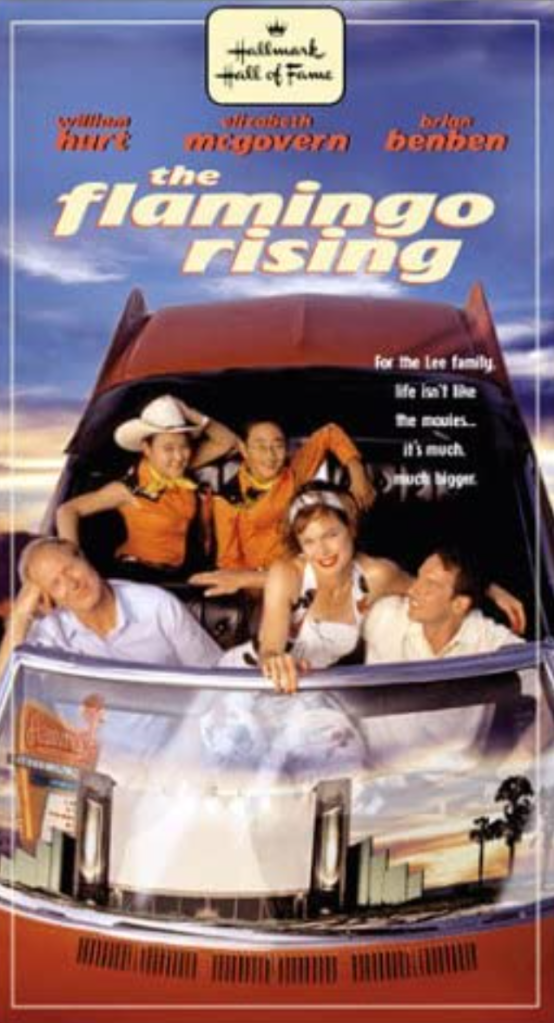
In my editorial about the adaptation of The Flamingo Rising, I explained how the story should have been adapted into a television show or a multi-part mini-series. This is because the story itself is drawn out over the course of the protagonist’s life. Reflecting on the adaption, it felt like Hallmark Hall of Fame tried to fit The Flamingo Rising into their brand of storytelling. In this attempt, several parts of the source material were omitted or changed due to them not being “Hallmark appropriate”. As I did in the aforementioned editorial, I questioned why Hallmark Hall of Fame would choose to adapt Larry Baker’s story over a story that was more “Hallmark appropriate”?
Four Reasons Why ‘The Flamingo Rising’s Adaptation is Different from its Book
O Pioneers!
Having read the source material and seen the adaptation of O Pioneers!, I can say the movie is respectful toward the book. With that said, if you’ve seen the film, you’ve already read the novel. Speaking of the adaptation, I said in my review how the story should have been adapted into a mini-series or a television show. With so many characters and so many parts of the story, maybe O Pioneers! would have benefitted from receiving more time. The 1992 Hallmark Hall of Fame presentation is a western that didn’t leave a memorable impression on me.
Take 3: Hallmark Hall of Fame’s O Pioneers! Review
Harvey
I’ve stated before on 18 Cinema Lane how the 1972 adaptation of Harvey is better than the original from 1950. While this statement is still true, the 1972 and 1950 versions of this story felt like a copy of one another. It makes me wonder why Hallmark Hall of Fame would choose to adapt Harvey if they knew they were going to make a lot of the same creative decisions as the original film? Despite the similarities, I did like the changes in the 1972 adaptation. One example is how the made-for-tv movie chose a dramatic tone for their version of the story instead of being both a drama and comedy.
Take 3: Hallmark Hall of Fame’s Harvey (1972) Review
Decent/Fine – Bought It at a Garage Sale for a Dollar
The Locket
For a movie titled The Locket, the locket itself is treated as an afterthought. What the story focuses on instead is the protagonist and his hardships. But from what I remember, the 2002 project addressed the importance of elder care. Since that topic is rarely brought up in Hallmark’s programming, I appreciate that creative decision. Marguerite Moreau is one of the reasons why I chose to watch The Locket. Her performance was so good, she ended up outshining the other actors in the movie! Unfortunately, Marguerite was kind of under-utilized in this film, as her on-screen appearances were not as consistent as I expected.
Take 3: Hallmark Hall of Fame’s The Locket Review + 225 & 230 Follower Thank You
Saint Maybe
I said in my review of Saint Maybe how the adaptation is faithful to the source material. However, there are changes the film made from the book. One notable example is how religion/faith is downplayed in the Hallmark Hall of Fame presentation. Meanwhile, religion/faith played a significant role in the novel. For years, Saint Maybe was included in Hallmark Movies & Mysteries’ ‘Miracles of Christmas’ marathon. Now that I have seen the adaptation, I understand why the network would make this decision. Personally, I wouldn’t call Saint Maybe a Christmas story/movie, as the story itself takes place over several years.
Take 3: Anne Tyler’s Saint Maybe Review (National Read a Book Day Double Feature Part 1)
The Lost Child
The Lost Child serves as a good introduction to Native American culture, specifically the Navajo culture. Through dialogue and character interactions, the audience receives a glimpse into life on a Navajo reservation. For the story itself, The Lost Child didn’t leave a strong impression on me. The most interesting part of the film, Rebecca’s search of her family, wasn’t emphasized as much as her adjustment to reservation life. Also, Rebecca’s search for her twin brother was abandoned after she meets her biological family.
Take 3: Hallmark Hall of Fame’s The Lost Child Review + 395 Follower Thank You
Loving Leah
I’ve finally seen Loving Leah in its entirety! The way I feel about the 2009 movie is similar to The Lost Child; it’s a good introduction to Jewish religion and culture. Throughout the story, the audience receives a glimpse into the many aspects of Jewish life. Like The Lost Child, Loving Leah didn’t leave as strong of an impression as other Hallmark Hall of Fame titles. From what I remember, the story was a little too drawn out. But from what I also remember, it was nice to see the protagonists’ relationship unfold. With all that said, the movie was pleasant!
Good – Get It On Sale for Half Off
An American Story/After the Glory
Since publishing my review of An American Story/After the Glory, it has become one of my most popular reviews, garnering 1,838 views and counting! The innovative and compelling nature of the project is likely the reason why this particular title is so well-received on 18 Cinema Lane! Like I said in my review, An American Story/After the Glory felt kind of ahead of its time. This feeling is achieved by incorporating the discussion of veterans’ mental health into the script. The way veteran related topics are included in the story is reverent and respectful. An American Story/After the Glory is definitely one of Hallmark’s better military themed productions!
Take 3: Hallmark Hall of Fame’s After the Glory Review + 195 Follower Thank You
The Love Letter
The Love Letter is one of Hallmark Hall of Fame’s more unique titles, as fantastical elements are rarely found in this collection of films. Yet this part of the story worked in the 1998 movie, helping to create a love story that was simple yet intriguing! The characters were not only well written, but also well-acted! Since the protagonists were multi-dimensional, their connection throughout the film was interesting to watch. I also liked the historical accuracy in The Love Letter, as the attention to detail was handled with care!
Take 3: Hallmark Hall of Fame’s The Love Letter Review
Redwood Curtain
In my five years of movie blogging, I have discovered very few films that were better than their respective source material. Hallmark Hall of Fame’s Redwood Curtain is one of those films, as I found myself liking it over the play! The movie’s creative team took advantage of the expansive nature of cinema, broadening the horizons in Geri’s life. More characters were added to the story, giving them characterization that the play didn’t provide. Geri’s personality was more likable in the movie, which made me like her as a character. Redwood Curtain is a Hallmark Hall of Fame presentation I wish was re-released on DVD.
‘Redwood Curtain’: From Stage to Screen
Great – Where Do I Pay Full Price?
Caroline?
As of the publication of this list, Caroline? is, so far, the best movie I’ve all year! That’s because the 1990 production is a close to perfect example of what a Hallmark Hall of Fame presentation can and should be. From the younger actors’ performances to the differentiation of time, I could tell there was a lot of effort and care put into this project! Even though the story of a long-lost family member’s return is nothing new, the way Caroline? was written was creative, allowing this story to have its own identity. This movie is one I wish more Hallmark fans acknowledged!
Take 3: Hallmark Hall of Fame’s Caroline? Review + 460 Follower Thank You
A Tale of Two Cities
During my blogging years, I have seen Charles Dickens adaptations I have liked. The 1980 version of A Tale of Two Cities is definitely one of those films! Despite the movie being two hours and thirty-six minutes, the story never felt too long. The immersive nature of the story helped the pacing, as I was invested in what was happening on screen. This Hallmark Hall of Fame production was so good, it makes me want to read the source material! It’s also another film from this collection that deserves more recognition!
Take 3: Hallmark Hall of Fame’s A Tale of Two Cities Review
Have fun at the movies!
Sally Silverscreen



 18 Cinema Lane