Take 3: For Me and My Gal Review

Looking back on Judy Garland’s movies I’ve seen, I can
honestly say I haven’t seen a movie I didn’t like. Even though some pictures were
better than others, I can’t say any of Judy’s films were “bad”. Hoping this
streak will continue, I joined the Third Judy Garland Blogathon by reviewing For
Me and My Gal
! This film was recommended by the Brannan sisters from Pure
Entertainment Preservation Society. They not only introduced me to this film,
they introduced me to the Breen Code era! Between 1934 to 1954, the Breen Code
served as a set of guidelines for film-makers. These guidelines addressed the
dos and don’ts of movie-making based on a series of morals. Within that period
of time, Hollywood gave their audience films that have stood the test of time
and even become “classics”. But will this statement hold true for For Me and
My Gal
? Keeping reading my review to find out!
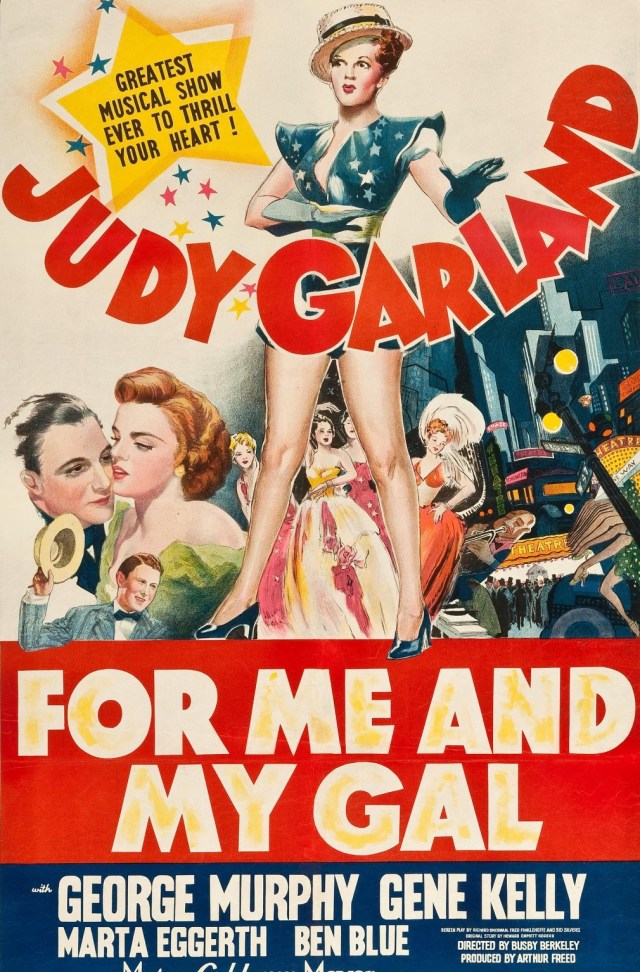
For Me and My Gal poster created by Metro-Goldwyn-Mayer (MGM)

Things I liked about the film:

The on-screen chemistry: Since I chose to review this movie
for the Third Judy Garland Blogathon, I want to discuss Judy’s performance in For
Me and My Gal
. However, I want to talk about her performance in relation to
her on-screen chemistry with Gene Kelly. When a movie musical features a
romantic relationship, the on-screen chemistry of the lead actor and actress
can sell the idea their characters truly love one another. This is what Gene
and Judy achieved through their portrayals of Harry Palmer and Jo Hayden! One
perfect example is presented during the musical number, “For Me and My Gal”.
Through facial expressions, the choreography, and their singing abilities, Jo
and Harry realize they share the same dream, despite being complete strangers
only hours ago. This musical number emphasizes how these characters were always
meant to be together.


How World War I was incorporated: For Me and My Gal takes place in the middle of the 1900s, the time when World War I took place. The story revolves around civilian perspectives; vaudeville
performers trying to make their dreams come true. At the beginning of the
movie, newspaper headlines broadcast events related to World War I. But the
newspaper’s front page is turned away from the characters, as they are more
concerned with how their performances were reviewed by the critics. As the
story progresses, World War I starts to take center stage in their lives,
affecting each character differently. This progression is steady and the
changes happen more subtly. The way World War I was incorporated into For Me
and My Gal
felt realistic. Though fictional musical movies require a
certain amount of disbelief to be suspended, it was refreshing for realism to
be woven into the film.


A story with stakes: Movie musicals, especially those from
the Breen Code era, contain simpler stories. These stories range from looking
for another member of a talent group or characters expressing their love for
each other. In For Me and My Gal, the overarching
story focuses on characters working toward their dreams. Throughout the movie,
Jo and Harry experience obstacles and attempt to overcome them. At one point in
the film, Harry receives an offer to perform at The Palace, a theatre in New
York every vaudeville performer aspires to go. While the offer itself sounds
amazing, the problem is Harry would no longer be able to perform with Jo. This
is one example of For Me and My Gal containing a story with stakes. In
the case of the aforementioned conflict, there were stakes not only for Harry’s
career, but also for his relationship with Jo.
The Third Judy Garland Blogathon banner created by Crystal from In The Good Old Days Of Classic Hollywood and Kristen from Hoofers and Honeys

What I didn’t like about the film:

The “insta-love” trope: In stories where a romantic
relationship in included, part of the story is devoted to showcasing the
progression of that relationship. If a story’s relationship moves too quickly,
it may be difficult for the audience to become invested in that relationship or
determine if the actors have on-screen chemistry. While Judy Garland and Gene
Kelly had good on-screen chemistry, I found their characters’ initial attraction
to happen too quickly. In fact, this attraction happened so quickly, it almost
felt unbelievable. I recognize there’s only so much story to tell in an hour
and forty-four minutes. However, I wish Harry and Jo’s attraction for one
another had taken its time.


An unresolved debt: Toward the beginning of For Me and My
Gal
, Jo’s brother, Danny, pays Jo a visit after one of her shows. During
their conversation, Jo tells Danny she will pay him back after she becomes a
big vaudeville star. But this is the only time throughout the movie where this
debt is mentioned. The debt is not revisited or resolved as the story progresses.
That part of the story ended up becoming a loose end that was left behind by
the end of the movie.


A confusing conflict: For this part of my review, I will
spoil For Me and My Gal. If you have not seen this movie and are
interested in watching it, skip this part of my review and continue reading where
it says “My overall impression”.


After Jo and Harry discover their love for each other, they
receive a telegram congratulating them on their upcoming performance at The
Palace, a theatre in New York they have dreamed about for so long. When they
arrive at The Palace, Harry and Jo learn there was a misunderstanding. They
received a gig at The Palace theatre in Newark, New Jersey. In the telegram, its
sender stated The Palace was in New York. But any performer on the vaudeville
scene would know there’s only one Palace theatre, the one in New York City.
That quote in the telegram references how Eve Minard, a singer Jo and Harry met
on a train trip, brought up the idea of more than one Palace theatre. For Me
and My Gal
was released during the Breen Code era. When a character makes a
poor choice within a film from this time period, they either face accountability
for that choice or learn from their mistake. However, Eve is never confronted
about the telegram. This leaves me confused, wondering if Eve was intentionally
ruining Harry and Jo’s plans or if she was genuinely trying to help, but her
message became lost in translation?

Children holding American flags during a sunset image created by rawpixel.com at freepik.com. <a href=”https://www.freepik.com/free-photos-vectors/people”>People photo created by rawpixel.com – http://www.freepik.com</a>. Image found at freepik.com.

My overall impression:

The term, “The Golden Age of Hollywood”, gets thrown around
from time to time in conversations about the film industry. This term’s
definition depends on who you ask, as film itself can be subjective. In my
opinion, one of Hollywood’s “golden ages” was the Breen Code era. For Me and My Gal serves as one example to prove my point. The 1942 picture sets itself apart from other musical films by
presenting a story with stakes. It also incorporates World War I in a realistic
way. As I’ve stated in past reviews, the strength of a musical movie lies in
its musical numbers. For the most part, For Me and My Gal features
musical numbers that are pleasant to watch! This is the second Judy Garland
production I reviewed this year I was not only recommended, but ended up liking
as well. The streak of enjoyable Judy Garland movies I mentioned in this review’s
introduction is still going strong!


Overall score: 7.6 out of 10


Have you seen For Me and My Gal? What is your
favorite movie of Judy Garland’s? Please let me know in the comment section!


Have fun at the movies!

Sally Silverscreen


Take 3: Easter Parade Review

With today being Easter, I’m reviewing the 1948 musical, Easter Parade! But this is not the only reason why I’m writing about this movie. Since the protagonists would be considered a “mismatched couple”, the film was eligible for Realweegiemidget Reviews’ and Cinematic Catharsis’ Mismatched Couples Blogathon. Easter Parade was also recommended by Michaela from Love Letters to Old Hollywood. Prior to this year, the only Easter themed movie I wrote about was the Hallmark production, Easter Under Wraps. While I have reviewed faith-based films, those pictures were not about the Easter holiday. Because this was my first time watching Easter Parade, I was curious how Easter would play a role in this story. I was also curious how the film would compare to other musicals from the Breen Code era. So, without delay, let’s begin this review of Easter Parade!

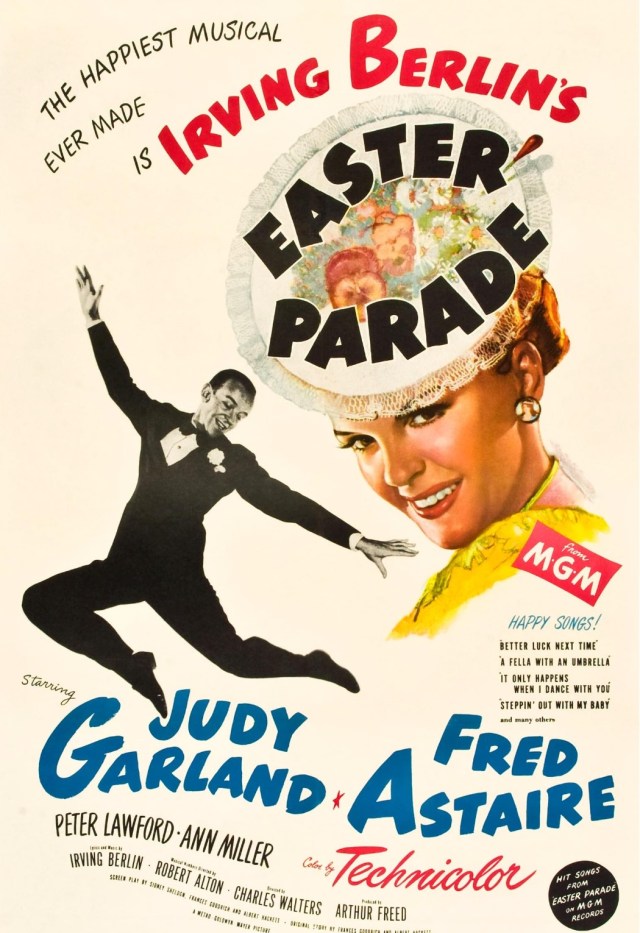
Easter Parade poster created by Metro-Goldwyn-Mayer and Loew’s, Inc.

Things I liked about the film:

The acting: Fred Astaire portrays Don Hewes in Easter Parade, a veteran dancer who is looking for a new dance partner. In this same movie, Judy Garland portrays Hannah Brown, a singer who is trying to make a name for herself in the entertainment industry. Together, Judy and Fred are an on-screen pair that not only works well together, but also dances well together! One of my favorite scenes is when Don mentions to Hannah how she doesn’t capture men’s attention. In an effort to prove Don wrong, Hannah walks in front of him, at first looking discouraged by her fruitless efforts. A few minutes later, Don sees men are taking notice of Hannah. He looks confused and even baffled at how Hannah could prove him wrong. When Don catches up with Hannah, he discovers she is making funny faces, explaining why men were noticing Hannah. This scene was hilarious because of Fred’s and Judy’s expressions and interactions!

Even though Judy and Fred worked well together, I think Judy and Peter Lawford had strong on-screen chemistry! Despite Hannah being from a small-town farm and Johnny being from the city, their interactions make it seem like they have a deep understanding for one another. While on a dinner date, Hannah confesses she dreams her true love will give her flowers and sweep her off her feet. When she reflects on her time with Don, she realizes Don only gives her flowers and sweeps her off her feet when it relates to dancing. During this reflection, Hannah looks defeated and sad by how she didn’t receive what she wanted the way she wanted it. Meanwhile, Johnny looks genuinely sympathetic toward Hannah. As I watched this scene, I wanted Johnny and Hannah to fall in love with each other!

The use of color: In Easter Parade’s opening credits, Technicolor was revealed to be incorporated into the production. I’m thankful Technicolor was used in this movie because capturing scenes in black-and-white would not have done this picture justice! Because parts of Easter Parade’s story take place around Easter, creative decisions such as costume designs and décor are very colorful. Toward the end of the film, Fred and a large group of dancers perform a number to “Steppin Out with My Baby”. Every performer’s costume boasted bright hues, from one dancer’s yellow shoes to another dancer’s blue gloves. At the beginning of the movie, during the musical number, “Happy Easter”, flowers in vibrant shades are present as Don makes his trip to the store. Though it’s a small detail, these flowers play a role in complimenting the colorful landscape of the story’s spring season!

The musical numbers: Musical numbers can make or break a given film. But in Easter Parade, the musical numbers are a major strength because of the choreography and delivery of the numbers themselves. One of the most creative numbers I’ve ever seen was Fred’s solo, “Drum Crazy”. This solo shows his character, Don, tap dancing and playing drums in an attempt to trick a child into giving him a stuffed bunny toy. The combination of dancing and instrument playing provides a captivating performance that not only highlights Fred’s signature talent, but also pairs dancing with other artistic mediums. Another strong solo was Ann Miller’s solo, “Shakin’ the Blues Away”. While portraying Don’s former dance partner, Nadine, Ann’s solo was a tap number that involved a lot of turning. What makes this musical number so memorable is how the cinematography closely follows Ann during her performance. This focus forces the audience to give their undivided attention to Ann and her number. The number itself is fast-paced and energetic, with Ann consistently delivering the choreography in precise and fluid movements!

Cute Easter image created by Freepik at freepik.com. <a href=”https://www.freepik.com/free-photos-vectors/background”>Background vector created by freepik – http://www.freepik.com</a>. Image found at freepik.com.

What I didn’t like about the film:

A premise-driven story: When I reviewed The National Tree last year, I explained the difference between a premise-driven story and a plot-driven story. After watching Easter Parade, I can confirm the movie has a premise-driven story. The premise of Don transforming Hannah into a star entices viewers to watch Fred and Judy acting and dancing together. But the film doesn’t really make the audience ask “and then what happened”? Even though the story is simpler and easier to follow, the story itself lacked a compelling hook, making it feel less intriguing. I wish the characters were given a conflict to resolve, similar to musicals like Singin’ in the Rain and Anchors Aweigh.

The “insta-love” trope: The romantic-comedy genre carries a collection of tropes and cliches. One of them is the “insta-love” trope, which features characters falling in love in a very short period of time. I understand there’s only so much story you can tell in an hour and forty-three minutes. But I thought Hannah and Don’s relationship progressed too quickly. I even thought the attraction between Hannah and Johnny happened too fast. The fast pace of these relationships made it seem like situations weren’t really resolved. Serious conversations and heart-felt discussions were either conveniently ignored or never brought up. The “insta-love” trope also affected how characters changed over the course of the story. Progressions in character development took place so quickly, it almost seemed too convenient.

Easter’s limited inclusion: With a movie called Easter Parade, I expected Easter to play a significant role in the story. While Easter is included enough to get the point across, I was disappointed by how limited its presence was. There were even scenes I could picture taking place within other holidays. Though the purpose of “Drum Crazy” was for Don to purchase a stuffed bunny toy, I found myself imagining this same musical number set during Christmas. Easter Parade is a story that could take place in almost any time of year and it wouldn’t make much difference.

The Mismatched Couples Blogathon banner created by Gill from Realweegiemidget Reviews and Barry from Cinematic Catharsis

My overall impression:

Some of the best, most iconic musicals were released during the Breen Code era. Their strong musical numbers and their overall timelessness have captured the hearts of viewers for decades. Easter Parade is one of these timeless musicals, showcasing its strengths through various creative departments! The colorful palette sprinkled throughout the story perfectly compliments the springtime atmosphere the film’s creative team was striving to present. Every musical number was well choreographed and performed, which definitely made the movie worth watching. Compared to other Breen Code era musicals, though, Easter Parade’s story was weaker. This flaw was due to the story being more premise-driven. Despite this and its other weaknesses, the 1948 film is an entertaining, mostly joyful production that is an appropriate selection for the Easter holiday!

Overall score: 7.6 out of 10

Have you seen Easter Parade? Is there an Easter themed movie you like to watch? Let me know in the comment section!

Have fun on Easter!

Sally Silverscreen

Take 3: In The Good Old Summertime Review

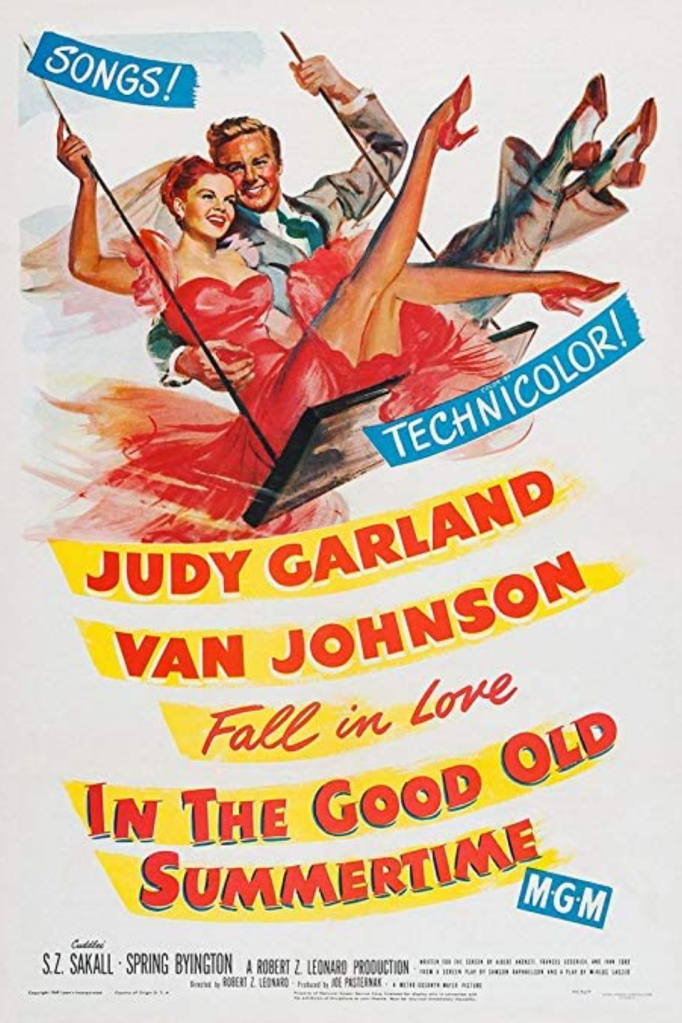
Earlier this month, I said I would review In The Good Old Summertime for the Van Johnson Blogathon. Now, with the arrival of the aforementioned event, it’s time to talk about this film! There are two reasons why I selected the 1949 movie. The first is it was recommended to me by Becky, the same reader who suggested Easy to Wed. The second was how the summer season is winding down. Because the movie is titled, In The Good Old Summertime, I figured it would serve as a sort of last hurrah. As of 2022, the 1949 title is the fourth one of Van Johnson’s I’ve seen. While I found both Plymouth Adventure and Easy to Wed just ok, I was not a fan of Where Angels Go, Trouble Follows. Therefore, it’ll be interesting to see what I thought of In The Good Old Summertime!

In The Good Old Summertime poster created by
Metro-Goldwyn-Mayer

Things I liked about the film:

The acting: As I said in the introduction, In The Good Old Summertime is the fourth film of Van Johnson’s I have seen. Therefore, I knew what to expect from Van, talent wise. While portraying Andrew, Van utilized emotions well. A great example is when Andrew and Veronica are attempting to sell some sheet music to a customer. The sheet music in question was “Put Your Arms Around Me, Honey”. During this song, Andrew looks threatened, like he knows Veronica is doing a better job at selling the music than he would have. Because of the quality of his acting talents, Van was able to make scenes like this one feel believable.

In The Good Old Summertime is the fifth movie of Judy Garland’s I have watched. Looking back on those films, I have noticed how Judy is a more versatile actress than I feel she gets credit for. While waiting for her secret admirer, Veronica, Judy’s character, appears visibly nervous. She’s glancing around the restaurant and constantly readjusting her flower and poetry book. When Andrew arrives, Veronica’s unpleasant feelings toward her co-worker grow stronger. Her face appears troubled, frustrated over the fact he won’t leave. At some points during this interaction, Veronica raises her voice. When she eventually returns home, Veronica appears deflated, her night not going as she expected.

I am not familiar with Spring Byington as an actress. Despite this, I enjoyed her portrayal of Nellie Burke! Her on-screen personality was so pleasant. Even when she was upset at Otto Oberkugen, she was still a character worth rooting for. Spring and S.Z. Sakall had good on-screen chemistry. One good example is when Nellie is trying to explain a misunderstanding. During this conversation, Otto reveals his insecurities as a musician. This explanation comes across as genuine, as a businessman trying to save face. Meanwhile, through gentleness and kind words, Nellie reassures Otto he is the only man she cares about. It was nice to see two older characters fall in love, especially since this type of romance story doesn’t seem as common as those featuring younger couples. Through the acting performances and screenwriting, Spring and S.Z. brought forth a couple that was interesting to watch!

The musical numbers: At Otto’s music store, a harp is introduced among the instrumental stock. In order to sell the harp to a potential customer, Veronica plays the harp to a song called “Meet Me Tonight in Dreamland”. With the combination of Judy’s vocals and the harp instrumental sound, the song exuded the dreamlike tone the film’s creative team was striving for. Even with the inclusion of a piano, these sounds complimented one another. The aforementioned song, “Put Your Arms Around Me, Honey”, was performed in two tempos. At Veronica’s suggestion, the first tempo is slower, providing a romantic tone. But with the second, faster tempo, a jollier tone is presented. Because of this musical, creative decision, it was interesting to hear how one change can make a song sound so different.

The historical accuracy: In The Good Old Summertime takes place around the late 1800s to early 1900s. With that said, there are many aspects of this movie that appeared historically accurate! One of these areas was the wardrobe. Louise Parkson, portrayed by Marcia Van Dyke, is Andrew’s friend. She is attempting to win a prestigious audition. When this audition arrives, Louise wore a white dress with a full, floor length skirt. The sleeves are medium length, covering Louise’s upper arms. The dress also had a higher neckline. These design choices represented modesty in women’s fashion from that time.

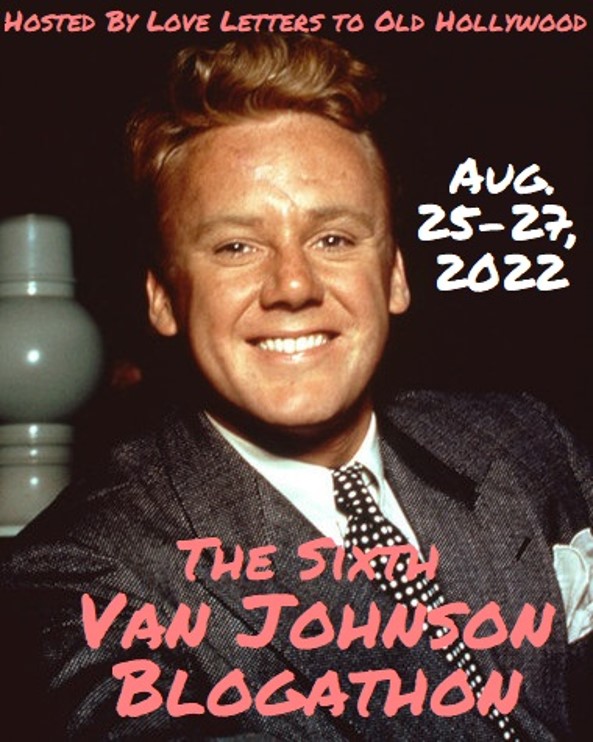
The Sixth Van Johnson Blogathon banner created by Michaela from Love Letters to Old Hollywood

What I didn’t like about the film:

The underutilization of Buster Keaton: I haven’t seen many of Buster Keaton’s films. But based on what I know about his filmography, he seems like he’s a comedic actor who utilizes physical comedy. In In The Good Old Summertime, however, Buster wasn’t given much material to work with. There were two scenes where Buster’s character, Hickey, trips and falls. But these felt like weak attempts at giving Buster something to do. If anything, it seems like Buster was cast in the film just for the sake of it.

A drawn-out plot: The story of In The Good Old Summertime revolves around Veronica’s and Andrew’s search for their respective pen-pals. While this plot can lend itself to a good story, it was drawn-out throughout the entire movie. It got to the point where, after Veronica’s secret admirer was revealed, she was being manipulated into believing the secret admirer is someone else. This was likely done to keep the plot going. But it just felt too cruel for my liking.

No strong subplots: So much time was given to the aforementioned main plot in In The Good Old Summertime. As a result, there were no strong subplots. Some aspects of the narrative could have lent themselves to good side stories. But because the script focused so much on the main plot, these ideas weren’t able to reach their full potential. For example, Otto is experiencing difficulty selling some harps. This felt like a running joke that didn’t lead anywhere. An interesting story idea would have been if a wealthy customer was looking for a specific harp. Otto would then spend the rest of the movie trying to locate this instrument.

String of musical notes image created by Freepik at freepik.com. <a href=’https://www.freepik.com/free-vector/pentagram-vector_710290.htm’>Designed by Freepik</a> <a href=”https://www.freepik.com/free-photos-vectors/background”>Backgroundvector created by Freepik</a>. Image found at freepik.com.

My overall impression:

This is the third time I have participated in the Van Johnson Blogathon. While I reviewed Van’s episodes of Murder, She Wrote the first time around, I wrote about Plymouth Adventure last year. Both Plymouth Adventure and In The Good Old Summertime have one thing in common: there were ok. With the 1949 film, I enjoyed the musical numbers. They were not only entertaining, but creative as well. But there were times where I felt more effort was placed in the musical numbers than the script. This movie adopted the “enemies to lovers” trope, which could work in a story. Unfortunately, this part of the script was drawn-out. While watching In The Good Old Summertime, I kept thinking back to Meet Me in St. Louis. The 1944 musical not only takes place in the early 1900s, but also stars Judy Garland. Personally, I think In The Good Old Summertime is a weaker version of Meet Me in St. Louis.

Overall score: 6.9 out of 10

Have you seen any of Van Johnson’s films? If so, which one is your favorite? Let me know in the comment section!

Have fun at the movies!

Sally Silverscreen

Take 3: Little Nellie Kelly Review

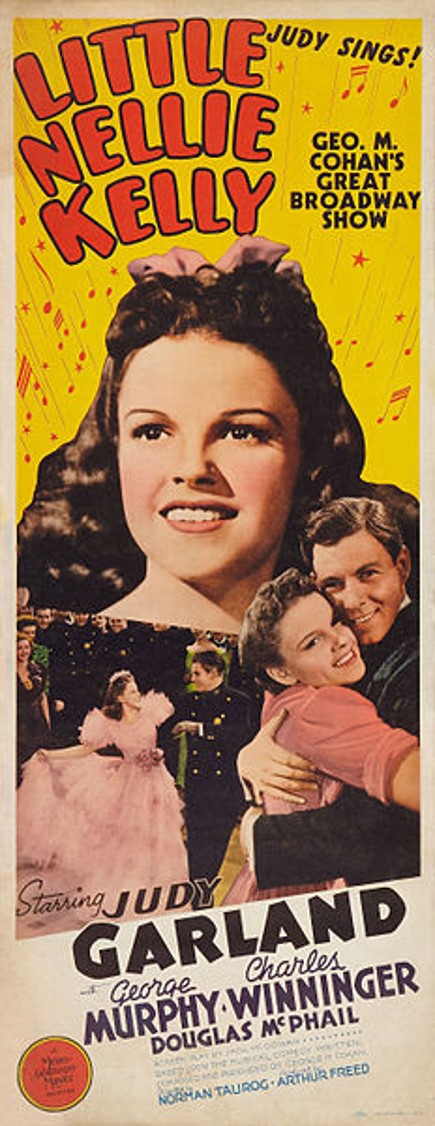
I know that it’s been two weeks since I last wrote a movie review. Because I was out of town around that time, I chose to reschedule several of my planned blog posts to later dates. But, when it comes to posts relating to blogathons, I always try my best to be a blogger of my word and publish my lists, reviews, or editorials within the blogathon time-frame. When I signed up for the 2nd Annual Broadway Bound Blogathon, I knew, right away, that I would be reviewing the film, Little Nellie Kelly. Before this review, I had never seen or heard of this movie. Plus, the synopsis on Turner Classic Movies’ (TCM’s) website said that this film is about “the daughter of Irish immigrants patches up differences between her father and grandfather and rises to the top on Broadway”. Because I knew that Judy Garland was the star of this production, I figured that I would, at least, find some enjoyment in this movie. Was my prediction correct? Was there enjoyment to be found in Little Nellie Kelly? Please keep reading if you want to find the answer!

Little Nellie Kelly poster
Little Nellie Kelly poster created by Metro-Goldwyn-Mayer. Image found at https://commons.wikimedia.org/wiki/File:Poster_-_Little_Nellie_Kelly_03.jpg

Things I liked about the film:

  • The acting: Something I’ve noticed about Judy’s films (specifically the ones that I’ve seen) is that she surrounds herself with a talented cast. This is no different for Little Nellie Kelly. Charles Winninger’s portrayal of Michael Noonan was such a pleasant surprise! He brought so much emotion to his performance that it ended up being effective. Judy’s performance was also great to watch! Her emotions and musicality helped her portrayal of Nellie Kelly be as strong as it was. I also liked George Murphy’s performance as Jerry Kelly! His acting talents helped carry this film alongside his co-stars.


  • The comedy: In Little Nellie Kelly, there were comedic moments that I truly found to be hilarious. One scene has Nellie telling her father that she’s going to get married to Jerry. As soon as her father hears this, he unexpectedly spits out his coffee and makes a big mess. This moment made me laugh out loud! As I watched the film, I noticed that the majority of these comedic moments were caused by Charles’ character, Michael. Because of this particular actor’s quality of talent, it made the film’s comedy stick the landing.


  • Some of the montages: There were two montages in Little Nellie Kelly that I really liked. The first one was when Jerry, Nellie, and Michael go through the process of becoming citizens of the United States. When it comes to cinematic stories about people immigrating to the United States, this aspect of the narrative is rarely explored. The second montage I liked showed the process of Jerry becoming a police officer. In film, when a character chooses to be a police officer, they are usually shown either before or after they accept the job. Like the first montage, this process is not always featured in cinematic narratives. Even though these montages didn’t last very long, I’m glad they were included in this story.

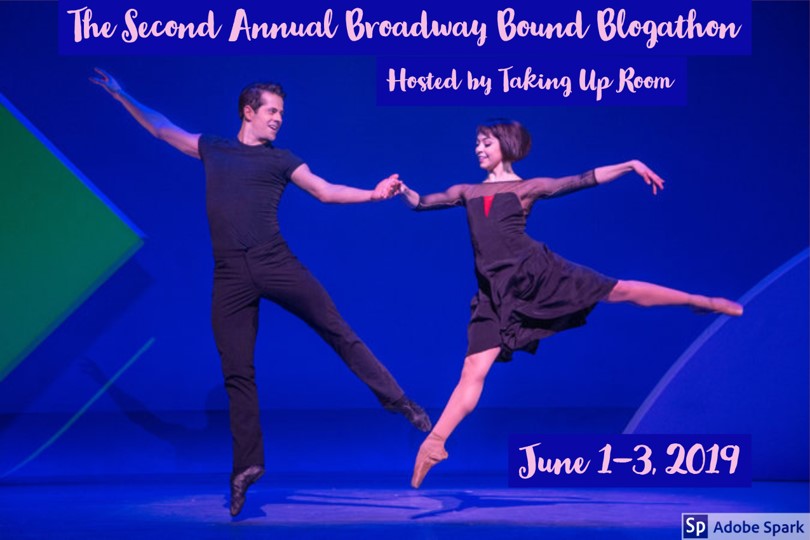
2nd Annual Broadway Bound Blogathon banner
The 2nd Annual Broadway Bound Blogathon banner created by Rebecca from Taking Up Room. Image found at https://takinguproom.wordpress.com/2019/03/07/announcing-the-second-annual-broadway-bound-blogathon/.

What I didn’t like about the film:

  • An inability to hold an accent: Because some of the characters are from Ireland, hearing accents from them is to be expected. While Charles Winninger did a good job when it came to carrying the accent, I felt that Judy and George’s ability to carry an Irish accent wasn’t as strong. When I watched Little Nellie Kelly, I never heard Jerry talk with an Irish accent. Meanwhile, the only time Nellie spoke with an Irish accent was when she sang “A Pretty Girl Milking Her Cow”. Because of Judy and George’s inability to carry an accent, this prevented a sense of continuity to exist amongst the characters.


  • A limited amount of musical numbers and comedy: Even though I liked the comedy in this film, there were very few comedic moments to be found. Throughout this one hour and thirty-eight minute picture, there were more dramatic moments than comedic ones. In this movie, there were a total of about four to five musical numbers. That’s a lot less than I was expecting. The film’s opening credits said that Little Nellie Kelly was based on a “musical comedy”. But, if anything, this project felt more like a “dramedy” (a combination of comedy and drama), with an emphasis on drama.


  • Judy Garland portraying Nellie Kelly Sr. and Jr.: In the movie, Judy portrays two characters; Nellie Kelly and her daughter. While different hairstyles helped, a little bit, to differentiate between the two characters, this creative decision still baffled me. I understand that MGM wanted to utilize Judy’s talent as much as possible. However, I still think that Judy should have portrayed only one character. Because this movie is called Little Nellie Kelly, Judy could have portrayed the daughter, while another, slightly older actress could have portrayed Nellie Kelly Sr. That way, Judy could have still been the leading star of the movie, while the other actress could also receive a significant amount of recognition.

233200-P2SBE6-483
St. Patrick’s Day image created by Freepik at freepik.com. <a href=’https://www.freepik.com/free-vector/st-patrick-s-day-background_1640464.htm’>Designed by Freepik</a>. <a href=”https://www.freepik.com/free-photos-vectors/background”>Background vector created by Freepik</a>. Image found at freepik.com. 

My overall impression:

I like Little Nellie Kelly for what it is. There are elements to the film that make it enjoyable, such as the musical numbers and the acting. However, I found this movie to be somewhat misleading. As I said in the introduction, this synopsis said that the protagonist “rises to the top on Broadway”. Not only was this location never mentioned in the film, but Nellie never aspired to be an entertainer. What makes this even more frustrating is how few musical numbers there were and how little comedy there was in the film despite it being called a “musical comedy” in the opening credits. From what I’ve heard, this movie is based on a pre-existing Broadway musical. Because I have never seen the stage version of this story, it’s difficult for me to say if the movie was anything like the play. This kind of reminds me of how I felt about Edward, My Son. Both of these films were based on plays and made me felt like I was misled. I can’t fault the creative teams behind these movies too much, since their job was to adapt their respective plays to the screen. However, a good amount of honesty should have been included into each film’s synopsis.


Overall score: 7.2 out of 10


Have you seen any of Judy Garland’s movies? If so, which one is your favorite? Let me know in the comment section!


Have fun at the movies!

Sally Silverscreen

Take 3: Meet Me in St. Louis Review + 75 Follower Thank You

Last week, 18 Cinema Lane received 75 followers! Before I start this review, I’d like to take a moment to thank all of my followers for making this achievement possible. Without you, my blog would never have received this milestone (especially in this short amount of time). So, like I’ve done in the past, I will now review a film that was released 75 years ago (in 1944). Because I’ve only seen bits and pieces of Meet Me in St. Louis, I’ve chosen this movie to celebrate this accomplishment! When I picked this movie to review, I realized that the only films of Judy Garland’s that I had ever seen were The Wizard of Oz and A Child is Waiting. This gave me a good excuse to not only watch a movie that I had never seen in its entirety, but to also explore Judy’s filmography! Now, let’s finally start this review for Meet Me in St. Louis!

Meet Me in St. Louis poster
Meet Me in St. Louis poster created by Metro-Goldwyn-Mayer and Loew’s, Inc. Image found at https://commons.wikimedia.org/wiki/File:Meet_Me_in_St._Louis_poster.jpg

Things I liked about the film:

  • The acting: The cast was very talented in Meet Me in St. Louis! To me, the two strongest performers in this film were Judy Garland and Margaret O’Brien! Like in The Wizard of Oz and A Child is Waiting, Judy has both the musical and acting talents to carry a significant weight of the film. Judy also has good on-screen chemistry with Tom Drake, who portrays John Truett in the film. Margaret O’Brien’s portrayal of “Tootie” Smith was one of the strongest elements of this film! During the scene where “Tootie” is so upset about moving to New York that she destroys the snowpeople outside, Margaret’s performance was so emotionally powerful. In fact, her performance was so emotionally powerful, that it was an affective way to make the audience feel sorry for the character. Both Judy’s and Margaret’s performance complimented the performances of the other actors as well.


  • The music: I really liked the music in this film! The collection of songs was a good balance of light-hearted and emotional material. Judy’s musical performances were a treat to see, as they were all delightful and enjoyable! My favorite musical number in this movie was when Judy and Margaret performed “Under the Bamboo Tree”. This performance was so joyful and added to the light-hearted nature of the film. When it comes to more emotional performances, I really liked Judy’s rendition of “Have Yourself a Merry Little Christmas”. Her version of the song was emotional enough to affectively reflect the mood of what’s going on in the film. It’s sad, as it addresses reflecting on times gone by, and it’s hopeful, as it talks about appreciating the things you have in your life. This assortment of songs made seeing this movie an enjoyable experience!


  • The sets: All of the sets in Meet Me in St. Louis were impressive! I’m not sure if the Smith family home is a real-life house or a house built on a studio lot. However, the facility itself was absolutely gorgeous! Everything in this house looked and felt like a home from the early 1900s. I also liked how the ballroom looked in the scene where Esther, Rose, Lon, and Grandpa attend the annual Christmas ball. The way the Christmas tree was placed in the greenroom was so pretty. The Christmas tree’s placement was also a good way to effectively pull off a surprise within the story!

2097039
St. Louis, Missouri sticker image created by Freepik at freepik.com. <a href=”https://www.freepik.com/free-photos-vectors/label”>Label vector created by freepik – http://www.freepik.com</a>. Image found at freepik.com.

What I didn’t like about the film:

  • A weak first segment: From a story-telling perspective, I thought the story during the “Summer 1903” segment was the weakest element of the movie. Within the first twenty minutes, the primary story focused on whether Rose would become engaged via a long-distance telephone call. Because the first few minutes of a film is, usually, reserved for providing exposition, I don’t think Rose’s story was an effective way to start this movie. It is as if the screenwriters expected their audience to automatically care about a character whom they just met. For me, the overall narrative wasn’t interesting until the “Fall 1903” segment began.


  • Too many characters: Even though Meet Me in St. Louis had a talented cast, I feel there were too many characters associated with this story. In this movie, the overall narrative seemed to serve only a few of the characters. The individuals that benefited the most from this narrative were Esther, Rose, “Tootie”, John Truett, and Mr. & Mrs. Smith. The rest of the characters either feel like they’re there for the sake of being there or like they weren’t given enough screen-time.


  • The limited presence of the World’s Fair: Throughout this movie, the World’s Fair is referenced by several characters on several different occasions. It’s even mentioned in the opening song, “Meet Me in St. Louis, Louis”. However, the World’s Fair itself was only featured within the last twenty minutes. Even in those few moments, the World’s Fair isn’t incorporated into the story enough to make me, as an audience member, feel satisfied. If anything, the World’s Fair in Meet Me in St. Louis was just a glorified extra.

Note_lines_horizontal1
String of musical notes image created by Freepik at freepik.com. <a href=’https://www.freepik.com/free-vector/pentagram-vector_710290.htm’>Designed by Freepik</a> <a href=”https://www.freepik.com/free-photos-vectors/background”>Backgroundvector created by Freepik</a>. Image found at freepik.com.

My overall impression:

Meet Me in St. Louis is a good film! The music is entertaining and the story is interesting enough to keep the audience invested. As I mentioned in my review, the acting is what helped keep this movie going. While Judy and Margaret were the two strongest performers in this movie, the rest of the cast was also talented. Yes, this film did have its flaws. However, there was a good amount of content that made the experience of watching this movie enjoyable. I’m glad I chose this movie to review for my 75 follower dedication post because it allows me to explore the filmography of both Judy Garland and Margaret O’Brien! It also gave me a good excuse to watch a film that I had never seen in its entirety.


Overall score: 7.5-7.6 out of 10


What are your thoughts on my review? Are you looking forward to seeing which movies I review in future blog follower dedication posts? Leave your thoughts in the comment section!


Have fun at the movies!

Sally Silverscreen