Take 3: From the Mixed-Up Files of Mrs. Basil E. Frankweiler (1973) Review

All the way back in 2019, I reviewed the 1995 adaptation of From the Mixed-Up Files of Mrs. Basil E. Frankweiler. After I shared my thoughts on the film, Gill, from Realweegiemidget Reviews, recommended the 1973 adaptation, which is sometimes titled The Hideaways. Whenever Virginie, from The Wonderful World of Cinema, has hosted the Ingrid Bergman Blogathon, I have wanted to check out the 1973 adaptation, due to Ingrid Bergman starring in the film. Now, for the 110 Years of Ingrid Bergman Blogathon, I finally received the opportunity to write about the movie! While I still haven’t read the book, I am familiar with the story because I covered the 1995 adaptation on 18 Cinema Lane. Back in 2019, I said the film was just ok, as one of my biggest criticisms was the underutilization of Lauren Bacall’s acting talents. Will I give similar criticisms to the 1973 adaptation of From the Mixed-Up Files of Mrs. Basil E. Frankweiler? To solve this mystery, keep reading my review!

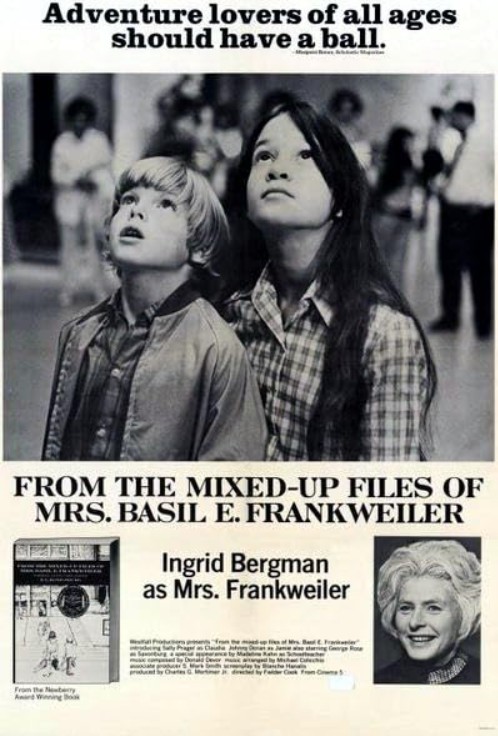
From the Mixed-Up Files of Mrs. Basil E. Frankweiler (1973) poster created by Cinema 5, Westfall Productions, and Cinema 5 Distributing

Things I liked about the film:

Sally Prager’s and Johnny Doran’s acting performance: Starring in From the Mixed-Up Files of Mrs. Basil E. Frankweiler as the protagonists, Claudia and Jamie Kincaid, Sally Prager and Johnny Doran carry about 95% of the film. Because of how strong their performances were, they successfully carried the movie by presenting their characters believably! One example takes place toward the beginning of the film. Jamie is telling his sister, Claudia, about a movie he had recently seen. As he talks about the movie, his speech becomes increasingly animated. Even after Claudia kicks him out of her room, Jamie talks even louder, his excitement never faltering. After Jamie and Claudia arrive in New York City, they go to the Metropolitan Museum of Art. When Jamie asks her why she wants to go to the museum, Claudia enthusiastically describes the museum as a castle like the tales of King Arthur. This scene perfectly showcases how Sally effectively portrayed Claudia as precocious; containing enough self-awareness to know exactly what she wants, yet displaying that sense of wonder one would expect from a child her age.

The cinematography: When I reviewed the 1995 adaptation of From the Mixed-Up Files of Mrs. Basil E. Frankweiler, I complimented the film’s cinematography. That adaptation’s creative team made some interesting choices when presenting certain scenes, like using close-ups to present the museum’s artifacts. The 1973 adaptation of From the Mixed-Up Files of Mrs. Basil E. Frankweiler features good cinematography as well! Similar to the 1995 adaptation, some scenes were shown from Claudia and Jamie’s perspective. While hiding on the school bus, Jamie constantly peeks from behind the seat to see if the bus driver has spotted them. A few shots look like they’re from Jamie’s point of view, with the camera peering around the seat to catch a glimpse of the bus driver. When Jamie and Claudia are at the Metropolitan Museum of Art, they look over the railing at the museum’s employees and security guards in the lobby. Once again, the scene is presented from the point of view of the children. The camera peers over the museum’s railing, looking down at the security guards and employees. Shots like the ones I described make the audience feel like they’re with the characters, creating the illusion of immersion.

The dialogue: A pleasant surprise in 1973’s From the Mixed-Up Files of Mrs. Basil E. Frankweiler was the dialogue! Some lines were so well-written, they became a memorable part of the movie. In one scene, as Jamie navigates through the museum, a janitor asks him where he came from. Speaking confidently in a matter-of-fact way, Jamie tells the janitor, “My mother said I came from Heaven”. I not only found this response a clever comeback, it was also a creative way to answer the question. Another scene shows Jamie sharing with Claudia one of the reasons why he ran away with her. While spending a night in the museum, Jamie tells his sister how concerned he was by the thought of her traveling alone, as he believed she would be afraid. Claudia responds to her brother’s belief by saying, “Being self-sufficient doesn’t automatically make a person brave”. This quote showcases an eloquent way of addressing how anyone at any age can be afraid of something.

Angelic statue image created by Marcelo Gerpe at freeimages.com. “FreeImages.com/Marcelo Gerpe.”

What I didn’t like about the film:

Telling instead of showing: In both adaptations of From the Mixed-Up Files of Mrs. Basil E. Frankweiler, Jamie and Claudia go to Mrs. Basil E. Frankweiler’s house, searching for an angel statue’s legitimacy. From what I remember of the 1995 movie, a scene shows Claudia and Jamie looking for answers about the statue by rummaging through Mrs. Basil E. Frankweiler’s mixed-up files. The 1973 version, on the other hand, has Mrs. Basil E. Frankweiler telling the answer of the mystery instead of showing the children putting the mystery’s pieces together. Because the creative team behind the 1973 adaptation chose telling over showing, some of the excitement of seeing the protagonists achieve their goal was taken away.

Less emphasis on the mystery: An overarching part of From the Mixed-Up Files of Mrs. Basil E. Frankweiler’s story is the mystery surrounding an angelic statue. However, this mystery received less emphasis in both the 1973 and 1995 adaptations. Specifically speaking about the 1973 version, the story focused more on Claudia and Jamie’s adventures in New York City. In fact, the angel statue doesn’t make an appearance until 44 minutes in an hour and forty-five-minute film. Like I said in my review of the 1995 version, this creative decision took a lot of intrigue out of the film, causing the story not to be as engaging or interactive.

The underutilization of Ingrid Bergman: During this review’s introduction, I brought up one of my biggest criticisms of 1995’s From the Mixed-Up Files of Mrs. Basil E. Frankweiler; the underutilization of Lauren Bacall’s acting talents. Sadly, I have the same criticism for the 1973 version. Just like the 1995 adaptation, Ingrid Bergman is the top-billed actor in the adaptation from 1973. Yet she doesn’t appear in the story until an hour and fourteen minutes in an hour and forty-five-minute movie. I recognize the 1973 version of From the Mixed-Up Files of Mrs. Basil E. Frankweiler premiered toward the end of Ingrid’s career. I also acknowledge the story prioritizes the adventures of Claudia and Jamie Kincaid. But as I said about Lauren Bacall in my review of the 1995 movie, this underutilization not only does Ingrid’s acting talents a disservice, it also comes across as misleading.

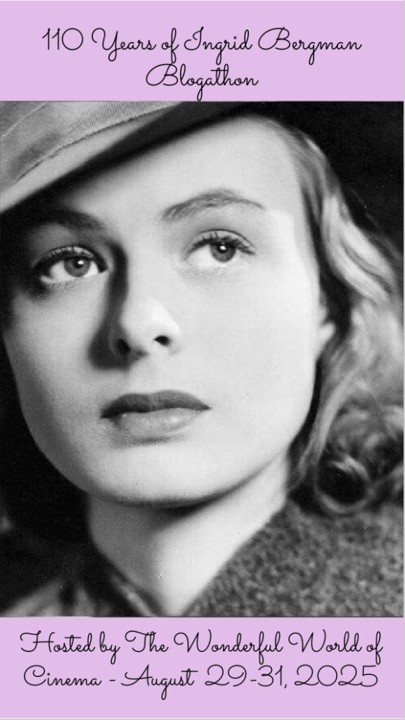
110 Years of Ingrid Bergman Blogathon banner created by Virginie, from The Wonderful World of Cinema

My overall impression:

For the 5th Annual Gold Sally Awards, I introduced the Nosferatu vs. Dracula Award. This award is given to two movies that feel like you’re watching the same one. Looking back on my experience watching the 1973 adaptation of From the Mixed-Up Files of Mrs. Basil E. Frankweiler and reflecting on my review of the 1995 adaptation, the Nosferatu vs. Dracula Award will likely be brought back for 2026’s edition of the Gold Sally Awards. The 1973 movie shares a lot of the same strengths and flaws as the 1995 version. These similarities made me feel like I was watching the same film twice. I knew what to expect from the story, due to seeing From the Mixed-Up Files of Mrs. Basil E. Frankweiler from 1995. However, I still wish both adaptations contained stronger differentiations between them. The films I’ve seen of Ingrid Bergman’s from the 1970s have, in my opinion, been underwhelming. While I found A Walk in the Spring Rain a flavorless picture, I think A Matter of Time and now From the Mixed-Up Files of Mrs. Basil E. Frankweiler are just ok.

Overall score: 6 out of 10

Have you seen 1973’s From the Mixed-Up Files of Mrs. Basil E. Frankweiler? Which book adaptation do you wish starred a “classic” film star? Tell me in the comment section!

Have fun at the movies!

Sally Silverscreen

Take 3: A Walk in the Spring Rain Review

Every beloved film star has at least one movie on their IMDB filmography that has earned the distinction of being a “classic”, “iconic” or “fan favorite”. But for every “classic” title, there’s also that one film that is under-rated or unheard of. In the case of Ingrid Bergman, one of those movies is A Walk in the Spring Rain! Prior to The Wonderful World of Cinema’s 6th Wonderful Ingrid Bergman Blogathon, I had never heard of the 1970 picture. However, that’s the great part of participating in a blogathon; discovering films that are “new-to-you”! As I said in my review of Evel Knievel, I haven’t had the best of luck, this year, finding a movie from the 1970s I like. By expanding my cinematic horizons, I am hoping to solve that problem. Where does A Walk in the Spring Rain rank among the other ‘70s movies I’ve reviewed this year, so far? Keep reading my review in order to find out!

A Walk in the Spring Rain poster created by Columbia Pictures and Pingree Productions

Things I liked about the film:

The chemistry between the cast: When watching characters interact with one another, the believability of those interactions depends on the strength of the cast’s acting talents. Though the cast in A Walk in the Spring Rain was smaller, this believability could be felt. In a scene between the protagonist, Libby, and her daughter, Ellen, the interaction appeared realistic, presenting the idea of a mother and daughter discussing a personal matter. Concerned about her mother’s apparent unhappiness, Ellen (portrayed by Katherine Crawford), seems genuinely worried, that worry with a touch of sadness consistently shown on her face. Meanwhile, Libby (portrayed by Ingrid Bergman) is distraught over personal turmoil. Her face shows her distress, tears in her eyes and sadness spread over her face. She even goes so far as to violently push a tea cup off the kitchen table in an act of sudden anger. During their stay in Tennessee, Libby and her husband, Roger, meet a local man named Will. One evening, the three go frog hunting, with Roger and Libby trying moonshine for the first time. This scene shows the on-screen chemistry between Ingrid Bergman, Fritz Weaver, and Anthony Quinn. Their smiles, laughter, and jovial demeanor radiates off the screen. It feels like they are three close friends who are picking things up where they last left off.

The set design: In A Walk in the Spring Rain, Libby and Roger rent a cabin in Tennessee. This cabin featured design choices that I found memorable! The main focal point in the living room is a fireplace. Surrounded by exposed stone and a dark wood mantle, good décor complimented the darker shades of both wood and stone. The living room was not the only room where exposed stone was found. In the kitchen, an antique stove guarded a wall of exposed stone. Also in the kitchen, a dark wood corner shelf housed the fine china and fancy dinnerware. This shelving unit was a unique way to make the best use of the room’s available space!

The scenery: A Walk in the Spring Rain was filmed in Tennessee, specifically at Great Smoky Mountains National Park. The story takes place during two seasons: winter and spring. Despite the difference in seasons, the scenery was very picturesque, stealing the show from time to time! In some establishing shots, Tennessee’s snowy landscape was beautifully captured on film. The scenery honestly looked like a Christmas greeting card. In a scene where Will shows Libby the first blooms of the season, a tree with small, magenta flowers provides a nice pop of color amid the background of green foliage and rolling hills. Even when characters are driving through the country-side, these surroundings were pretty to look at!

The 6th Wonderful Ingrid Bergman Blogathon created by Virginie from The Wonderful World of Cinema

What I didn’t like about the film:

A meandering story: According to a synopsis I read for A Walk in the Spring Rain, Libby and Will have an affair. This affair didn’t fully come into fruition until fifty-three minutes into an hour and thirty-eight-minute movie. That forced the audience to wait more than half the film for the inevitable to happen. Even though Will and Libby flirted with one another leading up to the affair, these interactions were brief. While waiting for the affair to happen, the script focused on other parts of the story, such as the Merediths adopting baby goats.

The run-time: Like I mentioned in my previous point about the film’s meandering story, A Walk in the Spring Rain has a run-time of an hour and thirty-eight-minutes. Because of how drawn out the story was, that hour and thirty-eight-minutes felt longer. There were several stretched out scenes serving the movie’s run-time. One example is a ten-to-fifteen-minute scene of Libby and Roger’s trip to Gatlinburg, with the majority of this scene showing the Merediths walking down a tourist heavy street. Had scenes like this one been trimmed, A Walk in the Spring Rain’s run-time might have been about an hour and ten minutes.

Drawn-out subplots: There were some subplots in A Walk in the Spring Rain that were drawn out, likely to satisfy the movie’s run-time. One of these subplots revolved around the Merediths’ daughter, Ellen. Ellen desires to go to law school. However, Libby and Roger feel her decision would disrupt her family. While this subplot does get resolved, it takes the entire movie for the resolution to happen. Because of this, the resolution feels anticlimactic.

Image by macrovector on Freepik

My overall impression:

In the introduction of this review, I said I had never heard of A Walk in the Spring Rain prior to The 6th Wonderful Ingrid Bergman Blogathon. Looking back on this movie, I think I know why. If I could describe the 1970 film in one word, it would be ‘bland’. The drawn-out, meandering story causes the movie to feel longer than an hour and thirty-eight-minutes. Great Smoky Mountains National Park provides this story with beautiful scenery. But as I’ve said in past reviews, “the scenery can’t save you”. The cast in A Walk in the Spring Rain is solid, maintaining strong on-screen chemistry. However, when a project has a weak script, there’s only so much the cast can do to salvage that script. I know this film was released toward the end of Ingrid’s career. But, honestly, she, as well as the rest of the cast, deserved better material.

Overall score: 5 out of 10

Have you seen or heard of A Walk in the Spring Rain? Are there any of Ingrid Bergman’s films you’d like to see me review? Let me know in the comment section!

Have fun at the movies!

Sally Silverscreen

Take 3: A Matter of Time Review (A Month Without the Code #4)

Because I’m participating in Pure Entertainment Preservation Society’s A Month Without the Code and the 5th Wonderful Ingrid Bergman Blogathon, I wanted to review one of Ingrid’s films from outside the Breen Code era. On her IMDB filmography, the 1976 movie, A Matter of Time caught my eye. After reading the synopsis, I chose this film as my submission for the blogathon! I was able to watch the movie through a series of videos from the Youtube channel, BroadwaytoRio. The film was broken down into ten parts, each video about ten minutes long. Prior to these blogathons, the only movies of Ingrid Bergman’s I have seen are Casablanca and Gaslight. Both of these films were not only released in the ‘40s, they were also released in the Breen Code era. As this is the first time I’m reviewing a post-1954 movie of Ingrid’s, it’ll be interesting to see how A Matter of Time differs from her two previously mentioned films!

A Mater of Time poster created by American International Pictures. Image found at https://www.imdb.com/title/tt0074878/mediaviewer/rm3625653248.

Things I liked about the film:

The acting: Since I chose to review this movie for the Ingrid Bergman Blogathon, I’m going to talk about her performance first. Ingrid’s role in A Matter of Time is different from her other roles I’ve seen so far. In this film, she carried herself with a sense of power and authority, demanding the audience to focus their attention on her. At the same time, she held mystery and sorrow close to her character’s heart. In the scene where Ingrid’s character, the Contessa, is talking to her ex-husband, she brings so much emotion during the conversation, that the scene itself feels earth-shaking. Even toward the end of her acting career, Ingrid still had what it took, acting wise, to carry a film! Last October, I reviewed the 1991 film, Stepping Out. While watching A Matter of Time, I immediately noticed how Liza’s character was different from the one she portrayed in the aforementioned ‘90s film. Nina, the protagonist of this story, grew as a person over time. She transformed from a timid young woman to someone who knew what she wanted in life. One scene shows Nina having a disagreement about the Contessa with a screenwriter. During this scene, she breaks out of her timid shell to defend her friend. It causes a fire to break forth from Nina, something the audience hadn’t seen up until that point. Similar to Ingrid’s performance, Liza’s portrayal of Nina in that scene was so powerful, it made this character a force to be reckoned with. The emotionality was very strong in Liza’s performance!

The scenery: Even though most of this movie takes place indoors, it did feature some nice scenery! A scene where Nina travels to the city showcases some of the sights of Rome and Venice, where A Matter of Time was filmed. Through her bus window, monuments and mammoth sized buildings are set against a clear, blue sky. Earth tone limestone covered some of the facilities, contrasting the black concrete roads leading to them. More sights from Rome and Venice could be seen in a montage where Nina goes sightseeing. Shots of the city’s landscape emphasis the large scope of this particular location. Statues served as everlasting art that patrons could enjoy in any season. Even some foliage was included in this montage, with red-ish trees located near a ledge and around a town center. These shots highlighted some of the most photogenic parts of these cities, potentially encouraging some viewers to plan their next vacation!

The messages and themes: While I wasn’t expecting A Matter of Time to contain relatable messages and themes, I appreciate their inclusion in this story. They were timeless and felt just as relevant now as they did in the mid to late ‘70s. One message revolved around being yourself. Even though this particular message has been shared on numerous occasions, it was nice to hear it coming from the Contessa. It was given as wisdom to Nina, in an effort to help her create her own path in life. An unexpected theme in A Matter of Time was mortality. Throughout the movie, the Contessa refuses to share her life story, saying, “My life belongs to me alone. I tell it only to myself”. She also says, “No one is dead. No one dies unless we wish them to”. These quotes speak volumes about the importance of a life story and the effort of keeping a person’s memory alive. It also reminds viewers how long life can feel, even when time seems so short.

The 5th Wonderful Ingrid Bergman Blogathon banner created by Virginie from The Wonderful World of Cinema. Image found at https://thewonderfulworldofcinema.wordpress.com/2020/06/12/announcing-the-5th-wonderful-ingrid-bergman-blogathon/.

What I didn’t like about the film:

Lack of magic: There was a crawling text at the beginning of the film. In this text, it says “What you are about to see may appear like a fairy tale…as we all know some fairy tales come true”. The text also says that Nina experienced a “magic moment”. This gave me the impression that A Matter of Time would be a modern fairy tale, similar to a film like the Hallmark production, Midnight Masquerade. If that was the creative team’s intention for the 1976 movie, they forgot one important ingredient: magic. In a modern fairy tale story, there needs to be a sense of whimsy or magic included in the narrative. The Halloween party in Midnight Masquerade showcases how a feeling of magic can be incorporated into a modern setting. A Matter of Time does not contain that feeling. If anything, it feels more like a drama than a fantasy. The movie makes it seem like Nina was conveniently at the right place and time instead of stumbling across a bit of magic.

The dream sequences:  Dream sequences appeared at certain points in the movie. These sequences were elaborate in nature, showing Nina living a life of glamour and luxury. While the dream sequences looked nice, I found them confusing. There was no distinction if they were dreams or future events from Nina’s life. Smooth transitions were not given to these scenes, making it feel like they were plunked into the story. I understand the dream sequences were meant to add some pizzazz to the overall picture. But their randomness prevented them from making a significant impression.

Grainy film quality: I know the quality of film from the 1970s is going to be different by today’s standards. Since that time period, technology and film-making have progressed tremendously. The presentation of A Matter of Time was grainy, making the production look like it hasn’t aged as well as other movies from the ‘70s. Because of the overall film quality, there were times when I had difficulty seeing characters’ facial expressions. I’m not sure if the videos I watched were recorded from a VHS tape or if that was the movie’s original presentation. But it’s not a good sign if I have trouble seeing what’s on screen.

A Month Without the Code Blogathon banner created by Tiffany and Rebekah Brannan from Pure Entertainment Preservation Society. Image found at https://pureentertainmentpreservationsociety.wordpress.com/2020/07/27/announcing-amonthwithoutthecode2020/.

My overall impression:

To me, A Matter of Time is an ok film. It has components of value; which are strong acting performances, nice scenery, and relatable messages and themes. However, the story is one that audiences have heard before and after the film’s 1976 release. Stories are inevitably going to get repeated over the course of time. When this happens, it’s important for a film’s creative team to find something that sets their project apart. With A Matter of Time, nothing new or unique is offered to the table. It feels like the overall production is ignoring their own message of being yourself. Even though this was a theatrically released project, it came across like a made-for-TV movie with a slightly higher budget. This statement is not made to disrespect television films, as there have been some good ones created over the years. What I mean is the presentation of this movie didn’t justify a theater release. Even though A Matter of Time has a PG rating, there are some pieces that would not appear in a Breen Code era film. These pieces are the following:

  • Some of the language in this script would be objectionable by Breen Code standards. There were times when the characters either swore or used God’s name in vain.
  • Some sexual references were made throughout the story, from Nina referring to a specific body part to a screenwriter wanting to create a violent scene for his upcoming movie.
  • A screenwriter named Mario attacks Nina while she is cleaning his room. Though he is acting out a scene from his script, the act itself would never appear in a Breen Code era movie.
  • Nina wears three dresses that have a low neckline. Even though one of these dresses is paired with a sweater, the sweater is never buttoned up.
  • There are two scenes where it is implied that Nina is not wearing any clothes. One of these scenes is briefly shown during a montage, showing a profile of Nina from her shoulders upward. The second scene shows Nina changing from one outfit to another. Only her back and her shoulders are visible.

Overall score: 6 out of 10

Have you seen any movie from Ingrid Bergman’s filmography? Which actress would you like to see receive their own blogathon? Feel free to share your thoughts in the comment section!

Have fun at the movies!

Sally Silverscreen

Take 3: Gaslight Review + 155 Follower Thank You

In honor of Thanksgiving, I thought I’d use this review to express my gratitude toward my readers and followers by taking a suggestion from one of my readers. Back in July, when I reviewed Hush…Hush, Sweet Charlotte, Emily, from The Flapper Dame, recommended a film called Gaslight. As I told her, I had heard of the film, but had never seen it. Fortunately, I had this movie on my DVR for several months. This means that I now had an excuse to finally watch this film! I don’t often receive film recommendations on 18 Cinema Lane. But, when I do, I try my best to review each film and acknowledge the person who told me about it. This happened when I reviewed The Santa Incident last December. Since I have acquired several suggestions within my year of blogging, I have created a list to keep track of the films. This is so I know which ones I’m able to rent or record on my DVR. Maybe I can find a way to create a tradition around these suggestions!

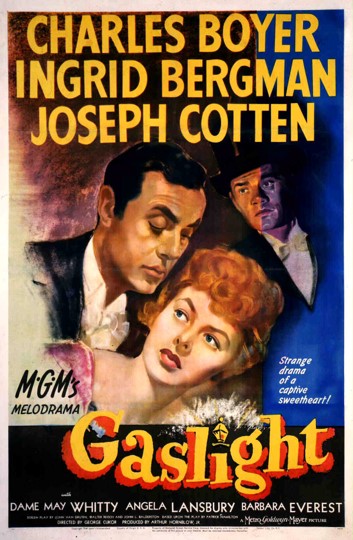
Gaslight poster
Gaslight poster created by Metro-Goldwyn-Mayer and Loew’s Inc. Image found at http://www.tcm.com/tcmdb/title/166/Gaslight/#.

Things I liked about the film:

The acting: Prior to watching Gaslight, I had seen a few of Ingrid Bergman’s films. But, to me, her portrayal of Paula is one the best I’ve seen from her filmography! What makes this performance so good is how expressive Ingrid is. She’s able to change her expressions at a moment’s notice, causing Ingrid’s portrayal to appear fluid and natural. I was pleasantly surprised to see Angela Lansbury star in this film! I’ve never seen any of Angela’s live-action films, as the only live-action project of hers that I’ve seen is Murder, She Wrote. However, it was nice to see her portray a character that is different from what I’m used to. Angela brought a sense of sass to her character, Nancy. Her interactions with the other characters was interesting because of how different her personality was from the other members of that household. Though her on-screen presence was limited, Angela found a way to shine with the material she was given!


The lighting: I wasn’t expecting anything special from the film’s lighting. But, when I watched Gaslight, I found the lighting to be one of the most memorable parts! In the London scenes, when it was night-time, the lighting reminded me of a noir film. What I mean by this is how the light is primarily dim and obstructed by another source. In the case of Gaslight, this source was fog. A common practice in this film was the use of shadows. This helped add a sense of mysteriousness to the story, as there was an uncertainty about the people who caused those shadows. One scene that used lighting in a creative way was when Paula and Gregory entered the drawing room of their London home for the first time. In this scene, the only light came from the outside. This means the shadow of the window’s blinds reflected off of these two characters.


The set design: Gaslight takes place during the Victorian era. As I’ve said in reviews for other period films, the sets in this movie appeared authentic to that specific time period. It shows that the creative team truly cared about the film they were making. It also shows that thorough research had been done during the pre-production stage of the project. The sets were very massive in scale, presenting the grandeur that would have been found within the world of these characters. It also helps that the architecture made these structures feel life-like. My favorite of this collection is the hotel where Paula and Gregory spent their honeymoon. While the exterior was the primary focus of this scene, it was still impressive to look at. The location itself seemed inviting and charming, like it would be a prime destination for anyone’s vacation.

OQECW90
Sketch of London image created by Archjoe at freepik.com. <a href=’https://www.freepik.com/free-vector/hand-drawn-houses-of-parliament_1133950.htm’>Designed by Archjoe</a>. <a href=”https://www.freepik.com/free-photos-vectors/background”>Background vector created by Archjoe – Freepik.com</a>. Image found at freepik.com.

What I didn’t like about the film:

Some of the accents: Like I’ve said in other reviews, accents in films can be hit or miss. In Gaslight, the accents sounded authentic and believable. But there were times when it was difficult to understand what some of the characters were saying. This was the case for Gregory Anton. At several moments, I found myself rewinding the movie in an attempt to hear what he was saying. This definitely took away some enjoyment from the film.


Some under-utilized characters: In this movie, I found some of the characters to be under-utilized more than they should have been. One example is the neighbor of Paula and Gregory, who Paula met on a train prior to the couple moving to London. Based on her first encounter with the protagonist, I thought she was going to play a larger role in the overall narrative. Sadly, it just felt like she was there for the sake of being there. Had this character been removed from the story, I don’t think it would have made much of a difference.


The mystery’s resolution: When a movie features a mystery, its resolution usually takes place during the film’s climax. This decision is made to not only make the moment feel big and action-packed, but it’s also made to get a reaction from the audience. I will not spoil Gaslight for anyone who hasn’t seen this movie. But I found this mystery’s resolution to be anti-climactic. The scenes involving the resolution were well-written and interesting. However, they failed to feel big or action-packed. Something that hurt them was how one particular confrontation was not shown on screen. I understand that this film was released during the Breen Code era. However, the confrontation’s absence took away from some of the climax’s excitement.

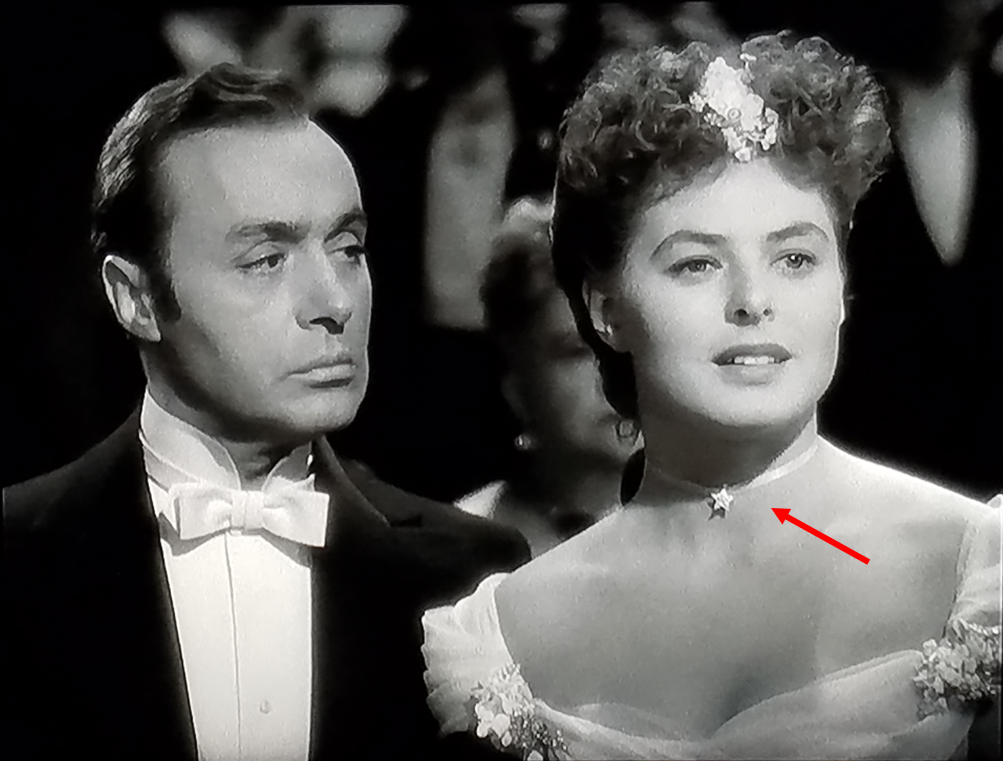
Gaslight choker necklace picture
Is it just me or is Paula’s choker necklace just the cutest piece of jewelry? Screenshot taken by me, Sally Silverscreen.

My overall impression:

Gaslight is the third mystery movie I have reviewed this November. Maybe it’s to make up for Hallmark Movies & Mysteries taking a break from making mystery films due to the Christmas/holiday season. In all seriousness, I think the mystery aspect of Gaslight was the best out of those three films! While it had its issues, it was still the most compelling. I can now agree with Emily, from The Flapper Dame, that this is a good movie! Even though it is a “slow burn” story, it works for the overall picture. This allows for the events to happen at their own pace, which made elements of the story grow organically. If you have the patience, this is a movie you might enjoy. As this review is meant to celebrate receiving 155 followers on 18 Cinema Lane, I’d like to thank each of my followers for choosing to support my blog. When I first started my blogging journey, I never imagined achieving such a large number of followers this quickly. However, I’m very thankful for the success I have earned. I’d also like to thank Emily for recommending Gaslight to me. I appreciate when readers leave comments on my blog, so I was more than happy to choose this movie for this review!


Overall score: 7.5 out of 10


Have you ever seen Gaslight? Are there any movies you’d like to recommend to me? Tell me in the comment section!


Have fun at the movies!

Sally Silverscreen