The Top Ten Best Movies I Saw in 2023

As I mentioned in my list of the top ten worst movies I saw in 2023, I saw enough films to create a best movies of the year list! But because I saw more movies I disliked than liked, there aren’t enough films to create an honorable mentions section. When I look back on the best films I saw this year, I realize the majority of the titles are made-for-TV productions. Looking specifically at the top three best movies of 2023, I noticed a shared theme; all of the movies contain historical fiction stories. Since I reviewed most of the films on this list, I will provide the links to those reviews in this article. So, as the sun sets on 2023, let’s start my list of the top ten best movies I saw this year!

Image by Freepik

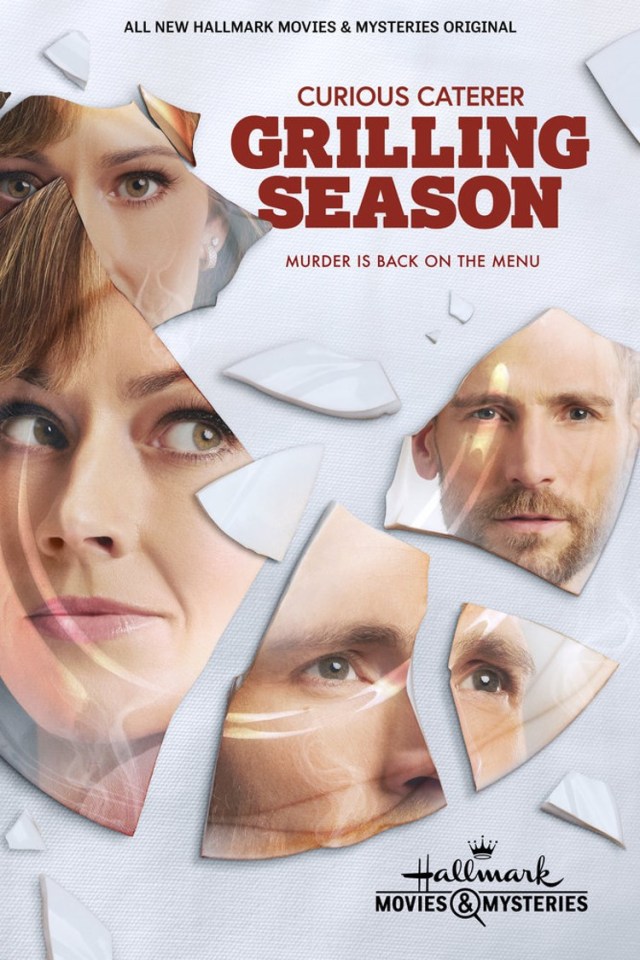
10. Curious Caterer: Grilling Season

Out of all the movies in the Curious Caterer trilogy, I’d say Curious Caterer: Grilling Season is the best film! It improves on some of the predecessor’s flaws, like adding more humor into the script. The film also made different creative decisions, such as giving Marla more involvement in the mystery, that proved this series still has many ideas at the creative team’s disposal. One of the strengths of the Curious Caterer series, including the sequel, is the quality of the acting performances! From the main actors to the supporting talent, each on-screen interaction appeared so natural, it allowed the story to feel immersive. As of late 2023/early 2024, there have only been two mystery movies announced by Hallmark Movies & Mysteries; True Justice: Family Ties and Gilded Newport Mysteries: Murder at the Breakers. Hopefully, the network will consider continuing the Curious Caterer series.

Take 3: Curious Caterer: Grilling Season Review + 455 Follower Thank You

9. Christmas Princess (2017)

Revisiting this film after seeing it for the first time six years ago, Christmas Princess still holds up! What works in this movie’s favor is how it focuses on Donaly’s journey to the Rose Court. This creative choice not only prevented the 2017 made-for-TV project from adopting several Christmas related tropes and cliches, it also gave the movie a chance to tell a more unique story for a Christmas production. Other good creative decisions include Donaly’s wardrobe and providing a thorough explanation of the Rose Court process. Looking back on Christmas Princess, I’m surprised there hasn’t been more movies made related to the Tournament of Roses. It’ll be interesting to see if a studio or network finds a story inspiring enough to adapt into a film!

Take 3: Christmas Princess (2017) Review

8. Frankenweenie (2012)

As I’ve said in past reviews, I rarely receive an opportunity to write about animated movies. So, it is even rarer for an animated title to appear on my best of the year list. What made 2012’s Frankenweenie so memorable was a collection of good creative choices. Some of them include the creatures within the story, presenting the film in black-and-white imagery, and sprinkling “Easter Eggs” throughout the movie. But another reason why Frankenweenie landed on my best movies of the year list is how much heart this story contained. Sure, I knew this project would be a cute take on Mary Shelley’s book. However, the heart-filled nature of the film’s story was such a pleasant surprise!

Take 3: Frankenweenie (2012) Review + 470 Follower Thank You

7. Mystery on Mistletoe Lane

After the release of Murder, She Baked: A Plum Pudding Mystery, I’ve always wondered why Hallmark Movies & Mysteries didn’t create more Christmas themed mystery films. Mystery on Mistletoe Lane proved that the network should, at least, consider making more mystery stories that take place around Christmastime. With festive clues and well-written riddles, the mystery itself left me on the edge of my seat, curious to see how the mystery would be resolved. I also liked the movie’s subplot, as it was interesting to see the creative ways Christmas activities were incorporated into the story. Another factor that worked in the favor of Mystery on Mistletoe Lane is how the mystery provided lower stakes. This allowed the movie to maintain the cheerful and light-hearted tone most viewers expect from Hallmark’s Christmas offerings.

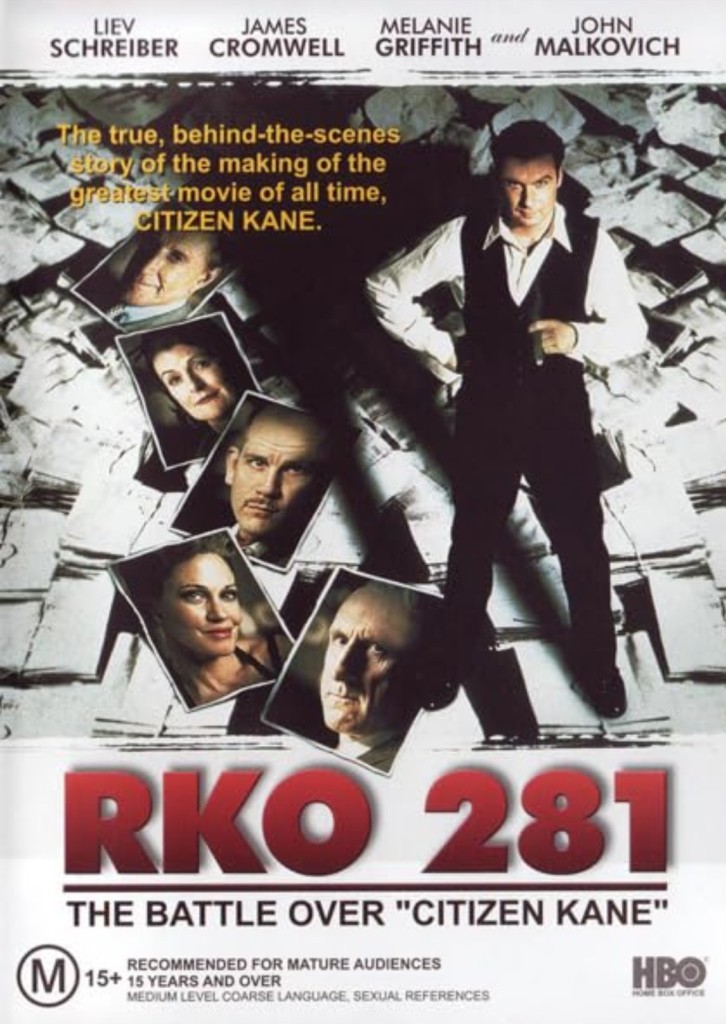
6. RKO 281

Toward the end of my review of RKO 281, I said good films leave a lasting impression. Not only did the 1999 movie leave a lasting impression, it earned a spot on my best of the year list! There are many aspects of RKO 281 that are so good, you will find yourself saying, “Wait, this is an HBO film”? Every component of this movie goes above and beyond, looking and feeling like it should have received a theatrical premiere. For every “classic” or “iconic” film, there is a journey for how that film came to exist. The journey shown in RKO 281 made me appreciate the efforts taken to bring Citizen Kane to the big screen. Reflecting on both Citizen Kane and RKO 281, it makes me wonder if other well-known movies have an incredible behind-the-scenes story worthy of its own film?
Take 3: RKO 281 (1999) Review

Curious Caterer: Grilling Season poster created by Crown Media Family Networks and Hallmark Movies & Mysteries

5. Haunted Harmony Mysteries: Murder in G Major

When I talked about Jesse Stone: Night Passage in my top ten worst movies I saw in 2023 list, I mentioned how, for me, 2023 was not the year for mysteries. However, there were a few stand-out mystery movies, with Haunted Harmony Mysteries: Murder in G Major being one of them. In the 2020s so far, Hallmark Movies & Mysteries have premiered mystery films that lack the “coziness” viewers have come to expect from the network’s mystery projects. Haunted Harmony Mysteries: Murder in G Major brought that “coziness” back, filling a void Hallmark Movies & Mysteries have been abandoning. Because the story incorporates a ghost, it gives this movie a unique identity and adds more creativity to the realm of Hallmark’s mystery library. As I said earlier in this list, there have, so far, only been two mystery movies announced by Hallmark Movies & Mysteries. Sometime in 2024, I hope Hallmark turns Haunted Harmony Mysteries into a series, as there is so much potential for this story to lend itself to a multi-chapter title!

4. The Great Muppet Caper

If I could describe The Great Muppet Caper in one word, it would be “joyful”. That’s because, as I said in my review, this movie exudes so much joy! Each Muppet character had a specific purpose within the story, making every Muppet feel important. The jokes were well delivered, thanks to clever writing and solid acting. The Great Muppet Caper contains a simpler story that is easier to follow. But because of how good other aspects of this film are, that simplistic story works in The Great Muppet Caper’s favor. Since I liked the 1981 movie, maybe, in 2024, I’ll check out other productions featuring the Muppets!

Take 3: The Great Muppet Caper Review (The Great Muppet Guest Star Caper Double Feature Part 1)

3. A Biltmore Christmas

Similar to Top Gun: Maverick, I had low expectations for A Biltmore Christmas. Hallmark’s decision to give the 2023 Christmas movie a lot of hype and publicity made me skeptical of the movie’s quality. When I finally checked the film out, I was pleasantly surprised by how good it was! There was so many things Hallmark got right; from the strength of the cast to the attention given to historical accuracy. While this type of story is nothing new for romance films, it does provide Hallmark Channel with a different type of narrative for their Christmas pictures. Within the 2020s so far, I noticed how Hallmark is creating more projects that have historical fiction elements. I’m interested to see what the network’s next big, historical fiction, Christmas movie ends up being in 2024!

2. Hallmark Hall of Fame’s A Tale of Two Cities

When I shared my overall impression of A Tale of Two Cities, I stated how both Oliver! and Nicholas Nickelby found a place in my year-end best movies lists. I also stated how that tradition would continue, as the Hallmark Hall of Fame adaptation of A Tale of Two Cities left such a good impression on me. However, this is the first time a Charles Dickens adaptation has earned a spot in my best list’s top three! Even though this film is longer than most Hallmark productions, it never feels like two hours and thirty-six minutes. Instead, A Tale of Two Cities feels like a well-paced, well-written, and well-acted depiction of Charles Dickens’ work. The creative team’s attention to detail also added to the movie’s great quality. It showed me the people who created this adaptation cared about the project they were working on. I have said before how I wanted to see as many Hallmark Hall of Fame productions as realistically possible. I hope to find more Hallmark Hall of Fame movies that are just as good as A Tale of Two Cities!

Take 3: Hallmark Hall of Fame’s A Tale of Two Cities Review

1. Hallmark Hall of Fame’s Caroline?

I know there’s no such thing as the “perfect” Hallmark Hall of Fame movie. But 1990’s Caroline? is the closest thing to it! The strengths of the project far outweigh the flaws, coming together to create a film that is intriguing, creative, and even thought-provoking. I liked seeing the characters’ interactions, as they made the movie captivating to watch. Similar to Hallmark Hall of Fame’s A Tale of Two Cities, the creative team behind Caroline? gave attention to detail. In the case of the 1990 film, this attention to detail was placed in differentiating between the past and the “present”. In my opinion, Caroline? is one of the more underrated Hallmark productions. I also believe it should have been re-released on DVD.

Take 3: Hallmark Hall of Fame’s Caroline? Review + 460 Follower Thank You
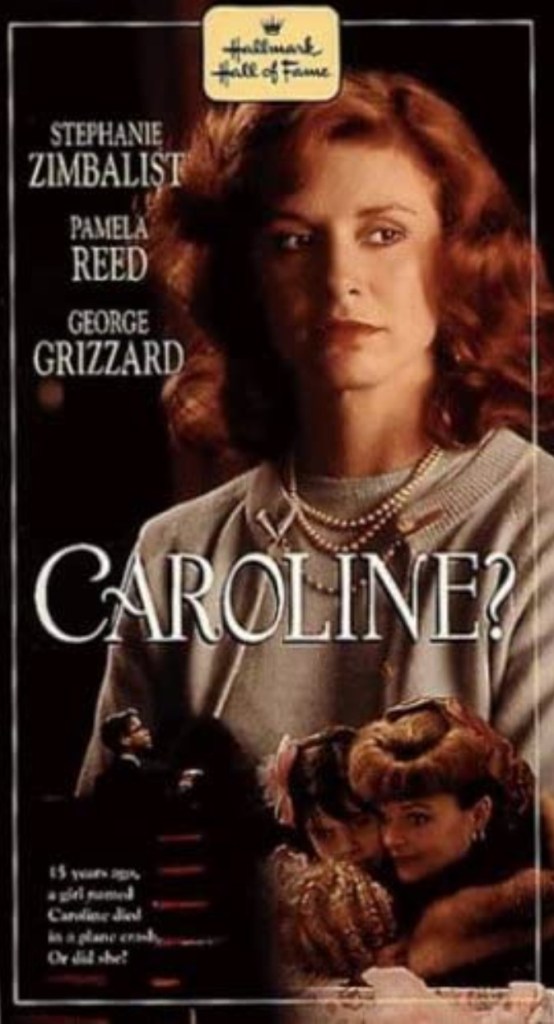
Hallmark Hall of Fame’s Caroline? poster created by Hallmark Hall of Fame productions, CBS, and Republic Pictures Home Video

Have fun in 2024!

Sally Silverscreen

Take 3: RKO 281 (1999) Review

Once upon a time, in 2019, I saw Citizen Kane for the first time. In my review of the film, and even in my list of ten classic movies I watched because of my blog, I stated how, in my opinion, Citizen Kane is not the flawless masterpiece almost everyone has made it out to be. As you’re reading this introduction, you’re probably wondering, “What does Citizen Kane have to do with July’s theme of Genre Grandeur? That movie isn’t about making movies”. No, it’s not. But the 1999 HBO movie, RKO 281, is. While looking for a title to review for the aforementioned blogathon, I stumbled upon RKO 281, a film I had never heard of prior to the event. When I learned the movie was about the creation of Citizen Kane, I knew I’d appreciate the 1999 project, especially since I saw and wrote about the 1941 film. It also gave me a reason to check out one of HBO’s made-for-tv titles. So, without any delay, let’s start this show of my RKO 281 review!

RKO 281 (1999) poster creatd by HBO Pictures, WGBH, Scott Free Productions, Labrador Films, BBC Films, and Home Box Office (HBO)

Things I liked about the film:

The acting: When we think about a name like Orson Welles, it can sometimes be easy to think of him as more than just a man with a dream. As Orson’s name became a staple of cinematic history, it also became what legends are made of. But Liev Schreiber, the actor portraying Orson, brought humanity back to that name, finding the heart of the “genius” and putting some genuine emotion behind it. While apologizing to Herman Mankiewicz after a falling-out between them, Orson shares a personal recollection about his father. After sharing a part of his soul with his friend, a smile appears on Orson’s face, relieved Herman has agreed to work on Citizen Kane. At the same time, you can see a tear has escaped Orson’s eye. This gives another meaning to Orson’s relief; the burdens of guilt and regret have lifted off his shoulders.

Liev Schreiber is not the only actor to use facial expressions and emotion to their advantage. Portraying William Randolph Hearst, James Cromwell was able to use these tools of acting to present William as more than just the story’s antagonist. When he finds out Citizen Kane is based on him, William is upset by this news. While talking about the situation with a woman named Louella, there is a sharpness to his voice, clearly indicating his bitterness toward the film. But the look in his eyes is that of defeat, questioning how someone was able to successfully build a bridge across the moat of his castle. In this scene, William’s face told more than dialogue could share; a man who gave everyone the impression he was in control, but was really unsure of what the future held.

Marion Davies was the mistress of William Randolph Hearst. Introduced to the audience in a party scene, Marion carried herself with a bubbly personality, almost being mistaken for “ditzy”. But Melanie Griffith prevented Marion from becoming a stereotype or caricature. With a variety of emotions, body language, and facial expressions, Melanie showed Marion as, simply, a woman in a complicated situation. One of my favorite scenes in RKO 281 was when Marion confronted William about his spending habits. Though in a drunken state, Marion addresses some excellent points. As she faces William, her voice is pleading. The desperation in Marion’s voice contains brutal honesty, giving her tone of voice some depth. She never breaks eye contact with William, showing how she isn’t afraid of standing up to “Pops”. Even though she does raise her voice, she only does this to emphasis her points. This scene elaborates how easily someone like Marion could be underestimated. While William saw Marion’s part of their conversation as “excessively theatrical”, I saw it as a woman who knew more about the situation than others were led to believe.

The set design: I’ve heard Hollywood referred to as the “Land of Dreams”. If that’s true, then the set design in RKO 281 was meant to visually represent a fairy tale! William Randolph Hearst’s castle is one of the most divine sets I’ve ever seen! So many details went into this location, it makes every space of the castle feel larger than life. From the marble fireplace held up by carved marble statues, to the large stained-glass windows boasting intricate colorful designs, to even a bath room with blue and green hued walls, William’s castle is a place beyond imagination. While the castle certainly stole the show, there were other sets that looked great on camera. During RKO 281, Orson travels to New York. In a scene showcasing Orson’s hotel room, his large, wooden bed was smartly paired with a red and beige blanket. The bed isn’t the only wooden piece of furniture in the room, as the desk, matching bedside tables, and even the walls display a warm shade of wood. Because of the tall window, the illusion of the room having a high ceiling is given to the audience. Filling the room with warm light from the lamps and the wall sconces, this high-end hotel room gave off a cozy atmosphere!

The film-making process: One of my favorite episodes of Murder, She Wrote is ‘Film Flam’. Watching the process of premiering a film is what made that episode fascinating to me. RKO 281 showed a similar process in their story. But this time, the entire film-making process was revealed. Glimpses of how Citizen Kane was made were woven into RKO 281. I learned some things about Citizen Kane because the film-making process was shown. For instance, I didn’t know Orson dug a hole into the floor just to get the shot he wanted. I also didn’t know that filming of Citizen Kane started two days ahead of schedule. It was interesting to see the various components that go into creating a film, especially during a time when technology wasn’t at a film-maker’s disposal. This peek behind Hollywood’s curtain can make one appreciate the work that goes into making a movie.

The dialogue: There is a lot of work that goes into writing a script. One important area of any script is the creation and delivery of dialogue. As I’ve said in past reviews, dialogue can be hit or miss, especially in a made-for-tv movie. In RKO 281, you can tell there was thought put into the dialogue of the script. In fact, I would go so far as to say the dialogue was, at times, profound. Remember when I said one of my favorite scenes was when Marion confronted William about his spending habits? One of the reasons why I like that scene is because of how well the dialogue was written and delivered. During the confrontation between Marion and William, Marion reminds him of the difference between wanting and needing something. She elaborates on this point by questioning how much a nearby statue cost, not caring about details such as where it was made or the style of the statue, details only William would bring up. Even at the very beginning of this scene, when Marion says, “Millions of dollars a year on art and statues, and there is nothing to explain” illustrates how Marion recognizes the severity of the situation. Meanwhile, as William responds to Marion by stating, “We are in no pickle, as you so euphemistically put it”, the script emphasizes William’s choice to use big words to not only belittle Marion’s intelligence, but also brush his problems under the rug.

Image of vintage movie camera created by Macrovector at freepik.com. <a href=”https://www.freepik.com/free-photos-vectors/background”>Background vector created by macrovector – http://www.freepik.com</a>. Image found at freepik.com.

What I didn’t like about the film:

The omission of the Breen Code: If you’ve read my movie reviews, you’d sometimes see the term ‘Breen Code’ mentioned in the text. For those unfamiliar with this concept, the Breen Code is a set of moral guidelines that had to be applied to film-making. Movies released between 1934 and 1954 formed the Breen Code era. Because Citizen Kane was released in 1941, I was hoping the Breen Code would play a role in the process of Citizen Kane’s creation. Unfortunately, the Breen Code wasn’t even mentioned. To me, the Breen Code is an underrated component in cinematic history. It would have been nice to hear it referenced in RKO 281’s dialogue.

Some parts of the story not receiving closure: Louella Parsons works for William Randolph Hearst as his “eyes and ears of Hollywood”. After she sees a rough cut of Citizen Kane, she informs William about the film resembling his life. Louella vows to get revenge against Orson for creating the movie, even going so far as to use blackmail in an attempt to cancel the film. But when William’s financial troubles come to light, her role in William’s life seems to have diminished. What happened to Louella after William’s financial situation was made public? Did she still work for him or did she end up working for someone else? This is just one part of RKO 281 that didn’t receive closure.

Keeping track of who’s who: As I mentioned in this review’s introduction, RKO 281 chronicles the creation of Citizen Kane. Therefore, the story follows those individuals connected to the project itself. Throughout the movie, though, members of the film industry from the late 1930s to the early 1940s were brought up in the dialogue. While I was familiar with some of these people, other names I did not recognize. It almost felt like RKO 281’s creative team expected the audience to know the film industry scene of that time. When I watch a film, I want to be told a story. If I end up learning something valuable by watching a movie, I feel that is time well spent. However, I don’t want to feel like I need to do homework prior to watching the film.

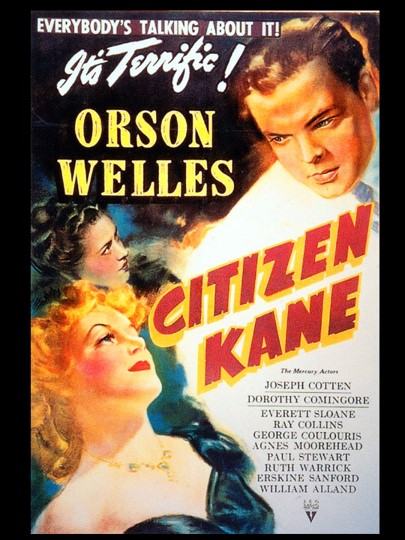
Citizen Kane poster created by Mercury Productions and RKO Radio Pictures. Image found at http://www.tcm.com/tcmdb/title/89/Citizen-Kane/#.

My overall impression:

Not all made-for-tv movies are created equal. Sometimes, a low amount of effort will be given to a made-for-tv production, making a presentation look and feel cheap. But there are made-for-tv projects that are solid, despite the limited resources and finances. RKO 281 is so well-made, it is easy to forget this is an HBO film, as this movie looked and felt theatrical! The creative team behind RKO 281 went above and beyond to make their project the best it could be! From the actors and the screenwriters to the set designers, every person involved with the 1999 movie stepped up their A game and it shows. The style and substance of RKO 281 go hand in hand. While I still don’t believe Citizen Kane is a flawless masterpiece, I’ve gained an appreciation for the efforts it took to make this film exist at all. Toward the end of RKO 281, Orson says “Pretty speeches make history”. If that’s true, then good films leave a lasting impression.

Overall score: 8 out of 10

Have you seen RKO 281 or Citizen Kane? Are there any HBO movies you’d like to see me review? Tell me in the comment section below!

Have fun at the movies!

Sally Silverscreen

Take 3: Point of Origin Review

When the subject of “disaster films” is brought up, one will usually think of films revolving around over-exaggerated, fictionalized disasters. Whether it’s Sharknado or The Day After Tomorrow, these types of titles have become the faces of the “disaster film” category. But what if a movie depicts a real-life disaster that could be experienced by anyone? This is the case of my Disaster Blog-a-Thon entry, Point of Origin. Last month, I searched on Wikipedia for a title to review for May’s Genre Grandeur. During that search, I stumbled across the aforementioned 2002 HBO production. After reading the film was a “fact-based drama about an arson investigator searching for the perpetrator of a string of deadly fires in 1980s California”, I knew it was the perfect choice for J-Dub and Pale Writer’s event! Before I start this review, I would like to point out how this marks two firsts for 18 Cinema Lane. Not only is this my first time participating in the Disaster Blog-a-Thon, this is also the first HBO film reviewed on my blog!

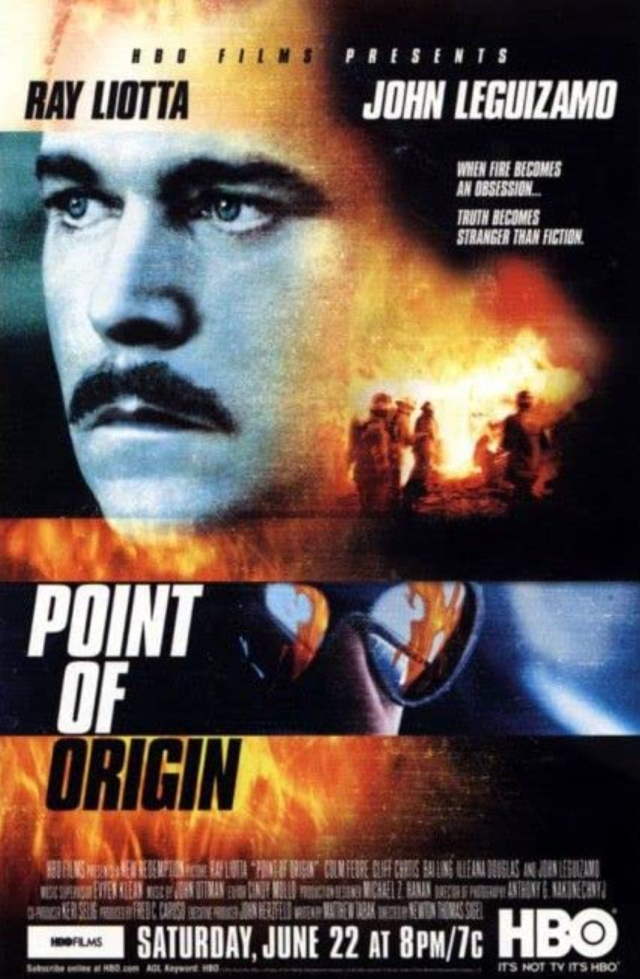
Point of Origin poster created by HBO Films and New Redemption Pictures

Things I liked about the film:

The mystery: For the most part, the mystery in Point of Origin allowed the audience to experience it alongside the characters. What also helps is how the mystery started right at the beginning of the film. This immediately hooked the audience into the story, while also giving them a shared journey with the key players on screen. There was room for viewers to speculate what would happen in the story. That gave them the opportunity to interact with the film’s mystery. Three separate components played a role in the overarching narrative. While I won’t give anything away, it was interesting to see these components come together.

The special effects: When John was investigating a crime scene, he would attempt to figure out how the fire started. Toward the beginning of the film, this thought process was visualized through special effects. As John is recounting the information, the actual fire is played out in reverse on screen. This is very different from other mystery movies, as flashbacks might be utilized to speculate the cause of a crime. When it came to the fires themselves, it appeared as if they actually took place in a given scene. It may have been possible for the movie’s creative team to insert footage of fires through editing or CGI, as Point of Origin was released in 2002. However, practical effects were an interesting choice. This creative decision reminded me of productions like The Crow.

Showcasing the dangers of fire: While investigating a local fire, John and his co-worker, Keith, examine a young boy who died on the crime scene. Despite only the victim’s face being shown, it is blackened due to smoke and flame exposure. Later in the film, John visits a surviving burn victim in the hospital. The victim’s face and part of his hand are covered in burns. He even claims that it hurts to open his eyes. Due to the nature of Point of Origin, the story is heavier in tone. However, the incorporation of the dangers of fire never felt like they were there for “shock value” or as a tactic to scare the audience. If anything, it was shown just enough to get the point across.

The Second Disaster Blog-A-Thon banner created by J-Dub from Dubsism and Pale Writer from Pale Writer

What I didn’t like about the film:

Bai Ling’s limited presence: Bai Ling was cast as John’s wife, Wanda Orr, in the 2002 HBO film. Her involvement in Point of Origin is one of the reasons why I sought out this movie, as she is the top billed actress. When I watched the film, however, I discovered Bai appeared in only a handful of scenes. Compared to some of Bai’s other projects, her talents were under-utilized in Point of Origin. It also seems like the main supporting actress, Illeana Douglas, received more screen-time than Bai. Bai did a good job with the acting material she was given. But this situation is very reminiscent of Katharine Hepburn’s involvement in 1994’s One Christmas, where Katharine appeared in about five scenes despite being that film’s top billed actor.

A confusing time period: As I mentioned in the introduction, Point of Origin takes place in the 1980s. Elements from that decade were incorporated into the film, such as vehicles and a typewriter used by John at various moments in the story. Meanwhile, Bai’s wardrobe looked like it came straight from the early 2000s. There was also a scene where a store patron tells another patron not to smoke in the store. This attitude was more prevalent in the 2000s, as smoking in public places was more accepted in the 1980s. The inconsistency with the film’s historical accuracy was so confusing, it was, on a few occasions, distracting.

An unidentified red-haired man: Throughout the movie, a red-haired man made multiple appearances. I won’t spoil the movie for anyone who hasn’t seen it. But I will say when everything was said and done, I don’t feel like I received a satisfying explanation of who that character is. Yes, I can assume the red-haired man’s identity. However, when it comes to that character, the movie was building up to something without providing a pay-off.

Magnifying glass and fingerprint image created by Alvaro_Cabrera at freepik.com. <a href=’https://www.freepik.com/free-vector/loupe-over-a-fingerprint_853908.htm’>Designed by alvaro_cabrera</a>. <a href=”https://www.freepik.com/free-photos-vectors/glass”>Glass vector created by Alvaro_cabrera – Freepik.com</a>. Image found at freepik.com.

My overall impression:

For the Disaster Blog-a-Thon, I chose to talk about a film that revolved around a real-life disaster. This is because, in my opinion, these types of titles aren’t talked about as much within the realm of “disaster films”. When it comes to Point of Origin specifically, it was a fine, competently made, intriguing movie. But the 2002 HBO project made me feel similarly to Red Corner. This is ironic, as Bai Ling was cast as the lead actress in both films. What I mean by my aforementioned statement is I held higher expectations for each film, only to be somewhat let down by them. As I’ve said before on 18 Cinema Lane, the historical accuracy works when the creative team places emphasis on the details. In Point of Origin, however, it seems like the film’s creative team forgot, at times, their project took place in the 1980s. This is because some aspects of the film reflected the time of the film’s release; the early 2000s. I haven’t seen a lot of HBO films, so I can’t make any comparisons with Point of Origin. But I will say, based on other made-for-TV mystery productions, this one felt closer to the middle of the road.

Overall score: 7.2 out of 10

Have you seen Point of Origin? Are there any HBO films you’d like to see reviewed on 18 Cinema Lane? Please let me know in the comment section!

Have fun at the movies!

Sally Silverscreen

Take 3: The Terry Fox Story Review (Atticus and Boo Double Feature Part 1)

Back in April, I reviewed To Kill a Mockingbird for Silver Screen Classics’ Classic Literature On Film Blogathon. I also read the book earlier this year. When I discovered Rebecca from Taking Up Room was hosting the Atticus and Boo Blogathon, I just had to participate, as it was too good of a coincidence to pass up! Because this blogathon celebrates Gregory Peck and Robert Duvall, I decided to review one film from each of their filmographies. However, I purposefully chose two films that were not only released in the ‘80s, but also had something to do with athletics. For this double feature, I’ll start by reviewing the 1983 movie, The Terry Fox Story. I have to admit I like finding made-for-TV movies from years past. This specific film is an HBO presentation that I watched on Youtube. I will also admit that I knew very little about the true story that inspired the film. So, I was looking forward to being educated on Terry Fox’s story!

The Terry Fox Story poster created by HBO Premiere Films, HBO, and ITC.

Things I liked about the film:

The acting: I will talk about Robert Duvall’s performance first, as he is one of the reasons why I reviewed this film. In The Terry Fox Story, Robert portrays Bill Vigars, a member of the Cancer Society from Toronto. He doesn’t show up until fifty-nine minutes into the movie, but Robert is given more screen time than he had in To Kill A Mockingbird. With a performance that comes across as natural, Robert made his character feel like a real-life person. One is his best scenes was when Bill gives a pep talk to Terry about ignoring the press. It shows this particular character is trying to look out for Terry’s best interests. Speaking of Terry, Eric Fryer is one of the strongest members in this cast! No matter what scene he appeared in, his performance felt realistic. He displayed the frustrations a patient with cancer might experience, such as when Terry wants to quit his treatments and leave the hospital. There were even times when his character was emotionally guarded, protecting himself from experiencing more pain in his life. Terry stopping people from touching his hair is a good example of this. Despite all the on-screen hardships, Eric brought joy to his role, which helped create happier moments that felt earned. Rika Noda was a part of these happier moments, showing Terry how he can open his heart and allow his personal barriers to be broken down. Portrayed by Rosalind Chao, Rika was an endearing character who, more often than not, brought out the best in Terry. While she gave a good performance individually, Rosalind also had good on-screen chemistry with Eric Fryer. This made me invested in their on-screen relationship and want to see it succeed!

The scenery: Since this movie revolves around Terry’s marathon across Canada, the country’s landscapes serve as photogenic backdrops! When Terry starts his marathon in Newfoundland, he stands on the shores of Cape Spear. With the waves crashing against the rocky shores, this location created a powerful image of a warrior preparing for battle. This waterfront area was also appealing to look at. During his marathon, Terry runs past a city skyline. Behind that skyline was a beautiful sunset. Its pale orange hues illuminated the scene, bringing forth a peaceful picture. A variety of surroundings were featured throughout the marathon. This showed a good representation of the living environments that can be found in an individual country like Canada.

Showing heart-breaking and heart-warming moments: In my review of Nicholas Nickleby, I said one of the strengths of the movie was how there was a balance of despair and joy within the story. The Terry Fox Story had a similar strength, showing both the heart-breaking and heart-warming moments of Terry’s journey. While receiving treatments at the hospital, Terry meets another cancer patient named Bob. Several scenes later, Terry crosses paths with Bob again. This time, the treatments have taken their toll on Bob, making him appear unrecognizable. It was just one example of the ugliness cancer carries, showing the audience a more realistic depiction of the disease. My favorite scene in this film is when Terry’s family and friends are waiting for him to cross the finish line at the seventeen-mile marathon. It was such a heart-warming moment, it made me tear up. This is because it did a good job at displaying what happens when someone believes in another person. It was also a happy occasion that perfectly contrasted the scene’s dark and rainy background!

The Atticus and Boo Blogathon banner created by Rebecca from Taking Up Room.

What I didn’t like about the film:

A rushed beginning: I’m aware there’s only so much story that can be told in an hour and thirty-six minutes. However, the first thirty-eight minutesof The Terry Fox Story was rushed. Important events that led up to the marathon were shown in short segments. It felt like these moments were bullet points within a timeline. It also seemed like the film’s creative team tried to squeeze as much of Terry’s story into the script as they realistically could. Only focusing on some of the events would have benefitted the overall project, as the movie’s flow would be even and certain parts of the story could be fleshed out more.

Terry’s bad attitude: After watching The Terry Fox Story, I read Terry’s family was not a fan of the film “for depicting him as ill-tempered”. In the movie, I saw the character of Terry giving some of the people around him a bad attitude. Toward the beginning of the marathon, Terry complains to his friend, Doug, over the smallest of things. He even calls his friend hurtful names. In the few moments when this happened, it made me briefly question why I was rooting for this character. I know this creative decision was chosen to show how humans can be flawed and have their bad days. Eventually, Terry learns from his errors and apologizes to Doug. But when a movie presents a character they want me to root for and, for any reason, that character makes me wonder why I’m rooting for them, that is not a good thing.

Unresolved or under-resolved story points: There were a few story points in The Terry Fox Story that were either unresolved or under-resolved. As I mentioned earlier, Bob and Terry shared two scenes together. The second of these two scenes left an unresolved conclusion, as Bob is never seen again for the rest of the film. The story never explains if Bob beat his cancer diagnosis or if he passed away. Before the marathon, Rika and Terry’s relationship was traveling rocky waters. It wasn’t until the one hour and fifteen-minute mark when Rika’s voice-over could be heard, indicating her and Terry’s issues were resolved. While it was nice to receive this resolution, it could have been received a lot sooner in the story.

Canada postage stamp image created by Ibrandify at freepik.com <a href=’https://www.freepik.com/free-vector/canadian-flag-stamp-template_836872.htm’>Designed by Freepik</a> <a href=”https://www.freepik.com/free-photos-vectors/template”>Template vector created by Ibrandify – Freepik.com</a> Image found at freepik.com

My overall impression:

Before watching The Terry Fox Story, I only knew the bare minimum of Terry Fox’s story. Now, I feel like I’ve been educated on one of the most important pieces of Canadian history! While there are flaws within the project, the 1983 film did a good job showcasing the human spirit on film. Heart breaking and warming moments influence how people view their world, with the movie effectively showing that. The story also reminds the audience that humans are not invincible, as they all have their own limits. Terry Fox and his marathon teaches us what we are capable of when we believe in ourselves and others. As the character of Terry said in The Terry Fox Story, “it’s about reaching out to people and having them touch you back”. Another good lesson this film teaches is how, sometimes, our best is more than enough. Terry’s single act of attempting to run across Canada helped start a conversation we’re still having decades later. Awareness for various cancers are being raised year after year and multiple organizations have joined the fight against this horrible disease. Even though there’s still more work to do done, I’d like to think Terry’s dream is closer to coming true.

Overall score: 8.1 out of 10

Have you heard of Terry Fox’s story? Which “based on a true story” movie would you like to see me write about? Let me know in the comment section below!

Have fun at the movies!

Sally Silverscreen

Here’s the link to the quote I referenced in this review:

https://en.wikipedia.org/wiki/The_Terry_Fox_Story