Take 3: The Chalk Garden Review + 505 Follower Thank You

For last year’s We Are Family Blogathon, my original plan was to write about both the Diagnosis Murder episode, “Guardian Angel” and 1964’s The Chalk Garden. But as I explained in my review of hoops&yoyo’s Haunted Halloween, my plan to discuss the movie fell through. Despite this setback, I had always wanted to feature The Chalk Garden on my blog. Recently, I received a second chance to review the film! So for the first Blog Follower Dedication Review of 2025, I thought the 1964 production was the perfect title for this occasion! The Chalk Garden was recommended by Maddy (from Maddy Loves Her Classic Films) when I reviewed Marriage on the Rocks five years ago. In total, I have written about seven of Deborah Kerr’s films, with her best picture being The King and I. How will this eighth movie compare to those seven? Keep reading to find out!

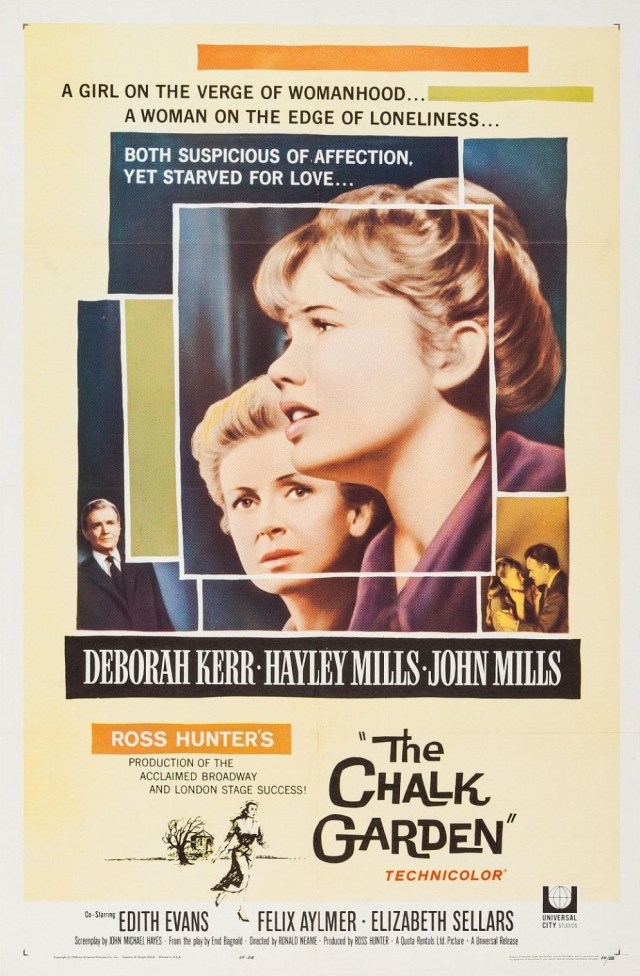
The Chalk Garden poster created by Quota Rentals Limited, Ross Hunter Productions, and Universal Pictures

Things I liked about the film:

The acting: The Chalk Garden is a character-driven story where part of the script serves as a character study. For these types of movies, it’s important to recruit a cast whose talents are strong enough to help make the characters interesting. While watching the 1964 film, I was invested in the story from beginning to end. One reason why is the quality of the acting performances! This is a movie where it’s difficult to choose a favorite performance, as each one was good for different reasons. Hayley Mills’ portrayal of Laurel incorporates a variety of emotions and animated expressions. These aspects of her performance showcase just how complex Laurel is. Meanwhile, Deborah Kerr’s character, Miss Madrigal, was a no-nonsense woman who subtly expressed emotion. Through her acting talents, Deborah found a way to present her character as nurturing and a promoter of “tough love”. As for John Mills’ portrayal of Maitland, his character’s consistently welcoming persona put the other characters at ease. Maitland’s laid-back personality and calm way of approaching situations reminded me of Mr. Rogers from Mister Rogers’ Neighborhood.

Mrs. St. Maugham’s residence: The story of The Chalk Garden takes place at Mrs. St. Maugham’s house. Since Mrs. St. Maugham was a woman with a financially comfortable life, her house perfectly reflected this. The sunroom was introduced in the movie’s first five minutes. Wrap-around windows looked out to a view of a large grassy hill. Plants filled the inside of the sunroom. In the center of the area, four white metal chairs were set around a smaller table. The furniture looked like it came straight out of an old-fashioned ice-cream parlor. On Mrs. St. Maugham’s property was her backyard shed. Though this space was not frequently shown in The Chalk Garden, I really liked its interior design! Underneath a window was a white wicker desk housing some potted plants. A wicker table was surrounded by wicker chairs of varying sizes. The white stone walls and differently shaped windows helped make the backyard shed a quaint and classy space! These finer details successfully captured Mrs. St. Maugham’s sophisticated taste!

The dialogue: Toward the beginning of The Chalk Garden, Miss Madrigal arrives at Mrs. St. Maugham’s house to be interviewed for the available governess job. When Maitland greets her at the door, he asks Miss Madrigal if she’s worked as a governess before. She cleverly replies with a question of her own, asking “do you usually interview applicants in the doorway”? This was the funniest moment in The Chalk Garden because of how well-written and delivered this exchange was! After Miss Madrigal accepts the governess job, she moves in to Mrs. St. Maugham’s house. While Miss Madrigal unpacks her belongings, Laurel explains how she doesn’t like to be told “good morning”. Her reasoning is “what is a good morning to someone else is rarely a good morning to me”. When people tell each other “good morning”, they are typically saying that in the hopes the other person has a good morning. But unless we consider things from the other person’s point of view (yes, that To Kill a Mockingbird reference was intentional), we don’t know if that person has, indeed, had a good morning. So, I found Laurel’s quote to be thought-provoking. The examples of dialogue I provided display the quality screenwriting within The Chalk Garden! How memorable the dialogue was is a result of that quality!

Good sailing day image created by Freepik at freepik.com. <a href=’https://www.freepik.com/free-vector/summer-landscape-with-a-houselight-and-a-boat_866882.htm’>Designed by Freepik</a>. <a href=”https://www.freepik.com/free-photos-vectors/design”>Design vector created by Freepik</a>. Image found at freepik.com.

What I didn’t like about the film:

A quickly resolved conflict: Throughout The Chalk Garden, Mrs. St. Maugham is at odds with her daughter, Olivia. Their relationship is so strained, Mrs. St. Maugham wants to obtain sole custody of her granddaughter, Laurel. This conflict lasts the entire movie. While I will not spoil The Chalk Garden, I will say the conflict was resolved within the film’s last ten minutes. The way it was resolved was too abrupt. As a result of this abrupt resolution, Laurel’s change in attitude and behavior happened too quickly. The reason for these flaws is how the second half of the story focuses on unearthing secrets.

Unanswered questions: There were times in The Chalk Garden when characters would make a claim, only for that claim to not be met with confirmation or denial. One example shows Laurel telling Miss Madrigal about the aftermath of when she was attacked in the park. Laurel says even though the police never got involved, it was an “open and shut case”. Before this conversation, however, Maitland warns Miss Madrigal how Laurel has a penchant for lying and fabricating the truth. Did the incident in the park actually take place or was Laurel bending the truth to get a reaction? This is one of the claims in The Chalk Garden that should have been clarified.

An unresolved metaphor: Along with being Laurel’s governess, Miss Madrigal is the resident gardener. This is because Mrs. St. Maugham lacks a “green thumb”. Miss Madrigal uses Mrs. St. Maugham’s garden as a metaphor for Laurel, even referring to it as “a chalk garden”. In order for the metaphor to work, the garden’s growth should have paralleled Laurel’s personal journey. Unfortunately, the garden itself makes infrequent appearances in the film. It also doesn’t help how Mrs. St. Maugham never puts Miss Madrigal’s words into practice, making the metaphor seem unresolved.

Paint palette image created by Freepik at freepik.com <a href=’https://www.freepik.com/free-vector/hand-drawn-artsy-tools_836777.htm’>Designed by Freepik</a> <a href=”https://www.freepik.com/free-photos-vectors/hand”>Hand vector created by Freepik</a> Image found at freepik.com

My overall impression:

Before I share my overall impression on The Chalk Garden, I want to take the time to thank the followers of 18 Cinema Lane. The support my blog receives still amazes me, even seven years after 18 Cinema Lane began! While I appreciate 18 Cinema Lane’s followers, I also appreciate when my blog’s readers provide film recommendations. This is why I try to write about these recommendations whenever possible. As I mentioned in this review’s introduction, The Chalk Garden was suggested by Maddy (from Maddy Loves Her Classic Films). I’m thankful to have not only been recommended the movie, but to also have finally checked it out! The 1964 production is part character study, part mystery. Because of the strength of the acting performances and screenwriting, this story worked! Liked I said in my review, I was invested in the story from beginning to end. The characters were interesting and the mysterious elements were intriguing. Though I wish some questions had been answered and a major conflict hadn’t been resolved so quickly, The Chalk Garden did more things right when it came to film-making. I can, honestly, say I would recommend this movie for those looking for a good cinematic story!

Overall score: 7.8 out of 10

Have you seen The Chalk Garden? What is the best movie you’ve been recommended? Let me know in the comment section!

Have fun at the movies!

Sally Silverscreen

Take 3: The Truth About Spring Review

It’s been a while since I last wrote a movie review. As I just wrote about a Hallmark Hall of Fame film, I wanted to talk about something beyond the realm of Hallmark. I recently remembered a movie I had heard good things about for years. That movie is 1965’s The Truth About Spring! I have covered some of Hayley Mills’ films in past reviews on my blog. These titles are Summer Magic, The Moonspinners, and The Trouble with Angels. While I found Summer Magic to be just ok, I did like The Trouble with Angels and The Moonspinners. Since The Truth About Spring revolves around Hayley’s character traveling, I wondered if I’d like this film as much as The Moonspinners. That answer will be discovered as we sail through this review of The Truth About Spring!

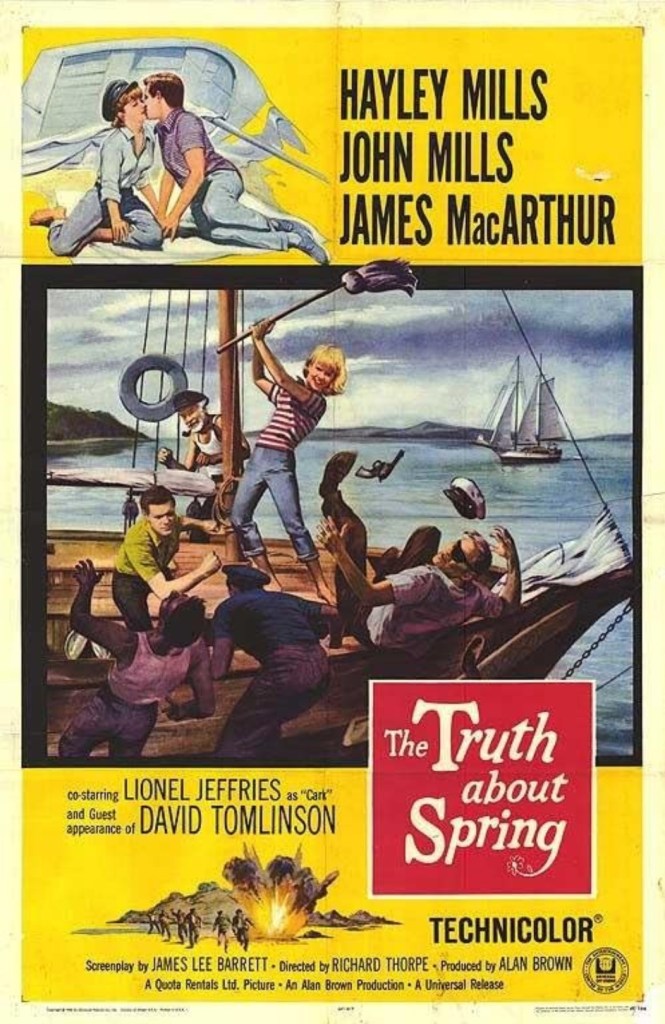
The Truth About Spring poster created by Quota Rentals Limited and Universal Pictures

Things I liked about the film:

The acting: In The Truth About Spring, Hayley portrays the protagonist, Spring Tyler. One of the few characters she interacts with is William Ashton, portrayed by James MacArthur. When William prepares for his voyage on Tommy’s ship, Spring is curious about an outfit William packed. After she asks about the outfit in question, William explains it is a set of pajamas, which he wears for sleep. Spring’s face goes from inquisitiveness to sad realization, as she confesses how she doesn’t own pajamas. This subtle change in facial expressions shows how Spring is being exposed to a different way of living life. Because of Hayley’s acting abilities, the aforementioned realization appeared realistic!

Spring is not the only character William interacts with. Another key character in The Truth About Spring is Spring’s father, Tommy, portrayed by John Mills. During their voyage, Tommy witnesses William in his pajamas for the first time. Because Tommy is also not used to the idea of pajamas, he gives William a confused look. Meanwhile, William displays an embarrassed facial expression, as he wasn’t expecting Tommy to walk into the room. The interaction between these characters creates a moment that is awkward for both of them. John’s and William’s acting talents allow this awkwardness to radiate off the screen, making the scene feel believable!

The interior design: The majority of The Truth About Spring takes place outdoors, as the characters sail to various locations. However, there are a few scenes featuring the interior design of the characters’ ships. The sitting room in the yacht of William’s uncle is surrounded in bleached wood. Paired with beige chairs and a large painting of flowers, this room is reflective of the affluent lifestyle of the Ashton family. On Tommy’s ship, the cabin has dark wood walls. Tommy, Spring, and William sit around a table covered in a red and white checkered pattern. The small windows are gifted with green curtains. These combined design details showcase the humbleness of Tommy and Spring’s surroundings.

The discussion of educational experiences: A consistent topic between Spring and William is education. During one of their discussions, Spring learns there are different types of lawyers. This lesson came after William told her and Tommy he had graduated from law school and passed his bar exam. On a trip to the beach, Spring explains to William how it is the seagulls’ nesting season. She knows this information because of her experiences at sea. These conversations highlight how these characters’ life experiences shaped their educational foundations. I hadn’t thought about this concept until I saw The Truth About Spring!

Sailing on the sea image created by Michele L at freeimages.com. “FreeImages.com/Michele L.”

What I didn’t like about the film:

A missed opportunity: Throughout The Truth About Spring, the characters engage in a treasure hunt. This treasure hunt was, unfortunately, not emphasized in the story. Instead, the movie splits its time between the interactions of Spring and William, as well as Tommy’s conning schemes. For me, this was disappointing because a treasure hunt can give a story intrigue, suspense, and a sense of adventure. Not emphasizing the treasure hunt is, in my opinion, a missed opportunity.

A limited amount of urgency: As I mentioned in my previous point, the film’s treasure hunt wasn’t emphasized. That creative decision caused The Truth About Spring to contain a limited amount of urgency. Within the movie’s hour and forty-two-minute run-time, a strong sense of urgency was featured in only three scenes. Most of the movie ended up feeling like an unexciting journey.

A drawn-out story: Like I said in this review, The Truth About Spring is an hour and forty-two-minutes. But the story itself was straight-forward, primarily focusing on three key characters. Therefore, this combination made the film feel drawn-out. Personally, I feel the movie should have been given a run-time of an hour and ten to fifteen minutes. That way, the script would been tighter.

Tropical island image created by Brgfx at freepik.com. <a href=’https://www.freepik.com/free-vector/island-background-design_1020626.htm’>Designed by Freepik</a>. <a href=”https://www.freepik.com/free-photos-vectors/background”>Background vector created by Brgfx – Freepik.com</a>. Image found at freepik.com.

My overall impression:

As I stated in the introduction, I have reviewed some of Hayley Mills’ films. These films range from ok to enjoyable. When it comes to The Truth About Spring, I thought it was just ok. There are aspects of the 1965 movie I like, such as the discussion of educational experiences between Spring and William. However, I didn’t find the story itself very interesting. Instead of emphasizing the treasure hunt, more focus is given to Tommy’s conning schemes. Giving this simplistic story a run-time of almost two hours didn’t help either. If you’re looking for a movie where Hayley’s character falls in love and goes on an adventure, I’d recommend The Moonspinners over The Truth About Spring. The Moonspinners contains suspense and intrigue, as well as a tighter script.

Overall score: 6 out of 10

Have you seen The Truth About Spring? What is your favorite movie starring Hayley Mills? Please tell me in the comment section!

Have fun at the movies!

Sally Silverscreen
Take 3: Summer Magic Review (A Month Without the Code — #5)

For a few years now, I have wanted to watch the film, Summer Magic. It’s a title that I had never heard of until I came across it on Pinterest. Even after I recorded the movie on my DVR, I didn’t make the time to watch it. Because of the A Month Without the Code Blogathon, I decided to include Summer Magic in my roster of films! This is the third movie of Hayley Mills’ that I’ve reviewed this year. I liked both The Moon-Spinners and The Trouble with Angels. When I read the movie’s tagline on their DVD cover, I saw the word “mystery” and was excited to see what kind of story would be told. I also discovered that Burl Ives was one of the stars of the film! Prior to watching Summer Magic, I had never seen Burl act. However, I was familiar with who Burl was as a singer, as I’ve heard his versions of various Christmas songs. So, I was curious to see if he was given a significant part in the movie or a cameo role where he got to portray himself. Well, what are we waiting for? Let’s find out in this review!

Summer Magic poster
Summer Magic poster created by Walt Disney Production and Buena Vista Distribution. © Disney•Pixar. All rights reserved. Image found at https://movies.disney.com/summer-magic.

Things I liked about the film:

The acting: When it comes to films starring Hayley Mills, I, as an audience member, have never been disappointed! That’s because she has the acting talents to lead a film! Hayley had such a pleasant on-screen presence in Summer Magic, bringing her character, Nancy, to life with charm and likability. As I said in my introduction, I had never seen Burl Ives act before. His portrayal of Osh Popham was better than I expected it to be! He was so expressive in his acting performance and his singing performance could do no wrong. Deborah Walley is an actress that I am not familiar with. Despite this, I was entertained by her performance! Julia was such an interesting character to watch on screen. Deborah’s ability to pull off a well-rounded performance helped her achieve that goal. The rest of the cast was good as well. Because of the believability they brought to their roles, all of the characters appeared and felt like real-life people!

The music: If you’re going to cast Burl Ives in a film, you have to have him sing at least one song. Burl actually sang two songs in Summer Magic and both performances were really good! His first song “Ugly Bug Ball” not only featured music that reflected the story’s time period, but it also featured music that resembled when the film was released. Burl’s second song, “On the Front Porch”, as well as the rest of the music, felt like it belonged in the world of the early 1900s, when Summer Magic takes place. This helped the movie be immersive and bring this cinematic world to life.

The historical accuracy: Another aspect of Summer Magic that made the movie feel immersive was the historical accuracy of the overall production. For historical fiction stories, this aspect is so important because it provides a sense of authenticity. From the costumes to the architecture, everything seemed like it was brought back directly from that time period. Even things as simple as hairstyles helped the movie’s creative team realize their cinematic idea. Anytime I see a period film that appears and feels historically accurate, it gives me the impression the creative team behind that film not only knows what they’re doing, but that they care about the project they’re making. This is exactly how I felt about Summer Magic.

Note_lines_horizontal1
String of musical notes image created by Freepik at freepik.com. <a href=’https://www.freepik.com/free-vector/pentagram-vector_710290.htm’>Designed by Freepik</a> <a href=”https://www.freepik.com/free-photos-vectors/background”>Backgroundvector created by Freepik</a>. Image found at freepik.com.

What I didn’t like about the film:

No “magic” and “mystery”: On the DVD cover for Summer Magic, the film’s tagline says “A Season Of Love, Music, And Mystery”. However, “magic” and “mystery” are nowhere to be found. Since The Moon-Spinners was created by the same studio as Summer Magic and since The Moon-Spinners was released the year after Summer Magic, I assumed the latter would have a mystery that was more light-hearted than the aforementioned title. Sadly, this plot didn’t leave any room for a mystery to be told. Even though this movie is called Summer Magic, there is no “magic” that is usually found in Disney films. When it comes to films from this particular studio, “magic” is not just coming from the things that happen on screen. It’s the way that the film makes an audience feel. For me, Summer Magic did not make me feel this way.

A basic plot: Because of what I just said, I thought there was going to be a mystery featured in this film’s plot. That didn’t happen, which caused the plot to be too basic for my liking. The story was also straight-forward, leaving no room for intrigue. Even when there was a chance for the narrative to have a sense of intrigue, those chances ended before they could begin. A perfect example is when Osh Popham was telling Nancy and her mother about the previous homeowner’s painting, only for his wife, Mariah, to confront him about his lie moments later.

Lack of musical numbers: For movie musicals, there’s, usually, at least one musical number. This scene will feature singing and dancing, but will also be presented as a grand spectacle. Summer Magic never had a scene like this. In fact, anytime a song was incorporated into the film, the characters would, mostly, sing the song while sitting down. Because Disney’s forte is musicals, I was quite surprised by the lack of musical numbers in this film. Since Mary Poppins was released the year after Summer Magic, I’m wondering if the first movie received more attention and financing from the studio, possibly viewing Summer Magic as an afterthought?

A Month Without the Code banner
A Month Without the Code Blogathon banner created by Tiffany and Rebekah Brannan from Pure Entertainment Preservation Society. Image found at https://pureentertainmentpreservationsociety.wordpress.com/2019/07/31/announcing-amonthwithoutthecode65/.

My overall impression:

As of August 2019, I have seen four of Hayley’s Mills films in their entirety. For the most part, I have enjoyed these movies. But, if I were to rank them, Summer Magic would be at the bottom of the list. That’s because the film itself was just ok. Since there was no “mystery” or “magic” in the story, the film’s plot wasn’t as intriguing as I hoped it would be. Despite the fact that the movie’s tagline promised that there would be music, it wasn’t a musical in the typical sense. But the film did have its merit, such as the acting and the historical accuracy of the project. It’s a film that I can’t fully recommend, but not completely dissuade people from seeing. Like I said about The Nun’s Story, Summer Magic is one of the “cleaner” films in A Month Without a Code! While there are a few things that would need to change, this film could be “breenable”. These things are:

  • There is some language in Summer Magic that would need to be rewritten or removed. This is because some of the words that the characters said were unpleasant. One example is when Nancy is trying to put up wallpaper in the house. When her mother expresses her doubts about whether Nancy is capable of completing the task on her own, Nancy makes a statement like “Any idiot can do it”.
  • There were three lines in the song, “Ugly Bug Ball”, that I was very surprised were featured in a Disney film. The lines are highlighted in bold print:

“Then our caterpillar saw a pretty queen

She was beautiful in yellow, black and green

He said, “Would you care to dance?”

Their dancing led to romance.

And she sat upon his caterpillar knees

And he gave his caterpillar queen a squeeze

Soon they’ll honeymoon

Build a big cocoon

Thanks to the ugly bug ball”

Because of how suggestive these lines sound, they would need to be rewritten.

  • During the movie, Julia and Nancy develop a crush on Charles Bryant, a recent college graduate who comes to their small town as a school teacher. Julia admits that she completed “finishing school”, so I’m guessing she would be 17 or 18. Meanwhile, Nancy might be somewhere between 14 to 16. Since this is a Disney/family-friendly film, their interactions with him are innocent. But, the fact that two teenage girls would entertain the idea of falling in love with a grown man should not be in a family-friendly movie.
  • While Osh Popham is looking for a painting for give to Nancy’s family, he finds a picture of a scantily clad woman. When this painting is presented to the audience, jazz music can be heard in the background. If this film were created during the Breen Code era, this painting would not be shown on-screen. I don’t believe that the jazz music would be heard either.

Overall score: 6.3 out of 10

How are you enjoying my reviews for A Month Without the Code? Are you looking forward to my upcoming posts? Le me know in the comment section!

Have fun at the movies!

Sally Silverscreen
Take 3: The Trouble with Angels Review (Rosalind Russell Double Feature Part 1)

Before signing up for The Rosalind Russell Blogathon, I had never heard of Rosalind Russell. Like I did to prepare for the 90 Years of Jean Simmons Blogathon, I visited Rosalind’s IMDB filmography. After searching this page, I discovered that Rosalind starred in the film, The Trouble with Angels. This is a film that I’ve heard of, but never seen. So, I used my participation in the blogathon as an excuse to watch this movie! I was also aware that Hayley Mills starred in The Trouble with Angels. Before watching this film, I had seen a few of her movies. In fact, I reviewed The Moon-Spinners earlier this year! So, I was looking forward to seeing what her acting abilities had to offer in this production. Was my movie-viewing experience a blessing or a curse? You can fly through my review of The Trouble with Angels if you want to find out!

The Trouble with Angels poster
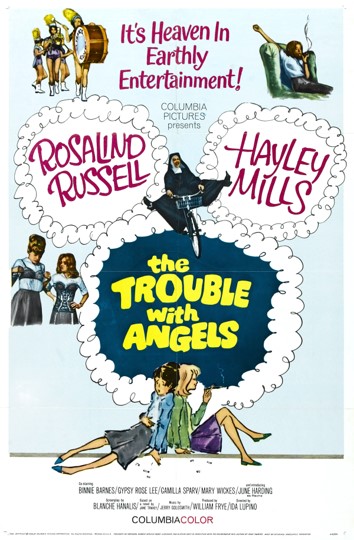
The Trouble with Angels poster created by Columbia Pictures. Image found at http://www.tcm.com/tcmdb/title/16482/The-Trouble-With-Angels/#.

Things I liked about the film:

  • The acting: I really liked the cast of The Trouble with Angels! Every actor and actress pulled off a performance that not only appeared realistic, but also was effective. Rosalind Russell’s portrayal of Mother Superior was interesting to watch. This character was strict, yet she always had her heart in the right place. I couldn’t help but find Mother Superior to be a likable character. I also enjoyed seeing Haley Mills in this film! Prior to watching The Trouble with Angels, I have seen The Parent Trap (1961), That Darn Cat and The Moon-Spinners. Hayley’s portrayal of Mary Clancy is somewhat different from her roles in those aforementioned films. However, Hayley’s performance had a sense of maturity to it. This particular role complimented both her age and acting abilities. Because of this, it made Hayley’s portrayal of Mary that much more entertaining to watch!


  • The set/scenery: The Trouble with Angels takes place at St. Francis Academy. According to IMDB, the building that was used in the exterior shots is a real-life facility in Ambler, Pennsylvania. But the interior shots were filmed in a California studio. Despite this difference in filming locations, I thought the scenery/set was absolutely magnificent! The building itself looks like a castle, the footage of it probably doesn’t do this place justice. There were grounds surrounding the building that I liked seeing as well! All four seasons was showcased in the film, which helped highlight the beauty that these grounds had to offer. The set looks like it would compliment the real-life structure. A combination of stone, wood, and stained glass were appealing to the eye. The location scout(s) and set decorator(s) did a great job with bringing this school to life!


  • A sense of humanity: In this story, there were moments where a sense of humanity shown through. This happened through dialogue and situations amongst the characters. One example is when Mary and Rachel (portrayed by June Harding) try to lie to Mother Superior about their whereabouts. When Mother Superior suspects that Mary and Rachel are making fun of one of their teachers, she shares the truth about this particular teacher with them. Another example is when some of the students visit a Retirement Home during Christmas-time. When Mary overhears some of the residents sharing their loneliness with others, it shows the audience that this specific season might not be the most wonderful time of the year for some people. The incorporation of this sense of humanity felt genuine, like the creative team behind this film had good intentions for including it.

The Rosalind Russell Blogathon banner
The Rosalind Russell Blogathon created by Crystal from In The Good Old Days Of Classic Hollywood. Image found at https://crystalkalyana.wordpress.com/2019/03/08/announcing-the-rosalind-russell-blogathon/.

What I didn’t like about the film:

  • A limited amount of humor: While there were moments of humor found throughout the film, I felt like the story favored the dramatic moments more than the comedic ones. These moments of humor seemed far and few between. Most of the film’s humor came from the pranks and mishaps that are caused by Mary and Rachel. Even though The Trouble with Angels would be classified as a comedy, this movie feels more like a dramedy (a mix of comedy and drama).


  • Mostly static characters: The Trouble with Angels is primarily about the characters of Mary and Rachel. This story follows them from the beginning of their freshmen year of high school to their graduation. In that time-frame, however, Mary and Rachel didn’t really seem to have that significant of a transition of rambunctious youngsters and responsible young adults. For more than half of the film, Mary and Rachel were static, continuously pulling pranks and despising their peers and teachers. It wasn’t until they joined their school’s band when these characters started to grow as individuals. This part of the story feels a little bit rushed, like the creative team behind this movie was trying to make up for lost time.


  • Little emphasis on academics: In movies that take place in a school setting, there is usually an emphasis on either an important teacher or an influential school assignment. But that wasn’t the case for The Trouble with Angels. Instead, the story focused on the character development of Mary and Rachel. There were moments that showed these characters in the middle of a school lesson, such as when Mary and Rachel were trying to avoid their swim tests. But these moments didn’t last long enough to have a large impact on the narrative.

20190605_185743[1]
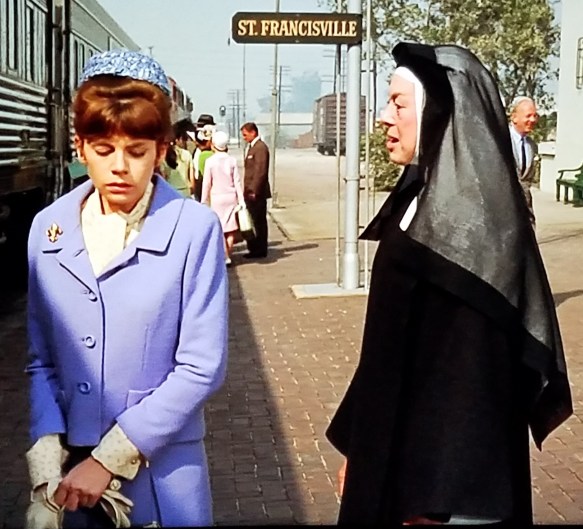
We interrupt this movie review to give you a moment to appreciate Rachel’s hat. Screenshot taken by me, Sally Silverscreen.

20190605_1858261.jpg
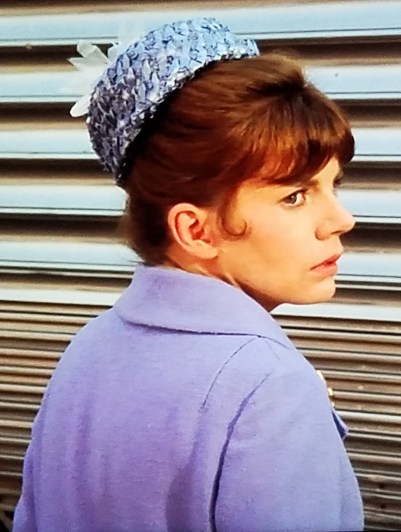
This is, honestly, the coolest pill-box hat I’ve ever seen in my life! Screenshot taken by me, Sally Silverscreen.

20190605_1900001.jpg
As soon as I saw this hat, I knew I had to have it in my life. Screenshot taken by me, Sally Silverscreen.

My overall impression:

The Trouble with Angels is a fine film. This story had more heart and soul than I expected, especially due to the sense of humanity found within the narrative. While this movie could have been stronger, there were elements about it that made the project enjoyable. Rosalind and Hayley definitely helped carry the film! Though these actresses were at different places in their careers, their acting abilities complimented each other. When it comes to films about teenagers, The Trouble with Angels is one of the better ones. The story primarily focused on Mary and Rachel. But, with the incorporation of the teachers and Mother Superior, the best intentions for the students could be seen throughout the story. That’s how I would define this movie; the creative team making this film with the best of intentions.


Overall score: 7.4-7.5 out of 10


Have you seen The Trouble with Angels? Which movie of Rosalind Russell’s would like me to watch next? Please tell me in the comment section!


Have fun at the movies!

Sally Silverscreen