Take 3: Cancel Christmas Review

When choosing to review a Hallmark Christmas film, I sometimes select an “older” production that isn’t featured during “Miracles of Christmas” or “Countdown to Christmas” as often as it used to. I figure if either Hallmark Channel or Hallmark Mystery continues to prioritize their “newer” movies, 18 Cinema Lane will take the time to give these “older” pictures their much-needed recognition. Cancel Christmas is one of these films. Premiering in the early 2010s, Cancel Christmas was released during a time when Hallmark Channel aired less than twenty movies during their “Countdown to Christmas” line-up. This movie was also released during a time when Hallmark’s Christmas projects weren’t mandated by the network’s brand, allowing each movie to be as creative as their respective creative team desired. When I wrote about hoops&yoyo’s Haunted Halloween, I mentioned how Hoops & Yoyo would appear in an article of things you can no longer find from Hallmark. If this article existed, Christmas movies featuring Santa would also be included. Comparing today’s Hallmark Channel with the network of yesteryear, Santa’s appearances in Christmas cinema have become rarer. So, similar to hoops&yoyo’s Haunted Halloween, Cancel Christmas serves as a time capsule of how different Hallmark Channel was over ten years ago.

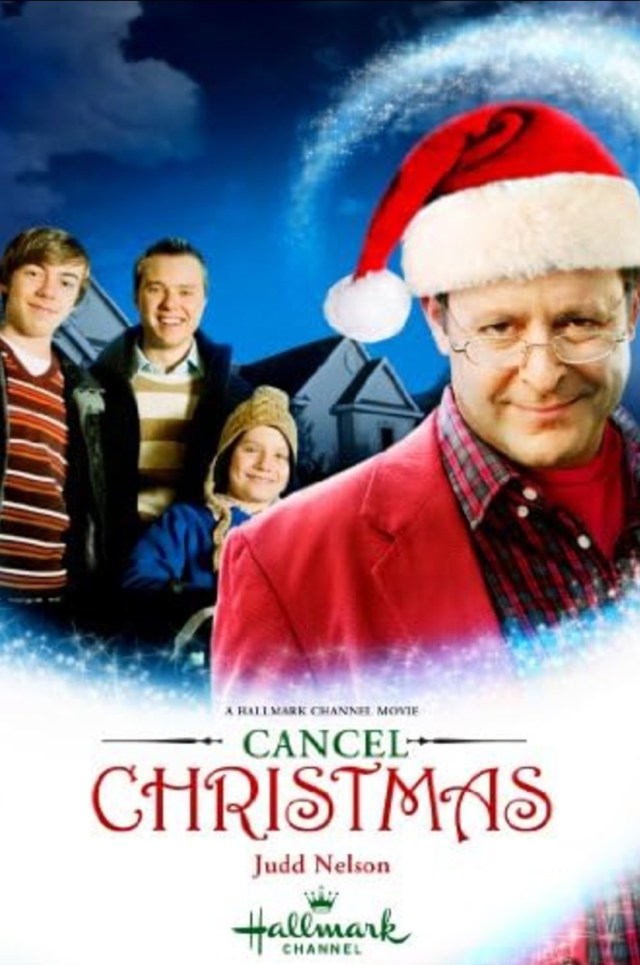
Cancel Christmas poster created by Chesler/Perlmutter Productions, Daro Film Distribution, and Hallmark Channel

Things I liked about the film:

The acting: Since the dawn of cinema, there have been countless portrayals of Santa. How Santa carries himself on screen depends on the actor, screenwriting, and director. In Cancel Christmas, Judd Nelson presented Santa in a way I don’t often see in the world of Christmas cinema. This movie shows Santa as softer-spoken, displaying jolliness through actions instead of just words. His overall demeanor was that of a “wise elder”; thoughtful, reflective, and willing to be a mentor when necessary. Judd’s portrayal of Santa stresses one of the themes of Cancel Christmas; it doesn’t matter what Santa looks like, what matters is the goodness in his heart. Working alongside Santa is an elf named Randal. Portrayed by Justin Landry, Randal ended up stealing the show! He was the perfect opposite to the character of Santa, being enthusiastically joyful and wearing a smile with an up-beat attitude. Randal’s laugh was infectious, making me laugh along with him. I, honestly, wish this movie had been about Randal!

If a Christmas movie features a “Scrooge” type character (a character whose heart changes over the course of the story), the character’s gradual change needs to feel genuine. The more genuine this transformation is, the more opportunities the audience receives to have empathy for that character. Sante Scaletta portrayed a “Scrooge” type character in Cancel Christmas. Farley Morgan is known as a bully at his school. Around his friend and authoritative figures, Farley carries an arrogant attitude. He presents himself as more invincible than he really is. But behind closed doors, the emotional walls surrounding Farley become dismantled. From happily playing with his dog, Kip, to tearfully sharing family memories with his father, Farley’s emotional range broadens. Because of Sante’s impressive performance, Farley’s gradual change in Cancel Christmas truly felt believably genuine!

The messages and themes: In a typical Christmas film, especially from Hallmark, important messages and themes are sprinkled throughout the story. These messages and themes serve as lessons for the audience to learn. They’re also ways for the audience to relate to the characters. As I mentioned earlier in this review, Farley is a bully at his school. Toward the beginning of Cancel Christmas, he and his friend, Steve, attempt to pull a prank on their teacher, Mrs. Claymore. However, Mrs. Claymore is spared from the prank because the prank ends up affecting someone else. At school one day, Mrs. Claymore tells Steve if she had been affected by the prank, it would have made her cry. She shares this to remind Steve how his and Farley’s actions have consequences.

The setting: On-screen text reveals how Cancel Christmas takes place in Atlanta, Georgia. This was a nice change of scenery from the backgrounds of most of Hallmark’s Christmas productions! Snowy, small towns have become a staple in the network’s Christmas cinema. The reality, though, is how not everyone’s environment reflects what Hallmark projects. By placing Cancel Christmas in Atlanta, Georgia, the movie’s creative team gives the audience an idea of what the Christmas season is like in one of America’s southern states. Relatable Christmas activities, such as making Christmas dinner and decorating the school, are emphasized throughout the story. Among Hallmark’s collection of Christmas films, southern states have rarely made an appearance. So, I appreciate Cancel Christmas’ creative team filling this particular creative void!

Adorable Santa image created by Freepik at freepik.com. <a href=’https://www.freepik.com/free-vector/christmas-background-with-funny-santa_1324597.htm’>Designed by Freepik</a>. <a href=”https://www.freepik.com/free-photos-vectors/background”>Background vector created by Freepik</a>. Image found at freepik.com.

What I didn’t like about the film:

A weak villain: Constance is introduced as the villain at the beginning of Cancel Christmas. She informs Santa his job is in jeopardy because of how spoiled the world’s children have become. While Santa speculates Constance’s motive for endangering his job, a clear explanation is never provided. Constance’s appearance in only three scenes prevented her from having a more intimidating presence. Jean Yoon, who portrayed Constance, gave a good performance with the provided script. But when it came to Constance being a weak villain, I fault the screenwriter.

Too many stories: Sometimes, a Hallmark Christmas movie will feature multiple stories within its script. The collection of stories can range from having one main plot and one or two sub-plots to a variety of characters crossing paths with one another. What makes some of these movies work is how all those stories are woven together. But, in Cancel Christmas, the threads between the stories were unimpressive, causing the script’s abundance of stories to be noticeable. Besides the main plot of Santa trying to save his job, there were about five sub-plots, from a news reporter trying to find the “real” Santa to Farley’s friend, Steve, organizing a fundraiser. There was creativity found within these sub-plots. In fact, some of them belonged in their own movie. However, all these stories ended up competing against each other in Cancel Christmas. It also doesn’t help how the film has a run-time of an hour and twenty-seven minutes. Having so many stories in one script made the movie feel kind of overwhelming.

Unnecessary clichés: I will commend the creative team behind Cancel Christmas for trying to incorporate as much creativity as possible into their project. But there were a few clichés that could have been left on the cutting room floor. As I mentioned in my list of the top ten worst clichés from Hallmark movies, the “business person is a jerk and/or out of touch” cliché has become one of the network’s more over-used clichés. It has, more often than not, been included in rom-coms, in order to make the businessman seem less desirable than the male protagonist. The “business person is a jerk and/or out of touch” cliché found a place in Cancel Christmas. In this movie, the cliché was connected to a story that has been adopted by a lot of entertainment media; the bully/antagonist having a tragic backstory and/or being misunderstood. To me, these parts of the story were more predictable than they needed to be. However, I understand their purpose in the movie was to instill compassion and empathy to the film’s audience.

Dog collection image created by Freepik at freepik.com. <a href=”https://www.freepik.com/free-photos-vectors/dog”>Dog vector created by freepik – http://www.freepik.com</a>. Image found at freepik.com.

My overall impression:

Hallmark Channel’s Christmas movies have changed since the network began in 2001. In the earlier years, these movies didn’t follow a pre-determined formula or adopt as many of the clichés viewers see today. Hallmark’s “older” productions were given more opportunities to find their respective audience because there were fewer Christmas films airing during the Christmas season. Like I said in my review, I commend the creative team behind Cancel Christmas for trying to incorporate as much creativity as possible into their project. From Judd Nelson’s portrayal of Santa to the story taking place in Atlanta, Georgia, these creative choices felt like a breath of fresh air compared to the network’s more recent offerings. Though there were things I liked about this film, it contained noticeable flaws. Not only was the villain weak, the movie featured too many stories. There were also some clichés that were, in my opinion, unnecessarily added to the film. I wish Hallmark would go back to making creativity the rule itself. So many stories and ideas could be told through the network’s programs. But with Hallmark making the same types of projects, the network seems content with creating repetitive and predictable presentations.

Overall score 7.1-7.2 out of 10

Have you seen Cancel Christmas? Are there any “older” Hallmark Christmas movies you enjoy watching? Please tell me in the comment section!

Have fun at the movies!

Sally Silverscreen

Take 3: Love at the Thanksgiving Day Parade Review

With Thanksgiving just around the corner, I decided to choose a Thanksgiving film as the first seasonal movie to review this Christmas/holiday season! While searching for options, the 2012 Hallmark presentation, Love at the Thanksgiving Day Parade, crossed my path. I hadn’t seen this film in its entirety prior to 2024. But over the years, I had heard good things about it. Within the Hallmark fan community, Love at the Thanksgiving Day Parade has received the title of “classic”. Because of that, I wanted to see for myself if the film’s hype was legitimate. Whenever a Hallmark movie becomes popular, I try to check out the movie in order to form my own opinion. Sometimes, I feel the hype was earned, like with the 2014 film, The Nine Lives of Christmas. But I have found myself disagreeing with popular opinion, such as with 2006’s The Christmas Card. What will be my thoughts on Love at the Thanksgiving Day Parade? If you want to know the answer, you have to keep reading my review!

Love at the Thanksgiving Day Parade poster created by Hallmark Channel, Pitchblack Pictures, and LaCanada

Things I liked about the film:

The acting: In a story that primarily revolves around the male and female protagonist, the likability of those characters is determined by the performance of the lead actor and actress. With their portrayal of Emily and Henry, Autumn Reeser and Antonio Cupo effortlessly carried Love at the Thanksgiving Day Parade! Emily is a bright, energetic, and up-beat woman. Her enthusiasm for Chicago’s Thanksgiving parade is charming, with that charm radiating off the screen. Throughout the movie, Autumn displays an understanding for her character’s emotional range. Emily’s energetic bubbliness is showcased enough to keep the character likable. Meanwhile, Antonio’s character, Henry, boasts a more serious personality. This seriousness doesn’t prevent Henry’s suave charisma from shining through. What Autumn’s and Antonio’s performance share in common is how consistent they are. That consistency helped make Henry and Emily strong characters!

Antonio and Autumn are not the only actors giving consistent performances in Love at the Thanksgiving Day Parade! From time to time, Emily interacts with a co-worker named Donna. Similar to Emily, Donna has a bubbly personality. Because of April Telek’s acting strengths, I looked forward to seeing Donna show up in the story. In fact, I wish Donna received a larger role in the film. Another likable character was Emily’s friend, Jaclyn. Despite appearing in the movie for a limited period of time, Ali Liebert helped her character shine by presenting Jaclyn with a warm, friendly personality. I wish Jaclyn was given her own sub-plot to be more involved in the story.

The on-screen chemistry: As I just talked about in this review, Autumn Reeser and Antonio Cupo effortlessly carried Love at the Thanksgiving Day Parade. Another reason why I believe this statement is because of their on-screen chemistry. This movie uses the trope of “opposites attract”. Because of the aforementioned performances of Antonio and Autumn, the attraction of Henry and Emily felt believable! Their banter went back-and-forth like a ping-pong game, providing lively, even funny interactions. The more time they spent together, the more Emily and Henry’s feelings for each other naturally progressed. Despite being “opposites”, these characters found common ground and tried to get on the same page. Henry and Emily kind of reminded me of Oliver and Shane from the Signed, Sealed, Delivered series.

Emily’s wardrobe: Throughout Love at the Thanksgiving Day Parade, Emily consistently wears vintage attire. I liked this creative decision because Emily’s wardrobe not only complimented Autumn, it made Emily a unique character! One of these outfits was a pink dress with matching jacket. Paired with a pink pillbox hat, this outfit represents the classy and sophisticated way Emily presents herself. Even when she takes a simple trip to the grocery store, Emily sports a deep teal, long-sleeved dress with a pleated skirt. When Henry invites her to a basketball game, Emily stays true to herself by wearing a red, short-sleeved blouse, dark blue jeans, and a red belt. The only “modern” part of the ensemble is a Chicago Bulls cap.

Image of Thanksgiving dinner created by Freepik at freepik.com. <a href=”https://www.freepik.com/free-photos-vectors/background”>Background vector created by freepik – http://www.freepik.com</a>. Image found at freepik.com.

What I didn’t like about the film:

A secondary holiday and parade: Hallmark does not create Thanksgiving movies often, especially this decade. So, when I watch one of their Thanksgiving pictures, I hope the holiday is featured similarly to Christmas in their Christmas productions. As the story progressed in Love at the Thanksgiving Day Parade, however, I quickly took notice of how Emily and Henry’s relationship was prioritized over Thanksgiving and the titular parade. The Thanksgiving holiday was barely referenced in this movie. There were no Thanksgiving decorations to be seen and I don’t recall any of the characters saying the word “turkey”. While parade preparations were shown throughout the film, they were only featured in short segments. This is a shame because aspects of the parade, such as “parade camp” or a group of clowns visiting children at the hospital, could have served as the story of their own movie. I wish the parade and/or Thanksgiving had been more involved in the plot. With Emily sharing a brief history of the parade early in the film, Love at the Thanksgiving Day Parade could have had a story similar to A Biltmore Christmas.

The “it’s not what you think” cliché: Among Hallmark’s collection of clichés is the “it’s not what you think” cliché. This is when the protagonist sees or hears something out of context and automatically assumes the worst. Hallmark has sometimes used this cliché in a way that complements the story, like in Easter Under Wraps and Rome in Love. But there are times when this cliché has been included in a movie just for the sake of it. In the case of Love at the Thanksgiving Day Parade, I understand the “it’s not what you think” cliché was intended to create conflict between Henry and Emily. However, I don’t think the cliché’s inclusion in the story was necessary because it happened right after Emily experienced a difficult time in her life. To me, that part of the film seemed cruel and a bit mean-spirited toward Emily.

A rushed backstory: One of the themes of Love at the Thanksgiving Day Parade is “looks can be deceiving”. Despite this theme being utilized well at times, the overall utilization of this theme was not consistent. During the film’s climax, important pieces of a character’s backstory are presented in a rushed manner. That information helps another character change their perception of the character in question. Instead of rushing to deliver this information before the end of the movie, it should have been given over the course of the film. That way, the audience has time to digest and ponder the character’s backstory.

Group of clowns image created by Freepik at freepik.com. Image by Freepik

My overall impression:

Because Hallmark creates so few Thanksgiving movies, I’m always rooting for their Thanksgiving pictures to be good. But, like Hallmark’s Christmas productions, these films are not created equal. As I’ve mentioned in the past, An Old Fashioned Thanksgiving is one of my favorite Hallmark films. One reason why is how Thanksgiving is acknowledged throughout the story. Unfortunately, Love at the Thanksgiving Day Parade did not follow in the footsteps of the 2008 film. In fact, Thanksgiving and the titular parade were overshadowed by Emily and Henry’s relationship. This is one of those movies where a better story idea can be found within the script. But the reason why I kept watching the film is because of the acting performances! Autumn Reeser and Antonio Cupo shined bright together, carrying the movie with their acting talents and on-screen chemistry. The supporting cast was strong as well. I liked Emily’s wardrobe because it helped make her such a memorable character. The combination of Autumn’s performance and the screenwriting contributed to that too. Out of Hallmark’s Thanksgiving projects I’ve seen, Love at the Thanksgiving Day Parade falls somewhere in the middle. While the 2012 picture isn’t bad, it could’ve been stronger.

Overall score: 6.7 out of 10

Have you seen Love at the Thanksgiving Day Parade? Has Hallmark created a Thanksgiving movie you’d like to see me review? Share your thoughts in the comment section!

Have fun on Thanksgiving!

Sally Silverscreen

My Movie Blogger’s Christmas Wish-List 2024

With the Christmas/holiday season fast approaching, it’s that time of year for my annual Movie Blogger’s Christmas Wish-List! For readers new to 18 Cinema Lane, this tradition shares the movie related things I’d like to receive for Christmas. The list’s format follows the quote; “Something you want, something you need, something to wear, and something to read”. The items on my list, including this year, have been a combination of realistic requests and wishful thinking. With those explanations said, let’s get into 2024’s Christmas wish-list!

Something You Want

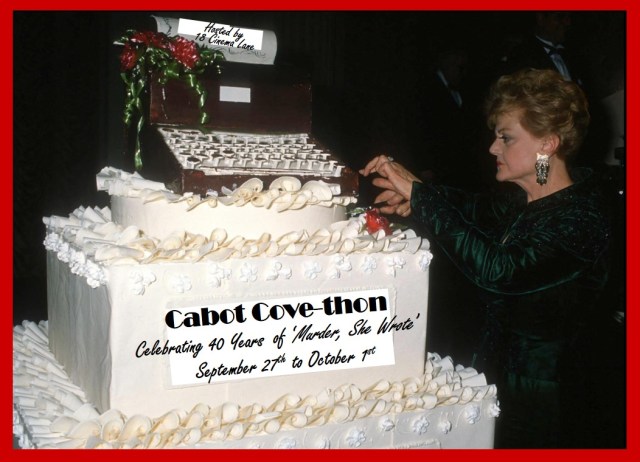
Since there are movies associated with the Murder, She Wrote series, I will bring this want up in my wish-list. During my Cabot Cove-thon Blogathon, I published an editorial about why Universal Orlando Resort should host Murder, She Wrote weekend. Throughout this article, I explained why this event should work by presenting a basic concept of the event’s schedule. Murder, She Wrote weekend is an event where all parties involved would benefit. Universal Orlando Resort would receive an opportunity to not only make a profit, but to also utilize an intellectual property (IP) that used to have a presence in the park. Attractions and businesses within the park’s boundaries would be able to welcome more guests and increase their revenue. Fans of Murder, She Wrote would have a chance to meet other fans and celebrate the legacy of the show. If Murder, She Wrote weekend becomes an actual event, I think it has the potential to become a cherished Universal Orlando Resort tradition!

Cabot Cove-thon banner created by me, Sally Silverscreen. Original picture found on IMDB.

Something You Need to See

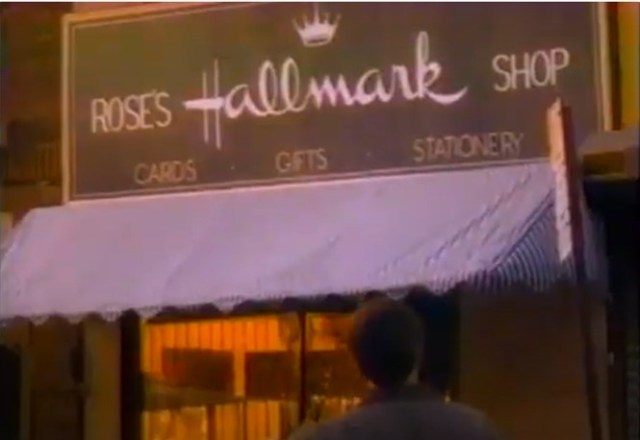
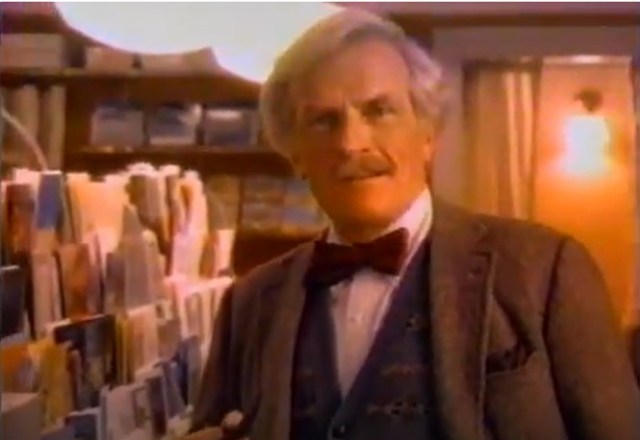
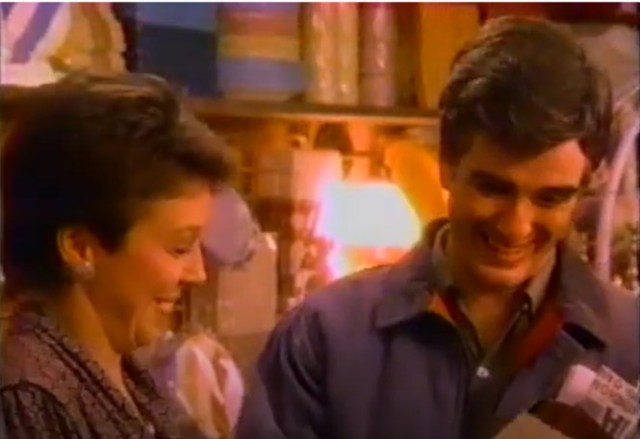
When I reviewed the Hallmark Hall of Fame movie, Pack of Lies, in June, I referenced a Hallmark commercial that was based on a true story. In this commercial, a man, whose first language is not English, is looking for the perfect card for his wife, who will soon arrive in the United States. When he goes to a Hallmark store, the man is assisted by an employee named Rose, who helps him find exactly what he is looking for. After watching this commercial, I developed a collection of questions: What happened to the man and his wife? Are they still together? Did she like the card he bought her? What about Rose, does she still work at Hallmark? Has she retired? And the biggest question of them all; what compelled Hallmark to turn this particular story into a commercial? With everything I just said, I think the commercial could serve as the story for a future Hallmark movie! If the Signed, Sealed, Delivered series continues, that commercial could also serve as a plot in a future Signed, Sealed, Delivered film!

This screenshot, taken by me, Sally Silverscreen, is from the aforementioned Hallmark commercial from 1987.

A movie related piece of clothing or accessory I’d want to wear

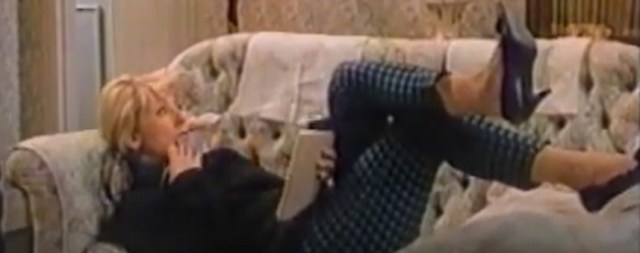
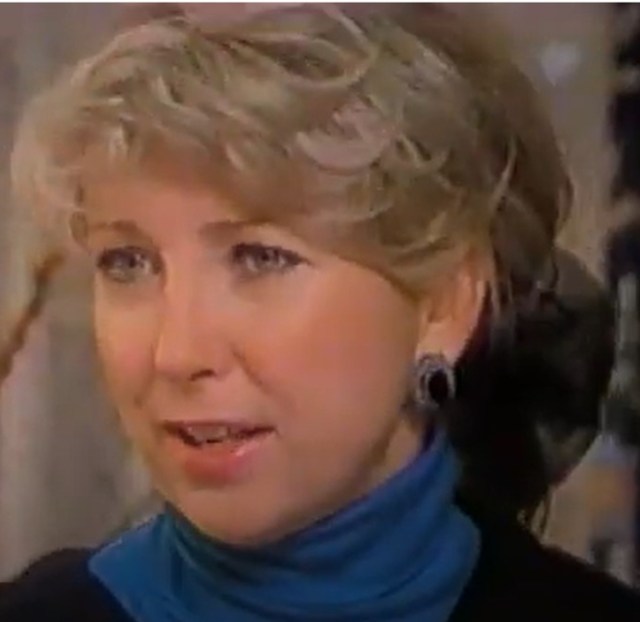
While we’re on subject of Pack of Lies, I want to talk about an outfit Teri Garr’s character, Helen, wore in the 1987 film! During Christmastime, Helen’s outfit was a black and blue ensemble that consisted of black kitten heels, black and blue plaid slacks, and a black sweater over a blue turtleneck. For accessories, Helen wore her hair in a black bow and displayed black stone earrings. I like this outfit because of how timeless it is! It works in either the 1960s, 1980s, or today!

This screenshot, taken by me, Sally Silverscreen, is from the Hallmark Hall of Fame movie, Pack of Lies. Because Helen wore this outfit in only one scene, this is the only time where her complete outfit is shown on-screen.
This screenshot, taken by me, Sally Silverscreen, is from the Hallmark Hall of Fame movie, Pack of Lies. Because Helen wore this outfit in only one scene, this is one of the few times her earrings and bow are featured on screen.

A book I’ve read that I’d like to see adapted into a film

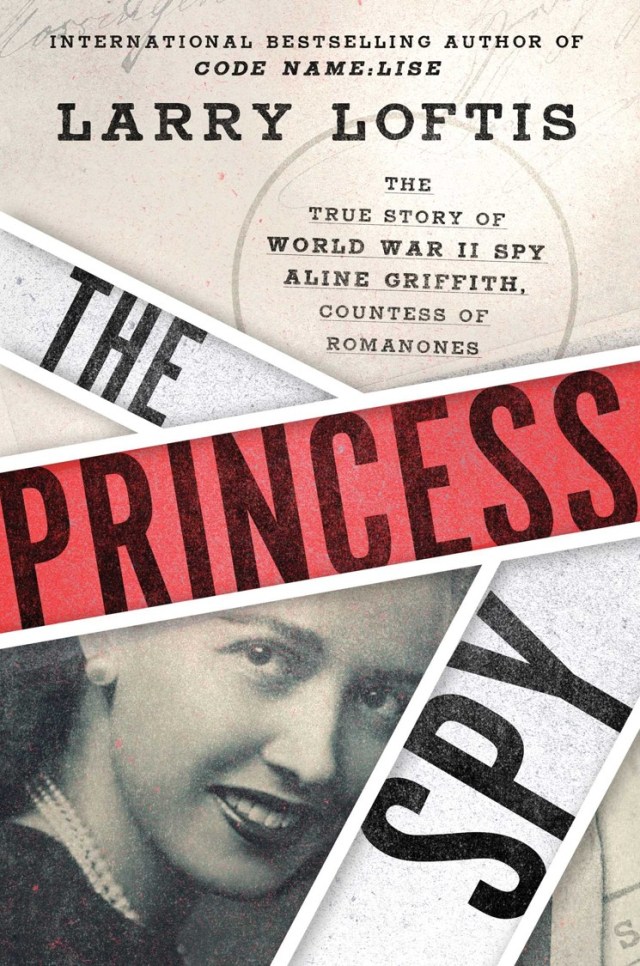
In my post about the Finally Fall Book Tag, I mentioned The Princess Spy being the best book I read for 2024’s Eurovisionathon. While discussing the book, I talked about how it was both educational and entertaining due to Larry Loftis’ research and literary skill. Looking back on other non-fiction stories from World War II, I realized how underrated Aline Griffith’s story is. When it comes to films taking place during World War II, the espionage side of the war effort is not commonly featured. Because of these factors, I would like to see The Princess Spy adapted into a movie!

The Princess Spy book cover found on Goodreads

What are your thoughts on my Christmas wish list? Are there any movie related things you’d like to receive during the Christmas/holiday season? Tell me in the comment section!

Have fun during the Christmas/holiday season!

Sally Silverscreen

Take 3: hoops&yoyo’s Haunted Halloween Review

For the recent We Are Family Blogathon, I had planned to review the Diagnosis Murder episode, “Guardian Angel”, and the 1964 movie, The Chalk Garden. While I wrote about the aforementioned television episode, I wasn’t able to discuss the movie due to those plans falling through at the last minute. I still want to review The Chalk Garden. It just didn’t happen as soon as I hoped or expected. So, to make it up to my readers who were anticipating a review of the 1964 film, I decided to write about a Halloween themed picture. I read an article on Business Insider about the thirty things you can’t find in malls anymore. One of the mentioned points was movies set in malls. As soon as I read this, I immediately thought of the 2012 Hallmark film, hoops&yoyo’s Haunted Halloween! I brought this movie up in my review of The Legend of Billie Jean, when a scene in the 1985 film was reminiscent of Hallmark’s production. In that review, I said I only saw pieces of the movie. That, paired with the fact the only other animated movie I’ve written about this year, so far, was Cricket on the Hearth, is the reason why I chose hoops&yoyo’s Haunted Halloween for this review! Is this film a trick or treat? Keep reading to find out!

hoops&yoyo’s Haunted Halloween poster created by Bent Image Lab, Pershing Road Productions, and Hallmark Channel

Things I liked about the film:

The use of color: In my review of Cricket on the Hearth, I talked about how well color was used throughout that movie. I even mentioned how some of the best animated movies boast bright, colorful hues. hoops&yoyo’s Haunted Halloween followed Cricket on the Hearth’s footsteps by displaying a strong understanding for how to effectively incorporate color into their production. During their mall adventure, Hoops, Yoyo, and Piddles take advantage of the different shops and attractions at North Escapades Mall. One of these stores is called “bling you phone!”. The store’s sign and window frames are coated in a deep purple hue. This simple creative choice drew the audience’s attention to this particular location, especially since the colors surrounding the “bling you phone!” store are warm beige, faded brown, and cream. Later, at a sporting goods store, Hoops and Yoyo are camping in a big, orange tent. Surrounding the tent are products displaying shades of green, red, and yellow. Even in the smallest of details, the hoops&yoyo’s Haunted Halloween’s creative team took advantage of every opportunity to include color in their project!

Expressive characters: A strength of any animated movie is how expressive the characters are. Facial expressions, body language, and even the vocal inflections of the voice actors can show the audience how a character is feeling. Despite the simpler designs, the characters in hoops&yoyo’s Haunted Halloween were very expressive! This was achieved through the movement of eyes, mouths, and eyebrows. When Hoops, Yoyo, and Piddles discover their local store has sold out of Halloween costumes, they are shocked by the emptiness of the surrounding shelves. Hoops’ and Yoyo’s eyes are wide, with Hoops even looking at the top shelves. Piddles’, Yoyo’s, and Hoops’ mouth is in an open frown, emphasizing how shocked they are. Hoops’ and Yoyo’s eyebrows are shown in an upward curve, which adds to their feeling of shock. These simple movements allowed the characters to effectively display their emotions!

Self-awareness: Skilled screenwriters will weave self-awareness into a script to subtly and cleverly make jokes or present an interesting point. hoops&yoyo’s Haunted Halloween featured some moments of self-awareness through dialogue and “Easter eggs”. While Hoops, Yoyo, and Piddles are looking at a mall directory, a large Christmas advertisement is shown next to these characters. On this advertisement, a picture of Santa is next to a statement claiming “Santa Claus is coming”. Later, Piddles rides near an animatronic of Santa. Next to Santa is a sign saying “It’s Halloween! That means you’re already late for Christmas!” The placement of these “Easter eggs” addresses how early Christmas has been advertised. I found this piece of self-awareness ironic, as Hallmark now starts their Christmas movie line-ups weeks before Halloween.

Cute Halloween border created by Freepik at freepik.com. <a href=’https://www.freepik.com/free-vector/halloween-background-with-fun-style_1310632.htm’>Designed by Freepik</a>. <a href=”https://www.freepik.com/free-photos-vectors/background”>Background vector created by Freepik</a>. Image found at freepik.com.

What I didn’t like about the film:

An unclear demographic: Animation is typically associated with an audience of children or families. However, some animated programs were created with an older audience in mind. With that said, I’m still trying to figure out who was hoops&yoyo’s Haunted Halloween’s intended audience. Toward the beginning of the film, the reference to cinnamon buns sounds like a comparison to a smoking addiction. Hoops even reminds Yoyo how he’s wearing his “cinnamon bun patch”. After Hoops, Yoyo, and Piddles become trapped inside the mall, they are chased by ghosts. During the chase, Yoyo randomly screams “We need to find a bathroom”, leading to a scene where Hoops and Piddles wait for Yoyo outside of the mall’s bathrooms. This scene was one of two moments of “bathroom humor” throughout the film. Was hoops&yoyo’s Haunted Halloween created for a younger audience, with certain jokes going over their heads, or was this movie always intended for an older audience?

Parts of the story that don’t make sense: Earlier in this review, I mentioned the “bling you phone!” store at North Escapades Mall. The reason this store was featured in the movie was Piddles’ desire to decorate her phone case. Piddles’ phone can be seen a total of three times. This fact raises the question of why she didn’t call for help after she, Hoops, and Yoyo became trapped inside the mall? What also doesn’t make sense is how Piddles would easily agree to take advantage of the mall after hours, especially since, before the mall closed, she reminded Hoops and Yoyo of a Halloween party they needed to attend that night. I know fictional stories, including those from animated movies, require their audience to suspend a certain amount of disbelief. However, in the case of hoops&yoyo’s Haunted Halloween, that suspension of disbelief caused some parts of the story to not make sense.

Scenes that were too long: At the beginning of hoops&yoyo’s Haunted Halloween, Hoops is driving Yoyo and Piddles to the store. This scene establishes the reason for the trip and the date of the story. But Hoops’, Yoyo’s, and Piddles’ trip to the store takes up almost three minutes in a twenty-one-minute movie. Though I understand the scene’s purpose of setting up the story and providing exposition, I think it should have been trimmed shorter to under two minutes and thirty seconds. This is just one example of how some scenes were too long in hoops&yoyo’s Haunted Halloween.

Image by evening_tao on Freepik

My overall impression:

When explaining why I chose to review hoops&yoyo’s Haunted Halloween, I brought up the Business Insider article about the thirty things you can’t find in malls anymore. If there was an article of the things you can no longer find from Hallmark, Hoops & Yoyo would be included. This movie serves as a time capsule of how different Hallmark Channel was twelve years ago. As I mentioned in my review, the Christmas “Easter eggs” were ironic because, as of 2024, Hallmark starts their Christmas movie line-ups weeks before Halloween. The 2012 movie also provides a more unique story when it comes to Halloween cinema. The mall is a location not typically associated with the holiday. While I won’t spoil the reveal of what’s haunting North Escapades Mall, I will say this revelation paired with the chosen location is creative and well-written. Though Hallmark is not known for their efforts in animation, the simple creative decisions like knowing when and where to use color worked in the network’s favor. The expressiveness of the characters also helps. If you’re looking for a Hallmark movie that’s found off the beaten path, I’d suggest getting to know Hoops & Yoyo!

Overall score: 7.1 out of 10

Have you seen hoops&yoyo’s Haunted Halloween? Would you like to see me review hoops&yoyo Ruin Christmas during the Christmas season? Let me know in the comment section!

Have fun on Halloween!

Sally Silverscreen

Take 3: Curious Caterer: Forbidden Fruit Review

When I reviewed Curious Caterer: Foiled Plans back in April, that movie became the best Hallmark mystery of 2024. Now six months later, Curious Caterer: Foiled Plans is still the best Hallmark mystery movie of the year! When I learned Curious Caterer: Forbidden Fruit was on the horizon, I was so excited for the film’s release. Part of my excitement was due to how much I liked Curious Caterer: Foiled Plans. The Curious Caterer series is one of the strongest series Hallmark has ever created. The strength of Nikki Deloach’s and Andrew W. Walker’s performances, as well as their on-screen chemistry, is one reason why Curious Caterer has been an enjoyable collection of films. It also helps how the movies have been well written. Can Curious Caterer: Forbidden Fruit be just as good as Curious Caterer: Foiled Plans? Keep reading my review to find out!

Curious Caterer: Forbidden Fruit poster created by Timeless Pictures and Hallmark Movies & Mysteries

Things I liked about the film:

The acting: As I said in my review of Ainsley McGregor Mysteries: A Case for the Winemaker, the strength of the cast can add to the story’s intrigue. Even though the acting has been consistently successful in the Curious Caterer series, this is impressive when you consider the series has utilized a rotating secondary cast! I have always liked Jaycie Dotin’s portrayal of Marla Maguire. I not only liked her performance in Curious Caterer: Forbidden Fruit, I also think she and Luke Camilleri had really nice on-chemistry! When Marla meets Jax backstage before the concert, he shares a memento from his late sister. His entire demeanor is sad, yet he appears appreciative when Marla asks about the memento. Marla’s tone of voice indicates she’s trying to be understanding of Jax’s situation. Later in the film, when Jaycie and Luke appear together in another scene, Jax and Marla are all smiles. They both look comfortable in each other’s company and seem to enjoy spending time with one another. I hope Luke and Jaycie star together in another Hallmark production!

Another strength of the Curious Caterer series is the strong on-chemistry of Nikki Deloach and Andrew W. Walker. Their portrayals of Goldy and Tom were, once again, one of the best parts of the movie! Now that these characters have an established, romantic relationship, they received more opportunities to spend time together in Curious Caterer: Forbidden Fruit. While observing Goldy’s mystery board, Tom asks why Selena would kiss her former band member, Derek. Goldy then proceeds to kiss Tom. After the kiss, Tom asks her if the kiss was meant to be evidence. Goldy happily replies she just wanted a reason to kiss him. Tom and Goldy’s interaction in this scene was not only sweet, it also felt genuine. Andew and Nikki’s acting abilities made their characters’ interactions enjoyable to watch!

A behind-the-scenes look at the music industry: The mystery in Curious Caterer: Forbidden Fruit revolves around the death of a band member during a live performance. Because the band and those surrounding them are consistently involved in the story, the movie’s creative team gave the audience a peek behind the music industry’s curtain. During a discussion between Tom and the band’s manager, Nicola, Tom learns each band member was insured in order to keep investors happy. This was new information to me, as I had never heard of musicians being insured before. Prior to the concert, Goldy and Marla were preparing to make their catered food. They were told by the band’s electrician, Sam, they could only use one electrical socket due to the older age of the venue and the other plugged-in electrical equipment. When people attend a concert or a live performance, they are so focused on what is happening on stage, details like a venue’s age or electrical power grids may not cross their minds. Curious Caterer: Forbidden Fruit showed what goes into planning and delivering a musical event.

Incorporating serious, real-world topics: Hallmark productions, whether it’s a Hallmark Hall of Fame movie or a Christmas film, sometimes include serious, real-world topics into their scripts. What can make or break a script is how these serious, real-world topics are incorporated into the story. The way these kinds of topics were included in Curious Caterer: Forbidden Fruit was more subtle, yet there was enough information for the audience to understand what was happening. As Goldy is serving drinks to the band members before the concert, she reassures Derek (a recovering alcoholic) there are no alcoholic ingredients in his drink. Because Derek’s drink and Jax’s drink appear similar, Goldy stops Derek from consuming Jax’s drink, which contains rum. This mistake causes Derek to accuse Jax of trying to break his sobriety. The scene I just described felt like a realistic interaction, with the subject of addiction naturally woven into the dialogue. This was made possible by the quality of the acting performances as well as the screenwriting.

Detective work image created by Photoroyalty at freepik.com. <a href=’https://www.freepik.com/free-vector/investigation-background-design_1041877.htm’>Designed by Freepik</a>. <a href=”https://www.freepik.com/free-photos-vectors/background”>Background vector created by Photoroyalty – Freepik.com</a>. Image found at freepik.com.

What I didn’t like about the film:

Miscast characters: Curious Caterer: Forbidden Fruit begins twenty years ago, with the band, The Faithfuls, celebrating the success of their single, “Love Me Always”. This opening scene implies the band members are in their early twenties, especially since they all share a bottle of champagne. Several scenes later, when Marla and Goldy explain to Olive who The Faithfuls are, Goldy and Marla claim they were high-schoolers twenty years ago. When the band members are reintroduced in the story, they appear to be the same age as Marla and Goldy. This creative flaw is not the fault of Garrett Black, Luke Camilleri, and Tammy Gillis, as they all did a good job with the provided acting material. However, I do fault the casting director for not recruiting actors who appeared older than Goldy and Marla.

Goldy’s limited involvement in the case: Throughout the Curious Caterer series, Goldy has worked alongside Tom to solve a given case. But in Curious Caterer: Forbidden Fruit, Goldy’s involvement in the case is limited. She still created a mystery board (which she and Marla called “Rhythm and Clues”) and helped Tom solve the mystery. Compared to the other films in the Curious Caterer series, Tom did the majority of the sleuthing. Goldy did not question potential suspects or gather clues as much as she has before. She and Tom seemed to be on separate pages when it came to catching the culprit.

Lack of food footage: In my reviews of other Curious Caterer films, I have either praised the creative team for their use of close-ups of appetizers or criticized the creative team for their lack of close-ups of food. Curious Caterer: Forbidden Fruit adopted the latter flaw, as there were barely any shots of Goldy’s catered food at the concert. In the greenroom, there were a few close-up shots of the band members’ drinks. A quick shot of vegan drumsticks was featured in a fan’s video. But other than these, the audience isn’t given a clear idea of what else Goldy served at the event. To me, this was a missed opportunity, especially since I was curious why Marla and Goldy needed to use an air fryer.

Music and stage image created by Topntp26 at freepik.com. <a href=’https://www.freepik.com/free-photo/music-sign_1179519.htm’>Designed by Topntp26</a>. <a href=”https://www.freepik.com/free-photos-vectors/vintage”>Vintage image created by Topntp26 – Freepik.com</a>. Image found at freepik.com.

My overall impression:

With Curious Caterer: Forbidden Fruit being the fifth movie in the series, this collection of films has found its rhythm (no pun intended) and understood what works for the overall story. Components like the acting, humor, and prioritizing the mystery have been consistently strong. There were even times when a Curious Caterer movie improved upon the flaws of the preceding chapter. I liked Curious Caterer: Forbidden Fruit! The peek behind the music industry’s curtain gave this film a unique identity. Serious, real-world topics, such as addiction, were thoughtfully incorporated into the script. Even though I thought the fifth movie in the Curious Caterer series was good, I still think Curious Caterer: Foiled Plans was slightly stronger. Goldy’s involvement in Curious Caterer: Forbidden Fruit’s case was limited, making it seem like she and Tom were on separate pages when it came to solving the mystery. I also believe the band members should have appeared older than Goldy and Marla. As of the publication of this review, Hallmark has not made any official announcements for movies premiering in 2025. But if there are more Curious Caterer films in the works, I would like to see a seasonal picture, such as a Christmas or Halloween themed Curious Caterer production!

Overall score: 7.6-7.7 out of 10

Have you seen Curious Caterer: Forbidden Fruit? Would you like to see more Curious Caterer films in 2025? Please tell me in the comment section!

Have fun at the movies!

Sally Silverscreen

Take 3: Nelly Knows Mysteries: A Fatal Engagement Review

This month, Hallmark Mystery premiered two new movies; Jazz Ramsey: A K-9 Mystery and Nelly Knows Mysteries: A Fatal Engagement. I did see Jazz Ramsey: A K-9 Mystery, but I found the film underwhelming, as the biggest flaw was how the titular K-9 was barely in the story. To make up for not reviewing that movie, I chose to write about Nelly Knows Mysteries: A Fatal Engagement instead. Months ago, before this film was announced as a Hallmark production, I stumbled upon the official synopsis for Nelly Knows Mysteries: A Fatal Engagement on IMDB. At the time, the story sounded generic. But I was willing to give the film a chance after learning Pascale Hutton and Kavan Smith were the project’s lead actors. Kavan and Pascale are two of the strongest actors in Hallmark’s community. Their on-screen chemistry has been so strong on When Calls the Heart, their characters, Rosemary and Lee, have become fan favorites. The idea of Pascale and Kavan working together on a mystery movie seems like a good idea. But did this good idea come to fruition or did this idea become wasted potential? The only way to find out is by reading my review!

Nelly Knows Mysteries: A Fatal Engagement poster created by Muse Entertainment Enterprises and Hallmark Mystery

Things I liked about the film:

The acting: When introducing a new series, it’s important to establish the relationships between the protagonist and the story’s other characters. These relationships could make or break that introductory film, with interest from the audience determining whether more chapters are created. What helps keep on-screen relationships interesting is the acting abilities of the cast. At the beginning of Nelly Knows Mysteries: A Fatal Engagement, Nelly, portrayed by Pascale Hutton, visits the diner of her friend, Helen, portrayed by Jill Morrison. The scene starts with the friends sharing happy greetings, their warm smiles and friendly tones in their voices express their excitement of seeing each other. But when Nelly sees someone she’s trying to avoid, her smile immediately drops to a look of concern with alertness in her eyes. Helen soon mirrors Nelly’s face with her own look of concern as she quickly gets on the same page as Nelly. Though this scene is short, the acting talents of Jill and Pascale create an on-screen friendship that feels believable!

Nelly Knows Mysteries: A Fatal Engagement adopts the “opposites attract” trope, showcasing Nelly with an energetic, joyful personality and Michael, portrayed by Kavan Smith, with a calmer, yet serious personality that leaves wiggle room for emotion. One scene that presents the “opposites attract” trope perfectly is when, as they’re sharing milkshakes at Helen’s diner, Michael asks Nelly what makes her happy. Nelly shares how she chooses to be happy as she reveals how one of her loved ones passed away. But before she tells Michael about this loved one’s passing, Nelly talks about a happy memory she has with that person. Using a tone of voice that sounds reflective and sometimes gesturing with her right hand, Nelly’s happiness appears gentler, with her smile coming and going. After giving Nelly his undivided attention, Michael looks sad and even a bit concerned. His frown and look in his eyes make Michael almost appear as if he’s adopting Nelly’s sadness.

Nelly’s wardrobe: Whether starring on When Calls the Heart as Rosemary Coulter or appearing alongside Kavan in The Perfect Bride films as Molly, Pascale Hutton’s characters have been given wardrobes that not only compliment Pascale herself, but are also stylishly presented on screen. Nelly’s wardrobe in Nelly Knows Mysteries: A Fatal Engagement is no different, as her attire is classy and sophisticated! When the audience is first introduced to Nelly, she wears a light pink short sleeved shirt paired with tailored navy pants boasting a blue and white pattern. A square-faced watch with a white band is the perfect accessory for this outfit! As she attends a party, Nelly wears another pink outfit. This time, she wears a bright pink tweed jacket with matching pink shirt. Light blue jeans, large gold earrings, and a simple gold heart necklace complete the look!

Addressing a flaw of an amateur detective: Amateur detectives from Hallmark Mystery movies may, sometimes, have a flaw that will either be brushed to the side or will turn into a blessing in disguise for the protagonist. This is one of the ways Hallmark has asked their audience to suspend their disbelief. In Nelly Knows Mysteries: A Fatal Engagement, however, Michael actually points out one of Nelly’s flaws to her. Nelly is upset when someone she knows is arrested. Michael then addresses how Nelly is unable to observe the case’s suspects from an objective perspective. Nelly ends up agreeing with Michael, as she knows she’s seen in her community as someone who looks out for her fellow neighbors. The honesty toward one of Nelly’s flaws added a sense of realism to Nelly Knows Mysteries: A Fatal Engagement!

Diner image created by Freepik at freepik.com. <a href=’https://www.freepik.com/free-vector/american-vintage-restaurant-hand-drawn_902205.htm’>Designed by Freepik</a>. <a href=”https://www.freepik.com/free-photos-vectors/food”>Food vector created by Freepik</a>. Image found at freepik.com.

What I didn’t like about the film:

The contradictions: Nelly Knows Mysteries: A Fatal Engagement incorporates the “everybody knows everyone in a small town” cliché; a story element that, in my opinion, is overused in Hallmark productions. Despite the presence of this cliché, there are some instances where the cliché is contradicted. While creating a mystery board, Nelly and her friend, Fiona, discover one of the residents of Babbleton (where this story takes place) is related to another resident of the town. If everyone in Babbleton knows each other, Fiona and Nelly shouldn’t be surprised by the familial connection of the aforementioned two characters. Earlier in the film, when questioned by Michael about the murder victim, Nelly tells him she’s known the murder victim for years. However, she’s unaware of how neat the murder victim kept their home. Again, if everyone knows each other in Babbleton, Nelly would have known the living conditions of the murder victim.

A misbalanced tone: It’s understandable why Hallmark would avoid making murder mystery stories too dark, as the network has gained a reputation for creating stories that exude coziness and heartwarming charm. In past Hallmark Mystery productions, a balance between tones was achieved by having a murder mystery serve as the film’s main plot while one or two subplots contained more lighthearted situations. The majority of Nelly Knows Mysteries: A Fatal Engagement is coated in a cheerful tone. Prioritizing this lighter tone caused the characters to seem like they didn’t take the story’s mystery seriously. It also created a lack of urgency. There were even times when the movie’s lighthearted tone felt inappropriate, such as when an up-beat jazz tune played while a character was arrested.

A dialogue-heavy story: Dialogue is an important component of any mystery movie, as it can contain clues and other important information. In the case of Nelly Knows Mysteries: A Fatal Engagement, the script was dialogue-heavy. The story was forced to rely on conversations and questioning from Michael to carry the mystery. Non-verbal clues, such as physical objects, were limited because of this creative decision. A dialogue-heavy story also made it difficult, at times, to keep track of characters.

Tools of a writer image created by Freepik at freepik.com. <a href=’https://www.freepik.com/free-photo/camera-and-coffee-near-notebook-and-accessories_2399437.htm’>Designed by Freepik</a>. <a href=”https://www.freepik.com/free-photos-vectors/vintage”>Vintage image created by Freepik</a>. Image found at freepik.com.

My overall impression:

If I could choose a movie that visually represents the concept of “having cake and eating it too”, it would be Nelly Knows Mysteries: A Fatal Engagement. The film’s creative team wanted to include a murder mystery in their story, yet they didn’t want their story’s tone to be too serious. By making their movie mostly lighthearted, the movie itself ended up being a little goofy for my liking. The creative team of Nelly Knows Mysteries: A Fatal Engagement wanted to utilize the “everybody knows everyone in a small town” cliché. At the same time, they didn’t want to commit to the cliché’s consistency. So, the script contradicted the cliché on more than one occasion. Despite these errors I discussed in my review, Pascale Hutton and Kavan Smith still shined bright together! The interactions throughout this movie felt believable, whether it was Nelly visiting Helen at her diner or Michael and Nelly discussing the story’s case. Addressing one of Nelly’s flaws as an amateur detective brought a sense of realism to the script. Within Hallmark’s library of films, there are worse titles than Nelly Knows Mysteries: A Fatal Engagement. However, this film doesn’t stand up to pictures like Curious Caterer: Foiled Plans.

Overall score 6 out of 10

Did you see Nelly Knows Mysteries: A Fatal Engagement? Would you like to see Kavan Smith and Pascale Hutton star in more mystery films together? Tell me in the comment section!

Have fun at the movies!

Sally Silverscreen

Take 3: Signed, Sealed, Delivered: A Tale of Three Letters Review

Now that 2024 is at the halfway point, I can share my honest thoughts on Hallmark Mystery’s programming. As of late July 2024, the best mystery movie is still Curious Caterer: Foiled Plans! I also thought Tipline Mysteries: Dial 1 for Murder has potential to start a series. But other than those titles, most of Hallmark’s mystery films, so far, have either been ok, disappointing, or (in the case of CrimeTime: Freefall) unwatchable. This emphasizes what I’ve been saying since I published my editorial about why Francesca Quinn, PI is the worst Hallmark movie I’ve ever seen; the network no longer prioritizes the mystery genre. However, I watch as many of Hallmark’s mystery projects as possible hoping they are good. With that said, I have decided to review Signed, Sealed, Delivered: A Tale of Three Letters. In an editorial as well as a Word on the Street story, I speculated what the movie could be about based on quotes and scenes from the trailer and even past creative decisions from Hallmark themselves. While some of these speculations were proven wrong, it was interesting to see how these creative choices differed from my own ideas. I also approached this newest chapter in the Signed, Sealed, Delivered series hoping it was good, as the overall quality of the series, in my opinion, has been inconsistent. Did Signed, Sealed, Delivered: A Tale of Three Letters raise my hopes or fall short of my expectations? Keep reading my review to find out!

Signed, Sealed, Delivered: A Tale of Three Letters poster created by Hallmark Mystery, MoonWater Productions, and Hallmark Movies & Mysteries

Things I liked about the film:

The overarching theme: When I shared my thoughts on the Signed, Sealed, Delivered: A Tale of Three Letters trailer last month, I talked about how the film’s main plot seemed like a redemption story based on the featured scenes and quotes. As I watched the movie, I was proven wrong on what the story was about. Instead, the overarching theme of Signed, Sealed, Delivered: A Tale of Three Letters discussed when to get involved in someone’s life as well as their problems. This was an interesting creative choice because this is the first time in the series’ eleven-year history the POstables have questioned their work at the Dead Letter Office. The creative decision also highlights how the POstables’ actions have consequences. The thought-provoking nature of the overarching theme, plus its relatability, gives the audience something to think about not only during the movie, but after the story ends.

Recognition of therapy: Therapy can be a useful resource for people who genuinely need it. Though in the twenty-year history of Hallmark Mystery, this idea is rarely included in their programming. Signed, Sealed, Delivered: A Tale of Three Letters shows both POstable couples utilizing therapy for personal reasons. For Norman and Rita, therapy is a part of the process toward starting a family. Meanwhile, Oliver and Shane attend therapy in order to solve a problem. The incorporation of therapy in the newest Signed, Sealed, Delivered movie addresses how multifaceted therapy can be. It also acknowledges a topic typically overlooked by Hallmark. Therapy’s inclusion in Signed, Sealed, Delivered: A Tale of Three Letters gave this story a more unique identity within the series!

Charley’s subplot: In my Word on the Street story about the trailer for Signed, Sealed, Delivered: A Tale of Three Letters, I speculated if Rhiannon Fish’s character, Charley, would become a fifth member of the POstables. This speculation was based on quotes and scenes directly from the trailer. Charley does not become an official member of the POstables in Signed, Sealed, Delivered: A Tale of Three Letters. However, she did receive her own subplot! Charley’s part of the story shared a connection to the film’s main plot. Plus, Charley received more character development, which allowed the audience to learn more about her and her backstory. Because of this creative decision, Charley became more involved in the overall story of the movie. It also gave Rhiannon more acting material to work with!

Since I included screenshots of the Signed, Sealed, Delivered: A Tale of Three Letters trailer in my aforementiond Word on the Street story, I will also include them in my review of the movie. This screenshot is taken by me, Sally Silverscreen.

What I didn’t like about the film:

Shane and Oliver’s relationship problems: Throughout the eleven-year lifespan of the Signed, Sealed, Delivered series, Oliver and Shane have embodied the “opposites attract” trope sometimes adopted in romance or “rom-com” stories. Despite their differences, the couple was able to find common ground to help and love each other. Sadly, this previously established aspect of Shane and Oliver’s relationship was lacking in Signed, Sealed, Delivered: A Tale of Three Letters. For most of the story, the couple were either arguing with each other or were bitter toward one another. Their problems got to the point where Oliver and Shane didn’t seem compatible like in past films. Though the couple did go to therapy to resolve these problems, Shane and Oliver’s relationship woes soured the movie’s overall tone.

Predictable parts of the story: The Signed, Sealed, Delivered series has a more unique identity compared to Hallmark Mystery’s other movie series. One reason is the exclusion of murder mysteries. But no matter the mystery a movie series adopts, the mystery itself has to be intriguing enough for the audience to stay invested in the program. An approach to this idea is not making the story too predictable. Unfortunately, there were predictable parts of Signed, Sealed, Delivered: A Tale of Three Letters’ story. Charley knows exactly how the Great Mailbox Breach of 2017 started. Seconds after I predicted the reason, she ended up proving my prediction right when she shared this revelation with Shane and Oliver. Speaking of Shane, she has a surprise to share in this film. The surprise wasn’t effective for me because I correctly guessed the surprise within the movie’s first twenty minutes based on presented clues. These predictable parts of the story caused the film’s intrigue to decrease.

Too convenient situations: Earlier in this review, I mentioned Rita and Norman going to therapy as part of the process toward starting a family. Their part of Signed, Sealed, Delivered: A Tale of Three Letters’ story revolved around their desire to adopt a child. At one point, Rita even mentions having to deal with a lot of paperwork. But along the way, the POstables meet someone who, conveniently, finds the perfect solution for Norman and Rita. This causes their conflict to be resolved by the end of the movie. Situations happening too conveniently is another reason for the film’s decreased intrigue.

Since I included screenshots of the Signed, Sealed, Delivered: A Tale of Three Letters trailer in my aforementiond Word on the Street story, I will also include them in my review of the movie. This screenshot is taken by me, Sally Silverscreen.

My overall impression:

Hallmark brought the Signed, Sealed, Delivered series out of a three year hiatus to air Signed, Sealed, Delivered: A Tale of Three Letters on Hallmark Mystery. While it’s good to see Hallmark continuing a mystery series instead of cancelling or abandoning it, the newest Signed, Sealed, Delivered chapter needed more time to develop a stronger story. This movie did improve upon some of the flaws of the predecessor, Signed, Sealed, Delivered: The Vows We Have Made, such as providing Charley with more character development. Good creative decisions were expressed on screen, like the overarching theme and the recognition of therapy. But as I watched Signed, Sealed, Delivered: A Tale of Three Letters, I realized what the film was missing was the cozy charm that helped create Signed, Sealed, Delivered’s brand. The elements of religion/faith Signed, Sealed, Delivered has been known for was lacking, with God being referenced only once. Even Stevie Wonder’s song, which has become the unofficial theme song of the series, was nowhere to be heard. In all honesty, I have seen films in the Signed, Sealed, Delivered series that were weaker than Signed, Sealed, Delivered: A Tale of Three Letters. At the same time, there were stronger films in this series than Signed, Sealed, Delivered’s newest installment. Hopefully, next year’s chapter, “Signed, Sealed, Delivered: To the Moon and Back” is a better movie.

Overall score: 6 out of 10

Have you seen Signed, Sealed, Delivered: A Tale of Three Letters? Are you looking forward to “Signed, Sealed, Delivered: To the Moon and Back”? Please tell me in the comment section!

Have fun at the movies!

Sally Silverscreen

Take 3: Hallmark Hall of Fame’s Brush with Fate Review + 490 Follower Thank You

Recently, I published a list of the top ten “icks” from Hallmark
Hall of Fame movies. The list consisted of ten aspects of Hallmark Hall of Fame
films I don’t like. One of these “icks” is when a movie from this collection
glosses over a serious subject. Shortly after I published my list, I found I wasn’t
the only blogger to not like this particular “ick”. A fellow blogger,
Ospreyshire, brought up the 2003 Hallmark Hall of Fame production, Brush with
Fate
, as an example of how Hallmark Hall of Fame can incorporate serious
issues into their stories. Since I hadn’t seen the film yet, I chose Brush with
Fate
for this Blog Follower Dedication Review! This is only the second project
from the Hallmark Hall of Fame collection I’ve reviewed this year, so far. A
month ago, I wrote about the 1987 movie, Pack of Lies. Unfortunately, I
found the film disappointing, as the story was a two-hour build-up to an
underwhelming resolution. So, here’s hoping Brush with Fate is a more
enjoyable picture!

Hallmark Hall of Fame’s Brush with Fate poster created by CBS and Hallmark Hall of Fame Productions

Things I liked about the film:

An immersive experience: A movie’s creative team has the potential
to provide an immersive experience for their audience. To achieve this, attention
to detail must be emphasized. That piece of advice can work in the favor of a
historical period film. Brush with Fate explores several time periods and how a
valuable painting exists within a given period. Each time period represented
looked and felt historically accurate! Not only does every featured period
appear well researched, every detail was tended to. From the architecture to
the machinery, even right down to the characters’ shoes, the aforementioned attention
to detail was adopted by Brush with Fate’s creative team. The effort the
creative team took to make each part of the story appear authentic helped
create an immersive experience for the viewer!


Visual transitions: When a story moves from one point to
another, scenes will transition using visual cues to let the audience know when
the story is moving forward. Because Brush with Fate explores several
time periods, there are multiple transitions throughout the movie. These transitions
are creative and use visually interesting parallels. Toward the beginning of
the story, Cornelia puts her hand on her family’s
prized painting. As she begins to share the history of the painting, the next
part of the story begins with Laurens putting his hand on the same painting,
signaling a change in time periods. The transitions during Brush with Fate were also seamless, allowing
the story to maintain a steady flow.


Lessons taught by the painting: More often than not,
Hallmark Hall of Fame movies weave important lessons into their stories. While Brush
with Fate
is no different, the way the story’s lessons were incorporated was
unique compared to other Hallmark Hall of Fame titles. In the 2003 film, different
characters learn a different lesson based on their experience with the
painting. In one part of the story, a woman from 1717 struggles to feed her
family. At the same time, she adores a painting she and her husband found.
Turning to her mother for advice, the woman is reminded how the painting is not
a blessing. This statement expresses that paintings are replaceable luxuries
compared to irreplaceable things like family.

Paint palette image created by Freepik at freepik.com <a href=’https://www.freepik.com/free-vector/hand-drawn-artsy-tools_836777.htm’>Designed by Freepik</a> <a href=”https://www.freepik.com/free-photos-vectors/hand”>Hand vector created by Freepik</a> Image found at freepik.com

What I didn’t like about the film:

Characters touching the painting with their bare hands: Fictional
movies typically make their audience suspend their disbelief. Sometimes, though,
audiences are asked to suspend more disbelief than they bargained for. Brush
with Fate
revolves around a Vermeer painting that is known for being valuable
in historical and monetary importance. But throughout the movie, multiple
characters touch the painting with their bare hands, including Cornelia , who is well aware of the painting’s value. It
may seem petty of me to critique the movie for this small detail. However, this
happened enough times in the movie that I couldn’t look past it.


An unchronological story: As I mentioned earlier in this
review, Brush with Fate explores several time periods and how a valuable
painting exists within a given period. However, this story is not told in
chronological order. Instead, Cornelia shares the painting’s history by bouncing
around between time, going backwards and then forwards. Not telling the story
in chronological order raises unanswered questions, such as what happened to
the baby from the family in 1717 and who acquired the painting after Laurens’
daughter and her fiancé. Without spoiling the movie, I will say I know why this
creative decision was made. But I still wish Brush with Fate was told in
chronological order.

An abrupt ending:  Most
Hallmark Hall of Fame movies are stand-alone stories where the conclusions are
definitive. However, there are exceptions to the rule, such as Sweet Nothing
in My Ear
and A Painted House. Brush with Fate is one of these exceptions. But, in my opinion, I don’t think this
movie should have received an open ending. The purpose of showcasing the
painting in multiple time periods is to elaborate how the painting’s history is
long-lasting. With the rather abrupt ending, this purpose seems defeated, like
the painting’s history has stopped short. It also leaves some unresolved loose
ends.

Art tools image created by Freepik at freepik.com. <a href=’https://www.freepik.com/free-vector/flar-art-tools-pack_835368.htm’>Designed by Freepik</a>.  <a href=”https://www.freepik.com/free-photos-vectors/paint”>Paint vector created by Freepik</a>. Image found at freepik.com.

My overall impression:

Before I share my thoughts on Brush with Fate, I want
to thank every follower of 18 Cinema Lane! With each movie review, including
these Blog Follower Dedication Reviews, I try to find films I can recommend to
my readers. Looking back on this Hallmark Hall of Fame picture, I think I could
recommend it. This is a project where attention to detail was emphasized so
much, some parts of the movie felt theatrical. The creative team behind Brush
with Fate
allowed their production to be an immersive experience for their
audience. However, I think this story would be benefitted by being presented as
a multi-part mini-series. With several time periods being explored, as well as
many heavy subjects woven into the script, there’s only so much story to tell
in two hours. By giving each time period their own episode, more time could be
spent getting to know the characters and receiving answers to certain
questions. Like many Hallmark Hall of Fame movies, Brush with Fate is
based on a pre-existing book I haven’t read yet. Therefore, I can only review
this film as a film and not an adaptation.


Overall score: 7.1-7.2 out of 10


Have you seen Brush with Fate? Which book do you
think should have been adapted into a Hallmark Hall of Fame movie? Let me know
in the comment section!


Have fun at the movies!

Sally Silverscreen

Top 10 “Icks” from Hallmark Hall of Fame Movies

To address the elephant in the room (or on the blog in this case), the lack of blog posts this past week is due to how much time I’ve spent collecting research for my upcoming Sally Solves a Mystery article. While I have been working to solve a television-related mystery, the subject of Hallmark Hall of Fame movies came to mind. I’ve seen over fifty films from the Hallmark Hall of Fame collection. At this point, I, as a viewer, know what I like and don’t like when it comes to storytelling from this particular branch of Hallmark entertainment. These preferences are what inspired me to create this list of the top ten “icks” from Hallmark Hall of Fame movies! For my list, I will share which aspects of Hallmark Hall of Fame films I am not a fan of, providing examples from various titles in this collection. Before I begin the list, I want to address how this list is not meant to be mean-spirited or negative. My article is, simply, a way to express my opinion.

Taking out the trash photo created by Katemangostar at freepik.com. <a href=’https://www.freepik.com/free-photo/unhappy-woman-holding-trash-with-disgusting-smell_1305783.htm’>Designed by Freepik</a>. <a href=”https://www.freepik.com/free-photos-vectors/person”>Person image created by Katemangostar – Freepik.com</a>. Image found on freepik.com.

1. Underutilizing Talent

    In past movie reviews, I have pointed out when I felt an actor or actress’s talents were underutilized. What I’ve meant by this is an actress or actor’s talents not being incorporated into a film to the fullest extent. This can range from an actor or actress being miscast to an actor or actress having a limited presence in the movie, the latter serving two examples for this list. Marguerite Moreau’s involvement in 2002’s The Locket is one of the reasons why I wanted to check the film out. Because she was cast as the movie’s main supporting actress, I expected Marguerite to have a more consistent presence in the film than she actually did. As I said in my review of The Locket, Marguerite’s character barely appeared in the movie’s second half. Based on her performances I have seen from a variety of movies and television shows, I think Karina Arroyave’s acting talents could have lent themselves to a larger role in 2000’s Missing Pieces. Sadly, Karina’s on-screen appearances were so short, they seemed like “don’t blink or you’ll miss her” moments. While she was given a little more screen-time in the 1993 film, Blind Spot, I still feel Karina’s acting talents were underutilized.

    2. Films That Feel like Televised Plays

    When I choose to watch a Hallmark Hall of Fame movie, I expect to see a cinematic production of an original or pre-existing story. Some of these pre-existing stories happen to be plays. But there are times when a project’s creative team didn’t take advantage of how expansive film-making can be. Instead, they kept their adaptation as limited as the boundaries of the stages these plays came from. Like I pointed out in my review of the 1987 film, Foxfire, the cast is smaller and the story is condensed, forcing the characters to remain near or in Annie’s house. With the story surrounded by the natural beauty of Appalachia, I wish the movie’s emphasis had been placed on showcasing a variety of locations from this region. The 1972 remake of Harvey made similar creative choices, such as showing fewer locations throughout the story. This is different from the 1950 version of Harvey, where Elwood moves to multiple places.

    3. Oversimplifying Adoption/Foster Care

    Back in 2022, when I published my list of the top ten worst movies I saw that year, 1994’s A Place for Annie ended up as a Dishonorable Mention. One reason why I didn’t like this film is how the subject of adoption/foster care was oversimplified. For those who have never seen or heard of the movie, A Place for Annie is about a woman taking in a baby who is HIV positive. Over the course of the story, the woman, portrayed by Sissy Spacek, is in the process of adopting the baby. But she experiences an unexpected conflict when the baby’s biological mother shows up. The way Sissy’s and Mary-Louise Parker’s characters were portrayed and written presented a “good” mother vs. “bad” mother dynamic, even right down to the way each character dressed. Sissy’s character, Susan, becomes upset at the idea of Mary-Louise’s character, Linda, reuniting with her daughter, even though the intended purpose of foster care is for children to be reunited with their biological families. Because of the oversimplification of adoption/foster care in A Place for Annie, I couldn’t take the movie seriously.

    4. Characters Not Receiving Their Full Potential

    Speaking of articles from 2022, I’ll now bring up my list of top ten characters who didn’t reach their full potential. When I published this list, I explained when a character doesn’t receive their full potential, they aren’t given the opportunity to reach their goals, make their dreams come true, and allow their stories to be told to a satisfying extent. This list featured two characters from Hallmark Hall of Fame movies; Barry Klemper from The Boys Next Door and Amédée Chevalier from O Pioneers!. In the case of these characters, their stories were adapted from pre-existing source material. While I haven’t seen or read a stage version of The Boys Next Door, I have read O Pioneers!. I can understand why Willa Cather made certain creative decisions related to Amédée, as well as Hallmark Hall of Fame’s desire to keep the adaptation as close to the source material as possible. However, I still wish Amédée had received his full potential.

    5. Rehashed Stories

    For this part of my list, I am not talking about Hallmark Hall of Fame productions that are adapted from pre-existing plays or books. I am referring to Hallmark Hall of Fame movies that seem to copy stories from other films. Earlier in this list, I referenced the 1972 and 1950 versions of Harvey. After watching both versions, it feels like I watched the same movie twice, due to little variation between the two versions. I also felt this way about the 1996 film, The Summer of Ben Tyler. The movie seemed so similar to To Kill a Mockingbird, I wondered if Hallmark Hall of Fame was trying to remake the aforementioned film. I know story ideas are bound to get repeated over time. But, in my opinion, the Hallmark Hall of Fame productions should strive to create unique, distinct projects.

    Harvey (1972) poster created by Foote, Cone and Belding Productions, Hallmark Hall of Fame Productions, Talent Associates-Norton Simon, and National Broadcasting Company (NBC)

    6. Terrible Grandparents

    Grandparents, like any family member in a protagonist’s life, should, in my opinion, be a kind, friendly character that the audience can root for. Unfortunately, some protagonists aren’t so lucky. For the fifth annual Gold Sally Awards, when I created the inaugural Edwin P. Christy Award for most annoying character in film, I gave that award to Grandpa Marcus from 1995’s Journey. I explained how obsessed he became of his photography hobby, to the point where he became negligent of his grandchildren’s safety. In one scene, Grandpa Marcus makes his grandson, who doesn’t appear old enough to obtain a driver’s permit yet, drive a car so Grandpa Marcus can take pictures. The grandchildren make a joking comment about how their grandpa will photograph their car accident if something should happen to them, with the scene itself meant to be played as a wholesome, hilarious moment.

    Leonora Nelson is a bitter, mean-spirited woman in the 1997 film, Ellen Foster. At her daughter’s burial, Leonora blames her son-in-law for her daughter dying. She yells and screams at her son-in-law just seconds after her daughter’s casket was buried. As the story progresses, Leonora’s hatred for her son-in-law grows. Her actions range from smashing his Purple Heart medal with a hammer to telling her granddaughter, the titular Ellen Foster, she hates her because she looks like her father. I recognize Leonora is intended to be an awful character, serving as one of the many obstacles Ellen had to overcome. But that doesn’t take away from how, in my opinion, Leonora Nelson is one of the worst characters in Hallmark movie history.

    7. Productions That Feel Like Hallmark Channel Films

    Hallmark Hall of Fame movies began to premiere on Hallmark Channel in 2014. While there are films from this time period I like, such as Love Takes Flight and The Beach House, I am aware how, more often than not, these projects bear a formula similar to those from Hallmark Channel. One such example is how a romance is usually the center of a given story. The identities of films like The Beach House and Love Takes Flight are not as unique as Hallmark Hall of Fame movies from years past. Take, for instance, Missing Pieces and Caroline? from 1990. Both of these films revolve around mystery stories. However, each title presents its own distinct identity, with these two movies bringing something different to the Hallmark Hall of Fame collection.

    8. Unsupportive Parents

    Similar to what I said earlier about grandparents, parents of protagonists should, in my opinion, at least be supportive. Sadly, a protagonist’s parents may be unsupportive for a variety of reasons. In my list of top ten characters who didn’t reach their full potential, I mentioned how Barry Klemper’s father destroyed the momentum Barry had in The Boys Next Door. Long before his father showed up, Barry dreaded the meeting because of how unsupportive his father is. On the day of the meeting, Barry’s father intimidated and belittled his son, even making Barry feel incapable of performing a simple golf maneuver. There are times, however, when a protagonist’s unsupportive parents do not intend to be unsupportive. Heidi and Winston’s mother is a perfect example. In the 1990 movie, Caroline?, Winston and Heidi’s mother is overprotective due to Heidi having a disability. Her good intentions not only lead Heidi to be treated younger than her age, but also prevent Heidi’s academic needs from being met.

    9. Glossing Over Serious Subjects

    The Hallmark Hall of Fame collection has covered its fair share of serious subjects, ranging from the aforementioned adoption/foster care to terminal illnesses. But sometimes, a Hallmark Hall of Fame production will miss a good opportunity to address an important topic by glossing it over. The subject of racism is woven into the text of The Flamingo Rising book, with racism causing the protagonist, Abraham, to have self-image related issues. When the book was adapted into a Hallmark Hall of Fame movie in 2001, all mentions of racism were eliminated from the script. This decision was likely made to keep The Flamingo Rising movie “Hallmark appropriate”. At a very random moment in the 1996 film, Calm at Sunset, Russell Pfeiffer admits he has a drug addiction. There was no lead up to this revelation and the revelation itself was never addressed afterward. Calm at Sunset is based on a book I haven’t read. Therefore, I don’t know how the subject of addiction was addressed in the source material compared to the adaptation.

    10. A Dysfunctional Family for the Sake of It

      Six years ago, when I published my list of the top ten worst Hallmark movies of all time, I put the 2004 film, Back When We Were Grownups, at number one. As I mentioned in that list, the story’s family seems dysfunctional just for the sake of it. From what I remember, there was no clear reason for the family to be dysfunctional. This is very different from another Hallmark Hall of Fame production, 1998’s Saint Maybe. In that movie, a death in the family causes a ripple effect which leads to the family becoming dysfunctional. The dysfunctional nature of the family serves as motivation for various characters to make impactful changes in their lives. Comparing these two Hallmark Hall of Fame films, which are both adaptations of Anne Tyler’s books, I think Saint Maybe did a better job at showcasing how a dysfunctional family live their lives and work through their problems.

      Group of unhappy image created by Rawpixel.com at freepik.com. <a href=”https://www.freepik.com/free-photos-vectors/background”>Background vector created by rawpixel.com – http://www.freepik.com</a>. Image found at freepik.com.

      Have fun at the movies!

      Sally Silverscreen

      Sunset Over Hope Valley: These Precious Years

      The season eleven finale of When Calls the Heart shows Minnie confronting Elizabeth about Angela’s desire to go to teaching college in Hamilton. Though Minnie is concerned about the distance between Hamilton and Hope Valley, Elizabeth reminds Minnie how Angela still has a few years before she has to make a decision about her future. Minnie then states to Elizabeth how their children’s childhood are precious years. The statement Minnie made in this episode was reminiscent of the “precious years” the show has aired on Hallmark Channel. Time, like childhood, is fleeting. So, the memories made over time are important. As a Heartie, there are so many memories that come to mind as I write this re-cap of season eleven’s finale. Just in this season alone, fans have seen Tom Thornton return, Lily find a home, and Nathan singing a song with Allie. They’ve also witnessed Henry transform into Hope Valley’s Voice of Reason and Lee become the town’s mayor. Throughout When Calls the Heart, a quilt of memories has spread over the story, connecting each character by the thread of friendship. With the chapter of season eleven closing and season twelve’s chapter beginning, it will be exciting to see what new memories will be made on When Calls the Heart!

      Just a reminder: If you did not see the season finale of When Calls the Heart, there will be spoilers within this re-cap.
      When Calls the Heart season eleven poster created by Hallmark Media, Crown Media Family Networks and Hallmark Channel

      Season: 11

      Episode: 12

      Name: Anything for Love

      Major story:

      Mei and Mike prepare for their upcoming wedding. One surprise is the return of Fiona, who delivers Mei’s dress from the Mercantile. Her arrival is the result of being chosen as Mike’s Best Woman. Before he and Mei get married, Mike claims he is traveling to Benson Hills to share tea with his family. But he actually has other plans. The next day, hours before the wedding, Mike is nowhere to be found. While the men in the wedding party search for the groom, Fiona and the women from the wedding party help Mei get ready for her big day. Eventually, Mike returns to Hope Valley. However, he didn’t come back empty handed. Before the ceremony, several residents of Hope Vally arrive at the café with traditional Chinese drums and gongs. Mike surprises Mei with an engagement ring and the return of her brother, who shares how he ended his shipping contract early. Both the wedding and the reception are a successful time for everyone involved.

      Wedding cake image created by Freepik at freepik.com. <a href=’https://www.freepik.com/free-vector/enjoyable-wedding-card_953556.htm’>Designed by Freepik</a>. <a href=”https://www.freepik.com/free-photos-vectors/frame”>Frame vector created by Freepik</a>. Image found at freepik.com. 

      Minor stories:

      Elizabeth and Nathan want to go on a picnic, hoping to spend some more time together. When Jack Jr. overhears the idea of a picnic, Nathan and Elizabeth decide to invite Jack Jr. and Allie. Over the course of the episode, Elizabeth and Nathan tell their children about their new relationship. While Allie is supportive, Jack Jr. likes the thought of seeing Allie and Nathan more often. One evening, Nathan and Elizabeth share one secret to each other. Elizabeth tells Nathan how she didn’t want to like Nathan at first because she was still missing Jack. Nathan reveals he almost took an inspector job because of Elizabeth. At the end of the episode, a Mountie with a higher ranking approaches Elizabeth and Nathan. Originally, this Mountie wanted to speak with Nathan in private. But after Elizabeth expresses interest in what the Mountie has to say, the Mountie shares how his news relates to Jack Thornton.

      After Jeanette’s arrest, Lucas’ approval is declining. Lucas loses confidence in his ability to be a good Governor. Wanting to help Lucas in his time of need, Lee comes up with a solution to replace the cancelled hotel. At the Queen of Hearts Hotel, Rosemary and Lee share the idea of creating a national park. This idea came from wanting to give Goldy and her generation a legacy of their own. Despite the national park providing fewer job opportunities and less revenue than the hotel would have, Lucas is open to the idea. In fact, Lucas invites Lee to come to Capital City to work on this national park project.

      During Fiona’s visit to Hope Valley, she reconnects with Faith and Mei. She shares her experience with the Suffragette Movement in Nashville. Because the movement is still looking for more women, especially those that are doctors, Fiona invites Faith to join her in Tennessee. At the wedding reception, Faith tells Fiona she’d love to come to Nashville with her friend. However, Lily has become her purpose for staying in Hope Valley.

      Traditional Chinese dragon image created by Freepik at freepik.com. <a href=”https://www.freepik.com/free-photos-vectors/design”>Design vector created by freepik – http://www.freepik.com</a>. Image found at freepik.com.

      Some thoughts to consider:

      • Looking back on the eleventh season, this chapter of When Calls the Heart was enjoyable to watch! However, the season’s second half was stronger than the first half, as the writing was tighter and the stories wrapped up sooner. The biggest critique of season eleven is the pacing of the stories, as some of the them lasted longer than necessary. In next year’s season, I hope the writing is more consistent.

      • As I mentioned in this re-cap, Mei’s brother shared how he ended his shipping contract early. This reveal makes me wonder if Mei’s brother will become a series regular in When Calls the Heart’s twelfth season? If he does make consistent appearances in Hope Valley, perhaps Mei’s brother and Faith could form a romantic relationship? It’s way too early to speculate any answers, especially since the twelfth season hasn’t received a release date yet. My hope is Mei’s brother, as well as Mei herself, receiving opportunities to create new memories on the show!

      • I know Lee’s idea for a national park will likely serve a plot for the twelfth season. But, in my opinion, this part of the story doesn’t make sense. The hotel project was indefinitely cancelled because of the danger of Casimir Shaw. But now that Casimir and Jeanette were the same person and Jeanette, as well as her henchman, was arrested for the committed crimes, there is nothing preventing people from placing bids for the hotel. Montague could even reconsider placing his bid and working alongside Lucas. One of Lucas’ reasons for creating a hotel was to provide more job opportunities for the Benson Hills residents who recently lost their jobs. As I mentioned in this re-cap, the national park will have fewer job opportunities and generate less revenue. To me, this seems like a step away from Lucas’ “grand vision”. Based on what was presented on screen, the land Lee gave Lucas isn’t big enough to host a national park. Personally, I think finally giving Rosemary her long awaited theatre would have been more beneficial not just for Hope Valley, but for the neighboring towns as well.

      • One of the biggest surprises of this season finale was the Mountie’s news about Jack Thornton. Because the news itself was not shared, the information could be anything. During the commercials for this episode, Erin Krakow and Daniel Lissing’s new Christmas movie, Santa Tell Me, was advertised. I wonder if Jack will return to When Calls the Heart, with the aforementioned Christmas film testing the waters to see if Hearties would welcome Jack’s return? Again, it’s way too early to speculate any answers. But I’m curious if the viewership numbers for Santa Tell Me have any influence over the creative process of When Calls the Heart’s twelfth season.
      Sunset image created by Photoangel at freepik.com. <a href=”https://www.freepik.com/free-photos-vectors/background”>Background image created by Photoangel – Freepik.com</a>.<a href=’https://www.freepik.com/free-photo/red-sunset-clouds-over-trees_1254327.htm’>Designed by Freepik</a>. Image found at freepik.com.

      What are your thoughts on this season finale? What is your wish for the twelfth season? Let me know in the comment section!

      Have fun in Hope Valley!

      Sally Silverscreen