The day you’ve been waiting for is finally here; the World Television Day Blogathon! Since the dawn of television, this particular medium has become a staple in popular culture. Through this lens, history has been recorded and memories have been made, giving people a way to look back on the past. Television’s broad landscape has provided something for everyone, from cozy mystery shows to beloved musical competitions. In this blogathon, various television related topics will be showcased. Each entry highlights different decades, made-for-tv movies, and shows, illustrating the importance of World Television Day!
Created by Sally Silverscreen at Adobe Creative Cloud Express
When we talk about book-to-film adaptations, we are quick to point out how both pieces of media are different. Some of these differences can lead to insightful conversations between the fans and the casual audience. Other differences can cause a negative reaction, from readers walking out of the theater mid-film to Youtube videos showcasing fans’ rants and complaints. But one topic I haven’t heard addressed is why these changes between book and film likely happened. This topic can be applied to any adaptation. For the sake of my editorial, though, I’m writing about Hallmark Hall of Fame’s The Flamingo Rising. Back in June, I published a list of the top ten movies I’d love to, one day, review. The 2001 Hallmark Hall of Fame movie was on that list. Because I own a copy of Larry Baker’s novel, I thought it would be interesting to read the book after I saw the movie. Now that I’ve consumed both pieces of media, I have gained an understanding for why Hallmark likely made the changes they did. There are four main reasons why The Flamingo Rising’s book is different from its adaptation, which will be explored in this editorial. This article contains spoilers for the story of The Flamingo Rising.
Created by Sally Silverscreen at Adobe Creative Cloud Express
The Run-Time
Abraham Isaac Lee is the protagonist of The Flamingo Rising. In Larry Baker’s novel, Abraham takes a biographical approach to telling the story, reflecting on various moments that occurred in his life. He even goes into detail about the history of his parents and Grace’s parents. According to IMDB, Hallmark Hall of Fame’s The Flamingo Rising has an hour and thirty-four-minute run-time. As I’ve said before on 18 Cinema Lane, that run-time gives a film’s creative team only so much time to tell a story. Hallmark Hall of Fame’s adaptation of The Flamingo Rising condensed the events in Abraham’s and his family’s life. The book explains how Hubert, Abraham’s father, purchased the land for The Flamingo Drive-In before Abraham and his sister, Louise, were adopted. While Hubert was a soldier in the Korean War, he sent building plans and business ideas to his wife, Edna, who was put in charge of putting those plans into fruition. The purchase of the land and creation of The Flamingo Drive-In, in the movie, took place long after Hubert left the military and in a shorter amount of time. Both Abraham and Louise are teenagers for the majority of the movie, with only one flashback showing the siblings as babies.
There are many characters in The Flamingo Rising. While reflecting on his life, Abraham takes the time to explain who each person in his life is, as well as giving these people a significant presence in the story. Most of these characters were present in The Flamingo Rising movie. But because the film’s run-time is an hour and thirty-four-minutes, their parts of the story were reduced. Abraham’s sister, Louise, is one of these characters. The book reveals Louise grew up to become an actress, as Abraham claims she had the talent for it. In one scene, Louise expresses interest in flying in Harry “Judge” Lester’s plane. This interest was sparked by a promise Hubert made to his children. The movie’s script, however, never addresses why Louise wants to fly with “Judge”. In fact, the audience never sees her flying in “Judge’s” plane. When it comes to Louise’s acting, it was only mentioned once throughout the movie. During a conversation between Abraham and his friend, Gary, Abraham mentions how his sister wants to be an actress someday.
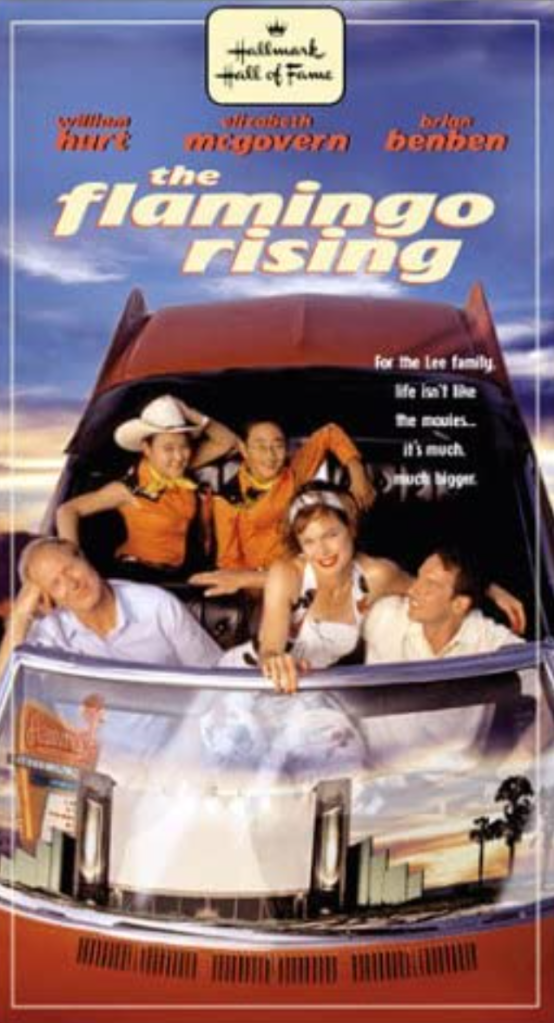
Hallmark Hall of Fame’s The Flamingo Rising VHS cover created by Hallmark Entertainment, Hallmark Hall of Fame Productions, McGee Street Productions, CBS, and Artisan Entertainment
The Budget
From what I’ve heard over the years, a typical made-for-TV movie costs somewhere between one to three million dollars. While that sounds like a lot of money to the average movie blogger, that amount is actually on the lower end of the financial spectrum, when it comes to making movies. If the aforementioned millions were the budget for Hallmark Hall of Fame’s The Flamingo Rising, it would explain why some parts of the source material were cut from the movie. In the book, Abraham shares his family had a temperamental dog named Frank. This dog was so unstable, he not only bit Louise, he was forced to live in an empty room above Abraham’s room, due to the dog’s behavior. In the film, however, Frank the dog is nowhere to be seen and is never acknowledged by any of the characters. If a movie’s creative team chooses to include an animal in their production, the training, veterinary care, and other related expenses will need to be factored into the overall budget. Working with an animal trainer also requires time, something the creative team behind The Flamingo Rising only had so much to spend. Therefore, the inclusion of Frank the dog was an expense the adaptation’s creative team likely thought was unnecessary.
Location scouting is a film-making component also affected by a creative team’s budget. Like I said in my editorial, ‘Redwood Curtain’: From Stage to Screen, a location scout might not be able to secure a location similar to one described in the source material. Even if they succeeded, there’s a process in order to film at a residential building, especially if it’s someone’s real-life home. This process, along with the budget, is the probable reason why the funeral home has a different appearance in the movie than described in the book. Larry Baker’s novel gives the West Funeral Home the look of a “Southern plantation style house”, complete with white columns and Jeffersonian arches. The Home also contains a garage full of hearses and limousines. The Flamingo Rising’s adaptation gives the funeral home a different exterior. Referred to as the Knight Funeral Home in the movie, the facility boasts a bungalow style in a dark green hue. The Home’s garage is not shown on-screen. However, the Home itself does feature a full-sized porch. The funeral home’s interior has more appearances in the book than in the movie. In fact, the only time the Lee family enter the Knight Funeral Home is shortly after Edna dies. For those two scenes, the creative team may have filmed them on a set, away from the building that portrayed the funeral home.
For many years, Hallmark garnered a reputation for presenting themselves as a “family-friendly” company. This has been reflected in their programming, including their Hallmark Hall of Fame productions. As someone who’s read The Flamingo Rising book, I’ll be the first person to say there are some parts of the story that are not “Hallmark appropriate”. One of these parts is Louise’s social life. Abraham, in the novel, recalls how, one night at The Flamingo Drive-In, Louise snuck out with some male college students. During this interaction, these males attempt to take advantage of her. Even though Louise is saved just in time by some of the drive-in’s employees, the ordeal is a frightening one. This event is not included in the movie. The only older characters Louise is friends with are Polly and Alice, who all happen to work at the drive-in. It should also be noted that Abraham and Gary are the only male characters Louise hangs out with in the film.
Louise’s story was not the only one to change in Hallmark’s efforts to keep the adaptation “Hallmark appropriate”. Polly, an employee of The Flamingo Drive-In, is a very problematic character in the book. A reason for this is due to her racism. Polly expresses how she didn’t like her high school becoming integrated. She also thinks Abraham is “too brown”, causing Abraham to have self-image related issues. Even though Polly’s role in the movie is smaller, she never comes across as racist. In fact, racism is never addressed in the film. Polly, along with Alice, appear to get along with both Abraham and Louise. Alice, throughout her time at the drive-in, gives Abraham advice and looks out for him, like an older sibling would look out for their younger brother or sister.
When an author creates a story, they sometimes don’t consider how that work could be translated to film or television. If that author’s work does receive an adaptation, the casting can dictate how the story changes. Abraham describes Alice Kite, in the book, as being “as tall as my mother”. Edna is six feet tall in the novel. Because of her height, Alice wore baggy jeans and shirts, never shorts. Elizabeth McGovern and Angela Bettis were cast as Edna and Alice in the Hallmark Hall of Fame adaptation. According to IMDB, Elizabeth is 5’7, while Angela is 5’3. Alice wardrobe’s, in the movie, included tank tops and shorts. This creative decision was likely made to compliment Angela’s height.
In both the book and movie, Grace looks like her mother. Turner, Grace’s father, tells Edna, in the film, “she looks just like her”, referring to his daughter’s resemblance of his late wife. But Grace’s mother never makes an on-screen appearance, as she dies before the movie’s events. Therefore, The Flamingo Rising’s creative team cast an actress that resembled the actor portraying Turner. William Hurt portrayed the owner of Knight Funeral Home. He appears blonde in the film, despite his character having “coal-black hair” in the book. Erin Broderick was cast as Grace, though it isn’t known if Erin or William was recruited to the movie first.
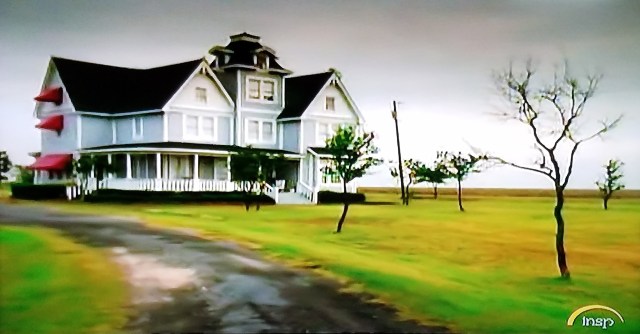
Since The Flamingo Rising takes place in Florida, I figured featuring this screenshot was appropriate. Screenshot taken by me, Sally Silverscreen. Image originally found at https://www.youtube.com/watch?v=tiBkULOrf7Y.
When I reviewed the Hallmark Hall of Fame movie, O Pioneers!, back in July, I said that story should have been adapted into a multi-part mini-series or a television show. That’s because I felt an hour and thirty-seven minutes was not enough time to tell a story with that many moving parts. I feel similarly about The Flamingo Rising. Because Abraham, in the book, is reflecting on his life, there are a lot of characters and plot points included in the text. With the Hallmark Hall of Fame adaptation being an hour and thirty-four-minutes, Larry Baker’s story was forced to be condensed.
There are several parts of The Flamingo Rising book that were either omitted or changed in the adaptation, due to these parts not being “Hallmark appropriate”. With that said, it makes wonder why Hallmark Hall of Fame chose to adapt Larry Baker’s novel over a story that was more “Hallmark appropriate”? This situation kind of reminds me of when Hallmark Channel adapted At Home in Mitford. Last September, I reviewed the 2017 film for one of my double features. After reading the book and watching its adaptation, I came to the conclusion the network wasattempting to fit a round peg into a square hole, trying so hard to fit At Home in Mitford into their brand of film-making. Perhaps something similar happened to The Flamingo Rising, causing history to repeat itself sixteen years later?
Last December, I was nominated for The Pick My Movie Tag by Gill from Realweegiemidget Reviews. My selected topic was “A list of must-watch Hallmark film star biopics”. In my quest to find these kinds of films, however, I found very few Hallmark titles about film stars, especially those I’ve seen. More often than not, I came across Hallmark movies that were based on true stories that were not celebrity related. Therefore, I decided for this tag I would write about the top five Hallmark films based on a true story! Before I list the tag’s rules, I’d like to thank Gill for the nomination, as Gill’s thoughtfulness is appreciated.
The Tag’s Rules
Nominate one or more people to review the film or films of your choice. Or you can request they review something from a certain year, genre, or star. Everyone can review the same thing, or you can request each person cover something different. As long as it’s something they haven’t written about yet, you’re good.
Nominees are allowed to request a different pick for whatever reason no more than five times. Stuff happens. We all know it.
Nominees must thank the person who nominated them and provide a link their blog.
Nominees may nominate others to keep the tag going. Picking the person who nominated them is allowed, or they can nominate someone else. Maybe both.
All participants need to include these rules in their post, whether they’re nominees or picking nominees.
All participants should use the “Pick My Movie” banner or something similar in their posts.
It’s been years since I’ve seen The Christmas Choir. From what I remember, I enjoyed this film! The cast as a whole is strong. Quality in acting talents and screenwriting allow the characters to come across as realistic and endearing. The Christmas Choir is one of Hallmark’s more unique Christmas titles, as it doesn’t follow a formula or contain a certain set of Christmas movie tropes and cliches. In fact, it’s surprising this film isn’t a Hallmark Hall of Fame production, as the story of a choir that started in a homeless shelter seems like the perfect material for that collection of movies. Another thing I remember about The Christmas Choir is the genuine good-heartedness the film exuded. As the Christmas season is on the horizon, this may be a movie I end up revisiting!
2. Hallmark Hall of Fame’s The Courageous Heart of Irena Sendler (2009)
I first talked about this film in my tier rank list of all the Hallmark Hall of Fame movies I’ve seen. In that list, I mentioned the film’s presentation, as the film itself felt like a theatrical release. However, that’s not the only strength The Courageous Heart of Irena Sendler contains. Historical accuracy is an element that Hallmark Hall of Fame productions have, more often than not, executed well. This film is no exception, as the movie appropriately reflects the story’s time period! Movies like The Courageous Heart of Irena Sendler make me wish Hallmark had created more period dramas. Yes, we have When Calls the Heart. But, to me, that feels like the exception to the rule.
3. Hallmark Hall of Fame’s A Smile as Big as the Moon (2012)
If you asked me to name a “space camp” movie, A Smile as Big as the Moon is the first one that comes to mind. As I said in my aforementioned tier rank list, this film is the perfect example of what a Hall of Fame title should be. I still stand by that statement, with the movie containing so many good components! Similar to The Christmas Choir, the strong acting performances and screenwriting brought to life characters that were worth rooting for. It was also interesting to see what it takes to be enrolled in space camp. The story’s messages and themes are just as relevant today as they were in 2012 or even the late 80s, when the story takes place. A Smile as Big as the Moon is a Hallmark Hall of Fame title that I consider a classic!
4. The Color of Rain (2014)
In my opinion, The Color of Rain is Lacey Chabert’s best film from Hallmark. One reason why is the story in this film is so different from those in Lacey’s other Hallmark movies. The Color of Rain does contain sadder moments, as both families are dealing with the death of a family member. But similar to films like Holly and Ivy, the movie’s creative team adopted a balance between sorrow and joy. It also helps how the cast’s acting talents were strong, as it allowed the characters to be memorable. The more I think about The Color of Rain, the more it feels like a Hallmark Hall of Fame title.
5. A Godwink Christmas: Meant for Love (2019)
Personally, I enjoyed this sequel in the “Godwink” series more than the first film. A Godwink Christmas: Meant for Love does a better job at explaining and showcasing what a “Godwink” is. Like Holly and Ivy and The Color of Rain, this movie’s creative team successfully balances joy and sorrow. I also think Cindy Busby’s portrayal of Alice is one of her best performances, as it is well-rounded and contained emotionality. In a year when Hallmark premiered new films weekend after weekend, A Godwink Christmas: Meant for Love was, to me, one of their stand-outs. I may have to seek out the other two films in this series.
When I reviewed the 1982 Hallmark Hall of Fame movie, Witness for the Prosecution, back in July, I stated how I didn’t think I’d ever see the film. This was due to the movie’s lack of DVD or VHS release. But this is not the only Hallmark Hall of Fame production I didn’t think I would ever receive the opportunity to watch. One of these titles is the 1985 film adaptation, The Corsican Brothers. Similar to Witness for the Prosecution, the 1985 title didn’t receive a VHS or DVD release, as far as I know. Also similar to Witness for the Prosecution, I was able to locate the full movie on Youtube! Besides these similarities, both films star Donald Pleasence. In fact, Donald’s involvement in The Corsican Brothers is one of the reasons why I chose to review this film, as I’m participating in The Devilishly Delightful Donald Pleasence Blogathon!
The Corsican Brothersposter created by Hallmark Hall of Fame Productions, Norman Rosemont Productions, and CBS
Things I liked about the film:
The scenery: Within the movie’s introduction, there is a shot of the ocean surrounding Corsica. As the introduction continues, rocky terrains, rolling hills, and a city on a mountain are also showcased. The natural beauty of this island was captured well on film, making outdoor scenes visually appealing. When scenes took place in the town, quaint looking buildings met cobble stoned streets. A fountain was located in the town’s square. From a visual perspective, the town looked peaceful. It resembled Wanda’s hometown in the Hallmark Hall of Fame movie, In Love and War!
The historical accuracy: According to the film’s introduction, the story begins in 1820. Though the majority of the story revolves around Louis and Lucien’s life as adults, the film still takes place in the 19th century. While watching The Corsican Brothers, I was impressed by the historical accuracy shown on screen! Furniture is one example of this. In a scene where the camera pans over a section of a study room, a green embroidered chair with bolted upholstery was featured. An oil lamp was also included in the room. The windows boasted a lattice design, which highlighted an old-world charm to the titular characters’ home. These details provided a nice blend of the characters’ past and present!
The underutilization of Donald Pleasence: As I stated in the introduction, Donald Pleasence is one of the reasons why I chose to review this adaptation of The Corsican Brothers. As this is his second Hallmark Hall of Fame production I’ve seen and reviewed, I was eager to witness more of his acting talents. But, to my disappointment, Donald only appeared in about three and a half scenes. He did a good job with the acting material he was given. However, it made me wonder why he was cast in this movie in the first place, especially if the role didn’t allow his talents to be fully showcased?
Unexplained parts of the story: I have never read this film’s source material. Despite this, I expected The Corsican Brothers to be like other adaptations of Alexandre Dumas’ stories; exciting tales full of adventure and intrigue. With the 1985 Hallmark Hall of Fame project, however, I was, more often than not, confused by what was happening on screen. At the beginning of the movie, a voice-over talks about how the region of Corsica is overruled by a multi-generational long vendetta. What this voice-over forgets to mention is how and why this vendetta started. From time to time, a mysterious woman appeared in Corsica, giving some of the characters fates. No explanations are provided for who this woman is or why she wants to get involved in the story’s events.
Little to no sense of urgency: In the adaptations of Alexandre Dumas’ stories I’ve seen, a common ingredient is a sense of urgency. Since there is a sense of adventure found in these stories, an added element of urgency gives the audience a reason to stay invested in the characters and their journey. With The Corsican Brothers, though, this sense of urgency was almost non-existent. I’d say about fifty percent of this movie showed Louis attending fancy events in Paris. Even when parts of the story were meant to be exciting, they either came across as anti-climactic or were not shown on screen. A good example is the trial in Paris that Louis is a part of.
Limited use of lighting: In a few scenes, events took place at night. But because of the limited use of lighting, it was difficult to see what was happening on screen. It got to the point where I couldn’t see characters’ faces. I am aware cinematic technology in the mid-80s was not as advanced as it is today, especially when it comes to made-for-tv films. Had the creative team of The Corsican Brothers incorporated a little more light to the nighttime scenes, it would have remedied the issue.
When creating a book-to-film adaption, you should strive to create a movie that satisfies both the casual viewer and readers of the source material. As I stated in this review, I have never read The Corsican Brothers. Instead of being invested in the characters and their stories, I was, more often than not, confused by the events on screen. It felt like the creative team behind the movie expected the audience to have read the book prior to watching their presentation. Story related flaws are not the only flaws that stood out to me. Limited use of lighting made nighttime scenes difficult to see. The underutilization of Donald Pleasence also didn’t help. Not all Hallmark Hall of Fame movies are created equal, as some are bound to be better than others. Sadly, The Corsican Brothers isn’t one of the better ones.
Overall score: 5.5 out of 10
Have you seen The Corsican Brothers? What’s your favorite adaptation of Alexandre Dumas’ literary work? Let me know in the comment section!
One of the first movies I reviewed this year was the 1950 film, Harvey. Since publishing my review back in January, that movie has become the most disappointing one I’ve seen this year, so far. Jillian, from The Classic Film Connection, recommended I give this story a second chance by checking out the 1972 Hallmark Hall of Fame production. Since this title is a remake and since I’m participating in The “Take Two!” Blogathon (which focuses on remakes), I found the perfect opportunity to watch this movie! When I reviewed 1950’s Harvey, I questioned what the point of the story was. This is because I was confused by what the movie’s creative team was trying to say through their project. Will I be less confused by the 1972 adaptation? Keep reading if you want to find out!
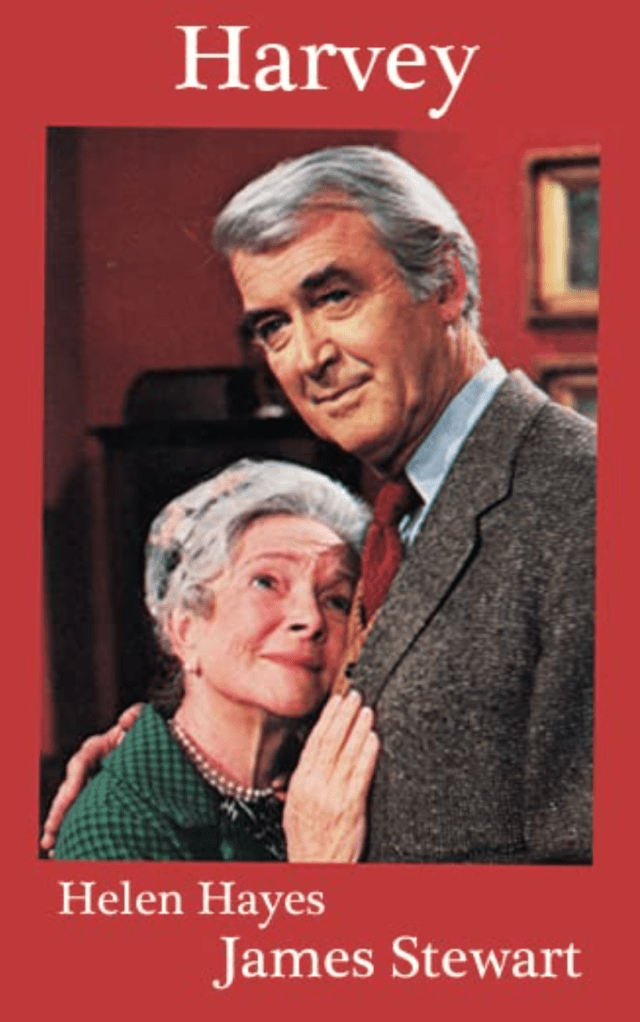
Harvey(1972) poster created by Foote, Cone and Belding Productions, Hallmark Hall of Fame Productions, Talent Associates-Norton Simon, and National Broadcasting Company (NBC)
Things I liked about the film:
Changes from the original film: As I said in my review of the 1950 film, there were things about Harvey I didn’t like. One of them was the medical negligence Veta experiences at Chumley’s Rest. In the 1972 version, that specific scene plays out differently. When Veta is being interviewed by Dr. Lyman Sanderson, he notices how distressed Veta appears. Her body language, tone of voice, and tears are noted by the doctor as he listens to what Veta has to say. This leads Dr. Lyman to admit Veta into the hospital for her well-being. The mix-up is presented as an example of good intentions leading to bad results. The film’s dramatic tone also helps elaborate how terrifying Veta’s experience would be.
A sense of magical realism: An element I thought was lacking in the 1950 version of Harvey was a sense of ‘magical realism’. Because the story featured a 6 foot 3 ½ inch, invisible white rabbit, I thought that aforementioned element would be automatically included in the film. In the 1972 adaptation, there was a stronger sense of ‘magical realism’ within the overall story. At the hospital, a hat with two holes on top is found in Dr. Lyman Sanderson’s office. The staff question who this hat could possibly belong to. Since the holes on the hat would allow rabbit ears to stick out, the hat itself implies Harvey does exist. This along with other strange occurrences in the story show how the film’s creative team put more effort into including ‘magical realism’.
The acting: When I reviewed the 1950 version of Harvey, I talked about James Stewart’s portrayal of Elwood P. Dowd, saying it was “laid-back” and “somewhat philosophical”. Reprising this role in the 1972 version of the story, James brought these same elements to his performance. But this time, his portrayal of Elwood reminded me of Mister Rogers from Mister Rogers Neighborhood. What I mean by this is Elwood came across as the type of man you’d want to spend hours having a conversation with. Elwood’s approachable and pleasant persona make him such a fascinating individual. If Elwood P. Dowd existed in the real world, I’d like to think he’d come up with an interesting TED Talk!
Despite appearing in the film for a limited period of time, I liked Madeline Kahn’s portrayal of Nurse Ruth Kelly! Her pleasant on-screen personality allowed her to stand out and give a memorable performance! Her interactions with the other characters also came across as realistic. After Veta was admitted to the hospital, Dr. Lyman has difficulty finding her. In a state of panic, he thinks Veta escaped. Sensing Dr. Lyman’s panic, Ruth becomes concerned. Her face has fallen from the smile she usually carries and her tone of voice contains a sense of dread. There’s even an ounce of timidness to her overall demeanor. Scenes like this one make me wish Madeline was given more on-screen appearances.
Most of the story being rehashed: When creating a remake of a pre-established story, it’s important to do two things: respect the source material that came before your project and bring your own voice to the table. In the case of Hallmark Hall of Fame’s version of Harvey, more emphasis was placed on respecting the original film. While this idea isn’t a bad one, the 1972 movie’s creative team didn’t allow themselves to create a unique identity for their project. The sets in this film looked almost exactly like they did in the 1950 film. The story, more often than not, followed the 1950 movie’s narrative, making very few deviations. While watching the 1972 version of Harvey, I wondered, at times, why this remake exists?
A televised version of a play: In my review of Hallmark Hall of Fame’s Foxfire, I talked about how that title felt more like a televised play. This is because the 1987 film contained a smaller cast and a condensed story. The 1972 adaptation of Harvey also felt like a televised version of a play. Fewer locations are a reason why. In the 1950 version, Elwood is shown taking Harvey to Charlie’s Pub. Elwood simply recalls this experience in the 1972 version. What’s also important to note is how the 1972 story takes place in either the hospital or the Dowd family home.
The underutilization of Betty Chumley: At one point in the 1972 story, Elwood makes plans with Dr. Chumley’s wife, Betty, to meet at Charlie’s Pub and share drinks. But because this trip was never shown on-screen, Betty received one less on-screen appearance. Within the story, she only appeared in two scenes. Personally, I think Betty should have had a stronger significance in the film.
After publishing my review of the 1950 version of Harvey, Jillian, from The Classic Film Connection, explained how the story’s point was “about the right to be uniquely yourself and live life on your own terms”. Now that I’ve seen the 1972 version of this story, I think the Hallmark Hall of Fame film did a better job at executing this idea. What worked in the movie’s favor was how the story was just a drama instead of trying to be both a drama and comedy. Scenes like Veta’s hospital admittance elaborated how terrifying her situation would be. There was also a sense of ‘magical realism’, something I thought was lacking in the 1950 film. However, the majority of the 1972 movie was a copy of the 1950 movie. In 1993, Hallmark Hall of Fame released the film, To Dance With the White Dog. Based on what I know about the story, it sounds like a version of Harvey. But this time, a man sees a white dog only he can see. Maybe I’ll write about that movie in a future review.
Overall score: 6.1 out of 10
Have you seen any version of Harvey? Are there any Hallmark Hall of Fame movies you’d like to see me review? Let me know in the comment section below!
The Hallmark Hall of Fame adaptation of Redwood Curtain is based on a Broadway play. It was also released in 1995. With these facts in mind, I found Redwood Curtain to be the perfect subject for the Fifth Broadway Bound Blogathon. Prior to this event, I saw the movie and read the play. This lent itself to an interesting idea. Discussions about film adaptations often feature films adapted from books, short stories, or poems. Movies born from plays aren’t often included in the conversation. So, I decided to write an editorial highlighting the similarities and differences between the Redwood Curtain play and film. This article contains spoilers for the story of Redwood Curtain.
On the stage, Redwood Curtain contains three characters: Lyman, Geri, and Geneva. While there are other characters in the story, they’re only mentioned within the dialogue. Geri’s father, Laird, is one of these characters. According to the script, Laird was a desk-jockey lieutenant in the Vietnam War. This means he “didn’t see a day’s fighting, to come completely unglued in the war.” Laird taught Geri how to play the piano simply to entertain dinner guests. He also developed a dependence on alcohol and died two years prior to the play’s events. Laird is even described as a “drunk.” Because Laird never physically appears in the play, all the information about him is hearsay.
John Lithgow portrays Laird in the film adaptation. The film version of Laird did fight in the Vietnam War, though his specific role was never mentioned. Like in the play, he develops a dependence on alcohol. However, this dependence was Laird’s attempt to cope with war-related trauma. Toward the end of the movie, Geneva shares with Geri how Laird wanted to be a pianist, but didn’t feel he was talented enough. So, he became invested in Geri’s piano career, appearing to live vicariously through his daughter. His presence in the movie shows the audience the strained, yet close relationship between Geri and Laird. Laird’s death within the film’s first half and Geri’s discovery that Laird is her biological father are presented as bittersweet moments.
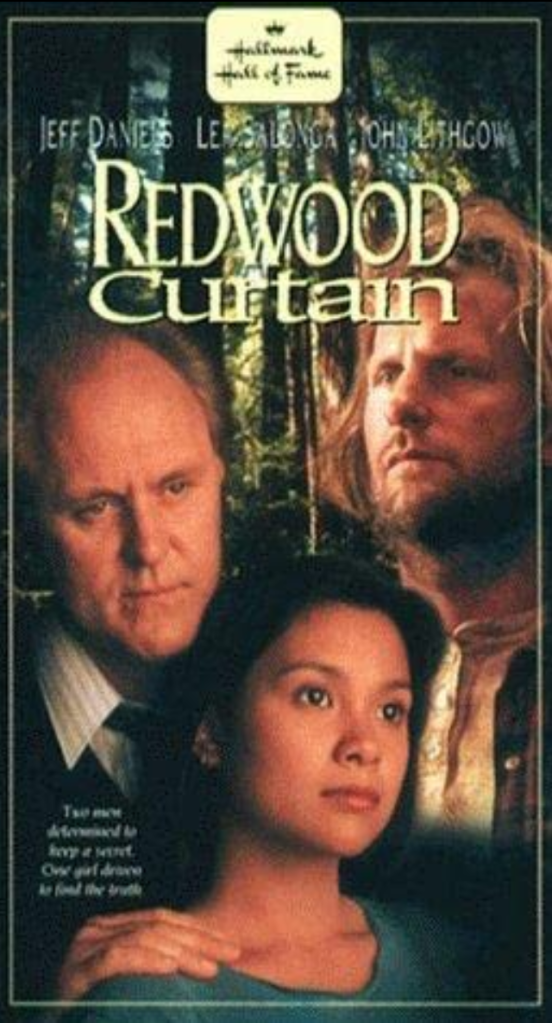
Redwood Curtain poster created by Chris/Rose Productions, Hallmark Hall of Fame Productions, American Broadcasting Company (ABC), and Republic Pictures (II)
Expanding the World
The majority of Redwood Curtain’s story in the play takes place in Arcata’s redwood forest. A few scenes happen in Geneva’s house, Geneva’s car, or a local coffee house. Geri’s first encounter with Lyman is when the play starts, with the lead-up to this moment woven into the dialogue. Events such as Laird’s death take place off stage, prior to the play’s story. The creative team behind a play is given a limited amount of space and time to work with. Therefore, designating a few key locations makes sense among these limitations. In the Redwood Curtain play, Geneva’s house is described as “a large and very fine Victorian house.” The script states her house contains a music room as well. When presenting this play at a theater, only the home’s sitting room and music room would be staged and the style of the house would be heavily implied through décor and set structure.
A plus side to film-making is the freedom to take the story wherever the film-maker chooses. If a movie’s creative team desires to adapt a stage play, that story has the opportunity to grow beyond the boundaries of a stage. In the case of the Redwood Curtain film, the events from the play are contained in the story’s second half. That means the movie’s first half takes place in and around the Riordan family home. This inclusion not only expands the world the characters exist in, but also gives the audience a glimpse into Geri’s world that they wouldn’t have seen otherwise. Filming on location provides benefits to visual storytelling. However, that creative decision has its own limitations. Using Geneva’s house in the movie as an example, a location scout might not be able to secure a location similar to one described in the source material. Even if they succeeded, there’s a process in order to film at a residential building, especially if it’s someone’s real-life home. That’s probably why Geneva’s house is presented as a smaller log cabin with a large deck, but no music room.
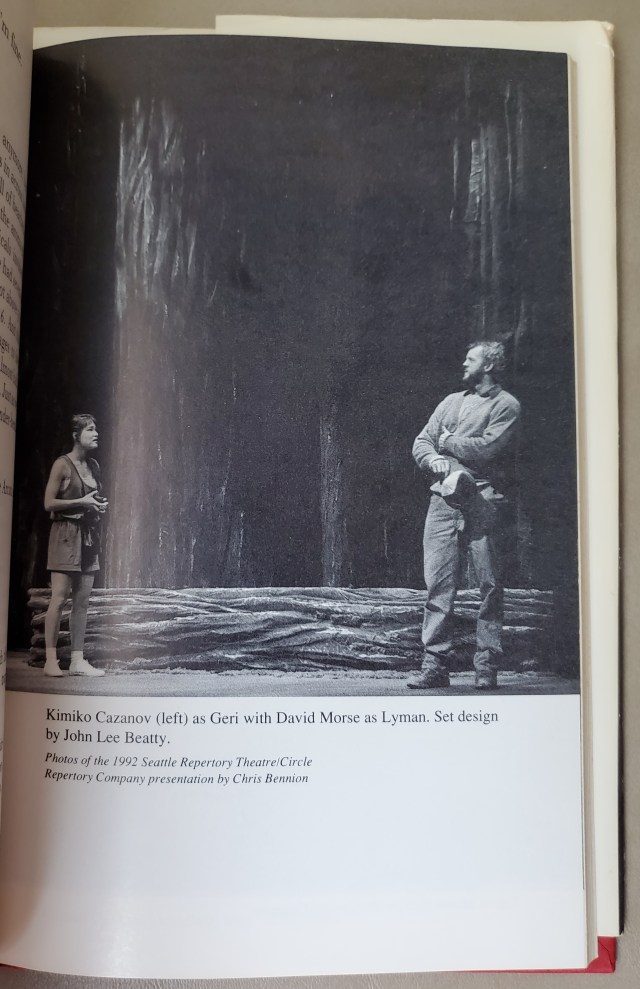
A picture of the Redwood Curtain play from my copy of the play’s script. Screenshot taken by me, Sally Silverscreen
Geri’s Motive
In both the play and movie, Geri attempts to search for her biological father. This attempt is the story’s main conflict. Geri’s reason for her search was different in each version of Redwood Curtain. In the play, Geri knew some information about her past. Prior to the start of the play, Geri discovered Lyman tried to help her and her biological mother get to the United States. The script mentions that Geri began her search when she was twelve. Her search turns into an obsession, to the point of abandoning her musical endeavors. In fact, the play’s synopsis states Redwood Curtain “is a story of obsession and discovery.” Though the information Geri received was partly true, she eventually learns more through her interactions with Lyman.
The movie version of Geri has three motives for her search. Wanting to receive answers about her past was the first motive. The film’s script heavily implies Geri did not know much about her past until the events of the movie. Yes, she was aware she was adopted. But Geri’s belief that Lyman was her biological father stemmed from a photo and a note bearing the name ‘Raymond Farrow’ that Laird gave his daughter after he died. At various moments in the movie, Geri expresses how she feels she doesn’t belong. She even shares these thoughts with the Riordan’s house-keeper, Matilda. These feelings fuel Geri’s journey of self-discovery and finding her biological family. Her third and final motive is her music, which plays a crucial role in Geri’s life. Geri believes if she finds her biological father, she will be able to incorporate more emotion into her musical pieces.
As I’ve said before on my blog, a film’s title can serve as a promise to the audience. In the case of Redwood Curtain, the audience should expect not only to see redwoods, but also to receive an explanation of what the “redwood curtain” is. The “redwood curtain,” in both the play and movie, is the redwood forest itself, where Vietnam veterans choose to live their lives. This is one of the reasons Geri meets with Lyman in the forest. While Geri learns about the “redwood curtain” in each version of the story, the way she learns about it is different. An Arcata Union reporter provides the explanation for the “redwood curtain” to Geri in the play. In the movie, she is given this same explanation by a gentleman working at Arcata’s veterans’ office.
As I mentioned above, the majority of Redwood Curtain’s story in the play takes place in Arcata’s redwood forest. The redwood forest in the movie only appears in the story’s second half. Because of how often or little this location appears in the story, its association with the characters and the themes connected to it depend on these appearances. Topics relating to the environment are brought up throughout the play. When Lyman asks Geri why she’s visiting Arcata, she tells him she’s studying horticulture and botany at the local college. Geri also claims to have magical powers, which allow her to do things such as control the weather. Within the play, Geneva talks about how her family’s portion of the redwood forest is being bought out by investors. While this part of the story is also in the movie, it is discussed in more detail in the play, from Geneva bringing up the specifics of the sale itself to describing Arcata’s weather. The theme of family connects with the redwood forest in the movie. The Riordan family owns a portion of the redwood forest. While Geri stays at Geneva’s house, Geneva shows her niece a wall of family photos. These photos showcase various members of the Riordan family in the redwood forest. The number of photos and whether or not the photos are in black-and-white indicate how the forest has been in the family for generations.
When I brought up the movie version of Laird, I mentioned how he depended on alcohol to cope with war-related trauma. I also mentioned how Geri learns about the “redwood curtain” at Arcata’s veterans’ office. These are just two examples of how the movie includes the subject of veterans’ well-being. In the history of Hallmark films, veterans have been presented with a sense of reverence and respect. Veteran-related issues have also been included in Hallmark’s programming. An example is a veteran struggling with trauma in Signed, Sealed, Delivered: Lost Without You. Even though the film adaptation of Redwood Curtain was released a decade before Hallmark debuted the Hallmark Channel, this tradition can be seen and felt in this Hallmark Hall of Fame presentation. At Laird’s funeral, Geri shares with Geneva how she wished the family had addressed Laird’s alcohol dependency sooner. Geneva reminds her niece how Laird had a problem related to his experiences in the war. Geri says the family’s politeness and willingness to skirt the issue are what enabled Laird’s struggles. The points Geri makes to her aunt highlight how seriously these topics are taken in this adaptation.
While veteran-related issues are brought up in the play, it was never enough to be one of the story’s main topics. Compared to the movie, there isn’t the same amount of reverence for veterans. During her first interaction with Lyman, Geri’s personality is pessimistic and bitter. When Lyman asks Geri about the translation of her hometown’s name, Geri responds by saying, “Well, you’re not Spanish. You must belong to the other half of the country’s population.” After Geri learns Laird was her biological father, she says, “You’re right, Lyman, he was the saddest man I’ve ever known.” Geri also says, “And I thought I was joking when I said to follow in my father’s footsteps I had to mope and pine and drink myself to death. Not a very promising path he’s laid out for me to follow.” With the way veterans’ well-being wasn’t addressed, it made the play seem less hopeful. It also seemed like none of the characters were willing to find any solutions.
As mentioned above, I said Lyman, Geri, and Geneva were the only three characters to physically appear in the play. These three characters also serve prominent roles in the movie. Geri’s personality in the play was pessimistic and bitter. She was also disrespectful when talking to Lyman or talking about Laird. In the movie, however, Geri was a more empathetic character. While interacting with Matilda in the Riordan family kitchen, Laird recalls a memory of Geri when she was younger. In this memory, Laird was tearing up as he was chopping onions. Upon seeing this, Geri asks if Laird is sad because the onions are hurt.
Lyman, in both the play and movie, shares parts of his life story with Geri. In the play, though, more of this information is given. Toward the end of the movie, Lyman tells Geri how, before the war, he would fix and race cars with his dad. He also talks about how he never dated a crush he had. Lyman in the play not only drag-raced vehicles, he also worked in his dad’s garage. He recalls owning a Mustang Boss 302 and never having a girlfriend. Geneva’s family’s portion of the redwood forest was being bought out by investors. As a result of this, Geneva, in the play, is planning on moving to Key Biscayne, Florida, with her husband, Barney. In the movie, however, Geneva expresses no interest in moving out of Arcata. In fact, after one of Geri’s piano performances, Geneva tells Laird how she plans on fighting to keep her land. She and Barney are also divorced.
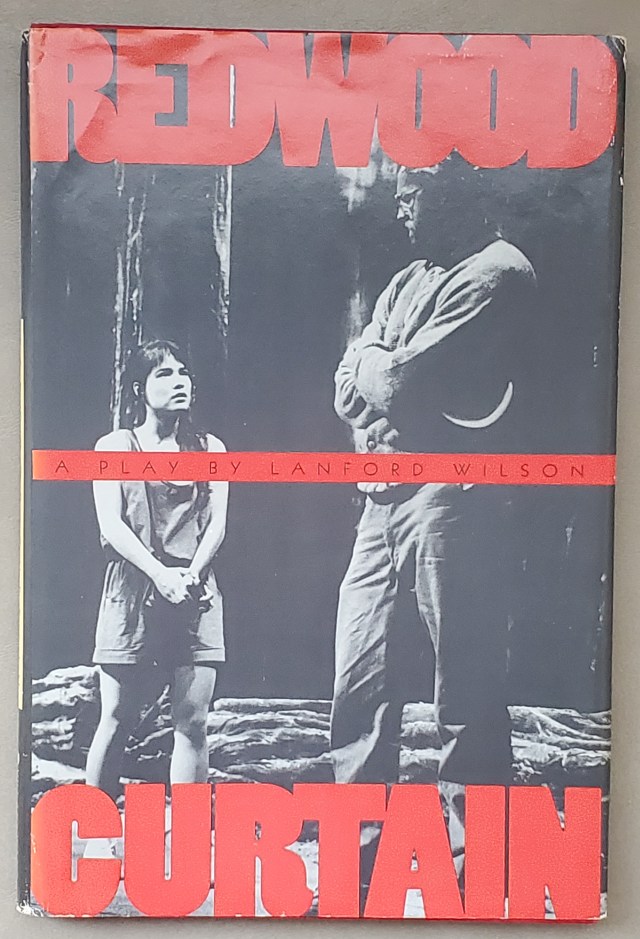
The cover of my copy of the play’s script. Screenshot taken by me, Sally Silverscreen
After I watched and read Redwood Curtain, I ended up liking the movie adaptation over the source material. What worked in the Hallmark Hall of Fame presentation’s favor was how the story was expanded. Not only were more locations added to the characters’ world, more context was given than the play provided. Even though there were more characters added to the film, the cast as a whole was smaller. Through their interactions, the audience gets a more intimate look into the characters’ relationships. The changes to the characters from the play made them more likable, especially Geri. Both the screenwriting and acting allowed Geri to be one of the strongest protagonists in Hallmark movie history. Redwood Curtain reminded me of another Hallmark Hall of Fame movie based on a play: The Boys Next Door. Similar to Redwood Curtain, The Boys Next Door contained multiple locations and provided context to each of the key characters. Since I have seen the 1996 adaptation, but have never read the play, perhaps another comparison and contrast editorial is in order.
When I participated in the Legends of Western Cinema Week last year, I reviewed the Hallmark Hall of Fame film, Durango. Unfortunately, the movie was weaker than I hoped. While thinking about what to write about for 2022’s event, I remembered how I had never seen O Pioneers! Therefore, I thought the Legends of Western Cinema Week was the perfect time to finally see the film! In the 1990s, Hallmark Hall of Fame had a history of adapting stories from the western genre. After the premiere of Sarah, Plain and Tall, the story’s sequels were released; Skylark in 1993 and Sarah, Plain and Tall: Winter’s End in 1999. Outside of this trilogy, Hallmark Hall of Fame created O Pioneers! (in 1992), Rose Hill (in 1997), and Durango (in 1999). While looking back on this history, one has to wonder if this was done in an effort to capitalize on Sarah, Plain and Tall’s success? Whatever the reason, these films provide more than one perspective of westerns. Now, with that introduction out of the way, let’s review O Pioneers!
O Pioneers! poster created by Craig Anderson Productions, Hallmark Hall of Fame Productions, Lorimar Television, and Prairie Films
Things I liked about the film:
The acting: I’ve seen a small handful of Heather Graham’s projects from her filmography. Based on what I’ve seen, she seems to receive one of two types of roles: a “damsel in distress” or the “ditzy” girl next door. But in O Pioneers!, Heather’s role was different. Portraying Alexandra Bergson in her younger years, she not only displayed a motherly persona, she also showcased a quieter strength. After trying to find more fertile farm land, Alexandra comes up with a plan to purchase the surrounding farm land near her family’s home. When she discusses this plan with her brothers, Alexandra explains it in a sure, yet calm way. Even when her brothers doubted her enthusiasm, she consistently maintained her composure, never letting uncertainty get in her way. Through her performance, Heather does a good job at foreshadowing who her character would become!
The majority of O Pioneers! revolves around Alexandra after her family’s farm is established and successful. Because this part of the story takes place fifteen years later, Alexandra is portrayed by Jessica Lange. Throughout the film, Alexandra experiences a variety of situations. This allowed Jessica to utilize different facial expressions, body languages, and emotions. As she reads a letter from her brother, Emil, a warm smile lights up Alexandra’s face. She appears to be sitting in a comfortable position, a friendly demeanor plain to see. Two scenes later, as Alexandra is sharing bad news with Emil, a sullen look is seen on her face. Her tone of voice is serious, as she’s trying to break this news as honestly, but gently as possible. The strength of Jessica’s acting abilities helped her performance appear believable!
One of the most important people in Alexandra’s life is Emil. Portrayed by Reed Diamond, Emil had a personality that was pleasant. Reed adapts to each situation in Emil’s life as well, similar to Jessica’s performance. In the aforementioned scene where Emil receives bad news, a concerned look is shown on his face. He also listens intently to what Alexandra had to say. Emil’s bottom lip quivers, as shock quickly morphs into sadness. The scene ends with Alexandra consoling her brother as he crumbles into tears.
Historical accuracy: O Pioneers! takes place between the late 1880s and early 1900s. Keeping this in mind, it’s important to note how the production looked and felt like the viewer was transported back to that time! In one scene, a man named Frank is walking around the interior of his house. On the wall in the kitchen, a telephone can be seen. The style of this phone is similar to those featured in programs like When Calls the Heart. Another timely piece of technology was the kerosene lamp hanging from the ceiling. This lamp was found in the dining room of Alexandra’s house. Three more kerosene lamps are located in Alexandra’s posh sitting room. Even though these props are smaller components of the movie, it shows how detail oriented this film’s creative team was!
Reed Diamond and Anne Heche’s on-screen chemistry: Anne Heche portrays Marie, a friend of Emil’s since childhood. Most of Emil and Marie’s interactions take place after they grew up, when they are able to live their own lives. During these encounters, I found their on-screen chemistry very sweet! Marie carried herself with a sense of whimsy, almost like she’s a “child at heart”. Meanwhile, Emil is more headstrong, choosing to ground himself in reality. Instead of clashing, these differences worked in Anne and Reed’s favor. The opposites attracting created a balance between their characters. During Marie and Emil’s interactions, they seemed to share an understanding with each other. Their shared history provided that layer of understanding, as well as Anne’s and Reed’s performance.
Legends of Western Cinema Week banner created by Heidi from Along the Brandywine, Olivia from Meanwhile, in Rivendell, and Hamlette from Hamlette’s Soliloquy.
What I didn’t like about the film:
An episodic story: The story of O Pioneers! revolves around Alexandra’s attempts at creating a successful farm with the land she inherited. But instead of those attempts providing an overarching conflict, the movie is filled with smaller conflicts that are resolved in a shorter amount of time. Ivar is a man Alexandra and her family have known for many years. He claims to have powers from God, which causes him to receive some negative attention. At one point, Ivar is threatened of being sent to an asylum. But in the very next scene, Alexandra simply talks to her brothers about what she’ll do if something happens. After that, the issue is unceremoniously resolved.
Too many characters: O Pioneers! is based on a book I haven’t read yet. Despite this, I could clearly see how large of a cast this production contained. Stories with a larger number of characters can be hit or miss. In the case of O Pioneers!, it didn’t work. Because of how many characters were in this story, some of them didn’t receive the amount of attention I feel they deserved. One of these characters was Amedee, a friend of Emil. A European baseball player, Amedee was such a charismatic character I wanted to learn more about. But with all the other characters trying to compete for attention, he only appeared in two scenes.
Some loose ends: Despite the movie having an hour and thirty-seven-minute run-time, there didn’t seem to be enough time to tie up some loose ends in the story. A good example is when one of the characters gets in trouble with the law. Alexandra visits this character in jail and claims she will help them. However, this issue is never resolved. That’s because this conflict takes place within the last eighteen minutes of the movie. It made me wonder why the creative team would include this part of the script when there was no intention to find a resolution to that conflict?
I know this is a screenshot of Wilma’s house from the Walker, Texas Ranger episode ‘The Lynching’. But Alexandra’s house in O Pioneers! reminded me of Wilma’s house, especially that wrap-around porch! Screenshot taken by me, Sally Silverscreen.
My overall impression:
There are some movies where the style is executed better than its substance. O Pioneers! is one of those films. As I said in my review, the project looked and felt like the story’s respective time period. The acting as a whole was good as well. But when it comes to the script, it could have been stronger. A major flaw is the movie’s run-time, which was an hour and thirty-seven minutes. This was not enough time to address the story points and characters within the narrative. Personally, I think O Pioneers! should have been adapted into a multi-part mini-series or a television show. With more time, the creative team would have been able to explore more stories and give some underrated characters more attention. Having an episodic narrative for a mini-series or television show would also make sense, as each story would be more condensed than a film’s plot. Like I mentioned in my review, I haven’t read this movie’s source material. Therefore, I don’t know if it’s better or worse than the 1992 Hallmark Hall of Fame production.
Overall score: 6 out of 10
Have you seen or read O Pioneers!? Is there a book-to-film adaptation you like? Please tell me in the comment section!
In my list of the Top 10 Movies I’d Love to Review, I mentioned finding Oliver 2: Let’s Twist Again on DianaRigg’s IMDB filmography. During that trip on IMDB, I found another film I could review for the Other Than ABond Girl Blogathon. As the title of this review says, that movie is the 1982 Hallmark Hall of Fame presentation, Witness for the Prosecution! I’ve gone on record to state how I’d like to watch as many Hallmark Hall of Fame titles as realistically possible. If I’m going to be honest, I didn’t think I would ever see Witness for the Prosecution. That’s because the film not only didn’t receive a DVD release, but it doesn’t seem to have received a VHS release either. So, imagine my shock when I found the full movie on Youtube! Mysteries are, arguably, the most popular genre on my blog. This is also not the first time I’ve reviewed an Agatha Christie adaptation. Back in April, I wrote about the 2022 film, Death on the Nile. In that review, I said the movie had a weaker execution than its 2017 predecessor, Murder on the Orient Express. How will Witness for the Prosecution fare against these aforementioned adaptations? All rise, as this review is now in session!
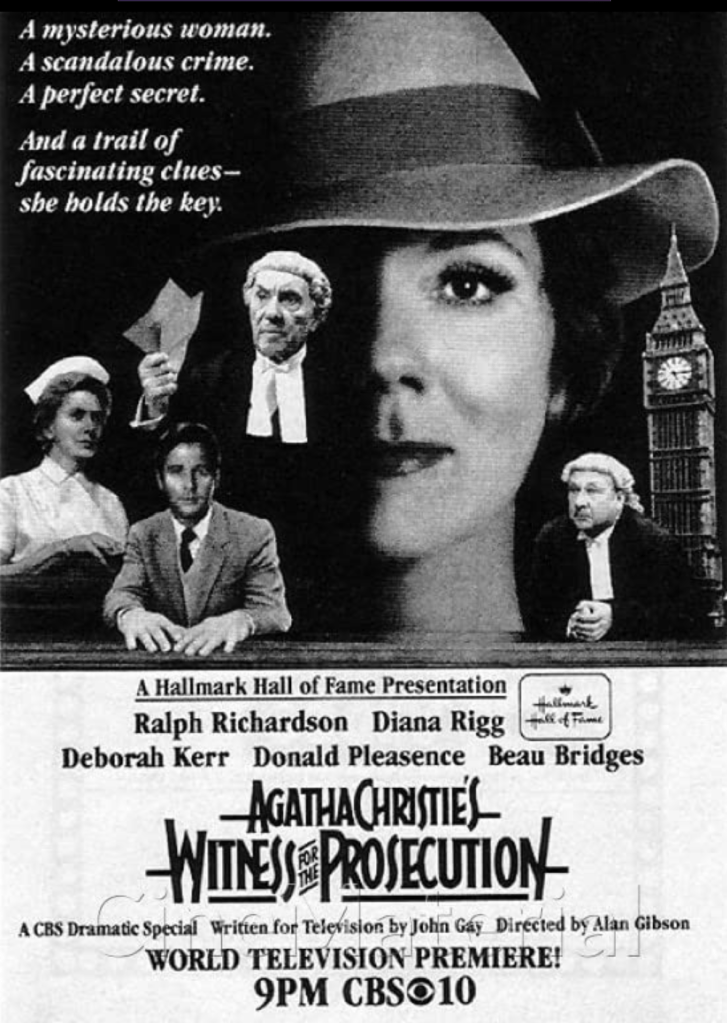
Hallmark Hall of Fame’s Witness for the Prosecution poster created by CBS Entertainment Production, Hallmark Hall of Fame Productions, Rosemont Productions, and United Artists Television
Things I liked about the film:
The acting: Diana Rigg is one of the eligible Bond Girls for the Other Than A Bond Girl Blogathon.Therefore, I will talk about her performance first. In Witness for the Prosecution, Diana portrayed Christine Vole, the wife of the accused party. Throughout the film, she carried her character as a woman from stories in the 1920s. What I mean by this is Christine held her own with confidence, never shaken by the probing of those involved in the legal side of the case. Even when she took the stand, Christine adopted a serious demeanor, as if putting on a “poker face” and refusing to show her deck of cards too early. These acting choices and the consistency of her performance allowed Diana to pull off a captivating and memorable portrayal!
Deborah Kerr is an actress I’ve talked about before on 18 Cinema Lane. While I have seen and reviewed five of her films, none of them were from the mystery genre. Despite this, Deborah held her own, acting wise, among the cast! She portrays Nurse Plimsoll in Witness for the Prosecution. While watching the 1982 production, her performance reminded me a bit of Donna Reed’s portrayal of Mary from It’s a Wonderful Life. Nurse Plimsoll cares about the health and well-being of the film’s protagonist, Sir Wilfred Robarts.Though Wilfred finds her overall nursing approach annoying, Nurse Plimsoll doesn’t give up on her mission. Even though she is stricter than other on-screen nurses, her heart is always in the right place. This can be seen through Deborah’s facial expressions, body language, and emotions.
Even though the cast as a whole was strong, there was one performance that stole the show. This came from Beau Bridges! Witness for the Prosecution shows Beau portraying an American named Leonard. Because his case is presented in a British/U.K. court system, he is a “fish out of water”. The situation itself provides an interesting dynamic for the cast, including Beau, to work with. It also gave Beau an opportunity to utilize a variety of emotions. During the case, one of the witnesses causes Leonard to have an emotional reaction. At the start of the witness’ questioning, Leonard presents a calm “resting face”. But as the questioning continues, he slowly becomes sadder, adopting a growing frown and his eyes filling with tears. This transformation was gradual, allowing Beau to adapt to the on-screen situation.
The set design: The majority of Witness for the Prosecution takes place within a British/U.K. court room. Despite the limited locations, there were some examples of set design that I liked! Inside the court room, the ceiling was domed, with clear glass exposing a view of the sky. Surrounding the dome are etched, white arches. With a green light shown on these arches, they gave the appearance of boasting an antique limestone material, which complimented the dark wood of the court room’s walls and furniture. In the lobby of the court room, painted murals are shown near the ceiling. The lobby’s walls appear to be covered in a two-tone marble material, with the floor revealing a black-and-white tile design. My favorite set in Witness for the Prosecution was Wilfred’s office! The room’s color scheme was brown, beige, and red. When this set was first introduced, a large, dark wood bookcase proudly stood. It was guarded by a dark wood table and two dark brown armchairs. While the walls were beige, the curtains on the window were red, giving the room a pop of color. The more time Wilfred spent in this space, the more the sophisticated, professional, and intelligent appearance of the office complimented his personality.
An in-depth look at theBritish/U.K. court system: As I mentioned in my point about the film’s set design, the majority of this story takes place in a British/U.K. court room. That part of the movie exposed the audience to the British/U.K. court system. Even though Witness for the Prosecution is not the “end all, be all” when it comes to this specific court system’s portrayal in entertainment media, it gives viewers a chance to compare and contrast it to other court systems in other productions. The layout of the court room itself provides one example. Toward the front of the court room, the witness stand is located at the judge’s right-hand side. This part of the court room is separate from the judge’s stand. Meanwhile, in court room productions taking place in the United States, the witness stand can either be located at the judge’s left or right-hand side. It is also connected to the judge’s stand.
The magical monocle: While working on the case, Wilfred wore a monocle when he was questioning the accused party and his wife. As he questioned them, a light shone through the monocle and directly landed on Leonard and Christine. But these were the only two times Wilfred used the magical monocle. The purpose of the monocle or Wilfred’s reason for using it was never explained. Was this monocle truly magical or was the monocle used as foreshadowing? I wish this part of Wilfred’s character was more consistent.
A dialogue heavy story: With any movie or tv show episode featuring a court case, there’s going to be a certain amount of dialogue within the story. But because Witness for the Prosecution mostly revolved around a court case, the 1982 production feels more dialogue heavy compared to Death on the Nile and Murder on the Orient Express. Before watching Witness for the Prosecution, I had expected more showing than telling when it came to the mystery. Instead of watching the characters making discoveries related to the mystery, I heard about it through the questioning in court. Because of this creative decision, I didn’t find the movie’s mystery as engaging as it could have been.
An inactive detective: In a story where a detective, amateur or professional, is the protagonist, the audience expects to see this character actively solve their respective film’s mystery. Sadly, the viewers won’t witness that in Witness for the Prosecution. Wilfred is a lawyer defending Leonard in his case. However, Wilfred places more emphasis in resolving the case than playing detective. Even though this movie’s mystery was solved, it felt like Wilfred was served the answer on a silver platter instead of discovering it himself. Similar to what I said about the dialogue-heavy story, I didn’t find the mystery engaging because of Wilfred’s inactive detective role.
Hallmark Hall of Fame’s Witness for the Prosecution shares a similar plot with 1997’s Red Corner: an American man is accused of murder, with his case in a court system outside of the United States. But where Red Corner succeeded and Witness for the Prosecution didn’t is how Shen, Jack’s lawyer in Red Corner, not only played a role in the court case, but also went above and beyond in attempting to solve the mystery surrounding the case. This allowed Red Corner’sstory to be intriguing and engaging for the audience. With the 1982 production, Wilfred spends more time on the court case than the mystery wrapped around it. This decreases the audience’s engagement. The dialogue heavy nature of Witness for the Prosecution’s story also affected the mystery’s intrigue. Hallmark Hall of Fame’s presentation is the third Agatha Christie adaptation I’ve seen, which I wasn’t overly thrilled with. I still want to, one day, read her literary work. But based on my reactions to the three adaptations I have watched so far, I’m starting to wonder if I’ll find an Agatha Christie story I like?
Overall score: 6.1-6.2 out of 10
Have you seen any of Agatha Christie’s adaptations? Do you have a favorite Agatha Christie story? Let me know in the comment section!
Last year, when I reviewed Let Him Go, it became my 275th movie review! But that wasn’t the only movie review that achieved a milestone. My recent review, Dr. Phibes Rises Again, was my 650th post! With these achievements, I decided to write a top ten list, as I haven’t published one yet. Whenever I wanted to review a particular title, I have, for the most part, been able to seek that title out. While most of them have been accessible, some of those films were harder to find. The idea of film accessibility caused me to reflect on which movies I would love to review someday. Therefore, my list of the Top 10 Movies I’d Love to Review was born! The films featured in this list are underrated/lesser known. They were also released over ten years ago. This was a conscious choice, as it keeps each entry on an equal playing field. The entries are listed based on how accessible they are. In this case, “accessibility” means whether I can legally and realistically rent, purchase, or view a film.
I first saw the trailer for A Little Romance years ago on Turner Classic Movies (TCM). The movie looked so sweet and charming based on what my television screen presented. Looking back on the trailer, the story seems like a light-hearted version of Rich Kids; where two young characters go off on an adventure. This is ironic, as both Rich Kids and A Little Romance were released in 1979. I have not only found several DVD copies of A Little Romance, but I am able to rent the film. So, a review of this movie will have to be in order in the foreseeable future!
9. The Lost Empire/The Monkey King
Some of Bai Ling’s projects have been reviewed on 18 Cinema Lane. In fact, one of my most recent movie reviews was of her 2002 HBO film, Point of Origin. So, when I discovered Bai starred in a Hallmark movie, I knew I had to, eventually, check it out. Based on what I know about the 2001 project, the story is based on Chinese folklore. This is a very different and unique film concept from the types of movies Hallmark creates today. Similar to A Little Romance, I have found several DVD copies of The Lost Empire/The Monkey King. The full movie is available on Youtube as well.
8. Alex: The Life of a Child
Long before 18 Cinema Lane came along, I had learned of Alexandra Deford’s story. After reading Alex: The Life of a Child, I wanted to see its respective adaptation. For the longest time, a twelve-dollar donation to the Cystic Fibrosis Foundation was the only way to receive a VHS copy of the movie. But if you visit the non-profit’s website, there is no mention of the film or how to acquire a copy of it. Fortunately, the full movie has been posted on Youtube. So, expect a review of Alex: The Life of a Child in the near future!
7. A Circle of Children and Lovey: A Circle of Children Part II
One of Judy Garland’s movies I like is A Child Is Waiting. For those who aren’t familiar with the 1963 title, Judy portrays a music teacher who works at a school for students with special needs. A decade after the release of A Child Is Waiting, two made-for-tv films, A Circle of Children and Lovey: A Circle of Children Part II, aired. Unlike Judy’s movie, the aforementioned productions are based on the true story of a teacher named Mary MacCracken. Her books were not only the source material for these movies, Mary was also one of the screenwriters for both films. While I haven’t found a physical copy of either movie, A Circle of Children and Lovey: A Circle of Children Part II have been uploaded on Youtube. With everything said, these titles could serve a future double feature!
6. Hallmark Hall of Fame’s Redwood Curtain and The Flamingo Rising
I’ve said before on 18 Cinema Lane how some Hallmark Hall of Fame titles were only sold on VHS. This exclusivity has encouraged me to seek them out. Even though I’d like to see as many of those films as realistically possible, Redwood Curtain and The Flamingo Rising are at the top of my wish list! Each synopsis sounds interesting and Asian/Asian American stories are far and few between in the Hallmark Hall of Fame collection. As of late June 2022, both Redwood Curtain and The Flamingo Rising are available on Hallmark’s streaming service, Hallmark Movies Now. I have also found some copies on VHS.
I have gone on record to state An Old Fashioned Thanksgiving as one of my favorite Hallmark films. Two years after that movie’s release, Hallmark aired a sequel titled An Old Fashioned Christmas. This is one of Hallmark’s unique Christmas offerings, as it is a period drama. The story also takes place in and was filmed in Ireland. I have come across a few DVD copies of An Old Fashioned Christmas. However, these copies were included in Christmas movie box sets, which have been, more often than not, expensive. The 2010 film has an official page on Hallmark Drama’s website. But the movie isn’t scheduled for any upcoming presentations. Hopefully, when Christmas time rolls around, An Old Fashioned Christmas will appear among the network’s selection of seasonal titles.
4. She Couldn’t Say No
This 1953 comedy starring Jean Simmons and Robert Mitchum was originally recommended to me by one of my readers. Since then, I have been trying to find a way to, legally and realistically, watch the movie. No VHS tapes or DVDs of this title have been attainable, as of late June 2022. She Couldn’t Say No has also not been posted on Youtube. Similar to An Old Fashioned Christmas, the 1953 movie does have an official page on Turner Classic Movies’ website. But it doesn’t look like the movie will air on the channel anytime soon. The only option I have left is to wait for the Youtube channel, Cult Cinema Classics, to upload the movie.
3. Oliver 2: Let’s Twist Again
While looking for a title to review for the upcoming Other Than A Bond Girl Blogathon, I came across this project on Diana Rigg’s IMDB filmography. As soon as I read the title, it gave off Breakin’ 2: Electric Boogaloo vibes. Because of that, I thought I had finally found my “so bad, it’s good” movie. But I discovered Oliver 2: Let’s Twist Again is a “Dickens spoof broadcast as part of the BBC’s 1995 “Comic Relief” telethon”. As someone who enjoyed the 1968 musical, Oliver!, I am curious to see what an Oliver Twist sequel would look like. But as of the publication of this list, there have been no uploads on Youtube of Oliver 2: Let’s Twist Again. For now, it would be considered “lost media”.
2. The Tim Pope Cut of The Crow: City of Angels
I won’t talk about this entry too much, as I’ve already talked about it in depth in my editorial, Why Now is the Perfect Time to Release the Tim Pope Cut of ‘The Crow: City of Angels’. Personally, I’d consider the Tim Pope Cut a “partial lost film”. The film itself isn’t lost, but this version of it is. Since publishing my aforementioned editorial, it has garnered over a thousand views and counting! This tells me there’s a desire to find and restore the Tim Pope Cut. But, as of late June 2022, this version of the movie hasn’t been restored. For now, all there is to do is wait and “trust the timing”.
1. Four Devils
For those not familiar with this title, Four Devils is a 1928 project that is considered one of the most infamous lost films. The movie revolves around four siblings who form a circus act called the “four devils”. I don’t always receive an opportunity to review films from the 1920s. Therefore, writing about Four Devils would provide unique and intriguing content for my readers. Like I said about the Tim Pope Cut of The Crow: City of Angels, there has been no recent development in the retrieval of Four Devils. In the meantime, I guess I’ll find the book this movie is based on and read that.
18 Cinema Lane recently celebrated its fourth anniversary! To commemorate such an important milestone, I am, once again, hosting the Gold Sally Awards! As I said last month, each award post will feature two polls at a time. This decision was made to help the voting process move at a faster pace. With that said, this year’s Gold Sally Awards will begin with the Best Movie and Story polls! Because I didn’t post any announcements for the Gold Sally Awards, the first two polls will be available for two weeks; from February 16th to March 2nd. Like years past, you are allowed to vote for more than one nominee. But you can only vote once per person. The link to the polls will be located under each poll. Just click on the word ‘PollMaker’.
Similar to last year, I thought featuring this anniversary image was appropriate for the start of the Gold Sally Awards! Anniversary image created by WordPress.
What was the Best Movie of 2021?
1. The Karate Kid (1984)
2. The Three Musketeers (1948)
3. The Love Letter
4. Perry Mason: The Case of the Telltale Talk Show Host
5. Sincerely, Yours, Truly
6. Rigoletto
7. Holly and Ivy
8. The King and I (1956)
9. A Star Is Born (1937)
10. Poisoned in Paradise: A Martha’s Vineyard Mystery