When I chose the theme for this year’s double feature, I wanted to do something different from previous double features I’ve hosted by reviewing four films. With The Golden Girls featuring four main stars (Betty White, Estelle Getty, Bea Arthur, and Rue McClanahan) and with those stars possessing their own filmographies, I found a reason to seek out more of their projects. The movies I selected, Hallmark Hall of Fame’s The Lost Valentine, Mask, Mame, and The Little Match Girl, are just as unique as the “golden girls” themselves! I was reminded why I like Hallmark Hall of Fame’s The Lost Valentine when I decided to revisit it. Not only did I rediscover forgotten elements like the story’s humor, I, once again, came to appreciate what makes the film good. Mask was such a pleasant surprise because of how solid the movie is! It’s a biopic that brings something different to the genre’s table as well as genuineness. While I found both Mame and The Little Match Girl fine, I enjoyed the films for different reasons. Mame’s choreography and colorful palette helped make the film as entertaining as it was. Meanwhile, the cleverly written dialogue in The Little Match Girl allowed interactions between characters to be memorable. Now, as the sun sets on Miami and all the cheesecake has been eaten, I’d like to say thank you for being a friend of the Golden Double Double Feature!
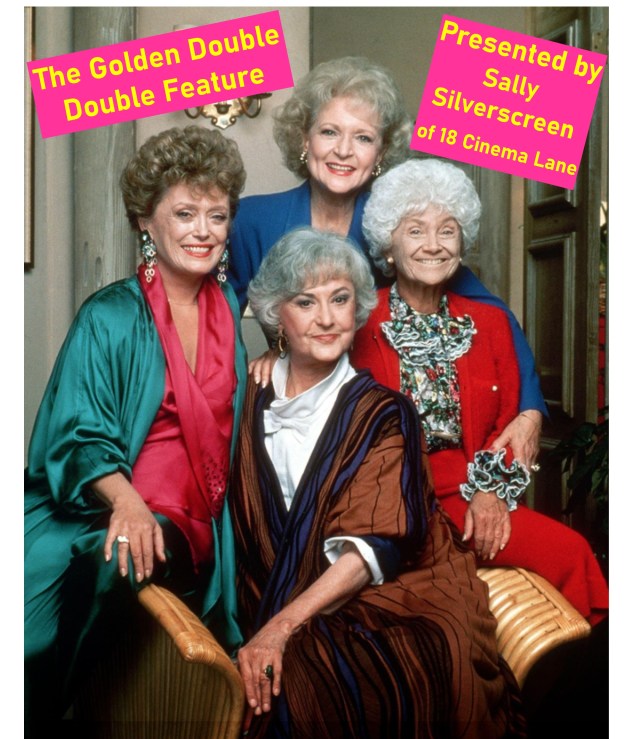
The Golden Double Double Feature banner created by me, Sally Silverscreen. Original image created by Touchstone Television, Witt/Thomas/Harris Productions, 20th Television, and National Broadcasting Company (NBC)
Thanks for joining me for the first part of my Golden Double Double Feature! The majority of my review of Hallmark Hall of Fame’s The Lost Valentine is spoiler-free. If you’d like to learn more about why I chose this year’s double feature theme, you can check out the introduction in the link below.
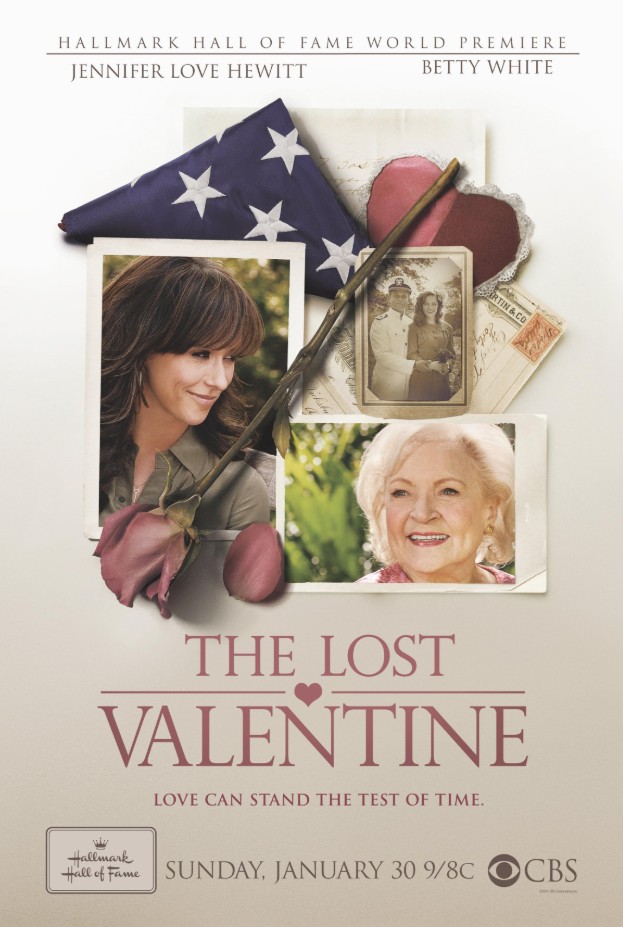
Hallmark Hall of Fame’s The Lost Valentineposter created by Hallmark Hall of Fame Productions, Ridini Entertainment, and CBS
1. Out of the movies from Betty White’s filmography, why did you select Hallmark Hall of Fame’s The Lost Valentine?
When I created my Hallmark Hall of Fame tier rank list in 2020, I not only placed The Lost Valentine in the “Get It On Sale for Half Off” (a.k.a. Good) tier, I also recommended the film because of the use of flashbacks and recognition of Valentine’s Day. But it’s been over eight years since I’ve seen The Lost Valentine. While selecting the 2011 Hallmark Hall of Fame picture for this review, I didn’t know if my opinion on the film would remain the same as it was years ago. On my Year-Long Bingo Card, three of the bingo squares are “Review at least 2 Hallmark Hall of Fame films”, “Revisit a movie you haven’t seen in over 5 years”, and “Review a holiday themed movie that isn’t Christmas”. So, when I saw The Lost Valentine on Betty’s filmography, I remembered liking the movie, as well as how the movie would complete those aforementioned bingo squares.
2. In Hallmark Hall of Fame’s The Lost Valentine, Betty portrays Caroline Thomas. How is Caroline Thomas similar or different from Rose?
On The Golden Girls, Rose Nylund is known for her innocence and naivete. These qualities add charm to Rose’s character, as well as provide some of the show’s comedic moments. Betty’s character in The Lost Valentine, Caroline Thomas, lacks Rose’s naivete for two reasons. Caroline’s experiences during World War II and even afterwards give her an awareness of how unpredictable life can truly be. Her lack of naivete also makes sense with the story itself, as The Lost Valentine is a serious drama grounded in reality.
3. Hallmark Hall of Fame’s The Lost Valentine is based on a book by James Michael Pratt. What book adaptation would you have liked to see Betty star in?
For 2024’s Eurovisionathon readathon, I read The Readers of Broken Wheel Recommend by Katarina Bivald. From what I remember of the book, I could picture Betty portraying a character from that story. Katarina crafted characters that sounded and felt distinct from one another. Plus, the small-town setting seemed Hallmark-esque, creating a sense of community through dramatic and comedic character interactions. The “golden girls” have distinct personalities on The Golden Girls, allowing each character to be unique. Even though the show is classified as a sit-com, there were emotional, serious moments woven into episodes. With all that said, I think a story like The Readers of Broken Wheel Recommend would have complimented Betty’s acting talents, as The Lost Valentine perfectly showcased her comedic and dramatic timing.
4. Was there anything about Hallmark Hall of Fame’s The Lost Valentine you liked or didn’t like?
As I mentioned in answer number one, I recommended The Lost Valentine because of the use of flashbacks. These flashbacks added context to the events presented on screen, especially when it came to Caroline’s part of the story. Meghann Fahy portrayed Caroline’s younger self while Billy Magnussen portrayed Caroline’s husband, Neil. Both Meghann’s and Billy’s acting performance was strong. But together, their on-screen chemistry effectively sold the believability of Neil and Caroline’s relationship! What works in the favor on this relationship is the emotional depth Billy and Meghann bring. A great example is how Caroline’s and Neil’s eyes possessed the pain of being apart from each other. Watching Meghann’s and Billy’s performance felt like witnessing a couple upholding their promise of love instead of two actors simply portraying characters. I wish Billy and Meghann had been cast in more Hallmark projects together.
Jennifer Love Hewitt stars in The Lost Valentine as a television reporter named Susan Allison. Susan received a subplot where she contemplates her future with her boyfriend, Andrew. This is one of those subplots where you know the relationship isn’t going to last because the film’s female protagonist will eventually fall in love with the male protagonist, which, in The Lost Valentine, is Caroline’s grandson, Lucas. That creative decision led to Susan’s subplot being predictable. Instead, her subplot should have prioritized her reconciliation with her family, especially since Susan mentioned toward the beginning of The Lost Valentine how she doesn’t have a strong relationship with them.
5. The Golden Girls didn’t receive any television films (like other shows such as Little House on the Prairie, Murder, She Wrote, etc.) In your opinion, why do you think this creative decision was made?
A typical episode of The Golden Girls is about thirty minutes long. Meanwhile, most television movies receive a run-time between an hour and thirty minutes to two hours. If a tv show’s creative team chooses to make a made-for-TV movie, they need to create a story that justifies a longer length of time. So, I’m guessing the creative team behind The Golden Girls never figured out a story that couldn’t be told in half an hour.
6. Did you develop any thoughts and/or questions while watching this film?
Like I said in my number one answer, it’s been over eight years since I’ve seen The Lost Valentine. Because of this, I had completely forgotten the humor woven into the story. Comedic moments sprinkled throughout the film was such a pleasant surprise for me. One of my favorite scenes was when Caroline reads a sports magazine to a group of veterans at a local hospital. While she’s talking about the New York Yankees, Caroline says she doesn’t hate the team, she just doesn’t like it when they beat a team she likes more. How that piece of dialogue was written, as well as Betty’s sweetly honest delivery, created a scene that was genuinely hilarious. Moments like the one I described alleviated some of The Lost Valentine’s heavier scenes yet never overshadowed the story’s serious subject matter.
For this part of my review, I will spoil The Lost Valentine. If you have not seen this movie and are planning on watching it, skip ahead to question number seven.
Toward the end of The Lost Valentine, after Caroline welcomes Neil home, she discovers rose buds growing on a rose bush in her garden. That specific rose bush was not only the first plant Caroline and Neil planted when they moved into their home, the rose bush was believed to be dead for the majority of the movie. When Caroline discovers the rose buds, she reminisces about Neil as she dances to music from the past. All of a sudden, a man who I assumed was Neil’s ghost appeared behind Caroline. After that, the hose Caroline was holding falls to the ground. But the scenes that follow are flashbacks of Caroline and Neil and scenes featuring Lucas and Susan. Is the fallen hose implying Caroline passed away, joining Neil in the afterlife? Or was Caroline so caught up in remembering the past, she dropped the hose by accident? That part of the story was, in my opinion, too open-ended for a stand-alone film. But because The Lost Valentine is based on a book, maybe the source material would provide a clearer explanation than the adaptation did.
7. Throughout The Golden Girls, cheesecake became an iconic staple of the show. What would you say is the iconic staple of Hallmark Hall of Fame’s The Lost Valentine?
You’d think I’d pick the titular valentine, as it plays a significant role in The Lost Valentine. But, instead, I’m choosing the red rose. When it comes to growing roses, it takes time, patience, commitment, and care. Even as Lucas wants to uproot a rose bush he believes is dead, Caroline reminds her grandson how she doesn’t give up on things that easily. These aspects perfectly represent some of the major themes of The Lost Valentine; like serving others and putting your love toward something you believe matters. Caroline’s rose bush also provides the story with a nice full-circle moment.
8. The Hallmark Hall of Fame collection overlapped with The Golden Girls (in terms of existence). Why do you think Hallmark Hall of Fame didn’t try to capitalize on the popularity of the “golden girls”?
From 1979 to 2011, Hallmark Hall of Fame movies aired on CBS. The Golden Girls existed on NBC. While Hallmark Hall of Fame and The Golden Girls overlapped (between 1985 to 1992), there were two to four Hallmark Hall of Fame films released per year, implying tighter production schedules. Though a typical season of The Golden Girls ran from September to May, a certain amount of time needed to be set aside to film episodes, especially since The Golden Girls was filmed in front of a live studio audience. These factors may have made casting any of the “golden girls” in a Hallmark Hall of Fame presentation difficult, but not impossible. However, trying to accommodate any of the “golden girls” schedules could have affected the schedules of the other cast and crew members of a Hallmark Hall of Fame project.
9. Hallmark Hall of Fame’s The Lost Valentine was released in 2011 (19 years after The Golden Girls ended). Is there any element from the movie you wish was incorporated on the show?
One of the overarching themes of The Lost Valentine is serving others. A great example is when Caroline visits veterans at a local hospital. On The Golden Girls, there were two episodes involving veterans; ‘From Here to the Pharmacy’ and ‘Charlie’s Buddy’. However, these episodes prioritized Rose’s and Blanche’s attempt to finding romance. As far as I know, there wasn’t an episode of The Golden Girls where the “golden girls” took the time to honor veterans. Therefore, I wish this type of story had been incorporated on the show. One example is the “golden girls” volunteering at an Honor Flight ceremony.
10. After watching Hallmark Hall of Fame’s The Lost Valentine, is there anything you can take away from your movie-viewing experience?
For years, Hallmark’s motto has been “When you care enough to send the very best”. Hallmark Hall of Fame’s The Lost Valentine perfectly represents that motto! The amount of care that Caroline put into waiting for Neil is a beautiful display of putting the needs of others before oneself, one of the major themes of The Lost Valentine. Other parts of the story represent this theme as well, such as Susan’s quest to find the truth about Neil’s whereabouts. By revisiting the 2011 Hallmark Hall of Fame movie, I was reminded why I like it. Strong elements, such as the acting performances and the screenwriting, made my movie-viewing experience enjoyable. I was also reminded of things I had completely forgotten, like the humor woven into the story. As I said in this review, the comedic moments alleviated some of The Lost Valentine’s heavier scenes yet never overshadowed the story’s serious subject matter. This is a Hallmark Hall of Fame movie that still holds up, even fifteen years later. Therefore, it will stay in the “Get It On Sale for Half Off” (a.k.a. Good) tier of my Hallmark Hall of Fame tier rank list!
The Golden Double Double Feature banner created by me, Sally Silverscreen. Original image created by Touchstone Television, Witt/Thomas/Harris Productions, 20th Television, and National Broadcasting Company (NBC)
I haven’t talked about anything Hallmark Hall of Fame related since last August, when I reviewed the 1990 presentation, Face to Face. To make up for lost time, I decided to write a list article about a topic associated with this collection of Hallmark’s movies. With Hallmark Hall of Fame lasting from 1951 to 2019, numerous actors and actresses have graced television screens in one or several projects from this branch of Hallmark programming. But there are some actors and actresses who never received that opportunity. So, in this list, I will be selecting five actors and five actresses who, in my opinion, should have starred in a Hallmark Hall of Fame movie. While the chosen actresses and actors are categorized in no particular order, they were selected based on two criteria: 1) the trajectory of their career in correlation with the existence of Hallmark Hall of Fame and 2) if their acting talents would have been well utilized within the types of stories Hallmark Hall of Fame told.
Hallmark Hall of Fame logo created by Hallmark Entertainment and Hallmark Hall of Fame Productions
1.Stephen Lang
I will admit I’ve seen only three projects from Stephen Lang’s filmography; Don’t Breathe, Death of a Salesman, and 2009’s Avatar. But from what I remember, Stephen put a great amount of effort and care into his roles. Even based on some of his interviews I have seen and heard, it seems like Stephen takes the roles given to him very seriously. With all this said, I truly believe he would have brought that same amount of care and effort into a Hallmark Hall of Fame title. Plus, according to IMDB, Death of a Salesman is labeled a “tv movie”. Therefore, Stephen has some experience working in the realm of made-for-tv cinema. Had the opportunity to star in a Hallmark Hall of Fame movie presented itself, I wonder what type of role Stephen would have received, let alone what type of movie he would have been cast in?
2. Jane Seymour
Throughout her career, Jane Seymour has starred in several Hallmark films; Lake Effects, Dear Prudence, PerfectlyPrudence, and A Royal Christmas. You’d think with Jane’s connection to Hallmark, as well as her star power, she would have starred in, at least, one Hallmark Hall of Fame presentation. But surprisingly, this opportunity never came to be. Besides her appearance in Hallmark’s movies, Jane has starred in projects that were related to the historical fiction genre, such as Somewhere in Time and Dr. Quinn, Medicine Woman. In fact, I’m surprised Hallmark Hall of Fame and the creative team behind Dr. Quinn, Medicine Woman didn’t work together to create a television event related to the show. This idea actually would have made sense, especially since Hallmark Hall of Fame was broadcast on the same network as Dr. Quinn, Medicine Woman during the show’s lifespan.
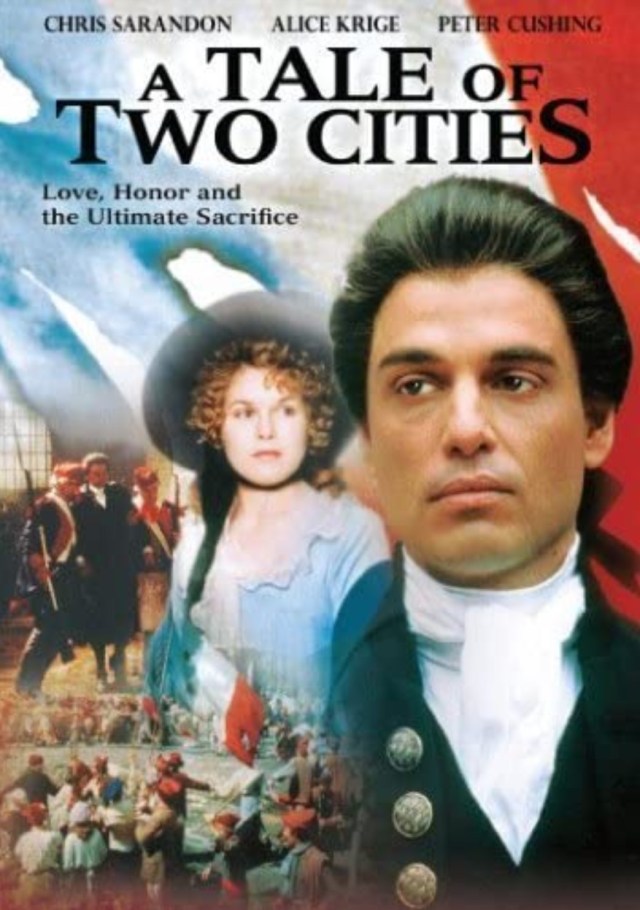
Hallmark Hall of Fame’s A Tale of Two Cities poster created by Hallmark Hall of Fame Productions, Marble Arch Productions, Norman Rosemont Productions, and Columbia Broadcasting System (CBS)
3. Michael Wincott
I recently talked about Michael Wincott in my review of an episode from Miami Vice. Based on his performances I’ve seen, Michael has consistently displayed an understanding, as well as control, over his character’s emotions. His adaptability has also been very chameleon-like. If given the opportunity to star in a Hallmark Hall of Fame film, I believe Michael could have helped create a character with a captivating presence. Even though the movies in the Hallmark Hall of Fame collection were primarily dramatic in tone, various genres were covered within this series. Therefore, I think Michael’s acting talents could have been best utilized in a film from either the historical fiction, western, or mystery genre.
4. Bai Ling
I’ve seen several projects from Bai Ling’s filmography, including the 2001 Hallmark movie, The Lost Empire/The Monkey King. The one consistent strength I have noticed within these projects is Bai’s strong sense of emotionality. Whether in a made-for-tv movie or a theatrically released title, Bai’s understanding and utilization of her character’s emotions have added depth to her performances. I could have seen this acting strength incorporated into a Hallmark Hall of Fame movie, especially since, like I mentioned earlier, movies in the Hallmark Hall of Fame collection were primarily dramatic in tone. Since I have seen Bai star in at least one film from the mystery and fantasy genre, it would have been interesting to see what a fantasy or mystery Hallmark Hall of Fame movie starring Bai would have looked like. Or perhaps the Hallmark Hall of Fame collection could have given her a chance to tackle a genre I haven’t seen her appear in before.
5. Vincent Perez
If you have followed 18 Cinema Lane long enough, you would know one of the best movies ever reviewed on the blog was Swept from the Sea. Vincent Perez’s portrayal of Yanko is one of the reasons why. There were times in Swept from the Sea where, by utilizing emotion, he was able to say so much without saying anything at all. Vincent’s acting versatility not only made his performance captivating, it was also both heart-warming and heart-breaking. I’ve liked his performance from his other movies I have seen, from his emotional intensity in The Crow: City of Angels to his sincerity in Cyrano de Bergerac. Even in 2004’s Frankenstein (a movie I didn’t like), Vincent’s performance is one of the few good aspects of that film. I guess the 1998 HBO movie, Shot Through the Heart, is the closest thing to seeing Vincent in a Hallmark Hall of Fame presentation I’ll ever get.
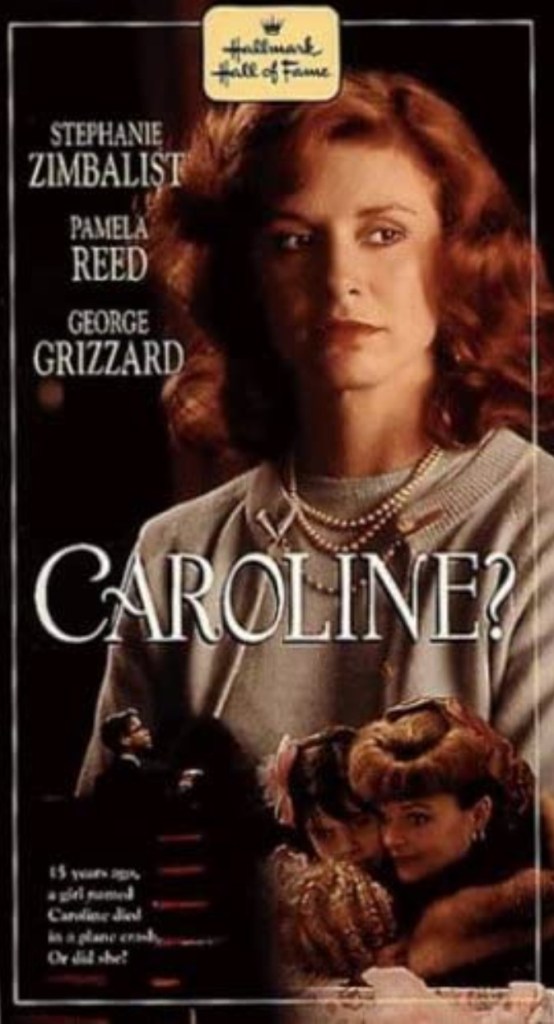
Hallmark Hall of Fame’s Caroline? poster created by Hallmark Hall of Fame productions, CBS, and Republic Pictures Home Video
6. Jasmine Guy
Whenever I think of Jasmine Guy, I think of her portrayal of Kathleen on Touched by An Angel. I also think about how strong Jasmine’s performance was on that show. Kathleen became a character I looked forward to seeing appear on screen. This was the result of the expressiveness, sassiness, and charisma Jasmine brought to her role. She even had good on-screen chemistry will Bill Nunn in the Touched by An Angel episode, “Lost and Found”, as it sold the concept of Kathleen and Bill’s character, Frank, being compatible, under different circumstances. Since Touched by An Angel was more dramatic in tone, like the Hallmark Hall of Fame collection, Jasmine’s portrayal of Kathleen gave me an idea how Jasmine’s acting talents could have been utilized within a Hallmark Hall of Fame presentation.
7. Adewale Akinnuoye-Agbaje
Fans of the television show, Lost, will recognize Adewale Akinnuoye-Agbaje as the actor who portrayed Mr. Eko. Adewale’s performance on that show is one of the reasons why I liked Mr. Eko as a character. His captivating presence commanded attention from the audience, which sometimes made Mr. Eko intimidating. Yet, the kind-hearted and thoughtful persona Adewale gave to Mr. Eko also allowed his character to be approachable, making the audience want to get to know Mr. Eko and see where the story took him next. Adewale’s acting versatility would have been such a valuable asset in a Hallmark Hall of Fame project. What also worked in Adewale’s favor is his chemistry with the other cast members on Lost. This acting element would have been beneficial to any Hallmark Hall of Fame movie, especially since some films from Hallmark Hall of Fame featured ensemble casts.
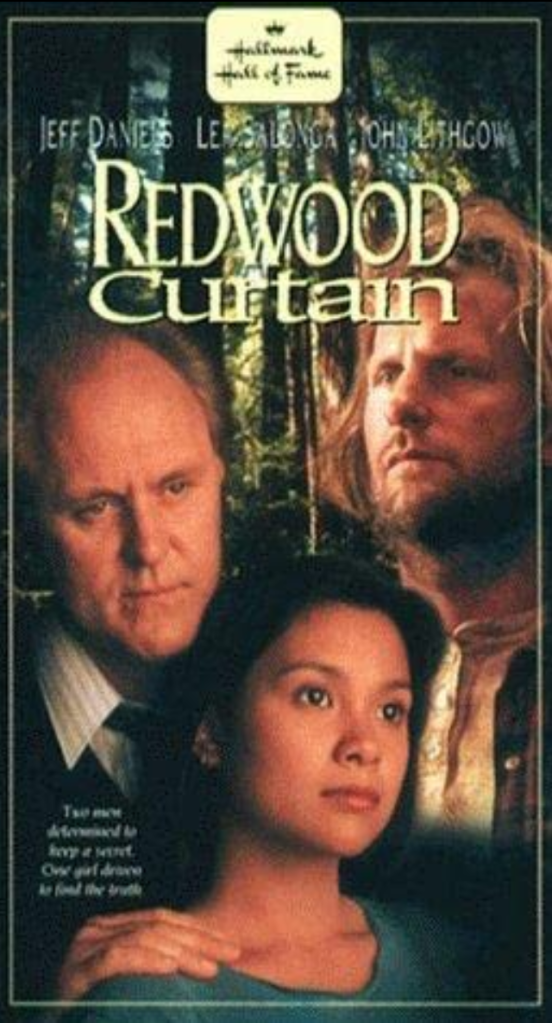
Redwood Curtain poster created by Chris/Rose Productions, Hallmark Hall of Fame Productions, American Broadcasting Company (ABC), and Republic Pictures (II)
8. Hayley Mills
Hayley Mills was at the height of her popularity in the 1960s. Plus, based on her performances I have seen, Hayley has been able to utilize her expressions and emotions to make her characters seem as believable as possible. With these facts in mind, I’m surprised Hallmark Hall of Fame didn’t try to capitalize on Hayley’s popularity and talent by offering her a role in one of their films. When it comes to Hallmark Hall of Fame’s movies from the 1960s, I haven’t seen any of them. But based on my research, it appears these projects were either adaptations of plays, literature, or historical events. Because Hayley has starred in dramatic films like The Chalk Garden, I believe Hayley’s acting talents could have been incorporated well into one of these genres.
9. Dulé Hill
Dulé Hill is best known for his role as Burton “Gus” Guster from the television show, Psych. However, I’m more familiar with his performance on Suits as Alex Williams. Though it’s been a while since I’ve seen Suits, I remember Alex was introduced later in the show’s lifespan. Despite this, Dulé’s adaptability allowed his character to share chemistry with the other characters, making me as a viewer feel like Alex was always meant to be on the show. Dulé’s television experience, as well as his experience alongside an ensemble cast, worked in his favor. These acting qualities and Dulé’s name recognition from Psych could have given a Hallmark Hall of Fame film a built-in audience. Plus, I have heard Dulé is a tap dancer, so maybe Hallmark Hall of Fame could have incorporated his dancing talents into a musical.
10. Joanne Whalley
Back in 1994, Joanne Whalley starred in the movie/mini-series, Scarlett. When I reviewed it back in 2021, I said the mini-series/movie was a competently made project where the creative team behind it clearly knew what they were doing. This statement holds true for Joanne’s performance, as she did a fine job with the acting material provided. Since Hallmark was one of Scarlett’s distributors and since the movie/mini-series premiered on the same network Hallmark Hall of Fame’s movies aired on, it would have made sense if Joanne had been chosen to star in a Hallmark Hall of Fame movie. I’ve also seen Joanne star in at least one historical fiction and one fantasy film, which are two genres that have been explored within the Hallmark Hall of Fame collection. But, for whatever reason, the opportunity to work on a Hallmark Hall of Fame project never came to fruition for Joanne.
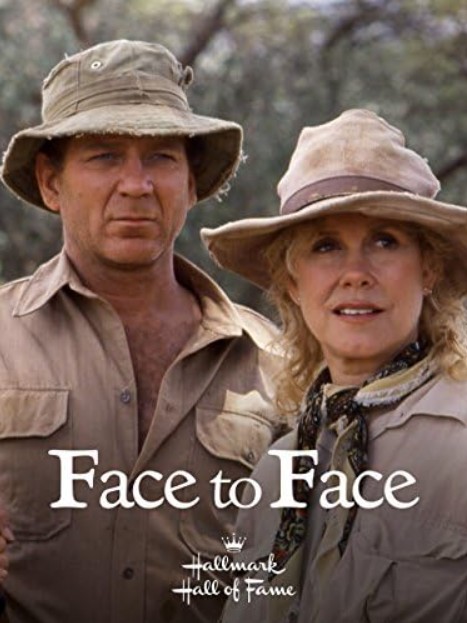
Any time I receive the opportunity to review a Hallmark Hall of Fame movie, I try to prioritize titles that are either VHS exclusive or harder to find. This decision has been made to help give those titles more recognition, as well as encourage more people to check those films out. One of these films is the 1990 picture, Face to Face! As far as I know, this Hallmark Hall of Fame presentation was not released on VHS or DVD. It also premiered months prior to the Hallmark Hall of Fame movie, Caroline?, which I have reviewed on 18 Cinema Lane. The synopsis is what intrigued me toward seeing Face to Face, as the story (according to IMDB) is about “an American paleontologist and a British miner get in a conflict over who has the rights to dig on a site in Kenya”. A conflict about two differing parties at odds over a shared problem isn’t often covered within the Hallmark Hall of Fame collection. In fact, the only movies I can think of that fit this description are The Summer of Ben Tyler and Sweet Nothing in My Ear. Face to Face’s Kenyan backdrop also provides a unique element to the movie. Africa is a setting that is rarely incorporated in Hallmark Hall of Fame’s films.
Hallmark Hall of Fame’s Face to Faceposter created by Hallmark Hall of Fame Productions, Robert Halmi, and CBS
Things I liked about the film:
The scenery: As I mentioned in this review’s introduction, Face to Face takes place in Kenya. The creative team behind the film took advantage of the Kenyan landscape by featuring long and medium shots of the story’s natural surroundings. One example is an establishing shot of a sunset. Half the shot is engulfed in an orange and yellow sky, with a grey mountain at the sunset’s root. Nearby trees adopt a black hue, standing out against the sky’s bright colors. The ground appears to be a mix of rustic red and brown, warmed by the light’s glow. This establishing shot is so gorgeous, I doubt pictures would do it justice.
The dialogue: In my recent review of 1973’s From the Mixed-Up Files of Mrs. Basil E. Frankweiler, I praised the film’s dialogue. I mentioned how some lines were so well-written, they became a memorable part of the movie. Hallmark Hall of Fame’s Face to Face shares the same strength! The film’s dialogue was not only witty and clever, it was also, at times, thought-provoking. During one evening, Face to Face’s protagonists, Diana and Tobias, are listening to the sound of a flute. This music is created by a young man named Enjoro, who works with Tobias. Impressed by Enjoro’s talent, Diana says “Just think what he could do with an education”. Tobias quickly replies by asking “Isn’t what he’s doing enough”? This conversation is a great example of how good intentions may be quite different from what a person wants or needs. Earlier in Face to Face, Diana’s arrival in Kenya is met by a colleague named Dr. Brinkman. On a nearby map, Dr. Brinkman is trying to locate Diana’s dig site. As he’s searching for the site, Diana says to Dr. Brinkman “You’re close”. When he asks her “How close”, she matter-of-factly tells him, “Got the right country”. The exchange between these two characters showcases the wittiness found in Face to Face’s script!
Enjoro’s subplot: Like I just said in this review, the flute music is created by a young man named Enjoro, who works with Tobias. But music is not his only passion. Enjoro is also a talented artist, with his drawings impressing Diana so much, she gives him an art set. Unfortunately, these artistic passions are frowned upon by his village, who would rather see Enjoro become a warrior. This personal struggle between village tradition and personal pursuits provides a subplot in Face to Face. A conflict like Enjoro’s is rarely incorporated in Hallmark Hall of Fame’s movies. In fact, I found Enjoro’s part of the story more interesting than the main plot. Had this film focused primarily on Enjoro’s personal conflict, I think the overall movie would have been more compelling.
An unlikable protagonist: I recognize the creative team behind Face to Face was trying to utilize the “enemies to lovers” troupe when it came to Tobias and Diana. I also acknowledge they were trying to give Diana and Tobias an “opposites attract” dynamic. Unfortunately, these parts of the story were not as effective as they could have been. One reason lies with how unlikable Diana was. For the majority of the movie, she was a static character; close-minded, stubborn, and entitled. When Tobias offered a compromise or tried to make peace with her, Diana shut down his offers and even saw him as beneath her. Even though Diana and Tobias eventually develop romantic feelings for each other, that attraction felt abrupt. If Diana’s change of heart had been more gradual, not only would she be a more likable character, the build up between her and Tobias’ attraction would have been stronger.
The audio: Face to Face premiered in 1990. Therefore, I’m aware of how film-making technology back then was not as advanced as it is today. But one of the signs of these times was the bad audio heard in the Hallmark Hall of Fame film. Most of Face to Face takes place outdoors. This means not only were the cast’s speech picked up by microphones, background noises were picked up as well. The collection of sounds sometimes made it difficult to understand what the characters were saying. Face to Face could have benefitted from using ADR (automated dialog replacement).
The “insta-love” troupe: When I talked about how unlikable Diana was, I brought up the “enemies to lovers” troupe Face to Face’s creative team tried to utilize. I also brought up how Diana and Tobias’ attraction for one another felt abrupt. This was caused by Tobias and Diana remaining “enemies” for more than half the movie. So much time was spent showing Diana and Tobias bickering, disagreeing, and being negative toward each other instead of the protagonists building a romantic bond over time. When Tobias and Diana eventually fall in love with one another, the “insta-love” troupe unnecessarily makes an appearance in Face to Face. Having the protagonists stay “enemies” for too long also made Elizabeth Montgomery and Robert Foxworth’s on-screen chemistry seem weak.
With the publication of my Face to Face review, I have now seen all three Hallmark Hall of Fame movies released in 1990. Out of these films, I find Caroline? the best one. As for Face to Face, I thought it was just ok. This is one of those movies where a better story idea was buried within the presentation Hallmark Hall of Fame gave its audience. I honestly wish Enjoro’s story had been chosen as the main plot. His personal conflict between village tradition and personal pursuits provided a compelling narrative. I also wish Tobias and Diana had spent more time developing a romantic relationship and working together to solve their shared problem. These creative decisions would have prevented flaws like the appearance of the “insta-love” troupe. Face to Face features merits such as the dialogue and the scenery. But I can think of better movies also featuring these merits. Though there are interesting ideas woven into the script, I can kind of see why Face to Face became lost to time.
Overall score: 6.1 out of 10
Have you seen Hallmark Hall of Fame’s Face to Face? Are there any Hallmark Hall of Fame films you’d like to see reviewed on 18 Cinema Lane? Please tell me in the comment section!
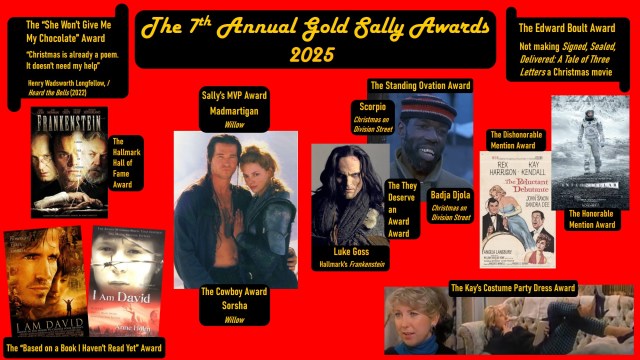
Here at 18 Cinema Lane, I maintain several annual traditions to give my readers something to look forward to. One of those traditions is the Gold Sally Awards, which commemorates my blog’s anniversary! The award categories are created by me and based on topics I’ve brought up on my blog. With two new awards in 2025, I’ll explain the significance of those categories. Like in 2024, I will discuss why I chose each recipient. Now, let the 7th Annual Gold Sally Awards begin!
7th Annual Gold Sally Awards Winners created by me, Sally Silverscreen.
The Kay’s Costume Party Dress Award
(Best Outfit from a Movie)
Helen’s Christmastime Outfit from Hallmark Hall of Fame’s Pack of Lies
When I thought about the various categories of the Gold Sally Awards, I realized there was no category recognizing the wardrobe department of the movie industry. To fix that, I created the Kay’s Costume Party Dress Award! The name of this award references the dress Kay (Joan Collins’ character) wore at a costume party in the 1983 tv movie, Making of a Male Model. I loved this dress so much, it was featured in 2021’s Movie Blogger’s Christmas Wish-List! From the films I saw in 2024, there were several outfits I really liked. The one that was the most memorable, however, came from the Hallmark Hall of Fame presentation, Pack of Lies! The outfit in question was featured in my Movie Blogger’s Christmas Wish-List from last year; the black and blue ensemble Helen (portrayed by Teri Garr) wore during Christmastime. This timeless outfit was worn in only one scene. That fact is why Helen’s outfit earned the inaugural Kay’s Costume Party Dress Award!
The Edward Boult Award
(Missed Opportunity in Cinema)
Not making Signed, Sealed, Delivered: A Tale of Three Letters a Christmas movie
Last June, I speculated how Signed, Sealed, Delivered: A Tale of Three Letters could be a Christmas film. In my editorial about my speculation, I explained how the movie’s title could be a reference to either the Nativity story or A Christmas Carol. I also wondered if Signed, Sealed, Delivered: A Tale of Three Letters and “Signed, Sealed, Delivered: To the Moon and Back” could be a two-part adaptation of A Christmas Carol, with the rock star character intended to be a Marley-like character. The official marketing for Signed, Sealed, Delivered: A Tale of Three Letters proved my speculation wrong. But the more I think about how this movie could have been a Christmas picture, the more I wish it had been a Christmas production. As of early February, 2025, the Signed, Sealed, Delivered series has received only one Christmas movie. Plus, my aforementioned editorial provided ideas for a potential Christmas script. With Hallmark Mystery’s ‘Miracles of Christmas’ viewership numbers lower in 2024 than 2023, maybe the network will consider creating another Signed, Sealed, Delivered Christmas film.
The They Deserve an Award Award
(An Actor or Actress Who Deserves Recognition)
Luke Goss (for his performance in Hallmark’s Frankenstein) and Badja Djola (for his performance in Christmas on Division Street)
There were several good acting performances I saw in 2024. So, it was difficult to choose just one recipient for this year’s Gold Sally Awards. Both Luke Goss’ and Badja Djola’s performance was so impressive! In Hallmark’s Frankenstein, Luke’s use of emotion allowed The Creature to speak without actually speaking. An example I used in my review of the 2004 television film was when The Creature bursts into tears while seeking refuge in a barn. Luke’s acting skills made his character as complicated as he was in Mary Shelley’s source material. Badja made his character, Scorpio, so memorable, despite having limited appearances in Christmas on Division Street. With a consistently commanding presence, Scorpio was a character I looked forward to seeing on screen. That’s because Badja used his acting talents to give Scorpio captivating interactions with other characters. The scene where Scorpio shares some of his backstory with Cleveland is the example I used in my Christmas on Division Street review.
The Cowboy Award
(Character Who Makes an Unnecessary, Drastic Change)
Sorsha from Willow
You’re probably wondering why I gave Sorsha the Cowboy Award, even though I grew to like her as a character. While I found her transformation from villain to hero necessary, it was drastic. In my Comparing with the Critics review of Willow, I shared how Sorsha’s aforementioned evolution was too abrupt. The transformation gave Sorsha some character development, but it left some questions unanswered. For this flaw, blame lies in the screenwriting.
Sally’s MVP Award
(Character Who Left a Memorable, Showstopping Impression)
Madmartigan from Willow
When I watch a movie, there is, sometimes, a character who leaves such a memorable impression on me, they end up stealing the show. I have called these types of characters “MVP”. To acknowledge the “MVPs” of 18 Cinema Lane, I created the new Sally’s MVP Award! One of these “MVPs” was Madmartigan from Willow. In my Comparing with the Critics review of the 1988 film, I talked about how Madmartigan was the story’s comic relief. His personality and comedic timing captivated my attention and kept me invested in his story. What helped Madmartigan become the “MVP” of Willow was the screenwriting and Val’s performance.
The “She Won’t Give Me My Chocolate” Award
(Best Quote from a Movie)
“Christmas is already a poem. It doesn’t need my help” – Henry Wadsworth Longfellow, I Heard the Bells (2022)
In the 2022 movie, I Heard the Bells, Fanny (portrayed by Rachel Day Hughes) encourages her husband, Henry, to create a Christmas themed poem. Henry (portrayed by Stephen Atherholt) told his wife, “Christmas is already a poem. It doesn’t need my help”. When Henry said this, I started to think about what his quote meant. Poems require planning and putting the right pieces together, in order for that poem to have good flow and writing structure. Christmas festivities require a certain amount of planning, whether it’s a local church’s Nativity play or a family’s Christmas party. Using these two examples, finding the right pieces is important, such as who will portray the Three Wise Men or what will be the entrée of Christmas dinner. Poems can also tell stories. One classic example is ‘‘Twas the Night Before Christmas’. Christmastime is filled with stories, from the Nativity story to A Christmas Carol. Henry’s aforementioned quote made me see Christmas in a completely different way! Plus, a quote from a Christmas movie has never won the “She Won’t Give Me My Chocolate” Award before.
The Honorable and Dishonorable Mention Award
(Best and Worst Movie from the Honorable and Dishonorable Mention Category)
Best – Interstellar
Worst — The Reluctant Debutante
For last year’s Gold Sally Awards, there was only the Dishonorable Mention Award. That’s because I didn’t see enough movies to include an honorable mention category. With the honorable mention category returning in 2024, the Honorable Mention Award is also coming back! Science fiction stories about space exploration will typically emphasize the thrills and wonder of the galaxy. This can make it easy for a movie’s audience to get caught up in how adventurous and exciting outer space can seem. In Interstellar, a major focus is space travel’s effect on human beings. So, themes of family, sacrifice, and the price of scientific achievement are woven into the script. That, along with quality acting performances and impressive special effects, is why I liked Interstellar!
Out of all the movies that ended up in the dishonorable mention category, I had the highest expectations for The Reluctant Debutante. This is because I not only reviewed the film for The John Saxon Blogathon, there was some well-known talent involved with the project. Unfortunately, the 1958 movie fell short of those expectations. The Reluctant Debutante was a premise driven story that felt longer than one hour and thirty-four minutes, due to the jokes being drawn-out. It also didn’t help how some story ideas were overlooked. When I reviewed the 1958 film, I shared how movies from the 1950s are covered so infrequently on 18 Cinema Lane. So, it’s disappointing when a production from the ‘50s is weaker than expected.
The Hallmark Hall of Fame Award
(Movie That Feels Like It Belongs in the Hallmark Hall of Fame Collection)
Hallmark’s Frankenstein
There are different kinds of stories in the Hallmark Hall of Fame collection. One kind of story is adaptations of pre-existing literature. Sometimes, “classic” literature became Hallmark Hall of Fame presentations, like The Secret Garden and A Tale of Two Cities. When these adaptations are good, they can be an immersive experience. This is how I would describe Hallmark’s Frankenstein! Due to the combination of screenwriting, acting performances, set design, and costume design, the movie made me feel like I was transported to another time and place. I also appreciate how close to the source material the 2004 television film is. Looking back on Hallmark’s Frankenstein and the Hallmark Hall of Fame collection, I’m actually surprised Mary Shelley’s novel wasn’t adapted into a Hallmark Hall of Fame project. Everything I said is why I chose Hallmark’s Frankenstein for the Hallmark Hall of Fame Award!
The “Based on a Book I Haven’t Read Yet” Award
(Movie Based on Source Material I Have Not Yet Read)
I Am David
Movies that won the “Based on a Book I Haven’t Read Yet” Award were first placed on a best films of the year list. I Am David is continuing that tradition! The 2004 film earned the top spot on my best movies list of 2024. This is the second time a number one movie of the year received the “Based on a Book I Haven’t Read Yet” Award! After I reviewed I Am David, I learned the movie was based on a book. I’m not sure how affective the story’s plot twists will be, as I already know what they are because I saw the film. However, I’d still be interested in reading I Am David someday!
The Standing Ovation Award
(Character Most Deserving of Receiving Their Full Potential)
Scorpio from Christmas on Division Street
When the Gold Sally Awards presented the Standing Ovation Award, the recipients were characters who should have received their “standing ovation”, but were denied that for various reasons. Scorpio (from Christmas on Division Street) actively worked toward getting where he wanted to go. As I said during the They Deserve an Award Award, Scorpio had limited appearances in the 1991 made-for-TV movie. Despite that, the audience learned enough about him to know what he had gone through. During this limited period of time, Scorpio attempts to overcome his obstacles. While I won’t spoil Christmas on Division Street, I will say those attempts earned Scorpio the Standing Ovation Award!
While 2024 was, for me, a better year for movies, I still saw some movies I didn’t like. Similar to my worst movies list of 2023, most of the films on this year’s list were disappointing or average. But, unlike 2023, the top four titles are from different genres. The dishonorable mentions section has returned! This time, however, there are more DNFs (did not finish). Like I have said in past lists, my top ten worst movies I saw in 2024 list is not intended to be mean-spirited, negative, or disrespectful. It’s just a list of my own, honest opinion. Since I reviewed some of the movies on my list, I will provide the links to those reviews in this article.
Dishonorable Mentions
The Reluctant Debutante, The Gambler: Luck of the Draw, Jazz Ramsey: A K-9 Mystery, Million Dollar Lethal Listing, CrimeTime: Freefall (I turned it off after about forty minutes), Mermaid Down (I turned off this movie after about twenty minutes), Blood, Sweat and Cheer (I turned it off after about eighteen minutes), and Temptation Under the Sun (I turned off this movie after about twenty-two minutes)
In the 2020s, Hallmark has come up with story ideas that worked well enough for a stand-alone mystery movie, but unsustainable for a multi-chapter series. One of these ideas came from Crimes of Fashion: Killer Clutch. This film made the same mistake as Mystery Island: not allowing the protagonist to use her skills to solve the case. For Lauren, the main character in Crimes of Fashion: Killer Clutch, her psychology skills were so underutilized, she seemed more like an over glorified intern. Thick French accents making several characters difficult to understand is another major flaw of the film. It prevented me from being fully invested in the story. Crimes of Fashion: Killer Clutch was, in my opinion, a disappointing movie. But compared to the other titles on 2024’s worst of the year list, Hallmark’s production was, simply, ‘underwhelming’.
When I first read the synopsis for Boy in the Walls, I thought the film would be a spookier version of 2016’s Boy in the Attic. Sadly, this was not the case. The 2023 Lifetime presentation contained a mystery that was drawn out for too long. It also doesn’t help how the protagonist made one dumb decision after another. Without spoiling the film, all I’ll say is the title is misleading. If you haven’t watched either referenced movie, I’d recommend Boy in the Attic.
8. The 39 Steps
In my review of The 39 Steps, I said the 1935 picture was the most “meh” title from Alfred Hitchcock’s filmography. This statement was made due to the limited sense of urgency and intrigue within the story. As I also said in my review, The 39 Steps seems longer than an hour and twenty-six minutes. The drawn-out nature of the movie created a slow and boring build-up to a reveal that feels kind of ridiculous and anti-climactic. While romance has been incorporated in some of Alfred’s films, it didn’t work in The 39 Steps. Richard and Pamela’s attraction for one another was too abrupt, welcoming the presence of the “insta-love” trope. Even though The 39 Steps was a disappointing movie, I gave it a lower placement on my list. Comparing the 1935 film to Alfred’s other productions, Hitchcock’s filmography shows how much he improved as a director.
There are some movies that, in my opinion, should have been documentaries instead. The 1987 Hallmark Hall of Fame presentation, Pack of Lies, is just one example. This film in the Hallmark Hall of Fame collection is based on a true story. While “based on a true story” movies can be engaging, intriguing, and even thought-provoking, Pack of Lies was disappointing. Like I said in my review of the 1987 production, the film was a two hour slow and tedious build-up to a resolution that was underwhelming and anti-climactic. The creative team’s decision to choose telling over showing caused other flaws, from little lapse in time to things not making sense. Pack of Lies proves Hallmark Hall of Fame movies are not created equally. However, there are other Hallmark Hall of Fame presentations from the 1980s I like, such as the adaptations of The Secret Garden and A Tale of Two Cities.
While A Sprinkle of Deceit: A Hannah Swensen Mystery was slightly better than One Bad Apple: A Hannah Swensen Mystery, I was still disappointed in the latter film. For starters, Victor Webster and Alison Sweeney had no on-screen chemistry. A character (not Hannah) solves the mystery by making an assumption about the case and being conveniently correct. But the worst part about One Bad Apple: A Hannah Swensen Mystery was Delores’ subplot. Up until this film, Delores was very against Hannah getting involved in cases, as well as dating Mike. So, for Delores to become a private investigator and seem to treat her new job as a joke completely went against her character. In fact, this was such a bad creative idea, Delores’ private investigating career was barely mentioned in A Sprinkle of Deceit: A Hannah Swensen Mystery. If there are more Hannah Swensen films in the works, I really hope Delores receives better story ideas.
This Lifetime movie had one of the network’s most creative story ideas. The 2024 picture was about a woman who tried to solve a mystery on her computer at her office cubicle. But the longer I watched this movie, the sooner I realized that aforementioned idea wasn’t sustainable for a feature-length production. Instead, the novelty of how the mystery was solved got old very quickly. My Life Is on the Line is yet another Lifetime film where the protagonist makes a collection of dumb choices. Her decision-making is so bad, other characters in the story, including her boss, call her out for it. Lifetime’s 2024 presentation was, for me, the most disappointing movie of the year.
4. Network
Network holds the honor of not only being the first film I reviewed for my Comparing with the Critics series, it’s also the first film I disagreed with the critics on. Even though Gene Siskel and Roger Ebert placed the movie in their list of the top five films from 1976, I would call Network one of the “Dogs of the Year”. For me, it was more of an endurance test, where the story’s first half was a drawn-out search for a resolution to the movie’s conflict and the second half was a yelling contest. Being a pretentious picture by taking itself too seriously and telling a dry, boring story didn’t work in Network’s favor. There are movies from the 1970s I like. Unfortunately, Network isn’t one of them.
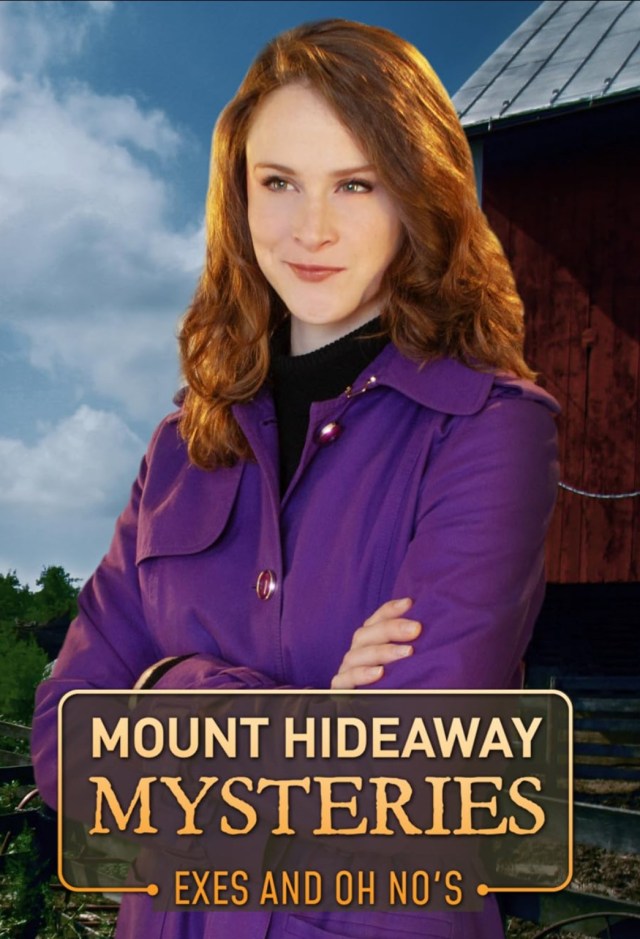
It’s ironic that Mount Hideaway Mysteries:Heartache and Homecoming became the third worst movie of 2023 and now Mount Hideaway Mysteries: Exes and Oh No’s became the third worst movie of 2024. When you look past this irony, you’ll see how Mount Hideaway Mysteries: Exes and Oh No’s shares some of the same flaws as its sequel, like not understanding how technology works. Mount Hideaway Mysteries: Exes and Oh No’s contains its own flaws, with poor special effects as one example. While this movie is so bad, it’s, at times, unintentionally funny, I do acknowledge how challenging it can be to create a cinematic project. In fact, the best way to sum up Mount Hideaway Mysteries: Exes and Oh No’s is the quote, “Mistakes are proof that you are trying”.
This Lifetime movie from 2022 had a very misleading title and synopsis. Not only is there no revenge in the story, there’s also nothing being chilled throughout the film. According to a plot summary I read, Revenge Best Served Chilled is about a series of murder mysteries taking place at a wine expert competition, with the protagonist trying to clear her name and solve the mysteries. The movie actually emphasizes the wine expert competition to the point where there is little to no mystery involved. Like Boy in the Walls and My Life Is on The Line, the protagonist, Emily, makes so many dumb decisions. I, honestly, should have turned this movie off after Emily doesn’t lock her family’s restaurant’s front doors as she’s spending the night at the restaurant. But I naively thought Revenge Best Served Chilled was going to be a better movie.
1. Frankenstein (2004)
I referenced this movie while reviewing the Hallmark adaptation of Frankenstein, as I was pointing out a technical error on Wikipedia. When I saw the version of Frankenstein starring Vincent Perez, I immediately knew it was going to be the worst movie I saw in 2024. While this movie contains some interesting ideas, those ideas are bogged down by other ideas. The excessive number of ideas made the story feel like a series of vignettes either loosely connected to each other or not connected at all. What also makes the overall story weak is how nothing is explained. The ending is one of the most “sequel bait” endings I’ve seen in a long time. I would strongly discourage readers from checking out this version of Frankenstein. More time will be spent being frustrated than entertained.
With the Christmas/holiday season fast approaching, it’s that time of year for my annual Movie Blogger’s Christmas Wish-List! For readers new to 18 Cinema Lane, this tradition shares the movie related things I’d like to receive for Christmas. The list’s format follows the quote; “Something you want, something you need, something to wear, and something to read”. The items on my list, including this year, have been a combination of realistic requests and wishful thinking. With those explanations said, let’s get into 2024’s Christmas wish-list!
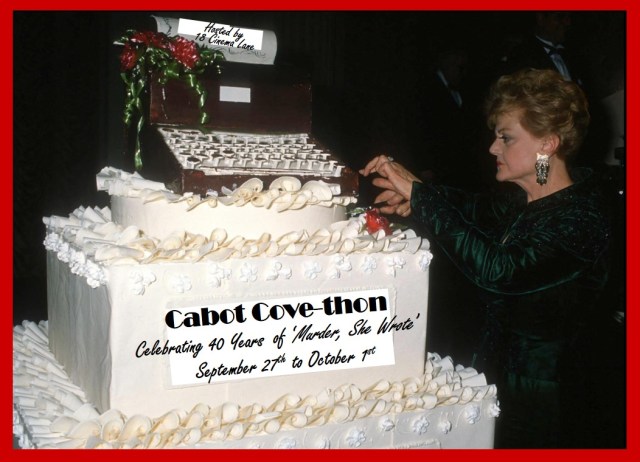
Since there are movies associated with the Murder, She Wrote series, I will bring this want up in my wish-list. During my Cabot Cove-thon Blogathon, I published an editorial about why Universal Orlando Resort should host Murder, She Wrote weekend. Throughout this article, I explained why this event should work by presenting a basic concept of the event’s schedule. Murder, She Wrote weekend is an event where all parties involved would benefit. Universal Orlando Resort would receive an opportunity to not only make a profit, but to also utilize an intellectual property (IP) that used to have a presence in the park. Attractions and businesses within the park’s boundaries would be able to welcome more guests and increase their revenue. Fans of Murder, She Wrote would have a chance to meet other fans and celebrate the legacy of the show. If Murder, She Wrote weekend becomes an actual event, I think it has the potential to become a cherished Universal Orlando Resort tradition!
Cabot Cove-thon banner created by me, Sally Silverscreen. Original picture found on IMDB.
Something You Need to See
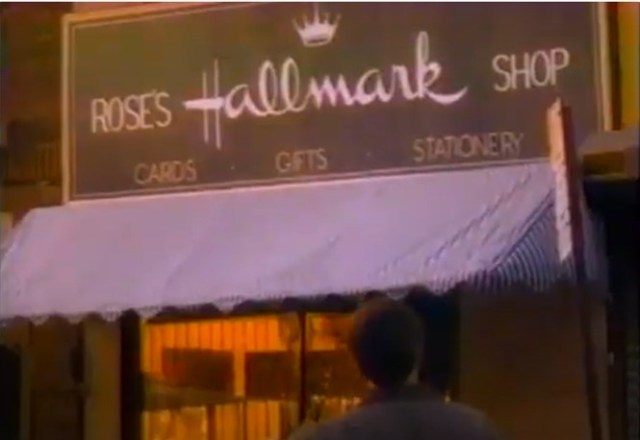
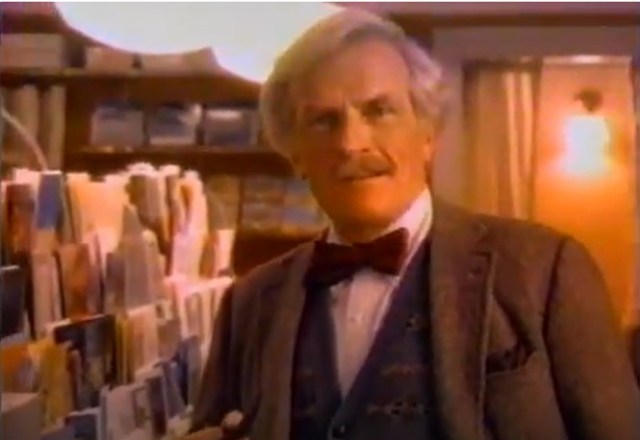
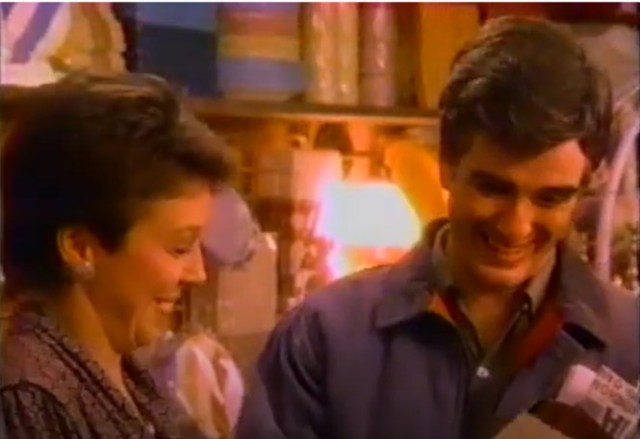
When I reviewed the Hallmark Hall of Fame movie, Pack of Lies, in June, I referenced a Hallmark commercial that was based on a true story. In this commercial, a man, whose first language is not English, is looking for the perfect card for his wife, who will soon arrive in the United States. When he goes to a Hallmark store, the man is assisted by an employee named Rose, who helps him find exactly what he is looking for. After watching this commercial, I developed a collection of questions: What happened to the man and his wife? Are they still together? Did she like the card he bought her? What about Rose, does she still work at Hallmark? Has she retired? And the biggest question of them all; what compelled Hallmark to turn this particular story into a commercial? With everything I just said, I think the commercial could serve as the story for a future Hallmark movie! If the Signed, Sealed, Delivered series continues, that commercial could also serve as a plot in a future Signed, Sealed, Delivered film!
This screenshot, taken by me, Sally Silverscreen, is from the aforementioned Hallmark commercial from 1987.
A movie related piece of clothing or accessory I’d want to wear
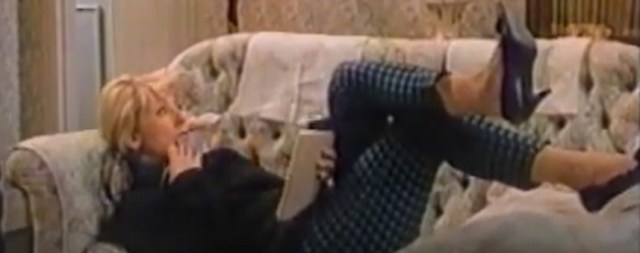
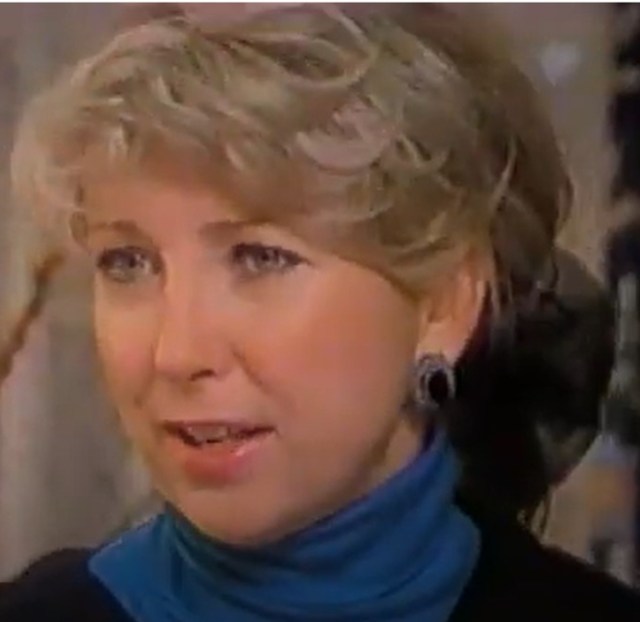
While we’re on subject of Pack of Lies, I want to talk about an outfit Teri Garr’s character, Helen, wore in the 1987 film! During Christmastime, Helen’s outfit was a black and blue ensemble that consisted of black kitten heels, black and blue plaid slacks, and a black sweater over a blue turtleneck. For accessories, Helen wore her hair in a black bow and displayed black stone earrings. I like this outfit because of how timeless it is! It works in either the 1960s, 1980s, or today!
This screenshot, taken by me, Sally Silverscreen, is from the Hallmark Hall of Fame movie, Pack of Lies. Because Helen wore this outfit in only one scene, this is the only time where her complete outfit is shown on-screen.
This screenshot, taken by me, Sally Silverscreen, is from the Hallmark Hall of Fame movie, Pack of Lies. Because Helen wore this outfit in only one scene, this is one of the few times her earrings and bow are featured on screen.
A book I’ve read that I’d like to see adapted into a film
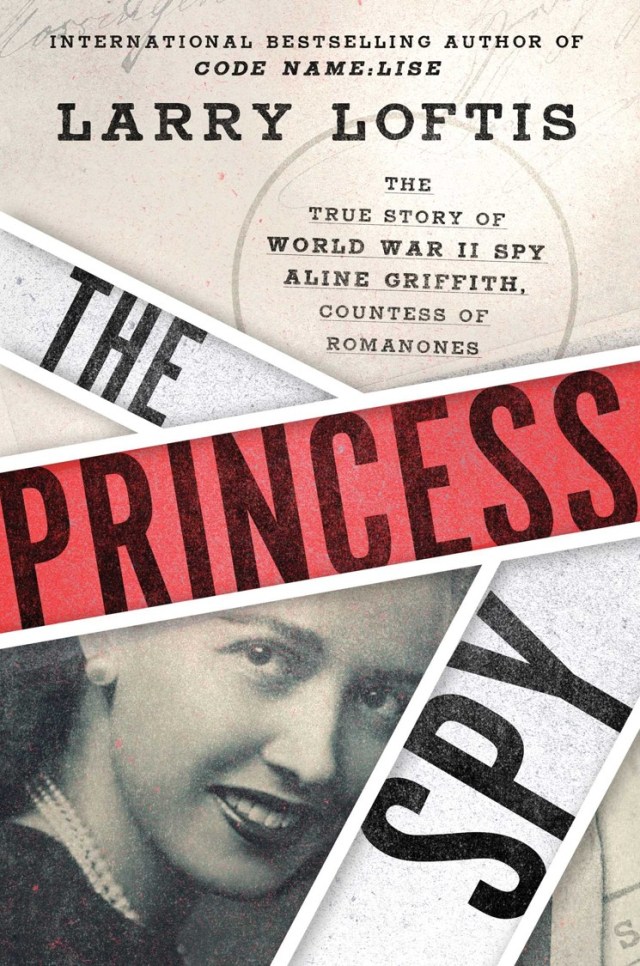
In my post about the Finally Fall Book Tag, I mentioned The Princess Spy being the best book I read for 2024’s Eurovisionathon. While discussing the book, I talked about how it was both educational and entertaining due to Larry Loftis’ research and literary skill. Looking back on other non-fiction stories from World War II, I realized how underrated Aline Griffith’s story is. When it comes to films taking place during World War II, the espionage side of the war effort is not commonly featured. Because of these factors, I would like to see The Princess Spy adapted into a movie!
What are your thoughts on my Christmas wish list? Are there any movie related things you’d like to receive during the Christmas/holiday season? Tell me in the comment section!
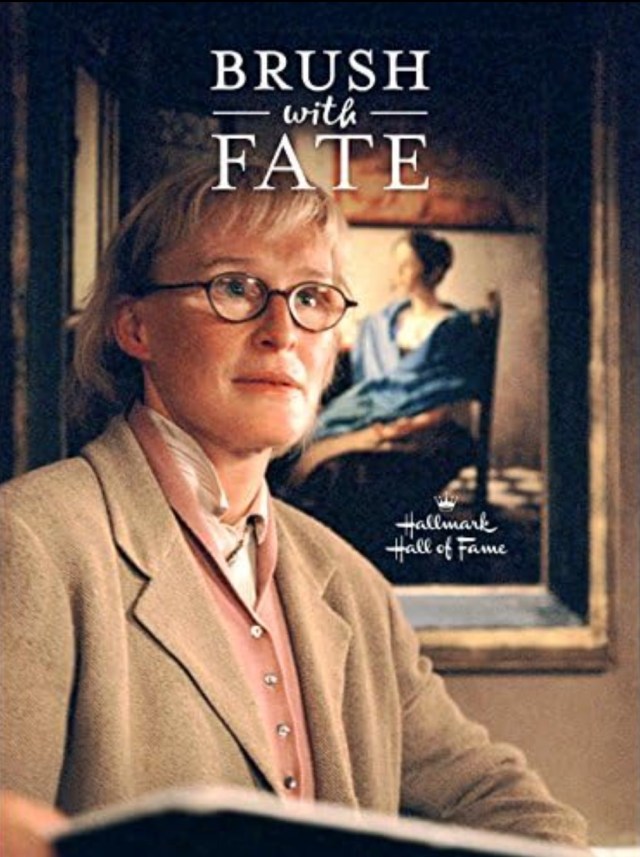
Recently, I published a list of the top ten “icks” from Hallmark Hall of Fame movies. The list consisted of ten aspects of Hallmark Hall of Fame films I don’t like. One of these “icks” is when a movie from this collection glosses over a serious subject. Shortly after I published my list, I found I wasn’t the only blogger to not like this particular “ick”. A fellow blogger, Ospreyshire, brought up the 2003 Hallmark Hall of Fame production, Brush with Fate, as an example of how Hallmark Hall of Fame can incorporate serious issues into their stories. Since I hadn’t seen the film yet, I chose Brush with Fate for this Blog Follower Dedication Review! This is only the second project from the Hallmark Hall of Fame collection I’ve reviewed this year, so far. A month ago, I wrote about the 1987 movie, Pack of Lies. Unfortunately, I found the film disappointing, as the story was a two-hour build-up to an underwhelming resolution. So, here’s hoping Brush with Fate is a more enjoyable picture!
Hallmark Hall of Fame’s Brush with Fateposter created by CBS and Hallmark Hall of Fame Productions
Things I liked about the film:
An immersive experience: A movie’s creative team has the potential to provide an immersive experience for their audience. To achieve this, attention to detail must be emphasized. That piece of advice can work in the favor of a historical period film. Brush with Fate explores several time periods and how a valuable painting exists within a given period. Each time period represented looked and felt historically accurate! Not only does every featured period appear well researched, every detail was tended to. From the architecture to the machinery, even right down to the characters’ shoes, the aforementioned attention to detail was adopted by Brush with Fate’s creative team. The effort the creative team took to make each part of the story appear authentic helped create an immersive experience for the viewer!
Visual transitions: When a story moves from one point to another, scenes will transition using visual cues to let the audience know when the story is moving forward. Because Brush with Fate explores several time periods, there are multiple transitions throughout the movie. These transitions are creative and use visually interesting parallels. Toward the beginning of the story, Cornelia puts her hand on her family’s prized painting. As she begins to share the history of the painting, the next part of the story begins with Laurens putting his hand on the same painting, signaling a change in time periods. The transitions during Brush with Fate were also seamless, allowing the story to maintain a steady flow.
Lessons taught by the painting: More often than not, Hallmark Hall of Fame movies weave important lessons into their stories. While Brush with Fate is no different, the way the story’s lessons were incorporated was unique compared to other Hallmark Hall of Fame titles. In the 2003 film, different characters learn a different lesson based on their experience with the painting. In one part of the story, a woman from 1717 struggles to feed her family. At the same time, she adores a painting she and her husband found. Turning to her mother for advice, the woman is reminded how the painting is not a blessing. This statement expresses that paintings are replaceable luxuries compared to irreplaceable things like family.
Characters touching the painting with their bare hands: Fictional movies typically make their audience suspend their disbelief. Sometimes, though, audiences are asked to suspend more disbelief than they bargained for. Brush with Fate revolves around a Vermeer painting that is known for being valuable in historical and monetary importance. But throughout the movie, multiple characters touch the painting with their bare hands, including Cornelia , who is well aware of the painting’s value. It may seem petty of me to critique the movie for this small detail. However, this happened enough times in the movie that I couldn’t look past it.
An unchronological story: As I mentioned earlier in this review, Brush with Fate explores several time periods and how a valuable painting exists within a given period. However, this story is not told in chronological order. Instead, Cornelia shares the painting’s history by bouncing around between time, going backwards and then forwards. Not telling the story in chronological order raises unanswered questions, such as what happened to the baby from the family in 1717 and who acquired the painting after Laurens’ daughter and her fiancé. Without spoiling the movie, I will say I know why this creative decision was made. But I still wish Brush with Fate was told in chronological order.
An abrupt ending: Most Hallmark Hall of Fame movies are stand-alone stories where the conclusions are definitive. However, there are exceptions to the rule, such as Sweet Nothing in My Ear and A Painted House. Brush with Fate is one of these exceptions. But, in my opinion, I don’t think this movie should have received an open ending. The purpose of showcasing the painting in multiple time periods is to elaborate how the painting’s history is long-lasting. With the rather abrupt ending, this purpose seems defeated, like the painting’s history has stopped short. It also leaves some unresolved loose ends.
Before I share my thoughts on Brush with Fate, I want to thank every follower of 18 Cinema Lane! With each movie review, including these Blog Follower Dedication Reviews, I try to find films I can recommend to my readers. Looking back on this Hallmark Hall of Fame picture, I think I could recommend it. This is a project where attention to detail was emphasized so much, some parts of the movie felt theatrical. The creative team behind Brush with Fate allowed their production to be an immersive experience for their audience. However, I think this story would be benefitted by being presented as a multi-part mini-series. With several time periods being explored, as well as many heavy subjects woven into the script, there’s only so much story to tell in two hours. By giving each time period their own episode, more time could be spent getting to know the characters and receiving answers to certain questions. Like many Hallmark Hall of Fame movies, Brush with Fate is based on a pre-existing book I haven’t read yet. Therefore, I can only review this film as a film and not an adaptation.
Overall score: 7.1-7.2 out of 10
Have you seen Brush with Fate? Which book do you think should have been adapted into a Hallmark Hall of Fame movie? Let me know in the comment section!
To address the elephant in the room (or on the blog in this case), the lack of blog posts this past week is due to how much time I’ve spent collecting research for my upcoming Sally Solves a Mystery article. While I have been working to solve a television-related mystery, the subject of Hallmark Hall of Fame movies came to mind. I’ve seen over fifty films from the Hallmark Hall of Fame collection. At this point, I, as a viewer, know what I like and don’t like when it comes to storytelling from this particular branch of Hallmark entertainment. These preferences are what inspired me to create this list of the top ten “icks” from Hallmark Hall of Fame movies! For my list, I will share which aspects of Hallmark Hall of Fame films I am not a fan of, providing examples from various titles in this collection. Before I begin the list, I want to address how this list is not meant to be mean-spirited or negative. My article is, simply, a way to express my opinion.
In past movie reviews, I have pointed out when I felt an actor or actress’s talents were underutilized. What I’ve meant by this is an actress or actor’s talents not being incorporated into a film to the fullest extent. This can range from an actor or actress being miscast to an actor or actress having a limited presence in the movie, the latter serving two examples for this list. Marguerite Moreau’s involvement in 2002’s The Locket is one of the reasons why I wanted to check the film out. Because she was cast as the movie’s main supporting actress, I expected Marguerite to have a more consistent presence in the film than she actually did. As I said in my review of The Locket, Marguerite’s character barely appeared in the movie’s second half. Based on her performances I have seen from a variety of movies and television shows, I think Karina Arroyave’s acting talents could have lent themselves to a larger role in 2000’s Missing Pieces. Sadly, Karina’s on-screen appearances were so short, they seemed like “don’t blink or you’ll miss her” moments. While she was given a little more screen-time in the 1993 film, Blind Spot, I still feel Karina’s acting talents were underutilized.
2. Films That Feel like Televised Plays
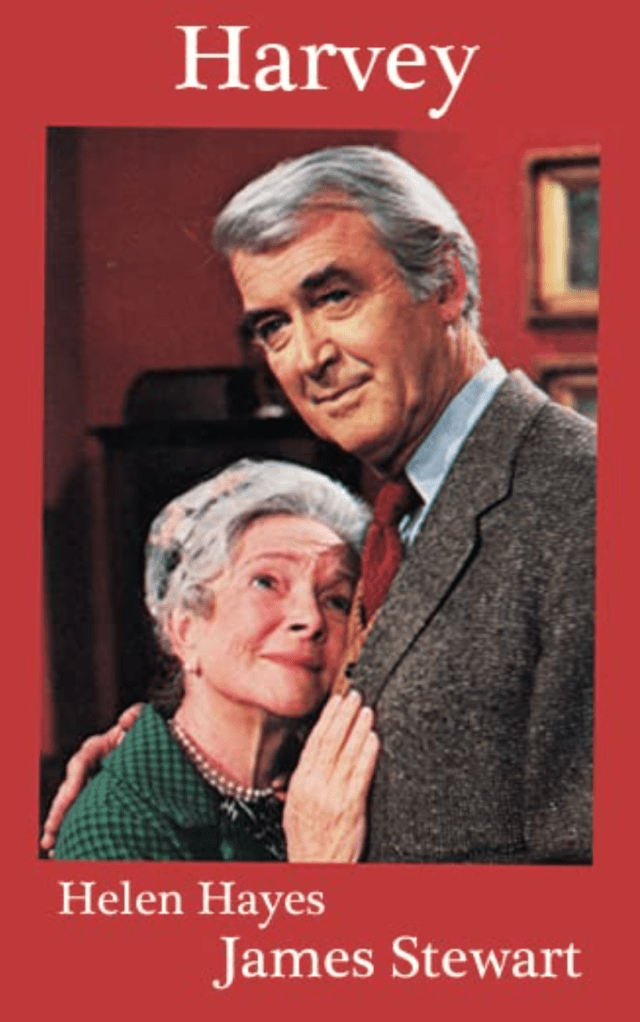
When I choose to watch a Hallmark Hall of Fame movie, I expect to see a cinematic production of an original or pre-existing story. Some of these pre-existing stories happen to be plays. But there are times when a project’s creative team didn’t take advantage of how expansive film-making can be. Instead, they kept their adaptation as limited as the boundaries of the stages these plays came from. Like I pointed out in my review of the 1987 film, Foxfire, the cast is smaller and the story is condensed, forcing the characters to remain near or in Annie’s house. With the story surrounded by the natural beauty of Appalachia, I wish the movie’s emphasis had been placed on showcasing a variety of locations from this region. The 1972 remake of Harvey made similar creative choices, such as showing fewer locations throughout the story. This is different from the 1950 version of Harvey, where Elwood moves to multiple places.
3. Oversimplifying Adoption/Foster Care
Back in 2022, when I published my list of the top ten worst movies I saw that year, 1994’s A Place for Annie ended up as a Dishonorable Mention. One reason why I didn’t like this film is how the subject of adoption/foster care was oversimplified. For those who have never seen or heard of the movie, A Place for Annie is about a woman taking in a baby who is HIV positive. Over the course of the story, the woman, portrayed by Sissy Spacek, is in the process of adopting the baby. But she experiences an unexpected conflict when the baby’s biological mother shows up. The way Sissy’s and Mary-Louise Parker’s characters were portrayed and written presented a “good” mother vs. “bad” mother dynamic, even right down to the way each character dressed. Sissy’s character, Susan, becomes upset at the idea of Mary-Louise’s character, Linda, reuniting with her daughter, even though the intended purpose of foster care is for children to be reunited with their biological families. Because of the oversimplification of adoption/foster care in A Place for Annie, I couldn’t take the movie seriously.
4. Characters Not Receiving Their Full Potential
Speaking of articles from 2022, I’ll now bring up my list of top ten characters who didn’t reach their full potential. When I published this list, I explained when a character doesn’t receive their full potential, they aren’t given the opportunity to reach their goals, make their dreams come true, and allow their stories to be told to a satisfying extent. This list featured two characters from Hallmark Hall of Fame movies; Barry Klemper from The Boys Next Door and Amédée Chevalier from O Pioneers!. In the case of these characters, their stories were adapted from pre-existing source material. While I haven’t seen or read a stage version of The Boys Next Door, I have read O Pioneers!. I can understand why Willa Cather made certain creative decisions related to Amédée, as well as Hallmark Hall of Fame’s desire to keep the adaptation as close to the source material as possible. However, I still wish Amédée had received his full potential.
5. Rehashed Stories
For this part of my list, I am not talking about Hallmark Hall of Fame productions that are adapted from pre-existing plays or books. I am referring to Hallmark Hall of Fame movies that seem to copy stories from other films. Earlier in this list, I referenced the 1972 and 1950 versions of Harvey. After watching both versions, it feels like I watched the same movie twice, due to little variation between the two versions. I also felt this way about the 1996 film, The Summer of Ben Tyler. The movie seemed so similar to To Kill a Mockingbird, I wondered if Hallmark Hall of Fame was trying to remake the aforementioned film. I know story ideas are bound to get repeated over time. But, in my opinion, the Hallmark Hall of Fame productions should strive to create unique, distinct projects.
Harvey(1972) poster created by Foote, Cone and Belding Productions, Hallmark Hall of Fame Productions, Talent Associates-Norton Simon, and National Broadcasting Company (NBC)
6. Terrible Grandparents
Grandparents, like any family member in a protagonist’s life, should, in my opinion, be a kind, friendly character that the audience can root for. Unfortunately, some protagonists aren’t so lucky. For the fifth annual Gold Sally Awards, when I created the inaugural Edwin P. Christy Award for most annoying character in film, I gave that award to Grandpa Marcus from 1995’s Journey. I explained how obsessed he became of his photography hobby, to the point where he became negligent of his grandchildren’s safety. In one scene, Grandpa Marcus makes his grandson, who doesn’t appear old enough to obtain a driver’s permit yet, drive a car so Grandpa Marcus can take pictures. The grandchildren make a joking comment about how their grandpa will photograph their car accident if something should happen to them, with the scene itself meant to be played as a wholesome, hilarious moment.
Leonora Nelson is a bitter, mean-spirited woman in the 1997 film, Ellen Foster. At her daughter’s burial, Leonora blames her son-in-law for her daughter dying. She yells and screams at her son-in-law just seconds after her daughter’s casket was buried. As the story progresses, Leonora’s hatred for her son-in-law grows. Her actions range from smashing his Purple Heart medal with a hammer to telling her granddaughter, the titular Ellen Foster, she hates her because she looks like her father. I recognize Leonora is intended to be an awful character, serving as one of the many obstacles Ellen had to overcome. But that doesn’t take away from how, in my opinion, Leonora Nelson is one of the worst characters in Hallmark movie history.
7. Productions That Feel Like Hallmark Channel Films
Hallmark Hall of Fame movies began to premiere on Hallmark Channel in 2014. While there are films from this time period I like, such as Love Takes Flight and The Beach House, I am aware how, more often than not, these projects bear a formula similar to those from Hallmark Channel. One such example is how a romance is usually the center of a given story. The identities of films like The Beach House and Love Takes Flight are not as unique as Hallmark Hall of Fame movies from years past. Take, for instance, Missing Pieces and Caroline? from 1990. Both of these films revolve around mystery stories. However, each title presents its own distinct identity, with these two movies bringing something different to the Hallmark Hall of Fame collection.
8. Unsupportive Parents
Similar to what I said earlier about grandparents, parents of protagonists should, in my opinion, at least be supportive. Sadly, a protagonist’s parents may be unsupportive for a variety of reasons. In my list of top ten characters who didn’t reach their full potential, I mentioned how Barry Klemper’s father destroyed the momentum Barry had in The Boys Next Door. Long before his father showed up, Barry dreaded the meeting because of how unsupportive his father is. On the day of the meeting, Barry’s father intimidated and belittled his son, even making Barry feel incapable of performing a simple golf maneuver. There are times, however, when a protagonist’s unsupportive parents do not intend to be unsupportive. Heidi and Winston’s mother is a perfect example. In the 1990 movie, Caroline?, Winston and Heidi’s mother is overprotective due to Heidi having a disability. Her good intentions not only lead Heidi to be treated younger than her age, but also prevent Heidi’s academic needs from being met.
9. Glossing Over Serious Subjects
The Hallmark Hall of Fame collection has covered its fair share of serious subjects, ranging from the aforementioned adoption/foster care to terminal illnesses. But sometimes, a Hallmark Hall of Fame production will miss a good opportunity to address an important topic by glossing it over. The subject of racism is woven into the text of The Flamingo Rising book, with racism causing the protagonist, Abraham, to have self-image related issues. When the book was adapted into a Hallmark Hall of Fame movie in 2001, all mentions of racism were eliminated from the script. This decision was likely made to keep The Flamingo Rising movie “Hallmark appropriate”. At a very random moment in the 1996 film, Calm at Sunset, Russell Pfeiffer admits he has a drug addiction. There was no lead up to this revelation and the revelation itself was never addressed afterward. Calm at Sunset is based on a book I haven’t read. Therefore, I don’t know how the subject of addiction was addressed in the source material compared to the adaptation.
10. A Dysfunctional Family for the Sake of It
Six years ago, when I published my list of the top ten worst Hallmark movies of all time, I put the 2004 film, Back When We Were Grownups, at number one. As I mentioned in that list, the story’s family seems dysfunctional just for the sake of it. From what I remember, there was no clear reason for the family to be dysfunctional. This is very different from another Hallmark Hall of Fame production, 1998’s Saint Maybe. In that movie, a death in the family causes a ripple effect which leads to the family becoming dysfunctional. The dysfunctional nature of the family serves as motivation for various characters to make impactful changes in their lives. Comparing these two Hallmark Hall of Fame films, which are both adaptations of Anne Tyler’s books, I think Saint Maybe did a better job at showcasing how a dysfunctional family live their lives and work through their problems.
For last year’s Broadway Bound Blogathon, I reviewed the Hallmark Hall of Fame presentation, A Tale of Two Cities. This is an adaptation from 1980 I liked so much, it was one of the best movies I saw in 2023! While reflecting on that film, I realized it’s been a whole year since I reviewed a Hallmark Hall of Fame production. To make up for lost time, I chose to write about the 1987 Hallmark Hall of Fame film, Pack of Lies! Two years before this movie aired on television, Pack of Lies premiered on Broadway, making the Hallmark Hall of Fame movie a good choice for the blogathon. Pack of Lies is also a Hallmark Hall of Fame film from the ‘80s I haven’t seen before. One of my aspirations is to see as many Hallmark Hall of Fame movies as realistically possible. Out of the titles I have seen, I’ve noticed the mystery genre is rarely represented throughout the Hallmark Hall of Fame collection. That fact is another reason why I chose to review Pack of Lies!
The acting: Ellen Burstyn and Teri Garr portray Barbara Jackson and Helen Schaefer in Pack of Lies. The friendship of these two characters highlights how different they are from one another. Helen has a very outgoing and bubbly personality, a talkative woman who’s willing to solve problems. Meanwhile, Barbara is more reserved, dressing more modestly and avoiding conflict whenever possible. Part of why the differences between these characters were achieved was through the acting abilities of both Ellen and Teri! They presented the uniqueness of their characters through various emotions and expressions. When creating a movie where actors portray friends, the believability of their performances can make or break that illusion. The aforementioned illusion was certainly created and maintained throughout Pack of Lies!
In stories where a character has some degree of authority, their personality is usually serious. This can be a challenge for an actor or actress, as there are few opportunities to utilize a variety of expressions and emotions. That didn’t stop Alan Bates from portraying Stewart and making that performance memorable! When Mr. and Mrs. Jackson first meet Stewart, he leaves a trusting first impression. During this meeting, Alan incorporates eye movements, vocal inflections, and variations of mouth movements to create an interaction that appeared realistic. Because of the realistic nature of Stewart’s meeting, the scene itself contains a sense of realism. This realism is consistently carried in the movie through the acting performances!
A mystery within a mystery: The meeting between Stewart and the Jacksons I previously referenced in this review is about how Stewart is looking for a man named Laurence. The main mystery in Pack of Lies is discovering who Laurence is and why Stewart is interested in finding him. At the same time, the legitimacy of Stewart and his mission serve as a second mystery. Because of the vagueness Stewart provides to the Jackson family, it leaves both the Jackson family and the audience wondering who Stweart really is and why he wants to confront Laurence so much. This second mystery provides an added layer of intrigue to the overall story!
Providing books as gifts: While visiting their friends, Helen and Peter Schaefer, Barbara and Bob Jackson receive books as gifts from Peter. Barbara loves art so much, she and Helen take art classes regularly. Meanwhile, Bob is an employee in the aircraft industry. In the meeting between the Jackson family and Stewart, Stewart points out a model plane Bob built. From Peter, Barbara receives a book of drawings from the Clark Institute in Massachusetts. Peter gives Bob a book about the first flights across the Atlantic. These books were thoughtful presents Peter took the time and effort to find. Looking back on the Hallmark films I’ve seen, including those from Hallmark Hall of Fame, characters receiving books as gifts are rarely shown. Therefore, I appreciate this creative choice from Pack of Lies’s creative team to fill a creative void that is, more often than not, overlooked.
Telling instead of showing: In an ideal movie, it’s important to show and tell what’s happening on screen. But because film is a visual medium, showing should be emphasized. Unfortunately, in Pack of Lies, telling was preferred over showing. Throughout the movie, Stewart tells Mr. and Mrs. Jackson that a man named Laurence Powell is a man of interest. The reason for this interest is his possible connections to Russian communists. Dialogue is the only way the truth about Laurence and Stewart’s reason for recruiting the Jackson family is revealed. The subject of espionage in entertainment media isn’t always action-packed and adrenaline-fueled. If a creative team knows their story will have low energy, they should maintain a sense of suspense and intrigue by showing what’s going on.
Little lapse in time: At the beginning of the movie, Stewart assures the Jackson family he’ll only observe Laurence for a day or two. As the story progresses, Stewart’s mission ends up lasting longer than the proposed one to two days. Like I just said in this review, Pack of Lies emphasized telling instead of showing. The little lapse in time throughout the movie is another example of this flaw. Christmas decorations in the Jackson house are the only indication a significant period of time took place. Prior to that part of the story, the film looks like events happened within a week.
Things that don’t make sense: As I’ve been saying in this review, Stewart’s mission is to observe Laurence over a period of time. The more information revealed by Stewart, the more the Jacksons and the audience learn Stewart knew more about Laurence than he originally let on. I know the subject of espionage can be varied and complicated when included in entertainment media. However, with everything I just said, why didn’t Stewart just arrest Laurence instead of observing him over multiple days? Why did Stewart need to get the Jackson family involved in the first place? This is one example where Pack of Lies doesn’t make sense.
Hallmark Hall of Fame movies, like any creative endeavor, are not created equally. As I shared in this review’s introduction, I liked A Tale of Two Cities so much, it was one of the best movies I saw last year. Sadly, I can’t say the same about Pack of Lies. The 1987 presentation was a two hour slow and tedious build-up to a resolution that was underwhelming and anticlimactic. The cause of these flaws was the emphasis on telling instead of showing. This is not the first time a Hallmark Hall of Fame movie from the ‘80s let me down, as I also found 1985’s The Corsican Brothers disappointing. After watching Pack of Lies, I learned the movie was based on a true story. Now knowing this, I think the story would have benefitted more had it become a documentary instead. As I wrap up my review of Pack of Lies, I reflect on a Hallmark commercial I have seen. In this commercial, a man, whose first language is not English, is looking for the perfect card for his wife, who will soon arrive in the United States. When he goes to a Hallmark store, the man is assisted by an employee named Rose, who helps him find exactly what he is looking for. Another man who occasionally appears throughout the commercial reveals the events in the commercial are based on a true story. Honestly, the story behind that Hallmark commercial is a more fascinating movie idea than what was presented in this Hallmark Hall of Fame film.
Overall score: 5 out of 10
Have you seen Pack of Lies? Which Broadway show do you wish received a Hallmark Hall of Fame movie? Tell me in the comment section!