Take 3: Dial M for Murder Review

For this movie review, I chose to write about the 1954 film, Dial M for Murder, for two reasons. The first is how I selected this specific title for The 6th Wonderful Grace Kelly Blogathon, as Grace Kelly stars in the film. The second reason is how, prior to this review, I had never seen Dial M for Murder. Grace and Alfred are no strangers to 18 Cinema Lane. As of mid-November, 2024, I have reviewed two of Grace’s films; High Society (which I thought was fine) and To Catch a Thief (which I found just ok). Meanwhile, four of Alfred Hitchcock’s movies have been covered on my blog. Out of those titles, Strangers on a Train is, in my opinion, still the best one. But how does Dial M for Murder compare to any of Alfred’s films featured on 18 Cinema Lane? Find out by reading my review!
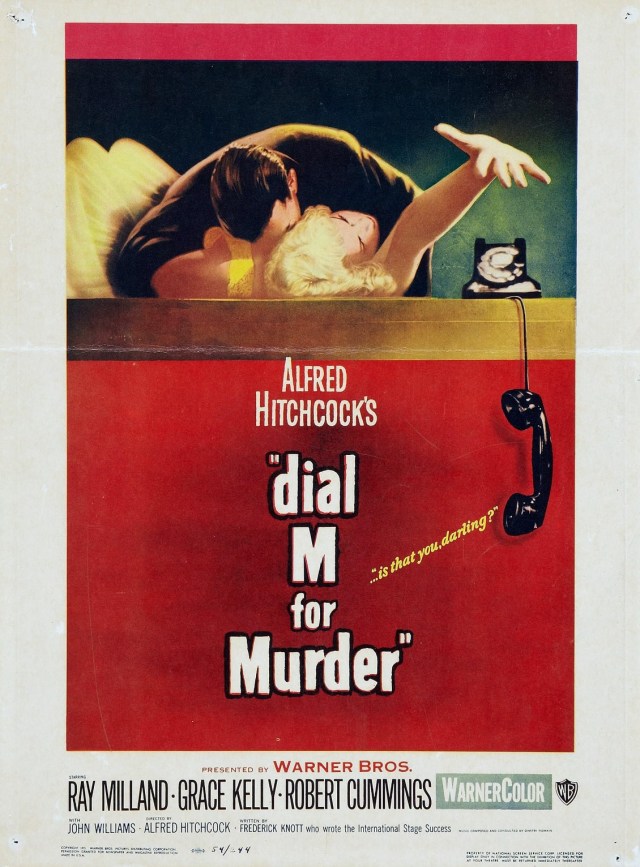
Dial M for Murder poster created by Warner Bros.

Things I liked about the film:

The acting: Since Grace Kelly is the reason why I chose to review Dial M for Murder, I will talk about her performance first. Out of her movies I’ve seen, I’ve noticed how her character portrayals have appeared at ease. Her performance in Dial M for Murder is no different, as her adopted mannerisms and reactions came across as realistic! While sharing a conversation with Mark (portrayed by Robert Cummings), Grace’s character, Margot, seems comfortable in his presence. She effortlessly moves around her apartment and, at times, stands close to him. But when she talks with Mark about how her husband, Tony, has changed, Margot appears to stare into the distance. The combination of her aforementioned stare and frown indicates how Tony’s behavior has troubled her. It also shows the audience how effective Grace’s acting talents are!

As I just said in this review, Robert Cummings portrays Mark, a close friend of Margot. Though they shared only a few scenes together, Grace and Robert displayed nice on-screen chemistry! The strength of Robert’s and Grace’s acting abilities helped their characters appear to truly get along with each other. While I liked Robert’s performance in Dial M for Murder, I was also impressed with Ray Milland’s performance! Similar to Grace’s portrayal of Margot, Ray’s portrayal of Tony showcases how adaptable his acting skills are. For example, Tony looks annoyed while at a restaurant with Mark. From the tone in his voice to constantly checking his watch, Tony clearly appears impatient. A few scenes later, as he’s on the phone with Margot, his demeanor quickly changes to concern due to what he hears over the phone. Throughout his performance, Ray effortlessly brought his character to life!

The use of lighting: Over the course of his career, Alfred Hitchcock has received the title of “Master of Suspense”. One reason why he was given this title is because of how he utilizes lighting to stir up a mood, present visually interesting concepts, or add suspense. In one scene, someone enters Margot and Tony’s apartment. This moment takes place at night, so the only light comes from the fireplace in the living room. An orange glow only providing light to certain areas of the room creates a suspenseful environment, giving the intruder places to hide. I brought up earlier in this review how Mark and Margot shared a conversation. Their conversation takes place in Tony and Margot’s apartment. Right before Tony returns home, Margot’s and Mark’s shadow departs from each other, keeping the closeness of their relationship a secret.

The use of color: Dial M for Murder’s opening credits reveal how the film’s creative team used “WarnerColor” in their project. I’m glad this movie was presented in color because it gave the creative team opportunities to utilize this visual technique to their advantage! Sometimes, the color red was incorporated into a character’s wardrobe. This ranged from Margot wearing a red dress at the beginning of the movie to Tony sporting deep red suspenders. One of the pieces of décor in Margot and Tony’s apartment were dark green curtains. In these examples, color was chosen to draw the audience’s attention to a person, object, or location in the room.

The 6th Wonderful Grace Kelly Blogathon banner created by Virginie from The Wonderful World of Cinema and Emily from The Flapper Dame

What I didn’t like about the film:

Exposition heavy: At the beginning of the movie, Margot shares with Mark how she recently lost her purse. She also tells him when her purse was returned, a letter Mark wrote her was missing. But shortly after Margot made this confession, an exposition heavy scene revealed the letter’s whereabouts, as well as who the story’s perpetrator was. Because this information was revealed so early in the movie, it took away a lot of the story’s suspense. So much exposition given within the film’s first ten minutes may also overwhelm the audience, possibly missing important information if they don’t actively pay attention to the dialogue.

A mystery that isn’t interactive: While talking about Dial M for Murder’s exposition heavy story, I said the perpetrator was revealed so early in the movie. This creative choice takes away the audience’s opportunity to solve the mystery of whodunit alongside the characters. What Dial M for Murder became was a story of how the perpetrator would get caught, similar to programs like Columbo and Diagnosis Murder. That creative decision forces the audience to simply watch the characters solve the story’s mystery. With everything I said, the mystery in Dial M for Murder wasn’t interactive.

A less intimidating antagonist: In some of Alfred Hitchcock’s movies, the antagonist is an intimidating person for a variety of reasons. Their intimidation can add suspense and intensity to a given film’s story. I will not spoil Dial M for Murder. However, I can honestly say I did not find the movie’s antagonist intimidating. Throughout the story, the antagonist kept making dumb decisions, which distracted from their attempts to be an intimidating character. It also didn’t help how the exposition heaviness of the film’s first ten minutes took away a lot of the story’s suspense. If anything, the antagonist in Dial M for Murder was annoying.
Colorful image of key created by orchidart at freepik.com. Flower vector created by orchidart – www.freepik.com

My overall impression:

As of the publication of this review, I have seen eight of Alfred Hitchcock’s films. While I was disappointed by The 39 Steps, I ended up liking Strangers on a Train. When it comes to Dial M for Murder, though, the movie lies somewhere in the middle. Grace Kelly’s performance was, once again, one of the best parts of the production! Her portrayal of Margot was so strong, her reactions and expressions appeared realistic! The use of lighting and color gave Alfred and his creative team ways to present visually creative ideas. But what held Dial M for Murder back from being a more intriguing project is how the first ten minutes of the story was exposition heavy, with this decision impacting the film’s suspense. The mystery not being interactive also takes away some of Dial M for Murder’s intrigue. Alfred’s film felt reminiscent of shows like Columbo and Diagnosis Murder, where the audience simply waits for the perpetrator to get caught. Personally, I prefer mystery stories where I’m left guessing whodunit.

Overall score: 6-6.1 out of 10

Have you seen Dial M for Murder? Which movie of Alfred Hitchcock’s would you like to see me review next? Tell me in the comment section!

Have fun at the movies!

Sally Silverscreen
Take 3: To Catch a Thief Review

For The Master Of Suspense Blogathon, I was originally going to review the 1958 classic, Vertigo. I selected this film because it had been recommended by one of my readers. Unfortunately, my plans fell through at the last minute. So, I had to quickly choose an alternative. As I looked back at the blogathon’s participant list, I discovered the 1955 film, To Catch a Thief, hadn’t been selected. That is the film I am now reviewing for The Master of Suspense Blogathon. I have seen some of Alfred Hitchcock’s movies before this event. From what I know of To Catch a Thief, the 1955 production is different from other titles such as Psycho and Rear Window. But will this difference impact the quality of the film? Keep reading my review in order to solve this mystery!

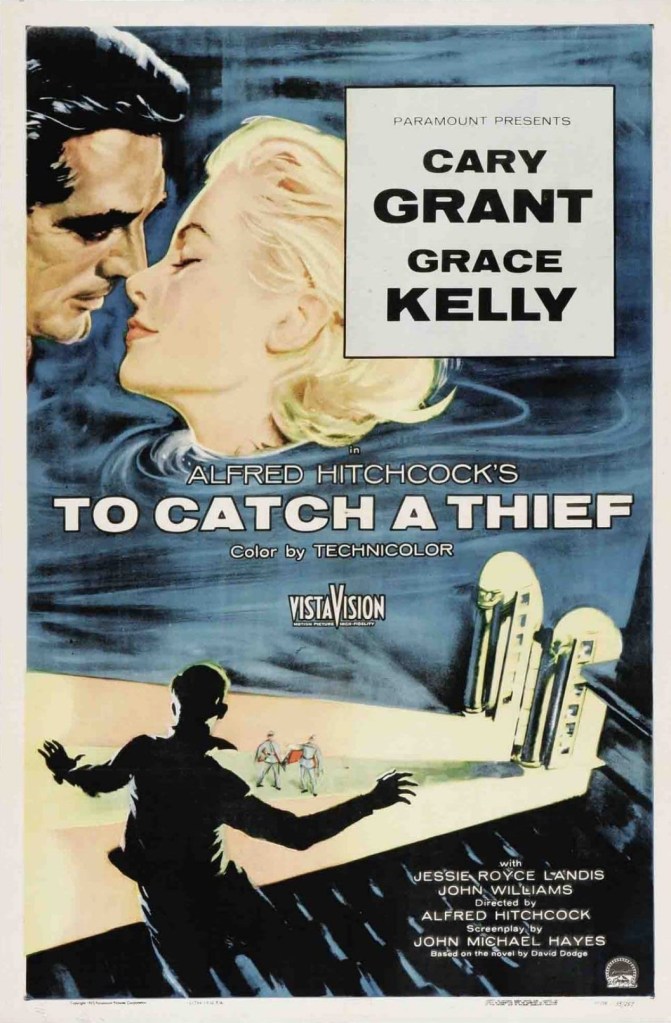
To Catch a Thief poster created by Paramount Pictures

Things I liked about the film:

The acting: In To Catch a Thief, Cary Grant portrayed John Robie, a former jewel thief looking to clear his name. A man of suave charisma, John was afraid of being accused of something he didn’t do. But he never lets this fear get to him. Instead, with the talents of Cary Grant, John was confident and intelligent. Grace Kelly was also cast in To Catch a Thief, portraying Frances Stevens. Frances carried herself with dignified confidence. However, this confidence did not come across as snobbish or arrogant. It added to Frances’ likability, along with her gentle demeanor and respectful elegance. Danielle Foussard is a friend of John’s. Portrayed by Brigitte Auber, Danielle had a spunky streak in her, adding liveliness to her and John’s interactions. A scene I really liked was when John, Frances, and Danielle are swimming in the ocean together. This scene perfectly showcased their personalities, as their banter bounced among each other like a soaring beach ball. What made that scene great to watch was the joining of the acting talents of Cary Grant, Grace Kelly, and Brigitte Auber!

The scenery: Most of the car chases in To Catch a Thief are captured in long, establishing shots. This is very different from car chases in other films, where the chases are shown in medium or close up shots. To Catch a Thief’s approach to car chases emphasizes the scenery surrounding these chases. Looking back on this film’s scenery, I can understand why To Catch a Thief’s creative team would make that decision. With the majority of the production filmed in France, the story shows pieces of the French countryside and seaside. Giant green mountains and deep blue waters present an isolated oasis. A smattering of orange roofed houses perched on these mountains add to the movie’s vibrant color palette. On the French seaside, bright yellow sands welcome the deep blue waters of the ocean. Most of the story’s exterior shots feature a blue sky with a handful of clouds. Even the flowers are appealing bursts of color, boasting shades of red, pink, and even purple. To Catch a Thief is a pretty looking movie and it knows it!

The dialogue: During discussions of Alfred Hitchcock’s movies, use of music, cinematography, and lighting are typically talked about by fans and film enthusiasts. But one area of film-making I feel is overlooked, specifically when it comes to Alfred’s work, is the dialogue. This element of story-telling was a pleasant surprise in To Catch a Thief! It not only suited the characters respectively, it also sounded like the screenwriters put a lot of thought into what the characters told each other. While driving through the French countryside, John and Frances are discussing Frances’ past. As the discussion carries on, John accuses Frances of looking for a husband on her trip. But Frances responds by saying, “The man I want doesn’t have a price”. This statement represented the respectful elegance Grace consistently carried throughout the film. It also hinted at foreshadowing.

The Master Of Suspense Blogathon banner Maddy from Classic Film And TV Corner

What I didn’t like about the film:

Limited amount of urgency: At the beginning of To Catch a Thief, John learns he is accused of stealing valuable jewelry. He evens claims to have ten days in order to clear his name. You’d think with this tight timeline, there would be a strong sense of urgency in the story. But this urgency to find the truth is, unfortunately, inconsistent. Instead, more emphasis is placed on the scenery, the romance, and the “finer things in life”. While the mystery was resolved, the limited amount of urgency held the story’s suspense and intrigue back.

A small amount of suspense and intrigue: Alfred Hitchcock’s productions are known for incorporating suspense and intrigue. This reputation has earned Alfred the title of “Master of Suspense”. In To Catch a Thief, however, suspense and intrigue were only served in small amounts. Part of this problem results from the limited amount of urgency I previously talked about. Another reason for this problem is how suspense and intrigue were used sparingly instead of evenly spread out throughout the story. It got to the point where I almost forgot this story had a mystery.

Lack of suspects: A typical mystery will include a collection of suspects, individuals who may or may not have a reason to be the guilty party. These characters are presented as uniquely as possible, in order to help the audience remember them and their reasoning. To Catch a Thief lacked this ingredient. Because the mystery was not as prioritized as in other works from Alfred Hitchcock, no room was made to include suspects. There was a red herring in To Catch a Thief, but this reveal felt random. Even the reveal of the mystery’s guilty party wasn’t completely surprising.

Illustration of Paris, France created by Freepik at freepik.com. <a href=”https://www.freepik.com/free-photos-vectors/travel”>Travel vector created by freepik – http://www.freepik.com</a>. Image found at freepik.com.

My overall impression:

As I said in this review, To Catch a Thief is a pretty looking movie and it knows it. While the scenery was the film’s crown jewel, there were other aesthetically pleasing components of this production, like the costume design and the set design. When it comes to the story, though, it wasn’t as suspenseful and intriguing as other Alfred Hitchcock movies. The visuals ended up overshadowing the script. I will give Alfred Hitchcock credit where it’s due, as it seems like he tried to take a different approach to cinematic story-telling. But out of his films I have seen, I prefer titles like Strangers on a Train.

Overall score: 6.3-6.4 out of 10

Have you seen To Catch a Thief? Which titles of Alfred Hitchcock’s do you prefer? Please tell me in the comment section!

Have fun at the movies!

Sally Silverscreen
Take 3: High Society Review

I interrupt my Youth-Led Film Double Feature to bring you my review for The Wedding Bells Blogathon! One day, as I was searching Turner Classic Movies’ (TCM’s) schedule, I came across a film called High Society. Through its description, I learned it was a musical remake of The Philadelphia Story. Since I have enjoyed that movie, I figured there was a good chance I might like this picture from 1956. In my review of Marriage on the Rocks, I mentioned I would be reviewing the movie later this month. I also said in that review that I did not like Marriage on the Rocks. High Society is now the second film of Frank Sinatra’s and Grace Kelly’s that I’ve seen! While I knew that Frank and Bing Crosby had musical talents, it would be interesting to see what Grace had to offer to a movie musical. Now, as you’re waiting for the wedding to start, please take a moment to read this review of High Society.

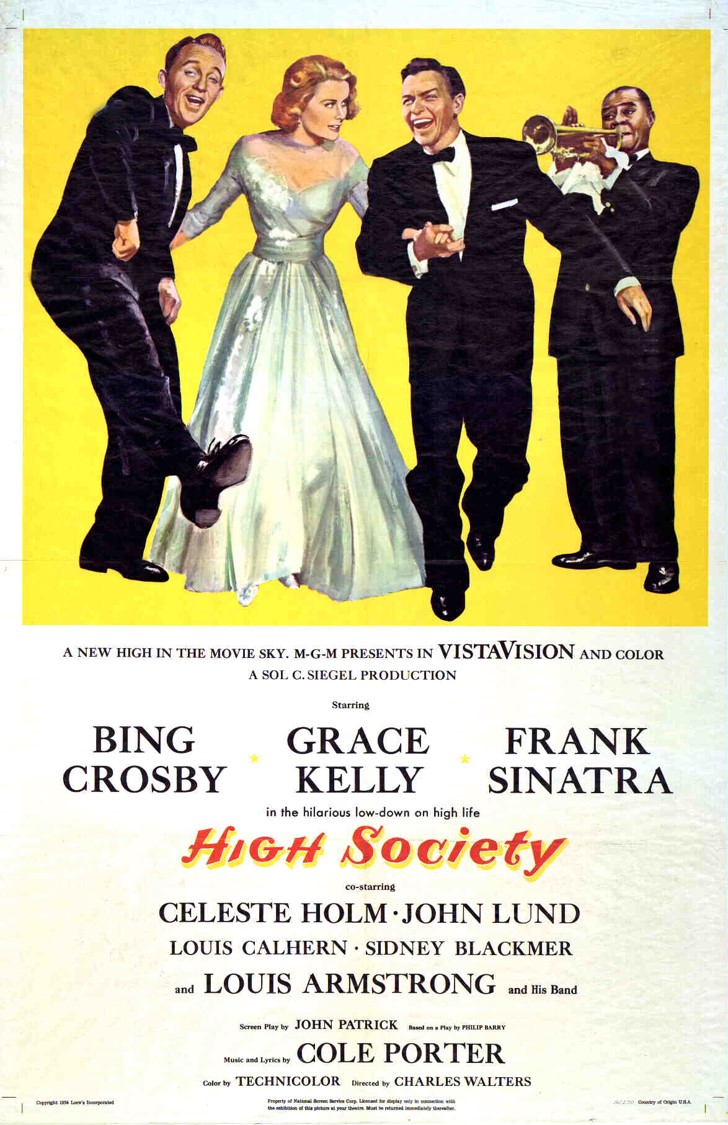
High Society poster
High Society poster created by Sol C. Siegel Productions, Bing Crosby Productions, and Metro-Goldwyn-Mayer. Image found at http://www.tcm.com/tcmdb/title/78008/High-Society/#.

Things I liked about the film:

The acting: It’s no secret that Grace Kelly is one of the most versatile actresses to ever exist! Her performance in High Society helps her maintain that reputation. Grace has the ability to adapt her emotions to any scene. When Grace’s character, Tracy, is talking with her father by the pool, she can go from angry to crying with sadness within a matter of minutes. Because of her experience working with various actors and actresses, Grace never had difficulty keeping up with her co-stars. Speaking of co-stars, I have seen Frank Sinatra and Bing Crosby in at least one film prior to watching High Society (Frank in Marriage on the Rocks and Bing in scenes from White Christmas). Similar to what I said in my Marriage on the Rocks review, both Frank and Bing appeared at ease in their respective roles. This allowed them to bring a natural charm to their characters, C. K. Dexter-Haven and Mike Connor. What also helped was how their singing talents complimented their acting talents. Even though he portrayed himself in the film, Louis Armstrong did a good job with the material he was given. He had a delightful on-screen personality and great musicality. These things made me enjoy Louis’s presence in the movie!


The sets: In High Society, the sets were absolutely gorgeous! Not only did they fit the environment the film’s creative team wanted to create, but these sets also looked magnificent on film! The great part about them are the textures, colors, and materials that were used in each space. In one of the Lord family’s sitting rooms, the sea green walls worked really well with the white wood paneling and crown molding. Another great set was Tracy’s uncle’s library. While the dark wood walls and bookshelves were beautifully crafted, it’s the hidden bar within the bookshelves that steals the show. The sets in High Society certainly made the movie visually appealing!


The musical numbers: For the most part, I enjoyed the musical numbers in High Society. They sounded pleasant and were, more often than not, lively. My favorite musical number is “Who Wants to Be a Millionaire?”, as it was one of the funniest scenes in the movie. In this number, Frank and Celeste Holm, the actress who portrayed Liz Imbrie, had really good on-screen chemistry and comedic timing. Frank and Celeste’s singing voices also sounded great together. I was pleasantly surprised by Grace’s singing abilities in the duet, “True Love”. She sounded excellent alongside Bing Crosby and the song itself sounded nice. I’m not sure how much singing experience Grace had prior to being cast in this movie. But it’s nice to see her trying different things and going out of her comfort zone.

Jewels sparkle in the golden wedding rings lying on the leather
Fancy jewelry image created by Freepic.diller at freepik.com. <a href=”https://www.freepik.com/free-photos-vectors/wedding”>Wedding photo created by freepic.diller – http://www.freepik.com</a>. Image found at freepik.com.

What I didn’t like about the film:

Unacknowledged commentary: In my Rich Kids review, I shared that one of the film’s messages was how wealth didn’t equal invincibility. This message can also be found in High Society, as Tracy shows Mike various houses in her neighborhood that are either boarded up or for sale due to homeowners no longer affording them. While this commentary added something interesting to the story, there was no room in the script for it to be explored or discussed. I understand there’s only so much you can do in an hour and fifty-one minutes. However, it was disappointing to see this commentary get ignored.


Few dance numbers: When I learned that High Society was a musical remake of The Philadelphia Story, I was excited for the song-and-dance fest that would take place. But, as I was watching the movie, I discovered it only contained two dance numbers. These numbers were a short solo performed by Frank and a short duet performed by Frank and Grace. Since White Christmas premiered two years prior, I’m surprised Bing wasn’t given at least a waltz with Grace, especially since that film featured both singing and dancing. Personally, I had expected more dance sequences in High Society. But I’m guessing there was no room in the budget to recruit a choreographer.


Dialogue-heavy scenes that felt a little drawn out: Within musicals, dialogue-heavy scenes are meant to give the audience a break from the high energy that can sometimes come from the musical numbers. However, in the case of High Society, these scenes felt a little drawn out. The scene where Mike and Liz meet the Lord family is one example. The pace of the scenes feel slower than I hoped. It also caused the film’s overall pace to seem uneven. Issues with pace and length of scenes are some reasons why I think this script was weaker than it could have been.

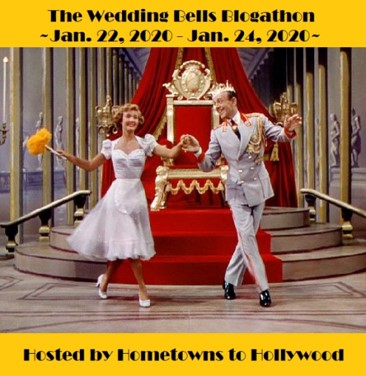
Wedding Bells Blogathon banner
The Wedding Bells Blogathon banner created by Annette from Hometowns to Hollywood. Image found at https://hometownstohollywood.com/2020/01/03/the-wedding-bells-blogathon/.

My overall impression:

High Society is a fine, enjoyable film! While it’s not one of my favorite musicals, I certainly liked it for what it was. It was also far more entertaining than Marriage on the Rocks! Because High Society is a remake of The Philadelphia Story, there are bound to be similarities between the two. However, there are also differences that give each movie their own identity. For the 1956 picture, this was the incorporation of the message that even wealthy people can experience hardship. Combined with the song, “Who Wants to Be a Millionaire?”, the film tells its audience to count their blessings and to focus less on what they don’t have. This shows that the film’s creative team not only wanted to bring something new to the story, but also respect the source material that came before it. As I end this review, I’d like to quote Louis Armstrong by saying “end of story”.


Overall score: 7.2 out of 10


Which movie musical is your favorite? Are there any you’d like me to review? Let me know in the comment section!


Have fun at the movies!

Sally Silverscreen