Sally Watches…Jasmine Guy’s Touched by an Angel Episodes!

Have you ever associated a particular actor with a specific movie or television show? For me, Jasmine Guy comes to mind every time I think of Touched by An Angel! In the earlier seasons of the show, Jasmine guest starred as an antagonist named Kathleen in three episodes. For the Luso World Cinema Blogathon, I decided to review these episodes of the show! According to Beth, one of the hosts of the event, Jasmine’s mother is Portuguese-American and her father is African-American. As I was looking for a topic to write about for the blogathon, I remembered seeing Jasmine’s name on a list of American film people with Portuguese heritage, which caused me to think about when she guest starred on Touched by An Angel. When Beth welcomed me as a Luso World Cinema Blogathon participant, I received another opportunity to review more Touched by An Angel episodes! Like my past reviews of television episodes, I’m going to discuss what I liked about the episode, what I didn’t like about the episode, the story itself, the other factors from the episode, and my overall thoughts. Now, let’s begin discussing Jasmine Guy’s Touched by An Angel episodes!

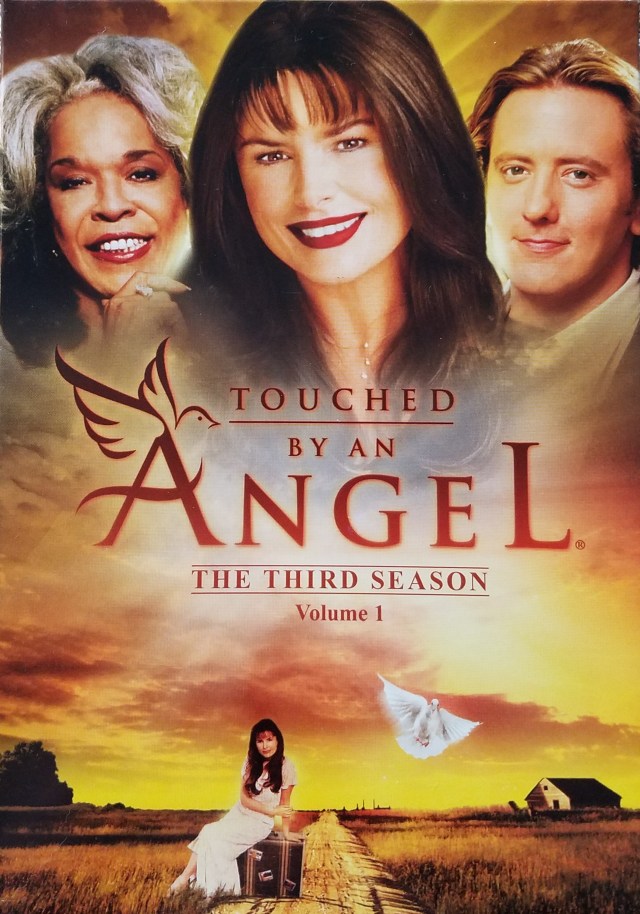
Touched by An Angel season two poster created by CBS Productions, Caroline Productions, and MoonWater Productions

Episode Name: Sympathy for the Devil

Season 2, Episode 3

Premiere Date: October 7th, 1995

What I liked about this episode:

This episode of Touched by An Angel, “Sympathy for the Devil”, is where Kathleen makes her official debut. When she steps out of the truck at the fairgrounds, Jasmine Guy’s charisma already bursts off the screen! Her portrayal of Kathleen was so expressive. This made Kathleen’s interactions with other characters captivating to watch, especially when she crossed paths with Monica. Jasmine even brought some sass to her character, which helped Kathleen’s personality stand out. While watching this episode, I actually looked forward to seeing Kathleen appear in a scene. That’s because it meant I got another chance to see Jasmine’s strong acting performance!

What I didn’t like about this episode:

A conflict in “Sympathy for the Devil” is the fall out of Kathleen and Monica. Before this episode, they were best friends. But they grew apart when Kathleen turned to the “dark side” and Monica received her promotion as a case worker. This was an interesting story, especially since it dealt with a realistic conflict of friends growing apart and going their separate ways. Unfortunately, it became overshadowed by the episode’s main story of a father coming back into his son’s life. This was caused by the lack of balance between the plots in “Sympathy for the Devil”. Because both stories were strong, I wish they were placed in their own episodes.

The story itself:

Like I just mentioned in this review, “Sympathy for the Devil” contains two stories. The main story is about a father coming back into his son’s life, seeking forgiveness and redemption. The episode’s subplot revolves around the fall out between Monica and Kathleen. Monica’s mission is to reunite the father and son, helping them heal from years of heartache. Meanwhile, Kathleen wants to keep the son and father apart, just for the sake of causing chaos. As I already mentioned in my review, both stories were strong. Due to the lack of balance between these plots, though, it would have been more beneficial to put these stories in their own episodes, so they wouldn’t have to compete for screen-time. Without spoiling “Sympathy for the Devil”, I will say something happens in this episode that made me wonder why Andrew wasn’t introduced on Touched by An Angel sooner? While Andrew made his official debut in the show’s second season, it wasn’t until the twelfth episode, “The One That Got Away”.

The other factors from this episode:

  • During one of their confrontations, Ty Duncan (portrayed by Stacy Keach) calls his son “Chicken Boy”. Though it was intended to be an insult one takes seriously, I, personally, found it goofy. So, every time a character said “Chicken Boy”, I would burst out laughing. This is one of the most unintentionally funny moments I’ve seen on Touched by An Angel!
  • Matt Duncan (portrayed by Robert Kelker-Kelly) owns and operates a local fairground. His son, Daniel, admits his dad doesn’t like rodeos. Yet Matt agreed to host the fairground’s first rodeo despite his dislike. When he meets Monica, Matt confesses how he didn’t know a veterinarian needed to be on the premises at all times. I’m aware that the internet in 1995 was not as expansive as today’s internet. However, if Matt had little knowledge of how to host a rodeo, there were other resources at his disposal, especially considering his fairgrounds were located in Texas.
  • The purpose of Monica and Kathleen’s subplot was to address the battle of good vs. evil. While this was an interesting theme to include in this episode, I wish the backdrop had elaborated on this theme. Ty Duncan comes to the rodeo because he wants to ride his two thousandth bull. Daniel even dreams about riding a bull because of his grandfather. The sport of bull-riding could have provided symbolism for evil being conquered by the hero. But because bull-riding was simply presented as bull-riding, I found this a missed opportunity to connect one of the story’s themes to the background.

My overall thoughts:

When it comes to the introduction of new cast members or characters on television shows, the ultimate goal is to leave a good first impression. If this goal is achieved, those cast members could become series regulars and their characters may become popular. In the Touched by An Angel episode, “Sympathy for the Devil”, Kathleen was given a strong introduction. This is because Jasmine Guy’s performance was one of the best parts of the episode! Jasmine helped create a character that was captivating to watch, especially when Kathleen was interacting with other characters. I, honestly, wish Jasmine had been nominated for an award for her portrayal of Kathleen! As for the rest of the episode, I thought it was just fine. Even though both stories were strong, I think they should have been placed in their own episodes, so they wouldn’t need to compete for screen-time. I also believe the theme of good vs. evil should have been elaborated by the story’s backdrop. Looking back on “Sympathy for the Devil”, I wish Andrew had been introduced on Touched by An Angel sooner. If he had made his introduction in this episode, I wonder what job Andrew would have received at the fairground?

Rating: A 3.5 out of 5

White horse image created by Gabor Palla at freeimages.com. “FreeImages.com/Gabor Palla.”
Luso World Cinema Blogathon banner created by Beth from Spellbound with Beth Ann and Le from Critica Retro.

Episode Name: Lost and Found

Season 2, Episode 18

Premiere Date: February 24th, 1996

What I liked about this episode:

In the Touched by An Angel episode, “Lost and Found”, Frank falls in love with Kathleen. Despite Kathleen providing Frank with a “false impression of love” (according to Monica), the story presents moments where their relationship feels honestly genuine. This is because the on-screen chemistry between Jasmine Guy and Bill Nunn was so sweet, they sold the concept of Kathleen and Frank being compatible, under different circumstances. It was almost easy to forget that these characters were not supposed to fall in love, as a result of the effective on-screen chemistry. Jasmine’s and Bill’s performance also worked in the on-screen chemistry’s favor. Unlike “Sympathy for the Devil”, Jasmine added a tender sweetness to Kathleen’s personality, allowing Kathleen to carry her charade. Bill consistently gave his character, Frank, a kind-hearted selflessness, which drove Frank to always help those in need.

What I didn’t like about this episode:

When I talked about what I didn’t like about “Sympathy for the Devil”, I explained how the overshadowing of Monica and Kathleen’s fall out was the result of a lack of balance between the episode’s plots. “Lost and Found” has the same flaw. There are two plots in this episode of Touched by An Angel: the relationship between Frank and Kathleen and the search for missing children. The first plot was actually interesting. If written differently, it could have had a conflict similar to the intended conflict of The Crow: City of Angels; where Kathleen must choose between remaining in the angelic world or becoming mortal in the name of love. The second plot, about the missing children, was also interesting, giving the characters a mystery to solve. But “Lost and Found” placed more emphasis on the missing children plot. The lack of balance between these two plots sometimes made me wonder what happened to Kathleen, as she would be absent for periods at a time. With both plots being strong, they should have existed in their own episodes. This way, they wouldn’t need to compete for screen-time.

The story itself:

Like I just mentioned in my review, there are two plots in “Lost and Found”, the search for missing children and the relationship between Frank and Kathleen. These plots are interconnected, as Frank himself provides the thread that keeps them together. As a policeman, Frank tries to help a missing boy return home. Yet he is haunted by the disappearance of another child. Kathleen uses her charade of love to disguise her true intentions; exploiting Frank’s trauma. The union of these stories express how the job of rescuing children can sometimes take its toll. Similar to “Sympathy for the Devil”, Monica must stop Kathleen from spreading evil and causing chaos. But unlike that episode, “Lost and Found” gives Andrew a reason to become involved in the story. Andrew’s job at the Center of Missing Children is with the computer department. Though his real assignment is guiding deceased children to Heaven.  Andrew explains to Monica how he takes his role as “Angel of Death” very seriously. During their conversation, however, the bleakness of some children’s fate causes Andew to appear as if he’s about to cry. Andrew’s emotional response reenforces what I said earlier about the job of rescuing children sometimes taking its toll. From time to time, Touched by An Angel incorporates at least one plot twist into a given episode. While there is a plot twist in “Lost and Found”, I already knew what it was because I have seen this episode before. Therefore, it wasn’t as impactful as it was when I first saw the episode.

The other factors from this episode:

  • When I talked about the story of “Lost and Found”, I mentioned Andrew’s real assignment was guiding deceased children to Heaven. This part of the story addresses the sad reality some families of missing children face. There’s even a scene where Andrew helps a missing girl who just passed away. However, the dialogue between the girl and Andrew is subtle, giving the audience some time to figure out what is going on. Even the interaction between Andrew and the girl is friendly, with the girl expressing no fear over her situation. The combination of acting, screenwriting, and also the lighting acknowledges the bleakness of the moment without making the scene itself bleak.
  • Frank has a scrapbook of all the missing child cases he’s worked on. As he explains to Kathleen, the articles he collects are pieces of darkness he cuts out and traps into the scrapbook. Frank consistently does this to protect his soul, as he confesses how he doesn’t look back at the scrapbook once he adds another article. In entertainment media, scrapbooks have typically been portrayed positively. These books are collectors of good memories or visual time capsules. So, the way a scrapbook was written into “Lost and Found” was not only creative, but gave the episode a unique identity as well.
  • A janitor from a local mall wants to provide information on a missing child case. However, he’s nervous about going to the Center of Missing Children because he doesn’t know if what he saw and heard will truly help rescue the missing child. Tess gives the janitor some words of encouragement, saying, “ “If” is the saddest word in the history of language”. Tess’s conversation with the janitor emphasizes how worrying about “ifs” can sometimes take away the courage to make a difference and reach achievements. Tess’s motherly guidance and headstrong wisdom helped make this scene one of the most heart-warming in “Lost and Found”!
  • Some scenes in “Lost and Found” took place in Frank’s apartment. One of the items in his apartment is a large fish tank. The fish tank was placed on a metal shelf with wheels. A top shelf appeared to make opening the fish tank’s lid difficult. Anytime I’ve seen large fish tanks like Frank’s in entertainment media, they have been placed on their own stands. The lids have looked accessible, so the tank can be opened for cleaning or feeding the fish. With everything I said, Frank’s fish tank was one of the most questionable design choices I’ve ever seen on a television show.

My overall thoughts:

Touched by An Angel is both a heart-warming and heart-breaking show. There are times when the script doesn’t shy away from the world’s saddening truths. But there are also times when moments are up-lifting and inspiring, sharing valuable lessons with the characters and audience. “Lost and Found” is a perfect example of how the show can be joyful and sorrowful at the same time. The script addresses how searching for missing children doesn’t always have a happy ending. However, positive moments like Tess encouraging the mall janitor to speak up prevent the episode from becoming too “doom and gloom”. The stories of the missing children and Frank’s relationship with Kathleen were both interesting. Though I wish these stories were placed in their own episodes, to prevent them from competing for screen-time. The on-screen chemistry between Bill Nunn and Jasmine Guy was such a pleasant surprise, due to how sweet it was. Andrew was even given a reason to become involved in “Lost and Found”, as he was able to help in various ways. I have seen this episode before, so the plot twist wasn’t as impactful during the second viewing. Despite this, though, I found “Lost and Found” to be a decent episode.

Rating: A 3.5-3.6 out of 5

Image by evening_tao on Freepik
It’s such an interesting coincidence how, prior to this review, I had only reviewed one Touched by An Angel from season three. Screenshot taken by me, Sally Silverscreen.

Episode Name: Clipped Wings

Season 3, Episode 18

Premiere Date: February 16th, 1997

What I liked about this episode:

Because this episode of Touched by An Angel revolves around Monica receiving an evaluation for her angelic work, the story takes place within an office building. Despite the limited use of locations, there were two examples of set design I really liked! For about half of the story, Monica mistakenly waits for the start of her evaluation in the waiting room of a psychiatrist’s office. This waiting room was one of the bougiest waiting rooms I’ve ever seen in the history of entertainment media! From marbled pillars and floor to the designer-esque furniture and even a giant cappuccino maker, this space did a convincing job at looking like Heaven on earth. Later in the episode, Monica must meet with the Angel of Angels. His office consisted of warm wood walls, an impressive wood desk, and complimentary blue carpet. Even the large fish tank had its own wooden cabinet, matching the wood of the walls and desk! The Angel of Angels’ office boasted a very masculine style, yet looked classy at the same time. I wish more scenes had taken place in this space.

What I didn’t like about this episode:

As I’ve stated in the introduction of this article, Jasmine Guy’s portrayal of Kathleen is the reason why I chose to review these episodes of Touched by An Angel. So, you can imagine my disappointment when, in this episode, Jasmine only appeared in four scenes. Compared to “Sympathy for the Devil” and “Lost and Found”, her acting talents in “Clipped Wings” were underutilized. This was led by the creative team’s decision to prioritize “Monica’s greatest hits”, showing clips from previously aired episodes. There were times while watching this episode of Touched by An Angel where I found myself wondering why Kathleen was even written into the story in the first place? Though Kathleen appeared in “Clipped Wings” for a reason, I think Jasmine should have received more screen-time.

The story itself:

As beloved as The Golden Girls have become over the years, that show is infamous for one creative choice: the “clip episode”. A typical “clip episode” of The Golden Girls focuses on the four protagonists sitting around the kitchen table and reminiscing over moments that took place in previous episodes. The Touched by An Angel episode, “Clipped Wings”, took a page from The Golden Girls’ playbook, devoting about 80% of the story to presenting clips of episodes airing before February 16th, 1997. Like I mentioned when I talked about what I didn’t like this episode, the creative team prioritized “Monica’s greatest hits”. Even though the script contained an original story involving Kathleen and another angel named Ruth, this part of the story was featured for only about 20% of the episode. These creative decisions were disappointing, especially since “Clipped Wings” commemorated Monica’s completion of fifty cases.

The other factors from this episode:

  • When I discussed the story of “Clipped Wings”, I mentioned how about 80% of the story was devoted to presenting clips of episodes airing before February 16th, 1997. In some of these clips, Tess reminds Monica how she shouldn’t take the “easy way out”. I found the inclusion of this advice ironic, as the decision to make “Clipped Wings” a “clip episode” seems like an “easy way out”, especially after watching (and reviewing) “Psalm 151”. I don’t know if this moment of self-awareness was intentional or coincidental. However, I wish the show’s creative team took Tess’s advice and gave this episode a stronger, more creative story.
  • One of the conflicts in this episode is Monica running late for her evaluation meeting. During the meeting, as Tess and Andrew discuss Monica’s flaws with Ruth, they remember how Monica has a history of misunderstanding directions. This realization helps Tess discover Monica’s reason for her tardiness. If Tess knew misunderstanding directions was a problem for Monica, why didn’t she come to the aforementioned conclusion sooner? Also, why didn’t Tess encourage Andrew to go look for Monica before the meeting started?
  • As I just mentioned in this review, Monica is late for her evaluation meeting. This mistake leads Ruth to enforce consequences. When Andrew and Tess object to Ruth’s decision, Ruth declares how Monica is now on her own. But for about half of this episode, Monica was on her own, seeming to be perfectly fine. I’m not sure if this moment of self-awareness was coincidental or intentional. However, I believe Ruth should have given Monica some grace and understanding.

My overall thoughts:

Whether a birthday or an anniversary, a 50th year is considered “golden”. From cake toppers to snowglobes, even pieces of art, the shiny metal has become a prize to be won in the journey of milestones. But when it comes to the Touched by An Angel episode, “Clipped Wings”, the show’s creative team missed a “golden” opportunity to commemorate Monica’s milestone of completing fifty cases in a more meaningful way. Unlike “Psalm 151”, where the script prioritized a unique story with its own set of conflicts and resolutions, “Clipped Wings” followed in The Golden Girls’ footsteps by emphasizing clips from previous episodes. This creative decision caused the original story involving Kathleen and Ruth to be overshadowed. Another missed opportunity was not giving Maureen McCormick’s character, Jodi, a larger role in the story. Other disappointing creative decisions include not showing James Earl Jones on-screen, underutilizing Jasmine’s acting talents, and the show’s creative team not taking Tess’s advice. Out of the Touched by An Angel episodes reviewed on 18 Cinema Lane, so far, “Clipped Wings” is my least favorite.

Rating: A 2.5 out of 5

Since I’m reviewing some episodes of Touched by An Angel, I figured including this screenshot would make sense. Screenshot taken by me, Sally Silverscreen.

Have fun on television!

Sally Silverscreen
Sally Watches… Touched by an Angel (30th Anniversary Edition)!

2024 has hosted several anniversaries, from the 30th anniversary of the Disney animated film, The Lion King, to the 50th anniversary of Little House on the Prairie. But there is one anniversary that can’t be overlooked: the 30th anniversary of Touched by an Angel! With the show premiering on September 21st, 1994, I figured it would be appropriate to review some episodes this month in honor of the occasion. Since I reviewed three individual episodes of Touched by an Angel in the past, I will be writing about three episodes at once this time. Similar to past reviews of television episodes, I’m going to discuss what I liked about the episode, what I didn’t like about the episode, the story itself, the other factors from the episode, and my overall thoughts. Now, let’s talk about the three selected episodes: “The Southbound Bus”, “Psalm 151”, and “Mother’s Day”!

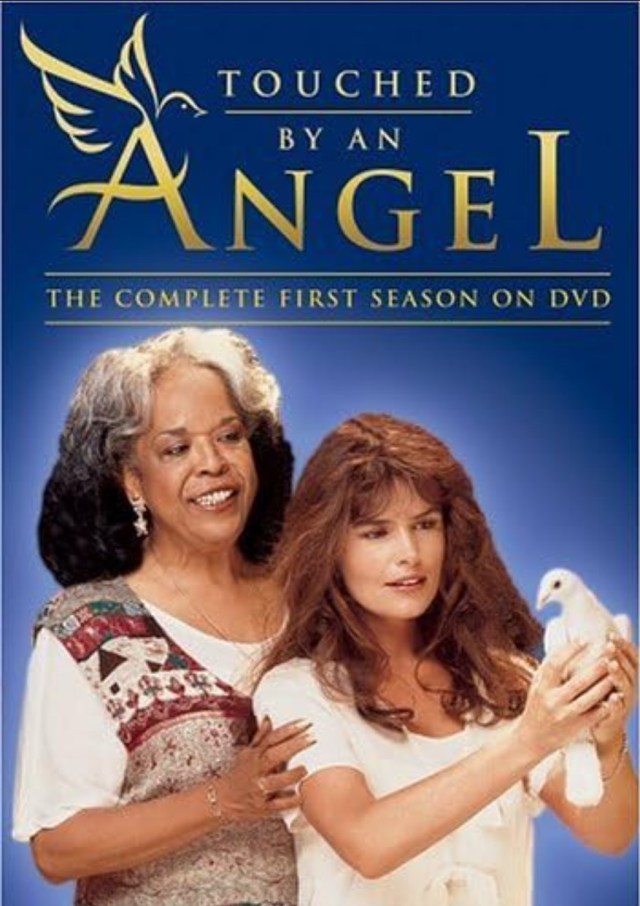
Touched by an Angel season one DVD poster created by CBS Productions, Caroline Productions, and MoonWater Productions

Episode Name: The Southbound Bus

Season 1, Episode 1

Premiere Date: September 21st, 1994

What I liked about this episode:

Touched by An Angel has incorporated serious, real-world topics into their stories; providing the show with dramatic, even sad, moments. But there are times when Touched by An Angel can become light-hearted. One perfect example is when David meets Tess for the first time. Tess arrives at David’s house as his new nanny. Because of hardships he experienced prior to the events of “The Southbound Bus”, David is skeptical of Tess and her new role. Tess, on the other hand, is ready to deal with David’s skepticism. Her no-nonsense attitude and motherly persona make it clear who’s in charge. She even calls David “dinosaur boy”, due to the dinosaur print on David’s shorts. The scene I described was genuinely hilarious because of how well written and acted it was. It also provided a balance between the episode’s light-hearted and serious tones!

What I didn’t like about this episode:

When she visits a rest stop known as Hewitt, Monica meets Ruth Ann and Christine. Later in the episode, a run-in with a local police officer forces Ruth Ann to confess to Christine how she’s attempting to flee the FBI due to her association with a criminal. During Ruth Ann’s attempt to flee, Monica pleads with Ruth Ann to confront her past. Monica’s pleading is fruitless, as not only Ruth Ann hitchhikes out of Hewitt, her part of the story is left unresolved. I know there’s only so much story you can tell in an hour-long episode. But if the show’s creative team knew Ruth Ann’s story wasn’t going to receive a resolution, why address it in the first place?

The story itself:

As I mentioned earlier in this review, Touched by An Angel has included dramatic, even sad, moments in their stories due to the show’s subject matter. However, as I’ve also mentioned, there are times when the show can become light-hearted. These tones were balanced very well in “The Southbound Bus” as viewers are introduced to Monica, Tess, and their roles as “case workers”! The story jumps right into the action as Monica not only receives an upgrade from “search and rescue”, she also receives her first assignment in her new role. This creative choice grabs viewers’ attention as Monica meets Tess at the bus stop. Touched by An Angel sometimes incorporates plot twists and surprises in their stories which can catch viewers off-guard. There is one plot twist in “The Southbound Bus” that I found really effective!

The other factors from this episode:

  • For this part of my review, I will spoil “The Southbound Bus”. If you have not seen this episode and are planning on watching it, please skip to the next point in this section.

When Monica confronts Christine on the loss of her daughter, Monica admits an angel was with Christine’s daughter, Katie, when she died. She also confesses how an angel is with Katie in Heaven. Monica’s statement confused me because I remembered how, prior to this episode, she was on “search and rescue”. Yet, when talking with her friend from “search and rescue”, Adam, Monica didn’t know the history of David’s family. Was Adam with Katie or was it perhaps Andrew, with this detail revealed in a later episode?

  • During her assignment to help David, Monica reconnects with a friend from “search and rescue” named Adam. Through their conversation, Monica receives key information about David’s mother and sister. From what I remember of Touched by An Angel, Adam doesn’t join the show’s main cast. This makes me believe Adam was the precursor of Andrew (who would make his debut in season two).
  • At the beginning of “The Southbound Bus”, Tess reminds Monica how she hasn’t appeared in human form for more than a few moments. This fact causes Tess to warn Monica not to eat everything in sight. Tess’s guidelines for the human world make me wonder what other rules angels have to follow? Were these rules expressed in other episodes?

My overall thoughts:

The Southbound Bus” is the very first episode of Touched by An Angel. It’s also the very first time viewers meet Monica, Tess, and the world they interact with. I’d say this was a strong start for not only Touched by An Angel’s first season, but also for the series as a whole! The overall quality of the production sets up what viewers can expect from this show. “The Southbound Bus” addresses serious subjects like grief and neglect. But the way this story was written allowed moments of humor and even hope, providing a balance between serious and light-hearted tones. The dialogue is thought provoking as well, such as when Monica marvels at how humans have the courage to wake up and start a new day. I said in the past how “Perfect Little Angel” would be a good starting point when introducing someone to Touched by An Angel. Another good choice would be “The Southbound Bus”, as that is where it all began!

Rating: A solid 4 out of 5

Colorful dinosaur image created by Rawpixel.com at freepik.com. <a href=’https://www.freepik.com/free-photo/various-animal-toy-figures-in-a-colorful-background_3011200.htm’>Designed by Rawpixel.com</a>. <a href=”https://www.freepik.com/free-photos-vectors/background”>Background image created by Rawpixel.com – Freepik.com</a>. Image found at freepik.com.
Touched by an Angel season five poster created by CBS Productions, Caroline Productions, and MoonWater Productions

Episode Name: Psalm 151

Season 5, Episode 9

Premiere Date: November 15th, 1998

What I liked about this episode:

If I could choose one phrase to describe “Psalm 151”, it would be “genuine sincerity”. The reason is how genuine sincerity was the glue that kept this story together! The interactions between the characters felt sincere, giving the impression they truly wanted to respect Petey’s wishes. Cornelia/Celine and Petey’s friendship came across as genuine due to the performances of Mika Boorem and Joseph Cross, as well as the screenwriting. Even Céline Dion’s inclusion in this story felt sincere as she tells Petey and Cornelia/Celine to always focus on the light. This genuine sincerity left me invested in the story and caring about the characters!

What I didn’t like about this episode:

Psalm 151”is a music-centric episode because music is one of the story’s main themes. As I mentioned in my review of the episode, “Perfect Little Angel”, Della Reese is a real-life singer. With that said, I think not incorporating Della’s singing talents in “Psalm 151” was a missed opportunity. Like I stated while talking about “The Southbound Bus”, there’s only so much story you can tell in an hour-long episode. This means there’s only so much time to include the singing talents of Céline Dion and Wynonna Judd. I still wish some amount of time had been given to Della so she could sing at least one song.

The story itself:

For Monica’s 100th case, the creative team behind “Psalm 151” could have turned this story into a “remember when” episode; where Monica, Tess, and Andrew reflect on flashbacks that occurred in previous episodes. Instead, Monica received a new case containing its own unique conflicts and resolutions. Even though the story of “Psalm 151” was different from preceding episodes, it shared a major similarity with “The Southbound Bus”: the story revolved around a mother and son dealing with a challenging situation. This similarity allowed Monica’s story to come full circle. When a television show chooses to create a musical episode, it can sometimes be met with skepticism due to the concern of the musical episode feeling out of character. But in the case of “Psalm 151”, a musical episode felt like an appropriate choice for Monica’s milestone, especially since Touched by An Angel is known for being a heart-warming, uplifting program.

The other factors from this episode:

  • Monica celebrates her 100th case by throwing a party. Tess explains to Andrew how Monica wanted coffee-flavored treats at her celebration. When Monica travels to Hewitt in “The Southbound Bus”, she tells Christine and Ruth Ann how coffee was a treat for her, as she consumed coffee so infrequently while on “search and rescue”. This creative detail was a nice throwback to Monica’s very first case!
  • Petey’s friend, Cornelia/Celine, calls herself “Celine” because she adores Céline Dion. In fact, one of Petey’s wishes is for Cornelia/Celine to meet her favorite singer. Céline Dion’s appearance in this episode serves an interesting coincidence. “Psalm 151” premiered in 1998, ten years after Céline won Eurovision. Reviewing this episode now also serves a coincidence, as Switzerland (the country Céline represented) won this year’s Eurovision and Céline performed during this year’s Olympic opening ceremony.
  • While reflecting on the coincidences in “Psalm 151”, I realized there is one coincidence related to Wynonna Judd. 2024 marks the 30th anniversary of when Wynonna performed during the Super Bowl half time show. This is also a coincidence, as 1994 is when Touched by An Angel made its television debut.

My overall thoughts:

According to IMDB, “Psalm 151” is a top-rated episode with a score of 9.5 out of 10. Looking back on this episode, I can see why so many people like “Psalm 151”! Touched by An Angel pulled out every stop they could think of for Monica’s 100th case! The screenwriters created a script that allowed Monica’s story to come full circle. This same script also gave viewers characters, interactions, and resolutions that felt genuinely sincere; inviting viewers to care about the characters and stay invested in their story! Musical television episodes can sometimes receive a bad rap due to those episodes feeling out of place among their respective shows. For “Psalm 151”, its musical nature made the episode feel like a joyous celebration. Yet the serious subjects of chronic illness and grief were never overlooked or sugarcoated. If I came up with a list of the top ten best Touched by An Angel episodes, “Psalm 151” would find a place on that list!

Rating: A strong 4.5 out of 5

Coffee cup drawing image created by Valeria_aksakova at freepik.com. <a href=”https://www.freepik.com/free-photos-vectors/background”>Background image created by Valeria_aksakova – Freepik.com</a>. <a href=’https://www.freepik.com/free-photo/painted-cup-of-coffee-with-natural-coffee-beans-on-a-chalkboard_1013935.htm’>Designed by Freepik</a>. Image found at freepik.com.
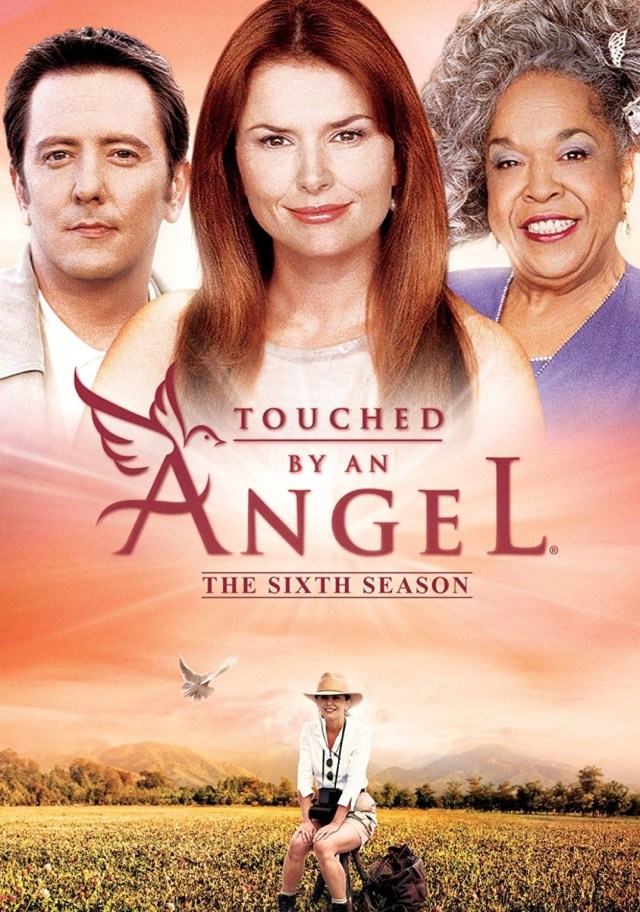
Touched by an Angel season six poster created by CBS Productions, Caroline Productions, and MoonWater Productions

Episode Name: Mother’s Day

Season 6, Episode 25

Premiere Date: May 14th, 2000

What I liked about this episode:

Wynonna Judd is, in my opinion, talented, yet underrated. Even though she guest-starred in “Psalm 151” and “Mother’s Day”, Wynonna’s strongest performance was found in “Mother’s Day”! The emotional intensity Wynonna brought to this episode made Audrey’s grief feel realistic. In a scene where Cornelia/Celine is confronting Audrey about her alcohol addiction, Audrey’s bitter tone, sharp look in her eyes, and anger show how she is not yet ready to handle the truth. Meanwhile, Cornelia/Celine is terrified of Audrey, even becoming sad and tearful by Audrey’s hurtfulness. Wynonna Judd should have, at least, been nominated for an award for her portrayal of Audrey in this episode!

What I didn’t like about this episode:

In order to help Audrey cope with Petey’s death, Monica is sent to “The Middle”; giving her the ability to enter Audrey’s dreams. The way these dreams were presented felt out of character for Touched by An Angel. The background and even certain objects were coated in bright, fluorescent colors. Monica would look at Audrey with a blank stare and speak to her in a cryptic manner. Even Petey’s iguana, Fluffy, talks to Audrey. The dreams Monica enters would be described as “trippy”, a word typically not used for a show known for being heart-warming and wholesome.

The story Itself:

Mother’s Day” is the follow-up to “Psalm 151”, picking up the story after Petey passed away. The death of Petey causes Audrey to turn further into her grief as well as give up music. While the story has its touching moments and a resolution is found, it undermines the message of “Psalm 151”; how music can help people heal and bring them closer together. Cornelia/Celine understandably misses Petey. Yet her grief is glossed over due to the story primarily focusing on Audrey’s struggles. The story of “Psalm 151” dealt with serious topics such as chronic illness and grief. Yet the genuine sincerity I mentioned earlier in this review is one of the reasons why that episode felt heart-warming, even hopeful. Because Audrey is consumed by grief in the majority of “Mother’s Day”, the story felt depressing.

The other factors from this episode:

  • Jean Stapleton portrays Emma, an angel who poses as a housekeeper. Reflecting on Jean’s role on All in the Family made me realize how her appearance in this episode was an interesting coincidence. In All in the Family’s two-part episode, “Edith’s Crisis of Faith”, Edith struggles with grief and her faith after her friend is murdered around Christmastime. Touched by An Angel’s episode, “Mother’s Day”, shows Audrey struggling with grief and her faith after the loss of Petey.
  • Without spoiling this episode, I recognize why it is called “Mother’s Day”. Yet, in my opinion, this is a story that could have taken place any time of year presenting a similar outcome. When a television show episode is holiday themed, messages connected to that holiday serve as threads throughout the story. With all that said, it makes me wonder why, out of all the holidays on the calendar, was Mother’s Day selected for this episode? Why not Christmas or Petey’s birthday?
  • When I talked about “Psalm 151”, I mentioned how 2024 (the year I’m reviewing the episode) marks the 30th anniversary of when Wynonna performed during the Super Bowl half time show. It should also be noted that Naomi Judd also performed in 1994’s Super Bowl half time show, where she and Wynonna sang “Love Can Build a Bridge”. The reason why I’m bringing this fact up is because Naomi appears in “Mother’s Day”.

My overall thoughts:

When it comes to “Mother’s Day”, I’m honestly torn. Earlier in my review, I pointed out how “Psalm 151” is a top-rated episode on IMDB. Therefore, it makes sense for a popular episode to receive a follow-up. On the other hand, “Mother’s Day” isn’t as strong as “Psalm 151”. The message of music helping people heal and bringing them closer together is undermined as Audrey is consumed by grief for the majority of the episode. Even though there are touching moments in this story, as well as a resolution, the overall presentation didn’t feel as heartwarming or hopeful as “Psalm 151” or even “The Southbound Bus”. However, Wynonna’s portrayal of Audrey was a highlight of this episode, as her emotional intensity showed a more realistic depiction of grief. I also thought Mika Boorem gave a solid acting performance, showing how Cornelia/Celine tried to provide the thread that kept her world together. “Mother’s Day” is not a bad episode. But its weaker production kind of makes me wish a different episode had received a follow-up instead.

Rating: A 3.5 out of 5

Breakfast tray image created by Freepik at freepik.com. <a href=’https://www.freepik.com/free-photo/composed-healthy-fruit-and-coffee-on-tray_1441643.htm’>Designed by Freepik</a>. <a href=”https://www.freepik.com/free-photos-vectors/background”>Background image created by Freepik</a>. Image found at freepik.com.

Have fun on television!

Sally Silverscreen

Sunset Over Hope Valley: Welcome Home, Rosaleen!

Once upon a time, Hearties were introduced to Rosaleen Sullivan, Mollie’s daughter who attended Coal Valley’s school. In season one, the town didn’t have a school building, Elizabeth was just starting her teaching career, and Rosaleen was beginning to cope with the loss of her father. Since then, so much has changed. Coal Valley is now Hope Valley. Elizabeth is a mother and planning on getting re-married. And this episode shows Rosaleen returning to town! From a story-telling perspective, having Rosaleen come back makes sense. Since When Calls the Heart is currently in the middle of a milestone season, it provides an opportunity for reflection. Rosaleen’s arrival does make me wonder if other former Hope Valley residents will return to the show? But until that question can be answered, let’s start this re-cap of When Calls the Heart!

Just a reminder: If you did not see this episode of When Calls the Heart, there will be spoilers within this re-cap.

When Calls the Heart season ten poster created by Crown Media Family Networks and Hallmark Channel

Season: 10

Episode: 7

Name: Best Laid Plans

Major stories:

Rosaleen Sullivan has returned to Hope Valley. Because she is a nanny for a family moving to South Carolina, Rosaleen can only stay in town for a week. During her interactions with Elizabeth, Rosaleen shares how she’d like to become a nurse. But she feels she doesn’t have enough money to attend nursing school. While in town, Rosaleen spots Henry. She still feels resentment toward him, due to the mining tragedy that killed her father. Mollie reminds her daughter how Henry has changed since the tragedy took place. Elizabeth wants Rosaleen to reach her full potential. So, she approaches Lucas and proposes a job offer for Rosaleen at the saloon. But Elizabeth isn’t the only character looking out for Rosaleen. Henry comes to Lucas with an idea; creating the Hope Valley Scholarship. This scholarship would allow current and former students of the Jack Thornton School to achieve their academic dreams. When Rosaleen, Florence, and Mollie hear about the scholarship, they are thrilled by the news. Little do they know Henry created the scholarship, as he wished to remain anonymous.

Madeleine and Bill signed the official papers on Bill’s property, making Madeleine the owner of the cabin and its surrounding land. But Madeleine and Jaime must return to Philadelphia to take care of Sebastian’s remaining legal matters. While waiting for their return, Bill gathers house-warming presents to give to Madeleine and Jaime. This is done in an effort to make the cabin feel like their home. When he is questioned over a butter churn, Bill states how it can be used as a flowerpot. Other Hope Valley residents consider donating their items to Jaime and Madeleine. Elizabeth even thinks about donating two baking pans to the family. When Bill and Nathan go to the cabin to drop off the presents, they discover others are residing in the cabin. While there, they meet a man named Montague who claims to now own the land. He also claims to be Madeleine’s fiancé.

Lucas has recently purchased a surprise for Hope Valley. But the only people who are in on Lucas’ secret are Ned, Mike, and Fiona. The surprise is Hope Valley’s first radio. Though excited by this new piece of technology, none of the four characters can make the radio work. Mike and Ned believe the inner workings of the radio are the problem. Fiona, on the other hand, thinks the radio needs an antenna. She goes to Joseph to gather scrap copper and steel. Fiona not only wants the antenna to be functional, but also durable. After several failed attempts to make the radio work, Fiona’s antenna is put to the test. When the antenna is attached to the saloon’s balcony and the radio is turned on, music can be heard! Everyone in Hope Valley celebrates this new gift be hosting an impromptu dance at the saloon.

Library image created by Freepik at freepik.com. <a href=’https://www.freepik.com/free-photo/stack-of-books-on-library-desk_2509490.htm’>Designed by Freepik</a>. <a href=”https://www.freepik.com/free-photos-vectors/school”>School image created by Freepik</a>. Image found at freepik.com.

Minor stories:

Joseph wants to become Hope Valley’s full-time pastor. This will allow him more preaching opportunities, as well as to perform pastor related duties in Eagle Creek. When he visits Lee to tell him about his professional plans, Lee offers him a partner position at the lumber mill. Before Joseph can turn the offer down, Lee assumes Joseph has accepted the offer. Joseph is now in an awkward position because of the misunderstanding. Later in the episode, the Canfield family attends a dinner at the Coulters’ house. Joseph and Minnie see this as a chance to clear up the misunderstanding. After dinner, Joseph is honest with Lee about his full-time pastor plans. Though disappointed about losing a good employee, Lee is supportive of Joseph’s calling. Toward the end of the episode, Lee offers the partner position to Richard, who accepts.

While making his rounds near Hope Valley, Nathan comes across a man named Mr. Hunter. Mr. Hunter appears lethargic, seeming not to understand what Nathan is saying. They go immediately to Hope Valley’s infirmary, where Faith discovers Mr. Hunter is dangerously close to suffering from heatstroke. During his initial treatment, Mr. Hunter asks where the “real” doctor is. In order to get Mr. Hunter to follow medical directions, Mike pretends to be the “real” doctor of Hope Valley. Toward the end of Mr. Hunter’s treatment, Mei arrives at the infirmary to give Mr. Hunter his medication. After Mr. Hunter asks if Mei is the “real” pharmacist, Faith tells Mr. Hunter the truth. She not only confesses that she is, indeed, Hope Valley’s doctor, but she also shares how she knew what was wrong with Mr. Hunter. Both Faith and Mike stand up for Mei as well. Mr. Hunter apologizes for his statements.

String of musical notes image created by Freepik at freepik.com. <a href=’https://www.freepik.com/free-vector/pentagram-vector_710290.htm’>Designed by Freepik</a> <a href=”https://www.freepik.com/free-photos-vectors/background”>Background vector created by Freepik</a>. Image found at freepik.com. 

Some thoughts to consider:

  • Toward the end of this episode, Nathan and Faith have a heart-to-heart conversation about the state of their relationship. They both agree to just remain friends, abandoning the pursuit of a romantic relationship. I think this decision is for the best because, this season, I haven’t found Faith and Nathan’s interactions interesting. That is due to these interactions feeling forced.
  • Speaking of Faith, her story in this episode was so disappointing. Her patient could have been Harry’s father. Throughout the story, we could have seen at least one bonding moment between father and son. The audience could have also learned more about these two characters. Therefore, this particular story was a missed opportunity.
  • At the beginning of the episode, Rosemary discusses with Lee the idea of hiring a babysitter for their daughter. Rosaleen also mentioned in this episode how she is a nanny. With all that said, why don’t the Coulters hire Rosaleen to babysit Goldy? It would be a situation where everyone benefits. The Coulters would have found a trusted babysitter to look after their daughter while they are at work. And Rosaleen would earn money for nursing school while also living closer to her mother.
Sunset image created by Photoangel at freepik.com. <a href=”https://www.freepik.com/free-photos-vectors/background”>Background image created by Photoangel – Freepik.com</a>.<a href=’https://www.freepik.com/free-photo/red-sunset-clouds-over-trees_1254327.htm’>Designed by Freepik</a>. Image found at freepik.com.

What are your thoughts on this episode? Which character would you like to see earn the Hope Valley scholarship? Please tell me in the comment section!

Have fun in Hope Valley!

Sally Silverscreen

Sally Watches…Touched by an Angel (The Trilogy)!

It feels like every two years, I talk about an episode of Touched by an Angel. First, I reviewed “The Sky Is Falling” in 2019. Then, in 2021, I wrote about the two-part episode, “The Spirit of Liberty Moon”. Now, for The 9th Annual Favourite TV Show Episode Blogathon, I’m going to cover another Touched by an Angel episode! This time, I’ll be talking about 1998’s “Perfect Little Angel”. Based on its synopsis on IMDB, the episode’s story doesn’t seem like it revolves around heavier topics, like “The Sky Is Falling” and “The Spirit of Liberty Moon”. However, the inclusion of a pageant in “Perfect Little Angel” is what intrigued me to want to watch this episode. When a pageant is featured in a scripted movie or television show, it is typically depicted in one of two lights; negatively or as a joke. With Touched by an Angel having something important to say every now and then, I was curious to see what themes and messages would arise from this story. So, let’s get into my review of “Perfect Little Angel” to see if it will win the crown!

The 9th Annual Favourite TV Show Episode Blogathon banner created by Terence from A Shroud of Thoughts

Episode Name: Perfect Little Angel

Season 4, Episode 23

Premiere Date: April 26th, 1998

What I liked about this episode:

In the introduction of this review, I mentioned how pageants in scripted movies or shows are typically depicted in one of two lights; negatively or as a joke. But in “Perfect Little Angel”, the Miss Colorado State Pageant felt like it was taken seriously within the story! The staging of the pageant itself looked very high budget, appearing as if the event was produced by a professional organization. Every actress portraying a contestant was styled beautifully, mirroring the image of real life contestants of the late ‘90s. Even the way the actresses moved across the stage or performed their talent gave the audience the impression they cared about their outcome in the competition. As I’ll mention more in the segment about the episode’s story, the episode was about more than just the pageant, which actually works in the favor of the Miss Colorado State Pageant!

What I didn’t like about this episode:

I know Tess is a head-strong, motherly figure among the angels on the show. But toward the beginning of “Perfect Little Angel”, she came across as pushy. When she first meets Tracy, Tess insists she seek out guidance from a local women’s shelter. She evens looks down on Tracy’s desire to enter the Miss Colorado State Pageant, in an attempt to steer Tracy toward the shelter. After meeting Tracy for the first time, Tess talks with Monica about Tracy’s decision to join the pageant. Tess says Tracy is making things harder for herself. What she said about Tracy kind of sounded like victim-blaming. Fortunately, as the story progresses, Tess becomes more supportive toward Tracy’s ambitions.

Princess tiara image created by Freepik at freepik.com. <a href=’https://www.freepik.com/free-vector/ornamental-princess-crowns_1109199.htm’>Designed by Freepik</a>. <a href=”https://www.freepik.com/free-photos-vectors/gold”>Gold vector created by Freepik</a>. Image found at freepik.com.

The story itself:

Remember when I said the story of “Perfect Little Angel” was about more than just the pageant? Well, that’s because the script prioritized Tracy’s journey to the pageant. At the beginning of the episode, Tracy is down on her luck. Her self-esteem and personal morale are so low, she’s desperate to find an immediate solution. Through her pageant preparations, Tracy learns about honesty, perfection, and having the courage to reach her potential. Because the script focuses on Tracy’s story and the messages and themes that grew from it, the show’s creative team avoided several cliches and tropes associated with on-screen pageants or competitions. As Tracy’s story progresses, there are some surprises, even though I did suspect a few twists and turns along the way. These surprises added depth to the story, giving Tracy opportunities to apply the episode’s lessons to her life.

The other factors from this episode:

  • At the beginning of the episode, Tracy tells her co-worker, Don, how she has been accepted into a design school in Rhode Island. Because of this acceptance, Tracy claims she needs $20,000 as soon as possible. I’m honestly surprised Don didn’t suggest Tracy seek out scholarships or financial assistance. In fact, that was my first thought when Tracy mentioned the design school acceptance. From what I know about pageants, some pageant organizations offer scholarships or educational opportunities for their finalists. So, I’m also surprised this detail wasn’t included during the Miss Colorado State Pageant.
  • As Tracy is preparing for the Miss Colorado State Pageant, Tess, Monica, Raphael, and Andrew are given roles in order to help Tracy. Andrew is tasked with finding Tracy’s talent, while Tess assists Tracy with walking on stage and on-stage posture. I know Andrew needed something to do in this episode, even though his true role on this mission is revealed later in the story. But not having Tess find Tracy’s talent, especially since Della Reese is a real-life singer, is, in my opinion, an unusual creative choice. This is because, on some occasions, the show’s creative team has incorporated Della’s musical talents into the show.
  • When attempting to apply for the pageant, Tracy is told she will need an official sponsor. When the angels agree to help Tracy, they become her official sponsors by giving her the title, “Unauthorized Property #579”. Because the property itself is still under development, it has the potential to house any business, venue, or living space. The angels use this piece of land to represent Tracy herself, how she has so much potential that hasn’t been reached yet. I thought this was a wonderful analogy that emphasized one of the episode’s key themes. It made me think about the idea of reaching potential in a different way!
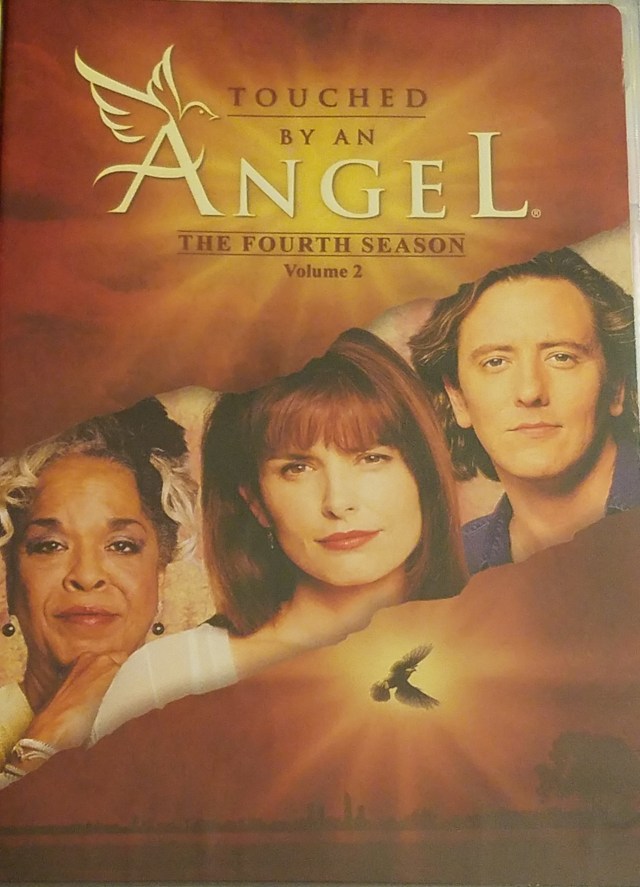
Since “Perfect Little Angel” was released in the same season as “The Spirit of Liberty Moon”, I’ll post my photo of the season four DVD cover in this review. Screenshot taken by me, Sally Silverscreen.

My overall thoughts:

Touched by an Angel is a show I’ve talked about so infrequently on 18 Cinema Lane. As I’ve said in the introduction, it feels like I write about an episode every two years. Despite this infrequency, I have lucked out, reviewing two episodes I actually liked. For a third time, I have come across another good episode of Touched by an Angel! The primary focus on Tracy’s story allowed the episode’s messages and themes to organically grow within the script. The story had an intriguing progression, providing surprises every so often. Even the pageant itself felt like it was taken seriously, which is much different from how pageants are typically portrayed in scripted movies and tv shows. If I were introducing someone to Touched by an Angel, “Perfect Little Angel” is an episode that would serve as a good starting point. It isn’t as emotionally heavy as episodes like “The Spirit of Liberty Moon”. But it does contain the strengths I’ve come to expect from this show!

Rating: A solid 4 out of 5

Have fun on television!

Sally Silverscreen

Take 3: Black Narcissus (1947) Review

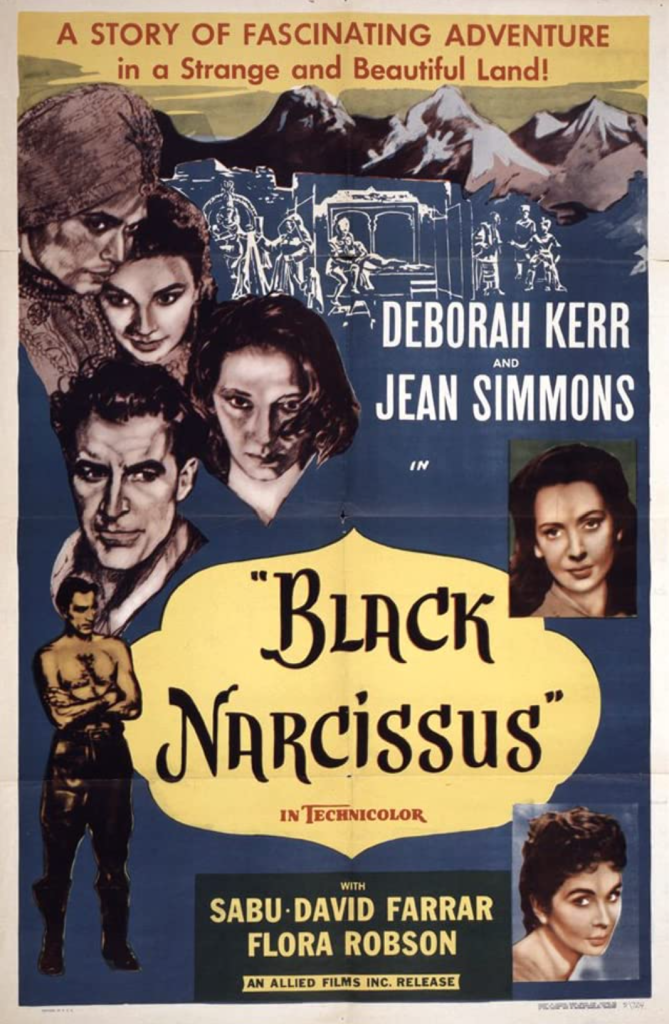
For the first Genre Grandeur of 2023, the theme is ‘Movies that take place in Cold weather situations (snow, ice, hail, etc.)’. While I could have selected a Hallmark title, I decided to pick another film instead. As I looked through my recommendations board on Pinterest, I remembered the 1947 movie, Black Narcissus. Suggested by Maddy from Maddy Loves Her Classic Films, this story takes place in the Himalayas, a mountainous region known for colder temperatures and snowy landscapes. Prior to watching Black Narcissus, I had heard this movie was controversial at the time of its release. All I knew about the film was its synopsis and the fact it premiered within the Breen Code era. Is Black Narcissus worth the trek up the mountain? Keep reading my review to find out!

Black Narcissus (1947) poster created by The Archers and General Film Distributors

Things I liked about the film:

The dialogue: In my review of When the Circus Came to Town, I mentioned how the dialogue was surprisingly profound. This was also the case in Black Narcissus, where the dialogue was sometimes profound, even thought-provoking. After Christmas Eve service, the Young General congratulates Sister Clodagh on the birth of Jesus. This statement brings up an excellent point about Christmas. When there is a new baby in a family, the family will be congratulated on their new arrival. So, congratulating Jesus’ birth makes sense, especially given the religious context of the holiday. After Sister Clodagh tells the Young General how the sisters don’t speak of God in a casual sense, Mr. Dean replies how God should be as common as bread. Even though Mr. Dean made this statement while drunk, he did make an interesting point. From the way I interpreted it, it seems like Mr. Dean thinks Christians should live their everyday lives with God present in it.

The set design and scenery: Off the top of my head, I can’t think of many movies taking place in the Himalayas. Therefore, I was excited to see this locale through a cinematic lens. The Himalayas did not disappoint, as the landscape looked so photogenic, it honestly appeared as a piece of art! One example is a shot of the mountains, where the snow caps dissolved in an ombre palette of white to light blue, transforming to a deep blue. Not only were the exterior shots appealing to the eye, the interior shots were interesting to look at as well! My favorite room in the palace was the “blue room”. In this room, the walls are covered in a mural primarily boasting hues of blue, periwinkle, and purple. Pops of green can be found on the mural, presenting the illusion the room has been submerged into the sea. Complimenting the space is a blue, circular chair with yellow, flowered stitching and a crystal chandelier.

The Young General’s wardrobe: Even though the Young General appeared in the film for a limited period of time, I absolutely loved his wardrobe! In fact, his wardrobe stole the show! My favorite outfit was the one he wore during the Christmas service. While attending the service, the Young General’s attire was white with gold details. Because winters in the Himalayas are colder, his outfit was beautifully paired with a fur coat covered in a leopard pattern and puffy white sleeves. Adding a light gold turban, the Young General’s attire was impeccably designed by Hein Heckroth!

Snowy mountain image created by Freepik at freepik.com. <a href=’https://www.freepik.com/free-vector/landscape-background-of-snow-track-and-mountains_968656.htm’>Designed by Freepik</a>. <a href=”https://www.freepik.com/free-photos-vectors/background”>Background vector created by Freepik</a>. Image found at freepik.com.

What I didn’t like about the film:

Few introductions to Himalayan culture: In 1956’s The King and I, Anna, as well as the audience, are introduced to Siamese culture through her interactions with various characters. One notable example is Tuptim’s interpretation of Uncle Tom’s Cabin, where her perspective on the text provides an insight into her cultural background. Before watching Black Narcissus, I was hoping to learn more about the people of the Himalayas. Unfortunately, the film’s creative team didn’t take the time to show Himalayan customs, traditions, and beliefs. Yes, the Young General is interested in learning more about Christianity and there is a spiritual leader who makes a handful of appearances in the movie. But these parts of the story were not explored to a satisfying extent.

Little to no explanations: Kanchi is a seventeen-year-old young lady who arrives at the convent. Mr. Dean explains to Sister Clodagh how Kanchi is a “troublemaker” who isn’t wanted by anyone. Was Kanchi truly a “troublemaker” or is she simply misunderstood? Why does it seem like no one wants her around? Why was Kanchi given little to no dialogue in the story? Is she non-verbal or was she so traumatized by something from her past, that she chooses not to speak? This is just one example of how little to no explanations were found in the film. That creative decision didn’t allow the audience to get to know Kanchi and understand the reason behind her choices. Because of how common explanations were omitted, I was confused by the end of the movie.

Relying on a premise instead of a plot: When I reviewed When the Circus Came to Town last December, I talked about how the made-for-tv movie relied more on a premise (the story’s hook) than a plot (what keeps the audience invested in the story). Black Narcissus contains the same flaw. Prior to seeing this film, I thought the first half of the story would show the sisters’ journey up the mountain, with the story’s second half chronicling the creation of the convent. The movie completely omits the journey, going straight to the convent’s creation. For the majority of the story, the sisters are shown going through the motions of keeping their convent afloat. While the sisters’ deal with their own personal issues, there was no overarching conflict that needed to be resolved.

Blue sparkly Christmas tree image created by Macrovector at freepik.com. <a href=”https://www.freepik.com/free-photos-vectors/frame”>Frame vector created by Macrovector – Freepik.com</a>. <a href=’https://www.freepik.com/free-vector/merry-christmas-card_2875396.htm’>Designed by Macrovector</a>. Image found at freepik.com.

My overall impression:

Objectively speaking, Black Narcissus is a competently made film. In fact, I could tell the creative team behind the project cared about what they were making. But subjectively, this is one of the most confusing movies I’ve ever seen. That is because so many parts of the story were given little to no explanations. I didn’t know the 1947 film was based on a novel until I saw the film’s opening credits, so maybe this is a case where the source material does a better job than the adaptation when it comes to explaining things? Black Narcissus is a film that emphasizes style over substance. While there was appealing scenery, set design, and costume designs, the story was missing an overarching conflict. Missed opportunities to learn more about Himalayan culture were in this story as well. With everything I said, I can’t give a strong recommendation for Black Narcissus. Instead, I would suggest checking out movies like 1956’s The King and I and The Nun’s Story.

Overall score: 6 out of 10

Have you seen Black Narcissus? Which movies featuring cold weather situations are your favorites? Please tell me in the comment section!

Have fun at the movies!

Sally Silverscreen
The Top 10 Best Movies I Saw in 2022

As the sun begins to set on 2022, it’s time to publish my best and worst movies of the year lists! Last year, every film on my best list had been reviewed on 18 Cinema Lane. But that’s not the case this time around. For this list, only two movies were not reviewed, while another movie served as an editorial subject. Any film I covered on my blog will have a link included in this post. I’m thankful another year was filled with more good movies than bad. I’ll even have more titles in my Honorable Mentions! While these lists have become great traditions on their own, the variety of this collection of films has become another tradition. So, without any delay, let’s begin the list of the best movies I saw in 2022!

Honorable Mentions

Cut, Color, Murder, Sailor Moon S: The Movie, Cyrano de Bergerac (1950), Children of a Lesser God, Sweet Revenge: A Hannah Swensen Mystery, Aurora Teagarden Mysteries: Honeymoon, Honeymurder, The Princess and the Pirate, Dirty Little Secret, Singin in the Rain, McBride: Tune in for Murder, McBride: Dogged, McBride: Requiem, Hugo, Akeelah and the Bee, The Shoplifting Pact, and Secrets at the Inn

<a href=”http://<a href=’https://www.freepik.com/vectors/background’>Background vector created by malikadesign – http://www.freepik.com</a>&quot; data-type=”URL” data-id=”<a href=’https://www.freepik.com/vectors/background’>Background vector created by malikadesign – http://www.freepik.com2022 Sparkler image created by malikadesign at freepik.com

10. Fiddler on the Roof

When I reviewed the 1971 musical back in February, I said it was too early to say whether it would be one of the best movies I saw this year. But Fiddler on the Roof captivated me so much, the film ended up on my annual top ten list! I described the movie as a well-made quilt, with each of the film’s strengths representing a different quilt piece. The inclusion of Jewish faith/culture also gave the project a unique identity by asking questions and discussing topics that aren’t often found in musicals. Looking back on this movie, Fiddler on the Roof was three hours well spent. It’s a special project in both the world of musicals and cinema. I hope to check out more Jewish cinematic stories in 2023!

Take 3: Fiddler on the Roof Review

9. The Lost Empire/The Monkey King

Out of all the movies on my best list for 2022, The Lost Empire/The Monkey King is the most unique one! A fantasy film based on Chinese folklore, this was an imaginative production I enjoyed watching. The story was sometimes thought-provoking and even somewhat educational, as it included literature related discussions. Strong acting performances brought to life characters who seemed believable. The set designs boasted a realistic and fantastical setting, which effectively presented the illusion of an immersive world. I wish Hallmark created more movies like The Lost Empire/The Monkey King, where the stories and ideas are more creative. With the network prioritizing rom-coms and dramas, though, I don’t know what their decisions will be in the new year.

Take 3: The Lost Empire/The Monkey King Review

8. Aurora Teagarden Mysteries: Haunted by Murder

Talking about this movie is bittersweet, as it is the last film in the Aurora Teagarden series. I’ve thought about all the moments the fans will never get to see, such as Aurora and Nick’s first Christmas, Phillip’s college graduation, and Sally falling in love. But if this is where the story must end, at least it ended on a strong note. The realistic and supernatural elements of the story complimented each other nicely. Supernatural elements being incorporated at all gave this chapter a more creative approach to the series. It was nice to spend time with Lawrenceton’s favorite residents; the acting performances and on-screen camaraderie remaining consistent. Even though I would have loved to see the Aurora Teagarden series continue for many more years, I know nothing lasts forever. But as the saying goes “Don’t cry because it’s over. Smile because it happened”.

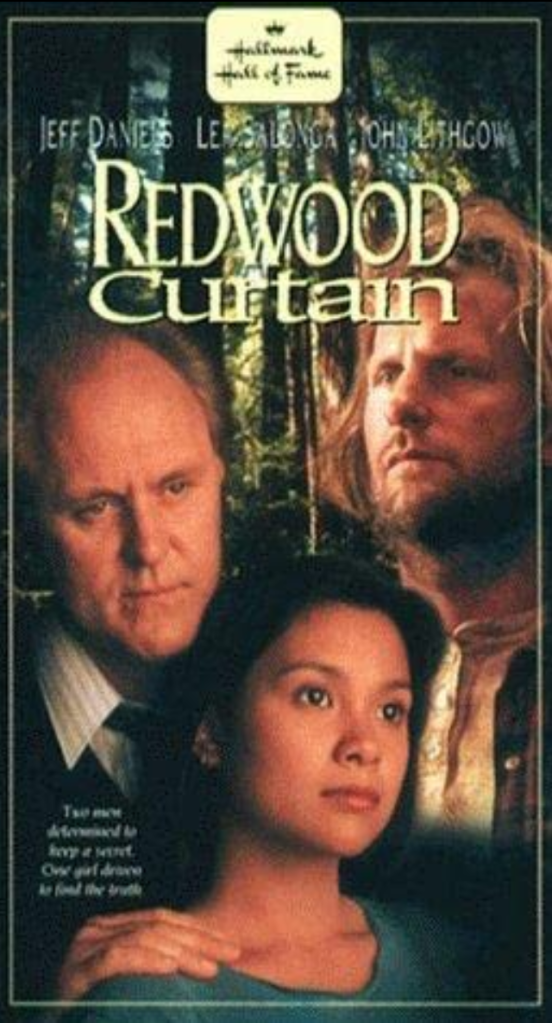
7. Redwood Curtain

There are very few movies I found better than their source material. Redwood Curtain just so happens to be one of them! The creative team behind the Hallmark Hall of Fame adaptation took advantage of the expansive nature of film by providing the story with more locations. Allowing characters like Julia and Laird to appear in the movie showcase the Riordan family dynamic not present in the play. I found Geri more likable as a character in the movie. Lea’s performance paired with the screenwriting gave Geri an empathetic and understanding personality. Redwood Curtain is a Hallmark Hall of Fame presentation I wish was re-released on DVD.

‘Redwood Curtain’: From Stage to Screen

6. The Pit and the Pendulum

The Pit and the Pendulum was one of the biggest pleasant surprises of 2022! Despite the film not being my first choice for its respective blogathon, I thought it was engaging and entertaining. Vincent’s performance didn’t disappoint, as his portrayal of Nicholas was versatile and fueled on emotion. The mystery not only started right away, but it also allowed the audience to experience the journey alongside Francis, the main character. The Pit and the Pendulum is, to me, one of the more effective horror movies, like 1962’s Cape Fear. While this film would be a perfect choice to watch on Halloween, I’m glad I had the opportunity to see it around Vincent’s birthday!

Take 3: The Pit and the Pendulum (1961) Review

Redwood Curtain poster created by Chris/Rose Productions, Hallmark Hall of Fame Productions, American Broadcasting Company (ABC), and Republic Pictures (II)

5. The Song of Bernadette

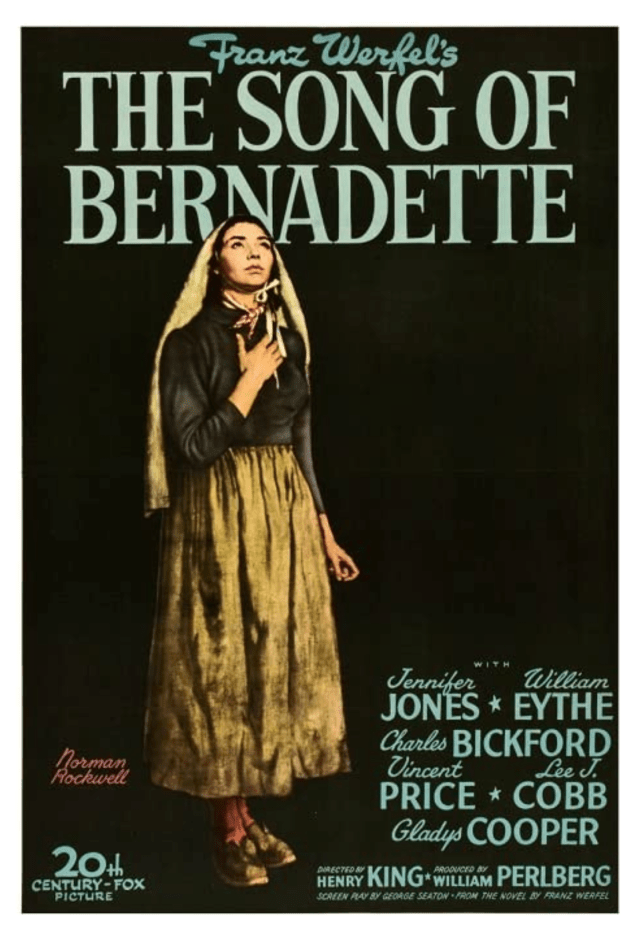
And another film of Vincent’s joins my list! Faith based films come in two forms; those that emphasize a message and those that emphasize a story. The Song of Bernadette falls into the latter category, as it revolves around religious phenomena affecting a small town. What I like about the 1943 film is how different perspectives relating to the phenomena are explored, highlighting how various members of the town view the events unfolding. The story doesn’t choose sides on the main topic, allowing the audience to come to their own conclusions about what is taking place in the movie. Even though The Song of Bernadette was released during the Breen Code era, the film is a good representation of the quality from that period in cinema. As I said in my review, Easter would be an appropriate time to watch the movie!

Take 3: The Song of Bernadette Review

4. Heaven Is for Real

Heaven Is for Real shares a major similarity with The Song of Bernadette. The 2014 film also revolves around religious phenomena affecting a small town. But what Heaven Is for Real does differently is encourage the audience to have a conversation about their beliefs on Heaven. Like I previously stated, faith based films come in two forms; those that emphasize a message and those that emphasize a story. However, I’ve rarely seen a movie of this nature start a discussion about one of their themes. This creative decision brings something new to the table and gives Heaven Is for Real a unique identity.

3. Words on Bathroom Walls

It seems like I’ve been talking about this title for as long as my blog has been around. But I’m glad I finally got the chance to see Words on Bathroom Walls this year, as it was such a good adaptation! There were changes between text and film. Despite that, the adaptation was, for the most part, respectful to its source material. The visual presentation of the story gave the audience a glimpse inside Adam’s mind. Interactions between the characters were believable, thanks to the actors’ performances and screenwriting. As I mentioned in my review a month ago, the adaptation for Words on Bathroom Walls seems more underrated. Based on the response my review received, my statement may be wrong.

Take 3: Words on Bathroom Walls Review

2. Top Gun: Maverick

I’m going to be honest; I had low expectations for Top Gun: Maverick. That’s because sequels released over ten years after their predecessor can be hit or miss. Top Gun: Maverick ended up surpassing my expectations, making it in the top three of my best of the year list! From what I know about Top Gun, the sequel respected what came before it. At the same time, new elements were added to the story, like focusing on an overarching mission. In a cinematic landscape where a film receiving over a billion dollars has become a rarity, Top Gun: Maverick achieved what some studios only dream of. As the 2020s move forward, maybe more filmmakers will turn to this film as an example of what can be cinematically possible.

Take 3: Top Gun: Maverick Review + 450 Follower Thank You

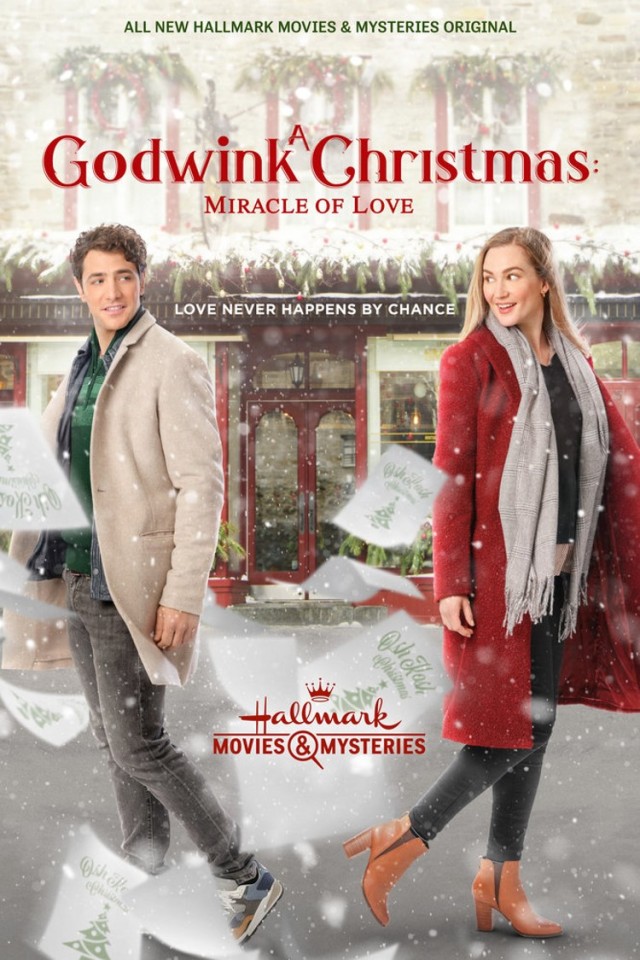
1. A Godwink Christmas: Miracle of Love

When it comes to “Godwink” stories, I prefer those that focus on a conflict. While that is the case for A Godwink Christmas: Miracle of Love, I found the overall production impressive! The interactions among the characters, as well as each volunteer’s talent being showcased, provided a nice amount of character development. Christmas activities were incorporated in more unique ways, such as the Romero family’s gift exchange. The inclusion of Advent was a newer approach to the Christmas movie genre. I don’t know what’s in store for the Godwink series. But I’d love to see more adaptations of these stories!

Take 3: A Godwink Christmas: Miracle of Love Review

A Godwink Christmas: Miracle of Love poster created by Crown Media Productions and Hallmark Movies & Mysteries

Have fun in 2023!

Sally Silverscreen
Take 3: The Song of Bernadette Review

Shock and sadness. That’s how I felt when I discovered the passing of Patricia, from Caftan Woman, on Twitter. Upon hearing the announcement of the Caftan Woman Blogathon, I wanted to participate as a way to pay my respects to a fellow blogger. Over the years, Patricia has recommended several films for future reviews. So, it was only fitting for me to choose one of her suggestions for the event. Since the blogathon is commemorating a loss, I felt The Song of Bernadette was the most appropriate choice out of the recommendations on my Pinterest board. This also compliments other religious/faith-based films I’ve reviewed in the past, such as Ben-Hur and The Carpenter’s Miracle. With all that said, let’s start this review of The Song of Bernadette.

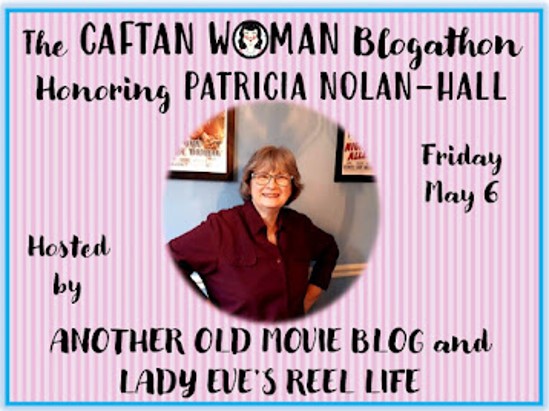
The Song of Bernadette poster created by 20th Century Fox

Things I liked about the film:

The acting: One of my favorite movies is Portrait of Jennie. Jennifer Jones’ consistent and captivating performance is one of the reasons why I love that film so much. In The Song of Bernadette, Jennifer’s portrayal of the titular character reminded me of her portrayal of Jennie. This is because she has a talent for pulling off an innocent demeanor without coming across as childish or immature. Throughout the film, Bernadette claims she is dumb. Yet, when asked what a sinner is, she tells the local reverend a sinner “is someone who loves sin”. The reverend even comments how Bernadette chose to say “loves sin” instead of “commits sin”. Personality wise, Jennifer brought a gentleness to her character. When speaking with one of Lourdes’ members of police, the policeman gets details of Bernadette’s story wrong. In a polite manner, Bernadette corrects him, pointing out the policeman’s errors in a soft-spoken voice. This innocence and gentleness allowed Bernadette to be taken seriously by the audience.

On 18 Cinema Lane, I have reviewed several of Vincent Price’s films. In most of these movies, Vincent portrays a character that can exude a sense of fear for the audience. But in The Song of Bernadette, his role of Vital Dutour was very different from his other roles. One reason is how Vincent is a part of an ensemble instead of a main focus in the story. Another reason is how Vital’s actions and choices were not chosen to cause fear. Despite all of this, Vincent carries his character with elegance and arrogance. In an effort to get to the bottom of Bernadette’s “visions”, Vital questions her story in his office. He speaks to Bernadette with a stern voice and presents a no-nonsense attitude. By interacting with her in this way, Vital is attempting in enforce his authority, thinking he will get his way. But because of Bernadette’s strength in her faith and her innocent demeanor, she is able to stand up to Vital. With that, both Jennifer Jones and Vincent Price are able to, acting-wise, go toe-to-toe with each other!

The set design: The Song of Bernadette takes place in the French countryside of 1858. But according to IMDB, the movie was filmed in California. Despite this, the set didn’t look like a set. Instead, it looked like a small French town from the 1850s! The architecture of Lourdes’ buildings was simple. Materials such as stone cover these structures. A traditional roof shingle design is displayed on top of these buildings. Like any well-researched production, the attention to detail was not overlooked! Vital’s office boasts two impressive things: a large desk and fireplace. The desk is a big piece of furniture that is coated in darker wood. Small, gold detailing can be found on the side of the desk. The fireplace is a massive marble structure, with etched detailing just below the mantle. Attention to detail and thorough research made this on-screen world an immersive environment!

Correlations with Biblical stories: When I reviewed the 1959 film, Ben-Hur, I talked about how certain Biblical events were incorporated into the overall story. With The Song of Bernadette, I could pick out moments that felt like unintentional correlations with some stories from the Bible. Toward the beginning of the film, Bernadette’s father is hired to dispose dirty rags from hospital patients. Shortly after being hired, Bernadette’s father can be seen pulling the wagon filled with dirty rags up a hill. This scene reminded me of the Crucifixion story, when Jesus is carrying the cross. The scene can also serve as a reminder how everyone has their own cross to bear, literally or figuratively. After Bernadette sees her first “vison”, Bernadette’s neighbors offer Bernadette’s family extra food they had acquired. The neighbors’ multiplying of food is reminiscent of the story where Jesus multiplied two fish and five loaves. Because this scene takes place after the first “vision”, I saw it as a miracle similar to the aforementioned Biblical story.

Using little to no dialogue: In two scenes, the movie’s creative team did a great job using little to no dialogue! One of them was the aforementioned scene where Bernadette’s father climbed up the hill. Orchestral music replaces any dialogue, which captures the emotions of Bernadette’s father. A long shot showcases the journey, elaborating how small Bernadette’s father is compared to the hill. This scene visually explained how difficult his life is. Another scene that used no dialogue is when Bernadette experiences her first “vision”. Not only is orchestral and choir music incorporated, the creative team uses a spotlight to accentuate Jennifer’s facial expressions. At one point in this scene, wind blew unexpectedly, signaling something was about to happen. Both scenes were able to say so much while saying so little!

The Caftan Woman Blogathon banner created by Lady Eve from Lady Eve’s Reel Life and Jacqueline from Another Old Movie Blog

What I didn’t like about the film:

The under-utilization of Antoine and his mother: In The Song of Bernadette, the titular character appears to be friends with a man named Antoine. Antoine also appears to be close with his mother. These two characters were only shown in a handful of scenes. Even when they were included in the story, their significance in the overall plot was weaker. The under-utilization of Antoine and his mother was disappointing, as I felt they could have offered more to the story. But since this movie was based on a book I haven’t read, I’m not sure if the limited presence of these characters is close to the source material.

A few ignored details: Toward the beginning of the movie, a friend of Bernadette’s explains to their teacher how Bernadette has asthma. This diagnosis is brought up on a few occasions by Bernadette’s family throughout the movie. But, for the most part, this detail was ignored and had little significance in the story. There were times when Vital Dutour was seen wiping his nose with a handkerchief. At one point in the story, he claims it’s “influenza”. However, it isn’t clearly explained what he’s medically dealing with. As I already said, The Song of Bernadette is based on a book I haven’t read. But if the creative team knew they weren’t going to utilize these details, it makes me wonder why they would include them in the movie?

Rose illustration image created by Freepik at freepik.com. <a href=”https://www.freepik.com/free-photos-vectors/background”>Background vector created by freepik – http://www.freepik.com</a>. Image found at freepik.com.

My overall impression:

Incorporating faith into film can be a tricky task. On the one hand, you don’t want to run the risk of alienating those who aren’t religious. At the same time, you want to acknowledge the beliefs of those who choose to include religion in their lives. The Song of Bernadette finds a way to achieve “the best of both worlds”! Bernadette’s story is shown as a procession, a good exploration of how religious phenomena can affect a small town. The film doesn’t seem to take sides when it comes to the actual topic. Yes, some people make fun of Bernadette because of her “visions”. But there’s no antagonist or villain in the movie. Lourdes’ mayor and his friends don’t believe Bernadette. However, none of the men are religious, approaching the situation from a legal and literal perspective. Even the town’s reverend isn’t quick to assume the “visions” are religious. Out of all the movies I’ve seen this year, so far, I’d say The Song of Bernadette is the strongest one! If you are interested in checking this film out, I think Easter would be an appropriate time to see it. Personally, I wish I had seen it sooner, especially since I can no longer thank Patricia for the recommendation.

Overall score: 8.2-8.3 out of 10

Rest in Peace Patricia

Sally Silverscreen

Take 3: At Home in Mitford Review (National Read a Book Day Double Feature Part 2)

Happy National Read a Book Day! I want to let you know there will be spoilers for both the book and movie in this review. If you want to check out this double feature’s introduction, you can visit this link:

The National Read a Book Day’s Double Feature Introduction

At Home in Mitford poster created by Crown Media Family Networks and Hallmark Channel
1. How did you come to know of this film?

I remember when Hallmark’s adaptation was announced four years ago. The biggest news associated with the project was the casting of Cameron Mathison and Andie MacDowell as Father Tim Kavanagh and Cynthia Coppersmith. This news made fans upset, due to the fact both Andie and Cameron were younger than their characters were described in the book. Their disapproval of the casting led the movie to be one of the lowest viewed films on Hallmark Channel that year, with 1.34 million viewers. I also remember the movie didn’t receive an encore presentation, as is customary for the majority of Hallmark productions. While I’m not sure if this information is accurate, I have heard Jan Karon, the author of the Mitford series, didn’t promote the film.

2. How did you acquire this movie’s respective source material?

Two years ago, I purchased a used copy of At Home in Mitford at a library book sale. I became interested in reading the series before the adaptation’s premiere, as I heard so many good things about it. Since I never got to read any of the books before the movie aired, I was curious to see how different the book was from the film. At the sale, they had the whole series available for purchase. But since I didn’t know if I would like the series, I just bought the first book.

3. Have you read Jan Karon‘s work before? What are your thoughts on her writing?

Like I mentioned in the introduction, I have never read anything by Jan Karon before. So, I didn’t know what to expect from the book. Jan’s emphasis on detail was one of At Home in Mitford’s strengths! An example is when things are being listed off. In the book, Father Tim and Cynthia go to the movies. Within a paragraph, Jan takes the time to mention the snacks they purchased, saying “they went into the empty row with a box of popcorn, a Diet Sprite, a Coke, and a box of Milk Duds”. It’s details like these that make the characters and the story itself feel realistic.

Similar to Saint Maybe, At Home in Mitford is mostly a “slice of life” story. But there are a series of mysteries that are drawn out throughout the text. Because this book has elements of mystery, but is not a mystery novel, the overall sense of urgency was low. At times, it felt like there were too many characters and storylines. Mitford seemed like any other small town I’ve seen in Hallmark’s programming. While reading this book, I kept asking myself, “How is Mitford any different from Cedar Cove? Or Chesapeake Shores?” Maybe if I had read At Home in Mitford before watching any of those programs, I would think differently. But, at the end of the day, I thought this book was a fine, wholesome story.

4. Was the movie different from its source material? If so, how?

Even though there were some similarities between the movie and the book, At Home in Mitford’s film adaptation contained more differences. Some characters were either omitted or changed from the text. One of these characters was Olivia Davenport. In the film, she was a parishioner who was seeking Tim’s guidance for her rocky marriage. Her presence in the movie was very limited, which is different from the book. In the novel, Olivia was a part of At Home in Mitford’s ensemble cast of characters. Her storyline was one of the most important, as she desperately needed a heart transplant. Olivia also helped Mitford’s doctor, Hoppy Harper, move forward from the loss of his deceased wife. As I said in answer number three, I, at times, felt like there were too many characters and storylines in the book. Therefore, I don’t fault Hallmark for leaving out certain parts of the source material. However, if the adaptation’s creative team knew they were going to include one of the book’s characters in their script, then they should have given Olivia a greater significance in the film.

Despite the film adaptation’s differences from the book, some of them had purpose. The novel and film featured a character named Marge Owen. While she became pregnant in both versions of the story, she was given a greater importance in the movie. The book never revealed her occupation, where the film shows Marge owning her own bookstore. She also provides friendship and guidance to Cynthia in the adaptation. As a way to overcome her writer’s block, Cynthia volunteers to restore the church’s paintings. In Jan Karon’s book, Cynthia wasn’t involved with the church. She does attend church services, but she doesn’t go the extra mile for the parish. The movie version of Cynthia tells Tim that she wants to give back. Cynthia’s decision not only gives her a stronger connection to the church, but it also shows how someone living their faith can come in different forms.

This is the copy of At Home in Mitford I purchased two years ago. Screenshot taken by me, Sally Silverscreen.
5. Do you think the movie was better than the book or was the book better than the movie?

When it comes to At Home in Mitford, I can’t give a yes or no answer. So, I’ll say it like this: As a movie, At Home in Mitford is a fine, run-of-the-mill Hallmark Channel production, with some of the film’s changes improving upon the book. But as an adaptation, it feels like the network was trying to fit a round peg into a square hole. The first book in Jar Karon’s series was published before Hallmark Channel came into existence. By the time the adaptation was filmed, Hallmark was already well versed in their formula. Because the adaptation’s creative team tried so hard to fit At Home in Mitford into Hallmark’s brand of film-making, the story was watered down. If Hallmark were serious about faithfully adapting At Home in Mitford, they should have adapted it into a television show, as that is how the book read to me. I also think Jan Karon herself should have been one of the movie’s screen-writers.

6. Saint Maybe and At Home in Mitford share some similarities, such as how both books are written by women. Are there any other similarities you can think of?

Like I said in answer number three, At Home in Mitford is mostly a “slice of life” story. While there are mysteries within the text, the mysteries themselves feel lower in stakes. In the book, Father Tim finds some stolen jewels in an urn. Even though these jewels were connected to an international crime, Jan finds a way to connect this crime directly to Mitford. Father Tim wonders if his antique shop owner friend, Andrew Gregory, may have imported the jewels by hiding them in antique furniture. However, the culprit was a man named George Gaynor, a criminal on-the-run who found solace in Father Tim’s religious wisdom. Though George was arrested for his crime, he received the opportunity to become baptized. Father Tim even kept in touch with George after he left Mitford.

Saint Maybe is also a “slice of life” story featuring several mysteries. Similar to At Home in Mitford, the stakes of these mysteries were lower. Back in my review of Saint Maybe’s film adaptation, I mentioned how Ian discovered the identity of Agatha and Thomas’ father. Because this information was discovered long after Ian agreed to help raise Agatha and Thomas, there wasn’t a strong sense of urgency to do anything about the situation. He doesn’t even tell his family what he found. In fact, after speaking with Agatha and Thomas’ maternal grandmother, the movie version of Ian says to himself, “Thank goodness I didn’t find this information sooner”.

7. Should Hallmark adapt Jan Karon‘s other work? If so, why?

If At Home in Mitford’s film adaptation had received better reception from the viewers, then I’d be curious to see Hallmark adapt the other books in the Mitford series. Because that didn’t happen, Hallmark would have difficulty adapting Jan Karon’s other work, as most of her books are Mitford related. But since Hallmark created a few animated films in the past, I could honestly see them adapting Miss Fannie’s Hat or Jeremy: The Tale of An Honest Bunny. Similar to properties like Hoops and Yo-yo, Hallmark could create merchandise related to these stories as well. I’ve never read Miss Fannie’s Hat or Jeremy: The Tale of An Honest Bunny. But as long as Jan herself is involved with the project, I’d be fine with Hallmark adapting these books.

8. Is there anything about At Home in Mitford you liked or didn’t like?

I’ve heard complaints from Mitford fans about how different Dooley is in the film compared to the book.  While I do agree about Dooley being very different in the movie, I actually liked the movie version of his character. Dooley was sometimes the comic-relief in the story. His grandfather, Russell, even called him “a prankster”. My favorite scene was when Dooley removed the ‘Dog Found’ posters almost immediately after Father Tim posted them. Throughout the film, Father Tim actively sought out Barnabas’ former pet parent. He spreads the word about the dog’s current whereabouts by posting ‘Dog Found’ posters throughout Mitford. Since Dooley doesn’t want to see Barnabas go away, he removes these posters behind Father Tim’s back. This scene was hilarious because of its believability.

Compared to the book, At Home in Mitford’s film adaptation felt formulaic. Like I said in answer number five, the movie’s creative team tried so hard to fit At Home in Mitford into Hallmark’s brand of film-making. Instead, the story followed the same beats and tropes/cliches as other Hallmark titles. The film included an adaptation exclusive character named Jack Emery. Throughout the story, he embodied the “business person is a jerk and/or out of touch” cliché, with his sole purpose being the worse datable candidate compared to Father Tim. At Home in Mitford’s film adaptation was released in 2017, two years after All of My Heart. The 2015 movie was one of the network’s most notable films to challenge the aforementioned cliché. Therefore, it made At Home in Mitford kind of seem outdated by comparison.

Old-fashioned books image created by Macrovector at freepik.com. <a href=’https://www.freepik.com/free-vector/books-seamless-pattern_1539033.htm’>Designed by Macrovector</a>. <a href=”https://www.freepik.com/free-photos-vectors/background”>Background vector created by Macrovector – Freepik.com</a>. Image found at freepik.com.
9. Did you develop any thoughts and/or questions while watching this film?

Similar to Saint Maybe, religion/faith was downplayed in At Home in Mitford’s film adaptation. Both Father Tim and Cynthia mentioned they were Episcopalian. In answer number four, I talked about how Cynthia volunteers to restore the church’s paintings. Even though several scenes took place inside the church, we don’t see any characters worshipping within its walls. The tail end of Father Tim’s sermon was shown as well. The book showed how religion/faith played a role in Father Tim’s everyday life. He quoted a Scripture passage to fit almost any situation, even using Scripture to discipline Barnabas. Father Tim also turned toward everyday life to find inspiration for his sermons. Because Hallmark gave us Signed, Sealed, Delivered and has incorporated faith into When Calls the Heart, I’m surprised the network chose to tone down the religion/faith in the At Home in Mitford movie. But, once again, it feels like a missed opportunity.

10. Would At Home in Mitford encourage viewers to read either its source material or any other book?

Because of how many differences are found in the adaptation, I think it might encourage some viewers to check the book out. I can only speak for myself, but this is what inspired me to read the first book in the Mitford series. When I started reading At Home in Mitford, I could immediately tell how different each story was. I said in answer number five that the book read more like a television show. This is because the story was abundant with characters and storylines, as well as storylines being drawn-out. If viewers find themselves watching more tv series than movies, then the book might be for them.

11. After watching this movie, is there anything you can take away from your movie viewing experience?

Because the stories in At Home in Mitford revolve around the citizens of a small town, I can see why Hallmark would want to adapt Jan Karon’s series. At the time of the film adaptation’s release, small towns were an exhausted backdrop in Hallmark’s productions, with most of their characters being former or current small-town residents. But it seems like the network was so eager to potentially start a new series, that they lost sight of who this project was intended for. Excluding Jan Karon from the creative process doesn’t help Hallmark’s case. Their inability to adapt pre-existing material, At Home in Mitford in this case, shows how creatively dependent they’ve become on the rom-com genre. In my honest opinion, this movie was made a decade or two too late. Since Hallmark spent so much time showing how every small town was special, Mitford wasn’t given the opportunity to stand out. This movie should have been released either as a Hallmark Hall of Fame production prior to 2010 or on Hallmark Channel between 2001 to 2007.

Have fun at the movies!

Sally Silverscreen

Take 3: Anne Tyler’s Saint Maybe Review (National Read a Book Day Double Feature Part 1)

Happy National Read a Book Day! I want to let you know there will be spoilers for both the book and movie in this review. If you want to check out this double feature’s introduction, you can visit this link:

The National Read a Book Day’s Double Feature Introduction

Anne Tyler’s Saint Maybe poster created by Hallmark Hall of Fame Productions and CBS
1. How did you come to know of this film?

If you’ve been following my blog, you would know that my least favorite Hallmark Hall of Fame movie is Back When We Were Grownups. Like a lot of Hallmark Hall of Fame productions, the 2004 film was based on pre-existing source material; a novel written by Anne Tyler. Over the years, I discovered that two other Hallmark Hall of Fame movies have been based on Anne’s work: Breathing Lessons and Saint Maybe. Before this double feature, I had never seen either film. All I knew about Hallmark’s 1998 adaptation was that a man took in a deceased relative’s children and that the story had something to do with forgiveness. I also remember how the film would sometimes air during Hallmark Movies & Mysteries’ ‘Miracles of Christmas’ marathon.

2. How did you acquire this movie’s respective source material?

I purchased a second-hand copy of Saint Maybe at an estate sale earlier this year. As soon as I saw the book on a shelf, it reminded me of my Hallmark Hall of Fame Reading Challenge. Back in 2019, I created a reading challenge based on the books or plays that were adapted into Hallmark Hall of Fame titles. Since I’d like to read as many of these works as I realistically can, I purchased the book with that intention.

3. Have you read Anne Tyler‘s work before? What are thoughts on her writing?

As I said in the introduction, this was my first time reading anything by Anne Tyler. Based on what I read and based on what I saw in Back When We Were Grownups, I’m going to guess her forte is writing about larger families that are somewhat dysfunctional. Out of those two stories, I liked Saint Maybe more than Back When We Were Grownups. There was heart incorporated in the narrative and the Bedloe family had a legitimate reason for their dysfunctionality. I was also surprised by the inclusion of religion/faith. But I didn’t like how the chapters were too long. What Anne should have done instead is write shorter chapters and include them in separate sections for each character. I, personally, am not a fan of “slice of life” stories. About eighty percent of Saint Maybe is just that: a “slice of life” story. With all that said, I thought the novel was well-meaning and fine.

4. Was the movie different from its source material? If so, how?

For the most part, Saint Maybe was faithful to the source material, especially when it came to the most important parts of the story. But there were changes found in the adaptation. One of these changes was Agatha’s personality. In the book, when Agatha was introduced in the story as a young child, she came across as distant and matter-of-fact. As she grows up, Agatha comes to despise religion, as she feels religion was forced upon her life. The movie version of Agatha adopts the personality Thomas had in the book, coming across as sweet and mild-mannered. She grows up to be a friendly doctor who has no known opinion on religion. While she does criticize The Church of the Second Chance, she does this because she wants Ian to live his best life. Her criticism has nothing to do with religion itself.

Another difference between the movie and its source material is how Ian figures out the identity of Agatha and Thomas’ father. Agatha, in the book, is very protective over a jewelry box she claims belonged to her mother. Ian stumbles across this box by accident and finds Agatha’s and Thomas’ birth certificates among the jewelry and other items. These certificates reveal their father’s last name; Dulsimore. Ian learns this information differently in the movie. Similar to the book, Thomas and Agatha own a doll named Dulcimer. While Agatha is at Ian’s parents’ house, the audience can see her trying to remove something from the back of the doll. However, this information isn’t revealed until later in the movie. When the Bedloe family hires Rita diCarlo to organize their house, a lot of items end up getting thrown out. One of these items was Dulcimer the doll. As Ian is leaving the house, he sees the doll in a garbage bag. When he picks it up, he finds a slip of paper hidden in the doll’s back, revealing the doll’s name was also the last name of Agatha and Thomas’ father.

5. Do you think the movie was better than the book or was the book better than the movie?

Like its source material, I thought the movie adaptation of Saint Maybe was fine. Therefore, this is a difficult question to answer. But I will try to answer this question as best as I can by saying this: If you want to see a story about a family dealing with a personal tragedy, I’d recommend the movie. This is because the movie gets straight to the story’s point a lot sooner than the book did. If you’re interested in a story where the protagonist overcomes guilt and sin through religion/faith, I’d recommend the book. As I’ll explain later in this review, the movie didn’t feature religion/faith as much as in the book.

This is the copy of Saint Maybe I purchased earlier this year. Screenshot taken by me, Sally Silverscreen.
6. Saint Maybe and At Home in Mitford share some similarities, such as how both books were published in the 1990s. Are there any other similarities you can think of?

As I said in answer number three, I was surprised by the inclusion of religion/faith in Saint Maybe. Even though the movie and its source material are titled Saint Maybe, I wasn’t expecting religion/faith to play a large role in the text. But religion/faith is a cornerstone of both Saint Maybe and At Home in Mitford.  References to God, the Bible, and Christianity can be found in each book. However, the way both authors incorporated these ideas into their stories is very distinct.Throughout Saint Maybe, the congregation of The Church of the Second Chance obeyed a rule that forbade them from consuming sugar. While this rule seems ridiculous on the surface, it is used as a metaphor for sin. Reverend Emmett, the leader of The Church of the Second Chance, explains that if one actively avoids sugar, they are actively avoiding sin. If someone tries to make excuses for consuming sugar, they are making excuses for committing sin.

7. Should Hallmark adapt Anne Tyler‘s other work? If so, why?

As of early September 2021, Hallmark has not made any announcements on whether they are bringing back the Hallmark Hall of Fame collection. But if Hallmark does choose to create more Hallmark Hall of Fame titles and would like to adapt more of Anne Tyler’s novels, there are plenty of stories for them to choose from. According to Goodreads, twenty-four books written by Anne Tyler have not been adapted into a Hallmark production. Since I’ve never read any of those books, I can’t say which one is more deserving of receiving an adaptation. But if I had to pick at least one title Hallmark should adapt into a film, it would either be A Patchwork Planet or Digging to America. This is based on each book’s synopsis, as I have not read either book.

Personally, I wouldn’t be opposed to seeing Hallmark adapt more of Anne Tyler’s stories. Based on my experience with Saint Maybe, the movie was mostly faithful to the source material. So, with the right creative team involved, maybe another Anne Tyler story could be lucky enough to receive similar treatment. Because three of Anne Tyler’s books have been adapted into Hallmark Hall of Fame titles, it appears Hallmark has had a good working relationship with the author. I’m not sure how much creative control Anne had on either film. But if Hallmark wants to work with Anne again, I’m pretty sure an agreement between both parties could be reached.

8. Is there anything about Saint Maybe you liked or didn’t like?

Saint Maybe is a story that takes place over the course of several years. In the movie, there were subtle clues revealing which time period was portrayed on screen. One establishing shot showed a boy riding his banana seat bicycle down the sidewalk. This brief image indicated how that specific part of the story took place in the 1970s, as banana seat bicycles were popular within that decade. During the movie, Ian adopted a pair of large rimmed glasses. Because this style of glasses was common in the 1980s, Ian’s accessory is very telling of how much time had passed since the beginning of the film. Movies are a visual form of story-telling. So, I liked how the film’s creative team took the initiative to show the passage of time in a creative way.

 My favorite part of the book was when Daphne tried to set up Ian with her fifth-grade teacher, Miss Pennington. It was in this chapter that I started to like Daphne as a character, her free-spirited personality being introduced to me as the reader. Unfortunately, this part of the book wasn’t translated to the screen. I was disappointed by the omission of the book’s seventh chapter. The audience could have witnessed the evolution of Daphne’s personality, gaining an understanding of why she became who she was by the end of the story. Instead, there was a huge time jump from five-year-old girl to free-spirited woman. Because of missing context, this left questions without answers. But I recognize there is only so much story you can tell in eighty-four minutes.

Antique car image created by Freepik at freepik.com. <a href=’https://www.freepik.com/free-vector/red-classic-car_803652.htm’>Designed by Freepik</a>. <a href=”https://www.freepik.com/free-photos-vectors/vintage”>Vintage vector created by Freepik</a>. Image found at freepik.com.
9. Did you develop any thoughts and/or questions while watching this film?

While I didn’t develop any questions, I was surprised by how religion/faith was downplayed in Saint Maybe’s film adaptation. Yes, Ian’s introduction to The Church of the Second Chance was similar to the book. Agatha and Thomas tell Ian what they learned at summer camp, which was run by The Church of the Second Chance. Toward the end of the film, the Bedloe family are seen going to church. Other than these moments, religion/faith didn’t have an influence over the character’s lives. The Sugar Rule I talked about in answer number six was never brought up in the script. Reverend Emmett’s beliefs on how his congregation was led didn’t appear in any of the character’s dialogue. Even Reverend Emmett himself showed up in two or three scenes, having a much smaller presence than he did in the book. Saint Maybe’s film adaptation was released in 1998, a time when shows like Touched by An Angel were finding success on mainstream television. In hindsight, Hallmark choosing not to ride Touched by An Angel’s coattails kind of seems like a missed opportunity.

10. Would Saint Maybe encourage viewers to read either its source material or any other book?

I think it depends on what type of story someone wants to consume. As I said in answer number five, I’d recommend the book if you’re interested in a story where religion/faith is one of the key themes. But if you like films from the drama genre, those that explore relationships between characters, then the film adaptation is for you. I’ve said before that I am not a fan of “slice of life” stories. Like I mentioned in answer number three, Saint Maybe is primarily a “slice of life” story. If I hadn’t read the book beforehand, I would probably choose the movie over the text.

11. After watching this movie, is there anything you can take away from your movie viewing experience?

I now understand why Saint Maybe was sometimes shown during Hallmark Movies & Mysteries’ ‘Miracles of Christmas’ marathon. Several scenes took place during Christmas-time, with decorations associated with the holiday shown in the background. But I wouldn’t necessarily call Saint Maybe a Christmas story/movie. I said in answer number eight that this story took place over the course of several years. The themes and messages within the text are not exclusive to the Christmas season. In 2019, I created a tier rank list of every Hallmark Hall of Fame movie I’ve ever seen. Since posting that list, I have renamed each category. For Saint Maybe, I’d place this film adaptation in the category titled ‘Bought It at a Garage Sale for a Dollar’. The movie itself was fine, but I wouldn’t pay $20 if it was sold on DVD.

Have fun at the movies!

Sally Silverscreen
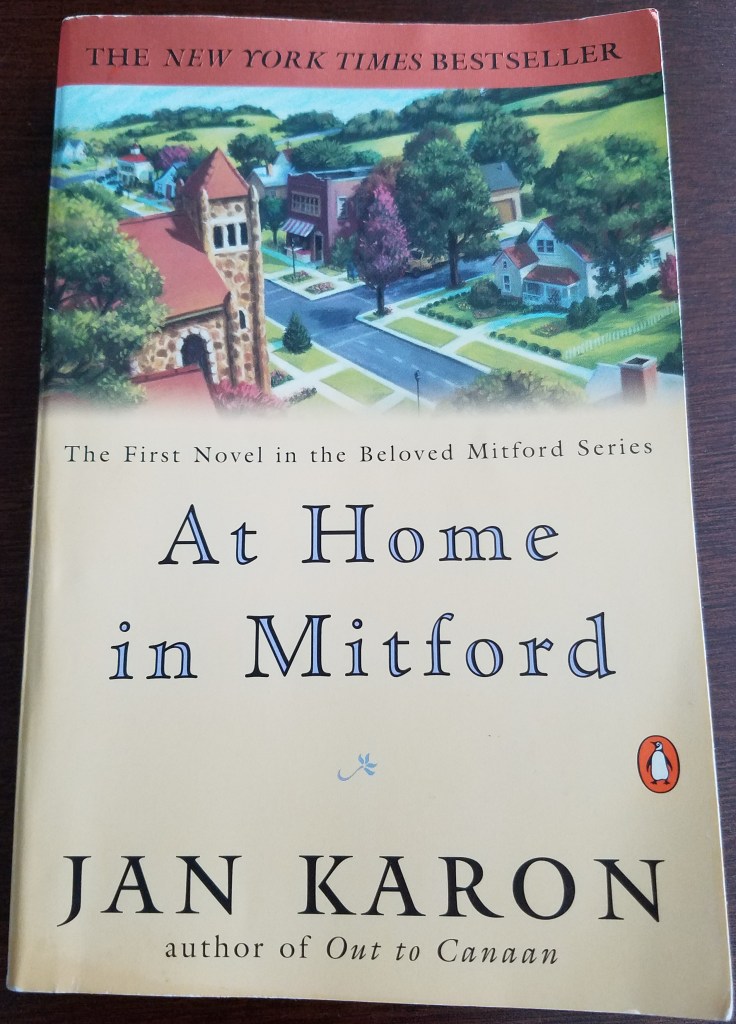
Sunset Over Hope Valley: Second Chances

In When Calls the Heart’s eighth season, the storylines of Henry, Ned, and Florence share one thing in common. Not only have these characters appeared on the show since its beginning, but their stories highlight the theme of second chances. As Rosemary mentioned at the beginning of this episode, it has been years since Ned and Florence have been married. However, they have formed a romantic bond by giving each other a chance. Meanwhile, Henry has reunited with his son, Christopher. He has also come back to work at the petroleum plant. While Henry has had many ups and down throughout his story, it’s been nice to see Henry grow as a character and watch his journey progress. In fact, Henry’s story has been one of the best this season! As of mid-April 2021, there have been no official announcements of a ninth season. However, if When Calls the Heart did receive another season, it would be interesting to see where Henry’s story goes. For now, though, let’s begin this week’s re-cap!

Just a reminder: If you did not see this episode of When Calls the Heart, there may be spoilers within this re-cap.

When Calls the Heart poster created by Crown Media Family Networks and Hallmark Channel.

Season: 8

Episode: 9

Name: Pre-Wedding Jitters

Major stories:

One morning, Rosemary shares with Elizabeth how she is having difficulty finding the right wedding dress for Florence. During this conversation, Elizabeth tells Rosemary what Nathan told her at Bill’s send-off celebration. When Elizabeth asks Rosemary what might have caused Nathan to withhold this information, Rosemary suggests that maybe the information itself isn’t as important to him as it is to Elizabeth. Offended, Elizabeth asks Rosemary why she would say that, with Rosemary telling Elizabeth she was only being honest. In town, Elizabeth notices Ally leaving the saloon. Ally reveals that she had a conversation with Lucas, which was shown in a previous scene. She tells Elizabeth that Nathan and Lucas plan to sort things out. When Lucas visits Elizabeth at the school, she tells him what Nathan told her at Bill’s send-off. Lucas asks if he should talk to Nathan, but Elizabeth refuses the offer. Later in the episode, Elizabeth visits Nathan at his office. When she asks him why he waited so long to tell her about his Fort Clay secret, he says that he felt guilty about what happened to Jack. This caused Nathan to ask for a transfer to Hope Valley, in order to protect Elizabeth and her son. Nathan also tells Elizabeth that he still loves her. Things between Elizabeth and Nathan become even more awkward at Florence’s bachelorette party. During a game Fiona introduces, Elizabeth is blindfolded and asked to identify her true love by holding hands with each male participant. When Elizabeth reaches Nathan, she assumes it is Lucas. She is shocked and embarrassed by her decision. The next day, she apologizes to Lucas for her mistake, with Lucas expressing no hurt feelings. Toward the end of the episode, Rosemary pays her a visit. After learning that Rosemary and Nathan were at the library, Elizabeth asks Rosemary if she said anything to Nathan to keep him interested in Elizabeth. Before Rosemary leaves, she tells Elizabeth she should seek out the truth of what she really said.

Florence’s bachelorette party and Ned’s bachelor party are just around the corner. As soon as Fiona arrives in Hope Valley, she agrees to help Florence fix her hair for the event. While Rosemary and Mollie help Florence choose a wedding dress, Minnie and Clara make baked goods for the party guests. Meanwhile, some of Ned’s friends convince Ned to host a bachelor party. But Ned is not invested in the idea like his friends are. After paying a visit to the dress shop, Clara comes back to the café to discover Mike and Jesse eating near the baked goods. Thinking they were eating the food for the party, Clara yells at Jesse and Mike to stop eating the food. Jesse shares that they were actually eating quiche. Throughout the episode, Bill is still trying to figure out who stole the car from this season’s seventh episode. Ned’s bachelor party turns out to be just as uneventful as Jesse’s bachelor party from last season. After Ned makes a comment about his hair, Bill makes a discovery in relation to the stolen car. With Ned’s help, Bill finds a shoe print inside the car’s removeable hood. During the evening, Lucas tells Henry that he hired Christopher to the petroleum plant in order to keep an eye on Henry. Upset by this news, Henry tells Lucas not to let Christopher know that he now knows this news. Despite these interruptions, the guests decide to combine their parties, just like Jesse and Clara’s party last season. They end up having a better time than when the parties were separate. Clara also apologizes to Jesse for yelling at him earlier, with Jesse forgiving her.

Baking essentials image created by Olga_spb at freepik.com. <a href=’https://www.freepik.com/free-vector/background-with-elements-of-the-bakery_903718.htm’>Designed by Olga_spb</a>. <a href=”https://www.freepik.com/free-photos-vectors/background”>Background vector created by Olga_spb – Freepik.com</a>. Image found at freepik.com.

Minor stories:

Toward the beginning of the episode, Christopher reveals to Henry that the stolen car from this season’s seventh episode was actually stolen by one of Christopher’s friends. Christopher says that even though he only borrowed the car, he plans on leaving that life behind. When Christopher shares that Rachel was the reason for this change, Henry tells his son how Abigail was one of the few people who gave him a second chance. Later in the episode, Christopher asks Henry what happened to Abigail. Henry says she left town to take care of her mother. After the bachelor and bachelorette party, Bill shares the discovery of the shoe print. Henry tells him he will help with the case. Instead, Henry burns Christopher’s shoes. Before this happens, Henry says goodbye to Christopher as he leaves for Bellingham in search of Rachel.

At the café, Clara tells Lee that Joseph has become Hope Valley’s official pastor. She also tells Lee that Joseph is preparing to officiate Ned and Florence’s wedding. After hearing this news, Lee pays Joseph a visit at his home. Even though he notices surveyors on Joseph’s property, Lee doesn’t think much of it because he joins Joseph on a out of town trip. The purpose of this trip is to pick up a church bell from a neighboring town. When explaining to Lee, on this trip, why he chose to become the pastor, Joseph explains that he had to think about what was best for his family. Meanwhile, Carson shares with Faith that he has accepted the John Hopkins offer. This brings Faith and Carson at a crossroads, as they don’t know how to find a resolution to their problem. They talk about this some more at Ned and Florence’s party. Carson suggests he and Faith should get married. While he says they can wait to get married, they do plan to work things out.

Detective work image created by Photoroyalty at freepik.com. <a href=’https://www.freepik.com/free-vector/investigation-background-design_1041877.htm’>Designed by Freepik</a>. <a href=”https://www.freepik.com/free-photos-vectors/background”>Background vector created by Photoroyalty – Freepik.com</a>. Image found at freepik.com.

Some thoughts to consider:

  • Ever since Jack passed away, I noticed how Elizabeth has become more unlikable as the show has progressed. In this episode, Elizabeth came across as selfish. The way she talked to Rosemary was, in my opinion, uncalled for, as Rosemary did nothing wrong. If When Calls the Heart receives a ninth season and Elizabeth continues to behave this way, I feel the show will lose a certain amount of viewership.
  • This episode felt like there was context missing, like parts of the story were unintentionally cut out of the show. Joseph’s decision to become a pastor is one example. He had been contemplating this new job opportunity for several episodes. But his final decision seemed to come out of the blue. The audience doesn’t get to witness why and how Joseph came to this decision.
  • On Crown Media Family Network’s website, I saw some promotional photos for the next episode. In at least one of the pictures, the décor at the church looks fall/autumn themed. At the beginning of the season, Elizabeth said that spring had arrived in Hope Valley. With everything said, I find this to be confusing.
Sunset image created by Photoangel at freepik.com <a href=”https://www.freepik.com/free-photos-vectors/background”>Background image created by Photoangel – Freepik.com</a> <a href=’https://www.freepik.com/free-photo/red-sunset-clouds-over-trees_1254327.htm’>Designed by Freepik</a> Image found at freepik.com

What are your thoughts on this episode? Are you looking forward to Florence and Ned’s wedding? Tell me in the comment section!

Have fun in Hope Valley!

Sally Silverscreen