
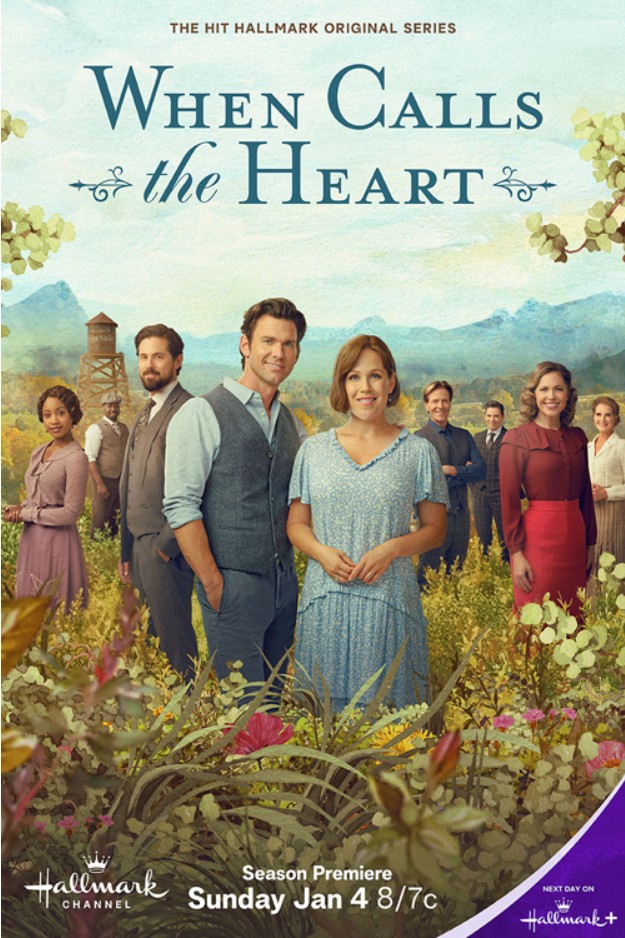
This episode of When Calls the Heart primarily resolves around a scavenger hunt Elizabeth, Nathan, and Allie organize for LJ. The twist is, throughout the scavenger hunt, LJ receives memories of his late father, Jack Thornton. Some of the residents of Hope Valley share stories about Jack and even bring up how he impacted their lives. The way these characters talked about Jack reminded me of Clarence’s quote from It’s a Wonderful Life, when he told George, “Each man’s life touches so many other lives”. From season one to most of season five, Jack’s actions caused a ripple effect that led to other events that happened in later seasons. If it wasn’t for Jack, Faith never would have come to Hope Valley, let alone become a doctor. Rosemary’s radio show wouldn’t exist, as Jack was the reason Rosemary came to Hope Valley all the way back in season one. And Henry would be living a completely different life had it not been for Jack’s kindness. Until this episode of When Calls the Heart, I hadn’t realized Jack Thornton was the glue that not only kept the show together, but kept the Hearties together as well. But what I do know is the loss of Jack has been both seen and felt.
Just a reminder: If you did not see this episode of When Calls the Heart, there will be spoilers within this re-cap.
Season: 13
Episode: 9
Name: Lost and Found Again
Major stories:
LJ is upset when he discovers Jack’s medal is missing. Nathan, Bill, and Oliver search for the medal, but are unable to locate it, even by the end of the episode. When LJ becomes mesmerized by the Jack Thornton School’s/church’s blueprints Lee brings to Elizabeth’s class, Elizabeth comes up with an idea to give her son more memories of the father he never knew. One day, in Hope Valley, Elizabeth, Nathan, and Allie host a scavenger hunt to LJ. But, as Allie points out, LJ will receive memories instead of prizes. Throughout the scavenger hunt, LJ hears stories about Jack from Elizabeth, Faith, Rosemary, Lee, and Henry. Charlotte even arrives in Hope Valley for a surprise visit, sharing a letter Jack wrote with LJ. But Allie feels bad about not having her own memories of Jack to share. So, she works with Oliver to adapt one of Jack’s cases into a storybook. At the end of the episode, Allie gives the book to LJ, with Elizabeth expressing her excitement over Allie’s writing talent.
Most of the houses in Benson Hills have been rebuilt. For Lee’s construction company’s next project, the rebuilding of Benson Hills’ school will soon begin. But the students from Benson Hills aren’t looking forward to this development, primarily because they don’t know where their learning will take place. To get these students excited about their new school, Lee hosts a contest to determine the school’s official blueprint. The winning design will be brought to life by Lee’s construction company. Inspired by the designs of Ancient Rome, Rupert is looking forward to potentially creating his new school. However, he has difficulty coming up with a design that will impress the judges. Elizabeth suggests Rupert work with Opal, as Opal is also interested in architecture. Taking Elizabeth’s advice, Rupert, as well as Opal, invent a design that not only reflects the architecture of Ancient Rome, it centers around the library. All three judges, Lee, Rosemary, and Lucas, love Opal and Rupert’s design so much, it gets selected as the official blueprint of Benson Hills’ school.

Minor story:
Lucas learns the funds for the rebuilding of Benson Hills’ school have been moved to another department. This department plans to use the money for city related projects. Unsure how to solve the problem, Lucas calls Edie, who now works in Union City for the Franklin And Sons Foundation. She suggests asking the Foundation for a grant to rebuild Benson Hills’ school, as education is an important cause for Mrs. Franklin (one of the creators of the Franklin And Sons Foundation). This idea ends up working, with the Benson Hills school rebuild continuing as planned. Lucas also expresses his feelings for Edie, but Edie tells him how they shouldn’t dwell on the past.

Some thoughts to consider:
- On two separate occasions, there was an autumn leaf garland on display in the background. This simple design choice was an effective way to show the progression of time. I also appreciate hearing how the rebuilding of Benson Hills has been moving forward. Even though these homes weren’t shown on screen, at least the characters talked about it.
- In my past re-cap posts for season thirteen, I’ve brought up the fire investigation and the developments made by the characters. But in this re-cap post, I didn’t address this overarching mystery. That’s because there were no updates made in this episode of When Calls the Heart. Ever since Christopher left Hope Valley, it seems like the mystery has been put on pause in favor of the stories with lower stakes. With the next episode seemingly revolving around Nathan’s proposal to Elizabeth, it looks like the fire investigation mystery will be paused for a little while longer.
- For a story centered around sharing memories about Jack Thornton, it was nice to see Charlotte included in this narrative. But what also would have made sense is having Tom Thornton participate in the scavenger hunt. Not only did he grow up with Jack (as Tom is Jack’s younger brother), Jack is the reason why Tom has any career at all, with Jack’s encouragement inspiring Tom to turn his life around. Personally, I think Tom being absent from this episode was a missed opportunity.

What are your thoughts on this episode of When Calls the Heart? Do you think Edie will stay in Union City or move back to Hope Valley? Tell me in the comment section!
Have fun in Hope Valley!
Sally Silverscreen















 18 Cinema Lane