Roger Ebert’s Movie Yearbooks: How Relevant are They Anyway?

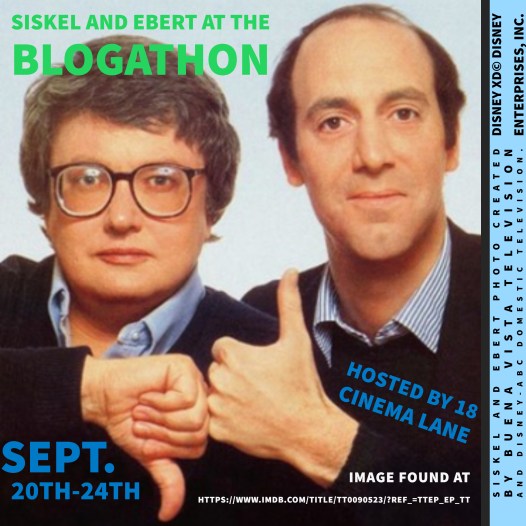
Found in cardboard boxes at garage sales. Seen on shelves at a used book store. Appearing on Amazon’s and Ebay’s pages. Roger Ebert’s Movie Yearbooks, or sometimes known as Roger Ebert’s Movie Home/Video Companion, are records of years gone by. Showcasing movies that have already premiered, the books feature reviews and other movie related material from Roger Ebert himself. From the mid ‘80s to the early 2010s, these yearbooks provided an overview of any given movie year. They correlated with Roger and Gene Siskel’s show, At The Movies. But for the majority of the 2010s, a movie yearbook has not been published. Also, it seems like this concept is not as talked about as it once was. Is this idea that Roger created still relevant anymore? Does it still have a place in our current day and time? This editorial will explore the arguments for and against the revival of the movie yearbook. I will also share my thoughts on the argument as a whole. Since today is the first day of Siskel and Ebert at the Blogathon, let the blogathon begin!
Siskel and Ebert Movie Theater banner
Created by me, Sally Silverscreen, on Adobe Spark.

How Roger’s Movie Yearbooks Are Still Relevent

What do putting up Christmas trees, going trick or treating, and watching the ball drop in Times Square on New Year’s have in common? All of these activities are rooted in tradition. Because these activities have become cherished for many people, they are put into practice year after year. For approximately three decades, Roger Ebert shared his thoughts, opinions, and insight about movies and other subjects related to that topic through his movie yearbooks. Throughout his career and reputation, Roger gained the likeability and respect of his audience. Because he became a cherished figure in the movie community, the publication of his movie yearbooks turned into a tradition. What helped was having continuous segments on his shows with Gene Siskel, such as episodes dedicated to the best and worst movies in a given year. Because these segments took place every year, it helped the show’s audience associate tradition with Roger Ebert.


When I think of a “yearbook”, I picture a hardcover book given at the end of a school year, filled with pictures and short, but thorough explanations about those photos. As I conducted my research about Roger Ebert’s movie yearbooks, I discovered that they did not fit my definition of a “yearbook”. These books are a collection of reviews, interviews, and essays. Despite this, a traditional “yearbook” and Roger Ebert’s movie yearbooks do share one major similarity: they are a collection of records and reflections. A typical school yearbook focuses on the memories and events of a particular school year, reflecting on things such as various school subjects or graduating classes. This publication is usually more visual, where photos are used to tell the story and express ideas. In Roger Ebert’s case, he chose a more verbal approach when it came to the creation of his movie yearbooks. Since movies are a visual medium and images like movie stills and award winners can be found in other publications, pictures are not necessary for these particular books of Roger’s. All of these books discuss the movie year prior to the book’s release. For example, Roger Ebert’s movie yearbook from 1999 will talk about movies from 1998. Like a school yearbook, Roger’s movie yearbooks are a singular place where his collective story can be presented.


Another important component to a yearbook, whether it be a movie yearbook or one from school, is how it creates a shared experience amongst its audience. Because the subject of movies and school is so broad, readers are able to find something in the text that they can relate to. Within the movie yearbooks, Roger Ebert reviews a variety of films that were theatrically released. Different studios and genres are represented throughout the publication. Because of the yearbook’s broad range of movies, there’s a chance that the material is appealing to almost everyone. On his shows with Gene Siskel and in his movie yearbooks, Roger would talk about whether he liked or disliked a particular film. Since they talked about movies that were theatrically released, meaning they are easily accessible for the majority of their audience, a shared experience was allowed to talk place. Just one example is when both Gene and Siskel reviewed the movie, Jurassic Park. This is a movie that a large number of people have seen, so it feels like people watching or reading their review can join a shared conversation.


During the run of Siskel and Ebert’s television shows, as well as their careers, both Gene and Roger created a legacy that outlasted their lives. By reviewing films and making those thoughts accessible to their audience, who also happen to be potential movie-goers, they helped create the concept of movie related entertainment. Gene and Roger also showed that anyone could articulate their thoughts and opinions on film. This contribution has been appreciated by fans and members of the movie community, even encouraging them to become movie critics themselves. Roger’s movie yearbooks make up a part of his legacy, proving to be an essential piece of movie related literature. This concept of looking back on a given movie year through text is something that would continue to be beneficial to movie fans and fellow critics. It may even help make the movie community a better place.

20190919_173650[1]
The cover of Roger Ebert’s first movie yearbook, Robert Ebert’s Movie Home Companion. Screenshot taken by me, Sally Silverscreen.

How Roger’s Movie Yearbooks Are Not Relevant Anymore

The last movie yearbook to be published was Roger Ebert’s Movie Yearbook 2013, which covers the movie years of 2010 to mid-2012. This is because Roger Ebert passed away on April 4th, 2013. Because of this, the movie community lost one of the most unique perspectives in film critic history. It also means that new movie related content from Roger can never be created, since the work would not come directly from him. Making a book called “Roger Ebert’s Movie Yearbook” and not having Roger involved in the project kind of defeats the purpose. Carrying on one of Roger’s long running book series without his consent also seems disrespectful. Sure, we could guess what Roger would think of movies released after April 2013. But it’s better to know than take a guess.


When Roger Ebert passed away six years ago, the world lost one of the faces of the movie community. The other face of the movie community, Gene Siskel, passed away twenty years ago. This means that the movie community currently does not have any one person that represents them. Gene and Roger earned their titles through their appearances on their television shows. Since their first show, Sneak Previews, premiered in 1975, there were not as many voices in the movie community as there are today. Because more people have joined this community, it would be difficult to choose a new representative. How would this person be chosen? What credentials would give this person the title? Who would nominate this person? So many factors would play a role when trying to make a decision like this. But the one question that should be asked is “Does the movie community really need a new representative”?


With the invention of the internet and social media, more people have been given the opportunity to share their thoughts on film. Blogs, websites, and even Youtube channels have provided platforms for more voices to be heard. These inventions helped the movie community grow, gaining more members now than when Gene and Roger first appeared on Sneak Previews. If the concept of the movie yearbook were to come back, it would be difficult to determine whose opinions get included. Do you choose the people who are associated with movie related companies or Youtubers with smaller channels? What about bloggers, would their thoughts be incorporated in the yearbook too? The website, rogerebert.com, is a place where multiple film critics can share their thoughts in one place. Would these people have a say in who’s cinematic thoughts are welcome? The very first movie yearbook from Roger Ebert, titled Roger Ebert’s Movie Home Companion, was released in 1985. Because the internet and social media weren’t big factors like they are today, the people associated with coordinating Roger Ebert’s movie yearbooks didn’t have to think about these things. But the landscape of the movie community has expanded in the 21st century.


Not only has the internet and social media provided a platform for more members of the movie community, they’ve also presented information in a shorter amount of time. Today, movie reviews are uploaded to the internet days, sometimes even weeks, before a movie’s premiere. Some quick searching will lead any movie fan to a wide variety of reviews and other movie related content from multiple authors. Our digital age has produced e-books, making it easier for readers to download many different stories. With these new elements that the movie community has gained, the idea of putting a movie yearbook to print comes into question. Why not just create an e-book version of this project? Wouldn’t it be easier to put all this content on a website? Another concern that needs to be addressed is whether people would pay for a collection of information when they can receive it for free in places that have internet access. When Roger Ebert’s movie yearbooks were published, most of his audience didn’t have the internet. They relied on his books, articles, and television programs when they wanted to hear what he had to say. Today there’s rogerebert.com, a website that provides reviews and movie related articles at a faster pace. They give this information straight to their audience, eliminating the process of company publishing and book binding.

20190919_173701[1]
The cover of Roger Ebert’s last movie yearbook, Robert Ebert’s Movie Yearbook 2013. Screenshot taken by me, Sally Silverscreen.

My Thoughts on Roger Ebert’s Movie Yearbooks

There’s no denying that Roger Ebert played a huge role in the movie community’s foundation. His thoughts and opinions on film helped many people become film critics of their own, instead of simply accepting the role of movie consumer. Something that made this goal a reality was the publication of Roger Ebert’s movie yearbooks. These books allowed Roger’s audience to reminiscence over films they’ve seen or heard about, as well as reflect on the topics of the featured interviews and essays. After the publication of Roger Ebert’s Movie Yearbook 2013 and Roger Ebert’s death, the world stopped receiving the wise and knowledgeable insight that could have easily been taken for granted. The concept of the movie yearbook is an interesting one, beneficial for all members of the movie community. I, as a movie blogger and member of the movie community, would love to see this concept brought back into publication. However, before this idea could be executed again, several important questions would need to be answered. From selecting the people who would contribute to the yearbook to which medium would host the project, these factors could affect the return of Roger Ebert’s long running series. A series that became a tradition because of one cherished individual. But all traditions start somewhere, and if they’re worth it, should be put into practice for many years and generations to come.


Have fun at the blogathon!

Sally Silverscreen


If you would like to check out this editorial’s references, here are the links:

https://en.wikipedia.org/wiki/Roger_Ebert

https://www.goodreads.com/book/show/15010613-roger-ebert-s-movie-yearbook-2013?from_search=true

https://www.rogerebert.com/about

When Creativity is Squandered: The Wasted Potential on Hallmark’s Good Witch

If you’ve read my list of the Top 10 Worst Hallmark Movies of All Time, you would know that Good Witch: Spellbound is in the Top 3. I disliked this movie so much, that I chose to stop watching the Good Witch television show. But something caused me to tune in to the most recent episode. What was this, you ask? Well, it was the inclusion of a royal character. This was the first time when a royal character has ever been featured on any of Hallmark’s television shows, so I was curious to see who would portray this character and what kind of subplot they would be given. However, I was hesitant about getting my hopes up. The third season of Good Witch and Good Witch: Spellbound left a bad taste in my mouth, due to the screen-writing that, in my opinion, was terrible. Still, I gave this episode a fair chance and hoped that the creative team behind this show would do something special with this particular “first” in Hallmark history. There were even factors leading up to this episode that led me to believe that this aspect of the episode would be handled with special attention. As you’re reading this, you’re probably wondering why I would talk about this, despite the fact that I no longer watch Good Witch. I feel that my experience is one that can be relatable among my readers and followers. We’ve all felt disappointed, at least once in our lives, about “wasted potential” within a creative project. This post is about just that; me being disappointed about the creative decisions found in this episode of Good Witch. Because this is not an episode re-cap, I will only talk about the subplot involving the royal character, which will include spoilers. I will also document the factors that made me believe that this specific story would be handled better than it was. Now, let’s discuss this episode and the royal disappointment it was.

Screenshot_20190621-173612_IMDb[1]
In this screenshot that I took on my cellphone, there were only four cast members listed on the official cast list for Good Witch’s episode “The Prince”. The cast list was featured on IMDB. This screenshot was taken on June 21st, two days prior to the episode’s release date. Screenshot taken by me, Sally Silverscreen.
Recently, when I was visiting Hallmark Channel’s website, I saw an advertisement for the latest episode of Good Witch on their main page. My level of excitement came to fruition when I saw that this episode was called “The Prince”. As I’ve already stated, this was the first time a royal character had ever been featured in any television show from Hallmark. So, I was looking forward to watching Hallmark Channel history in the making. In the commercial for this episode, the actor who was to portray the prince was nowhere to be found. I figured this was because of one of two reasons: a.) because the story would be an afterthought compared to the other stories within the episode or b.) the actor portraying the prince was such a big deal, that the creative team behind Good Witch wanted to keep his identity a secret in an attempt to surprise their audience and fans with their choice of casting. I chalked this decision up to the latter, especially considering the factors that I’m about to share. Leading up to the episode, the actor portraying Henry, who is the titular prince, was not listed on Good Witch’s IMDB cast list. This actor’s name was also not mentioned in the episode’s official synopsis that was featured on Crown Media Family Networks’ website. Speaking of the synopsis, whenever Henry was mentioned in the episode description, the statement was always brief. Here are a few examples of what I’m talking about:


From the official Good Witch episode guide on Hallmark Channel’s website: “Cassie plays host to Henry, a dashing stranger…”


From the Crown Media Family Networks’ website: “Cassie hosts a guest with a surprising secret”


“When shocking news emerges about the visiting royal, though, he risks hurting someone he’s grown to care for”


Based on everything I’ve just said, I predicted that Henry’s “secret” was that he was Cassie or Abigail’s long-lost brother. That way, the show could have introduced a male family member to the Merriwick family and Grace could have had a new uncle become a part of her life. If this was where the story went, it, possibly, would have encouraged me to give Good Witch a second chance. But, if you remember what I said in the introduction, I was disappointed by the “wasted potential” that was actually featured in this episode.

20190623_2200281.jpg
In this screenshot that I took with my cellphone, the official synopsis that is featured on Crown Media Family Networks’ website discusses the various subplots within this episode. As you can see, the actor portraying the prince was not mentioned in this synopsis. Meanwhile, other actors featured in this episode have their names listed next to their character names. Screenshot taken by me, Sally Silverscreen.

Because of the screen-writing associated with Good Witch’s third season and Good Witch: Spellbound, I had a feeling that the screen-writing in “The Prince” would probably be less-than-stellar. I also predicted what would likely happen on the episode. However, I was hoping that the creative team behind this show would prove me wrong. I watched this entire episode with an open mind and I gave it the fairest of chances. When Henry and his story were introduced on-screen, however, I was, unfortunately, proven right. Everything about this story was a blatant rehash of every single royal themed movie that Hallmark has ever made up until this point. You had the same generic British guy from the same generic, fictional European country that has a name ending with the letter “a”. You also had the same generic, romantic relationship between generic British guy and small-town, American woman. As for Henry’s “secret”, it was the same kind of secret that has been included in almost every Hallmark royal themed film: he’s a prince who didn’t want to be treated differently because of his royal title. There was even a part of the subplot about Henry wanting to go against tradition because he fell in love with a woman that’s not from a royal family. As disappointed as I was by this lack of creativity, I honestly can’t say that I’m surprised. This story felt lazily crafted, like the creative team behind Good Witch didn’t even try to apply any amount of creativity or imagination to this story. The entire execution of this concept was very poor, especially considering that this was a “first” in Hallmark television history.

20190623_215955[1]
In this screenshot from my cellphone, the official episode synopsis is featured on Good Witch‘s official page on Crown Media Family Networks’ website. From the first line, it’s clear that this sentence about the prince’s subplot is very brief. Screenshot taken by me, Sally Silverscreen.
I love Hallmark, hence the reason why I talk about it on 18 Cinema Lane. I want their movies and shows to be the best that they can be. However, when a Hallmark project doesn’t reach its full potential, I will be honest about my feelings and opinions related to that project. This was my intention for bringing up my experience of watching this episode of Good Witch. Henry and his story could have been really good, with the potential for this story to be revisited in future episodes. Unfortunately, all of the potential this particular story had was wasted on a script that was poorly written. It also doesn’t help that it was also competing with about five other subplots. This example of “wasted potential” represents a pattern that has been common among Hallmark’s various projects. It’s understandable that Hallmark has an image that they’d like to uphold. But it feels like Hallmark puts so much focus on upholding this image, that they’re afraid of taking creative risks and thinking outside the box. I’m hoping that the disappointing results of this subplot from “The Prince” encourages the various creative teams at Hallmark to go out of their way to go against the grain and move out of their comfort zone. This doesn’t have to be frequently done, but enough to keep stories on Hallmark interesting and engaging.


Have fun at the movies!

Sally Silverscreen

What the Code Means to Me: Breen, Hallmark, and Me

Dumbo (2019). Men in Black International. Poms. Dark Phoenix. These are a few examples of movies that have, recently, lost their battles in the Cinematic Colosseum. When a film underperforms or doesn’t reach expectations, people always look for reasons why this happened. It is a way of providing a sense of closure to the situation. Some say that the reason why 2019 has seen more cinematic failures than successes is because of an absence of original and innovative ideas. Others say that the creative teams behind these projects put more emphasis on politics than the story itself. Another reason that has been discussed is having too many remakes, sequels, and franchise continuations competing against each other within a short amount of time. Whatever the reason, I think we can all agree that these films probably failed because, simply, movie-goers just weren’t interested in the overall product. This seems very different from the time-period of 1934 to 1954, when the Breen era not only existed, but also thrived. During this particular stretch of time, it feels like more films were both successful and memorable for the right reasons. Take 1939, for example. Within this year alone, movie-goers were given three films that cemented their place in cinematic history; Gone with the Wind, Mr. Smith Goes to Washington, and The Wizard of Oz. The fact that these very distinct films placed in the Top 10 at that year’s box office proves that during the Breen era, there was something for everyone at the cinema. With the Breen Code absent in today’s cinematic world, an interesting media company that, I feel, has embraced Joseph I. Breen’s way of thinking is Hallmark. The more I’ve thought about the Breen Code and its impact on film, the more I see the similarities within the kinds of movies that Hallmark creates. Even though these films are featured on either television or digital services, it proves that there is hope for the Breen Code to make a comeback.

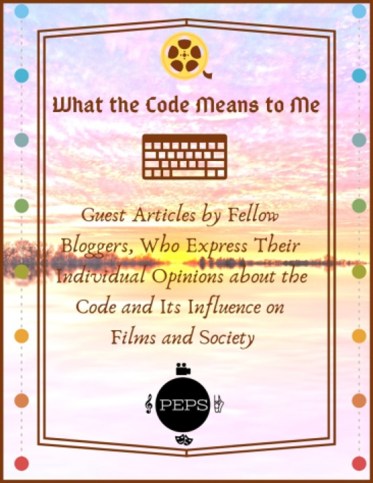
What the Code Means to Me poster
What the Code Means to Me poster created by Tiffany and Rebekah Brannan from Pure Entertainment Preservation Society. Image found at https://pureentertainmentpreservationsociety.wordpress.com/2018/12/17/what-the-code-means-to-me/.

Before discovering the blog, Pure Entertainment Preservation Society, I had never known about Joseph I. Breen and the Breen Code. In fact, I had always believed that the MPAA (the Motion Picture Association of America) was the “end all, be all” when it came to judging a film’s content. It wasn’t until I watched the video, “Why You Shouldn’t Listen to the MPAA (Podcast Excerpt)” from the Youtube channel, Rachel’s Reviews, that I started to change my views about this particular rating system. In this video, Rachel and her friend, Conrado, talk about why movie-goers should form their own self-censorship than solely rely on the MPAA. When I came across Pure Entertainment Preservation Society last October, while looking for upcoming blogathons to participate in, I was introduced to who Joseph I. Breen was as well as the Breen Code itself. In preparation for this article, I read as much as I could about Joseph and his Code. Tiffany and Rebekah Brannan, the creators of Pure Entertainment Preservation Society, have done a wonderful job at educating their readers and followers about the Breen Code and advocating its return to entertainment. Their articles are very informative and interesting to read. After learning all of this information, I feel that a newer and stronger code for judging a film’s content needs to be put in place. While having the MPAA is better than having nothing at all, its rules and guidelines seem to be more on the relaxed side. In the previously mentioned video, Rachel and Conrado discuss some of the ways that a film receives a particular rating. One example is the use of blood within the film’s context. Rachel brings up the example of The Hunger Games receiving a PG-13 rating due to the absence of blood while “contestants” are dying during the event within the story. She feels that because blood isn’t shown during these moments, the film is “dehumanizing the situation”. Had The Hunger Games been created during a time when something similar to the Breen Code existed, either this film would have never seen the light of day or the “contestants” would have died off-screen.

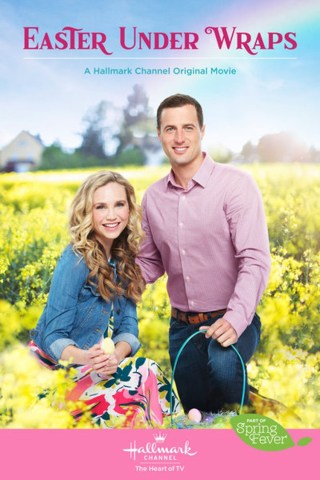
Easter Under Wraps poster
Easter Under Wraps poster created by Crown Media Family Networks and Hallmark Channel. Image found at https://www.crownmediapress.com/Shows/PRShowDetail?SiteID=142&FeedBoxID=845&NodeID=302&ShowType=&ShowTitle=Easter%20Under%20Wraps&IsSeries=False.

The movies and shows from Hallmark make up a large percentage of the content on my blog. Sometimes, I review films from Hallmark Channel, Hallmark Movies & Mysteries, and Hallmark Hall of Fame. In some of my Word on the Street posts, I’ve talked about movie news related to upcoming Hallmark projects. I also conduct two re-cap series for When Calls the Heart and Chesapeake Shores. Hallmark has created a reputation as being a family-friendly company in both appearance and content. As I mentioned in the introduction, things within the Breen Code sound like the type of material that Hallmark creates and distributes on their networks. Within the Hallmark entertainment spectrum, there are three television networks that air movies; Hallmark Channel, Hallmark Movies & Mysteries, and Hallmark Drama. Each network has their own unique and consistent tone, while still maintaining the company’s created image. Hallmark Channel features films that primarily contain light-hearted, romance stories. However, the relationships featured in these movies are wholesome. In the Breen Code, it states that “pictures shall not infer that low forms of sex relationship are the accepted or common thing”. Typical Hallmark Channel films do not feature or talk about sex. The only two films that I can think of that either mention sex or imply that a couple was having sex are A Family Thanksgiving and Audrey’s Rain. Hallmark Movies & Mysteries has a darker tone than Hallmark Channel, as the majority of the network’s content is mystery related. The type of mystery that is common in these movies is the murder mystery. However, this aspect of the story is always handled in a very tasteful way. Not only is a small amount of violence shown, but a limited amount of blood is featured on-screen. The Breen Code contains a whole section about featuring murder in film. One of the points in this section says that “methods of crime should not be explicitly presented”. Sometimes, these films show how a victim is murdered. This is included to introduce the mystery and present the seriousness of the situation. Toward the end of the movie, the guilty party reveals how and why they committed the crime. But the guilty party is never “presented in such a way as to throw sympathy with the crime”. Even though Hallmark Drama has only been around for two years, it has been a network where Hallmark’s more dramatic films can be seen. These types of films are either from Hallmark Hall of Fame or from Hallmark Channel and Hallmark Movies & Mysteries that haven’t be aired in recent years. Some of these projects were created before Hallmark embraced the image they have today, even before the Hallmark Channel was introduced back in 2001. One of these films is Ellen Foster, which is a Hallmark Hall of Fame movie that was released in 1997. In this film, there is one scene where Ellen is being physically abused by her father. If this exact same movie were released by Hallmark today, that scene would never have been featured in the film. The subject of child abuse would have only been implied through the use of dialogue and subtle visual references. This suggestion would fit with the Breen Code and Hallmark’s current image, as the Code itself states that “excessive and inhuman acts of cruelty and brutality shall not be presented. This includes all detailed and protracted presentation of physical violence, torture, and abuse”. Despite this aforementioned detail, Hallmark Drama still features content that is family oriented.

Crossword Mysteries -- A Puzzle to Die For poster
Crossword Mysteries: A Puzzle to Die For poster created by Crown Media Family Networks and Hallmark Movies & Mysteries. Image found at https://www.crownmediapress.com/Shows/PRShowDetail?SiteID=143&FeedBoxID=845&NodeID=307&ShowType=&ShowTitle=Crossword+Mysteries+A+Puzzle+to+Die+For.

The previous paragraph contains some examples of how the Breen Code can be found within Hallmark’s movies. I could provide more examples, but that would mean this article would be longer than it already is. Hallmark’s commitment to providing family friendly content to their audience shows that the Breen Code, or some form of it, can return to the entertainment world. It will most likely happen in a process of events rather than a quick succession. However, this is proof that Joseph I. Breen’s intentions still have a place in our world. In the article, “The Production Code of 1930’s Impact on America” from Pure Entertainment Preservation Society, it was said that “films are merely rated but not censored”. Since this is the case, we, the movie-goers, need to take the initiative to discover a film’s content, understand why a rating was given to a particular film, and form our own choice to view or not view a film. Until the day when Joseph I. Breen’s dream can come true again, this is the only option that movie-goers currently have.

Hallmark Hall of Fame's Love Takes Flight review
Hallmark Hall of Fame’s Love Takes Flight poster created by Crown Media Family Networks and Hallmark Channel. Image found at https://www.crownmediapress.com/Shows/PRShowDetail?SiteID=142&FeedBoxID=845&NodeID=302&ShowType=&ShowTitle=Love+Takes+Flight.

For my two Breening Thursday suggestions, I would like to recommend Wild Oranges and The Trouble with Angels. Wild Oranges is a silent film from 1924 that I reviewed when I received 95 followers on my blog. The Trouble with Angels is one of the films that I reviewed during the Rosalind Russell blogathon earlier this month. It was released in 1966.


Have fun at the movies!

Sally Silverscreen


If you want to check out the references I mentioned in this editorial, you can type “Why You Shouldn’t Listen to the MPAA (Podcast Excerpt)”  into Youtube’s search bar or visit Rachel’s Youtube channel, Rachel’s Reviews. You can also visit these links:

The Motion Picture Production Code with Its Revisions

The Production Code of 1930’s Impact on America

Announcing my new blogathon called ‘Siskel and Ebert at the Blogathon’!

One day, while I was on the internet, I came across some episodes of Gene Siskel and Roger Ebert’s show, At the Movies, on Youtube. As I was watching these episodes, I wondered why there wasn’t a show like this on television anymore. But, when I asked this question, I realized that there kind of is. Though not on television, I can think of several channels on Youtube dedicated to talking about film. There’s also lots of blogs related to movie criticism, especially on WordPress. As a movie blogger myself, I know that the growth of the movie review community might not have been possible without Siskel and Ebert. So, in honor of the Grandfathers of Movie Criticism, I have decided to dedicate my very first blogathon to them! Siskel and Ebert at the Blogathon will take place from September 20th to the 24th. If you would like to participate, you can sign up in one of the following categories:

Siskel and Ebert Profile banner

A. Siskel and Ebert Themselves – This category is for blog entries about Gene Siskel and/or Roger Ebert. Articles about their life, legacy, or career are most certainly welcome. If Siskel and/or Ebert have written any books, editorials, or articles, blog entries about that can be submitted to this category. If you do write an entry for this specific category, all I ask is that you please be respectful when writing about Siskel and/or Ebert. If your post is about how you disagree with their opinion, that’s fine. But please don’t be disrespectful or negative toward anybody.


B. Movies that Siskel and/or Ebert have reviewed or talked about: This category is pretty straight forward. Any movie that Siskel and/or Ebert have reviewed/talked about or that was covered on any of their shows is fair game. To find out which movies would be allowed for this category, you can find episodes of At the Movies on Youtube or search “At the Movies” or “Sneak Previews” on IMDB and look through the listed episodes section.


C. The Show Itself: For this category, you can write about anything related to Siskel and Ebert’s shows. Do you have a favorite episode of Sneak Previews or any version of At the Movies? Share it in your post! Was there a particular host that you were fond of? Feel free to talk about them in your article! Did the show play an important role in your life? Tell your story on your blog! Other topics that would be allowed in this category are trivia about the show, specific segments, and the show’s history, just to name to few.


D. Something movie related that has to do with Chicago: Because Siskel and Ebert were film critics in Chicago, this category is a creative way to honor the Grandfathers of Movie Criticism. For this category, you can talk about movies that either take place or were filmed in Chicago. You may also write about film festivals or movie related events that have been hosted in the Windy City. If you’ve had a movie-going experience in the city of Chicago, feel free to share your story!


The Official Blogathon Rules

  1. As I’ve already mentioned, please be respectful not only when writing about Siskel and Ebert, but also to other bloggers.
  2. If you plan on publishing your post(s) earlier or later than the allotted time-frame (September 20th to the 24th), please let me know in advance.
  3. Only new posts will be allowed for this blogathon.
  4. Three participants at a time are allowed to write about a singular topic. For example, if four people wanted to talk about Roger Ebert’s book, I Hated, Hated, Hated This Movie, only the first three participants would be able to write about the book.
  5. Each participant is allowed to publish a maximum of three entries.
  6. All entries must be original work.
  7. If your interested in participating, please share your idea(s) in the comment section below.
  8. Creativity is encouraged.
  9. Pick one of the five banners and spread the word about Siskel and Ebert at the Blogathon!
Siskel and Ebert Profile banner
Created by me, Sally Silverscreen, on Adobe Spark.
Siskel and Ebert Movie Theater banner
Created by me, Sally Silverscreen, on Adobe Spark.
Siskel and Ebert At the Movies banner
Created by me, Sally Silverscreen, on Adobe Spark.
Siskel and Ebert Film Reel banner
Created by me, Sally Silverscreen, on Adobe Spark.
Siskel and Ebert Newspaper banner
Created by me, Sally Silverscreen, on Adobe Spark.

The List of Participants

Category A

Sally from 18 Cinema Lane – (Editorial) Roger Ebert’s Movie Yearbooks: How Relevant are they Anyway?

Ruth from Silver Screenings — (Review) Roger Ebert’s book, The Great Movies

Edirin from Retro Movie Buff — (Editorial) Roger Ebert’s book, Your Movie Sucks

UpOnTheShelf from The Movie Shelf Reviews — (Discussion piece) Siskel and Ebert’s appearance on “The Critic”

Category B

Le from Critica Retro — (Review) Z (1969)

Gill from Realweegiemidget Reviews — (Review) Prizzi’s Honor (1985)

J-Dub from Dubsism — (Review) Casino (1995)

Quiggy from The Midnite Drive-In — (Review) The Silence of the Lambs (1991)

Rebecca from Taking Up Room — (Review) Straight Talk (1992)

Tiffany and Rebekah from Pure Entertainment Preservation Society — (Review) A Star is Born (1954)

Category D

Rob from MovieRob — (Review) About Last Night… (1986), Opportunity Knocks (1990), and Rookie of the Year (1993)


Have fun at the Blogathon!

Sally Silverscreen

Why Jiggy Nye is Not an Effective Villain in Felicity: An American Girl Adventure

When I first heard about The 5th Annual Great Villain Blogathon, I was originally going to write about a movie, that I haven’t seen yet, where the primary focus was on a villainous character. However, after accepting the Sunshine Blogger Award, I decided to talk about Jiggy Nye from the movie, Felicity: An American Girl Adventure. This film is based on the Felicity series from the American Girl Historical Collection. For almost three decades, the character of Felicity has represented the late 1700s, during the time of the Revolutionary War. In 2005, this particular series was adapted into the aforementioned film. As someone who has read some of Felicity’s stories, as well as seen this movie, I used to think that Jiggy Nye was an effective villain. Over time, I realized that he wasn’t as villainous as I remembered. Within this editorial, I will explain why I feel this way by primarily referencing Felicity: An American Girl Adventure. I will also be making a few references to two of the books in the Felicity series; Meet Felicity and Changes For Felicity. After making my points about why Jiggy’s not an effective villain, I will share some examples of villains and antagonists that are more effective than him. Now, let’s shed some light on Jiggy Nye and talk about why his reputation as a villain isn’t as strong as other cinematic villains and antagonists.

The Great Villain Blogathon banner
The 5th Annual Great Villain Blogathon banner created by Ruth from Silver Screenings, Karen from Shadows and Satin, and Kristina from Speakeasy. Image found at https://silverscreenings.org/2019/03/06/announcing-the-great-villain-blogathon-2019/.

The Incorporation of Jiggy’s Backstory

A cinematic trend that I’ve personally noticed in recent years is a realistic-sounding backstory being given to a respective film’s villain or antagonist. While this story-telling aspect can provide depth to this particular type of character, there are times when this concept can be executed poorly. This is the case for Felicity: An American Girl Adventure. A minute and forty seconds after Jiggy was introduced on screen, Edward Merriman (Felicity’s father) and Grandfather Merriman share Jiggy’s backstory with the entire family. Though this explanation is brief, they reveal that he used to be a respected gentleman who was very knowledgeable when it came to horses. After his wife died, Jiggy made some poor life choices that are possibly the result of his grief. This limited amount of information could have been useful in developing Jiggy’s character and helping the audience understand why he is the way he is. However, Jiggy’s backstory was, ultimately, given a “don’t-blink-or-you’ll-miss-it” moment. It’s not only addressed in casual passing, but it’s barely referenced throughout the film. The timing of this backstory also came way too early. Because it was brought up less than two minutes after the audience was introduced to Jiggy Nye, it didn’t give the audience an opportunity to become familiar with Jiggy as a villain. Had they spent, at least, half of the movie seeing Jiggy being a villain and then learned about his backstory before a climatic/important moment, it would have given the audience a chance to process this information as well as consider everything they thought they knew about this character.

It’s no secret that I talk about Bucky Barnes quite a bit on this blog. But, as an example, his involvement in Captain America: The Winter Soldier makes sense within the context of this editorial. In the aforementioned film, the audience spent about half of the movie watching Bucky as the Winter Soldier. The audience wasn’t aware that Bucky was the Winter Soldier until Steve Rogers/Captain America removed the mask from his face at about the halfway point of the film. A few moments after this reveal, the audience learned the shocking truth of how Bucky came to be involved with Hydra. This incorporation of Bucky’s backstory was better executed than Jiggy’s backstory in Felicity: An American Girl Adventure. In Captain America: The Winter Soldier, the audience was given enough time to become familiar with the film’s antagonist. This allowed them to form their own opinion of this character. When the truth about the Winter Soldier is revealed, it makes the audience contemplate these pieces of information as well as re-think everything they thought they knew about him. Because Bucky’s backstory was introduced moments before the film’s climax, it made this reveal more emotional and effective.

20190525_102927[1]
Even from the very beginning, Jiggy Nye was the main villain of this series. In fact, his backstory wasn’t introduced until Changes For Felicity. Screenshot taken by me, Sally Silverscreen.

No Substantial Evidence

In Felicity: An American Girl Adventure, some of the characters make statements about Jiggy Nye. However, the film fails to provide evidence to these characters’ claims. One example is the characters’ statements about how Jiggy treats his horse, known in the movie/book series as Penny. Toward the beginning of the film, a customer shares her displeasure about Jiggy to Mr. Merriman, saying “I do believe he beat his last horse to death”. When Jiggy arrives at the Merriman family home to retrieve Penny (a moment that I will talk about later), Mr. Merriman tells him “The only crime committed here, sir, is your mistreatment of the poor beast”. Also, when Felicity is trying to persuade her parents to let her keep Penny, she tells her father, “Father, he beats her…and he starves her”. Despite all of these aforementioned claims, there isn’t any substantial proof that Jiggy treats his horse poorly. In the movie, Penny appears to be well-cared for. This horse does not appear starved and there are no signs of injuries on her. The only things that Jiggy does that come close to being abusive toward Penny are tying her to a post in his yard and saying hurtful things toward and about her. In a story when there are claims made about a film’s villain, but no evidence/proof is given to support these claims, it doesn’t provide the audience with a reason to take this character seriously as a villain. It also doesn’t give the audience an explanation as to why they should dislike or be terrified of this character. Because the claims against Jiggy are not supported by evidence/proof, the characters who made the claims appear to have lost a certain amount of credibility.

The villain group, Hydra, in Captain America: The First Avenger is one that the audience doesn’t want to mess with. That’s because the creative team behind this movie portrayed Hydra as dangerous, evil, and cruel. Though this group was shown in the movie for a limited amount of time, their presence brought home the exact point that this film’s creative team was trying to make. It wasn’t until Captain America: The Winter Soldier that the creative team gave their audience solid evidence to the claims that were made about Hydra back in the first film. Not only does this story present examples of this group causing chaos and destruction, but their abuse toward Bucky also shows just how cruel they can be. Because the creative team behind Captain America: The Winter Soldier put in the effort to add evidence to the claims made about Hydra, this gave the audience reasons to not like this villainous group as well as take them seriously as villains. It also made the story and the creative team behind it seem very credible. This is very different from Felicity: An American Girl Adventure.

20190525_104025[1]
I’m sorry that the quality of this picture isn’t the best (because this is a screenshot from a made-for-TV movie from 2005), but I think it clearly shows that Penny doesn’t look mistreated. Screenshot taken by me, Sally Silverscreen.

No Transition

The way that Jiggy is portrayed in both the Felicity series and Felicity: An American Girl Adventure is in a “villain-turned-hero” way. This specific kind of character development isn’t often seen when it comes to cinematic villains or antagonists. Like with Jiggy’s backstory, however, this part of Jiggy’s story was also poorly executed. Within the first thirty-six minutes of the movie, Jiggy is shown as a villainous character. The next time the audience sees him is twenty-three minutes later, when Jiggy is sleeping on the floor of a jail cell, violently coughing and appearing to be ill. Eight minutes after that, it appears Jiggy has been released from prison, casually walking through the streets of Williamsburg, Virginia and looking like he has recovered from his illness. His final appearance in this movie starts eleven minutes later, when Felicity asks for Jiggy’s help as Penny is about to give birth to a foal. When assessing these gaps in time, it seems like there is an obvious pattern. Jiggy is, essentially, placed in the film for plot convenience. Throughout the movie, the audience, to a certain extent, is given the opportunity to get to know Jiggy as a character. But, when it comes to seeing how Jiggy evolves from villain to hero, the audience never gets to see the personal growth and self-discovery that is usually associated with this kind of character development. If anything, Jiggy’s journey from point A to B feels rushed and sudden, with a limited amount of background provided.

Even though Henry Gowen is from a television show, I believe that his story on When Calls the Heart corelates with the subject of this editorial. For three seasons, Henry Gowen was the resident villain of Hope Valley. It wasn’t until the fourth season when Henry’s villainous ways finally caught up to him. Since When Calls the Heart: The Christmas Wishing Tree, Henry has been making a conscious effort to turn his life around. What works in this character’s favor is that his story is a part of an on-going narrative. Because When Calls the Heart is a continuous television show, not a stand-alone film like Felicity: An American Girl Adventure, the screen-writers have more time to explore Henry’s journey of transforming from villain to hero. What also helps is that Henry is a part of the main cast of characters. This allows him to receive a good amount of screen-time and stay involved within the series. With Jiggy, on the other hand, he isn’t directly related to Felicity’s family or any of her friends/acquaintances. Therefore, he wasn’t given as much screen-time as some of the other characters in the film.

20190525_104739[1]
In Felicity: An American Girl Adventure, Geza Kovacs did a good job at portraying the character of Jiggy Nye! Screenshot taken by me, Sally Silverscreen.

A Hypocritical Protagonist

When an obvious villain/antagonist is placed within a story, there is usually an obvious protagonist to present a balance between right and wrong. Though the protagonist is not meant to be anywhere near perfect, they’re at least meant to make better decisions than the villain/antagonist. While Felicity’s heart was in the right place in Felicity: An American Girl Adventure, some of her choices seem hypocritical. As I mentioned earlier, Felicity and her father made claims about Jiggy mistreating his horse. However, this movie’s titular character is not as innocent as the film wants you to think. In an effort to “save” Penny, Felicity sneaks out of her family’s home in the early morning hours, breaking family rules and disobeying her parents. She also takes Ben’s (her close friend’s) breeches without his permission, trespasses on Jiggy’s property, and steals his horse due to a misunderstanding. On several occasions, some of Felicity’s family and friends try to help her make the right decisions. For example, while spending some time with her grandfather in the garden, he encourages Felicity’s love of horses. At the same time, Grandfather Merriman reminds her that she mustn’t bother Jiggy and his belongings. Despite her family and friends’ efforts, all of their advice goes in one ear and out the other. After Felicity gets reprimanded for stealing Jiggy’s horse, Felicity goes back to trespassing on Jiggy’s property. This time, she sets Penny free into the wild. Because Felicity seems to be making just as many poor choices as Jiggy within the film, it makes these two characters appear more like individuals just trying to get through life than a conflict between villain and protagonist. Even though she uses her grandfather’s advice about choosing kindness over anger later in the film, she doesn’t really set the best of examples, as a protagonist, at an essential time during Jiggy’s story as a villain.

Throughout his trilogy, Steve Rogers/Captain America has always been known for making good decisions, no matter how difficult they seem. One perfect example of this is in Captain America: Civil War. In this film, one of the over-arcing narratives was about the Sokovia Accords. With this document, the use of a superhero’s powers and abilities would be controlled by the government. Not only did Steve take the time to read the Accords, but he decided not to sign it for personal reasons. He knew that his decision would have consequences, but he still stuck by his beliefs. Steve made the choices he did because he felt it benefitted the people around him as well as himself. Unlike Felicity, Steve thought about his actions and choices before he carried them out. He also used a balance of emotion and logic in order to make these decisions. This is also very different from the aforementioned film’s villain, Helmut Zemo. Because he’s upset about losing his family in the tragic events from the previous film, Avengers: Age of Ultron, Zemo’s feelings and emotions fuel his criminal actions. Since Zemo blames the Avengers for the death of his family, he tries to do whatever he can to drive a wedge between the Avengers, from causing massive amounts of destruction to framing Bucky for a crime he didn’t commit. Unlike Steve, Zemo’s decisions seem very self-centered, his only focus being how he’s going to get revenge for his family.

20190525_103327[1]
Though the Felicity stories teach its readers valuable life lessons, its protagonist is far from perfect. Screenshot taken by me, Sally Silverscreen.

Not a Big Enough Threat

Usually, in tv shows and movies, the villain/antagonist has a consistent presence in the story. This is a way of showing that this character poses as a big enough threat to the protagonist. As I mentioned in argument number three, “No Transition”, Jiggy wasn’t given much screen-time compared to the other characters in Felicity: An American Girl Adventure. I also mentioned that it feels like Jiggy is placed in certain moments of the film for the sake of plot convenience. Because of these observations, Jiggy doesn’t seem like he poses as big of a threat to Felicity. During his “villain stage”, Jiggy and Felicity only interacted with each other on three separate occasions. Not only did they barely speak to one another, but no major conflicts were resolved. Another reason why Jiggy doesn’t really pose as big of a threat in this film is because he doesn’t necessarily do anything that’s villainous. Sure, he said some nasty things (including a threat to kill Penny if Felicity showed up on his property again) and tied his horse to a pole in his yard. But he never commits any serious or unspeakable crimes throughout the film. In argument number three, I said that Jiggy was seen in a jail cell. While his reason for being in prison is never mentioned in the movie, it is said in Changes For Felicity that Jiggy went to “debtors’ jail”. If this is the reason why Jiggy is in jail in Felicity: An American Girl Adventure, it seems like he was unable to pay for anything because of a result of his grief, not because he was trying to take advantage of the system in a criminal way.

For this argument, I’m going to be talking about two examples. The first is the Wicked Witch of the West from The Wizard of Oz. A major reason why this character is an effective villain is because she had a more consistent presence in her movie than Jiggy did in his. Even though she doesn’t appear in every scene, the Wicked Witch of the West shows up in enough of them to give the audience the feeling that she is always lurking around the corner. What also helps her case is the music that plays and the special effects that appear whenever she shows up. My other example is Scrooge from A Christmas Carol. While Scrooge is the antagonist at the beginning of the story, the audience never sees or reads about him ever doing anything villainous. Even though being selfish and greedy are not desirable qualities, his choices are not criminal. In fact, Scrooge’s story has similarities to Jiggy’s story, especially since they both transform from villain/antagonist to hero/protagonist. However, Scrooge’s journey is explored more in A Christmas Carol than Jiggy’s is in Felicity: An American Girl Adventure.

20190525_1053381.jpg
Something that both the book series and the movie have in common is Jiggy has a limited presence within the context of the overall narrative. Screenshot taken by me, Sally Silverscreen.

My Final Assessment of Jiggy Nye

In the introduction of this editorial, I said that I would describe why I didn’t believe Jiggy Nye was an effective villain in Felicity: An American Girl Adventure. After explaining my reasons why, I feel that Jiggy is presented more as a victim of his personal situation. As I mentioned in my first argument called “The Incorporation of Jiggy’s Backstory”, Jiggy’s wife passed away and his world was greatly affected by it. However, this important detail was barely referenced in the movie, pretty much getting glossed over. It didn’t seem like most of the characters were willing to connect Jiggy’s choices and behaviors to his grief. Because of this, Jiggy became a scapegoat for the sake of needing a villain/antagonist. While he does get a moment to redeem himself and become a hero, this transition wasn’t shown or explored. I understand that this movie was Felicity’s story (especially since her name is in the title) and that this movie is based on a series of books. But I just feel that this aspect of the narrative could have been better executed. If anything, Jiggy was a more effective villain in the first book, Meet Felicity, than in Felicity: An American Girl Adventure. Valerie Tripp, the author of this book, had an entire story to flesh out the character of Jiggy Nye and provide enough evidence to show that he was not a nice person. Because the movie adapted six books into one cinematic narrative, Jiggy’s part of the story was sacrificed and overshadowed.

Have fun at the movies!

Sally Silverscreen

A Bucky Fan’s Response to one of Looper’s Avengers: Endgame related videos

THIS EDITORIAL DOES CONTAIN SPOILERS FROM AVENGERS: ENDGAME


If you’ve read either my spoiler or spoiler-free review of Avengers: Endgame, you would know that one of the things I didn’t like about this film was how some of the plot points featured in the overall narrative seemed to bring up confusion for the MCU’s future projects. One of these plot points was when Steve Rogers gave the Captain America title to Sam Wilson. While this was happening toward the end of the movie, Bucky was standing in the distance, watching everything happening in front of him. In my spoiler review, I talked about how this scene disappointed me. This is because a) Bucky didn’t receive the title of Captain America, b) his cure wasn’t confirmed in Avengers: Endgame and c) it didn’t seem like anything new or interesting was added to Bucky’s story in preparation for Disney’s new show, Falcon & Winter Soldier. I’ve been a fan of Bucky Barnes for three years, so I was determined to find answers to the questions that were raised because of this scene. This past weekend, I stumbled across a video from the Youtube channel, Looper, called “Endgame Director Addresses Vision’s Fate”. After watching this video, I felt that what was said only made things more confusing for the Disney show, WandaVision. But I knew that if Looper was going to talk about Vision’s absence in Avengers: Endgame and how it could connect to the show, I had a feeling that they were probably going to address Bucky’s lack of a superhero title upgrade. Sure enough, when I visited Looper’s official Youtube channel, I found a video titled “The Real Reason Bucky Wasn’t Given Captain America’s Shield”. After watching this video, I knew that I had to talk about it on 18 Cinema Lane. In this editorial, I will be analyzing each of the arguments provided in the video. I will also state whether or not I agree with these arguments. Toward the end of the editorial, I will provide a final assessment of the video itself.

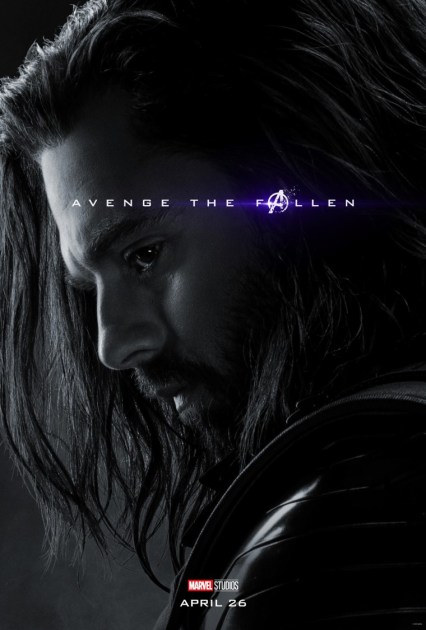
Avengers Endgame Bucky poster
Avengers: Endgame Bucky Barnes poster created by The Walt Disney Company and Marvel Studios. © Disney•Pixar. All rights reserved. Marvel and Avengers Characters: ©2017 Marvel. Image found at https://www.marvel.com/articles/movies/mcu-heroes-unveil-avengers-endgame-character-posters

Argument #1: “Bucky Wouldn’t Accept It”

Towards the beginning of this video, the announcer says that, if given the choice, Bucky wouldn’t accept the shield. Their reasoning is that not only is Bucky fully aware of his past, but that he also hasn’t forgiven himself. They also state that Bucky would probably feel that accepting the Captain America title would be too much to handle. While all of these points are good ones that I can agree with, I think that we, the audience, should have seen Steve asking Bucky if he wants the shield. This way, Bucky would have been given a chance to choose. If Bucky would have turned down the opportunity, at least it could have been a decision that fans would have respected. Unfortunately, it appears that Bucky was never even acknowledged in that particular moment of Avengers: Endgame. As I’ve mentioned in the introduction, Bucky was standing in the distance, watching everything unfold in front of him. It’s almost as if Steve never really considered giving his title to Bucky, even though Steve doesn’t seem like an inconsiderate person. Overall, Bucky seemed to be excluded from that moment.

20181025_214145[1]
Captain America: The Winter Soldier: The movie where Bucky was shown as and stopped being the Winter Soldier. Screenshot taken by me, Sally Silverscreen.

Argument #2: “His Hydra Conditioning: Still Active?”

In this segment, the announcer states that we, the audience, don’t know for sure if the Hydra programming is completely removed from Bucky. I’m glad that the announcer brought this up, since Bucky’s cure not being confirmed as a part of official MCU canon was something that bothered me about both Avengers: Infinity War and Avengers: Endgame. The idea of Bucky being cured was indicated in an end-credit scene from Black Panther, featuring Bucky and Shuri. Because this scene was never referenced in either Avengers: Infinity War or Avengers: Endgame, it not only undermines the scene itself, but also the significance of it. Since Bucky will be one of the main characters on Falcon & Winter Soldier, this idea of a cure could be explored within the narrative. However, confirming Bucky’s cure in Avengers: Endgame would have added something new to Bucky’s story in preparation for the show. This also could have gotten the Bucky fans interested in Bucky’s next chapter.

20181025_203412[1]
Does anyone else notice the bracelet on Bucky’s wrist? I wonder it has to do with Wakandan technology? Screenshot taken by me, Sally Silverscreen.

Argument #3: “Trust Must Be Earned”

This next segment has the announcer explaining that, due to his horrific past, Bucky would have to earn the trust of the other heroes. Another statement that the announcer made was that Bucky hasn’t spent a lot of time interacting with most of the heroes in the MCU. While both of these points are understandable, I have come up with two counter-arguments. The first is the audience’s opportunity to see how the other heroes react to Iron Man learning more about Bucky. Because Bucky killed Tony’s parents while under Hydra’s control, Iron Man is the most affected by Bucky’s past actions. However, we will never see get to see this happen because Iron Man died toward the end of Avengers: Endgame. The second is Bucky’s next chapter taking place on the show, Falcon & Winter Soldier. Based on the title alone, it seems like Bucky will be primarily interacting with only one other hero, Sam Wilson/Falcon/Captain America. This would make it difficult for Bucky to interact with the MCU’s other heroes.

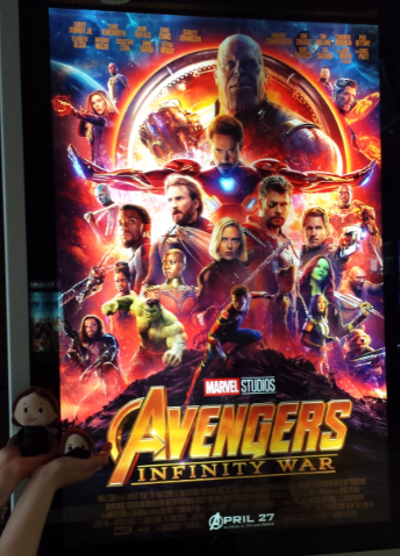
Avengers Infinity War Bucky poster
Throwback to when Bucky and Bucky went to see Avengers: Infinity War with me! Photo taken by me, Sally Silverscreen.

Argument #4: “He’d Be Too Powerful”

In the video’s final argument, the announcer says that Bucky has enough abilities and skills to be able to fight on his own. They say that giving him the shield would give him more power than he needs. Out of all the arguments in this video, I feel that this one is the weakest. Just because Bucky has a prosthetic arm and skills that he probably learned while in the Army and Hydra, that doesn’t mean that Bucky should be denied the title. It would be like saying that Hawkeye shouldn’t be an Avenger because he uses archery to fight crime. To be the next Captain America, Bucky should be assessed based on morals, character, and leadership skills. If the final argument in the video would have been that Bucky hasn’t displayed any leadership skills up until this point, then that statement is one that I would have understood. Because Bucky will be a co-lead on Falcon & Winter Soldier, I hope that he can gain a sense of independence, leadership, and confidence.

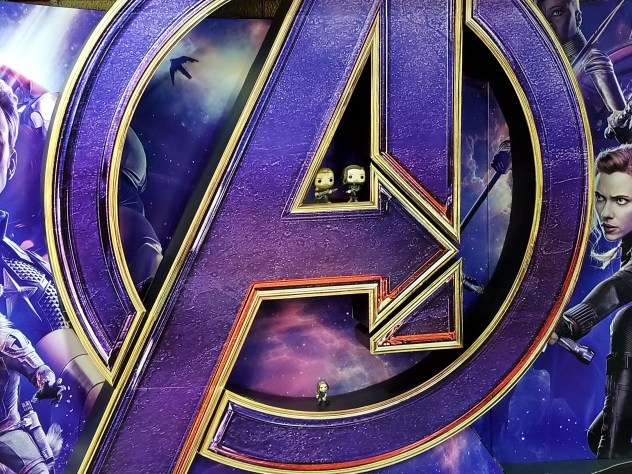
20190427_121759
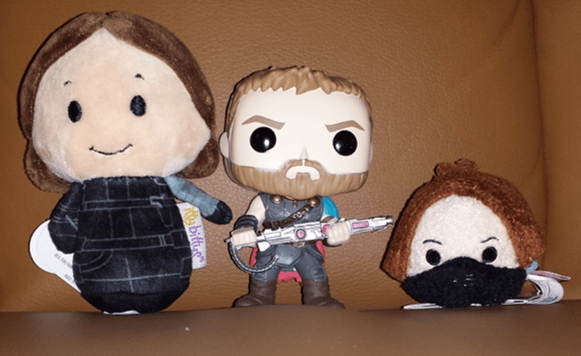
I’m glad that Bucky, Bucky, and Thor were able to take a picture by the Avengers: Endgame stand-up display! Screenshot taken by me, Sally Silverscreen.

Conclusion

As a Bucky fan, I’m glad that Looper created this video. After hearing the presented arguments, it took away some of my disappointment about that scene in Avengers: Endgame. However, there was no mention of Falcon & Winter Soldier in the entire video. I understand that the purpose of this video was meant to discuss Bucky’s involvement in the MCU up until this point. But because the show was excluded from this conversation, it reminded me of my frustration toward the disconnection between that scene in Avengers: Endgame and how it will affect the show. When I re-watched this video for the sake of writing this editorial, I remembered what the Russo brothers said in their interview. When Annlyel, from Annlyel Online, told me about this interview, I almost immediately sought it out. In a portion of the interview, the Russo brothers explained why they gave the Captain America title to Sam Wilson. Their reasoning was the nature of Sam and Steve’s friendship and the state of Bucky’s mind. Both of these reasons are those that I can agree with. But, just like the Looper video, Falcon & Winter Soldier was not brought up. The purpose of the interview was to discuss Avengers: Endgame, not the show. But, once again, I was reminded of the disconnect between that scene in Avengers: Endgame and Falcon & Winter Soldier. When I was finishing this editorial, I came across a video from the Youtube channel, Screen Rant, called “Why Captain America’s MCU Future Isn’t What We Thought”. What I like about this video is that it not only talks about some of the same topics that the Looper video did, but it also asks questions and makes speculations about how the creative decisions in Avengers: Endgame could influence the upcoming Disney+ show. I’m glad I found this video, as the topics discussed actually took away some of my frustrations about the aforementioned disconnection. Hopefully, more information about this show can be announced at either San Diego Comic Con or D23 Expo. As Dale Travers said in Signed, Sealed, Delivered: Lost Without You, we just have to “trust the timing”.

20190427_120049[1]
I think it’s safe to say that Bucky, Bucky, and Thor had a good time watching Avengers: Endgame! Screenshot taken by me, Sally Silverscreen.
Have fun at the movies!

Sally Silverscreen


If you want to watch any of the videos I referenced in this editorial, you can search for the following:

  • Youtube Channel Name: Looper
  • Video Name: “The Real Reason Bucky Wasn’t Given Captain America’s Shield”


  • Youtube Channel Name: SiriusXM
  • Video Name: “The Russo Brothers’ Spoiler-Filled ‘Endgame’ Interview”

The segment about the Russo Brothers’ decision to give the Captain America title to Sam Wilson starts at 7:05 and ends at 9:24.


  • Youtube Channel Name: Screen Rant
  • Video Name: “Why Captain America’s MCU Future Isn’t What We Thought”


This video is not related to anything I talked about in my editorial, but I thought it would be a fun video to share with my readers and followers. The video is called “Marvel Studios’ Avengers: Endgame | Escape Room” and it’s from the Youtube Channel, Marvel Entertainment. If you are a fan of Bucky, Sam, Shuri, or Dr. Strange, I think you’ll like this video!

What makes a Shirley Temple movie a “Shirley Temple movie”?

When I came across the Made in 1938 blogathon last November, it sounded like something I would want to participate in. As I was searching the internet for films with 1938 release dates, I discovered that Shirley Temple starred in three movies within that year: Rebecca of Sunnybrook Farm, Little Miss Broadway, and Just Around the Corner. Because a goal of mine is to watch every single Shirley Temple film ever made, I figured that talking about these three films for this blogathon would be a good way to take one step closer to my goal. Prior to seeing Rebecca of Sunnybrook Farm, Little Miss Broadway, and Just Around the Corner, I had seen some of Shirley’s other films. This means that I had an idea of the components that would make up these three films. So, in this post, I will be exploring and analyzing these six components that are usually found in a “Shirley Temple movie”. Now, when I say “Shirley Temple movie”, I mean the films where Shirley starred in the movie as a child actress. However, when it comes to Shirley’s movies, I will only be discussing the three films that were released in 1938. So, now that I’ve finished these necessary introductions, let’s answer this question of what makes these films a “Shirley Temple movie”.

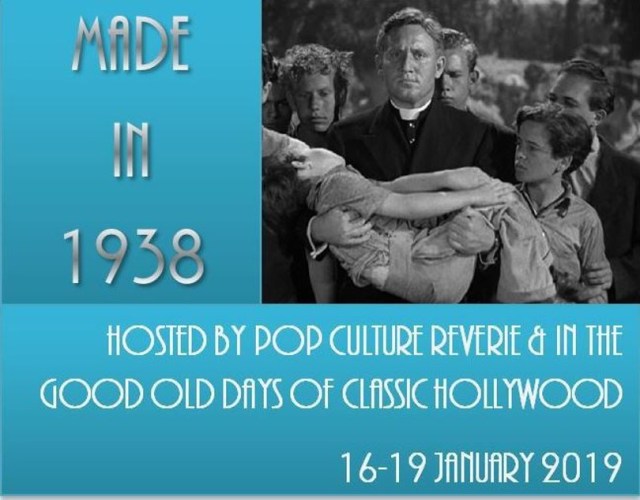
Made in 1938 blogathon banner
Made in 1938 blogathon poster created by Crystal from In the Good Old Days of Classic Hollywood and Robin from Pop Culture Reverie. Image found at https://crystalkalyana.wordpress.com/2018/11/04/announcing-the-made-in-1938-blogathon/ and https://popculturereverie.wordpress.com/2018/11/04/announcing-the-made-in-1938-blogathon/

Shirley Temple’s involvement in the film

When I watched Rebecca of Sunnybrook Farm, Little Miss Broadway, and Just Around the Corner, I wanted to see whether Shirley was given legitimate roles to portray or if the film was treated as a way to, simply, include Shirley in the movie just for the sake of having Shirley star in the film. In these three films, Shirley’s roles seemed like they were well-written characters, each given their own characteristics. There are some similarities that these characters had, such as being, to a certain extent, independent. Each character; Rebecca, Penny, and Betsy, were either an orphan or had at least one parental figure in her life. Because of the specific conflict each of these characters face, they all find a way to solve their particular problem. One example of this is in Little Miss Broadway. When her family’s hotel is in danger of closing for good, Betsy becomes friends with the nephew of the hotel’s landlord and helps him put on a show in order to save the hotel and help the residents keep their home. These characters also have their differences as well, such as how they solve their problems. In Rebecca of Sunnybrook Farm, Rebecca is forced to perform in a radio commercial for her greedy and selfish step-father. In order to get out of her living and working situation, Rebecca pretends to lose her voice, tricking her step-father into thinking that she is no longer employable for radio entertainment. Rebecca came up with this plan all by herself compared to how Betsy from Little Miss Broadway and Penny from Just Around the Corner resolve their conflicts.

After watching these films, I think the best role that Shirley portrayed was Betsy in Little Miss Broadway. Because the film centered around performers living in a hotel, this role highlighted both the acting and performing talents that Shirley had to offer within the movie. It made it feel like this role was created just for Shirley, while also complimenting the talents of the other actors and performers in the film. While I liked Shirley’s portrayal of Rebecca in Rebecca of Sunnybrook Farm, I felt like the creative team behind this movie put a little too much emphasis that Shirley was cast in their film. At one point in the film, Shirley says that she used to have curls all over her head, possibly referencing her earlier roles, such as her role in Curly Top. Shirley also mentions the songs “Animals Crackers in My Soup” and “On the Good Ship Lollipop”, not only referencing Shirley’s previous movies, but making it feel like the movie’s creative team assumed that the audience had seen Shirley’s other movies prior to watching Rebecca of Sunnybrook Farm. I also liked Shirley’s portrayal of Penny from Just Around the Corner. But, as I’ll explain later in this post, she wasn’t given many opportunities to perform as a singer and dancer within the context of the film.


The Cast Surrounding Shirley

For this component, I wanted to see if the cast surrounding Shirley were also given legitimate roles to portray or if these actors’ involvement in the film were just seen as everyone being Shirley Temple’s extras. When I reflect on Rebecca of Sunnybrook Farm, Little Miss Broadway, and Just Around the Corner, I can honestly say that the cast surrounding Shirley were also given characters that were well-written. What I liked about these three movies is that the characters seemed so unique and interesting from one another. One of these characters is Samuel Henshaw from Just Around the Corner. While Samuel, at times, comes across as a grumpy individual, it seems like he has a sense of goodness to him, caring equally about his career and his family. This character is very different from Pop Shea from Little Miss Broadway, for example. While both characters appear to be around the same age, their personalities are very different, helping to give a sense of variety among the characters within these three films. Another thing I liked seeing was the variety of talents that was shown within each film. Bill Robinson’s involvement in Rebecca of Sunnybrook Farm and Just Around the Corner is a good example of this. Not only is Bill a good actor, but he’s also a good dancer. When it comes to the acting within each film, I think that everyone did a good job with the acting material they were given.

rebecca of sunnybrook farm poster
Rebecca of Sunnybrook Farm poster created by 20th Century Fox. Image found at https://www.imdb.com/title/tt0030657/?ref_=nv_sr_1

The Story

While looking at each story from each film, I wanted to find out how much they relied on Shirley’s involvement in the film. Before I reveal my assessment, let me share a brief synopsis for each film. Rebecca of Sunnybrook Farm is about a radio executive and his assistant searching for the perfect candidate to perform in their radio commercial. Just Around the Corner is about a young girl who tries to help her father find employment and Little Miss Broadway is about a hotel owner trying to save his hotel as well as the home of several performers. While all of these stories do, to a certain extent, depend on Shirley’s involvement, these stories can stand on their own. If you take away the fact that this is a “Shirley Temple movie”, these stories could work with other actors and different characters. An example of this is Just Around the Corner. If this movie were not a musical, I could see almost any child actor being cast in the role of Penny. Other than the musical numbers, it doesn’t really seem like Shirley’s involvement is essential to the story overall. This is the same for Rebecca of Sunnybrook Farm. You could either have almost any child actor or any singer in the lead role and it really wouldn’t make much of a difference.

Out of these three stories, I liked the plot from Rebecca of Sunnybrook Farm the most. Not only was the conflict within the plot interesting, but the “behind-the-scenes” aspect of radio entertainment was, to me, fascinating. This part of the film reminded me of two Hallmark movies that I really like: This Magic Moment and Cooking with Love. Because of this, it made me enjoy Rebecca of Sunnybrook Farm even more. I liked the story from Little Miss Broadway. But, after the primary conflict is resolved, it feels like other conflicts were invented in the story just to keep the movie going. This made the movie feel a little bit tedious. The story for Just Around the Corner was fine. But, because of the limited amount of musical numbers, it made the story feel drawn out and a little bit longer than intended. Despite the flaws that these stories may have, all of these stories were well-written.


The Messages and Themes

Like most family-friendly films, Shirley Temple’s movies have no shortage of messages and themes that can be found within the film’s narrative. For the most part, these messages and themes are relatable and can be shared with audiences of all ages. Rebecca of Sunnybrook Farm, Little Miss Broadway, and Just Around the Corner contain more than one message/theme. In Just Around the Corner, the story is very reflective of the time period that the film was released in. Because the movie premiered in 1938, messages and themes relating to The Great Depression can be found within the film’s plot. Financial prejudice, social class, and maintaining a positive attitude no matter what the circumstance is are themes that I found within the movie. Even though Rebecca of Sunnybrook Farm and Little Miss Broadway were also released in 1938, the messages and themes in these movies are relevant for both the late ‘30s and the late 2010s, focusing less on direct references to The Great Depression. In Rebecca of Sunnybrook Farm, the two biggest messages that I could find was how success can be found almost anywhere and how important it is to surround yourself with people that truly have your best interests in mind. As a movie blogger, I can relate to the first aforementioned message. Movie bloggers come from all over the world, with several movie bloggers finding huge success. This particular message has definitely stood the test of time. Little Miss Broadway’s two biggest themes in its story were how far kindness can go and getting to know someone before you judge them.

When I watched Rebecca of Sunnybrook Farm, Little Miss Broadway, and Just Around the Corner, I also noticed that some of the songs within these movies contained important messages and themes. The song, “I Love to Walk in the Rain” from Just Around the Corner re-emphasizes the theme of having a positive attitude in almost any situation. Other examples include “How Can I Thank You?” from Little Miss Broadway promoting the idea of taking time to express gratitude to those around you and “Come and Get Your Happiness” from Rebecca of Sunnybrook Farm stressing the idea of trying to find happiness wherever you are. Sometimes, these songs were sung more than once, as if the creative team behind these movies wanted to remind their audience of the importance of these messages and themes. For example, in Little Miss Broadway, the song “How Can I Thank You” is sung by Shirley more than once. As I’ve already mentioned, this song focused on promoting sharing gratitude with the people around you. Overall, the messages and themes that are found within these three films add a layer of depth to each story and make the movies feel like time was well spent.

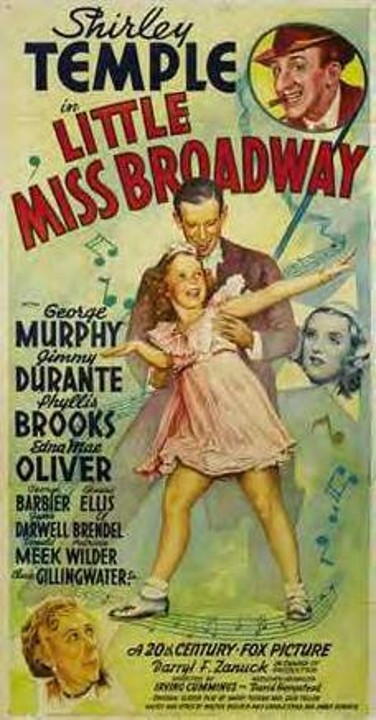
little miss broadway poster
Little Miss Broadway poster created by 20th Century Fox. Image found at https://en.wikipedia.org/wiki/File:LittleMissBroadway1.jpg

The Musical Numbers

No Shirley Temple movie would be complete without at least one musical number. All three of these movies had their fair share of singing and dancing. However, it’s important to compare the big musical number from each film to see if they effectively represent their respective film. Rebecca of Sunnybrook Farm, Little Miss Broadway, and Just Around the Corner each had a large musical number that was featured toward the end of their film. These musical numbers equally incorporated singing and dancing into the production. Since I’ve already talked about the song “I Love to Walk in the Rain”, I’ll talk about the musical number from Just Around the Corner first. Toward the end of Just Around the Corner, Penny performs a musical number that reminds the movie’s audience about keeping a positive attitude in almost any situation. The way this theme is presented in this musical number is by showing how happy Penny is to be outside while it is raining. Out of these three films, “I Love to Walk in the Rain” is my favorite musical number. Not only does it stress a major theme from the movie in a creative and memorable way, but the actual musical number itself is very entertaining. All of the dancing is choreographed in such a way that it gives the audience the illusion that Shirley and Bill are actually talking a walk. The special effects that are showcased within this musical number are also very impressive. From the rain effect through the number to the props of moving birds, all of it came together to create a musical number that, I think, represents the film as a whole.


The other two musical numbers I will be talking about are “Little Miss Broadway” from Little Miss Broadway and “The Toy Trumpet” from Rebecca of Sunnybrook Farm. In Little Miss Broadway, Betsy and Roger, the nephew of the hotel’s landlord, perform “Little Miss Broadway” in an attempt to prove to the judge that all of the performers residing in the hotel are worthy of hosting their own show on a regular basis. I liked this musical number quite of bit. The choreography was really good and the special effects of the New York City skyline made this musical number such a spectacle to watch. However, I felt that this musical number was only representative of its respective film to a certain extent. Yes, the musical number is reflective of how far optimism and kindness can go, as well as how happy and exciting Betsy’s new environment is to her. But, Broadway itself is never mentioned in the movie until that very musical number. Plus, the majority of the story takes place either in the hotel or in the landlord’s apartment. I also liked “The Toy Trumpet” from Rebecca of Sunnybrook Farm. The choreography and the number itself reminded me of the toy soldier dance that the Rockettes perform during Christmas-time. But, when it comes to representing the movie as a whole, this musical number doesn’t really do that. If anything, “The Toy Trumpet” feels random when it’s placed within the context of the story. Toy soldiers are never mentioned in Rebecca of Sunnybrook Farm and the musical number does not incorporate any of the film’s themes or messages into the performance. Because Rebecca of Sunnybrook Farm focuses a lot on radio entertainment, there is a greater number of performances that only involve singing. However, I just think that the big musical number within this film should have either been farm themed or showcased at least one of the film’s themes or messages.


The Overall Film

For this final category, I was curious as to how well these films held up 81 years later. Did any of these movies stand the test of time or are they just products of their time? I can only speak for myself, but I think Just Around the Corner, Rebecca of Sunnybrook Farm, and Little Miss Broadway stood the test of time just fine. Because each film has a certain amount of simplicity to them and are relatable to a certain extent, these three movies can be enjoyed by many people. Rebecca of Sunnybrook Farm is the film that I liked the most because of its interesting plot and creativity. Like I mentioned earlier in this post, the “behind-the-scenes” look at radio entertainment was something that added interest to the story for me. Also, I was glad to see the creativity that can be found within this film. A perfect example of this was the scene where Rebecca sings “An Old Straw Hat” on the farm. During this scene, Rebecca and Aloysius, the family’s farm hand, not only perform a short dance on the pathway, but they also pick berries to the tune of the song. I thought Little Miss Broadway was a decent film. However, as I’ve also mentioned, the story felt, at times, tedious because the conflict was resolved a little too early. To me, Just Around the Corner was just ok. The biggest issue that I had with this film was that it wasn’t as much of a musical as I had expected. Just Around the Corner only had three musical scenes, one toward the beginning of the film and two toward the end of the film. For the rest of the movie, this limited number of musical scenes/numbers causes the story to feel drawn out and longer than intended. If these movies had received a traditional review on my blog, the scores they would receive are a 7.7 (for Rebecca of Sunnybrook Farm), a 7.1 (for Little Miss Broadway), and a 6.2 (for Just Around the Corner).

just around the corner poster
Just Around the Corner poster created by 20th Century Fox. Image found at https://www.imdb.com/title/tt0030302/?ref_=nv_sr_2

Have fun at the movies!

Sally Silverscreen

Bucky Barnes and Matthew Rogers: Paralleling Stories of Disability

As I was trying to come up with ideas for what to write about for the 2nd Disability In Film Blogathon, I came across the book and movie, Wonderstruck. While reading the story’s synopsis, I discovered that it was about two children who go on an adventure in two very different time periods. Even though these characters lead very different lives from one another and are unique individuals from each other, they both have something in common: both of these children are deaf. The idea of these characters having similar life experiences and stories of disability, despite existing in separate time periods, is what inspired me to create this editorial. My favorite superhero from the Marvel Cinematic Universe is Bucky Barnes and Matthew Rogers is my favorite character from Little House on the Prairie. After watching Captain America: The Winter Soldier for the first time, I started to notice that Bucky and Matthew shared more in common than one would think. Like the protagonists in Wonderstruck, Bucky’s and Matthew’s story takes place in two very different time periods: the late 1800s and the present day. Also like the protagonists in Wonderstruck, Bucky and Matthew have a disability: Bucky is an amputee and Matthew is non-verbal. In my post, “My Top 5 Dream Double Features at the Cinema”, I talked about how I would want to discuss the similarities in Bucky’s and Matthew’s story if I paired both episodes of “The Wild Boy” with Captain America: The Winter Soldier. Now, I finally get the chance to explore these similarities in honor of the 2nd Disability In Film Blogathon!

2nd Disability in Film Blogathon banner
The 2nd Disability In Film Blogathon banner created by Crystal from In the Good Old Days of Classic Hollywood and Robin from Pop Culture Reverie. Image found at https://crystalkalyana.wordpress.com/2018/08/19/announcing-the-2nd-disability-in-film-blogathon/ and https://popculturereverie.wordpress.com/2018/08/19/announcing-the-2nd-disability-in-film-blogathon/.

The Introduction of Bucky and Matthew

Bucky Barnes and Matthew Rogers are introduced into a series that already had an established story prior to their appearance (the Captain America trilogy/MCU and Little House on the Prairie). When they make their official appearances in these series, Bucky’s movie and Matthew’s episodes were centered around them, even though they are not one of the main characters. Though this movie is a part of the Captain America trilogy, the title of this film is Captain America: The Winter Soldier because the movie explores Bucky’s story. On Little House on the Prairie, the episode where Matthew makes his debut is titled “The Wild Boy” because, like Captain America: The Winter Soldier, Matthew’s story is the primary focus. Because this episode is told in two parts, it allows for Matthew and his story to have a meaningful impact on the residents of Walnut Grove.

When Bucky and Matthew first appear on screen, the audience sees them carrying dangerous and violent identities. At the beginning of “The Wild Boy” Part 1, Matthew is introduced as The Wild Boy, a young, unkempt boy who reacts violently when Dr. McQueen, a traveling medicine man, tries to get his attention. In Captain America: The Winter Soldier, Bucky is known as The Winter Soldier, a dangerous antagonist from Hydra, a criminal organization, who causes chaos and destruction. At first, the protagonists in each story see the personas of The Wild Boy and The Winter Soldier for face value, believing that these individuals are truly as violent and dangerous as they appear. This also allows the audience to share similar thoughts and beliefs with the protagonists, with the delivery of the truth about The Wild Boy and The Winter Soldier being executed as a surprise for the audience.

20181025_214145[1]
The unmasking of The Winter Soldier: a moment that shocked the Marvel fandom. Screenshot taken by me, Sally Silverscreen.

The Truth about Bucky and Matthew

As their stories go on, the truth about The Winter Soldier and The Wild Boy are revealed. When Steve Rogers removes The Winter Soldier’s mask during a confrontation in Captain America: The Winter Soldier, he discovers that The Winter Soldier is really his friend, Bucky Barnes. After that scene, the audience is given the opportunity to learn about how Bucky ended up with Hydra. While Bucky has his prosthetic arm repaired by Hydra members, a flash-back montage is shown. This montage shows the audience that after he fell off the train in Captain America: The First Avenger, Bucky lost his left arm while he was falling. He was then kidnapped by Hydra and kept against his will. During this montage, the audience discovers how Bucky receives his prosthetic arm, but also sees Bucky getting mistreated by members of Hydra. The audience also learns that Bucky had The Winter Soldier persona forced upon him and was brainwashed by Hydra to hurt other people. When the story returns to present day, Bucky is still getting mistreated and abused by Hydra. Alexander Pierce, the head of Hydra, feels that the mistreatment toward Bucky, such as unexpectedly slapping him in the face and having Bucky involuntarily go through electroshock treatments, is justifiable. Brock Rumlow, a fellow Hydra member, witnesses the abuse toward Bucky, but chooses not to do anything about it. Steve Rogers finds out about Bucky’s traumatic situation after Captain America: The Winter Soldier but before Captain America: Civil War.

Like Bucky, the audience gets to learn more about The Wild Boy in “The Wild Boy” Part 1. Toward the beginning of this episode, The Wild Boy is shown getting physically abused by Dr. McQueen (he hits his hand with his cane) and being neglected (Dr. McQueen refuses to feed him). Dr. McQueen is also verbally abusive toward The Wild Boy, referring to him as “creature” and “animal” as well as saying he “acquired” him. Luther Abbott, the assistant of Dr. McQueen, recognizes that The Wild Boy is being mistreated, but doesn’t really do anything about the situation. He even assumes that The Wild Boy has a small amount of intelligence and doesn’t understand what’s going on around him. When Dr. McQueen visits Walnut Gove, Jenny Wilder, Laura Ingalls Wilder’s niece, suspects there’s more to The Wild Boy than meets the eye after she and her friends sneak into the tent where The Wild Boy is kept. The next day, when Jenny finds The Wild Boy hiding in her family’s barn, she discovers the truth about The Wild Boy. She not only learns that The Wild Boy is really Matthew Rogers, but also that he is non-verbal. The audience learns in the Little House on the Prairie episode “Hello and Goodbye” that Matthew became non-verbal due to having Lye forced down his throat by a farming couple who only wanted to adopt Matthew as a work-hand, not as their son. The audience also learns, later on in “The Wild Boy” Part 1, that Matthew developed Morphinism due to Dr. McQueen using the morphine laced elixir he was selling to control Matthew’s behavior, causing him to act “wild”.

20180726_200105[1]
Why the heck would Dr. McQueen think this “Wild Boy” idea is ok? Screenshot taken by me, Sally Silverscreen.

Bucky and Matthew Break Free

Fortunately, Bucky and Matthew find a way to escape their abusive situations. Despite Luther assuming that Matthew has a lack of intelligence, Matthew figures out how to dismantle his cage, giving him a chance to run away from Dr. McQueen’s capture. While Steve and Bucky fight each other during the Triskelion Battle in Captain America: The Winter Soldier, Steve rescues Bucky from Hydra’s capture by reminding Bucky of who he is and of the friendship they have. These reminders help Bucky break through Hydra’s brainwashing and escape their clutches. It’s also important to point out that after their initial escape, Bucky and Matthew never return to their captors’ control. Dr. McQueen comes back to Walnut Grove in an attempt to reclaim Matthew in “The Wild Boy” Part 2. This causes a judge to be called in and a hearing to take place in order to determine who should be the guardian of Matthew. Because of Luther confessing the truth about Dr. McQueen’s abuse toward Matthew and that he was bribed by Dr. McQueen to lie about Matthew’s situation, the judge decides to revoke Dr. McQueen’s guardianship but also decides to have Matthew sent to an asylum. After some convincing from Matthew and Mr. Edwards, the judge decides to grant guardianship to Mr. Edwards. Because a large portion of Hydra’s members were killed during the Triskelion Battle or went into hiding after that battle, Bucky has been able to live a life free of anything Hydra related.

20181025_204037[1]
Why is Bucky, sometimes, still referred to as “The Winter Soldier” when he’s no longer the Winter Soldier? Screenshot taken by me, Sally Silverscreen.

Bucky’s and Matthew’s Support System

Because their families are mostly absent from their stories, Bucky and Matthew have to build their support system from scratch. In each support system, there’s at least three key individuals that are present throughout Bucky’s and Matthew’s journey. For Matthew, these people are Mr. Edwards, Laura Ingalls Wilder, and Jenny Wilder. In Bucky’s story, these individuals are Steve Rogers, T’Challa, and Shuri. The people in these support systems approach their roles in their own ways, but their goal is the same: helping their friend or loved one and keeping their best interests in mind.

The biggest role in both of these support systems is the advocate, the person who spends the most time with their friend or loved one and makes sure their best interests are met. These roles are given to Mr. Edwards and Steve Rogers. After Matthew escapes from Dr. McQueen’s capture, he ends up having no place to go. Mr. Edwards volunteers to be his temporary guardian and takes care of Matthew. When Matthew faces the threat of being sent to an asylum, Mr. Edwards makes a speech before Sunday Service, with all the residents of Walnut Grove present, about how Matthew is no different from the other members of Walnut Gove. During this speech, Mr. Edwards was advocating for Matthew to stay in Walnut Grove so he could live in a stable, loving, and supportive environment. This speech convinced the judge to allow Matthew to live in Walnut Grove with Mr. Edwards. In Bucky’s case, Steve has been his friend prior to the events that caused Bucky to become disabled. During Bucky’s time in the MCU, Steve Rogers not only rescued Bucky from Hydra’s capture, but he also defends Bucky throughout Captain America: Civil War. When Bucky is wrongly accused of committing murder, Steve tries to explain to the members of “Team Iron Man” that not only is Bucky innocent, but that he also experienced a very traumatic and violent past. During the final battle between Captain America, Bucky, and Iron Man, Steve puts Bucky’s needs before his own by giving up his shield and choosing to help his friend.

The other two roles in this support system are the resource gatherer (the one who finds the resources for their loved one or friend) and the understanding soul (the one who, through understanding, comes to accept and appreciate the person they are going to help). The role of resource gatherer is given to Shuri and Laura Ingalls Wilder. Shortly after the events of Captain America: Civil War, Bucky comes to Wakanda to receive the medical care that he needs, wants, and deserves. Not only does Shuri help Bucky overcome his trauma, she also creates a new prosthetic arm, using Wakanda’s vibranium, for Bucky at the beginning of Avengers: Infinity War. In Matthew’s situation, Laura teaches him sign language so he can communicate with the people around him. For Jenny and T’Challa, they have taken on the role of the understanding soul. In Captain America: Civil War, T’Challa assumes that Bucky killed his father because Helmut Zemo, the film’s villain, was dressed up as Bucky when he murdered several people in Vienna. After T’Challa learns the truth about how his father died, he accepts Bucky into his social circle and helps him receive the resources he needs and wants. T’Challa also discovers Bucky’s past and realizes that he has been a victim of abuse and trauma. After she stops Nancy Oleson from tormenting Matthew and, later, finds Matthew hiding in her family’s barn, Jenny discovers that Matthew’s “wild boy” persona was forced upon him by his captors. She also learns about Matthew’s disability and agrees to become his friend.

20181025_205258[1]
Laura teaching Matthew, Jenny, and Mr. Edwards how to say “coffee pot” in sign language. Screenshot taken by me, Sally Silverscreen.

An Assistive Tool for Bucky and Matthew

After breaking free from their traumatic and abusive life, Bucky and Matthew are able to surround themselves with people who truly care about them and strive to meet their best interests. One way that their best interests are met is when they each receive an assistive tool that will help them live as independent and productive of a life as possible. As mentioned earlier, Laura teaches Matthew sign language in order to help him communicate with the people in his life. She also teaches Mr. Edwards and Jenny sign language so they can understand what Matthew is trying to say. This assistive tool of language helps Matthew to form friendships and make his wishes and thoughts known to others. Without it, Matthew would probably feel excluded from the community, feeling like he had limited opportunities to contribute to any conversations.

Even though Bucky received his prosthetic arm during his time under Hydra’s capture, that arm was created and controlled by Hydra, meaning that Bucky couldn’t use his assistive tool in his favor. After he was rescued from Hydra’s capture, Bucky was able to have more control over his prosthetic arm, being able to use his assistive tool the way he wants to, such as picking up plums from the market and fighting alongside “Team Cap” in Captain America: Civil War. During the battle between Captain America, Bucky, and Iron Man, Bucky’s prosthetic arm was destroyed after a failed attempt to remove Iron Man’s arc reactor. He not only receives a new prosthetic arm at the beginning of Avengers: Infinity War, but this prosthetic arm has no connection to Hydra, meaning that Bucky can have total control over his assistive tool. It’s also important to point out that throughout Avengers: Infinity War, Bucky seems comfortable with his new prosthetic arm, that he was given enough time to get used to his assistive tool and operate it the way he wants to.

Bucky and Thor at the movies
Bucky and Bucky being invited by Thor to a screening of Avengers: Infinity War! Screenshot taken by me, Sally Silverscreen.

The language used toward/about Bucky and Matthew

When Bucky and Matthew start their new lives, the audience gets to see how others interact with them. During Bucky’s time in the MCU and in both parts of “The Wild Boy”, Bucky and Matthew are welcomed into their communities. There are never bullied, made fun of, treated differently, or judged because of their disability. While looking at Bucky’s and Matthew’s stories, however, there was language used either toward or about them that could be seen as problematic. In both parts of “The Wild Boy”, some of the characters refer to Matthew as a “mute”. This is the only example of problematic language I could find within Matthew’s story. Because Little House on the Prairie takes place sometime between the 1870s to 1890s, I found this language to be more reflective of that time-period. Throughout Bucky’s time in the MCU, I found three instances where language was used either toward or about Bucky as a person with a disability that one could find as problematic. Below are the list of these instances and how they could be perceived as problematic.

  • “You have a metal arm?! That is awesome, dude!” – This is what Spider-Man tells Bucky during their fight in Captain America: Civil War. What Spider-Man said could be seen as problematic for two reasons. The first is by Spider-Man pointing out Bucky’s prosthetic arm, it seems like Bucky’s disability is being acknowledged before Bucky as a person. The second is if Spider-Man knew how Bucky acquired his prosthetic arm, he probably wouldn’t sound as enthusiastic as he did. Personally, I don’t have a problem with what Spider-Man said because his compliment truly sounded genuine and he appeared excited to meet and interact with people that were different from those he interacted with on a daily basis.
  • “Great! Another broken white boy for us to fix.” – Though Shuri doesn’t explicitly say who she’s referring to in Black Panther, it is assumed that the first “broken white boy” is Bucky. Implying that Bucky, a person with a disability, is broken and needs to be fixed is very problematic because this would suggest that, by having a disability, something is wrong with him and he should feel ashamed or embarrassed about being disabled. Because Shuri volunteers to help Bucky overcome his trauma and joins Bucky’s Support System, I don’t believe Shuri meant to be hurtful toward him. However, I do think that any screenwriter of any Marvel movie should be a bit more mindful when referring to any character with any type of disability and how their audience might perceive what is being said about a character with a disability.


  • “Okay, how much for the arm? (Bucky walks away) Oh, I’ll get that arm” – During Avengers: Infinity War, Bucky and Rocket teamed up in an attempt to stop the threat against Wakanda. The aforementioned quote is what Rocket said toward the end of his interaction with Bucky. Even though I think this moment was meant to be hilarious and what Rocket said is more in line with his sense of humor, I can see why someone would think that what Rocket said was problematic. By Rocket implying that he wants to take Bucky’s arm away from him, it would make Rocket appear is if he wants Bucky’s independence to be taken away from him. As I mentioned earlier, Bucky’s prosthetic arm is an assistive tool, which helps him live as independent and productive of a life as possible. Suggesting that Bucky, an individual with a disability, shouldn’t be able to use his assistive tool is very demeaning.
20181025_205720[1]
Jenny and Matthew teaching their friend, Jeb, how to say “friend” in sign language. Screenshot taken by me, Sally Silverscreen.

The Future of Bucky and Matthew

Though Bucky and Matthew experience positivity throughout their stories, their journeys are far from over. They may never be able to fully escape their traumatic pasts, but the audience can see that Bucky and Matthew have the strength and resilience to continue to move forward to a better and brighter day. Even though they had horrible identities forced upon them by horrible people, Bucky and Matthew never became the person that their captors tried desperately to turn them into. When Mr. Edwards suggests that he and Matthew run away in order to prevent Matthew from getting sent to an asylum, Matthew refuses and tells him that following the law and respecting the judge are more important than keeping their temporary family together. Because Matthew truly cared about Mr. Edwards, he sought out the best interests of Mr. Edwards and stopped him from making one of the biggest mistakes of his life. Shortly after Bucky was rescued from Hydra’s capture, one of the first things Bucky does is save Steve from potentially drowning. Because of what Steve did for Bucky, he realizes that Steve still cares about his friend and wants the best for him. Bucky’s act of kindness shows the audience that he is expressing his gratitude toward his friend by helping him out in a dire situation. Both of these situations are an example of, when given the choice, Bucky and Matthew consciously choose to be good people despite the terrible hands they had been dealt in the past.

Because of where Bucky’s and Matthew’s story leaves off in their respective series, it makes it unclear of what exactly will happen to them. In the Little House on the Prairie episode “Hello and Goodbye”, Matthew reunites with his biological father, Philip Rogers. Since this episode was not only Matthew’s last appearance on the show, but also the final episode in the series, it is assumed that Matthew received a happy ending when he chose to live with his father. At the end of Avengers: Infinity War, Bucky disappeared as a result of Thanos’ plan being successful. Because ‘Avengers 4’ is listed on Sebastian Stan’s filmography on IMDB, it is assumed that Bucky will return in the next film. Some people even speculate that he could become the next Captain America if Steve Rogers were to step away from the title. No matter what happens to Bucky and Matthew, the most important thing to remember is that their disability is a part of their story. They do not let the past define them, but instead use it as a source of strength and perseverance. Bucky and Matthew are, more often than not, given opportunities to show others what they are capable of, especially when they set their minds to it. They never let their struggles or their hardships get in the way of achieving their goals and following their dreams. Within their respective series and even in the world of pop culture, Bucky Barnes and Matthew Rogers are just as significant and meaningful as the other characters surrounding them.

20181025_203412[1]
Bucky’s ready to make his return in ‘Avengers 4″! Screenshot taken by me, Sally Silverscreen.

20181025_210239[1]
Matthew gives Mr. Edwards a hug as the credits are rolling. Screenshot taken by me, Sally Silverscreen.
Have fun at the movies!

Sally Silverscreen