
I’ve mentioned in the past how my favorite character from Freaks and Geeks is Harris Trinsky. To show my gratitude to one of the people responsible for bringing this character to life, Stephen Lea Sheppard (the actor who portrayed Harris), I decided to review one of the projects from Stephen’s filmography on his birthday. When I looked at his official page on IMDB, I discovered Stephen has only one movie on his filmography. That film is 2001’s The Royal Tenenbaums. While I have heard of this movie, I had never seen it before. Stephen’s birthday was the perfect opportunity to, once again, expand my cinematic horizons! Two years ago, I published a list of the Top 10 “Icks” from Hallmark Hall of Fame Movies. In that list, I discuss how Saint Maybe did a better job than Back When We Were Grownups at showcasing a dysfunctional family. When I learned The Royal Tenenbaums revolved around a dysfunctional family, I wondered if the film would remind me more of Back When We Were Grownups or Saint Maybe. Now that I’ve seen the 2001 movie, I can find the answer to that question in this review!
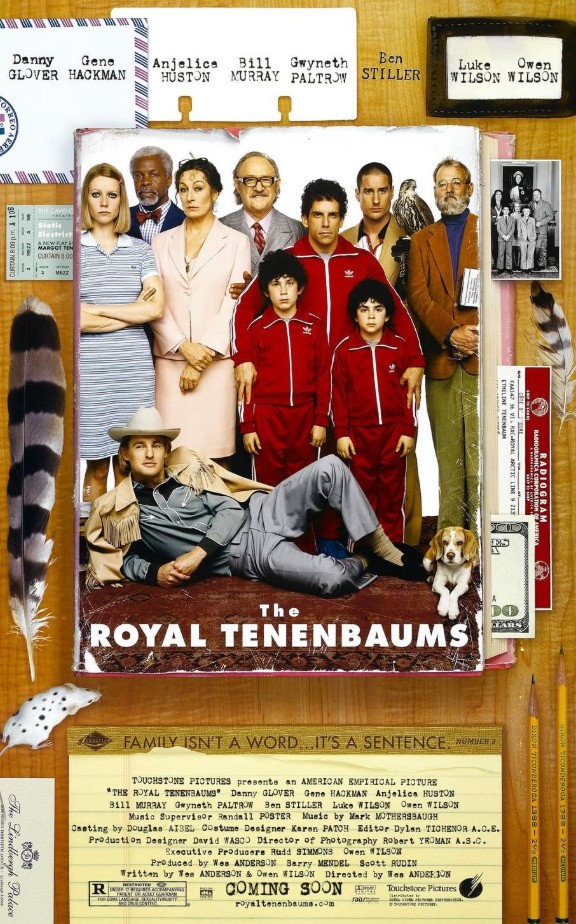
Things I liked about the film:
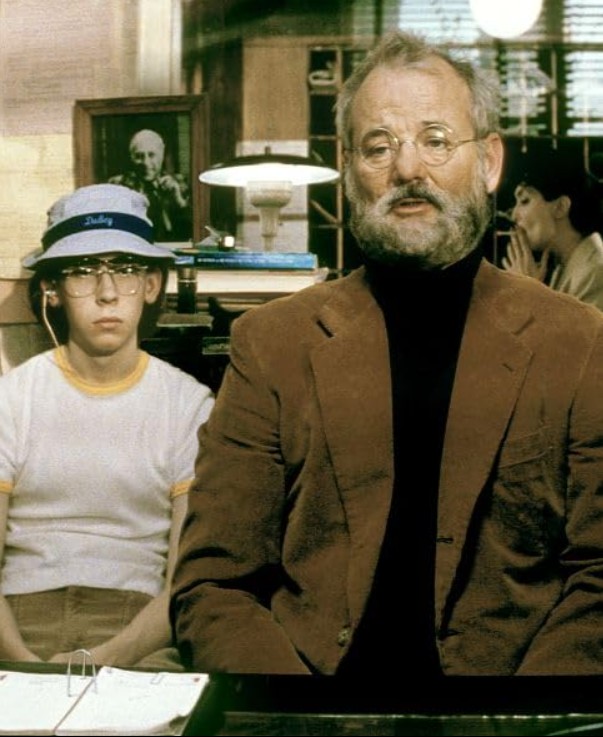
Dudley’s bluntness as comic relief: In The Royal Tenenbaums, Stephen portrays Dudley Heisenbergen. Throughout the story, Dudley resides with Bill Murray’s character, Raleigh St. Clair, because he is researching Dudley’s medical condition. Though he receives a very limited amount of screen-time, as well as lines within the script, Dudley left a memorable impression on me. That’s because his bluntness was effectively utilized as comic relief. One example is when Raleigh discusses Dudley’s medical condition through a tape recorder. Raleigh addresses how Dudley has Color Blindness, yet marvels at Dudley’s exceptional hearing. In the very next scene, while Dudley is in another room, Dudley asks Raleigh if he is Color Blind, with Raleigh confirming this fact. Why I found this exchange hilarious is how Dudley’s bluntness felt reminiscent of Stephen’s portrayal of Harris on Freaks and Geeks, as Harris’ brutal honesty sometimes led to humorous moments. I wish Dudley’s bluntness was incorporated more in The Royal Tenenbaums.
Use of mixed media: Before watching The Royal Tenenbaums, I knew the movie had an offbeat and quirky presentation. But because I hadn’t seen the movie before, I didn’t give much thought to why it was presented this way. Now that I’ve seen The Royal Tenenbaums, I know what gave the 2001 film its unique identity was the creative team’s use of mixed media. The entire story is told as if the audience is reading a book, complete with parts of the film being separated by “chapters”. If a character wrote a book, a cover of their book was presented on screen to emphasize that character’s progress and/or success. When Richie and his father, Royal, talk about a disastrous tennis match, the tennis match is shown in the movie as a television broadcast, which provided additional context to what Royal and Richie were saying. Details like the ones I described show how The Royal Tenenbaums’ creative team creatively and cleverly told their story!
Brutal honesty about family dysfunction: I brought up in the introduction of this review how Saint Maybe did a better job than Back When We Were Grownups at showcasing a dysfunctional family. This is because there was a very clear reason for the family in Saint Maybe to be dysfunctional, as a death in the family caused a ripple effect which led to the family’s dysfunctionality. The Tenenbaum family’s dysfunctional nature felt reminiscent of the 1998 Hallmark Hall of Fame presentation. But in the case of The Royal Tenenbaums, the Tenenbaum’s dysfunction was caused by a series of little things that culminated over time. A great example is when Margot debuted a play she created on her 11th birthday. When Margot asks her dad, Royal, what he thought of her play, Royal honestly tells his daughter the play didn’t feel believable because it seemed like a child wrote it. Prior to that moment, Margot had been praised as a playwright protégé, so her father’s criticism affected her in the long run. Scenes like the one I described showcase the brutal honesty of what can lead families to become dysfunctional. The acting performances and screenwriting made this dysfunctionality feel realistic.

What I didn’t like about the film:
Margot and Richie’s romantic attraction for each other: As the story of The Royal Tenenbaums carries on, the script reveals Margot and Richie have developed romantic feelings for each other. These feelings come years after Richie and Margot grew up together as brother and sister. However, Margot was adopted into the Tenenbaum family, so she and Richie are only related by familial connection. But despite this fact, Margot and Richie’s romantic attraction creates an awkwardness that can’t be overlooked. Plus, this attraction has little bearing over the plot. It would have made more sense if Richie and Margot’s subplot had instead revolved around helping their friend, Eli, overcome his addiction, especially since Eli grew up infatuated with the Tenenbaum family.
Endings wrapping up too neatly: Earlier in this review, I talked about the brutal honesty about family dysfunction in The Royal Tenenbaums. The script’s brutal honesty brought a sense of realism to the family dysfunction, even addressing issues family dysfunction can cause, like addiction and self-harm. But by the end of the movie, all of the stories are wrapped up in neat little packages, giving the characters a semblance of a “happily ever after”. It seems like The Royal Tenenbaums’ creative team wanted to have their cake and eat it too. What I mean by this is they didn’t want to sugarcoat family dysfunction, yet, at the same time, they wanted to make sure all the characters were ok. One solution to this flaw is showing the characters gradually working through their dysfunction as the story goes on. This way, the “happily ever afters” would have felt more earned and complimentary to the story’s realism.
Dudley’s unclear connection: When I discussed Dudley’s bluntness as comic relief in The Royal Tenenbaums, I brought up how Dudley resides with Bill Murray’s character, Raleigh St. Clair, because he is researching Dudley’s medical condition. But other than this fact, the script never provides a clear explanation how Dudley connects to the other characters. Did Raleigh and Margot adopt Dudley? Does Dudley’s parents allow him to spend time with Raleigh whenever he feels like it? Are Raleigh or Margot Dudley’s legal guardian? This lack of explanation left me confused, especially since the connections between the other characters in The Royal Tenenbaums were made clearer.
My overall impression:
The 1998 Hallmark Hall of Fame movie, Saint Maybe, proves stories about family dysfunction can work. What helped Saint Maybe was not only providing a clear reason for the family’s dysfunction, but also showing the family using their dysfunction as motivation to make impactful changes in their lives. Like the 1998 film, The Royal Tenenbaums gives the audience reasons to explain why the titular family is dysfunctional. However, the impactful changes in the Tenenbaum family’s lives don’t happen until toward the end of the film. In my opinion, these changes should have been more gradual throughout the story. What I can appreciate about The Royal Tenenbaums is the brutally honest approach to the subject of family dysfunctionality. A sense of realism was brought to the story because of this creative decision. But as I stated in the introduction of this review, Stephen Lea Sheppard is the reason I sought out The Royal Tenenbaums. His character’s bluntness left a memorable impression on me and even reminded me a bit of Harris Trinsky. So, if you’re reading this, Stephen, I just want to say Happy Birthday and thank you for making Harris Trinsky a sparkling, shooting star in our landscape known as entertainment.
Overall score: 7 out of 10
Have you seen The Royal Tenenbaums? What stories about family dysfunction do you think work in film? Please tell me in the comment section!
Have fun at the movies!
Sally Silverscreen



 18 Cinema Lane