In my post called ‘Goodbye 2019, Hello 2020!’, I shared that every time I publish 100 posts, I coordinate a double feature in honor of the accomplishment. Because I published 300 posts at the end of last year, I scheduled the double feature for January. In my aforementioned post, I also mentioned the reason why this series of reviews and articles were focusing on youth-led films. This is because January’s theme for MovieRob’s Genre Grandeur is “Youth-Led Movies”. Since I’ll be participating in that blogathon, I figured it would a good idea to use my achievement to highlight my involvement.
While creating my first blogathon, “Siskel and Ebert at the Blogathon”, I came across a video on Youtube of one of their episodes of “Sneak Previews”. While watching that video, I became fascinated by how two youth-led films, Rich Kids and Over the Edge, were not only released in the same year, but also around the same time (according to the Siskel and Ebert video). Not knowing whether or not this scheduling choice was intentional, I chose these two films for my next double feature! While I had never heard of Over the Edge before, I was aware of Rich Kids‘ existence. When I watched Siskel and Ebert’s discussion of this film, I was surprised to discover that it was about a completely different story from what I expected. Before choosing to watch this film, I thought the movie was a documentary style film about a group of rich kids growing up over a period of time.
For these reviews, I’ll be answering a series of ten questions related to the movies I watched. However, the three questions that will receive primary focus are the following:
Is there any aspect of either film that could be seen as relevant today?
Besides having young actors as the leads, do these films share any similarities?
Do the socio-economics of each film’s world affect the characters or the story?
Before I end this introduction, I’d like to say that there will be no pre-movie thoughts and/or questions for this double feature.
If you want to watch the video I referenced in this introduction, type ‘WTTW Channel 11 – Sneak Previews – “Real Life, Rich Kids, & More” (Complete Broadcast, 9/20/1979)’ into Youtube’s search bar. Siskel and Ebert’s discussion on Rich Kids starts at 1:41 and ends at 7:01. Their discussion on Over the Edge starts at 21:48 and ends at 24:49. If you are planning on watching this video, I just want to let you know there are sensitive topics that do get brought up at some points of the episode.
2020 is finally here! I am so excited to be embarking on my second year as a movie blogger! My movie blogging journey has, so far, been a good one. One reason for this is the support I have received from my readers and followers. Every like, visit, and comment is appreciated. It makes me feel like what I write about matters to someone. Like the previous year, 2019 was more successful than I ever expected! From receiving 100 followers to publishing 300 posts, 18 Cinema Lane grew and became a place that I’m proud of. Similar to last year, I will be sharing the stats of my blog and announce upcoming projects. This kind of post will be a new tradition for 18 Cinema Lane, as it allows my readers and followers to be informed about what’s happening on my blog.
Once again, I will be hosting another blogathon in 2020! It will be movie themed and it will take place later in the year. So that announcement will come in either May or June.
Changes to the Gold Sally Awards
The Gold Sally Awards is another event that will be coming back! However, there will be some changes made to the awards. These changes are not major, but they will, hopefully, improve the voting experience for my readers, followers, and visitors. This announcement will be posted toward the end of January.
Yearly Double Feature
Every time I publish 100 posts, I coordinate a special double feature to celebrate the accomplishment. At the end of 2019, I published 300 posts. I decided to create my double feature reviews in January because I wanted to take my time and make the best articles I realistically could. This double feature will correlate with Movierob’s Genre Grandeur, as January’s theme is “Youth-Led Movies”. Those series of articles will be published in either the middle of or later in the month.
Filmathon Readathon
On rare occasions, I talk about books on my blog. But I try to make that an exception to the rule, as my primary focus is on film. When I discovered a readathon that was movie themed, I knew I had to participate! The readathon is called “Filmathon” and will take place from January 7th to the 14th. It was created on the Youtube channel, lookingforshaki. I will making at least one post about it sometime in January.
New Blog Banner
Last year, K, from K at the Movies, created the official logo for 18 Cinema Lane. I love how it turned out and K did a fantastic job with the image! They also made two additional logos that I also like. One of them will be used as the new banner of my blog! This will take place shortly around the time this article is published.
Well, here we are. The conclusion of this double feature has finally arrived! At the start of this project, my goal was to figure out which adaptation of The Secret Garden was the best one. After reading the book, I watched and analyzed three of the most well-known film versions of this story. Now that we’re at the end of this double feature, it’s time for me to evaluate my results!
I know I’m featuring the photo from the Double Feature Introduction post. But, I figured it would fit appropriately with the context of this post’s topic. Screenshot taken by me, Sally Silverscreen.In the video, “Talking Anne with an E (Spoilers)”, Rachel and Amber, who are also hosts of Hallmarkies Podcast, share their thoughts on Netflix’s adaptation of Anne of Green Gables. During this discussion, Amber was saying how the film or television adaptation of this story is “not the end all, be all of Anne”. What she meant by this was that there is much more to the source material than just the first book, Anne of Green Gables. Other stories and characters from this series are just as important as the content that is considered when it comes to adaptations. Amber’s beliefs can also be applied to my double feature. No matter how many adaptations are made, they should never be a replacement for the source material. Each adaptation has a different creative team associated with it, so the beliefs about which elements are worth including in the movie are going to vary. With that said, I think that both the 1987 Hallmark Hall of Fame presentation and the 1993 version are the best adaptations of The Secret Garden! Both of these films have their fair share of similarities and differences. But I found them to be close enough to the book where I was satisfied. As a film, however, I would prefer the one from 1993 over the Hallmark Hall of Fame movie. While the 1987 production was good, it felt a little too drawn-out. I also think that Kate Maberly did a better job at portraying Mary than Gennie James did. Since I now found the answer to a question that I’ve wanted to find for years, I can honestly say that my mission is finally accomplished.
Have fun at the movies!
Sally Silverscreen
If you want to read the other posts from this double feature, go to these links:
If you want to watch the video that I referenced in this post, type “Talking Anne with an E (Spoilers)” into Youtube’s search bar or visit the Youtube channel, Rachel’s Reviews.
Welcome to my Bonus Double Feature! Just to let you know, there will be spoilers within this post. If you want to read the introduction, here’s the link:
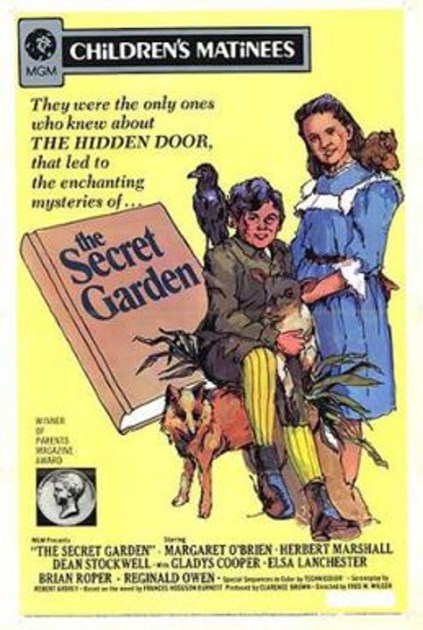
The Secret Garden poster created by Metro-Goldwyn-Mayer and Loew’s Inc. Image found at en.wikipedia.org/wiki/File:The_Secret_Garden_FilmPoster.jpeg
In what way is the adaptation like the book?
1949: There were several similarities to the book in the 1949 adaptation of The Secret Garden. One of them was the incorporation of the wind. In the book, the sounds of Colin’s cries blend with the sounds of the wind. Mary quickly picks out the cries from the wind and notices that something isn’t right. In the movie, this aspect sounded just like how it was described in the book. If one wasn’t paying attention, they would assume that the cries were a part of the wind. The other element was the path to Colin’s room. Mary, in the book, enters different rooms and passageways in order to find the source of the crying. In the movie, when Mary attempts to find out where the crying comes from, she travels through various rooms and hallways, which take her to Colin’s bedroom door. While this trip takes place in a shorter amount of time, the visuals of the different places in the house shows just how intertwined Misselthwaite Manor really is.
1987: More similarities were found in this adaptation than in the 1949 version. The one that I was pleasantly surprised by was Mary’s characteristics. Despite Gennie James’ inability to carry a British accent, she made up for this by embodying the spirit and persona of her character. Through her emotions, actions, and behavior, Gennie brought the likability and unlikability that Mary Lennox is known for. Two examples are when Mary was more upset about losing her doll over her parents and when she became friends with the robin. While we’re on the subject of this friendship, Mary forms a relationship with a robin that is also very fond of Ben Weatherstaff. By befriending the robin, in both the book and movie, Mary’s transformation from self-centered child to selfless individual begins. As for the character transformations, they were developed very well in the source material and the adaptation. Even though the movie was drawn out, it showed that the transformations of characters like Mary, Colin, and Mr. Craven happened over the course of several months. It also showed that these transformations take time and patience.
1993: Similar to the 1987 film, the characteristics of Mary are pretty close to how the character was written in the book. But in this adaptation, the characteristics of almost all the characters seemed like it reflected the book very well. In the 1993 movie, Kate Maberly’s performance was the best portrayal of Mary Lennox! Not only was she able to carry a British accent throughout the entire film, but she also did a really good job at bringing a balance of emotions to her role. During the scene where Martha accidently offends Mary, the angry emotions that Kate brought to her character reminded me of how the character would have behaved in the book. Another good example is when Dickon and Mary are in the secret garden, while they are singing “Mistress Mary Quite Contrary”. Even though she’s happy to be spending time with Dickon, she’s reminded of the painful memories when she arrived in England. Speaking of Dickon, Andrew Knott’s portrayal of this character was the best out of all three adaptations I’ve seen! He did a fantastic job pulling off a Yorkshire accent and brought a sense of likability to his role. The scene where Dickon and Mary meet for the first time is a good example of this.
As I just mentioned, Dickon and Mary sing “Mistress Mary Quite Contrary” in the 1993 movie. This song plays a small role in the book. At the beginning of the story, the song is sung to Mary in a manner of teasing. When the story goes on, she reflects on the song’s meaning and questions her outlook on life. Another aspect of the movie that reflected the book was the interior designs of Misselthwaite Manor. Mary’s and Colin’s room are a great example, as tapestry can be seen on the walls. This is an important detail to mention because tapestry was described in the novel.
Was there anything in the adaptation that was different from the book?
1949: In the 1949 adaptation, there were just as many differences from the book as there were similarities. One notable difference is how emotional Mary Lennox is. In the film, Mary bursts into tears when she finds out that her parents have died. This is not the reaction that Mary has in the book, as she wouldn’t care what happens to her parents because of her poor relationship with them. Speaking of relationships, Mary’s relationship with Ben Weatherstaff is quite different in the film. Mary, as well as Colin and Dickon, don’t like Ben. They not only keep their distance from him, but they also don’t allow him to enter their garden. In the book, however, Ben becomes the children’s ally. He provides them with plenty of information about the secret garden, such as why it’s closed off from the rest of the gardens. The children even invite him into the garden on a few occasions. Finally, how Mary and Dickon meet is also different in the movie. Mary meets Dickon before she’s even aware that a secret garden exists. In the book, Mary meets Dickon after she’s entered the secret garden. She meets him because he’s purchased some flower seeds for her.
1987: While watching this adaptation of The Secret Garden, I noticed fewer differences compared to the 1949 version. Like the 1949 film, the initial meeting of Mary and Dickon happens at a different part of the story. In this movie, Mary meets Dickon before she’s found the secret garden, yet she is aware that it exists. At the beginning and end of the movie, the audience sees that the story is told through the reflections of a grown-up Mary Lennox. Since the book only focused on Mary’s story from when she was a child, this was a creative choice that Hallmark Hall of Fame made. Unlike the book, Mary and Colin are not cousins. I’m not going to reveal the reason for this creative decision because I don’t want to spoil the movie for anyone who hasn’t seen this version. But this choice wasn’t as much of an issue as I thought it could be. Plus, it works within this particular story!
1993: Toward the beginning of the film, Mary loses her parents to an earthquake. This is different from the book, as she loses her parents to sickness. The location of the secret garden’s key is also different from the source material. In the movie, Mary finds this key in her aunt’s jewelry box instead of in the dirt. Another difference I noticed was the characteristics of Mrs. Medlock. This character, in the book, was stern but caring. Mrs. Medlock, in the movie, was much stricter. She’s not only against the idea of Mary and Colin spending time together, but she’s also mean to the other members of the staff. I’m not sure if this creative decision was made to include a conflict or to highlight the acting strengths of Maggie Smith.
Did you find anything in the movie that you felt improved upon the material more than the book?
1949: While the majority of the film is presented in black-and-white, the only scenes that were featured in color were those that took place in the garden. Frances Hodgson Burnett was very descriptive when writing about the garden. But you can only describe so much without giving someone a visual. The way the garden is presented in this adaptation helps bring the text to life.
1987: In a few parts of the film, the element of suspense was incorporated. One good example was when Mary meets Colin for the first time. The build-up to that moment was staged really well, using as little lighting as possible and featuring things like lightening and scary looking statues. Because of these elements coming together, it was better executed in the movie than in the book.
1993: During the 1993 adaptation, a transition happens between winter and spring/summer. This transition isn’t just seen through the exterior background. The cinematography and color of wardrobe are other visuals that indicate the changing seasons. An explanation of how Mary and Colin are related is included in this script. According to this adaptation, Mary’s mother was the twin sister of Colin’s mother. No explanations to how Mary and Colin are related were given in the book. All that’s known is that they’re cousins and Mr. Craven is Mary’s uncle.
This is yet another Hallmark Hall of Fame movie that I purchased. However, I bought it because I wanted to give an honest opinion for this double feature. Screenshot taken by me, Sally Silverscreen.
Is there anything from the book that improved upon the material more than the movie?
1949: In the book, the garden itself is written as if it were its own character. Because of this, the garden creates a ripple effect on the characters and their lives. In the movie, however, the garden is treated like a Macguffin. It’s not featured in the film for very long and the progression of the characters happens pretty quickly. We also don’t see the process of the garden’s revival.
1987: When I was thinking about this Hallmark Hall of Fame presentation, I found it difficult to find anything that the book did better than the movie. This is because the adaptation was pretty close to the source material. It gives people who have read the book, like myself, a reason to find it satisfying.
1993: Even though she plays a really small role in the book, Susan Sowerby, Martha and Dickon’s mom, shares her wisdom and advice throughout the story. These things have a small, but significant influence over the events of the plot. Because Susan was nowhere to be found in this film, this part of the story was eliminated from the script.
Because each adaptation was released in a different decade, do you feel that the movie itself was affected by the time period in which it was released? If so, how?
1949: MGM’s The Wizard of Oz was one of the first movies to experiment with color imaging. Since the movie was a success for the studio, they were more than willing to incorporate color imaging into their future films. The Secret Garden was released ten years after The Wizard of Oz, so it makes sense that they reserved the color imaging for the titular secret garden. What’s interesting is how little color imaging is included in the movie. It’s only seen on three occasions, after the garden has been fully revived.
1987: There’s three key things that I think had an influence on this version of The Secret Garden. The first is the 1949 movie. Because this particular film had an equal amount of similarities and differences, it encouraged the creative team behind the Hallmark Hall of Fame project to make a more faithful adaptation. The second key ingredient was the trend where content in ‘80s children’s/family-friendly entertainment was darker and “creepier”. Since Hallmark Hall of Fame’s The Secret Garden was released in 1987, it provided an alternative for those who wanted to move away from the aforementioned trend. The last thing is the concept of home entertainment and video rental stores. One of the most well-known video rental businesses, Blockbuster, opened its doors in 1985, just two years before Hallmark Hall of Fame’s adaptation was released. Since then, the idea of renting or purchasing films has played a huge role in the world of cinema. I’m not sure when Hallmark starting allowing their movies to be sold for home entertainment. But their version of The Secret Garden has been available on VHS and DVD.
1993: Two important aspects affected the creation of this specific adaptation. The first one is the previous adaptations of The Secret Garden. This particular version of the story was the first theatrical adaptation since the 1949 film. The Hallmark Hall of Fame presentation was close enough to the source material where readers would be satisfied. Taking these films into consideration, the creative team behind the 1993 movie tried to make a movie that felt cinematic and respected the source material. The second thing is the climate that existed in children’s/family-friendly entertainment in the early ‘90s. During this time, the Disney Renaissance was in the early stages. The box office was also receiving films with Don Bluth’s signature animation style. In the live-action department, films like My Girl and Beethoven were released from their respective studios. The early ‘90s provided variety to children’s/family-friendly entertainment. Since this version of The Secret Garden was released in 1993, the film contributed to the aforementioned climate.
If an adaptation of The Secret Garden were made today, how would it be different from the other adaptations?
I think that if The Secret Garden received another adaptation, that film’s creative team would probably try to have the story take place in “modern” times. If this decision were made, the simplistic nature that comes from a historical fiction narrative would be taken away. Another possible change would be the incorporation of an environmental message. This would be unnecessary because the purpose of the secret garden has nothing to do the environment. The garden is included in the story to present the idea of becoming a better person when putting the needs of others before one’s own.
What aspect from the movie or book do you think has stood the test of time?
The messages and themes within this story have been relatable and cherished for many years. As I already mentioned, one idea that can be found in both the source material and any adaptation is how putting the needs of others before one’s own can help someone become a better person. Because the protagonist of this story is a child, the narrative evokes reflection on a time when a person’s life could be care-free. It also reminds the audience of how anything is possible when we set our minds on something.
While I have seen this version of The Secret Garden before, this was my first time watching it as an adaptation. Screenshot taken by me, Sally Silverscreen.Have fun at the movies!
Back in May, my post called “A Bucky Fan’s Response to one of Looper’s Avengers: Endgame related videos” became my 200th published post! Whenever I publish a hundred posts, I coordinate a double feature where I try to answer a thought-provoking question through the viewing of two similar films. But, around the time when I published my aforementioned post, I discovered that I would soon reach the milestone of 100 published reviews. So, I postponed my Double Feature until that milestone was reached. It was achieved in July when I published my review of Christmas Camp! However, that post was published just before I embarked on an out-of-town trip. So, I postponed my Double Feature until after the trip. But August became my busiest month, as I participated in four blogathons. Because of that, the Double Feature had to be pushed back again. Now that I have set aside some time to coordinate my Double Feature, I can finally announce that it will be published this week! Since I’m celebrating two milestones, I will be writing about three films.
I am fully aware of the irony that comes with reading The Secret Garden from the Hallmark Gift Books collection before watching the Hallmark Hall of Fame adaptation. Screenshot taken by me, Sally Silverscreen.If you ask anyone what the best adaptation of The Secret Garden is, most of them will tell you that it’s the Hallmark Hall of Fame version from 1987. For years, I have heard this statement from many people on the internet. In fact, when I asked a search engine which adaptation of The Secret Garden was the best one, the Hallmark Hall of Fame version was the film that came up as the answer. But is this movie really the best adaptation? That’s what I wanted to find out for myself! The most well-known versions of The Secret Garden that I will be watching are the 1949 release, the Hallmark Hall of Fame presentation, and the 1993 project. I read The Secret Garden prior to watching these films, so I could gain a better understanding of how similar or different each adaptation is from the source material. Because I’m going to talk about three versions of the same story, I will ask myself fewer questions than I did for my Halloween Double Feature. I will also not be giving these films any score ratings because I’m judging them as adaptations. There will be no pre-movie thoughts, questions, or predictions this time because I know what the movies are about before I’ve seen them.
When I looked through Rosalind Russell’s IMDB filmography in preparation for The Rosalind Russell Blogathon, I discovered that The Trouble with Angels was given a sequel called Where Angels Go, Trouble Follows. This is a movie that I had never seen or heard of. But, since I haven’t created a double feature for a blogathon since last August, I decided to review The Trouble with Angels and Where Angels Go, Trouble Follows! If you read my review for the first film, you would know that I enjoyed it. The synopsis for the sequel sounded interesting and different from the previous movie. This is what caused me to want to give this project a chance. Was this a complimentary story to The Trouble with Angels? Find out in my review of Where Angels Go, Trouble Follows!
The acting: Like in the first movie, the cast of Where Angels Go, Trouble Follows was good! One of things that helped was having some of the actresses who portrayed the nuns in the previous film return for the second one. This kept a sense of continuity between the characters. Also, like in the first movie, Rosalind shined in her role of Mother Superior! Her performance was very consistent with how she portrayed the character in The Trouble with Angels. It continued to make this character just as likable as she was in the previous picture.
The inclusion of Sister George: Because Mary Clancy graduated from St. Francis Academy at the end of The Trouble with Angels, Sister George, portrayed by Stella Stevens, replaced her as a counteracting presence for Mother Superior to interact with. Both Rosalind and Stella gave a strong acting performance, which allowed their talents to compliment one another. These characters were also well-written, both of them providing interesting points to their stance. I found this aspect of the film to be the most interesting. Seeing these characters progress as the movie went on was one of the strengths of this story.
The scenery: I’m glad that the building from The Trouble with Angels made an appearance in the sequel! While there weren’t many scenes that took place inside of the school, a few more exterior shots of the grounds were shown. These outdoor spaces were captured really well on film! It kind of allowed the viewer to explore this location a little bit more. Most of the movie took place on a class field trip, which consisted of traveling through several states in order to reach a peace rally in California. This gave the creative team an excuse of include scenery-heavy scenes in the movie. These scenes were interesting to look at, as they showcased the natural landscapes from each state that the characters traveled through. This was, honestly, one of the more memorable parts of the film.
A weak plot: As I’ve already mentioned, this movie is about the nuns and some of the students of St. Francis Academy going on a field trip to a peace rally in California. Besides the conflict between Sister George and Mother Superior, this story was very weak. A large portion of the scenes in this film consist of the school’s bus traveling through various states. Instead of one overarching story, this narrative was written as a series of short vignettes. Not only were none of these vignettes that interesting, but they seemed to string the movie along just for the sake of keeping this weak plot going.
Scenes lasting for way too long: Throughout this movie, I found several scenes that lasted way too long. One example is when some of the students from St. Francis Academy attend a party that is hosted by an all-boys school. The scene itself felt like a two-minute music video. It didn’t really add anything to the plot or the development of the characters. The length of these scenes feel like they are trying to make up for the weakness of the plot.
Charismatic-less characters: Since Rachel and Mary graduated in the first movie, Marvel Ann, portrayed by Barbara Hunter, and Rosabelle, portrayed by Susan Saint James, acted as their replacements. Barbara and Susan tried the best they could with the acting material they were given. But these characters weren’t as charismatic as Rachel and Mary were. Because of this, it made Marvel Ann and Rosabelle seem unlikable. It also made me not care about their story.
My overall impression:
I was very disappointed by Where Angels Go, Trouble Follows. This movie had interesting ideas that could have lent themselves to a good sequel. However, all of these ideas were wasted on poor execution. When it comes to fictional stories, I am more than willing to suspend my disbelief. But this movie tried to make me suspend more of my disbelief than I had wanted to. The only interesting aspect of this story was the conflict between Mother Superior and Sister George. This part of the film was not only well-acted, but also well-written. Unfortunately, I can’t say the same about the rest of the movie. While I would recommend The Trouble with Angels, I would suggest skipping the sequel.
Before signing up for The Rosalind Russell Blogathon, I had never heard of Rosalind Russell. Like I did to prepare for the 90 Years of Jean Simmons Blogathon, I visited Rosalind’s IMDB filmography. After searching this page, I discovered that Rosalind starred in the film, The Trouble with Angels. This is a film that I’ve heard of, but never seen. So, I used my participation in the blogathon as an excuse to watch this movie! I was also aware that Hayley Mills starred in The Trouble with Angels. Before watching this film, I had seen a few of her movies. In fact, I reviewed The Moon-Spinners earlier this year! So, I was looking forward to seeing what her acting abilities had to offer in this production. Was my movie-viewing experience a blessing or a curse? You can fly through my review of The Trouble with Angels if you want to find out!
The acting: I really liked the cast of The Trouble with Angels! Every actor and actress pulled off a performance that not only appeared realistic, but also was effective. Rosalind Russell’s portrayal of Mother Superior was interesting to watch. This character was strict, yet she always had her heart in the right place. I couldn’t help but find Mother Superior to be a likable character. I also enjoyed seeing Haley Mills in this film! Prior to watching The Trouble with Angels, I have seen The Parent Trap (1961), That Darn Cat and The Moon-Spinners. Hayley’s portrayal of Mary Clancy is somewhat different from her roles in those aforementioned films. However, Hayley’s performance had a sense of maturity to it. This particular role complimented both her age and acting abilities. Because of this, it made Hayley’s portrayal of Mary that much more entertaining to watch!
The set/scenery: The Trouble with Angels takes place at St. Francis Academy. According to IMDB, the building that was used in the exterior shots is a real-life facility in Ambler, Pennsylvania. But the interior shots were filmed in a California studio. Despite this difference in filming locations, I thought the scenery/set was absolutely magnificent! The building itself looks like a castle, the footage of it probably doesn’t do this place justice. There were grounds surrounding the building that I liked seeing as well! All four seasons was showcased in the film, which helped highlight the beauty that these grounds had to offer. The set looks like it would compliment the real-life structure. A combination of stone, wood, and stained glass were appealing to the eye. The location scout(s) and set decorator(s) did a great job with bringing this school to life!
A sense of humanity: In this story, there were moments where a sense of humanity shown through. This happened through dialogue and situations amongst the characters. One example is when Mary and Rachel (portrayed by June Harding) try to lie to Mother Superior about their whereabouts. When Mother Superior suspects that Mary and Rachel are making fun of one of their teachers, she shares the truth about this particular teacher with them. Another example is when some of the students visit a Retirement Home during Christmas-time. When Mary overhears some of the residents sharing their loneliness with others, it shows the audience that this specific season might not be the most wonderful time of the year for some people. The incorporation of this sense of humanity felt genuine, like the creative team behind this film had good intentions for including it.
A limited amount of humor: While there were moments of humor found throughout the film, I felt like the story favored the dramatic moments more than the comedic ones. These moments of humor seemed far and few between. Most of the film’s humor came from the pranks and mishaps that are caused by Mary and Rachel. Even though The Trouble with Angels would be classified as a comedy, this movie feels more like a dramedy (a mix of comedy and drama).
Mostly static characters: The Trouble with Angels is primarily about the characters of Mary and Rachel. This story follows them from the beginning of their freshmen year of high school to their graduation. In that time-frame, however, Mary and Rachel didn’t really seem to have that significant of a transition of rambunctious youngsters and responsible young adults. For more than half of the film, Mary and Rachel were static, continuously pulling pranks and despising their peers and teachers. It wasn’t until they joined their school’s band when these characters started to grow as individuals. This part of the story feels a little bit rushed, like the creative team behind this movie was trying to make up for lost time.
Little emphasis on academics: In movies that take place in a school setting, there is usually an emphasis on either an important teacher or an influential school assignment. But that wasn’t the case for The Trouble with Angels. Instead, the story focused on the character development of Mary and Rachel. There were moments that showed these characters in the middle of a school lesson, such as when Mary and Rachel were trying to avoid their swim tests. But these moments didn’t last long enough to have a large impact on the narrative.
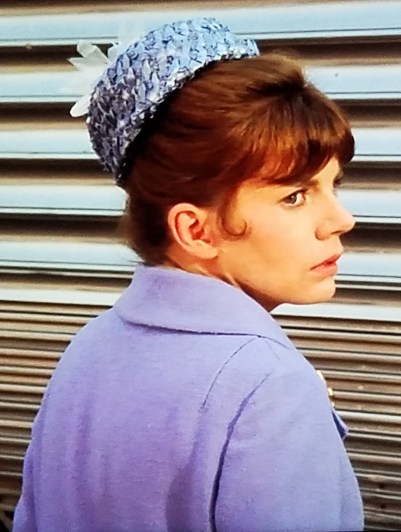
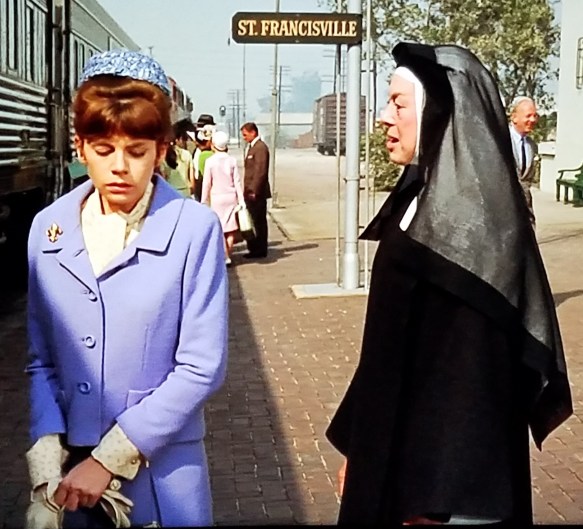
We interrupt this movie review to give you a moment to appreciate Rachel’s hat. Screenshot taken by me, Sally Silverscreen.This is, honestly, the coolest pill-box hat I’ve ever seen in my life! Screenshot taken by me, Sally Silverscreen.As soon as I saw this hat, I knew I had to have it in my life. Screenshot taken by me, Sally Silverscreen.
My overall impression:
The Trouble with Angels is a fine film. This story had more heart and soul than I expected, especially due to the sense of humanity found within the narrative. While this movie could have been stronger, there were elements about it that made the project enjoyable. Rosalind and Hayley definitely helped carry the film! Though these actresses were at different places in their careers, their acting abilities complimented each other. When it comes to films about teenagers, The Trouble with Angels is one of the better ones. The story primarily focused on Mary and Rachel. But, with the incorporation of the teachers and Mother Superior, the best intentions for the students could be seen throughout the story. That’s how I would define this movie; the creative team making this film with the best of intentions.
Overall score: 7.4-7.5 out of 10
Have you seen The Trouble with Angels? Which movie of Rosalind Russell’s would like me to watch next? Please tell me in the comment section!
Now that Halloween is over and the Christmas decorations are starting to get set up, it’s time for me to look back on this double feature to see what I’ve learned and whether my goal was accomplished. If you remember from my double feature’s introduction, my goal was to answer the following question:
When one watches a film purely as a film, not as an adaptation, can that film contain its own merit and entertainment value?
As I reflect on The Case of the Whitechapel Vampire and Queen of the Damned, I can honestly say that I did get my question answered. Even though I have never read any of the source material associated with these films, I ended up liking both movies. What I noticed is these films received a score in the 7 out of 10 range: The Case of the Whitechapel Vampire got a 7.6 and Queen of the Damned got a 7. This is really interesting because I hadn’t expected to score these films within the same range. While both films did have their flaws, they did have a good amount of merit while also being entertaining. I was really impressed by the creativity I saw in both films. It was so memorable that it stayed in my memory long after I saw these movies. Now that the mystery behind this question is solved (see what I did there? I think Sherlock Holmes would be proud), I’ll wrap up this post with one final thought and a lesson learned from each film.
The Case of the Whitechapel Vampire
Lesson learned: What I can take away from this film is the many different elements that can be featured in a Christmas movie. I know this double feature is Halloween themed, but The Case of the Whitechapel Vampire, surprisingly, took place during Christmas-time. I learned that Christmas, especially when depicted in a Hallmark movie, can look and feel different to the voice of that particular story.
One final thought: As glad as I am that Hallmark puts a good amount of emphasis on their Christmas movies, I would really like to see both networks make more creatively interesting choices and think outside-the-box more when it comes to their movies. When I heard the synopsis for Hallmark’s 2018 Christmas movies, most of them sounded the same to me. There were very few movies within this year’s line-up that seemed creative or unique from the others.
Queen of the Damned
Lesson learned: What’s so great about the movie blogging community is being given the opportunity to help people find movies that may bring them joy or movies that they may want to avoid. However, when I watched Queen of the Damned, I realized that it’s important to give yourself a chance to form your own opinions when it comes to movies. If it hadn’t have been for the positive responses I heard about this film, I probably wouldn’t have seen this movie. But I’m glad I did because now I can have an honest opinion about it.
One final thought: In my review for Queen of the Damned, I mentioned that I thought the acting was really good. This is especially the case for Stuart Townsend’s and Marguerite Moreau’s performances. Because of this movie, I would like to see Stuart and Marguerite star in a Hallmark Hall of Fame (HHoF) movie together. I don’t know if there’s anything preventing them from working on a Hallmark project or if they’ve gotten along well enough where they would want to work together again, but I would be interested in seeing if they have what it takes, talent-wise, to help carry a project like a HHoF movie. Since the Hallmark Hall of Fame branch moved to the Hallmark Channel in 2014, the network has made a conscious effort to try to cast at least one actor who’s a HHoF alumni and one actor who’s never appeared in a HHoF movie into their films (a good example of this is The Beach House). Since Marguerite starred in The Locket, a Hallmark Hall of Fame movie from 2002, and since Stuart, as far as I know, has never appeared in a Hallmark affiliated project, this would be a good balance for Hallmark; of recruiting new talent and welcoming back familiar faces.
Queen of the Damned poster created by Warner Bros. Pictures. Image found at https://www.warnerbros.com/queen-damned
In your introduction for this double feature, you mentioned that both Queen of the Damned and The Case of the Whitechapel Vampire were released in 2002. Can you think of anything from around that time period that could have influenced the creation of this film?
I think there are three things that influenced the creation of Queen of the Damned. The first is the character of Malcolm from Jurassic Park. As I mentioned in my Jurassic Park review, Malcolm is a rock-star-esque mathematician. However, Malcolm appeared to be a likable character. In Queen of the Damned, Lestat was a rock-star-esque vampire. Despite these characteristics, Lestat, for the most part, comes across as a likable character. The second thing is the 1998 film, Blade. I’ve never seen this movie, but I know that it’s a darker and more violent comic book film that, to a certain extent, discusses the subject of vampires. Because this film was successful enough to receive a sequel (that was, ironically, released exactly a month after Queen of the Damned), I’m speculating that Blade inspired the creative team behind Queen of the Damned to make their movie darker and more violent than their predecessor, Interview with the Vampire. The third and final thing is, interestingly, Interview with the Vampire. I’ve never seen this film either, but based on this film’s trailer, it appears to be a gothic film in the old-school sense. Queen of the Damned focuses on the new-school/modern gothic style, which is very different from the first film. Most movie series try to do something different with each new film, so I think this film’s approach was rather creative.
2. Were you able to follow along with the story and understand what was going on in the film despite not having read the source material?
For the most part, yes. I did some research about this film before I saw it, so I was aware of certain aspects of the film that some casual movie-viewers might not understand. For instance, in the film’s climax, there are various characters that are introduced. One of these characters is Pandora. If I didn’t know that she is a character from a spin-off book series that Anne Rice wrote, I would have no idea who Pandora was in this film.
3. Were your pre-movie questions answered?
Well, two out of my three pre-movie questions were answered. The only question that wasn’t answered was how Lestat survived being burned in the previous film. Honestly, I wasn’t as bothered by this as I thought I would be. Because this movie focused more on Lestat’s present and origin story, re-capping the first film would have felt like Queen of the Damned had too much content.
As for the two questions that did get answered, the reason why Lestat appeared like he was trying to pursue a romantic relationship with Akasha is because, in the movie, Akasha kidnapped Lestat and forced him to in be in relationship with her. Speaking of Akasha, she did reveal that the reason why she loved Lestat was because he reminded her of her deceased husband. As for Jesse, it appeared, in the movie, like she truly loved Lestat. Because she’s a vampire scholar, Jesse wasn’t as fazed by the vampire aspects of Lestat’s world. Also, because her aunt is a vampire, it seemed like Jesse truly appreciated the subject of vampires and the world surrounding them.
4. Were you right or wrong in your pre-movie prediction?
I guess I was kind of right in my pre-movie prediction {shrugs with a confused look on my face}. While Lestat was forced into a relationship with Akasha and Jesse wasn’t aware of this until the climax of the film, there is a moment during the film’s climax where Lestat pretends to drink more of Akasha’s blood then he should have. This allowed the other vampires present in that scene to defeat Akasha.
5. In this double feature’s introduction, when you talked about your reason for choosing to review Queen of the Damned, you said that the movie clips featured in the MsMojo video, ‘Top 10 Movies Based on Books That Need a Do-Over’, appeared bonkers to you. Was this movie bonkers or do you think these movie clips were taken out of context?
I definitely think these movie clips were taken out of context. To me, Queen of the Damned was not as bonkers as the clips within this video made it seem. The only thing I found bonkers in this movie was Lestat and Akasha’s “relationship” because of how problematic it was.
6. In a post from The Blog Complainer titled “How To Make A Good Movie Sequel”, there were several steps listed as if the article were a how-to for making sequels that are good. When a sequel successfully followed these steps, it means they passed the “Good Movie Sequel School for Dummies”. Because Queen of the Damned is a sequel, do you think it passed this school?
Well, yes and no. On the one hand, Queen of the Damned is based on two books from The Vampire Chronicles series. On the other hand, some stories were explored more than others because of this choice. Also, there were no references to Interview with the Vampire besides Lestat being a protagonist in the sequel. Lestat also had different characteristics than he did in the first movie, such as being less self-centered. However, the creative team behind this movie tried to do something different from the first movie. Lestat’s backstory was further explored and there were new characters that were introduced. If Queen of the Damned were enrolled in the “Good Movie Sequel School for Dummies”, it would probably receive a grade of somewhere between a B to C+.
7. Did you acquire any new thoughts and/or questions while watching this film?
Yes, lots! Because this post is already long, I will only list a few of these questions and thoughts.
What is Lestat’s net worth?
Why is there a small amount of security at Lestat’s concert? Since his band was aware of Lestat encouraging other vampires to show up at his concert to try and hurt him, wouldn’t they want to have more security at the concert?
Why would Jesse and Lestat return Lestat’s journal to David? It’s Lestat’s journal, so why wouldn’t he want to keep it?
How did Akasha know about Marius and Lestat’s conversation about Lestat needing a companion? Shortly after she kidnaps Lestat, Akasha tells him that she wants to grant his wish of a companion. However, Akasha was not a part of that conversation nor did anyone tell her about that conversation.
As I’ve already mentioned, I think that Lestat and Akasha’s “relationship” was problematic. The reason why I put the word relationship in quotations is because Lestat and Akasha were not together for a long period of time and their relationship didn’t develop over a significant amount of time. The way I would describe this “relationship” is with an analogy: the “relationship” is a car and Akasha is driving it. All Lestat is able to do sit in the passenger seat and take orders from Akasha. Honestly, I think this “relationship” is one of the most problematic relationships I’ve ever seen in a movie.
I really liked the sets and scenery in this film! For the most part, it made the environments in the movie feel inviting and appealing. I also thought the acting was really good! Everyone portrayed their characters so well and all of the performances were memorable. Something that I didn’t like in this film was most of the music. While I liked the violin music and the music that played during Akasha’s demise, I was not a fan of the goth rock music. When Lestat sang at his concert, he sounded unnecessarily angry. I would rather hear him play the violin than sing.
8. In Queen of the Damned, did anything stand out to you, whether for better or worse?
I liked the techniques in story-telling that were used in Queen of the Damned. There were several times when voice-overs from Jesse and Lestat were included to show the film’s story from their specific point-of-view. I think these voice-overs added depth to the story that we wouldn’t have gotten if they weren’t there. Most movies have one main plot and a few subplots. Queen of the Damned was told through several subplots that were all connected to Lestat in some way. I thought this was a very interesting approach to cinematic storytelling that I haven’t really seen before.
To me, the biggest flaw of Queen of the Damned is the run-time. This movie combines elements from two novels into one movie. However, the movie itself is one hour and forty-one minutes. Since the creative team knew they were going to incorporate so many story elements into their film, I think this movie either should have been a two-part over-arcing story (like Harry Potter and the Deathly Hallows) or the run-time should have been longer. Because of this, some plots were explored more than others. For example, Lestat’s relationship with Akasha and Jesse seemed to move at a very quick pace, not giving these relationships enough time to develop and grow. I believe that any of my aforementioned solutions could have solved this issue.
9. According to the BMeTric charts in the Queen of the Damned Preview from Bad Movie Twins, it appears that interest in this film is rising. Why do you think that is?
Well, I think there’s two reasons for that. The first is negative reviews that the film has received. After hearing these reviews and seeing the 17% it has on Rotten Tomatoes, some people might choose to watch this movie out of curiosity, like I did. The second reason is Aaliyah’s involvement in the film. Some people might choose to watch this film as a way to respect her memory. Others may choose to watch this film because they want to learn more about who she was as a person and entertainer.
10. After watching Queen of the Damned, what is the one thing you can take away from this movie viewing experience?
While I think Queen of the Damned could have been a stronger film, I don’t think it’s as bad as some people have made it out to be. To me, this film is decent and I do think it has its merits. After watching this film, I started to notice a very sad pattern. I’ve only seen six vampire movies in my life, including Queen of the Damned. Out of those six, most of them feature at least one problematic relationship that is meant to be romantic. I can’t say if this is a norm in vampires movies or if this is just a pattern in the vampire movies I’ve seen. However, I was happy to see Lestat and Jesse pursue a romantic relationship with each other because, to me, they seemed like they truly loved and cared about each other. Their relationship also appeared to be a healthy one, where Lestat and Jesse loved one another for who they were and appreciated each other’s worlds.
A DVD of The Case of the Whitechapel Vampire. Screenshot taken by me, Sally Silverscreen.
In your introduction for this double feature, you mentioned that both Queen of the Damned and The Case of the Whitechapel Vampire were released in 2002. Can you think of anything from around that time period that could have influenced the creation of this film?
When Hallmark Channel began in 2001, the network didn’t have a strong identity like they do today. Because The Case of the Whitechapel Vampire was released the year after Hallmark Channel’s start, the creative team behind this film seemed to have more creative freedom on this project than they would have if it were made in recent years. With this creative freedom, the film was able to explore themes that are normally not found in Hallmark movies, such as various belief systems and raising awareness for endangered species.
2. Were you able to follow along with the story and understand what was going on in the film despite not having read the source material?
Absolutely! The thing about The Case of the Whitechapel Vampire is it’s written in a way that made me feel like prior knowledge of the source material wasn’t necessary to enjoy this film. From what I know about the Sherlock Holmes character and series, the stories seem pretty straight-forward. The Case of the Whitechapel Vampire was, for the most part, isolated from the other movies in this particular series. This makes it a good movie to introduce someone to Sherlock Holmes, as the film doesn’t make you feel like you have to watch them in a certain order.
3. Was your pre-movie thought addressed?
Because there were no legitimate vampires in this movie, my pre-movie thought was not addressed. The closest thing to vampires in The Case of the Whitechapel Vampire were vampire bats.
4. Were you right or wrong in your pre-movie prediction?
I was so wrong in my pre-movie prediction {face palms embarrassedly}. As I mentioned in answer #3, there were no vampires in this movie.
5. Within your pre-movie thought for The Case of the Whitechapel Vampire, you talked about how a film’s title can act as a promise to a film’s audience. Do you think the title of this movie was deceiving or honest?
It’s actually a little bit of both. On the one hand, most of the characters truly believed there was a vampire on the loose. On the other hand, as I’ve been saying, there were no vampires in The Case of the Whitechapel Vampire. If anything, this film’s title bent the truth.
6. Because The Case of the Whitechapel Vampire was released before the Hallmark Movies & Mysteries channel (formerly known as Hallmark Movie Channel) began, do you think there was anything within this film that could have influenced future films from Hallmark Movies & Mysteries?
I believe The Case of the Whitechapel Vampire was one of the movies that helped create the foundation that today’s Hallmark Movies & Mysteries films use in their stories. The Case of the Whitechapel Vampire is a murder mystery, which is the same type of mystery story that a lot of Hallmark Movies & Mysteries films choose to adopt. In terms of specifics, Watson and Holmes use autopsy reports to solve their respective mystery. This reminded me of how Jennifer Shannon, in the Garage Sale Mystery series, relies on Tramell’s autopsy reports to help her solve the case. What surprised me the most was that The Case of the Whitechapel Vampire takes place during the Christmas season. The only Hallmark Movies & Mysteries film that is set during Christmas is Murder She Baked: A Plum Pudding Mystery. I’m hoping Hallmark can have more of their mystery movies take place during Christmas, so that fans of the mystery series can solve mysteries year-round.
7. Did you acquire any new thoughts and/or questions while watching this film?
Yes I did! Here are a few of them:
As I mentioned in answer #1, the theme of various belief systems was explored. In The Case of the Whitechapel Vampire, every character believed in something. For instance, Sherlock Holmes believed in logic. It was interesting to see how these different belief systems correlated with each other to propel the story forward and help the characters solve the case. An example of this is how Holmes’ belief in logic and Dr. Chagas’ belief in knowledge and awareness of vampire bats were used together to not only prove Dr. Chagas’ innocence, but also to find the culprit.
As I also mentioned in answer #6, The Case of the Whitechapel Vampire took place during the Christmas season. While the Christmas theme, in this movie, did not have anywhere near as strong of a presence as in Hallmark’s Christmas movies today, I found this choice to be very interesting. When one thinks of what could be found in Christmas movies, the subject of vampires doesn’t normally come to mind. This shows that the concept of vampires can be incorporated into almost any type of movie in almost any time of year. This also shows how Hallmark thought outside-the-box when it comes to their Christmas movies.
There are very few Hallmark movies that feature characters with disabilities. Even fewer Hallmark movies feature protagonists or significant secondary characters who not only have a disability, but who also contribute to the film’s plot. In The Case of the Whitechapel Vampire, Sister Helen, one of the sisters who lived and worked at the church, is blind. However, she didn’t let her disability stop her from helping Sherlock Holmes find the guilty individual and continuing to carry out her congregation’s mission of sharing their faith with the community.
8. In The Case of the Whitechapel Vampire, did anything stand out to you, whether for better or worse?
For the better, I really think the camaraderie between Holmes and Watson was a highlight of this film. Matt Frewer’s and Kenneth Welsh’s performance was very natural and convincing, making their characters appear like they truly got along with each other. As I was watching this movie, I realized that this camaraderie is the foundation for all of Holmes’ interactions and relationships. If it was not for the believability of the camaraderie between Watson and Holmes, the other times where Holmes interacts with various characters would probably not feel believable either.
Now, for the worse, something that I felt was missing from this movie was humor. I’ve mentioned before on my blog that Hallmark incorporates humor into their mystery stories to give their audience a break from the darkness and sadness of the murder mystery. Since, in this movie, there were seldom moments of light-heartedness or humor, the audience isn’t able to take a break from the darkness of the murder mystery and the spookiness of the vampire theme. I don’t know if there is humor within Sherlock Holmes stories, but I’m pretty sure Hallmark could have added some light-hearted moments that would have be more in line with the tone and time period of a particular story like this.
9. When people talk about their favorite Hallmark movies or Hallmark movies that they like, no one mentions The Case of the Whitechapel Vampire. Why do you think the majority of Hallmark’s audience isn’t aware of this movie’s existence?
This movie is not available on Hallmark Movies Now and, as far as I know, it has never appeared on any of Hallmark’s networks. Because of this, Hallmark hasn’t given their audience an opportunity to see this film.
10. After watching The Case of the Whitechapel Vampire, what is the one thing you can take away from this movie viewing experience?
Well, for one thing, The Case of the Whitechapel Vampire is a different film from what is usually found on Hallmark Movies & Mysteries. This is because the movie is dialogue heavy, with few moments of suspense and action. However, I do this is a good movie. As I mentioned within this review, I think this movie is a good introduction to Sherlock Holmes. I also think this is a good introduction to mystery stories from Hallmark. In a time when Hallmark Movies & Mysteries is thriving with their mystery series, I believe it’s important for Hallmark fans to be given the chance to watch the films that helped these stories be what they are today. After I watched The Case of the Whitechapel Vampire, I gained an appreciation not only for Hallmark’s mystery movies, but also for the foundation that was set in place so these movies could be as entertaining and intriguing as possible.




![20190904_161300[1]](https://18cinemalane.com/wp-content/uploads/2019/09/20190904_1613001-e1567629333829.jpg?w=427&h=674)
![20190906_190444[1]](https://18cinemalane.com/wp-content/uploads/2019/09/20190906_1904441-e1567813868962.jpg?w=443)
![20190906_190452[1]](https://18cinemalane.com/wp-content/uploads/2019/09/20190906_1904521-e1567814077703.jpg?w=441&h=597)
![20190904_161300[1]](https://18cinemalane.com/wp-content/uploads/2019/09/20190904_1613001-e1567629333829.jpg?w=406&h=641)





![20190605_185743[1]](https://18cinemalane.com/wp-content/uploads/2019/06/20190605_1857431-e1559873358749.jpg?w=398)


![20181031_233641[1]](https://18cinemalane.com/wp-content/uploads/2018/10/20181031_2336411-e1541043680798.jpg?w=549&h=666)


