Comparing with the Critics – Worst of 1980 – When Time Ran Out…

This review is from my series, Comparing with the Critics. If you’d like to learn more about the series, click on the link below.

Introducing my new series, Comparing with the Critics!

My first review for my Comparing with the Critics series was the 1976 picture, Network. Not only is this one of William Holden’s films, I reviewed Network for the 6th Golden Boy Blogathon: A William Holden Celebration. Two years later, I’m doing it again; participating in the 7th Golden Boy Blogathon: A William Holden Celebration and selecting one of William’s movies for my Comparing with the Critics series. As the title states, that film is 1980’s When Time Ran Out…. I had heard of this movie because it was featured in Sneak Previews’ ‘The Worst Movies of 1980’ episode. In this episode, the overarching theme, according to Gene Siskel, was examining “some of the year’s lousiest films in terms of what they reveal about what’s wrong with the American film industry”. When it came to When Time Ran Out…, the problem was “some producers, Irwin Allen being one of them, who have a very low opinion of the audience. They think they can fool the audience and rope them into the same story over and over again”. I will admit I don’t watch as many “disaster” movies as Gene and Roger Ebert did when they were hosting their show. But based on the “disaster” films I’ve seen (and even reviewed), I don’t believe When Time Ran Out… should be considered one of the worst movies of 1980.
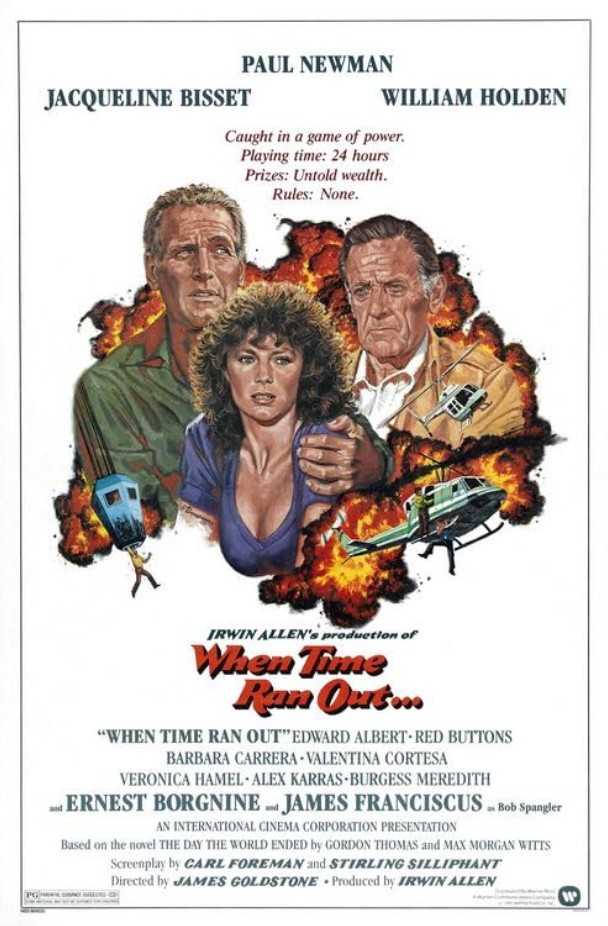
When Time Ran Out… poster created by International Cinema and Warner Bros.

A Lifetime movie I remember liking is 2009’s The Christmas Hope. Though it’s been years since I’ve seen the film, I do recall the interconnectivity between the characters, with each connection becoming more intriguing as the story went on. Interconnectivity between characters is an aspect from When Time Ran Out… I liked. When the story starts, the cast of characters are introduced living their own lives and dealing with their own situations. William Holden portrays Shelby Gilmore, a man who owns multiple hotels, including the Kalaleu Gilmore. Paul Newman also stars in When Time Ran Out… as Hank Anderson, whose work on oil rigs leads him to suspect a local volcano may erupt. Hank’s story connects with Shelby’s story because Hank warns Shelby, as well as Shelby’s business partner, Bob Spangler, about the volcano’s potential eruption. Each character’s connection, along with the cast’s on-screen chemistry, kept me invested in the movie while waiting for the eruption of the volcano. I was not only interested in how each character’s path crossed, but also how the volcano and its aftermath would affect the characters.

Image of Hawaiian poster created by Freepik at freepik.com. <a href=”https://www.freepik.com/free-photos-vectors/poster”>Poster vector created by freepik – http://www.freepik.com</a>. Image found at freepik.com.

Gene claims the problem with When Time Ran Out… is how “some producers” “think they can fool the audience and rope them into the same story over and over again”. As I admitted in this review’s introduction, I don’t watch as many “disaster” movies as Gene and Roger Ebert did when they were hosting their show. However, based on my experience watching When Time Ran Out…, I noticed how the story prioritized the characters’ reactions to the disaster instead of the spectacle of the disaster itself. While the erupting volcano is shown on screen, it isn’t sensationalized like one might expect from a “disaster” movie. The decision to prioritize characters’ reactions shows viewers how natural disasters can indeed have consequences. Some characters get hurt and even die, stressing how no one is invincible while nature has a mind of its own. The threat of a volcanic eruption alone can impact multiple industries, ranging from hospitability, natural resources, and scientific. When the story of When Time Ran Out… progressed, various responses to the eruption were on display. One example is how some of Kalaleu Gilmore’s guests are so desperate to leave the island, they board a helicopter and try to fly it themselves. Everything I just said made this “disaster” picture feel realistic.
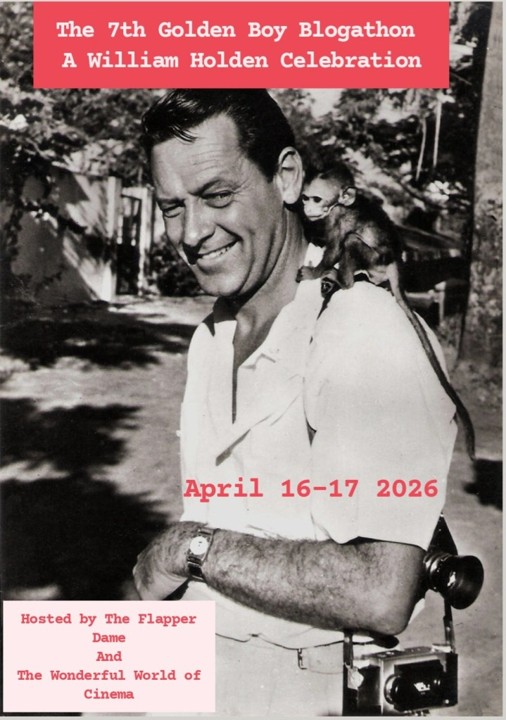
The 7th Golden Boy Blogathon: A William Holden Celebration banner created by Emily from The Flapper Dame and Virginie from The Wonderful World of Cinema

During the segment about When Time Ran Out… in Sneak Previews’ ‘The Worst Movies of 1980’ episode, Roger says “the whole movie is made out of basic scenes we’ve seen dozens of times before”. Meanwhile, Gene criticizes the repetitive nature of When Time Ran Out…’s script as “cruel manipulation”, elaborating by saying “when the audience walks into a film like this and they see that there’s nothing there but that same old formula, I think they feel burned, I think they feel bad about movies in general.” While I agree with Gene and Roger that When Time Ran Out… possesses flaws, I disagree about the types of flaws the movie contains. I understand witnessing the connectivity between characters gave the script build-up to the inevitable volcanic eruption. However, the eruption itself took place at about the film’s halfway point, forcing the audience to wait half the movie for the eruption to happen. This creative decision also caused some of the characters’ resolutions to be wrapped up a little too conveniently for the sake of the run-time. I wish some more of the characters’ reactions to the eruption’s aftermath had been included in the script.
Comparing with the Critics banner created by me, Sally Silverscreen. TV show title cards created by WTTW National Productions, WTTW, Public Broadcasting Service (PBS), Lifetime Television, Tribune Entertainment, Buena Vista Television, and Disney-ABC Domestic Television

In When Time Ran Out…, Shelby talks to Bob about “son of a famous father syndrome”, sharing how he always felt like he was under his father’s thumb. When his father passed away, Shelby says he felt a huge weight lifted off his shoulders. But when he found success, he believed it was hollow because his father wasn’t there to witness his success. Bob disagrees with Shelby’s view of success, saying how sweet success is. I find this discussion between Shelby and Bob ironic, as it takes place in a film Roger claimed was “a major box office flop”. When it comes to When Time Ran Out… itself, I found the film fine, intriguing, and interesting-enough. Due to the connections between the characters, I was invested in how they responded to the eruption and its aftermath. I also appreciate the creative team’s decision to adopt a more realistic approach to the eruption. That creative choice provides a strong reminder how unpredictable nature can sometimes be. Yes, When Time Ran Out… has its flaws. But because I don’t consistently watch “disaster” films, I didn’t pick up on the repetitiveness Roger and Gene did. Similar to when I reviewed Network, the 1980 picture is one I disagree with Gene and Roger on.

This review was brought to you by

Sally Silverscreen
Take 3: Point of Origin Review

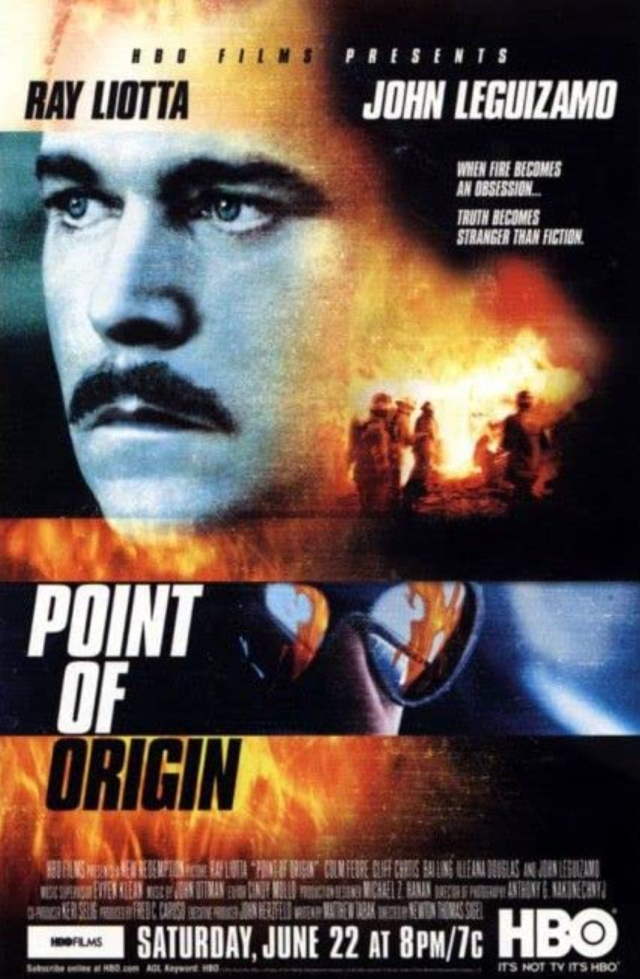
When the subject of “disaster films” is brought up, one will usually think of films revolving around over-exaggerated, fictionalized disasters. Whether it’s Sharknado or The Day After Tomorrow, these types of titles have become the faces of the “disaster film” category. But what if a movie depicts a real-life disaster that could be experienced by anyone? This is the case of my Disaster Blog-a-Thon entry, Point of Origin. Last month, I searched on Wikipedia for a title to review for May’s Genre Grandeur. During that search, I stumbled across the aforementioned 2002 HBO production. After reading the film was a “fact-based drama about an arson investigator searching for the perpetrator of a string of deadly fires in 1980s California”, I knew it was the perfect choice for J-Dub and Pale Writer’s event! Before I start this review, I would like to point out how this marks two firsts for 18 Cinema Lane. Not only is this my first time participating in the Disaster Blog-a-Thon, this is also the first HBO film reviewed on my blog!

Point of Origin poster created by HBO Films and New Redemption Pictures

Things I liked about the film:

The mystery: For the most part, the mystery in Point of Origin allowed the audience to experience it alongside the characters. What also helps is how the mystery started right at the beginning of the film. This immediately hooked the audience into the story, while also giving them a shared journey with the key players on screen. There was room for viewers to speculate what would happen in the story. That gave them the opportunity to interact with the film’s mystery. Three separate components played a role in the overarching narrative. While I won’t give anything away, it was interesting to see these components come together.

The special effects: When John was investigating a crime scene, he would attempt to figure out how the fire started. Toward the beginning of the film, this thought process was visualized through special effects. As John is recounting the information, the actual fire is played out in reverse on screen. This is very different from other mystery movies, as flashbacks might be utilized to speculate the cause of a crime. When it came to the fires themselves, it appeared as if they actually took place in a given scene. It may have been possible for the movie’s creative team to insert footage of fires through editing or CGI, as Point of Origin was released in 2002. However, practical effects were an interesting choice. This creative decision reminded me of productions like The Crow.

Showcasing the dangers of fire: While investigating a local fire, John and his co-worker, Keith, examine a young boy who died on the crime scene. Despite only the victim’s face being shown, it is blackened due to smoke and flame exposure. Later in the film, John visits a surviving burn victim in the hospital. The victim’s face and part of his hand are covered in burns. He even claims that it hurts to open his eyes. Due to the nature of Point of Origin, the story is heavier in tone. However, the incorporation of the dangers of fire never felt like they were there for “shock value” or as a tactic to scare the audience. If anything, it was shown just enough to get the point across.

The Second Disaster Blog-A-Thon banner created by J-Dub from Dubsism and Pale Writer from Pale Writer

What I didn’t like about the film:

Bai Ling’s limited presence: Bai Ling was cast as John’s wife, Wanda Orr, in the 2002 HBO film. Her involvement in Point of Origin is one of the reasons why I sought out this movie, as she is the top billed actress. When I watched the film, however, I discovered Bai appeared in only a handful of scenes. Compared to some of Bai’s other projects, her talents were under-utilized in Point of Origin. It also seems like the main supporting actress, Illeana Douglas, received more screen-time than Bai. Bai did a good job with the acting material she was given. But this situation is very reminiscent of Katharine Hepburn’s involvement in 1994’s One Christmas, where Katharine appeared in about five scenes despite being that film’s top billed actor.

A confusing time period: As I mentioned in the introduction, Point of Origin takes place in the 1980s. Elements from that decade were incorporated into the film, such as vehicles and a typewriter used by John at various moments in the story. Meanwhile, Bai’s wardrobe looked like it came straight from the early 2000s. There was also a scene where a store patron tells another patron not to smoke in the store. This attitude was more prevalent in the 2000s, as smoking in public places was more accepted in the 1980s. The inconsistency with the film’s historical accuracy was so confusing, it was, on a few occasions, distracting.

An unidentified red-haired man: Throughout the movie, a red-haired man made multiple appearances. I won’t spoil the movie for anyone who hasn’t seen it. But I will say when everything was said and done, I don’t feel like I received a satisfying explanation of who that character is. Yes, I can assume the red-haired man’s identity. However, when it comes to that character, the movie was building up to something without providing a pay-off.

Magnifying glass and fingerprint image created by Alvaro_Cabrera at freepik.com. <a href=’https://www.freepik.com/free-vector/loupe-over-a-fingerprint_853908.htm’>Designed by alvaro_cabrera</a>. <a href=”https://www.freepik.com/free-photos-vectors/glass”>Glass vector created by Alvaro_cabrera – Freepik.com</a>. Image found at freepik.com.

My overall impression:

For the Disaster Blog-a-Thon, I chose to talk about a film that revolved around a real-life disaster. This is because, in my opinion, these types of titles aren’t talked about as much within the realm of “disaster films”. When it comes to Point of Origin specifically, it was a fine, competently made, intriguing movie. But the 2002 HBO project made me feel similarly to Red Corner. This is ironic, as Bai Ling was cast as the lead actress in both films. What I mean by my aforementioned statement is I held higher expectations for each film, only to be somewhat let down by them. As I’ve said before on 18 Cinema Lane, the historical accuracy works when the creative team places emphasis on the details. In Point of Origin, however, it seems like the film’s creative team forgot, at times, their project took place in the 1980s. This is because some aspects of the film reflected the time of the film’s release; the early 2000s. I haven’t seen a lot of HBO films, so I can’t make any comparisons with Point of Origin. But I will say, based on other made-for-TV mystery productions, this one felt closer to the middle of the road.

Overall score: 7.2 out of 10

Have you seen Point of Origin? Are there any HBO films you’d like to see reviewed on 18 Cinema Lane? Please let me know in the comment section!

Have fun at the movies!

Sally Silverscreen