As I mentioned in the introduction of my review for 1920’s The Scarecrow, I wanted to select a movie for my Silent Movie Day Blogathon entry that was more seasonal/festive to the Fall/Autumn season because of the blogathon’s September 29th date. Out of the listed titles from Buster Keaton’s complete short films collection (recommended by Maddy from Classic Film And TV Corner), I thought The Scarecrow and The Haunted House would be the perfect choices I was looking for! This is especially true considering Halloween is on the horizon. Looking back on all the movies I’ve reviewed that would fit the Halloween season, the only pictures predominantly featuring a haunted house are 1983’s House of the Long Shadows and 1961’s The Innocents. While I found The Innocents confusing, House of the Long Shadows turned out to be a hidden gem. Similar to House of the Long Shadows, 1921’s The Haunted House is classified on IMDB as both a “horror” and “comedy” film. But will the short film be a hidden gem as well? Keep reading my review to find out!
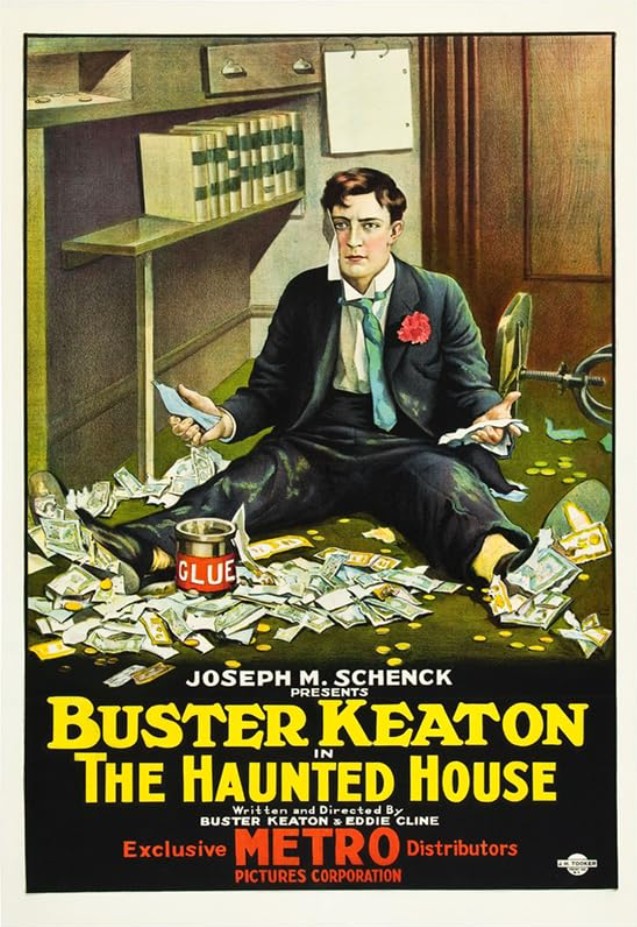
The Haunted House (1921) poster created by Joseph M. Schenck Productions and Metro Pictures Corporation
Things I liked about the film:
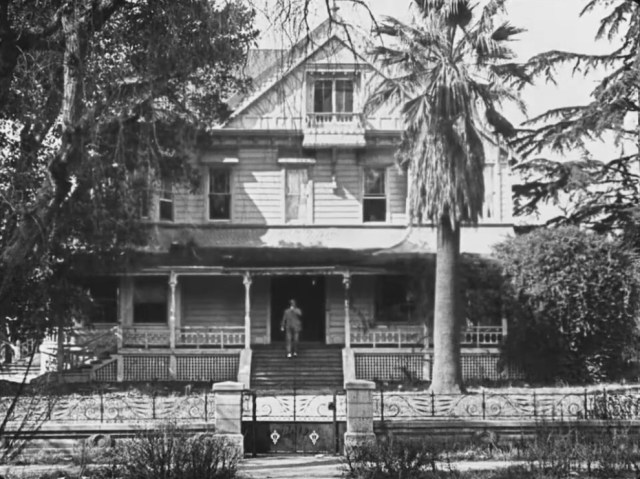
The exterior of the “haunted house”: In The Haunted House, the titular house was considered “haunted” because a group of thieves intentionally created an environment where people would be too scared to discover their stolen money. While the interior of the “haunted house” was on full display, I was impressed by the exterior of the house. This three-story structure was covered in pristine white wood. A long shot reveals the house possesses a wrap-around porch, as well as a small balcony on the third floor. The large, surrounding trees not only nicely frame the house, they also allow the house to stand out. There’s even a beautiful wrought-iron fence and gate displayed at the front of the property. Even though there were two scenes where the exterior of the “haunted house” was shown, I wish there was, at least, one more shot to showcase the gorgeous architecture of the house!
How spooky elements were utilized: As I said in the introduction of this review, I selected The Haunted House for the Silent Movie Day Blogathon because Halloween is on the horizon. When Buster Keaton’s character (the Bank Clerk) enters the “haunted house”, that’s when the spookiness enters the story. Two people dressed up as skeletons construct a mannequin who magically comes to life. The mystery of how these skeletons could make the mannequin animate adds a hint of magic sometimes associated with Halloween. A headless man asks the Bank Clerk to hold his head. Though this headless man appears in only one scene, he was reminiscent of the iconic Headless Horseman, a character usually affiliated with the Halloween season. When an actor portraying Faust has his cape catch on fire, he is followed by fire and smoke, making him appear scarier than he actually is. Though the actor escaped to the “haunted house” following a bad stage performance, his presence complimented the spookiness of the setting. With The Haunted House being a silent picture, the creative team behind the short film displayed an understanding of how to craft a visually memorable location. Combining costuming, the actors’ performances, and special effects, how the spooky elements of The Haunted House were utilized made scenes within the “haunted house” feel appropriate for the holiday of Halloween!
Physical comedy: When I reviewed The Scarecrow, I didn’t discuss the utilization of physical comedy too much. That’s because I took the time to praise how the incorporation of Luke the Dog complimented Buster’s slapstick antics. But, in The Haunted House, the actors were solely responsible for providing the film’s physical comedy. Even though the “haunted house” was intended to be a scary location, it was a great environment for physical comedy to take place. In an upstairs hallway, the Bank Clerk becomes fed up with ghosts constantly crossing and blocking his path. To remedy the problem, he pulls out a whistle and directs traffic in the hallway. When the Bank Clerk motions for the ghosts to stop, they obey his command and stop in the middle of the hallway, waiting for his cue in order to move again. While this example of physical comedy is simpler, it was a creative and effective way to combine Buster’s acting performance and the spooky elements the “haunted house” had to offer!
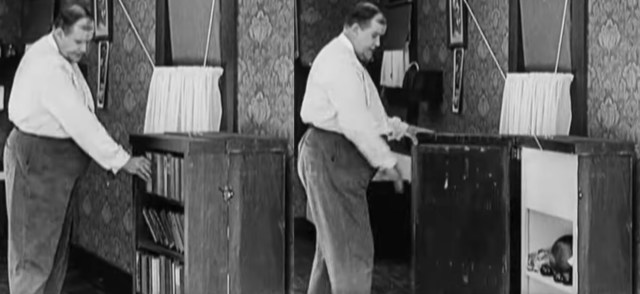
I provided a picture of the exterior of the “haunted house” because I knew my description wouldn’t do it justice. “Haunted house” image created by Joseph M. Schenck Productions and Metro Pictures Corporation
What I didn’t like about the film:
Prolonged appearance of the “haunted house”: With a title like The Haunted House, I expected the titular setting to be prominently featured in the story. While the “haunted house” appeared more in The Haunted House than the scarecrow did in The Scarecrow, the appearance of the “haunted house” was prolonged. In the 1921 picture, the “haunted” nature of the “haunted house” didn’t take place until almost thirteen minutes into the twenty-four-minute story. The first half of The Haunted House revolved around the mishaps at the bank, with some of that time given to the disastrous performance of the Daredevil Opera Company. I wish the “haunted house” had appeared earlier in the movie, so the script could get to the spooky point sooner.
Things left unexplained: During my discussion of The Scarecrow’s flaws, I pointed out how the movie’s twenty-minute run-time prevented the script from further exploring certain topics addressed by the characters. The Haunted House shares a similar flaw. Only this time, the film’s twenty-four-minute run-time left little room to provide explanation when necessary. Like I just brought up in this review, the Daredevil Opera Company had a disastrous performance. To escape the wrath of their audience, the actors run away to the “haunted house”. But, as the story progressed, the Daredevil Opera Company actors disappeared, with their further whereabouts unknown. Since the creative team behind The Haunted House knew their project’s run-time would be short, they should have included a title card providing a brief explanation of what happened to the Daredevil Opera Company actors.
An overwhelming story: Like I’ve been saying in this review, there are three parts of The Haunted House’s story; the mishaps at the bank, the Daredevil Opera Company’s disastrous performance, and the antics within the “haunted house”. As I’ve also said in this review, The Haunted House possesses a twenty-four-minute run-time. This left the creative team so little time to tell so much story. With everything happening on screen, there were a few times I felt overwhelmed while watching The Haunted House. In fact, I had to watch the movie a second time just to gain a better understanding of what was going on in the story. This plan ended up working for me, however, as I had a better grasp on the story’s context.
Halloween being on the horizon is one of the reasons why I chose The Haunted House for the Silent Movie Day Blogathon. Because of how the spooky elements were utilized in the titular “haunted house”, the scenes within the “haunted house” certainly felt reminiscent of Halloween. But what also worked in the space of the “haunted house” was the physical comedy, as the spooky elements and Buster Keaton’s performance provided an entertaining, visually memorable combination. Though the exterior of the “haunted house” only appeared in two scenes, it left such a beautiful impression. I honestly wish the house’s exterior had appeared in the movie, at least, one more time, to find more opportunities to show off the house’s gorgeous architecture. Even though The Haunted House had its strengths, it also had its flaws. With so much taking place in the story and so little time to tell that story, the 1921 picture left me overwhelmed a few times. The shorter run-time also prevented the movie’s creative team from providing explanations when necessary, such as what happened to the Daredevil Opera Company actors. I was disappointed by the prolonged appearance of the “haunted house”, as the “haunted house” itself is a major reason why I chose to review the film in the first place. However, I still enjoyed watching The Haunted House almost as much as The Scarecrow.
Overall score: 7.6 out of 10
Have you seen 1921’s The Haunted House? Is there a movie featuring a haunted house you thought was entertaining? Tell me in the comment section!
Last March, I participated in The Silent Pioneers Blogathon, which was hosted by Classic Film And TV Corner. In that event, I wrote about a double feature; 1920’s The Garage and 1925’s The Phantom of the Opera. This time around, for the Silent Movie Day Blogathon (hosted by Silentology and The Everyday Cinephile), I’m writing about another double feature. However, for this double feature, I will be reviewing two of Buster Keaton’s films! When I reviewed The Garage, I was recommended Buster Keaton’s complete short films collection by Maddy (from the aforementioned Classic Film And TV Corner). Out of the listed titles, I wanted to select a movie for my Silent Movie Day Blogathon entry that was more seasonal/festive to the Fall/Autumn season because of the blogathon’s September 29th date. When I saw The Scarecrow and The Haunted House on the short films list, I thought they’d both be the perfect choices I was looking for! So, without further delay, let’s begin this double feature with 1920’s The Scarecrow!
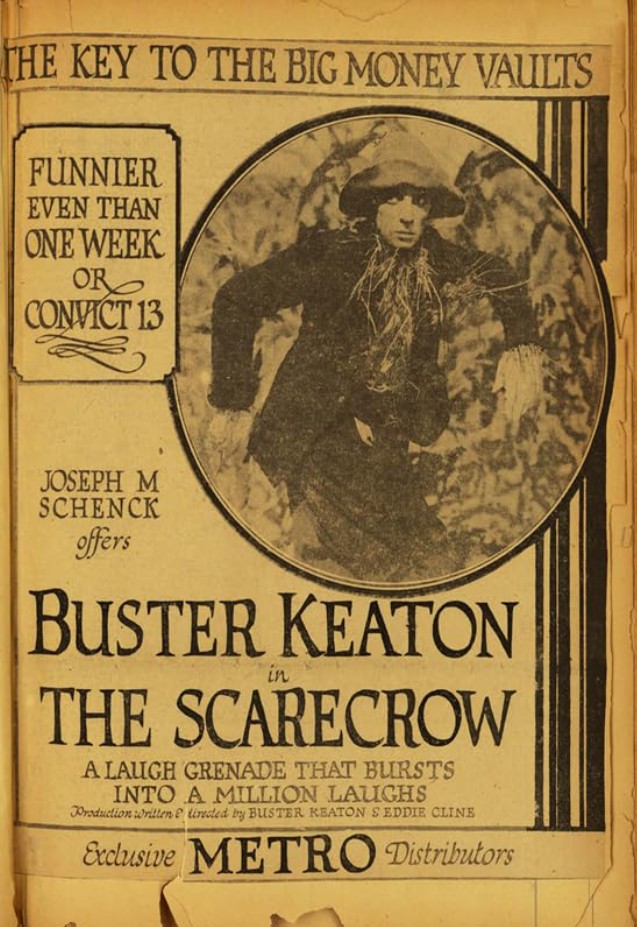
The Scarecrow(1920) poster created by Joseph M. Schenck Productions and Metro Pictures Corporation
Things I liked about the film:
The set pieces: When I bring up the sets/background of a film, I will sometimes praise the scenery or set design. The reasons can range from aesthetically pleasing landscapes to historically accurate settings. However, I don’t often talk about specific set pieces. The Scarecrow has become the exception due to how impressively multi-functional the set pieces are. A title card reveals how “All the rooms in this house are in one room”, referring to the house Buster Keaton’s character and Joe Roberts’ character share. Because of this limited space, each set piece possessed more than one function. A giant record player is located next to the door. As Buster’s character helps prepare a meal, the record player reveals itself as both a stove and an oven. During these same meal preparations, Joe’s character shows the audience how a refrigerator was hiding behind a bookshelf. Even a tub transforms into a small loveseat, complete with a convenient drainage system. While watching The Scarecrow, it was fun to see the different ways each set piece was utilized!
The incorporation of Luke the Dog: Silent films will usually bring to mind actors or actresses having to rely on their facial expressions, body language, and interactions with other cast members to help visually tell a story. For comedic silent pictures, an actor’s or actress’s physical comedy, such as slapstick humor, will typically provide most of the story’s comedy. But in the case of The Scarecrow, the incorporation of a dog added some of the movie’s humor. After eating a cream pie intended for the Farmer, The Dog (portrayed by Luke the Dog) ends up chasing Buster’s character for about four minutes. When paired with Buster’s physical, slapstick comedy, The Dog’s reactions allowed both the chase and the laughs to continue. During the chase, Buster’s character climbs a ladder in order to get away from The Dog. Refusing to see the ladder as an obstacle, The Dog effortlessly climbs the ladder as well. As the chase leads Buster’s character to his and Joe’s character’s house, Buster’s character tries to escape The Dog’s path by hiding in the tub and exiting the house through its drainage system. Meanwhile, The Dog conveniently locates the house’s compost shute, which is also how The Dog leaves the house. Weaving The Dog into the story allowed The Scarecrow to provide creatively comedic moments in the film!
Buster Keaton’s facial expressions: Buster Keaton is one of the most celebrated actors from the Silent Film Era, claiming his fame through comedic stunts and slapstick comedy. But what The Scarecrow showed me is how well Buster utilized facial expressions throughout his performance. In one great example, Buster’s character is being chased by The Dog along the edge of an abandoned ruin. He removes a wooden board that was used as a bridge between a gap in the wall, believing The Dog would give up the chase. When The Dog jumps over the gap in order to get closer to Buster’s character, the look on Buster’s face says so much without saying anything at all. From the appearance in his eyes to the slight frown of his mouth, the feelings of defeat, frustration, and weariness are painted on Buster’s face. The excellent mastery of facial expressions helped make Buster’s performance one of the most entertaining aspects of The Scarecrow!
In these pictures, Joe’s character reveals a delicious surprise hiding behind the bookshelf. Refrigerator bookshelf set piece images created by Joseph M. Schenck Productions and Metro Pictures Corporation.
What I didn’t like about the film:
The scarecrow’s limited presence: As I mentioned in this review’s introduction, I wanted to write about The Scarecrow because I wanted to select a movie for my Silent Movie Day Blogathon entry that was more seasonal/festive to the Fall/Autumn season. With scarecrows typically present within Fall/Autumn themed décor and imagery and with the title of the movie being The Scarecrow, I believed the titular scarecrow would serve a significant role in the story. When I watched The Scarecrow, however, there were no scarecrows featured on screen until almost fifteen minutes into the twenty-minute story. I recognize the scarecrow was incorporated into one of Buster’s physical comedic parts of his performance. But with everything said, I wish the scarecrow was given more inclusion in the film.
Little to no context: Like I just brought up in this review, The Scarecrow has a run-time of twenty-minutes. This shorter length of time prevents the script from further exploring certain topics addressed by the characters, leaving viewers like me confused by verbal loose ends. One example is mentioned toward the beginning of the movie. Joe’s character has his heart set on marrying the Farmer’s Daughter. He even tells Buster’s character, “I don’t care how she votes – I’m going to marry her”. Yet, none of the title cards explain why the voting preferences of the Farmer’s Daughter held any significance within the script. As soon as Joe brought up the Farmer’s Daughter voting, it was quickly forgotten about.
An underutilized character: After the Farmer’s Daughter bakes a cream pie for her father, a woman shows the Farmer’s Daughter a magazine advertisement featuring ballet dancers. Through this interaction, the audience learns the Farmer’s Daughter is a very talented dancer. But this is the only scene the woman appears in. In fact, this character and the actress who portrayed her isn’t listed on IMDB or Wikipedia. I was actually disappointed by the underutilization of this character, as I was curious to see how she would affect the story’s events.
I selected The Scarecrow as one of my entries for the Silent Movie Day Blogathon because I wanted to choose a title that was more seasonal/festive to the Fall/Autumn season. With appearances of hay bales, piles of hay, and a corn field, there were definitely scenes that felt reminiscent of Fall/Autumn. But what The Scarecrow also provides were effectively humorous moments and a simplistic, yet easier to follow story. The strengths of the 1920 picture added to my movie-viewing experience, such as Buster’s excellent utilization of facial expressions and set pieces that were both creative and ingenious. Even adding Luke the Dog to the story helped deliver more comedy, actually complimenting Buster’s slapstick antics. However, The Scarecrow does have its flaws. One of the major issues is how the titular scarecrow doesn’t appear in the movie for very long, showing up almost fifteen minutes into the twenty-minute story. Despite these flaws, The Scarecrow is certainly a worthy silent film to check out, even if it’s your first time watching a Buster Keaton film!
Overall score: 7.7 out of 10
Have you seen The Scarecrow from 1920? What movies remind you of Fall/Autumn? Please tell me in the comment section!
I published a list article last December about my ten “hot takes” on film. That was the first time I had ever written a list exclusively about movie “hot takes”. Since publishing that article, it has been well received by 18 Cinema Lane’s readers, obtaining over one thousand views. This success inspired me to write another “hot takes” list. But this time, I’ll be discussing my ten “hot takes” on television, as I have talked about TV shows and television related topics from time to time on my blog. Like my movie “hot takes” list, all my TV “hot takes” have never been brought up on 18 Cinema Lane before, in order to keep the list interesting and fresh. Also, like my movie “hot takes” list, I organized each television “hot take” based on how “hot” each take could be perceived. Before I begin this list, I’d like to state how my list is not intended to be mean-spirited or negative. It’s just simply a way to express my opinion.
Campfire with marshmellows and shooting stars image created by macrovector at freepik.com.
10. Harris Trinsky Should Have Appeared in the Freaks and Geeks episode, ‘Chokin’ and Tokin’’
Last year, I published an editorial explaining the similarities between Harris Trinsky (from Freaks and Geeks) and Eddie Munson (from Stranger Things). One of my main talking points was how Harris (as well as Eddie) showed his leadership through putting others before himself, using the example of Harris’ attempts to protect the younger “geeks” (Bill, Sam, and Neil) from Alan (the “freshman tormentor”/bully of the “geeks”) in the Freaks and Geeks’ Halloween episode, “Tricks and Treats”. But another episode I think Harris should have appeared in is “Chokin’ and Tokin’”. In this episode, Alan believes Bill is lying about having a peanut allergy. To prove Bill is telling the truth, Alan contaminates Bill’s sandwich with peanuts, causing Bill to have a severe allergic reaction. Had Harris appeared in “Chokin’ and Tokin’”, the audience could have seen how Bill’s emergency affected him, especially since a) Harris knows what Alan is capable of when it comes to his bullying behavior, b) Harris was bullied when he was a freshman (to the point his tailbone became broken), and c) Harris knows about Bill’s peanut allergy (Bill admitted this while Harris and the “geeks” went trick-or-treating in the episode, “Tricks and Treats”). The dynamic of the friendship between Harris and the “geeks” not only could have been further explored, the audience also could have learned more about Harris, better understanding why he is an older brother figure to the “geeks”. I think this aspect of the story would have been more compelling than the redemption arc Freaks and Geeks’ creative team tried giving Alan in “Chokin’ and Tokin’”, which I, personally, don’t believe was affective. This “hot take” is placed at the bottom of my list due to Freaks and Geeks lasting only one season.
9. Moses Valentine, from Miss Scarlet, Should Have Received His Own Spin-off Show
While I have talked about Miss Scarlet before on my blog, I’ve never talked about my favorite character from the show, Moses Valentine. For three seasons, he possessed a captivatingly commanding presence, using his charm and street smarts to help Eliza Scarlet (the show’s titular character) solve mysteries. In the third episode of Miss Scarlet’s sixth season, ‘The Delivery’, the story primarily revolves around Moses as he searches for a missing diamond. Not only was this the best episode from the sixth season (in my opinion), it made me wish Moses had received his own spin-off show. From seasons four to six, Moses has been living in Paris. This backdrop could have given the spin-off show a colorful landscape and an eccentric group of characters, allowing the show to be distinct from Miss Scarlet’s London environment. It was revealed in ‘The Delivery’ and the fifth episode of Miss Scarlet’s sixth season, ‘The Night Shift’, that Moses is not only married, he also has a son. His family would have offered a unique dynamic from Miss Scarlet, as Eliza is not married and isn’t a mother. There could have even been a crossover episode between Moses’ spin-off show and Miss Scarlet, where Eliza visits Moses in Paris and helps him solve a mystery. But, sadly, a Moses centered spin-off show will likely not happen because the seventh season of Miss Scarlet will be the show’s last.
8. I Don’t Think Lauren Should Have Won the Reach for the Stars Competition in the Matlock episode, ‘The Starlet’
Toward the beginning of the Matlock episode, ‘The Starlet’, a talent contest called the Reach for the Stars Competition takes place. Whoever wins the competition will receive a two-year studio contract, a brand-new car, and $25,000. The final four contestants, Morgan, Dana, Abby, and Lauren, have their talent performances featured in ‘The Starlet’. While Morgan captivated by singing an energetic pop song, Abby sang a country song that sounded like it came straight from the heart. Dana’s performance of a song on saxophone was solid, adding her strong contribution to the soundtrack of the 1980s. But Lauren’s performance, which helped her win the Reach for the Stars Competition, was, in my opinion, unimpressive compared to the aforementioned three performances. Lauren performed a dance routine that was, to put it simply, basic. Its contents were a few arm movements, stepping in place several times, and some simple turns. I know Lauren’s victory was intended to create a domino effect for the events that took place in ‘The Starlet’. I also recognize what the creative team behind this Matlock episode was trying to say about connections being prioritized over talent when it comes to success, as Lauren’s mother, Janet, won the very first Reach for the Stars Competition. But I still don’t think Lauren should have won the contest based on talent performance alone.
7. I wish Tommy Vaughn Hadn’t Been the Murder Victim in the Murder, She Wrote episode, ‘Murder in Tempo’
In the Murder, She Wrote episode, ‘Murder in Tempo’, Dr. Seth Hazlitt organizes a benefit concert in an effort to save a local forest called Cabot Woods, with a band named In Tempo being the stars of the concert. One of In Tempo’s band members, Tommy Vaughn, has a dinner plate full of personal issues; from alcohol dependency that led him to rehab to dealing with a stalker prior to coming to Cabot Cove and even almost getting shot during the band’s concert rehearsal. But during his interactions with a Cabot Cove resident named Rachel, there are glimmers of hope that Tommy could, potentially, turn his life around. In a conversation he shared with Rachel, Tommy confesses his father passed away in an alcoholic ward, admitting his father’s issues made him look at the world pessimistically. He also acknowledges how he’s developed a poor reputation and how he needs to seek medical attention when he experiences problems with his vocal cords. Tommy even agreed to perform at the benefit concert because he truly believed in the cause of saving Cabot Woods, refusing to quit the concert despite pressure from the band’s manager, Wylie Trey. I’m aware Murder, She Wrote possesses a limited number of recurring characters and ‘Murder in Tempo’ premiered within the show’s last season. But I’d like to think if Tommy’s life had been spared, he would have received a second chance to obtain a happier next chapter to his story. Tommy could have even appeared in one of Murder, She Wrote’s made-for-TV movies or one of the books from the Murder, She Wrote book series. While advocating for the preservation of Cabot Woods, Jessica Fletcher says, “But even small battles are important”. Sadly, Tommy never got the chance to win at least one of his “small battles”.
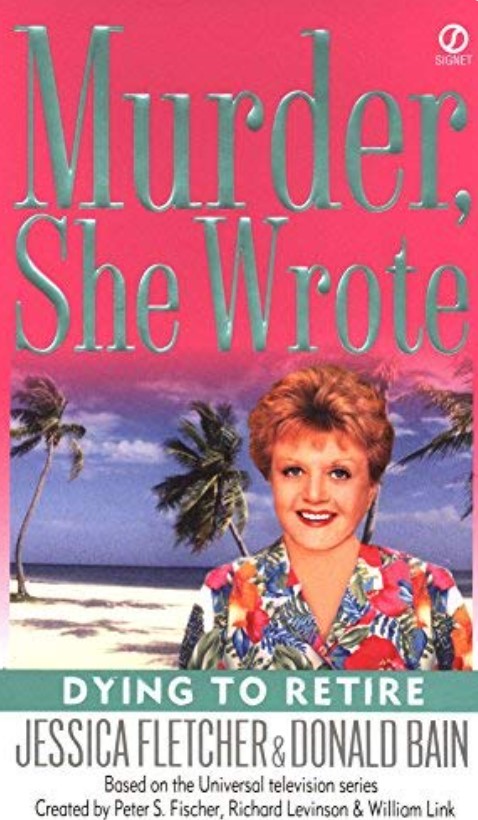
Since one of my television “hot takes” relates to Murder, She Wrote, I thought featuring the book cover for Murder, She Wrote: Dying to Retire in this list article made sense. Murder, She Wrote: Dying to Retire book cover found on Goodreads
6. One of the HGTV Dream Homes Should Have Been Built in Hawaii
For almost thirty years, HGTV (Home and Garden Television) has hosted their annual Dream Home sweepstakes, with a completely furnished house as the grand prize. Eighteen of the fifty United States have hosted a prize home in varying styles and diverse landscapes. But, in my opinion, one of those states should have been Hawaii. The “gimmick” of HGTV’s Dream Home sweepstakes is for someone to win a “dream” home in a “dream” location. For years, Hawaii has been known as a “dream” travel destination for many people, yet owning a home in Hawaii is a “dream” few people can achieve for a variety of reasons. Realistically, I’m not sure what the logistics would be in order to make an HGTV Dream Home in Hawaii a reality. On paper, however, a Hawaiian Dream Home would fit the intent of HGTV’s contest.
5. I wish Sophia’s Son, Phil, Had Made, At Least, One On-Screen Appearance on The Golden Girls
Looking back on all the times I’ve watched The Golden Girls, one consistent story element always comes to mind; how Sophia singles out her son, Phil, whenever she brought up her children. Because it seemed like he was mentioned often on the show, I always wondered if what was said about him by the other characters was true. This curiosity made me want to see, at least, one on-screen appearance of him, in order to learn more about Phil from his perspective. Unfortunately, this never happened as Phil died off screen, with his death acknowledged in the season six episode, ‘Ebbtide’s Revenge’. It would have been fascinating to see Phil’s interactions not only with Sophia, but with the other “golden girls” as well. Plus, this role would have given an up-and-coming or underrated actor a chance to start or progress his career, especially considering The Golden Girls is one of the most successful and beloved television shows of all time. It also would have been interesting to see how The Golden Girls’ audience responded to Phil’s appearance on the show, if perhaps he had become a fan favorite. Though to quote the iconic Tootsie Pop commercial, “the world may never know”.
4. I Don’t Find the Gilligan’s Island episode, ‘The Hunter’, Funny or Entertaining
Gilligan’s Island is a show that is known for being light-hearted and hilarious, typically presenting the characters in low-stakes situations despite being stranded on the titular island. But the episode, ‘The Hunter’ is quite different from what the show is known for. Jonathan Kincaid is introduced in this episode as a big-game hunter. When he is unable to find any animals on the island to hunt, Jonathan then decides to hunt the other characters. The story of ‘The Hunter’ is tonally inappropriate for the type of program Gilligan’s Island is. With the show’s laugh track still featured in this episode, it makes the characters’ fear seem like it is played for laughs instead of being taken seriously. I was so horrified by ‘The Hunter’, I couldn’t find anything entertaining or funny about it. I, honestly, questioned what the creative team behind Gilligan’s Island was thinking creating and airing the episode. Because ‘The Hunter’ has been received better than other episodes of Gilligan’s Island, obtaining a 7.3 out of 10 on IMDB, this “hot take” is ranked higher on my list.
3. I Don’t Understand the Hype Surrounding ‘Shark Week’
According to Wikipedia, Shark Week debuted almost forty years ago on Discovery Channel with educational intentions, emphasizing conservation and debunking misconceptions. But as time went on, the annual event grew a life of its own. The term “shark week” has been added to the pop cultural lexicon, with people knowing what that is even if they’ve never watched any program associated with the event. Merchandise has been created to capitalize Shark Week, from shirts to scouting patches and even stuffed animal sharks from Build-A-Bear Workshop. But despite the promotion and fanfare it’s received, I don’t understand the hype surrounding Shark Week. With the amount of information available about sharks now than there was thirty-eight years ago, it almost seems unnecessary to reserve only one week to shark related education. In fact, shark related education can be accessed any time of year. Because sharks are such a specific subject, the event could run the risk of running out of content or programming. Plus, there are other animals who would also benefit from receiving education about them and conversation efforts for them. Yet they don’t receive their own special week.
2. If Eddie Munson Had Been Introduced on Stranger Things Sooner, The Show’s Creative Team Would Have Prioritized His Popularity, Similar to Steve Urkel (from Family Matters)
Once upon a time, on December 15th, 1989, Steve Urkel made his debut on the sitcom, Family Matters. What started as Steve asking one of the show’s key family members, Laura Winslow, to a dance turned into Steve becoming one of the most popular characters in television history. As Steve’s popularity grew, he received more screen-time and significance in the story. He not only became very marketable, having products based off Steve like Urkel-O’s Cereal and a talking doll, Family Matters also became defined by Steve’s iconic catchphrase, “Did I do that?”. But Steve’s popularity came at the expense of the titular Winslow family and their matters, which defied the original intent of the sitcom. If Eddie Munson had been introduced on Stranger Things sooner, I believe the show’s creative team would have allowed a similar scenario to happen. Like Steve Urkel, Eddie Munson became very popular after appearing in one season of his respective show. Also, like Steve, Eddie became very marketable, with products ranging from a replica of his Hellfire Club shirt to books about Eddie’s side of the story. But Eddie made his debut in Stranger Things’ fourth out of five seasons, with Eddie also passing away at the end of the fourth season. Though if Eddie had debuted in either season one or two, Eddie’s popularity would have given the show’s creative team an excuse to not only keep him on the show, but to also upgrade his status from ‘recurring’ to ‘main’ character. But, similar to Steve on Family Matters, the emphasis on Eddie’s popularity could have run the risk of other characters and stories getting overshadowed, potentially leaving mysteries and story-threads unresolved. There’s also a chance Stranger Things‘ creative team could have turned Eddie into “too much of a good thing”, giving Eddie elements to his story that may not make sense, such as receiving a catchphrase that seems unnecessary.
1. Writing Jack Thornton Off When Calls the Heart is the Show’s Biggest Mistake
When the creative team behind When Calls the Heart decided to write Jack Thornton (one of the show’s main characters) off the show by having him die off screen, that was one of the most controversial creative decisions in Hallmark Channel history, as characters are typically not written off the network’s programs in this fashion. But looking back on this creative choice eight years later, writing Jack off When Calls the Heart has proven, in my opinion, to be pointless. If Jack had stayed on the show, other creative decisions I’m, personally, not a fan of wouldn’t have been made. Some of these decisions are the love triangle between Elizabeth, Lucas, and Nathan (that lasted three seasons), as well as backtracking Elizabeth’s decision to fall in love with and become engaged to Lucas. When it comes to the argument for why Elizabeth should be in a romantic relationship with Nathan, the McGarries (fans of Elizabeth and Nathan) have claimed that because Elizabeth falls in love with a Mountie in the book series the show is based on, she has to fall in love with a Mountie on the television show. With that logic in mind, if it was so important for Elizabeth to be in a romantic relationship with a Mountie, why write Jack off the show at all? I’m aware of Daniel Lissing’s (the actor who portrayed Jack) desire to leave the show to pursue other projects. However, I think recasting Jack would have attracted less backlash than writing him off the show. When Jack was still on When Calls the Heart, it seemed like his relationship with Elizabeth organically complimented the show’s overarching story. It also helped that Daniel and Erin Krakow (the actress who portrays Elizabeth) had stronger on-screen chemistry together. But now that Elizabeth and Nathan’s relationship has been prioritized since season eleven, its promotion, in my opinion, not only feels forcefully manufactured, it has come at the expense of other characters and stories, such as Rosemary, once again, not receiving her theater and new characters like Fernando becoming underutilized.
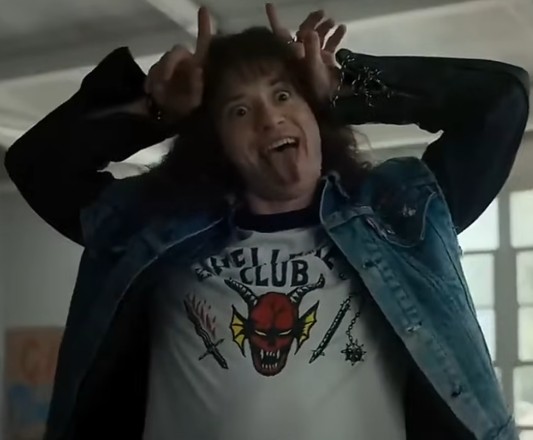
Since another television “hot take” in this list article relates to Eddie Munson and Stranger Things, I believed including this iconic picture of Eddie in this post was appropriate. Original image created by 21 Laps Entertainment, Monkey Massacre, Netflix, and Upside Down Pictures
What are your thoughts on my TV “hot takes”? Do you have a TV related “hot take” you’d like to share? Please tell me in the comment section below!
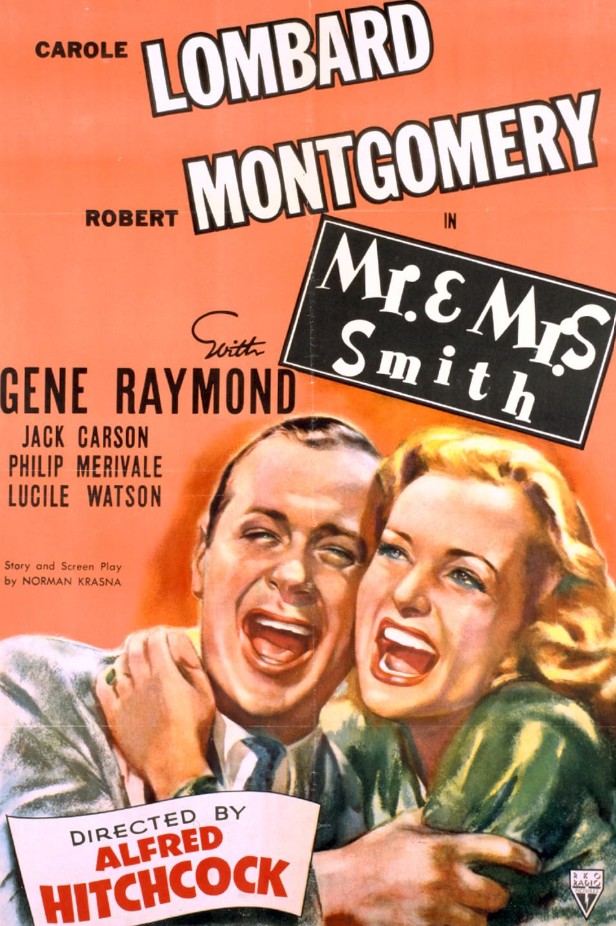
I am back from a two-week hiatus to deliver a brand-new review for The 4th Master of Suspense Blogathon! As a consistent participant in this event, I wanted to, once again, broaden my cinematic horizons by writing about another film from Alfred Hitchcock’s filmography. Before joining the blogathon, I remembered how Patricia (from Caftan Woman) recommended the 1941 movie, Mr. & Mrs. Smith, to me. This year’s edition of the Master of Suspense Blogathon gave me the perfect excuse to, finally, check the film out! Mr. & Mrs. Smith is now the seventh movie from Alfred’s filmography I’ve reviewed. However, most of his films covered on 18 Cinema Lane have been, in my opinion, just ok. Will the 1941 picture stand out among this aforementioned collection? Solve this mystery by reading my review!
The acting: In Mr. & Mrs. Smith, Carole Lombard portrays the titular Mrs. Smith, Ann Smith/Krausheimer. One aspect of Carole’s performance I liked was how expressive it was! A great example is present during a conversation Ann shares with her husband, David, toward the beginning of the movie. When Ann asks David if he’d marry her if he had a chance to do it again, she appears hopeful. A smile can be seen on Ann’s face and there’s a bright shine in her eyes, paired alongside her easy-going demeanor. But when David matter-of-factly answers Ann’s question by saying, “No”, Ann’s attitude completely changes. Not only do her eyes adopt a “thousand-yard stare”, her mouth is also slightly turned into a frown. Though Ann tries to mask her disappointment by bouncing back to her easy-going demeanor, her facial expressions perfectly capture what’s in her mind and heart.
Robert Montgomery portrays David Smith, the titular Mr. Smith in the 1941 movie. Similar to Carole’s performance, Robert effectively utilized facial expressions to convey emotions, feelings, and thoughts. While he’s at his office, David calls Ann about their upcoming dinner plans. During his conversation with Ann, the combination of David’s smile, playful glances, and a flirty hint in his voice showcases how much he loves his wife. Meanwhile, Jack Carson’s portrayal of Chuck “Chucky” Benson was a standout! Despite appearing in only three scenes, Chuck became memorable due to the consistent charisma and confidence Jack brought to his character. The scene where Chuck calls Gloria and Gertrude/Gertie is such a great example of how distinct Chuck’s personality is compared to David’s, as David’s awkward phone call emphasizes Chuck’s head-strong confidence.
The on-screen chemistry of Carole Lombard and Robert Montgomery: As I already mentioned in this review, David and Ann are the titular Mr. and Mrs. Smith. From the very beginning of the story, it is evident there is true love between them. This is because Robert and Carole’s on-screen chemistry successfully convinces the audience their characters are not only married, but also in love! When David and Ann cuddle together one morning, David holds Ann in a gentle embrace. Their relaxed body language perfectly captures the comfort they share in their relationship. As David asks her questions, Ann simply nods her head and moves her eyebrows. His tone of voice is calm, emphasizing the gentleness of David and Ann’s interaction. This is a very romantic moment because there’s a sense of tenderness, understanding, and respect between them. But because of the story’s conflict, Ann and David share so few romantic moments together, making me wish they had received more in the script.
Jeff’s apartment: One evening in Mr. & Mrs. Smith, David’s friend, Jeff, takes Ann to the 1939 New York World’s Fair. Due to the rain they endure, they go to Jeff’s apartment to escape the cold. When I first saw his apartment on screen, I did not expect it to look the way it did. Because Jeff is a lawyer who appears to enjoy the finer things in life, such as classy suits and fancy restaurants like The Florida Club, I imagined his apartment consisting of dark wood walls, richly upholstered furniture, and maybe a large painting of a horse. But when Jeff’s apartment appeared on screen, it was very bright. The space was surrounded in light colored wood walls. Not only were there light-colored curtains hanging by the windows, there was plenty of lighting featured throughout Jeff’s apartment. Table lamps, dark metal wall sconces, and a dark metal sconced chandelier contribute to the apartment’s brightness. A light-colored fireplace hearth is nicely paired with a darker marble. At least six built-in bookshelves compliment the space, adding a sense of coziness. These combined elements not only make Jeff’s apartment look like a visually appealing cozy cottage, the set design subverted my expectations as well!
Lack of open communication: Toward the beginning of Mr. & Mrs. Smith, David and Ann establish how they are honest with each other and respect one another, showcasing how open communication is a key component of their relationship. But the conflict of the 1941 movie revolves around how Ann and David aren’t officially married due to a misunderstanding with their marriage license. While David tries to persuade Ann to remarry him, Ann desires to move on and fall in love in another man. This difference in perspective was caused by Ann believing David wasn’t honest about the conflict with her. If they had openly communicated to each other similar to how they did toward the beginning of Mr. & Mrs. Smith, Ann and David would have saved so much time and frustration. David and Ann being unable to see eye to eye feels almost like part of their relationship was deceptive.
A prolonged conflict: I’ve mentioned in the past how I’m not a fan of Hallmark films where the story features a character who says they’re going to do something, but spends most of the story not doing the thing they said they were going to do. 1941’s Mr. & Mrs. Smith adopts this exact type of story. As I’ve already said in this review, the conflict revolves around how Ann and David aren’t officially married due to a misunderstanding with their marriage license. At first, David and Ann express a strong interest in getting remarried. But they spend most of the movie’s hour and thirty-five-minute run-time doing everything but that. Because Ann and David stopped prioritizing their desire to get remarried, Mr. & Mrs. Smith’s conflict felt prolonged. It also kind of felt like David and Ann took longer than necessary to reach the intended point.
A rushed ending: I’m not going to spoil 1941’s Mr. & Mrs. Smith, in case any of my readers haven’t seen this movie yet. But what I will say is the ending was, in my opinion, rushed. Like I just said in my review, Ann and David spend most of the movie’s hour and thirty-five-minute run-time doing everything but getting remarried. This creative decision made Mr. & Mrs. Smith’s conflict feel prolonged. While that conflict receives a resolution, it doesn’t happen until the last fifteen minutes of the film. Plus, it was wrapped up too quickly to the point it doesn’t feel satisfying or earned. In fact, I was caught off guard by how rushed the ending was, especially since Alfred Hitchcock is a director who, usually, knows how to conclude a story.
In my opinion, Alfred Hitchcock’s filmography fluctuates in quality. While I’d say Strangers on a Train is my favorite film directed by Alfred, I was not a fan of The 39 Steps. For me, Mr. & Mrs. Smith falls somewhere in the middle. The acting was solid from the entire cast, especially when it came to the performances of Carole Lombard, Robert Montgomery, and Jack Carson. I liked Robert and Carole’s on-screen chemistry so much, I wish David and Ann had received more romantic moments together. Not only did Jeff’s apartment look visually appealing, it also subverted my expectations. But what hurt Mr. & Mrs. Smith was prolonging the conflict to the point of rushing the ending. It didn’t help how, more often than not, Ann and David lacked open communication, contributing to the story’s prolonged conflict. However, I appreciate Alfred’s attempt at telling a type of story outside his claim to fame. While Mr. & Mrs. Smith wasn’t a suspenseful picture, it did hold my intrigue, as I wanted to know what would happen next.
Overall score: 6 out of 10
Have you seen 1941’s Mr. & Mrs. Smith? Which film from Alfred Hitchcock’s filmography do you wish I’d review? Please tell me in the comment section!
December’s theme for Genre Grandeur is “Movies about Legends we lost too soon (in any field)”. But since it is December, I wanted to write about a Christmas movie. This is why I selected the 2017 film, The Man Who Invented Christmas, for the blogathon, as it satisfies the best of both worlds. The movie revolves around how Charles Dickens created the iconic story, A Christmas Carol. With Charles living to the age of fifty-eight, one would think he lived a full life. However, there are celebrities who have outlived Charles. A few of them have even lived to the age of one hundred. Therefore, there’s an argument to be made about Charles being a “legend” the world lost too soon. About The Man Who Invented Christmas, it’s a movie I have heard of, but never saw. In fact, I have heard very few people talk about the 2017 film. So, as a Christmas present, here’s my review of The Man Who Invented Christmas!
The Man Who Invented Christmasposter created by The Mazur Kaplan Company, The Mob Film Company, Ingenious Media, Nelly Films, Parallel Films, Rhombus Media, and Bleecker Street Media
Things I liked about the film:
The acting: What can make or break a biopic is the lead performance. Depending on the quality of that performance, it can help the audience determine if the person that actor or actress is portraying is worth learning about. Dan Stevens’ portrayal of Charles Dickens in The Man Who Invented Christmas is, in my opinion, one of the best casting decisions in the history of biopics! Throughout the film, Dan was very expressive. He was even able to convey Charles’ thoughts without using dialogue. A great example happens toward the beginning of the movie. On-screen text reveals the film takes place after three of Charles’ books have been unsuccessful. The very next scene shows Charles in a state of panic. His eyes are wide and filled with fear and stress. A grimace is also present on Charles’ face, emphasizing how he feels under pressure. This one shot of Charles perfectly tells the audience how overwhelmed he is about his next creative choices.
While we’re still on the subject of acting, I want to talk about the interactions in The Man Who Invented Christmas. Charles’ interactions with various people consistently felt realistic. What works in the cast’s favor is the strength of their on-screen chemistry! Despite sharing only a few scenes together, the on-screen chemistry between Dan Stevens and Morfydd Clark (who portrayed Charles’ wife, Kate) allowed Charles and Kate’s relationship to appear as a believable marriage. In one scene, Kate wistfully reflects on all the things she wishes she could do. Throughout their conversation, however, both Kate’s and Charles’ expressions effortlessly adapt to what is being said to each other. Later in the movie, Kate tearfully explains how Charles’ personality has been unpredictable, especially since he started working on A Christmas Carol. As Kate’s explanation goes on, Charles’ frustrated demeanor softens as he realizes how his actions and choices have negatively impacted his wife. Performances like Morfydd’s and Dan’s allowed me to stay invested in the movie!
The humor: According to IMDB, The Man Who Invented Christmas is classified as a comedy. Despite the inconsistency of the comedic elements, they were well-written and executed effectively. When Charles and his friend, John, go to a restaurant, Charles tries to avoid an acquaintance named Thackeray by hiding his face behind a newspaper. As Charles is walking past Thackeray at the restaurant, however, the newspaper’s headline reads ‘Charles Dickens’, informing Thackeray Charles has arrived. Even though the execution of this scene was simple, I found it hilarious!
Charles’ creative process: As I said in my review’s introduction, The Man Who Invented Christmas revolves around how Charles Dickens created the iconic story, A Christmas Carol. Throughout the film, Charles looks for inspiration, (literally) brings characters to life, and uses parts of his past to craft the story. During this process, the audience can glimpse “Easter Eggs” related to Charles’ Christmas tale. From hearing a random passerby in a graveyard say “Bah Humbug” to Charles’ nephew, Henry, walking with a crutch like Tiny Tim, these “Easter Eggs” emphasize the attention to detail and collection of pieces it takes to create stories of any kind. Seeing Charles have conversations with Ebenezer Scrooge illustrates how a good writer should take the time to get to truly know their characters. Even learning about Charles’ past can help the audience (and even readers) understand why Charles is the writer he is. The way Charles’ creative process is incorporated into The Man Who Invented Christmas was creative, informative, and gave the film a memorable identity!
How Charles’ life story was told: Biopics typically present the story of a person’s life in chronological order. This creative decision gives the audience an introduction to that person, especially for those who are not familiar with the person in question. But the way The Man Who Invented Christmas presents Charles’ life story provides a breath of fresh air! The creation of A Christmas Carol is like the trunk of a tree, as the movie itself primarily focuses on that part of Charles’ life. However, the creation of A Christmas Carol provides opportunities to incorporate other parts of Charles’ life, such as his childhood and his relationship with his family. These parts of the script act as branches, connecting back to the tree trunk I referenced earlier. By telling Charles’ life story in this fashion, it gives the genre of biopics a more unique form of storytelling!
Things that were left unexplained: While Charles is looking for inspiration for A Christmas Carol, he travels to a section of the city known for its poverty. During his time in that section, he spots two children that appear to be kidnapped. Concerned over the children’s wellbeing, Charles chases after their kidnapper in an attempt to rescue the children. But when Charles reaches a graveyard, he quickly abandons his mission. In fact, the kidnapped children aren’t seen or brought up again. Though there were only a few instances like the one I described in The Man Who Invented Christmas, I wish the script had taken the time to explain them.
A hypocritical author: Toward the beginning of The Man Who Invented Christmas, Charles mentions how Christmas is a time when people should be thoughtful of those less fortunate. But this sentiment is forgotten when he considers having Tiny Tim die in A Christmas Carol. Both John and his maid, Tara, insist Ebenezer Scrooge save Tiny Tim, suggesting people can change during Christmastime. Charles sticks with his creative choice until toward the end of the movie, when he chooses the ending A Christmas Carol is known for. Even though it was interesting to think about how different Charles’ iconic story could have been, the stubbornness over Charles’ creative choice made Charles look hypocritical.
Charles’ emotional crossroads: One of the tropes of biopics is the “emotional crossroads”. This is when the person in question reaches an emotional breaking point that will create a domino effect for other choices in their life. In The Man Who Invented Christmas, Charles experiences an “emotional crossroads” related to his father as well as his childhood. His interactions with characters from A Christmas Carol help him address this “emotional crossroads” in order to move forward with his life and his story. I’m not sure which parts of The Man Who Invented Christmas are based on fact or creative liberty. However, the inclusion of the “emotional crossroads” trope kind of felt clichéd, like that trope was incorporated into the movie just because the movie is a biopic.
Biopics are not created equally. Even though film is subjective, there has been shared discourse over which biopics are better than others. Though I can only speak for myself, I think The Man Who Invented Christmas is one of the stronger biopics I’ve seen! The way Charles’ life story was told felt like a breath of fresh air. Using A Christmas Carol to connect parts of Charles’ world brought a unique element to the biopic genre. I liked watching Charles’ creative process unfold because it added a creative and memorable identity to the movie. The cast’s strong on-screen chemistry also works in the film’s favor. As I watched The Man Who Invented Christmas, I was reminded of another Christmas movie I reviewed last year; I Heard the Bells. This was a Christmas-related biopic I ended up liking. If you haven’t seen these films, I would actually recommend watching The Man Who Invented Christmas and I Heard the Bells as a double feature. But as I wrap up this review, I would like to wish everyone a Merry Christmas and a Happy Holidays!
Overall score: 8.2 out of 10
Have you seen The Man Who Invented Christmas? Are there any Christmas-related biopics you would recommend? Let me know in the comment section!
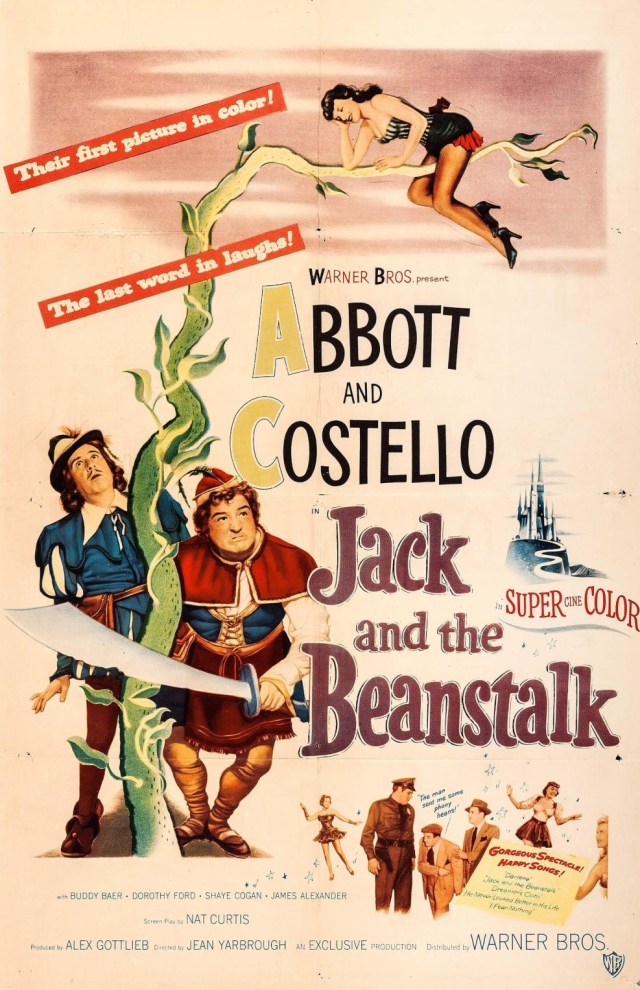
I need to make a confession: in the seven years 18 Cinema Lane has been around, I’ve never reviewed any of Abbott and Costello’s films. (insert shocked gasp here) But at 18 Cinema Lane, I am willing to expand my cinematic horizons. This is one of the reasons why I selected 1952’s Jack and the Beanstalk for the Once Upon A Time Blogathon. Another reason is how I don’t often get the opportunity to write about fantasy films. In fact, the last fantasy movie I reviewed was Cancel Christmas last December. When I came across the poster for Jack and the Beanstalk, I was surprised to read the tagline “Their first picture in color”! Abbott and Costello are household names in the world of comedy. Plus, this adaptation of the fairy tale was released thirteen years after The Wizard of Oz. So, is the movie worthy of such a historic milestone? Adventure through this review of Jack and the Beanstalk to find out!
Jack and the Beanstalk(1952) poster created by Exclusive Productions Inc., Legend Films, and Warner Bros.
Things I liked about the film:
The dialogue: Sometimes, a movie’s comedy will be woven into the dialogue. Words spoken between characters can not only be hilarious, but also clever and witty, especially if the screenwriting is strong. Dialogue was one of the best qualities of Jack and the Beanstalk! One example is from the beginning of the film. Arthur arrives at Eloise’s house to pick her up for play rehearsal. Her younger brother, Donald, answers the door, even setting up a trap that causes Arthur to fall. When Arthur asks Donald where Eloise is, Donald replies in a matter-of-fact manner, “putting on her lipstick so you can kiss off”. What makes this line so memorable is how it fits the character of Donald, who is portrayed as a precocious child. Another example happens during the ‘Jack and the Beanstalk’ story. Jack is heartbroken when his mother suggests they sell the family cow. After Jack’s mother urges him to take the cow to the market, Jack tells her, “Yes mother. You can depend on me. Whatever they bid, I’ll bid higher”. This is a line that is genuinely funny, as Jack says it with good intentions.
The use of color film: During the opening credits of Jack and the Beanstalk, it’s revealed parts of the film are presented in Super Cine Color. These parts are the ‘Jack and the Beanstalk’ story itself, while the “modern” parts of the movie are shown in black-and-white film. I actually liked this creative decision! It emphasized the magic and whimsy of the fairy tale. The use of color film also allowed the vibrant hues of the costume and set design to be visible. Overall, this production of Jack and the Beanstalk felt pleasantly reminiscent of 1939’s The Wizard of Oz!
Working as a pair: Bud Abbott and Lou Costello (also known as Abbott and Costello) have been acknowledged as one of the most beloved comedic duos in film history. So, I was curious how they would work together in Jack and the Beanstalk, since the heroic adventure typically involves only one character. Lou portrays Jack and Bud portrays Mr. Dinkelpuss (a local butcher). Even though both characters travel up the titular beanstalk, they each have their own motives. Mr. Dinkelpuss and Jack help each other escape The Giant’s castle as well. Through the acting performances and the screenwriting, this version of Jack and the Beanstalk feels like Jack was always meant to travel with a buddy.
Musical padding: The 1952 adaptation of Jack and the Beanstalk is a musical, with five musical numbers incorporated into the production. These numbers were very well choreographed and sounded good musically. However, they felt like padding, making the movie seem longer than its one hour and twenty-three-minute run-time. A few of the musical numbers feel drawn out, such as the almost three-minute dance between Jack and Polly. Had some of these numbers been trimmed down, the overall run-time could have been under an hour and twenty minutes.
Forgotten details: Within Jack and the Beanstalk’s script, there were a few forgotten details. Jack’s cow, Henry, presents two examples. When Henry is first brought up in the movie, Jack refers to the cow as female. He even puts makeup on her to stress this fact. But before Jack says goodbye to Henry at Mr. Dinkelpuss’ shop, Jack tells the cow to “be a good boy”. Later in the movie, Jack climbs the beanstalk. One of his intentions is to rescue Henry from the clutches of The Giant. When Jack and his friends finally escape The Giant’s castle, however, Polly is the one who ends up saving Henry.
Patrick the Harp: In The Giant’s castle resides a harp named Patrick. Not only does music play every time he talks, he’s also very critical of Polly. Personally, I was not a fan of Patrick. He spoke with a thick accent, which sometimes made it difficult to understand what he was saying. His role in the story was quite minimal, offering little to the plot. If Patrick had been written out of Jack and the Beanstalk, not much would change.
As I mentioned in the introduction of my review, Abbott and Costello are household names in the world of comedy. However, there is a reason why they achieved this honor. Using Jack and the Beanstalk to explain my point, Costello and Abbott work together as a team. Even in a fairy tale where a team dynamic doesn’t exist, they find a way, through acting and screenwriting, to create a story where they can both shine. The dialogue was one of the strongest aspects of the 1952 adaptation, as it was hilariously clever. It also helps that the dialogue was written and delivered well. Even the use of color film enhanced the whimsical charm one would expect from a fairy tale. While Jack and the Beanstalk does have its flaws, it is, indeed, a pleasant presentation! Now, if you’ll excuse me, I need to figure out who really is on first.
Overall score: 7.4 out of 10
Have you seen 1952’s Jack and the Beanstalk? What other fairy tales would you have liked to see Abott and Costello star in? Tell me in the comment below!
Before participating in the Silent Pioneers Blogathon, I had only seen, and even reviewed, four projects from Buster Keaton’s filmography. To, kind of, make up for lost time, I chose to review The Garage for the event. The other reason why I selected this movie was because it was recommended by Lea S. from Silent-ology. I will admit silent films are rarely covered on 18 Cinema Lane. In the seven years my blog has existed, I’ve only reviewed seven silent film titles. The last time I wrote about a silent picture was 1920’s Pollyanna back in 2021. So, reviewing another silent movie has been long overdue. So far, my experience with silent films has been pretty positive. But will that change with The Garage? Keep reading my review to find out!
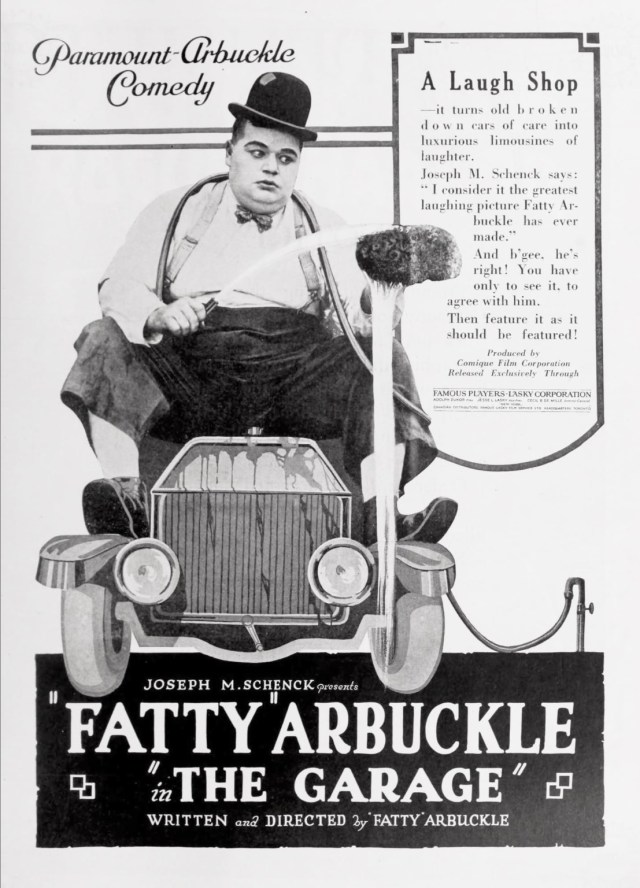
The Garage (1920) poster created by Comique Film Company and Paramount Pictures
Things I liked about the film:
The acting: In silent films, actors and actresses heavily rely on facial expressions, emotions, and body language to show what their characters are thinking and feeling. While on-screen text can help elaborate what is happening on screen, the way actresses and actors appear in a silent film can show what can’t be said. At the beginning of The Garage, Roscoe ‘Fatty’ Arbuckle is upset Buster Keaton made a car he just washed dirty. He gestured toward the spot of dirt on the car by repeatedly pointing toward it. Roscoe ‘Fatty’ Arbuckle even has a frown on his face, emphasizing how upset he is. Later in the film, Buster is chased by a dog. When he gets stuck in a fence, he appears scared as the dog is ripping up his pants. Fear is in Buster’s eyes as he looks to be screaming. Molly Malone is the only actress in The Garage. Any time she was included in a scene, she was just as expressive as her male co-stars! When Molly is first introduced in the story, she is so excited to see Jim. She is smiling the entire time, making her happiness clearly visible.
The slapstick comedy: When I reviewed The Twilight Zone episode, “Once Upon a Time”, I talked about a scene where Buster’s character, Woodrow, and a man named Rollo walk past a rack of suit pants. After Woodrow grabs a pair of pants, Rollo picks Woodrow up so he can put the pants on. When I saw this comedic trick in The Garage, I was happy to recognize it from The Twilight Zone! The trick was just as well performed in the movie as in the television episode! Another comedic trick utilized a piece of spinning floor. When Roscoe ‘Fatty’ Arbuckle walked on the spinning floor, he was able to effortlessly walk off the circle. But, when Buster got on the spinning floor, he stumbled and tumbled to the ground. The only way Buster could escape was when Roscoe ‘Fatty’ Arbuckle tumbled to the ground himself and pulled Buster to the circle’s edge. These two examples showcased the simplicity and creativity of The Garage’s slapstick comedy!
An overarching narrative: Earlier in this review, I brought up how excited Molly was to see Jim. This is because they are in a romantic relationship. In The Garage, Jim and Molly’s relationship served as an overarching narrative. It even intersected with the events taking place in and around the garage. For me, I looked forward to seeing what would happen next with Molly and Jim. The strong acting performances and nice on-screen chemistry kept me invested in their part of the story! There was also a sense of mystery to Jim and Molly’s relationship. A contributing factor was the couple experiencing situations as they took place in the film.
Inconsistent slapstick comedy: The Garage consists of three separate stories: Roscoe ‘Fatty’ Arbuckle washing a customer’s car, Jim becoming covered in car grease, and the garage being set on fire. While there was plenty of slapstick comedy in the first and third stories, the slapstick comedy was limited in the second story. This is because so much of that story was focused on Jim and his relationship with Molly. Besides becoming dirty from car grease, Jim gets a dog to scare off Molly’s potential admirers. With everything I said, the emphasis on Jim and Molly’s relationship in the second story kind of overshadowed Roscoe ‘Fatty’ Arbuckle and Buster Keaton.
Tonally inappropriate music: Like I just said in this review, there are three stories in The Garage. The third story involves the garage being set on fire. During that story, cheery piano music can be heard in the background. Though this type of music plays throughout the movie, it felt tonally inappropriate in the third story. The reason is Jim and Molly’s lives being in danger, which raises the story’s stakes. Because the stakes are lower in the first and second stories, cheery music playing in the background makes sense.
A confusing timeline: So much is happening in The Garage due to the film consisting of three separate stories. In one story, customers either rent cars or have their cars washed. The residents from the garage’s neighborhood have a scheduled lunch-time. But the title-cards sprinkled throughout the film never clarify when events like the aforementioned two take place. Is The Garage set in a singular day or are the situations happening over an extended period of time? Had the title-cards mentioned when events were taking place, those title-cards could have provided transitions between stories.
As I said in my review’s introduction, my experience with silent films has been pretty positive. This experience is, so far, remaining positive due to my thoughts on The Garage! For the most part, the 1920 picture is a fine, pleasant production. The strength of the acting and the creativity of the slapstick comedy led to an overall enjoyable time. I even liked how Molly and Jim’s relationship served as an overarching narrative. Even though the film itself was pleasant, it did contain some flaws. Without contextual information, I found the story’s timeline confusing. There was also one part of the movie where the music was tonally inappropriate. But like I said, I found The Garage a fine, pleasant title! This movie could be a good introduction to Buster Keaton’s filmography.
Overall score: 7.1 out of 10
Have you seen The Garage? Which film from Buster Keaton’s filmography would you like to see me review? Tell me in the comment section!
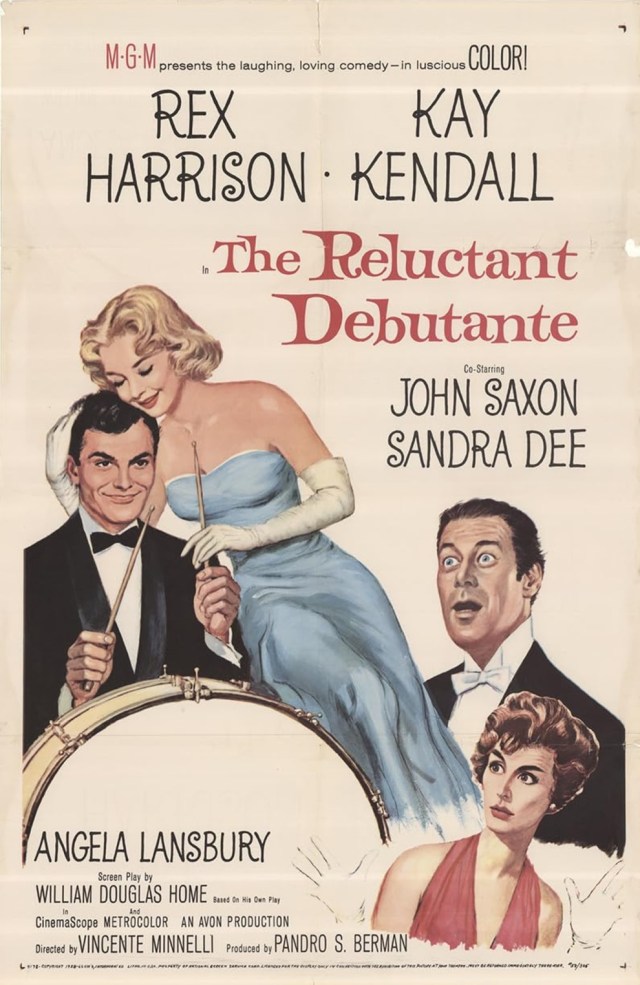
Out of all the decades covered on 18 Cinema Lane, the 1950s make such infrequent appearances. I did review the 1954 film, Dial M for Murder, last month. But my review before that was from last December, when I wrote about 1957’s The Curse of Frankenstein. This infrequency is one of the reasons why I’m reviewing the 1958 film, The Reluctant Debutante! Another reason is John Saxon’s involvement in the project. When I joined Realweegiemidget Reviews’ and Cinematic Catharsis’ blogathon, I wasn’t familiar with John Saxon as an actor. So, while exploring his filmography, I came across the 1958 movie. I was surprised to discover Angela Lansbury also starred in The Reluctant Debutante. Since I’ve seen few of Angela’s live-action films, there was yet another reason for me to review this production.
The acting: As I said in this review’s introduction, John Saxon is one of the reasons why I’m reviewing The Reluctant Debutante. Even though I wasn’t familiar with him as an actor, I liked his portrayal of David Parkson! Whenever he appeared in the movie, David always looked confident. Paired with that confidence was charisma, which helped David become such a memorable and likable character! What worked in John’s favor was the consistency of his performance. Having good on-screen camaraderie with Sandra Dee also worked in John’s favor. In the few scenes David and Jane, Sandra’s character, spent together, they appeared to get along so well. They also seemed to be on the same page when it came to several topics, such as the symbolism behind dancing and exploring the world. I, honestly, wish Sandra and John were given more appearances in The Reluctant Debutante because both of their performances were strong!
Like I also mentioned in this review’s introduction, Angela Lansbury’s involvement is another reason why I wrote about The Reluctant Debutante! Despite having limited appearances in the story, I really enjoyed watching Angela’s portrayal of Mabel Claremont! The best way I can describe this character is “the life of the party”. From the very first scene she appeared in, Mabel had such an exuberant personality. There was such a brightness to Mabel, I could understand why other characters might want to invite her to their events. Similar to John Saxon’s performance, Angela’s portrayal of Mabel was consistent. Mabel is another character I wish received more screen-time!
The on-screen chemistry: Rex Harrison and Kay Kendall portrayed Jane’s parents, Jimmy and Sheila, in The Reluctant Debutante. Shortly after these characters were introduced, I could immediately sense Kay and Rex’s on-screen chemistry! Throughout the story, Sheila and Jimmy’s marriage felt believable, like they were always meant to be together. When it came to the “debutante season”, Jimmy was the casual participant and Sheila became more involved in the process. Though they had their reasons for their “debutante season” beliefs, they still found a way to come together when it came to what was important, such as the well being of their daughter. Based on everything I said, Sheila and Jimmy displayed the “opposites attract” trope. With the strength of Kay and Rex’s acting abilities, both individually and together, this trope worked in Jimmy and Sheila’s favor!
The wardrobe: Debutante balls are known for showcasing exquisite fashion! When it came to the wardrobe department, The Reluctant Debutante did not disappoint! At a ball toward the beginning of the movie, Mabel wore a long-sleeved gown. This scoop-neck gown was covered in a lacy, deep-blue material, complimenting Angela’s light blonde hair. Adding extra sparkle was a large diamond necklace, a diamond tiara, and diamond earrings. One of my favorite dresses was Jane’s light-blue gown! Tiny bows found their place on the gown’s skirt. Sandra sometimes wore this dress with a light-blue satin cape and white gloves, which added elegance to the overall ensemble. Another outfit I liked is more casual in style. While at a restaurant with David Parkson, Jane wore a beige and brown plaid jumper dress over a beige blouse. Paired with this outfit was a khaki trench coat and a beige hat.
The John Saxon Blogathon banner created by Gill from Realweegiemidget Reviews and Barry from Cinematic Catharsis
What I didn’t like about the film:
A premise driven story: In the past, I’ve explained the difference between a premise driven and a plot driven story. In the case of The Reluctant Debutante, this story was premise driven. According to IMDB, the movie is about Jane and her parents participating in “Debutante season”. That part of the story was prioritized throughout the film. Taking a behind the scenes look at the debutante world is interesting. Halfway through the movie, though, I found myself asking, “Where’s the plot”? What The Reluctant Debutante was missing was a conflict, something to make the audience ask, “and then what happened”. This conflict could have ranged from Sheila and Jimmy organizing Jane’s debutante ball to Mabel convincing the Queen to continue the tradition of “debutante season”.
Drawn-out jokes: IMDB classifies The Reluctant Debutante as a comedy. Despite this label, I didn’t find myself laughing while watching the film. This weakness was due to the story’s jokes being drawn-out. A perfect example is how Sheila and Jimmy’s plans to overprotect Jane don’t go as expected. At one ball, Jimmy and Sheila are trying to find Jane. They race around the ballroom frantically looking for their daughter. Toward the end of the event, they discover Jane left with David Parkson. The very next scene revolves around Sheila and Jimmy worrying about Jane’s whereabouts, even going so far as to hiding in the kitchen and eavesdropping when Jane arrives home. I understand The Reluctant Debutante’s creative team was trying to tell a “comedy of errors” kind of story. In this movie, however, it took a long time for the errors to be resolved. In my aforementioned example, it took two whole scenes for Jane to be reunited with her parents. Watching The Reluctant Debutante felt like listening to a comedian spending too much time reaching their joke’s intended punchline.
Overlooked story ideas: While sightseeing in London, Mabel’s daughter, Clarissa, explains the “debutante season” to Jane. During this explanation, Clarissa tells Jane 1958 will be the last year for the “season” due to the Queen believing the practice outdated. Outside of Jane and Clarissa’s conversation, however, this detail isn’t brought up. Plus, none of the characters act as if the tradition of the “season” is ending anytime soon. I wish this part of the story had played a bigger role in The Reluctant Debutante. As I mentioned earlier in this review, it could have served as one of the story’s conflicts. It also would have given other characters, like Mabel and Clarissa, more involvement in the film.
Image of high school students dancing at prom created by Jan Sundstedt at freeimages.com. Photo by <a href=”/photographer/jansun-33414″>Jan Sundstedt</a> from <a href=”https://freeimages.com/”>FreeImages</a>. Image found at freeimages.com.
My overall impression:
Movies from the 1950s are reviewed so infrequently on 18 Cinema Lane. So, when I find a film from the ‘50s to write about, I always root for that film to be good. With The Reluctant Debutante, however, I can’t say this movie is good. If anything, I was disappointed by it. The 1958 production was a premise driven story, a type of story that, in my opinion, contains less intrigue. The jokes lasted so long, it made the movie feel longer than one hour and thirty-four minutes. At one point, I almost fell asleep watching The Reluctant Debutante. Though I kept watching because the cast gave such strong performances. From Kay and Rex’s on-screen chemistry to Angela’s character being “the life of the party”, the acting was one of the few things I liked about the film. There’re even characters that should have received more screen-time, like David Parkson and Jane. During The Reluctant Debutante’s opening credits, I learned the movie was based on a play. What I also learned is how some plays were not meant to be adapted into a film.
Overall score: 5.5 out of 10
Have you seen The Reluctant Debutante? Which movie from the 1950s is your favorite? Let me know in the comment section!
In my review of the Diagnosis Murder episode, “Guardian Angel”, I mentioned how I’ve accepted movie recommendations from my readers. These recommendations have, sometimes, made great selections for blogathons. Four years ago, when I reviewed House of the Long Shadows, Patricia (from Caftan Woman) suggested several films starring Vincent Price. One of those titles was 1963’s The Comedy of Terrors. Since then, I have been waiting for the right time to create a review for this movie. With The Comedy of Terrors fitting the criteria for the 3rd Annual Spooky Classic Movie Blogathon, I knew I had found a perfect entry for the event!It’s become an unofficial tradition on 18 Cinema Lane to review at least one of Vincent’s movies every year. Since 2019, when I wrote about The Whales of August, eleven of Vincent’s films have received a review on my blog. While some of his movies have been more enjoyable than others, I can honestly say I haven’t seen a movie of his that I would consider “bad”. So, how does Comedy of Terrors compare to Vincent’s other films? Find out by reading my review!
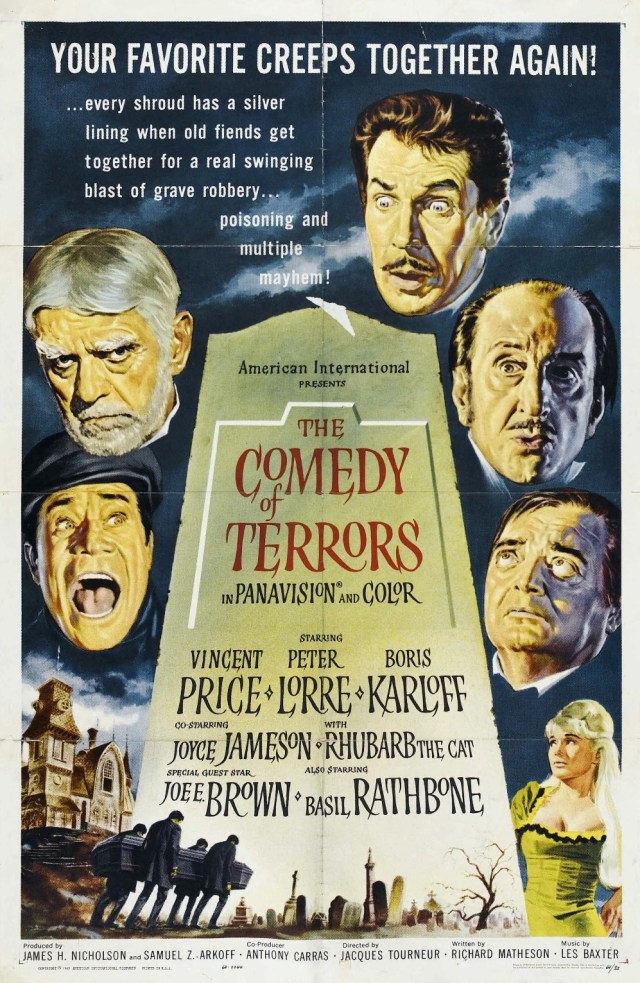
The Comedy of Terrors(1963) poster created by Alta Vista Productions and American International Pictures (AIP)
Things I liked about the film:
The acting: When you see Vincent Price’s name attached to a given film, there’s a chance you’re going to see Vincent give a solid acting performance. That was certainly the case in The Comedy of Terrors! What makes Vincent such a strong actor is his adaptability. Portraying an undertaker named Trumbull, Vincent successfully transformed his expressions and emotions based on his character’s situation. One evening, Trumbull was counting a large collection of coins. He displays a big smile on his face and also appears in a relaxed sitting position. When his wife, Amaryllis, comes into the room and asks him a question, Trumbull’s demeanor quickly changes. His sharp tone suggests deep irritation, with a disapproving frown to match. This change in attitude is consistent with Trumbull’s dislike for Amaryllis.
Prior to reviewing The Comedy of Terrors, I had seen two of Basil Rathbone’s movies; The Great Mouse Detective and Bathing Beauty. Because only one of these movies was a live-action production, I didn’t know what to expect from his portrayal of Mr. Black. However, I was impressed with Basil’s performance in The Comedy of Terrors! Some scenes show Mr. Black reciting one of Shakespeare’s plays. The first time the audience sees Mr. Black reciting Shakespeare’s work is when Felix (portrayed by Peter Lorre) breaks into Mr. Black’s home. In this particular scene, Mr. Black displays an animated demeanor throughout his reenactment. The way he confidently recited Shakespeare’s words gave this reenactment a sense of grandeur. Reflecting on Basil’s performance in The Comedy of Terrors and looking at his IMDB filmography, I wish he has starred in an adaptation of Shakespeare’s work.
An immersive world: A make-or-break factor of any movie is how that picture is presented. For period/historical fiction films, the accuracy and attention to detail can help that movie’s world feel immersive. Because The Comedy of Terrors takes place during the Victorian era, everything in the film has to appear accordingly. This was achieved in the 1963 film, as the aforementioned elements of attention to detail and accuracy were applied! When I talked about Vincent’s performance, I mentioned Trumbull was an undertaker. An ornate coffin was presented any time Trumbull hosted a funeral. The shiny, black coffin was constructed by sharp angles and was decorated with gold designs. This prop was a simple, yet visually appealing way of addressing the wealth of Trumbull’s clientele. One scene shows Trumbull and Felix breaking into someone’s home. Without meeting the homeowner, the audience can tell how this character lives a comfortable life. Decorative lamps and wall sconces are included in characters’ bedrooms. A series of statues make a strong appearance when Felix and Trumbull first walk into the house. There is even gold trim on one of the doors. From the set design to the costume design, the world within The Comedy of Terrors was immersive!
Peter Lorre and Joyce Jameson’s on-screen chemistry: Earlier in my review, I said Felix was portrayed by Peter Lorre. I also stated how Trumbull doesn’t like Amaryllis (portrayed by Joyce Jameson). Amaryllis is hurt by Trumbull’s negativity toward her. Meanwhile, Felix is upset by how Amaryllis is treated by Trumbull. The shared dislike Felix and Amaryllis have toward Trumbull create an affection for one another. Though they shared only a few scenes together, I was pleasantly surprised by Joyce and Peter’s on-screen chemistry! The warm, caring demeanor between Felix and Amaryllis came across as believable. This was made possible by the strength of Joyce’s and Peter’s performance. With that said, I think Peter and Joyce not receiving more scenes together was a missed opportunity.
Jokes that are too long: Comedy, like film, is subjective. One aspect to this subjectivity is the length of the jokes. In my opinion, the jokes in The Comedy of Terrors were too long. It seems like the screenwriters had difficulty finding their intended punchline or realizing they reached their punchline long ago. A running joke in The Comedy of Terrors is how Amaryllis is a terrible singer, despite her claims of a possible opera career. Had she sung a portion of a song once or twice, it would have been enough to get the intended point across. But the fact Amaryllis almost sang whole songs three or four times caused the joke to last too long and quickly become old.
Parts of the story that don’t make sense: I mentioned earlier in this review how Felix broke into Mr. Black’s home. To get into Mr. Black’s house, Felix had to climb onto the roof and into an upstairs window. But during this excursion, a cat named Cleopatra joins Felix and Trumbull, watching Felix trespass into Mr. Black’s property. It’s explained in the film why Felix needed to find an alternative entrance. What isn’t explained is why Cleopatra didn’t enter the house. I’m not sure how Cleopatra could have assisted Trumbull and Felix. However, it would have been easier for a cat to climb on a roof and enter through a window. This is just one part of the story that, to me, didn’t make sense.
An underutilized cat: In past reviews, I have been critical when an actor or actress was underutilized. But in the case of The Comedy of Terrors, the creative team underutilized a cat. As I mentioned in my point about parts of the story that don’t make sense, a cat named Cleopatra joined Trumbull and Felix on their excursion. Even though Cleopatra was adorable, the cat was not a significant part of the overall story. There were even times when I wondered why a cat was included in the movie at all. Had Cleopatra been written out of The Comedy of Terrors, the story itself would not change much.
In this review’s introduction, I said I haven’t seen a movie of Vincent Price’s that I would consider “bad”. While this statement is still true, The Comedy of Terrors is one of his weaker pictures. The flaws of the 1963 production include jokes that are too long and parts of the story that don’t make sense. But there are aspects of the movie I liked. The Comedy of Terrors is an immersive film, making viewers feel transported to the Victorian era. Attention to detail and historical accuracy helped the creative team achieve that illusion. Vincent’s performance was one of the strongest parts of this film! His adaptability made his portrayal of Trumbull captivating to watch. Now that I’ve finally seen The Comedy of Terrors, I can, honestly, say this picture emphasizes style more than substance. Out of Vincent’s eleven movies I’ve seen, this one is just ok.
Overall score: 6.1 out of 10
Have you seen The Comedy of Terrors? Which film of Vincent Price’s should I review next? Please tell me in the comment section below!
April Fool’s Day; a time for jokes, pranks, and laughter. On such a day, a comedic film would be most appropriate. Therefore, it’s time to introduce my selection for The ‘Favorite Stars in B movies’ Blogathon: 1963’s The Raven! Recommended by the late Patricia from Caftan Woman, I discovered this particular title was considered a “B movie” while searching for the perfect movie to write about. It just so happens to star an actor that is no stranger to 18 Cinema Lane; Vincent Price! The Raven is the tenth film of Vincent’s I have seen and reviewed. Most of his projects I have enjoyed to various degrees. But how will the 1963 title turn out? Don’t fly away from this review, as the review is about to begin!
The Raven (1963) poster created by Alta Vista Productions and American International Pictures
Things I liked about the film:
Interactions between characters: When creating a movie, it’s important to cast actors and actresses who not only perform well individually, but also within a group. If the quality among the cast is strong, the interactions between their characters will appear realistic to the audience. This is the impression I received as I watched The Raven. Scenes shared by Vincent Price and Peter Lorre serve as one great example. In one scene, Vincent’s character, Dr. Erasmus Craven, has attempted to reverse the spell placed on Dr. Adolphus Bedlo, Peter Lorre’s character. Unfortunately, Craven’s attempt doesn’t go according to plan. Bedlo is distraught at having wings for arms. His face bears a frown, eyes filled with a sad look. With disdain and concern is his voice, Bedlo is afraid the spell’s effects will be permanent. Meanwhile, Craven bears a look of concern on his face. But with a worried look in his eyes, Craven appears to care about the well-being of his friend. Through interactions like the one I described, Craven and Bedlo’s friendship felt believable. That was made possible with a combination of screen-writing and the performances of Vincent and Peter!
The humor: I knew The Raven was classified as a “horror-comedy” before I watched it. However, I was surprised by how the comedy was incorporated into the story! The humor in The Raven was mostly found within the dialogue. But the movie’s climax is where the humor really shines! In this scene, Craven and Dr. Scarabus, portrayed by Boris Karloff, participate in a magical duel. When it was Craven’s turn to use his magic, his responses to Scarabus became sillier as the duel continued. I won’t spoil this part of the story, for readers who haven’t seen this movie yet. All I will say is the humor was so well executed, I burst out laughing on numerous occasions.
Following the characters’ journey: The Raven is about Craven and his friend, Bedlo, traveling to Scarabus’ castle to reclaim Bedlo’s magic and save the spirit of Craven’s late wife, Lenore. As the story unfolds, the audience witnesses the steps Bedlo and Craven take in order to make the trip a reality. Seeing this step-by-step process allows viewers to feel like they are traveling alongside the characters. That creative decision adds interactivity to the story!
Inconsistent parts of the story: Within the The Raven, there were times when parts of the story were inconsistent. In one example, Craven and Bedlo need hair from a dead man. So, they take some hair from Craven’s deceased father. In order to open the casket of Craven’s father, Craven uses a knife to pry open the casket’s lid. A few scenes later, when Bedlo and Craven want to open Lenore’s casket, they are easily able to lift the lid. While these inconsistencies were not a common flaw, I believe this issue could have been avoided.
A drawn-out first half: As I already mentioned in this review, I liked how the characters’ journey allowed the audience to feel like they were traveling alongside the characters. But because of the movie’s hour and twenty-six-minute run-time, this journey was drawn out. Within the story’s first half, the sense of urgency was limited. There was also a small conflict that prolonged the journey. With those flaws addressed, it makes me wonder if this story would have worked better as a short film?
A random plot twist: For this part of my review, I will spoil a plot twist in The Raven. If you are interested in watching this movie, but have not seen it yet, please skip ahead to the section titled ‘My overall impression’.
While spending the night at Scarabus’ castle, Bedlo helps Scarabus trap Craven, his daughter, Estelle, and Bedlo’s son, Rexford. After Scarabus and Bedlo succeed, Bedlo confesses he tricked Craven into coming to Scarabus’ castle, in order to gain more magic from Scarabus. While this plot twist was unexpected, it felt random. There was no indication Bedlo would be that under-handed. Plus, this plot twist came right after another plot twist had been revealed. In my opinion, the plot twist involving Bedlo felt like it was included in the story just for the sake of it.
Image of crow at sunset created by Rayudu NVS at freeimages.com. Photo by <a href=”/photographer/rayudu238-57835″>rayudu NVS</a> from <a href=”https://freeimages.com/”>FreeImages</a>. Image found at freeimages.com.
My overall impression:
As of early April, 2023, I have seen two Corman productions based on the works of Edgar Allan Poe; The Pit and the Pendulum and The Raven. A sense of wonder exudes from these two movies. What I mean by this is, I am amazed by how these creative teams were able to take simple stories and turn them into feature films! While I liked The Raven, I still prefer The Pit and the Pendulum. This is because of the movie’s flaws, such as the drawn-out first half and the random plot twist. However, there were strengths in The Raven, like the interactions between characters and the humor. I’m aware of Vincent Price’s other movies based on Edgar’s work. I’ll have to check those out another day!
Overall score: 7.3 out of 10
Have you seen or read The Raven? Are there any adaptations of Edgar Allan Poe’s work you’d like me to review? Let me know in the comment section below!