Take 3: Love at the Thanksgiving Day Parade Review

With Thanksgiving just around the corner, I decided to choose a Thanksgiving film as the first seasonal movie to review this Christmas/holiday season! While searching for options, the 2012 Hallmark presentation, Love at the Thanksgiving Day Parade, crossed my path. I hadn’t seen this film in its entirety prior to 2024. But over the years, I had heard good things about it. Within the Hallmark fan community, Love at the Thanksgiving Day Parade has received the title of “classic”. Because of that, I wanted to see for myself if the film’s hype was legitimate. Whenever a Hallmark movie becomes popular, I try to check out the movie in order to form my own opinion. Sometimes, I feel the hype was earned, like with the 2014 film, The Nine Lives of Christmas. But I have found myself disagreeing with popular opinion, such as with 2006’s The Christmas Card. What will be my thoughts on Love at the Thanksgiving Day Parade? If you want to know the answer, you have to keep reading my review!

Love at the Thanksgiving Day Parade poster created by Hallmark Channel, Pitchblack Pictures, and LaCanada

Things I liked about the film:

The acting: In a story that primarily revolves around the male and female protagonist, the likability of those characters is determined by the performance of the lead actor and actress. With their portrayal of Emily and Henry, Autumn Reeser and Antonio Cupo effortlessly carried Love at the Thanksgiving Day Parade! Emily is a bright, energetic, and up-beat woman. Her enthusiasm for Chicago’s Thanksgiving parade is charming, with that charm radiating off the screen. Throughout the movie, Autumn displays an understanding for her character’s emotional range. Emily’s energetic bubbliness is showcased enough to keep the character likable. Meanwhile, Antonio’s character, Henry, boasts a more serious personality. This seriousness doesn’t prevent Henry’s suave charisma from shining through. What Autumn’s and Antonio’s performance share in common is how consistent they are. That consistency helped make Henry and Emily strong characters!

Antonio and Autumn are not the only actors giving consistent performances in Love at the Thanksgiving Day Parade! From time to time, Emily interacts with a co-worker named Donna. Similar to Emily, Donna has a bubbly personality. Because of April Telek’s acting strengths, I looked forward to seeing Donna show up in the story. In fact, I wish Donna received a larger role in the film. Another likable character was Emily’s friend, Jaclyn. Despite appearing in the movie for a limited period of time, Ali Liebert helped her character shine by presenting Jaclyn with a warm, friendly personality. I wish Jaclyn was given her own sub-plot to be more involved in the story.

The on-screen chemistry: As I just talked about in this review, Autumn Reeser and Antonio Cupo effortlessly carried Love at the Thanksgiving Day Parade. Another reason why I believe this statement is because of their on-screen chemistry. This movie uses the trope of “opposites attract”. Because of the aforementioned performances of Antonio and Autumn, the attraction of Henry and Emily felt believable! Their banter went back-and-forth like a ping-pong game, providing lively, even funny interactions. The more time they spent together, the more Emily and Henry’s feelings for each other naturally progressed. Despite being “opposites”, these characters found common ground and tried to get on the same page. Henry and Emily kind of reminded me of Oliver and Shane from the Signed, Sealed, Delivered series.

Emily’s wardrobe: Throughout Love at the Thanksgiving Day Parade, Emily consistently wears vintage attire. I liked this creative decision because Emily’s wardrobe not only complimented Autumn, it made Emily a unique character! One of these outfits was a pink dress with matching jacket. Paired with a pink pillbox hat, this outfit represents the classy and sophisticated way Emily presents herself. Even when she takes a simple trip to the grocery store, Emily sports a deep teal, long-sleeved dress with a pleated skirt. When Henry invites her to a basketball game, Emily stays true to herself by wearing a red, short-sleeved blouse, dark blue jeans, and a red belt. The only “modern” part of the ensemble is a Chicago Bulls cap.

Image of Thanksgiving dinner created by Freepik at freepik.com. <a href=”https://www.freepik.com/free-photos-vectors/background”>Background vector created by freepik – http://www.freepik.com</a>. Image found at freepik.com.

What I didn’t like about the film:

A secondary holiday and parade: Hallmark does not create Thanksgiving movies often, especially this decade. So, when I watch one of their Thanksgiving pictures, I hope the holiday is featured similarly to Christmas in their Christmas productions. As the story progressed in Love at the Thanksgiving Day Parade, however, I quickly took notice of how Emily and Henry’s relationship was prioritized over Thanksgiving and the titular parade. The Thanksgiving holiday was barely referenced in this movie. There were no Thanksgiving decorations to be seen and I don’t recall any of the characters saying the word “turkey”. While parade preparations were shown throughout the film, they were only featured in short segments. This is a shame because aspects of the parade, such as “parade camp” or a group of clowns visiting children at the hospital, could have served as the story of their own movie. I wish the parade and/or Thanksgiving had been more involved in the plot. With Emily sharing a brief history of the parade early in the film, Love at the Thanksgiving Day Parade could have had a story similar to A Biltmore Christmas.

The “it’s not what you think” cliché: Among Hallmark’s collection of clichés is the “it’s not what you think” cliché. This is when the protagonist sees or hears something out of context and automatically assumes the worst. Hallmark has sometimes used this cliché in a way that complements the story, like in Easter Under Wraps and Rome in Love. But there are times when this cliché has been included in a movie just for the sake of it. In the case of Love at the Thanksgiving Day Parade, I understand the “it’s not what you think” cliché was intended to create conflict between Henry and Emily. However, I don’t think the cliché’s inclusion in the story was necessary because it happened right after Emily experienced a difficult time in her life. To me, that part of the film seemed cruel and a bit mean-spirited toward Emily.

A rushed backstory: One of the themes of Love at the Thanksgiving Day Parade is “looks can be deceiving”. Despite this theme being utilized well at times, the overall utilization of this theme was not consistent. During the film’s climax, important pieces of a character’s backstory are presented in a rushed manner. That information helps another character change their perception of the character in question. Instead of rushing to deliver this information before the end of the movie, it should have been given over the course of the film. That way, the audience has time to digest and ponder the character’s backstory.

Group of clowns image created by Freepik at freepik.com. Image by Freepik

My overall impression:

Because Hallmark creates so few Thanksgiving movies, I’m always rooting for their Thanksgiving pictures to be good. But, like Hallmark’s Christmas productions, these films are not created equal. As I’ve mentioned in the past, An Old Fashioned Thanksgiving is one of my favorite Hallmark films. One reason why is how Thanksgiving is acknowledged throughout the story. Unfortunately, Love at the Thanksgiving Day Parade did not follow in the footsteps of the 2008 film. In fact, Thanksgiving and the titular parade were overshadowed by Emily and Henry’s relationship. This is one of those movies where a better story idea can be found within the script. But the reason why I kept watching the film is because of the acting performances! Autumn Reeser and Antonio Cupo shined bright together, carrying the movie with their acting talents and on-screen chemistry. The supporting cast was strong as well. I liked Emily’s wardrobe because it helped make her such a memorable character. The combination of Autumn’s performance and the screenwriting contributed to that too. Out of Hallmark’s Thanksgiving projects I’ve seen, Love at the Thanksgiving Day Parade falls somewhere in the middle. While the 2012 picture isn’t bad, it could’ve been stronger.

Overall score: 6.7 out of 10

Have you seen Love at the Thanksgiving Day Parade? Has Hallmark created a Thanksgiving movie you’d like to see me review? Share your thoughts in the comment section!

Have fun on Thanksgiving!

Sally Silverscreen
Take 3: In The Good Old Summertime Review

Earlier this month, I said I would review In The Good Old Summertime for the Van Johnson Blogathon. Now, with the arrival of the aforementioned event, it’s time to talk about this film! There are two reasons why I selected the 1949 movie. The first is it was recommended to me by Becky, the same reader who suggested Easy to Wed. The second was how the summer season is winding down. Because the movie is titled, In The Good Old Summertime, I figured it would serve as a sort of last hurrah. As of 2022, the 1949 title is the fourth one of Van Johnson’s I’ve seen. While I found both Plymouth Adventure and Easy to Wed just ok, I was not a fan of Where Angels Go, Trouble Follows. Therefore, it’ll be interesting to see what I thought of In The Good Old Summertime!

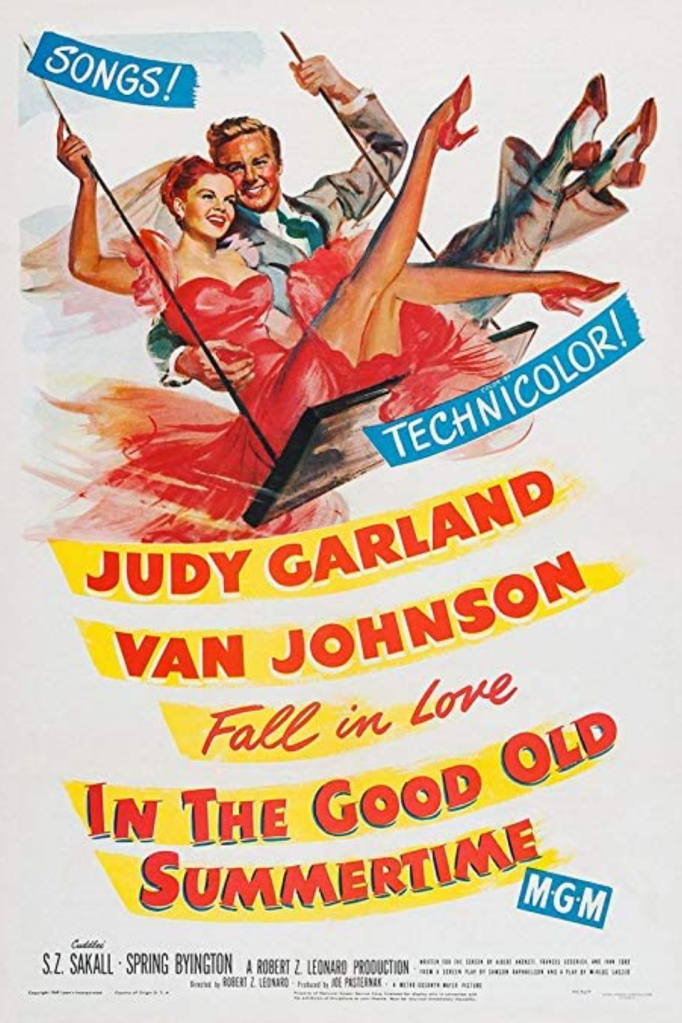
In The Good Old Summertime poster created by
Metro-Goldwyn-Mayer

Things I liked about the film:

The acting: As I said in the introduction, In The Good Old Summertime is the fourth film of Van Johnson’s I have seen. Therefore, I knew what to expect from Van, talent wise. While portraying Andrew, Van utilized emotions well. A great example is when Andrew and Veronica are attempting to sell some sheet music to a customer. The sheet music in question was “Put Your Arms Around Me, Honey”. During this song, Andrew looks threatened, like he knows Veronica is doing a better job at selling the music than he would have. Because of the quality of his acting talents, Van was able to make scenes like this one feel believable.

In The Good Old Summertime is the fifth movie of Judy Garland’s I have watched. Looking back on those films, I have noticed how Judy is a more versatile actress than I feel she gets credit for. While waiting for her secret admirer, Veronica, Judy’s character, appears visibly nervous. She’s glancing around the restaurant and constantly readjusting her flower and poetry book. When Andrew arrives, Veronica’s unpleasant feelings toward her co-worker grow stronger. Her face appears troubled, frustrated over the fact he won’t leave. At some points during this interaction, Veronica raises her voice. When she eventually returns home, Veronica appears deflated, her night not going as she expected.

I am not familiar with Spring Byington as an actress. Despite this, I enjoyed her portrayal of Nellie Burke! Her on-screen personality was so pleasant. Even when she was upset at Otto Oberkugen, she was still a character worth rooting for. Spring and S.Z. Sakall had good on-screen chemistry. One good example is when Nellie is trying to explain a misunderstanding. During this conversation, Otto reveals his insecurities as a musician. This explanation comes across as genuine, as a businessman trying to save face. Meanwhile, through gentleness and kind words, Nellie reassures Otto he is the only man she cares about. It was nice to see two older characters fall in love, especially since this type of romance story doesn’t seem as common as those featuring younger couples. Through the acting performances and screenwriting, Spring and S.Z. brought forth a couple that was interesting to watch!

The musical numbers: At Otto’s music store, a harp is introduced among the instrumental stock. In order to sell the harp to a potential customer, Veronica plays the harp to a song called “Meet Me Tonight in Dreamland”. With the combination of Judy’s vocals and the harp instrumental sound, the song exuded the dreamlike tone the film’s creative team was striving for. Even with the inclusion of a piano, these sounds complimented one another. The aforementioned song, “Put Your Arms Around Me, Honey”, was performed in two tempos. At Veronica’s suggestion, the first tempo is slower, providing a romantic tone. But with the second, faster tempo, a jollier tone is presented. Because of this musical, creative decision, it was interesting to hear how one change can make a song sound so different.

The historical accuracy: In The Good Old Summertime takes place around the late 1800s to early 1900s. With that said, there are many aspects of this movie that appeared historically accurate! One of these areas was the wardrobe. Louise Parkson, portrayed by Marcia Van Dyke, is Andrew’s friend. She is attempting to win a prestigious audition. When this audition arrives, Louise wore a white dress with a full, floor length skirt. The sleeves are medium length, covering Louise’s upper arms. The dress also had a higher neckline. These design choices represented modesty in women’s fashion from that time.

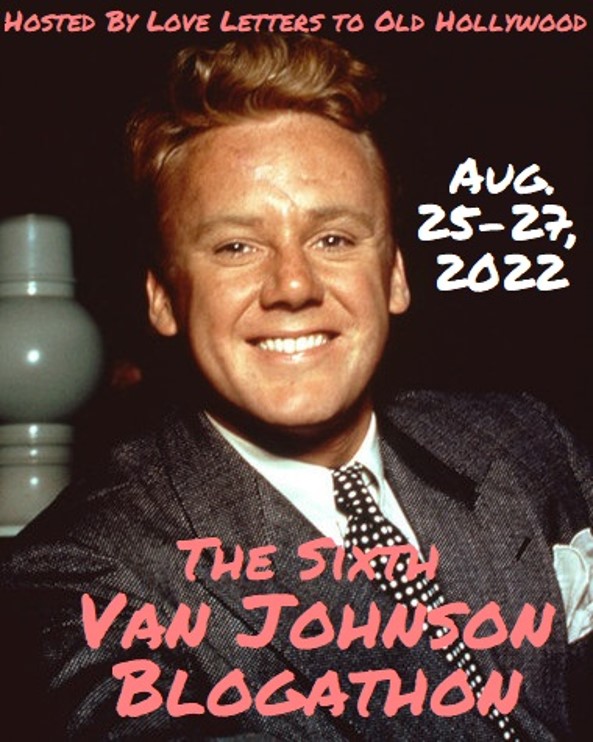
The Sixth Van Johnson Blogathon banner created by Michaela from Love Letters to Old Hollywood

What I didn’t like about the film:

The underutilization of Buster Keaton: I haven’t seen many of Buster Keaton’s films. But based on what I know about his filmography, he seems like he’s a comedic actor who utilizes physical comedy. In In The Good Old Summertime, however, Buster wasn’t given much material to work with. There were two scenes where Buster’s character, Hickey, trips and falls. But these felt like weak attempts at giving Buster something to do. If anything, it seems like Buster was cast in the film just for the sake of it.

A drawn-out plot: The story of In The Good Old Summertime revolves around Veronica’s and Andrew’s search for their respective pen-pals. While this plot can lend itself to a good story, it was drawn-out throughout the entire movie. It got to the point where, after Veronica’s secret admirer was revealed, she was being manipulated into believing the secret admirer is someone else. This was likely done to keep the plot going. But it just felt too cruel for my liking.

No strong subplots: So much time was given to the aforementioned main plot in In The Good Old Summertime. As a result, there were no strong subplots. Some aspects of the narrative could have lent themselves to good side stories. But because the script focused so much on the main plot, these ideas weren’t able to reach their full potential. For example, Otto is experiencing difficulty selling some harps. This felt like a running joke that didn’t lead anywhere. An interesting story idea would have been if a wealthy customer was looking for a specific harp. Otto would then spend the rest of the movie trying to locate this instrument.

String of musical notes image created by Freepik at freepik.com. <a href=’https://www.freepik.com/free-vector/pentagram-vector_710290.htm’>Designed by Freepik</a> <a href=”https://www.freepik.com/free-photos-vectors/background”>Backgroundvector created by Freepik</a>. Image found at freepik.com.

My overall impression:

This is the third time I have participated in the Van Johnson Blogathon. While I reviewed Van’s episodes of Murder, She Wrote the first time around, I wrote about Plymouth Adventure last year. Both Plymouth Adventure and In The Good Old Summertime have one thing in common: there were ok. With the 1949 film, I enjoyed the musical numbers. They were not only entertaining, but creative as well. But there were times where I felt more effort was placed in the musical numbers than the script. This movie adopted the “enemies to lovers” trope, which could work in a story. Unfortunately, this part of the script was drawn-out. While watching In The Good Old Summertime, I kept thinking back to Meet Me in St. Louis. The 1944 musical not only takes place in the early 1900s, but also stars Judy Garland. Personally, I think In The Good Old Summertime is a weaker version of Meet Me in St. Louis.

Overall score: 6.9 out of 10

Have you seen any of Van Johnson’s films? If so, which one is your favorite? Let me know in the comment section!

Have fun at the movies!

Sally Silverscreen

Take 3: Brian’s Song (1971) Review

When MovieRob announced ‘Sports Themed Films’ as April’s Genre Grandeur theme, I knew right away which movie I would review: the 1971 tv movie, Brian’s Song! One reason for this decision was the fact I had this film on my DVR. But when I recently checked my DVR, Brian’s Song was nowhere to be found. This is not the first time this has happened to me, where a recorded program on my DVR has suddenly disappeared. But it did not deter me from reviewing Brian’s Song. On a recent trip to the library, I found a DVD copy of the film. It was perfect timing, as I was soon going to watch and write about the movie! In the world of made-for-tv film productions, there are those that are well-known, for better or worse. Brian’s Song is one of the more respected titles, garnering praise since its 1971 release. But will I join the choir and sing this movie’s praises? Or will I skip a trip on the bandwagon? You won’t know if Brian’s Song scored a touchdown unless you read this review!

Before I begin this review, I would like to point out there will be a few spoilers within this article.

This is a screenshot of the DVD copy of Brian’s Song I mentioned in my review. Screenshot taken by me, Sally Silverscreen.

Things I liked about the film:

The acting: I really liked the cast of Brian’s Song! But because this story primarily revolves around Brian and Gale’s friendship, this review will focus on the performances of James Caan and Billy Dee Williams. When I think of Billy Dee Williams, I think of Lando from Star Wars! It has been years since I’ve seen the original trilogy in the Star Wars franchise. But from what I remember, Billy’s on-screen personality was charismatic and larger-than-life. His portrayal of Gale Sayers was very different from his portrayal of Lando, as it was more reserved. However, it was packed with emotion! When Gale first meets Brian, he is taken aback by Brian’s outgoing personality. Gale’s eyes contain the awkwardness of the situation and his body language appeared tenser than Brian’s. Gale also spoke with few words, carefully choosing what to say next. Meanwhile, as I’ve just said, Brian was outgoing and confident. In this first meeting, Brian walks up to Gale, immediately recalling a conversation they had prior to training. At the first team dinner, Brian sings his alma mater’s fight song, not afraid to look silly in front of his team members. This on-screen personality was different from James’ westerns I’ve seen, where his character has typically been rugged and serious.

One of the best scenes in Brian’s Song is when Brian is building exercise equipment for Gale. Before this gesture, Gale injured his leg during a game. Angry about the situation, he is bitter toward Brian. Gale angrily objects to Brian’s plan, with this objection meeting Brian’s reason for the gesture. Brian recalls how, in high school, he was demoted on his football team due to a more talented team member. He also shares how he was demoted again, as Gale is the stronger player among the two of them. Now that Brian has a top position on the Chicago Bears, he would rather help Gale heal from his injury, as Brian claims his recent top position was given to him “for the wrong reasons”. This is one of those scenes where the audience can understand both characters’ reasoning. Through Billy’s expressions, Gale is less reserved, gaining some of Brian’s confidence to angrily explain his objections. James shows a side of gentle humbleness, as Brian recounts moments of self-doubt. It is a good example of how the differences in acting performances can complement both of them!

The football game footage: Brian’s Song featured game footage whenever the Chicago Bears made a game appearance. I’m not sure if this footage was taken from actual games or if it was filmed for the sake of the movie. Either way, its inclusion added a sense of realism to the overall narrative. In one scene, Gale and Brian are talking to each other on the sidelines. This scene was filmed as if it was part of a television broadcast, captured in a grainier image. This cinematography felt consistent to the game footage I talked about. It also presented a different way to include football games in a story, as most football themed movies place, at least, one football game during their story’s climax.

The voice-overs: During the aforementioned game footage, voice-overs of Brian and Gale could be heard. These voice-overs consisted of conversations between the two, with different topics being discussed. I like how the voice-overs were added over the footage. It reminded me of sports commentators, except the game itself was never brought up in these conversations. The voice-overs provided insight into Brian and Gale’s friendship. Their humor and perspectives could be picked up in these voice-overs, allowing the audience to learn more about them.

Image of football essentials created by bamdewanto at freepik.com. American football vector created by bamdewanto – www.freepik.com

What I didn’t like about the film:

Glossed over racism: After football training for the Chicago Bears begins, Gale is told by the team’s head coach that he and Brian will be the first interracial roommates in professional football history. Because of this, Chicago Bears’ staff prepare Gale for the racism he will likely experience. I know there is only so much to cover in a made-for-tv movie, especially one that is about an hour and thirteen minutes. But when it comes to the racism Gale encounters, there was more telling than showing. Besides the staff’s preparations, the only racism present in the story is when Brian reads Gale a mean letter through a voice-over. The glossing over of racism surprised me, since the story takes place in 1965, a year within a decade known for the Civil Rights Movement.

Confusing aspects of the football training process: The story of Brian’s Song starts at the beginning of Chicago Bears’ training. When this process began, I found myself confused by what was happening on screen. I wondered why a professional football team was gathering on a college campus? Why was the coach and his staff talking about cutting team members? Was a draft supposed to take place before training began? I know a certain amount of information about professional football. However, the training process isn’t one of those subjects. It also doesn’t help how the script was written as if expecting the audience to know that kind of information from that specific period in time. I wish explanations were provided in the dialogue.

Omitted grief of the team: Remember when I said there were a few spoilers in this review? Well, this is where I will bring those up. At one point in the story, Brian is diagnosed with cancer. After learning of Brian’s diagnosis, Gale makes an emotional pep talk to the Bears, vowing to dedicate their upcoming game to Brian. At the end of the movie, Gale reveals through a voice-over Brian passed away. In the aforementioned scene featuring Gale’s pep talk, the sadness of the news could be seen on the faces of the team members. While they all carried long, heartbroken faces, some of them even held tears in their eyes. With that said, I would guess Brian’s passing would leave everyone involved with the team devastated. As I said before in this review, there is only so much to cover in a made-for-tv movie. But I think a final scene/epilogue showing how the Bears dealt with Brian’s passing should have been included. Was Brian’s jersey honorably retired? Did he receive a posthumous MVP award? I’m not familiar with Chicago Bears’ history, so I’m not sure how the team responded to Brian’s passing in real life. However, omitting it from the script seems like a disservice to the team members who knew him.

Heartbeat image created by Freepik at freepik.com. <a href=’https://www.freepik.com/free-vector/medical-logo_763775.htm’>Designed by Freepik</a>. <a href=”https://www.freepik.com/free-photos-vectors/logo”>Logo vector created by Freepik</a>. Image found at freepik.com.

My overall impression:

Before Billy Dee Williams entered a galaxy far, far away and before James visited the wild, wild west, there was a little made-for-tv film called Brian’s Song. Fifty-one years after this movie debuted, it has still held a favorable reputation, regarded as one of the most beloved television films of all time. Brian’s Song is a fine production with its heart in the right place. But I wasn’t as emotionally affected by it as I expected. Yes, this movie’s story is a sad one. However, I was familiar with Brian and Gale’s story before I saw the film. This knowledge prevented me from being emotionally caught off guard when a sadder, more dramatic moment happened. Like I just said, this movie had its heart in the right place. One way this statement is put into action is how the cast appears to truly care about the respective material. The film also features interesting creative decisions, such as football game footage and voice-overs over that footage. Before I end this review, I would like to point out how accessible Brian’s Song is, as I happened to chance upon a copy of it on DVD. Not every made-for-tv movie is lucky, as some of them are either harder to find or lost to time.

Overall score: 7.1 out of 10

Have you seen Brian’s Song? Which made-for-tv movie would you consider a “classic”? Let me know in the comment section!

Have fun at the movies!

Sally Silverscreen

Take 3: Chicago Review

Hometowns to Hollywood’s Celluloid Road Trip Blogathon is about discussing films that revolve around a particular U.S. city. For my entry, I’ve chosen the 2002 film, Chicago. This movie has been on my DVR for three years, the longest a film has ever sat on the device. In fact, Chicago has spent the most time on my DVR, staying there since May of 2017. So, this was the perfect opportunity to finally see it! Even though it was my first time seeing the movie, it was a title I had heard of before. Whenever cinematic musicals of the 21st century are discussed, Chicago is usually brought up in the conversation. However, I never made time to check the film out. Now, in 2020, I am ready to review Chicago!

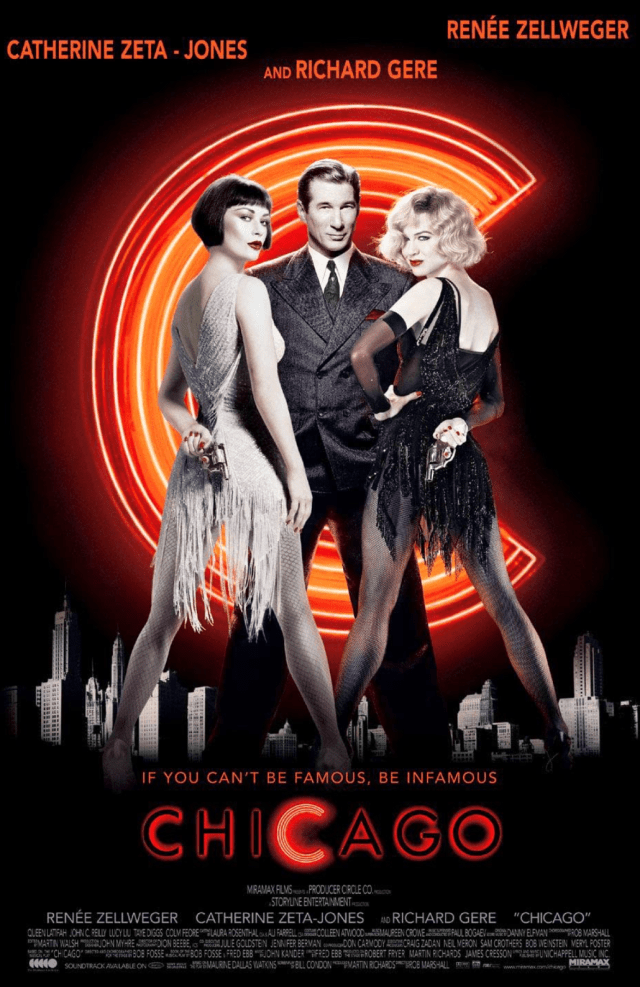
Chicago poster created by Miramax Films Producer Circle Co., Zadan/Meron Production, and Buena Vista Pictures.

Things I liked about the film:

The acting: Chicago is an ensemble film. Therefore, multiple actors pulled off a performance that was enjoyable to watch! Whenever I think about Queen Latifah’s portrayal of Matron “Mama” Morton, I think about how she carried her character with confidence! Even in the musical number, “When You’re Good to Mama”, she appeared comfortable performing in front of an audience. Through the use of music and theatrics, Queen Latifah was able to garner attention from the audience and create an effective on-screen presence! I have seen some of Richard Gere’s films prior to watching Chicago. However, most of those projects have leaned more toward the drama genre. His role, Billy Flynn, allowed him to step out of his comfort zone. Similar to what I said about Queen Latifah’s performance, Richard looked comfortable in his role! He even did a good job when it came to the musical numbers!  What I liked about Renée Zellweger and Catherine Zeta-Jones’ performances is how their on-screen personalities were so different from one another, yet complemented each other so well! It created such an interesting dynamic between these characters. Like I said about Richard Gere, Renée and Catherine did a good job pulling off the musical performances, as well as the portrayals of their characters!

The musical numbers: If you’re going to create a musical, you need to create musical numbers that are worth watching. When it comes to Chicago, the musical numbers were the highlight of this project! They are all presented as dream sequences, to show how Roxie views her world. I found this is to be an interesting creative choice, as most musicals include their musical numbers within the events of the plot. Chicago’s musical numbers were stylized, serving as visual spectacles. Bright colors and lights provide a consistent component, adding to their photogenic appeal. I also liked the creativity that could be found in these musical numbers. An example is “We Both Reached for the Gun”, where all the characters except for Billy are showcased as a puppet.

The historical accuracy: When I was watching Chicago, I noticed how the entire production appeared historically accurate! This film takes place in 1924, which is reflected in various ways. One of them is the hairstyles of the female characters. Both Roxie and Velma sport shorter hair-dos, showing women’s style choices of that time. The costumes, in Roxie’s world and the dream sequences, seemed to belong in that decade. Longer coats were worn by some of the female characters, with a millionaire named Kitty wearing a white one with embroidered flowers in a scene. Set designs and even vehicles showcased the historical accuracy I found in this film! It tells the audience that the creative team behind the project cared about their film’s presentation.

<a href="http://<a href='https://www.freepik.com/vectors/travel'>Travel vector created by pikisuperstar – http://www.freepik.com</a>&quot; data-type="URL" data-id="<a href='https://www.freepik.com/vectors/travel'>Travel vector created by pikisuperstar – http://www.freepik.comChicago neon sign image created by Pikisuperstar at freepik.com.

What I didn’t like about the film:

Too much burlesque: While there are plenty of musical numbers in Chicago, the majority of them featured burlesque. Personally, I am not a fan of this particular performance style. Therefore, I didn’t care for burlesque’s abundance. Aside from my personal opinion, the number of burlesque routines felt like they were rehashing the same idea. There was only so many times the movie could present a scantily clad dancer performing mature dance moves before the concept got old. Chicago is a film that, in my opinion, would have benefitted from having less burlesque.

Mixed messages: As I’ve said before, I watch movies to be entertained. However, I can appreciate a film that contains a good message. In Chicago’s case, there were mixed messages throughout the story. One good example revolves around Roxie’s quest for stardom. On more than one occasion, other women have gained more attention than her. This led me to believe the movie’s overarching message would be about how there will always be someone who has more than you no matter how much you strive for what you want. I won’t spoil the film for those who haven’t seen it. But what I will say is the film’s final outcome contradicts the message that seemed to be delivered.

Characters that are terrible people: When I reviewed Twentieth Century last month, I talked about how all the characters were awful individuals. This caused me to lose investment in them and their stories. Chicago has a similar flaw, with most of the characters being terrible people for different reasons. Toward the beginning of the film, Roxie is shown murdering a man, even though he was walking away when the crime was committed. The song, “Funny Honey”, highlights how Roxie is glad her husband, Amos, comes across as ignorant because she thinks that will help her cover up her crime. Out of all the characters in this film, the only one I cared about was Roxie’s husband, Amos. While he was a simple man, he was the only character who was a genuinely good person. I couldn’t help feeling sorry for him during the musical number, “Mister Cellophane”.

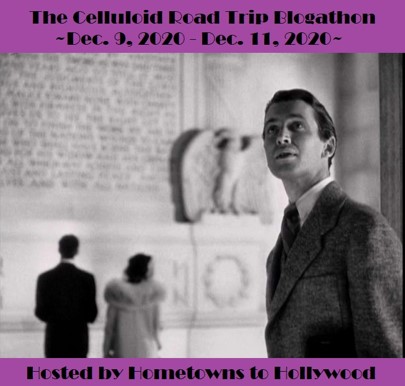
The Celluloid Road Trip Blogathon created by Annette from Hometowns to Hollywood.

My overall impression:

The way I feel about Chicago is the same way I feel about Moulin Rouge!: it was ok. The 2002 movie does have merit, which can be found in the acting performances and the musical numbers. But, similar to Moulin Rouge!, Chicago relies more on style than substance. Because the audience knows the protagonist committed a crime, there is no sense of intrigue. It also doesn’t help that the majority of the characters are terrible people. The mixed messages within the story are confusing, with the script saying one thing, but then being contradicted later on. If you’re not a fan of burlesque, then you probably won’t enjoy most of the film’s musical numbers, as they abundantly feature burlesque routines. However, the musical numbers in general were well-crafted, especially on a technical level. Therefore, I would recommend these parts of the film. As for the movie itself, this is one I don’t see myself revisiting.

Overall score: 6 out of 10

Have you checked out the other entries from the Celluloid Road Trip Blogathon? If so, which city that was addressed do you think is interesting? Share your thoughts in the comment section!

Have fun at the movies!

Sally Silverscreen